




Abstract
Jamaican maximum-security correctional facilities are largely identified by their extremely poor, anachronistic, and inhuman conditions of custody. This overriding identity shelves the positive influence of reforms that have taken place or are currently underway. By drawing on interviews conducted with 55 inmates and nine correctional staff, secondary analyses, and the International Covenant on Civil and Political Rights (ICCPR, 1966), this article examines the degree to which recommendations from the “Improving Prison Conditions in the Caribbean” Conference have been implemented in the Jamaican context. The results suggest that since the Conference, noticeable steps have been taken by the Jamaican state to improve the quality of the rehabilitation experience against the backdrop of challenges of size and competing priorities. However, such improvements are not necessarily the direct result of the implementation of the Conference recommendations. Despite the improvements evidenced, it is argued that more meaningful reforms are required if more inmates are to be enabled to lead crime-free and productive lives upon release. This article provides contemporary insights into the improved conditions of imprisonment in Jamaica and makes recommendations on how serious offenders in the care of Jamaica’s correctional service can be better enabled to experience effective (not successful) reintegration.
It is well known that conditions in Jamaican police lockups and correctional institutions (not prisons 1 ) are in need of improvement (see Chevigny, 1993; Henry-Lee, 2005; The Death Penalty Project, 2011; Vasciannie, 2002). At least, only one of the three maximum-security facilities that house adults serving a prison sentence 2 —Tower Street Adult Correctional Centre (TSACC) 3 —is overcrowded, wherein it is operating 90% above capacity. The TSACC is also not fit for purpose since it was built almost 175 years ago, and its architectural design has not been updated to reflect the changing criminal justice landscape and minimize the negative effects of increasing urbanization. However, the conditions of custody vary from facility to facility for various reasons including the Jamaican state’s attempt to institute prison security categories and classify inmates based on their trial status, age, gender, level of dangerousness, risk of harm, sexuality, and good behavior.
There are 11 correctional facilities in Jamaica. Of the seven correctional centers for adults, Tamarind Farm Adult Correctional Centre (TFACC) is the only medium-security facility and it only houses male offenders. Both Richmond Farm for men and New Broughton for senior male offenders are low-security and open. The Horizon remand facility caters to needs of both male and female adult remandees although it is classified as maximum-security. This gender dynamic embedded in the classification system of the Department of Correctional Services (DCS), which falls under the policy direction of the Ministry of National Security and whose mandate is to secure the safe custody of inmates and promote their positive behavioral change, is not surprising. It is widely recognized that women inmates constitute a minority in a male-dominated correctional service environment and, as such, their gender-specific needs are often neglected.
Women continue to account for less than 10% of the custodial population in Jamaica. Those sentenced to prison are housed at Fort Augusta Adult Correctional Centre (FAACC), which is maximum-security. However, after more than 200 years of being in operation in Portmore, St. Catherine on lands owned by the Port Authority of Jamaica, in 2017, the original building of the FAACC was decommissioned due to health and safety concerns at the facility and its vulnerability to natural disasters. As a result, women housed in the FAACC building were relocated to the South Camp Rehabilitation Centre in the parish of St. Andrew. Even so, aged and failing structures in major correctional institutions continue to threaten the security of inmates and staff and remain supportive of escapes, prison riots, and self-harming behavior among the custodial populace.
The unavailability of medium-security facilities for women and girls in Jamaica also raises concerns about the degree to which the needs of women and girls are being met. There are four juvenile correctional centers. Hill Top is a maximum-security facility for boys who received Correctional Orders issued by the courts. South Camp is also a maximum-security facility but only caters to girls who received Correctional Orders. Boys on remand (awaiting trial) are detained at Metcalfe Street Secure Juvenile Centre, which is also maximum security. Rio Cobre is the only medium-security juvenile correctional facility that caters only to boys.
In times past, overcrowding and other related issues have led to the endangerment of children left in the care of the DCS. In 2009, the Armadale Juvenile Correctional Centre was destroyed by fire claiming the lives of seven girls and causing the injury of a number of others. Correctional reforms following the tragedy included the discontinued detention of “uncontrollable” children in adult correctional facilities and efforts to ensure that child remandees and offenders are detained in separate remand, and correctional centers were intensified. However, in 2012 (3 years later), when fieldwork for the current study commenced, child offenders were still being housed and receiving educational instruction with adult inmates. Even children identified as uncontrollable or disorderly are currently being housed in juvenile correctional centers with children who received Correctional Orders mainly for shop/housebreaking/larceny. Therefore, while not all correctional facilities in Jamaica operate as maximum-security institutions that tend to be more restrictive, the system of classification, particularly for women and girls, requires refinement.
Research shows that objective inmate classification can support the day-to-day management of the correctional service which ought to be designed in such a manner so as to be responsive to changes in the criminal justice landscape, crime control strategies, and sociodemographic characteristics and behavior of the custodial population (Carlson, 2015). Austin (2003) identifies six distinguishing features of an objective classification system being: the use of criteria that works, monitoring of the system by a centralized classification unit that is adequately staffed with trained professionals, and the use of monitoring data by the unit to inform the development of policies and procedures. The system should also be automated with overrides built in to allow staff to depart from the scored classification level with the necessary approval and easily undertake reclassification exercises.
While reclassification in the form of transfers to low-risk facilities is commonplace in the Jamaican context, there isn’t a unit dedicated solely to monitoring all classification activities nor are there automated systems in place to properly manage the quality of service delivered. Records and data management are still largely paper-based. Additionally, the existing classification system remains largely subjective, in that, there is a reliance on the discretion of correctional service officials to determine where and how an inmate should be housed, and this can provide leeway for prison corruption and discriminatory practices. Therefore, it may be in the interest of inmates who are men who have sex with men (MSM) to be housed on “special blocks” for their personal safety. But, this also reinforces their stigmatization, limits their movement around the prison estate and access to rehabilitation interventions (Jamaicans for Justice et al., 2016).
The Auditor General’s Department (2014) found that not all adult inmates are assessed for risk, inmates serving short-term sentences were not accessed on most occasions, and the DCS is not conducting mandated follow-up assessments of offenders. Therefore, inmates’ exposure to support programs and release decisions is not always linked to risk assessment results. Under these conditions, rehabilitation is unlikely, and the expectation of “successful” reintegration is also realistic. Based on a qualitative approach described next, this article examines the degree to which recommendations from the “Improving Prison Conditions in the Caribbean” Conference were implemented in adult maximum-security correctional facilities in Jamaica.
Method
The “Improving Prison Conditions in the Caribbean” is the result of the resolve of Caribbean Rights (CR), a regional human rights network established in 1986 with affiliates in eight Caribbean territories to undertake a project aimed at raising public awareness about poor prison conditions in the Caribbean Region and identify opportunities for improvement. As a result, Vivien Stern, Director of the National Association for the Care and Resettlement of Offenders in the UK, was invited to investigate prison conditions in the Caribbean and make recommendations. The findings of the probe were published in the report “Deprived of their Liberty” in 1990 and the following year the Conference was held in Port of Spain, Trinidad, on the 10th and 12th May. The Conference papers and key recommendations coming out of the Conference were published (see CR & Penal Reform International [PRI], 1991). These recommendations provide a benchmark for the current process evaluation of the conditions of imprisonment in the Jamaican context.
The recommendations from this Conference were selected as a benchmark for this article, given its significance in terms of reach and scope. It was the first gathering of its kind to be held in the Caribbean Region and well attended by participants originating from Europe, North and South America, and the English-, Dutch-, French-, and Spanish-speaking Caribbean. The platform that the Conference provided for relevant government ministries, prison staff, lawyers, and human rights advocates resulted in meaningful discussions on how to, in the words of the Honorable R. Carl Rattray, QC, MP, 4 “use prisons less, make their use as constructive as possible and help persons living in them to achieve as best as possible, a humane and well-integrated existence within the institutions” (CR & PRI, 1991, p. 1).
Although the renewed focus on corrections now transcends the prison walls, there are 36 specific Conference recommendations that remain useful to the current assessment. These recommendations are subsumed under three key themes, based on a similar thematization in the publication of the conference papers. The key themes include reintegration support, a physical environment fit for purpose, respect for service and staff, and the effective use of the prison sentence. The implementation gaps that are discussed in this article are therefore based on thematic analysis of secondary (e.g., statistical reports, legislation, and policy documents) and primary data.
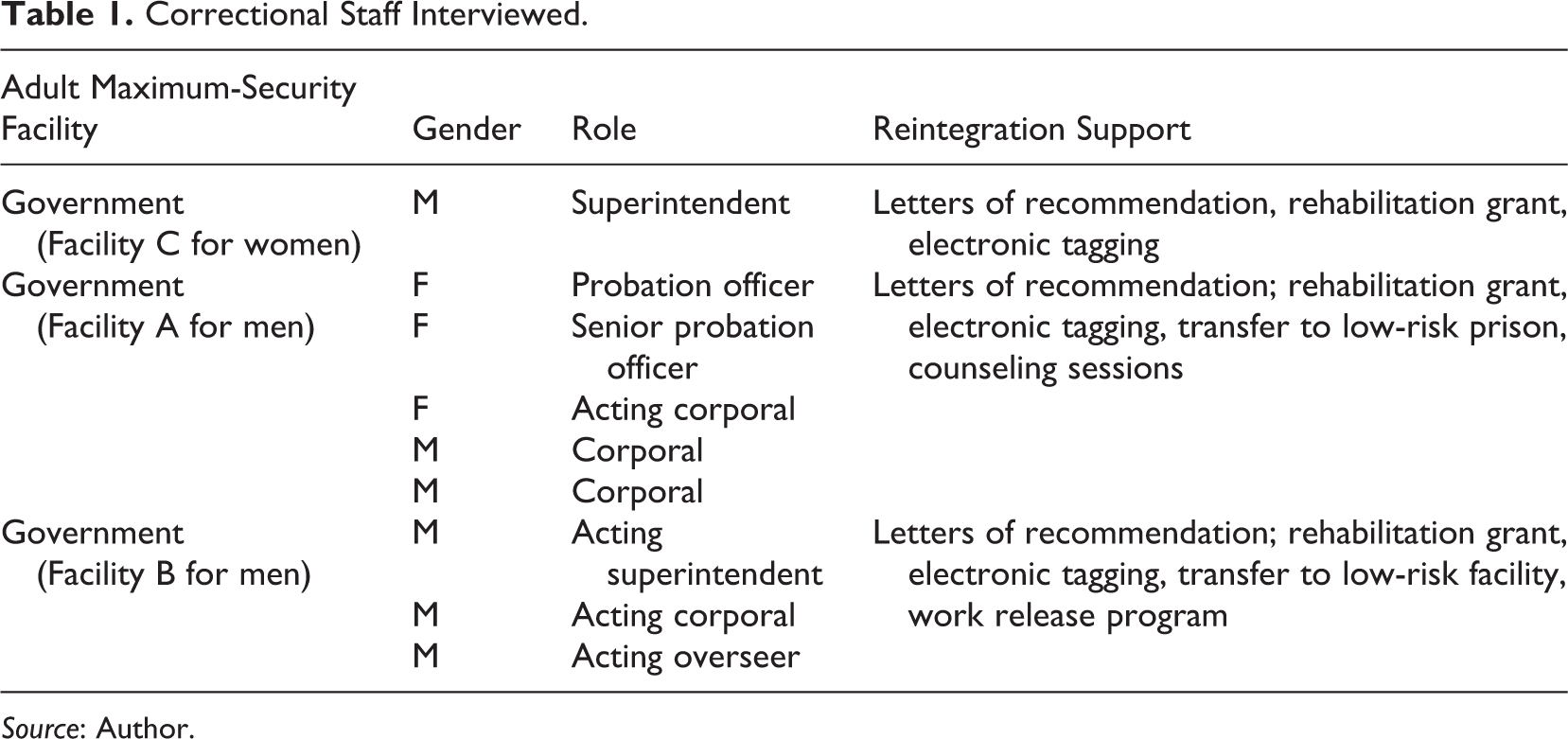
The primary data used in the article were drawn from interviews conducted with a nonprobability, purposive sample of 55 inmates and 9 correctional staff. Fieldwork was initiated in 2012, at which time the inmates and correctional staff who volunteered to participate in the study were either interviewed in one of Jamaica’s three maximum-security correctional facilities following them providing informed consent. The interviews that were audio-recorded sought to explore barriers and facilitators of reintegration in Jamaica based on the lived experiences and perspectives of inmates and service professionals. Verbatim quotations are therefore used in this article to enable the voice of research participants and preserve the meanings they attribute to their perceptions and experiences. As such, pseudonyms are used to protect the identities of research participants when reporting their experiences. To improve qualitative rigor, the cointerpreted experiences of inmates are triangulated with those of correctional staff (see Table 1) and anchored in ideas of desistance-supportive environments.
Correctional Staff Interviewed.
Source: Author.
There is an expanding body of knowledge on how correctional service environments can be customized to support the crime desistance of offenders. Research that was undertaken by Maruna and Toch (2005) and Weaver and McNeill (2007) suggest that such environments have distinct features. They acknowledge and reward the efforts of inmates to change, promote positive relationships, respect individuality, curtail criminal reputation and identities, and are oriented toward building resilience. This strengths-based approach to corrections helps to enhance the staying power of personal reform and is centered on opportunities for change, not the problem.
Characteristics of the Sample
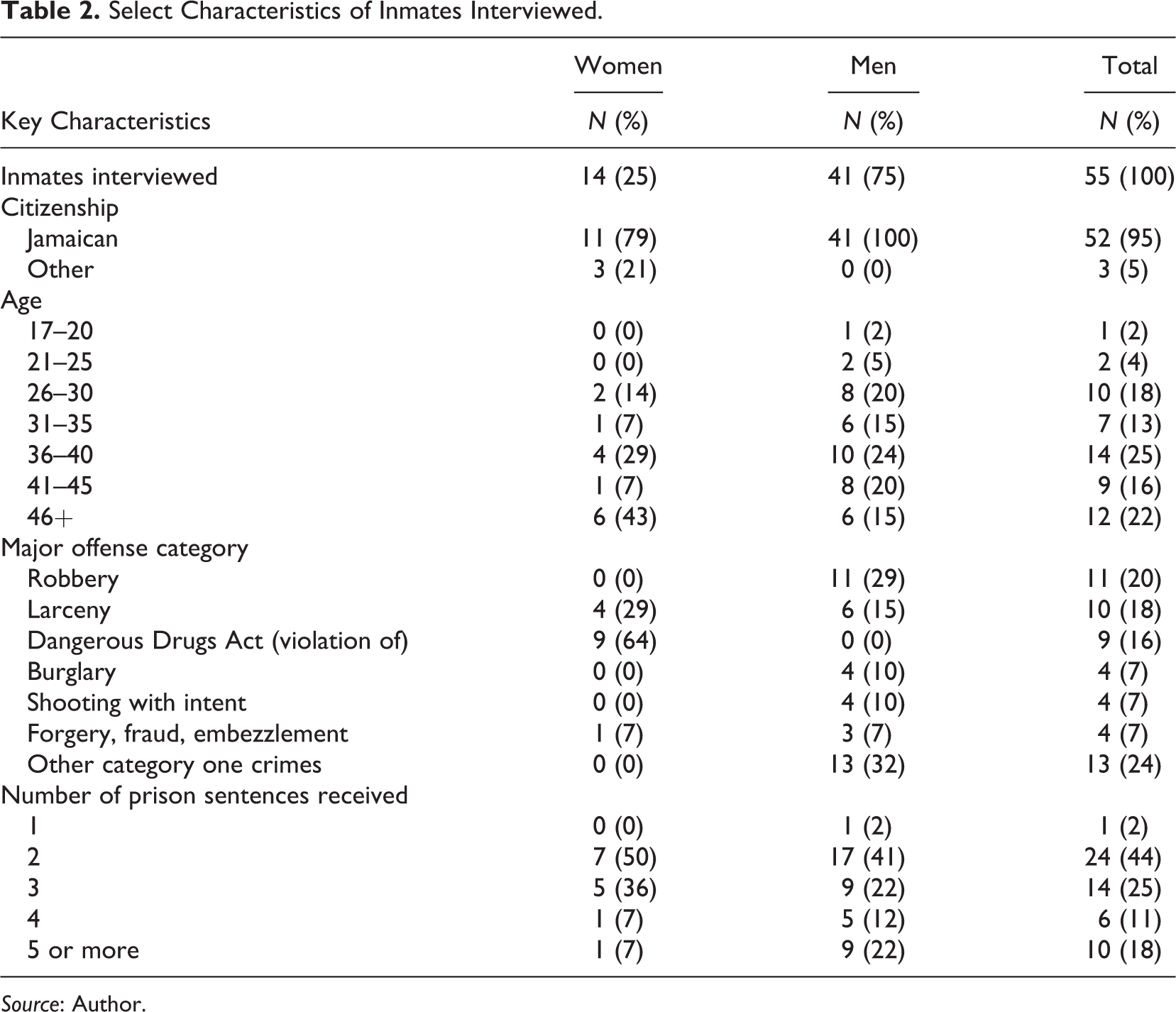
Changes in the sociodemographic characteristics of the custodial population in Jamaica are undocumented and underresearched. But it is known that the largest proportion of the adult custodial population are men (more than 90%), the recidivism rate is about 42%, 50% of admittees are unskilled, young person’s age 18–25 years account for about 21% of new admittances, and under 5% of the population are foreign national offenders (see Planning Institute of Jamaica, 2019). Most inmates can be considered poor, which means some were unlikely to make bail which is tied to monetary sureties. Many are also unable to afford legal representation and are residents of disadvantaged communities.
Women tend to be admitted for breaches of the Dangerous Drug Act and men for larceny-related offenses. However, in 2018, men were mainly admitted to maximum-security correctional facilities for illegal possession of firearm/ammunition, a change that can be partly linked to the implementation of the enhanced security measures, which commenced in 2017 and which are particularly focused on curbing gun-related crimes. The characteristics of the sample used in the current study do not fully map on to this general profile given its purposive nature which means that it is nonrepresentative of the wider adult custodial population or correctional service staff. As such, conclusions drawn in this article are only generalizable to theory.
As indicated in Table 2, the majority (98%) of the study sample were prison recidivists and therefore more likely than first-time offenders to have a good grasp of the operations of the maximum-security facilities in which they were housed. Of the 55 inmates interviewed, 75% (N = 41) were men and 25% (N = 14) women. Women were housed at the adult maximum-security facility located at Fort Augusta (FAACC), 21 men at Tower Street (TSACC), and the remaining 20 men at Saint Catherine. Four persons within the sample (one man who was deported and now in prison and three foreign national offenders) were able to share their experiences of imprisonment in Jamaica and another jurisdiction. One man did not have a previous prison history and was included in the sample as a deviant case that could provide some insight into the experiences of first-time offenders. The discussion that follows this section also draws on interviews conducted with nine professionals involved in providing in-prison and postrelease care services in at least one adult maximum-security facility in Jamaica. All were correctional staff with more than 10 years of service, majority (N = 6) men. Table 1 provides an overview of their various roles and the types of reintegration support provided in each of the adult maximum-security correctional facilities for adults where they worked.
Select Characteristics of Inmates Interviewed.
Source: Author.
While reintegration support is limited, there is a disparate set of in-prison services aimed at supporting the rehabilitation of inmates, mainly their education, skills training, spiritual nurturing, leadership, and opportunities to maintain contact with their families. Some interventions, especially those that were computer related, tended to be oversubscribed and required close monitoring by correctional officers to prevent misuse of the platform for deviant activities by “unrehabilitated inmates”. Rehabilitation in this context denotes the positive behavioral change of inmates due to their participation in interventions geared toward removing their propensity and desire for offending (Robinson & Crow, 2009). It is also a utilitarian aim of the prison sentence in Jamaica, which has remained largely deontological in nature.
There are various forms of punishment in operation with justifications that can be considered deontological (based on retribution), consequentialist (based on utilitarianism), or a mix. The legal imposition of punishment by the Jamaican state is often described as retributivist and reductionist, wherein it seeks to justify the “deliberate infliction of hardship or an imposition (a loss of liberty or rights) on wrongdoers” (Canton & Hancock, 2007, p. 249) by its consequences of deterring reoffending 5 and future criminals. 6 Utilitarianism is also reductionist in nature in that it is forward-looking, and deterrence is also a likely result (see Michael, 1992). However, utilitarianism emphasizes the common good, 7 that is, maximizing the positive consequences of the punishment for the offender, their families, communities, and the wider society. Therefore, both punishment and crime should and can be kept to a minimum if the state takes necessary steps to ensure that only the proportion of hardship that is required to secure the common good is inflicted. This is the essence of the 36 specific recommendations coming out of the “Improving Prison Conditions in the Caribbean” Conference. To what extent is the management of Jamaica’s adult maximum-security correctional facilities based on this utilitarian philosophy, theory, and approach? It is to this examination the paper now turns.
Effective Use of the Prison Sentence
Harms caused to the offender and society by a prison sentence are well-documented. Sykes (2007) identifies at least five deprivations directly resulting from being imprisoned and which can cause various harms—deprivation of liberty, security, personal autonomy, heterosexual relations, and goods and services. To this list can be added a belief in incorrigibility, that is, the incapability of inmates to be corrected. Partly because of these deprivations and the use of indeterminate prison sentences, Focault (1995) considered imprisonment arbitrary and disproportionate. He notes, sometimes in the name of the effects of imprisonment, which punishes those who have not yet been convicted, which communicates and generalised the evil that it ought to prevent, and which run counter to the principle of individuality of penalties by punishing a whole family; it was said that imprisonment is not a penalty. (pp. 119–120)
Jamaica’s imprisonment rate of 136 per 100,000 population suggests that it is being used as a last resort. This being one of the lowest imprisonment rates in the Anglophone Caribbean would seem to suggest that the use of prescribed alternatives such as early release, noncustodial sentencing including probation, diversion of unfit inmates to drug and mental health rehabilitation centers, alternative dispute resolution, is being maximized. However, the use of extrajudicial killings as a prison alternative and response to the high-crime rate, which stands at 599 per 100,000 tells a different story. While the number of persons shot and killed by the security forces has experienced a downward spiral since the establishment of the Independent Commission of Investigation (INDECOM, 2018), members of the public shot and killed by the security forces remain high in 2018 at about 5 per 100,000 population.
INDECOM was established in 2010 by an act of parliament, the INDECOM Act, to conduct investigations concerning actions of members of the police force and other state agents that result in death, injury, human rights violations, and connected matters involving members of the Jamaican public. But, as with other monitoring bodies, the work of INDECOM is hampered by challenges to real autonomy, clarity of purpose, and insufficient resources. The basic powers of INDECOM to lay charges, arrest suspects, prosecute, and compel information continues to be challenged in the courts by members of the security forces, thereby delaying the realization of INDECOM’s full potential (Jamaicans for Justice et al., 2016).
There is tremendous evidence pointing to the ineffectiveness of short-term imprisonment when compared to noncustodial sentences (see, e.g., Allen, 2008; Roberts & Smith, 2003; Wermink et al., 2010). Notwithstanding that short-term imprisonment might be more ideal when compared to a long-term prison since the shortened stay helps to prevent institutionalization, is less of a tax burden, minimizes deepened interaction with unchanged inmates, and limits exposure to the pains of imprisonment. In this study, some participants serving shorter sentences felt more unstable than their counterparts, while others questioned the deterrent effect of their sentence, particularly those admitted for larceny-related offenses and were suffering from drug addictions.
Although a period of abstinence imposed by the prison sentence can help to break the drug addiction, due to prison corruption, some inmates who identify as drug addicts still had access to drugs in prison. The National Council on Drug Abuse (2015) found in their study that most inmates believed that violence in prison was linked to drug use, and many also felt that imprisonment encouraged drug use. Some inmates in this study reported receiving and trading marijuana which they believed helped to control boisterous uproars in the facility by keeping users calm. Therefore, the smuggling into the correctional facilities of contraband items by correctional officers and some female visitors who carry in items inside their vaginal cavity, not excluding cellular phones, remains a service challenge. Overall, short-term imprisonment in the Jamaican context can be counterproductive on various fronts and especially for inmates with drug addictions who require consistent treatment by trained staff who know how to use evidence-based treatment options including medication-assisted therapy. Wilfred an inmate who has been to prison on 16 occasions for larceny-related offenses, which he links to his cocaine addiction, explains that his healing is unlikely in prison since mentally he is not engaged by the service. He notes, Me cant…. heal me feel a the drugs [make] me restless. A just me body dey yah me mind out a door you know them way dey. It come in like the sentence a go mad me…. Sometime a just the drugs hurt, the drugs hurt you…. .If you feel to say you can get a quick money for the fan you naah go leave it cause you nuh have no money you a go move towards the fan you understand?
To be eligible for parole, inmates must be serving a sentence of more than 12 months. About 21% of the adult custodial population and 65% of juveniles in custody are on remand. Moreover, the goal and objective of the correctional service are “to contribute to a better Jamaican society through effectively securing and transforming offenders for successful reintegration” (also see official website of the DCS, Jamaica, https://www.dcs.gov.jm/pages/vision-mission/). But, persons serving short sentences and others on remand are provided little or nothing in the form of rehabilitation since it is expected that reformed ideas, habits, and behaviors are inculcated over an extended period of time. The access that remandees have to rehabilitation interventions is particularly affected by the uncertainty of their status and, in some cases, the long waiting period before receiving a trial date.
Currently, persons who are behind prison bars in Jamaica do not have the right to vote. Therefore, remandees as with other inmates are stripped of the duties of citizenship, which are then difficult to reinstate upon release even if they were eventually found not guilty. Thus, suspending the right of inmates and especially remandees of their right to vote while in detention seems counterproductive to realizing the explicitly stated utilitarian aim of the prison sentence. These are some of the serious challenges encountered by ex-inmates seeking to become reintegrated into Jamaican society.
Delays in bringing cases to trial remain a source of injustice in Jamaica, especially for remandees held in maximum-security conditions. Such delays have, over the years been attributed to a backlog of cases, hearing date uncertainty, and a handful of judges; a situation that has improved in recent time due to a number of measures taken especially by the Judiciary. Included in such measures is effective case management, the establishment of transition courts, more reliable record keeping, passing of the Evidence Amendment Act, increase in night court sessions, expanding the jurisdiction of the Court of Petty Sessions and the Sentence Reduction Day initiative. Court alternatives such as the restorative justice program are also supporting the transformation of the criminal justice system desired by 2030.
Having one’s case heard in a reasonable time without excessive delays partly constitutes a fair trial. However, fairness is also dependent on the extent to which individuals are able to exercise their right to legal representation. Not all members of the Jamaican public know about and exercise their right to legal representation by a qualified attorney whether under the duty counsel program currently in operation or otherwise. Moreover, the arresting police officer may not, in all cases, communicate this right. Even the nominal fee charged by the Legal Aid Council (LAC), whose responsibility it is to provide an efficient service for citizens, can be constricting.
While the Ministry of Justice provides an annual subvention for the LAC to provide subsidized professional legal services to persons who need legal aid, the subvention is small, and added costs for providing the service must be offset by the nominal fee charged. As such, those deemed able to pay are required to pay this nominal fee before the “free service” can be accessed. Some participants in this study linked their arbitrary arrest and detention to their inability to pay this nominal fee. Thus, the poor or those persons most in need of this service are those who might be denied access to legal aid because of the nominal fee requirement. Moreover, drug-related cases are not readily accepted by the LAC, as such, many women are also denied access (Henry-Lee, 2005).
In sum, the effectiveness of the prison sentence does not depend solely on the conditions of prison. The operationalization of court alternatives, the quality of service delivered by the courts, and legal representation are contributing factors. Notwithstanding, the correctional service continues to play an important function in helping to prevent recidivism, intergenerational offending, and promote ideas of redemption. This is a function it performs despite resource challenges and continued portrayal as the back end of the criminal justice system.
Respect for the Service and Staff
The impact of imprisonment depends in part on the resources that staff and inmates have to cope with the situation. Additionally, the effectiveness of the correctional service is influenced by the availability of specialized staff. In 2015, only three sessional psychiatrists were employed to the department to provide services to correctional staff, inmates, and juveniles (DCS, 2015). The number is even lower now. Therefore, Jamaica’s psychiatrist to client ratio of 1:1,859 suggests that mental health care and psychosocial support is limited especially for inmates with mental illnesses.
About 10 in every 100 persons in the care of the DCS were identified as mentally ill in 2015 and 34 per 1,000 population unfit to plea. In the absence of routine monitoring and intervention by specialized staff based on the results of a risk assessment, the correctional service seems ill-equipped to provide effective treatment of inmates especially those with mental-, drug-, and alcohol-related challenges. There are, however, limited alternatives available for the treatment of offenders with alcohol, drug, and mental health challenges. Bellevue, the only hospital in Jamaica dedicated to the mentally ill is often fully booked, is downsizing and does not accept patients with criminal records. Other mental health facilities are often up to capacity due to limited bed spaces or staff shortages.
Of course, these challenges help to compromise the quality of the rehabilitation experience, especially given that counseling is not a service consistently delivered in all three maximum-security facilities. Moreover, when the service is available, it is not always accessible as correctional officers are not always available to escort and supervise inmates wishing to attend the counseling sessions. Overall, it seems that the treatment of offenders in need of mental health and psychosocial support boils down to sending them to prison simply to remove them from circulation within the wider society. Such an approach, again, trumps the stated utilitarian aims of the prison sentence in the Jamaican context.
Staff in this study felt valued and empowered, except for some perceptions about being on the backside of the criminal justice system, discrepancies between the emoluments of probation officers and case managers, and the need for greater accountability regarding travel allowance claims by senior officials. Moreover, probation officers were tasked with responsibilities unrelated to the correctional service, such as providing probationary care to parents requesting help to manage challenging children and helping to address child-related cases of abuse. The apparent blend of probation and child and family social work services in Jamaica suggests not only demands in excess of capacity but also raises questions about functional coherence and clarity of occupational purpose (Leslie, 2019). This ambiguity in staff function contributes to the heavy caseloads that influence the percentage of cases that close satisfactorily, parole reports submitted on time, the progression of cases based on the results of a risk assessment, and number of clients that end up completing targeted interventions.
There are several training opportunities available to DCS staff. But, the many reports of inmates being abused at the hands of correctional officers suggest the need for specialized training in protecting and respecting the rights of offenders in a prison context. There should also be greater enforcement of professional standards set by the Office of the Services Commission (OSC). In 2015, 10 correctional staff members were interdicted by the OSC for various offenses including indecent assault, sexual assault, taking contraband in the institution, unlawful wounding, and illegal possession of firearm and ammunition (DCS, 2015). This report validates many accounts of correctional officers physically abusing inmates made in this study. Jason, a prison recidivist, explains that the abuse experienced at the hands of some correctional officers is not limited to the physical but might also include verbal abuse, which he links to the aggression of officers. He notes, Some officers aggressive some officers don’t know how to deal with inmates them come call you “boy” “old prisoner” and all different kind of word. Them cuss up them bad word to you and all them something dey. And that shouldn’t be so warder only see to it supervision…you can’t say you a go rehabilitate a man and you dey say oh man go suck your mother go do this and dig you round a back. A nuh rehabilitate that you a tell a man when them go a them yard and see you them fi bus a shot inna your head. A lot of inmates in fear of that because the rule book say if you find an inmate with something either you charge him or no charge him you not supposed to lick him fi wa lick him for a chip. So nuff inmates in here get abuse by warder physically and verbally.
Such violations also create a double standard since some of these same officers were described as turning a blind eye to internal violations that may include the use of mobile phones and makeshift hot plates in the cells, trading and smoking of marijuana supported by the use of money which was prohibited. Inmates were required to use cashbooks purchased by their visitors to make purchases in the tuck shop. However, many inmates found ways of accessing and using the actual currency to purchase and trade items including from the tuckshop, sometimes with the help of correctional officers. Thus, the prison corruption and abuse which characterized some officer–inmate relationships seemed to reinforce the deviant identities of some inmates.
Not all correctional officers were described by research participants as aggressive, physically violent, or verbally abusive. There were few others who were viewed as manipulative, wherein they would offer privileges to select inmates in return for sexual and other favors. Even so, the orderly system received rave reviews from a number of inmates who reported accepting the opportunity to serve as an orderlie and cope with the harsh conditions of imprisonment. Orderlies were well-behaving inmates who assisted prison superintendents with the management of the prison estate. Some male inmates compared the post to being “a yard boy” and expressed great reluctance assuming such a role if selected. These inmates believed the orderly system provided an entry point for the development of inappropriate relations between some senior officers and inmates.
There is also the “ideal correctional officer” who is compassionate, a good listener, jovial, positive, inspired hope, and demonstrated a genuine concern for the well-being of inmates. Several examples of the “ideal officer” were provided by research participants. The professional engagement with such officers was described as positive and supportive of the willingness of inmates to conform to existing rules because of the respect these officers showed them. Overall, the quality of correctional staff–offender relations was either seen as supportive of the positive behavioral change of inmates, reinforcing their deviant identities or encouraging their risky behaviors including suicide (Liebling, 2007).
A Physical Environment Fit for Purpose
The environmental conditions of prison help to shape the dignity and self-esteem of inmates who are unlikely to conform if they experience inhumane conditions of detention and mistreatment. For inmates to conform, they must be treated with positive expectations and respect, feel safe, and be assisted toward insight into their own desistance behavior (World Health Organization, Mental Health in Prisons Project, 1999). However, even the best run prisons are likely to contribute to long-term unemployment, the breakup of families and social support networks, stigmatization, emotional, and mental ill-health.
To help to minimize these risks, Gleeds Head Office (2016) identifies key features of prisons that are supportive environments for rehabilitation. Included in such features is a functional design that is realistic and allows for a degree of future flexibility in terms of layout and technological advances; design and layout of cells reflect numerous cell functions, and the prison should be able to perform the same functions of a mental health or elderly care unit or detox facility. There are family-friendly meeting spaces, including a visitor center, which replicate a normalized home environment. Classrooms should be adequate in number with a spatial layout which is adaptable to various tasks and supports inmates’ social interaction, creativity, and problem-solving capabilities. In this kind of environment, staff feel valued and empowered as agents of change.
Jamaica is far off from achieving this “ideal prison environment” since the decade-long vision of building a new, state-of-the-art prison facility with or without the help of foreign aid remains unrealized. Conjugal visits are still not permitted, and opportunities to have quality time with family members are limited to telephone calls and Family Days, which are launched about twice per year. Condoms are still unavailable in prison although the HIV epidemic in Jamaica is generalized at 1.7% and concentrated in four key populations, namely, MSM, drug users, homeless persons, sex workers, and prisoners (Jamaicans for Justice et al., 2016).
Majority of inmates interviewed seem to object to the distribution of condoms in prison. An attempt to distribute condoms in the maximum-security correctional facilities for men in 1997 caused a prison riot. The riot resulted in the killing of inmates who identified as homosexuals and others who were simply prison rivals and labeled “battie-men.” Thus, except for being separated from the general inmate population because of safety concerns, protection for inmates who identify as homosexuals is limited. Sodomy or consensual sex between men remains criminalized, and there remains a prevailing assumption that only women and girls can be raped. This might be partly based on the Sexual Offenses Act’s emphasis on penile penetration. Clearly, there is a need to demystify such misplaced assumptions.
Despite the “special”, though inadequate measures that are taken to protect inmates who identify as homosexuals, the Jamaican state has attempted to create a more supportive prison environment for all inmates. Such attempts include building a new block at TFACC, repair and servicing of cameras and surveillance systems, limiting the number of inmates in each cell to three, assigning each orderlie to their own cell, and renovating various facilities. The original FAACC building deemed unfit for purpose was decommissioned, a therapy room was built in one of the juvenile correctional centers, the housing of “uncontrollable” juveniles with adult inmates discontinued, and the rehabilitation program diversified. Despite these improvements, most of the maximum-security correctional facilities for adults remain aged and failing structures that are former holding places for slaves and in various ways continue to enforce the isolation and dehumanization of inmates.
Most prison cells have tarred concrete, lack lighting, adequate ventilation, a toilet, and suitable bedding. In the absence of suitable bedding, cardboard boxes and makeshift hammocks are used as substitutes. The hammocks that hang from the ceiling of the cells demonstrate the inventiveness of some inmates who in a bid to avoid sleeping on the concrete floor join empty rice bags obtained from the prison estate’s kitchen. However, the lack of instrumentation to properly estimate the carrying capacity of the makeshift hammock also meant that some inmates would fall from the hanging beds and injure themselves.
Inmates who are not orderlies are locked down for most of the day with very limited time to engage in meaningful rehabilitation activities. Lockdown and “fly-up,” that is, inmates being released from their cells are largely determined by the availability of correctional staff to supervise and escort inmates to other sections of the prison estate. Release for bathroom and hygienic purposes usually take place once a day. As such, it is standard practice for inmates to slop-out, that is, defecate and urinate in their cells, normally in bottles, newspaper, or makeshift chamber pots known as “piss gyals.” These items they acquired during “fly-up.” Under more urgent circumstances, inmates were compelled to become creative by reorganizing how they slept, identifying a designated area for slopping out, throwing the feces enclosed in newspapers through the cell window ahead of fly-up, and sometimes defecating in their hands and cleansing it with the bottle of water stored in some cells. Stan explains, More time if you say you want ride a night time then you want ride a night time a damage thing that….you haffi cream off inna your hand. A three man inna a dorm you nuh you haffi dey cream off yourself two of you pan the ground still and one inna the hammock so when that dey man want ride now a head and tail with turn fi him head turn up so and my head turn up so the urine thing down inna the corner down the side dey so.
The DCS (2015) also lists a number of rehabilitation achievements. About 60% of inmates who sat the Caribbean Secondary Education Certificate in 2015 passed at least one subject. In that same year, there was also a 77% increase of rehabilitation grants issued and 14% increase in the number of inmates granted parole. Thus, amid the poor conditions of imprisonment, positive behavioral change is still possible but is unlikely to be sustained in the absence of meaningful postrelease support.
Reintegration Support
Reintegration in Jamaica remains associated with postrelease. Less understood is that reintegration is a process that encompasses arrest, sentence, rehabilitation, reentry, and resettlement of offenders (UN Office on Drugs & Crime, 2006). As such, Jamaica is yet to adopt a holistic formulation associated with the UK’s seven pathways to resettlement model which seeks to address needs related to postrelease accommodation, education and training, employment, mental and physical health, drugs and alcohol use, finance and debt management, and the well-being of children and families left-behind (Leslie, 2019). “Successful” reintegration in the Jamaica context is therefore synonymous with opportunities for early release and aftercare while rehabilitation remains largely prison-based.
“Success” suggests that ex-inmates have developed an ability to stay out of prison. But, this does not necessarily mean that some or all the requisites to lead crime-free and productive lives following imprisonment have been met. Additionally, successful reintegration does not necessarily mean rehabilitation has occurred, or everyone who returns to prison was unrehabilitated. Thus, a shift in correctional policy focus toward effective re/integration is needed.
Inmates about a month prior to release are required to meet with probation aftercare officers to discuss their reintegration issues, including living arrangements and employment. In such meetings, inmates may also request assistance with covering the cost of travel from the correctional facility to the place of abode. If inmates worked in the correctional facility during their tenure, then the officer will make the necessary arrangements for them to receive an accumulated stipend. Upon request, inmates can also receive a letter of referral or recommendation addressed to non-governmental organizations (NGOs) that offer ex-inmates assistance with housing, food, and employment. In sum, reintegration in Jamaica is an ad hoc and underdeveloped set of activities in prison and the community in which there is a small and disparate group of NGOs with different motives and approaches to addressing the needs of local ex-inmates and involuntary removed migrants.
The letters of recommendation/referral and rehabilitation grants mentioned earlier were reported by inmates in the study to be significant sources of reintegration support (see Table 1). But, many inmates described the process as lengthy and at the mercy of the proactivity of probation officers who were often overburdened with other cases. A letter of recommendation provided by a superintendent was particularly useful as far as it could help ex-inmates secure a house or small business grant mainly provided by Food for the Poor; a faith-based organization. But, because of the stigma associated with identifying as an ex-inmate (see, e.g., Biholar, 2017), such letters were less beneficial when seeking to secure gainful employment upon release.
Probation aftercare officers interviewed also reported preparing and submitting applications to DCS head office for approval on behalf of some inmates. Senior probation officers felt that the opportunity was not easily accessed. The grant opportunity was indeed limited to unemployed “soon to be” ex-inmates who served sentences in excess of a year. But, one younger probation officer interviewed did not see access being an issue except in instances in which correctional staff did not make it a point of duty to inform their clients about the provision and how it could be accessed.
In the absence of a streamlined, structured, and substantive reintegration program that is based on a whole-of-government approach, there is a heavy reliance on inmates accessing opportunities for early release. Early release opportunities include electronic tagging, the work release program, and parole. Many inmates from this study reported that the process of obtaining parole was not as transparent as they would like it to be. Therefore, amid conversations about the long waiting period, low success rate, not being able to attend one’s hearing in person, and lack of knowledge about the appeals process, many inmates interviewed did not bother to apply for parole though they were eligible. Section 6 of the Parole Act (1978) provides for all inmates serving a sentence of more than 12 months to become eligible for parole after they have served 12 months or one third of their sentence, whichever is greater. Thus, the right to parole was not exercised by a number of inmates interviewed because of the obscurity of the process.
Gaining entry into the work release program was less obscure. The program entails TSACC operating a half-way house for men nearing the end of their sentence who require little or no supervision while being actively employed in the community and do not pose a significant threat to public safety. However, both correctional staff and inmates interviewed agreed that eligibility criteria for entry into the program are so stringent that most of the time, the half-way house is unoccupied. Therefore, the work release program remains an excellent opportunity to facilitate the economic re/integration of male offenders. But, the program has not been utilized since 2012 because according to one superintendent “even the best behaving inmates might not qualify for entry.”
In 2007, electronic tagging was piloted in Jamaica but in the absence of any report of a process evaluation undertaken, it is unclear whether the pilot has ended. It was reported by correctional staff that inmates who are low-risk, nonviolent, and show signs of rehabilitation are eligible for early release via electronic tagging. However, the majority of inmates interviewed did not know about or were unclear about the application process. Moreover, many women felt that the intervention only targeted persons serving longer sentences unrelated to drug offenses as reports of those who benefited from the opportunity mainly involved men.
Discussion
Conditions of prison and the support available postrelease reflect how countries treat criminals. High violent crime rates lead to public demands for harsher penalties for criminals regardless of the deterrent effect or the harms it may cause to society in general. The prison sentence holds offenders accountable for violating formal societal norms and removes from circulation those considered dangerous from within the wider society. But, although deprived of liberty and some of their rights might be restricted as an inevitable consequence of imprisonment, inmates retain absolute human rights and fundamental freedoms such as the right to life. These are rights that offenders do not forfeit by violating the law. Such absolute rights are embodied in various international treaties and guidelines, including the UN Standard Minimum Rules for the Treatment of Prisoners (1955)/Nelson Mandela Rules (2015) and the ICCPR (1966) and, should, by all means, be safeguarded.
By ratifying the ICCPR 10 in 1975, Jamaica demonstrated acceptance that persons should be enabled to enjoy absolute human rights including the right to life, fair trial, and freedom from torture and other forms of cruel, inhuman, or degrading treatment or punishment. Under Article 10 of the ICCPR, Jamaica is particularly mandated to take the required steps to ensure that “persons deprived of their liberty are treated with humanity and respect for the inherent dignity of their personhood.” Moreover, the state is encouraged to recognize that “the essential aim of imprisonment should be the reform and social readaptation of prisoners.” As such, prison conditions and the treatment that offenders receive in prison and upon release should not constitute added punishment.
Efforts on the part of the Jamaican state to improve the conditions of prison are commendable. This vital sign suggests that Jamaica might be experiencing a variant of penal expansionism, that is, the penal turn, 11 although already considered a largely punitive society given its colonial history. But, the “turn” underway does not involve the increasing use of the prison sentence since Jamaica’s imprisonment rate has remained among the lowest in the Caribbean Region over the last decade despite the high crime rate. The reforms evidenced are, therefore, toward realizing utilitarian developmental goals. However, there is further to go if Jamaica is to become a peaceful, just, inclusive society with a strong correctional service by 2030. 12
Depriving remandees and inmates of the right to vote not only underserves the rehabilitation goals of Article 10 (3) of the ICCPR, but it prevents the Jamaican state from meeting its obligations under Article 25, which speaks to the right of all citizens to participate in the conduct of public affairs. To deny, remandees of this right and responsibility of citizenship are to support their social exclusion and maybe even recontact with the criminal justice system. Therefore, it is not just the correctional service that needs to become desistance supportive; the entire criminal justice system’s approach toward treating offenders should be one that inter alia seeks to curtail criminal reputations and identities. Notwithstanding, any contact with the criminal justice system has a criminalizing effect. As such, the diversionary mechanisms that are mainly in place for children should be scaled-up, ways of reducing the waiting time before trial found, and use of prison alternatives maximized.
Extrajudicial killings should never be an option as it undermines several rights including the absolute right to life and a fair trial. It also supports the impunity of rogue police officers. Underlying this practice are public attitudes and a penal culture informed by a history of slavery, that is, of domination, oppression, and resistance. This is clearly an ongoing response and reaction that helps to perpetuate the cycle of crime in Jamaica. The proposed shift is the enforcement of penalties that support the desistance of offenders while safeguarding the common good.
Currently, the administration of justice seems largely based on a retributivist and deficit model, although an incremental shift is evidenced. There are some rehabilitation interventions, such as the orderly system, that acknowledge and rewards the efforts of inmates to change. Nevertheless, the lack of monitoring and evaluation and the sharing of results on these programs that seem to work help to support negative public perceptions about the correctional service. In sum, without the buy-in and empowerment of the community, personal reform experienced in prison is unlikely to be sustained.
Despite the poor conditions of imprisonment, rehabilitation is still possible. However, the extant literature suggests that rehabilitation outcomes can be maximized if the Jamaican state assumes fully its responsibility to keep alive and healthy without inflicting inhuman and degrading treatment on those persons whose liberty have been deprived. The administration of punishment based on largely retributive justifications is deeply embedded in the fabric of Jamaican society given its historical antecedent. In such an environment, abolitionists swim against the strong tide of public opinion, there is reluctance on the part of Caribbean political leaders to take unpopular decisions, criminal justice practitioners are invited to reverse the burden of proof and adopt retroactive confiscatory regimes in an effort to rid society of the scourge of violent crime with international pressure, the element of justice can get submerged in the perceived enormity of the crime situation and, state responses reflect panic and anger rather than calm reflection, proactiveness and justice. (CR & PRI, 1991, pp. 25, 24, 19)
Conclusion
Since most of the research on Jamaica’s correctional system is almost a decade old, this current article sought to provide more contemporary insights into the improved conditions of imprisonment while assessing the take-up of recommendations from the ground-breaking “Improving Prison Conditions in the Caribbean” Conference. Of the 36 specific recommendations coming out of the conference, most have been addressed by the Jamaican state, although there are some glaring deficits almost 30 years later. Unrealized prescriptions include inmates (not just women) having access to proper medical care, regular inspection and public reporting on the state of Jamaican correctional services, and prohibiting maximum security classification systems from subverting basic rights of prisoners. The recommendation that the Jamaican state should take deliberate steps to remove the custodial bias in Jamaican society by first reviewing and updating anachronistic laws that support the prison sentence as a punishment of first resort now that the death penalty has fallen into disuse remains a work in progress.
This article also flags prison corruption and a lack of policy direction regarding the reintegration agenda as counterproductive. These are issues that did not seem poignant at the time of the Conference as they were unaddressed in the specific recommendations that centered on violations of international laws and standards within the frame of prison management. Including the sanitization of the penal language, the criminal justice landscape has changed tremendously since the publication of the conference report. The changes observed are not necessarily linked to the Conference as they are to advocacy on the part of human rights groups such as Jamaicans for Justice and Stand Up Jamaica, some level of political will, policy convergence and international pressure. Yet, “plus ça change, plus c’est la même chose,” 13 in that, negative ideas and attitudes toward punishment remain deeply embedded in correctional practice and inhibitive of meaningful reform. Hope remains.
Recommendations
Overcoming deeply embedded attitudes and behaviors toward punishment will not happen overnight. But, ensuring that the prison sentence is used as a last resort, where legitimate alternatives are available, is one step in the right direction. Adopting another approach is likely to result in prison overcrowding, recidivism, and rights violations which favor situations in which the needs of inmates with mental-, drug-, and alcohol-related challenges are unaddressed. Thus, many reports of miscarriaged justice, including that of Robert Robinson 14 (see Bailey, 2019), suggest that greater political will is needed to encourage more effective use of the prison sentence and scale-up legitimate alternatives available.
Many harms caused by imprisonment have inspired many debates about the practicability of achieving rehabilitation in inhuman, anachronistic, and poor prison environments which vary enormously in terms of the experiences of inmates. These considerations support ideas of how the built environment can help to improve outcomes for inmates and staff. Thus, the utilitarian aims of the prison sentence can and should be realized. Secondly, evaluations that can help to determine how a shift toward greater utilitarian justifications is likely to result in more savings for the Jamaican state in the long-term should be undertaken. Thirdly, there needs to be a wider recognition that the Jamaican government alone cannot achieve the transformation required. As such, a properly coordinated, multipartnership approach that builds on current partnership arrangements is needed.
A structured program is also needed to ensure that ex-inmates are placed in meaningful jobs, thereby helping to disincentivize their institutionalization, return to crime and prison. This is likely to be an outcome of the Jamaican Government establishing a clearly defined, holistic, and coherent policy direction on reintegration based on an understanding that the needs of deported migrants and local ex-inmates might differ, but the commitments of the Jamaican state remain the same. States bear an obligation to ensure that its citizens are treated humanely, including those whose liberty has been deprived. This includes providing for their basic needs (food and water, clothing, sanitation, health care, to be assumed innocent until proven guilty) particularly when in the care of the state. Moreover, since inmates are expected to re/integrate into mainstream Jamaica society upon release, they should have full rights to an equivalent standard of health and social care available to citizens.
Greater enforcement of local laws and international standards is necessary. This can be achieved through establishing effective and transparent complaint mechanisms, ongoing monitoring and evaluations, and further enabling agencies such as INDECOM. If Jamaica’s criminal justice system is to become world class, then how offenders are treated needs to align with international standards. Enforcement mechanisms are therefore indispensable defenses to ensuring, adherence to such standards and that the rights of inmates are upheld in practice.
Correctional facilities should promote a culture of desistance, support the skills development and resilience of inmates, leaving them better equipped to re/integrate into mainstream society. This process might entail ensuring that the physical environment reflects these aims in design and improving working conditions so that the most professional and qualified staff are attracted and retained. It might also involve establishing drug treatment programs inside the facilities to prevent the relapse of drug users sent to prison. Overall, the transformation required must be based on greater recognition that inmates have rights including the right to be heard and participate in processes of decision making regarding their well-being. This article was an attempt to give voice to inmates, and the professionals who serve them.
Footnotes
Author’s Note
The author has no relevant financial or nonfinancial relationships to disclose.
Acknowledgment
The necessary support and permissions needed to undertake this study were provided by Cardiff University, the Commonwealth Scholarship Commission in the United Kingdom, Ministry of National Security, and the Department of Correctional Services, Jamaica.
Declaration of Conflicting Interests
The author declared no potential conflicts of interest with respect to the research, authorship, and/or publication of this article.
Funding
The author(s) disclosed receipt of the following financial support for the research and/or authorship of this article: Financial support for fieldwork provided by the Commonwealth Scholarship Commission in the United Kingdom.
