




Abstract
Deportation or removal from the United States for criminal justice–involved noncitizens has been described as analogous to incapacitation. A common assertion is that if immigration authorities remove these noncitizens from the United States, future criminal justice involvement will be averted. The present study explores the hypothesized incapacitation effect of immigration removal and tests whether a record of prior removal predicts postremoval rearrest patterns. The sample consists of 521 foreign-born males with a verified immigration removal from the United States, following transfer into federal immigration custody from Los Angeles County Jail in 2002. California rearrests after the date of verified U.S. removal were tracked through 2011. Results indicate that 48% of the sample was rearrested at least once and 22% had three or more postremoval arrests. These findings do not support the hypothesis that deportation equates to permanent incapacitation. The study also found that a record of prior removal did not predict postremoval rearrest likelihood or frequency. As a single longitudinal study and the first of its kind, these results alone cannot inform responsible policy recommendations. The study does, however, highlight directions for further research and the pressing need for access to individual-level immigration data for empirical study and public distribution of results.
Deportation or removal from the United States for criminal justice–involved noncitizens has been described as analogous to incapacitation (Coleman & Kocher, 2011; Miles & Cox, 2014; Warner, 2005). For example, Warner (2005) refers to this as “incapacitation by removal” (p. 75). In the corrections literature, incapacitation as a strategy for crime reduction focuses on preventing crimes by physically isolating offenders from the community, typically through methods of incarceration (Greenwood, 1982; Visher, 1987). In other words, while offenders are in jail or prison they are prevented from committing further crimes in the community, thus contributing to a reduction in the offenses that would have occurred had they remained free from custody (Greenwood, 1982; Zimring & Hawkins, 1995; note that some degree of replacement of certain crime types by other individuals is expected, Visher, 1987). With respect to removable noncitizens (those often referred to as undocumented, unauthorized, or illegal immigrants 1 ), the strategy of selective incapacitation can be conceptualized through the use of deportation from the United States. If criminally involved noncitizens are removed from the country, they are akin to individuals locked in prison, in that they are no longer available to recidivate in the community. In other words, Paige (2011) observes that deportation “could be considered a form of incapacitation that operates by removing the offender from society” (p. 181).
If deportation is the equivalent of permanent incapacitation, it follows that removed individuals should not be rearrested for new criminal offenses within the United States (Phillip, 2015). We refer to this expectation as the “incapacitation hypothesis.” While much research has focused on incapacitation with respect to incarceration (e.g., Piquero & Blumstein, 2007), the hypothesis offered in the context of removable noncitizens has not been tested empirically. To date, little study has focused on the recidivism of removable noncitizens identified within a criminal justice population in general (Hines & Peri, 2019; Stowell et al., 2013), and even less is known about the subgroup that is taken into federal custody. In fact, outside of limited descriptive summary reports issued by federal agencies, we could identify little published literature empirically describing what happens after criminal justice–involved noncitizens are transferred from jail or prison into federal immigration custody.
The present study seeks to contribute empirical knowledge in this area through a long-term study of rearrests of noncitizens postremoval from the country. The sample consists of male removable noncitizens (1) released directly into the custody of federal immigration from LA County Jail, who (2) had a documented date of verified removal from the United States within 3 years. The study has three goals: First, to describe the characteristics of those who were removed from the country and their subsequent rearrests within the state of California—specifically, rearrests occurring in the state of California after the verified date of immigration removal. Second, the study seeks to test whether a history of prior removal from the country represents a significant risk factor for repeat arrest following a subsequent removal, relative to those with no prior record of removal. Third, the study provides an opportunity to establish a baseline of the rate of rearrests after verified removal, in the context of a specific population, to provide a source of comparison for future research examining trends in rearrests after removal.
Prior removal from the country is of interest for two reasons. First, as discussed in detail in a subsequent section, previous research finds prior removal to be associated with repeat arrest postjail release within this population (Hickman & Suttorp, 2010; Hickman et al., 2016). Second, a record of prior removal is identified in federal immigration policy and in political discussions as an indicator of increased public safety risk (Office of Detention and Removal, 2003; Raymond et al., 2004; Warner, 2005). To develop the necessary background for the present study, we begin by providing a brief overview of issues related to federal immigration law enforcement and the removal process, 2 followed by a discussion of prior studies relevant to the topic at hand.
Removable Status and Recent Interior Federal Immigration Enforcement Efforts
Federal immigration processes change over time in policy, practice, and legal scope, and it is beyond the scope of the current study to document these changes over time and compare with processes currently in place. We proceed with describing the process in place during the time period relevant for the data contained in the present study (2002–2011).
For those who are not native-born U.S. citizens, legal permission from the federal government is required for presence within the United States. Initially entering the United States without this official legal permission (in any one of a variety of forms) is a violation of federal civil law and results in removable status. Individuals can also obtain removable status if they fail to depart the country at the conclusion of their approved stay (such as overstaying a student visa) or if their current permission is revoked (Chacon, 2012). The latter can occur for a variety of reasons including conviction of commission (or conspiracy to commit) of at least one “aggravated felony,” a set of criminal offenses defined and expanded across a series of federal immigration laws, including the Illegal Immigration Reform and Immigrant Responsibility Act (IIRIRA) 1996 (Eagly, 2013). Aggravated felony offenses are an assortment of violations of federal and state law, representing multiple crime types such as violent, property, fraud, tax evasion, drug trafficking, money laundering, and passport or document forgery, among others. Those with aggravated felony convictions represent a subgroup of removable noncitizens, designated as “criminal aliens” (Government Accountability Office [GAO], 2011).
If apprehended and determined to be removable, federal immigration authorities (including judges) may allow a noncitizen the opportunity to voluntarily depart the country without further proceedings. This process allows the individual to avoid a record of formal removal. In addition to other limitations, the federal IIRIRA legislation prohibits the voluntary removal option for criminal aliens and individuals who failed to depart (or returned) after a previous opportunity to leave voluntarily. Noncitizens leaving via voluntary departure may leave either with or without “safeguards.” Those not considered a flight risk (based on a lengthy list of considerations) may be afforded voluntary departure without safeguards. They proceed on their own (on or before a specified date) to the U.S. border and are typically granted limited time to get their U.S. affairs in order. According to the U.S. Office of Detention and Removal Operation’s (2006) Detention and Deportation Officer’s Field Manual, “An alien granted voluntary departure with safeguards must depart immediately, under the direct observation of the officer” (p. 53). Both forms of voluntary departure are verified, including official documentation of the date of departure through a U.S. border crossing (Office of Detention and Removal Operations, 2006).
The 2006 IIRIRA law also allows for administrative removal (without the involvement of an immigration judge) for some removable noncitizens including criminal aliens. For either form of removal (judicial or administrative), formal case processing procedures require documentation that verifies the border location and date of their removal. As part of completing the removal process, federal immigration officers are required to record that they delivered a verbal and written warning about the civil and criminal penalties associated with illegal reentry into the United States after removal (Office of Detention and Removal Operations, 2006).
Prior to 2003, the U.S. Immigration and Naturalization Service (INS) handled immigration and citizenship processes, border security, and federal immigration law enforcement. With the 2003 advent of the U.S. Department of Homeland Security (DHS), these three functions were separated into different DHS agencies, giving the U.S. Immigration and Customs Enforcement (ICE) charge over immigration law enforcement within the interior of the United States. For the most recent annual reporting period (fiscal year 2018), 37% of ICE’s removals (95,360 of 256,085) involved removable noncitizens located within the interior of the United States (as opposed to along the U.S. border). Of those, ICE reports that 66% were criminal aliens (either convicted or with charges pending). Mexico was the destination country for 55% of all removals. Figures were not reported for interior removals separately (U.S. ICE, 2018).
Prior Studies of Crime and Removable Noncitizens
Over the past 2 decades, there has been a dramatic growth in the study of immigration and crime in criminology and criminal justice; the large majority reporting that noncitizens are not associated with increased crime rates and, in some cases, are associated with reduced rates of reported criminal activity. While studies relevant to the current sample do exist, the bulk of the existing literature focuses on community samples (not criminal justice samples), employs a macrolevel unit of analysis (as opposed to microlevel), and does not contain a measure of foreign-born legal status (e.g., Butcher & Piehl, 1998; Feldmeyer & Steffensmeier, 2009; Ferraro, 2016; Graif & Sampson, 2009; Hagan & Palloni, 1998; Ousey & Kubrin, 2009; Reid et al., 2005; Stowell & Martinez, 2007; Stowell et al., 2009; Wadsworth, 2010). A handful of macrolevel studies do focus on removable noncitizens or immigration enforcement related to them. For example, Stowell and colleagues (2013) use the number of removable noncitizens identified in U.S. Border Patrol administrative sectors over time as a proxy for removal/deportation. The authors find an inconsistent relationship between removable noncitizen identifications and subsequent violent crime rates in geographic areas. While most of Stowell et al.’s analyses did not detect a relationship of interest, some contrasting findings appeared in regions adjacent to and more distant from the U.S. border.
A few recent studies have focused on specific enforcement efforts. Miles and Cox (2014) examine an enforcement effort known as Secure Communities, which sought to identify removable noncitizens within criminal justice populations and target them for removal. The researchers found no significant relationship between crime rates and the implementation of Secure Communities across jurisdictions. Likewise, Treyger et al. (2014) could identify no overall significant impact of the phase-in of Secure Communities on crime rates in 335 cities. More recently, Hines and Peri (2019) examined ICE data on removals under Secure Communities, reporting that the increase in deportation rates as a result of Secure Communities was not associated with a reduction in Uniform Crime Report (UCR) crime rates for either violent or property offenses. In short, the macrolevel studies seeking to compare removable noncitizen detection overall or as a result of specific immigration enforcement efforts are limited in number and support inconclusive or null findings with respect to removable noncitizens and crime.
At the microlevel, studies that include some measure of foreign-born legal status and focus on criminal offending or recidivism (the scope of the present study) are particularly uncommon. This is most likely due to the fact that gathering or otherwise gaining access to data on immigration status is a considerable challenge for researchers. Butcher and Piehl (2000) made use of California prison admission data to compare the convictions of native-born versus foreign-born state inmates. In this work, they found differences in the type of conviction; specifically, foreign-born inmates were more likely to be admitted for drug convictions. In another study making creative use of available criminal justice data, Katz et al. (2011) examined foreign-born Maricopa County Arizona arrestees using the local descendant of the discontinued national Arrestee Drug Abuse Monitoring program. In the sample of 3,050 arrested individuals, 12% self-reported illegal status and 4% reported legal immigration status. In their main analysis of drug use, the authors found that those with illegal status were less likely to use all drugs (except for powder cocaine) relative to U.S. citizens (Katz et al., 2011).
Another group of microlevel studies owes its data on removable status to the cooperation of federal immigration in the collection of data. This includes the work of Pennell et al. (1989) in the counties of El Paso, Texas, and San Diego. In this study, criminal records of arrestees were examined according to arrestee immigration status (as determined by immigration agents). The result indicated that 12% of San Diego County and 15% of El Paso County felony arrestees were removable noncitizens. Hagan and Palloni (1999) reanalyzed these data with the goal of comparing native citizens, nonremovable immigrants, and removable noncitizens and found no noteworthy differences in arrest records.
Using a similar methodology as the Pennell study, a series of three data collection efforts in LA County described and compared the postjail release recidivism for foreign-born arrestees (Countywide Criminal Justice Coordination Committee [CCJCC] Ad Hoc Committee on Criminal Aliens, 1990; CCJCC and LA County Subcommittee on Criminal Aliens, 1997; Hickman et al., 2005). These studies were conducted through federal grants and included the participation of the LA-area federal immigration office. In this research, immigration status was determined by federal immigration agents for all male inmates released from LA County Jail over a 30-day period in three separate studies conducted in 1990, 1995, and 2002. In 1990, 58% of LA County Jail’s entire 30-day male release cohort was comprised of removable noncitizens, followed by 61% in 1995 and 66% in 2002. Postjail release recidivism was defined as repeat arrests on local and state (nonimmigration-related) charges. It was measured in all studies using California arrest data and a 1-year follow-up period, but the comparisons differed somewhat. For the 1990 and 2002 cohorts, recidivism was reported for all removable noncitizens, with rearrest rates of 41% and 28%, respectively. The 1995 and 2002 studies tracked those individuals who were released to the custody of federal immigration directly from jail. In 1995, 45% were rearrested within 1 year compared with 19% in 2002. While the latter two studies did measure rearrest after transfer into immigration custody, both included all individuals regardless of the outcome of their immigration custody. In other words, neither study directly measured rearrests that occur after removable noncitizens were recorded as voluntarily departing or being physically removed from the United States.
In a series of follow-up studies, data from the 2002 LA County release cohort were reanalyzed to conduct a more in-depth analysis of removable immigrant recidivism. Among those released directly into the community (rather than to immigration or other custody), Hickman and Suttorp (2008) found no differences 1-year postrelease in the likelihood, frequency, or time-to-first rearrest between removable noncitizens and the rest of the foreign-born release cohort. This lack of differences was affirmed in a subsequent study that lengthened the follow-up period to 9 years (Wong et al., 2015). However, other studies looking more specifically within the group of removable noncitizens in the 2002 release cohort found substantial differences in recidivism. Those with a record of previous removal from the country were significantly more likely to be rearrested at least once postjail release and were also rearrested more frequently and more quickly than were those who had not previously been removed. These results held both 1 year after jail release (Hickman & Suttorp, 2010) and after 9 years postrelease from LA County Jail (Hickman et al., 2016).
Taken together, the results of this series of LA County studies suggest that, among foreign-born men, removable status alone does not indicate an elevated risk of recidivism over the short- or long-term. A record of previous removal does, however, represent a significant and substantial recidivism risk indicator, at least among those inmates released from jail directly into the community. It remains to be seen whether a record of previous removal emerges as a significant recidivism risk predictor in other samples; if so, this characteristic may be an important marker for immigration and law enforcement authorities to consider when targeting interior immigration enforcement efforts.
The present study’s goal is to undertake a new direction in this body of research by focusing on recidivism in those individuals who are removed from the United States after being transferred from jail to the custody of federal immigration. In other words, we examine whether and to what extent individuals who are removed from the country subsequently return to the United States and commit additional crimes. The results from this study will serve as the first addition to the line of inquiry needed to address a complete void in the empirical knowledge about recidivism postremoval from the United States. Given the widespread assumption that removal must certainly avert all recidivism and the related political debates about defunding local “sanctuary” jurisdictions who withhold cooperation in the removal process, the goal of this study is to inform the discussion with overdue empirical evidence.
Method
Within a sample of local jail inmates transferred to federal immigration custody and removed from the country, the present study seeks to (1) describe postremoval rearrest patterns and (2) test whether a record of previous removal from the country is predictive of postremoval recidivism. Recidivism is defined as repeat arrests on local and state (nonimmigration-related) charges within the state of California over the 9-year period between the date of the removal from the country (as documented in federal immigration records) and 2011. Thus, an arrest after this recorded removal date suggests that the individual has reentered the country and once again come to the attention of California state or local law enforcement. A full description of recidivism measures and data sources is provided next, followed by a description of the analytic strategy.
Data
The baseline data are taken from the LA County Foreign-Born Jail study (Hickman et al., 2005). Among other goals, that study sought to (1) determine the immigration status of all male foreign-born inmates exiting the LA County Jail over a 30-day period in 2002 and (2) collect the immigration case disposition information for those released from the LA County Jail directly into the custody of federal immigration authorities. The original study leveraged existing processes within the jail for determination of foreign-born legal status. At the time of the original data collection as part of standard operating procedure, arrestees booked into the LA County Jail were routinely asked to identify their place of birth.
Those indicating foreign birth were flagged in the jail’s management information system during booking. In addition, all arrestees’ booking fingerprints were routinely checked against state and federal criminal justice databases. Any immigration-related record identified in these fingerprint searches also resulted in an immigration flag. Prior to release from the LA County Jail, all individuals with an immigration flag in the jail’s management information system were subject to a screening interview and additional official records’ checks by federal immigration agents stationed within the jail. Because the then-INS was an agency partner in the original 2002 research effort, the number of immigration agents in the jail was substantially increased during the 30-day study fielding period in order to screen foreign-born jail inmates on immigration status as well as take custody of identified removable noncitizens who were otherwise set for local jail release. Individuals in the data set were all determined to be removable. The data do not record when immigration authorities determined an individual also met the technical definition of a “criminal alien.” The latter is a term used by federal immigration that is applicable only to those determined to have a prior conviction for at least one of a set of crimes specified under federal law (see GAO, 2011). Thus, we refer to this sample as “removable” rather than “criminal” noncitizens, as it includes individuals with no prior convictions.
Study Sample
During the 30-day study fielding period (August–September 2002), LA County Jail records indicate that 726 removable noncitizens were released directly into the custody of federal immigration agents. For purposes of the original LA Foreign-Born Jail Study, individual identifiers for these 726 men were provided to (what is now called) the LA-area U.S. ICE office. 3 As part of the original study’s data collection efforts, ICE staff queried the federal immigration Deportable Alien Control System (DACS) on all 726 individuals to (1) verify that it took custody of each of the individuals identified in the jail records and (2) extract immigration case processing information and ultimate immigration case outcome. ICE extracted federal immigration case information through July 2005, representing immigration case processing records for nearly 3 years after the transfer from jail to immigration custody.
For 47 (6%) of the 726 individuals identified in the jail records, ICE could find no matching individual-level identifiers in the federal immigration records system (DACS) during the 2005 immigration custody data extraction. Thus, the present study’s sample derivation was narrowed to those 679 individuals where a positive match across local and federal records sources could be affirmatively made (94% of the total removable noncitizens who had been released to immigration custody during the 30-day fielding period). This lack of agreement on 100% of the cases is not surprising in studies that seek to create a merged dataset of individual-level records maintained by agencies using different primary person identifiers (i.e., a state identification number vs. an alien registration number). In the current study, while both of these person identification numbers are fingerprint-based, when an individual record did not contain both types of identifiers, a “positive identification” match became less likely.
Of the 679 individuals for whom local and federal records could be matched, DACS records indicated that 466 (69%) were formally ordered removed from the country and 92 agreed to voluntarily depart (14%). Taken together, these 558 individuals (82%) represent the subset for whom the 2002 immigration custody event resulted in a requirement that they exit the United States. For the remaining individuals taken into immigration custody, 39 (6%) were granted relief or had their case closed without removal and seven (1%) were ordered removed but could not be removed from the United States for diplomatic or other reasons related to their home country. The immigration case outcome was either still pending for 39 (6%) of the sample, and 36 (5%) individuals were missing a final disposition record at the end of the 3-year period of immigration data extraction from DACS.
Given the study’s goal of examining postremoval recidivism, the sample includes only those for whom an actual exit from the country was officially recorded. As discussed previously, regardless of the immigration process that resulted in the requirement to exit the country, documented verification of that outcome was required for study inclusion. At the time of the 2005 federal immigration DACS records extraction, a verified date of removal/departure from the country could be provided for 521 (93%) of the sample. For the remaining 37 (7%), removal was still pending for four individuals, 12 were recorded as fugitives, and 21 were missing removal dates with no additional explanation.
In sum, the study’s final sample consists of 521 male removable noncitizens for whom federal immigration records document a verified date of removal/departure from the United States, as a result of being transferred into the custody of immigration directly from a local jail population. While those with a voluntary departure date are not technically referred to as removed (in the sense of the execution of formal orders of removal), for simplicity of discussion, we will refer to the full sample of 521 as “removed.” See Figure 1 for a description of the study sample.

Derivation of the study sample.
Variables
Independent variables
Previous removal
Previous removal is captured with a dichotomous variable indicating whether (prior to the 2002 LA County jail stay) federal immigration records indicated an individual had ever been previously removed/deported from the United States (=1). 4
Dependent variables
Nine-year rearrest records were measured using data from the LA County Consolidated Criminal History Reporting System (CCHRS), a comprehensive database of criminal records in LA County, as well as records maintained separately by the California Department of Justice (see Applegate & Chotiner, 1999). Arrests of these individuals in other states and by federal authorities are not captured in the data. Recidivism is defined in terms of repeat arrest events within the state of California on state or local charges at any point between 2002 and 2011 (federal immigration-related arrests are not included). The follow-up period was a maximum of 9 years, customized to begin at each individual’s verified date of removal from the country (based on DACS records).
Likelihood of rearrest
A dichotomous variable was created indicating the presence (=1) or absence (=0) of at least one rearrest following the date of removal from the country.
Frequency of rearrest
A count variable was created tallying the number of discrete arrest events recorded over the follow-up period. Arrests involving multiple charges were counted as a single arrest incident.
Control variables
Demographic variables
Race/ethnicity, age (on the date of the 2002 transfer to immigration custody), and country of birth were drawn from LA County Jail’s management information system. Regarding race/ethnicity, Hispanic is treated as a mutually exclusive race category in the Jail’s data system, and it accounted for 98% (n = 509) of the sample. Given the lack of variation, race/ethnicity is not included as a variable in analyses. With respect to country of birth, 89% of the sample indicated they were born in Mexico (n = 464). A Central American country was the next most common place of birth, representing 8% of the sample (n = 42 cases), while the remaining 15 individuals (3%) were born in other countries. Because of the relatively small cell sizes using other possible variable constructions, in multivariate analyses, we accounted for place of birth using an indicator of birth in Mexico (=1) versus all other countries (=0). Age was treated as a continuous variable.
Prior conviction
A dichotomous variable indicated whether the individual had at least one prior criminal conviction (=1) in the state of California prior to (but not including) the arrest event associated with the 2002 LA County Jail stay. All criminal history data were measured using the same data sources as the recidivism data (LA County CCHRS and California Department of Justice data).
Number of prior arrest
A frequency variable captured the number of prior arrests in the state of California (including arrests that preceded the arrest event for the 2002 jail stay).
2002 Jail stay arrest type
Arrest charges associated with the 2002 jail stay were categorized as four dichotomous variables indicating whether the current jail stay involved at least one person (=1), property (=1), drug (=1), or other (=1) criminal charge.
2002 Arrest event charge seriousness
Criminal charge seriousness was captured with an indicator of whether at least one charge in the indexed arrest event was a felony (=1).
Length of 2002 jail stay
The length of stay for the 2002 arrest event was measured in days and treated as a continuous variable.
Analysis
The present study focuses on a sample of 521 foreign-born men who were removed from the country after being taken into federal immigration custody directly from a local jail population. The analysis proceeds in two major parts. First, we describe the characteristics of the sample, the characteristics of their 2002 local jail stay and immigration custody event, and the sample’s postremoval rearrest patterns. Next, we employ multivariate analyses to examine the factors associated with a repeat arrest event, in particular, whether a record of previous removal is predictive of the likelihood or frequency of postremoval arrest within the state of California.
The dichotomous indicator of likelihood of at least one rearrest was examined using a logistic regression model, investigating whether those with a record of previous removal differ with respect to their likelihood of ever being rearrested during the 9-year follow-up period compared to those without a history of removal from the United States. A comparison of the frequency of rearrest (count) for the two groups (prior removal vs. no removal) was assessed with a negative binomial regression model, which adjusts for overdispersion. 5
In both models, nine control variables were incorporated, including demographics (age, country of origin), criminal history (prior conviction [yes/no], number of previous arrests), and 2002 jail stay characteristics (length of jail stay in days), felony charge (yes/no), person charge (yes/no), property charge (yes/no), and drug charge (yes/no). 6
Results
Sample Description
All 521 foreign-born men transferred to the custody of immigration officials had a verified removal date at some point within the 3 years of data extraction (2002–2005). Overall, removal occurred in 66.8 days on average, with 25% of the sample removed within 10 days of transfer to federal immigration custody. Fifty percentage were removed from the country within 17 days of transfer, and 75% were removed within 30 days. Five percentage were removed after 1 year, with the remainder ranging from 396 to 1,110 days to removal. For those with a record of previous removal, the average number of days to removal was 56.0 compared to 69.3 for those with no record of prior removal from the country (a nonsignificant difference).
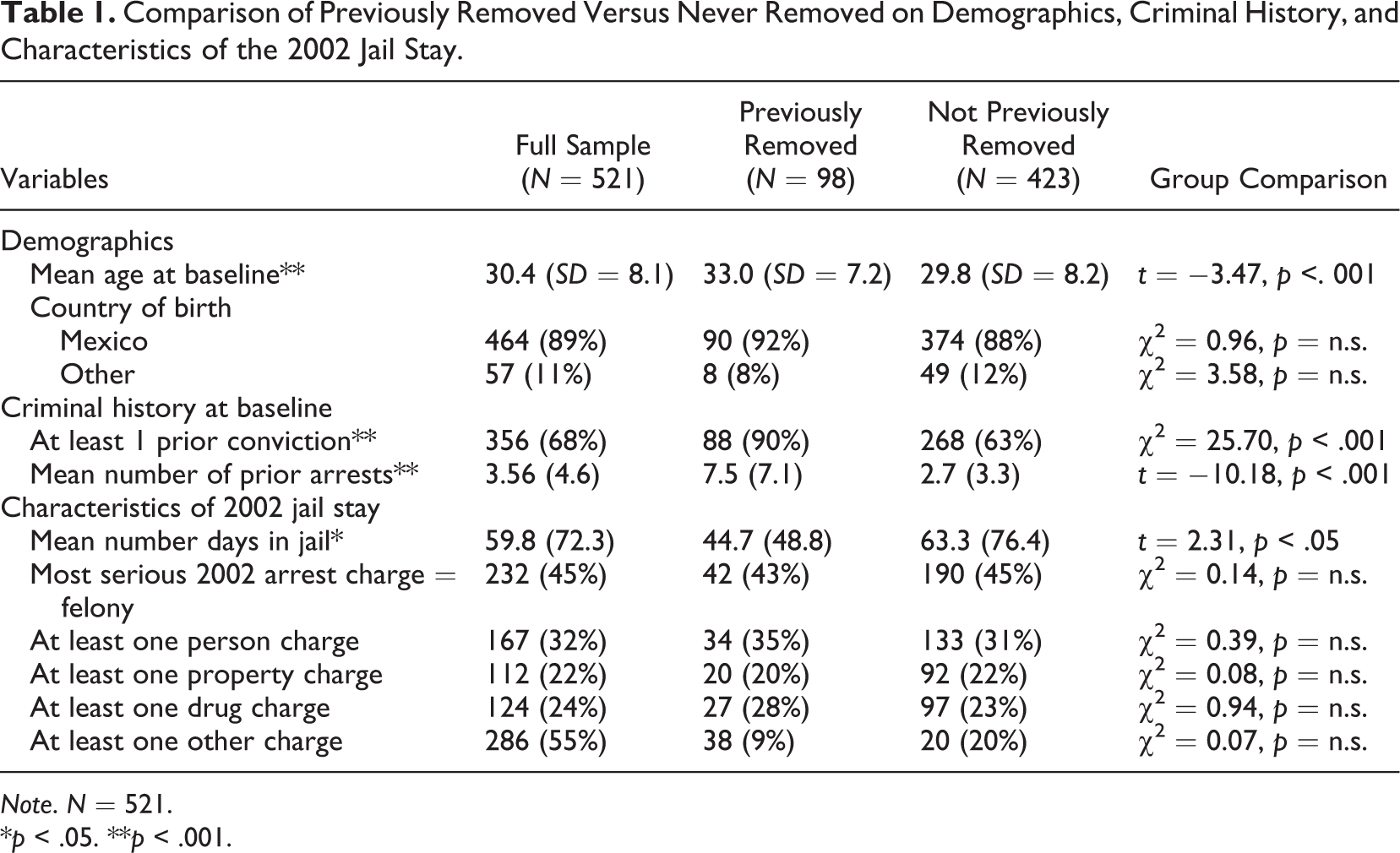
Table 1 presents demographic characteristics for the 521 foreign-born men removed from the country. Those with no record of previous removal from the United States were significantly younger on average (mean = 29.8 years, SD = 8.2) than those who had a record of prior removal (mean = 33.0 years, SD = 7.2). Regarding country of origin, 89% of the individuals in the full sample were born in Mexico, with the remaining 11% originating from a mix of countries in Central America (n = 42, 8%) or some other global region (n = 15, 3%). There was no significant difference in national origin between the two groups.
Significant between-group differences were evident with respect to criminal history; 90% of the previously removed had a record of prior conviction versus 63% of the never removed. This difference is unsurprising, given that a criminal conviction can be the direct cause of a foreign-born individual’s previous removal from the country. Similarly, those with a record of prior removal had more prior arrests on average (7.1) relative to those with no record of prior removal (3.3). No significant differences were found between the groups with respect to the criminal charges associated with the 2002 jail stay; a difference was found in the mean number of days in jail. Those without a record of prior removal experienced a significantly longer 2002 jail stay on average (76.4 days) relative to those who had been removed from the country previously (48.8 days).
As discussed earlier, the date of removal from the United States for each individual was provided from the federal immigration Deportable Alien Control System. For each individual, the postremoval follow-up period begins with their recorded date of U.S. removal and extends for a maximum of 9 years. For the 252 foreign-born men rearrested in California postremoval, the average number of days to first rearrest was 858.0 (SD = 785.2), the equivalent of about 2.3 years. Comparing the two groups of interest, the average number of days to first postremoval rearrest was 679 (1.9 years) for those with a record of previous removal relative to 909 days (2.5 years) for those with no previous record of removal. This difference was not statistically significant at the traditional p < .05 criterion (t = 1.95, p = .053). Note, however, that the data do not provide any insight into the date of reentry into the country for those who reentered, nor do they inform as to whether any others may have reentered the United States and avoided arrest altogether.
Comparison of Previously Removed Versus Never Removed on Demographics, Criminal History, and Characteristics of the 2002 Jail Stay.
Note. N = 521.
*p < .05. **p < .001.
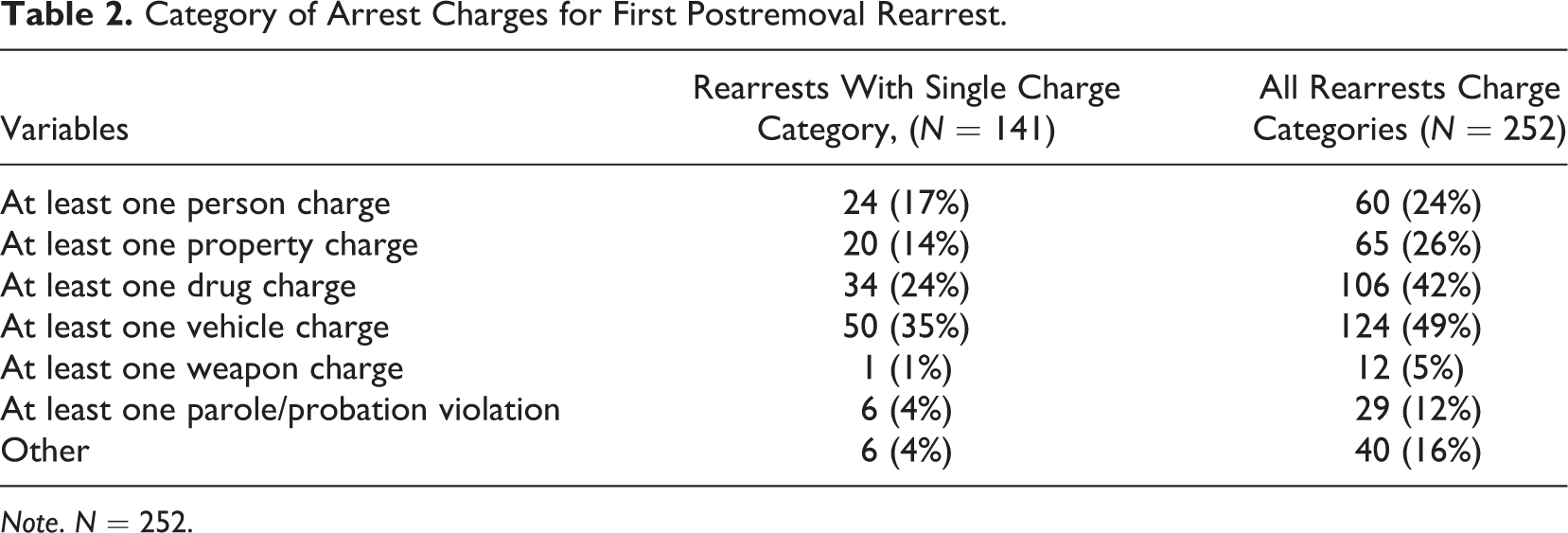
Of all 521 foreign-born men removed from the country, 252 (48%) were rearrested at least once within the state of California during the 9-year postremoval follow-up period. Table 2 shows the type of arrest charges associated with the first reentry rearrest as well as the distribution of charge type among arrests with a single charge type versus arrests that included more than one charge type. To be clear, a single charge type does not mean a lone arrest charge. There may be multiple offense charges within a single charge type and multiple counts of any given charge. Among rearrests with a single charge type (n = 141), vehicle offense type was most common (35%), followed by drug charge (24%), and person charge (17%). Including all rearrests irrespective of the number of charge types, 49% of rearrests involved at least one vehicle offense charge, 42% included at least one drug charge, and 24% included at least one person charge. At least one property crime was present for 26% of all first-time rearrests and for 14% of rearrests involving a single charge type.
Category of Arrest Charges for First Postremoval Rearrest.
Note. N = 252.
Likelihood of Postremoval Rearrest
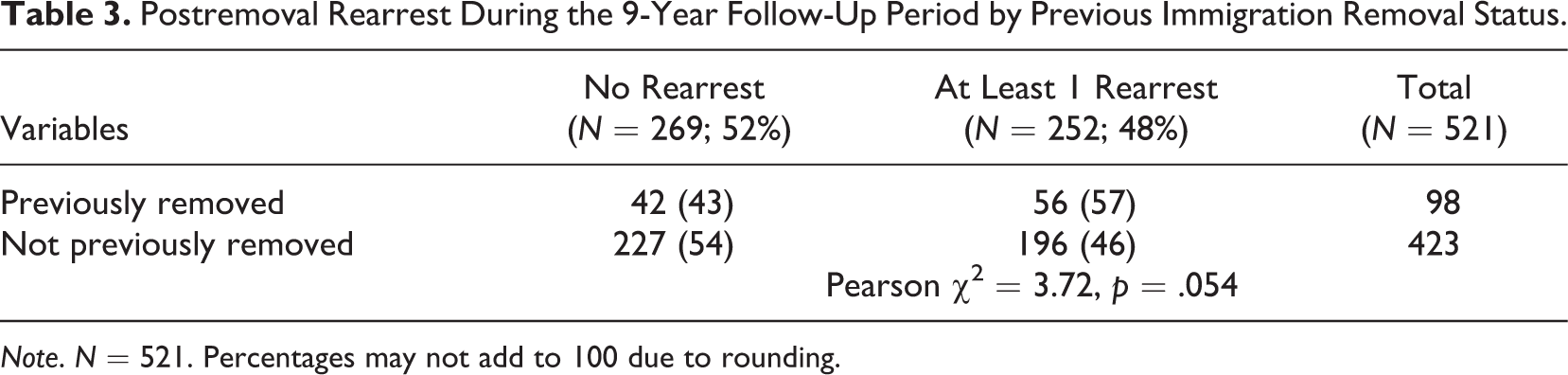
As Table 3 shows, individuals with a record of prior removal were rearrested more frequently (57%) relative to those without such a record (46%). This bivariate difference is not significant using the traditional p < .05 criterion (χ2 = 3.72, p =.054).
Postremoval Rearrest During the 9-Year Follow-Up Period by Previous Immigration Removal Status.
Note. N = 521. Percentages may not add to 100 due to rounding.
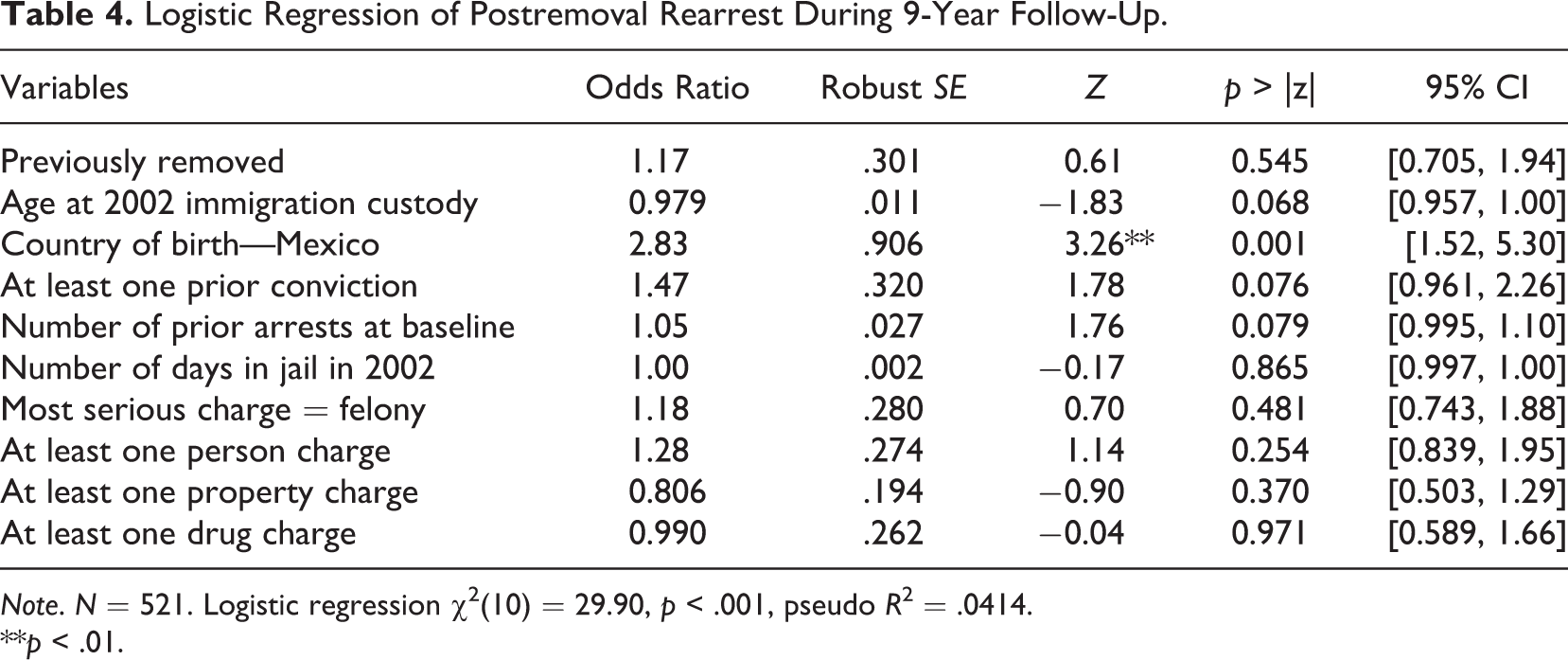
Next, we present a multivariate logistic regression analysis testing for a relationship between a record of prior removal and the likelihood of any postremoval rearrest during the 9-year follow-up period. As shown in Table 4, previous removal was not significantly related to the likelihood of postremoval rearrest. Rearrest was not related to any of the control variables other than country of birth, with those born in Mexico having a greater likelihood of rearrest postremoval from the United States relative to those originating from other countries.
Logistic Regression of Postremoval Rearrest During 9-Year Follow-Up.
Note. N = 521. Logistic regression χ2(10) = 29.90, p < .001, pseudo R 2 = .0414.
**p < .01.
Frequency of Postremoval Rearrest
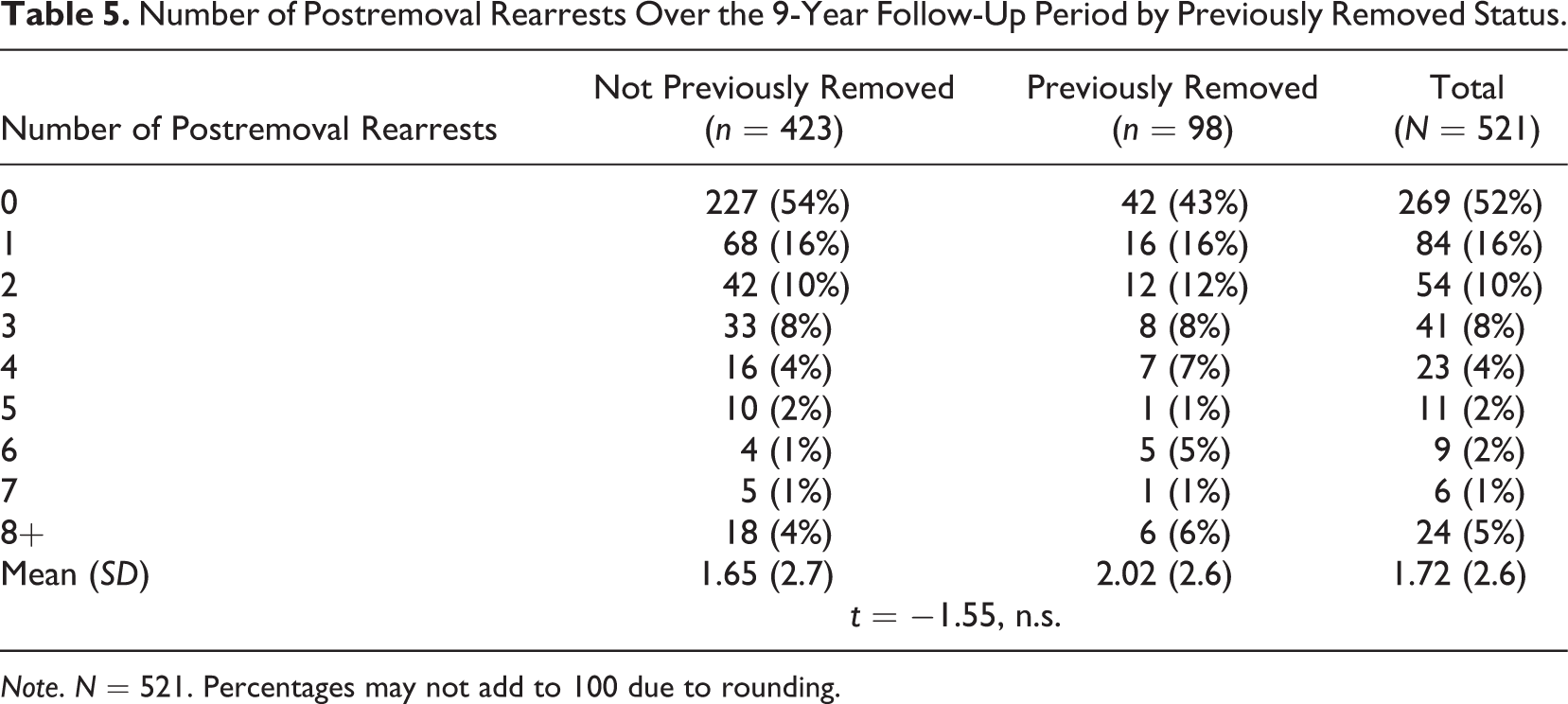
For the sample overall, there was an average of 1.72 (SD = 2.6) postremoval rearrests in the 9-year follow-up period (range 0–21). For the 252 individuals in the full sample with at least one postremoval rearrest, the average number of postremoval rearrests was 3.19 (SD = 2.9). Among those with a record of previous removal, the average number of postremoval rearrests was 2.02 (SD = 2.6) versus 1.65 (SD = 2.7) for those with no record of previous removal. As shown in Table 5, the bivariate difference in the mean number of rearrests between the two groups is not significant.
Number of Postremoval Rearrests Over the 9-Year Follow-Up Period by Previously Removed Status.
Note. N = 521. Percentages may not add to 100 due to rounding.
To test for differences in the frequency of postremoval rearrest while holding other potentially relevant variables constant, we used a negative binomial model. The results are shown in Table 6. A record of previous removal was not significantly related to the frequency of postremoval rearrest, while taking into account other factors potentially related to recidivism. Number of postremoval rearrests was significantly related to age (younger men had a greater number of postremoval rearrests), birth in Mexico (vs. any other country), and having a greater number of prior arrests at baseline.
Negative Binomial Regression of Frequency of Postremoval Rearrest During 9-Year Follow-Up Period.

Note. N = 521. Wald χ2(10) = 52.86, p < .001, pseudo R 2 = .028.
***p < .001.
Given that several of the jail releasees had a high number of postremoval rearrests (see Table 5), we performed a sensitivity analysis to test for the influence of extreme outliers in the negative binomial analysis. We defined extreme outliers as those with a frequency of rearrest that exceeded the boxplot “inner fence” of five rearrests (calculated as Quartile 3 + 1.5 × interquartile range; see Dawson, 2011). Thirty-nine extreme outliers (7.5% of the sample) were identified, each with six or more rearrests in the 9-year follow-up period. Twelve of these were among the previously removed (12%), and 27 (6%) had no record of prior removal. Our sensitivity analysis involved two methods of handling the outliers prior to implementing the negative binomial regression; first, we truncated the data at five rearrests (i.e., individuals with more than five rearrests were recoded as having a maximum of five), and second, we dropped all 39 extreme outliers.
No substantive differences were found in the multivariate model results with respect to our key variable of interest (prior removal status); in both models, age and country of birth remained significant predictors of the number of postremoval rearrests. In the truncated model, the number of previous arrests was also a significant predictor. Given the lack of consistent standard in the literature for dealing with extreme outliers under these circumstances (e.g., see Orr & Sackett, 1991), we retained the 39 cases in the negative binomial analysis reported here. It is possible that there is something unique about these individuals that resulted in the observed high rates of rearrest; however, the data are too limited to allow for speculation on this issue.
Discussion
The present study focuses on a sample of 521 foreign-born men taken into federal immigration custody directly from a local jail and later removed from the United States. The first purpose is to empirically test the “incapacitation hypothesis” assertion that removing criminally involved foreign-born individuals from the country averts future rearrest for new offenses within the United States. Second, the study set out to describe the factors associated with postremoval rearrest among noncitizens removed from the country. In particular, it examines whether a record of prior removal is an independent predictor of postremoval rearrest patterns, consistent with expectations derived from federal immigration enforcement priorities.
Regarding the first study aim, the data show that nearly half (48%) of the full sample was rearrested at least once in the state of California following the date of their verified removal from the country. This finding is contrary to the incapacitation hypothesis; in other words, a removal did not function as the equivalent of permanent incapacitation. Repeat rearrests for new offenses were not wholly averted. While the data show that almost half of the sample was rearrested for one or more new criminal offenses in the state of California, it is unknown what share of the sample may have returned but were never rearrested in the follow-up period.
Given the descriptive scope of this study necessitated by (1) the limited nature of the data and (2) the lack of any empirical foundation in this area, further interpretation of these results depends heavily on what assumptions one makes about the population and processes under study. If one assumes that nearly all individuals removed later return to the country, a 48% rearrest likelihood might be viewed as a relatively modest long-term recidivism rate (for a sample derived from a criminal justice population). If, however, one assumes that a return-after-removal is less common, a 48% likelihood of rearrest may be interpreted as alarmingly high. Further, the counterfactual of how many individuals would have been rearrested had they not been removed from the country is unknown.
Unfortunately, the true rate of undetected return cannot be measured for our sample, and no empirical foundation exists from which to estimate it for this particular population. For example, while the federal government does collect and report data on previous removals apprehended near the U.S. border region, no data (including within the current dataset) exist upon which to approximate the potential rate of undetected return. Moreover, the existing incapacitation and recidivism literature (which focuses on various populations released into the community postincarceration) can provide us little assistance in contextualizing findings related to recidivism likelihood postremoval from the United States.
Perhaps the most informative comparison for these findings in the existing literature is the analysis of another subsample of this same 2002 LA County Jail release cohort. Such a comparison suggests the following possible interpretation: Within this particular 2002 jail release cohort, removal from the country did not wholly prevent repeat arrest in the state of California, but it may have considerably reduced it. Of removable noncitizens in this 2002 cohort who were released directly into the community, 71% were rearrested at least once in the 9 years between 2002 and 2011 (Hickman et al., 2016). This compares to 48% over the same time period within the present study’s sample (consisting of those with a verified date of actual departure/removal from the country). Within the community release sample, the mean number of rearrests was 3.3 (SD = 4.25) over 9 years versus the present (removed from the country) sample mean of 1.72 (SD = 2.6) rearrests over the same period. While the release cohort and time periods are equivalent, the community release sample study differs in that it counted federal arrests in the follow-up period. The present study’s recidivism data do not include arrests on federal charges. This difference can be expected to increase arrests in the community release sample, impacting the potential size of the difference in the bivariate rearrest comparisons with the findings of the present study.
The second study aim was to describe the factors associated with postremoval rearrest and to test whether previous removal is among those predictors. The only significant variable related to the likelihood of any postremoval rearrest during the 9-year follow-up period was place of birth in Mexico relative to Central America and other countries. Regarding frequency, 22% of the full sample was rearrested three or more times postremoval. Five percentage of the sample was rearrested eight or more times over the 9-year follow-up period. Frequency of postremoval rearrest was not found to be related to a record of previous removal. Instead, frequency was related to birth in Mexico, and two variables (frequency of prior arrests and age) were very commonly identified as predictors of recidivism in a variety of samples. 7 The relationship between Mexican nationality and rearrest frequency is unsurprising, given that the country is physically adjacent to the U.S. border/California, relative to a comparatively greater physical distance of other nations represented in the sample.
Bivariate and multivariate analyses did not find a significant relationship between a record of previous removal and postremoval rearrest. In short, while those with a record of previous removal showed a greater tendency toward recidivism in the simple bivariate comparisons, previous removal itself was not identified as a significant risk factor in any of the more rigorous analyses. These findings are in contrast to the aforementioned study examining the same 30-day jail release cohort and focusing on the community release sample (Hickman et al., 2016), in which previous removal was found to be a relevant risk marker for repeat arrest in the community. In that study, prior removal was significantly associated with likelihood, frequency, and time to first rearrest in the community.
Taken together, this pattern of results across two large samples could suggest several interpretations. If those with a record of prior removal pose a relatively high repeat arrest risk when released to the community, but perhaps face more difficulty returning to the state of California after immigration removal, we might expect this pattern of results. Specifically, the elevated recidivism risk could be diminished by a systematic difference in the ability (or desire) of this high-risk group to return across the U.S. border once removed, or perhaps their greater risk of detection upon reentry. Correspondingly, these results might be expected if those with no prior removals had substantially greater opportunity to be rearrested during the study’s follow-up period, simply by virtue of having returned to the United States in greater numbers, relative to those with a record of prior removal. While this may be a reasonable explanation, we cannot test it empirically with the existing data. To do so would require systematic documentation of whether and when each individual returned both undetected and un-apprehended across the U.S. border. Without these data, we are unable to compare this hypothesis to rival hypotheses.
It is, however, relevant to note that in the original LA County Foreign Born Jail Study, there was no systematic attempt to select or prioritize which removable noncitizens were transferred into immigration custody (see Hickman et al., 2005; Raymond et al., 2004). The outcome of community release versus transfer to federal immigration custody was dictated by (1) the speed of the removable status determination and (2) the physical presence (or absence) of federal authorities to take immediate custody of identified removable inmates otherwise set for release 8 (Hickman et al., 2005). This would suggest a relatively unsystematic process for community release versus transfer to immigration custody. As such, we do not believe there was an unmeasured, systematic characteristic(s) differentiating those released directly into the community versus those released into immigration custody for eventual removal.
In addition to the aforementioned limitations, the study lacks federal arrests records and arrest data from other states. While this is regrettable, it is a common limitation of studies within the recidivism literature, particularly for jail release populations (Lyman & LoBuglio, 2006). Moreover, the study lacks information about the criminal justice processing and outcomes of each postremoval arrest. Any given postremoval rearrest could have resulted in extended incarceration (in a federal, state, or local facility) or extended federal detention, making the individual ineligible for additional rearrests in the follow-up period. This inability to directly count actual “street time” is a common limitation of recidivism research which, like the current study, is limited to only official arrest records. Finally, as a longitudinal study, the findings herein may reflect conditions that no longer exist (or exist to a lesser extent), due to changes in immigration, border control, and criminal justice policies and practices within the state of California and in federal systems.
Given its limitations and because it is the first study of its kind, the present study should be considered as suggestive of directions for future policy research. It is premature to call for policy or practice changes based on these results. Instead, the current study helps to establish a baseline concerning the potential rate of rearrests after removal, and the necessary next step is additional descriptive studies of postremoval rearrest within different samples. This type of research, however, is dependent upon the existence of opportunities to access federal immigration records of individuals identified in local criminal justice custody. Unfortunately, these opportunities are very limited. Unlike the substantial body of empirical studies generated through data-sharing partnerships between local law enforcement agencies and academic researchers (Rojek et al., 2012), such partnerships involving federal immigration-related DHS agencies are uncommon. This is particularly true for research efforts that lead to publicly available reports. In sum, the results of this study should be regarded as indicative of a pressing need for more opportunities for academic researchers to access federal immigration data for the purpose of empirical study and public distribution of results.
Footnotes
Declaration of Conflicting Interests
The authors declared no potential conflicts of interest with respect to the research, authorship, and/or publication of this article.
Funding
The authors received no financial support for the research, authorship, and/or publication of this article.
