




Abstract
Armed conflicts, terrorism, and political instability disrupt the implementation of thousands of prosocial projects in the developing world. In this unstable, fast-paced environment, managers may need to change course and adapt projects to new circumstances. Could adaptive management be a solution? Leveraging a groundbreaking pilot run by the World Bank, we evaluate the performance of all 429 adaptive projects implemented between 1998 and 2013, when the Bank launched the “adaptable program loan.” Our study—covering 91 countries, 25 development sectors, and approximately $55 billion in funding resources—examines how armed conflict and adaptability influence project performance. We find that adaptability, reinforced by experience and learning, counteracts conflict’s negative effect on project performance. However, this moderating effect diminishes as project complexity increases and reverses in non-conflict areas due to cost overruns and overoptimistic formulations .
Introduction
The problem of armed conflict has reached alarming proportions. In 2022 alone, the world witnessed 187 conflicts (state-based, non-state, and one-sided) resulting in 238,822 deaths—the deadliest year since the 1994 Rwandan genocide (Davies et al., 2023). Now more than ever, prosocial projects funded by multilateral institutions like the World Bank and the United Nations are critical to supply relief and development aid to poor and conflict-afflicted countries. These institutions, established by wealthy countries to spearhead reconstruction efforts after WWII, have expanded to provide financial access to critical development projects in the developing world. But underfunding, ineffective aid (Sraieb, 2016), and political instability have pushed these organizations to their limits. Chronic underfunding and record levels of humanitarian need are stretching the system to the breaking point [
Operationally, armed conflict exacerbates challenges. In fast-paced, volatile conditions, prosocial projects struggle to adapt to day-to-day realities. Violence endangers personnel and resources. Attacks disrupt supply chains. Political instability drains administrative capacity, increases lead times, and impairs governance. And, all this happens as project managers contend with procedural hurdles and manage complex society-centric projects.
Could adaptive management be a solution? We study an initiative piloted by the World Bank between 1998 and 2013: the Adaptable Program Loan (APL), which emerged in recognition of governments’ need to respond to changing circumstances (The World Bank, 2017)(we use the terms adaptability, adaptive project or management, and APL interchangeably). An APL allows borrowers to adjust to changing circumstances and local contexts by enabling (i) piloting approaches to test assumptions and fit, (ii) heavy monitoring, feedback, and learning, and (iii) course correction within a single project or throughout a series of projects (The World Bank, 2017). The phased structure enables adjustments based on previous phases and the adoption of lessons, feedback, and experience from project managers, host governments, and the World Bank. In contrast with traditional World Bank standalone projects, which typically remain fixed after initial conceptualization, APLs embody sequential learning. In the aid sector, adaptive management has gained popularity among practitioners working in implementation environments characterized by fluidity and volatility: Adaptive management involves an iterative working process, room for reflection and adjustment of the program, the freedom for people ‘on the ground’ to follow their gut-feelings and change things if they deem it necessary, and ideally, flexible funding.” (Van Voorst and Hilhorst, 2017: p.22)
However, whether adaptability improves the performance of prosocial projects remains unclear. In fact, the World Bank discontinued APLs in 2013 after a complex administrative journey—APLs led to increased workloads, project delays, and cost overruns (Kenyon, 2019). While promising, adaptive management is not without risks. Its adoption requires a better understanding of its effects and the factors that make it more or less successful.
To bridge these practical and conceptual gaps, we investigate: (i) how armed conflict affects project performance (i.e., the extent to which a project reaches its original objectives), (ii) how the adaptability inherent in APLs affects performance, and (iii) what project characteristics reinforce or moderate the effects of adaptive management.
Exploiting project heterogeneity across conflicts, development sectors, and countries, we evaluate our research questions using a sample of 92 countries, 25 development sectors, and approximately $55 billion in development resources. We conduct regression models using all projects funded by the Bank between 1998 and 2013: 429 APL and 4,405 non-APL projects, combining project- and country-level data from the World Bank with armed conflict measures from the Uppsala Conflict Data Program. We also obtained project evaluation reports from the World Bank’s Independent Evaluation Group to enrich our analyses with contextual information and expert qualitative assessments. We evaluate APL performance against a comparable group of non-APLs, as shown in Section 4.1, and include fixed effects and project-, country-, and sector-level covariates to control for potential confounding bias. Finally, to test our model’s robustness, we analyze government transitions (Section 6.2.1), the quality of the Bank’s intervention (Section 6.2.2), funding and implementation complexities (Section 6.2.3), political risk (Section 6.2.4), and alternative estimation methods (Section 6.2.5).
We obtain three key findings. First, conflict significantly impairs project performance, partly due to government paralysis and disruptions of project activities. Second, in low- and non-conflict areas, contrary to our expectations, adaptive projects underperform non-adaptive ones—an effect ascribed in part to lower project design quality. Paradoxically, adaptive projects are more prone to exceeding budget estimates and overestimating benefits compared to non-adaptive projects, an effect consistent with planning fallacy bias (Kahneman and Tversky, 1977). Third, adaptability counteracts the negative effect of conflict. Enabled by learning and experience, adaptability boosts process flexibility, iterative learning, and competition between implementing agencies. This benefit, however, diminishes with project complexity.
Collectively, adaptability offers unique value in volatile environments like armed conflict, but it is not without costs or risks. To maximize impact, prosocial projects must leverage experience, focus project scope, and mitigate overoptimism with sound risk mitigation planning and preparedness.
Background: Projects in the Multilateral System
We study development projects implemented by the multilateral development system, a mechanism for international cooperation and sustainable development. The World Bank and the United Nations Development System (UNDS), dating back to 1945, are the most representative entities in this system. Although both of them aim to achieve similar societal goals—eradicating poverty and addressing the Sustainable Development Goals—the World Bank is better known for addressing long-term development issues, whereas the UNDS is better known for its capacity to respond to urgent humanitarian challenges. The multilateral system funds its operations through the so-called official development assistance. In 2021, the system received contributions of about 70 billion dollars (OECD, 2022), with the World Bank and the UNDS being the largest recipients, accounting for about 30% of the assistance. Today, the multilateral system includes about 200 agencies and, with its economies of scale, field expertise, and large operational capacity (OECD, 2020), keeps as its main goal to eradicate poverty and advance the UN’s development goals.
World Bank Development Projects
The primary objective of the World Bank is to support the development of low- and middle-income countries by funding and supporting the design, preparation, implementation, supervision, and evaluation of development projects. The World Bank collaborates with recipient countries to implement projects that address development priorities. These projects typically last about 10 years, from identification to implementation and evaluation, and begin by having the borrower (the country’s government) and the World Bank jointly identify needs, beneficiaries, and priorities. With a draft of potential projects, the Bank and the borrowing government conduct feasibility studies to assess the social and environmental impacts of the projects, their expected performances, and the intended beneficiaries. After the Bank approves the government’s proposal and verifies that a project is consistent with the Bank’s guidelines, the government designates an implementing agency and starts the implementation.
When a project is completed, the World Bank’s Independent Evaluation Group (IEG) evaluates the project against its original objectives, aiming to provide comparable ratings across projects, time, and geography. This could be a challenging task. To obtain consistent and comparable ratings, the evaluation process follows procedures and frameworks consistent with international evaluation norms from the OECD and the UN (World Bank, 2013), and applies standardized evaluation criteria and definitions, in-depth product reviews, and semi-structured interviews. The evaluation includes a technical peer review and interviews with country stakeholders, World Bank staff, and donor agencies. After field visits and a thorough examination of the project’s documentation, the experts issue a project performance report that contains the project performance ratings. Although not perfect and subject to human bias, project evaluations offer indispensable, harmonized data to study project performance.
Adaptive Projects
The adaptable program loan (APL) is one of several lending instruments offered by the World Bank between 1998 and 2013. A lending instrument stipulates the financing and operational rules governing World Bank projects. The adaptable program loan, and later, the programmatic approach, were instruments born from the need to be adaptive and meet the client’s needs (The World Bank, 2017). Adaptive projects were designed to be implemented as a sequence of phases, as opposed to the rest of the projects: standalone projects with fixed sets of activities. After each phase, adaptive projects would be reassessed and adjusted to fit the local context and the new information encountered during their implementation. By allowing the borrowing country to incorporate corrections and adjustments, an adaptive project would allow “adaptive learning, and for the phases to adjust based on lessons from earlier and ongoing phases” (The World Bank, 2017: p. 14).
Examples of APL adaptations in response to political instability.

Examples of APL adaptations in response to political instability.
Note: The table provides examples of APLs in situations of political instability using project evaluation reports from the World Bank.
However, the adaptable program was discontinued in 2013. In 2017, the program transitioned to what is now known as the multiphase programmatic approach (MPA)—we do not yet have evaluation data for projects under this approach. What motivated this transition? The adaptable program “worked well in terms of client engagement around a long-term perspective on sectoral reform;” (The World Bank, 2017: p. 8) however, its decline by 2010 was marked by excessive long processing times and high costs compared to other types of projects—an adaptable program loan, for example, required World Bank board-level approvals to make project adjustments and advance the project (Kenyon, 2019). By 2010, the program represented only 2% of the World Bank lending (The World Bank, 2017). MPAs, unlike APLs, do not use triggers (conditions that must be met before a subsequent phase of a project can be approved), require less paperwork, and feature a more streamlined process for approving subsequent phases and decision making (The World Bank, 2017). Despite APLs’ drawbacks, between 1998 and 2013, the program funded 429 projects and represented almost 9% of all lending instruments, as shown in Table A.2 (E-Companion).
Research Framework
This paper has both theoretical and practical motivations. It contributes to operations and project management literature by studying how adaptability influences project performance during armed conflicts. From a practitioner’s perspective, although adaptability is a well-known strategy in fluid and unstable contexts (Van Voorst and Hilhorst, 2017), it is unclear when and how to implement it, and what project characteristics reinforce or moderate its effects.
Following this motivation, we investigate four relationships, as shown in Figure 1—the definitions of all the variables introduced in this framework are presented in Table 2. First, we evaluate the effects of armed conflict on project performance, meaning by performance the extent to which a project reaches its original objectives (R1). Second, we analyze APLs (adaptive projects) and how their “adaptive” effect moderates the conflict-performance relationship (R2). Third, given APLs’ objective to “incorporate learning and adaptiveness” (The World Bank, 2017: p.9), we evaluate whether “experience” can reinforce APL effects (R2a), experience understood in terms of past projects implemented and the history of conflict in the focal country. Finally, we examine how project complexity, in terms of project scope, can challenge the implementation of APLs and the adaptive effect (R2b)—when the number of actors and development areas involved in APLs increases, project adjustments tend to be more complicated and resource-intensive, according to project evaluation reports.
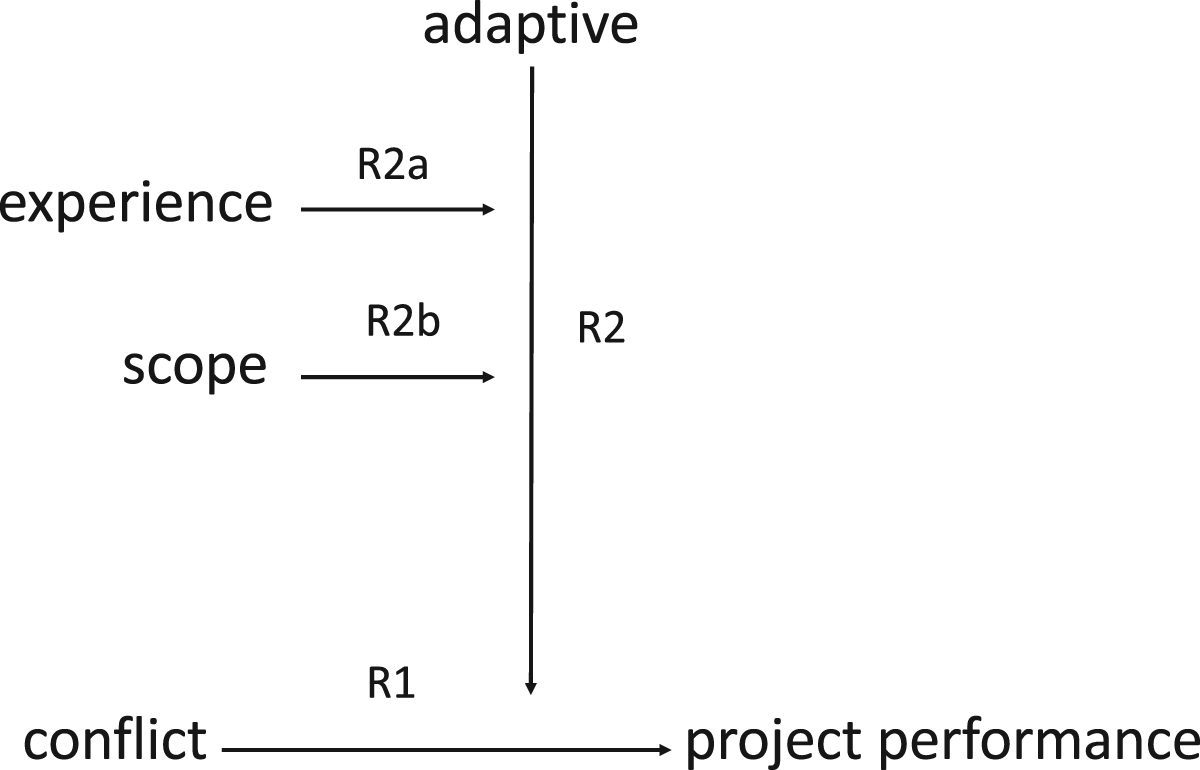
Research framework. Note. The figure shows the main variables and relationships (Rs) examined in this study.
Sample variables definitions, units, and measurement.
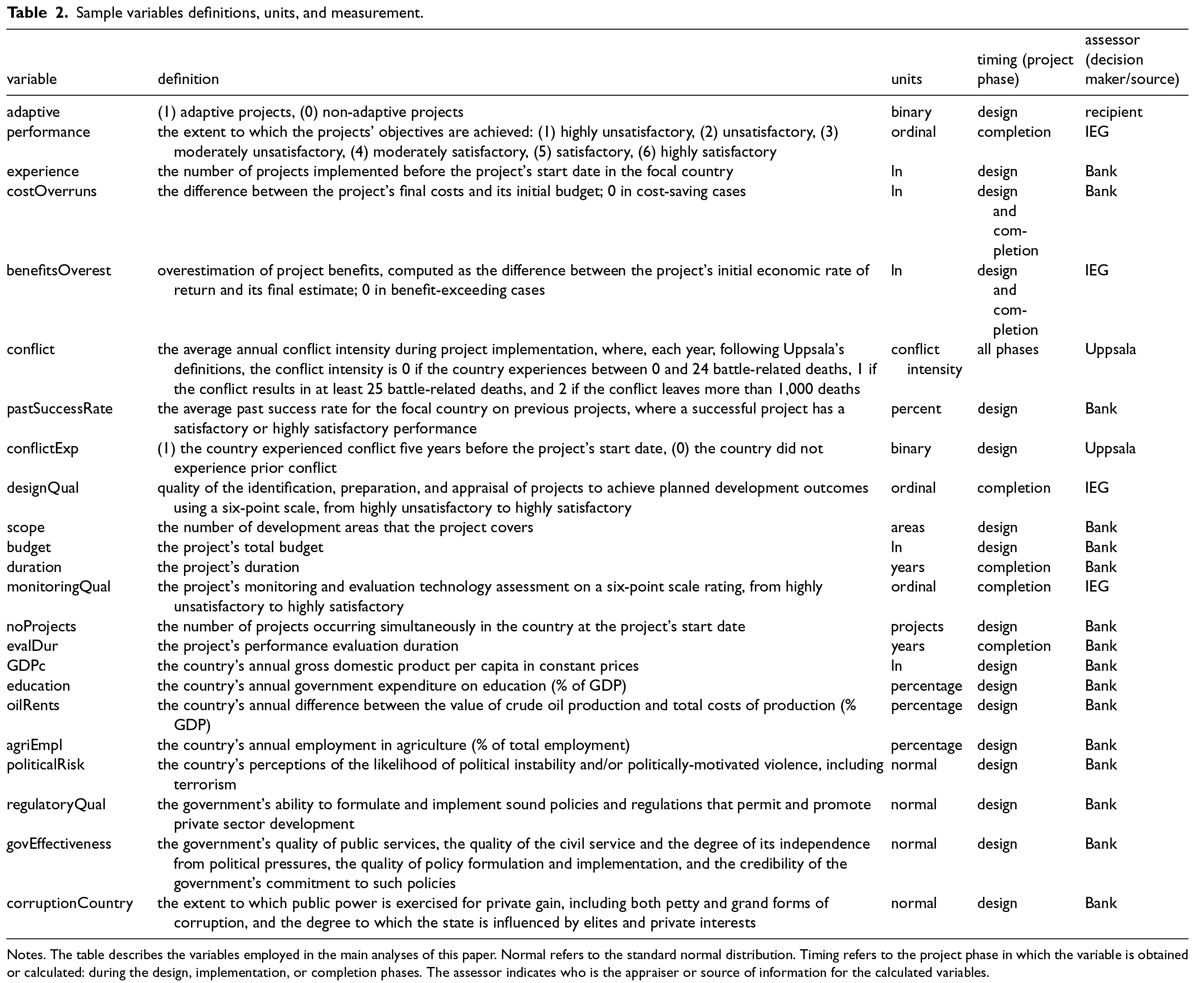
Notes. The table describes the variables employed in the main analyses of this paper. Normal refers to the standard normal distribution. Timing refers to the project phase in which the variable is obtained or calculated: during the design, implementation, or completion phases. The assessor indicates who is the appraiser or source of information for the calculated variables.
Although this study is exploratory, it contributes to the ongoing discussion on adaptive and uncertainty management in project management and operations management. To position our work, we explain next how our research framework aligns with, and extends, key literature in both fields.
Project Management
In project management, the notion of project adaptability is intertwined with the concept of agility. Although there is no single definition of agility, the Project Management Institute (PMI), in its Agile Practice Guide, suggests that agility is a project management approach aimed at addressing project uncertainty, an approach particularly useful in projects with unclear contingencies and unknowns. In project management, uncertainty emerges in the form of known unknowns and unknown unknowns—unlike known unknowns, unknown unknowns are unrecognized uncertainties that the project manager is unaware of (Ramasesh and Browning, 2014). This uncertainty framework creates the basis for project design methodologies and evaluation tools to uncover and mitigate known and unknown project risks (Herroelen, 2005; Ramasesh and Browning, 2014; Shenhar, 2001).
The agile method, in particular, consists of dividing a project into several iterations to find feasibility after continuous cycles of feedback, evaluation, and adaptation (PMI, 2017). The PMI’s PMBOK Guide suggests that agility enables continuous learning about the next project steps and continuous adaptation to new requirements. In the agile approach, less time is spent planning at the beginning of the project. In fact, project teams delay key decisions to observe new information and, in conjunction with customers, make changes during the course of the project. At the end of each iteration, the project team and the customer initiate changes based on what was learned from previous iterations. In theory, an agile approach works well in complicated and complex projects, whereas simple and stable projects are better suited for the linear method: the waterfall approach. Table 3 summarizes the key differences between the two approaches.
Differences between linear (waterfall) and agile approaches.
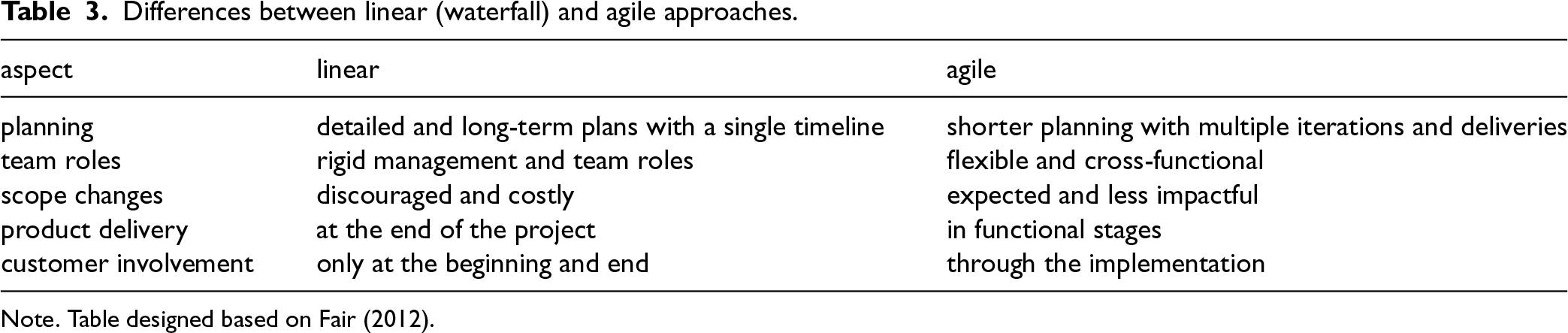
Differences between linear (waterfall) and agile approaches.
Note. Table designed based on Fair (2012).
Agility may improve the effectiveness of disaster response projects. Ali Morad and Chandrashekhar (2022), for instance, evaluate project flexibility and agile project management for large public health projects during the COVID-19 crisis. The authors examine screening and vaccination projects and find the need of flexibility for adequate strategic planning, communication, and context-driven decision-making. Similarly, Baham et al. (2017) explore the agile methodology in disaster response scenarios and claim that a flexible and adaptive methodology is necessary for efficient disaster recovery. Furthermore, agility may attenuate the “progression fallacy,” a behavioral effect that consists of spending “too much time on early project phases at the expense of later ones” (Lieberum et al., 2022: p. 2294). The agile approach, with the method “Scrum,” addresses this point by leveraging the idea of iterations, phase-specific goals, time-boxed progressions (or sprints), continuous improvement, and division of projects into smaller components (Lieberum et al., 2022).
However, the notion of agility faces challenges in the prosocial sector, as such projects involve comprehensive collaboration among multilateral organizations, governments, and implementing agencies. Prosocial projects, while featuring high levels of uncertainty and coordination complexity, often cover broad areas, from relief operations to long-term sustainable development projects. These challenges motivated APLs to include (i) piloting to test assumptions and fit, (ii) heavy monitoring, feedback, and learning, and (iii) course correction in the life of a single project or throughout a series of projects (The World Bank, 2017). In practice, the adaptability inherent in APLs could have been slowed by bureaucracy and high processing complexity—an APL would require, for example, approvals from the World Bank board to finalize project adjustments, leading to long processing times and high costs (Kenyon, 2019).
Although it is unclear how effective adaptability is in areas of political instability and conflict, there have been attempts to tailor adaptive management to development aid contexts. Mahmoud Saleh and Karia (2022), for instance, develop an adaptive project management model for international development and aid projects that integrates notions from Total Quality Management and Core Humanitarian Standards. The model identifies challenges in the agile approach when implemented in the development sector and suggests highlighting the concepts of accountability, coordination, leadership, and effective monitoring and evaluation. In the same spirit, Saleh and Karia (2020) and Kelly et al. (2022) critically review the standard PMBOK guide to align it with the needs of International Development and Aid Projects, including an improved use of evaluation information and an adaptable monitoring framework.
The project management literature highlights the relevance of an enhanced agile approach featuring adaptiveness to deal with uncertainty and volatility (Baweja and Venugopalan, 2015). However, its effectiveness has yet to be tested for prosocial and nonprofit projects in contexts of political instability and conflict.
Prosocial and New Product Development (NPD) projects have clear differences. Prosocial projects, focused on social impact, typically involve multifaceted and indefinite deliverables, such as improving public sector processes, enhancing teaching effectiveness, or mitigating the impact of HIV/AIDS. New product development projects, in contrast, driven by profit, market share, and efficiency, often feature concrete and definitive deliverables, such as a new building, a physical product, or a new piece of software. Despite this, NPD and prosocial projects face similar challenges, including high levels of uncertainty. Managers of novel projects typically deal with events that cannot be predicted at the outset (Sommer and Loch, 2009)—unforeseeable uncertainty. NPD projects observe high technology uncertainty and ambiguity in project execution (Tatikonda and Rosenthal, 2000), product novelty and task interdependency (Peng et al., 2014), high complexity (Swink et al., 2006), information transfer and coordination issues (Bhuiyan et al., 2004), and potential supply and outsourcing uncertainty (Krishnan and Loch, 2005). NPD projects and prosocial projects rely on tools and policies to mitigate uncertainty and meet the project’s original objectives (Swink et al., 2006; Tatikonda and Rosenthal, 2000).
What drives NPD project performance? Critical factors include stakeholder and cross-functional team coordination (Mishra and Shah, 2009), information systems (Bendoly et al., 2012) and operations design (Krishnan and Loch, 2005), project management experience and commitment (Swink et al., 2006), incentive design (Mihm, 2010), and, equally important, flexibility. For Sommer and Loch (2009), flexibility is key to addressing unforeseeable events and designing incentives for optimal decision-making. Tatikonda and Rosenthal (2000) argue, however, that the challenge is in balancing firmness and flexibility: a structured environment that promotes adaptation and responsiveness, while keeping a well-defined process, autonomy for the project team to make their own decisions, and the flexibility to move resources where they are needed most.
Collectively, the NPD literature concurs that uncertainty and flexibility are crucial elements of NPD projects. However, it falls short of investigating uncertainty stemming from the projects’ external political environment. Although prosocial projects feature less definite deliverables than traditional NPD projects and aim at social rather than commercial outcomes, they both deliver customized, often new solutions and products. In this sense, our paper contributes to the NPD literature by studying the role of adaptability in novel and society-centric projects affected by political instability and armed conflict.
Operations Management
There are several differences between prosocial projects and other types of operations, such as service and manufacturing operations. Projects are unique, highly customizable, and less predictable than assembly lines and continuous processes. Yet, disruptions, such as armed conflict, can affect projects just as much as other types of operations, including humanitarian and commercial ones (Jola-Sanchez, 2022; Jola-Sanchez et al., 2016). In dealing with disruptions, and risk in general, a great deal of research in operations management focuses on risk management strategies using the concepts of incentives and learning (He et al., 2014), cooperation and supplier collaboration (Gopalakrishnan and Sankaranarayanan, 2023), risk monitoring strategies (Hoffmann et al., 2013), strategic resource allocation (Jola-Sanchez and Serpa, 2021; Zhuang and Bier, 2007), and vulnerability analysis (Kleindorfer and Saad, 2009; Knemeyer et al., 2009). Limited literature evaluates the role and effects of adaptive management in contexts of high uncertainty. Some literature, however, explores flexibility in the context of supply chain disruptions. Saghafian and Van Oyen (2016), for example, study flexibility and supply chain resiliency by analyzing a supply chain under dynamic disruption risk; the authors show that even a slight increase in supply chain flexibility increases supply chain resilience.
Our paper examines nonprofit operations; operations that, rather than aiming to enhance profitability, aim to address critical societal goals—long-term development goals. The body of knowledge in operations management related to commercial applications does not necessarily fit the context of nonprofit operations (Gupta and Starr, 2017). While profit-seeking organizations focus on reducing costs or increasing income within a rather precise universe of stakeholders and rules, nonprofit projects are society-centric and involve the collaboration of governments and the international community. Prosocial projects face not only the pressure from donors and society for results, but also the expectations, administrative burden, and limitations inherent in the public sector.
Given the unique context of prosocial projects, adaptive management cannot be evaluated through the lens of profit-seeking organizations. And although nonprofit sector research has grown significantly in the last decade (Berenguer et al., 2017) by studying phased and results-oriented project management approaches (Devalkar et al., 2017), fund disbursement processes for procurement (Gallien et al., 2017), revenue management (Tereyağoğlu et al., 2017), resource management (Lorca et al., 2017), and distribution processes (Natarajan and Swaminathan, 2017; Toyasaki et al., 2017), prosocial project management is still understudied. Thus, by studying how adaptive management influences the performance of prosocial projects funded by the multilateral system and implemented by public sector organizations, this article contributes to the nonprofit literature and the stream of research aimed at improving aid effectiveness.
Data and Empirical Strategy
Data
We combine four data sources. First, we obtain project-level data from the World Bank containing the universe of projects funded by the Bank between 1998 and 2013— the time span of the APL (adaptable program loan) pilot. This dataset has information for 4,834 projects, including 429 adaptive (APLs) and 4,405 non-adaptive projects (non-APLs), and includes project identification information, size, objective, and other financial data for each project. Second, we obtain project evaluation reports from the World Bank’s Independent Evaluation Group. Each report, spanning 10 to 20 pages, provides a holistic evaluation of each project’s performance, context, achievements, and challenges. Each report has a summary of the project’s objectives, antecedents, and outcome evaluations with detailed explanations for project failure or success and lessons for future interventions. Third, we complement this information with conflict data from Uppsala University’s Conflict Data Program (Pettersson et al., 2021), a dataset with armed conflict information by country for each conflict recorded from 1948 to 2020. The Conflict Data Program is a global conflict data collection program that uses standardized methodologies to ensure comparability across countries and years. Finally, using data from the World Bank Development Indicators, we collect contextual data at the country level on political risk, government effectiveness, corruption, and other social, economic, and institutional characteristics.
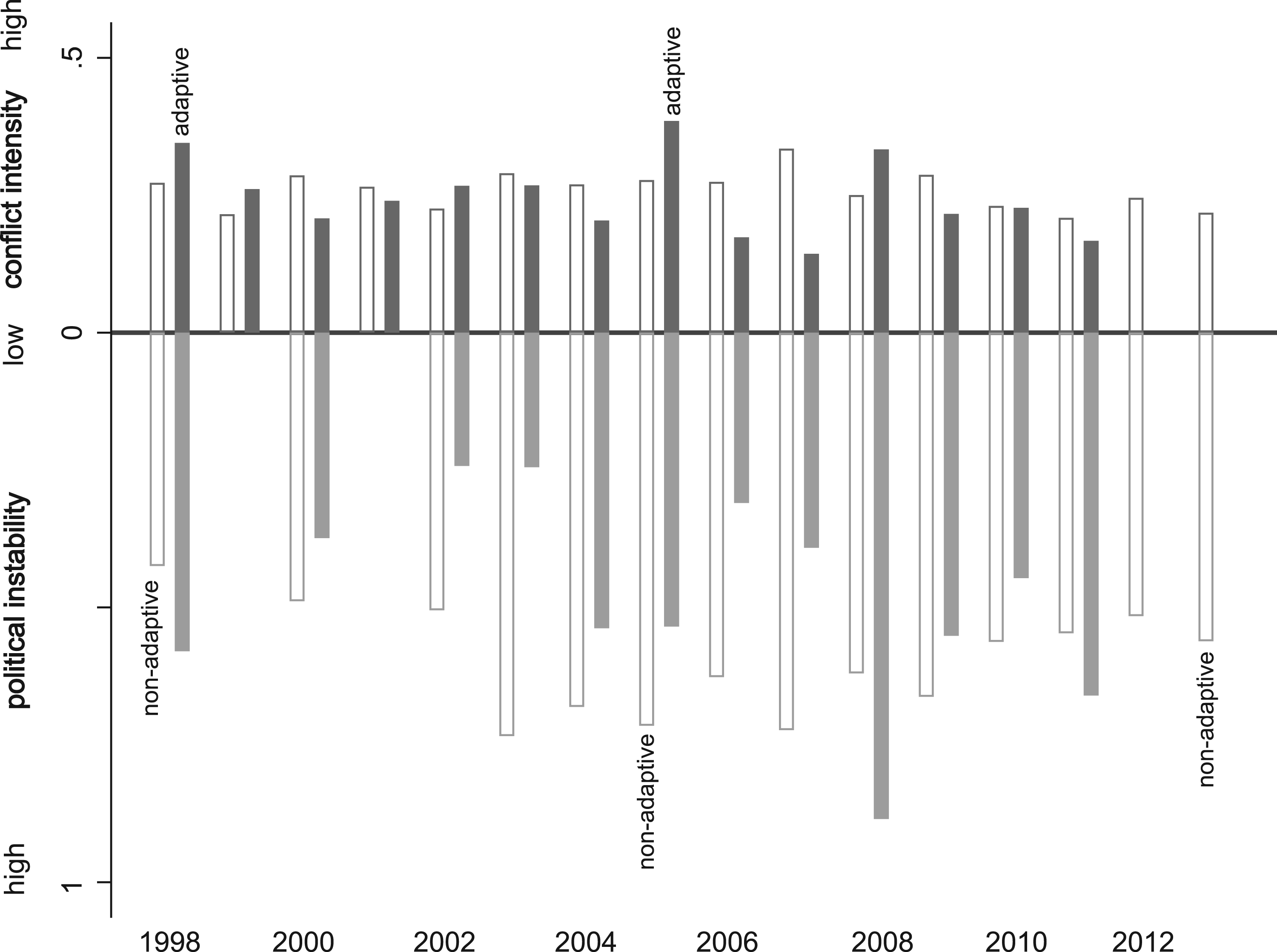
Adaptive projects, conflict intensity, and political instability during the study period. Note. The figure shows the average political instability and conflict intensity for adaptive (APL) and non-adaptive projects (non-APL).
Sample variables descriptive statistics.
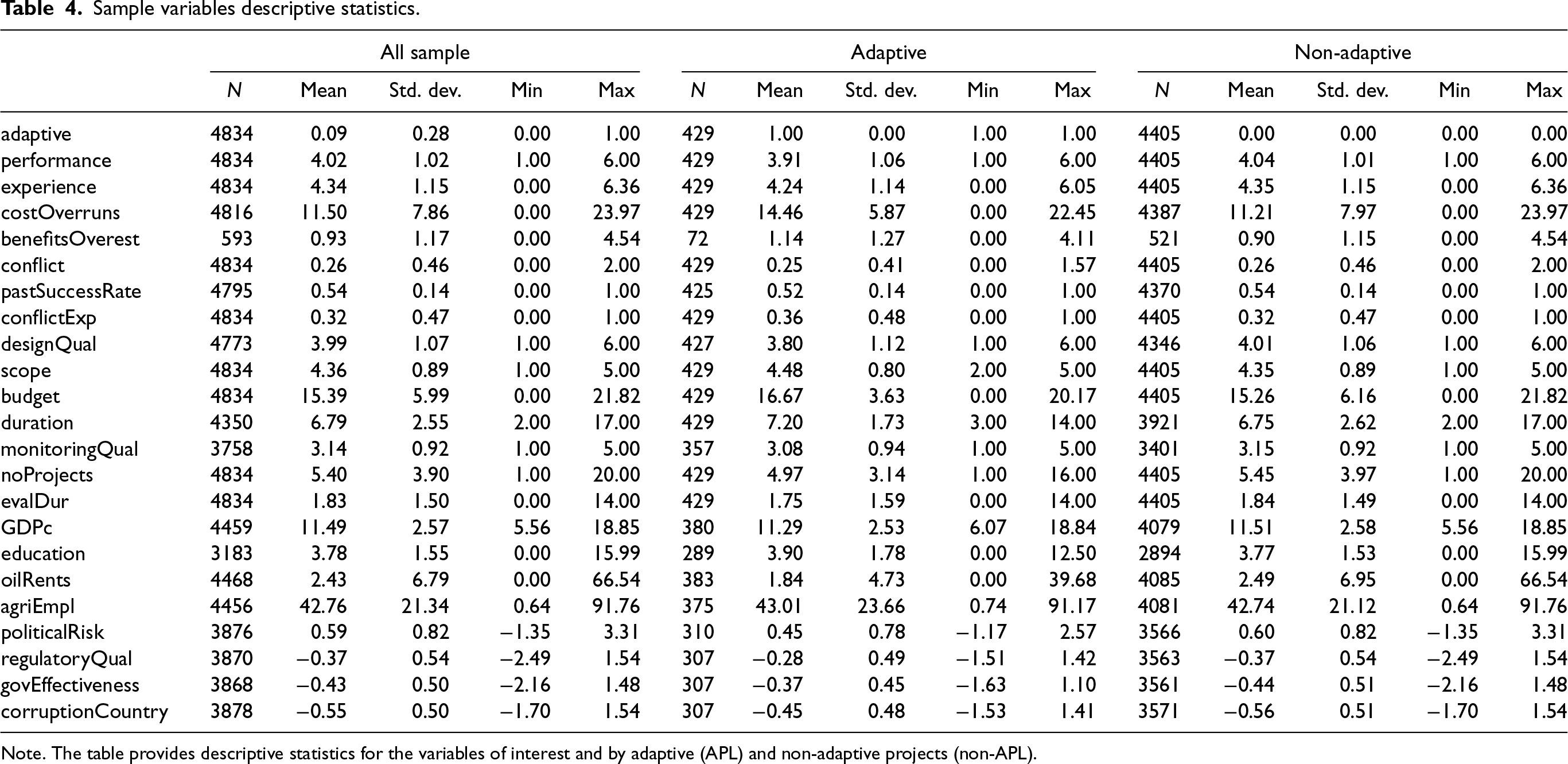
Note. The table provides descriptive statistics for the variables of interest and by adaptive (APL) and non-adaptive projects (non-APL).
Although the samples are not perfectly balanced across all the variables of interest, the differences between APLs and non-APLs are small and less than half a standard deviation, suggesting an unbiased composition of APL and non-APL projects. It is worth highlighting that the World Bank imposed no constraints on the eligibility of APLs; governments could have requested funding for both APLs and non-APLs projects. In fact, all countries in our sample that implemented adaptive projects also undertook non-adaptive ones during the study period.
We use a mixed-method approach to investigate our research questions. First, exploiting project heterogeneity in the implementation of APLs across conflict, development sectors, and countries, we run ordinary least squares (OLS) and ordinal models to analyze our research questions. Our sample includes all adaptive projects (429 projects) and non-adaptive projects (4,405 projects) implemented during the time frame of the APL pilot—a sample covering 92 countries, and development resources worth about 55 billion dollars.
Main model: effects of conflict and adaptability on project performance.
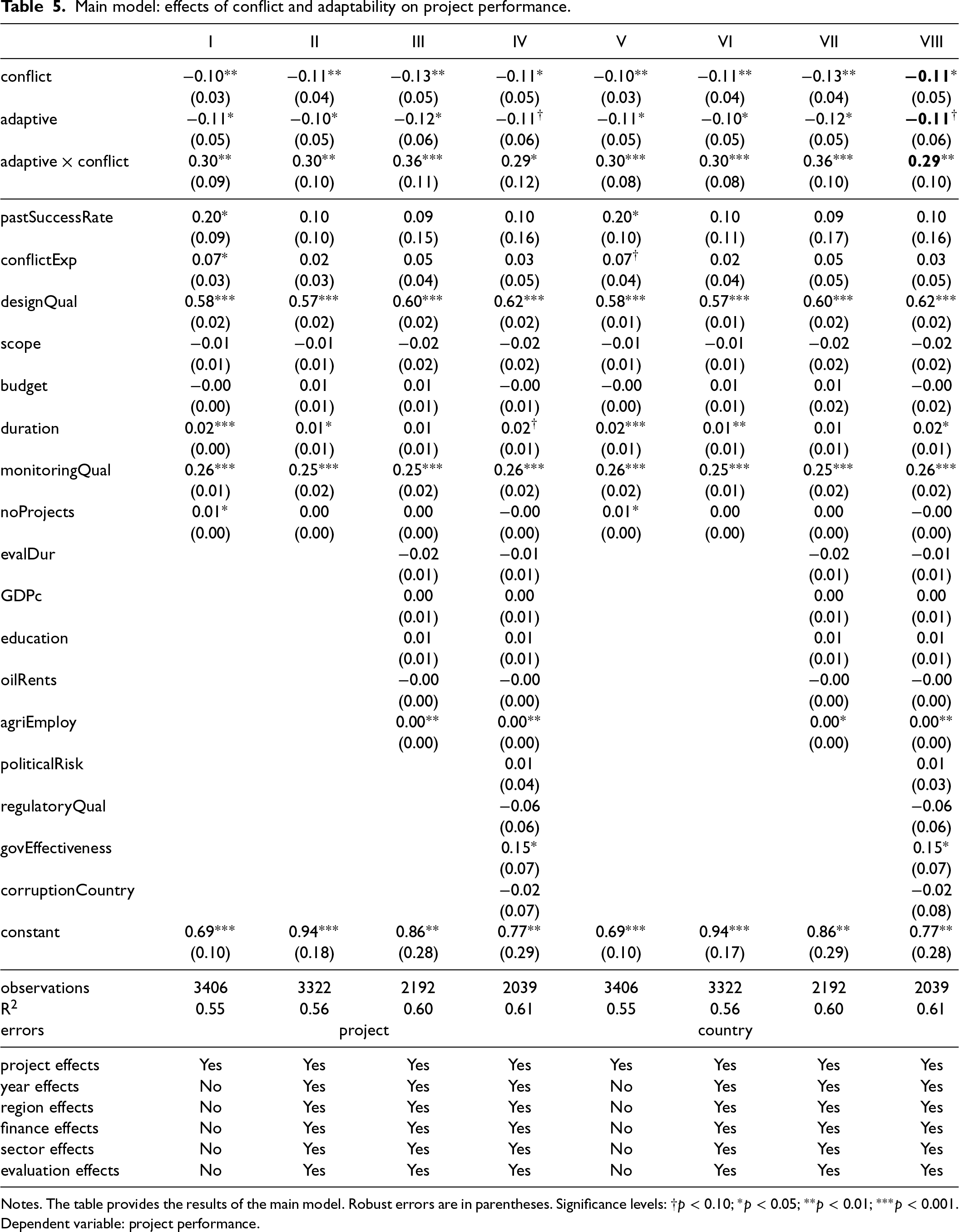
Main model: effects of conflict and adaptability on project performance.
Notes. The table provides the results of the main model. Robust errors are in parentheses. Significance levels:
Adaptive is an indicator variable that identifies APLs (1) from non-APLs (0). We study the adaptability inherent in APLs, which comes from the possibility for managers to modify project characteristics during implementation based on lessons from earlier and ongoing phases (The World Bank, 2017).
Conflict is the average conflict intensity during project implementation. We estimate this metric following Uppsala University’s conflict definition—that is, “a contested incompatibility that concerns government and/or territory” that results in the use of armed force between two parties, where one of the parties is the government of a state (Gleditsch et al., 2002: p. 618). We estimate conflict intensity for each project by computing the average annual conflict level during its implementation. Specifically, each year, Uppsala University reports low or no conflict (conflict=0) when a country experiences battle-related deaths of less than 25; a conflict level of 1 when armed conflict results in at least 25 but less than 1,000 battle-related deaths; and high-conflict intensity with a conflict level of 2 in cases of more than 1,000 battle-related deaths.
Although conflict is aggregated at the country level, it is a relevant metric for our analysis because it affects project implementation. Given that armed conflict involves the government of a state, which is also the funding recipient and the party responsible for implementing projects, the government’s operations and administrative capacity will likely be disrupted during conflict. Additionally, the conflict variable is calculated as an average over the project’s implementation phase, making it a reasonable proxy for the conflict environment observed throughout the project’s lifecycle.
The second set of covariates includes contextual factors (context effects); that is, economic, institutional, governance structure, and social variables that control for country-level traits that potentially influence project performance. Specifically, we control for GDP per capita (GDPc), government expenditures on education (education), oil rents (% gross domestic product), employment in agriculture (% of total employment), the level of political risk (politicalRisk), the quality of the regulatory environment (regulatoryQual), the overall effectiveness of the host country in providing public services and its independence, credibility, and commitment (govEffectiveness), and the levels of corruption (corruptionCountry).
The third group of controls includes fixed and random effects, with effects for the project, year, region, financial conditions of the loan, sector, and “project evaluation.” Specifically, project effects avoid that other project-level factors not controlled for could drive the results. We estimate random effects because fixed-effects models in ordered models can lead to bias (Greene and Hensher, 2010). Year effects control for time events such as policy changes that may confound the results. Region effects includes fixed effects for countries in one of nine geographical areas, ranging from East Asia and the Pacific to Sub-Saharan Africa, and control for geographical clusters or spillover effects. Finance effects are indicator variables denoting a project’s funding mechanism and are included to control for project differences that influence performance due to the project’s financial characteristics. For example, a project can be funded using resources from a development funding program, a rehabilitation loan, or a program-for-results account, among other product lines. Sector effects control for sector-specific effects, which identify the main development sector to which a project belongs, from agriculture to urban development sectors—a total of 25 sectors. Finally, we control for project evaluation effects, which, by controlling for the project evaluation reporting methodology, account for potential differences in how projects were evaluated.
Our main model’s identification strategy is represented in Equation 1, where performance
The results of the main model (Equation 1) appear in Table 5. Although we focus our exposition on the coefficient estimates shown in column VIII, the results are consistent across specifications with alternative covariate sets (project and contextual), fixed effects (year, region, finance, sector, and project evaluation), and error structures (clustered country-level and robust project-level errors). The models employ random effects, but as shown in Section 6.2.5, the results remain consistent when using ordinal choice models (probit and logit).
The Conflict Effect
We start by examining the direct impact of armed conflict on project performance (relationship R1 in Figure 1) in the baseline scenario without adaptability. Consistent with expectations, we find that conflict significantly lowers project performance, as shown by the negative and statistically significant coefficient (
Project evaluation reports show that conflict can affect project performance at the project, government, and Bank levels. At the project level, armed conflict poses significant challenges, including logistical obstacles, interruptions of project activities, and negative effects on project personnel (P103189). At the government level, conflict can divert resources from project implementation to other priorities. This is a substantial challenge because the government is the recipient, beneficiary, and administrator of the Bank’s funds. For example, in a public sector reform project in Bolivia (P062790), “the government was largely immobilized by social and political conflict during much of the project implementation period and was unable to carry out the implementation[
The Adaptability Effect
We now explore the effects of adaptability (relationship R2 in Figure 1). We find that adaptive projects outperform non-adaptive ones when implemented in conflict areas. Specifically, adaptive projects perform 0.29 points better when implemented in conflict areas, relative to non-adaptive ones, as evidenced by the positive and statistically significant coefficient of the interaction term, adaptive
The Role of Experience
“A well-designed APL could successfully incorporate learning and adaptiveness” (The World Bank, 2017: p.9). However, to successfully incorporate learning, APLs must build on lessons from previous project phases and team expertise. Research shows that the availability of historical data can influence project accuracy and performance (Lorko et al., 2021). Thus, to investigate the effects of experience (relationship R2a in Figure 1), we analyze the log-transformed number of projects implemented in the focal country before a project’s implementation phase, focusing on the subset of projects experiencing conflict (conflict > 0). We aim to understand how the accumulated experience of the Bank, the government, and the implementing agencies influences project performance.
The results, presented in Table 6 (columns I–IV), with column IV as our preferred specification, demonstrate a positive relationship between experience and adaptive project performance. The positive and statistically significant coefficient of the interaction term, adaptive
Effects of experience and scope in conflict areas.

Effects of experience and scope in conflict areas.
Notes. The table provides the results of the past experience and complexity models. Robust errors are in parentheses, clustered at the country level. Significance levels:
Qualitative evidence suggests that experience and adaptability, together, are crucial factors to project success in volatile environments. Adaptive projects are designed to incorporate feedback and make revisions throughout the project cycle, while experience can improve managers’ decision-making and responsiveness to evolving circumstances, and foster a proactive and forward-looking approach (P070291, P071374, P058015). Interestingly, because adaptability allows for project changes, including changes in the composition of teams and implementation partners, performance information becomes actionable and can incentivize competition among implementation agencies. A project executed in Pakistan (P095982), for instance, shows how “flexibility can also aid in creating competition among the implementing agencies and thereby provide incentives for routing financing to the better-performing entities.”
Complex projects can address multiple development objectives, tackle transformational areas, and provide opportunities to foster partnerships and collaboration. However, managing adaptive and complex projects simultaneously can challenge implementation, especially when projects face continuous changes and adaptation. As project complicatedness and entanglement grow—along with the number of goals, interrelations, and actors involved—project changes become more complicated, coordination more difficult, and communication more expensive. In this section, we examine how project complexity, measured by the number of development areas a project covers (scope), influences project performance (relationship R2b in Figure 1). Project scope is a relevant variable for three reasons: (i) as the number of areas a project covers increases, so does the number of objectives and actors involved; (ii) projects with larger scopes tend to have more interrelations between diverse areas of development, increasing complicatedness; and (iii) scope is a variable of managerial and policy interest—it is up to project designers to implement multi-dimensional or focused projects.
The results, presented in Table 6 (columns V–VIII, with column VIII as our preferred specification), reveal a negative and statistically significant effect of scope on adaptive project performance. The coefficient of the interaction term, adaptive
Qualitative evidence corroborates this finding, showing that larger scopes can lead to several issues, including coordination and project delays: “[d]ealing with a large number of government ministries and agencies, each with the ability to act autonomously, can lead to serious coordination problems and consequent implementation delays (P110845).” A water resource management project in Indonesia (P059931), for example, also illustrates how “opting for flexibility led to more complexity since the project’s geographic scope was increased,” and how reducing its scope might have helped address the coordination and administrative hurdles. Similarly, project evaluators of a health project in Nigeria (P070291) argued for simplified work breakdown structures to address complexity and capacity constraints, a solution that seems particularly relevant for projects featuring complex international partnerships (P103189) and projects facing novel and complex objectives: Ground-breaking operations with new borrowers need to be kept simple, use piloting and evaluation for future scale-up, and receive close supervision so that the learning opportunity is optimized and the client is capable of entering a follow-on phase with confidence (P082651).
Thus, while adaptability can improve project performance, its benefits diminish as project complexity increases. Focused and less complex projects are better positioned for adaptive management, especially in contexts with limited institutional capacity and multi-stakeholder collaboration.
The Adaptability Challenge
The main model in Table 5 shows that APLs implemented in low or no conflict areas (conflict
These issues fall into three categories. First, inadequate risk mitigation: many projects failed to develop comprehensive risk mitigation plans and prepare for challenges posed by the political environment and project complexity, even when risks were identified during project formulation. Second, underestimation of project costs and complexity: project leaders often set overly optimistic assumptions about government and implementing agency capacity, project complexity, and the likelihood of successful collaboration among partners and donors. And third, over-optimistic benefit projections: projects covered too many development areas and made unrealistic assumptions about the chances of achieving desired outcomes.
These design deficiencies suggest that project design quality may mediate the negative relationship between adaptability and performance in areas with no conflict. To test this mechanism, we conduct an illustrative mediation analysis following Baron and Kenny (1986), examining how project design quality (designQual) explains performance. The results, shown in Table 7, suggest a strong mediation effect of designQual (M) when restricting the sample to low or non-conflict areas (conflict
Mediation effects of project design quality in low or non-conflict areas.
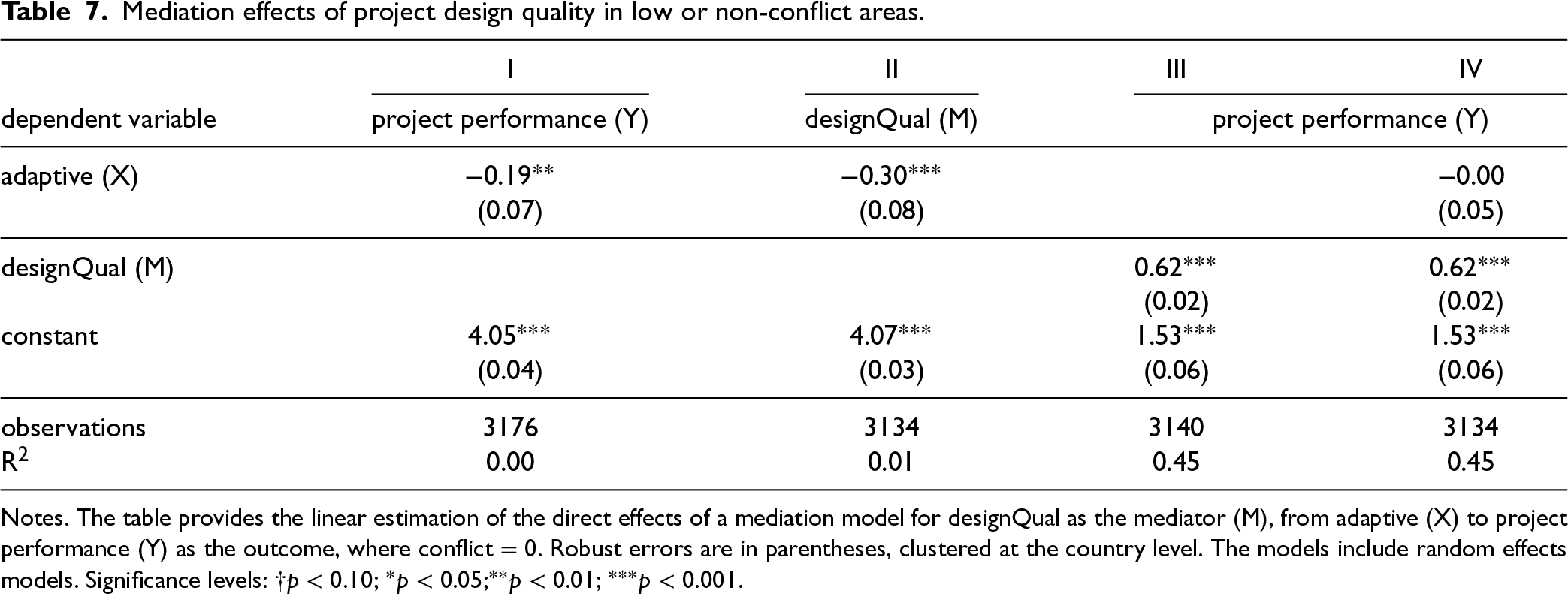
Mediation effects of project design quality in low or non-conflict areas.
Notes. The table provides the linear estimation of the direct effects of a mediation model for designQual as the mediator (M), from adaptive (X) to project performance (Y) as the outcome, where conflict
Adaptability, a feature designed to enhance flexibility and agility, is paradoxically associated with project design issues. Evaluation reports reveal inadequate risk mitigation, underestimation of costs and complexity, and over-optimistic benefit projections, issues consistent with planning fallacy bias: the systematic overestimation of project benefits and underestimation of the time, effort, risk, and resources needed for project completion (Kahneman and Tversky, 1977).
The planning fallacy is reinforced by the perceived flexibility inherent in APLs. Although planning fallacy may affect non-adaptive projects, adaptability exacerbates this bias through two mechanisms. First, from the fund recipient perspective, governments may set overly ambitious benefits due to funding needs and the desire to secure approval—more impressive benefits can make projects appear more competitive. Second, counting on opportunities for future adjustments, fund providers may also overestimate a project’s impact and its ability to achieve goals. After all, overoptimistic formulations can be adjusted later during project execution.
To assess planning fallacy bias in APLs, we analyze cost overruns and benefits overestimation. We measure cost overruns as the difference between a project’s final costs and its initial budget, and benefits overestimation as the difference between a project’s initial economic rate of return and its final estimate. A project’s rate of economic return measures the economic impact on beneficiaries—that is, how significant the project is for the target population relative to its costs—not operational performance. A project may have perfect operational execution but obtain a low rate of return if it has a moderate social impact or requires large investments relative to its expected development effects. Likewise, a project may have poor operational performance but still address a critical development area with high social impact.
The results, presented in Table A.4 (E-Companion), provide support for the planning fallacy hypothesis. The specifications show a positive and statistically significant coefficient for adaptive when predicting cost overruns and benefits overestimation. This means APLs, on average, exceeded their initial budget estimates and overestimated their benefits more frequently than non-APLs.
Extensions and Robustness Tests
Common Failure Modes in APLs
Using evaluation reports from 128 adaptive projects rated as moderately unsatisfactory, unsatisfactory, or highly unsatisfactory (from a total of 429), we investigate why these projects failed to achieve expected results and the contexts in which they failed. We find recurring themes associated with insufficient risk mitigation, underestimation of costs and complexity, and over-optimistic benefit projections.
Even when risks were identified during project formulation, many projects failed to develop adequate mitigation measures. The shortcomings often stemmed from overly optimistic assumptions about the capacity of government and implementing agencies (e.g., P104995, P073689), project complexity and technical risks (e.g., P064981, P057394), and the likelihood of successful collaboration among partners (e.g., P082516, P096058) and donors (P094917). These assessment flaws frequently resulted in projects that did not adequately prepare for known risks, regulatory changes, political instability, or coordination challenges (e.g., P096058, P072080, P073689), especially in complex projects like this one implemented in Brazil: Analysis underestimated risks and did not provide specific mitigation measures for known risks (e.g. political), and did not consider the high risk of geographic coverage (as it had too many parallel sub-project activities operating in different areas with little overlap) (P082651).
Thus, while risks in low or non-conflict areas were often well understood, adaptive projects frequently failed to develop comprehensive mitigation strategies. This evidence suggests that the flexibility inherent in adaptive approaches can lead to less rigorous risk mitigation strategies.
Robustness Tests
Government Transitions
Government transitions are another form of disruption that can affect projects and may be correlated with conflict, as political changes can arise from or coincide with armed unrest. In this section, we disentangle these factors to better understand whether the observed effects stem from the uncertainty of government transitions or from conflict itself.
We study government transitions using presidential elections—when a new president comes into power, this power shift may influence projects initiated by their predecessors. Employing data from the International Foundation for Electoral Systems (IFES), we observe the dates of all presidential elections held for 127 countries between 1997 and 2025 and identify the total number of presidential elections held during each project. In countries with a two-round system, presidential elections can have up to two rounds and appear as two separate events in our database. However, we treat them as a single political transition since they represent one electoral cycle. Thus, our variable of interest, noElections, identifies the total number of presidential cycles held between a project’s start and end dates. For example, project P000970, implemented in Ghana between 1999 and 2010, experienced three presidential cycles, denoting more political instability than project P000968, which ran in the same country from 2001 to 2007 and encountered only one election on December 7, 2004.
We include noElections in our main model to examine how much of the main effects are absorbed by political transitions. The results, in Table A.5 (E-Companion), show that projects facing more political transitions are associated with lower project performance—as expected, since more political transitions can increase project uncertainty and jeopardize performance. However, except for the conflict coefficient, which becomes non-significant in column VIII, the coefficients of the variables of interest remain largely consistent with the results in our main model.
Two reasons may explain this consistency. First, our models control for the effects of political transitions with variables such as political risk, regulatory quality, government effectiveness, and corruption levels. Second, political transitions, while sometimes associated with future conflict, are only one of several events that can lead to armed conflict. Economists suggest that low GDP, governance, and democracy, among other characteristics, are “pre-existence conditions” leading to violence and instability during political transitions (Idris, 2024), most of which our models already account for.
The Quality of the World Bank Intervention
A potential selection bias issue arises if the World Bank treats APL and non-APL projects differently based on internal assessments, and this differentiated treatment influences project performance. To address this concern, we analyze the Bank’s efforts and quality in planning and supporting adaptive versus non-adaptive projects. Using data from the World Bank’s Independent Evaluation Group, we estimate the effect of the indicator variable adaptive on qualBank (dependent variable): the extent to which services provided by the Bank ensured quality at entry of the operation and supported effective implementation through appropriate supervision (including ensuring adequate transition arrangements for regular operation of supported activities after loan/credit closing) toward the achievement of development outcomes. For consistency, we run the same specifications used in our main model.
The results, in Table A.6 (E-Companion), show no statistically significant difference in the quality of efforts the Bank exerted in adaptive and non-adaptive projects—the coefficient of adaptive is statistically non-significant across all the specifications. Thus, since the Bank’s efforts are comparable between APLs and non-APLs, any potential selection bias from differentiated treatment does not significantly explain performance differences.
Funding and Implementation Complexities
In Section 5.2.2, we examined project complexity in terms of scope—whether a project is focused or covers multiple development dimensions. Now, we investigate project complexity from the perspective of the implementing agency: whether a project is implemented by a national or local government agency, and whether the project employs one or multiple agencies.
To conduct this analysis, we first retrieve data on implementing partners for each project and create an indicator variable national, equal to 1 when the implementing agencies correspond to a ministry or presidential-level organization, and 0 when the project is carried out by a local agency. Second, we create the indicator variable multipleParties, equal to 1 when the implementing agency corresponds to a group of agencies, and 0 when only one agency is responsible for project implementation. The results, presented in Table A.7 (E-Companion), show no statistically significant effects of these variables on project performance, suggesting that the main model’s covariates already control for this source of funding and institutional complexity.
Political Risk
We challenge the robustness of our main model by analyzing an alternative measure of social unrest: political risk. Offering a forward-looking perspective on political instability, politicalRisk is calculated by the World Bank at the beginning of each project and captures perceptions of the likelihood of political instability and/or politically motivated violence in the country, including terrorism. This metric provides a relevant robustness test because, while using a different estimation methodology than the variable conflict (see Section 4.1), it also captures expectations of political instability and violence. Table A.8 (E-Companion) shows consistent results with our main model, offering further support for the conflict and adaptability effects—that is, although an increase in political risk is associated with reductions in project performance, adaptability moderates this negative effect.
Ordinal Choice Models
To study the ordinal nature of our dependent variable, project performance, we employ ordered probit and logit models as a robustness check. Although ordinal models are theoretically more appropriate for ordinal data, they are more difficult to interpret and yield similar marginal effects when predicted probabilities are not at distribution extremes (Angrist and Pischke, 2009)—this is likely the case in our study, given our dependent variable’s distribution (mean = 4.02, SD = 1.02). Thus, we replicate our main model using ordinal probit and logit models. As shown in Table A.9 (E-Companion), the results corroborate our main findings: the negative impact of conflict on project performance persists, while the adaptability effect remains significant, with adaptive projects in low and non-conflict areas showing decreased performance relative to non-adaptive projects.
Conclusions
Inspired by the need to make prosocial projects more effective in the developing world, this article studies how adaptability influences project performance during armed conflict. Employing a unique pilot program conducted by the World Bank—the adaptable program loan—we examine multiple development sectors, countries, and project features. Our findings contribute to the operations and project management literature and provide policy and managerial recommendations for implementing adaptive approaches in prosocial contexts.
Managerial Insights
Theoretical Contributions
Adaptability helps improve project performance in volatile environments, such as armed conflicts. Our findings contribute to nonprofit operations management by showing that adaptability yields the most value to projects facing high uncertainty but designed with focused scopes. We argue that adaptability helps managers address projects’ unknown–unknowns during implementation. However, adaptability can exacerbate coordination and administration issues when project scope is wide and covers too many development areas.
We also contribute to project management by revealing an unexpected problem of adaptability: planning fallacy bias. Although this bias has been documented in public works and business projects (Lorko et al., 2021), our research provides novel evidence of its presence in prosocial projects and multilateral operations. We argue that adaptability can inadvertently exacerbate this bias, as governments face funding needs and political pressure. This is an argument that aligns with existing theories suggesting that overoptimism bias and strategic misrepresentation are tied to political and organizational pressures (Flyvbjerg, 2008).
Limitations and Future Research
Prosocial project management in armed conflict contexts is an underdeveloped but promising line of work. Much remains to be done to help the international community understand how to use adaptability to safely and effectively scale up prosocial interventions. Thus, given the limitations of our study, we encourage further research on this topic. First, we investigated the World Bank’s Adaptable Program Loan, a program that was discontinued and later transformed into the MPA—a new approach featuring more flexibility, streamlined processes, and simplified documentation (The World Bank, 2017). We encourage researchers to evaluate the results of MPAs upon completion of evaluations of the first cohort of projects. Second, we studied the trade-offs of adaptability at the project level; however, more research is needed to understand its effects at the team and individual levels. Third, we evaluated adaptability through the lens of the APL pilot. However, adaptability in the prosocial sector might not look the same in other sectors. We advise caution when applying these results outside the prosocial sector. Finally, we analyzed adaptability under varying degrees of political instability and state-based conflicts. Future work should investigate adaptability in other conflict scenarios and under other types of uncertainty, including non-state violence and organized crime.
Supplemental Material
sj-pdf-1-pao-10.1177_10591478261425874 - Supplemental material for Prosocial Project Management in Conflict Areas
Supplemental material, sj-pdf-1-pao-10.1177_10591478261425874 for Prosocial Project Management in Conflict Areas by Andres F Jola-Sanchez in Production and Operations Management
Footnotes
Acknowledgments
The author thanks department editor Glen Schmidt, the senior editor, and two anonymous referees for their insightful and constructive comments throughout the review process.
Declaration of Conflicting Interests
The author declared no potential conflicts of interest with respect to the research, authorship, and/or publication of this article.
Funding
The author received no financial support for the research, authorship, and/or publication of this article.

How to cite this article
Jola-Sanchez AF (2026) Prosocial Project Management in Conflict Areas. Production and Operations Management XX(XX): 1–20.
References
Supplementary Material
Please find the following supplemental material available below.
For Open Access articles published under a Creative Commons License, all supplemental material carries the same license as the article it is associated with.
For non-Open Access articles published, all supplemental material carries a non-exclusive license, and permission requests for re-use of supplemental material or any part of supplemental material shall be sent directly to the copyright owner as specified in the copyright notice associated with the article.
