




Abstract
Here, we report a longitudinal experiment testing the combined effects of leadership style and the magnitude of the disruption on team adaptive performance over time. We hypothesized that teams led by a directive leader would outperform teams led by an empowering leader when task conditions do not change (pre-change), while teams with an empowering leader would outperform teams with a directive leader under changing task conditions (post-change), especially when task changes are high in magnitude. To test our hypotheses, we conducted a 2 (leadership: directive/empowering) x 2 (magnitude of the disruption: low/high) experiment with repeated measures of team performance before and after the change occurred. Sixty-seven three-member teams participated in a computer-based firefighting simulation. Evidence from discontinuous growth modeling partially supported our hypotheses by showing that before the task change, directively led teams outperformed teams led by an empowering leader. After the task change, however, directively led teams still outperformed teams with empowering leaders. The magnitude of the disruption had a significant main effect on team adaptive performance but did not significantly moderate the effect of leadership style. Implications for the team adaptation literature and the management of teams under complex, changing conditions are discussed.
Keywords
Unpredictability rules many contemporary organizations, creating complex and unforeseen situations that force them to constantly adapt. Organizations largely rely on teams to cope with such situations, placing team adaptation as a critical aspect of organizational effectiveness (Rosen et al., 2011). Despite all kinds of teams need to adapt to unexpected changes, the capacity to adapt is decisive for action teams (i.e., teams composed of highly skilled specialists who cooperate in brief performance episodes that often require improvisation in unpredictable circumstances; Sundstrom, DeMeuse, & Futrell, 1990, p. 121). These teams have in their hands some of the most relevant issues we face nowadays, such as crisis management, homeland security, surgical interventions, or military actions. Team adaptation is defined as a blended mediator composed of a mix of team processes and emergent states, which are adjusted in response to a new or changing environment or to situational demands (Baard, Rench, & Kozlowski, 2013; Maynard, Kennedy, & Sommer, 2015). As a blended mediator, team adaptation differentiates from team adaptability (i.e., antecedent characteristics that enable teams’ capacity to adapt) and team adaptive outcomes (i.e., the consequences of the adaptation for team effectiveness; Maynard et al., 2015).
To date, scholars have stressed the importance of several factors for understanding team adaptation, including the characteristics of the change triggering the need to adapt (Christian, Christian, Pearsall, & Long, 2017; Maynard et al., 2015), team leadership, psychological safety and shared mental models (Burke, Stagl, Salas, Pierce, & Kendall, 2006), team structural properties (e.g., role adaptations; LePine, 2003), and team coordination processes (Rico, Sanchez-Manzanares, Gil, & Gibson, 2008). These elements have been mainly discussed from a conceptual approach, but empirical research is scarce in testing the different propositions suggested to understand team adaptation (Baard et al., 2013). In this regard, Christian et al. (2017) have recently highlighted that the inconsistent results found in extant team adaptation research into the inputs, and mechanisms facilitating team adaptive performance is related to the omission of the contextual variables, which may operate as key moderators. Thus, team adaptation research needs to be reinforced on its antecedent side.
From the multiple variables open to study within the team adaptation field, two merit priority attention. First, team leaders are strategically positioned to influence essential team processes and emergent states that enable team adaptive performance, so leadership styles may critically influence team performance in changing task conditions (Burke et al., 2006; Mathieu, Maynard, Rapp, & Gilson, 2008). This is an important oversight in team adaptation research, as leadership style is a factor subjected to direct control by managers and teams. Thus, identifying which leadership style is more effective in enhancing team adaptive performance becomes a significant and uncharted research question. Despite a prior work highlighted the role of leaders in self-managing teams (Yukl, 2008), we have not found empirical studies examining the effects of leadership on team adaption. To address this gap, we examine the impact on team adaptive performance of two of the most prominent leadership styles in current leadership literature and research on action teams: directive and empowering leadership (Lorinkova, Pearsall, & Sims, 2013; Yun, Faraj, & Sims, 2005). Thus, our first research question is which leadership style is better for attaining higher adaptive performance in action teams? More specifically, under changing task conditions that force teams to adapt, is it better to behave as a directive leader or as an empowering leader?
Second, there is surprisingly little empirical research into how the characteristics of change impact team adaptation (Christian et al., 2017; Maynard et al., 2015). Although it is assumed that environmental and task changes require team adaptation (Kozlowski, Gully, Nason, & Smith, 1999; Marks, Zaccaro, & Mathieu, 2000), the need to consider cues for adaptation was firstly recognized by Burke et al. (2006). Extending this seminal work, recent studies have focused on the nature of change itself by characterizing it regarding its origin (internal vs. external), duration (temporary vs. sustained), and magnitude (e.g., Baard, Rench, & kozlowski, 2014; Christian et al., 2017). Following this approach, we focus on the magnitude of the disruption (i.e., the extent to which the characteristics of a team’s performance environment are altered over time) as one unexplored change characteristic. Thus, our second research question examines the potential moderating role of the magnitude of the disruption in the link between leadership style and team adaptive performance.
Acknowledging that team adaptation is a process that unfolds over time, in our study, we opted for a longitudinal design, with each team performing in several performance episodes. We apply Lang and Bliese’s (2009) methodological framework for the analysis of team adaptive performance, distinguishing two separate forms of adaptive performance: transition adaptation (i.e., the decrease in team performance comparing the last performance episode before the task change with the first performance episode immediately after the task change) and reacquisition adaptation (i.e., the extent to which the linear trend of performance increases after the task change compared to the linear trend before the task change). These two types of adaptation conceptually represent distinct forms of adaptive performance within the task-change paradigm, which need to be considered in adaptation research (see details in Bliese & Lang, 2016; Lang & Bliese, 2009). As Figure 1 depicts, we analyze how leadership style and the magnitude of the disruption interact to influence team adaptive performance. Research model.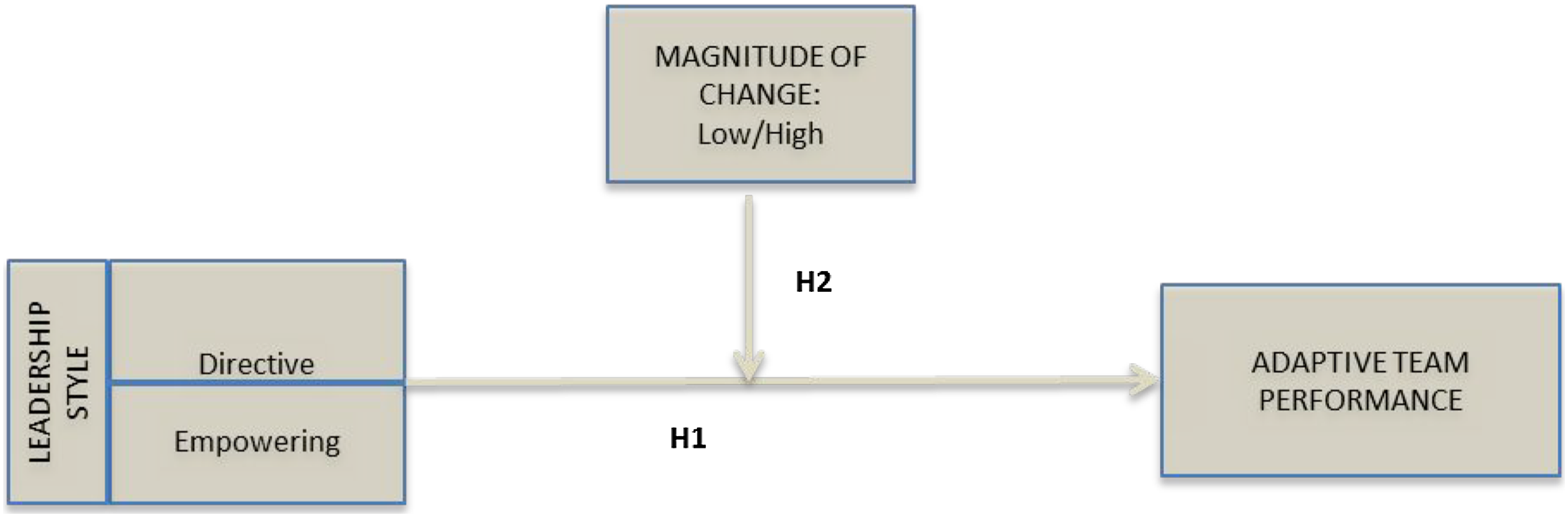
Our study contributes to the theory and research on adaptation and leadership of action teams in several ways. First, by revealing the role of leadership styles in team adaptive performance, we can better understand how leaders’ regular behaviors create conditions that help or hinder the adaptive performance of action teams. In addition, examining the moderating effect of the magnitude of the disruption allows us to offer a finer-grained view of how team leadership may be contingent on the amount of change. Relatedly, this contributes to advancing our understanding of the magnitude of the disruption as a key characteristic of change potentially triggering team adaptation. Finally, by approaching this problem from a longitudinal stance, we can explore in further detail the dynamics of team adaptation: how leadership styles impact adaptive performance immediately following task changes and to what extent leadership styles help teams to recover their former performance levels after change.
Theoretical Framework and Hypotheses
Leadership Styles and Team Adaptive Performance
Several studies suggest the key role team leaders play in team adaptation (Burke et al., 2006; Maynard et al., 2015), but the impact of different leadership styles on team adaptive performance still awaits an empirical answer. Only team leader briefings (in particular, leader behavior) have been studied in action teams as team adaptation antecedents and found to be moderately related to team performance (Marks et al., 2000). In this study, we focus on directive and empowering leadership because of the relevance that these leadership styles have gained between scholars interested in studying the impact of leadership on teams (Lorinkova et al., 2013).
Directive leadership is related to a leader’s positional power and is characterized by behaviors aimed at structuring employees’ work, via providing clear directions and expectations regarding compliance with instructions (House, 1996; Pearce et al., 2003). Directive leaders in teams help members to reduce task and role-related ambiguity and provide external monitoring and feedback on their performance, avoiding process losses and enabling faster decisions and actions (Sagie, 1997). In contrast, empowering leaders focus on sharing power with employees and increasing their responsibility and autonomy to perform their work. This reveals specific behaviors such as encouraging team members to express their opinions, ideas, and views; promoting collaborative decision-making; and supporting knowledge sharing (Arnold, Arad, Rhoades, & Drasgow, 2000). Empowering leaders will reinforce team members’ commitment and task ownership, as well as better coordination and collective information processing (Zaccaro, Rittman, & Marks, 2001). Thus, both leadership styles will stimulate different team behaviors and processes to deal with changes, which will ultimately impact adaptive performance. For example, directive leaders tend to manage teams in a one-to-one style with limited information sharing between team members, while empowering leaders will encourage open and lateral interactions among team members when adjusting to challenges (Espinosa, Lerch, & Kraut, 2004).
Situational leadership theories have received limited empirical support when recommending empowering or directive leadership depending on follower readiness (Lorinkova et al., 2013). This may justify the fact that scholars and practitioners have generally emphasized the benefits of empowering over directive leadership for successfully leading teams in the workplace (Pearce et al., 2003). However, the available evidence is unclear regarding that an empowering leader is always better for enhancing team intermediate and final performance outcomes (Mathieu, Gilson, & Ruddy, 2006; Yun et al., 2005). Some studies have found that directive (vs. empowering) leadership is positively related to team performance (e.g., Ensley, Hmieleski, & Pearce, 2006; Yun et al., 2005). Thus, the relative benefits of empowering and directive leadership in influencing team performance remain unclear. Recently, Lorinkova et al. (2013) have contributed to clarify the potential benefits of the two former leadership styles by showing that directively led action teams initially outperform the ones led by an empowering leader. However, teams led by an empowering leader outperform over time due to higher levels of team learning, coordination, empowerment, and shared mental models. These findings suggest that both leadership styles may be beneficial for team performance depending on, among other possible factors, the phase of a team’s development.
Given that both leadership styles may facilitate adaptive team performance, as they aim to improve team effectiveness through planned and purposefully behaviors, their key difference lies in the means, not the ends. On the one hand, empowering leaders tend to establish participative and cooperative norms among team members, encouraging them to contribute ideas and decisions and to take responsibility for team performance in all situations. Together, these behaviors lead to positive individual and team-level outcomes, such as employee creativity (Zhang & Bartol, 2010), job performance associated to increased self-efficacy and adaptability (Ahearne, Mathieu, & Rapp, 2005), and team capacity to perform autonomously (Manz & Sims, 1987). On the other hand, directive leaders achieve team effectiveness through giving detailed instructions, expecting members to follow those directions, and making decisions with limited team input. Some lab studies with teams performing creative tasks indicate that directive leadership facilitates task accomplishment by providing members with specific directions and helping them to focus on their relevant tasks (Kahai, Sosik, & Avolio, 2004). Sampling over 50 teams in more than 30 companies, Katzenbach and Smith (1993) found that directive leaders establish behavioral rules and increase members’ awareness of their individual roles and contributions to the team and the availability of role resources, reducing ambiguity and errors related to who does what. These directive behaviors clearly differ to those of empowering leaders, who provide ample discretion to team members for performing their work, which allows for alternative paths toward a goal. Although these studies with real work teams have notably contributed to our understanding of how directive and empowering leaders shape team effectiveness, they mainly focus on teams performing under routine task conditions. Thus, our knowledge of the impact of leadership styles on team performance when task conditions are significantly altered is still quite limited. A research gap we aim to fill by explicitly taking an adaptation perspective.
In our study, we argue that each leadership style will have a differential effect on team performance depending on its application before or after the task disruption. Thus, a directive leadership style applied before the disruption may contribute to quickly attaining high team performance. The fact that directive leaders make centralized decisions with little interaction and input from team members helps them to focus on mastering the task while reducing the potential waste of effort and time in making collective decisions or finding alternative approaches to perform the task. However, when a task change arises forcing a team to make adjustments, there are several reasons to expect that empowering leaders will contribute to higher levels of adaptive performance in contrast to directive leaders. First, empowering leaders will obtain more diverse inputs from team members, facilitating better plans, decisions, and actions to adjust to change. Second, empowered team members may feel higher responsibility and commitment for making the extra effort needed to cope with new task conditions. Moreover, since team members will enjoy from enhanced autonomy, they may take proactive actions on problems and unexpected changes conductive to higher adaptive performance. This enhanced team autonomy may help the team to build more team capacity and perform better in more diverse conditions whether routine or changing based on the bi-directional flow of information. Finally, the increase in creativity and innovation that teams led by an empowering leader tend to have in contrast to directively led teams (Kirkman & Rosen, 1999) may help members to envision more alternative solutions to cope with unexpected changes.
Based on the above arguments, we expect that the leadership style of the team formal leader, whether directive or empowering, will have a significant effect on the performance outcomes of teams over time and across stable and dynamic task conditions. Although extant research is limited, we predict that directive leaders will contribute more to higher team performance than empowering leaders when task conditions do not change (pre-change). In contrast, when task changes arise and force teams to adjust (post-change) and team members show enough readiness to be empowered (as they participate, communicate, and share enough knowledge), empowering leaders contribute more to higher adaptive performance than directive leaders (Lorinkova et al., 2013). We predict this overall positive effect of empowering leadership on the two abovementioned types of adaptive performance: transition and reacquisition (Lang & Bliese, 2009). Given the scarce empirical studies available in this regard, we have not found robust arguments or evidence to be able to distinguish the role played by an empowering or directive leader in the two forms of team adaptive performance. Hence, our first hypothesis follows:
Magnitude of the Disruption
We define the magnitude of the disruption as the extent to which the characteristics of a team’s performance environment are altered over time (DeRue, Hollenbeck, Johnson, Ilgen, & Jundt, 2008; LePine, 2003). In work settings, teams widely differ in the magnitude of the disruption they have to deal with (Kozlowski et al., 1999), ranging from low or incremental disruptions (e.g., dealing with a new client) to high or radical disruptions (e.g., working with a severe loss of resources). These differing levels of task disruption may moderate the impact of key input factors such as leadership styles, thereby conditioning their effects on team adaptive performance.
As a quantitative aspect of task changes, the magnitude of the disruption is a task-based trigger prompting the need for a team to adapt to the novel task environment. Others have previously researched on the effects of membership changes on different team processes and emergent states, such as transactive memory systems, mental models, and coordination (Levine & Choi, 2004; Lewis, Belliveau, Herndon, & Keller, 2007; Summers, Humphrey, & Ferris, 2012); however, a specific focus on team adaptation has not been adopted. Thus, little is known about how the magnitude of the disruption impacts team adaptation.
To fill that research gap, we propose that the capacity of a team leader to enable adaptive performance is dependent on the characteristics of the change itself, particularly the magnitude or amount of disruption on a team’s task environment. Considering the extent to which task characteristics are altered, not all task changes are equal and some changes may require more extensive members’ adaptation efforts than others. For instance, when tasks are significantly altered, team members tend to increase explicit coordination in the form of frequent information exchange, negotiation, and planning (Entin & Serfaty, 1999). However, when tasks are slightly altered, teams may adapt by mostly relying on efficient implicit coordination. Thus, minor changes on a team’s task environment may not create a substantial need for team leaders and members to make extensive modifications on their routine work performance. That is, small team adjustments may be enough to successfully adapt to change. However, more radical changes will likely require major adjustments from team members, in the form of new strategies, new role distribution, increased explicit coordination, or updated mental models (e.g., LePine, 2003; Stachowski, Kaplan, & Waller, 2009; Uitdewilligen, Waller, & Pitariu, 2013). Also, this may be accompanied with higher levels of perceived task difficulty or workload among team members, which may negatively impact performance outcomes.
There are reasons to argue that empowering leaders will be especially useful for team adaptive performance under highly disruptive task conditions: first, empowering leaders gather and combine more members’ inputs (e.g., feedback and knowledge), which helps the team to make better decisions and create more potential solutions to deal with change as long as the leader appropriately weighs the information that is being combined (Hollenbeck et al., 1995). Moreover, empowered team members are likely to feel strongly responsible for and committed to successfully dealing with the change at hand (Kirkman & Rosen, 1999). This extra motivation feeds team members’ efforts in accomplishing extensive cognitive, behavioral, or affective modifications as required by the changing task. In addition, since empowering leaders foster interaction and knowledge exchange among members, adaptive performance may benefit from better coordination and shared mental models, which have been identified as key factors for high performance under radical changes (Maynard et al., 2015; Uitdewilligen et al., 2013). In contrast, directive leaders may jeopardize effective team adaptation because of the centralized decision-making with minimal input and contribution from team members, hindering to achieve high-quality solutions to the challenging task disruption.
Based on the above rationales, we expect that the magnitude of the disruption will moderate the impact of leadership style on adaptive team performance. In particular, the effect of empowering leadership predicted on our first hypothesis will be stronger under high-magnitude task changes requiring more adaptive efforts from team members than under low-magnitude changes. Again, we have not found any empirical evidence or conceptual arguments to support that this moderating effect may be different on the two forms of adaptive performance (i.e., transition and reacquisition). Therefore, as we did in our first hypothesis, we predict the same positive moderating effect of the magnitude of the disruption for the two forms of team adaptive performance:
To test our hypotheses, we conducted a laboratory longitudinal experiment using action teams performing a firefighting simulation game. We chose this setting instead of a more naturalistic field setting because of the need to manipulate the magnitude of the disruption and closely monitor transition and reacquisition adaptive performance over time. Therefore, we decided to take a first step in advancing our understanding of how leadership styles impact team adaptive performance under different levels of the magnitude of the disruption through a laboratory-based simulation that provides us with the necessary control to address our research questions.
Method
Sample and Design
201 students enrolled in different graduate and postgraduate courses at a large public University in Spain participated in the experiment. 64% of the participants were women and 92% were Spanish. The age ranged between 18 and 35 years (M = 20.93; SD = 3.02). Participants were randomly assigned to 67 three-member teams. They were assigned to one of the four conditions resulting from the 2 (leadership style: directive vs. empowering) x 2 (magnitude of the disruption: high vs. low) factorial repeated measures design. They participated in a 3-hour computer-based simulation performed in two different 90-minute sessions. In exchange for their contribution, participants received €10 and course credit.
Task and Procedure
The study took place in a laboratory, using a 3-hour computer-based, real-time, command-and-control firefighting simulation called Networked Fire Chief (NFC). The three members played the NFC simulation using different networked computers located in separate cubicles. Team members communicated via headphones by using the Ventrilo software. The NFC software is developed to investigate and train command-and-control decision-making in complex dynamic situations (Omodei, Taranto, & Wearing, 2003), and it has been widely used to examine the type of action and decision-making teams we focus on in this study (e.g., McLennan, Holgate, Omodei, & Wearing, 2006; Uitdewilligen et al., 2013).
The mission of the team was fighting fires programmed to spread over different locations. Team members received warning signals indicating that fires were likely to occur at specific locations on the map. They had seven appliances to fight fires: three fire trucks, two helicopters, and two bulldozers. All members could zoom in to a detailed view of the environment, in which they could operate the vehicles, and zoom out to an overview map for spotting fires and attaining a situation overview. They also had several real-world constraints including water capacity, the need of fuel, traveling speed, and wind influences. Team members had unique roles related to their access to resources and the appliances they could operate in the simulation. The team leader was only able to move and use the fire trucks. The ground officer could move and use the fire trucks, move and use the bulldozers, and move the helicopters and refill water. Finally, the air officer could move and use the fire trucks, move and use the helicopters, and move the bulldozers and refill fuel. This particular task distribution makes team members highly interdependent on each other, so teamwork was necessary to perform the mission.
One month before the experiment, participants were sent an online questionnaire including questions on demographics, natural leadership tendencies, and emotional stability. After team members were randomly assigned to teams, the leaders were selected based on their score on the natural leadership tendency scale depending on the condition (e.g., in the directive condition, the team member with the highest natural tendency to engage in directive leadership was designated to be the team leader) but only those with low levels of neuroticism were considered for training (see explanation on leadership manipulation). The selected team leaders were asked to be at the laboratory before the rest of the team to be trained before the first experimental session started.
When the other team members arrived at the laboratory, the team leader was introduced and the other two team members were assigned the role of ground officer or air officer. Then, the team members received a 10-minute individual training on how to use the NFC simulation, after which they engaged in two training rounds followed by seven performance sessions split across 2 days (i.e., two on day 1, the remaining sessions occurred on day 2), and the task change was introduced after the third round. The reason to distribute the experiment over 2 days was to avoid fatigue effects (see also Edwards, Day, Arthur Jr, & Bell, 2006; Gürtner, Tschan, Semmer, & Nägele, 2007). We have experienced that the simulation can be quite intense and participants tend to lose focus and motivation if they engage in it for too long. Thus, we had to exclude the final round to avoid fatigue effects.1 After the simulation tasks, the participants responded to a self-report questionnaire including the manipulation check items.
Manipulations and Measures
Leadership style
We manipulated leadership by a combination of selection and leadership training based on previous studies (e.g., Durham, Knight, & Locke, 1997; Lorinkova et al., 2013). The purpose was to maximize the effectiveness of leadership manipulation so that leaders would show the desired behaviors, whether directive or empowering.
Selection
A 20-item self-report questionnaire was sent to all the participants to assess their natural tendency to act as a directive or empowering leader. We used the 10-item Directive Leader Scale developed by Durham et al. (1997) to measure directive leadership; an exemplary item is “I feel comfortable if I have to assign performance goals to team members.” We used 10 items from the Empowering Leadership Questionnaire (Arnold et al., 2000) for assessing participants’ tendency to empowering leadership. An exemplary item of this scale is “I feel comfortable when I have to encourage others to express their ideas.” Items were rated on a 5-point Likert-type scale ranging from “very uncomfortable” to “very comfortable.” The participants with the highest levels of each leadership style were considered for training. An initial pilot study indicated that some of the participants selected as team leaders did not show the desired behaviors. After interviewing them, we found out that the main reason was that they considered it difficult to give commands to people they did not know. Thus, we decided to include a screening of emotional stability (i.e., the ability to remain calm when confronted with difficult, stressful, or changing situations) based on the scale utilized by Pulakos et al. (2002). People high on emotional stability tend to have less difficulty in managing their behaviors and emotions, and therefore, they may feel more comfortable enacting the required behaviors than people low on emotional stability (e.g. Bono & Vey, 2007). Finally, the participants selected to play the role of team leaders were those having a high natural tendency to be leaders, whether directive or empowering, and average to high levels of emotional stability.
Training
Team leaders were exposed to a 2-minute verbal presentation, which explained the kinds of behaviors they were expected to show during the simulation. Then, they watched a 6-minute video clip (adapted from Apollo 13 and The Cube for the directive and the empowering leadership conditions, respectively), emphasizing the desired behaviors according to their leadership condition. After this, they were asked to listen to a 4-minute audio recording, where exemplar leaders from our pilot studies enacted the same leadership behaviors they were asked to enact. Finally, to reinforce leadership manipulation, they were asked to assign the ground and air role positions to the other two team members. Directive leaders were asked to assign roles according to their personal preferences, while empowering leaders had to reach an agreement with the team members.
Magnitude of the disruption
We manipulated the magnitude of the disruption after the third scenario by increasing the number of fires, the extent to which fires spread, and the number of resources that were available to the teams.
Fires
In the pre-change period, all fires could be successfully extinguished using only fire trucks and helicopters. The use of the bulldozer, although possible, was not necessary. After the task change, two kinds of fires could happen: (1) fires similar to those happening in the pre-change scenarios and (2) fires for which they received more prominent warning signals earlier, occurring at critical locations (close to houses), and spreading faster. It is not possible to successfully fight these types of fires by only using fire trucks or helicopters; instead, the optimal tactic would be to use bulldozers in order to build a wall next to the fire to prevent it from spreading toward the houses. Another important aspect of the post-change period is that teams should prioritize most critical over less critical fires. In the high magnitude of the disruption condition, anticipation by team members is essential for large fires because they spread at such a speed that it is not possible to contain them after they have started. In the low magnitude of the disruption condition, anticipation is beneficial, but it is still possible to fight the fires after they have started because they spread at a lower speed.
Resources
In the low magnitude of the disruption condition, the number of resources (fuel and water) provided to the teams remained the same as in the pre-change condition, whereas it is reduced by half in the high magnitude of the disruption condition. Because the bulldozer requires much fuel, the efficient use of resources is an important challenge faced by the teams in the high magnitude of the disruption condition.
Adaptive performance outcomes
The basis for our adaptive team performance measure is the team performance scores in each scenario provided by the NFC simulation. This indicates the percentage of landscape that was not burned but could have been burned. All the teams started with 100 points, and this amount decreased according to the number of trees or houses burned. This score takes into consideration the land value, such as houses and buildings are more important than trees or grass. Applying the discontinuous growth approach by Lang and Bliese (2009), we modeled adaptive team performance as the change in the performance scores after the task change relative to the performance scores before the task change (transition adaptation), as well as the increase in performance scores after the performance drop caused by the task change (reacquisition adaptation).
Results
Manipulation Checks
Leadership style
We measured the extent to which team members perceived their leaders to behave in a directive or empowering way by means of a 6-item self-reported scale using a 5-point Likert scale of agreement, after the first performance episode. Three items were adapted from the abovementioned Directive Leader Scale (Durham et al., 1997) to assess perceptions on directive leadership (e.g., “My team leader makes decisions and establishes performance goals alone”). And three items were adapted from the Empowering Leadership Scale (Arnold et al., 2000) to rate empowering behaviors such as “My team leader encourages team members to express their ideas.” Reliability estimated through Cronbach’s Alpha was .80 and .90, respectively. Regarding the directive leadership items, we estimated the ICC(1) = .31, ICC(2) = .57 (F = 2.34, p < .01). Regarding the empowering leadership items, we obtained a similar pattern of results: ICC(1) = .29, ICC(2) = .55 (F = 2.19, p < .01). Overall, these results justify aggregation from the individual to the team levels of analysis (Bliese, Maltarich, & Hendricks, 2017).
Participants in the directive leadership condition perceived their leaders to be significantly more directive (M = 4.03; SD = .45) than those in the empowering leadership condition (M = 3.14; SD = .52; t(65) = −7.98, p < .01).2 Similarly, participants in the empowering condition perceived their leaders to be significantly more empowering (M = 4.28; SD = .59) than those in the directive condition (M = 3.51; SD = .83; t(65) = 3.72, p < .01).3 Based on these results, our leadership manipulation worked out and participants were correctly assigned to their corresponding leadership experimental condition.
Magnitude of the disruption
We developed a 3-item self-reported scale to assess the extent to which participants perceived that the tasks performed on the second experimental session changed and became more difficult than tasks performed on the first session. Items used a 5-point Likert-type scale ranging from “nothing at all” to “to a great extent”: “To what extent were the tasks of this session more difficult than the tasks in the first session?”, “To what extent was the scenario in this session different from the scenario in the previous session?”, and “To what extent did the scenario in this session change from the scenario in the previous session?” Reliability was estimated through Cronbach’s Alpha = .90. The values of ICC(1) = .29 and ICC(2) = .56 (F = 2.25, p < .01) justify aggregation from the individual to the team levels of analysis (Bliese et al., 2017).
Participants on the high-level magnitude of the disruption condition perceived their tasks to be significantly more different and difficult (M = 3.73; SD = .79) than participants on the low-level magnitude of the disruption condition (M = 3.07; SD = .66; p < .01, t(65) = 3.72, p < .01). Based on these results, we claim that our magnitude of the disruption manipulation worked well and participants were correctly assigned to their experimental condition.
Test of Hypotheses
Descriptives and Correlations.
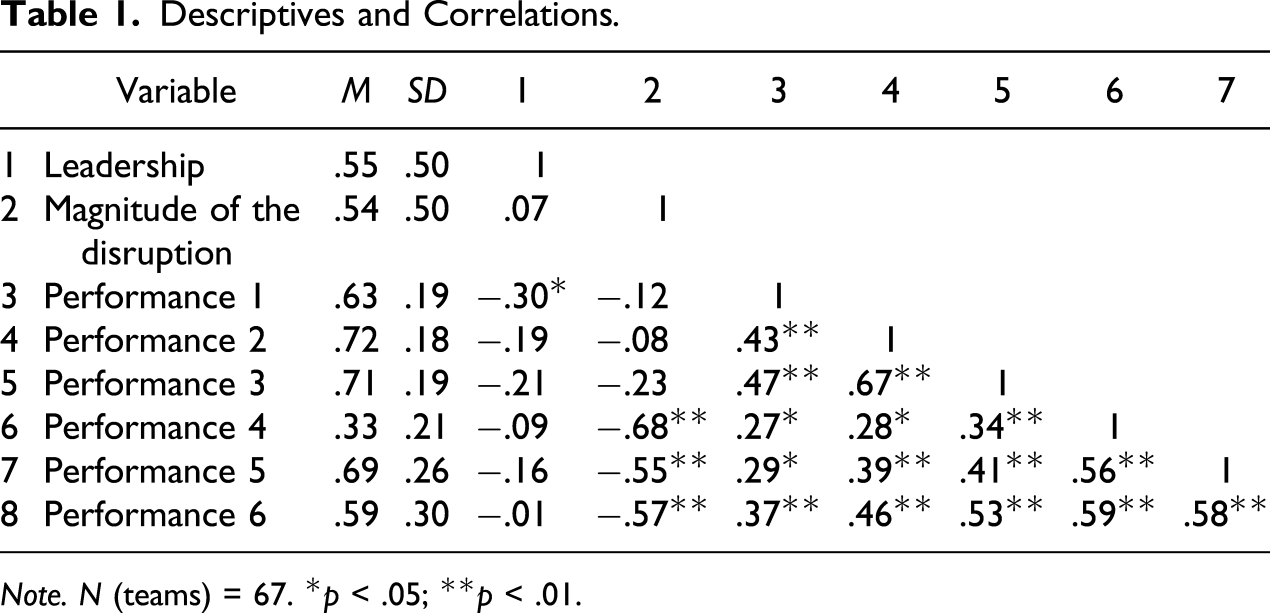
Note. N (teams) = 67. *p < .05; **p < .01.
Discontinuous Growth Models to Test the Time Evolution of Performance.
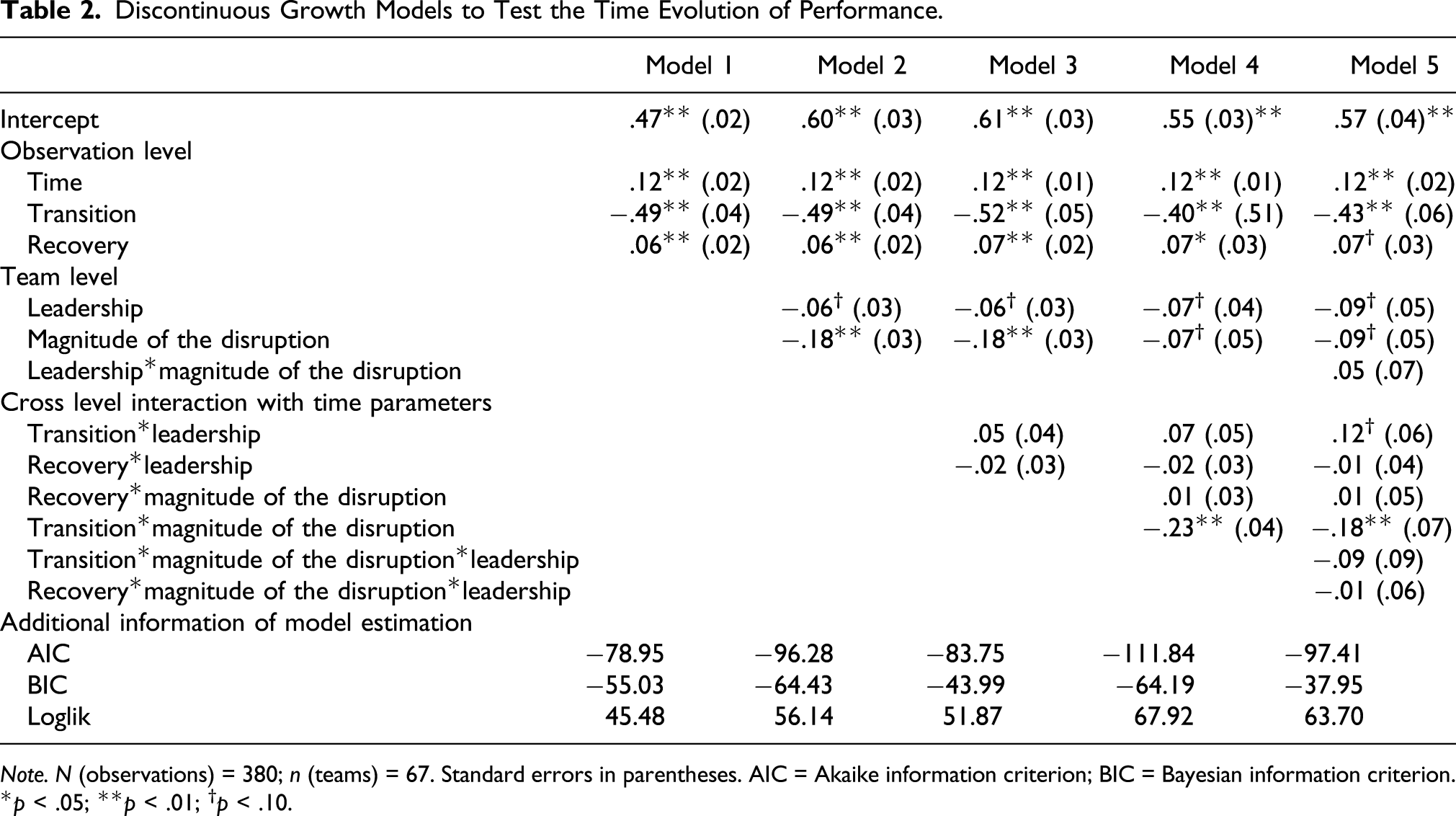
Note. N (observations) = 380; n (teams) = 67. Standard errors in parentheses. AIC = Akaike information criterion; BIC = Bayesian information criterion.
*p < .05; **p < .01; †p < .10.
Before estimating the five abovementioned models, we checked for the amount of variance of performance that is attributable to between-team differences: 23.18%, which is a significant proportion (Bliese et al., 2017). In Model 1, we found that, overall, the teams showed a significant performance evolution over time (Estimate
time
= .12, p < .01), a significant drop in the intercept after the critical change (Estimate
transition
= −.49, p < .01), and a significant difference in the post-change slope relative to the pre-change slope (Estimate
recovery
= .06, p < .01). In Model 2, we entered the team-level manipulated variables finding that directively led teams show higher levels of performance than teams led by an empowering leader (Estimate
leadership
= .06, p < .10). Nevertheless, the leadership style did not alter the drop in the intercept or the change in slope, as shown in the nonsignificant interaction terms in Model 3 (Estimate
leadership*transition
= .05, p = ns; Estimate
leadership*recovery
= −.02, p = ns). Therefore, our results show a better performance tendency for directively led teams both before and after the task change is introduced. This partially supports our first hypothesis. Figure 2 graphically represents these results. Performance over time as a function of leadership style.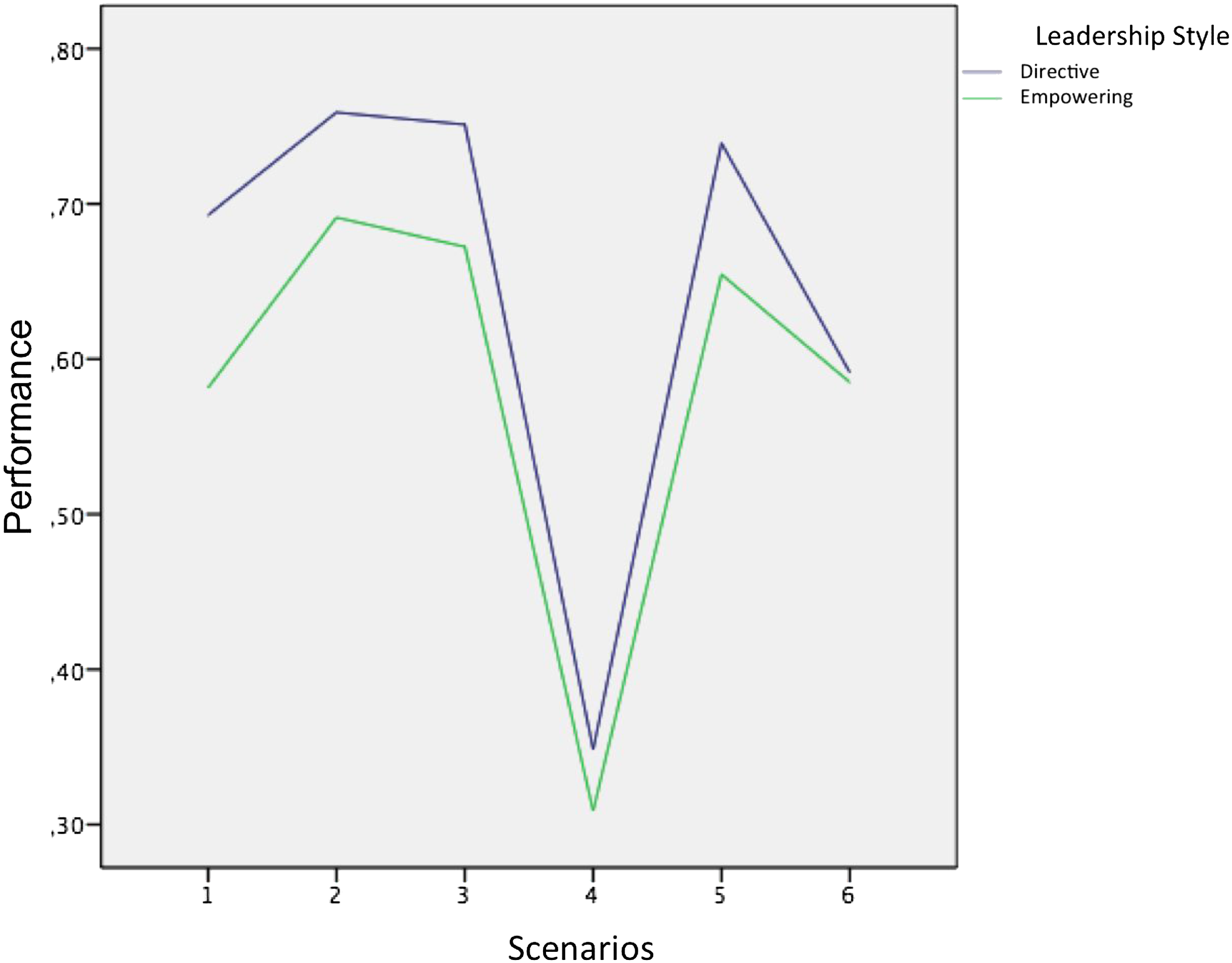
However, by introducing the interaction with the magnitude of the disruption in Models 4 and 5, we found no interaction effects. In other words, the magnitude of the disruption does not significantly moderate the effect of leadership style on adaptive team performance, analyzing both the drop in the intercept (Model 5: Estimate leadership*mag of change*transition = .09, p = ns) and the change in the slope (Estimate leadership*mag of change*recovery = .01, p = ns). Thus, we did not find empirical support for our second hypothesis, revealing that the effect of leadership style on adaptation outcomes does not vary significantly, regardless of the magnitude of the disruption levels. Directive leaders have stronger effects on adaptive team performance than empowering leaders over time and independently of the magnitude of the disruption.
In addition, the magnitude of the disruption has a significant main effect on adaptive team performance (Model 2: Estimate
magnitude of the disruption
= −.18, p < .01), and teams exposed to the high-level magnitude change experience a sharper decrease in performance immediately after the introduction of change (Model 4: Estimate
mag of change * transition
= −.23, p < .01), while no significant differences are observed regarding the slope (Model 4: Estimate
mag of change * recovery
= .01, p < ns). Figure 3 depicts these results. Performance over time as a function of the magnitude of the disruption.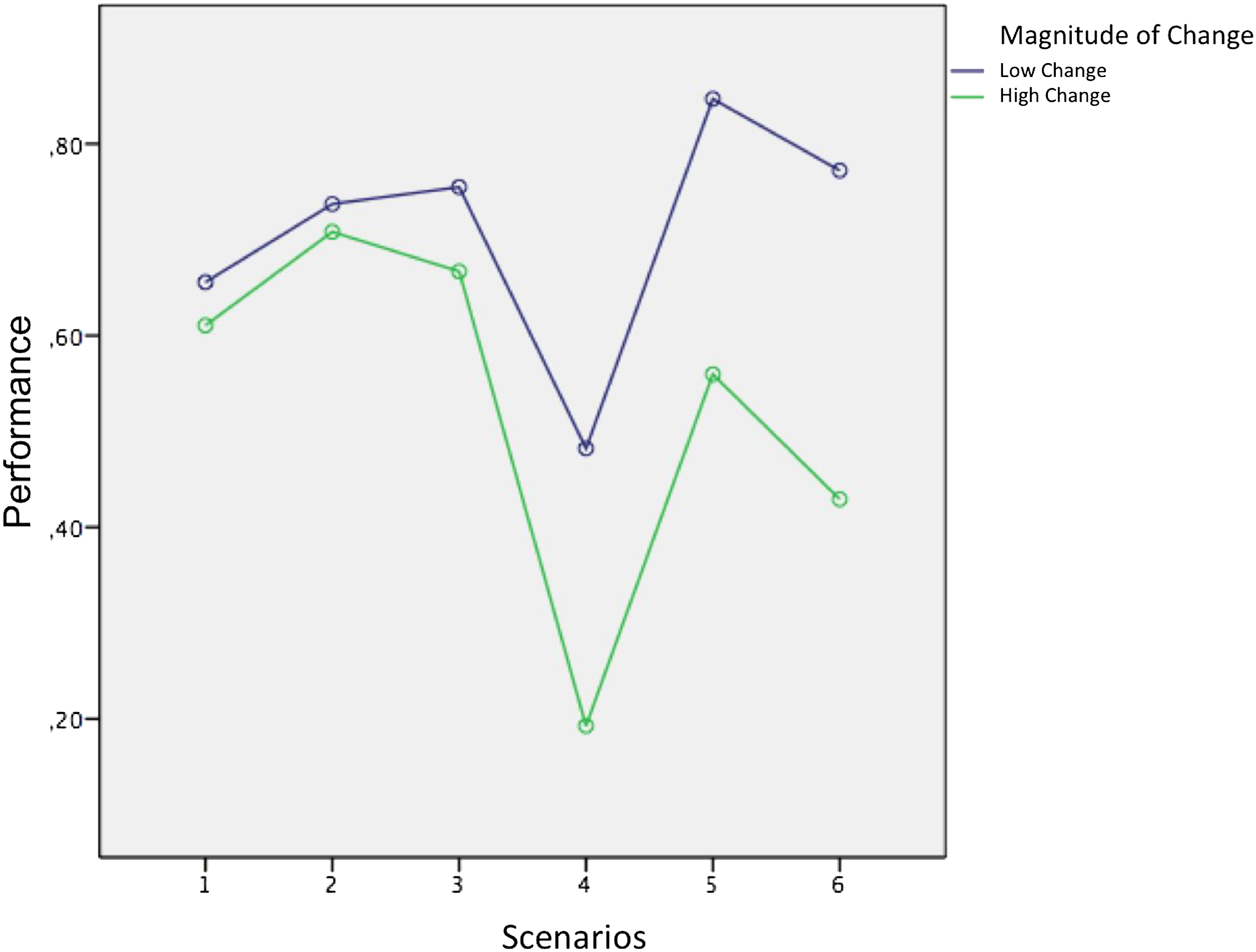
Discussion
In this study, we examined the combined effects of leadership style and the magnitude of the disruption on team adaptive performance over time. Our longitudinal approach allowed us to analyze team performance trajectories before and after the task disruption triggers team adaptation. Our results reveal several theoretical contributions, directions for further research, and practical implications that deserve to be discussed.
Theoretical Contributions
Our first contribution was to experimentally test the effects of directive and empowering leadership styles on the adaptive performance of action teams coping with changing tasks. Unexpectedly, empowering leadership has not demonstrated an incremental benefit for adaptive team performance beyond directive leadership, regardless of the magnitude of the disruption. These results partially support our first hypothesis but empirically contradict some suggestions in the general teams and leadership literature regarding the benefits of empowering leadership for team adaptation (e.g., Lorinkova et al., 2013; Pearce et al., 2003; Zaccaro et al., 2001). Despite extant studies reporting that empowering leaders promote employee creativity (Zhang & Bartol, 2010), job performance (Ahearne et al., 2005), or team capacity to perform autonomously (Manz & Simons, 1987), at least in the context of a laboratory firefighting team simulation, our findings suggest the superiority of directive leadership for adaptive team performance. Our results add to the current research on action and military teams emphasizing that leadership approaches should be contingent and adjusted to the task features of the team in order to select those able to enhance its performance (Burke et al., 2006; Mathieu et al., 2008), including top-down, task-focused, and directive leadership behaviors (House, 1996; Sagie, 1997). In the context of our study, the most beneficial leadership behavior was directive over empowering either when the magnitude of the disruption was small or large.
The possible discrepancies with general leadership literature emphasizing empowering over directive leadership may be partially due to the context in which our teams operate, with a time-constrained simulation performed by team members with low familiarity, which probably constrains their readiness to be led by an empowering leader (Lorinkova et al., 2013). It may be the case that the learning orientation fostered by empowering leaders takes longer to develop, so the teams might not have had enough time to reap the benefits of the resulting performance differences. Also, the shared, accurate mental models that would allow team members to successfully adapt after a task change may take longer to develop with an empowering leadership approach. The time-constrained, pressing nature, and complexity of coping with firefighting in our simulated setting in contrast with other types of teams likely reduces the need for leaders to be more empowering, motivating, or relationally warm, while enhancing the need for a directing behavior regardless of the magnitude of the disruption. The value of directive leadership for team adaptation might have been partially neglected and replaced by the promised benefits of new forms of more participative, social-focused leadership without a deep reflection and empirical analysis of the role played by the task and other contextual characteristics of teams (Ensley et al., 2006; Yun et al., 2005). Maybe the initial performance cost associated with empowering leadership uncovered by Lorinkova et al. (2013) has additional contextual factors extending its effects across time. In this regard, time constraint may be an important contextual factor affecting whether directive or empowering leadership better supports adaptive performance. Further research into the field of action teams and teams performing under extreme conditions is needed to clarify the implications of directive leadership for team adaptation alone or in combination with other leader behaviors such as coaching, inspiring, or supporting. In this sense, the study by Farh and Chen (2018) is promising in showing that directive leaders promote members’ voice both in transition and action phases of surgical teams, while supporting leaders do not increase voice in either phase, regardless of team familiarity levels.
Our second contribution was to analyze the magnitude of the disruption as a potential contingency of leadership style effect on adaptive team performance. Contrary to our expectations, the magnitude of the disruption did not moderate the effects of leadership on adaptive performance. Thus, our second hypothesis was not empirically supported. However, adding this trigger feature to our study of adaptive team performance over time allows a more precise understanding of leadership style effects than examining the isolated effects of leadership as previous studies have tended to do (Baard et al., 2013; Maynard et al., 2015). We have found that directively led teams outperform teams led by an empowering leader independently of the magnitude of the task change levels. In other words, directive leaders help action teams to adapt to challenging, dynamic task conditions to a greater extent than empowering leaders, and this effect remains even when the change is highly intense for team members, which would have been overlooked if the magnitude of the disruption had not been explored. Our explanation for this result is that directive leaders reduce uncertainties related to both task and teamwork, which in a time-constrained environment like a simulated firefighting dealing with a crisis event helps team members to focus their attention and resources on what really matters in the performance scenario (Farh & Chen, 2018). In contrast, empowering leaders may not satisfactorily resolve the intrinsic uncertainties of task changes; on the contrary, by sharing the information, responsibilities, and decisions with team members, the perceived uncertainty of team members may be increased (Ensley et al., 2006). As a result, a number of team process losses and inefficiencies, including waste of time, diffusion of responsibilities, and destructive conflicts among team members, may ultimately impede teams from achieving higher adaptive performance. Empowering leaders may be better for stable times or for transition performance phases. Empowering takes time and that time is not available when teams need to focus on and rapidly deal with the unexpected task change. This may be the case for crisis-type situations and first responders, such as emergency or combat teams, although more research is needed to understand the role of empowering leaders in the adaptation of action teams.
Finally, our third contribution lies in the longitudinal analysis of team performance trajectories, both before and after the task change by using the discontinuous growth modeling techniques recently proposed by Bliese and Lang (2016). This reveals that the magnitude of the disruption significantly influences team performance trajectories, although it does not operate as a moderator; in that those teams exposed to high task disruptions experience larger decrease in performance after the change is introduced. In contrast, teams exposed to low task disruptions suffer minor decrease in performance after the change is introduced. Such effects are coherent with recent developments in the team adaptation literature, suggesting that task changes jeopardize the extent to which team mental models match the current situation (Rico, Gibson, Sanchez-Manzanares, & Clark, 2019). However, we did not find significant differences in the recovery of the pre-change performance levels, regardless of the magnitude of the disruption. This means that teams seem to recover at a similar pace after the task change is introduced and addressed independently of the magnitude of the disruption they experienced. Our longitudinal design and analysis based on discontinuous growth models allow for a fine-grained understanding of the complex temporal pattern of adaptive team performance, responding to the call for more longitudinal experiments in team adaptation research (e.g., Baard et al., 2013; Maynard et al., 2015; Uitdewilligen et al., 2013). We encourage researchers to conduct future studies to explore how specifically teams manage task disruptions and recover their pre-change performance levels.
Limitations and Directions for Future Research
It is important to note a number of limitations of this study that should be addressed in future research. First, we conducted the experiment using a sample of students integrating action teams in a lab setting performing a firefighting, computer-based simulation (i.e., NFC). Thus, the external validity of our findings warrants attention. We do not know whether we would observe a similar pattern of results with different types of teams, tasks, or performance settings. Participants were homogeneous in relevant attributes such as nationality, age, university, and student status; and teams were equivalent across several factors (e.g., size and task-related expertise). Testing hypotheses with our sample reinforces confidence that demographic factors did not affect our results but also constraints the generalizability of our findings. Accordingly, future research should examine how teams adapt to different magnitudes and types of alterations including member and organizational-related changes in a more natural context or using higher fidelity simulations. Thus, in line with the current research on team resilience, further research could investigate different ways in which the characteristics of a team’s performance environment are altered over time; since not only different processes/states are warranted but also different types of leadership depending on the alteration trigger nature. In sum, to validate and extend our hypotheses, future research is needed to reveal the joint effects of leadership style and the magnitude of the disruption on intact work teams in real organizations and on differently composed teams performing different types of tasks, such as decision-making, managerial, production, or service functions.
Second, we focused on the effects of two key factors for team adaptation, as suggested in the literature, but we have not directly examined or measured any mediational mechanisms explaining how teams deal with task disruptions. Recent team adaptation research has identified several potential mediators, including the extent to which team mental models fit changing tasks, coordination processes, member empowerment, and psychological safety (e.g., Burke et al., 2006; Maynard et al., 2015; Rico et al., 2008, 2019). Further, we cannot discard team members’ readiness as an alternative explanation of our findings regarding the effects of directive leadership. Thus, a close consideration regarding team readiness to be led by an empowering leader attending to the degree of its affective, cognitive, and behavioral development is mandatory. In this regard, Lorinkova et al.’s (2013) conceptualization of such readiness through the degree to which team members participate, communicate, and share knowledge is a way to move forward.
More on this line, future research might reinforce the longitudinal logic initiated here assuming that leaders may engage in different leadership styles in the context of adaptive teams. It may be that a directive style facilitates team processes early on within intact teams where members commence to establish a common set of task and team mental models. As these teams progress through their developmental trajectory, empowering styles would provide the support needed to build capacity that could then be utilized when teams need to adapt. Also, the temporal urgency required for responding to changing circumstances may drive teams to cycle between empowering and directive leadership while they recover their performance after a disruption (i.e., during the reacquisition phase).
Third, we decided to distribute the scenarios over 2 days to avoid fatigue effects, but this implied some loss of control over the experimental design regarding what happened to the team members in between the two sessions. However, given our focus on the longitudinal trajectory of team performance, we considered that it was more important to accurately depict the team performance dynamics. Similar multiday designs have also been used in other longitudinal team lab studies (e.g., Edwards et al., 2006; Gürtner et al., 2007). A previous study using the same simulation over two consecutive days showed that there were no “forgetting effects” between days (Uitdewilligen, Rico, & Waller, 2018). Also, the participants did not know each other before the experiment, and they were told not to discuss the experiment between the two sessions, which makes it unlikely that communication between the days would have impacted team functioning. Even if unexplained factors in between the sessions would impact team functioning, there would not be an obvious reason to expect that this impact would differ between the experimental conditions of this study.
Finally, future studies may explore other potential moderators aside from the magnitude of the disruption, shaping the impact of leadership to understand when directive rather than empowering leadership is preferable. For example, recent research pointed out the moderating role of team size in the study of leadership effectiveness (Kim & Vandenberghe, 2017); while we eliminated this variable from our research by making it constant in our design, we consider that this could be an interesting research topic. Moreover, as we explicitly investigated the contrasting effect of directive and empowering leadership, we could not draw inferences on leaders who would score high on both behavioral types or who would adaptively adjust their behaviors depending on the demands of the situation. More research is needed on such ambidextrous or flexible approaches to leadership (Yukl & Mahsud, 2010). In light of the above reflections, we encourage team researchers to consider how different leadership forms impact team adaptation processes and outcomes and their implications for different types of teams.
Practical Implications
This study offers some implications for managing and leading teams to effectively adapt to changing, complex task conditions. Our finding that directive leaders obtain higher performance over time in contrast to empowering leaders, both under stable and changing scenarios, independently of the magnitude of the disruption, suggests that directive leadership may be useful for attaining higher adaptive team performance at least for action teams and in the short term. Leaders of action teams may be directive to facilitate adaptive performance under changing, complex, crisis-type conditions and reserve other types of leading behaviors, such as participating, supporting, inspiring, or coaching for routine tasks, familiar members, other task phases, or calmer times (e.g., planning, training, and after-performance reviews).
Additionally, although in our study the magnitude of the disruption does not play a role as a moderator, it has a significant direct effect on adaptive team performance. This means that team leaders and members might carefully gauge the magnitude of the disruption in order to plan, select, and execute the best strategies to deal with it. We consider that these evidence-based suggestions best apply to firefighting teams and other action teams with equivalent dynamic task characteristics.
Conclusion
If we can take something for granted, then it is that changes are going to happen in action teams’ task environments, and these changes are going to impair their performance. Our study suggests that directive instead of empowering leadership is an effective way to ensure that action teams perform well under such changing and complex conditions, at least in newly formed action teams. Although more research is still required to understand how different leadership styles help teams to adapt to unforeseen changes, we hope this first step will stimulate further empirical efforts in this regard.
Footnotes
Declaration of Conflicting Interests
The authors declared no potential conflicts of interest with respect to the research, authorship, and/or publication of this article.
Funding
The authors disclosed receipt of the following financial support for the research, authorship, and/or publication of this article: Ministerio de Ciencia, Innovación y Universidades, RTI2018-097033-B-I00.

Notes
Associate Editor: Deanna Kennedy