




Abstract
Programs working with men and boys in relation to gender equality are increasing. Little is known, however, about how these programs go beyond raising awareness, to supporting attitude and behaviour change in their participants. In response, 17 facilitators from eight Australian organisations were interviewed to identify program design and delivery strategies that increase male participants’ engagement. Analysis of interview data revealed three themes and seven subthemes, which were crosschecked against survey data from 79 program participants. The themes were the provision of a safe, judgement-free environment; encouraging and supporting growth in participants; and the central role of the facilitators in the success of the first two themes, and in the delivery of programs more generally. Facilitator and participants held mostly consistent perspectives, which were comparable with the existing literature; variations from the literature were noted, however, regarding the lack of efficacy of single-session programs and the relevance of facilitator gender.
In recent decades, the position of men and boys in relation to gender equality has evolved from that of allies, to participants, partners and beneficiaries of change (Connell, 2020; Keddie, 2021a). Accompanying this shift, has been an increase in programs working specifically with men and boys to challenge and disrupt what are now considered outdated gendered norms and stereotypes (Glinski et al., 2018; Stewart et al., 2021). The majority of these programs work directly with men to promote knowledge and awareness, facilitate reflection and ideally shift attitudes and behaviour (Barker et al., 2007; Stewart et al., 2021). Evaluation, when undertaken, tends to focus on participant perspectives, failing to capture the rich experience of those designing and delivering the programs (Stewart et al., 2021). As Levy et al. (2020) note in their systematic review of programs targeting gender inequality and restrictive gender norms amongst young people, the social nature of these issues would benefit greatly from multiple data sources and insights; something they note is currently lacking, and this article seeks to address.
This article adds to this nascent literature by exploring facilitator perspectives and crosschecking these against survey responses from men and boys who have completed a program. After synthesising the literature on working with men and boys, qualitative data is used to explore the strategies identified by facilitators, which work to engage men and boys in programs aimed at challenging outdated masculine stereotypes and norms.
Working With Men and Boys
The intent of programs working with men and boys range from raising awareness and increasing knowledge, to supporting the development and improvement of social-emotional skills, and shifting men and boys attitudes and behaviour in relation to gender equality (Barker et al., 2007; Levy et al., 2020; Stewart et al., 2021). Frequently this includes unpacking and challenging outdated and restrictive masculine stereotypes and promoting healthier versions or ways to express masculinity 1 (Heilman et al., 2017; Stewart et al., 2021). Although identified as outdated, these masculine norms remain dominant, encouraging men to appear strong, in control, competitive and unsusceptible to vulnerability (Rice et al., 2018; see also e.g. Heilman et al., 2017; Levy et al., 2020). Accordingly, programs working with men and boys are needed because of the frequent lack of access to language, skills and support networks experienced by men and boys, which are necessary to build an understanding of the impacts of rigid gender norms and stereotypes, let alone make long-term behavioural changes (Connell, 2020). These programs also provide a contained space in which to undertake this work, one which some, if not all, the men and boys attending may not otherwise have access to, or struggle to find in the face rising anti-feminist movements (Keddie, 2021b).
Questions remain, however, about such a targeted focus on men and boys. This includes concerns about the diversion of resources away from women and girls who continue to be disproportionately affected by gender inequality, and also about the perpetuation of gender binaries and hierarchies that working with single-sex cohorts presents (Keddie, 2021a). In response, most programs acknowledge the identified need to support men and boys to see themselves as part of the process to enact sustainable, transformative change whilst also adhering to the foundational feminist principles of gender equality (Greig & Flood, 2020). However, how these programs adequately challenge their participants to acknowledge and reflect on their own involvement in gender-based inequalities remains unclear despite recent research (Keddie, 2021a, 2021b). This study considers the experiences of those designing and delivering these programs as a way to explore what programs are doing to engage their participants, particularly in relation to the concerns discussed here.
Program Delivery
With regards to logistical and strategic approaches to working with men and boys, the current literature suggests participants respond well to active learning via group education (also referred to as ‘direct participant’ programs), robust modelling and leadership, and multiple, as opposed to one-off, sessions (Barker et al., 2007; Stewart et al., 2021). Further, skilled facilitators are required to model gender-equitable attitudes and behaviours and create a safe space, free from judgement and censorship and encouraging exploration of and challenges to outdated masculine norms and stereotypes (Barker et al., 2007). A recent review by Stewart et al. (2021) found that in addition to these aspects, the use of co-design, peer interaction and including relational and community aspects to the focus on individual-level change was effective when seeking to shift attitudes towards gender norms and stereotypes with men and boys. Absent from the emphasis placed on facilitators across these reviews is robust discussion around whether gender plays a significant role, with many programs opting for male facilitators despite evidence suggesting that program participants seek someone they can relate to, regardless of gender (Glinski et al., 2018; Robb et al., 2015).
Program Evaluation
Currently, most literature reporting on programs and interventions that work with men and boys focuses on participant data, utilising pre- and post-measurement tools, but stopping short of capturing follow-up data (Casey et al., 2018; Stewart et al., 2021). Considering the emphasis placed on facilitators in reviews, there is a noticeable gap in the literature regarding facilitator perspectives. As noted above, Levy et al. (2020) highlight that much can be gained from incorporating the perspectives of multiple stakeholders. The literature that has looked beyond participants, whilst relatively limited, provides interesting insights. For example, Das et al. (2016) interviewed female partners and family members of facilitators of a gender-transformative program in India to improve men’s health behaviours. The authors reported multiple positive changes in those delivering sessions, including increased contribution to domestic labour (including childcare), improved interpersonal communication, less aggression and greater attention paid to their partners’ desires and needs. Another recent study by Beel et al. (2020) explored recommendations of Australian men’s therapists, investigating the strategies they use for working with men. Their findings align with those of Barker et al. (2007) and Stewart et al. (2021), agreeing on the importance of creating a safe space, developing rapport grounded in respect, and fostering clients’ motivation to participate in the counselling. Such viewpoints are valuable given the significance placed on facilitators and their abilities to engage, challenge, support and guide the men and boys in these programs (Barker et al., 2007; Stewart et al., 2021).
Australian-Based Programs
Studies considering programs working with men and boys to explore understanding and performance of masculinity originates primarily from the United States or the global south (Levy et al., 2020). In spite of a limited presence in the literature, Australian programs in this space continue to increase in number and prominence, gaining access to thousands of men and boys each year 2 (Tomazin & Prytz, 2021). The relative absence of empirical examination of these programs represents a gap in the otherwise well-established field of men and masculinities research in Australia, which includes foundational theoretical contributions to conceptualisations of hegemonic masculinity from Connell (1987), extensive scholarship on a range of issues relating to men and boys, including but not limited to men’s health (including a national health strategy for men: Smith, 2018), and mental health (including extensive research into the role of Men’s Sheds – Wilson & Cordier, 2013, see also, e.g. Courtenay, 2000) as well as the impact of sporting culture, men’s bodies, sexuality and homosocial intimacy (Ralph & Roberts, 2020; Waling, 2019). The need for development of and investment in the programs which are the focus of this study, is more pertinent than ever in Australia, with 2021 seeing Australia record its worst-ever result in the World Economic Forum’s Global Gender Gap Index 3 (World Economic Forum, 2021). This, coupled with the serious allegations of sexual assault and misconduct levelled at members of the Australian Government in early 2021 (Gunia, 2021), highlight the ongoing and resolute need to tackle issues of gender inequality at all levels.
Aims
This paper explores the delivery strategies of Australian education-based programs that seek to disrupt outdated masculine and gender stereotypes and norms amongst men and boys. We focus on facilitator perspectives of the strategies used to engage participants and support shifts in their perspectives, attitudes and behaviours. In doing so, we seek to augment the extant literature that emphasises the pivotal role facilitators play in engaging their participants with the program material but rarely includes their perspectives. To complement the facilitator data and strengthen methodological credibility, program participant perspectives are included as a means of data triangulation (Liamputtong, 2009). The main research question the study addresses is – beyond providing information and raising awareness, what are Australian programs working with male-only groups doing to support participant attitude and behaviour change?
Methods
This study used two data sets, designed to complement and validate each other, but obtained through different methods at different time points. As indicated above and detailed below, phase one of data collection, and the focus of data analysis, was interviews with facilitators and program managers (University ethics approval – 21152). Phase two was an anonymous online survey completed by program participants (University ethics approval – 26913). The second data set was used as a validation tool in this study; however, deeper interrogation of the survey data is the subject of a separate manuscript currently under review 6 .
For both data collection phases, organisations were approached, first, based on the criterion of delivering gender-focused programs to men or boys. This did not have to be to the exclusion of working with girls or women, but male-only participant sessions had to be part of service provision. Secondly, the sessions delivered had to be in a direct participant format, with the theme of masculinity and gendered stereotypes or norms either the specific focus or featuring as a topic within the program. Authors’ personal and professional networks were used to contact organisations and an internet search of Australian-based organisations meeting the above criteria and contact options via the websites of those with which there was not an existing relationship or connection.
Data Collection – Phase One
Seventeen people accepted invitations to undertake individual, in-depth, semi-structured interviews. Interviews were conducted between February and May 2020, with facilitators and program managers across eight organisations. The category of program managers included organisation founders and leadership, and several people overseeing program development. Where possible, a minimum of two people were interviewed separately from each organisation to allow different viewpoints to be captured and consistencies or counterpoints to be identified. In addition, where possible, at least one interviewee was a facilitator and the other from management. Several interviewees fell across both categories. Interviewees were invited to participate via email or phone.
Interviews lasted 45–60 minutes each and were conducted in person or online depending on COVID lockdown restrictions. Written consent was obtained, each interview was recorded and then transcribed by a third-party transcription service. Participant anonymity was ensured by assigning a two or three letter code 4 signifying gender, position and a number based on interview order. De-identified transcripts were uploaded into NVivo for coding and analysis. Interviews were semi-structured, ensuring specific topics were covered but allowing interviewees leeway in responding and permitting flexibility in follow-up questions (Bryman, 2012).
Data Collection – Phase Two
Data captured via the interviews informed a qualitative survey of program participants, which was distributed between December 2020 and April 2021, by five organisations (three of which also participated in the interviews described above) to participants from programs run in 2019 and 2020. Distribution was via communication channels, such as newsletters and social media accounts. The survey was designed to obtain a comprehensive picture of participants’ experiences and, as above, is the subject of deeper interrogation in a separate manuscript. For the purpose of this study, a sub-set of relevant questions (see Supplementary file one) were utilised as a comparative tool to crosscheck the strategies identified through the facilitator interviews. Five organisations accepted invitations to distribute the survey, and, following their calls for participation from alumni, 113 responses were received, of which 79 contained sufficient data for inclusion in this study.
Data Analysis – Phase One
Thematic analysis was conducted on the interview data using Braun and Clarke’s (2019) reflexive approach. Coding was undertaken using a constant comparative method, with open, unstructured coding initially done on seven transcripts from seven different organisations. All authors reviewed and refined the codebook developed from this, with initial groupings and coder assumptions and biases noted and discussed. The interdisciplinary research team, made up of two female- and two male-identifying researchers, allowed for rigorous discussion and exploration of assumptions throughout the analysis process and manuscript drafting, reflecting the ‘collaborative and reflexive’ approach outlined by Braun and Clarke (2019, pg. 594) when more than one researcher is involved with coding. The codebook was used on the remaining 10 transcripts, with new codes added as they were identified, and previously coded transcripts reviewed against new codes. The first author grouped the codes into meaningful themes, which the full research team then discussed, refined and finalised.
Data Analysis – Phase Two
The themes generated in phase one were triangulated against the qualitative survey data collected in phase two. Responses to the sub-set of the questions (see Supplementary file one) were reviewed against the themes, specifically looking for points of agreement and disagreement. Interrogation of assumptions continued in this phase of analysis, through research team discussions. This additional step allowed for data triangulation to compare viewpoints of both facilitators and participants on the same phenomenon (Liamputtong, 2009).
Interviewee and Survey Respondent Demographics
Of the 17 interviewees, 15 identified as men (88%) and two identified as women (12%): six facilitators, five program managers and six across both. Interviewees are based in the Australian States of Victoria (n = 9), Tasmania (n = 4), New South Wales (n = 4).
Survey responses were anonymous, and gender data was not collected. However, based on the recruitment criteria for organisations, it is reasonable to assume that most respondents identified as male. Respondent age ranged from 12 to 83 years (M = 26.5, Me = 16). The majority of respondents were 14 to 18 years old (n = 54, 69%), the remaining 19 years or older (n = 24, 31%), and one did not provide their age.
Organisation and Program Logistics
Organisation and Delivery Characteristics (n = 10).

aDue to membership (school, club, workplace) refers to organisations who are engaged by schools, sporting clubs, workplaces, etc. to deliver the program to their students, players, employees, etc. Self-select refers to organisations with whom participants register directly, generally with an associated attendance fee. 5
bNote. Fifty-three survey respondents indicated they had attended multi-session programs delivered by two of the five organisations. The remaining 26 respondents attended one-off sessions, which ranged from a few hours to several days.
cNote. Some organisations deliver similar programs to female-only groups; none delivered sessions to mixed-gender groups.
dNote. Age limits for sessions delivered outside of school settings tend to focus on a minimum age of 18 years with no upper limits, whilst those working in the school setting are primarily aimed at 15–16 year olds (grades 9 and 10) but can range from 12 to 18 (grades 7 to 12).
Findings
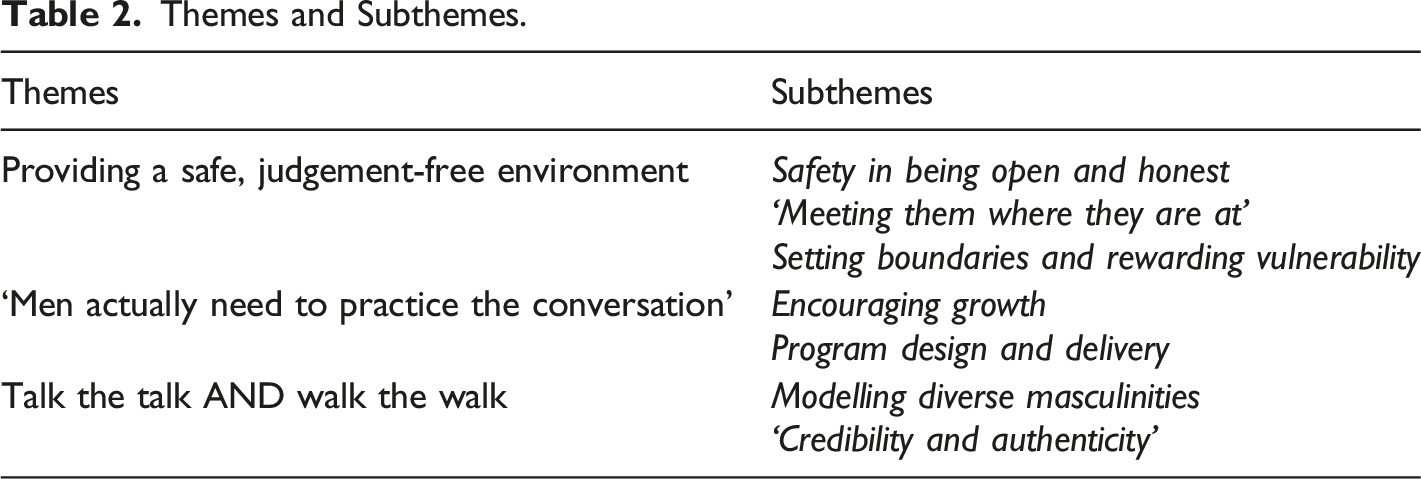
Themes and Subthemes.
Theme 1: Providing a Safe, Judgement-Free Environment
This theme speaks to the foundational need, identified by facilitators, to create a safe, judgement-free environment. The centrality of safety is well-established in the development of gender-equality programs (Glinski et al., 2018), although not without debate regarding the tension between supporting growth but also requiring reflection and self-awareness of one’s role in issues of gender inequality (Keddie, 2021a).
In discussing this concept, interviewees identified the environment created by the facilitator/s as critical with relation to fostering connection and support within the group. This included creating an environment that encourages and rewards openness and honesty, allowing for mistakes and celebrating growth. If the environment is conducive, men and young men absolutely will talk, and they’ll go to very deep places. But the environment needs to be signposted and constrained in a way that makes that possible. And so often the environments specifically the [one’s] young men [are] hanging out in, don’t offer that. They offer the complete opposite; they offer ridicule for any deviation from the norm. (mF16)
Interviewees talked unanimously about the value in, and need for, meeting the men and boys in the room ‘where they are at’. That is, gauging the level of understanding and acceptance of topics being explored and discussed and the group norms of the men or boys in the session. In doing so, facilitators can adjust their approach to best capture the group’s attention and take advantage of existing group dynamics.
This approach was also identified as helpful for tackling resistance in the room upfront to avoid derailing the session. One interviewee discussed this in the context of dealing with preconceived negative perceptions of the program by instigating a direct conversation, ‘there’s a time where we’re better off just calling it as it is, and in many cases, boys are more engaged because then you’re talking real with them as opposed to treating them like kids that are naïve’ (mFM9).
Concern around the approaches articulated via the first two subthemes (safety in being open and honest; ‘meeting them where they are at’), centre around the potential for gender-based power and privilege imbalances to be overlooked and the position of disadvantage co-opted (Keddie, 2021a). There were two strategies, identified through the interviews, which somewhat address these concerns. The first was the need to set boundaries, discussed as integral, particularly in relation to ‘meeting them where they are at’. Facilitators described this in terms of calling out poor behaviour and attitudes, but reflected on these as opportunities for interactive learning, moments to humanise the topics and skills addressed in the programs. Several facilitators reflected on the importance of this as a way to engage positively on difficult or sensitive program content, encouraging self-reflection as opposed to shame or embarrassment. Know that your words have an impact, and language is so important. Just acknowledging that to them because also knowing that even if you do say the wrong thing or you do the wrong thing, it doesn’t make you an evil monster that is awful and beyond change. And when they do say dickhead things, it’s very much a space of, ‘This is a good teachable moment. You’re not a shit person, bro’. (fF13) That’s about, again, claiming responsibility for your stuff. It’s not throwing the blame. (mM5)
The second strategy, articulated as a necessary accompaniment to setting boundaries, is encouraging and rewarding openness and vulnerability. This includes ensuring that openness is met with support and guidance, and often requires tapping into the peer dynamics of the session to demonstrate a sense of belonging. Interviewees talked about this as one way to engage positively with men and boys, modelling and encouraging behaviour that differs from some of the more traditionally identified masculine norms that discourage vulnerability or cast it as weakness. It’s picking the moments ... and rewarding the moments. So getting honesty in the room where everyone raises their hand and leveraging some of the positive ... or, sorry, the more traditional aspects of the masculine persona around courage, and stoicism, and taking risks. How can you get them to do that in a vulnerable setting? And then rewarding and acknowledging that behaviour. (mFM8)
Triangulating Theme 1
Survey data indicated that those attending these programs agree with facilitators in relation to the need for a safe, judgement-free environment. The importance of the subthemes of boundary setting and rewarding vulnerability is evidenced by the comfort and safety participants reported feeling in sharing not only with those running the session but perhaps more pertinently, in front of their peers.
Survey respondents were consistent across all program types in their description of feeling comfortable and welcome in the sessions they attended. Many described feeling safe contributing to discussions and asking questions when needed, noting the lack of judgement from facilitators and their peers. This was articulated well by one survey respondent who wrote ‘my classmates and I felt comfortable to the point we all expressed ourselves, and even people in the class that didn’t like each other or got into a fight in the past’.
That being said, not all program participants felt comfortable to share, citing underlying issues of social anxiety or shyness as difficult to overcome in the group settings these programs are delivered. One survey respondent noted, ‘There were a lot of people there. And although that’s great, it also made it hard for people who might find big groups intimidating (i.e. anyone with social anxiety)’. This speaks to the importance of the strategies discussed under theme one, highlighting the less desirable outcomes when not successfully executed, including the possibility of some men or boys feeling alienated by the group environment, resulting in the experience of a safe, judgement-free environment being negated.
Theme 2: ‘Men Actually Need to Practice the Conversation’
The second theme identified through the interview data pertains to how men and boys are supported in the environment discussed in theme one. This centres around strategies facilitators talked about using to encourage growth in participants, as well as leveraging program design and delivery, particularly program length, to support engagement. As one facilitator succinctly put it, ‘men actually need to practice the conversation’ (mF11), referencing the necessary progression from ‘meeting them where they are at’, to supporting them to learn and encouraging growth, a key challenge when it comes to engaging men and boys in gender equality (Glinski et al., 2018).
Facilitators and program managers discussed the importance of providing participants opportunities to practice and ‘get it wrong’ without fear of judgement, as a way to strengthen message delivery. They talked about the need for programs to provide the space for participants to explore and practice new concepts, language, perspectives and behaviours. In this regard, there was some acknowledgement of the impact of pre-existing gendered socialisation on participants. One interviewee reflected on the importance of identifying and addressing the attitude of ‘the stereotype served me well, what’s the point of me challenging it’ (mF11). This is where the role of the facilitator is perhaps most critical, in terms of challenging this type of attitude and providing the space for self-reflection and accountability, as is required of programs rooted in feminist principles (Keddie, 2021a, 2021b), and is something that those developing and delivering these particular programs need to be actively conscious of.
Creating the sense of safety discussed in the first theme allows facilitators to build rapport with the men and boys, which ideally takes the environment from one that is safe, to one that encourages growth. From the perspective of those designing and delivery these programs, the intention here is to create the opportunity to go beyond just providing information to equip participants to make the connections themselves. The objective being to allow participants of the program to develop a critical understanding of rigid stereotypes and outdated norms and recognise how these are linked to poor health outcomes (including mental health), increased use of risky behaviours, and violence against others and themselves (see Courtenay, 2000). This places the onus back onto those in the room, asking questions like who do you want to be, what type of friend, brother, son, partner, and so on, remain pivotal, as per these interviewee responses: It’s not us saying, this is who we want you to be, we want them to tell us, this is who we want to be, and we’re helping you to be who you want to be. So those questions, what kind of club do you want to be? What kind of influence do you want to have on the kids? That’s a really, really important one for adults. What reputation do you want? (mFM2) Exploring this concept or this challenge of, how do you motivate the generation of young men to care and to want to challenge and rethink this culture that impacts them and impacts others around them. (fFM12)
A frequent reflection from interviewees in supporting or encouraging growth is the need to provide tangible, practical advice and strategies, so that men can take what they are learning out into their lives and apply it. Practicality was identified as a key factor to making it appealing or feel achievable, as articulated by this facilitator: But for one thing, it needs to be very practical; it can’t be too wishy-washy or vague or spiritual or have too much of an agenda. They definitely need to go okay I could do that; I could do that at the pub, I could do that after footy training, I could do that with my neighbour. That works for me. (mF11)
Program design and delivery was identified as a lever to encouraging growth by both those working in, or towards, a multi-session delivery format. Interviewees described the practical benefits of multi-session programs in terms of debriefing with participants on real life experiences between sessions. I guess the beauty of having that sort of light touch each week or 1 hour workshop and then seeing them weekly is you can give them that information you can discuss, et cetera. They can go out in the real world, test it, and then come back in and then report and debrief. (fFM12)
Further to this was the goal of working across aspects of men and boys’ lives, in areas of influence such as home, sporting clubs, school, and generally amongst peers. Interviewees were unanimous in agreeing on the benefits in terms of longer-term sustained change but also acknowledged that this level of engagement remains a work in progress. Only one of the eight organisations represented by interviewees currently delivers multi-session programs. The majority, however, discussed the development of multi-session programs to replace current one-off offerings (ranging from 90 minutes to a single day). Citing plans for more comprehensive engagement with multiple levels of the institutions they work with, such as teachers and parents in schools, not just the students. I would say it’s possible to do it without [multiple sessions], but it’s not sustainable, and it won’t have the same long-term impact … you don’t need to do a one-day programme with everyone, but the adults around a boy need to know what’s being done in a program with their teenage son, and they need to feel like they’ve been involved in the process. (mFM9)
Triangulating Theme 2
Theme 2 focuses on the strategies used to encourage growth in the men and boys participating in these programs. To triangulate this theme, the survey questions asking participants what they had learnt in the programs and what they had applied in their own lives were considered. There was a consistent theme of increased self-awareness, particularly regarding being considerate to others and improving communication with those close to them. The most robust reflection, however, was their improved ability and willingness to listen to others, ‘listening, being more aware of the other persons experiences, validating their experiences’.
Survey responses reflect the efficacy of creating the environment to grow, identified by those delivering the programs. When asked about any changes they had seen in themselves, survey respondents reflected on being happier, more confident, respectful and considerate, and calmer and less angry. Respondents across all program types discussed the themes of increased self-awareness and self-acceptance and feeling better equipped to have conversations they may previously have avoided or not even recognised as necessary.
Although responses did not vary significantly across different program types, it is worth noting that the number of sessions attended did feature in some people’s reflections. Important was the idea that despite having an impact ‘in the moment’, the lack of subsequent interactions did leave some participants with a sense of ‘what next’. Some noted a lapse in memory when trying to remember precise details beyond that feeling of in the moment excitement. It was great in the moment, but [I] can’t really remember. [I’m] not sure about taking things away [sic] for the long term … as I said, had an impact in the moment, but left me wondering what next.
These observations are congruent with the literature and the facilitator reflections in this paper that the length and frequency of programs of this nature are crucial when attitude and behaviour change are the intended outcome; one-off sessions are not enough on their own.
Theme 3: Talk the Talk and Walk the Walk
The final theme considered the central role of facilitators and the complexity of the skills required of them, exemplified in the first two themes and consistent with the broader scholarship looking at those working with men and boys (Barker et al., 2007; Keddie & Bartel, 2020; Stewart et al., 2021). This included various attributes and skills needed to ‘read the group’ and work to ensure that every man in the room feels seen, heard, and spoken to. When you sit in a room with them, the real power in these workshops is the facilitator’s ability to draw out things from participants. That’s what essentially they’re doing, that [sic] they’re facilitating a conversation. The best workshops are the ones where the people or the participants in the room almost feel like they’ve come to the conclusion themselves as opposed to being told something. (mM10)
Interviewees reflected on the diversity modelled across their organisations in their facilitators, selected to represent the multifaceted ways of living and performing masculinity regarding ‘their backgrounds, life stories, sexual preferences, religions, ethnicities, the whole spectrum’ (mFM8). Several interviewees discussed how ‘young men can’t be what they can’t see’ (mFM3), referring to the need for examples of diversity in terms of facilitator backgrounds, but also understandings and performance of masculinity. Reflections focused on demonstrating, as opposed to ‘just talking about', the endless ways to ‘be a man’ outside the rigid stereotypes and norms the programs are there to unpack, including engagement with traditionally more feminine practices such as caring for and listening to their mates. So, if they don’t have someone to see enacting behaviours, talking about thoughts and ideas, deconstructing things that might happen in a particular way, then it’s very hard for them to take on those behaviours. (mFM3)
Interviewees with facilitation experience, in particular, described the need to walk the walk, not just talk the talk. ‘One of my big things is practising what I preach’ (mF11), and for most, this centred around the need to be authentic and credible in their engagement with the men and boys in the program.
Interviewees discussed the need to strike the right balance between discussing masculinity and the negative impact of rigid stereotypes and norms, and avoiding being ‘preachy’, lecturing, or using phrases like ‘toxic masculinity’, which were seen as barriers to authentic conversation. Managing this tension is, as above, a key concern for feminist scholars, with the risk of inequalities rooted in gender-based power and privilege being overlooked in order to ensure comfort of participants (Keddie, 2021a; Keddie & Bartel, 2020). One approach identified across interviews, that could potentially address these concerns, is the idea of authenticity and ‘real talk’. Those with facilitation experience in particular spoke of this and it links to credibility, ‘the other thing you have to have in their minds is credibility and authenticity’ (mFM2). This was related to building rapport and modelling the openness and expression that these sessions are seeking to equip men and boys with, such that they can then practice these expressions in their own lives and spheres of influence, as discussed in theme two. One common strategy used across all organisations is facilitators sharing personal stories. This aligns with the approach of ‘drawing attention to the shared vulnerabilities of the masculine experience’ discussed by Keddie (2021b, pg. 8), in her exploration of the ‘pedagogical principle of mutual vulnerability’ as an educational tool when seeking to support critical reflection. Personal stories told by interviewees focus primarily on their own experiences feeling trapped by the ‘rules of manhood’, their ‘ah-ha moments’ of realising that these rules were doing more harm than good, or about the impacts the violence and risky behaviour has had on their own lives, such as loss of mates to drink driving.
Triangulating Theme 3
Theme three focuses on the pivotal role facilitators themselves play, and although not asked directly about the facilitators of the programs they attended, survey respondents mentioned them often. Their reflections focused on the experience the facilitators created for those participating in the session, as discussed at length across the previous two themes. In addition to feeling safe was feeling heard, with one survey respondent stating, ‘I felt relaxed, and I could give my own input in every session I felt like I was being heard’.
Program participants, particularly those aged 14 to 18 years old, described how facilitators used various tactics to capture and keep their attention, including humour, entertainment, statistics, and essentially being relatable. Facilitators were a clear highlight of the experience across all participants and program types, with many naming those they had encountered, and identifying comfort from their interactions. As one program participant put it, ‘I was feeling fine during each session, and if I had a rough day, I would feel better talking with the mentors’.
The nature of the survey questions did not allow for a more in-depth exploration of why the facilitators were such a key part of participants’ experience. However, corresponding with the literature, these observations support the idea that those developing and delivering sessions play a prominent role in participant engagement (Barker et al., 2007; Keddie & Bartel, 2020; Stewart et al., 2021).
Discussion
This study explored the perspectives of those who design and deliver programs to men and boys about outdated masculine and gender stereotypes and norms, and developed a thematic understanding of the strategies they use to extend beyond just providing information and raising awareness. As a means of validation, a secondary data point, program participant views (via survey responses), were used to triangulate the strategies and themes generated out of the facilitator and program manager interviews. The themes identified focus on three core areas – the provision of a safe, judgement-free environment, encouraging and supporting growth in participants, and the central role of the facilitators in the success of the first two themes, and in the delivery of programs more generally. Within each of these themes, several subthemes and associated strategies were identified as core to capturing the attention of the men and boys in the room, before moving past the superficial, into more meaningful, impactful interactions. This study expands the emerging literature looking at Australian programs working with male-only cohorts, and contributes to debates in the field regarding program design and delivery and the roles and characteristics of facilitators, in supporting long-term change in relation to gender equality.
Engagement Strategies
The premise of theme one, to create and maintain a safe and respectful environment or atmosphere, is well-established as necessary when working with men and boys, including in relation to gender inequality (Barker et al., 2007), gender-transformative pedagogy (Keddie & Bartel, 2020) and from the perspectives of therapists working with men in clinical settings (Beel et al., 2020). One of the key insights to come out of this study, however, is around the identified need to assess the established group culture, in order to ‘meet them where they are at’, but also determine what boundaries are necessary and the extent to which they can be challenged. This finding is important because, if done well, it represents one way these programs can work to counter male resistance when faced with the task of reflecting on how gender-power dynamics impact them, but also how boys and men sit within and participate in them (Keddie, 2021a). The onus of this strategy sits with the facilitator, requiring them to monitor and ensure acknowledgement of, and engagement with, inherent gender privileges, and guide program participants away from assuming the position of disadvantage, a known reaction when working in this space (Keddie, 2021a; see also Flood, 2019). Without proper training and support for facilitators, programs run the risk of reinforcing gender hierarchies and inequalities, in conflict with the feminist framework on which they are designed. Beel et al. (2020) made a similar finding with a different cohort of therapists working with men and boys. Their findings also noted the need for a strategic and specific skill set to create a supportive and safe environment, in combination with challenging the men in front of them to go deeper and motivating them to do the necessary work, which included the use of ‘confrontation as needed’ (Beel et al., 2020, p. 113).
Theme two built on this point, expanding on the importance of ‘meeting them where they are at’ to include supporting participants to develop, practice and enact the learnings from the sessions. In their systematic review of successful programs targeting gender inequality and restrictive gender norms, Levy et al. (2020) found that successful programs use education and awareness-raising activities to foster critical engagement with existing norms and inequalities and encourage discussion amongst participants about the advantages and limits of these norms on individuals. A finding mirrored in the recommendations of Australian therapists working with men and boys in Beel et al.’s (2020) study. Facilitator reflections in the present study spoke to this aspect of critical engagement, identifying the need for an environment and engagement strategies that nurtures growth. As above, achieving this relies on facilitators having the right skill set. If done well, these programs can help move engagement of men and boys in relation to gender equality, beyond being just ally, to being active participants and beneficiaries, and in doing so ideally reduce the burden on those harmed by gender inequalities from having to create or hold space for this growth to occur (Connell, 2020; Keddie, 2021a). In addition to the need to encourage growth, facilitators and program managers discussed the use of program design and delivery, specifically in relation to program length, as a tool to support men and boys. This point is discussed further below.
At the core of all three themes identified in this study but explicitly in theme three sits the facilitator. Supporting men and boys to identify with and respect the persons delivering the session is crucial to developing the personal connection that underpins the engagement of men and boys in gender equality efforts (Greig & Flood, 2020). This speaks to the facilitators’ self-identified need to move beyond just talking, to demonstrating and exemplifying what diverse masculinities looks like. Considered in relation to Keddie’s (2021b) discussion of mutual vulnerability, modelling of diverse masculinities has the potential to have a significant impact in relation to pushing participants to move beyond ‘where they are at’. It could also support men and boys to engage critically with gender-based issues, including the inherent privilege that comes with being male in a patriarchal society, whilst also acknowledging how gendered stereotypes and norms place limitations and inflict harm on them too. Achieving this is not easy, nor can it be assumed as inherent to the aims of these programs. Whilst outside the scope of this study, further exploration is warranted of the strategies and policies these programs have in place to ensure the balance is maintained, between providing a safe, judgement-free environment and pushing men and boys to engage critically with issues of gender inequality.
Program Design and Delivery
Facilitators, program managers, and program participants in this study shared the understanding that one-off sessions are not sufficient to have a sustained impact on attitudes and behaviours relating to masculinity and gender equality, nor do they provide sufficient opportunity to practice the skills required for ongoing behaviour change. Findings from a systematic review of interventions targeting gender norms and stereotypes by Stewart et al. (2021) suggests that one-off sessions are inferior to multiple sessions when behaviour or attitude change is the intended outcome. Barker et al. (2007) note the same finding in their review of gender-equality interventions working with men and boys, as does the health promotion literature when it comes to addressing social determinants of health (Schleider et al., 2019; Weare, 2010). Despite this, over half the organisations that participated deliver one-off sessions. Indeed, some single-session survey respondents in this study raised the issue of impact, recalling the positive feeling experienced at the session, but not necessarily the topics discussed or messages disseminated. These findings support the identified need for long-term follow up on the impact of these types of programs and the inefficacy of one-off sessions in delivering this desired outcome.
Of note, several organisations currently offering one-off sessions indicated that multi-session programs were in development and spoke of their commitment to strengthening the scaffolding around these programs through interactions with multiple aspects of the organisations they engage (e.g. staff, parents and students). However, they also noted that until the need for these programs is firmly accepted, one-off sessions are necessary to build trust and acceptance in some institutions (e.g. schools). Further research is required to explore ways to improve the efficacy of one-off programs 7 , accompanied by policy changes around the inclusion of education of this type across multiple aspects of society, with schools a possible starting point.
Facilitator Gender
In this study, only two of the ten participating organisations utilise mixed-gender facilitators, despite limited evidence supporting the use of gender matching facilitators (Glinski et al., 2018). The use of male-only facilitators to work with groups of men and boys is a much-debated topic. Acknowledging observed successes and cultural preferences for male facilitators or educators in this space, the International Centre for Research on Women highlight the unsubstantiated assumption that the ‘best people to work with men are other men’ (Glinski et al., 2018, p. 26), cautioning of the potential for this to reflect incorrectly on the efficacy of female facilitators in this space. Research in the UK (Robb et al., 2015; see also Tarrant et al., 2016) specifically explored the role of gender amongst young men accessing support services, finding that personal qualities and commitment to the boys had a more significant influence than facilitator gender. Similar to the identified need for facilitators to have credibility and authenticity, as spoken about in this study, Robb et al. (2015) found ‘young men value respect, trust, consistency, and a sense of care and commitment, in workers, and these qualities are key to developing effective helping relationships’ (p. 2). The current study contributes to the argument refuting that men cannot change when working with women. Survey respondents of the organisation who uses mixed-gender facilitator teams spoke extensively of their respect and appreciation of the facilitators, without referencing facilitator gender. Further research regarding the efficacy and limitations of using male-only facilitators to work with men and boys is necessary.
Limitations and Future Research
The themes identified in this study are based on the reflections of those delivering the programs and, in the absence of other supporting evidence, should be considered exploratory instead of a reflection of desirable practice. However, a counterpoint to this is that the insights provided are strengthened as a result of the use of program participant viewpoints to triangulate themes identified, with symmetry identified in the views observed. A limitation, however, is absence of survey questions specifically relating to facilitators. Despite this, program participants mentioned the facilitators frequently in relation to their experiences. Indeed, combined with other evaluative strategies such as pre, post and follow-up data collection with participants in relation to content, these insights could add an important layer to program development in terms of strengthening the delivery approaches used to increase engagement efficacy, regardless of the length of the program.
Interpretation of the survey responses is limited due to the voluntary nature of participation. This resulted in an unequal distribution of program participants across the five organisations who participated, and thus an unequal distribution across delivery types and participant demographics. Most participants were recruited via one organisation, delivering a multi-session program to school-aged boys with mixed-gender facilitators. Whilst this skews the results towards a younger demographic, it could also be interpreted as reflective of the lasting impact of multi-session programs, with respondents indicating they had attended the program at some point in the preceding 2 years. Although not explored in this study, further research would benefit from examining the impact of attendance type (voluntary vs. pre-organised), as well as qualitative exploration of participants experience of the sessions and how it subsequently impacts their lives.
Conclusion
This study is complementary to and a continuation of the expansive extant scholarship on contemporary masculinities in Australia (see, e.g. Elliott, 2020; Ralph & Roberts, 2020; Rice et al., 2018; Smith et al., 2020; Waling, 2019). Specifically, though, the findings of this study are relevant to practitioners, funders and policy-makers in this space, providing oversight of Australia-based program delivery and deepening existing understandings of how these programs engage men and boys in the Australian context. This study addresses a current gap in the existing literature by exploring the insights of those working with men and boys and triangulating them with the perspectives of program participants. The critical factors identified by facilitators as pertinent to supporting participant engagement were consistent across the various delivery logistics of the Australian-based programs included. These factors are categorised into three key themes; creation and maintenance of a safe, judgement-free environment in which the program is delivered, the support and encouragement provided to participants’ to practice what they are learning in the sessions, and the role of the facilitator in supporting these first two themes, as well as acting as model and guide. Inherent in and underpinning all three themes is personal connection to the topic, which, as identified previously, is a fundamental component to engaging men and boys in the pursuit of gender equality (Greig & Flood, 2020).
Caution must be taken, however, in the design and delivery of these programs, to ensure the feminist principles of accountability and self-reflection are embedded, consistently applied, and not lost in an attempt to avoid discomfort when tackling topics rooted in gender-power imbalances (Keddie, 2021a, 2021b). Embedding this in program evaluation strategies would be one way to address this. In addition to these findings, this study deepens the current understanding regarding strategies used in program design and delivery in Australia, in supporting long-term attitude and behaviour change concerning outdated masculine and gender stereotypes and norms.
Supplemental Material
sj-pdf-1-men-10.1177_10608265221088937 – Supplemental Material - ‘Men Actually Need to Practice the Conversation’: Collective Learnings from Australian Programs Seeking to Challenge Outdated Masculine Stereotypes and Norms
Supplemental Material, sj-pdf-1-men-10.1177_10608265221088937 for ‘Men Actually Need to Practice the Conversation’: Collective Learnings from Australian Programs Seeking to Challenge Outdated Masculine Stereotypes and Norms by Rebecca Stewart, Steven Roberts, Breanna Wright and Liam Smith in The Journal of Men's Studies
Footnotes
Declaration of Conflicting Interests
The author(s) declared no potential conflicts of interest with respect to the research, authorship, and/or publication of this article.
Funding
The author(s) disclosed receipt of the following financial support for the research, authorship, and/or publication of this article: This study was supported by VicHealth; Industry Partner PhD Scholarship; Australian Government; Research Training Program Stipend Scholarship.

Supplemental Material
Supplemental material for this article is available online.
Notes
Author Biographies
References
Supplementary Material
Please find the following supplemental material available below.
For Open Access articles published under a Creative Commons License, all supplemental material carries the same license as the article it is associated with.
For non-Open Access articles published, all supplemental material carries a non-exclusive license, and permission requests for re-use of supplemental material or any part of supplemental material shall be sent directly to the copyright owner as specified in the copyright notice associated with the article.
