



Abstract
Currently, there are hardly any uniform design specifications for the construction of ablution places at mosques in Saudi Arabia. Designs of ablution places are usually copied from designs of ablution places in other mosques or based on individual perspectives. Based on the researchers’ anecdotal observations, most of these designs are nonergonomic, uncomfortable, and less user-friendly for ablution in either sitting or standing position, especially for the elderly. In such designs, water splashing is common because of inappropriate heights of platforms or seats, insufficient distances between seats and faucets, and improper shapes and depths of water drain. The purpose of the present study is to present the design of a novel ergonomic ablution place to ensure comfortable, safe, and hygienic conditions. The design is particularly related to the size and height of seat, height and distance of faucet from the seat, depth and slope of water drain, and height and width of the platform. The design was implemented at four mosques in Arar, Saudi Arabia. Modifications at ablution places were made according to the proposed design and were appreciated by the local community. The design was communicated to the Directorate of Mosques in Arar and agreed upon for implementation in other mosques.
In Islam, ablution (or “wudu”) is a vital part of ritual purification, which refers to the physical and spiritual cleanliness of a person before prayer or for holding and reading the Holy Quran. The procedure includes washing of hands, mouth, nose, face, arms, and feet with water and gentle massage of head and ears with wet hands. Besides spiritual benefits, the procedure helps to keep oneself hygienic. Thus, in every mosque, there is an ablution place for performing ablution.
Various designs for the ablution place in mosques exist throughout the world (Zaied, 2017). In Saudi Arabia, like other Muslim countries, there is no uniform design of ablution places at mosques. Most of these designs are copied from other mosques or based on individual preferences. Moreover, they are not ergonomic and are uncomfortable for making ablution in either sitting or standing positions. An ergonomic design here relates to architectural design that is efficient and comfortable for ablution.
The following are a few examples of difficulties encountered in making ablution with currently available facilities. Figure 1 shows ablution places with washbasin, the height of the washbasin often makes it difficult to wash feet and may cause a person to fall when raising a foot above the knee level. Thus, using a washbasin is often inconvenient and unsafe to perform ablution. For ablution places with a platform and seats, the size, height, and distance of the seat from the faucet are usually inappropriate. Making ablution is inconvenient in a sitting position if the faucet is too close to the seat, or the faucet is low (Figure 2). If the person manages to sit, water splashes on his feet and clothes because the feet are close to the drain (Figure 3).

Difficult to wash feet in wash basin.

Seats are too close to water tap.

Feet are virtually inside the drain and water splashing on feet and clothes.
In many cases, ablution platforms are without seats, or the faucets are at a low level. This makes it uncomfortable to perform ablution either in standing or sitting positions because the users must bend their back or knees (Figures 4 and 5). Bending is dangerous for the elderly because it may trigger back or knee pain, particularly when they suffer from arthritis of knee or hip joints. Also, ablution places sometimes become unhygienic because ablution wastewater splashes on the person or one next to the person due to shallow and flat drain. It is also difficult to keep the area clean due to lack of platform or insufficient height of the platform (Figure 6).

No seats, an elderly person cannot sit like a young man.

Not easy to make ablution in sitting position (no seat) or while standing (water tap is too low). (a) Sitting position. (b) Standing position.

The drain is very shallow and water falling from the tap or wudu would splash on feet and clothes.
There are only a few published research regarding praying facilities and the ablution places in mosques. Abdul Rahman et al. (2018) explored the physical conditions of ablution places in selected mosques in Kuala Lumpur and Selangor, Malaysia, focusing on their ergonomic aspects, user-friendliness, and safety. The study found that in most places the seats have appropriate size and height, but the distance between the seats and the faucet, and the platform height are unsuitable. Dawal et al. (2016) conducted a study to design an ergonomic ablution place for disabled and elderly. Hamid et al. (2015) presented a conceptual design for an ablution place for prayer rooms in shopping centers. Moch et al. (2013) proposed an ergonomics design based on body part movements while doing ablution. Johari et al. (2013) presented a design for performing ablution with minimum water usage. Besari et al. (2009) proposed an automatic ablution machine using a vision sensor that would help to save water. The designs recommend by these investigators are meant to be convenient for persons with specific conditions, especially the elderly and disabled persons, or are related to water saving. However, the designs are a bit costly and perhaps not applicable to every mosque.
Mokhtar (2003, 2006) presented some designs of ablution places in mosques. In these designs, the drain for the flow of water is very shallow. The grating over the drain is provided, perhaps, to avoid splashing of water, but does not seem to solve the problem. Besides, it is not easy to clean the area under the grating regularly and dirt with colonies of microorganisms can accumulate underneath.
Many design limitations contribute to difficulties in performing ablution using the existing ablution facilities in mosques. These include the improper height of seats and platforms, inappropriate height of faucet, and distance of faucet from seats, and unsuitable shape and depth of drains. As such, the present article proposes a novel design of ergonomic ablution place and elaborates on the implementation of these suggestions in mosques located in Arar.
Design of Ergonomic Ablution Place
The following suggestions are for constructing an ergonomic design ablution place that is efficient, comfortable, and hygienic in a mosque. They focus on the seat, faucet, platform, and drain.
Seat: For an average man with 5’8” height, the seat should be about 36.57 cm (1.2 ft) high, which is the average length of a human leg, knee to ankle (Jervas et al., 2016; Zivicnjak et al., 2003). Moreover, there should be adequate space for leg position and proper footrest. The existing space for legs is mostly around 15.24 cm (0.5 ft). Whereas it should be around 45cm (1.5 ft), corresponding to the length of the thigh, average 43 cm (Jervas et al., 2016). To accommodate feet while sitting on the seat, the distance between seat and drain should be 30.48 cm (1 ft) because the usual size of the human foot is about 22.86 to 25.4 cm (9–10 in.; Mohanty et al., 2015).
Faucet: The recommended height of the faucet is about 36.57 cm (1.2 ft) from the ablution platform which corresponds to the height of the seat, and the distance between the seat and the faucet around 45.72 cm (1.5 ft), corresponding to the length of human arms (Moch et al., 2013; Mohanty et al., 2015).
Platform: The platform should be easy for stepping up and down. One step platform should be less than 38.1 cm (1.25 ft). If higher, an extra step at 15 to 21 cm (0.5–0.7 ft) should be provided (Yurconic, 2001).
Drain: Most of the existing drains are around 30.48 to 39.62 cm (1–1.3 ft) wide and deep and have a flat surface, which results in the water splashing on the floor and inadequate water flow. To avoid the splash and allow easy flow of water, the drain should be added using a slope (about 50º to 60º) on both sides.
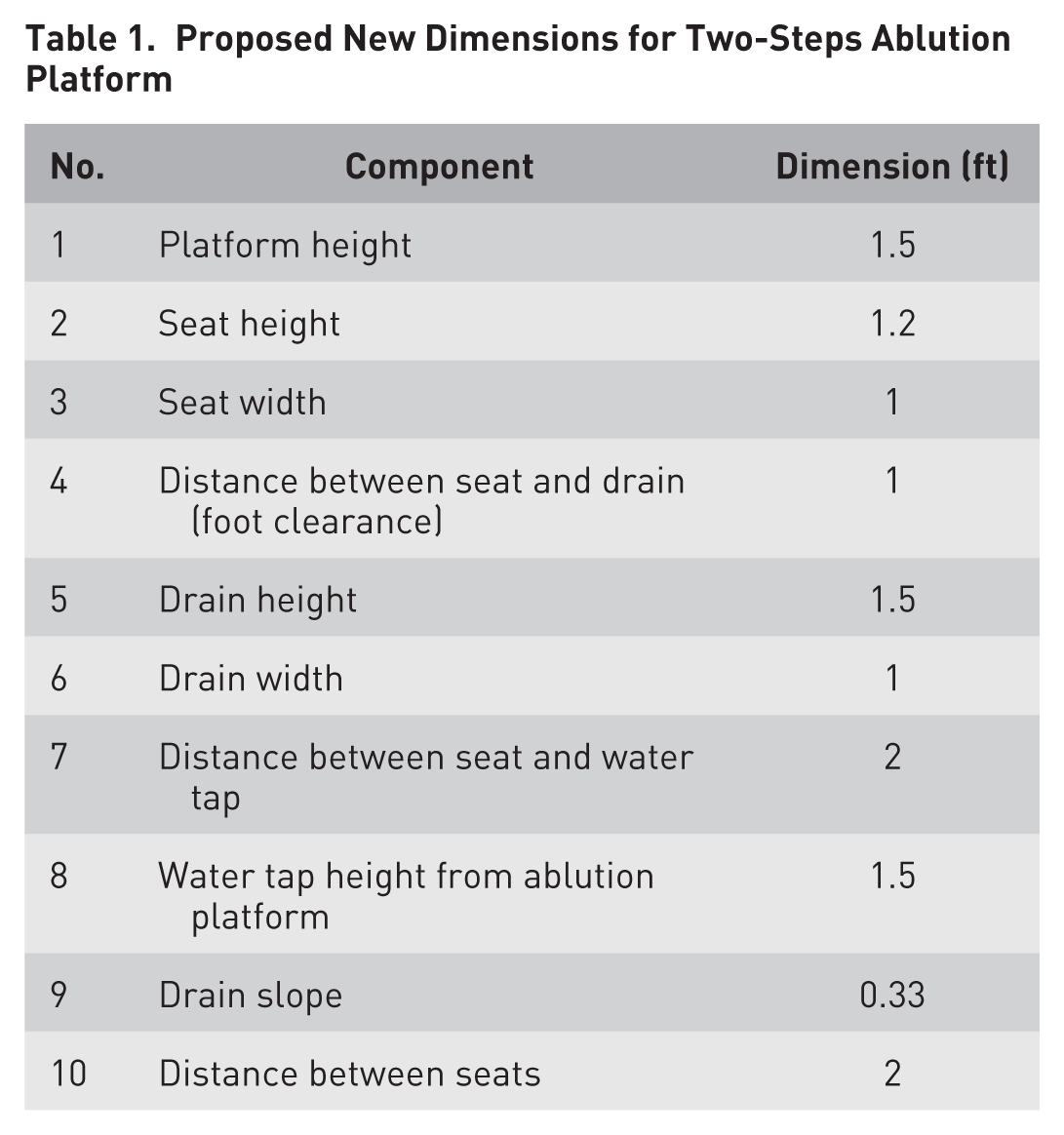
This article proposes two types of ablution platforms, considering the space available for construction of the ablution place and the existing designs of the ablution place in most of the mosques. First, a two-step ablution place, with a wider platform, seats at the top of the platform, and applicable when enough space is available and platform height is more than 1ft (Figure 7). Second, a single-step ablution place, with a narrow platform, seats raised from the floor, and applicable when space for ablution place is less and platform height is below 1 ft (Figure 8). Dimensions for two-steps and single-step ablution places are given in Tables 1 and 2, respectively.
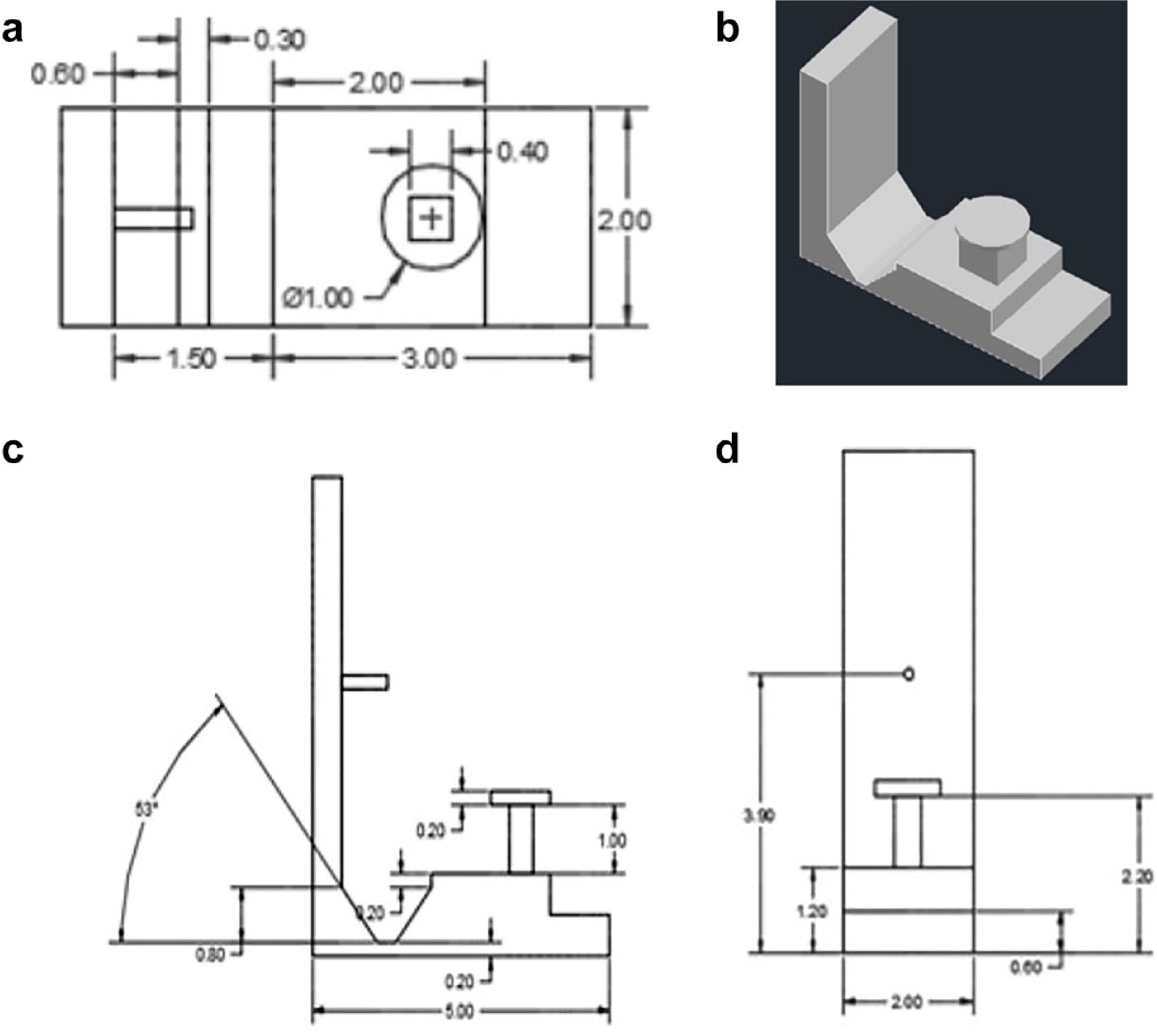
Design of two-steps ablution place, applied at Zainab Binti Jahash mosque in Joharah and Yasin Mosque in Musaadia, Arar, Saudi Arabia. (a) Top view. (b) Isometric view. (c) Side view. (d) Front view.
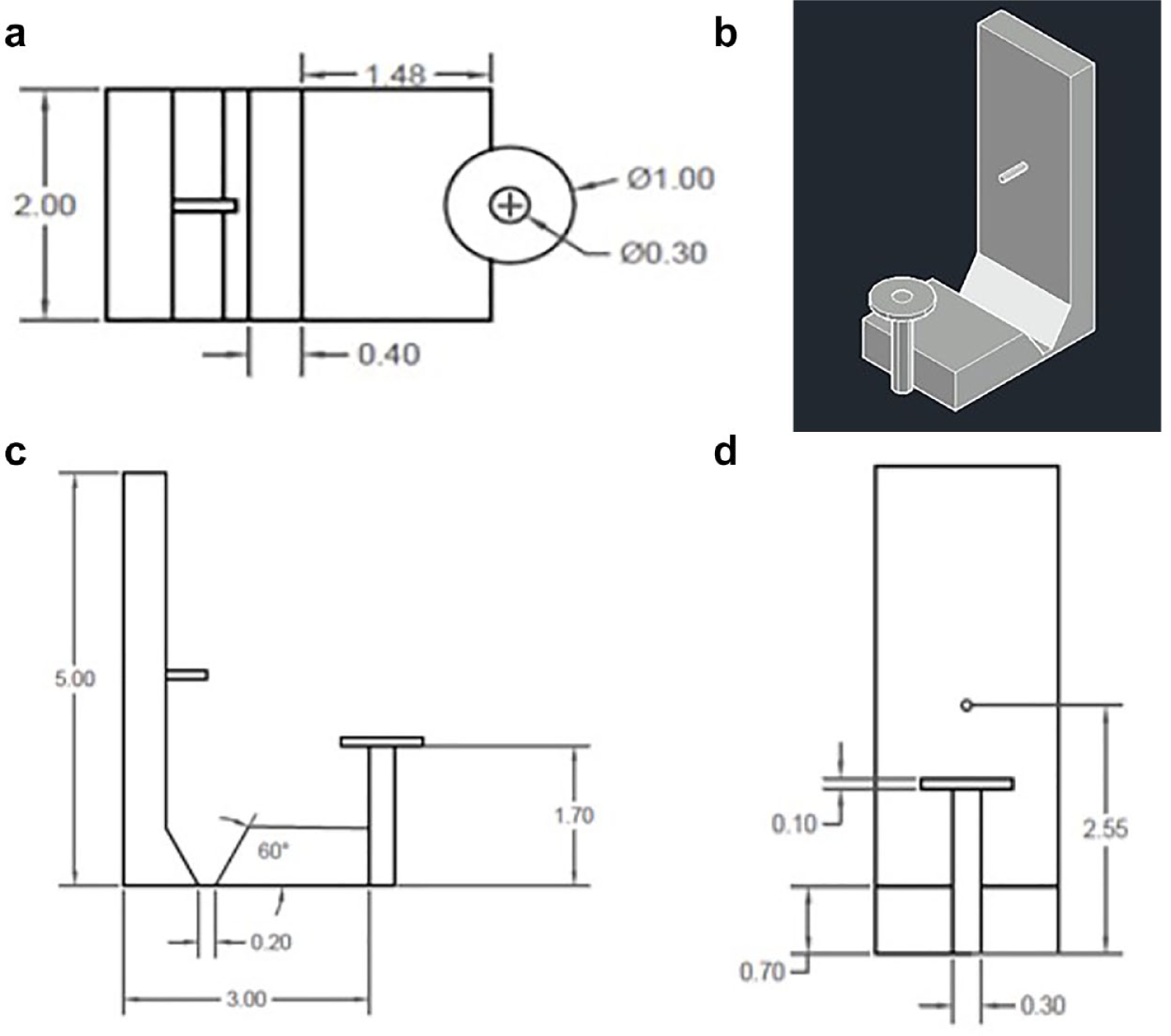
Design of single-step ablution place, applied at Alaqeed Mosque in Mosaadia and Jaafer Bin Mohammad Mosque in Joharah, Arar, Saudi Arabia. (a) Top view. (b) Isometric view. (c) Side view. (d) Front view.
Proposed New Dimensions for Two-Steps Ablution Platform
Proposed New Dimensions for Single-Step Ablution Platform
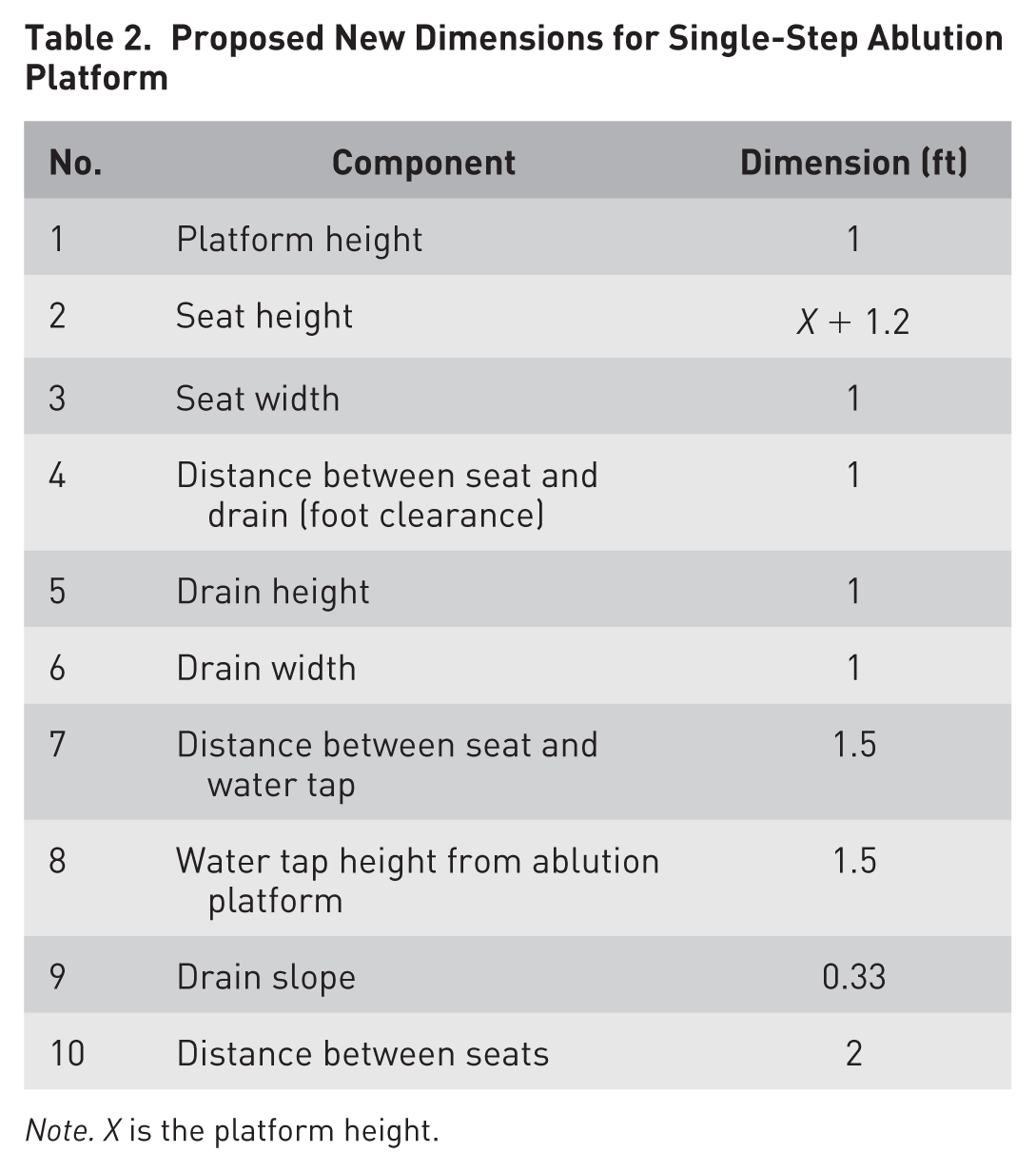
Note. X is the platform height.
Implementation of Proposed Ablution Place
The suggested designs above were implemented in four mosques in Arar, Saudi Arabia: Zainab Bint Jahash Mosque and Jaafer Bin Mohammad Mosque in Joharah, Yassin Mosque, and Alaqeed Mosque in Musaadia.
Zainab Bint Jahash Mosque in Joharah: Its premodification ablution place was akin to that depicted in Figure 2 but with a higher platform and was modified according to a two-step design, that is, wider platform and seats at its top. The platform was mounted with white marble stones and a drain, and the front wall was laminated with light blue-green ceramic tiles. Stainless steel automatic mixers for cold and warm water installed as faucets and press and pour stainless steel containers were fixed for soap. Figure 9a depicts the front view of the ablution platform, which has two steps and seats on its top. Figure 9b shows the side view of the platform and the drain. The drain has slopes, on both sides, which prevent splash of water falling from the faucet and the water used for ablution. Figure 9c demonstrates comfort and convenience in making ablution while sitting.
Alaqeed Mosque in Mosaadia: Figure 5 depicts the ablution place before and Figure 10 after modification according to the single-step design, due to the narrow platform and insufficient space between the ablution area and toilets. The seats are raised from the floor (Figure 10a), the drain has slopes on both sides to prevent splash of water (Figure 10b) and seats are comfortable for making ablution in sitting position (Figure 10c).
Yassin Mosque in Mosaadia and Jaafer bin Mohammad Mosque in Joharah: Premodification ablution places of these mosques are shown in Figure 4. Figure 11 shows the changes made at Yassin Mosque: Figure 11a depicts the front view of the platform showing a step to get up the platform, as the original platform was high, and seats raised from the step as the original platform was narrow; Figure 11b depicts the side view showing drain, which is deep enough; and Figure 11c depicts ease and comfort in making ablution while sitting. Figure 12 shows modifications made in Jaafer bin Mohammad Mosque, not much different from those in Yassin Mosque.
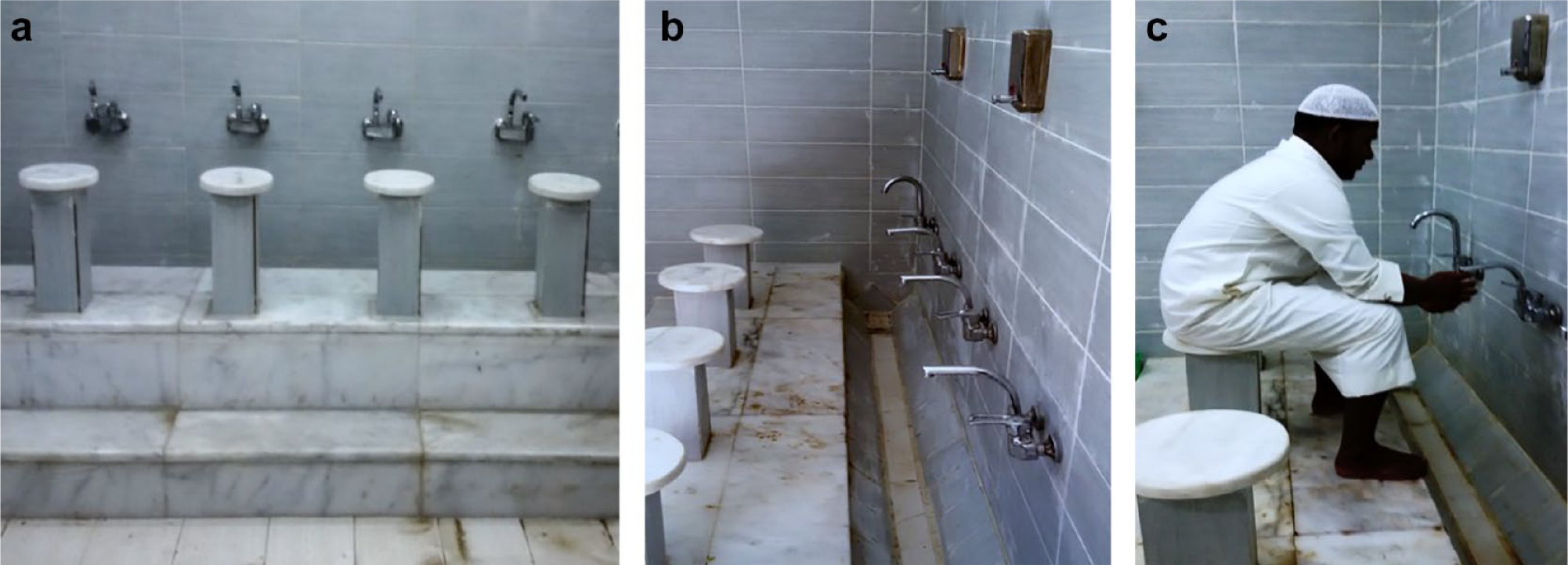
Modified ablution place at Zainab Bint Jahash Mosque in Joharah, Arar, Saudi Arabia.

Modified ablution place at Alaqeed Mosque in Mosaadia, Arar, Saudi Arabia.
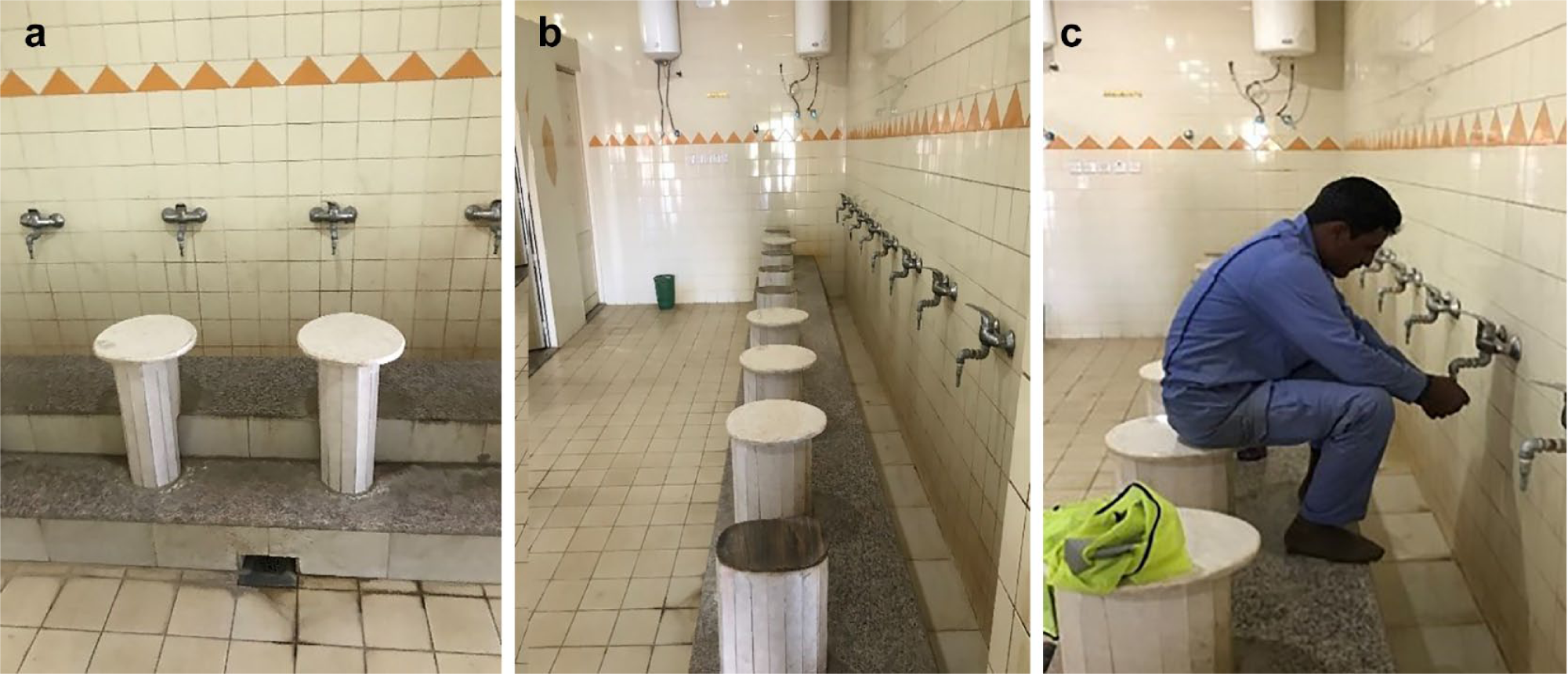
Modified ablution place at Yasin Mosque in Mossadia, Arar, Saudi Arabia.
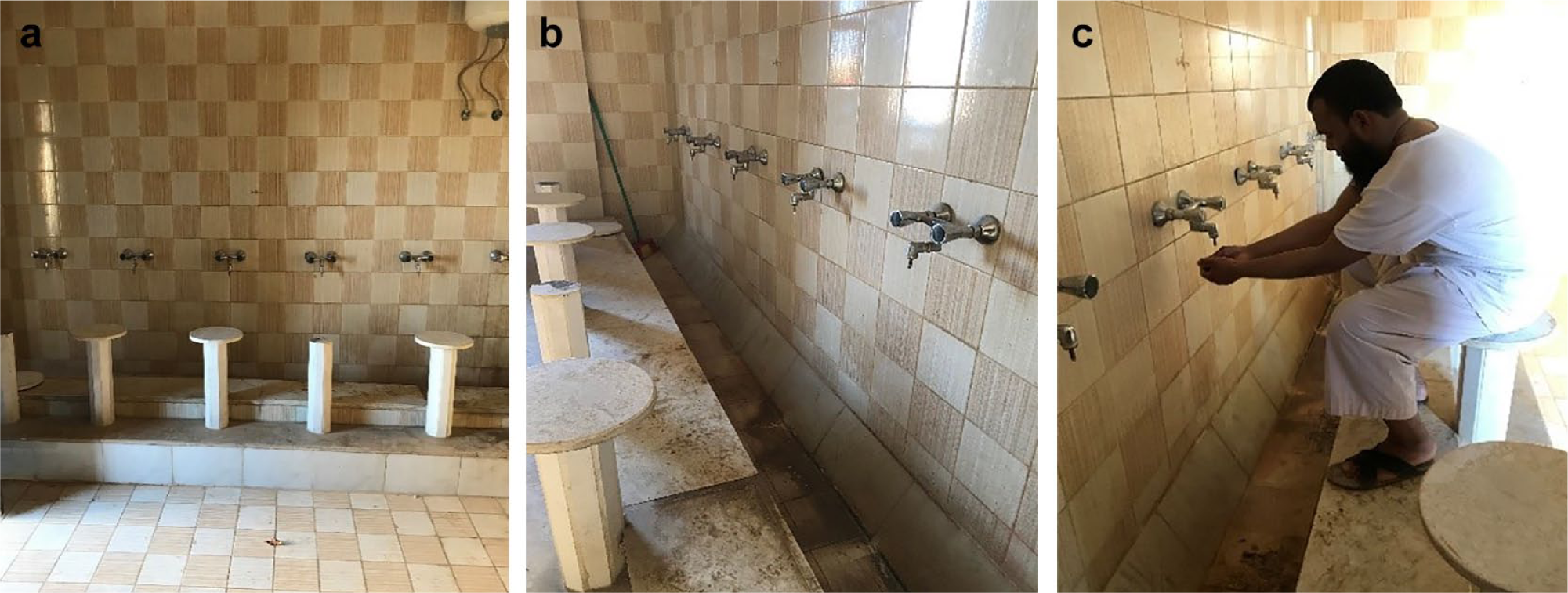
Modified ablution place at Jaafer bin Mohammad Mosque in Joharah, Arar, Saudi Arabia.
Survey for Local Community Feedback
The opinion of the local community regarding the achieved improvements was obtained with a survey using a structured questionnaire. The survey was implemented at Zainab Bint Jahash Mosque in Joharah. Due to various nationalities of Muslims coming to the mosque, the questionnaire was prepared in Arabic, English, and Urdu. The sample questionnaire in English is attached as the appendix and has six questions.
The survey involves the distribution of 50 questionnaires to persons attending daily prayers in the mosque, and 36 questionnaires were returned. This achieved a response rate of 72%, which is adequate because response rates of around 60% are usually considered acceptable for most studies (Fincham, 2008).
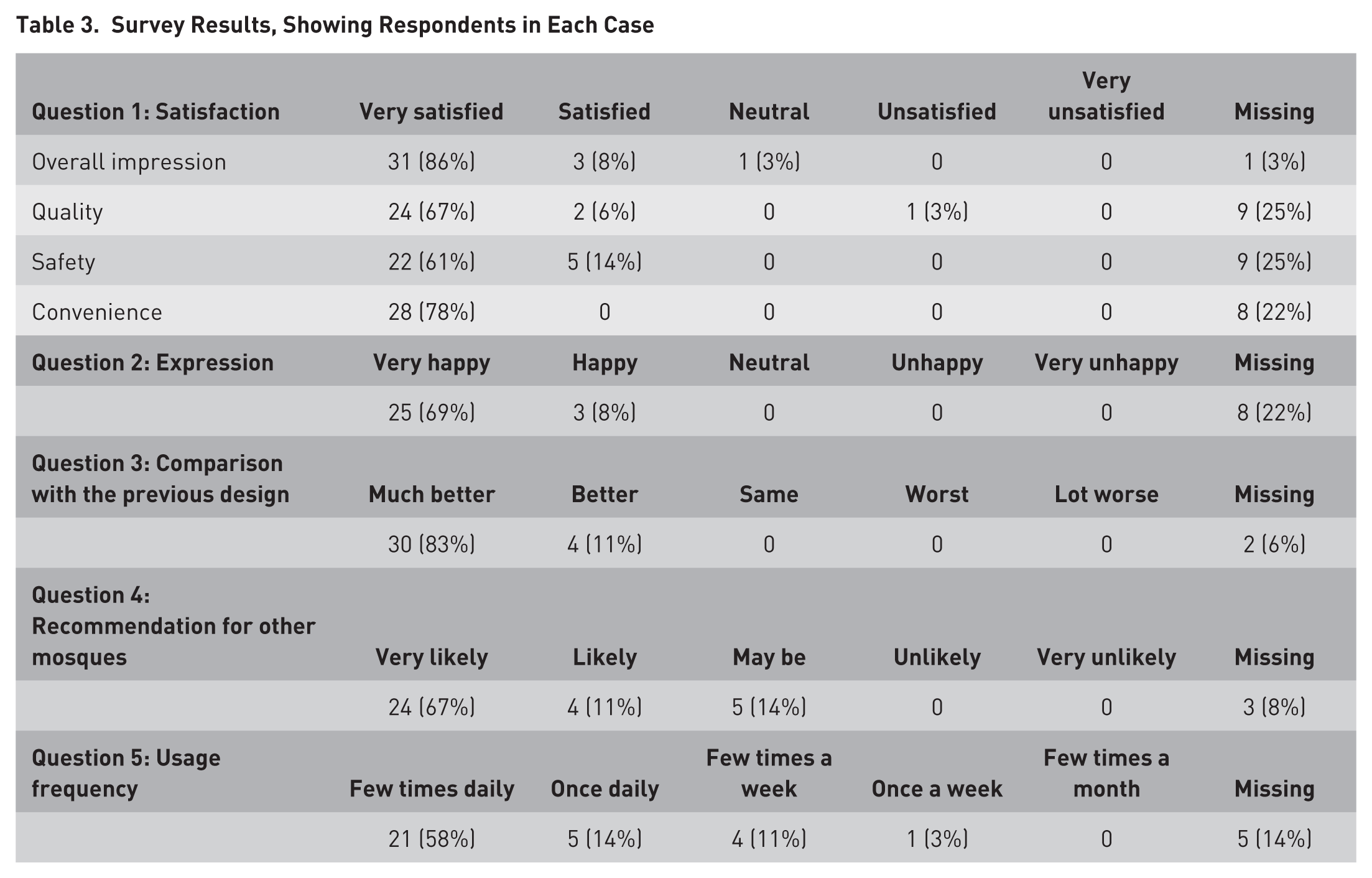
Table 3 presents the result of the survey. About 94% of the respondents were satisfied with the design and none were unsatisfied. While 83% of the participants considered the design as much better than the previous one, 72% of them were ready to use it daily. Also, 67% were very likely to recommend the new design for other mosques. Thus, the results indicate a positive disposition to the proposed design.
Survey Results, Showing Respondents in Each Case
Discussion
The present study proposes a novel design for improving ablution places in mosques (Figures 7–8), applied in four mosques: Zainab Bint Jahash Mosque, Alaqueed Mosque, Jaafer Bin Mohammad Mosque, and Yassin Mosque in Arar (Figures 9–12). The salient features of the designs not adequately implemented in previous studies are
The design promotes comfort and convenience in making ablution. This is because of (a) suitable height and size of the seat, (b) a place for placing feet in front of the seat, and (c) an appropriate height and distance of the faucet from the seat.
Avoidance of splash of water falling from the faucet or washing hands and face, due to slopes on both sides of the drain and sufficient depth of the drain.
Easy to keep ablution place clean and more hygienic, because of the platform with suitable height and open drain with slopes, which make the area suitable to clean with detergents regularly.
Easy for stepping up and down the platform, only one step when less than 1.2 ft, and if higher, provision of an extra step at 15 to 21 cm (0.5–0.7 ft).
The results of the survey (Table 3) conducted for obtaining the opinion of the residents of Zainab Bint Jahash Mosque in Joharah, regarding convenience in making ablution and improvements in the ablution place over previous design also show a positive response by the respondents. The proposed design and the survey findings have been communicated to the Department of Mosques in Arar, which agree to implement them, especially in new mosques. The proposed designs can guide the construction of suitable and hygienic ablution place in mosques of other cities of Saudi Arabia and other countries.
Conclusions and Recommendations
The article has presented a novel ergonomic ablution place to ensure comfortable, convenient, and hygienic conditions. The article proposes two designs for the ablution place: one with two steps, a wider platform and seats constructed on the top of the platform; and another with a single step, a bit narrow platform, and seats raised from the floor. The suggested designs were applied in four mosques in Arar. The survey conducted to evaluate the new ergonomic ablution place in one of these mosques generated positive responses by 81% of users. The Department of Mosques in Arar accepted the suggestions of the new design to implement in existing and new mosques. The proposed designs can inform the construction of more appropriate ablution place in mosques across Saudi Arabia and other places.
Footnotes
Appendix
Acknowledgements
The authors are grateful to the Deanship of Scientific Research, Northern Border University, Arar, Saudi Arabia for financial support (Project No. 7321-SCI-2017-1-8-F). The authors also thank all persons who assisted in the research, particularly, the Department of Mosques in Arar, for accepting to implement the suggestions in other mosques.
