




Abstract
This article is Part 1 of a two-part series reflecting on diversity within the Human Factors and Ergonomics Society (HFES) and how the pursuit of “authentic” diversity is essential to HFES’s overarching goals for inclusion and equity. In Part 1, authentic diversity is discussed – what it means and what it might look like. Through this lens of authentic diversity, recent member demographics are reported. Part 1 concludes with a discussion about HFES’s growth potential, as a professional home for future scholars and practitioners, and the importance of measuring, documenting, and tracking organizational diversity and inclusion efforts across time.
Purpose and Potential
This article is part of a two-part series that addresses diversity within the Human Factors and Ergonomics Society (HFES) and how this work is essential to realizing HFES organizational goals (HFES, 2020). HFES is an international organization, although the central office and its founding history are largely U.S. based. Therefore, these articles possess a U.S.-centric lens. Nonetheless, this series invites dialogue and action across the broad human factors and ergonomics (HF/E) community.
Part 1 articulates a framework for authentic diversity, including benefits, supports, and potential threats. Through this lens of authenticity, three light-handed assessments of HFES diversity are reported. Part 1 examines recent member demographics; Part 2 reviews a brief history of related activities and recent scholarship within HFES suggesting sustained interest in diversity issues. Parts 1 and 2 also offer ways that HFES might further pursue authentic diversity.
These assessments focus on two concerns that are top of mind for many in HFES: recruitment of new and diverse members and retention of existing members. Attending to authentic diversity speaks to both of these goals. Importantly, this assessment is not a call to action in the absence of action, nor is it a critique of valuable activities and progress to date. Rather, this is a contemporary look at “who” HFES is and how HFES can continue building toward a better future for all.
Conceptualizing Authentic Diversity
Diversity refers to the range of different people and perspectives within a group or organization. Previous scholarship has articulated several types of diversity, including demographic, functional, experiential, cognitive, cultural, and ideological (Duchek et al., 2020; van Knippenberg et al., 2004; van Knippenberg & Schippers, 2007). This incomplete list illustrates that diversity comes in many forms.
One fundamental theme in diversity scholarship is that broadening the representation of members within an organization, across multiple dimensions, is worthwhile (e.g., Bell et al., 2011; Duchek et al., 2020; Guillaume et al., 2017; Salazar et al., 2012; Salazar et al., 2017; Stahl et al., 2010; van Knippenberg et al., 2004). When managed well, increasing functional, cognitive, and ideological diversity leads to more robust or novel ways to conceptualize problems, solutions, and activities. Similarly, increasing demographic, cultural, and ideological diversity can enable a better understanding of an organization’s impact on broader communities.
Another core finding is that the mere presence of diverse people is no guarantee for achieving the benefits of diversity. Diversity must be authentic and accompanied by feelings of belonging, worth, agency, power, and participation. This experience of being a valued member in an organization is termed inclusion (Puritty et al., 2017; Roberson, 2006; Sherbin & Rashid, 2017; Shore et al., 2011; Tienda, 2013). Because opportunities for inclusion are not often equal for all members, authentic diversity also requires attention to equity and ensuring that different needs are not barriers to inclusion.
A number of threats to authentic diversity in an organization can arise. Lack of diversity is itself a threat. Feeling invisible, isolated, or being the only representative of a group contributes to exclusion (Robinson et al., 2013) and undermines belonging (Strayhorn, 2018; Waller, 2020). People who care about belonging may not join organizations that lack a clear commitment to diversity. Thus, another threat occurs when organizations are not explicit about inclusive and equitable policies, have unclear accountability for attaining authentic outcomes, and have current members or leaders who rarely engage in inclusive practices.
Authentic diversity requires ongoing attention to equity for people to join, stay, and participate in organizations. This may involve additional resources beyond the minimum required to serve a majority group. For example, some people rely on closed captioning during presentations, and many others may also benefit (Udo & Fels, 2010). If this need is ignored, then by definition people are excluded, particularly if presentations are central to the group’s shared activities. When considerations of equity are not the default (Johnson & Goldstein, 2003) – and people must “opt-in” to be included – then the default becomes another threat to authentic diversity.
Figure 1 summarizes a loose framework for authentic diversity within organizations such as HFES. Notably, this figure does not capture the costs of working toward authentic diversity (e.g., communication, financial resources, or workload) – a worthwhile discussion but beyond the scope of this article.
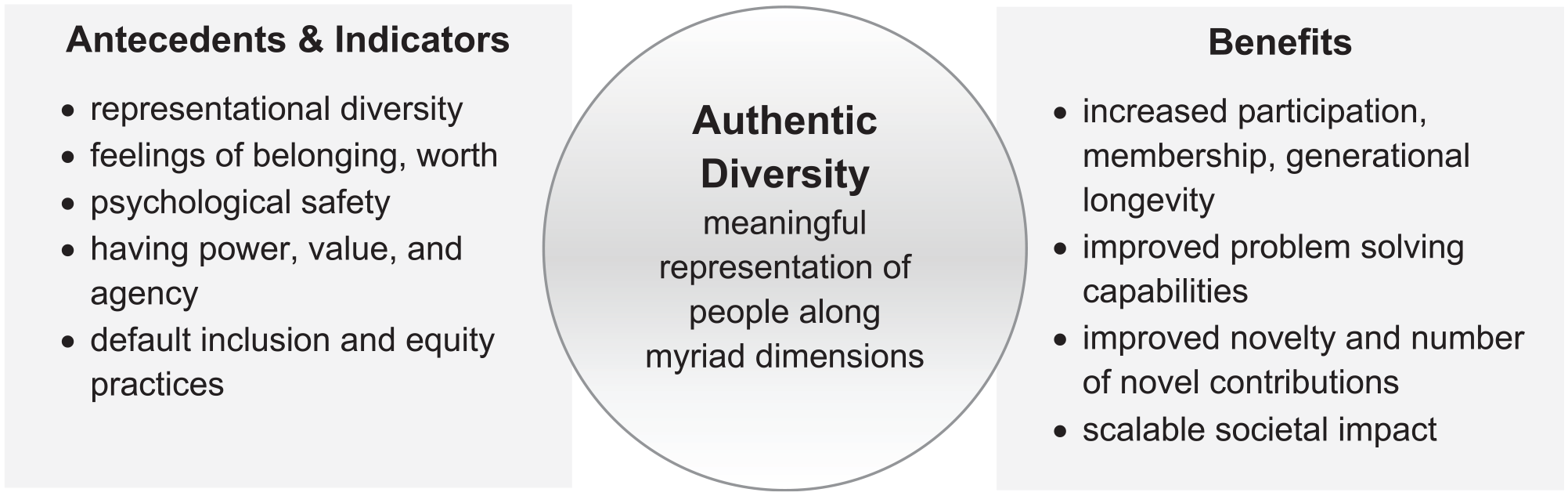
Toward authentic diversity. This figure highlights a few antecedents to authentic diversity, within professional societies such as the Human Factors and Ergonomics Society, and the possible benefits of authentic diversity, specific to a disciplinary field such as human factors and ergonomics.
Authentic diversity has implications for HFES’s recruitment and retention of members more generally, but especially underrepresented groups. Authentic diversity informs the collective imagination and wisdom of HFES. In practice, this means more and diverse people participating in defining, addressing, and assessing problems in system design, which allows HF/E to scale as a field and to have a societal impact.
The following sections assess HFES through this lens with a focus on member demographics. This assessment is based on available records. There may exist additional knowledge that is not publicly documented or would require significant coordination to obtain, and was thus unavailable at the time of writing. These limitations are revisited in the discussion.
Recent HFES Demographics
Systematic data collection about the organization is not a robust tradition within HFES. Past HFES diversity reports relied on the efforts of individuals or committees with transitory leadership (e.g., leaders may serve for only 1 year). These past reports provided helpful status checks internally, but the lack of formalized organizational structures for sustained tracking has made it difficult for the organization to assess progress over the years.
This article considers HFES’s 2018 member data (N = 3,517), supplemented by information from the HFES website and past reports from the Diversity Committee and Diversity Task Force (Carayon, 2016). During 2018–2019, HFES transitioned its operations to an external management company, which developed a new website that did not incorporate members’ demographic data until the fall of 2020. Although incomplete, the existing data nonetheless enable observations about demographic diversity in HFES.
Sidebar
Demographic diversity refers to group membership that demonstrates range and variety across social category variables, such as race, ethnicity, gender, ability, income, and so on. This version of diversity is one of the most commonly considered when organizations discuss diversity (e.g., Bell et al., 2011; Guillaume et al., 2017). Another example of diversity is functional diversity, in which group members possess a range and variety of information, knowledge, skills, and resources that can directly benefit certain tasks, like creative problem solving (Bunderson & Sutcliffe, 2002; Johnson et al., 2018; van Knippenberg et al., 2004). Related to functional diversity is experiential and cognitive diversity, in which members possess a range of backgrounds, experiences, hobbies; or knowledge, expertise, and strategies. Cultural diversity reflects differences in ways of being and resources associated with specific communities or societies. These differences may revolve around language, religion, race, sexual orientation, gender, age, or ethnicity (Han & Schulz, 2020; Stahl et al., 2010), and may overlap with ideological diversity in which members possess a range of beliefs, perspectives, and approaches for understanding the world (e.g., Olthuis & van den Oever, 2020).
Demographic Diversity by Membership Groups
Of the 2018 HFES members who indicate a race/ethnicity, about 50% identify as “White” and about 10% identify as “Asian.” Less than 5% of members identify as Hispanic or Latino, Black or African American, American Indian/Alaskan Native, and Native Hawaiian or Other Pacific Islander. Importantly, the second largest category was “None Selected” from 1,232 members (35% of the membership). The dearth of race/ethnicity options, and the conflation of race with ethnicity (i.e., Hispanic or Latino/x/e), may have contributed to the large percentage of members who did not respond. Specifically, participants could only select one of the six categories listed or else retain the default response (“None Selected”).
Modern practices recommend collecting ethnicity separately from the race (e.g., enabling the selection of “White” and “Hispanic”), allowing for multiple selections, self-description via open response fields, and “prefer not to respond” (Agency for Healthcare Research and Quality, 2009). In addition, some categories may have been unfamiliar to members from outside the United States, and thus a few nonresponses may have overlapped with international members (e.g., from the Middle East). However, less than 10% of members indicated international origin (including Canada, the next largest group after the United States).
Figure 2 parses race and ethnicity by gender and member status, focusing on the two largest groups, Full Members and Student Members, which represent approximately 68% of the membership (50% and 18%, respectively). Full Members are considered established professionals in the field, whereas Student Members require faculty endorsement attesting to the student’s full-time enrollment in an accredited college or university (HFES, n.d.-c). Student Members have reduced membership and registration rates and are likely the most transient member group. The next largest groups are Emeritus Member–Regular (15% of members), Affiliate–Regular (4%), and Emeritus Fellow–Regular (3%). Groups with less than 3% of members include Transitional, Associate, and Contributing members.
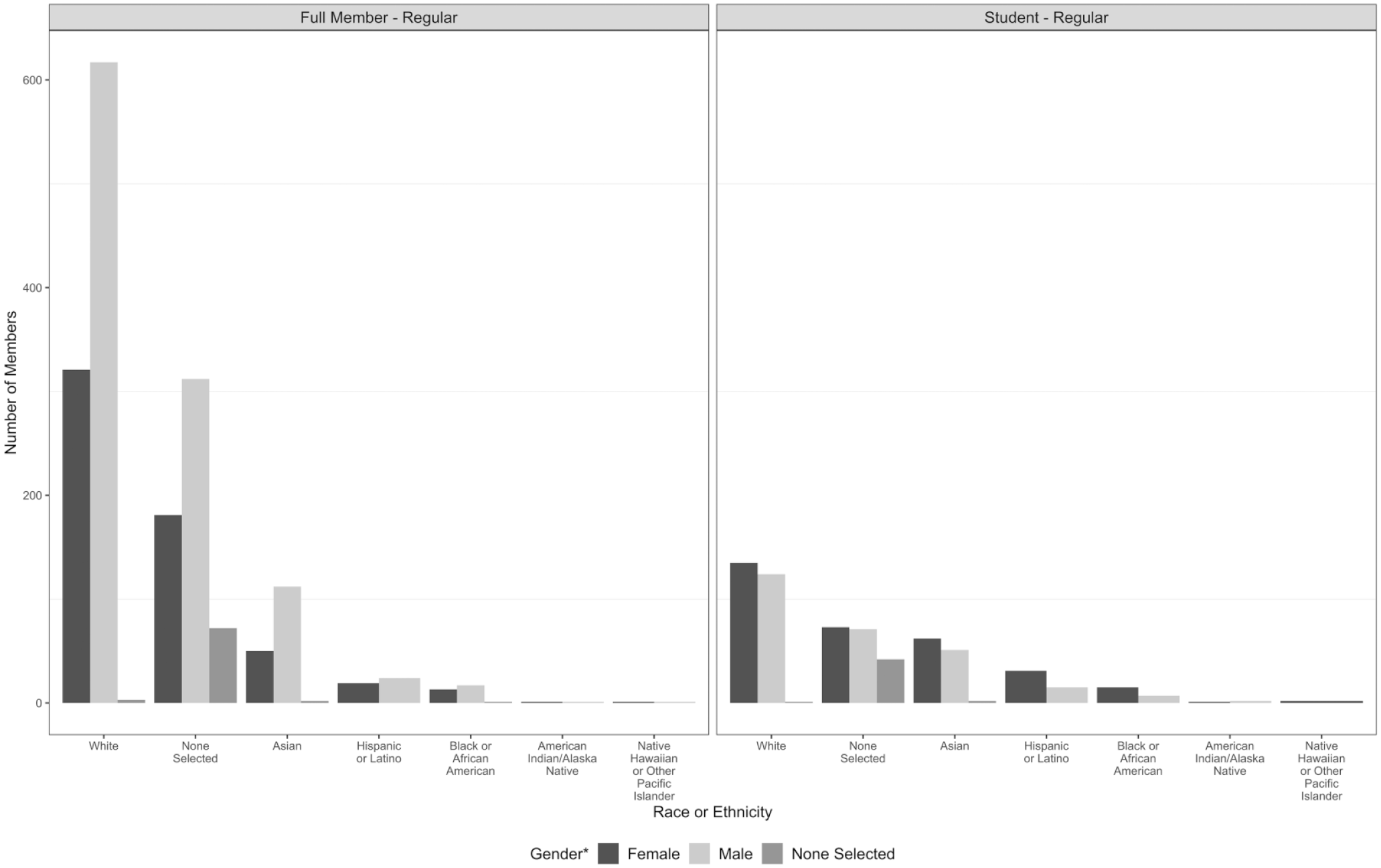
Examining race/ethnicity by gender shows that Human Factors and Ergonomics Society (HFES) was predominantly White and male, which remain the two largest groups overall. *Gender options provided at the time of entry were “female,” “male,” or no selection, rather than the modern practice of using “woman” or “man” and offering more inclusive options like nonbinary, prefer to self-describe and prefer not to say (APA Style, 2020a).
Among Full Members, Figure 2 (left) shows that White men outnumber White women approximately two to one, and both White men and White women outnumber all other race/ethnicity groups. Asian men also outnumber Asian women by roughly two to one. Generally, men outnumbered women in the Hispanic or Latino, and Black or African American categories, although the gender disparity is not as high. There were insufficient data in American Indian/Alaska Native or Native Hawaiian or Other Pacific Islander categories to discern a meaningful pattern.
Student Members make up just 18% of the membership but contribute much of the gender, racial, and ethnic diversity, with women outnumbering men in almost all race/ethnicity categories, including White, and with less of a disparity between racial or ethnic categories (Figure 2, right). In the Hispanic or Latino and Black or African American categories, women outnumber men by roughly two to one, with the Student Members outnumbering their respective Full Members, as shown in Figure 3. These results suggest that the racial and ethnic composition of HFES will become more diverse in the future. However, given a lack of previous analyses for comparison, these results seem to more directly indicate that junior members lack diverse role models among senior members. This gap in representational diversity may contribute to members from underrepresented groups exiting the organization.
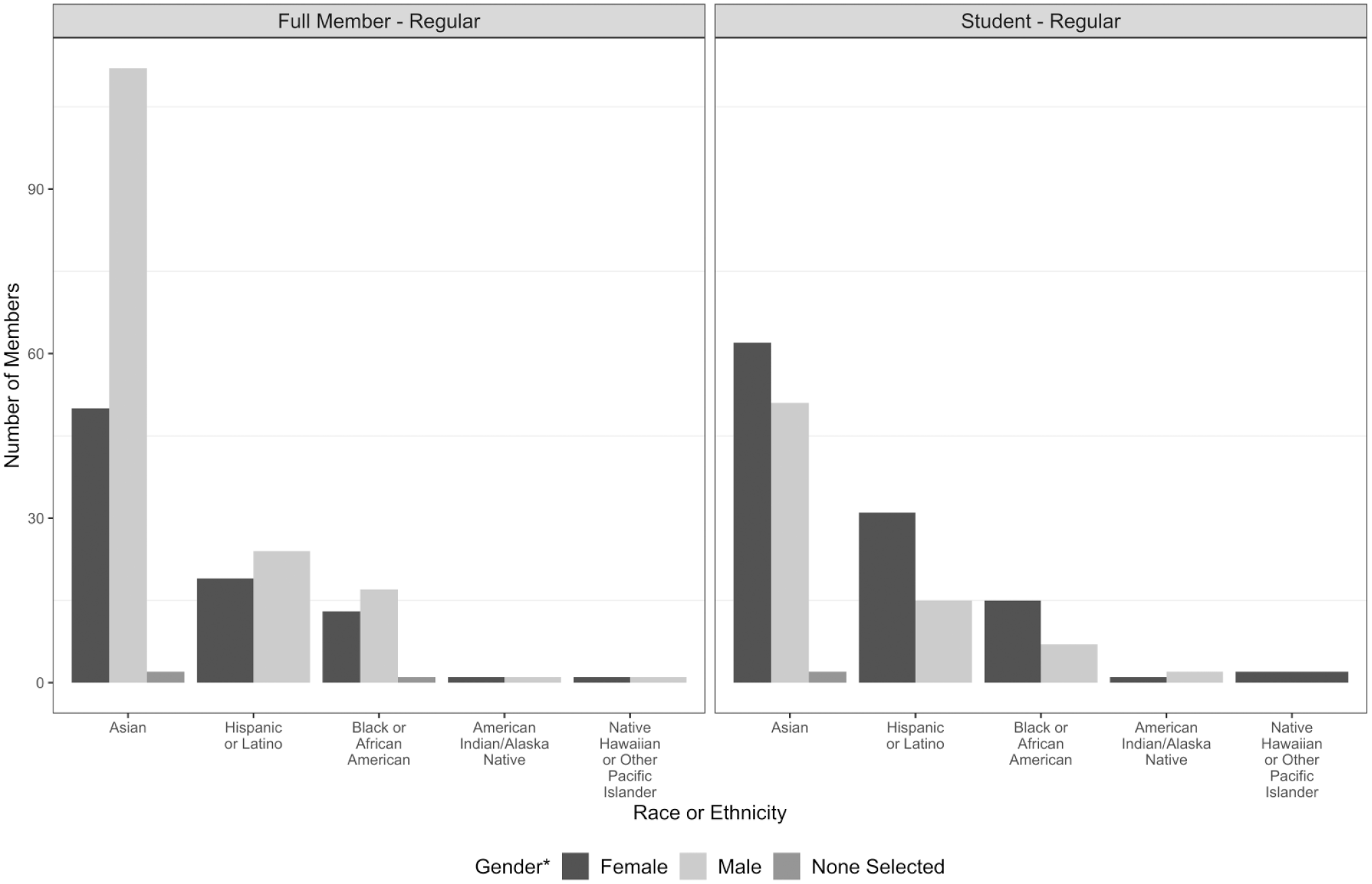
Removing “White” and “None Selected” – the two largest “groups” – provides a clearer picture of the racial/ethnic minority and gender composition of Human Factors and Ergonomics Society (HFES) members in 2018. In these racial/ethnic minority groups, among Full Members, men tend to outnumber women, especially Asian men to women. For Student Members, women tend to outnumber men.
Race and gender disparities are also apparent in the distribution of Fellows (Figure 4). Fellow status is “an honor conferred by distinguished colleagues to recognize outstanding achievement, consistently superior professional performance, exceptional contributions, personal service to the Society, and other meritorious accomplishments” (HFES, n.d.-a).
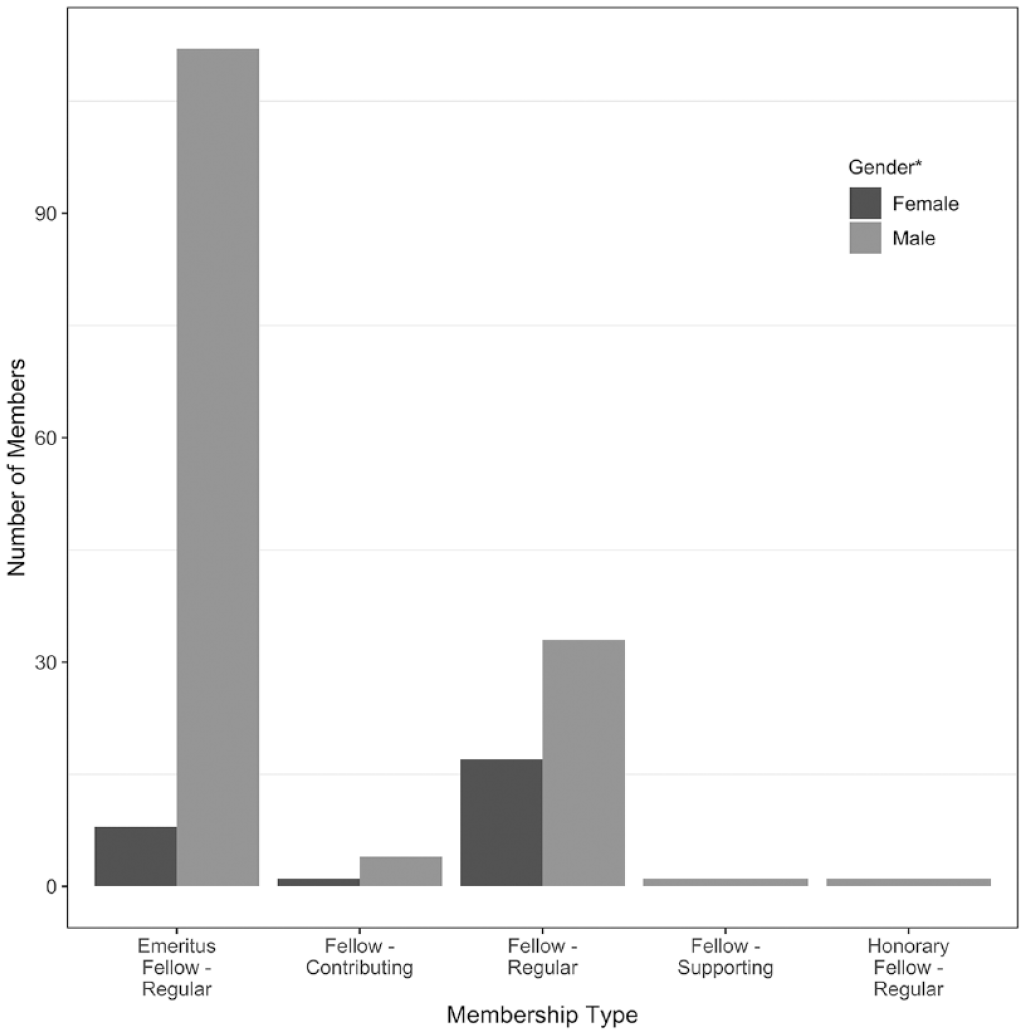
A bar graph of Human Factors and Ergonomics Society (HFES) Fellows by gender shows that men are overrepresented in all categories. There were no missing gender data for members reporting a Fellow status.
Among Fellows, men outnumber women by at least two to one. In terms of race/ethnicity, the vast majority of Fellows indicated “White,” and the second largest category was “None Selected.” This demographic makeup of the Fellows reflects the history of HFES membership in which earlier members were predominantly White men (Durso, 2014; Stuster, 2006).
The proportion of women leaders in HFES, except for the president, has been similar to the percentage of women members (about 37%; Carayon, 2016). From previous documentation, it is estimated that HFES has had only nine presidents who were women since its founding in 1957 (Carayon, 2016; Durso, 2014; HFES, n.d.-b). Seven of these women were elected and served within the past 20 years (Figure 5). There is no public documentation of the race or ethnicities of past presidents. Second-hand or presumed knowledge suggests HFES has had a few presidents who may identify with at least one racial or ethnic minority group, including “Black or African American,” “Hispanic,” and “Asian,” but this has not been publicly documented, and past photographs indicate that the vast majority of HFES presidents have been White (Stuster, 2006).
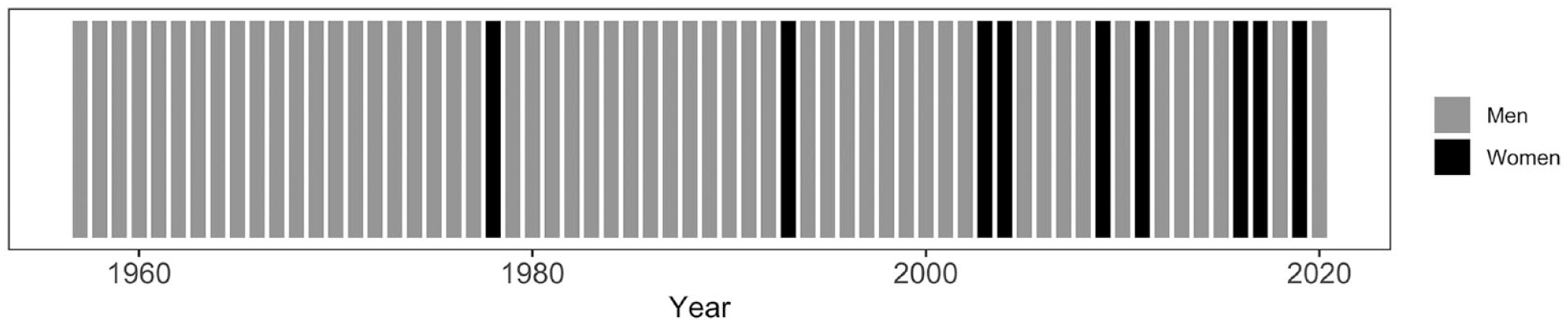
A timeline of Human Factors and Ergonomics Society (HFES) presidents shows an increasing number of women elected in the past two decades. The timeline starts with Laurence Morehouse (1957–1958) and concludes with Peter A. Hancock (2020–2021).
Demographic Diversity by Employment Sector
Given the history of gender inequality and discriminatory work policies in the United States, age-groups by gender and profession are reported below (Figure 6). This figure includes Full Members but excludes Student Members, 1,447 members who did not provide their birth year (41%), and 209 members who did not report gender (6%). Less than five people who reported birth year but not gender were also excluded, due to potential identifiability based on the employment sector.
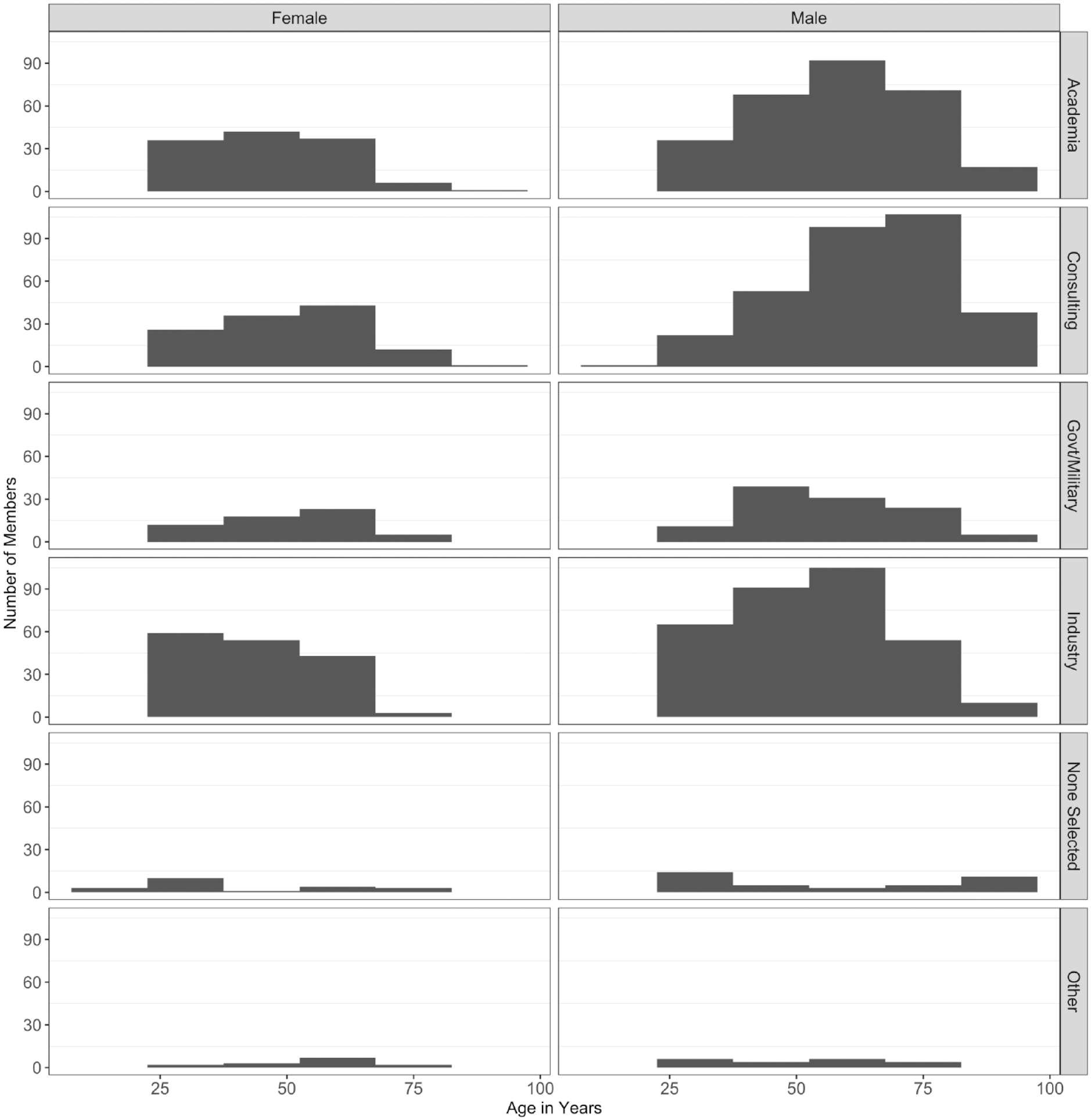
Human Factors and Ergonomics Society (HFES) Full Members’ age by gender and employment status are shown in a series of histograms using binwidth = 15 (Wickham, 2016).
Among 2018 Full Members, Figure 6 shows that older men are the largest majority across all employment sectors. However, there are also more younger women than younger men. Among the 2018 Student Members, women outnumber men slightly by about 15%. Together, this suggests a trend toward gender parity in HFES. Alternatively, these results could indicate that women who join HFES early in their careers are less likely to transition to or sustain Full Member status.
When 2018 Students and Full Members are combined, the largest employment sectors are “Academia” followed by “Industry,” and this generally holds true across gender and most minority race/ethnicity categories with the exception of consulting. Consulting comprised more than 2.5 times more White men than White women along with minimal representation in minority race/ethnicity categories.
When Student Members are removed, then “Industry” becomes the largest employment sector, and “Academia” becomes roughly equal to the next largest category, “Consulting.” Students tend to indicate “Academia” as their employment sector, and likely the high industry participation in HFES is of mutual benefit to the many students who join HFES for networking and job opportunities.
Demographics Summary
Recent demographic data and historical reports suggest that HFES is slowly evolving from its post–World War II origins, which were largely North American, White, and male. This shift has occurred alongside broader shifts in the United States, such as moving from primarily military and academic sectors to increasingly industry and consulting sectors; with more women in higher education, in the workforce, and in leadership positions than at the beginning of HFES’s history.
However, men still greatly outnumber women in almost all categories. The gender disparity is even larger for the most prestigious positions, such as fellows and presidents. Even greater are the disparities between White and minority groups that comprise mainly people of color, despite the many civil rights movements and legislation that have occurred in the United States since the founding of HFES.
Although these disparities are lesser among Student Members, it is difficult to discern how often Student Members convert to Full Members. Data that might address this are limited or missing, including (a) demographics with more modern race, ethnicity, and gender categories; (b) data tracked and reported consistently across time; and (c) data on members’ and annual meeting participants’ demographics and perceived inclusion.
Demographically, there is ample opportunity to grow and retain HFES members and a critical need to systematically assess this growth. If diverse, young people are joining HFES, how does HFES earn their continued membership? How might HFES be failing Black or Indigenous students, that so few of them are members? To inform how HFES is achieving authentic diversity, what demographics data are currently missing and should be collected (e.g., sexual orientation, disability status, family status, and veteran status)?
Discussion
Our framework for authentic diversity provides a structure for assessing HFES’s diversity health. Demographic data and other milestones or activities (appearing in Part 2) can be interpreted within this framework. To date, HFES self-assessments focus primarily on demographic diversity. A revised set of demographic questions developed by the Diversity Committee with intercommittee input (including the Women’s Group, Membership, Evaluation, and Leadership Committees), were implemented on the new HFES website in the fall of 2020.
HFES’s demographic tools are still very new, optional, and possibly lacking in key categories. These tools also lack a standardized reporting process and integration with day-to-day operations. HFES has surveyed its members about its inclusive climate in an effort by the Diversity Task Force one year, but only 14% of members responded (Lacson et al., 2014).
The most recent post–annual meeting survey in 2020 contained no questions about inclusion, despite there being a short set of questions developed by the 2018 Diversity Committee for precisely that purpose. Some members may perceive that questions regarding inclusion are not central to mainstream activities and thus should be solicited separately. Yet past efforts have shown that response rates are low when responses are not required or part of mainstream activities.
HFES has implemented diversity as a strategic goal but has yet to systematize measuring progress toward this goal. Beyond demographic diversity, categories important for assessing authentic diversity, including representational diversity (e.g., the composition of award winners or Executive Council members), are not documented publicly. Although limited data are available, assessing the race and ethnicity of these subgroups currently relies on informal self-reporting or second-hand sources. These data are important for understanding how the presence of diverse role models serves to support authentic diversity.
For collecting data about social group identities, the modern practice is to ask people to self-report and to require a response even if it is “prefer not to say.” Modern practice is to also provide options that people feel align with how they self-identify (Agency for Healthcare Research and Quality, 2009; APA Style, 2020a, 2020b). Simultaneously, the options must increase the utility of the data to the organization. Therefore, depending on the population size, it may be reasonable to collect a limited set of categories (e.g., for the race) while including a write-in field for self-identification.
Future Direction
The potential for HFES to grow as a professional home, and for HF/E to attain greater societal impact, motivates this two-part series. If HFES wants to do more for its members than perpetuate the current status quo, HFES must internalize authentic diversity as a value that guides its communications, operations, administration, policies, recruitment, retention, events, and outreach. Fundamentally, systemic change requires better measurement, tracking, and understanding of authentic diversity. Many questions remain about the current status and future of HFES that require additional dialogue and effort. Part 2 addresses other HFES activities related to authentic diversity beyond the relatively simple metric of demographics.
History has seen the split of HF/E into different professional groups, for example, with APA Division 21 in 1954–1957, and the human–computer interaction community in 1982. People working in HF/E or adjacent fields have many options around the world to call their professional home. To remain competitive in attracting and retaining members, the future of HFES seems to depend on more than the quality of its current contributors’ technical merits. It also requires critical examination and decisive action to advance the diversity and inclusiveness of the organization, and the organization’s global relevance and impact.
Footnotes
Acknowledgements
The authors thank the reviewers, Richard Holden, Beth Blickensderfer, Ashley Hughes, Richard Pak, Samantha Wright, Pascale Carayon, John D. Lee, and the 2021 HFES Executive Council members whose comments or previous communication improved parts of this white paper. Any errors are the authors’ own. Ameera Patel assisted in the earlier versions of the figures.
 .
.