



Abstract
NoMix toilets separate urine and feces at the source and are a promising resource recovery technology. However, design issues hamper the transformation from unattractive to aspirational products. Little effort has been done to design toilets that account for physiological differences, leading to adverse effects on user-friendliness and urine separation efficiency. We used infrared recordings to assess gender-specific urination practices. Based on field data, we developed the Urinator, a simple device that allows simulating male and female urine streams. This supports engineers in developing more user- and gender-friendly and reuse-oriented sanitation technologies.
Keywords
Having an adequate toilet is something that many of us take for granted. And, if not, it is a subject we rarely talk about. This is why many of us are unaware that worldwide 2 billion or one in four people still lack a basic sanitation service and 673 million still practice open defecation (United Nations Children’s Fund & World Health Organization, 2019). Inadequate sanitation leads to environmental pollution with significant adverse effects on public health: In 2016, an estimated 829,000 deaths were attributable to inadequate provision of water, sanitation, and hygiene, of which 297,000 occurred in children younger than 5 years (Prüss-Ustün et al., 2019). This is despite the fact that since 2010 access to water and sanitation are recognized as human rights. Apart from adverse public health effects, lack of access to safe, sufficient, and affordable water and sanitation and hygiene facilities have adverse impacts on the dignity and prosperity of billions of people and for the realization of other human rights. This is why in 2015, the global community adopted the 17 sustainable development goals (SDGs). Overall, the SDGs are interlinked and aim at a better and more sustainable future for all. SDG 6 aims at ensuring the availability and sustainable management of water and sanitation for all, and increasing safe recycling and reuse of resources by 2030.
To achieve SDG 6, from a sanitation perspective, innovative teams are engaged in designing new sanitation technologies. To date, there are several sanitation technologies readily available. However, sustainable operation and management of these technologies often fail due to a variety of challenges, including user acceptance and compliance.
Global Sanitation Challenges and Ways Forward
NoMix Toilets: A Promising Technology Socially Challenged
A good example of a sanitation technology that contributes to achieving SDG 6 is NoMix toilets. NoMix toilets have their name from the fact that they allow separating urine and feces at the source. When separated at the source, urine and feces can be turned into valuable products, while combined with water they become fecal sludge that requires resource-intense processing. Resource recovery reduces energy and water demand for wastewater treatment systems and produces marketable products. The products can take many forms, including as fuel, soil amendment, building material, protein, animal fodder, and water for irrigation (Andriessen et al., 2019). NoMix toilets normally have two compartments to collect feces and urine separately – and sometimes even a third to separately collect (anal) cleansing water (see Figure 1). There are toilet models available for water-based as well as dry systems and for sitters (commode) as well as squatters (squat pan). However, particularly squat pan models are facing challenges. While in the Western world squat latrines are relatively unknown, they represent the standard solution in many parts of Asia, the Middle East, and Africa (Mullick & Kumar, 2012). Squat latrines consist of an in-ground pan with two footrests that allow for squatting down and keeping the legs apart.
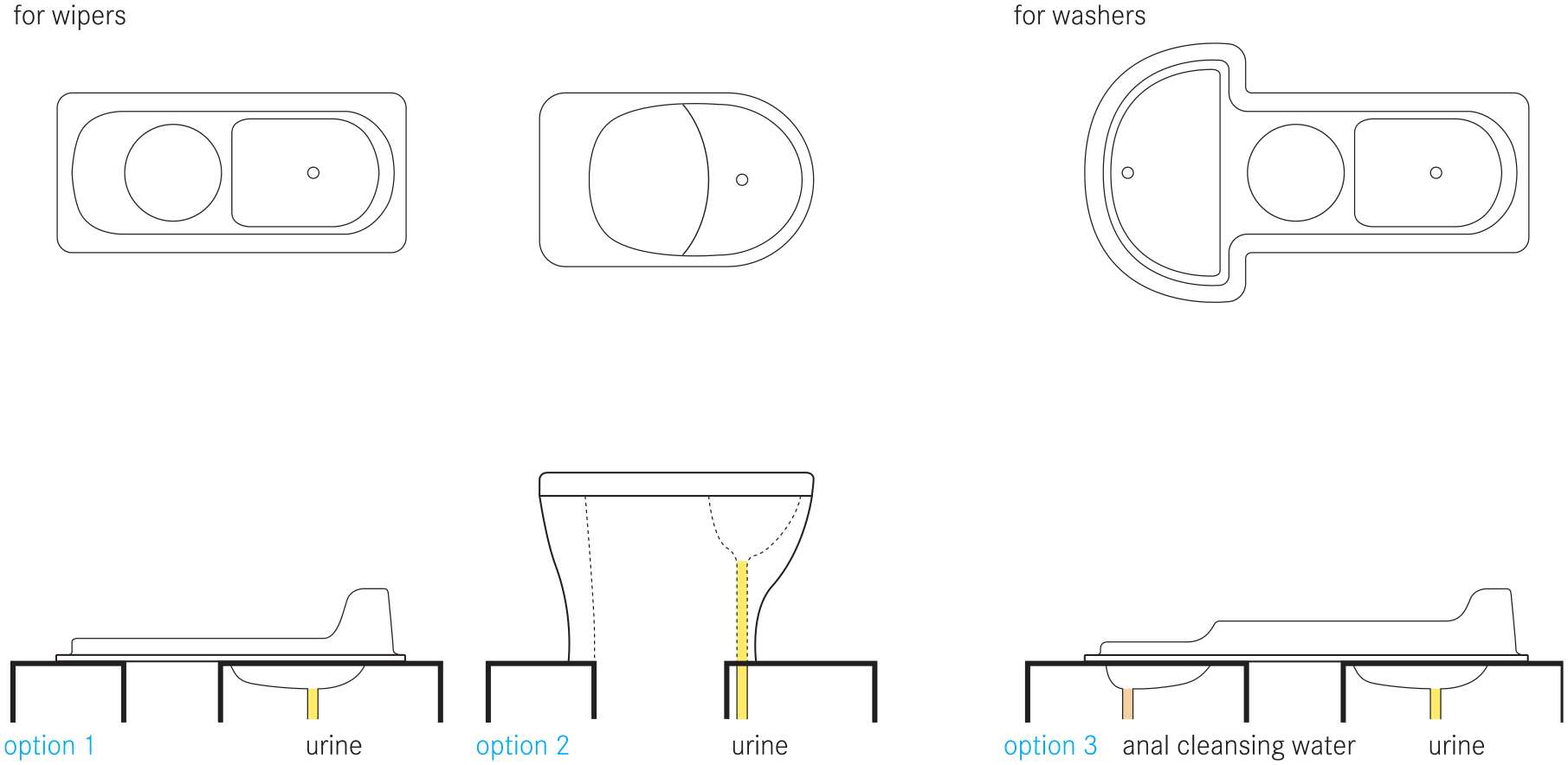
Example of NoMix squat pan for people using toilet paper (“wipers,” left) and for those using water for self-cleaning (“washers”, right), and a commode toilet model (middle). A NoMix toilet has a divider so that urine is collected and drained from the front area, while feces fall through a hole in the back.
Studies have found that if properly designed and operated, NoMix toilets can provide a hygienically safe; socially, ecologically, and economically viable; and closed-loop resource recovery system (Werner et al., 2009). And yet, NoMix toilets face a variety of challenges, including technical, marketing, and social acceptability issues (Lienert, 2013; Roma et al., 2013). Apart from technical and marketing issues, a lack of user-friendliness due to poor design hampers the transformation of NoMix toilets in becoming aspirational products. This is especially true for NoMix squat pans. So how to contribute to designing more user-friendly NoMix squat pan toilets? For this, we need to know what the current acceptability issues are.
Redesigning NoMix Squat Pan Toilets
Because NoMix toilets normally have two compartments to collect feces and urine separately (see Figure 1), for current squat pan models to work properly, the user is forced to squat at a particular angle to aim for the urine and feces compartments, respectively. Because current models do not account for female physiology, urine separation efficiency is considerably worse for females compared with males. Also, when urinating, poorly designed pans often lead to urine splashes on the feet and toilet surroundings, causing malodor and user discomfort. Nobody likes that. This is why users often adjust their body posture to limit splashing, which in turn can lead to incorrect use, increased inefficient urine diversion, and force up maintenance costs (Lungu et al., 2008; Roma et al., 2013; Tumwebaze et al., 2011). These shortcomings minimize the numerous benefits of NoMix toilets, making it an immature technology (Lienert, 2013; Routray et al., 2015).
Redesigning Research Techniques and Instruments
The lack of user-friendliness and slow adoption illustrates the necessity to redesign NoMix squat pans. We need to account for and understand the user priorities and practices. Only then engineers can develop better technologies and designs (Lienert, 2013). So where do we start? The first issue we encountered was the lack of available knowledge. Whereas there is information about the ergonomics of commode toilets, there is no literature on the relation of body postures to squat pans (Cai & You, 1998; Kira, 1976; McClelland & Ward, 1976; Mullick & Kumar, 2012). Since technology development teams tend to be male dominated, current technologies are often not responsive to the sex-specific physiological differences and bodily functions of females and lack understanding of gender-specific practices and priorities (Elledge et al., 2020; Tilley et al., 2013). In effect, the requirements of female users are left unaddressed. If we want to design a user-friendly NoMix squat pan toilet, we need a better understanding of individual urination practices; we need to emphasize the specifics of the female physiology and account for the needs of women and girls in particular. A design that overlooks the habits and practices of users is unlikely to enhance user-friendliness or control the variability of stream flows and limit splashing.
Moving Forward: Understanding People’s Business!
To design a user-friendly NoMix squat pan toilet, our aim was to develop a simple device that simulates urine streams. This device should work as a proof of concept, which designers and engineers could use to test and improve NoMix squat pans. Such an endeavor required field data. Given the lack of existing replicable research methods, we first developed an ethical gender- and sex-sensitive research method that allows for assessing urination practices and urine stream flows.
How to Track People Peeing Without Compromising Privacy?
Inspired by Mahieu et al. (1984), we ideated to collect infrared video data. The study obtained ethical approval from the Ethical Review Committee at Eawag (Switzerland) in December 2017. Together with a team from the Rural Technology Park of the National Institute for Rural Development (RTP-NIRD) in Hyderabad, India, we installed a test setup in an existing toilet (see Figures 2 and 3). On a tripod, we fixed an infrared camera as a top unit on a mobile phone. To guarantee user privacy, we installed a nontransparent physical barrier (frosted glass). When using the toilets, the participants noted their sex and time of use on a list. Matching the time of the video recordings with the list allowed us to determine the user’s sex. In total, 23 volunteers, 17 males and six females, participated between February and March 2018. Apart from the ethical challenges, the sample size was affected by two issues. The temperatures at the test location reached around 35°C by midday. Due to the small difference between body heat and air temperature, the infrared camera was not able to provide accurate data, which made the initial recordings unusable. After we installed an air-conditioning system, the situation improved significantly. Second, due to the lack of a high-end infrared camera, the device sometimes delivered unclear images. We had decided, however, not to use a large, high-end camera as this could be intimidating to the participants and cause inconvenience. In terms of the ethical requirements (consent, confidentiality, and anonymity), these were addressed by using visual research techniques according to Wiles et al. (2008). The participants agreed to participate on a voluntary basis; they had to sign a consent form, which included an agreement on confidentiality and the anonymization of all data collected. Before signing the agreement, we explained the research endeavor to the participants, as well as the reason for their consent. This research was located in the field of “respondent-generated images,” where the individual had the last say if a recording were to take place. Legally, the participant owns the image. The copyright was given to the researcher in the consent agreement and included an agreement on the subsequent use for analytical purposes. In addition to the frosted glass, a nontransparent physical barrier guaranteed that no sexual characteristics were recorded.
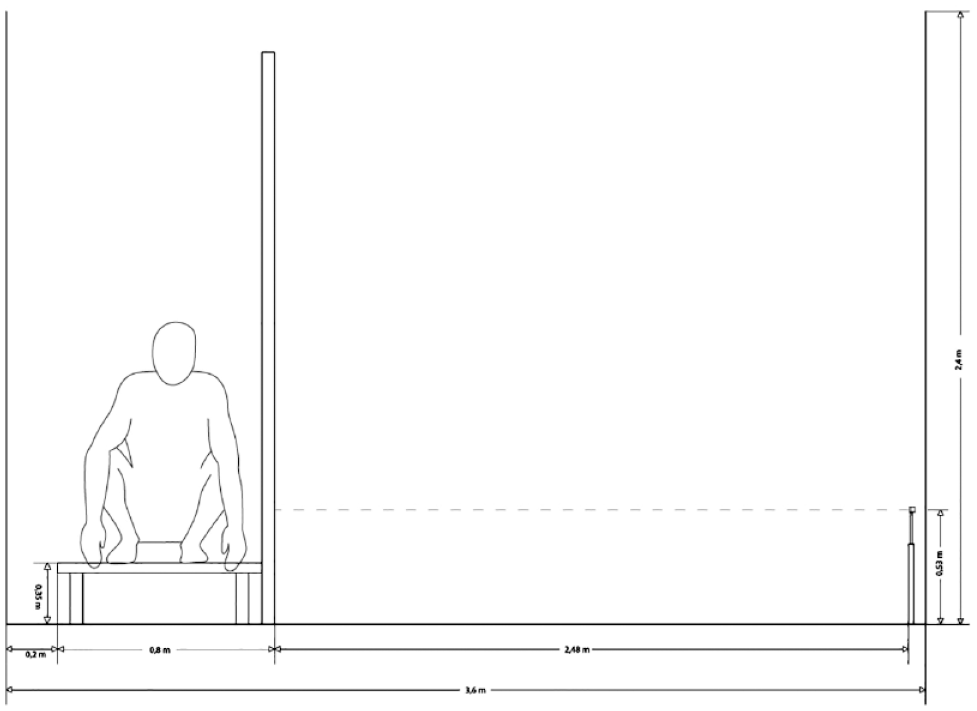
Front view of the real-world test setup (toilet setup on the left-hand side, camera tripod on the right).
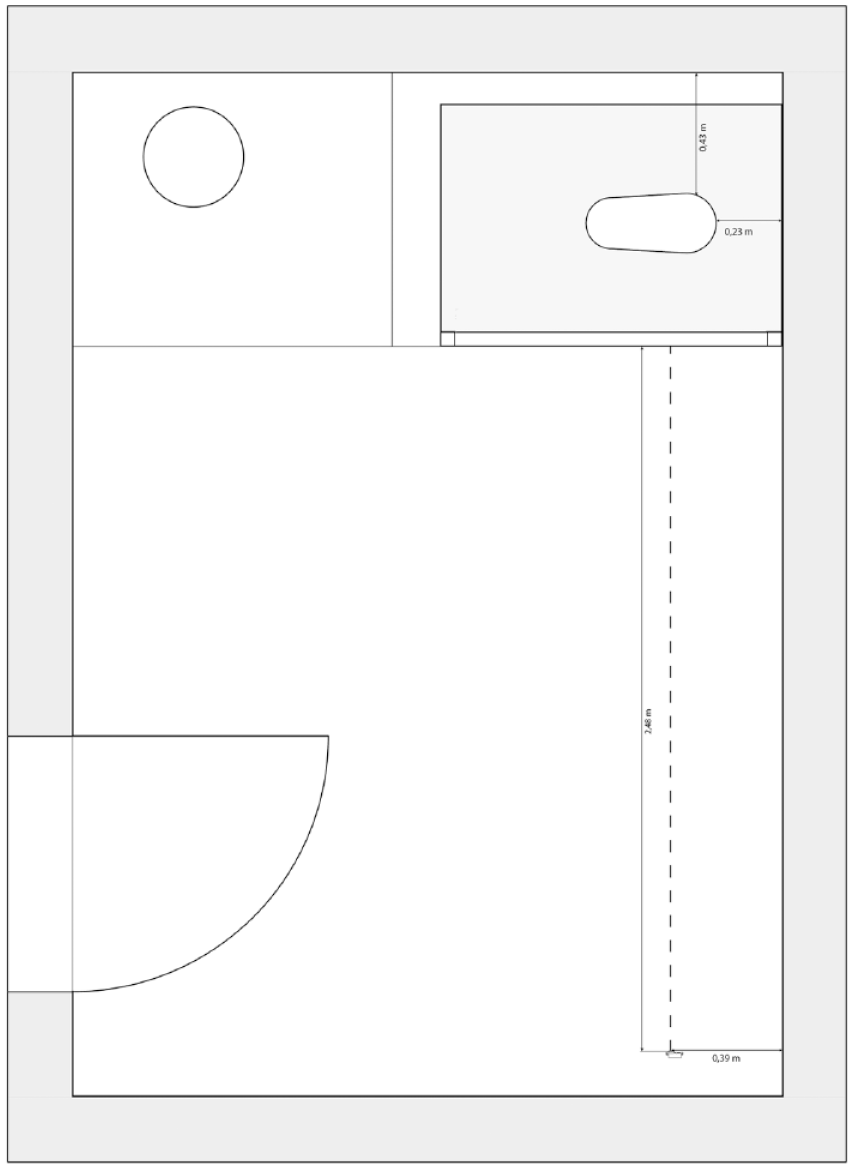
Plan view of the real-world test setup (toilet setup in the upper left corner).
In the end, we had 164 usable recordings (62 female and 102 male). These recordings were transferred to a generated three-dimensional model for result comparison. First, we digitalized and abstracted the urine streams to define a general spectrum for males and females. To compare and evaluate minimum and maximum angles, we placed the urine exit points at identical position. Second, the urine streams coupled with the infrared recordings served to reconstruct the urethra positioning. Figures 4 and 5 show examples of how the thermal images were transferred into the side view of the test setup, urine streams digitalized, and the urethra positions calculated based on the urine stream trajectory and body positioning.

Side view with infrared data, comparing male (orange) and female (yellow) urine stream trajectories (left) and comparison of converted video data into three-dimensional models for defining urethra position and urine stream trajectory of male (orange) and female (yellow) participants (right).

Side view example of converted video data into three-dimensional models of the test setup for comparison (extract) of female (left) and male (right) urination practices and urine stream trajectory.
How People Pee: Understanding Sex-Specific Differences in Urination Practices
Depending on the squat pan type and the resultant body posture, the urethra position among participants varied considerably. We found that females, compared with males, show more variation in body posture during urination when using squat pans. While women can also change the general direction of the stream, they do this less precisely compared with men. Our data show that the urine stream of women often coincides with the fall line of feces (vertical white dashed line in Figure 6). This has adverse impacts on urine separation efficiency. Because NoMix toilets normally have two compartments to collect urine (front) and feces (rear) separately, this means that the urine ends up in the wrong compartment. Conversely, because men can control the urine stream more easily, the urine usually ends up in the front, making separation rather easy. In addition, because females tilt the pelvis when squatting, they generally have a more forwardly bent posture. This can make the urine stream higher and cause it to go beyond the squat pan and splash on the surroundings. Our infrared recordings also revealed that feet positioning varies considerably between men and women. This affects the urethra position (see Figure 5) with conceivable effects on the urine stream’s angle and trajectory (see Figure 6). The results show that the minimum angle for females is around 7°, and the maximum exit angle is around 70°. Conversely, for men they are 5° and 45°, respectively, and thus, the range is smaller.
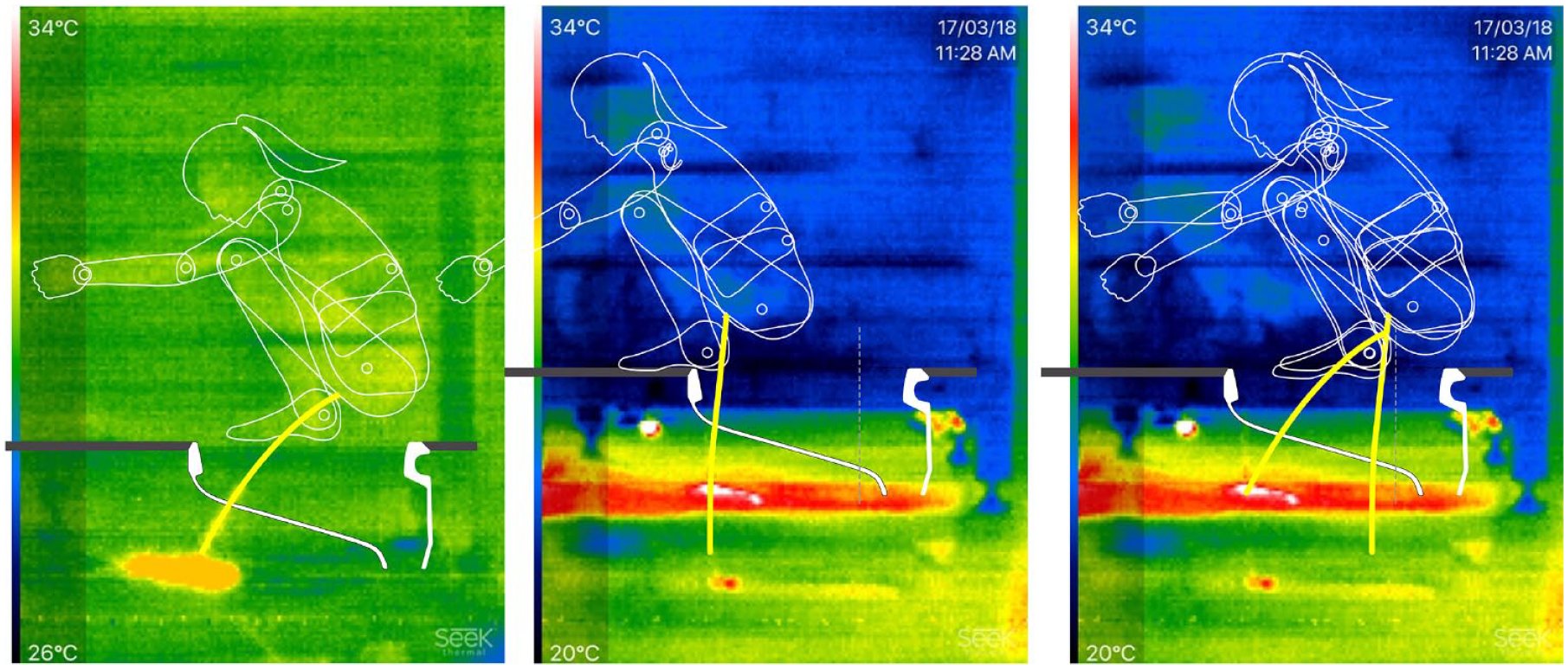
Side view illustration of females’ maximum (left) and minimum urine exit angles (middle) and overlapped comparisons (right).
Consequences of Revealing Sex-Specific Urination Practices
In short, our data revealed that while males can more easily steer their urine stream, females show a higher level of body posture variation. Females also had a larger range regarding minimum and maximum exit angles compared with males. In addition, females undress at least partially for both urination and defecation and require more space, privacy, and time (Greed, 2003). These requirements become even more relevant when managing menstruation and are greater for older women and those with disabilities (Hueso et al., 2018). In other words, females are forced to a higher degree to adapt to the predominant technology compared with males. Introducing a technology that is adapted to human behavior may be able to circumvent the necessity of introducing behavior change instructions and make the technology adoption much more likely (Junghanns & Beery, 2020). This should be emphasized because changing habits and practices, especially long-time settled practices, demand a lot of personal effort and external resources (cf. e.g., Darntonet al., 2011; Devine, 2009; Dreibelbis et al., 2013; Mosler & Contzen, 2016). Consequently, we emphasized the idea of adapting the design to user practices.
Redesigning Nomix Toilets, Affecting Change
Simulating Urine Streams With the Urinator
Based on the study data, we developed the Urinator, a simple device that allows for simulating male and female urine streams (Kriwanek et al., 2018). The centerline of the Urinator integrates two inlets with separate valves, according to the female and male urethra positions deduced from field data. The valves can be connected to a water tap with a garden hose (see Figure 7) and are flexed, according to the evaluated sex-specific urine exit angles (see Figure 8). To imitate the turbulence of a natural urine stream, the two urine nozzles (female/male) have a flat outlet. Because various flow speeds can affect separation efficiency and the user’s experience (turbulence, splashing, overflow, etc.), a regulation valve was implemented that permits the imitation of different urination flow speeds (Haylen et al., 1989; Kumar et al., 2009). The construction and installation drawings are available open source (https://www.urinetrap.com/src/assets/img/Urinator.pdf). The Urinator works as a proof of concept. Designers and engineers can use it to test and improve the design of urine separation toilets. It allows for quick feedback about the functionality of separation provisions, and time-consuming user tests in early development stages can be avoided.
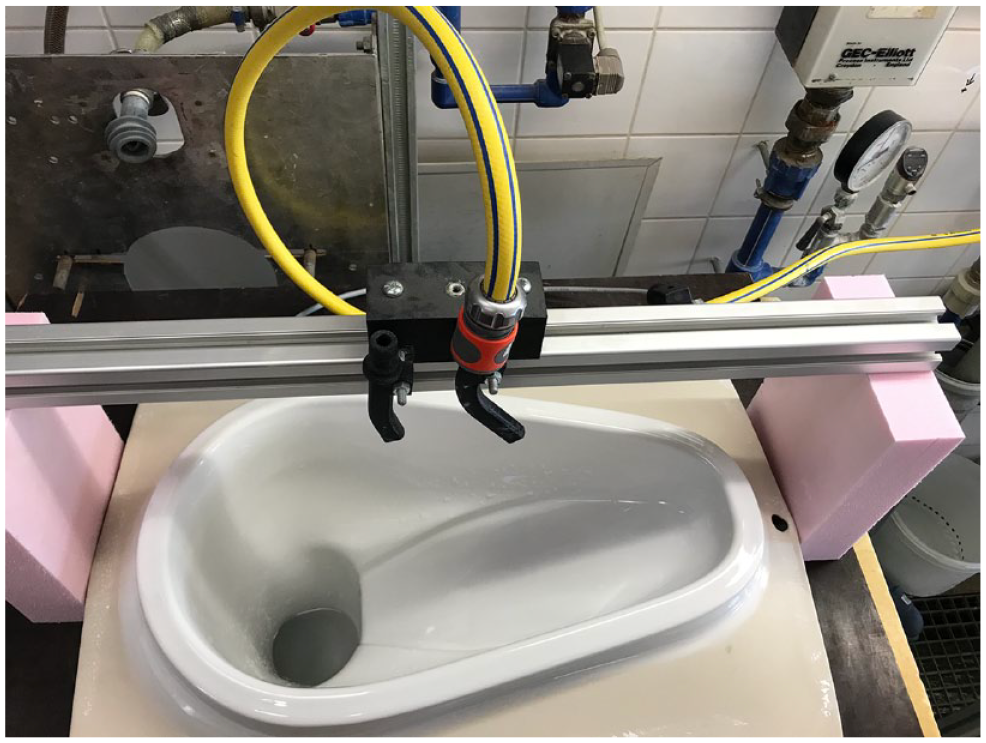
Top view of the Urinator connected to a garden hose to test separation efficiency for male urine streams.
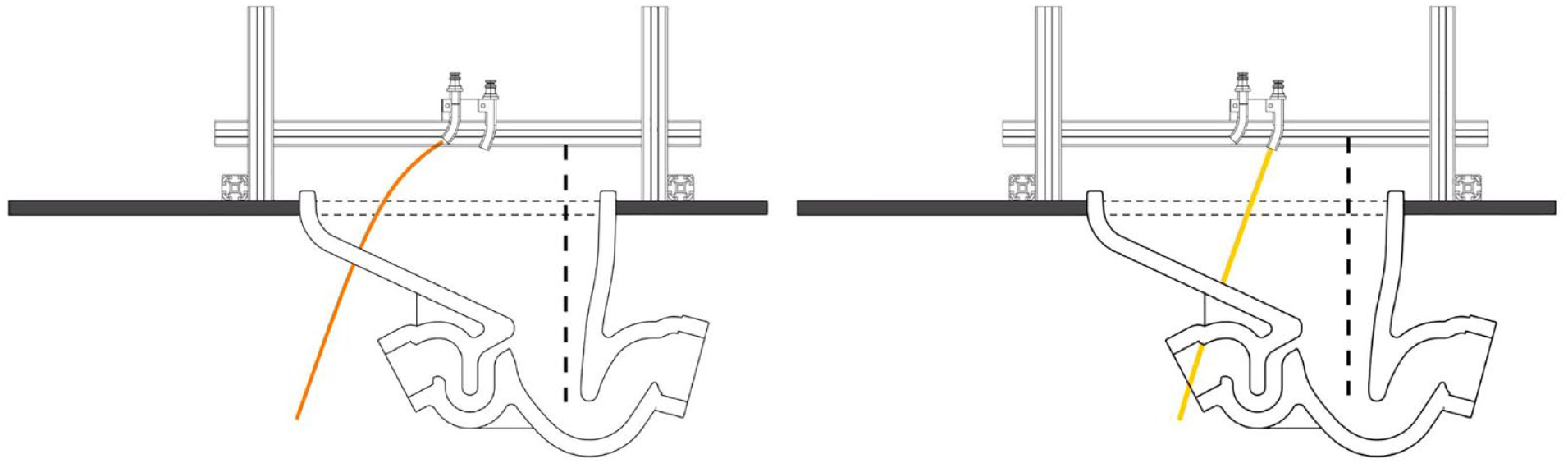
Side view of the Urinator fixed on the top of a NoMix squat pan with built-in Urine Trap, simulating male (left) and female (right) urine streams.
Improving Resource Recovery With the Urine Trap
At a later stage, the Urinator enabled the generation of computational fluid dynamics (CFD), which analyze and solve problems that involve fluid flows. For urine streamflow simulations, we used male and female urethra points deduced from infrared video data. Based on the CFD analyses, we adjusted the geometry for a new NoMix squat pan resulting in an improved separation efficiency (Gundlach et al., 2020). The specially developed Urine Trap allows for collecting the urine from women and men to the same extent, which is unprecedented (https://www.urinetrap.com). Unlike previous NoMix squat pans, we integrated all separation mechanisms into the toilet outlet tube (see Figure 9). In the first separation step, the Urine Trap separates urine from flush water and feces at the source. It features an internal curved section that is shaped to capture liquid as it reaches the bowl.
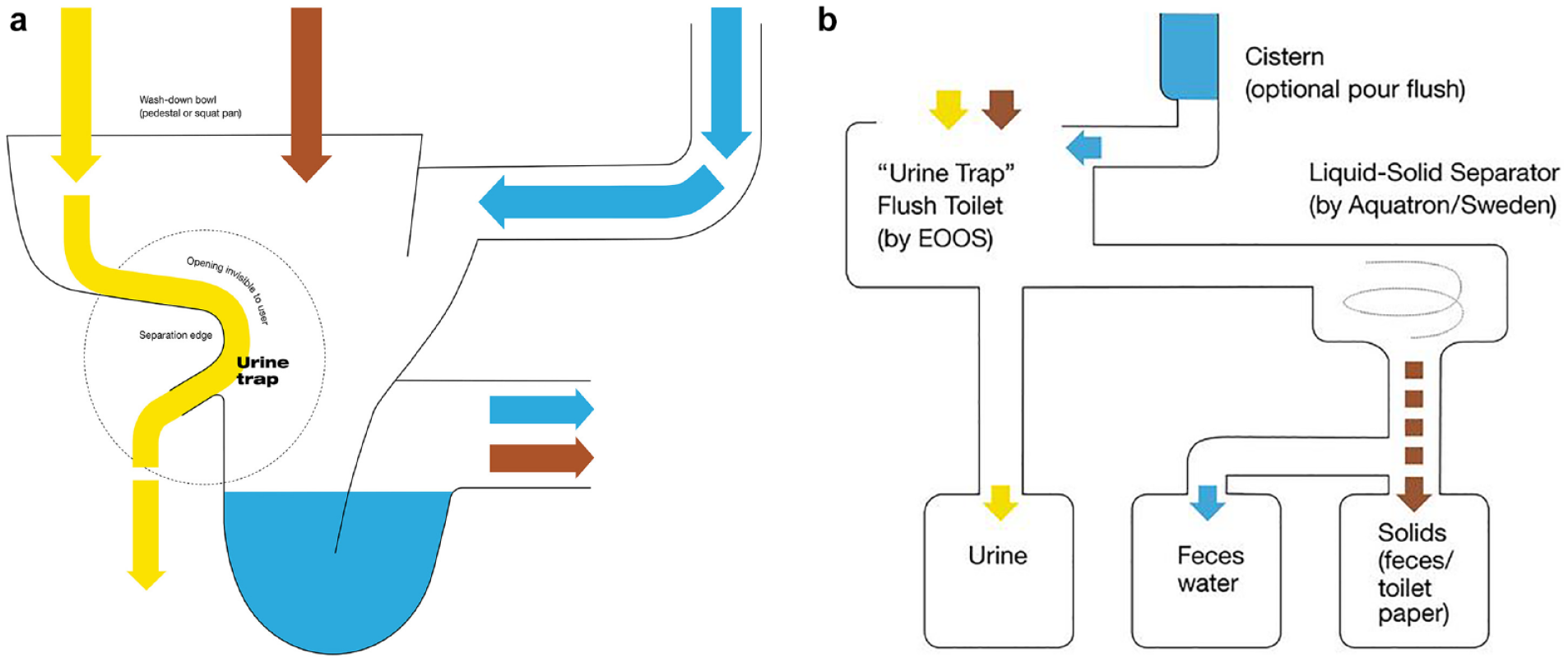
Newly developed “Urine Trap” for commode and squat pan toilets (left) and the three-stream separation system, which separates the liquid fraction from the solids.
In a second step, a liquid–solid separator separates solids and liquid fractions for further treatment (https://www.aquatron.se/products/aquatron-separator). This allows for a nearly undiluted urine stream; the solids have only little water content for storage or further treatment. Because it is a passive separation system, there is no energy required for separation.
The Urine Trap is universally applicable to all different types of user interfaces, that is, commode toilets or squat pans, cistern flush or pour flush, and washers or wipers. This is a technological breakthrough for two reasons. First, users of NoMix toilets equipped with these separation mechanisms will be able to use the toilet as usual, that is, they are not forced to adapt their behavior to the technology. This means increased comfort and less splashing, particularly for female users. Apart from the increased separation efficiency, limited splashing means less malodor, which overall eases maintenance. Second, passively separating solids from water for further treatment lowers the use of resources and thus the financial burden on people living in low-income areas.
Contributing to Universal Equitable Access to Adequate Sanitation
In doing so, this research contributes to a better understanding of gender- and sex-specific urination practices and to universal equitable access to adequate sanitation. Although more research is needed, the empirical evidence can contribute to informing future guidelines on source-separating squat pan toilet designs and support engineers in developing more user-friendly and reuse-oriented sanitation technologies. These new designs would assist in the reaching of the sanitation and safe recycling and reuse goals of SDG 6.
Footnotes
 .
.
.