



Abstract
We examine how elite attitudes and institutional rules and norms affect appointments to lower federal courts. Using voting data from 1,339 U.S. Courts of Appeals cases, we estimate new ideological measures for 475 individual circuit judges appointed between 1913 and 2008. We find that both presidential and home-state senators’ preferences strongly predict judicial ideology. While we find evidence that conditions of senatorial courtesy can constrain presidents from nominating like-minded individuals for lower court vacancies, this trend peaked during the 1960s and has been eroding ever since.
Introduction
Because federal judges in the United States are policy-makers, their selection is often contentious. Article II, Section 2 of the U.S. Constitution provides that presidents “shall nominate, and by and with the advice and consent of the Senate, shall appoint . . . judges of the Supreme Court, and all other officers of the United States . . . ” 1 What exactly, though, does “advice and consent” mean with respect to judicial appointments? At the time of the founding, two schools of thought emerged on this subject. In Federalist No. 76, for example, Alexander Hamilton argued that the Senate’s power was merely a negative—the power to reject a president’s nomination (Hamilton, Madison, and Jay 1966). By contrast, John Adams believed that the Senate could take a more proactive role in affecting the object of a nomination itself (Harris 1968). 2
From a normative perspective, the advice and consent clause is sufficiently vague to give presidents and senators alike credible claims to influence over the selection of judicial candidates. Empirically, however, these individuals exist within a mutually strategic environment that self-interested actors are likely to exploit for political ends. By examining these individuals, their preferences, and the institutions that constrain their behavior, political scientists can better understand how the process of advice and consent works in practice.
As the first mover in the appointments game, the president enjoys a considerable advantage over the selection of federal judges. Even still, research indicates that senators may enjoy greater success in affecting at least one group of nominees—those tapped to fill vacancies on district or circuit courts. These vacancies are assigned to individual states, and when presidents and the senators representing those states belong to the same political party, “senatorial courtesy” dictates that home-state senators approve nominees on behalf of the entire Senate. Because presidents prefer to fill judicial vacancies—even with less-than-ideal candidates—the threat of senatorial courtesy can potentially constrain their choice of nominee.
Evidence is mixed, however, regarding the extent to which home-state senators influence judicial appointments. Examining circuit judge voting behavior, Giles, Hettinger, and Peppers (2001) find that home-state senators’ preferences better predict vote outcomes under conditions of senatorial courtesy, but presidential preferences better predict votes absent those conditions. Using a similar research design, Songer and Ginn (2003) find slight evidence that home-state senators influence circuit judge selection under conditions of courtesy but find greater evidence that presidential preferences dictate judicial behavior. Johnson and Songer (2002) come to similar conclusions regarding district court judges.
While these studies are illuminating, they are limited by the fact that they must use elite preferences as proxies for judicial ideology. A more optimal research design would use independent ideological estimates for judges, presidents, and home-state senators to observe which politicians’ preferences better approximate votes—and under what conditions. A second limiting factor associated with most previous studies is that they neglect the fact that, unlike other rules and procedures, senatorial courtesy is merely a norm. As such, the chamber’s fidelity to it has waxed and waned with the tides of political expediency (Hendershot 2010; Matthews 1960).
In this article, we address the problem of senatorial courtesy by providing methodologically and theoretically improved estimates for U.S. Courts of Appeals judges’ preferences. Using voting data from the U.S. Courts of Appeals, we estimate a simultaneous Bayesian regression model that not only produces new ideological estimates for these judges, but also helps to inform us which political elites’ preferences best help to explain their ideology and under what circumstances.
Our findings indicate that home-state senators co-partisan with the president reached maximal influence around 1963 when the national Democratic Party was badly fractured between liberals and southern conservatives on issues like civil rights. During this period, racially conservative senators like James O. Eastland (D-MS) opposed judicial nominees from liberal co-partisan presidents. But after the major political parties became ideologically sorted, culminating in the Republican Revolution of 1994, the effect of a limiting institution like senatorial courtesy had largely disappeared.
Advice and Consent and the U.S. Courts of Appeals
On paper at least, appointments to federal circuit courts are relatively straightforward. The president selects a nominee, submits that nominee to the Senate, and the Senate either confirms or denies them. This process functioned with little delay and few rejections in the United States’ first several decades as appointments were considered patronage and of relatively little national import (Richardson and Vines 1970). That circuit courts—from their origin with three geographic circuits to twelve such circuits today—have continually represented multiple states within their boundaries is key to understanding how constitutional statements and early practices evolve to what we see today (Wheeler and Harrison 1989).
Changes in circuit court nomination practices stem from the intersection of geography, the Senate’s informal practices, and institutional circumstances. Each seat is informally tied to an individual state (Scott and Garrett 2011). 3 This provision was solidified in 1997 with Public Law 105-119’s requirement that each state be represented by at least one judge on a given circuit. 4 While some seats can be moved between states, geography plays an explicit role in how seats on circuit courts are filled through appointment (Goldman 1997; Scott and Garrett 2011).
Informal practice has long held that senators from a state controlling a seat are provided some degree of control over nominee selection (Slotnick 1980). For judicial nominations, this takes a specific form referred to as senatorial courtesy, defined by Chase (1972, 7) as, “a custom by which senators would support one of their number who objected to an appointment to a federal office in his state, provided the senator and the president were of the same party.” This initial framework supplies senators of the president’s party an outsize influence in judicial selection relative to other senators and has become a pre-nomination selection approval process by those senators rather than post-nomination objection (Binder and Maltzman 2009).
Senate practices evolved in the early twentieth century to better protect home-state senators. Introduced in 1913, the blue slip allows members to signal their support or opposition to a nominee (Binder 2007). This procedure has the Senate Judiciary Committee chairman send blue slips to the two senators representing the state to which the nominee is associated, regardless of their party, and declining to hold hearings and block the nomination if either senator returns a negative appraisal of the nominee or withholds their blue slip (Black, Madonna, and Owens 2011). This applies procedure to a previous deference norm and in theory protects all home-state senators’ interests.
In reality, the Judiciary Committee chair has wide latitude over honoring home-state senators’ negative evaluations (McMillian 2017). For example, Chairmen James O. Eastland (D-MS) and Patrick Leahy (D-VT) required two favorable blue slips before proceeding with a nominee. 5 Others like Chairmen Joseph R. Biden (D-DE) and Strom Thurmond (R-SC) have declined to treat negative blue slips as dispositive to a nomination with Biden (D-DE) explaining that a negative blue slip would be “a significant factor to be weighed by the committee, but ultimately it would not preclude consideration of that nominee” (quoted in Sollenberger 2003, 13–14). 6
Since the early 2000s, Senate leadership has increasingly interpreted the blue slip to partisan advantage. In 2003, when Republicans controlled both the presidency and the Senate, then-Chairman Orrin Hatch (R-UT) chided Democrats’ efforts to thwart President Bush’s nominees by suggesting that “if consultation means the administration has to take whatever judges the Democrats desire, that is not consultation” (quoted in Rutkus 2013, note 164). Though Chairman Charles E. Grassley (R-IA) pledged in 2015 to continue Senator Leahy’s (D-VT) tradition of honoring blue slips from members of either party, when Republicans won back the presidency in 2017, Grassley announced that home-state senators would no longer enjoy agenda control over nominees (Zengerle 2018). In total, between 2001 and 2017, 17 out of 57 nominees with blue slip issues (29.8 percent) were ultimately confirmed over the objections of home-state senators (McMillian 2017).
Not only has leadership vacillated in its fidelity to the blue slip, but home-state senators have complained that presidents of the opposite party have failed to engage in good-faith consultation prior to nomination. During the Clinton administration, Senator Hatch (R-UT) wrote to the White House counsel that, the Senate expects genuine, good faith consultation by the Administration with home state Senators before a judicial nomination is made . . . [and] [w]here the Administration has failed to provide good faith pre-nomination consultation, a negative blue slip is treated as dispositive . . . (Quoted in Rutkus 2013, note 39)
More recent administrations have indicated that they “retain the prerogative’” to select nominees independent of senators’ preferences (quoted in Rutkus 2016, 24). 7
This overview of circuit court nomination practices illustrates the continual evolution of the process by which judges are appointed to regional courts. 8 Early judges were selected through informal Senate courtesy, were confirmed quickly, and with few defeats. This process has steadily become more procedurally and politically fraught as changes to confirmation practices altered the path to successful confirmation.
Constraints on Presidential Appointment Powers
Home-state senators should be able to constrain presidential selection of nominees when the president has institutional reasons to pay attention to their preferences. The above discussion shows that presidents have little reason to pay attention to senators of the opposite party when making selections as even the Senate’s norms and procedures protecting opposite partisans are inconsistently applied. Nevertheless, the norms surrounding senatorial courtesy have established practices and are better adhered to (Richardson and Vines 1970). This leads us to expect that senatorial courtesy can constrain presidential appointment powers.
Home-state senators may be particularly successful in using senatorial courtesy to constrain presidents when at least two conditions are met. The first is that senators hold policy preferences that diverge from the president’s. This is perhaps most likely to occur when political organizations suffer from intra-party factionalism. In the past century, the Democratic Party has been the most likely to exhibit these types of cleavages, particularly during the mid-twentieth century when southern Democrats clashed with northern Democrats over race and civil rights (Poole and Rosenthal 1997).
Having divergent preferences from the president alone, however, would be insufficient for a home-state senator to frustrate the will of the chief executive. So too must she also have access to the levers of Senate power. This could mean, for example, that a senator’s vote is pivotal either in committee or in floor votes, or it could mean that he or she has some control over the Senate’s agenda. Returning to the previous example, James O. Eastland (D-MS) chaired the Senate Judiciary Committee between 1956 and 1978. As an arch-segregationist, he frequently butted heads with more liberal members of his party like President Kennedy. During Democratic administrations, Eastland consistently was able to coerce presidents into nominating judges more friendly to his agenda than to theirs (Barrow and Walker 1988).
Absent the conditions just identified, it is unclear why many home-state senators might want to use the power of senatorial courtesy to constrain the president. Rather, it seems more reasonable to suppose that they would collaborate with the president to streamline the appointment process and see their allies assume the bench. Thus, when political organizations are not plagued by intra-party factionalism, we might expect senators more readily to acquiesce to a president’s preferences over nominees and ignore limiting institutions (like senatorial courtesy) that might otherwise obstruct or delay their shared agenda.
Today’s modern political parties exhibit these sorts of tendencies largely thanks to the political sorting that caused southern whites to realign themselves with the Republican Party following the passage of the Voting Rights Act of 1965 and the subsequent mobilization of black voters (Hood, Kidd, and Morris 2012). Since at least the late 1980s and early 1990s, the Republican Party has particularly endeavored to identify like-minded candidates for the bench and confirm them with speed and efficiency (Goldman 1997).
We conclude this section with a brief discussion of other factors that might constrain a president’s nomination. First, a president will be limited when the Senate is controlled by the opposition party, which may prefer simply to leave a judgeship vacant in hopes that the next president nominates a more favorable candidate (Bell 2002; Binder and Maltzman 2002; Martinek, Kemper, and Van Winkle 2002). In addition, presidents may face temporal constraints with their nominations (Massie, Hansford, and Songer 2004). Chief executives nearing the end of their terms in office, for example, might find it difficult to see their nominees confirmed given the Senate’s dwindling time horizon and may, therefore, need to nominate moderate, non-controversial individuals (Bell 2002; Binder and Maltzman 2002). 9
A Model of Judicial Choice and Ideology
We argue that a judge’s ideology is a function, among other things, of elite preferences. In an ideal world, we could test these hypotheses by comparing a judge’s ideology to those who played a role in either nominating or confirming him. We are nevertheless constrained in this regard as there is yet an absence of objective data measuring district or circuit judge ideology. 10 As an alternate approach, we develop a random utility model that allows us simultaneously to assess judicial preferences and the role elite preferences and political institutions play in shaping them. 11
Suppose that we have a set of judges,
To estimate judicial ideology, we assume that judges’ preferences are an unobserved, linear function of a set of covariates and their partial slope coefficients:

Let
Equation (1) allows us to think about how factors at the time of a judge’s appointment affect their ideology. But because both
Suppose that in any given case,

A rational judge should choose
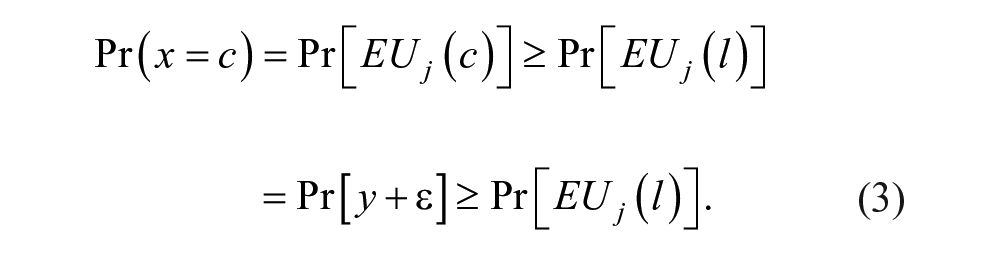
Without loss of generality, suppose that

Due to the symmetry in the logistic distribution, we can rewrite equation (4) accordingly:
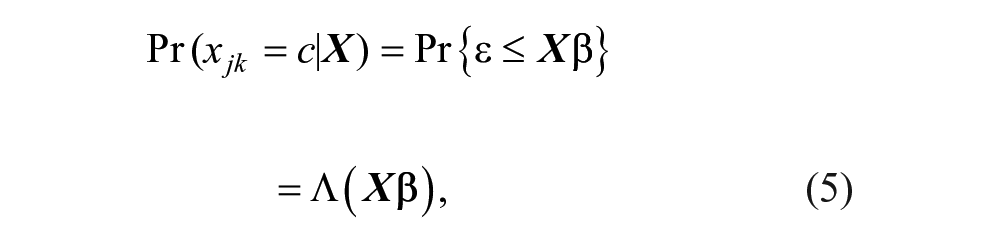
, where
Why might a judge choose either the liberal or conservative outcome in a particular case? The strategic model of judicial behavior informs us that decision-making reflects not only judges’ preferences over case outcomes but also the context in which those decisions are made—the facts of the case, legal precedent, compliance issues, and so forth (Epstein and Knight 1998). Let

where
Equation (6) helps us to uncover the ideological preferences of individual judges using their votes over case outcomes. When estimated simultaneously with equation (1), we can assess not only how liberal or conservative judges are but also what role elites and political institutions play in making them that way. In the following sections, we outline the data and statistical methods we use to estimate these equations.
Data
Equations (1) and (6) give us the foundation to estimate a simultaneous equation model that not only derives ideal point estimates for judges but also the role elite preferences and institutions play in affecting them. To estimate these models, we need data for the variables identified therein. We begin with the dependent variable in equation (6), which is the ideological directionality of judges’ votes.
The most comprehensive source of voting data for judges on the U.S. Courts of Appeals is the Songer Database, which includes a probabilistic sample of published cases in all 12 regional circuits between 1925 and 2010. 14 The Songer Database classifies judicial votes into three ideological categories: conservative, liberal, and mixed. 15 For example, in criminal appeals cases, votes are coded as liberal if they support the position of the defendant and conservative if they support the position of the government. Mixed votes are those that support some liberal and some conservative elements in a case’s outcome.
Substituting the left-hand side of equation (6) with the directionality of a judge’s vote from the Songer Database, we model the probability a U.S. Courts of Appeals judge casts a conservative vote in a given case. We omit judges appointed before 1913 as we want to hold constant the presence of blue slips (Binder 2007). We also exclude judges on the District of Columbia Circuit as these judges do not have seats over which senators could reasonably claim jurisdiction. Finally, we omit from analysis unanimous cases, cases in which the ideological outcome is unknown or mixed, and cases which have issue area codes of “miscellaneous” or “not ascertained.” 16 The resulting dataset consists of 475 judges casting 3,447 votes across 1,339 circuit court cases. 17
Our approach to modeling judicial ideology via the directionality of votes has both some benefits and drawbacks. On one hand, we are able to estimate ideological preferences for a temporally and geographically heterogeneous group of judges—something that the law and courts literature has heretofore struggled to accomplish. On the other hand, we are forced to depend heavily upon the directional coding of votes from the original Songer Database. Put simply, some votes are easier to classify compared with others. 18
Turning to the right-hand side of equation (6), recall that
Second, we control for the preferences of the U.S. Supreme Court. In the American hierarchy of justice, lower federal court judges are expected to follow precedents established by the Supreme Court. In theory, then, as the Court establishes more conservative (liberal) precedents, circuit judges should be more likely to cast conservative (liberal) votes (Epstein, Landes, and Posner 2013). We account for the constraining power of the Supreme Court by including a covariate for the Court’s median ideology from the previous term using data from Martin and Quinn (2002). 20 These ideological scores are measured on a continuous liberal-to-conservative scale.
Next, we operationalize variables related to equation (1). Recall that the dependent variable, a judge’s ideology, is an unobserved, linear function of covariates relevant to the time she was appointed to her position. Furthermore, from the discussion above, we have expectations surrounding the preferences of a judge’s appointing president and home-state senators, whether the conditions of senatorial courtesy were operative, how politically unified the Senate and presidency were, and the period of a president’s term in which a nomination occurred.
In operationalizing the right-hand side of equation (1), let us begin with the ideological preferences of political elites. Poole (1998) provides ideal point estimates for both senators and presidents, measured within a single issue space. The measure spans from
Next, we control for the presence or absence of senatorial courtesy using a dichotomous variable. Among the 475 judges under analysis, 77.1 percent were appointed under conditions of senatorial courtesy. To test the effect that presidents and home-state senators have upon lower federal court appointments, we interact this measure of senatorial courtesy with the ideal points for presidents and each of the home-state senators in Congress at the time a nomination is made.
We operationalize effects related to partisan control of government institutions by adding to the right-hand side of equation (1) dichotomous indicators for whether the Senate and presidency were controlled by different political parties at the time a judge was nominated. We include a variable indicating whether the presidency was controlled by a Democrat under conditions of divided government and a separate control for whether the presidency was controlled by a Republican under conditions of divided government. During the period of analysis, Republican presidents were more often faced with periods of divided government than were Democrats as 29.9 percent of Republican appointees under analysis were appointed during divided government compared with just 9.3 percent of Democratic appointees.
Finally, we account for the period in a president’s term in which a judge was nominated for a position on the U.S. Courts of Appeals. We include a dichotomous indicator for whether a judge was nominated by a Democrat during the fourth year of his term in office or by a Republican during the fourth year of his term in office. Among the judges under analysis, 5.7 percent were appointed by Republican presidents in the fourth year of their term while just 0.6 percent of judges were appointed by Democrats in the fourth year of their term.
Statistical Estimation Technique
Above, we outlined equations that, when estimated simultaneously, help us to uncover not only circuit judge ideology but also the effect elite preferences and political institutions have upon them. We estimate this simultaneous equation model using Bayesian regression techniques. Recall from equation (6) that random errors are distributed according to a standard logistic distribution. We therefore use Bayesian logistic regression methods to estimate equation (6). And because equation (1) is a linear model, we use Bayesian linear regression techniques to estimate its parameters. For all partial slope coefficients, we adopt uninformative priors drawn from normal distributions. 22 Next, because we have some missingness in our data related to presidential and Supreme Court preferences, we also assign uninformative priors to these observations and allow the Bayesian estimator to simulate them. 23 We use Markov chain Monte Carlo (MCMC) sampling methods to derive posterior estimates of interest. To this end, we run two MCMC chains for 10,000 iterations with a 1,000 period burn-in. 24
Results
In this section, we present the results from the simultaneous Bayesian regression analysis. First, we examine estimates for U.S. Courts of Appeals judges’ ideal points. Second, we examine the calculus of judicial voting in circuit court cases and how elite preferences and political institutions like senatorial courtesy affect judicial ideology. Third, we examine temporal fluctuations in how these elite preferences and political institutions affect judicial ideology over time.
Ideology on the U.S. Courts of Appeals
In this section, we present ideological results from the simultaneous equation model and assess their validity. Beginning with Figure 1, we present a histogram of circuit judge ideology by the party of their appointing president. As one might expect, Democratic appointed judges are significantly more liberal compared with Republicans. The average judge appointed by a Democrat has an ideal point equal to

Circuit judge ideology by party of appointing president.
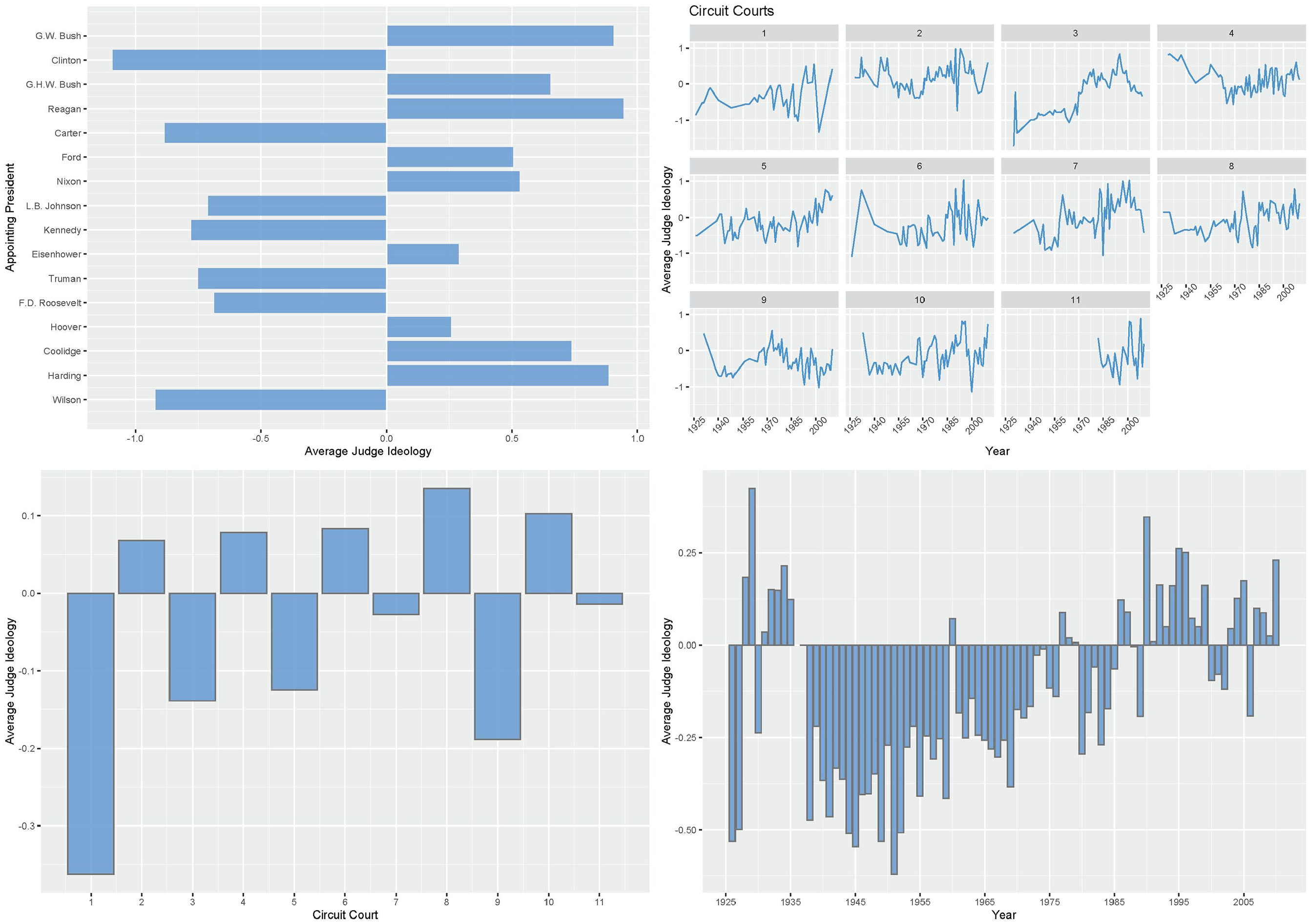
In Figure 2, we see additional support for the facial validity of the ideological estimates. The northwestern quadrant shows the mean ideology of judges appointed by presidents from Woodrow Wilson to George W. Bush and reinforces what was seen in Figure 1—that judges appointed by Republicans are more conservative than those appointed by Democrats. Furthermore, we observe that Ronald Reagan appointed the most conservative judges on average while Bill Clinton appointed the most liberal judges on average.
Judicial ideology on the U.S. Courts of Appeals.
The southwestern quadrant of Figure 2 shows the mean ideology of judges across the regional circuit courts across all years of analysis. We see that the First and Ninth Circuits, which include much of New England and the west coast, are the most liberal with an average judge ideology of
The northeastern quadrant of Figure 2 furthermore summarizes circuit ideology by year.
25
The patterns found here speak further to the estimates’ facial validity. For example, from the 1980s to the 2000s, the Fifth Circuit Court of Appeals became dramatically more conservative as one might expect. In the final year of the Carter administration, the average judge on the Fifth Circuit had an ideal point of
Finally, examining the southeastern quadrant of Figure 2, we see average judicial ideology across all years of analysis. The evolution of ideology on the U.S. Courts of Appeals evinces some of the broader political and partisan trends in American politics. We see, for example, that after the dawn of the New Deal in the 1930s, a generation of liberal judges ascended the bench and left their mark for nearly 30 years. Likewise, as the Republican Party expanded its power, particularly under Presidents Reagan, George H.W. Bush, and George W. Bush, the average judge on the Courts of Appeals, similar to the average justice on the Supreme Court, became more conservative.
While our new estimates of circuit judge ideology appear on their face to measure what we want them to, we would like more thoroughly to assess their validity. To this end, we further assess their convergent and construct validity. Convergence analysis examines whether a particular measure is associated with other, accepted measures of a similar concept. To this end, we first compare our estimates of judge ideology with those estimated by Giles, Hettinger, and Peppers (2001), referred to as GHP scores. We then compare our own estimates for judge ideology with the ideal point of their appointing president (Poole 1998), referred to as POTUS scores. Cells in Table 1 represent Pearson’s correlation coefficients. Our measure of ideology correlates well with the other two proxy measures. Our own estimates, when compared with GHP scores, have a Pearson’s r equal to
Convergence Analysis of Circuit Ideology.
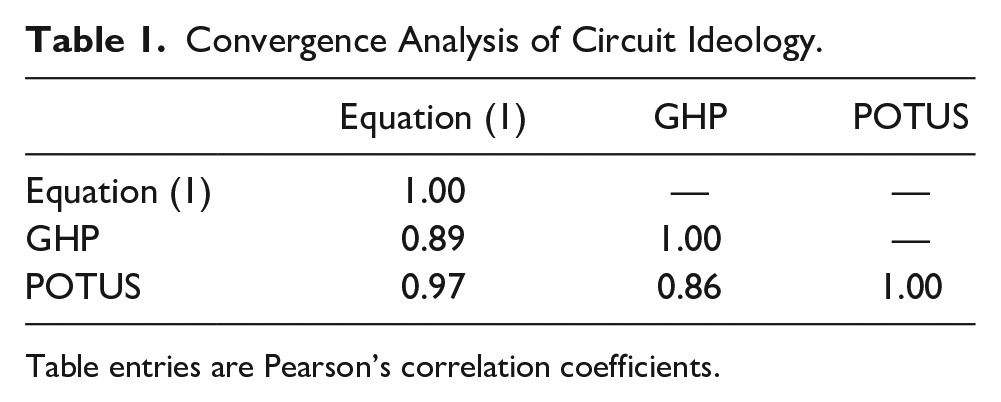
Table entries are Pearson’s correlation coefficients.
Next, we analyze our measure’s construct validity. With construct validity, one asks whether a measure is associated with outcomes in another variable with which it is theoretically linked. For example, according to the attitudinal model of judicial behavior, judges’ votes over case outcomes should be strongly associated with their ideologies (Segal and Spaeth 2002). Therefore, if our measure of ideology is measuring what it ought to, then it should strongly predict judges’ votes over case outcomes.
Because our measure of judicial ideology is itself a function of judges’ votes, it would be inappropriate to compare their preferences to the same votes used to estimate them. To address this problem, we take a simple random sample representing three-fourths of our data, called the “training dataset.” We then use this sample to re-estimate circuit judge ideology. Next, we take ideal points derived from the training dataset and use them to predict judges’ votes in the remaining one-fourth of observations, called the “practice dataset.” 26
Using the ideological direction of a judge’s vote as the dependent variable (“1” if conservative, “0” if liberal), we use a simple logistic regression model to estimate the effect a judge’s training dataset ideal point has upon his or her practice dataset votes. If our model accurately estimates circuit judge ideology, then these ideal point estimates should have a positive and statistically significant effect upon the probability a judge casts a conservative vote. Indeed, when we estimate the regression model, we find a partial slope coefficient for our ideological measure of
Determinants of Judicial Ideology and Behavior
In Table 2, we present the results for coefficients outlined in equations (1) and (6). The column labeled, “M,” indicates the mean of a coefficient’s posterior distribution, and “SD” shows the standard deviation of that distribution. We also present each variable’s credible interval using an
Judicial Choice and Ideology on the U.S. Courts of Appeals.
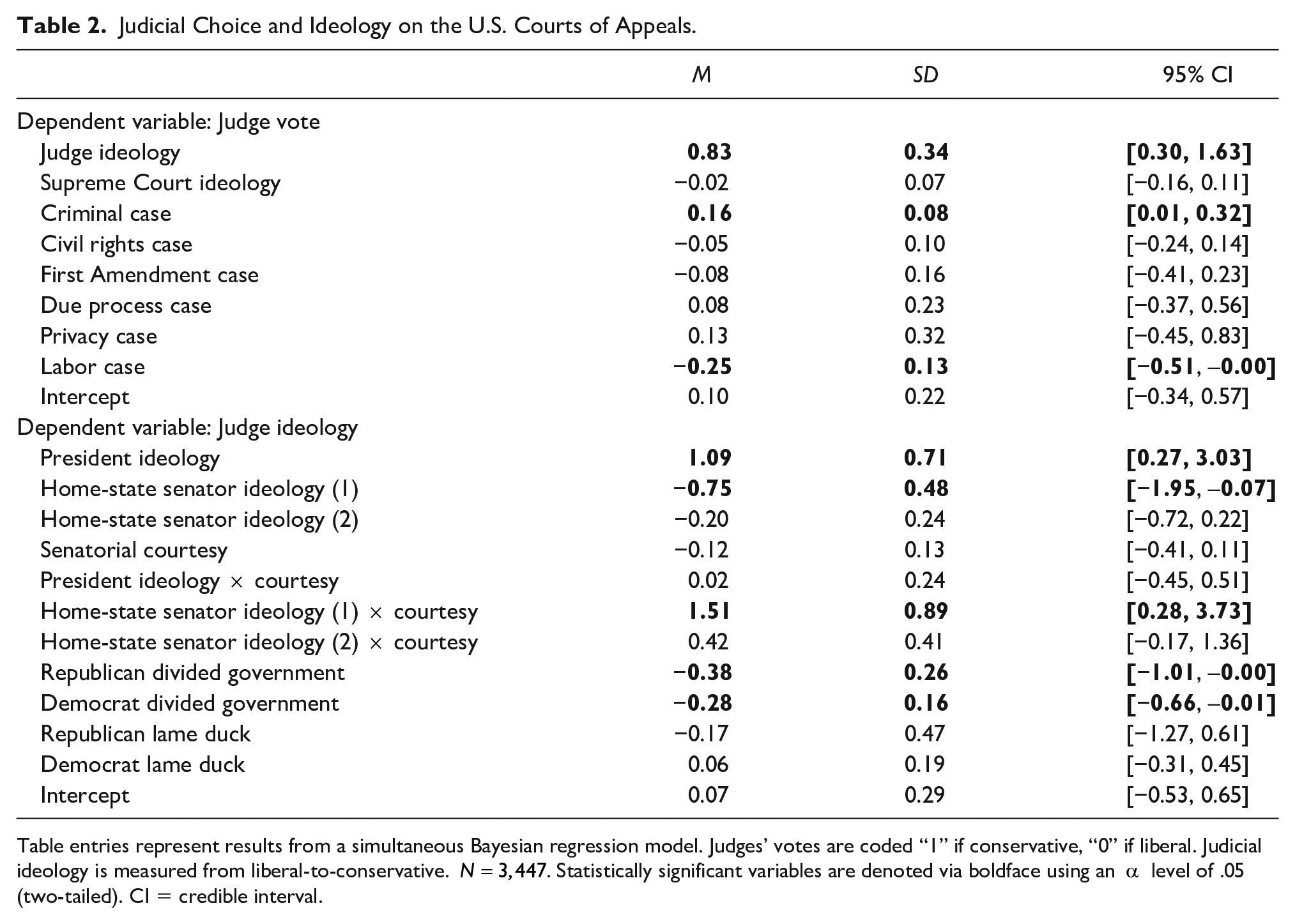
Table entries represent results from a simultaneous Bayesian regression model. Judges’ votes are coded “1” if conservative, “0” if liberal. Judicial ideology is measured from liberal-to-conservative.
We begin by considering covariates related to a judge’s vote. First, judicial ideology is signed appropriately and is statistically significant. This means that as circuit judges become more conservative, they are more likely to cast conservative votes. Holding other variables constant, we find that a judge one standard deviation more liberal than average has a 0.35 probability of casting a conservative vote while a judge who is one standard deviation more conservative than average has a 0.68 probability of casting a conservative vote (a 94.29 percent increase). Ideology, we see, plays a critical role in the behavior of circuit judges.
Next, we consider other contextual factors relevant to a judge’s vote. As with Giles, Hettinger, and Peppers (2001), we find no evidence that Supreme Court ideology affects circuit judges’ votes over individual cases. We do find evidence, however, that, relative to cases with issue areas centered upon economics, judges are approximately four percentage points more likely to cast conservative votes in criminal cases. Furthermore, judges are approximately 6.2 percentage points more likely to cast liberal votes in labor compared with economic cases.
We now turn to an examination of the determinants of judicial ideology on the U.S. Courts of Appeals. Note that we present estimates for elite preferences both in the presence and absence of senatorial courtesy. That is, the effects for elite preferences not interacted with senatorial courtesy indicate a politician’s effect on a judge’s ideology in the absence of senatorial courtesy while the interaction effects indicate the effect elite preferences have in the presence of senatorial courtesy.
We find significant evidence that senatorial courtesy constrains presidents in favor of home-state senators. In the absence of senatorial courtesy, a one-unit increase in the president’s ideology corresponds with a near identical one-unit increase in a judge’s ideology. Compare this effect to when the president is co-partisan with at least one home-state senator. We see from the interaction effect between a president’s ideology and the presence of courtesy that judicial ideology is essentially invariant to changes in the president’s preferences.
The effect the president’s ideology has upon judicial preferences is essentially inverse to that of at least one home-state senator who is not co-partisan with the president. Absent senatorial courtesy, increasing conservativeness for a home-state senator results in a decrease in ideology, all else equal. In the presence of courtesy, however, we find that a one-unit increase in home-state senator one’s ideology leads to an increase in judge ideology of approximately 1.51. Nevertheless, we see no significant effect for home-state senator two’s ideological coefficient in the presence or absence of courtesy, though the signs are the same as home-state senator one.
Finally, we find that divided government, under some circumstances, constrains presidential selection of circuit judges. Note that when Republicans control the presidency but not the Senate, their appointees are significantly more liberal compared with conditions of unified government. Interestingly, we find statistically significant evidence that Democratic appointees under conditions of divided government are more liberal compared with those appointed under conditions of unified government, suggesting little to no ideological constraint. While coefficient estimates for lame duck presidents are signed appropriately, like Giles, Hettinger, and Peppers (2001), we find no compelling evidence that these intra-term fluctuations significantly constrain their selection of circuit judges.
Temporal Changes in Senatorial Courtesy
We conclude our analysis by returning to the above argument that temporal changes in American politics likely make adherence to senatorial courtesy more appealing at some times compared with others. To test this idea, we estimate the simultaneous Bayesian regression model once again, but this time, we subset effects from elite preferences and senatorial courtesy with respect to time. More specifically, we estimate coefficients for these variables according to the Congress during which circuit judges were appointed. 27 We present the major findings from the analysis in Figure 3. 28
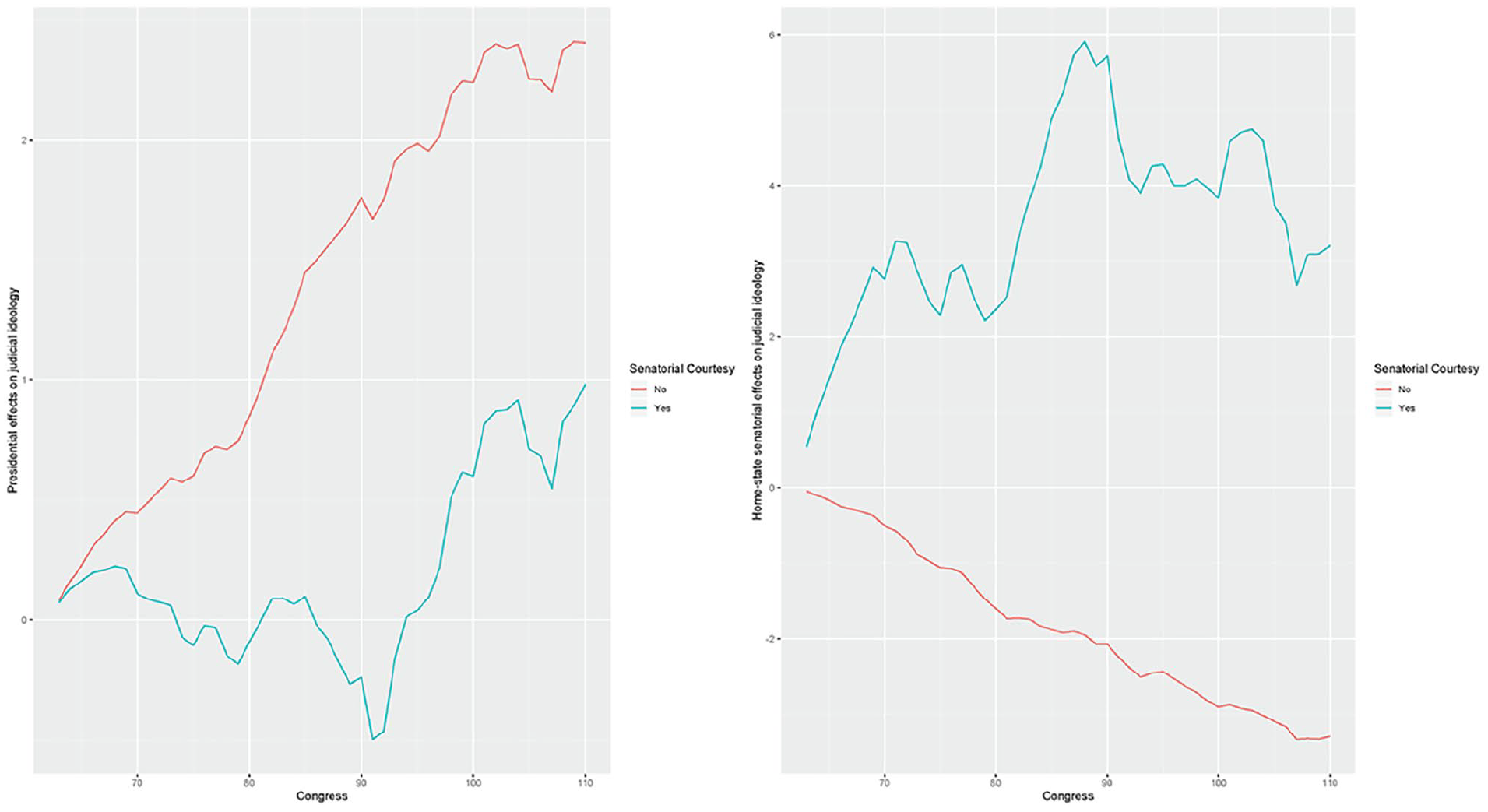
Temporal effects of senatorial courtesy.
In Figure 3, we present posterior means for presidential and home-state senator preferences and their effects on judicial ideology. The time-series on display spans the Sixty-Third Congress (1913–1914) to the One-Hundred Tenth Congress (2007–2008). The left-hand pane displays the effect presidential preferences have upon judicial ideology both in the presence and absence of senatorial courtesy while the right-hand pane plots similar effects for home-state senators. 29
From the left-hand pane of Figure 3, we can see that over time, absent the conditions of senatorial courtesy, the president has become increasingly dominant in terms of dictating the preferences of successfully appointed circuit judges. From the Sixty-Third (1913–1914) to the Eighty-Ninth Congress (1965–1966), the effect of presidential preferences is statistically indistinguishable from zero. Since 1967, however, the president’s influence in the selection process absent the conditions of courtesy is nearly always significant and increases nearly monotonically.
Compare the effect of presidential preferences absent senatorial courtesy to those of home-state senators. From the Sixty-Third to the Eightieth Congress (1947–1948), home-state senator one’s influence on judge ideology is indistinguishable from zero, and from the Eighty-First (1949–1950) to the One-Hundred Tenth Congress (2007–2008), it becomes increasingly negative. Between the Eighty-Fourth (1955–1956) and Ninety-Third Congresses (1973–1974), home-state senator two’s effects upon circuit ideology are also negative, and for all remaining years indistinguishable from zero. What these results demonstrate is that home-state senators play a largely irrelevant role in judicial selection when not co-partisan with the president.
Now let us turn to the case in which senatorial courtesy is operative. Between the Sixty-Third (1913–1914) and Ninety-Sixth Congress (1979–1980), the effect of the president’s preferences hovers around zero. But around the beginning of the Reagan administration in 1981, we see that the effect of presidential ideology gradually increases with a brief dip during the divided governments of the One-Hundred Sixth and One-Hundred Seventh Congresses (1999–2002). While we see these effects not different from zero, this may be due in part to limited data.
While presidents play a dubious role in judicial selection in the presence of senatorial courtesy, the model indicates that home-state senator effects in the presence of courtesy are highly temporal. Results indicate that between the Sixty-Third (1913–1914) and Seventieth Congress (1927–1929) and between the Seventy-Third (1933–1934) and Eighty-Second Congress (1951–1952), neither home-state senator has a statistically significant effect upon the ideology of circuit judges. However, between the Eighty-Third (1953–1954) and One-Hundred Third Congress (1993–1994), home-state senators played a major role in affecting judicial selection to the circuit courts given the applicability of senatorial courtesy. According to model results, home-state senators reached their peak influence between the Eighty-Sixth (1959–1960) and Ninetieth Congress (1967–1968). Since that period, their influence has largely tapered.
That home-state senators were particularly influential in selecting lower court judges between 1959 and 1968 tracks well with our argument. Throughout this period, the national Democratic Party was badly fractured between northern Democrats favoring expanded civil rights for racial minorities and southern Democrats who bitterly opposed these efforts. Between 1961 and 1969, the liberal wing of the party controlled the presidency, but arch-segregationist James O. Eastland (D-MS) controlled the Senate Judiciary Committee. This arrangement meant that fellow segregationist Democrats could use senatorial courtesy to prevent liberal Democratic confirmations. 30
By the One-Hundred Fourth Congress (1995–1996), home-state senators co-partisan with the president were no longer statistically influential in affecting judicial ideology. This switch in time tracks with the Republican Revolution of 1994 when conservative Republicans swept into power, largely due to the fact that white southerners were abandoning the Democratic Party en masse. Put differently, once the political parties became ideologically more homogeneous, the need for institutions like senatorial courtesy to thwart ideologically incongruent though nevertheless co-partisan presidents had largely disappeared. 31
Discussion
In this research, we revisited the debate over senatorial courtesy in the selection of lower federal court judges. Theoretically, senatorial courtesy allows home-state senators a unilateral veto over judicial selections within their states provided they are presidential co-partisans. In practice, adherence to, and the power of, this norm has been inconsistent. While scholarly research has examined the extent to which senatorial courtesy constrains presidents, the literature has been hindered by a lack of objective measurement of judicial ideology along with an inattention to the temporal variance of senatorial courtesy.
To address these concerns, we used a sample of 475 judges appointed to the U.S. Courts of Appeals between 1913 and 2008. Using 3,447 votes these individuals cast in 1,339 cases, we specified simultaneous Bayesian regression models estimating not only ideology among circuit judges but also assessing the effect political elites have on them in a manner flexible to the presence of senatorial courtesy and temporal changes.
Our findings with respect to senatorial courtesy balance between supporting presidential primacy and senatorial courtesy. We find support for Giles, Hettinger, and Peppers (2001), in that the conditions of courtesy do empower the senators to affect judicial selection. When the conditions for senatorial courtesy are operative, co-partisan home-state senators can impose a significant constraint upon presidents. However, we find support for Songer and Ginn (2003) in that presidential effects on judicial selection and ideology are resurgent over the last three decades. Home-state senators in this period who are co-partisan with the president also face decreasing effects on judicial selection and ideology. While we agree with both that when courtesy is inapplicable, presidents essentially enjoy carte blanche to appoint like-minded judges to the U.S. Courts of Appeals, our results suggest that the effect of courtesy is more nuanced than either find.
Where Giles, Hettinger, and Peppers (2001) and Songer and Ginn (2003) modeled courtesy as a temporally static institution, we examine the Senate’s fidelity to it across time and find wide variance. Results from the analysis indicate that adherence to senatorial courtesy is likely due in part to intra-party policy disagreements. For example, we found that home-state senators enjoyed the most influence during the 1960s when the presidency was controlled by pro-civil rights Democrats, but the Senate Judiciary Committee was chaired by a pro-segregationist Democrat. Our results indicate that, once the political parties had sorted themselves ideologically, home-state senators played a significantly diminished role in circuit judge selection alongside a resurgent president.
While this research has advanced our understanding of judicial choice, ideology, and the institution of senatorial courtesy, it also comes with limitations that will need to be addressed in future scholarly endeavors. To begin, we tested our hypotheses using the most comprehensive source of voting data on the U.S. Courts of Appeals available, but it nevertheless represents a relatively small fraction of circuit judge decision-making. Consequently, future research will need to engage in greater data collection to increase our confidence in estimates relating to circuit judge ideology and the practice of advice and consent.
Second, our data only provide us insight into judicial selection to the eleven regional circuit courts. In comparison, significantly less is known about selection to the U.S. District Courts. While seats on the Courts of Appeals might be reassigned to different states—and therefore, different home-state senators—district courts exist solely within states and might pose greater obstacles for presidents seeking to obviate recalcitrant home-state senators. Future research will apply our method to the U.S. District Courts in an effort to better understand the conclusions reached by Johnson and Songer (2002).
Other questions that will need to be taken up in subsequent research include Senate gatekeepers. While conceptually related to senatorial courtesy, the blue slip theoretically affords home-state senators the right to veto presidential nominees, even when they are not co-partisan with the president (Binder and Maltzman 2009). Indeed, a number of other potential vetoes could derail a president’s nomination to a lower federal court. Senate Judiciary Committee Chairs enjoy wide discretion in choosing which nominees will be granted hearings before proceeding to a floor vote. Likewise, Senate Majority Leaders could potentially block a nominee by denying them a floor vote. All these and other constraints upon presidential discretion in the selection of lower federal court judges will demand greater scrutiny, as we are unable to evaluate them here.
Supplemental Material
sj-pdf-1-prq-10.1177_1065912920972780 – Supplemental material for Revisiting Senatorial Courtesy and the Selection of Judges to the U.S. Courts of Appeals
Supplemental material, sj-pdf-1-prq-10.1177_1065912920972780 for Revisiting Senatorial Courtesy and the Selection of Judges to the U.S. Courts of Appeals by Nicholas O. Howard and David A. Hughes in Political Research Quarterly
Footnotes
Acknowledgements
We gratefully acknowledge Mitchell Brown, Susan Haire, participants at the 2018 annual meetings of the Southern and Midwest Political Science Associations, and the anonymous reviewers for their insight in helping to improve this paper. We also thank Susan Haire for generously sharing U.S. Courts of Appeals voting data. All remaining errors are our own.
Declaration of Conflicting Interests
The author(s) declared no potential conflicts of interest with respect to the research, authorship, and/or publication of this article.
Funding
The author(s) received no financial support for the research, authorship, and/or publication of this article.

Notes
References
Supplementary Material
Please find the following supplemental material available below.
For Open Access articles published under a Creative Commons License, all supplemental material carries the same license as the article it is associated with.
For non-Open Access articles published, all supplemental material carries a non-exclusive license, and permission requests for re-use of supplemental material or any part of supplemental material shall be sent directly to the copyright owner as specified in the copyright notice associated with the article.
