



Abstract
Intimate partner violence (IPV) is a widespread, pervasive issue that affects heterosexual and same-sex relationships. However, IPV is largely underreported, and many counselors do not formally assess for relationship violence. Additionally, counselors typically do not have a plan to manage disclosures of violence when they occur. We present an IPV Protocol Readiness Model that helps counselors determine their readiness to assess for IPV as well as manage disclosures. Additionally, we present a questionnaire intended to provide guidance for counselors regarding organizational and community factors important to the success of an IPV protocol. Finally, we discuss practical applications and suggestions for further research.
Intimate partner violence (IPV) remains a widespread social, economic, and health-related issue that carries significant negative consequences (Eastman, Bunch, Williams, & Carawan, 2007; Wallace, 2002). Domestic violence (DV), typically defined as a pattern of behaviors used by one partner to establish and maintain power and control over the other, includes physical, sexual, and psychological abuse by a current or former partner (including common-law husbands/wives, boyfriends, girlfriends, lovers, and dating partners) in both opposite-sex and same-sex relationships (Centers for Disease Control and Prevention [CDC], 2012; Walker, 1989). More recently, IPV emerged as a term to describe variances in types of relationship violence. IPV encompasses the traditional power and control violence described by the term DV but also includes relationship violence that does not stem from one partner’s attempt to control his or her partner. Although literature discusses the terms DV and IPV interchangeably, we view IPV to be a more inclusive term that reflects current trends in relationship status and the heterogeneity of violence; therefore, we will use IPV for the remainder of the article.
The National Violence Against Women Survey conducted a large-scale randomized study on IPV prevalence and health outcomes; results indicated that 28.9% of 6,790 women sampled experienced physical or psychological violence within an intimate relationship during their lifetime (Tjaden & Thoennes, 2000). Additionally, results found significant positive correlations between experiencing physical/psychological IPV and deteriorated physical health, substance abuse, and chronic mental illness, illustrating the large-scale impact of IPV. It is important to note that although statistics on the prevalence of IPV indicate that nearly 30% of women experience IPV, actual prevalence is considered to be significantly greater, given the tendency for victims to withhold disclosure of violent incidents due to fear and safety concerns.
The majority of research conducted on prevalence of IPV included heterosexual couples; however, previous researchers (e.g., Balsam & Szymanski, 2005; Eaton et al., 2008; Turrell, 2000) indicated that IPV for couples in same-sex relationships exists at similar or increased rates when compared to heterosexual relationships. For example, Turrell (2000) found that 51% of same-sex couples reported experiencing verbal abuse. Balsam and Szymanski (2005) evaluated IPV rates in lesbian same-sex relationships and found that 10% of the 272 women reported victimization, 40% reported perpetration, and an overlap of 30% of participants reported being a victim and a victimizer. More recently, Eaton et al. (2008) found that approximately 39% of lesbian participants (N = 226) experienced physical abuse, 50% experienced verbal abuse, and 33% sexual abuse by a same-sex partner. Regardless of sexual orientation, IPV is associated with poorer mental health and physical health, including depressive symptoms, substance use, posttraumatic stress, anxiety, and chronic physical illness (Coker, Weston, Creson, Justince, & Blakeney, 2005), highlighting the need for effective mental health interventions. Despite prevalence and agreement that IPV is an important social issue with significant effects on physical and mental health, screening for IPV when working with individuals or couples on relational issues is generally conducted ineffectively. Furthermore, protocols and guidelines related to IPV are limited in the professional counseling literature. To this end, IPV remains an important area for researchers and mental health service providers to develop innovative approaches for identifying, screening, and intervening that are grounded in theory and empirical support (Bograd & Medelos, 1999). Effectively identifying IPV within couple relationships aids counselors in implementing more appropriate treatment plans that consider the safety of the victim (Carlson & Jones, 2010; Kelly & Johnson, 2008).
Need for Training: IPV
Individual and couples counselors are often the first line of responders who witness symptoms of IPV when persons engage in counseling. However, the majority of counselors do not regularly use standardized screening protocols to assess for IPV. Hansen, Harway, and Cervantes (1991) provided therapists (N = 320) a clinical case study of severe IPV (i.e., IPV that led to fatality for victims) and asked them to assess, conceptualize, and provide an intervention plan for the couple. In all, 40% of therapists were unable to identify the significance of violence in their conceptualization and less than 2% identified the high lethality for the victim. In a more recent study, Schacht, Dimidjian, George, and Bern (2009) conducted a national survey of 620 marriage and family therapists to investigate therapist strategies in structured assessment of IPV. Half of the sample reported routinely screening all couples; however, less than 4% of therapists reported consistently following three key structured screening guidelines recommended widely by experts in IPV (Schacht et al., 2009). In sum, when couples present with IPV, results indicated that therapists do not adequately conceptualize, screen, or intervene with couples.
Therapists may not be adequately prepared to identify warning signs and symptoms of IPV; therefore, they are at risk of providing inappropriate and potentially harmful treatment for couples. The Council for Accreditation of Counseling and Related Educational Program (CACREP) emphasizes critical components to counselor trainee development through specific knowledge and skills competencies. According to the 2009 CACREP standards, 22 standards are specific to Marriage, Couple, and Family Counseling; however, few standards specifically refer to IPV. For example, Standard III.A.6 states that counselor educators must ensure that a student “understands family development and the life cycle, sociology of the family, family phenomenology, contemporary families, family wellness, families and culture, aging and family issues, family violence, and related family concerns” (CACREP, 2009, p. 36). Standard III.C.2 suggests that a student “recognizes specific problems (e.g., addictive behaviors, domestic violence, suicide risk, immigration) and interventions that can enhance family functioning” (CACREP, 2009, p. 37). In regard to assessing or screening for IPV, standards are overly vague with no specific reference to the need for assessment, stating that a counselor “applies skills in interviewing, assessment, and case management for working with individuals, couples, and families from a system’s perspective” (Standard III.H.1; CACREP, 2009, p. 39) and “uses systems assessment models and procedures to evaluate family functioning” (Standard III.H.2; CACREP, 2009, p. 39). Therefore, as our professional accreditation standards continue to be at the forefront of what knowledge and skills are taught in counselor training programs, the need exists for increased attention and support to address IPV as a critical knowledge and skills base for counselor trainees.
Due to the prevalence and complexity of IPV, mental health professionals need adequate training in understanding the multifaceted ways in which IPV may manifest itself within relationships. To this extent, the purpose of this article is to (a) provide an overview of IPV typologies, (b) identify core components of developing an IPV protocol, and (c) present an innovative framework, the IPV Protocol Readiness Model (IPV-PRM), from which private practitioners and community agencies can effectively assess their IPV protocols, screen for IPV, and provide appropriate interventions.
An Overview of IPV Typologies
IPV typology research evolved in the mid-90s with researchers recognizing gaps in DV literature and in developing violence typologies that appeared to explain these gaps (e.g., Gottman et al., 1995; Hamberger, 1996; Holtzworth-Munroe & Stuart, 2004; Johnson, 1995). However, the notion that IPV remains heterogeneous within relationships is contra to traditional views on violence. For example, feminist theorists hold a widely accepted perspective of relationship violence and assert that violence is the result of power and control perpetrated by men (Walker, 1989). This perspective evolved from studies conducted with victims living in DV shelters (Johnson, 1995). Thus, feminist theorists postulate that relationship violence is homogeneous, stems from a batterer’s need to exert power and control over a victim, and largely occurs in male on female violence incidents. Many state-supported batterer intervention programs (BIPs) today developed from the feminist perspective and incorporated treatment models utilizing the Duluth Model (Van Wormer & Bednar, 2002). The Duluth Model utilizes the Power and Control Wheel as a visual depiction to help victims and batterers understand how controlling behaviors manifest in relationships. Although widely used, research indicated that BIPs are ineffective at reducing violent episodes resulting in high rates of recidivism (Babcock, Greene, & Robie, 2004). The ineffectiveness of BIPs may be due to many variables including the mandated nature for most BIP participants; perpetrators that utilized high lethality violence demonstrated less openness to behavior change, yet they are overrepresented in involuntary participation (Babcock et al., 2004).
Contrary to the feminist perspective, family violence theorists postulated relational conflict was not necessarily the result of power and control issues (Straus & Gelles, 1986). Many large-scale community surveys conducted by family violence theorists found gender mutual relationship violence (Archer, 2000). Family violence theorists perceived conflict as inherent in all relationships because two people join together with different backgrounds and differing viewpoints (Straus, 1979). However, the tactics used to resolve conflict may result in relationship violence. The research of the family violence theorists resulted in the development of the Conflict Tactics scale (Strauss, 1979), one of the most widely used measures of relationship violence.
IPV typologies emerged from the polar perspectives of the feminist theorists and family violence researchers. IPV typology researchers identified characteristics about the type of violence, victim, and victimizer that differentiated violence among couples (Carlson & Jones, 2010). Holtzworth-Munroe and Stuart (1994) conducted an extensive review of the typology literature. Their review yielded three “descriptive dimensions” (Holtzworth-Munroe & Stuart, 1994, p. 481) to classify types of violence: (a) severity and frequency of the violence; (b) generality of the violence (e.g., occurring within the family-only or outside the family as well); and (c) the batterer’s personality traits, or disorders. From these dimensions, Holtzworth-Munroe and Stuart developed three separate typologies of partner violence: (a) family only, (b) dysphoric borderline, and (c) generally violent/antisocial. Family-only batterers display low levels of violence severity, low levels of violence outside the relationship, no substance abuse, and low-to-moderate depression and anger proneness. Dysphoric/borderline batterers display moderate-to-high levels of violence severity, low-to-moderate violence outside the relationship, symptoms of borderline personality disorder, and higher levels of depression and anger proneness. Generally violent/antisocial batterers demonstrate moderate to high levels of violence severity, high levels of criminal behavior and violence outside the relationship, symptoms of antisocial personality disorder, high levels of substance abuse with low levels of depression, and moderate anger proneness (Holtzworth-Munroe & Meehan, 1994, 2004).
Johnson (1995, 2006, 2008) developed violence typologies based upon studies that incorporated large community samples, as well as studies using samples from shelters, hospitals, and agencies. As a result, Johnson differentiated partner violence based upon the following characteristics: (a) gender mutuality, (b) violence frequency, (c) escalation, and (d) reciprocity. Johnson’s distinctions resulted in three typologies: (a) situational couple violence—usually occurs when conflict escalates into violence, the violence is low in lethality, infrequent, and just as likely to be perpetrated by women as it is men; (b) intimate terrorism—violence intended to establish control and is used in combination with nonviolent control tactics (e.g., threats, intimidation, economic control, psychological abuse, and isolation), occurs more frequently than situation couple violence, high in lethality, escalates over time, and the violence is typically carried out by men; and (c) violent resistance—violence that occurs when a victim of controlling violence (i.e., intimate terrorism) fights back as a means of self-defense.
Gottman et al. (1995) assessed correlations between violent behaviors and heart rate reactivity during marital conflict. They identified a baseline heart rate and examined differences in heart rate reactivity during conflict. Results differentiated two types of batterers: (a) the cobra (Type I) and (b) the pit bull (Type II; Jacobson & Gottman, 1998). Pitt bulls demonstrated lower levels of relationship violence than cobras, and their heart rate increased as conflict escalated and they became more verbally aggressive toward partners. Conversely, cobras’ heart rate decreased as they became verbally aggressive, and they displayed higher levels of violence within their intimate relationship and outside of their relationship. Furthermore, a 2-year follow-up of study participants revealed that 27% of participants in relationships with those labeled pit bulls divorced; none of the participants married to batterers labeled cobras divorced (Gottman et al., 1995).
Continuum of Conflict and Control
Carlson and Jones (2010) developed the continuum of conflict and control (CCC) to help counselors conceptualize IPV typologies and to become more aware of characteristics that distinguish types of relationship violence. The CCC is a model designed to help counselors become more familiar with the characteristics that define types of violence. As such, the model is a visual depiction that places characteristics of violence on a continuum spanning from conflict to control. The characteristics are separated by victimizer, violence, and victim and distinguished by three groups. Each group synthesizes characteristics described by IPV typology researchers. The first group is placed closest to the conflict end of the continuum, indicating lower lethality of violence and describing qualities consistent with situational couple violence. The second group is in the center of the continuum, and the third group is closest to control. The third group includes characteristics of violence more consistent with characterological violence. The CCC can be integrated into IPV protocols to help counselors and agency staff become familiar with typologies of IPV.
Although researchers have not yet identified one set of typologies that accurately reflects the variances in violence, similarities do exist across typologies. Additionally, distinguishing between types of violence has implications for treatment. Researchers (e.g., Cleary Bradley, Friend, & Gottman, 2011; Simpson, Atkins, Gattis, & Christensen, 2008; Stith, Rosen, & McCollum, 2003) indicated that counseling for couples with lower levels of aggression can both reduce relationship violence and improve relationship quality, although historically, providing relationship counseling to couples who present with some form of violence has not been recommended (e.g., Walker, 1995). The lack of formal protocols to maintain the safety of victims has created tension among advocates and counselors; therefore, the CCC model may be helpful in providing practitioners a tool to help differentiate among the characteristics of the violence while considering the victimizer, violence, and victim. Private practitioners and counseling agencies would benefit from the development and use of IPV protocols to guide screening, manage disclosures of violence, and identify a treatment plan centered on the safety of the victim.
IPV Protocols
As government-funded relationship education programs became more prevalent during the early 2000s, so did the need for grantees to develop IPV protocols. The Federal Government funded programs to provide relationship support to low-income couples due to evidence suggesting negative outcomes for children who grew up in homes where parents have unhealthy relationships (e.g., Amato, 2000; Amato & Booth, 2001; Wilcox et al., 2005). Couples and relationship education (CRE) served as the preferred intervention modality. The federal government required grantees to work with local and national DV advocates to ensure each program carefully and intentionally screened couples for relationship violence. The partnerships resulted in grantees developing IPV protocols unique to their intended population and community. The National Healthy Marriage Resource Center and the National Resource Center on Domestic Violence provided grantees with guidance in establishing IPV protocols for their relationship education program (Menard, 2011a, 2011b). IPV protocols provided victims with safe opportunities to disclose relationship violence and afforded program staff a guide to safely respond to disclosures (Menard, 2011; Whiting, Bradford, Vail, Carlton, & Bathje, 2009). Comprehensive IPV protocols function as an operational guide for agencies or private practices and include (a) operational definitions of IPV, (b) effective community partnerships, (c) methods to screen and assess for IPV, and (d) policies about how to respond to disclosures of violence (Menard, 2011; Whiting et al., 2009). Moreover, IPV protocols should be tailored to the specific population being served. As such, protocols may vary from agency to agency or from program to program within the same agency setting. For example, program interventions may vary in (a) duration and intensity, (b) voluntary versus involuntary participation, and (c) program incentive versus no incentive. Longer, more intense programs require more formal IPV screening procedures prior to participation; while shorter, less intense programs may not necessitate a formal screening. This is not to suggest the omission of screening procedures for IPV protocol in a shorter program, but that those screening procedures may include less formal processes. Informal screening includes training counselors on nonverbal cues that might indicate the presence of power and control within a relationship. Bograd and Mederos (1999) suggested providing treatment involuntarily to potential batterers poses risks to victims because the motivation of the offender is difficult to discern and because there is high lethality associated with batterers who are court mandated to receive treatment. Community partnerships and collaboration with DV advocates are helpful in deciding on such IPV protocol logistics.
We developed an IPV protocol utilized with over 1,500 couples for three different federally grant-funded relationship education programs that incorporated the aforementioned recommendations. Additionally, our experiences implementing the protocol highlighted the importance of establishing strong community partnerships, as well as understanding how violence is unique in our community. Therefore, the following IPV-PRM evolved from literature and clinical experiences as a federal grantee implementing relationship education. Unlike IPV protocol guidelines for CRE grantees, the IPV-PRM incorporates factors unique to an agency or private practice’s service delivery as well as community characteristics. We encourage organizations that provide counseling to carefully and intentionally consider the unique aspects of their agency or practice when developing an IPV protocol.
IPV Protocol Readiness Model
Practitioners and agencies that screen for IPV without a protocol for handling disclosure might inadvertently place a victim at greater risk. Effectively handling clients experiencing IPV goes beyond utilizing an effective screening tool or assessment; it rests in the development of an effective protocol altogether. We adapted the IPV-PRM from the cognitive information processing theory (CIP; Sampson, Peterson, Reardon, & Lenz, 2003). CIP is a career theory developed to understand how problem solving and career decisions are made (Sampson et al., 2003). As such, CIP incorporates aspects of information processing to understand problem solving and decision making. CIP counselors begin by assessing an individual’s readiness for career decisions. For more information regarding CIP, see career.fsu.edu. We identified areas of overlap between the CIP theory and the process of developing an IPV protocol. Thus, we propose the IPV-PRM that guides an organization through the process of evaluating their readiness to develop and administer an IPV protocol. Similar to CIP, we propose incorporating several pieces of information when considering the development of an IPV protocol. As such, the IPV-PRM provides a framework that considers intricate, multipart, and contextual factors including (a) participant, (b) intervention, (c) organizational, and (d) community factors. As a result, the model considers each organization’s uniqueness. In this model, we combine the community and organizational factors to indicate an organization’s protocol development capability. The intervention and participant factors reveal the complexity faced by the organization that will influence protocol development. While discussing the IPV-PRM, we frequently refer to “organizations.” We use this term broadly to include community agencies, university counseling centers, or private practices. Following, we further discuss how the complexity of organizations could influence the development of an IPV protocol.
Complexity Factors
We propose that the unique interventions provided by an organization comprise the complexity factors of the IPV-PRM including consideration of the characteristics of the participants served. Participant factors include demographics, history of IPV, and participants’ place on the CCC (Carlson & Jones, 2010). For example, previous incidences of IPV, as well as adults who grew up in abusive homes, serve as risk factors for future IPV (Straus, Gelles, & Smith, 1995). However, contrary to traditional thinking, research indicated that lower levels of couple aggression (i.e., situation couple violence) do not escalate into more lethal violence over time (Cleary Bradley et al., 2011, Holtzworth-Munroe, Meehan, Herron, Rehman, & Stuart, 2003). Another participant risk factor rests in participant placement on the CCC (Carlson & Jones, 2010). When clients present with previous or current IPV, counselors should consider the nature of the IPV and determine where on the CCC the violence fits. Treatment decisions should be made based upon the context of the presenting violence.
Intervention factors include the length of the chosen intervention, format (e.g., individual, couple, or group counseling), and intervention depth. Various aspects of an intervention influence the length of that intervention such as time-limited formats, case management versus counseling, relationship education versus counseling, or short psychoeducational intervention curricula versus longer psychoeducational curricula. Findings from a meeting convened with national intimate violence researchers and practitioners along with relationship education and counseling professionals concluded that shorter interventions, depending on program depth, might pose a lessor risk when clients exhibit IPV when comparing to the risk associated with longer or more in-depth programs. This process of examining participant and intervention factors would be the same regardless of the agency or practice’s size. Next, we will discuss factors contributing to an organization’s capability to implement an IPV protocol.
Capability Factors
We propose that the unique qualities of an organization, and the community that houses the organization, demonstrate the capability of the organization to implement an IPV protocol. The capability domain of the IPV-PRM reflects the interactive and summative influence of the organization and community’s position and culture with respect to IPV.
Broadly, organizational factors include (a) the culture considerations, such as attitudes toward IPV; (b) the specific program that houses the intervention; and (c) the agency staff, such as the number of employees within the organization. Whether a large agency or small private practice, the size of the organization is an important first consideration with respect to organizational factors. For example, larger organizations may require specific policies regarding how staff should handle disclosures, and the individuals who staff should consult with when clients present with IPV. Additionally, three areas of consideration for organizations include (a) organizational leadership and culture related to IPV, (b) organizational space and logistics, and (c) local DV agencies. Organization culture and leadership should demonstrate an understanding of the seriousness of IPV, the risks associated with IPV, and the importance of prevention and intervention activities. Organizational space and logistics speak to the organization’s ability to afford a safe place for disclosure and management of resulting disclosures. For example, best practices in managing IPV disclosures recommend meeting separately with female participants as part of a couple intake or initial evaluation, in order to screen for IPV (Todahl & Walters, 2009). The final organizational consideration exists with the local DV agency’s (or shelter) knowledge and understanding of the organization’s programs and services. DV agencies posses a direct and immediate understanding of the local community’s law enforcement, judicial, and clinical support systems and how well they work together to best meet the needs of victims. Additionally, effective coordination with local DV agencies provides the best outcomes for victims and their families (Stover, Meadows, & Kaufman, 2009). Prior to client disclosure, the local DV agency and the counseling organization should meet to address disclosure points, disclosure management, and safety planning specific to the organization’s needs. Moreover, the local agency can be contracted to provide training for the staff of larger organizations.
The second component of an organization’s capability includes an awareness of the surrounding community. For example, a working relationship with the local DV advocacy agency, as well as the responsiveness of the local legal system (e.g., police department, circuit courts, and judges) to IPV allegations, can determine the culture of the surrounding community. Organizations seeking to partner with a DV provider should consider the following: (a) the DV provider’s willingness to execute a memorandum of understanding (MOU); (b) the ability of the DV provider to conduct training for staff, as well as regular phone consultations to staff cases in real time; and (c) the buy-in of the DV provider regarding the types of services provided by the organization. Strong partnerships incorporate all three of the abovementioned factors.
Due to the sensitive and, sometimes political, nature of IPV, along with the different levels of response (e.g., law enforcement, prosecutors, courts, and involvement of the local DV agency in the process), an effective evaluation of the legal system’s responsiveness proves challenging. However, local DV agencies often intervene, advocate, and interface with these systems on a daily basis. Thus, the DV agency is a good resource to provide an informed opinion on the responsiveness of the legal system at the local level. Instead of providing an exhaustive list of questions capturing the integrative quality of these resources, this aspect of community factors is best accomplished through consultation with a local DV agency.
Evaluating Factors
Due to the fluid nature of services provided and client populations, challenges exist in evaluating the capability and complexity factors. First, agencies and practices should identify the program or initiative that plans to utilize the protocol. Effective protocols incorporate and meet the needs specific to a particular program, not the agency as a whole. However, community and organizational components (i.e., capability factors) usually remain the same. Second, as a team, organizations are encouraged to address the questions provided in Table 1. The team format affords inputs from various members of an organization helping to mitigate individual bias in the responses. The questions in the complexity and capability analysis are not intended to serve as a formal assessment for an organization’s readiness to establish an IPV protocol. Instead, the questions are intended to serve as a general guide.
Complexity and Capability Analysis.
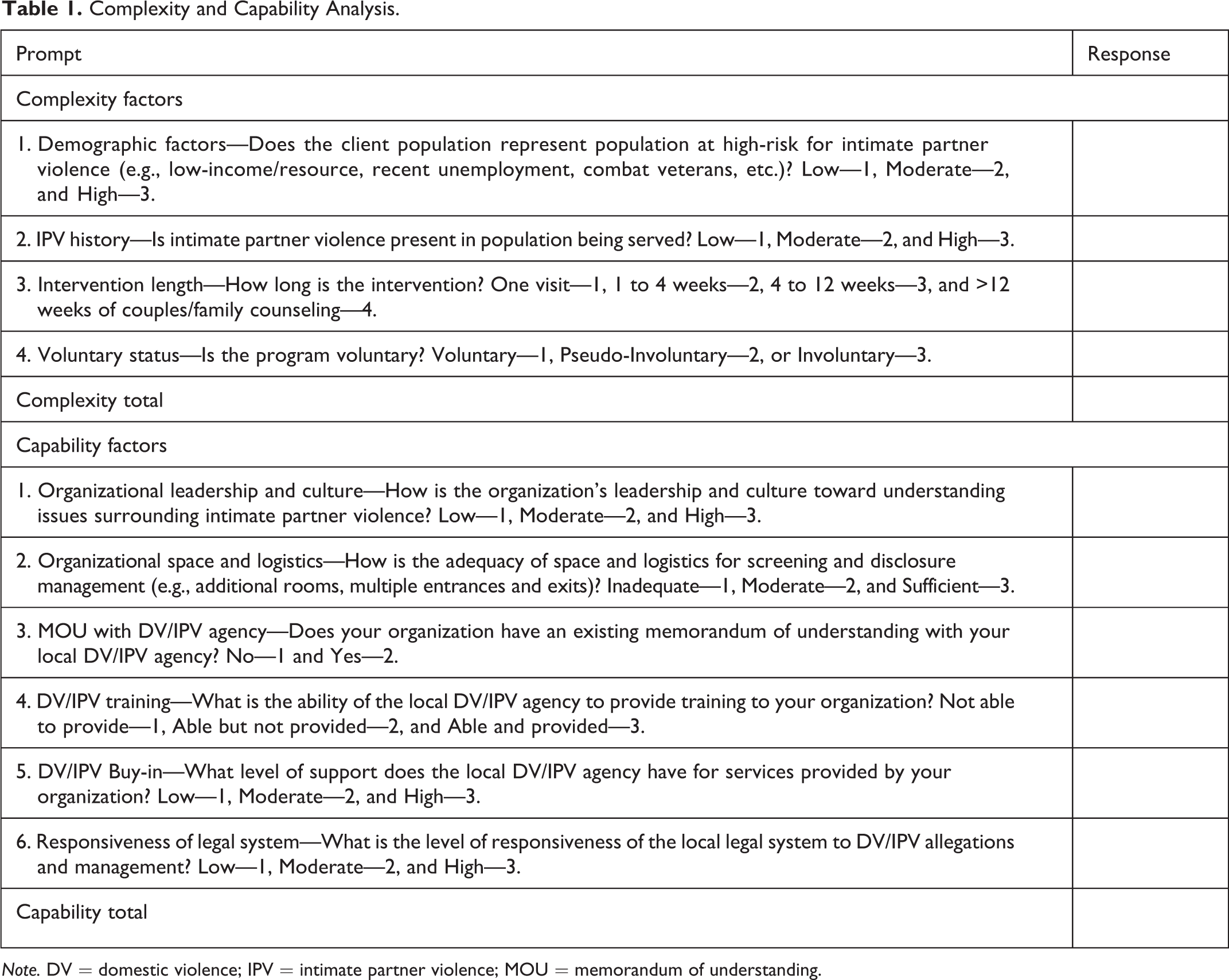
Note. DV = domestic violence; IPV = intimate partner violence; MOU = memorandum of understanding.
Upon completion of the capability and complexity analyses, the complexity and capability grid is used to identify the quadrant and appropriate next steps (see Figure 1). The x-axis of the quadrant reflects low (1) to high complexity (13) left to right, with seven being the point of intersection with the y-axis (capability). The y-axis reflects low (1) to high (17) capability bottom to top, with nine being the point of intersection with the x-axis. Quadrant I (top left) indicates high capability and low complexity, suggesting a high level of readiness for protocol development. Quadrant II (top right) indicates high complexity and high capability, suggesting a moderate level of readiness for protocol development. A moderate level of readiness is also reflected in quadrant III (bottom left) with low capability and low complexity. A low level of readiness for protocol development is seen in quadrant IV (bottom right) with high complexity in the intervention and its participants and low capability considering community and organizational factors.
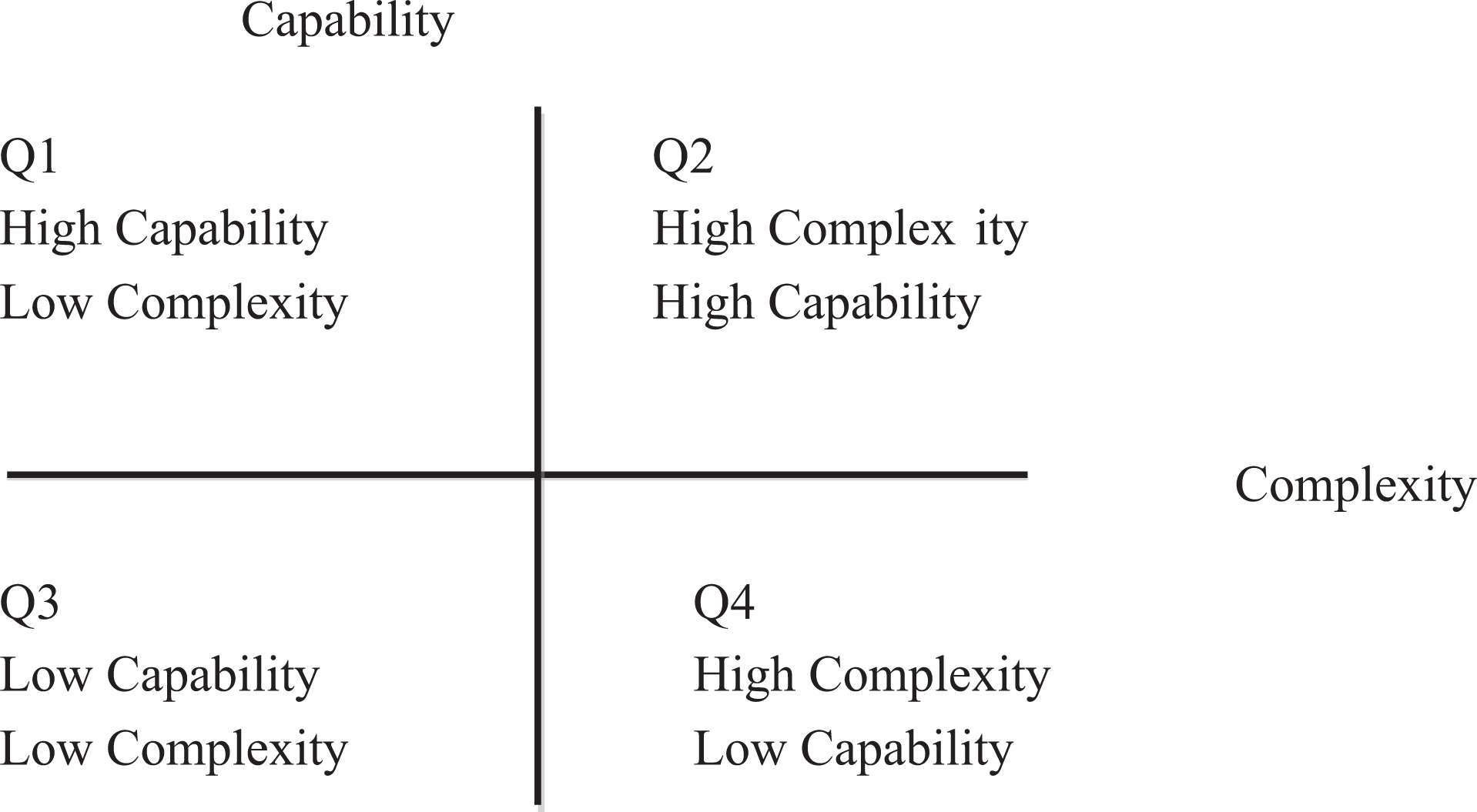
Complexity and capability grid.
Addressing Complexity and Capability
The complexity and capability analysis aims to help agencies address specific areas toward increasing capability and decreasing complexity. Within complexity and capability, agencies generally possess less control to change community (capability) and participant (complexity) factors and more control to modify organizational (capability) and intervention (complexity) factors. However, one capability area least amendable to organizational influence rests with the responsiveness of the judicial system to incidences of IPV. Organizations can join coalitions and collaborate with their local DV agency toward positive change within the judicial response. However, this is an area where change occurs over time. The organization has more immediate influence on organizational leadership and culture and in their relationship with the local DV provider.
Although an organization has influence on the participants served, it might not be an area of expedited change. Certain client demographics and IPV histories are participant factors that influence complexity. Furthermore, programs, services, and intervention could influence the clients who seek out those services. Thus, an organization might need to examine the type of service provided in order to more readily address the complexity of the target population. For example, an organization with high capability and low complexity, due to participant factors, might consider changing or modifying services offered in order to recruit or attract a population for which they can better address IPV screening and disclosure issues that arise. Relatedly, the organization can consider the voluntary nature and length of interventions to better match their preparedness for IPV disclosure management. Examining the organization’s capability and complexity factors that influence their readiness for IPV protocol development positions the organization to make decisions on programmatic, process, and organizational changes to increase preparedness for IPV protocol development.
Discussion
Given the prevalence and significant negative consequences of IPV on physical and mental health, it becomes imperative for mental health and marriage, couple, and family therapists to effectively screen and assess for IPV occurrence. Although guidelines exist on best practices for assessing IPV, researchers (e.g., Hansen, Harway, & Cervantes, 1991) indicate that therapists fail to accurately identify key warning signs and degrees of lethality and severity of IPV. One potential reason for ineffective assessment may be related to the lack of training provided in counselor preparation programs. In 2004, the American Association for Marriage and Family Therapy (AAMFT) responded to the need to more effectively work with IPV issues as indicated by the development of core competencies for assessing and addressing IPV. Therapists need to “screen and develop adequate safety plans for DV, physical violence, suicide potential and dangerousness to self and others” (AAMFT, 2004, p. 3). Although professional organizations such as AAMFT support the need for addressing IPV, the need exists for accreditation bodies such as CACREP to bring IPV to the forefront of requisite knowledge and skills needed for all counselor trainees. Specifically, formal training is needed to expand trainee understanding of violence typologies beyond the common Duluth model of power and control, obtain knowledge on different types of abuse, and demonstrate skills in screening for occurrence of abuse and risk and severity factors such as the presence of weapons in the home.
In addition to support from accreditation bodies and professional organizations (e.g., CACREP, AAMFT), a need exists to train therapists and practitioners that are currently practicing in the field. Schacht et al. (2009) indicated that less than half of practicing therapists regularly screen couples for IPV and even less considered safety concerns or treatment modalities when screening for IPV. Therefore, it is imperative for practicing therapists to engage in professional development and continuing education on best practices for screening and assessing for IPV. Community agencies are in need to consider complexity and capability factors of their organization, conducting an initial needs assessment of strengths and limitations and identifying key areas to improve for the sake of more effectively addressing IPV. In sum, counselor trainees, practitioners, and community agencies are in need of increased emphasis and support in more effectively assessing and addressing IPV when working with victims and victimizers.
In addition to increased training efforts related to IPV, there is a need for increased research and scholarship. Specifically, one gap in the literature remains due to the majority of published research on IPV having been conducted on traditional, heterosexual relationships. IPV protocol publications (e.g., Halford, Petch, Creedy, & Gamble, 2011) have focused largely on relationship education programs targeting heterosexual relationships rather than their homosexual counterparts. Subsequently, little research has addressed the unique aspects of screening and assessing same-sex couples experiencing IPV despite the high prevalence rates (e.g., Balsam & Szymanski, 2005; Eaton et al., 2008; Turrell, 2000) for this population. Brown and Groscup (2009) found that agencies, as a whole, and helping professionals experience difficulty when identifying IPV within same-sex relationships.
One unique consideration when developing a protocol for identifying and addressing IPV within same-sex couples is the role and function of gender in a same-sex relationship. Many helping professionals deny and minimize the severity of IPV in same-sex relationships due to gender biases (Giorgio, 2002; Gracia, García, & Lila, 2011). For example, one commonly held belief is that IPV among couples of the same biological sex is considered a mutual fight rather than abuse, perpetuating the myth that a victimizer and victim of the same sex and gender cannot harm their partner. Additionally, Giorgio (2002) discussed that gender and sex do not serve the same function in identifying IPV. For example, most research on IPV has found that males are most often associated with being a victimizer and females as victims (Seelau & Seelau, 2005). Same-sex relationships do not have external gender markers (i.e., physical appearance of males vs. females) to distinguish which partner may be more inclined to victimize the other; therefore, therapists need to expand upon gender conceptualizations to include other factors such as gender expression and gender role orientation (Giorgio, 2002). In a 2006 study, McKenry, Serovich, and Mason found that individuals (N = 77) reporting a gender role orientation (e.g., masculine or feminine) of masculinity tended to report higher rates of being a victimizer in their intimate relationships. In summary, screening and assessing for IPV is a complex process that necessitates in-depth understanding of IPV typologies, warning signs, and knowledge of cultural and gender differences.
Footnotes
Declaration of Conflicting Interests
The author(s) declared no potential conflicts of interest with respect to the research, authorship, and/or publication of this article.
Funding
The author(s) received no financial support for the research, authorship, and/or publication of this article.