




Abstract
Research on siblinghood is relatively new and has expanded during the past decade. It deals mostly with mixed-gender siblings and does not relate to gender at all. The present study is unique in that it focuses on identical gender siblinghood, both female and male, and its relationship to aspects of siblinghood and family relations in adulthood. Eighty-nine women and 67 men from Israel participated in the study. Participants answered four self-report questionnaires: a demographic questionnaire; an Emotional Intelligence Trait Scale used to measure self-efficacy; Furman and Buhrmester’s Sibling Relationship Questionnaire; and Olson, Portner, and Lavee’s Family Adaptability and Cohesion Evaluation Scale. Measures of conflict were higher in the female than in the male cohort, and cohesion was higher in the male than in the female cohort. Other findings reveal that among firstborn siblings, the level of perception of conflict is higher than among middle siblings.
Siblings are the longest-lasting relationship that people experience in their lives. Rather than being acquired, this relationship is determined by birth and cannot be annulled (Berg-Cross, 2010; Connidis, 2001; Gur-Bustanai, 2007; Spitze & Trent, 2006). In childhood and adolescence, this relationship usually involves intimate and daily interaction, but in adulthood, it becomes more distant (Berg-Cross, 2010; Gur-Bustanai, 2007). Siblings influence one another through daily interactions and act as models, advisors, partners, friends, and opponents. Siblings also affect one another indirectly, through the level of influence they have on the roles and dynamic relations within the complex structure of the family. In addition, they provide for one another opportunities and exposure to romantic and social experiences and activities (McHale, Crouter, & Whiteman, 2003). Sibling relationships are frequently egalitarian, even if power relations and differences in status exist due to age, knowledge, intelligence, social skills, socioeconomic class, achievements, and so on (Berg-Cross, 2010; Gur-Bustanai, 2007).
Family theoreticians and researchers agree that siblinghood has a powerful effect on the development of the individual, both as a child and as an adult (Cicirelli, 1995; Day, 2010; Dunn, 2007; Furman & Buhrmester, 1985; Gur-Bustanai, 2007; McHale et al., 2003; Toman, 1993; Yelland & Daley, 2009). Early research on siblingship focused on the contribution of birth order on the cognitive, emotional, and social development of the individual. Later, researchers explored structural variables, such as extensions of family processes, shifting the focus to interpersonal relationships between siblings (Gur-Bustanai, 2007).
Relatively little attention has been paid to gender in this context. As evidence accumulated about the influence of brothers and sisters on one another in general, researchers began to show increasing interest in the influence of siblings on each other’s gender perceptions.
Gender Differences in Sibling Relations
One field of inquiry that is commonly neglected in relation to gender is its effect upon qualities and structures in the family. Many of the skills children learn from interactions between siblings may contribute directly to the development of their gender behavior, roles, and attitudes (Day, 2010).
Studies pointed to the influence of same-gender siblings on gender development and identity formation (Button-Smith & Rosenberg, 1968). Rust, Golombok, Hines, Johnston, and Golding (2000) and Furman and Buhrmester (1985) found that boys with older brothers and girls with older sisters were more gender typed than single children, and single children were more gender typed than children with siblings of the opposite sex. Moreover, it was found that having an older brother is associated with more masculine and less feminine behavior among both boys and girls, whereas having an older sister was associated with more feminine but not less masculine behavior for boys, but with less masculinity but not more femininity for girls. Wong, Branje, Vander Valk, Hawk, and Meeus (2010) reported that older siblings, especially if they are of the same gender, have substantial influence on the identity formation of their younger siblings during adolescence and emerging adulthood. The study also provided support for identity processes and “modeling” between siblings.
Updegraff, McHale, and Crouter (2000) found that there were significant implications of having same-gender or opposite-gender siblings on the experiences of young adolescents within their peer group, including choice of friends and the quality of their friendships. In adolescent opposite-gender sibling dyads, girls learned control strategies from their older brothers and implemented them on their friends. Firstborn and second-born sisters were more intimate with their friends than were firstborn and second-born brothers.
Other studies point to the contribution of same-gender siblingship to the quality of relations between siblings, especially among women. Weaver, Coleman, and Ganong’s research (2003) emphasized that siblings, especially sisters, played a significant role in providing support during early adolescence. Eriksen and Grestel (2000) found that women, especially those with sisters, reported frequent telephone contact with their siblings, unlike men or participants with no sisters. No gender differences were found regarding physical meetings. Riggio’s (2000) study points to gender differences in sibling relationships. Women students reported more positive emotions and interaction with their siblings than men students did. Furthermore, participants reported more positive emotions and interactions with sisters than with brothers in general. Other studies similarly found that women provided more help and emotional support to their siblings than men did (Eriksen & Grestel, 2002; White, 2001).
However, when inquiring patterns of physical, psychological, and sexual abuse among siblings, Morrill and Bachman (2013) found somewhat counterintuitive findings, indicating that women were more likely to be perpetrators of sibling sexual abuse than men, while no gender differences were found in being victims of sibling abuse, nor in perpetrating physical or emotional abuse (Morrill & Bachman, 2013).
Measures of Siblingship According to Furman and Buhrmester
A useful typology for characterizing siblings’ relationship was presented by Furman and Buhrmester (1985), containing four characteristics: warmth and closeness, status and power, rivalry, and conflict. Hereinafter we will present Furman and Buhrmester’s characteristics, each followed by some relevant findings.
Warmth and Closeness
Furman and Buhrmester (1985) defined warmth and closeness as intimacy, sociability, partnership, resemblance, admiration, and affection. A study by Cole and Kerns (2001) distinguished between brother and sister dyads and found that brother dyads reported lower levels of positive relations (characterized by solicitude, intimacy, and conflict resolution). A study by Spitz and Trent (2006) tested the influence of emotional closeness, contact, and assistance among adult siblings in families with two children. Gender was an important aspect affecting the nature of relations between adult siblings. Women reported a higher sense of closeness to siblings and greater ability to get along with them than men did. This was supported by Van Volkom’s (2006) study showing that sisters provided more emotional support to one another than did brothers.
Relative Status and Power
Furman and Buhrmester (1985) defined the aspects of relative status and power as the quality of caregiving, admiration, and power involved in their obligation. Relative status and power is connected to the roles that siblings take on or are assigned to. For example, older sisters have been described as being better able to take responsibility for teaching and nurturing their younger siblings than older brothers (Cicirelli, 1995). A study that examined the correlation between same-gender sibling dyads and the display of sibling roles showed that sister dyads tended to report more caregiving than brother dyads did (Weaver, Coleman, & Ganong, 2003). Voorpostel, Van Der Lippe, Dykstra, and Flap (2007) found a clear difference between sister dyads and opposite-gender dyads in helping with household tasks and in giving advice to one another. Finally regarding relative power and status, children perceived older siblings of the same sex to be more dominant than older siblings of the opposite sex (Furman & Buhrmester, 1985).
Rivalry
Furman and Buhrmester (1985) defined rivalry as competition and parental discrimination or favoritism. In a study that examined the various influences on relations between opposite-gender siblings among college students, rivalry between brothers reached its peak during childhood and adolescence, and usually disappeared in adulthood (Van Volkom, Machiz, & Reich, 2011). Yelland and Daley (2009) emphasized that sibling relationships included elements of rivalry and conflict. High levels of rivalry and conflict among siblings were shown to be related to negative findings such as anxiety, depression, and a variety of behavioral problems. Rauer and Volling (2007) reported that differential parental affection has a negative effect on the personal level and on future romantic relationships of the siblings, regardless of gender (most of the participants, however, were women). In an earlier study conducted by Boll, Ferring, and Filipp (2003), parental favoritism was found to be a predictor of deteriorated intersibling relations.
Conflict
Conflict was defined by Furman and Buhrmester (1985) as competition (for resources, attention, appreciation, etc.), animosity, and jealousy. It can manifest as bullying, yelling, cursing, hitting, and the like. Stocker, Burwell, and Briggs (2002) studied the connection between sibling conflict and psychological adjustment in childhood and early adolescence and found that high level of sibling conflict during childhood was connected to higher anxiety, depressed mood, and delinquent behavior in adolescence. Kim, McHale, Osgood, and Crouter (2006) examined changes in levels of intimacy and conflict between brothers in late childhood and early adolescence over 4 years. They discovered stable relationship patterns among same-gender siblings and a U-shaped change pattern among opposite-gender siblings, where relations were better at the beginning and end of the study but deteriorated in early adolescence. They also found that the highest level of intimacy was found between sisters and that the level of conflict between brothers lessened with age. A study by Finzi-Dottan and Cohen (2011) examined the connection between sibling relations, parental favoritism, and personal narcissism. They found a high level of conflict between sisters, beyond the effects of narcissism and perceived parental favoritism. Nevertheless, sisters reported greater warmth toward their siblings than brothers did. Finzi-Dottan and Cohen (2011) noted that when women felt close to their sisters and brothers, their intense emotional involvement could result in conflict situations.
Derkman, Scholte, Van der Veld, and Engels (2010) further clarify Furman and Buhrmester’s model (1985) indicating that it contains two overarching dimensions, that is, warmth/closeness and conflict. The warmth/closeness dimension includes the following underlying qualities: intimacy, prosocial behavior, companionship, affection, similarity, admiration of the sibling, and admiration by the sibling. The conflict dimension includes the following qualities: quarreling, antagonism, and competition.
Family Characteristics and Sibling Relations
The family, being the primary context in which siblings grow and mutually enact, inevitably plays a significant role in determining their relationship. As sibling relationships develop within a larger family system (Minuchin, 1985), it is noteworthy to examine the associations between qualities of sibling relations and family characteristics.
McHale, Crouter, and Whiteman (2003) suggest that sibling influence may be both direct, as when sisters and brothers serve as models and social partners, and indirect, as when they help to shape the structure of their families and influence everyday family activities and routines. Milevsky, Schelchter, and Machlev (2011) examined the relations between parental styles and sibling relations. In their study of parental styles and parents’ involvement patterns in sibling’s conflict, they found that adolescents with authoritative and permissive parents reported greater sibling support than those with authoritarian and neglectful parents. In addition, participants with authoritative parents reported greater sibling closeness than those with authoritarian or neglectful parents (Milevsky, Schelchter, & Machlev, 2011). Volling, McElwain, and Miller (2002) studied jealousy among siblings and found that positive marital relationship quality (i.e., love and relationship maintenance) was a particularly strong predictor of the siblings’ abilities to regulate jealousy reactions.
Brody (1998) presented a model of different variables that affect sibling relations; family factors included in Brody’s model were marital processes, parent–child relationships, and affectivity of parents, as significant variables to sibling relationships. Several theories support this association. Attachment theorists propose that children develop internal representations of relationships from interactions with their primary caregivers, which they subsequently use in maintaining other relationships. Social learning theorists have shown that behavior patterns enacted during parent–child interactions are generalized to children’s interactions with their siblings. Not surprisingly, therefore, higher levels of positive parent–child relationship are linked with higher levels of positive affectivity and prosocial behavior among siblings. Similarly, negativity, intrusiveness, and overcontrol are associated with aggressive and self-protective behavior in the sibling relationship.
In addition, Brody’ s (1998) model includes parental management strategy of siblings’ disputes and differential treatment, as factors determining sibling relations. More recent lines of studies also stress parental differentiated treatment (PDT) as an influential factor (see Feinberg, Solmeyer, & McHale, 2012). Moreover, Feinberg, Solmeyer, and McHale (2012) indicate that congruency between parents, even under differential treatment, plays a significant role. A single parent’s favoritism toward one child may reflect an intergenerational coalition, whereas congruence between parents’ PDT reflects positive coparenting (Feinberg et al., 2012). Parents intervening in their children’s disputes address issues that the children raise, take positions on those issues, and enforce rules for the children’s treatment of one another. When parents do not intervene, older siblings are likely to dominate their younger siblings. Alternatively, mother’s discussions with siblings of preschool age about their younger siblings’ needs and feelings have been found to be associated with sibling caregiving and friendliness. When mothers discussed these issues during routine daily activities, siblings engaged in friendlier and more sensitive interactions. Presumably, these naturally occurring conversations help children to develop empathic and perspective-taking competencies that enhance their sibling relationships (Feinberg et al., 2012).
Sibling Relations, Family Characteristics, and Gender
The literature that addresses the association between the gender of children and family characteristics is scarce. Research did find some evidence for differentiated influences of the family upon the development of boys and girls in adolescence. For example, in the development of self-esteem, boys were more sensitive to the control/autonomy aspect of parental interactions, whereas girls were affected by support and participation of parents. Kenny and Donaldson (1991), in a study of late adolescents, found that females were more likely than males to utilize their parents for help in stressful situations, including seeking emotional support from parents. According to McHale et al. (2003), the structure of the family, in particular whether the family includes opposite-sex parents and/or opposite-sex siblings, can afford or constrain opportunities for sex-type patterns of family roles, relationships, and activities.
Baer (1999) mentions previous studies that found that family structure (i.e., single parent family) appears more important for boys and family conflict a more salient issue for girls. An examination of the dyadic communication between mothers and their adolescent offspring showed girls and their mothers had higher levels of conflict than boys and their mothers (Hill & Holmbeck, 1987; Paikoff & Brooks-Gunn, 1991, in Baer, 1999). However, in her study, Baer (1999) failed to find gender differences in the effect of communication with both mother and father on family conflict. Neither gender did not moderate the relationship between family structure and conflict. She did, however, find ethnic difference in the level of communication of adolescent boys and girls with parents.
The Circumplex Model
One of the most prevalent models that addressed family characteristics used in family research is Olson’s (2000) circumplex model of family cohesion and adaptability.
Olson (Olson, 2000; Olson, Sprenkel, & Russell, 1979, 1986) defined the terms cohesion and adaptability as they relate to family relationships. Cohesion measures how the family system balances separateness with togetherness or the amount of emotional bonding (Romig & Bakken, 1992). There are four levels of cohesion: disengaged (very low), separated (low balanced), connected (high balanced), and enmeshed (high). On the balanced levels (separated and connected), family members were able to experience both aspects of cohesion, that is, they were independent but connected to the family. When the level of family cohesion was high, there was too much consensus and little independence for the individual. At the disengagement level, family members were busy with their own lives and felt minimal obligation toward family members (Olson, 2000).
Adaptability was a measure of the openness or closeness of a system, along a continuum ranging from rigid, to structured, flexible, and chaotic (Olson, 2000). A relatively open family system was characterized by clear but flexible borderlines, accepted feedback and criticism from the environment, and processed it in keeping with its needs. A relatively closed family system was characterized by inflexible external borderlines and distortion of information introduced to it; it was heavily dependent on the environment and especially on its members (Hoffman, 1988; Watzlawick, Weakland, & Fisch, 1978).
The Circumplex Model and Sibling Relations
Recent studies on the circumplex model and sibling relationships were generally conducted on families in which a member had become ill (Houtzager et al., 2004), had a mental health problem (Barnett & Hunter, 2011), or other disability (Mandleco, Frost Olsen, Dyches, & Marshall, 2003; Richardson, 2009). Scarce research has been conducted to examine the relation between family characteristics according to the circumplex model, gender, and siblingship. Gorbett and Kruczek (2008) found a positive correlation between the number of siblings and high family cohesion as well as high social self-esteem. Nevertheless, gender was not found to be a significant predictor for cohesion and/or adaptability of the family. Jin Yu and Gamble (2007) found that the family environment, including cohesion and expressing positive emotions, was significant in lowering aggression and suppressed problems in siblings. Moreover, the gender of the siblings was not found to be a significant predictor of aggression. Hardy (2001) examined physical aggression and sexual behaviors between siblings. Family cohesion and flexibility were not found to be predictors of aggression, although siblings who reported high levels of aggression and sexual behaviors also reported high levels of intrafamily stress.
To date, we failed to find even a single research addressing the differences in family characteristics between sisters and brothers, according to the circumplex model. The present study aims to address this gap and to widen our understanding as to whether girls’ families differ in cohesion and adaptability than boys’ families, and the impact of these qualities upon sibling relations.
The Current Study
Summing up, the present literature on gender differences is yet to be exhausted, revealing a somewhat trend toward sisters being more passionate, caring, and close to their siblings than brothers, however, this complex connection is mediated by age and family variables. The present study aims to broaden the understanding of gender differences in sibling relations. In addition, we examine, for the first time, the connection between sibling relations and perceptions of cohesion and adaptability in adult families characterized by masculine versus feminine sibling gender.
In this exploratory research, we phrased the following questions:
Method
Participants and Procedure
One hundred fifty-six participants, 67 men (42.9%) and 89 women (57.1%), were randomly recruited through the e-mail, using the researchers’ distribution list and the snowball method. All participants were drawn from the normative adult population and ranged in age between 18 and 35 years (M = 27.51, SD = 3.987). Participants were divided into three cohorts, according to the siblings’ gender constellation in their families-of-origin: Cohort I (male siblings), Cohort II (female siblings), and Cohort III (mixed-gender siblings). Cohort I group comprised 59 participants, Cohort II group comprised 42, and Cohort III group comprised 42. The questionnaires were returned to the researchers by e-mail, within a period of 3 weeks from distribution.
Measures
Demographic questionnaire: containing age, gender, sibling’s gender, number of children in the family. Furman and Buhrmester’s (1985) Sibling Relationship Questionnaire: This measure contains 5 items measuring the four dimensions of sibling relations: warmth/closeness, relative status and power, rivalry, and conflict. Family Climate (FACES III): The Family Adaptability and Cohesion Evaluation Scale (FACES III; Olson, 2000) assesses the degree of cohesiveness and adaptability within the family. The scale consists of 20 items composing two subscales of 10 items each rated on a 5-point Likert-type scale ranging from 1 (almost never) to 5 (almost always).
The Cohesion subscale refers to emotional bonding, family boundaries, and time spent together (e.g., “Family members feel closer to other family members than to people outside the family”). The Adaptability subscale refers to discipline, roles, negotiation, and flexibility within the family, focusing on how the family system balances stability versus change (e.g., “We shift household responsibilities from person to person”). The score is the average of the items on the relevant subscale. Thus, a higher score reflects a higher level of cohesion and adaptability. The validity of the scale was established, as were consistent reliability (cohesion = .77, adaptability = .62–67) across studies and test–retest reliability (.80–.83; Olson, Sprenkle, & Russell, 1986). For the current sample, a Cronbach’s α of .87 was obtained for cohesion and .70 for adaptability.
Data Analysis
In order to address Research Questions 1 and 2, we conducted a multivariate analysis of variance (MANOVA) aimed to determine whether the different cohort groups vary in the sibling relations’ dimensions (warmth/closeness, relative status and power, rivalry, and conflict) and in their perception of family dimensions (cohesion and adaptability).
In order to address Research Question 3, we calculated Pearson correlation coefficients between dimensions of sibling relations (warmth/closeness, status and power, rivalry, and conflict) and dimensions of family characteristics (cohesion and adaptability).
Results
Difference Between Men and Women in Sibling Relations and Family Characteristics
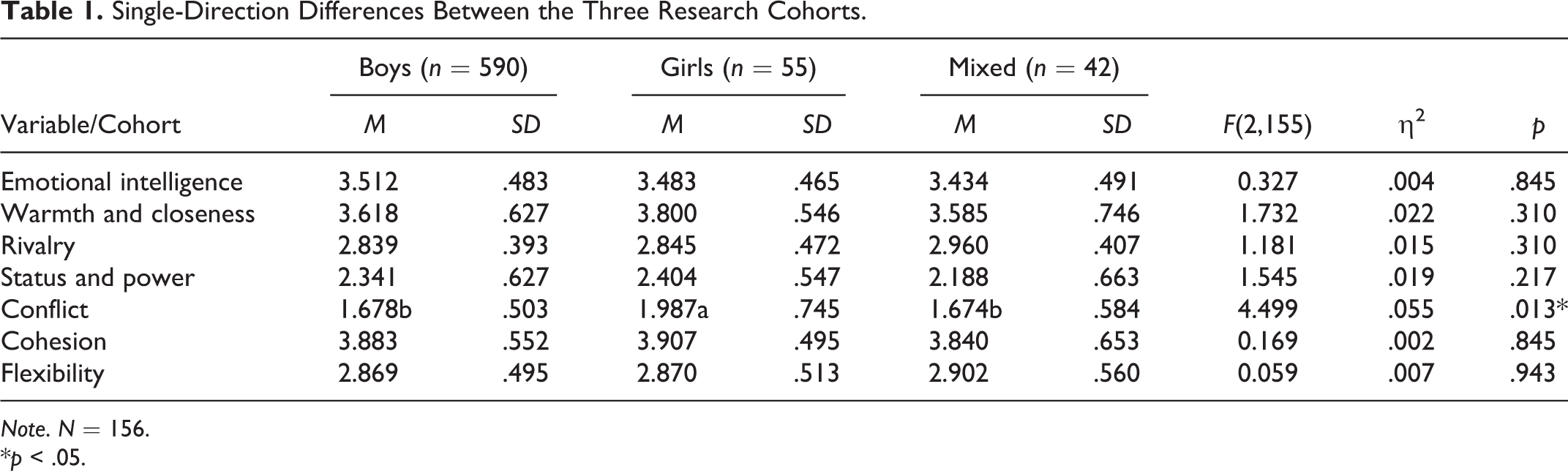
Table 1 presents means and SDs of the research variables and the MANOVA results for one-direction differences between the groups. Table 1 show that a significant difference between the three cohorts in the conflict variable, where the female cohorts scored significantly higher in conflict than both the male cohorts and the mixed-gender cohorts, F(2,155) = 4.449, p < .05, yet a Scheffe post hoc test did not find a significant difference between male and female cohorts and the mixed-gender cohorts.
Single-Direction Differences Between the Three Research Cohorts.
Note. N = 156.
*p < .05.
The table shows that the conflict variable accounts for the largest portion of the difference between the cohorts and explains 5.5% of the difference.
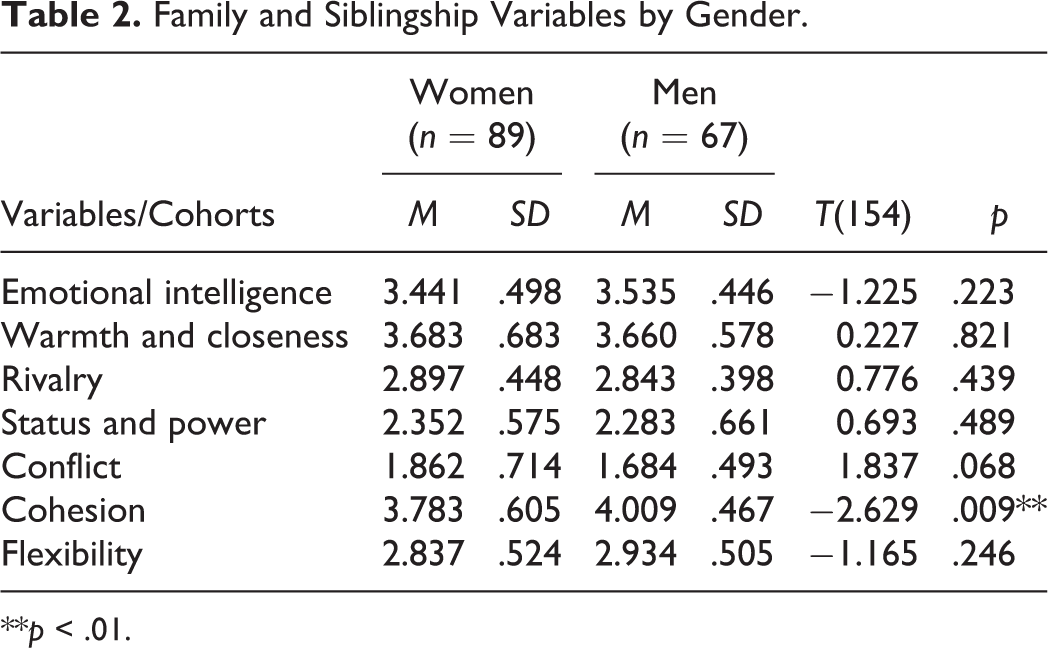
In order to get a clearer image as to whether males and females differ in sibling relations and in family characteristics, we divided our sample into men and women and conducted independent t-tests to measure gender differences regarding each of the research variables. The findings are presented in Table 2.
Family and Siblingship Variables by Gender.
**p < .01.
The results show a significant difference between men and women in family cohesion, where men rated higher cohesion in their families than women, t(154) = −2.629, p < .01. Otherwise, men and women did not differ in measures of siblingship and of family adaptability. A higher level of conflict was found among women than among men, but the difference was not statistically significant.
Relations Between Sibling Relations and Family Characteristics
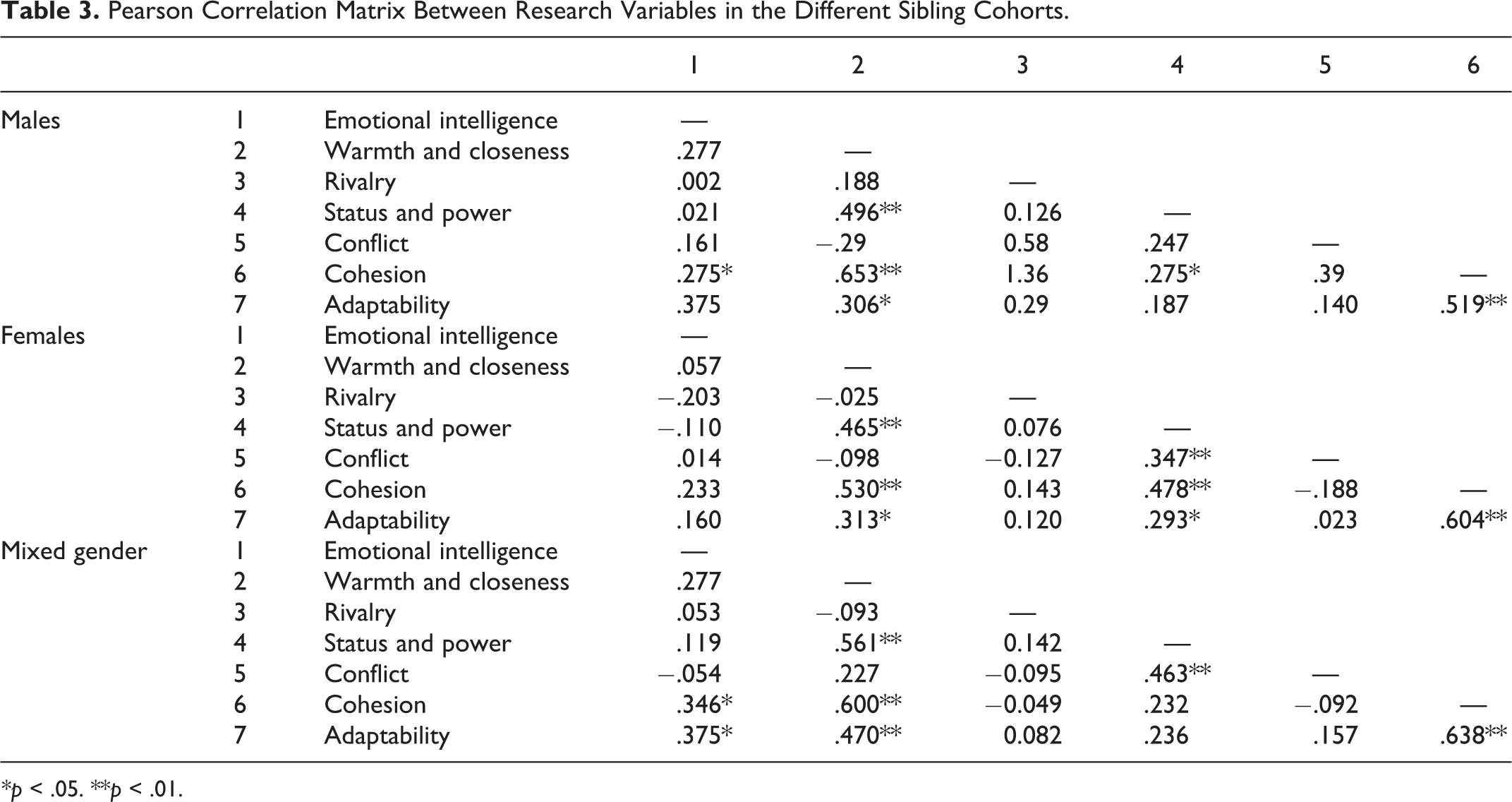
In order to address Research Question 3, we conducted a Pearson correlation between the sibling relations variables and the family characteristics variables in the different cohorts. The results are presented in Table 3.
Pearson Correlation Matrix Between Research Variables in the Different Sibling Cohorts.
*p < .05. **p < .01.
As shown in Table 3, there is a significant positive correlation between the status and power, and the warmth and closeness variables in all cohorts (Pr = .496, .465, .561, p < .01 for males, females, and mixed gender, respectively): the higher the level of status and power, the higher the level of warmth and closeness is.
A significant relation was also found between status and power, and conflict in both the females and the mixed-gender cohorts (Pr = .347, .468, p < .01, respectively), but not for the males.
A significant positive correlation was found in all cohorts between closeness and warmth and both the family variables: a strong positive relation between closeness/warmth and cohesion (Pr = .653, .530, .600, p < .01 for males, females, and mixed gender, respectively) and a moderate positive relation between closeness/warmth and adaptability (Pr =.306, .313, .470, p < .05 for males, females, and mixed-gender, respectively). Meaning, the higher the level of cohesion and adaptability in the family, the higher the level of warmth and closeness in sibling relationship.
In addition, a significant relation was found between status and power and family cohesion, in the males and the females cohorts (Pr = .275, p < .05 for males, Pr = .478, p < .01 for females), but not in the mixed-gender cohorts. Meaning—the more status and power was strong among same-sex siblings, but not among mixed-gender siblings, the higher was the cohesion in their families.
In the female cohorts only, but not in the males and the mixed genders, there was a significant relation between status and power and adaptability (Pr = .293, p < .05); meaning—the more status and power was strong among sisters, the higher was the adaptability in their families.
Finally, a moderate but significant positive correlation was found between the flexibility and the cohesion variables in all cohorts (Pr = .519, .604, .638, p < .01 for males, females, and mixed gender, respectively): the higher the level of family adaptability, the higher the level of family cohesion.
Variables Predicting Level of Siblings Conflict
We conducted a regression analysis of the research variables to ascertain the level of conflict within the families.
Table 4 shows that it is possible to predict the level of conflict among siblings based on four variables: family cohesion, status and power, age, and family adaptability. The conflict variable explained 22% of the differences.
Regression Analysis of the Research Variables Predicting Level of Conflict.

Note. N = 156.
*p < .05. **p < .01.*** p < .001.
Discussion
Gender Differences in Sibling Relations and in Family Characteristics
In the present study, we found that the level of conflict was higher in the female sibling than in the male sibling cohort. This finding is consistent with Finzi-Dottan and Cohen (2011) who reported a high degree of conflict among sisters.
A theoretical explanation for this finding can be found in the writings of Freud (1916–1917) who considered siblings to be important players in the development of the child because they represent rivals in the struggle for parental affection and attention. He claimed that siblings are primordial adversaries for the absolute love of the parents (especially of the mother), in all its forms (Day, 2010; Finzi-Dottan & Cohen, 2011). Freud (1962) emphasized the differences between boys and girls in sexual development, claiming that the resolution of developmental complexes are more complex among girls than among boys.
According to Freud, development of the feminine identity and personality is influenced largely by a sense of lack (of a penis) and identification of self as disadvantaged. The path to the development of a girl’s femininity is a difficult one, characterized by hostility toward the mother figure and toward women in general. This hostility stems from realizing that the mother is inferior because she lacks the male sex organ. Unlike men, women almost never become free of this hostility. Girls who turn their backs on their mothers generate envy aimed at other people, brothers and sisters, rivals, and their fathers (Freud, 1997; Malach-Pines, 1997).
According to the writings of Freud, therefore, envy and jealousy are among the characteristics of women’s identity and are already present at young age. The girl desires to win the heart of the father, and when she fails, she experiences frustration and jealousy. Freud also explains that envy and jealousy are especially directed at women in general, especially the mother. It is plausible that with several girls in a family, competition becomes stronger, and an intense level of identity characteristics is manifested (Freud, 1997; Malach-Pines, 1997). This can explain the high level of conflict in families with female siblings, as we found in the present research.
Another finding relates to the difference in the cohesion variable between men and women, with men reporting higher levels of cohesion in their family. This difference was moderated when we examined this variable by sibling cohorts, with male respondents from the mixed-gender cohort reporting a higher level of cohesion than did men in the male sibling cohort. Spitze and Trent (2006) emphasized that gender is one of the most important components affecting relations between adult siblings and found that women reported being better able to get along with siblings than men did. Yet, the present research does not seem to support this claim. Moreover, brothers (whether of boys and girls) reported higher family cohesion than sisters. This finding somewhat corresponds to our conflict finding, as it can be claimed that boys perceive more cohesion in their families and are less in conflict with their siblings than girls. The combination of these findings might be an indicator of more positive affectivity toward the family among boys compared to girls, yet such an assertion demands further research. The practical relevance of this finding lies in some prior research that found that family climate variables are more influential among boys than among girls (e.g., Larkin, Frazer, & Wheat, 2011, for the impact of family environment on interpersonal relations; Annunziata, Hogue, Faw, & Liddle, 2006, for the impact of family functioning and parenting on school success). Family climate, therefore, might be a more significant factor for boys’ adjustment and outcomes than for girls.
Relation Between Sibling Relations and Family Characteristics
To our knowledge, no prior research examined the relations between Furnam and Buhrmester’s dimensions of sibling relations and Olson’s Circumplex model of family cohesion and adaptability. Not surprisingly, we found that the warmth/closeness dimension correlated with family cohesion among all of our cohorts—males, females, and mixed gender. This can be explained by Olson’s (2000) definition of cohesion as “the emotional bonding that family members have toward one another” (p. 516). Being an affective variable, it is reasonable to be correlated with the perception of warmth and closeness among siblings.
More intriguing is our finding of correlation between warmth and closeness in sibling relations and family adaptability among all our participants. Family flexibility is defined as the amount of change in the family’s leadership, role relationships, and relationship rules. The focus of flexibility is on how the family system balances stability versus change (Olson, 2000). The association of this concept to warmth and closeness among siblings indicates that close siblings can manifest flexibility in their relationship, or otherwise, closeness and affection between siblings may play as a buffer for the family in the face of change and external demands and enable flexibility within the family. This assertion merits further research of siblings and their families. Specifically, research in the area of families in stressful events might shed some more light on the relations between siblings’ closeness and warmth and the family’s coping and adaptability.
Another siblinghood dimension that yielded significant correlations with family characteristics was relative power and status. We found status and power to be significantly correlated with cohesion among families with same-sex siblings—that is, brothers or sisters—but not among mixed-gender families. In addition, we found status and power to correlate with family adaptability among sisters. Furman and Buhrmester’s (1985) status and power refers to the degree and direction of asymmetry in the sibling relationship and constitutes an important dimension of sibling relations. Children consistently report that older siblings have greater status and power than younger siblings. During childhood, older siblings show more positive power (teaching, helping, and nurturing) and more negative power (domineering and powering) toward their younger siblings, while this trend diminishes in part toward adulthood (Shortt & Gottman, 1997). Our finding indicates that among same-sex siblings, be it sisters or brothers, relative status and power contributes to family cohesion or either is fostered by family cohesion. We assume that when sisters only or brothers only are involved—role taking, nurturing, or even dominance among the siblings is somehow necessary to avoid jealousy and distancing and to maintain a sense of emotional bonding within the family. As for sisters, practices of status and power seem to be connected also with adaptability within the family. This could be related to our aforementioned discussion about the development of feminine identity. Thus, sisters’ manifested expressions of status and power relations, rather than unexpressed affect, may bring about family’s adaptation. The complex nature of power and status is well described by Shortt and Gottman (1997): “We think that power struggles … is the social process that is particularly salient, and is associated with the sibling task of resolving power imbalances … [it] has been characterized as a developmental milestone for siblings to accomplish” (p. 158). Further studying of the difference between sisters and brothers in status relations and power within the wider context of the family system is needed.
Limitations of the Research and Suggestions for Future Research
The present study, being first to integrate the circumplex model of family characteristics with qualities of siblingship, suffers from some pitfalls.
First, a larger sample is likely to have yielded additional significant findings.
Our study focused on families with same- versus opposite-gender siblings, an area that has not been widely researched. It would be desirable to expand our knowledge of this topic, learn more about these family structures, and study them in relation to other variables and populations.
The present study focused on sibling relations in adulthood and did not reflect on other stages of life. Future research should examine how sibling relations and perceptions of cohesion and flexibility manifest during various stages, for example, childhood and adolescence. Studying this topic among earlier ages may track the emergence of family perceptions among children and perhaps discover whether and how they are embedded in the formation of gender identity. We also suggest examining and comparing the perceptions of siblings in the same family, with the perceptions of their parents. Such a study could advance our understanding of relations beyond the personal perceptions of a single representative of the family.
Summing up, in the present study, we shifted the focus of sibling relations from the individual and dyad perspective, to a more comprehensive, family-level perspective. Further research of sibling relations should continue this line and widen its scope of inquiry from micro- to macro-level and shed more light on siblings within the wider system in which they enact—their families.
Implications for Family and Couple Practice
The findings of the present study contain some practical significance. Sibling relations have their impact upon a range of developmental outcomes for families and individuals. Therefore, there is a need in widening the scope of reference and treatment of siblings, from the dyadic and individual context, to a more comprehensive one—the familial context. Such a systemic reference to siblings would allow for practitioners—family therapists, social workers, and others—to diagnose, locate, and intervene with subsystems (siblinghood) within the wider frame of the family, in order to achieve desirable goals for the family as a whole.
Moreover, the distinction highlighted in the present research between different gender-like siblings (sisters, brothers, and mixed sex) allows for individual and family therapists to hold a deeper understanding regarding their patients’ motives, affect, and functioning.
The detection and observation of sibling relations in childhood may play a role in the determination of family dynamics further in the family’s life cycle. The efforts to maintain and nourish healthy families, then, may focus in initiating interventions with siblings during their childhood, with gender-correlated strategies. For example, our findings related to power and status may imply in favor of interventions that are designed to structure roles for sisters and brothers within their families, and by doing so, impact the flexibility and cohesion of the whole family.
Parents may apply their parental perceptions and practices without necessarily considering the issue of siblings’ gender. Practitioners should, therefore, illuminate for parents the importance of the gender issue, by means of parent guiding workshops and the like.
Finally, this study bears some implications for the treatment and intervention with families in crises and stressful circumstances. Coping resources may derive from either family mechanisms (like cohesion and flexibility) or sibling-related mechanism (warmth/closeness, status, and roles). Being these two spheres interrelated, practitioners intervening with families in crises should address both spheres in order to maximize the families’ coping and functioning in the face of crises and stress.
Footnotes
Declaration of Conflicting Interests
The author(s) declared no potential conflicts of interest with respect to the research, authorship, and/or publication of this article.
Funding
The author(s) received no financial support for the research, authorship, and/or publication of this article.