




Abstract
Sexting is a common practice in intimate relationships; however, little research has investigated the role that sexting plays in adult relationships. The authors surveyed 356 individuals about their sexting behaviors and expectations and personality factors. Results indicated extroversion and openness are associated with greater arousal expectations for sending sexts and lower negative expectations for receiving sexts. Agreeableness is associated with lower negative expectations for sending sexts. Neuroticism is associated with lower arousal expectations and greater negative expectations for sending sexts. Individuals who are cohabitating sext more frequently than individuals who are dating, single, or married.
Introduction and Purpose
When thinking about technology-driven sexual communication, many individuals think about online chat rooms, emailing, or direct messaging. However, sexting is quickly becoming one of the most common forms of online sexual communication due to the increase in cellphone and smartphone use. One report, released by the Pew Research Center, estimated that 96% of Americans own a cellphone of some kind. Of that 96%, approximately 81% own smartphones (Mobile Fact Sheet, 2019). Technology continues to change and accessibility to technology is far more outreaching than in the past, which makes studying the impact of technology on couple relationships vital. Although there have been numerous recent studies related to adolescent behavior and sexting (e.g., Burén & Lunde, 2018; Lippman & Campbell, 2014; Van Ouytsel et al., 2019), it has been more difficult to find research specifically related to sexting in adult marital or couple relationships. Due to the limited research, broad aspects of sexting within relationships will be discussed to help give a clear understanding of the direction of the current research but also to help identify existing gaps and potential opportunities for future research. This study investigates the relationship between sexting frequency, sexting expectations, and personality factors.
Review of the Literature
Gender and Sexting
Springston (2017) found no gender difference in the frequency of sending sext messages but did find a significant relationship between gender and the pressures to sext. Springston (2017) reported that “females are more likely to feel constrained by social norms when it comes to sexual behavior, whereas males have more freedom in this area” (p. 142). Additionally, she reported that those with “egalitarian gender role attitudes are more likely to accept sexting as a form of intimacy” (p. 155). Furthermore, commitment, or perceived commitment, seems to be an important precursor to sexting for women, while men in romantic relationships are also more likely to sext (Delevi & Weisskirch, 2013).
It would appear as though engagement in sexual activity with others is a predictor of sexting and not the other way around. One study found that men who have sex with men were 10 times more likely to sext if they had hooked up with someone, while this same population had roughly 70% lower odds of having sexted (Currin & Hubach, 2017). However, other studies report that sexual orientation was not found to have a relationship as a predictor of sexting (Gámez-Guadix & de Santisteban, 2018). This would reinforce the idea that, as mentioned while referencing other studies, sexual activity (or at the very least a relationship) precedes sexting behaviors. Men generally appear to benefit more from sexting than do women, reporting more positive experiences from receiving sexts compared to women, who generally reported more negative experiences from receiving sexts (Dir et al., 2013).
Marriage, Sexting, and Attachment
Works examining sexting in marriages show conflicting results. Although no studies have suggested that sexting within marital relationships is detrimental, who benefits from sexting differs depending on the study. Specifically, Jeanfreau et al. (2019) found that while there are discrepancies in the acceptance of sexting within marriage between men and women, sexting within marriage did not appear to increase or decrease marital satisfaction. McDaniel and Drouin (2015) found that marital relationship satisfaction among those who sext was increased for women with nonsecure attachment and also among men. Both studies did find commonalties in the frequency of sexting within marriage when compared to sexting in nonmarital relationships: that the former did so, but it was less common when compared to the latter.
Attachment seems to play a crucial yet underexamined role as not only a predictor of sexting but also in who benefits from sexting. Although sexting through text appears to be common with those reporting a secure attachment, sexting using both text and pictures was reported to be most common among individuals with non-secure attachment styles (i.e., insecure, particularly avoidant and anxious; Drouin & Landgraff, 2012; McDaniel & Drouin, 2015). Weisskirch and Delevi (2011) suggested that sexting may a new way for people with an anxious attachment to seek reassurance. Upon review of the literature, it appears as though attachment and level of commitment are the two factors that seem to show promise for further study.
Relationship and Sexual Satisfaction
The relationship between relationship satisfaction and sexting practices has had limited empirical study. Currin and Hubach (2017) found that heterosexual women had a lower mean relationship satisfaction if they only received sexts, as compared to women who neither sent nor received sexts. The authors noted that there was not a difference, however, in relationship satisfaction for heterosexual women who participated fully in sexting (both sending and receiving), heterosexual women who never participated in sexting, and women who only received sexts. These findings also showed that in sexual minority women, and men at large, no differences were found in relationship satisfaction among the different categories of sexting participation. Drouin et al. (2017) found that those in committed relationships reported more positive consequences of sexting, while those in more casual relationships reported more negative consequences. Campbell et al. (2011) explored common rituals that couples partake in. One of these, intimacy expressions, are rituals that show love or affection, such as having sex or other forms of affection, while another, communication rituals, are defined as daily phone calls, texting, or other methods of communication. These two rituals were two of the three most common rituals in couple relationships (Campbell et al., 2011). Sexting behavior within the couple dynamic could be a ritual of intimacy expression or a communication ritual. Galovan et al. (2018) found that individuals in committed relationships who texted more frequently reported greater sexual satisfaction than those who sexted less or did not sext; however, relationship satisfaction levels showed no significant differences.
Sexting and Partner Violence
Several studies looking at the relationship between sexting and partner violence and abuse. Drouin et al. (2015) found that one in five people in their study reported participating in consensual, unwanted sexting, with women reporting more consensual but unwanted sexting. Furthermore, the authors found that the most common forms of coercion were being made to feel obligated, repeatedly asking for sexts even with knowledge of their partner’s unwillingness, and threatening harm to their partner or something their partner cared about. Ross et al. (2019) found similar numbers of people experiencing sexual coercion who also experienced sexting coercion and found that people who experienced sexting coercion reported similar degree of psychological symptoms, attachment issues, and—specifically among men—sexual problems. The authors further noted that sexting, due to the ability to keep and share images with others, may result in further trauma.
Stanley et al. (2018) found that viewing pornography regularly was associated with participating in sexting behaviors. The authors suggested that sexting could be thought of as producing their own pornography, which has added rewards for choosing it including a more personalized experience and ownership of the images. The authors also found a relationship between viewing online pornography and sexual violence. The authors suggested that pornography—and perhaps sexting—is both based on and perpetuates gender inequality (Stanley et al., 2018).
Personal Characteristics and Context as Factors
A handful of studies have examined the relationship between personality and sexting behaviors (Crimmins & Seigfried-Spellar, 2017). Overall, these studies suggest that adults who engage in sexting behaviors generally report higher levels of extroversion and lower levels of conscientiousness, among other personality traits. Furthermore, individuals who have high levels of sensation seeking, high levels of neuroticism and low levels of agreeableness are more likely to send a sexually suggestive photo or video (Delevi & Weisskirch, 2013).
Some researchers have suggested that individuals who sext are also more likely to engage in risky sexual behaviors such as having unprotected sex although this has been an inconsistent finding (Crimmins & Seigried-Spellar, 2014; Gordon-Messer et al., 2013). For example, when examined in the context of whether there is commitment in the relationship, it seems as though sexting with a romantic partner is not indicative of engagement in unhealthy or risky sexual behaviors. On the other hand, single individuals who sext extra-relationally or who sext other single individuals are more likely to engage in substance use when compared to those who do not sext (Van Ouytsel et al., 2019). Among young adults, moderate to severe phone use was also a predictor of sexting (Olatunde & Balogun, 2017). In addition to these traits, sexting has been found to be more prevalent in adults than in adolescents, and being older is predictive of sexting among adolescents, but not among adults (Klettke et al., 2014).
The purpose of the current study is to expand on the previous research related to personality factors and sexting by assessing if personality factors and sexting frequency where associated with sexting expectations. In addition, this study examined if sexting frequency differs according to the relationship status endorsed by participants and if sexting expectations are associated with sexting frequency.
Method
Participants
Three hundred fifty-six participants are included in this research study (see Table 1). Around half of the participants were female (52%). The majority of participants were not married (61.5%), heterosexual (86.9%), European American (67%), and reported a bachelor’s degree as their highest level of education (42.4%). The age of participants ranged from 18 to 72, with an average age of 33 (SD = 10.5). Three hundred and thirty-seven participants (94.7%) reported having at least one social media account. The most popular social media accounts used included Facebook (n = 135), Twitter (n = 53), and Instagram (n = 47). Nearly all participants (99%) reported having a cell phone and using it to exchange text messages. When reporting their primary methods of communicating with friends and family members, 84% of participants reported using text messaging and 52% reported using social media. Among participants who reported being in a romantic relationship, 91% used text messaging and 49% used social media as primary methods of communicating with their significant other.
Demographic Characteristics of Participants.
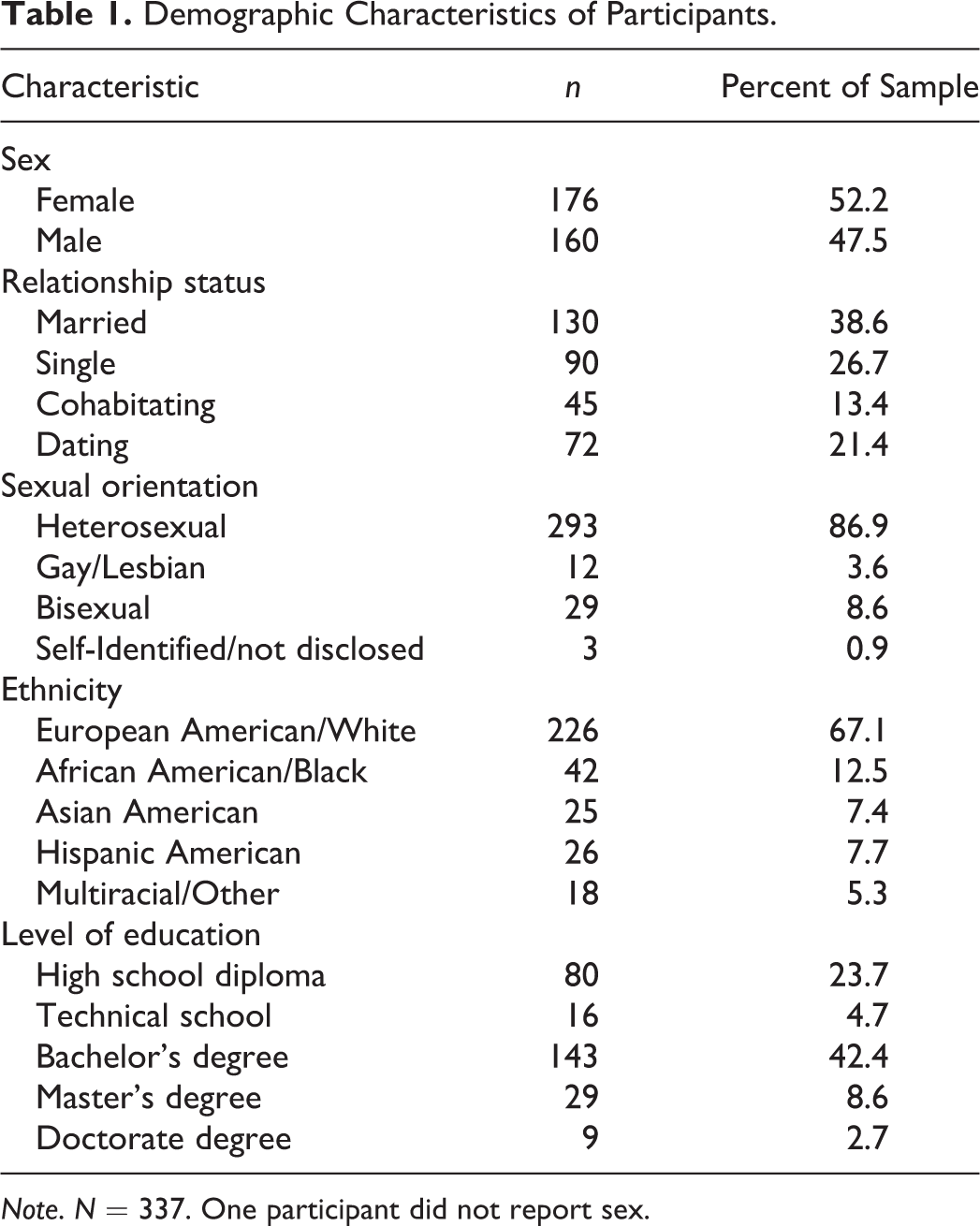
Note. N = 337. One participant did not report sex.
Procedure
Information about the data collected from this study has been previously published in Jeanfreau et al. (2019). Participants were recruited to complete a web-based questionnaire available via Qualtrics platform using Amazon Mechanical Turk (MTurk). Participants were able to access this research questionnaire through MTurk, agree to a statement of informed consent, and complete the questionnaire. Completers were compensated $50 for their participation in the study. A total of 356 participants responded to this survey via MTurk.
Instruments
Participants reported demographics including their age, sex, relationship status, ethnicity, sexual orientation, highest level of education, and use of social media accounts. Participants also reported their primary methods of communicating with others, whether or not they had a cell phone, and if they had a cell phone whether or not they used it to exchange text messages. Additionally, participants were asked to complete the Sexual Behavior Scale (SBS; Dir et al., 2011), Sexpectancies (Dir, 2012), and the Big Five Inventory (BFI; John et al., 1991; John et al., 2008).
The SBS measures the prevalence and frequency of sexting behaviors, including both sending sexts, receiving sexts, content of messages, and mediums used to exchange sexting material. Participants rate nine items on a 5-point Likert-type scale from 1 (never) to 5 (frequently or daily; Dir et al., 2011). In this study, the variable labeled “sexting frequency” represents the mean score on the SBS. The alpha coefficient for this study was .92.
Sexpectancies is a 28-item scale measuring the expectations an individual has for sending and receiving sexts. Participants rated their views of sexting behaviors on a 5-point Likert-type scale from 1 (not at all true) to 5 (true of myself). Sexpectancies measures four facets of sexting beliefs and behaviors: Positive sending arousal expectancies (PSAE) measure the positive feelings of arousal expected from or associated with sending sexts to others. Positive receiving arousal expectancies (PRAE) measure the positive feelings of arousal expected from or associated with receiving sexts from others. Negative sending expectancies (NSE) measure the negative expectations associated with sending sexts to others. Negative receiving expectancies (NRE) measure the negative expectations associated with receiving sexts from others (Dir, 2012).
In this study, the four facets of the Sexpectancies Scale represent “expectations of sexting.” Alpha coefficients for this study were .96 for PSAE, .92 for PRAE, .87 for NSE, and .91 for NRE.
The BFI is a 44-item scale used to identify the respondent’s levels of five personality factors: openness, conscientiousness, extroversion, agreeableness, and neuroticism. Participants used a 5-point Likert-type scale from 1 (disagree strongly) to 5 (agree strongly) to rate the extent to which he or she agrees or disagrees with that characteristic (e.g., “I see myself as someone who tends to be disorganized”; John et al., 1991, 2008). Alpha coefficients for this study were .82 for the openness, .83 for conscientiousness, .85 for extroversion, .84 for agreeableness, and .89 for neuroticism.
Research Questions and Statistical Analyses
Four research questions are investigated in this study. First, are expectations of sexting associated with personality factors? This question was investigated using a canonical correlation analysis, which allowed the authors to investigate multiple personality factors alongside multiple sexpectancies simultaneously with minimal risk of Type I error (Hair et al., 2009; Sherry & Henson, 2005). Second, is sexting frequency associated with personality factors? Third, is sexting frequency different according to relationship status endorsed by participants? Both of these questions were investigated using Pearson’s correlations. Finally, are expectations of sexting associated with sexting frequency? A one-way analysis of variance was used to answer this question. An alpha level of .05 was used for all statistical analyses.
Results
Data Cleaning
Before analysis, the data were subjected to three stages of data cleaning. First, potential spammers were removed. Five dummy questions were included in the Qualtrics survey (e.g., sexting makes me turn orange); participants who incorrectly answered three or more dummy questions were excluded from analysis (n = 19). Next, the data were screened for multivariate outliers according to Mahalanobis’s distance, which yielded no problematic cases (a = .005, Jennings & Young, 1988). Finally, Cook’s distance was used to identify any univariate cases with undue influence on the data set; none were found. After cleaning, the final sample of participants totaled 337 (95%). Descriptive statistics for each of the variables used in the study are provided in Table 2.
Descriptive Statistics for Personality Factors, Expectancies of Table 3 Sexting, and Sexting Behaviors.
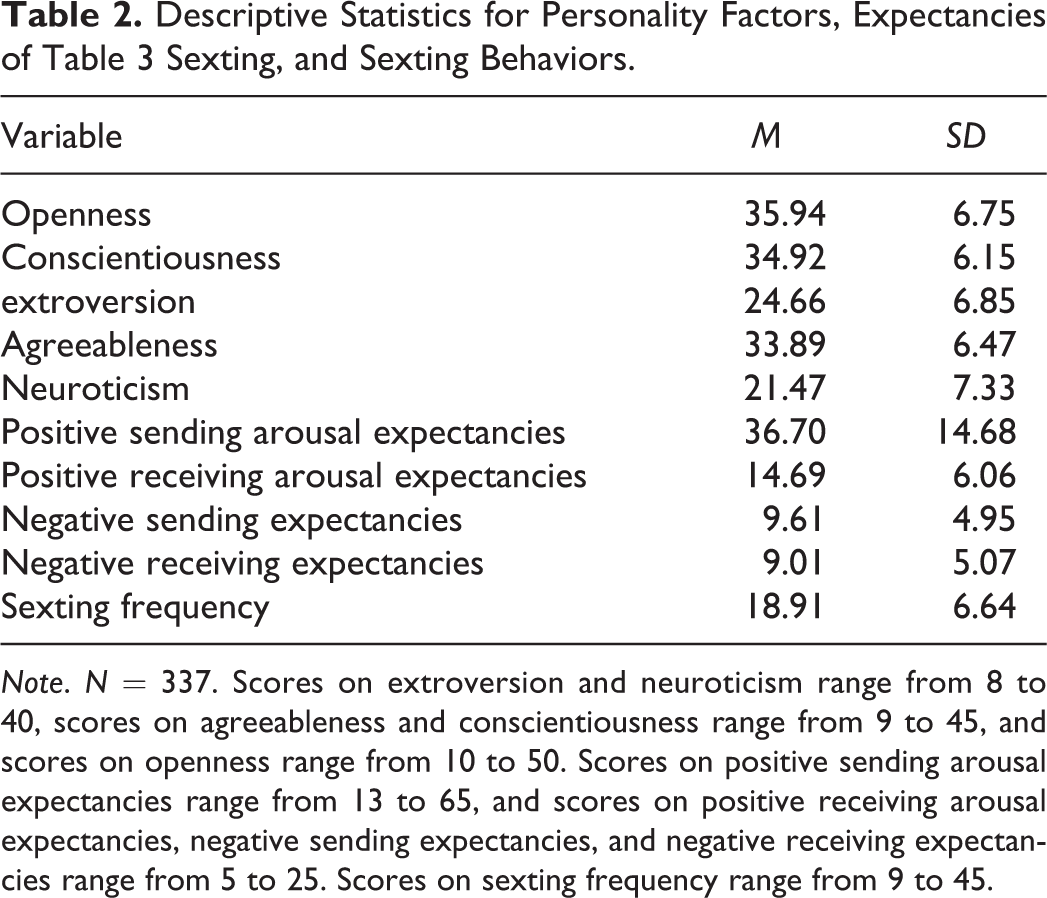
Note. N = 337. Scores on extroversion and neuroticism range from 8 to 40, scores on agreeableness and conscientiousness range from 9 to 45, and scores on openness range from 10 to 50. Scores on positive sending arousal expectancies range from 13 to 65, and scores on positive receiving arousal expectancies, negative sending expectancies, and negative receiving expectancies range from 5 to 25. Scores on sexting frequency range from 9 to 45.
Research Question 1
“Are expectations of sexting associated with personality factors?” Using Mardia’s test (Mardia, 1985), multivariate normality was checked for the expectations of sexting set and the personality set of variables. Both variable sets violated the assumption of multivariate normality according to skewness (p < .001). Because of these violations, univariate normality was checked using the Shapiro–Wilk test. All variables violated the assumption of normality; normality was not achieved for any of the variables, despite attempted transformations. All variables demonstrated evidence of homoscedasticity as well as linear relationships. Although interset correlations are high among the expectations of sexting variables (see Table 3), variance inflation factor scores indicated the data does not have issues due to multicollinearity.
Correlations of Personality Factors, Expectations of Sexting, and Sexting Behaviors.
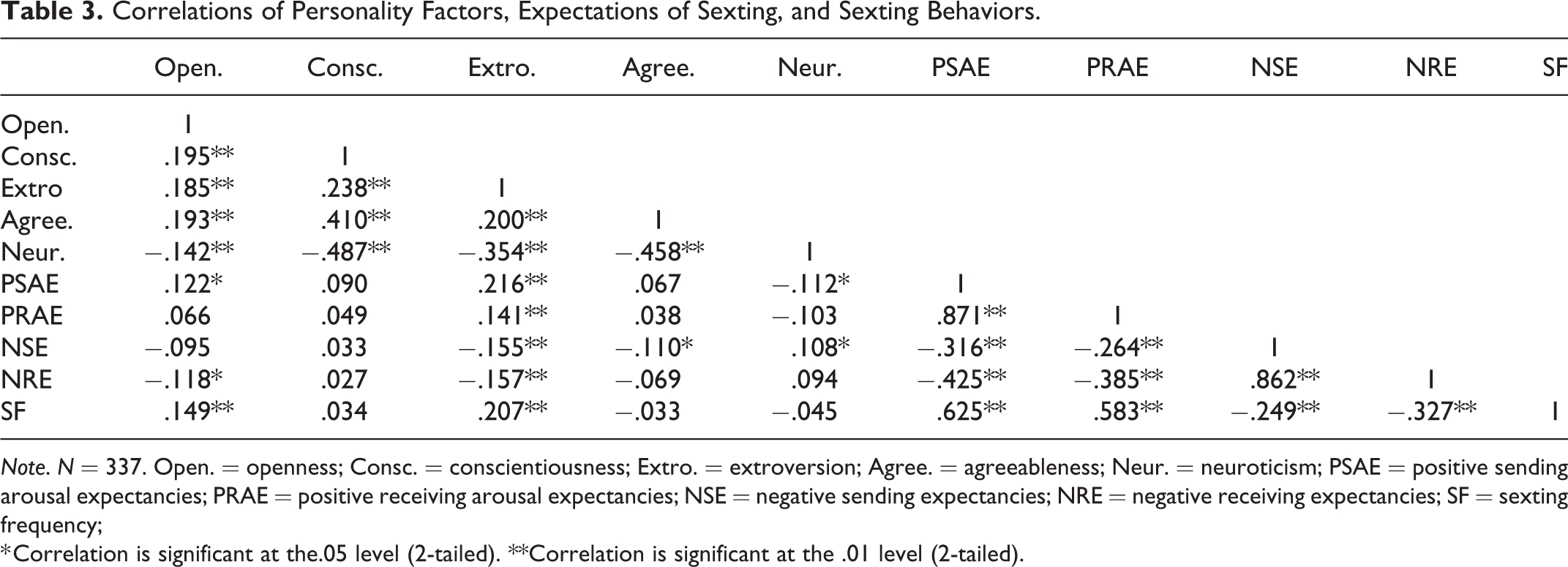
Note. N = 337. Open. = openness; Consc. = conscientiousness; Extro. = extroversion; Agree. = agreeableness; Neur. = neuroticism; PSAE = positive sending arousal expectancies; PRAE = positive receiving arousal expectancies; NSE = negative sending expectancies; NRE = negative receiving expectancies; SF = sexting frequency;
* Correlation is significant at the.05 level (2-tailed). **Correlation is significant at the .01 level (2-tailed).
The canonical correlation for this data set yielded four functions. Function 1 was statistically significant, Rc = .281; Wilks’s λ = .883, F(20, 1088) = 2.075, p = .004. In Function 1, the average squared loading, or adequacy measure, for the Personality set is .300 (see Table 4); the average squared cross loading, or redundancy measure, is .024 (see Table 5). Therefore, the five variables composing the Personality set share an average of 30% of their variance with the linear composite of scores from their own set and an average of 2.4% of their variance with the linear composite of the Perfection set. The adequacy measure for the expectations of sexting set is .469; the redundancy measure is .037. Therefore, the four variables in the expectations of sexting set share an average of nearly 47% of their variance with the linear composite of scores from their own set and an average of nearly 4% of their variance with the linear composite of the Personality set. Function 1 explains approximately 8% of the variance within the data set Function 2 (Rc = .170; Wilks’s λ = .959), Function 3 (Rc = .087; Wilks’s λ = .987), and Function 4 (Rc = .071; Wilks’s λ = .995) were not significant and are not interpreted here. The correlations across sets show the statistically significant relationships among the variables (see Table 3).
Canonical Loadings for Personality and Expectations of Sexting Sets.
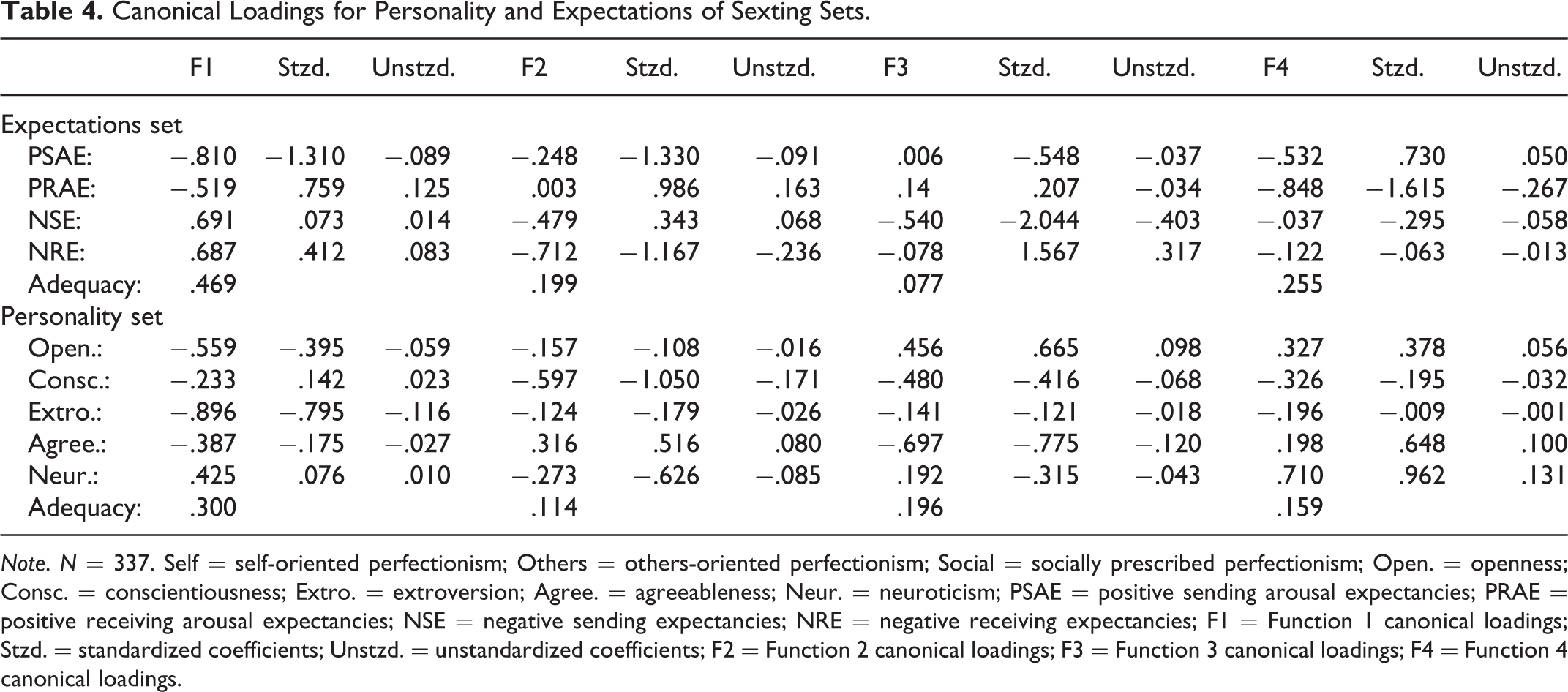
Note. N = 337. Self = self-oriented perfectionism; Others = others-oriented perfectionism; Social = socially prescribed perfectionism; Open. = openness; Consc. = conscientiousness; Extro. = extroversion; Agree. = agreeableness; Neur. = neuroticism; PSAE = positive sending arousal expectancies; PRAE = positive receiving arousal expectancies; NSE = negative sending expectancies; NRE = negative receiving expectancies; F1 = Function 1 canonical loadings; Stzd. = standardized coefficients; Unstzd. = unstandardized coefficients; F2 = Function 2 canonical loadings; F3 = Function 3 canonical loadings; F4 = Function 4 canonical loadings.
Canonical Cross-Loadings for Personality and Expectations of Sexting Sets.
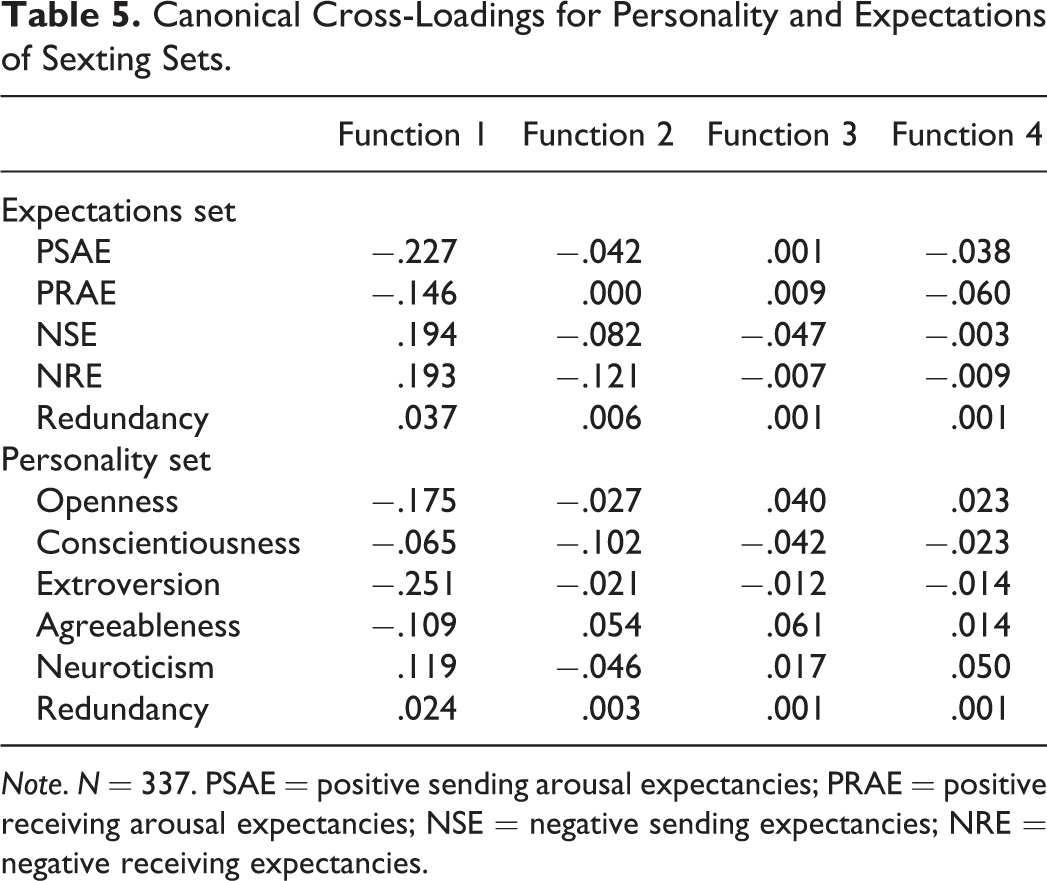
Note. N = 337. PSAE = positive sending arousal expectancies; PRAE = positive receiving arousal expectancies; NSE = negative sending expectancies; NRE = negative receiving expectancies.
First, Pearson’s correlation for extroversion and PSAE (r = .216) is significant (p < .001). As shown in Table 4 by the standardized coefficients, this pair is given the most emphasis within the canonical root of the first canonical function. Additionally, Pearson’s correlations for extroversion and NRE (r = −.157; p = .004) and for extroversion and NSE (r = −.155; p = .004) are significant. Next, Pearson’s correlation for openness and PSAE (r = .122) is significant (p < .026). Pearson’s correlation for openness and NRE (r = −.118) is also significant (p = .031). Agreeableness and NSE (r = −.110; p = .044) show a statistically significant correlated relationship. Finally, neuroticism is significantly correlated with PSAE (r = −.112; p = .049) and with NSE (r = .108; p = .049). All of these findings represent small effect sizes (Cohen, 1988).
Research Question 2
“Is sexting frequency associated with personality factors?” –’s correlation for openness and sexting frequency (r = .149) is significant (p = .006). Pearson’s correlation for extroversion and sexting frequency (r = .207) is significant (p < .001). Both correlations indicate a small effect size.
Research Question 3
“Is sexting frequency different according to relationship status endorsed by participants?” No outliers were found within the data set. All four levels of relationship status violated the assumption of normality; however, after a square root transformation, normality was achieved for the cohabitating, dating, and single groups. Normality cannot be assumed for the married group. Levene’s test showed that the assumption of homogeneity of variance was met (p = .864). Sexting frequency was different according to relationship status, F(3, 333) = 5.20, p = .002, η2 = .045. Tukey’s post hoc test showed that the sexting frequency for participants in a dating relationship (M = 20.61, SD = 6.30) is statistically significantly higher than for participants who are married (M = 17.36, SD = 6.49). Additionally, sexting frequency for participants who are cohabitating (M = 20.20, SD = 6.52) is statistically significantly higher than for individuals who are married. Participants who are single (M = 19.12, SD = 6.73) did not show any statistically significant differences in sexting frequency from the other three groups.
Research Question 4
“Are expectations of sexting associated with sexting frequency?” Pearson’s correlation for PSAE and sexting frequency (r = .625) is significant (p < .001) and represents a large effect size (Cohen, 1988). Pearson’s correlation for PRAE and sexting frequency (r = .583) is significant (p < .001) and represents a large effect size. Sexting frequency and NRE (r = −.327) showed a significant correlation (p < .001) and a medium effect size (Cohen, 1988). Finally, Pearson’s correlation for NSE and sexting frequency (r = −.249) is significant (p < .001), indicating a small effect size.
Discussion
Little research has investigated sexting among adults and the relationship that expectations of sexting may have with personality factors. Sexting is a new way of expressing sexuality within relationships and the present research study shows that personality may play a role in sexting expectations and behaviors. Additionally, this study found that sexting frequency differed according to the relationship status endorsed by participants and that sexting expectations are associated with sexting frequency.
Personality Factors and Sexting Expectations
Extroversion
Using the personality factors from the BFI, the current study found that individuals who scored higher in extroversion were more likely to have greater arousal expectancies for sending sexts and less negative expectancies for receiving sexts. They are also likely to sext more frequently. Additionally, those scoring higher on extroversion had less negative expectancies for sending sexts. Annisette and Lafreniere (2017) studied texting behavior and found that “texting frequency was positively associated with extraversion” (p. 157). This could be related to extraverted individuals being more socially open and outgoing than introverted individuals. Sexting could be used as a means of socialization and interpersonal relationship (Döring, 2014; Gámez-Guadix et al., 2017). Gámez-Guadix et al. (2017) state that “extraversion indicates the tendency toward high sociability and daring social interactions and the tendency to avoid loneliness and seek the company of others” (p. 32). Furthermore, research has suggested that extraverted individuals are more likely to engage in social interaction and be more assertive (Larsen & Ketelaar, 1991; McCrae & Costa, 1991).
Neuroticism
Neurotic individuals are more likely to respond with negative emotions to threat, frustration, and loss (Lahey, 2009). They also tend to be more irritable, angry, sad, anxious, worrisome, hostile, self-consciousness, and vulnerable (Costa & McCrae, 1992; Goldberg, 1993). In the current study, individuals scoring higher on neuroticism had less arousal expectancies for sending sexts and had greater negative expectancies for sending sexts. This could be because individuals with higher levels of neuroticism usually experience less positive social interactions, have a more negative affect, and tend to avoid social situations (Lincoln, 2008; McCrae & Costa, 2003). Engaging in sext messaging may be more trouble than reward for individuals higher in neuroticism.
Openness
Individuals who are higher in openness have greater arousal expectancies for sending sexts as well as lower negative expectancies for receiving sexts. Additionally, results demonstrate that individuals higher in openness engage in sexting more frequently. In general, individuals higher in openness have been found to engage in elaborate fantasies, to be deeply touched by aesthetic pleasure, and to be tolerant and curious (McCrae & Costa, 2003); each of these qualities corresponds strongly with both expecting more arousal from sending sext messages and having fewer reservations about receiving sext messages from one’s partner. Based on the results of this study, it would appear that individuals who are higher in both openness and extroversion would be the most uninhibited and also experience the most pleasure from both sending and receiving sext messages.
Agreeableness
Individuals who are more agreeable have lower negative expectancies for sending sexts—perhaps because they are more prone to engage in actions that please others (John et al., 2008; McCrae & Costa, 2003) and therefore are more willing to engage in sexting if their partner expresses interest. Interestingly, individuals higher in agreeableness did not demonstrate high levels of positive expectations for engaging in sexting behaviors—only lower negative expectations. A person high in agreeableness may have enough motivation to sext by knowing it pleases their partner, even if he or she does not have an expectation that it will please himself or herself. Future research could explore whether individuals high in agreeableness experience higher relationship satisfaction and relationship quality from sexting, and if so, whether these positive outcomes are from the sexting itself or from pleasing one’s partner.
Sexting Frequency and Relationship Status
Results of this study show that individuals who are cohabitating sext most frequently, followed by dating individuals, single individuals, and married individuals. Married individual’s sext significantly less frequently than individuals who are either cohabitating or dating. This outcome supports findings from Jeanfreau et al. (2019). Sexting can provide a unique method of connection and intimacy when partners are apart from one another (Hertlein & Ancheta, 2014; Jin & Park, 2010); however, married couples may tend to be apart less than cohabitating and dating couples and therefore not need this additional avenue of sexual arousal and satisfaction. Sexting is just one way to demonstrate affection and closeness (Parker et al., 2013), and married couples may have adequate opportunities to do this through other avenues. Married individuals may feel more secure in their commitment and not feel the need to sext (Jeanfreau et al., 2019). Because sexting is a relatively recent phenomena (Jeanfreau et al., 2019), it is possible that many who are married had already made a marital commitment to their partner before sexting was widely available and therefore never incorporated sexting into their sexual relationship. Although several reasons for married individuals sexting less frequently have been speculated, more research is needed to better understand the reasons why sexting lessens or stops when individuals are married.
Sexting Expectations and Sexting Frequency
Expectations of sexting influence the frequency of engaging in sexting. Those individuals who are sending more sext messages have higher positive expectations for both sending and receiving sexts, as well as lower negative expectations in both sending and receiving sexts. Intuitively, this relationship makes sense and further supports the relationship found between extroversion and expectations of sexting. Individuals who are more daring and motivated to avoid loneliness (Gámez-Guadix et al., 2017) are more likely to expect positive results from sexting and therefore may sext more frequently. It may be possible that individuals who have greater expectations of reward from sexting also have a higher tolerance toward any unfulfilled expectations or disappointing experiences of sexting and therefore are more likely to continue seeking positive sexting experiences.
Implications
Although not a main topic of conversation or of research, sexting is a wide-reaching practice that influences many interpersonal relationships. Family professionals working with adults—whether dating, cohabitating, or married—should consider that sexting may be a factor that influences the relational well-being of each individual in the couple. Personality factors are influential of how individuals engage in and experience sexting. Counselors, therapists, and relationship educators working with individuals in relationships should consider encouraging open dialogue by having specific conversations around the potential benefits and drawbacks to each partner involved in sexting. This research is relevant to individuals in a position to provide educational information about sexting to young adults and adults. It may be helpful for individuals who are frequent sexters to understand that not all individuals enjoy or benefit from sexting. Individuals should be encouraged to have conversations about sext messaging and whether this is welcome or not with their love interest or partner before engaging in sexting behaviors, especially to avoid the potential of coercion (Drouin et al., 2015). Relationship education plays an important role in teaching effective communication skills and having couples continue to practice those skills learned, so over time, it can improve their relationship (Bradford et al., 2014; Kruenegel-Farr et al., 2013).
Limitations
Although this study provides insight into factors associated with sexting behavior, as with any exploratory study, one major limitation is the lack of empirical research related to sexting in adult relationships. Another limitation is the use of self-report data collection. Respondents may not provide accurate responses due to the possibility of feeling uncomfortable, presenting themselves in an unfavorable way, and a lack of memory related to behavioral questions from the past. Finally, the correlation analysis shows only an association and is not able to indicate causation. While there are several limitations to the current study, the researchers believe this research begins to fill a gap in the literature related to sexting behavior in adult relationships.
Conclusion
Few empirical studies have investigated the role of sexting in adult romantic relationships. This research study investigated the relationship between sexting behaviors and expectations of sexting with the Big Five personality factors. Expectations of sexting and frequency of sexting were found to be associated with several personality factors. Both extroversion and openness were found to be associated with higher arousal expectations, lower negative expectations, and sexting more frequently. Neuroticism was found to be associated with lower arousal expectations and greater negative expectations for sexting. Sexting frequency was endorsed more frequently by cohabitating and dating participants, compared to married participants. Participants who had greater levels of positive expectations and lower levels of negative expectations for sexting were found to engage in sexting more frequently. Family professionals who work with adults should consider the role that personality plays in sexting expectations and be prepared to have conversations with individuals and couples around the role of sexting in their relationships.
Footnotes
Declaration of Conflicting Interests
The author(s) declared no potential conflicts of interest with respect to the research, authorship, and/or publication of this article.
Funding
The author(s) received no financial support for the research, authorship, and/or publication of this article.
