



Abstract

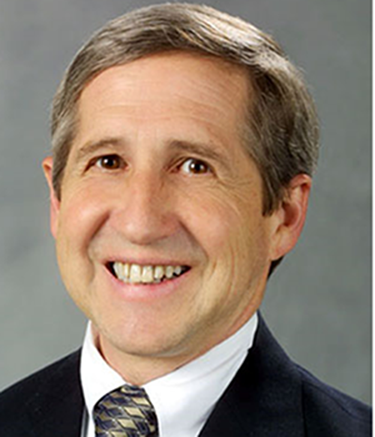
Samuel Gladding touched many lives through his authentic caring, tireless leadership, and prolific publishing. Truly a “Renaissance man,” Dr. Gladding made many contributions to counseling and the community. He produced over 207 publications, including major textbooks for the counseling profession, in most of the major domains (Google Scholar).
Professional orientation, development, and identity History and systems of counseling Ethical and legal issues Social justice issues Religious and spiritual issues Humor in counseling Imagery and metaphors in counseling Wellness Play therapy, poetry therapy, and bibliotherapy Group counseling School counseling Clinical mental health counseling Family counseling Amazon.com: Samuel T. Gladding: Books, Biography, Blog, Audiobooks, Kindle
We were blessed that Sam served as President of the International Association of Marriage and Family Counseling (IAMFC: 2018–2020). One of his recent works was published in The Family Journal (Gladding & Casares, 2021). Gladding (2017), in his life and words defined the field of counseling.
Life and Times
It is beneficial to remember Sam in the context of his entire life. The obituary recognizes his passing. Next, we are privileged to experience Sam from his wife's remembrance and his son's tribute. Finally, we hear from Sam in his own words. As he observed in the preface of his memoir (Gladding, 2020):
Obituary by Salem Funerals & Cremations - Reynolda Rd. on Dec. 11, 2021
Dr. Samuel Templeman Gladding, 76, of Winston-Salem died December 6, 2021, at the Kate B. Reynolds Hospice Home.
He was born in Decatur, GA, the son of the late Russell and Gertrude Gladding. He is survived by his wife of 35 years, Claire Gladding of Winston-Salem, sons Ben Gladding (Sara) of Casablanca, Morocco, Nate Gladding, and Tim Gladding of Winston-Salem, and grandsons Leo Templeman Gladding and Samuel Chisesi Gladding of Casablanca. He is also survived by his brother, Russell Gladding (Kathy) of Vidalia, Georgia, his sister Peggy Smith of Atlanta, and many loving family, friends, students, and colleagues.
He received a Bachelor of Arts in history at Wake Forest, a Master of Arts in religion at Yale, a Master of Arts in counseling at Wake Forest and a Ph.D. in family relations at the University of North Carolina at Greensboro. Dr. Gladding also completed a post-doctorate in psychology at UNC-G. At Wake Forest, he was in the Army ROTC program and completed his military service in the Army Reserves at Fort Lee, VA. In 2016, he was inducted into the Army ROTC National Hall of Fame.
Dr. Gladding was internationally recognized as a prolific author of books on counseling and served as a professor of counseling at Wake Forest University for over 30 years. During his career, he traveled worldwide speaking, teaching, and consulting. He served as president of the American Counseling Association as well as other national and international counseling associations and was honored with an extensive list of awards for his writing, professional service, and mentorship.
Before beginning his academic career, he was director of children's services at the Rockingham County (NC) Counseling Center. Before joining the Wake Forest faculty, he was a faculty member at Rockingham Community College, Fairfield University (CT) and the University of Alabama at Birmingham.
In 1990, he arrived at Wake Forest as a professor of counseling and assistant to the president for special projects. He served as an assistant to the late President Thomas K. Hearn Jr. from 1990 to 1997. From 1997 to 2007, he was an associate provost at Wake Forest. Dr. Gladding played a leading role in transitioning counseling from being a program in the Department of Education to being the Department of Counseling. He chaired the department for many years. He was also called upon to counsel the families of victims of the 9/11 terrorist attack and the 2007 shooting at Virginia Tech during his tenure.
Dr. Gladding's enthusiasm for teaching and mentoring students in and out of the classroom was well known. He led counseling graduate students on academic visits to Wake Forest's residential study center in Vienna, Austria, accompanied students to India to volunteer at Mother Theresa's facilities that serve the poor and dying, and in recent years, taught at Wake Forest's program for first-year undergraduates in Copenhagen, Denmark. While much of his teaching at Wake Forest was with graduate counseling students, he continued to teach undergraduates regularly. He also volunteered as a faculty fellow in on-campus residence halls as well as a faculty advisor for the APO service organization.
A memorial service (was) held on January 29th at 2 PM in Wait Chapel on the campus of Wake Forest University. The service (was) streamed at https://go.wfu.edu/gladdingservice. A link will also be found on the Wake Forest Department of Counseling website. In lieu of flowers, memorial donations may be made to the Gladding Memorial Scholarship or the Samuel T. Gladding Endowment for the Department of Counseling, P.O. Box 7227, Winston-Salem, NC, 27109 or online at giving.wfu.edu. Online condolences may be made at www.salemfh.com.
Claire’s Remembrance
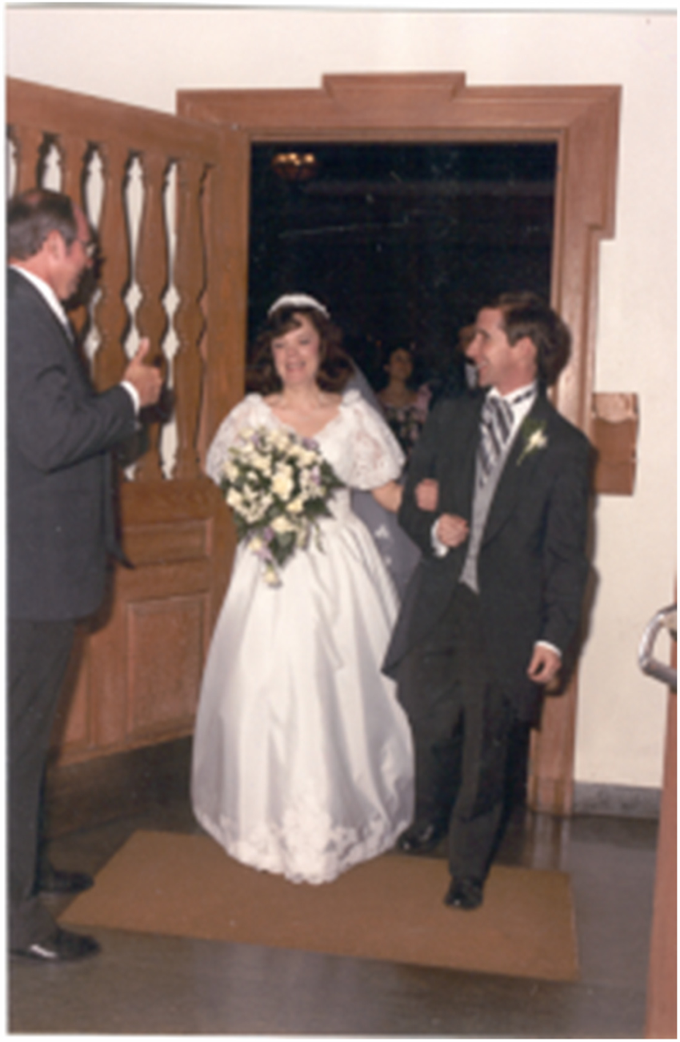
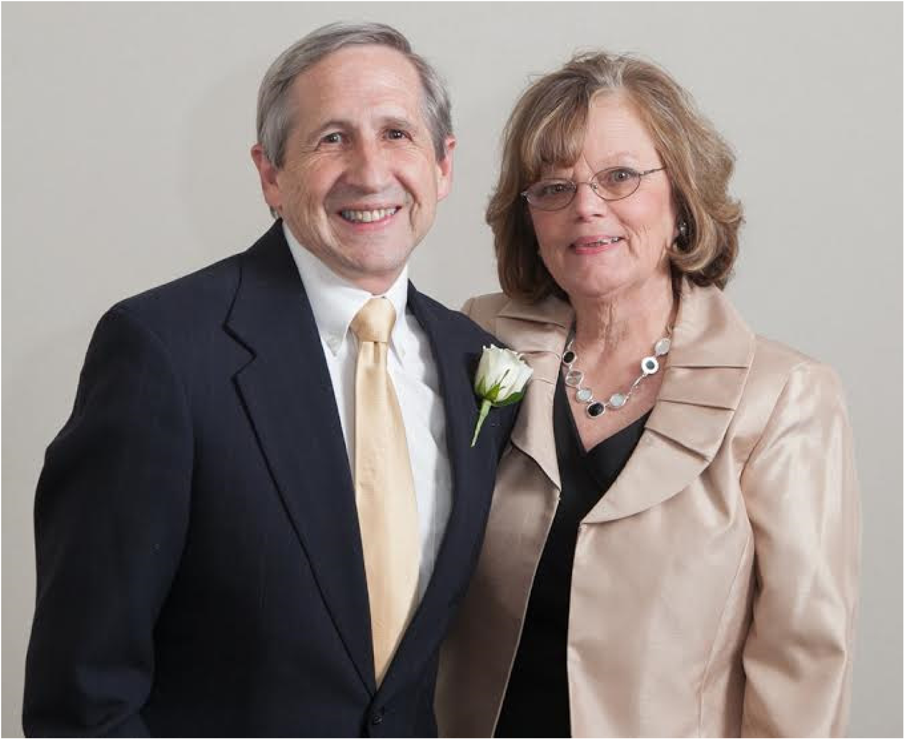
We met at a single adult social event in nearby Westport, CT. After talking for a bit, Sam, ever the writer, asked if I wanted to do an article with him! Funny thing, right after we were married, we did that article. It was on bibliotherapy, a nice combination of our interests. Periodically, Sam would look it up and notice it was still getting mentioned!
Sam and Claire's article has stood the test of time. It is still frequently cited in the literature. “The ABCs of Bibliotherapy for School Counselors” (Gladding & Gladding, 1991), a labor of love, was published in The School Counselor. Claire was kind to share a great marriage and family therapy story, as well.
Here's a marriage and family story: We were driving down the road (March, 1987) with our 11 month old in his car seat in the backseat. We had just found out that our family would be increasing and another Gladding was on the way! I was feeling a little queasy, but Sam was quoting the research to me about marital satisfaction. He was very excited, and said …"and marital satisfaction goes down with each child." I must have looked appalled, because he quickly said "Hey, the honeymoon isn't over, there's just going to be more people on it!" And he was right about that. He could always make me smile.
Ben’s Tribute
My Dad passed away on Monday afternoon, following complications from glioblastoma, an aggressive form of brain cancer. It has been hard to be away from my Mom and brothers during his treatment and time in the hospital and hospice, harder still with unexpected and sudden border closures and flight bans right as I was planning on returning to say goodbye last week.
The past couple of days have been a strange mix of sadness at losing him, but also pride and amazement from reading the incredible impact he had on so many lives. From the hundreds of students he taught at Wake, to the thousands that read one of his books, attended one of his keynotes or workshops, met him at Wake, or even sent him an email, the lives he touched and the goodwill that he left behind is staggering.
It was not unusual when traveling with him to hear at some point during the trip those famous words, "Hey, aren't you (Dr.) Sam Gladding?" (For his 71st birthday, we even printed him a shirt with the answer, "Why yes, I am Dr. Sam Gladding"…and shirts for the rest of us, "Why yes, I am related to Dr. Sam Gladding")
Though I miss him terribly, I am grateful for the time that I did get to spend with him recently, following his diagnosis and surgery in September (and an unexpected 3-week school closure decreed by the Moroccan government). We got to attend one more Wake football game together, after a childhood, adolescence, and young adulthood full of Wake sporting events. And we got to celebrate his 76th birthday together, an impossibility since moving to Morocco four years ago.
He instilled in me a curiosity of the world, its history, its people, and yes, eventually, its languages (even though he used to claim that one of the happiest days of his life was receiving a passing grade in his last required Spanish class as an undergrad at Wake). Despite the many ups and downs that come with trying to figure out what you want to do with your life, and who you want to spend it with, he always insisted, "Ben, I don't care about what you do with your life or who you marry. I just want you to be happy."
And he was happy. In one of my sullen teenage rebellion phases, I once remarked, "Dad, do you know what your problem is? You're just too optimistic." But that's who he was. He was encouraging, supportive, ready to celebrate your success, or help you figure out a way to overcome a persistent problem. Interacting with others, especially his colleagues and his students, gave him such joy, a real purpose and meaning to his life.
I will always treasure the time we spent together, whether in Winston, in Casablanca, in Vienna or Copenhagen, in all corners of the world both near and far. The shared dinners with my Mom and brothers (and later on my wife Sara). The teasing about him working on the syllabus for his next class, or "resting his eyes" while watching NBC Nightly News. The outdated song lyrics from the 60s and 70s that drew groans from everyone, not to mention all of the puns (so many puns!). The weekly Sunday phone call when I lived in France, and the weekly WhatsApp / Zoom call since moving to Casablanca. Giving him updates on the sheep population living nearby, especially around the Aid el-Kebir holiday. The 3 + ecards that would show up in my email on a birthday, holiday, or just because. The trip we took to visit Civil War battlefields after I graduated from 5th grade. The way he would massage my legs as a kid until I fell asleep when I woke up in the middle of the night with growing pains. Meeting my son (his grandson) Leo for the first time, and helping to soothe him to sleep by singing "O here's to Wake Forest" and "Tie me Kangaroo down sport." His terrible taste in wine, and the shame that my Mom would feel having to buy something called "Lake Country Soft Red" (8% alcohol). His stories (especially the one about making marksman in the Army by throwing rocks at the closest targets after he ran out of bullets). How after I explained the French expression "beau comme un camion" (as beautiful as a truck), he signed his emails for over a year with some variant of "Truck," "Zoom zoom," or "Beep beep." Earning multiple degrees from Wake, and being able to stop by his office during a break. Getting married in Davis Chapel on Wake's campus, the same place where he and my Mom were married. The last time I saw him in person, on the morning of October 7th, 2021, and he gave me his "lucky back rub." The last time I talked to him, on the afternoon of December 1st, 2021.
While it is so hard to let go, his life, much like that glass of red ruddy rhenish, was filled up to the brim with so much. I know his spirit will live on in everyone that he touched.
I love you Dad.
In His Own Words
I grew up thinking I wanted to be a minister. However, at Yale Divinity School I fell in love with counseling. As the old adage goes: "People plan, God laughs." My life has been transformed by the profession of counseling. I have been fortunate to have earned degrees from Wake Forest, Yale, and the University of North Carolina-Greensboro and to have had academic and clinical appointments in Connecticut, Alabama, and North Carolina. Since 1990 I have been a professor in the Department of Counseling at Wake Forest University in Winston-Salem, North Carolina. When not teaching, writing, or providing clinical services, I have taken on leadership roles. I have been president of the American Counseling Association, the American Association of State Counseling Boards, and Chi Sigma Iota. I am a Fellow in the American Counseling Association and the Association for Specialists in Group Work. I have published books and articles about counselor identity, family therapy, groups, counseling theories, ethics, and the creative arts in counseling. I am a licensed professional counselor and have served as a member of the North Carolina Board for Licensed Professional Counselors. I have taught counseling courses and made presentations on counseling throughout the United States and on every continent except Antarctica. I was a mental health responder after 9/11 in New York and after the shootings on the Virginia Tech campus. In the mid-1990s I worked in the homes of Mother Teresa in Calcutta, India. I have been fortunate to have been a Fulbright Specialist to Turkey and China, an external reviewer of counseling programs at universities in Malaysia, and to have studied humor and mental health at Oxford. I enjoy reading history and humor, swimming, walking, and "hanging out" with my wife, Claire, and our three young adult children. I am an existentialist although I use a variety of approaches in my work as a counselor. Oh, I still like theology (Amazon, n.d.).
It is beneficial to hear from Sam and experience his life in the context of family life. It is also important to remember the influence of Dr. Gladding in the profession. In the following section, there are recollections from colleagues and a biographical sketch.
Remembrance of Dr. Samuel T Gladding
Loretta Bradley, Horn Distinguished Professor and Former President, ACA, ACES & IAMFC
I had the good fortune to meet Sam Gladding at a SACES conference about 25 years ago. Throughout the years, our career paths crossed, initially as committee members and later as officers in professional organizations. When I was ACES President, Sam was ACES President-elect. In our roles as President and President-elect of ACES, I recall a trip to attend a RMACES conference in Breckenridge, CO in which Sam was driving, and I was navigating. After we left the Denver airport, the weather quickly changed with lots of snow falling. We found ourselves among a cavalcade of cars crossing the mountains heading to Breckenridge. As he was driving, it was obvious that Sam seemed to be squinting. Sam casually replied, “I forgot my glasses. They are packed in my luggage in the trunk of the car, but we will be ok.” That was Sam always optimistic and looking to the positive side. I have had professional contact with Sam throughout his career including when he was ACA president and more recently when he was president of IAMFC. In fact, our career paths crossed frequently in 2018–2020 when Sam was IAMFC President, and I was IAMFC Treasurer. When I think of Sam, many adjectives describe Sam. These adjectives include, but are not limited to, caring, cheerful, creative, ethical, fair, genuine, honest, intelligent, intuitive, motivated, optimistic, positive, strong leader, and a person with a good sense of humor. Truly, Sam was all of these and more!
Early Days
At any early age, physicians determined that Sam‘s hips were not properly located, and this resulted in three surgeries before age two. The surgeries kept Sam’s activities reduced, but only temporarily, and then Sam was “out and about’ again for Sam had things to do and explore even at a young age. Following the surgeries when Sam’s activities increased, Sam’s mother referred to him as a “daredevil” for Sam would explore new tasks, even tasks that could be dangerous. Sam was also a problem solver, and as a young boy, he found ways to be investigative and inquisitive while enjoying his active life.
Sam’s grandfather, Samuel Templeton, for whom Sam was named, was a Baptist minister. In a recent writing, Casares (2021) described the influence of Sam’s grandfather on Sam as: What Samuel Templeton did in life had a profound effect on Sam Gladding growing up, especially the story about how his grandfather stopped the lynching of an African-American man in the Jim Crow south of the 1920s. Sam’s grandfather courageously stood in front of the jail with the sheriff and talked down an army mob. The ethos of the Templeman family emphasized that life and leadership are about working for the common good and doing good. (p. 95)
Career Path
Following graduation from high school, Sam enrolled in and graduated from Wake Forest University with a major in history. Wanting to serve and help others, Sam decided to pursue a master's degree. Sam applied and was admitted to Yale University Divinity School where he obtained a master's degree with a major in religion. His plan was to become a minister (like his grandfather). Sam was a student at Yale in the late 1960s and early 1970s, a time when major social changes (e.g. civil rights, anti-war) were occurring. During this era, Sam was inspired to become more active in social justice issues, a cause with which Sam felt passionate. As Sam continued to be involved in social action causes, he realized that he did not want to become a minister. Facing uncertainty about his career path, Sam decided to meet with Tom Elmore at Wake Forest University; Dean Elmore had been helpful to Sam during his undergraduate years at Wake Forest University. In recalling his discussion with Sam about his visit with Tom Elmore, Casares (2021) wrote: I (Sam) gave him (Tom Elmore) my 20-something existential angst about what I was going to do next since I was not going to be a minister. He said, “why don’t you try counseling?” I thought he meant counseling as a profession. He actually meant I should get some counseling. My misunderstanding resulted in my enrollment in the counseling program at Wake Forest University the next year. It was a perfect fit.” (p. 95)
After Sam received his master's degree in counseling at Wake Forest University, he worked in agency counseling and in private practice in North Carolina and Alabama. Although he enjoyed and was successful in these positions, Sam realized he would like to pursue additional advanced training in counseling. Sam returned to the university and completed his PhD in Counselor Education and Supervision at the University of North Carolina-Greensboro.
Love and Marriage
In 1984, Sam was supervising a student who introduced him to his future wife, Claire; Claire was the school librarian. The couple dated for about two years and were married in 1986. Sam often said “I met Claire when she was a librarian. I checked her out, then I married her and took her out of circulation.” Claire and Sam are the parents of three sons: Benjamin, Nathaniel, and Timothy. Throughout their marriage Sam and Claire enjoyed being together and sharing such activities as parenting their three sons, traveling, and attending sporting events, movies, and concerts. Additionally, they shared many pleasurable moments walking their dogs. Sam often said, “Claire, walking our dogs, exercises our minds.” The couple had been married 35 years when Sam passed away in 2021. Truly, Sam admired, cherished, and respected Claire.
Illness
During fall, 2021, Sam was diagnosed with glioblastoma, a form of brain cancer. About three months following the original diagnosis, Sam Gladding passed away on December 6, 2021 from complications resulting from glioblastoma. I talked to Sam and Claire during his illness, and with each call, it was apparent that Sam's condition was not improving. Claire sent a text message to me the evening after Sam passed, and although I knew Sam had been placed on palliative care, it was difficult to realize Sam was gone. Claire said Sam died peacefully while she was sitting beside his bed reading to him.
I will always treasure my time with Sam. He was a wise, humble person. When Sam was introduced to students, including my students, Sam would say, “ Hi, I am Sam”. Although Sam was a star in the counseling profession who had published many books, numerous journal articles, and given hundreds of lectures and presentations, he was always the humble, friendly Sam that we all knew. The presidential theme when Sam was ACA President was Counseling: A Creative Force in the Fabric of Life, a theme so representative of Sam. Truly, Sam was a giant in the counseling profession. He will be missed.
Tributes to Samuel T. Gladding
Nathaniel N. Ivers, Chair, Department of Counseling, Wake Forest University
Welcome to Lake Wobegon, “where all the women are strong, all the men are good-looking, and all the children are above average.” This quote was one of many popular media references that Dr. Gladding would playfully cite. Lake Wobegon is a fictional town from the radio program, A Prairie Home Companion. It represents the human tendency to possess an overly positive illusion of themselves and their accomplishments. Although he referenced it on occasion, Lake Wobegon was never a place where Dr. Gladding held residence; his accomplishments were real, not illusory or embellished and, in contrast to the residents of Lake Wobegon, he was genuinely modest about his gifts and achievements. Dr. Gladding was a distinguished leader, scholar, educator, mentor, and advisor, as well as an incredible colleague and friend – a giant in the counseling profession – whose presence will be sorely missed while his influence reverberates in perpetuity.
Dr. Gladding served in many significant leadership positions in academia and in the counseling profession. He held faculty appointments at four institutions, including Rockingham Community College, The University of Alabama at Birmingham, Fairfield University, and Wake Forest University. At Wake Forest University, Dr. Gladding served as the chair of the department of counseling for 11 years, associate provost for 10 years, and assistant to the president for special projects for seven years. In the counseling profession, Dr. Gladding served in many meaningful and weighty positions. Among other things, he was president of the American Counseling Association, the American Association of State Counseling Boards, Chi Sigma Iota International, the International Association of Marriage and Family Counselors, the Association for Specialists in Group Work, and the Association for Counselor Education and Supervision. He also served as the editor of the Journal for Specialists in Group Work, vice president of the Association for Humanistic Counseling, and chair of the American Counseling Association Foundation.
Dr. Gladding was a tireless and creative scholar who produced significant works across a variety of mediums and on a multitude of counseling topics. He authored 18 books, eight of which had multiple editions, totaling 42 editions. Some of his more recent and noteworthy counseling textbooks include, Counseling: A Comprehensive Profession, Groups: A Counseling Specialty, Family Therapy: History, Theory, and Practice, The Creative Arts in Counseling, Clinical Mental Health Counseling in Community and Agency Settings, and The Counseling Dictionary. In addition to his books, Dr. Gladding published 92 peer-reviewed articles in professional journals, 32 book chapters, 45 poems in refereed counseling journals, and 10 counseling videos. In 1999, Dr. Gladding was acknowledged for being in the top 1% of contributors to the American Counseling Association's flagship journal, the Journal of Counseling and Development, for the period of 1978–1993. According to Google Scholar, as of December 27, 2021, 6,732 publications have referenced Dr. Gladding's scholarly works.
Dr. Gladding was a dedicated and caring educator, advisor, and mentor who modeled teaching excellence, community advocacy, and service. Notwithstanding his many leadership and scholarly responsibilities, he had a keen ability to make his students, mentees, and colleagues feel listened to and important. He once shared that he was reticent to retire because he would miss teaching and advising students. After helping me with a career-related decision, I once mentioned to Dr. Gladding that I was not sure how I could ever repay him. He nonchalantly replied, “No need to repay me; rather, focus on paying it forward.” I shall ever be indebted to Dr. Gladding for his wise mentorship and kindness, and I hope I can live up to his gentle directive to help others as he helped me. Dr. Gladding's memory will live on perpetually through the enduring influence of his selfless, dedicated, and wise leadership and service to the counseling profession and the academy; his extraordinary, creative, and scholarly productivity; and, most importantly, his genuine care for and devotion to his clients, students, supervisees, colleagues, and family.
Richard Yep, ACA CEO
When I was asked to share a remembrance about Sam Gladding, I sat and thought for a long time. I considered referencing his prolific writing, his countless keynotes, the respect he had from counseling colleagues, and his leadership of ACA when he served as our 53rd President. But, what I kept coming back to were those moments with Sam when he wasn't this giant in the counseling field, he was, just "Sam." He could be a great listener or someone who knew just what to say to someone facing a challenge in their life. While his training as a professional counselor helped him to refine his skills, Sam was a natural at listening, helping, supporting, and being there for others.
I could write about how Sam donated a portion of his ACA book royalties to our foundation because he knew that those funds were going to help him "pay it forward." I thought about sharing how Sam really wanted those "unsung heroes" -- professional counselors working as practitioners -- to know that they were appreciated and deserved recognition. Or I could share how hanging with Sam meant you would inevitably be part of a throng of people ("groupies") who wanted to ask him about his books, his thoughts, and his suggestions for them. He always took the time to answer a question, sign a book, or just enjoy a laugh despite needing to be at another meeting.
When you work with as many ACA presidents as I have (33 and counting) you spend a year learning about that person, what they may need, what their priorities are for helping and representing the counseling profession, and even their likes and dislikes of things. Sam took the time to learn about me and my family. He remembered names and would ask how they were doing. This wasn't perfunctory, he really seemed genuinely interested. Among the many accolades that have been bestowed upon Sam, and the words of respect, honor, and admiration we have all read since his passing, what keeps coming back to me is that Sam Gladding was a nice guy.
That phrase, "a nice guy" may seem trite. But when one thinks about how many "not so nice guys" exist in this world, I think it makes Sam even more special. Let's face it, we need more "nice" in this world, especially now. Sam was able to "bring his nice" to the table for 76 years. Those of us who were lucky enough to know him were made to feel special because Sam was, yes, so nice to us.
The world lost some of its niceness when Sam passed away. But he would not want us to wallow in sorrow about the loss of that bright and caring light he shared. Rather, Sam would want us to carry on by sharing even more "nice" to those with whom we interact.
I'm sad that Sam Gladding has left us, but I do intend to remember him by trying just a little harder to be nice to others. That is how I will remember and honor my friend, Sam Gladding.
Tom Sweeney, Former ACA President, ACA Fellow, Founder of Chi Sigma Iota
Sam Gladding and I had first contact in the middle 1980's. As a faculty member at the University of Alabama – Birmingham, Sam wanted to start a chapter of the then new international honor society for counseling (Chi Sigma Iota). He was so enthusiastic about the new organization that he chose to join as a Life Member - #32! This was followed by him being elected as CSI's fourth president (1988–89). Sam was faithful to his commitment to the vision of CSI. From that time until recent years, he inspired and celebrated all who chose to join the Society of professional counselors committed to excellence in all that they do personally and professionally in service to others.
Sam exemplified the servant leader so well-articulated by another distinguished scholar and mentor of many, Dr. Edwin Herr, also a Past-President of CSI, ACA and its divisions as well as overseas international associations. Ed, like Sam, excelled at capturing the essence of leadership in practice as well as in words. In a position paper written for CSI, Ed noted:
One model of leadership that is inherent in CSI's many successes and that seems to be embraced and promoted is what has been entitled "The Servant as Leader.”
Ed cited Greenleaf (1977) …. the servant- (is) first to make sure that other people's highest priority needs are being served. The best test, and difficult to administer, is Do those served grow as persons? Do they, while being served, become healthier, wiser, freer, more autonomous, more likely themselves to become servants…
Sam did all of this and more. We have pictures of Sam deliberating with others at the CSI 1998 Professional Advocacy Conferences in Greensboro, NC, as one of our CSI Day Annual Conferences presenters and with the CSI chapters members in Manila, PI where he spoke at their annual new member imitation. Sam traveled all over the country speaking at chapter initiations and giving their members workshops, pro bono.
Sam shared himself generously both in words and in deeds. His intelligence, gentle spirit, wit, and ready smile were his hallmarks. He is missed but thousands of professional counselors will never forget his influence nor his legacy. Those of us in CSI feel especially blessed that Sam chose us to exemplify the servant leader with us.
On a personal note, I wish to add my most notable and possibly last significant social contact with Sam. He and Donna Henderson went out of their way to invite me to campus to meet their faculty and students after my wife, Jane Myers passed. Jane and I both had been on the campus on other occasions to speak at their chapter imitations. I knew that they just wanted to help get me out of the house and distracted if for only a few hours. Sam didn’t try to comfort or counsel me. I am confident that had I expressed a need, he would have responded. Instead, we spoke of good times together, aspirations for those new to the profession, our hopes for greater collaboration among all who are in the helping professions, and more. In short, he helped my healing heart by being a good friend. What more can anyone ask or give?
Thelma Duffey, Former ACA President, Founder Association for Creativity in Counseling
Sparkling eyes, an impish smile, and a friendly, inviting, and creative force of nature – that's how I remember Sam. A leader who led with humility, grace, and inclusivity; one who used humor like a pro, and song lyrics as a playful form of connection and communication. A person who cared deeply about others –who would take any opportunity to create a space in which others could shine – that was Sam. A selfless, fascinating counselor and colleague who could light up a room just by being in it. Sam was, of course, a celebrated author, counselor, educator, and leader. He was also immensely supportive, appreciative, and had a knack for cracking a joke or using a pun at just the right time.
I served on the ACA Council of Presidents and Regional Chairs (COPARC) representing the Association for Creativity in Counseling (ACC) the year Sam was ACA President. What an exciting time that was! I was embarking on a new professional adventure as Founding President of ACC the year Sam chose Counseling: A Creative Force in the Fabric of Life, as his conference theme. Our connection was instant and deeply gratifying. Sam and I connected around our shared love of music and song lyrics, and our advocacy for creativity. He and his precious wife, Claire, could always be counted on to be on the dance floor at our receptions. I remember one especially fun ACES conference in New Orleans where we all created our own Second Line in the reception area. When I was ACA President and I had an opportunity to acknowledge my peers for their leadership and impact, it was my privilege to award him with an ACA Presidential Award.
Meeting Sam and getting to know him was one of those serendipitous events that truly impacted the quality of my professional experience from then on. I have so many memories with Sam – at ACA, ACC, ACES and SACES conferences. So many kind and supportive e-mail exchanges. I recall with great fondness our shared experiences in Singapore and Ireland, and so many incidental encounters that brought me joy and inspiration. It is hard to believe I will not be seeing Sam at the next conference. Like many, many others attending, I will miss him. At the same time, I have no doubt, as I wander the halls of the convention center, that I will also be filled with tremendous gratitude. Thank you, Sam! Thank you!
Courtland C. Lee, Former ACA President, Former AMCD President, ACA Fellow
Sam Gladding was a gentleman and a scholar. He was small in stature, but a true giant in the counseling profession. He embodied the essence of what it means to be a counselor. He always introduced himself with the simple phrase, “Hi, I’m Sam, I’m a counselor.” That simple statement summed up Sam Gladding the man and Sam Gladding the professional.
Sam will be remembered, as perhaps, the most prolific counseling scholar of his generation. He authored countless volumes on the theory and practice of counseling. While I will always think of Sam the author, my fondest memories are of Sam the man. We became dear friends over many years and had many great adventures together. The adventure we loved to share most with others has become known as "The Turkey Story." Sam chronicled this adventure in one of his many counseling publications and if you who have read this story, you know how funny it is and how much it meant to Sam. This story has always exemplified for me his humor and his love of life. Not only will I miss his sense of humor, but his basic human kindness as well. There was never an instance where Sam did not have the time to meet and interact with a starry-eyed graduate student who had read his books in their classes. He was always humble and welcoming and made the time to get to know each student. I often heard students remark after meeting Sam how down to Earth and kind he was.
Sam has left an incredible legacy of scholarly and leadership excellence to the profession of counseling. His life and work are the embodiment of counseling.
Thelma T. Daley, Former ACA President, Former ASCA President ACA Fellow
Thelma T. Daley recalled Sam fondly and contributed the following work. Sam's joy in cultivating creativity inspired us.
Rebecca Fox-Gieg, Pearson Higher Education, Senior Editor, Helping Professions and Teacher Education
A common theme emerges when you talk to anyone who knows Sam Gladding. They will tell you how incredibly kind he was and that he was kind in such a way that was genuine and remarkable. They will also tell you how often he changed people's lives for the better. This not only includes those of us lucky enough to know Sam in person but also those he touched through his writings. Working together with Sam on his textbooks was a privilege, and I so admired the way he was able to combine academic rigor with care and joy. The approach he took to writing his texts—his keen insight coupled with engaging, accessible prose—was something that students and faculty responded to with deep appreciation and enthusiasm. At conferences, without fail, people would come to my booth just to tell me how much Sam's work meant to them and how much it helped them both professionally and personally. Sam had a profound influence on the field of counseling, and he touched so many lives—including mine. I will always be grateful to Sam for showing us just how much you can impact the world with kindness and compassion.
Conclusion
Dr. Samuel T. Gladding was a remarkable man who led an exemplary life as a husband and father, a friend to many, a shining model of a counseling professional, and a compassionate professor and mentor. It is appropriate to remember Sam's passing with this article, but we realize that his works will live on through generations of students. We are fortunate that Sam invested himself in the art of storytelling. His many publications preserve his gifts. The keen insights and creative perspectives will guide future counselors. His brilliance and humility, humor and creativity live in our memories.