



Abstract
When a loved one experiences a substance use disorder (SUD) often, a family member may assume a non-normative and intense caregiving role. Caregivers often experience strain as a result of the care they provide to their loved one experiencing an SUD. While SUDs are conceptualized as a family disease, little is known about caregiver perception of treatment productiveness, or usefulness of the treatment. To begin to address caregiver perception of treatment, we surveyed a national sample of 141 caregivers of a loved one with an SUD to investigate the aspects of family treatment that they felt were most productive in their loved one's recovery using moderation analyses.
When a family member experiences a chronic, relapsing condition, such as a substance use disorder (SUD), it influences the caregiving role dramatically. Caregivers must assume an off-time, hands-on caregiving role, providing pragmatic, physical or emotional support to their family member who misuses substances (Russell & Guite, 2020). Further, SUDs continue to be highly stigmatized, and family caregivers’ exposure to these attitudes and ideas may contribute to caregiver burden. Family members who provide care are often negatively impacted by the care they provide and therefore warrant attention as a population of study (Russell & Guite, 2020). SUDs have been conceptualized as a family disease, affecting the entire family system (Brown & Lewis, 1995; Lander, et al., 2013; McPherson, et al., 2018; Roth, 2010). To this end, it is increasingly common for family members to be included in substance use treatment in some way. Though the Wellstone Act (The Mental Health Parity and Addiction Equity Act, 2008) requires that insurance companies provide coverage for behavioral health treatment, including substance use treatment, it does not mandate coverage specifically for family experiences, such as family meetings, family weekends, and social or psychoeducational groups, common mechanisms of family involvement in substance use treatment (Ettner et al., 2016). However, little is known about caregivers’ experiences of the treatment process, or of what factors contribute to perceptions of usefulness of their inclusion in treatment. Research and development of family-involved approaches to substance use treatment are lacking. Given how SUDs uniquely impact each member of a family system, every member stands to benefit from support services aimed to help them recognize and recover from maladaptive relationship patterns that have developed in response to the substance use (Shumway et al., 2019). Therefore, the purpose of this study is to investigate family caregivers’ experience of participating in SUD treatment with a loved one. Specifically, we investigated the factors associated with caregiver perception of treatment productiveness.
Impact of SUDs on Families
Recently, the greatest increases in disordered opioid use are among adults between ages 18 and 25 in the United States (NIDA, 2018). This widespread increase in use transcends gender, culture, and location. The opioid crisis was responsible for 42,000 deaths in 2016 (NIDA, 2018), prompting the U.S. Senate to develop The Opioid Crisis Response Act (OCRA) of 2018, which is projected to cost approximately 1.5 billion dollars between 2019–2021 (NIDA, 2018). Despite the prevalence of SUDs in the United States, many individuals remain untreated (Grant et al., 2014). The Substance Abuse and Mental Health Services Administration (SAMHSA, 2017) estimates that approximately 11% of individuals who need SUD treatment actually receive it. What is more concerning, nearly 30% of individuals who received treatment, report that it was “minimally adequate” in scope and breadth (Center for Behavioral Health Statistics and Quality, CBHSQ, 2016). Given the recurrent and chronic nature of SUDs, there is a demand for programming to address the deleterious and widespread effects of SUDs on the individuals who use them, and their family members.
Families and Substance Use
Family Disease Management
When one member of a family experiences a pervasive disease that carries implications for multiple life domains, (e.g., emotional health, cognitive functioning, physical health, financial and legal functioning) the family functioning and adaptability is affected (Lima-Rodríguez et al., 2015; Gabriel et al., 2014; Knafl & Gilliss, 2002). Families engage in a variety of practices aimed to adapt to the illness and maintain their functioning (Lima-Rodríguez et al., 2015). Family disease management is defined as daily behavior that families perform to manage and adapt when a family member is diagnosed with a condition (Knafl et al., 2011; Lima-Rodríguez et al., 2015). Typically, family members cope with the illness by offering support, assistance, and resources aimed to minimize the consequences of the illness. In the case of SUDs, family involvement is complex and varied. Therefore, further research into family functioning in the presence of a SUD is warranted to understand how family's function and cope effectively.
Family-Involved SUD Treatment
The adaptation and adoption of family-based interventions in SUD treatment is a critical aspect of recovery (Rowe, 2012). In a seminal study, researchers (Stanton & Todd, 1982) clearly established the value of family treatment for adults struggling with SUDs. The efficacy of family-based treatment for youth is well established (Szapocznik et al., 2012). However, less is known about family-involved treatment experiences for young adults with SUDs and their caregivers. While involvement commonly occurs in various formats, including a family weekend or visitation, events and activities are often offered to help family understand and support their recovering loved one. Other treatment models include family psychoeducation, and/or multi-family groups (Scruggs et al., 2015). Effective elements of family-based treatment models for youth have been well documented (Henggeler et al., 1993; Liddle & Dakof, 1995), however, there has been limited research into the useful elements of approaches for adult substance. There is precedent for family therapy as a treatment modality, and evidence of the utility of family work in substance use treatment, little is known about the experiences of family members in treatment, or the mechanisms of change (Bradshaw et al., 2017; Shumway et al., 2019). Therefore, further information is needed about the experiences of families engaged in substance use treatment, and the aspects of treatment that family members find productive or useful about their treatment experiences.
Productiveness in Psychotherapy
Psychotherapy is generally effective for resolving a variety of presenting problems, however, the mechanisms of change are not well understood. “Change processes” are the things that occur in therapy sessions lead to change (Blow et al., 2009; Greenberg et al., 1988; Wark, 1994). Several researchers have attempted to capture elements of successful therapy by studying micro-processes of change, many of those through a critical or pivotal moments framework. Early leaders in change process research include Wark (1994), who investigated clients’ reports of useful moments in therapy using critical incident technique. Christensen and colleagues (1998) furthered this body of research using qualitative inquiry to gather information about turning points over the course of therapy. Researchers sought to identify times in which clients changed regarding their feeing about the presenting problem. Helmeke and Sprenkle (2000), focused on specific change processes they called “pivotal moments”, where clients reported that change meaningful change occurred. Clients identified about one pivotal moment per session, and their findings indicated that therapists could do things to bring about pivotal moments. Illustration or metaphor, use of practical suggestions, positive reinforcement, willingness to offer alternative solutions, and ability to be in tune with the present moment were key therapist characteristics that precipitated pivotal moments (Helmeke & Sprenkle 2000). Taken together, these studies indicate that change processes are present in therapy sessions, and are identifiable to clients. Further research into the specific factors of the therapeutic process that bring about client change is warranted to move the field's thinking about change processes forward.
Productive Change Processes
A way to further change processes research is to clarify the language used to identify change processes and connect those processes to successful outcomes. While previous studies use the adjectives such as “critical”, “helpful” and “pivotal” interchangeably, we propose that “productive” is a meaningful way for clients to describe the change processes. Clients may not identify moments as pivotal, or instrumental in change, but are readily able to identify aspects of productive sessions, and productive therapy experiences (D’Aniello & Tambling, 2019a, 2019b). Change processes can be defined as productive when they are identified as the process (an event, behavior, cognition, or action) that contributes to bringing about achievement of therapeutic goals (D’Aniello, et al. 2018). Productive processes have been found to be connected to alliance (D’Aniello & Tambling, 2019a, 2019b), and to persistence in therapy (D’Aniello & Tambling, 2019a, 2019b). An understanding of clients’ perceptions about productive change processes in counseling is useful, not only for understanding how change happens in therapy, but to connect therapist experiences to the things that clients find most useful.
Research suggests that family member participation in substance use treatment is common, but the perceptions of the participation have not been assessed with regularity. It is useful to know what family members of substance using adults find helpful or productive about their conjoint substance use treatment programming. Learning about the features of productive treatment experiences, from the perspective of family members, will help treatment providers not only understand experiences, but to do more of what is working, contributing to positive outcomes.
Summary and Research Questions
To accomplish this purpose, we obtained a national sample of 145 individuals who self-identified as being in a caregiving role for an adult with a SUD, and who had indicated that they attended substance use treatment with their loved one at least once. Caregivers were recruited and surveyed using a paid survey panel called Centiment. We collected data regarding caregivers’ anxiety (using the Generalized Anxiety Disorder, seven item, GAD 7), depression (Major Depression Inventory, MDI), stress level (Perceived Stress Scale, PSS), caregiving burden (Burden Scale for Family Caregivers, BSFC) and how the family copes with disease (using the Family Disease Management Scale, FDMS) and an assessment of productive features of therapeutic encounters (Productive Processes Inventory, PPI). We collected open ended responses regarding therapy productiveness and recommended changes. The guiding research questions were:
To what extent do family disease management, and caregiver burden predict variance in caregiver anxiety?
H1: Family disease management and caregiver burden will predict significant variance in caregiver anxiety. To what extent does therapy productiveness moderate the relationship between family disease management and anxiety for caregivers of individuals with SUDs?
H1: Therapy productiveness will negatively moderate the relationship between family disease management and anxiety for caregivers of adults with SUDs. What elements of counseling/behavioral health treatment were perceived as productive by informal caregivers of young adults with a SUD? What recommendations do informal caregivers individuals with a SUD suggest to the treatment they received?
These results will indicate the degree to which caregivers experience the treatment they participated in as productive and provide information about the factors associated with perceptions of productiveness.
Methods
Participants in this sample self-identified as the caregiver of a loved one with a SUD and were themselves over age 18. For complete description of participant demographics, see Table 1. The sample contained a nearly even distribution of male and female participants, and most participants reported they were the parent of a child using substances, though there were participants who were the partner or spouse of the person, or the child of the person using substances. Participants were mostly between ages 25 and 54. Participants predominantly identified as white.
Sample Characteristics.
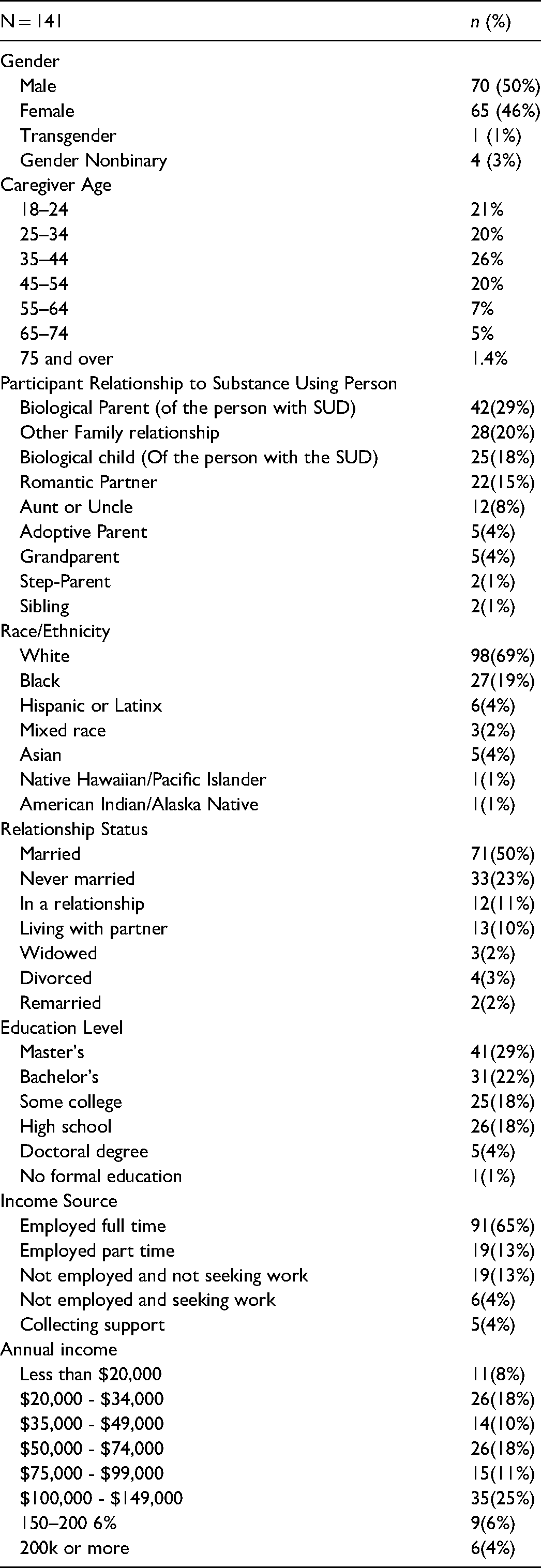
Given the topic of this paper is participant perception of treatment productiveness, participants were asked how many treatment attempts their loved one had initiated, and how many times they (as a family member or caregiver) had participated in that treatment to provide foundational information about the family members’ treatment participation. Most participants made one (n = 27, 19%) or two (n = 34, 24%) treatment attempts while some made three (n = 22, 16%) or four (n = 16, 11%) attempts. Few participants (n = 9, 6%) made five or six attempts, while 26 participants (18%) could not recall how many attempts at treatment their loved one made.
Forty (28%) participants in this sample did not participate in any of their loved one's substance use treatment. Twenty six percent of participants reported that their loved one sought (n = 36) inpatient treatment, 18% (n = 25) partial hospitalization, 23% (n = 32) intensive outpatient, and 30% (n = 42) used a twelve-step program. Thirty percent (n = 42) of participants used individual therapy, 18% (n = 25) attended family therapy and 6% (n = 8) attended couple therapy. These participants were not able to complete the PPI, the scale used to assess perception of productive treatment, as these participants had never participated in treatment to be able to identify it as productive or unproductive. Therefore, the total number of possible respondents for that scale is n = 100 as opposed to the full sample, n = 141.
Participants also reported demographic information about their loved one who misuses substances (see Table 2 for complete demographic information for loved ones of participants in this sample). The mean age for loved one's of participants in this sample was M = 21.5 (SD = 7.98). Loved one's primarily used alcohol or marijuana and were mostly white. Some participants, (n = 98) participated in their loved one's treatment, while some (n = 40) reported that they opted not to participate in their loved one's treatment, and four did not respond to the question. Participants who participated, and those who did not, answered questions regarding their decision-making process and experiences. Of the 98 participants who participated in their loved one's treatment, 33 participants said that treatment was not long enough to reach their stated goals, and 46 participants said that it was long enough, while 19 did not respond to this item. Thirty percent of participants (n = 29) estimated that they spent less than $10,000 to support their loved one's treatment. Twenty four percent of participants (n = 34) spent between $10,000 and $30,000 on their loved one's treatment, and 25% (n = 35) estimated spending between $40,000 and $100,000 on their loved one's treatment.
Caregiver Reports of Loved One's Demographic Information.
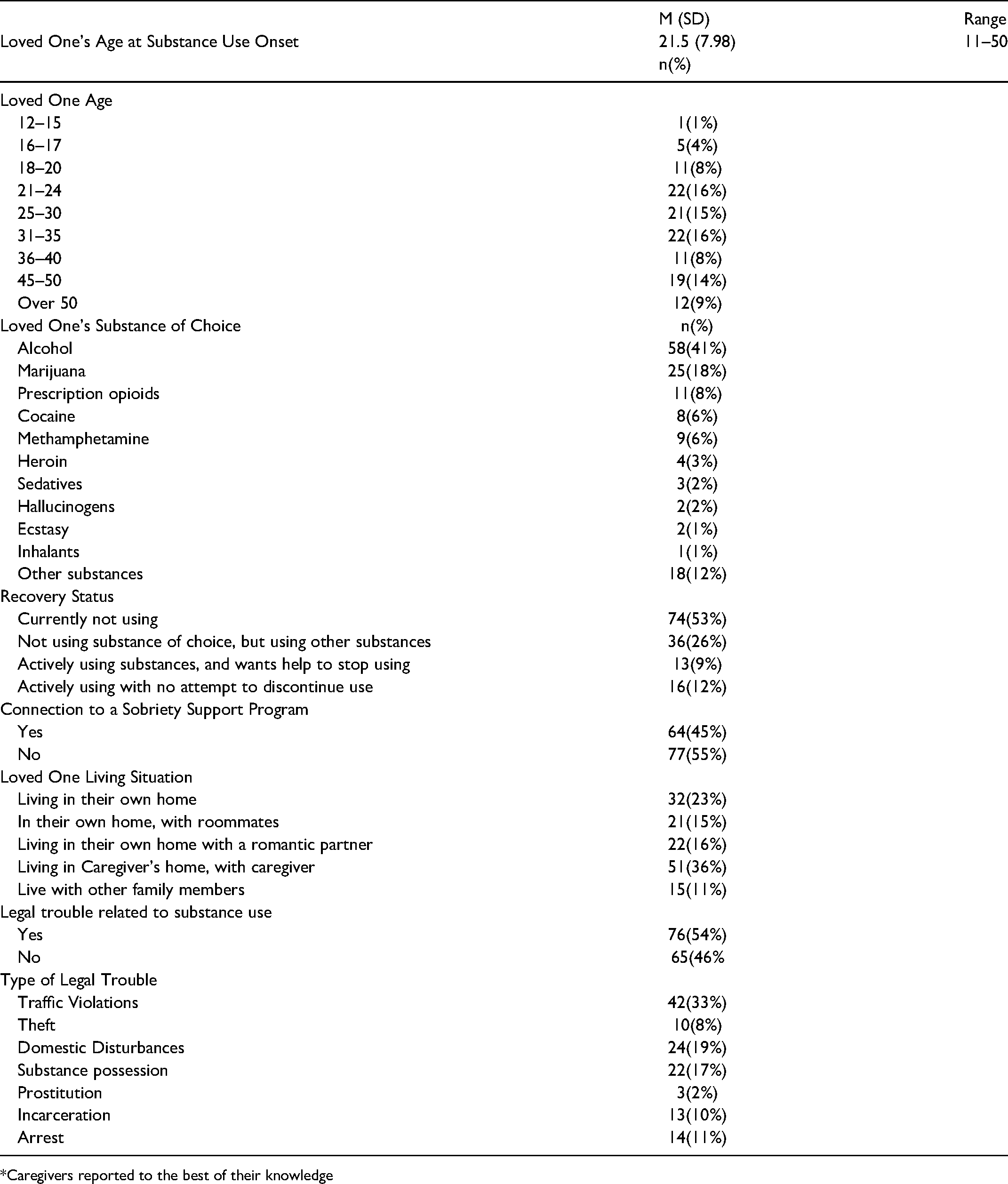
*Caregivers reported to the best of their knowledge
Quantitative Instruments
Anxiety
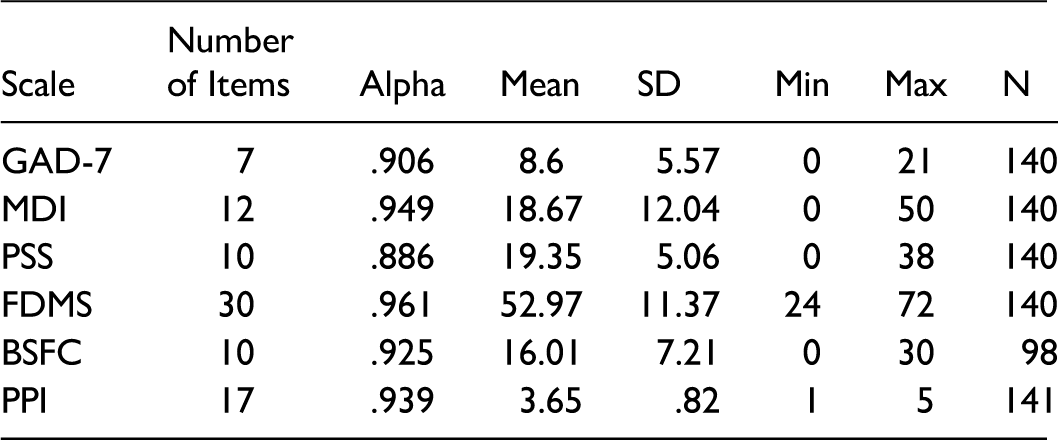
The Generalized Anxiety Disorder (GAD) seven-item scale measures symptoms of generalized anxiety (Spitzer et al., 2006) along a four-point Likert scale (1 = not at all, 2 = several days, 3 = over half the days, 4 = nearly every day). Items assess the frequency of nervousness, irritability, and restlessness. An example item is, “Over the last two weeks, how often have you felt nervous, anxious or on edge”. Overall scores range from 10 to 28 where higher scores indicating more severe anxiety symptoms. The measure is reported to have strong internal consistency (α = 82; Johnson et al., 2019) as it does in the present sample (α = .906).
Depression
The 10-item major depression inventory (MDI; Olsen et al., 2003) measures symptoms of major depression using a six-point Likert scale (1 = at no time, 2 = some of the time, 3 = slightly less than half the time, 4 = slightly more than half the time, 5 = most of the time, 6 = all the time). Items describe features of major depression including feelings of sadness, loss of interest in daily activities. Sample item included, “How often in the last two weeks have you felt low in spirits or sad?” Higher scores indicate higher levels of depression. The measure has strong reported internal consistency in the current sample (α = .949).
Perceived Stress Level
The Perceived Stress Scale (PSS) is a 10-item measure of respondents’ perceived stress level (Cohen & Williamson, 1988). The instrument includes items that address general feelings of stress, feelings of control, nervousness, irritability, and task management. A sample item is, “In the last month, how often have you been upset because of something that happened unexpectedly?” Responses are measured on a five-point Likert scale (1 = never, 2 = almost never, 3 = sometimes, 4 = fairly often and 5 = very often), then items 4, 5, 7 and 8 are reverse coded prior to calculating a total score with a possible range of 10–40; higher scores indicate higher levels of perceived stress. The measure has acceptable internal consistency (α = .73) (Luoma et al., 2010) and it is strong in the present sample (α = .886).
Caregiver Burden
The Burden Scale for Family Caregivers (BSFC) short version is a 10-item measure used to assess feelings of burden related to respondents’ role as a family caregiver (Pendergrass et al., 2018). Sample items include, “My life satisfaction has suffered because of the care I provide” using a four-point Likert scale (1 = Strongly disagree, 2 = Disagree, 3 = Agree, and 4 = Strongly Agree). Possible scores range from 0 to 30, where higher scores indicate greater perceived caregiving burden. The measure is reported as internally consistent (α = .941) (Pendergrass et al., 2018), and shows strong reliability in the present sample (α = .925).
Productiveness
The PPI is a 17-item measure designed to measure clients’ perceptions of psychotherapy treatment productiveness (D’Aniello & Tambling, 2019a, 2019b). The root question for the individual items was “Therapy is most productive for me when….” And includes such items as, “we talk about the problem that brought us to therapy during session,” “our therapist helps us feel hopeful that we can reach our goals” and “something helpful happens in each session.” Response categories along a five-point Likert scale are: 1 = Does Not Apply, 2 Not Productive, 3. Somewhat Unproductive, 4. Somewhat Productive, 5. Very Productive. A higher overall mean score indicates higher perceived productiveness. We applied the standard cutoff score for acceptable reliability of.70 (Nunnally, 1978). Cronbach's alpha was .89 (D’Aniello & Tambling, 2019a, 2019b), and the present sample, it was strong at .939.
Family Disease Management
The FDMS is a 29-item measure designed to quantify the frequency of the behaviors that family members perform to manage and adapt to their family member's disease condition (Lima-Rodríguez et al., 2015). Example responses include, “We worry about their condition” “We ensure the family works normally”, and “We collaborate with the healthcare professionals.” Responses are measured along a three-point Likert scale ranging from Hardly Ever, Sometimes, and Nearly Always. Higher scores indicate more frequent family disease management behaviors. The sale shows strong internal consistency reliability in previous studies (α = .93) (Lima-Rodríguez, et al., 2015) and (α = .961) in the present study.
Qualitative Instrument
The instrument for the qualitative strand of this study was a structured open-ended survey containing two questions that participants responded to using an open text blank on the survey. The first question was, “Considering all of your treatment experiences, describe what was most productive, helpful or useful about the treatment you participated in. What happened in those treatment sessions that most contributed to your change?” This question was intended to obtain information about participants’ experience of productive treatment. The second question was, “If you could change things about the treatment you received to make it work better for your family, what would you change and why?” This question was intended to elicit information about participant recommendations for treatment improvement.
Data Collection Procedures
Data were collected using an online survey panel company called Centiment. Centiment staff recruit participants widely from social media platforms including Linked in, Facebook, as well as targeted advertisements. Centiment verifies respondents using multiple methods, combining IP address, device type, screen size, and cookies to ensure that only unique respondents complete the survey, and that all responses are initiated by human respondents. Centiment builds a sample for each study based on the criteria provided by the research team in effort to sample broadly. This research team engaged Centiment to conduct recruitment and administer the survey. The project was approved by the Institutional Review Board of the authors’ affiliated university. To recruit participants, Centiment posted the recruitment document, which included the link to the consent document and survey in a Qualtrics platform, on social media forums. When potential participants viewed the recruitment document, and decided to participate, they clicked on the link to our Qualtrics survey, reviewed the consent form and provided consent, then began answering survey items. Participants were compensated for their participation by Centiment, using PayPal to transfer the incentive to the participant. To be included in the present study, participants must indicate they functioned in a caregiving capacity to a loved one with a substance use concern.
Quantitative Data Analysis
Prior to conducting the primary analysis, data were prepared. First, data were screened for missing data and outliers. All analyses were conducted using SPSS version 27 (IBM Corp, 2020). The Missing Values Analysis (MVA) package in SPSS was used to identify the frequency and pattern of missing data (IBM Corp, 2020). Results of the missing value analysis showed that 43 cases had more than 2% missing data. When analyzing missing data by item, no specific item contained more than 3% missing data. Pattern analysis showed that missing data had no discernable pattern. Therefore, we concluded that the data were missing at random, MAR. The SPSS missing value analysis (MVA) package was used to impute missing data using regression. Regression is a more sophisticated method for estimating missing data than deletion (Tabachnick & Fidell, 2013). To identify outliers, we computed Mahalanobis distance and found that that no values were significantly higher than the average (M = 84.06, SD = 7.27, Range = 52–89), thus, all elements were retained as they were expected to be within a reasonable distribution.
Qualitative Data Analysis
Thematic analysis (Braun & Clarke, 2006) was used to identify themes that describe participant treatment experiences. To begin qualitative data analysis, researchers imported data from SPSS to Nvivo version 12. Once the data were in Nvivo, the first author read the dataset in its entirety to become familiar with the data as a whole. On the second read through, the first author generated initial codes while reviewing the transcript line by line. The first author generated initial codes that captured the essence of what the participant was conveying. In phase three the authors focused on the broader level of themes, and we considered how the codes we assigned may combine to form overarching themes. We then reviewed and consolidated themes, and finally we assigned theme labels that are presented in the result section below.
Results
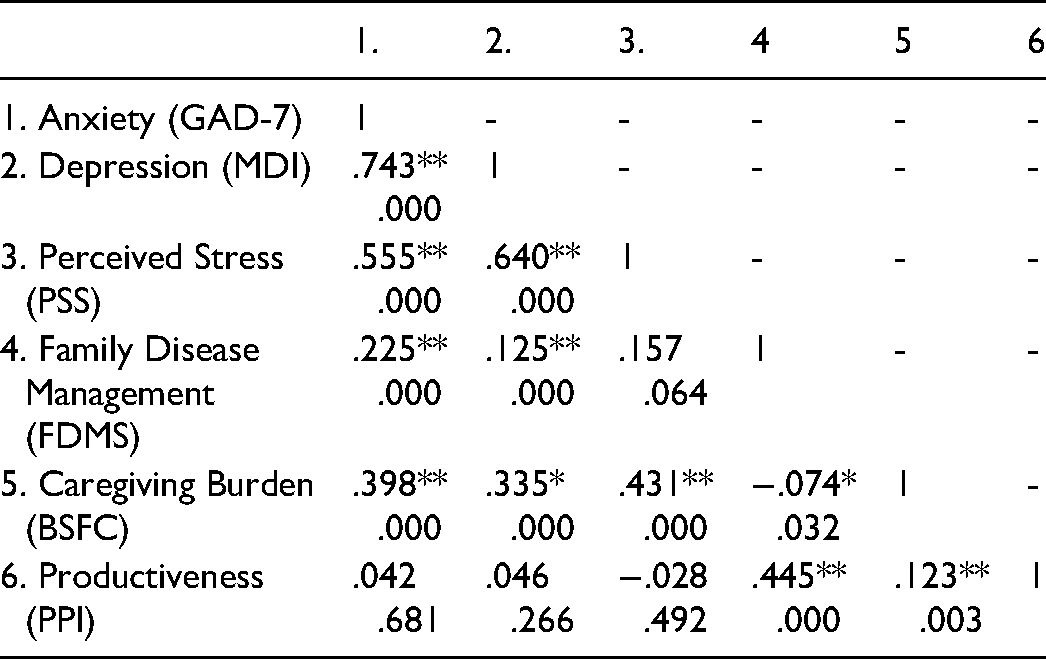
Regression analysis was used to predict the extent to which family disease management, perceived stress, depression, and caregiver burden predict anxiety for caregivers of loved ones with SUDs. The overall model was significant, F(4, 835) = 309.66, p = .000, R2 = .595 indicating that this model fit well. The FDMS had a significant contribution to the model, b = .071 t(835) = 6.59, (CI = .50,.93) p = .000. The perceived stress scale contributed significantly to the model, b = .065 t(835) = .048, (CI = .001,.128) p = .048. The caregiver burden scale contributed significantly to the model, b = .121 t(835) = .121, (CI = .084,.158) p = .000. The major depression inventory contributed significantly to the model, b = .277 t(835) = 21.83, (CI = .252,.302) p = .000.
To investigate the influence of productiveness on the relationship between family disease management and anxiety, a moderation analysis using the PROCESS macro for SPSS was performed. The full model was significant, F(3, 584) = 5.92), p = .0006, R2 = .029. The predictor variable was family disease management (as measured by the FDMS) [FDMS b = .3358, t(584) = 3.90, p = .000]. The moderator variable evaluated was therapy productiveness (as measured by the PPI) [b = 3.84, t(584) = 3.25, p = .0012]. The interaction between family disease management and productiveness was found to be statistically significant [B = −.0746, 95%, CI (−.117, −.0314) p = .0007]. The conditional effect of the IV on the DV showed corresponding results. At low moderation IVP = 3.0, the conditional effect = .1121D, 95% CI (.054,.171) p = .0002 was significant. At middle moderation IPV = 3.76, the conditional effect = .055, 95% CI (.0062,.104) p = .027 was also significant. At high moderation IPV = 4.47, the conditional effect = .002, 95% CI (−.056,.061) p = .933 the result was not significant. Overall, these results identify productiveness as a negative moderator of the relationship between the IV and the DV, meaning that productive treatment reduces the intensity of anxiety (Figure 1 and Tables 3 and 4).
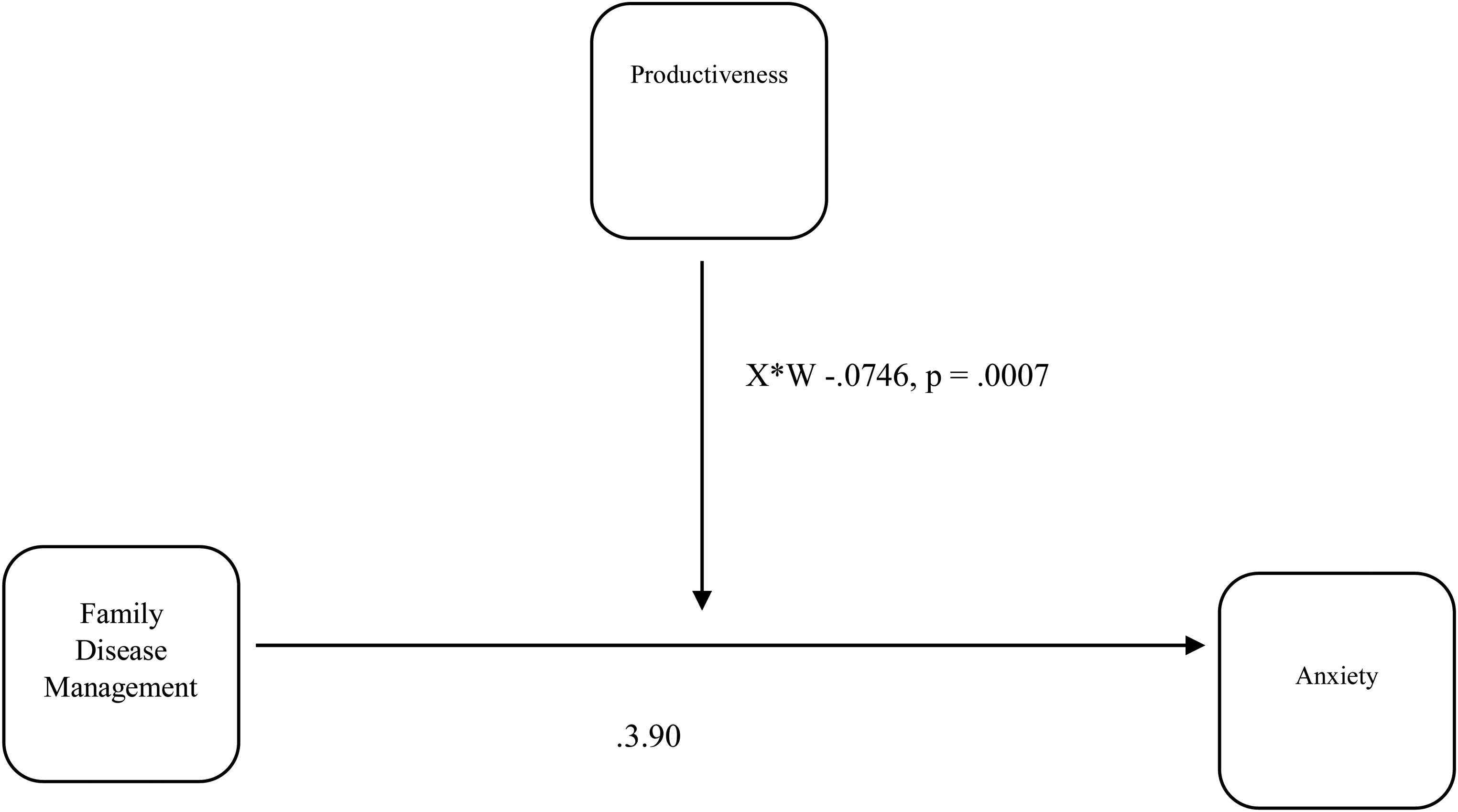
Simple moderation model.
Descriptive Statistics.
Variable Correlations.
Qualitative Responses
Participants (n = 40) who did not to participate in their loved one's substance use treatment were asked to report their reason for that choice. Thirteen participants said that the inpatient treatment facility was too far away from their home, making their participation impossible. Thirteen participants did not believe that their participation would be helpful for their loved one as they sought recovery, and therefore did not participate. For example, one said, “I decided not to, because my involvement only makes it harder.” Twelve participants stated that they did not participate because their loved one did not invite them or ask them to participate in the treatment. Seven participants also identified cost as their rationale for not participating. Three participants stated they were very angry with their loved one and did not wish to attend treatment, while one participant stated they did not believe in treatment. For example, one said, “I was angry that he had put us through it and felt he needed to go through it on his own and he never asked me to go with him.”
Ninety-eight (n = 98) participants who had participated in their loved one's treatment responded to open ended questions about their experience. Participants responded to the question, “Considering all of your treatment experiences, describe what was most productive, helpful or useful about the treatment you participated in. What happened in those treatment sessions that most contributed to your change?” Five participants said that watching their loved one get sober was the most productive aspect of treatment. Three participants identified talking about the problem as productive. For example, one participant said, “Honestly reviewing recurring issues [was the most productive].” Two participants said that having positive conversations about the problem was productive. For example, one said, “The talks and challenges [the therapist] had us do for a week.” Another said, “Participating I family weekends and having a chance to bond.”
Participants were also asked, “If you could change things about the treatment you received to make it work better for your family, what would you change and why?” Ten participants identified more family therapy treatment as a useful way to increase therapy treatment productiveness. One said, “More frequent and stronger engagement with all [family members] involved would be more productive.” Two participants said that having follow up visits with a family therapist after their loved one was discharged from inpatient treatment would increase treatment productiveness. Two participants also stated that they would have liked their treatment to be more cost effective, and less expensive.
Discussion and Implications
Caregivers of adults with a SUD often assume an off-time caregiving role, providing pragmatic, physical or emotional support to their family member who misuses substances (Russell & Guite, 2020) and are negatively impacted by the care they provide. While family members are frequent participants in SUD treatment, little is known about their experiences in treatment, or perceptions about productive elements of that treatment. Thus, researchers in the present study sought to investigate family caregivers’ experience of participating in substance use treatment with a loved one who is an adult with a SUD. Specifically, researchers sought to understand the factors associated with caregiver perception of treatment productiveness. Results indicated that family disease management, perceived stress, depression, and caregiver burden predicted anxiety for caregivers of loved ones with SUDs. This suggests that anxiety grows when caregivers feel stress, feel burdened by the care they provide, and experience difficulties in family management of aspects of the chronic condition. Results from the mediation analysis indicated that productive treatment experiences mediated the relationships between family disease management and anxiety, suggesting that productive therapy can be helpful in reduction of anxiety. Results of the qualitative responses suggest that treatment quite expensive, and potentially financially burdensome on caregivers. Further, caregivers reported a willingness to engage in treatment, and the impression that family sessions in which problems are discussed are productive portions of the treatment. Taken together, these results point to the importance of productive treatment in ameliorating the harmful effects of SUD management on family members. Further, these results imply that family members take an active role in managing their family members’ SUD. Results further imply the importance of including systemic family therapy in SUD treatment.
Limitations and Future Directions
Despite the promising results of the present study, it was not without its limitations. First, there are limitations that exist based on the method of sample recruitment and engagement. Using a paneling company, Centiment, may have impacted the type of participant who engaged. Participants were recruited via online advertisements, and Centiment provided all screening of subjects. It is possible that different recruitment methods might yield different samples, and different outcomes. Further, research which engages more diverse samples through other means is warranted. Another limitation is with the conceptualization of family participation in substance use treatment. We allowed respondents to indicate whether the participated in substance use treatment with a loved one, which results in natural variation in the operationalization of the construct of participation. This was a purposeful decision on the part of the researchers, who wished to use a more general definition in an effort to engage in exploratory work. Future researchers are advised to consider carefully how family participation in treatment is defined. Further, the conceptualization of caregiver was broad. We selected a broad definition of caregiving to include diverse experiences, but perhaps a parent, or other close caregiver might have different experiences, and might be represented better by a more homogeneous sample. Finally, the application of the FDMS to a sample of caregivers of adults with a SUD is a new application of the measure. The measure is widely used with other medical conditions requiring care but has not been used in a similar sample. Future researchers should conduct examination of criterion-related and construct validity to ensure that this application is warranted across samples. Finally, while the researchers did make some open-ended inquiries, these are far from a proper qualitative inquiry. We suggest that future researchers consider qualitative approaches to this area of research inquiry and engage in well-designed studies using constructivist qualitative methodologies.
Conclusion
In summary, participants in this study faced challenges as they provided care to a loved one with a SUD. Participants reported feelings of stress, anxiety, caregiving burden, financial concerns, and family discord. Despite these challenges, the majority of participants participated in their loved one's SUD treatment in some way and were able to provide critical information about the experience. This information about perception of treatment productiveness for caregivers of loved ones with an SUD is critically useful for improving treatment such that more caregivers who engage in treatment can derive increased treatment benefits.
Footnotes
Declaration of Conflicting Interests
The author(s) declared no potential conflicts of interest with respect to the research, authorship, and/or publication of this article.
Funding
The author(s) received no financial support for the research, authorship, and/or publication of this article.
