




Abstract
The primary aim of the literature review is to explore the relevant literature on the use and effectiveness of genograms in family therapy. The literature is predominantly related to the use of genograms in various settings and adaptations. There are minimal studies on the effectiveness of genograms as a therapeutic tool in family therapy. Searches were conducted of MEDLINE, EMBASE, CINAHL, SCOPUS and PsycINFO electronic databases. The international review includes all studies, irrespective of study methodology. This review will inform clinicians working in family therapy and other relevant disciplines on the usefulness of genograms as a therapeutic tool, examples of adaptations to the traditional genogram for specific populations and purposes, and, to a lesser extent, the therapeutic effectiveness of genograms in family therapy. The results and discussion will provide insights on the utilisation of genograms, the range of population, gaps in the existing literature and the need for further research.
Introduction and Background
The word genogram first appeared in published literature internationally in 1972 (Butler, 2008) with the tool still used in mental health, social work, genetic research and education today (Garth, 2016). A genogram is a fundamental tool to represent family connections, generations and structure symbolically (Cuartas Arias, 2017). A genogram can aid engagement and strengthen the therapeutic relationship while facilitating a deeper understanding of the family structure (Mackay, 2015). Family therapy seeks to improve the interactions among members of a family or similar close relationship to improve their functioning both as a unit and as individuals (Australian Counsellors and Therapists, 2020). The primary use of the genogram in family therapy is in conducting assessments and collecting history (Mackay, 2015). However, a genogram co-developed by the therapist and the client with deeper explorations beyond the visual mapping of generations can bring forth many relevant findings (Mackay, 2015; Majhi et al., 2017; McGoldrick & Gerson, 2016; Nicoll & Hawes, 1985). According to Mackay (2015) genograms are also an effective tool in counselling with children, and when co-developed with a child a genogram can be beneficial when discussing uncomfortable family environments or incidents, increasing rapport and building a shared understanding between therapist and client.
It is necessary to acknowledge the high prevalence of mental illness and be sensitive to the impact on families. The interest to conduct this literature review is based on the clinical experience of working with families where a parent has a mental illness. The researchers work in the Victorian ‘Families where a Parent has a Mental Illness’ (FaPMI) programme. This programme aims to reduce the impact of parental mental illness on all family members through timely, coordinated, preventative and supportive action (La Trobe University, 2021). The FaPMI programme was launched as a service development strategy in 2007 by the Department of Health, Mental Health Branch, following recognition of the multifactorial impact of mental illness on parents and other family members, particularly dependent children (Department of Health, 2011). There have been studies on the efficacy of genograms in genetics, social work, education, and research (Garth, 2016; Mackay, 2015). The therapeutic effectiveness of interactive genograms when working with children is also explored limitedly (Mackay, 2015). This literature review aims to explore the use of genograms in family therapy and their efficacy. Gaps in the existing literature have been identified and opportunities for future research will be discussed.
Method
The purpose of this literature review is to identify and analyse the literature around the research question. In addition, this review has mapped and discussed the key concepts identified from the studies included and utilised the methodology described by Arksey and O‘Malley (2005) and endorsed by the Joanna Briggs Institute (Peters et al., 2020). The review process involved the following five stages. Stage one established the research question and timelines. Stage two identified the relevant studies by using several databases and search terms. A university librarian was consulted and actively involved in selecting the appropriate keywords and the most appropriate ‘MeSH‘ terms and filters to use to maximise the inclusion of articles within the search. These studies were uploaded into an online platform for the members to access and review based on the ‘exclusion and inclusion criteria. Stage three consisted of selecting studies. Studies selected and rejected were further reviewed and agreed upon by all three authors. The decisions were documented along with reasons for disagreements. Stage four involved capturing the key information and concepts from the selected articles in a table (Table 1). The table was reviewed and revised multiple times. Stage five involved collating, summarising and reporting the results in the discussion. The selected articles were analysed to address the research question.
Study Extraction.
Search Strategy and Study Extraction
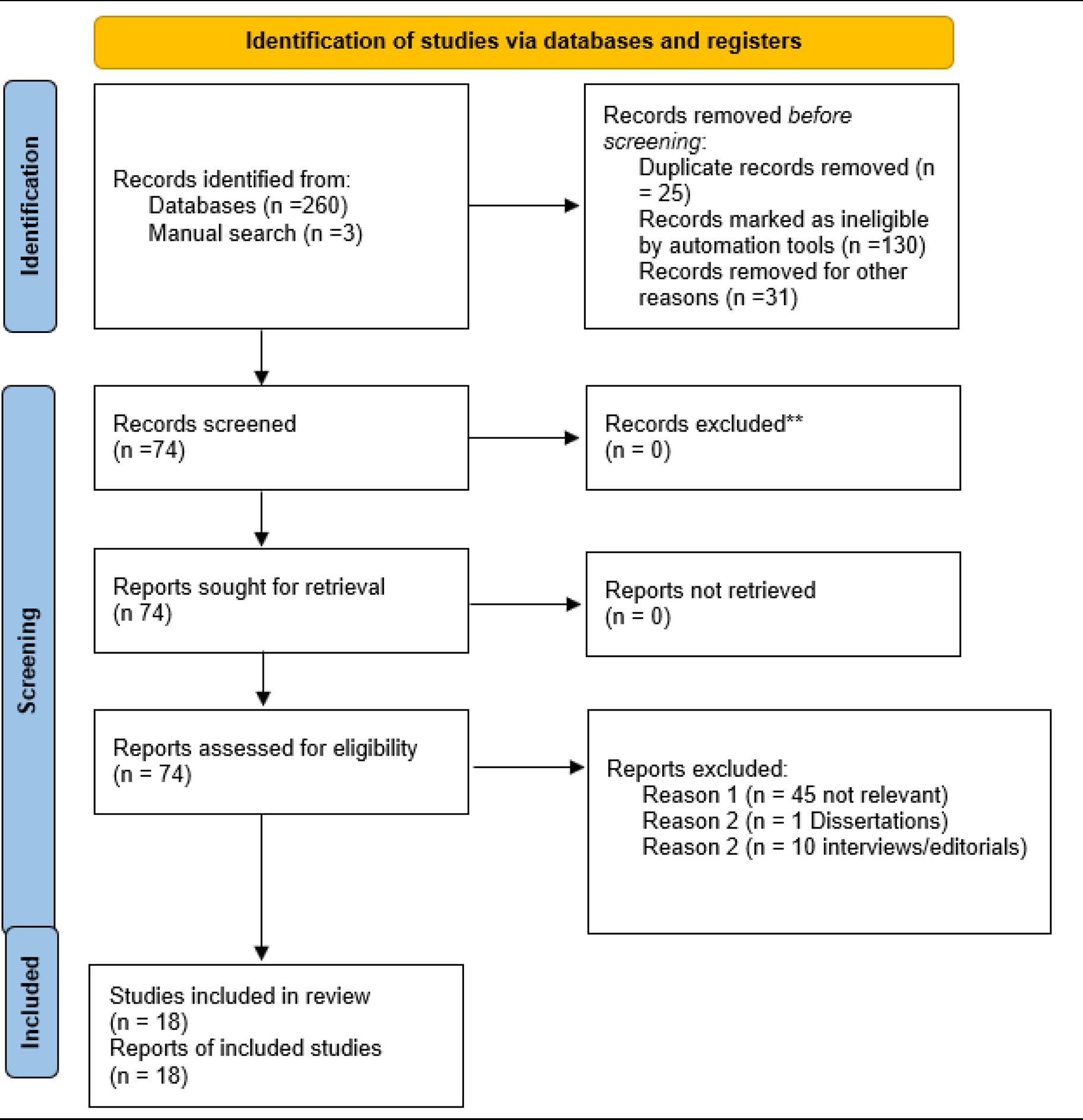
The search aimed to locate published, peer-reviewed literature, limited to the English language due to the lack of translators and within a 20-year date range. Articles were included if they were about the use of genograms in family therapy. There were no criteria related to the study design. An initial search was carried out in CINAHL to identify terms utilised by authors when writing about genograms and family therapy, which were then developed into a comprehensive search strategy used in September 2020 in several databases: CINAHL (EBSCO), Medline (EBSCO), PsychInfo (EBSCO), PubMed, Web of Science, Taylor and Francis and Scopus. Manual searching of key journals on the research question has also been performed. The terms included keywords and subject headings and were altered to fit the requirements of each database.
(parent* OR famil* OR carer OR guardian) AND ("mental illness” or “mental health” or “mental disorder” or “psychiatric disorder” or “psychiatric illness") AND genogram AND ("family therapy” OR “family work” OR counselling)("mental illness” OR “mental health” OR “mental disorders” OR “psychiatric disorder” OR “psychiatric illness") AND (genogram* OR “family tree”) AND ("family therapy” OR “family work” OR counse#ling OR “narrative therapy” OR psychology OR psychotherapy OR “health care” OR “health services” OR “mental health services”)
Inclusion Criteria
National and international studies on family therapy, use of genograms, the effectiveness of genograms, genograms used as an intervention
Any age population English language Articles from 2000, Fulltext, peer-reviewed
Exclusion Criteria
Studies on other interventions and tools
Languages other than English
Opinion pieces and interviews
The initial search was based on the research question ‘what is the evidence for the therapeutic use of the genogram in family therapy?‘. Family therapy is a psychotherapeutic practice that provides the opportunity for a clinician to build a working partnership with an individual or members of a family, including children, to explore and express challenging thoughts and emotions safely, and to understand and improve relationships (Australian Association of Family Therapy, Nd). The search criteria for this review were broadened due to the identified gap in the literature, with no studies found that were related to the family therapy setting specifically. This review did identify a small range of literature on the effectiveness of genograms in various other settings.
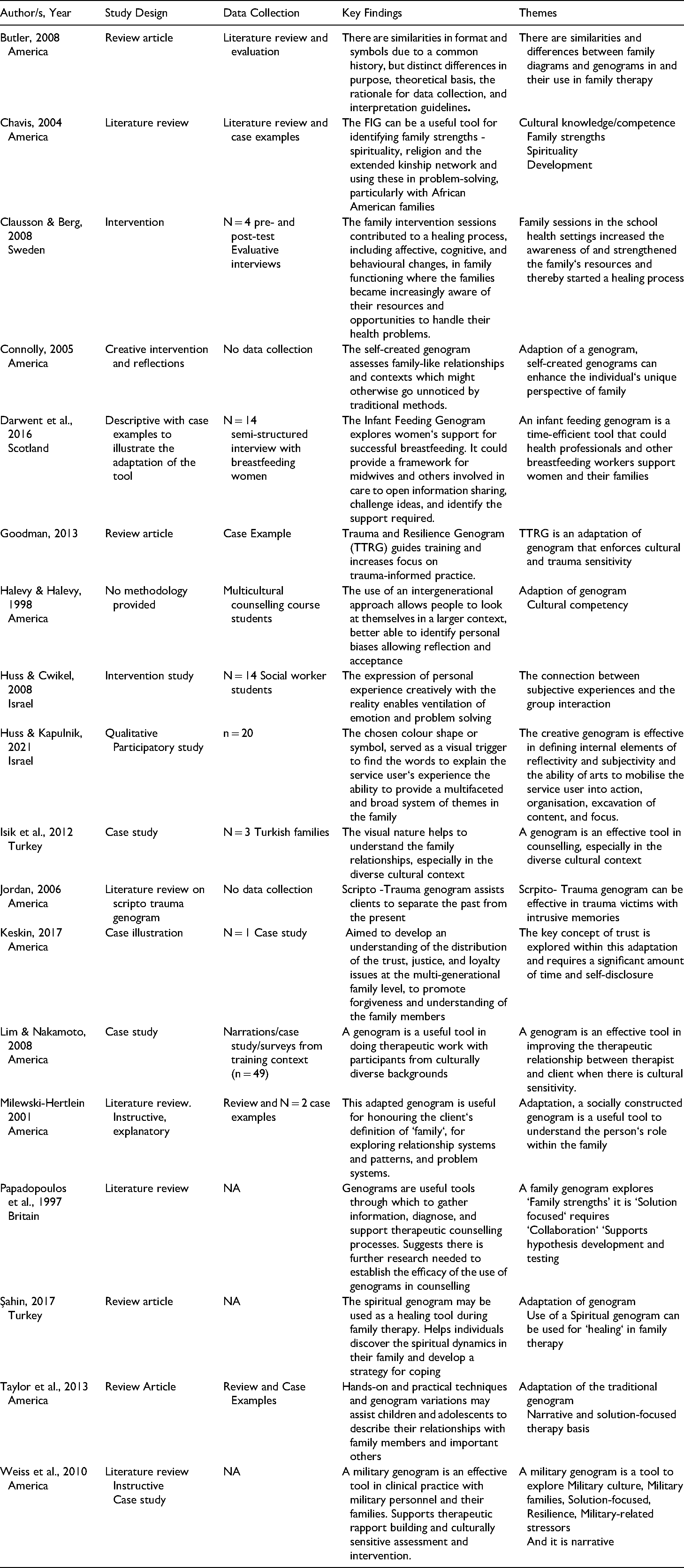
A total of 235 results were found using the search terms, and when duplicates were removed there were 74 articles to be screened. There were also an additional 3 articles individually found by members of the research team. After screening, there were 44 articles selected for further reading and consideration for inclusion in the literature review that met the inclusion criteria of the use of genograms in family therapy. The full-text version of 44 articles was able to be retrieved and was subsequently analysed using a data extraction table. After a review of the full text by three reviewers, 18 articles were selected to be included in the literature review (Table 1).
Charting the Data
The full-text articles were placed on a shared extraction table for review, individually reviewed by all three authors and marked ‘include‘, ‘exclude‘ or ‘maybe‘. The articles were re-read when there was a conflict of opinion, followed by further discussion based on inclusion criteria before a final decision was made. After selecting the articles for review and if the inclusion criteria were met, the study was placed in the final table (Table 2).
The Study Characteristics.
Results
The Study Characteristics
As seen in Table 2, few (n = 2) studies were intervention based, and some (n = 5) studies had no mention of research or background theory behind the intervention. The intervention based studies were mainly focused on the adaptations of genograms and the benefits of those adaptations. Participants of these intervention studies included children and adults. The data collection used for the intervention studies were interviews and evaluations. A few studies were on students and aimed to evaluate the adaptation of genograms (n = 3). This literature review has also used (n = 4) literature reviews with or without case examples and other (n = 4) articles with no specific research methods. Several studies have investigated. Insights drawn from the literature regarding the benefits of genogram use to therapy, developments and modern adaptations to design have been organised into themes below.
The literature search demonstrated a scarcity of empirical research on the therapeutic effectiveness of genograms in family therapy in the international context. Nonetheless, the available literature supports the use of genograms in various clinical settings. The evidence indicates that there are benefits to using genograms and acknowledging and utilising the options of modifications promotes a person-centred approach. The literature highlights that traditional genograms have limitations while modern genograms allow adaptations (Butler, 2008). The following discussion of the therapeutic advantages of genograms takes a broader focus based on the findings and key themes from the selected studies (Table 2). The main themes discussed in this review are ‘genogram as a vehicle‘, ‘limitations of traditional genogram‘, ‘adaption of the traditional genogram
Genograms as a ‘Vehicle‘
Genograms can act as a vehicle (Taylor et al., 2013) or mechanism (Chavis, 2004) through which a range of practical, exploratory and therapeutic processes can occur. Genograms are an efficient means of capturing large amounts of information on family patterns, as well as classifying information about the family in the broader context (Butler, 2008).
Genograms facilitate the exploration of a client‘s concept of ‘family‘ (Connolly, 2005; Halevy & Halevy, 1998; Taylor et al., 2013) and the strength of the relationships between family members (Taylor et al., 2013). In describing the use of a genogram in sessions with children and adolescents, Taylor et al. (2013) state “the genogram became the vehicle through which the session was conducted, problems were explored, supports were uncovered, and new attempts to solve old problems were created” (p283). Connolly (2005) identified that genograms supported the practitioner‘s understanding of their client‘s social context, and the client personally, through a collaborative and client-led process. Stanion et al. (1997) describe genograms as a useful tool through which to stimulate a family‘s curiosity about their narrative and the social context of their health issues. Taylor et al. (2013) observed the benefits of the genogram in providing a tangible, but less verbal, vehicle for examining relationships between family members.
In the trauma counselling setting a genogram can be utilised by the practitioner to support an understanding of the client‘s broader ecosystem, promoting the inherent strengths and systemic support of clients who have experienced trauma (Goodman, 2013).
From a therapeutic perspective, Chavis (2004) found that genograms could support the understanding of family strengths and values, explore spirituality and foster insight. Genograms can also provide an opportunity to orient “families to a systemic perspective that all family members are involved with each other” (Butler, 2008, p. 175).
Limitations of Traditional Genograms
The genogram gives a pictorial representation of family history, relationships and compositions and is an important tool through which we can learn about family. The conventional genogram however focuses on biologically related family members, not necessarily complex interconnections or kinships, and may not allow the inclusion of those living in the same household who are not genetically related (Milewski-Hertlein, 2001). Additionally, the static nature of traditional genograms limits their capacity to reflect the rapidly changing societal definition of ‘family‘ (Connolly, 2005) and the fact that there is no correct definition for a family (Milewski-Hertlein, 2001).
The process of developing a traditional genogram is not necessarily strengths-focused or one that provides the therapist with an opportunity to introduce a sense of hope and optimism. Taylor et al. (2013) note “although standard symbols have been enlisted for genogram representation for many years, many focus on the more negative aspects of relationships, such as cutoff, enmeshment, or conflict” (p283).
Globally, many aspects of clinical care are moving away from paper-based forms and documentation, therefore practitioners may elect to use software to construct, edit and retain the genograms they create with clients. While it is beyond the scope of this article to review the software options available, Papadopoulos et al. (1997) refer to early developments in the 1980s, and Butler (2008) lists several programmes developed more recently. It is possible that for practitioners who use the genogram as a collaborative, visual or creative exercise, a paper-based approach may be preferable to the electronic options available.
Importantly, the skill level, knowledge and experience of the practitioner can have an impact on the usefulness of genograms. Genograms can lack meaning until the client, with the support of the practitioner, has developed insight into the impact of relationship patterns and events through the description of the link between the symbols used (Kuehl, 1996).
Internationally the social, political, cultural or community-related factors that impact and influence a family system are not incorporated into traditional genograms. Therefore, according to Goodman (2013), an adaptive genogram is necessary to capture transgenerational trauma and resilience.
Adaption of the Traditional Genogram
In the face of such limitations, modern genograms have evolved in diverse directions (Butler, 2008). Practitioners and scholars have extended the use of the genogram to allow for a greater emphasis on discovering sources of family strengths and resilience instead of focusing on maladaptive family patterns (Goodman, 2013) and to meet the needs of diverse populations (Darwent et al., 2016; Weiss et al., 2010). This next section will look at these adaptations to the traditional format.
Connolly (2005) presents the self-created genogram model, a modified genogram that provides an opportunity to discover family, invite creative expression, and mutually explore areas of importance to others. The adaptations made to the genogram demonstrate flexibility in design and implementation in family therapy training, continuing education programmes or clinical work. Utilising a case study, Connolly (2005) demonstrated how stressors present for the participant would not have been uncovered if the genogram had been utilised traditionally, and proposes the self-created genogram as a creative means to discover family and infuse a broader, multicultural approach in counselling.
Taylor et al. (2013) worked with middle and elementary school children and employed variations of the traditional genogram with seven creative techniques presented that the authors had either utilised or observed in use. These adaptations for different populations of children shifted the focus from the negative elements of relationships they might be experiencing such as cutoff, enmeshment and conflict. Instead, symbols were created to represent strengths and resources that can be gained from the relationships from a child‘s perspective.
Another creative, multidisciplinary approach is described by Huss and Cwikel (2008) incorporating social work, family therapy and dynamic art therapy. The genogram is used in a group setting and developed using individually designed symbols, mixed media, and a personal choice of colours to represent the impact of relationships or events. The group works together to adjust the design elements of their co-participants ‘ genograms to aid interpretation, reflection and re-framing. Through this approach “the use of a creative art process helped to maintain feelings of control while allowing the participants to experiment with alternative modes of interpretation” (p175). More recently, Huss and Kapulnik (2021) conducted a participatory study with family social workers using a creative genogram to explore the mechanisms of social art as an alternative language in therapy. The benefits identified included enhanced emotional reflection, the ability to symbolise broad family experiences and cultural themes, and active involvement of the participant in the process. Participants did however identify barriers related to the use of art as a medium, such as “fear of failure or not drawing well enough and fear of being diagnosed or having unconscious contents exposed” (p396).
Milewski-Hertman (2001) discusses the Socially Constructed Genogram, informed by the social constructionist movement and postmodern theories of family. Based on onion theory, where “the client is the core of the onion” (p32) other people are symbolically represented around the participant in the ‘rings’ of the onion. This placement is not dependent on their biological connection, but on the perceived closeness of the relationship. This adapted genogram assists the clinician to gather information on how the person views self in the social context (Milewski-Hertman, 2001).
The Transgenerational Trauma and Resilience Genogram (TTRG) examined by Goodman (2013) recognises that trauma and the experiences of trauma are explored within counselling but the complexity of the experiences may cause counsellors and psychologists to struggle to conduct comprehensive assessments and interventions with participants. The TTRG assists the practitioner to identify transgenerational trauma, that is the transmission of trauma from one generation to the next. This adaptation of the genogram to include an ecosystemic perspective beyond the nuclear family can be utilised with individuals, families or groups to examine resilience, including patterns and mechanisms for coping across generations. This adaptation allows for reflection on coping styles to determine whether they continue to be effective for the individual, family or group, intending to build on historical strengths or adjust coping styles to fit the current context.
An adaptation to the traditional genogram developed by Darwent et al. (2016) gathers family history as it relates to infant feeding and support networks that had been previously unexplored during pregnancy. The Infant Feeding Genogram allowed the discovery of family scripts and narratives underpinned by shared attitudes, beliefs and values regarding infant feeding which were often transmitted through generations in Scotland (Darwent et al., 2016). This in turn created an opportunity to identify sources of support for women at risk of being unable to commence or sustain breastfeeding due to a lack of family experience.
Lim and Nakamoto (2008) noted that genograms can be an effective tool for people from diverse cultural backgrounds and to identify the influence of heritage and culture in generations. The authors conducted a study with participants from Malaysia, Japan and Cambodia and suggest the use of a genogram is beneficial in identifying migrations, cultural transmission, and the impacts on families (Lim & Nakamoto, 2008). However, one limitation identified in this study was the narrow representation of only three counties in the wider Asian context.
Another similar study (Isik et al., 2012), reported that when working with Turkish families, the visual representation in the genogram assisted with identifying the functioning of the family. The authors note that “in more collectivist, interdependent, or group-oriented cultures like that in Turkey” (p132), intergenerational transmissions become more explicit in comparison to Western cultures. Whilst no adaptation was overtly noted or discussed, the consideration of cultural beliefs across family generations was identified as necessary during the making of a genogram with families, thereby adding value to the counselling process.
Weiss et al. (2010) proposed the military genogram for use with military personnel and their families to support the provision of culturally sensitive assessment and intervention services for this cohort. The authors explain that the military is a unique culture composed of distinct ethics, core values, codes of conduct, and strict hierarchical roles. Assessment and interventions aimed at supporting military families are generally limited, with the authors identifying that a military-specific genogram coupled with a solution-focused strategy provides a strengths-based approach in the identification of family and relational patterns, bolsters resiliency and guides the approach to relevant family interventions.
Genograms often provide a useful means for practitioners to explore religious and spiritual issues and their impact of these on people‘s lives (Chavis, 2004). The discovery of their spiritual dynamics can often assist people to develop strategies for coping with challenges (Şahin, 2017). Chavis (2014) focuses on the identification of key family strengths for African American families inclusive of spirituality, religion and extended family networks through the use of a spiritual genogram. Both Chavis (2014) and Şahin (2017) note that genograms provide an exceptional mechanism to encourage insight and awareness by focusing on strengths, beliefs, and traditions in families. A spiritually focused genogram allows therapists to understand participants’ worldviews and the meaning they make of the world from a spiritual perspective. It also provides an excellent tool for exploring the dimensions of human experiences and the spiritual dimensions of those experiences intergenerationally.
The literature supports the adaption of the genogram driven by the need to provide culturally sensitive approaches to the populations practitioners work with. Much of the literature reviewed asserts the importance of a culturally sensitive approach while completing genograms with people from a diverse population (Isik et al., 2008; Lim & Nakamoto, 2008).
Genograms as Therapeutic Tools
Genograms, whilst commonly viewed as assessment tools, have the potential for therapeutic purposes (Taylor et al., 2013) or to be therapeutic interventions in themselves (Goodman, 2013). Keskin (2017) likens the mapping of family patterns in the genogram to the contextual therapy model focusing on objective facts, individual factors, relational dynamics and relational ethics. Papadopoulos et al. (1997) describes genograms as “both a therapeutic intervention and part of the process of counselling” (p17).
The value of the genogram in therapeutic rapport building is observed in the literature review. Weiss et al. (2010) and Connolly (2005) speak of the genogram as a tool that can facilitate the development of rapport with a client or a family. Connolly (2005) in particular notes that “a mutually collaborative genogram process can permanently anchor the therapeutic alliance and enhance the power of the genogram for the client” (p83), and Taylor et al. (2013) describes postmodern and adaptive genograms as tools for a collaborative process where the client is the expert of their life and relationships, and the practitioner plays a consultative role. One practitioner in White (2018) research noted that genograms further assisted to establish the client‘s wishes around what was to be discussed as part of the intervention.
White (2018) reports that clinicians find genograms to be useful in their engagement with families, and a non-threatening therapeutic tool has given the need for less eye contact and the fact that the visual genogram becomes the focal point rather than the client. Papadopoulos et al. (1997) suggests that when used with family groups, genograms can be a means of drawing the focus away from an individual family member as the “problem” or the person who needs to change and gives attention to the family system, and the events or experiences members have shared and perhaps interpreted differently.
Narrative, strengths-focused and solution-focused genograms and approaches were mentioned frequently in the literature review. Goodman (2013) utilised a solution-focused approach, and Taylor et al. (2013) and Kuehl (1996) identified examples of alternative genogram construction that provide an opportunity for the practitioner to look at relationship characteristics, a key focus of solution-focused and narrative therapies. Kuehl (1996) notes that a “solution-based and narrative genogram helps clients to distance themselves from a historically rooted pejorative self-image without having to cut off from the family” (p9). Gardner, & Werner-Lin (2009) note that “by exploring family narratives, therapists can illuminate the often-unarticulated beliefs and patterns that family members rely on to navigate their lives together” (p201).
Weiss et al. (2010) found that an adapted genogram that combined solution-focused and strengths-based approaches assisted to identify family and relational patterns while promoting resilience, and was beneficial in developing relevant family interventions. Goodman (2013) and Chavis (2004) noted that strengths-focused approaches were key in genogram use with practitioners able to promote resilience and healing through a focus on individual, family and community persistence, the overcoming of obstacles and assisting others to overcome obstacles.
Discussion
The authors pursued this review of the literature on genograms and their efficacy in family therapy with the adult mental health care service setting in mind.
International literature related specifically to the acute mental health service context was lacking, leading to an expansion of the search to include a range of service settings. Some articles discuss genograms as useful therapeutic tools however quantitative data in the literature regarding efficacy was limited, with no comparison of the efficacy of the genogram to other therapeutic tools that may be utilised in family therapy or mental health care. There is an opportunity for further research into the efficacy of genograms concerning information gathering and the therapeutic, relationship and recovery outcomes. It also remains unclear as to which particular adapted genograms or genograms are most appropriate for use with mental health service consumers and families in Australia.
Some of the selected studies indicate that the use of genograms can strengthen a family‘s own resources and adapted genograms can improve an individual‘s perspective of the family (Clausson & Berg, 2008; Connolly, 2005).
The majority of articles reviewed were written from the perspective of the practitioner, with limited exploration of the client‘s view on the use of genograms in therapeutic interventions. It, therefore, remains unclear whether the practitioners are making assumptions about the positive nature of the client‘s experience, or if the client did believe the genogram to have been effective in achieving positive outcomes for them or their family.
Many studies focused on the flexibilities and potentials of adaptive genograms including creative genograms in various settings (Huss & Kapulnik, 2021; Darwent et al., 2016; Halevy & Halevy, 1998). The adaptability of genograms adds to its utilisation in all countries and cultural groups. A few selected studies highlighted the effectiveness of genograms on trauma survivors (Goodman, 2013; Jordan, 2006).
Conclusion
Genograms are an evolving and flexible tool that can be utilised not only for the practical purposes of information gathering and the organisation of complex family systems, relationships and patterns but also as a vehicle for a range of therapeutic purposes. Modern genograms have been adapted to overcome the limitations of the traditional genogram. Today‘s genograms are collaborative, strengths-focused, solution-focused and often narrative tools that can be utilised in sensitive contexts such as individual or community-based trauma.
Based on the evident usefulness and therapeutic benefits of genograms across a range of settings in which family therapy approaches are utilised, it would be ideal to see them incorporated into the public mental health service context as one of the therapeutic interventions available in a practitioner‘s toolkit. The ongoing use of genograms is recommended by the Victorian Office of the Chief Psychiatrist as part of family-focused interventions and is a particular priority in the process of identification of families, carers, children and other supports (Department of Health, 2018). Supported by the international literature, the ‘Working together with Families and Carers’ Office of the Chief Psychiatrist Guideline (Department of Health, 2018) encourages mental health service clinicians to “use a genogram or other tools as part of routine assessment” (p11) which supports the authors’ belief that training in genograms should be a requirement for those working with individuals, families and children in public mental health in Australia.
A genogram enables the symbolic representation of a family and its broader social context, however adaptation is required to meet the therapeutic needs of the person at its centre and the practitioner supporting them. Training that supports the awareness of modern, adapted genograms would be of benefit to practitioners aiming to utilise genograms for therapeutic purposes.
Barriers to genogram use in the acute mental health setting in Australia and globally may include practitioner confidence and capacity, time and workload pressures and competing documentation demands. Certain practitioners due to a lack of preparatory training may also perceive genograms to be outside the scope of their role. Along with training for practitioners, enablers that may support the increased use of genograms in public mental health care include the cultural and legislative shift towards family inclusive practice, and communication that genogram use fits with the existing and long-standing strength-focused and recovery-focused models. With most services moving to electronic medical records and phasing out paper-based forms, electronic genogram programme options may also support the meaningful use of these tools as part of the assessment process.
Given the gaps in the literature that have been identified and discussed in this review, many opportunities for further research are proposed. Research that examines the use of genograms in the acute mental health setting would be of value, particularly to strengthen the evidence base for the therapeutic efficacy of genograms, identify the most appropriate adaptations for the client cohort, and understand the experience of genogram use from the perspective of clients and families as opposed to the practitioners implementing them.
The authors recommend that accessible training for practitioners in genogram theory and the process should form an important element of family inclusive practice workforce development plans at acute mental health services.
Footnotes
Statement
All authors involved in this manuscript meet the authorship criteria and are all in agreement with the manuscript
Disclosure Statement
The authors report no conflict of interest
Ethics
Literature review, no ethics approval
Declaration of Conflicting Interests
The author(s) declared no potential conflicts of interest with respect to the research, authorship, and/or publication of this article.
Funding
The author(s) received no financial support for the research, authorship, and/or publication of this article.
