



Abstract
The goal of this study is to understand the experiences of having an absent parent, meaning a parent who is not physically or psychologically involved in raising a biological child by choice, and test how having an absent parent contributes to mental well-being and romantic relationship quality. Using family systems theory as a foundational framework, this study applied a mixed-methods design, where participants completed an individual interview (N = 28; 100% had an absent parent) or online survey (N = 174; 30.4% had an absent parent). Reflexive thematic analyses revealed negative psychological consequences, such as feeling guilty, numb, and depressed, due to having an absent parent. Those with an absent parent reported attachment issues, avoiding relationships in general, and trust issues in their own romantic relationships. Regression analyses revealed that for those with an absent parent, having more abandonment issues predicted poorer mental well-being, even when controlling for family functioning, communication, and rapport with the single parent growing up. Having an absent parent was also associated with increased sexual behaviors. Generally, having an absent parent was associated with interpersonal and relational consequences for emerging adults.
Introduction
An absent parent, whether by choice or circumstance, can significantly impact a child's overall well-being. Such absence can lead to emotional and psychological struggles, including feelings of abandonment, low self-esteem, and difficulty forming healthy relationships (Baisden, 2016). Children may experience a sense of loss and longing, impacting their sense of security and stability (Baisden, 2016; Malik et al., 2022). The absence of parental guidance and support can also hinder academic performance, social development, and emotional regulation, potentially leading to long-term consequences such as disruptions in mental and emotional well-being (Balistreri & Alvira-Hammond, 2016; Cooke et al., 2019; Yousefi et al., 2024). In the context of this study, an absent parent is defined as a parent who is not physically or psychologically present by choice. Few studies have examined the impact of an absent parent on a child's social-emotional and relational development. This study focuses on those parents who are absent from their child's life in order to understand the ramifications for interpersonal and relational well-being. Findings from this study can be used to help support individuals who may have experienced disruptions in their development as a result of having an absent parent.
This mixed-methods study sought to understand the experiences of having an absent parent on a child's social-emotional and relational development, as well as examine the relationship between these variables. Emerging adults (18–29 years old; Arnett, 2000) who experienced an absent parent during their childhood or adolescence were interviewed to understand the perceived impact of having an absent parent on family functioning and individual development. This study also investigated how the individual perceived parental absence as contributing to their mental well-being and romantic relationships. In addition to qualitative analysis, quantitative data was gathered via an online survey from emerging adults to test how family structure (e.g., comparing individuals with an absent parent to individuals without an absent parent) was related to mental and relational well-being. Emerging adults were selected as the target population because they are more relationship-focused and sensitive to changes in family dynamics (Arnett, 2011). Through this mixed-methods approach, this study not only captured the experiences and consequences of parental absence on interpersonal development and well-being, but also used this information to provide recommendations to support individuals who experienced parental absence during their childhood or adolescence, including in counseling contexts.
Prevalence and Theoretical Underpinnings of Parental Absence
The experience of having a single parent is quite common. According to the U.S. Census Bureau (2022), there are approximately 10.9 million single-parent families with a child under 18 years old. Within these reported families, 41% of single fathers and 51% of single mothers were never married (U.S. Census Bureau, 2022). Additionally, approximately 24 million children in the United States live in single-parent or cohabitating households (U.S. Census Bureau, 2022). Given these statistics, 21% of American children are being raised solely by one parent (typically mothers) while the other parent (typically fathers) is absent (Minkin & Horowitz, 2023). Approximately 19% of children experience maternal absence and approximately 81% experience paternal absence (Minkin & Horowitz, 2023).
Although common, less is understood about the experiences of having an absent parent. Bowen's (1966) family systems theory serves as a supporting framework to understand the experiences and consequences of having an absent parent. According to Bowen (1966), the family is a complex system that possesses its own rules, roles, patterns, and structures. Interdependence among family members creates a dynamic interaction of emotions, fostering an environment where each member can experience a range of feelings. This relationship allows all individuals within the family to connect with their emotions, as changes in one part of the system can impact everyone else in the system (Bowen, 1966). Essentially, when there is a disruption between two or more members of the family system, disequilibrium occurs, which can promote tension and misbehavior. When a parent becomes absent, it is possible that the family system goes into disequilibrium, prompting problems with all family members, particularly children (Bowen, 1966). In some cases, problems may arise until the family reaches a new equilibrium without the absent parent.
Additionally, the Bowlby-Ainsworth attachment theory (1978) suggests that individuals are inherently inclined to form vital connections with others, which is a fundamental aspect of their survival. Attachment theory can be used to demonstrate how the early emotional and physical bonds established with caregivers profoundly impact an individual's development. In the first two years of one's life, children who experienced closeness to their caregivers were more likely to receive essential care and protection, given the caregivers’ role as the primary attachment figure (Cooke et al., 2019). Alternatively, if these individuals experience a loss of their current or potential attachment figure, due to reasons like parental absence, they are susceptible to enduring risks to both their long-term physical and mental well-being.
Consequences of Single Parenthood
Although not much is known regarding parental absence, there is extensive research on the consequences of being raised by a single parent. Some of the consequences of being raised by a single parent could explain the potential consequences of having an absent parent. Growing up in a single-parent household can create a deep emotional void, leaving a child grappling with feelings of abandonment and longing for a connection that feels perpetually out of reach (Baisden, 2016). The sense of loss and longing children endure from a parent's absence can profoundly affect their feelings of security, stability, and self-esteem (Baisden, 2016; Malik et al., 2022; Turunen et al., 2017). In adolescence, being raised in a single-parent household decreases the individual's sense of security and self-esteem, while self-doubt increases (Malik et al., 2022). Adolescence can be a difficult time in which individuals are unsure of where they belong. Having an absent parent may exacerbate these feelings.
Further, attachment plays an important role in providing children with a sense of security and stability, forming the foundation upon which they build their relationships and navigate the world (Cooke et al., 2019). Children who have a stronger and more secure attachment experience increased positive affect and decreased negative affect (Cooke et al., 2019). Building a strong foundation in which children feel secure in their familial relationships is imperative for social and psychological well-being, as well as the development of future intimate relationships. According to Cooke et al. (2019), children who experience a stronger and more secure attachment with a parent display higher social-emotional qualities, including regulating emotions, and increased use of cognitive and social support coping strategies.
The lack of guidance and support from a secondary parental figure not only deprives children of essential nurturing, but it also presents a significant barrier to social development and emotional regulation (Cooke et al., 2019). Emotional regulation is vital in children as it empowers them to effectively manage their feelings, navigate social interactions, and adapt to various situations, fostering resilience and overall well-being (Rohimah et al., 2022). Children learn self-regulation skills through observation, as they observe and internalize how adults and peers manage their emotions and behaviors in different contexts (Rohimah et al., 2022). According to Rohimah et al. (2022), parenting practices serve as a cornerstone in the development of emotional regulation skills, providing the necessary guidance, modeling, and support that enable children to effectively manage their emotions and navigate interpersonal interactions. Therefore, the inability to develop a healthy attachment to an absent caregiver may hinder emotional growth. Both parents and children contribute individual characteristics to their relationship, while past socialization experiences lay the groundwork for subsequent interactions.
Growing up in a single-parent household can also significantly influence an individual's experiences and dynamics within romantic relationships, shaping their attachment patterns, communication styles, and ability to form and maintain intimate connections in the future (Freeman & Almond, 2014). According to Freeman and Almond (2014), the absence of a parent during childhood may hinder the development of conflict resolution skills, affecting interpersonal dynamics in later adulthood. Additionally, the absence of a parent during critical developmental stages can leave lasting imprints on an individual's ability to form and sustain intimate relationships in adulthood, influencing aspects such as trust, vulnerability, and emotional availability (Sutton, 2019). These are critical components to forming healthy intimate relationships in the future.
Moreover, growing up with an absent parent can shape an individual's mental health trajectory, influencing emotional well-being and coping mechanisms into adulthood. Balistreri and Alvira-Hammond (2016) argue that there is an association between cumulative adverse childhood experiences (ACEs), such as parent absence and emotional problems in adolescents. According to Daryanani et al. (2016), depressive symptoms increase (particularly in female children) in single-parent families, indicating a positive relationship between the two factors. These circumstances, such as the absence of a father, can have a lasting impact on the psychological well-being of a child, including the development of the moral system (Papaleontiou - Louca & Al Omari, 2020). The absence of a father figure can predispose children to exhibit rebellious tendencies, engage in delinquent behavior, and potentially resort to violent responses (Papaleontiou - Louca & Al Omari, 2020), underscoring the critical role parental presence plays in shaping healthy emotional and behavioral outcomes. Whereas children who grow up in a home with a father present display better emotional and social development and maintain more self-confidence (Ratningsih et al., 2021). Additionally, stress from being a single parent could interfere with parenting and the parent-child relationship, leading to psychological and sociological consequences experienced by the child (Taylor & Conger, 2017). According to Taylor and Conger (2017), many single parents, particularly single mothers, report depressive symptoms and poor economic situations, which may contribute to inadequate parenting. Lapses in parenting may therefore influence children's emotional adjustment (Masarik & Conger, 2017). In general, having a single parent can be detrimental for children, particularly as it relates to parenting and family functioning. However, it is unclear how much having an absent parent that is based on choice, contributes to these negative consequences.
Further, the presence of a parent in a child's life plays an integral role in shaping their academic success, with the absence of parental support often resulting in significant challenges and obstacles to educational attainment (Yousefi et al., 2024). Repercussions of having an absent parent may include educational outcomes, such as decreased likelihood of attending college, class performance, and overall cognitive development (Doherty et al., 2016; Whitney et al., 2017). Children with absent fathers are more likely to experience the lowest academic performance and face the highest risk of school and course failure, emphasizing the pivotal role of paternal involvement in educational outcomes (Whitney et al., 2017). However, children who have higher levels of social adjustment have increased academic performance and skill acquisition (Yousefi et al., 2024). Thus, the active involvement and support of both the mother and father are crucial factors in determining the academic success of a child, highlighting the multifaceted influence of parental engagement on educational achievement.
Although previous research demonstrates the impact of an absent parent on the emotional and relational well-being of a child, the extent of this research focuses on absent parents because of such instances as divorce, separation, and death (Balistreri & Alvira-Hammond, 2016; Freeman & Almond, 2014; Malik et al., 2022). However, there is limited research, if any on the impact of an absent parent (absent by choice) on a child's emotional and relational well-being. Choosing to be absent in a child's life may have different ramifications on these variables, as opposed to a parent who is absent as a result of circumstances. Therefore, empirical findings were needed to understand to understand the experiences of having an absent parent, as well as the impact on an individual's interpersonal and relational well-being.
The Present Study
This study sought to understand the experiences of having an absent parent, while also assessing the relationship between parental absence and personal and relational well-being. Theoretically, the absence of a parent could disrupt personal well-being because of disequilibrium of the family. When a parent is absent, disequilibrium occurs as the family system must establish a new system without the absent parent. This stress could prompt psychological distress and hinder relationship quality in subsequent romantic relationships. Additionally, the lack of a potential attachment figure could prompt issues for individuals’ well-being. Although the experiences of being raised by a single parent reveal hardships for those children (Cooke et al., 2019; Freeman & Almond, 2014), little is known regarding the experience of having an absent parent. Therefore, we present the following research questions:
Methods
Procedures
Participants for this mixed-methods study were recruited from a large university in the Southeastern United States. Through convenience sampling, volunteering professors in the Human Development and Family Science department posted information about this study to their Canvas course page. These posts described the goal of the study, to understand the experiences of having an absent parent, and how these experiences are related to psychological and relational health. Potential participants chose to either complete an online survey or participate in an individual one-on-one interview on Zoom. Both the online survey and interviews involved asking participants questions regarding their experience of having an absent parent and questions about their psychological health and relationship quality of current and past romantic relationships, if applicable. Those who were interested in participating in the online survey were given a link to provide quantitative data of this study. The online survey took approximately 30 min to complete. Those interested in participating in a Zoom interview were told to email a member of the research team to schedule an interview. The Zoom interviews took approximately 36.7 min (SD = 6.76) to complete. Of the 311 participants who were solicited 221 completed the online survey and 28 participated in Zoom interviews. Participants were offered extra credit for their participation in this study. It is important to note that participants were also provided information for free resources if they were to experience any negative emotions during the course of the study. Interviewers were told to walk participants to the counseling center on campus if any participant noted any severe emotions as a result of the study (those services are free for students at the university, which served as a source of recruitment), and all participants were given information for free counseling services via phone and email for anyone who experienced negative emotions after the study was completed. Although these resources were provided to participants, to our knowledge, no participants accessed these resources. This is likely due to participants knowing the goal of the study, and those who may have been triggered by the topics associated with this study would have avoided participating in the study. All aspects of this study were approved by the appropriate institutional review board.
Participants
For participants completing the interviews (N = 28), three were male (10.7%) and the rest were female (89.3%). No other demographic information was collected. Information about participants who completed the online survey is presented in Table 1. Out of the 221 participants that completed the survey, 27 (12.2%) were male and 194 (87.8%) were female. The participants reported their ethnicities as White/Caucasian (58.8%), Black/African American (17.2%), Asian/Pacific Islander (4.0%), Hispanic (14.0%), Mixed (3.6%) and 2.2% reported “other.” The average age of participants was 20.64 (SD = 2.12).
Demographic statistics of study sample.
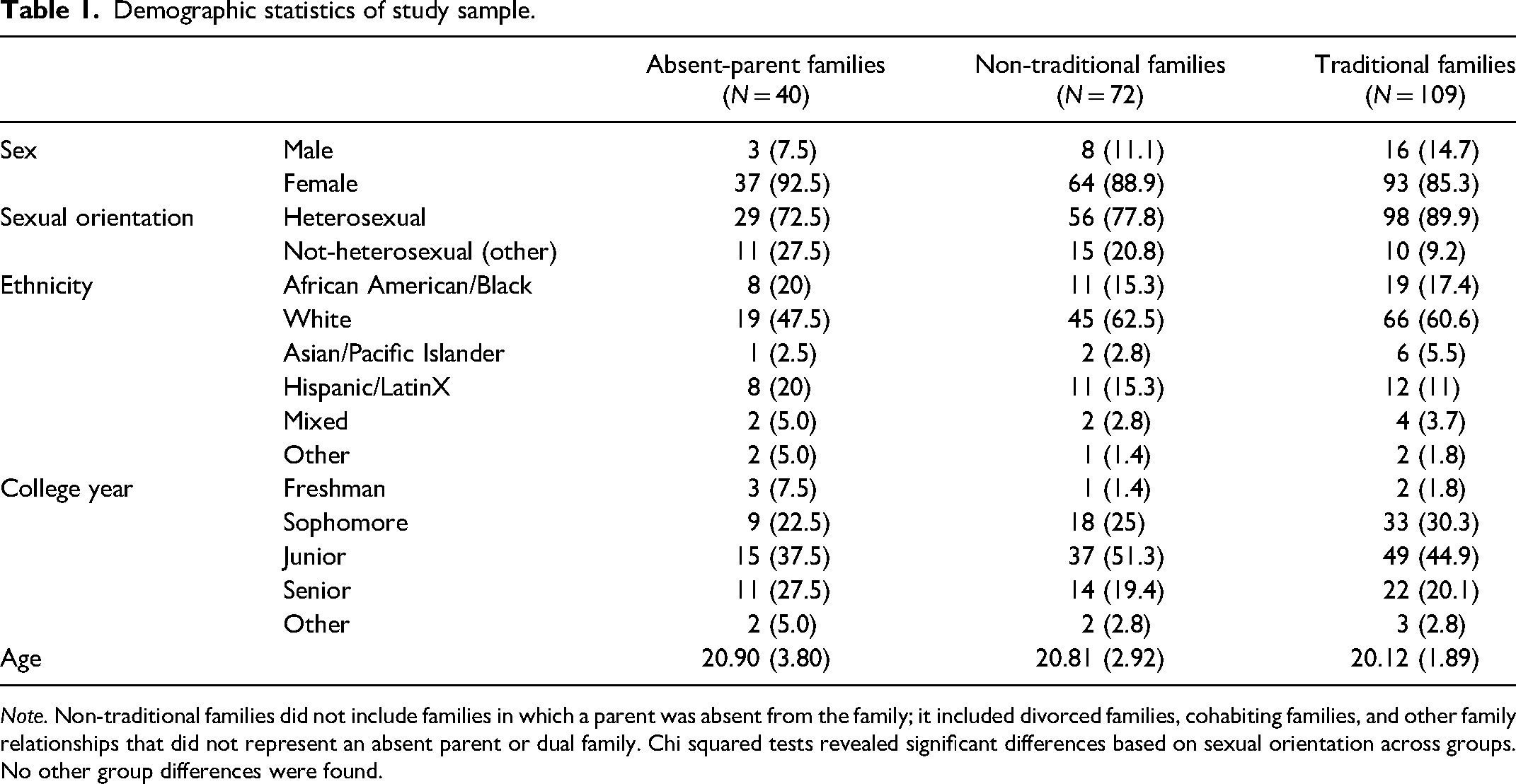
Note. Non-traditional families did not include families in which a parent was absent from the family; it included divorced families, cohabiting families, and other family relationships that did not represent an absent parent or dual family. Chi squared tests revealed significant differences based on sexual orientation across groups. No other group differences were found.
Measures
The current study used a mixed-methods approach. Qualitative data were collected from individual interviews on Zoom and quantitative data were collected using an online survey. Participants who completed the online survey were not required to have an absent parent. The measures included in the online survey are included below. Means, standard deviations, reliability, and correlations for quantitative data are presented in Table 2.
Correlations of study variables.
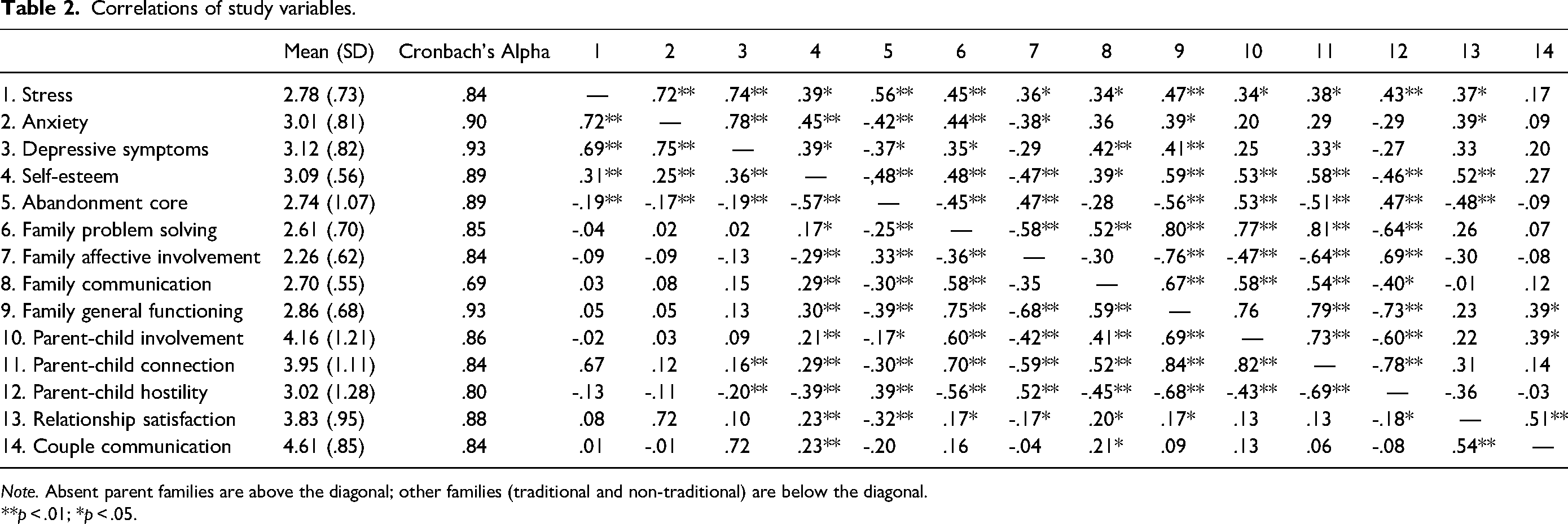
Note. Absent parent families are above the diagonal; other families (traditional and non-traditional) are below the diagonal.
**p < .01; *p < .05.
Qualitative Data Collection
Undergraduate research assistants (RAs) conducted qualitative data collection by completing semi-structured interviews on Zoom. Only individuals who had an absent parent completed the interviews. Example interview questions included, “Describe your relationship with the parent who was absent from the family” and “How do you think having an absent parent impacted your own romantic relationship experiences?” These interview questions were created by the research team to best address the research questions of this study and were based on theoretical and empirical literature. RAs were instructed to ask probing questions in order to get as much information from participants as possible as well as to establish credibility in participant responses. Member checking was applied by summarizing participant responses at the end of each semi-structured research question as recommended by Clift et al. (2021). RAs were not told the goal of the study until after interviews were completed. This was done in order to minimize bias during the interviews, which is a common issue with qualitative research studies (Braun & Clarke, 2022).
Quantitative Data Collection
Data Analysis
The qualitative methods within this study applied a descriptive design. The goal of descriptive designs is to describe poorly understood phenomena focusing more on the what instead of the why or how (Nassaji, 2015). This design provides the ability to create a comprehensive discussion of a phenomenon based on participants’ straightforward answers (Lambert & Lambert, 2012). These answers will evoke thick, extensive descriptions of participants’ experiences with an absent parent. Qualitative data was analyzed using reflexive thematic analyses as proposed by Braun and Clarke (2022). This approach incorporates six steps: familiarizing oneself with the data, initial code creation, theme search, theme review, defining and naming the theme, and writing the report. After the interviews were transcribed, each of the RAs read and re-read the data, and then identified themes that were similar across participants regarding having an absent parent. Additionally, RAs identified themes revolving how having an absent parent was associated with psychological and relational health. Based on these codes, themes were created and reviewed by the principal investigators, and both principal investigators defined and named each theme and subtheme associated with all three research questions.
Quantitative data was analyzed using ANOVAs and multiple linear regression. First, participants from absent-parent families were compared to traditional families and non-traditional families (non-traditional families did not include absent-parent families). Participants were compared on self-esteem, family functioning, parent-child rapport, abandonment beliefs, psychological well-being, relationship satisfaction, communication, and sexual behaviors. Six regressions were conducted, three to measure psychological well-being (stress, anxiety, and depression) and three to measure relational health (satisfaction, communication, and sexual behaviors). The following variables were included as predictor variables: abandonment beliefs, family functioning, parent-child rapport, and impact of parent absence. Post-hoc analyses were conducted using linear regression to predict affectionate and sexual behaviors.
Results
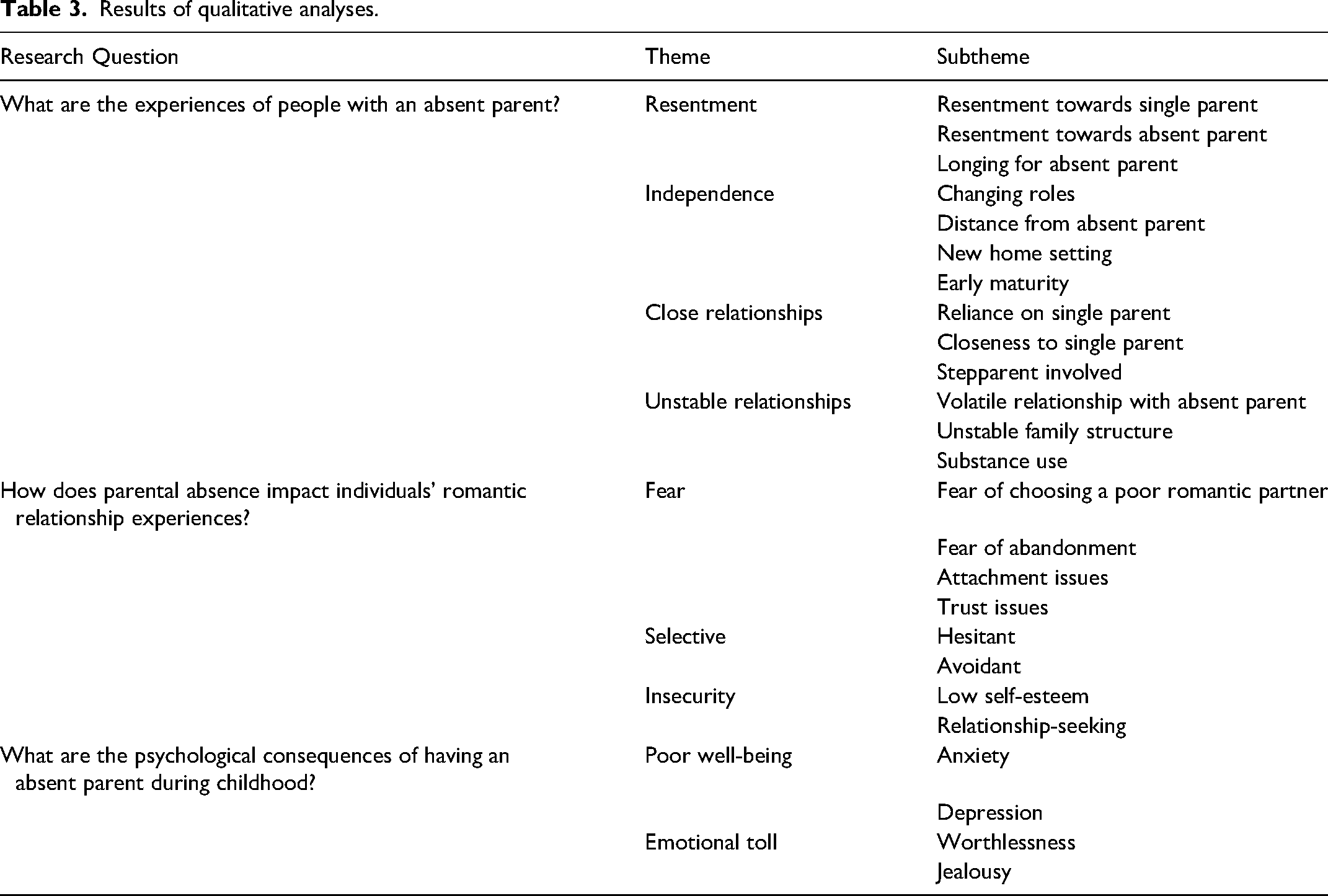
The first research question was addressed using the qualitative data. The results of the qualitative analyses are presented in Table 3 and discussed below. Three questions were analyzed to understand the experiences of having an absent parent: 1) What are the experiences of people with an absent parent? 2) How does parental absence impact individuals’ romantic relationship experiences? 3) What are the psychological consequences of having an absent parent during childhood?
Results of qualitative analyses.
What are the Experiences of People with an Absent Parent?
How Does Parental Absence Impact Individuals’ Romantic Relationship Experiences?
What are the Psychological Consequences of Having an Absent Parent During Childhood?
Quantitative Results
The second research questions were answered using the quantitative data. Results are presented in Tables 4 and 5. Table 4 displays group differences between having an absent parent, having two parent-families, or other non-traditional families (such as a divorced family). There were no significant differences between groups regarding psychological distress (stress, anxiety, and depressive symptoms) or self-esteem. However, there were significant differences based on family dynamics and parent-child rapport. Specifically, participants in absent-parent families reported significantly less problem-solving experiences in their family compared to traditional families. Additionally, parent-child involvement and connection were significantly higher for traditional families then absent-parent families. There were no differences regarding parent-child hostility or family affective involvement, connection, and hostility across these three groups. When examining romantic relationship quality and behaviors, there were no differences in relationship quality, but there were some group differences in affectionate behaviors. Participants in absent parent families reported significantly more kissing and receiving light petting compared to participants from traditional families. However, there were no differences in other affectionate or sexual behaviors.
ANOVA results comparing absent-parent families to dual-parent and other families.
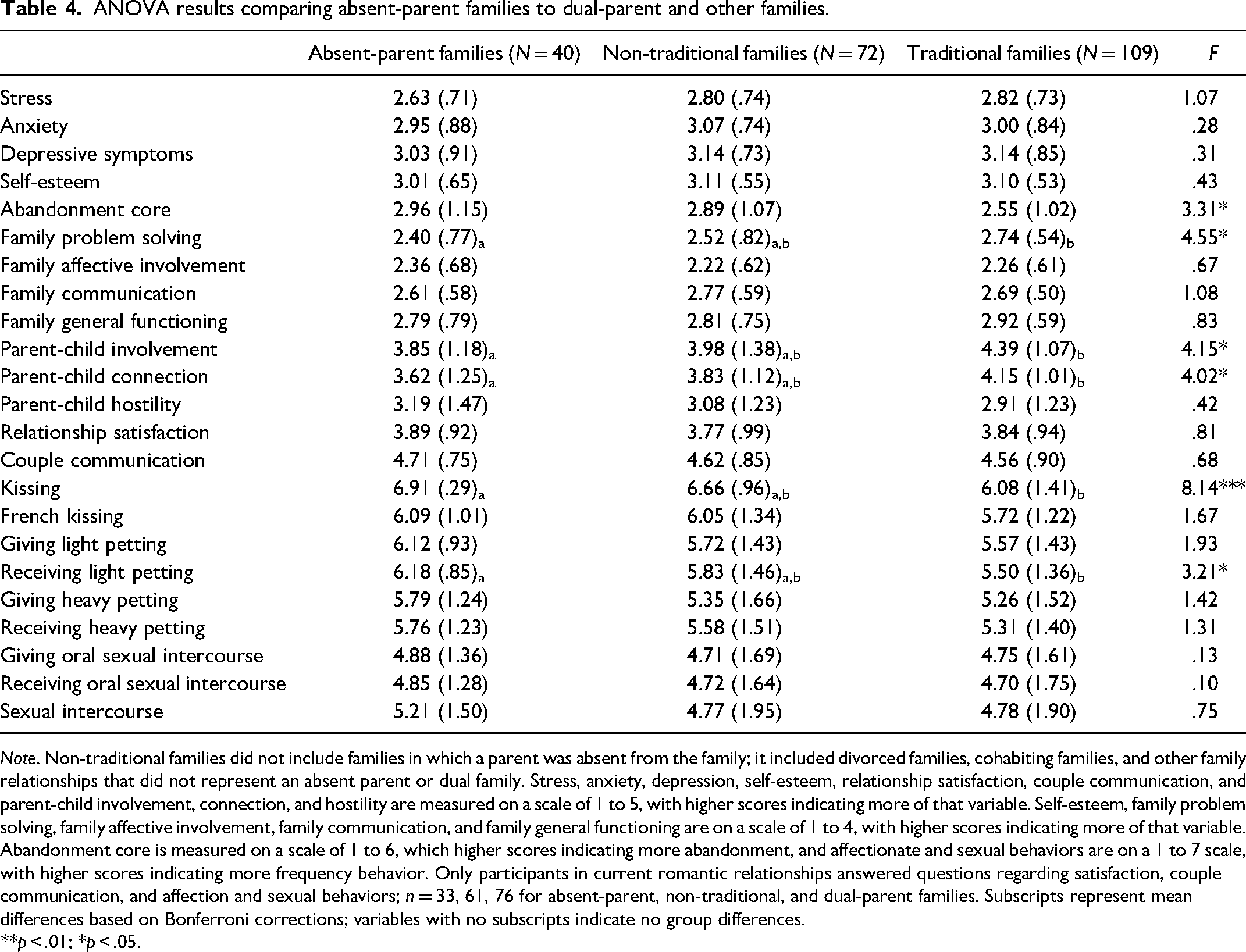
Note. Non-traditional families did not include families in which a parent was absent from the family; it included divorced families, cohabiting families, and other family relationships that did not represent an absent parent or dual family. Stress, anxiety, depression, self-esteem, relationship satisfaction, couple communication, and parent-child involvement, connection, and hostility are measured on a scale of 1 to 5, with higher scores indicating more of that variable. Self-esteem, family problem solving, family affective involvement, family communication, and family general functioning are on a scale of 1 to 4, with higher scores indicating more of that variable. Abandonment core is measured on a scale of 1 to 6, which higher scores indicating more abandonment, and affectionate and sexual behaviors are on a 1 to 7 scale, with higher scores indicating more frequency behavior. Only participants in current romantic relationships answered questions regarding satisfaction, couple communication, and affection and sexual behaviors; n = 33, 61, 76 for absent-parent, non-traditional, and dual-parent families. Subscripts represent mean differences based on Bonferroni corrections; variables with no subscripts indicate no group differences.
**p < .01; *p < .05.
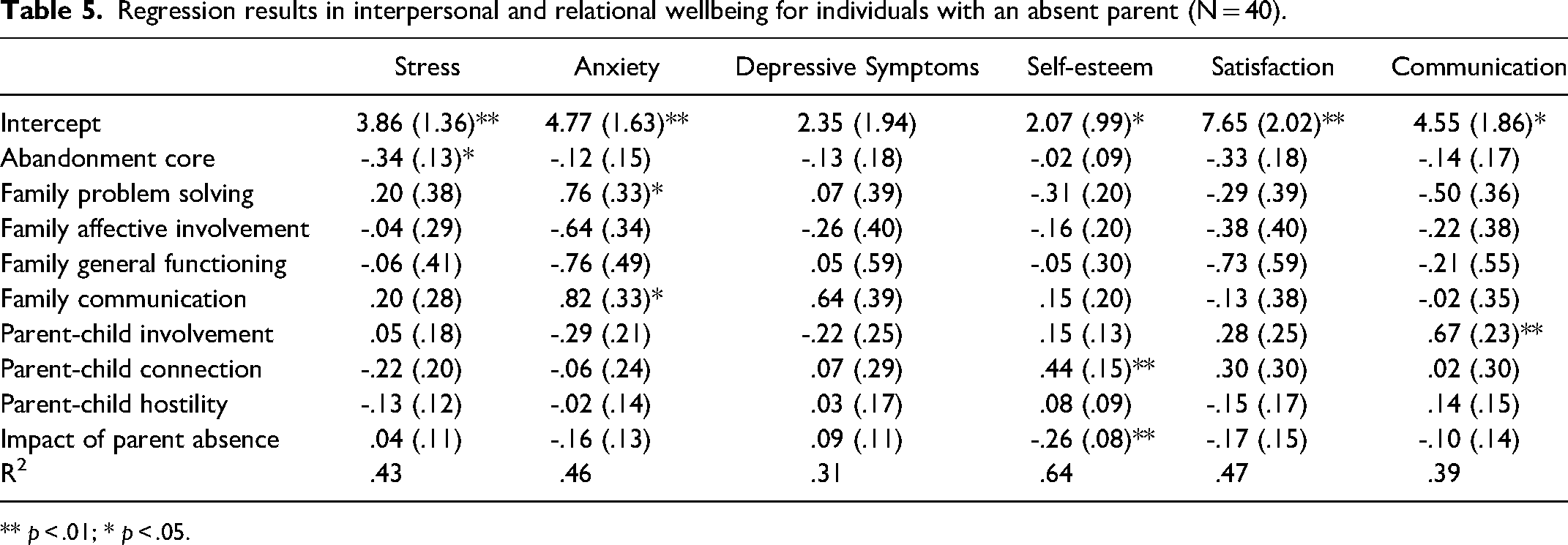
Regression results in interpersonal and relational wellbeing for individuals with an absent parent (N = 40).
** p < .01; * p < .05.
Table 5 involves only participants who reported having an absent parent. Based on these regressions, few variables were related to participants’ psychological distress or romantic relationship experiences. Abandonment core was negatively associated with stress, and family problem-solving and family communication was positively associated with anxiety. However, no other variables were related to stress, anxiety, or depressive symptoms. Parent-child connection was positively associated with self-esteem and the impact of the parental absence was negatively associated with self-esteem. No other variables were related to self-esteem. Parent-child involvement was related to communication in romantic relationships, but no other variables were related to relationship satisfaction or communication.
Discussion
Parental absence can have a significant impact on the personal and relational well-being of an individual later in life. Disruption in the family unit (i.e., parental absence), may lead to disequilibrium per the family systems theory, impeding on a child's social-emotional development (Bowen, 1966). This disruption can also hinder attachment, which is an integral component for building lasting connections with others in the future (Ainsworth, 1978). Previous findings reiterate the importance of the family unit and attachment early in an individual's life to help foster self-esteem, self-confidence, emotional regulation, and interpersonal skills for connecting to other individuals as an adult (Baisden, 2016; Cooke et al., 2019; Malik et al., 2022). Results from this study illustrate that individuals who experience the absence of a parent may need additional support in the short- and long-term. These findings also have implications for professionals who work with individuals experiencing parental absenteeism.
The results of the qualitative analysis describe the particular experiences of an individual who grew up with an absent parent. The primary theme of unstable relationships demonstrates how experiences, such as the lack of connection between one or both parents, as well as disruption of the family dynamics creates disequilibrium among the family unit, impacting the overall emotional well-being of the child. This finding is in line with previous research, which iterates that attachment and connection to a parent can help increase emotional regulation to effectively manage their feelings, navigate social interactions, and adapt to various situations (Rohimah et al., 2022). Negative experiences are common from having an absent parent because of the resentment that is sometimes held toward either one or both parents. A child may not completely understand the reasoning why a parent chose to be absent and may have continued feelings of anger, leading to future resentment.
In connection with the family systems theory, the qualitative results of this study indicate the connection between an absent parent and the impact on developing strong relational connections with others later in life. Qualitative results demonstrated the impact that an absent parent has on feelings of security and level of self-esteem in adulthood. This finding is also consistent with previous studies that indicate that being raised in a single-parent household decreases an individual's self-esteem, while increasing self-doubt (Malik et al., 2022). Further, a strong foundation within a family system is imperative for future intimate relationships (Cook et.al., 2019). An individual who grew up with an absent parent may fear experiencing the loss of someone close to them; therefore, the individual may choose to refrain from connecting with others.
Further, having an absent parent creates psychological ramifications for a child. The results of the qualitative analysis demonstrate the increases in psychological distress, such as anxiety and depression that occurs for a child who lives in a home with an absent parent. As previous research findings suggest, attachment is essential for the development of emotional regulation and creating a sense of security and safety (Cooke et al., 2019). Additionally, secure attachment is also linked to emotional regulation, as well as increases in positive affect and decreases in negative affect among children (Balistreri & Alvira-Hammond, 2016; Cooke et al., 2019). Children who live in a home with an absent parent may experience increased levels of depression and anxiety because of the deep emotional feelings that are involved with the familial circumstance. Feelings of anxiety may occur because of fear of the unknown, such as the possibility of abandonment from the parent who is present. Negative affect may also occur in a child because of the increased stress of being a single parent, as previous research also highlights (Taylor & Conger, 2017).
Although there were no significant findings concerning psychological distress and self-esteem when accounting for differences in the family unit, there were significant differences based on family dynamics and parent-child rapport. This finding reiterates the integral role that connection and attachment to a parent play in the ability to develop intimate relationships (Sutton, 2019). This result links with the qualitative theme of close relationships in which individuals stated the closeness with their single parent. Further, the negative association between abandonment with stress is similar to previous research, which demonstrates the impact that abonnement has on a child's development (Baisden, 2016). As indicated in these findings, there are negative ramifications of an absent parent on a child's emotional and relational well-being; however, strong connections with the parent who is present may help lessen the negative impact.
Although romantic relationship quality was not associated with parental absence, there were some group differences in affectionate behaviors, including increased sexual behaviors. The thematic analysis demonstrates that a strong parent-child attachment can develop over time with demonstrations of love and respect. However, difficulties in parent-child bonding and attachment may increase levels of insecurity, as suggested in the results of this study. As stated by one participant, “I wanted to fill that void of comfort and love that I didn’t receive.” This finding is in line with previous research, which has linked family attachment to increased sexual behavior in adolescence (Reis et al., 2023). Increased sexual behavior may increase with parental absence to help fill the emotional void of either the absent mother or father.
Implications for Theory and Practice
The results of this study illustrate support for family systems theory. The instability of a family system as a result of a parent's absence was described as difficult by participants in the study. Participants indicated that they experienced unstable relationships and independence while adjust to this disequilibrium. It's not surprising that participants experienced abandonment issues and poorer well-being due to the absence of a parent, given that the participants were reeling from an unstable family system. It would be interesting to understand how a family system restabilizes after a parental absence. In other words, does the stability of a single-parent system help individuals establish equilibrium after a parental absence? Would the introduction of a new parental figure help with parental absence? These questions would be best answered in future investigations.
While the findings suggest the development of resilience in individuals with an absent parent, the long-term effects should not be overlooked. Recommendations for individuals with absent parents include practising setting boundaries, building trustworthy relationships with those close to them, and potentially seeking professional support to understand the effects of this abandonment. Understanding the implications of parental absence on a child's emotional and relational well-being can assist practitioners, such as family counselors to provide an individualized therapeutic approach when working with families. Counselors may also utilize these findings to work with the child and the remaining parent to improve communication and strengthen the existing familial relationships. Additionally, counselors can assist the child in forming a positive self-identity despite the absence, helping them understand their worth and value beyond their parent's presence.
In addition to these recommendations for family therapists, specific therapeutic approaches could be resourceful. For instance, structural family therapy could help address stress from having an absent parent. This therapeutic approach focuses on interactions among family members (Umbarger, 1983) and could be used as a tool to identify problematic behaviors and emotions that result from a parental absence. Systemic family therapy could also be a useful tool to assist families who experience the absence of a parent. This technique considers the issues of the family in different contexts (Gunn et al., 2015). Because the absence of a parent leads to the restructuring of the family, family roles may need to be adjusted. This approach also helps highlight how different variables, such as culture and religiosity, contribute to changes within families. If the absence of a parent is a source of trauma for individuals, trauma-focused cognitive behavior therapy could be a tool to support youth experiencing this stressor. This approach allows the non-absent parent or guardian and youth to develop skills to address the trauma experienced from the parental absence (de Arellano et al., 2014). In general, the field of family therapy can view parental absence as a potential source of trauma with short-term and long-term consequences. Working with families who experience the absence of a parent can help youth adjust to this change in the family system by developing coping skills and tools to deal with accompanying stress, grief, and frustration.
Limitations and Conclusions
Although this study advances the literature on absent parents by focusing specifically on situations in which the parent was absent by choice, there are quite a few limitations. First, it is important to note that the findings stem from an ungeneralizable population and involve participants reflecting on past experiences, a factor that may contribute to downplaying emotions in adulthood. Participants may be biased in their responses as a result of retrospective bias and/or social desirability bias. Additionally, the study was cross-sectional, meaning that cause and effect statements cannot be made. The qualitative data may shed light on the direction of correlational findings, longitudinal, concurrent data is needed to best test the ideas within this manuscript. Also, there was a lack of control variables in analyses. For example, it would have been best to control for length of time since a parent was absent, gender of the parent who was absent, and level of rapport with absent parent before the absence occurred. Due to these limitations, future studies should focus on a more diverse population and adopt a longitudinal design to reduce the potential bias associated with retrospective reflection. Future studies should also control for previous elements of the participant-absent parent relationship, which would provide more information that can support adolescent and emerging adult well-being. Following participants over time would allow for a more dynamic understanding of the impact of single-parent homes on individuals’ experiences and mental health.
The goal of this study was to understand the lived experiences of emerging adults who had an absent parent by choice growing up. The results of this study revealed that the experiences were predominantly difficult for personal well-being, but not as controversial for future romantic relationships. Although this study had a number of limitations, it provides an initial glimpse of the experience of having an absent parent and the consequences of this family system. Results also provide some support for family systems theory and attachment theory, which can be applied to counseling settings. By investigating this phenomenon, more can be done to support children, teenagers, and emerging adults who are struggling with having an absent parent.
Footnotes
Acknowledgements
We would like to acknowledge Brooke Watkivs, Sarah Reed, and Shatasia Daniels for their help with data collection and analyses.
Declaration of conflicting interests
The authors declared no potential conflicts of interest with respect to the research, authorship, and/or publication of this article.
Funding
The authors received no financial support for the research, authorship, and/or publication of this article.

Statements and declarations
The authors have no competing interests to declare that are relevant to the content of this article. This research received no specific grant from any funding agency in the public, commercial, or not-for-profit sectors. Data and study materials are made available upon request.