



Abstract
Career indecision is a complex phenomenon and an increasing number of authors have proposed that undecided individuals do not form a group with homogeneous characteristics. This study examines career decision statuses among a sample of 362 12th-grade Portuguese students. A cluster-analytical procedure, based on a battery of instruments designed to assess career and personality dimensions, was employed to understand the heterogeneous groupings that underlie the concept of career indecision. Three groups of career decision statuses were identified and their characteristics described. Finally, implications for career counseling interventions are discussed.
Keywords
According to Kelly and Lee (2002), career indecision is, next to interests, the single most important construct in the field of vocational psychology and a classic topic of research (Borgen, 1991). Crites (1969), for instance, identified several studies on career indecision published in the 1930s. The vast number of studies on career indecision could be explained by the high prevalence of undecided students in secondary schools and colleges, who seek career counseling in order to formulate career plans (Corkin, Arbona, Coleman, & Ramirez, 2008; Forner, 2007).
Initially, research on career indecision attempted to identify variables that could distinguish between decided and undecided individuals. The main goal was to understand the causes that lead to difficulties in career decision making and design appropriate interventions in order to assist undecided individuals. This differential approach to career indecision produced results that were, in general, ambiguous and inconclusive (for a review, see Forner, 2007; Santos, 2007; Slaney, 1988). For example, in some studies, academic achievement favored career-decided individuals (Lunneborg, 1976), whereas in others this relationship was precisely the opposite (Lewallen, 1995).
The hazy picture obtained from the differential approach led some authors to contend that career indecision should not be regarded as negative, but rather as the result of a normal phase of career development, at least for a considerable number of individuals. It was a consequence of a stage of normative exploration or a moratorium period for adolescents and emerging adults (cf. Baird, 1969), as described in classical theories of career (Super, 1957; Tiedeman, 1961) and psychosocial development (Erikson, 1968). Since the majority of undecided students do ultimately come to a decision, it is not surprising to find that there are no major differences between both groups. However, for some individuals, career indecision is more pervasive and can be quite debilitating (Holland & Holland, 1977; Salomone, 1982). In short, career-undecided individuals are not a homogeneous group in terms of their psychological characteristics and the construct of career indecision should be conceptualized as multidimensional (Betz, 1992; Fuqua, Blum, & Hartman, 1988; Gordon, 1998; Holland & Holland, 1977; Osipow & Fitzgerald, 1996).
Although it is widely accepted that there are multiple subtypes of career-undecided individuals, the number and characteristics of each subtype has been subject to significant controversy. Early authors (Crites, 1969; Goodstein, 1972; Holland & Holland, 1977; Tyler, 1969) sustained that at least two major types of indecision could be identified. The first was developmental indecision, an integral part of the normal process of vocational development. The second, indecisiveness, resulted from a more structural form of indecision, including decision-making difficulties in other domains of life that coexisted with a set of negative psychological characteristics. The most common described in the literature include, among others, high levels of anxiety, external locus of control, low self-esteem, and a poorly defined sense of identity (Fuqua & Hartman, 1983; Hartman & Fuqua, 1983; Heppner & Hendricks, 1995; Salomone, 1982; Santos, 2001).
Research was generally focused on the problem of identifying subtypes of career indecision based on two methodological approaches. The first included the use of factor analysis. The Career Decision Scale (CDS; Osipow, Carney, & Barak, 1976) was created to determine the antecedents of career indecision. In their seminal work, Osipow et al. (1976) identified four dimensions using factor analysis applied to the items of the CDS, each representing a specific reason that could be a source of career indecision. The first was a lack of structure and confidence in dealing with the process of career decision making, including possible choice anxiety. The second suggested some external barriers to a preferred choice. The problem of having to make a choice from among several attractive career alternatives was captured by the third dimension, a kind of approach–approach conflict. The last dimension reflected some personal conflict that negatively affected career decision making.
Subsequent factor-analytical studies were not always able to replicate this structure. Two- (Hartman, Fuqua, & Hartman, 1983; Hartman, Jenkins, Fuqua, & Sutherland, 1987; Watson, Foxcroft, & Stead, 1991) and three-factor solutions (Hartman & Hartman, 1982; Slaney, Palko-Nonemaker, & Alexander, 1981) were found. Even when a four-factor solution was identified (Corkin et al., 2008; Fuqua, Newman, & Seaworth, 1988), it was not always possible to observe a perfect correspondence with the original factor structure. The controversy around the CDS’s factor structure and the use of its subscales was particularly strong in the early 1990s. However, the main author of the scale, Samuel Osipow (1994), contended that, in its original form, the CDS was not appropriate to assess dimensions of career indecision but only the degree of indecision.
Factor analysis was also employed with several career assessment instruments with the purpose of identifying different types of career indecision (see Fuqua & Newman, 1989; Kelly & Lee, 2002; Stead & Watson, 1993; Tinsley, Bowman, & York, 1989). Although the factor analysis in these studies resulted in different solutions, Brown and Rector (2008) detected some consistency in the findings. All studies identify a chronic indecisiveness factor and an information deficit factor. Other factors emerged, such as self-concept clarity or diffusion, decision-making obstacles, or conflicts with others.
The second methodological approach to identify subtypes of career indecision employed cluster analysis. This type of statistical analysis is particularly suited when researchers are interested in identifying homogeneous groups of individuals based on their scores in a set of variables (Borgen & Barnett, 1987). Studies based on cluster analysis used different samples including junior and high school students (Akos, Konold, & Niles, 2004; Argyropoulou, Sidiropoulou-Dimakakou, & Besevegis, 2007; Fuqua et al., 1988; Rojewski, 1994), college students (Kelly & Lee, 2002; Kelly & Pulver, 2003; Larson, Heppner, Ham, & Dugan, 1988; Lucas & Epperson, 1990; Savickas & Jarjoura, 1991; Wanberg & Muchinsky, 1992), clients of college counseling centers (Multon, Wood, Heppner, & Gysbers, 2007; Rochlen, Milburn, & Hill, 2004), and employed adults (Callanan & Greenhaus, 1992).
These studies identified several cluster solutions. Two-cluster (Rochlen et al., 2004), three-cluster (Argyropoulou et al., 2007), four-cluster (Callanan & Greenhaus, 1992; Fuqua et al., 1988; Multon et al., 2007; Wanberg & Muchinsky, 1992), five-cluster (Lucas & Epperson, 1990), and seven-cluster (Akos et al., 2004) solutions were found. Although it is quite difficult to summarize the results of these studies, because they involved different types of samples and a wide range of variables, it is possible to tentatively find some commonalities among the results (see Kelly & Pulver, 2003). Three major clusters emerged in these studies. The first was a group of individuals with clearly defined career goals and low levels of career indecision and anxiety. Apparently, these individuals were self-reliant and possessed sufficient career information to make mature choices. The second group was developmentally undecided since members seemed psychologically adjusted, with low levels of anxiety, and acceptable levels of self-esteem. They were actively experiencing a process of exploring career alternatives and were thus unable to specify a career option. Finally, the members of the last group experienced psychological adjustment problems, revealed in high levels of anxiety, low self-esteem, and vocational identity, and a diminished sense of their decision-making capacity.
One of the controversies regarding the employment of cluster analysis is related with the specific type of career decision status of the sample used by researchers. Some authors contend that only career-undecided individuals should be selected (e.g., Kelly & Pulver, 2003), whereas others included career decided and undecided subjects in their samples (e.g., Callanan & Greenhaus, 1992; Lucas & Epperson, 1990; Wanberg & Muchinsky, 1992). The rationale behind the exclusive use of undecided individuals is related to problems clients present in career counseling. It is not expected that career-decided individuals seek career counseling. However, a cluster analytical study by Multon et al. (2007) with a sample of clients from a university counseling center showed that this assumption is not tenable. One of the subgroups identified, representing 16% of the sample, consisted of clients who were psychologically sound and had clear ideas about their career choices. “They may be the type of client who uses all available resources to affirm their own decisions. They may simply need reassurance and affirmation that they are on the right track” (Multon et al., 2007, p. 82).
The purpose of the present study consisted in identifying career decision statuses among Portuguese secondary school students. All the studies mentioned previously employing cluster analysis were conducted on American samples, with the exception of Argyropoulou et al. (2007), who used a Greek sample. It was our objective to determine what type of clusters emerged in a different cultural context.
It should be noted that there are very few studies focusing on secondary school students. In the Portuguese educational context, concluding secondary education marks a particularly important period of transition. Secondary education is structured into two basic types of courses: general courses, mainly oriented towards higher education, and vocational courses, aimed primarily at those seeking to enter the job market.
In order to apply to public universities, the most prestigious and selective of the Portuguese educational system, students have to finish secondary education and take national examinations, which bear significant weight in admission criteria. They have to opt for specific degrees (e.g., law, chemical engineering, psychology, medicine) and, exclusively based on their grade point average, may or may not be admitted to one of these choices. Students in their final year of secondary school (12th grade), who are intent on pursuing higher education, face an important turning point in their career decision-making process. In comparison to American college students, who usually only have to choose a major after 2 years of undergraduate studies, Portuguese students have to make their career choices at a much earlier stage. For this reason, 12th-grade students following general courses were selected for our study’s sample. Both career-decided and career-undecided individuals were included, as mentioned earlier, since there is some evidence that career-decided individuals may also seek career counseling. Thus, using both types of students is likely to yield a more realistic picture of clients in career counseling. The variables used in our research took into consideration previous studies based on cluster analysis, and consequently, a set of instruments measuring career and personality variables was used.
The personality variables employed in this study were anxiety, locus of control, indecisiveness, and self-esteem (cf. Akos et al., 2004; Fuqua et al., 1988; Lucas & Epperson, 1990; Multon et al., 2007; Wanberg & Muchinsky, 1992), and the career variable was vocational identity (cf. Fuqua et al., 1988; Lucas & Epperson, 1990; Multon et al., 2007; Wanberg & Muchinsky, 1992).
Method
Participants
The sample consisted of 362 12th-grade Portuguese students attending general courses. The participants were recruited from classes in urban public schools. Their ages ranged between 16 and 22 years, with a mean age of 17.35 years (SD = .78). There were 222 female students (61.3%) and 140 male students (38.7%).
Procedure and Instruments
Administration of the instruments took place in school, during class periods, after the participants were informed that the general purpose of the research was to study several aspects of adolescent development. The voluntary nature of participation was emphasized and confidentiality of the results guaranteed. The measures were arranged in random order to control for order effects. After applying the instruments, the students were provided with more details about the purposes of the study.
Measurement of indecisiveness
For the evaluation of indecisiveness, we used the Indecisiveness Scale (IS; Frost & Shows, 1993). This 15-item scale evaluates the degree of inability to make decisions. It uses a 5-point Likert-type scale (1 = strongly disagree to 5 = strongly agree), where higher results reflect a greater level of indecisiveness. College students with higher scores on this scale show higher levels of procrastination and greater difficulties in decision making with regard to several aspects of their lives, including academic, social, and family. They also revealed longer decision-making latencies and an increased need to search for information in a series of choice tasks taking place in a laboratory setting (Frost & Shows, 1993; Rassin, Muris, Booster, & Kolsoot, 2008; Rassin, Muris, Franken, Smit, & Wong, 2007). Gayton, Clavin, Clavin, and Broida (1994) found that college students who had not yet chosen a major obtained higher indecisiveness scores when compared to those who had already made their choice. The internal consistency (Cronbach’s α) of IS has ranged from .80 to .90 in several studies (Frost & Gross, 1993; Frost & Shows, 1993; Gayton et al., 1994; Hayward & Coles, 2009; Rassin, et al., 2007). Test–retest reliability, with a 4-week interval between evaluations, was .88 (Rassin et al., 2007).
In this study, we used the Portuguese version of the IS (Santos, 1997). An internal consistency coefficient (Cronbach’s α) of .78 and a 2-week test–retest coefficient of .85 for the IS with a sample of secondary school students was reported. In addition, the IS scores were negatively correlated with the degree of career certainty and positively correlated with personal–emotional and information dimensions of career indecision. In the present study, the internal consistency reliability of the IS (Cronbach’s α) was .83.
Measurement of vocational identity
Vocational identity was assessed with the Vocational Identity Scale (VIS; Holland, Daiger, & Power, 1980). The VIS is an 18-item scale, with a true-false type of answer, which measures “… the possession of a clear and stable picture of one’s goals, interests, personality, and talents” (Holland et al., 1980, p. 1). High scores indicate a clear sense of identity. The internal consistency (KR20) of the scale’s scores ranged from .86 to .89 (Holland et al., 1980) and the test–retest reliability, for intervals not greater than 3 months, was .75 (Holland, Johnston, & Asama, 1993). Evidence supporting the validity of VIS can be found in Holland et al. (1993), Leong and Morris (1989), and Lucas, Gysbers, Bluescher, and Heppner (1988).
In the present study, we used the Portuguese version of the VIS, adapted by Santos (2010) and Santos and Ferreira (2004), with samples of secondary school and college students. The internal consistency coefficient (Cronbach’s α) ranged between .78 and .79. A confirmatory factor analysis indicated that the VIS measures one single factor. VIS scores were negatively correlated with personal–emotional and information dimensions of career indecision and positively correlated with measures of self-esteem and career certainty. In the present study, the internal consistency coefficient (Cronbach’s α) was .81.
Measurement of self-esteem
The Rosenberg Self-esteem Scale (RSES; Rosenberg, 1965) was employed to assess self-esteem, which Rosenberg (1965) defined as “… a positive or negative attitude toward a particular object, namely the self” (p. 30). The RSES is a 10-item test, 5 positively oriented and 5 negatively, answered in a 4-point Likert-type scale (1 = strongly disagree to 4 = strongly agree). The negatively oriented items were reverse scored so that higher scores indicate higher levels of self-esteem. The RSES is the most widely used scale in psychological research aimed at evaluating self-esteem (Blascovich & Tomaka, 1991). The psychometric characteristics of the RSES are excellent: the internal consistency results (Cronbach’s alpha) are higher than .80 (Fleming & Courtney, 1984; Gray-Little, Williams, & Hancock, 1997; Hagborg, 1996) and Fleming and Courtney (1984) indicated a test–retest reliability, with a 1-week interval between evaluations, of .82. Apart from the initial work developed by Rosenberg (1965, pp. 16–30), the RSES’s construct validity has been evidenced by significant correlations with other instruments of assessment of self-esteem (Francis & Wilcox, 1995; Hagborg, 1996; McCurdy & Kelly, 1997) and with a set of dimensions and psychological variables, such as depression (Fleming & Courtney, 1984), anxiety (Fleming & Courtney, 1984), and satisfaction with life (Diener & Diener, 1995).
In the present study, we used the Portuguese version of the RSES, adapted by Santos (2008) and Santos and Maia (1999, 2003), with samples of, respectively, secondary school and college students. A confirmatory factor analysis employed by these authors indicates that the RSES assesses one single factor and the internal consistency value (Cronbach’s α) ranged from .84 to .90. High results in the RSES were positively correlated with satisfaction with life and with positive social and emotional aspects of self-concept. In the present study, the internal consistency value (Cronbach’s α) was .89.
Measurement of locus of control
For the evaluation of the locus of control, we used the Internal–External Locus of Control Scale (IE; Rotter, 1966). The IE is a 29-item forced-choice test, with 6 filler items, designed to assess externality or the perception that events are unrelated to the individual’s behavior and are, therefore, beyond personal control. Higher scores represent a higher degree of externality. Internal consistency ranged from .65 to .79 and test–retest reliability (1-month interval) ranged from .60 to .83 (Rotter, 1966). Evidence supporting the validity of IE can be found in Rotter’s monograph (Rotter, 1966).
In this study, we used the Portuguese version of the IE, adapted by Barros, Barros, and Neto (1989) with a sample of college students and adult teachers. The internal consistency (split-half) was .70. The results of the Portuguese version of the IE showed significant correlations in the expected directions with a multidimensional scale of locus of control. In the present study, the internal consistency value (Cronbach’s α) was .69.
Measurement of anxiety
To evaluate anxiety, we used the Trait Anxiety Scale (TAS), of the State-Trait Anxiety Inventory (STAI)–Form Y (Spielberger, Gorsuch, Lushene, Vagg, & Jacobs, 1983), which assesses relatively stable individual differences in anxiety proneness. The TAS has 20 items that are answered on a Likert-type scale with 4 options (1 = almost never to 4 = almost always). A total of 9 anxiety-absent items are reversed scored and higher scores represent a higher degree of trait anxiety. For high school students, the internal consistency value (Cronbach’s α) was .90 and the test–retest reliability (1-month interval) ranged from .71 to .73. Evidence supporting the validity of STAI can be found in Spielberger et al. (1983).
In this study, we used the Portuguese version of STAI (Santos & Silva, 1997; Silva & Campos, 1998). The TAS internal consistency (Cronbach’s α), calculated with samples of high school students, ranged from .85 to .88. The test–retest reliability, calculated with a 1-month interval in a sample of college students, was .80. The validity evidenced by the Portuguese version of STAI, analyzed with samples of adolescents, young adults, and adults, including normal individuals and individuals with psychological disturbances, attests to its adequacy as an assessment and diagnosis instrument in the Portuguese cultural context. In the present study, the TAS internal consistency value (Cronbach’s α) was .92.
Analysis
Cluster analysis is an appropriate technique when the purpose of the researcher is to assign total variance to an underlying source, minimizing variance within clusters and maximizing variance among clusters (Borgen & Barnett, 1987). It is normally employed to identify relatively homogeneous groups of individuals. The clustering method used in this study was average linkage. According to Borgen and Barnett (1987), “… this method has performed as well or better than alternative methods. It is thus one of the methods to be given strong consideration when one chooses a clustering method” (p. 464).
There are no established quantitative criteria to choose the best solution when cluster analysis is used (Hair, Anderson, Tatham, & Black, 1995). Deciding how many clusters to retain involves a trade-off between a detailed solution (many clusters) and a more parsimonious one (fewer clusters), which can ensure generality and simplicity. We conducted two- to seven-cluster solutions taking into account the results of previous studies. To achieve a cluster solution that can be maximally generalized, we decided a priori to only include clusters representing at least 15% of the participants (e.g., Multon et al., 2007; Rochlen et al., 2004). Applying this criterion to each of the seven cluster analysis conducted here, and taking into account the analysis of the dendogram, a visual representation of the steps involved in hierarchical clustering depicting how the clusters are combined, we concluded that the three-cluster solution was the most interpretable and representative of our data.
Results
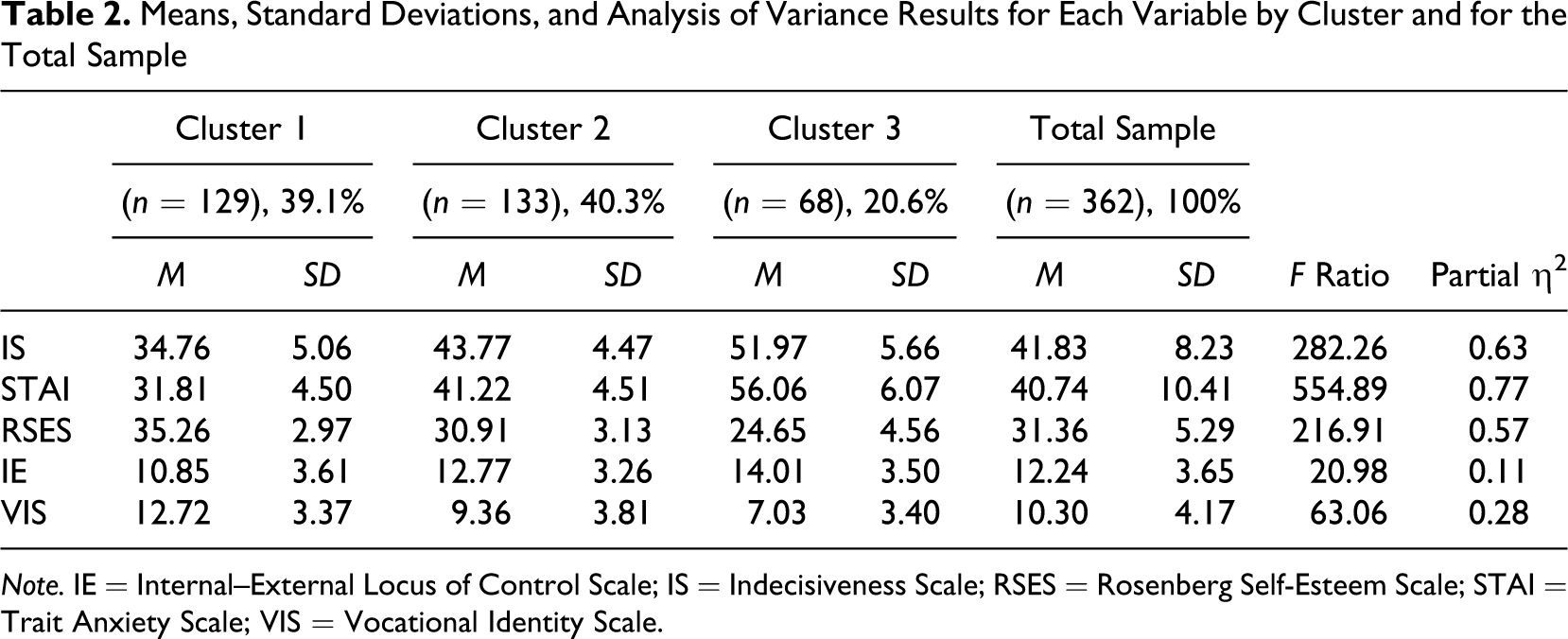
Table 1 presents the correlation matrix of the variables in the study. The means and standard deviations of the scores on each scale for the total sample and for each cluster are provided in Table 2 .
Correlation Matrix of the Clustering Variables

Note. All correlations statistically significant (p < .01).
Means, Standard Deviations, and Analysis of Variance Results for Each Variable by Cluster and for the Total Sample
Note. IE = Internal–External Locus of Control Scale; IS = Indecisiveness Scale; RSES = Rosenberg Self-Esteem Scale; STAI = Trait Anxiety Scale; VIS = Vocational Identity Scale.
A multivariate analysis of variance (MANOVA) was conducted to determine whether the types differed in terms of cluster variables. The one-way MANOVA with career-decision type as the independent variable proved to be significant (Pillai’s trace = .99, F(2, 329) = 22600.11, p = .0001).
After establishing the overall significance of the MANOVA, the univariate F tests were analyzed. To identify where differences among the clusters occurred, Scheffé’s multiple comparison procedure was performed to make all pairwise comparisons among means between groups on all dependent measures. All the differences were significantly different (p = .0001), with only one exception occurring between Clusters 2 and 3 on the score of the IE.
The partial η2, a measure of effect size, was used to measure the amount of variability explained by the grouping variable. The variables that most strongly differentiated the three clusters were anxiety (.77), indecisiveness (.63), and self-esteem (.57).
The first cluster (n = 129; 64 males and 65 females; 39.1% of the total sample) scored high on self-esteem and vocational identity, in comparison to members of the other clusters. These individuals appear to have a clear self-perception of their interests and talents and generally have a positive attitude about themselves. They also obtained low scores on trait anxiety, indecisiveness, and externality. These results mean that they do not tend to be nervous and worrisome; they feel confident about their decision-making capacity and think that their lives are generally under personal control. This group was named career decided and confident. It comprised individuals, in comparison to members of the other clusters (see Table 2 for group means), with clear vocational identities. They are also not anxious, personally decisive, and have internal locus of control.
The second cluster (n = 133; 43 males and 90 females; 40.3% of the total sample) consisted of individuals who lacked vocational identity and were more indecisive, while their levels of self-esteem, anxiety, and internal locus of control were of average magnitude. These students do not seem to have chosen a career option, but they reveal a positive image of themselves, experience median levels of anxiety, and do not think that their lives are under external control. This group was named developmentally undecided. Individuals belonging to this group are apparently going through a normal and temporary phase of career decision making. They are probably experiencing a process of exploration before they make a career commitment.
The participants in the third cluster (n = 68; 14 males and 54 females; 20.6% of the total sample) were career undecided as revealed by their lack of vocational identity, high anxiety, indecisiveness, and low self-esteem. This group also had the highest degree of external locus of control, although it was not statistically different from Cluster 2. This group was named indecisive or chronically undecided. Making decisions, including careers choices, is a difficult task for these individuals. They also present a psychological profile that is indicative of low levels of psychological adjustment.
Discussion
The results of this study suggest that Portuguese 12th-grade students can be classified into three main groups of career decision status. They will be discussed in the context of the previous findings in this area. The first group revealed clear career goals and a psychological profile indicative of a high level of psychological adjustment. The students in this cluster probably do not feel the need to actually seek career counseling, but some of them could be interested in obtaining some reassurance as to their career options (cf. Multon et al., 2007). This group seems to be similar to others identified in previous studies based on cluster analysis, namely: confident decided individuals (Wanberg & Muchinsky, 1992), decided type (Savickas & Jarjoura, 1991), decided (Argyropoulou et al., 2007), vigilant (Callanan & Greenhaus, 1992), group 1 in Fuqua et al.’s (1988) research, and cluster 1 in Multon et al.’s (2007) study.
The second group presents a relatively low level of vocational identity indicative of career uncertainty. However, the overall scores in the personality measures are close to the scores of the total sample, with the exception of the Indecisiveness Scale. These results suggest that these students do not have serious psychological adjustment problems, although their decision-making capacity is not particularly strong. They could be experiencing a process of exploration of career alternatives (Tiedeman, 1961). As mentioned earlier, the choice of a higher education degree in the Portuguese public education system depends on the grades obtained by students in secondary education, plus those achieved in national examinations. These students can maintain their career options open because they are still considering the possibilities of applying to specific college degrees. Other studies using cluster analysis identified groups that are similar to this cluster: well-adjusted information seekers (Kelly & Pulver, 2003), exploring possibilities (Argyropoulou et al., 2007), transitional indecision (Rojewski, 1994), specifying a choice through advanced exploration (Savickas & Jarjoura, 1991), developmental indecision (Callanan & Greenhaus, 1992), uncertain/minimal distress (Rochlen et al., 2004), and cluster 1 in Multon et al.’s (2007) study.
The third group is characterized by high psychological distress that is evidenced as displayed in the low scores of self-esteem and high scores of anxiety and external locus of control. These students present the lowest scores with regard to vocational identity and the highest for indecisiveness, which suggests that difficulties in career decision making is part of a more structural type of indecision which occurs in other domains of life. Indecisive individuals, when making decisions, including in the career domain, face this task with a diminished sense of personal agency. This type of indecision emerged in almost all the studies employing cluster analysis mentioned earlier: undecided/distressed (Rochlen et al., 2004), chronic indecision-impaired development (Rojewski, 1994), undecided (Argyropoulou et al., 2007), anxious undecided individuals (Wanberg & Muchinsky, 1992), neurotic indecisive information seekers (Kelly & Pulver, 2003), decision process inhibitors (Kelly & Lee, 2002), planless avoiders (Larson et al., 1988), indecisive or learning to make decisions (Savickas & Jarjoura, 1991), chronic career indecision (Callanan & Greenhaus, 1992), cluster 1 in the Lucas and Epperson (1990) study, and cluster 4 in Multon et al.’s (2007) research.
Our research identified the two most common types of career indecision found in the literature on this subject in the last few decades: developmental or normative career indecision and indecisiveness. Although it is plausible to identify other difficulties that prevent individuals from making career decisions (see Gati, Krausz, & Osipow, 1996), these two basic types of indecision seem to describe quite fittingly the most prevalent types of career undecided clients. Developmental career indecision and indecisiveness, the first with an emphasis on information factors and the latter on personal–emotional factors, served as inspiration for the rationale underlying one of the first and most widely used multidimensional scales of career indecision: The Career Factors Inventory (see Chartrand & Nutter, 1996; Chartrand, Robbins, Morrill, & Boggs, 1990).
Future studies could pursue distinct yet complementary goals. The first has to do with the stability of cluster membership. It is expected that developmentally undecided individuals can more or less easily overcome their indecision and become career decided. On the contrary, indecisiveness is considered a personality trait (Salomone, 1982), a fact that has found empirical support in a study by Germeijs, Verschueren, and Soenens (2006). Furthermore, a recent study (Gati, Amir, & Landman, 2010), based on the taxonomy proposed by Gati et al. (1996), concluded that career counselors perceived indecisiveness as one of the most severe career decision-making difficulties, requiring more intensive, long-term intervention. Therefore, this latter subgroup should be more stable than the first. Although this assumption seems plausible, there is a lack of longitudinal studies on individuals that have been assigned to different career status groups on the basis of cluster analysis.
Twenty-five years ago, Rounds and Tinsley (1984) contended that the development of vocational diagnostic schemes, in order to conceptualize and test different types of career interventions with clients with distinct profiles, should be a central concern in vocational psychology. Although some diagnostic taxonomies of career problems have been proposed (e.g., Campbell & Cellini, 1981; Crites, 1969), they are seldom used in research and intervention (Whiston, 2002). We believe that in order to effectively assist career-undecided clients, counselors should first and foremost distinguish between developmentally undecided and indecisive clients. The first type could probably benefit from traditional, short-term career interventions, including exploration of self and career alternatives, use of computer-assisted guidance systems or Internet-based assessment tools (cf., Heppner & Hendricks, 1995). For indecisive clients, recommendations by several authors have emphasized a different kind of intervention. Holland and Holland (1977) sustained that career counseling with indecisive individuals should necessarily be more long term, in contrast with developmentally undecided subjects, because “… they suffer from a complex cluster of maladaptive attitudes and coping behaviors that are probably not amenable to brief vocationally oriented treatments” (p. 413). Fuqua and Hartman (1983) proposed “… a more intense, longer-term therapeutic relationship” (p. 29) and Salomone (1982) recommended “… a form of personal counseling, within the context of requested vocational assistance that is neither superficial (…), nor is it long term psychotherapy” (p. 499).
Although these recommendations seemed acceptable, in the sense that career decision-making difficulties in indecisive individuals were seen as a result of underlying psychological disturbances, they were not however based on empirical data. Nevertheless, in a single-subject study by Heppner and Hendricks (1995), it was shown that the process and outcome of career counseling with two types of career-undecided clients (the developmentally undecided and the indecisive) were quite distinct. Furthermore, this study provided, for the first time, empirical support to sustain more personal and long-term interventions in indecisiveness.
Although in some cluster analytical studies the impact of a career intervention in different subgroups of career-undecided individuals was examined (cf. Kelly & Pulver, 2003; Multon et al., 2007; Rochlen et al., 2004), the ultimate goal should be to prescribe distinctive, effective interventions for different types of career indecision (Rojewski, 1994). For this reason, we agree with Kelly and Lee’s (2002) recommendation urging “… researchers [to] study the effects of differential treatments on different types of decision problems” (p. 324). In a recent study by Omer and Dar (2007), the efficacy of two brief psychotherapeutic approaches when treating individuals facing personal dilemmas was analyzed. Almost three quarters of the individuals used in the sample for this research faced dilemmas related with career issues. The psychotherapeutic approaches tested were decisional counseling, based on Janis and Mann’s (1977) decisional conflict model, which focuses on optimizing the client’s capacity to weigh decisional alternatives systematically, and systemic or strategic counseling (Watzlawick, Weakland, & Fisch, 1974), based on systemic and strategic therapy, which attempts to overcome decisional paralysis by proposing activities that counter problem-maintaining processes. Both approaches were effective in improving the clients’ ability to deal with the dilemmas they are facing and in raising scores in a comprehensive mental health measure when compared to a wait-list condition. This improvement was maintained in the 1-month follow-up. What is particularly interesting in this study is that the authors emphasized that: … although those high in indecisiveness did not reach as full a resolution of the dilemma, their overall level of well-being improved considerably. The interaction effect with method of counseling was significant, showing that participants high in indecisiveness profited especially from strategic counseling. This may be explained by the fact that strategic counseling does not focus, as decisional counseling does, on a constant weighing of the alternatives, an activity that is characteristic of indecisive participants and that probably contributes to their distress. (Omer & Dar, 2007, pp. 609–610)
Counseling experiences with indecisive clients who present high levels of emotional distress (Rochlen et al., 2004) provide support to authors who question the distinction between career counseling and personal counseling (Blustein & Spengler, 1995; Savickas, 1993) and, on the contrary, calls for integration between the personal and career dimensions in a counseling process aimed at promoting adjustment and development in both domains without making artificial distinctions of questionable usefulness (Blustein & Spengler, 1995; Multon, Heppner, Gysbers, Zook, & Ellis-Kalton, 2001). A high percentage of clients who seek career counseling are psychologically distressed (Multon et al., 2001) and our results suggest that indecisive individuals may comprise a significant portion of this group. Therefore, career counselors should receive appropriate training in career and psychotherapy skills and assessment so as to provide appropriate interventions focused on addressing this particular type of career indecision in the context of the overall psychological functioning of their clients.
The results of our study should take into account some limitations. Given that the instruments used were self-report scales, the participants’ answers could have been influenced by processes of social desirability. Also, the sample was recruited in urban schools, excluding individuals from suburban and rural contexts. One critical aspect that we should take into consideration is that the three-cluster solution found depends on the variables included in the clustering process. Although the selection of the variables was based on previous studies, it should be clear that a choice of other variables could produce different solutions with distinct characteristics. Additionally, the clusters identified probably do not adequately describe all the particularities that a counselor is able to observe in his or her clients. This limitation could only be partially overcome if the study was conducted with clients at a counseling center (cf. Multon et al., 2007; Rochlen et al., 2004).
Furthermore, our interpretation that individuals of the developmentally undecided cluster may be experiencing a process of career exploration should be considered cautiously as it was not possible to assess this variable. The relationship between career decidedness and career exploration could be more complex than that presented, another goal to be pursued in future research. Based on the identity status model by James Marcia (1987), Santos and Coimbra (2000), for instance, sustained that career-undecided individuals may be actively involved in a process of career exploration (moratorium) or may not have even initiated such a process (diffusion). Distinguishing between these two types could have important implications for intervention.
Future studies could seek to replicate these results using the same variables or including new ones (e.g., need for self and career information, career exploration, grade point average, academic ability) that have been employed in other cluster analyses. At the same time, research should make efforts to explore a more sensitive contextual approach. If it is true that in affluent contemporary societies, individuals “face a demand to make choices that is unparalleled in human history” (Schwartz, 2004, p. 43), it should be acknowledged that distinct social groups are positioned differently in the range of choice possibilities they provide to their members. This is particularly relevant for educational choices. In a study conducted in the Portuguese context, Balsa, Simões, Nunes, Carmo, and Campos (2001) demonstrated that higher education students who attend the most prestigious public universities and the more selective courses (i.e., those requiring higher grades) were also members of the upper classes. Not taking these socials constraints into account could sustain the dangerous illusion that individuals have unlimited freedom in the career decision-making process.
Footnotes
A preliminary version of this article was presented at the XXIX International Congress of Psychology, Berlin, Germany, July 20–25, 2008.
The author(s) declared no potential conflicts of interest with respect to the research, authorship, and/or publication of this article.
The author(s) received no financial support for the research, authorship, and/or publication of this article.