



Abstract
The present report consists of two further validity studies using the Jackson Career Explorer (JCE), a short form and continuous version of the Jackson Vocational Interest Survey, measuring 34 interests. The first study examined the relationships between the JCE and five personality factors, from a sample of 528 individuals. The correlations found typically replicate the pattern of relationships found between vocational interests and personality. The second study examined the JCE in relation to Holland’s Vocational Preference Inventory in a sample of 270 individuals. Convergent correlations were found between the two interest measures. The results further support the use of the JCE as a measure of vocational interests.
Introduction
The Jackson Career Explorer (JCE) is a short form and continuous version of the Jackson Vocational Interest Survey (JVIS; Jackson, 1977, 2000; see Schermer & Vernon, 2008, for a description of the original modified version of the JVIS). Recently, Schermer and MacDougall (2011) demonstrated the validity of the JCE in relation to the Career Directions Inventory (CDI; Jackson, 2003). The present report expands on the research with the JCE by outlining the results of two further validity studies: first by examining the correlations between the 34 JCE scales and five personality factors and second by examining the correlations with Holland’s Vocational Preference Inventory (VPI; Holland, 1985).
Vocational interest scales, in general, measure an individual’s interests and relate these interests to major fields within education or employment. This pairing of interests to potential education or employment paths can help individuals in their future career development. As Carless (1999) notes, the main purpose of vocational interest assessment is to aid in decision making, self-exploration, and self-understanding by providing information, feedback, and novel perspectives. Thus, vocational interest measures can prove to be highly useful instruments when applied appropriately.
The creation of the JCE was motivated by two measurement goals. The first was to create a shorter version of the JVIS (Jackson, 1977, 2000) while still maintaining the breadth of the 34 dimensions measured by the JVIS. The JVIS represents a vocational interest measure which has been frequently used in high schools and other career counseling settings and which has been estimated to have been administered to over 500,000 individuals (Paunonen, 2005). One potential drawback to the JVIS is the length of the test. The JVIS consists of 289 pairs of items. Each of these 578 items represent behavioral statements which reflect activities characteristic of individuals in certain vocational fields. In creating the JCE, the 5 items with the highest item-scale total correlations for each of the 34 scales was selected, reducing the total number of items to 170. As reported by Schermer and Vernon (2008) and by Schermer and MacDougall (2011), the internal consistency (reliability) of these 5-item scales is strong (with average coefficient α values of approximately .80).
The second modification to the JVIS, in creating the JCE, was to change the forced choice (ipsative) paired item format to individual items in which people respond to the degree to which they would enjoy participating in the activity using a 1–5 Likert-type response format. The decision of whether or not to employ a forced choice format is in many ways a philosophical issue. When assessing vocational interests, the desire may be to have respondents rank their preferences. In a forced choice format, individuals cannot obtain high scores on both scales. The forced choice method may be preferable for discrimination among interests, but may limit some aspects of the measure. For example, Baron (1996) demonstrated that ipsative measures with at least 30 items demonstrated good reliability values, but did not perform well with multivariate statistical methods such as factor analysis, which may limit addressing some research questions. Participants may also not want to make a choice between the activities; preferring to do both options, neither option, or being indifferent to each option but required to chose an activity. By assessing individual behaviors and allowing people to rate their interest, these issues may be reduced. Therefore, in the creation of the JCE, individual items are rated.
The JCE was recently found to demonstrate convergent validity with the 15 basic interest scales from the CDI (such as strong positive correlations between the JCE office work scale and the CDI clerical scale, and between the JCE engineering scale and the CDI industrial art scale; Schermer & MacDougall, 2011). To further assess the validity of the JCE, two additional studies were completed.
Study 1: The JCE in Relation to Self-Report Personality
Consistent patterns of relationships have been found between personality and vocational interests, and some researchers have suggested that vocational interests may in fact be a part of an individual’s personality profile (e.g., see Bordin, 1943; Holland, 1997; Tokar & Swanson, 1995; Tussing, 1942; although see Barrick, Mount, & Gupta, 2003), who conclude from their meta-analysis that personality and vocational interests are not interchangeable). Tokar, Fischer, and Subich (1998) reviewed the personality and vocational interest literature from 1993 to 1997 and reported that extraversion was consistently linked to enterprising and social vocational interests, openness was moderately related to artistic and investigative interests, conscientiousness was related to conventional interests, agreeableness was linked with social vocational interests, and neuroticism was not found to consistently correlate with vocational interests. In a recent meta-analysis, Larson, Rottinghaus, and Borgen (2002) reported that openness was related to artistic and investigative interests, and that extraversion was related to both enterprising and social interests. The realistic vocational interests were not found to be consistently related to personality traits. In addition, Larson et al. (2002) report that neuroticism was not found to consistently relate to vocational interests. Similar to the patterns found with personality, sex differences in vocational interests have also been consistently reported (e.g., Armstrong, Fouad, Rounds, & Hubert, 2010; Darcy & Tracey, 2007; Proyer & Hausler, 2007) with males typically scoring higher on science and mechanical interest areas and women scoring higher on social interests (see also meta-analytic results by Su, Rounds, & Armstrong, 2009). If similar relationships between personality and vocational interests and similar patterns of sex differences are found with the JCE, then this evidence provides further support for the use of the JCE.
Method
Participants
Participants were 528 adult volunteers (213 men and 315 women; mean age = 54 years, SD = 11.38; range = 18–72; 68.6% of the sample were under the age of 25 years) from the university and local community. There was a nonsignificant difference in ages between men and women, t(526) = −.74, p > .40.
Measure and Procedure
All participants volunteered to complete the questionnaire. No incentives were given to the participants. Participants completed the JCE which consists of 170 items. Each item is presented individually and is responded to using a 5-point Likert-type scale with 1 = Would not want to do this activity through 3 = Would somewhat be interested in doing this activity to 5 = Would very much like to do this activity.
Participants also completed the 20 Adjective Rating scale (Paunonen & Jackson, 1987). In this scale, each adjective represents 1 of the 20 personality scales from the Personality Research Form (Jackson, 1984). Items are responded to using a 9-point Likert-type scale with one dimension anchoring one end of the scale and the bipolar adjective at the other end of the scale (e.g., meek vs. arrogant).
Results and Discussion
Scale Properties of the JCE Scales
Table 1 presents the descriptive statistics and internal consistency estimates for the 34 JCE scales. The average interitem correlations suggest that the items have moderate to high correlation values. Cronbach’s α values are also moderate to high, with an average of .81 (range = .63 to .94), a good value considering that each scale consists of only 5 items.
Scale Properties of the Jackson Career Explorer (JCE) Scales for Study 1
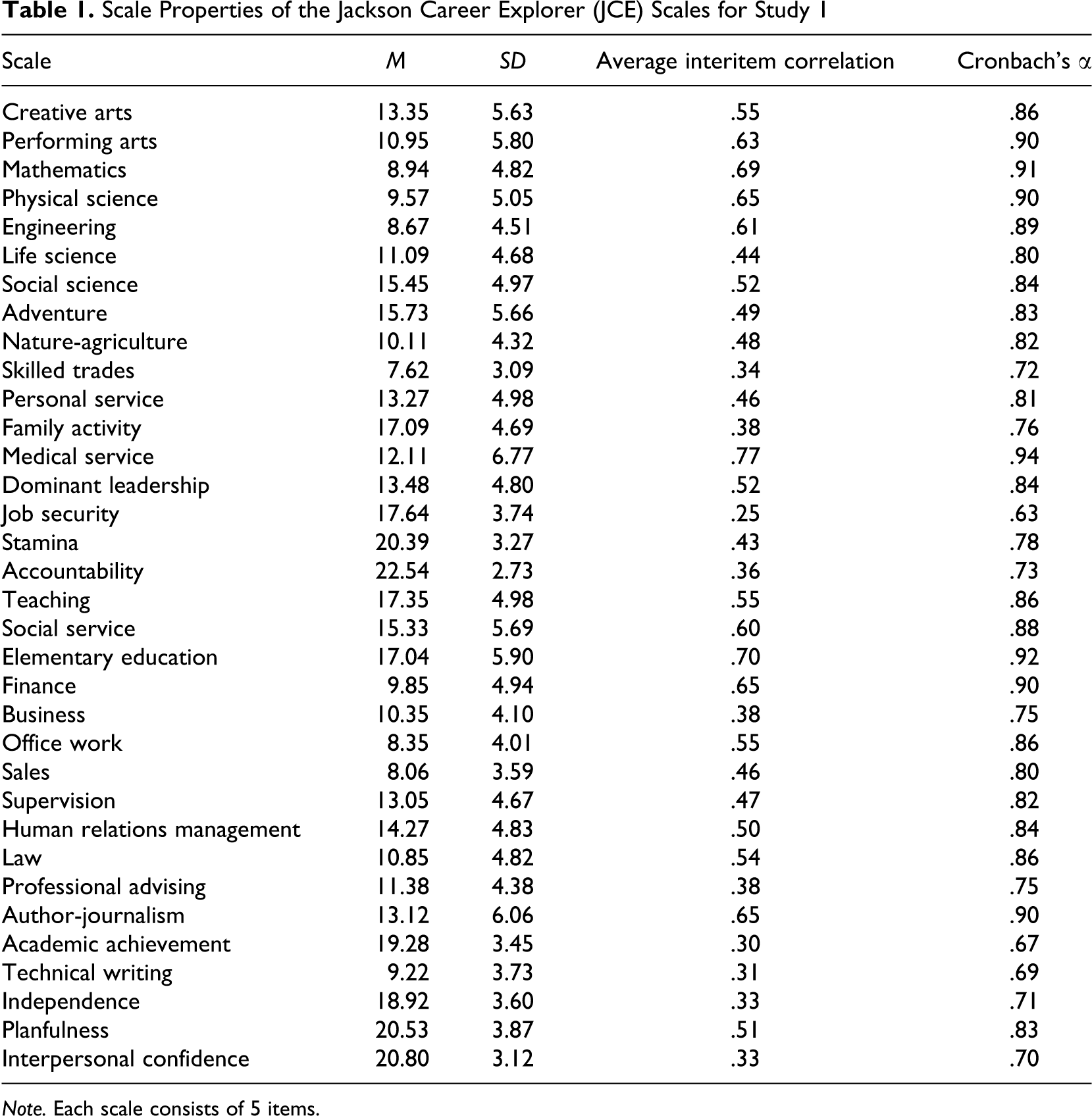
Note. Each scale consists of 5 items.
Sex Differences and Correlations With Age
Both the test of equal variances and mean differences were computed for each of the JCE scales (see Table 2). Men were found to be more variable on the mathematics, physical science, engineering, stamina, accountability, finance, and planfulness scales. Women were found to be more variable on the creative arts, performing arts, and office work scales. With respect to mean differences, men scored significantly higher on the mathematics, engineering, adventure, skilled trades, dominant leadership, finance, law, and independence scales. Women scored significantly higher on the creative arts, personal service, family activity, job security, accountability, teaching, social service, elementary education, office work, academic achievement, planfulness, and interpersonal confidence scales. The pattern of sex differences found in the present sample complements the sex differences reported by Schermer and MacDougall (2011), as well as reflect sex differences typically found in vocational interest measures (Carless, 1999; Costa, McCrae, & Holland, 1984; Harris, Vernon, Johnson, & Jang, 2006; Low, Yoon, Roberts, & Rounds, 2005; Rottinghaus, Betz, & Borgen, 2003; Su et al., 2009).
Sex Differences and Correlations With Age for the Jackson Career Explorer (JCE) Scales for Study 1
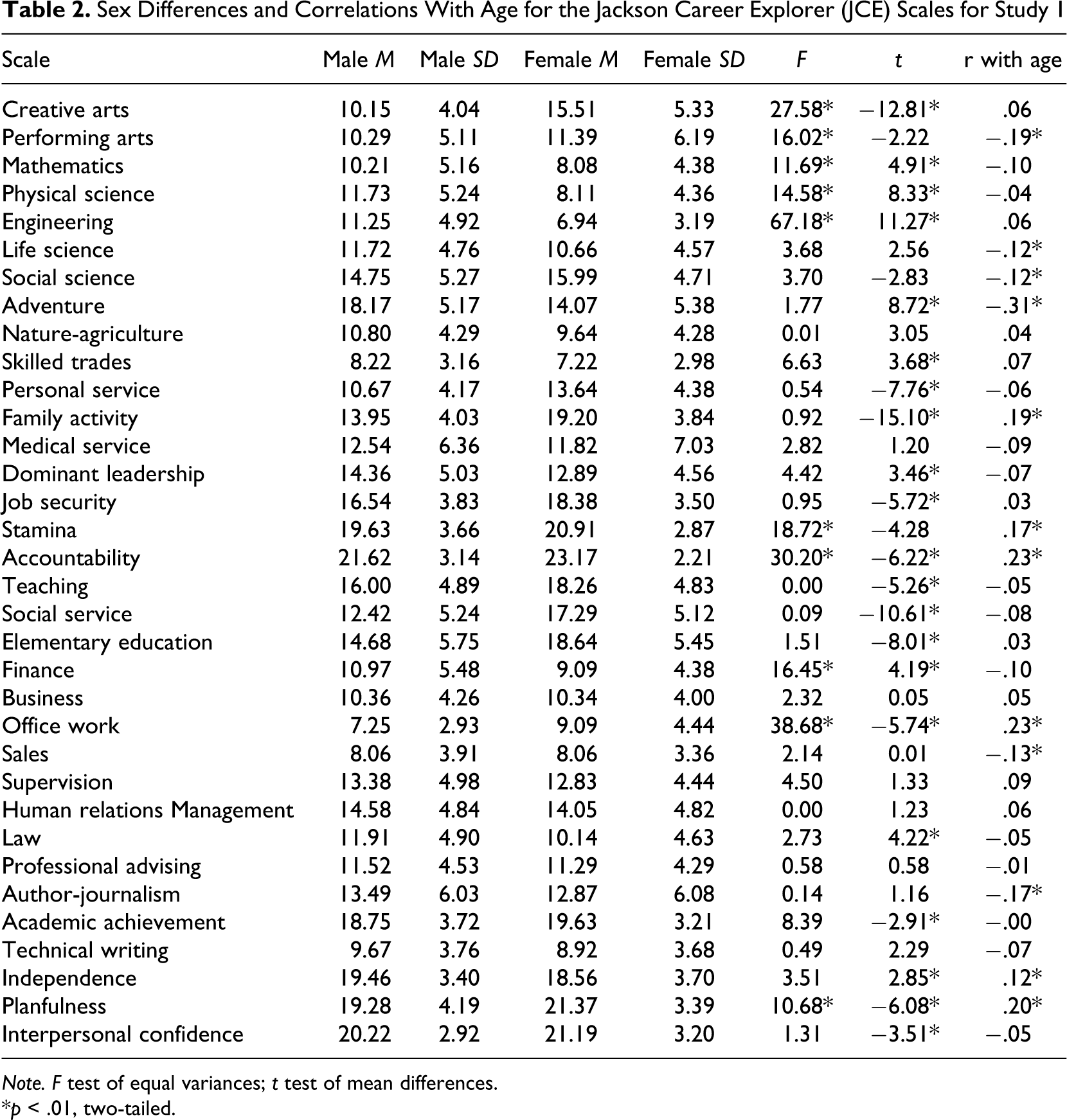
Note. F test of equal variances; t test of mean differences.
*p < .01, two-tailed.
Significant positive correlations with age were found with the family activity, stamina, accountability, office work, independence, and planfulness scales. Significant negative correlations were found between age and the performing arts, life science, social science, adventure, sales, and author-journalism scales. These results differ slightly from those reported by Schermer and MacDougall (2011). For example, a significant positive correlation was found by Schermer and MacDougall between age and creative arts and job security. Although still positive, the correlations in the present study were much lower. How age is related to vocational interests is an area that needs further exploration either by examining how interests change over time in a longitudinal design or by examining correlates in a sample of participants covering a wide age range.
Correlations Between the JCE Scales and Personality Factors
The factor structure of the 20 adjective rating scale was examined using principal components analysis, followed by varimax rotation. Five factors were extracted based on both the eigenvalue greater than unity criterion and a visual examination of the scree plot, accounting for 52.5% of the variance. The resulting factors resembled those from a previous study utilizing the same scale (see Harris, Vernon, Olson, & Jang, 1999) and were titled: extraversion (including assertive and exhibitionistic), intellect (including sentient and inquisitive), agreeableness (including sympathetic and affiliative), conscientious (including precise, persistent, and organized), and neuroticism (including defensive and support seeking). Correlations between the five personality factors and the JCE scales are presented in Table 3.
Correlations Between the 34 Jackson Career Explorer (JCE) Scales and the Five Personality Factors for Study 1
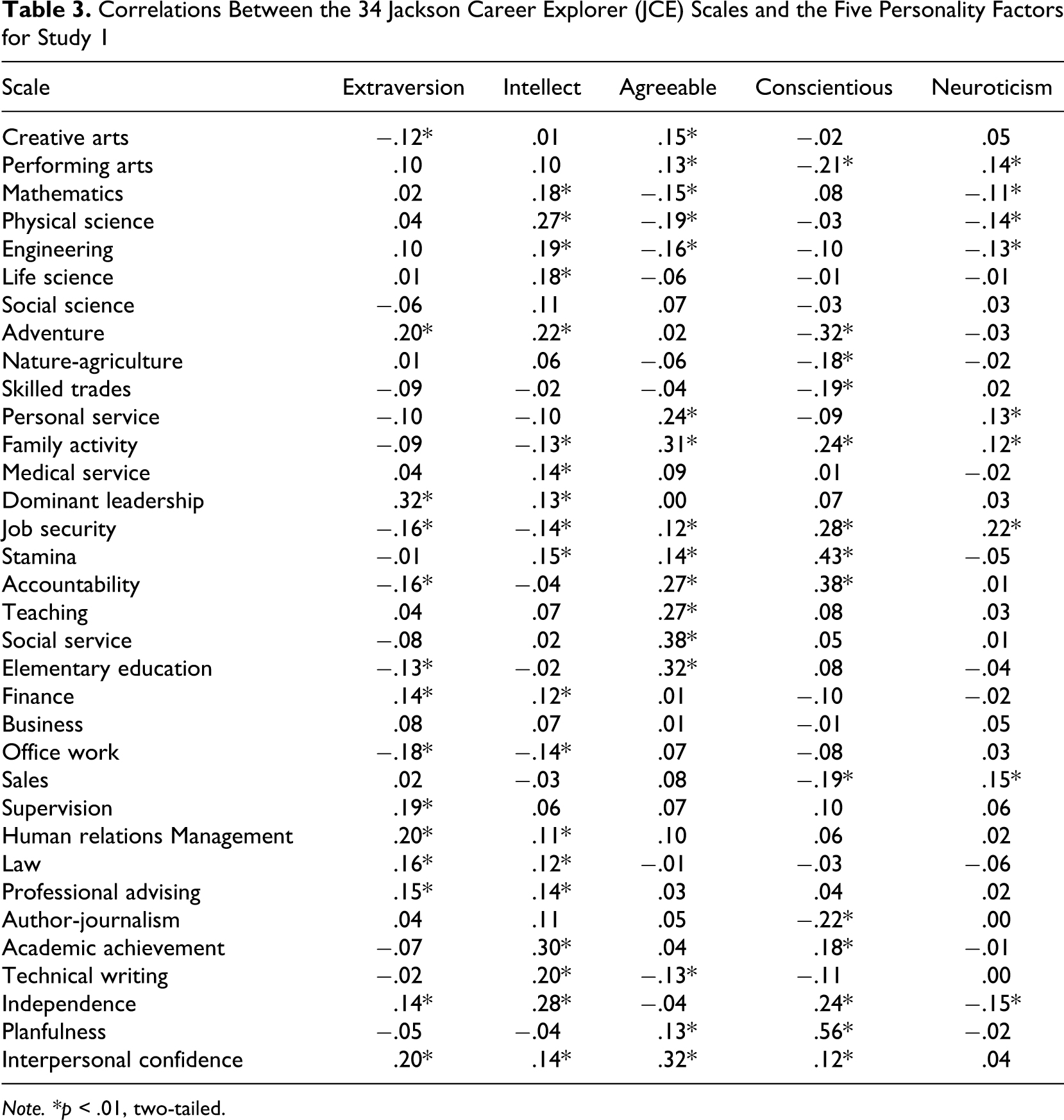
Note. *p < .01, two-tailed.
Using a moderate effect size of a correlation ≥.20, positive correlations were found between extraversion and the adventure, dominant leadership, human relations management, and interpersonal confidence scales from the JCE. This pattern is similar to the meta-analytic results from Barrick, Mount, and Gupta (2003) and from Larson et al. (2002) with extraversion positively related to enterprising and social interests. Intellect had positive correlations with the JCE scales: physical science, adventure, academic achievement, technical writing, and independence. Again, these correlations complement the investigative–openness relationship reported across studies by Larson et al. (2002). Agreeableness was positively correlated with personal service, family activity, accountability, teaching, social service, elementary education, and interpersonal confidence from the JCE, results which are similar to the positive relationship found between agreeableness and social interests in previous studies (Larson et al., 2002). Positive correlations were found between the conscientious factor and family activity, stamina, accountability, independence, and planfulness. These results are similar to the positive relationship typically found with conventional interests and conscientiousness (Barrick et al., 2003; Larson et al., 2002). Negative correlations were found between the conscientious factor and the JCE scales of performing arts, adventure, and author-journalism. Neuroticism was only found to have a positive correlation with job security at the ≥.20 level and is similar to the results reported by Larson et al. (2003) who reported a negative relationship between enterprising interests and neuroticism.
In general, the results of Study 1 do support the use of the JCE as a vocational interest measure in that the internal consistency values for the scales were strong and sex differences were found to reflect those of past research findings. Slight variations were found in the correlations between the JCE scales and age (from those reported by Schermer and MacDougall, 2011), suggesting the need for further research. The correlations between the JCE scales and the personality factors did reflect the pattern of relationships typically found in the vocational and career interest literature (Barrick et al., 2003; Larson et al., 2002). How the JCE scales relate to a popular measure of vocational interests, the VPI, is the goal of the second study.
Study 2: The JCE in Relation to the VPI
As a further means of assessing the validity of the JCE, the convergent validity between the JCE scales and the scales from Holland’s (1985) VPI was assessed. The VPI lists 160 different occupations for participants to rate whether they like, dislike, or are unsure about the occupation. The VPI measures Holland’s six factors, including: realistic, investigative, artistic, social, enterprising, and conventional, as well as self-control, masculinity–femininity, status, and infrequency scales. Predictive and concurrent validity coefficients for the VPI typically range from .50 to .60 (Omizo & Michael, 1983) with reliability coefficients ranging from .61 to .93 (Holland, 1985). Although the VPI utilizes occupational titles, as opposed to behaviors characteristic of certain vocations (as is the nature of the JCE), it is predicted that the evidence of convergent validity will be found between these two measures of vocational interests.
Method
Participants
Participants were 270 volunteers (130 men and 140 women) sampled via a convenience sample in the university community (97.3% of the participants were students). The mean age was 24.69 years (SD = 10.04) ranged from 13 to 64 years, and 84.4% of the sample were under the age of 25. Women (M = 25.82 years) were slightly older than the men, M = 23.47 years; t(268) = −1.93, p < .10. All participants were tested individually and none of the participants failed to complete the study. No incentives were provided to the participants.
Materials and Procedure
Participants completed the JCE (see Study 1) as well as Holland’s VPI (Holland, 1985), which consists of 160 occupational titles. Individuals respond to each of the VPI titles with a yes/no/don’t know for the interest they have in each occupation.
Results and Discussion
Scale Properties of the JCE
Table 4 presents the descriptive statistics and internal consistency reliability estimates for the 34 JCE scales. Cronbach’s α values are moderate to high, with an average of .81 (range = .65 to .94) for each of the 5-item scales. The average interitem correlations also suggest that the items within each scale have moderate to high correlation values.
Scale Properties of the Jackson Career Explorer (JCE) Scales for Study 2
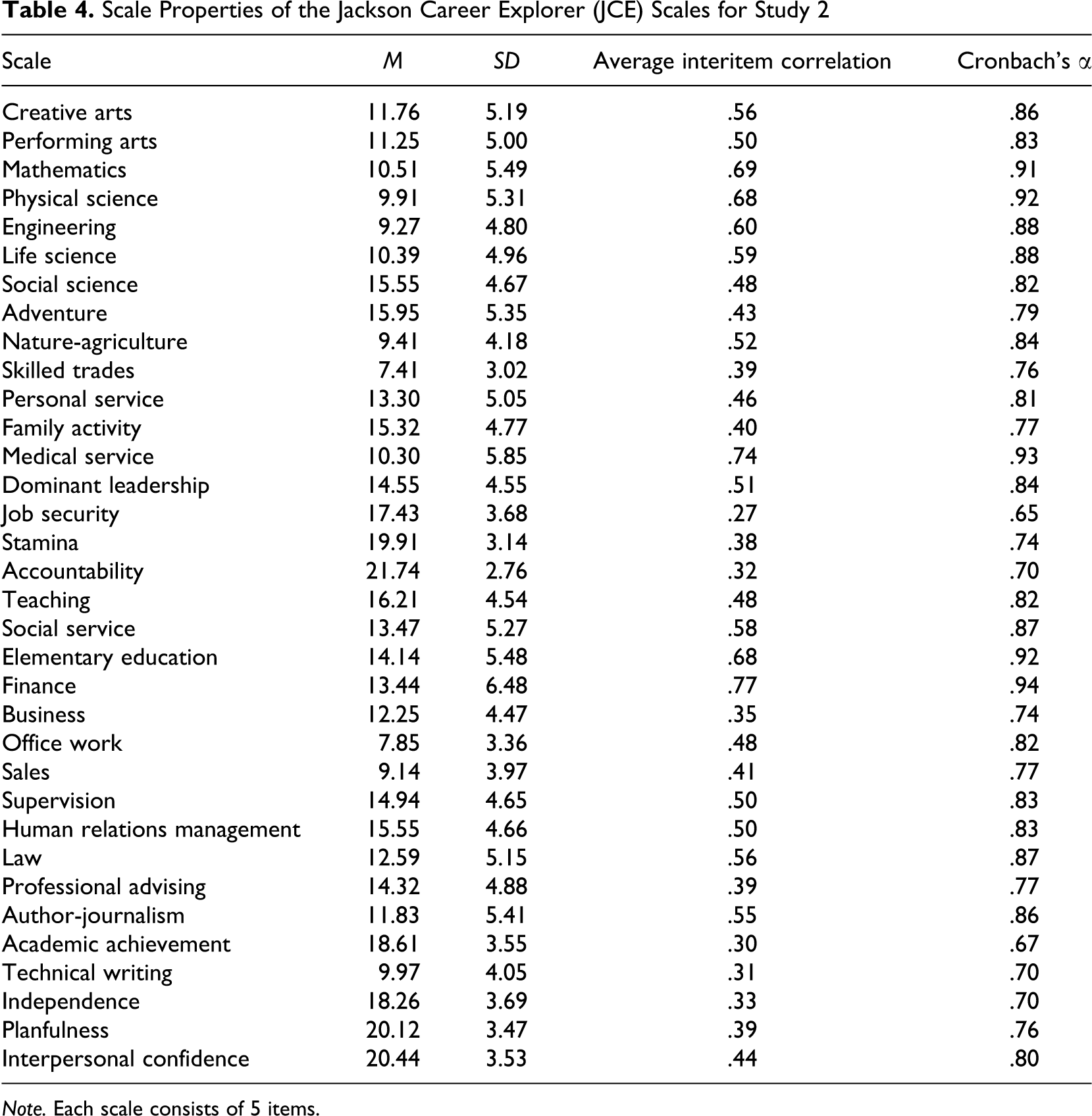
Note. Each scale consists of 5 items.
Sex Differences and Correlations With Age for the JCE
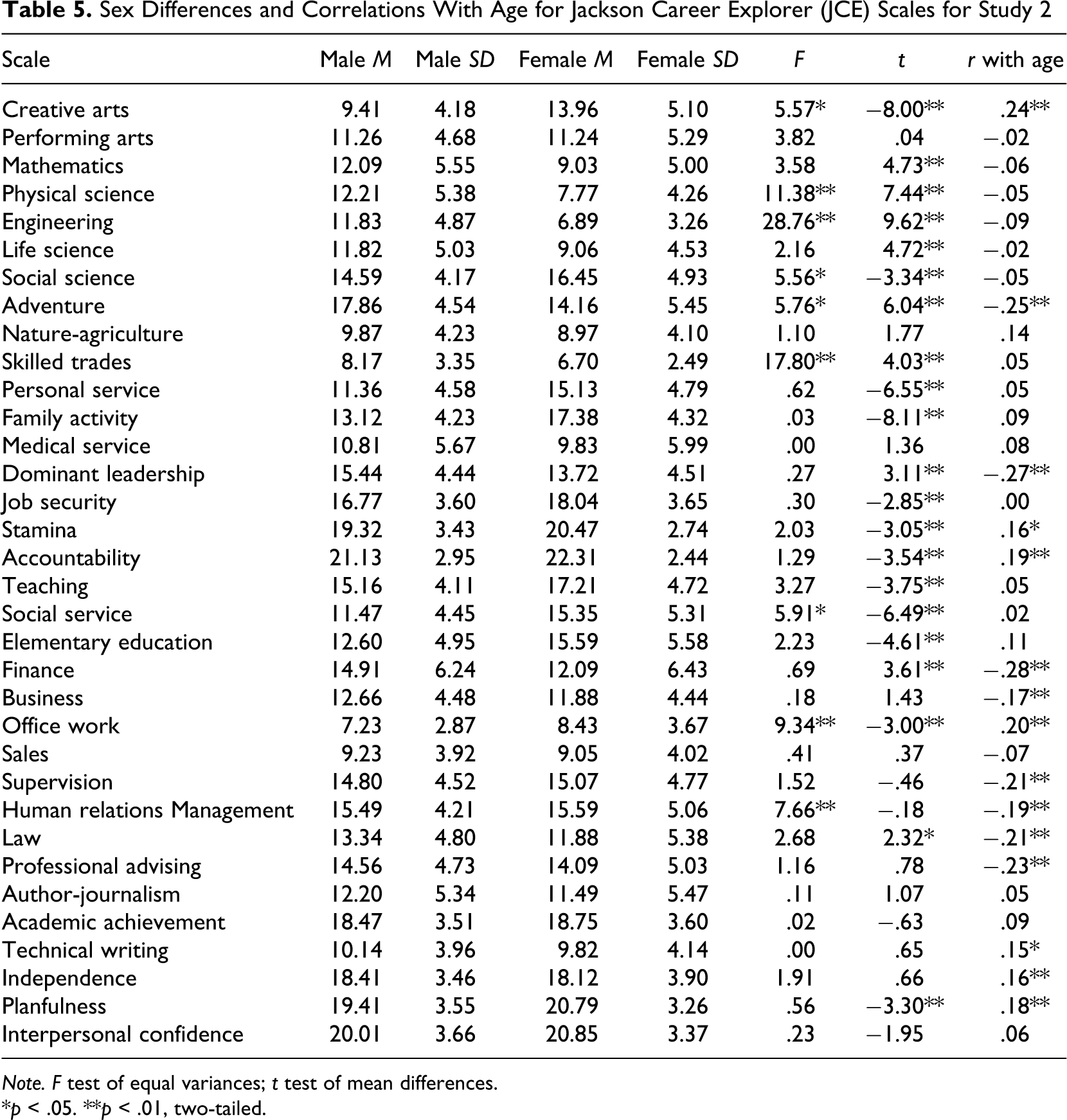
Levene’s test for equality of variances (F test) and a t test for mean differences were computed between males and females for each of the 34 JCE scales (see Table 5). Women were found to be more variable on the creative arts, social service, office work, and human relations management scales. Men were found to be more variable on the physical science, engineering, social science, adventure, and skilled trade scales. With respect to mean differences, women scored significantly higher on the creative arts, social science, personal service, family activity, job security, stamina, accountability, teaching, social service, elementary education, office work, and planfulness scales. Conversely, men scored significantly higher on the mathematics, physical science, engineering, life science, adventure, skilled trades, dominant leadership, and finance scales. These findings are similar to those found in Study 1 and to those reported by Schermer and Vernon (2008) and Schermer and MacDougall (2011), as well as with sex differences typically found in the vocational interest literature (Carless, 1999; Costa et al., 1984; Rottinghaus et al., 2003).
Sex Differences and Correlations With Age for Jackson Career Explorer (JCE) Scales for Study 2
Note. F test of equal variances; t test of mean differences.
*p < .05. **p < .01, two-tailed.
JCE scale scores were correlated with age (see Table 5). Significant positive correlations were found with the creative arts, accountability, office work, independence, and planfulness scales. Significant negative correlations were found with the adventure, dominant leadership, finance, business, supervision, human relations management, law, and professional advising scales. The correlations complement the results found by Schermer and MacDougall (2011) and deviate slightly from the pattern reported in Study 1 (such as a significant positive correlation with creative arts in Study 2).
Sex Differences and Correlations With Age for the VPI
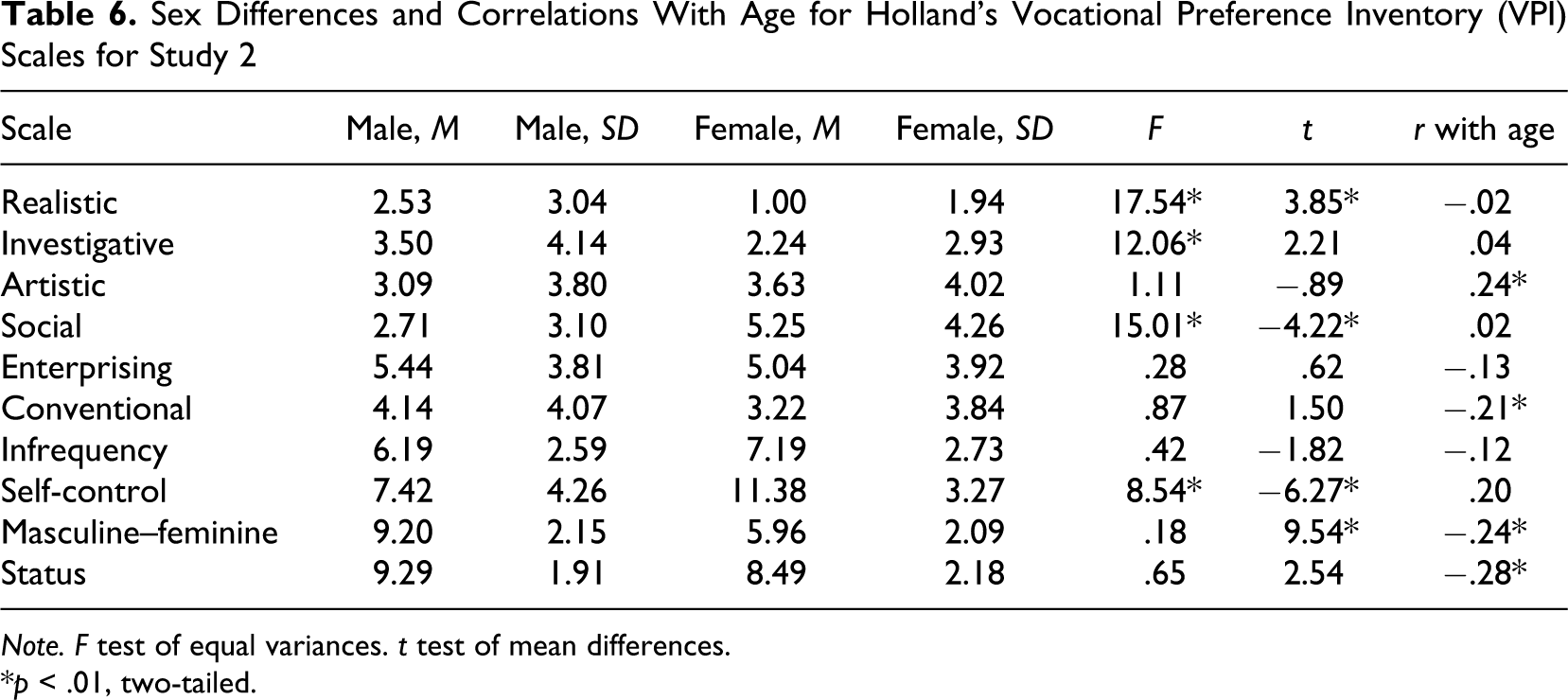
Levene’s test for equality of variances (F test) and a t-test for mean differences were computed between males and females for each of the 10 VPI scales (see Table 6). Women were found to be more variable on the social and self-control scales, while men were found to be more variable on the realistic and investigative scales. With respect to mean differences, women scored significantly higher on the social and self-control scales. Men scored significantly higher on the realistic and masculine–feminine scales. These results are similar to those found in previous studies (Costa et al., 1984). With respect to correlations with age (see Table 6), a significant positive correlation was found with the artistic scale, while significant negative correlations were found with the conventional, masculine–feminine, and status scales.
Sex Differences and Correlations With Age for Holland’s Vocational Preference Inventory (VPI) Scales for Study 2
Note. F test of equal variances. t test of mean differences.
*p < .01, two-tailed.
Relationships Between the JCE and VPI Scales
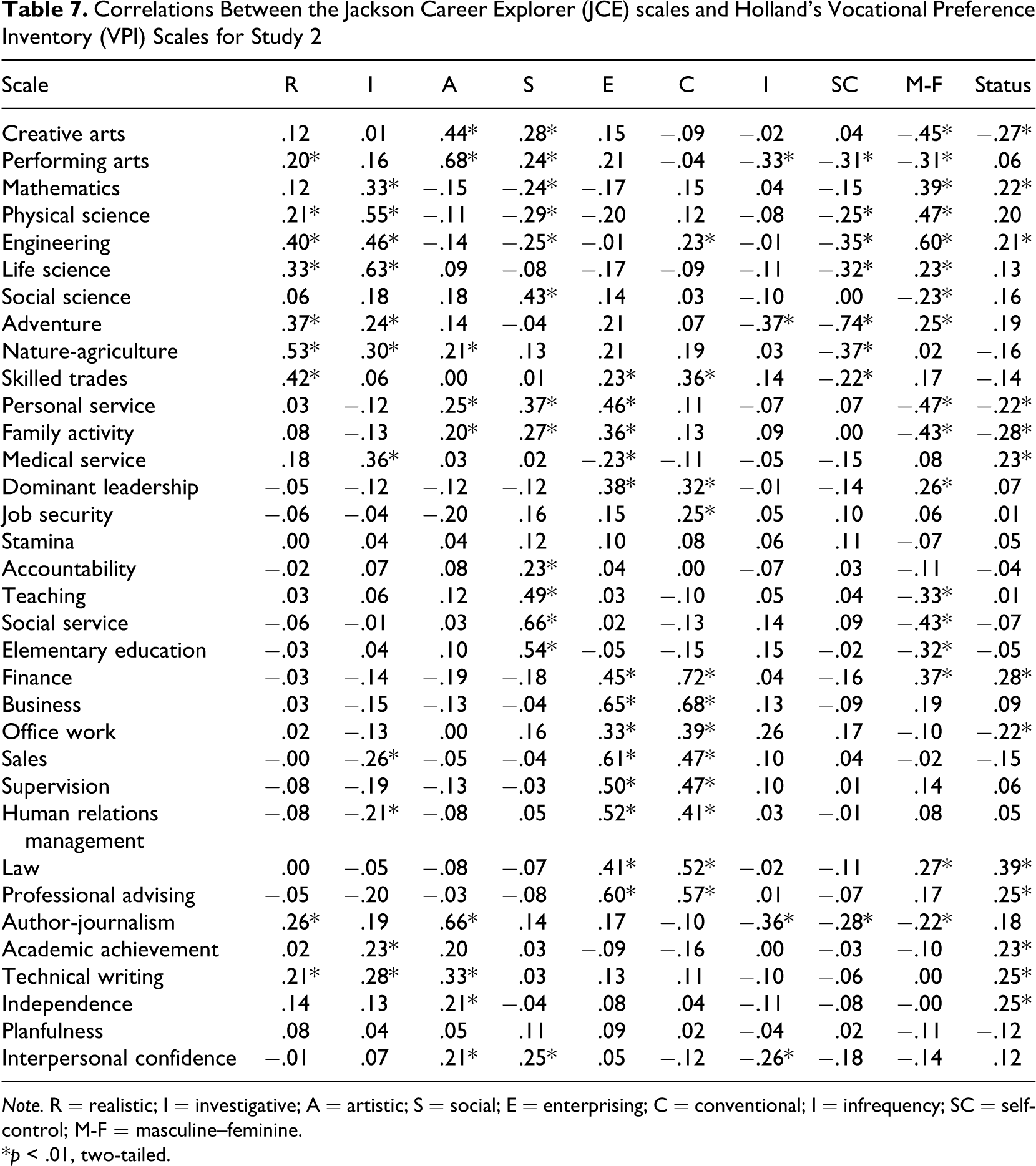
Correlations between scores on the 34 JCE and the 10 VPI scales are reported in Table 7. In general, the scales converged in a complimentary manner. The VPI realistic scale had high positive (greater than .40) correlations with the JCE engineering, nature-agriculture, and skilled trades scales. Strong positive correlations were found between the VPI investigative scale and the physical science, engineering, and life science JCE scales. The VPI artistic scale correlated strongly with the JCE creative arts, performing arts, and author-journalism scales. Holland (1985) describes the VPI social scale as an interest in teaching and therapy. The VPI social scale was found to have high correlations with the social science, teaching, social service, and elementary education JCE scales.
Correlations Between the Jackson Career Explorer (JCE) scales and Holland’s Vocational Preference Inventory (VPI) Scales for Study 2
Note. R = realistic; I = investigative; A = artistic; S = social; E = enterprising; C = conventional; I = infrequency; SC = self-control; M-F = masculine–feminine.
*p < .01, two-tailed.
The VPI enterprising scale describes an individual who is dominant, adventurous, and not conventional (Holland, 1985). Multiple strong correlations were found between the VPI enterprising scale and the JCE scales, including personal service, finance, business, sales, supervision, human relations management, law, and professional advising. These correlations are somewhat surprising as Holland (1985) places business interests with the conventional scale and not with enterprising. Not surprisingly, the JCE scales of finance, business, sales, supervision, human relations management, law, and professional advising correlate with the VPI conventional scale.
Holland (1985) describes the infrequency scale as “preferences for unpopular, female-dominated, low status occupations” (p. 8). None of the JCE scales had high correlations (>.40) with the infrequency scale, although significant negative correlations were found with the performing arts, adventure, author-journalism, and interpersonal confidence scales.
The self-control scale from the VPI is a degree of impulsiveness (Holland, 1985) therefore, it is not surprising that negative correlations were found between self-control and the performing arts, adventure, and author-journalism JCE scales. Surprising findings are the significant negative correlations between self-control and the physical science, engineering, life science, agriculture, and skilled trades JCE scales as these are interests which are typically not associated with impulsiveness.
With respect to the VPI’s masculine–feminine scale, positive correlations were found with the JCE scales of mathematics, physical science, engineering, life science, adventure, dominant leadership, finance, and professional advising. Negative correlations were found with the JCE creative arts, performing arts, social science, personal service, family activity, teaching, social service, elementary education, and author-journalism JCE scales. Interestingly, some of these correlations also reflect the sex differences found in Tables 2 and 5 for the JCE scales.
The status scale from the VPI is described as a measure of self-esteem and the desire to have a prestigious career (Holland, 1985). Positive correlations were found with the JCE mathematics, engineering, medical service, finance, law, professional advising, academic achievement, technical writing, and independence scales. Status was negatively correlated with the JCE creative arts, personal service, family activity, and office work scales, suggesting that an interest in these areas is not related to an increase in self-esteem.
In general, the results of Study 2 further support the construct validity of the JCE. The strong internal consistency values were replicated as well as the sex differences for the 34 scales. The correlations between the JCE and age were closer to the results reported by Schermer and MacDougall (2011) than those found in Study 1. The JCE scales were found to correlate with the VPI scales in a meaningful manner, supporting the convergent validity of the JCE.
Conclusion
In summary, the present report further supports the scale properties and validity of the JCE interest scales. For both the studies, the 34 JCE scales exhibited moderately high to high internal consistency reliability estimates, especially for 5-item scales, replicating results previously published (Schermer & MacDougall, 2011; Schermer & Vernon, 2008). In both the studies, sex differences were found to correspond well with previous research using other vocational interest measures (Carless, 1999; Rottinghaus et al., 2003).
Slight variations were found across the two studies in the correlations found between the JCE scales and age. Typically, research with vocational interests have focused on much narrower age ranges than were included in the present study, although Costa, Fozard, and McCrae (1997) did find a small positive correlations between age and interests in business. Holland, Johnston, Asama, and Polys (1993) reported negative correlations between age and scores on the enterprising, conventional, and high-status scales. Because the results of the present study are cross sectional and not longitudinal, it is unclear if the correlations found between vocational interests and age reflect maturation differences or generational differences. A further area to investigate is whether there is a narrowing of interest fields with age, as suggested by Low, Yoon, Roberts, and Rounds (2005).
The first study reported here demonstrated the convergent validity of the JCE and self-report personality. The correlations found replicated the pattern of relationships typically found. Similarly, the correlations between the JCE and VPI scales demonstrated convergent validity. Although further research is required with the JCE and additional vocational interest measures, the findings of these two studies, as well as the finding with the CDI reported by Schermer and MacDougall (2011) further support the utility of the JCE as a short form and continuous version of the JVIS and as a sound vocational interest measure.
Footnotes
Declaration of Conflicting Interests
The author declared no potential conflicts of interest with respect to the research, authorship, and/or publication of this article.
Funding
The author received no financial support for the research, authorship, and/or publication of this article.