




Abstract
Historically, women have been underrepresented in the Science, Technology, Engineering, and Math (STEM) fields both as college majors and in the professional community. This disturbing trend, observed in many countries, is more serious and evident in American universities and is reflected in the U.S. workforce statistics. In this article, we examine historical students’ interest data in order to further the understanding of this discrepancy and to suggest methods to reverse this trend. Thirty years of historical ACT data were analyzed by expressed interest patterns, ACT scores, gender, and intended college major or career aspiration. Statistical package for the social sciences software was used to analyze the data and examine the historical trends of students’ expressed interest in STEM-related careers. Results show that there is a significant (although expected) discrepancy between the number of male and female students who expressed interest in engineering majors and careers. Significant changes have also been observed in the interest in engineering fields over time, most likely because of societal influences. These influences are most profound in computer-related fields, causing speculation that both males and females were influenced by the dot com era but that only male interest was piqued due to the rise of computer gaming in the late 1990s. Students are further grouped into three categories—well prepared (ACT ≥ 28), under prepared (27 ≤ ACT ≥ 19), and unprepared (ACT < 19). Of the total number of students who expressed interest in engineering majors, there are many who appear either completely unprepared or relatively under prepared for the demands of these fields. Data show that female students who expressed interest in STEM fields are generally in the well-prepared category; the discrepancy between those who are interested but under prepared is greater in males than females. Results from this analysis demonstrate the importance of earlier interventions to encourage students who still have enough time to get prepared for opportunities that interest them. It is also probable that students are making assumed career choices based on little or no data and may actually find their interest waning very quickly (thus making them a retention risk if they are admitted to an engineering program). This study, therefore, provides a better understanding of gender, societal influences, and ability disparities in high school students who expressed interest in engineering majors and careers. Obtained results suggested some of what needs to be done and could be used to guide future efforts in order to reverse the current trends of gender disparity and lack of female interest in engineering fields.
Introduction
Over the life span, females are nearly twice as likely as males to express interests in fields such as arts, education, and language, whereas males are more likely to express interests in fields such as science, engineering, and math. Similarly, our review of job incumbent data suggests that women are less well represented in math, science, and engineering fields (about one third that of males; Babco, 2000). Women make up almost half of the total workforce but represent only 25% of the workforce in Science, Technology, Engineering, and Math (STEM)-related occupations (Babco, 2000; Su, Rounds, & Armstrong, 2009) . In a recent study, the National Science Board of the National Science Foundation (NSF) reported that between the years 1983 and 2002 approximately 61% of biology degree recipients and 43% of physical science recipients were women. In contrast, women made up only 21% of the bachelors recipients in engineering (National Science Board, 2006). A further example of the gender disparity in engineering can be seen in the number of female freshman with the intent to major in engineering. For example, in 1982, 16% of women expressed interest in the major and this percentage dropped to 14% in 1989 and continued at this level until 1998 (Babco, 2000). Recent data suggest that female interest in engineering is on the decline from a peak in 2000. Currently, only approximately 17% of females express interest in engineering majors (Di Fabio, Brandi, & Frehill, 2008). In contrast, data suggest that male interest in engineering is on the rise. For example, approximately 80% of engineering students in 2000 were male, whereas in 2008 that number was almost 83%. (Di Fabio et al., 2008). When actual college major counts are averaged across genders, clear differences emerge. For example, from 1994 to 2007, only 2.7% of college females majored in engineering. This is in stark contrast to the 15.7% of males majoring in this discipline (Di Fabio et al., 2008).
Given that an undergraduate degree is a prerequisite for enrollment in graduate programs, it is not surprising that these gender discrepancies persist in graduate training programs (Babco, 2000). Specifically, in 1980, only 9% of full-time engineering graduate students in doctorate granting institutions were women. Eighteen years later, in 1998, this rate had increased to only 19.6%. Although similar increases were observed in other science and mathematics intensive fields, such as biology, (e.g., 33.4% to 45.2%), the absolute number of women in these fields is over twice that of engineering (Babco, 2000). It has been reported that although female participation in less mathematics intensive graduate programs may be as high as 67%, the participation in more mathematics intensive fields such as engineering has been as low as 17% in recent years (Ceci, Williams, & Barnett, 2009; National Science Foundation, 2010). Thus, although it appears that more female engineering graduates are pursuing graduate degrees relative to recent decades, they continue to be underrepresented in graduate engineering programs relative to other science and math intensive programs.
These data point to the continued underrepresentation of women in STEM preparatory undergraduate and graduate programs and further suggest that this gender discrepancy is most pronounced in engineering. This is disquieting, given the significant efforts by government agencies, private organizations, and foundations to increase gender diversity in this area. Despite these efforts, female involvement in engineering fields has either continued to decrease or increased at a disproportionately slow rate for the last 30 years (National Science Foundation, 2007). It is encouraging, however, to see that other science-related fields are finding ways to entice women into their college majors, but engineering fields seem to still lag behind. Efforts and resources allocated to change this long-standing trend of female avoidance of engineering include scholarship opportunities for women, mentorship programs in a wide variety of K–12 activities, and postsecondary recruitment efforts (NSF, 2007). Specific examples of programs supported by the NSF include increasing the participation and Advancement of Women in Academic Science and Engineering Careers (ADVANCE), Research on Gender in Science and Engineering (GSE), Louis Stokes Alliances for Minority Participation (LSAMP), Research Experiences for Undergraduates (REU), and Research Experience for Teachers (RET; Fordyce, G.A., NSF Diversity Update, 2005). Efforts by the National Academy of Engineering in promoting STEM in K–12 classrooms include hundreds of studies and written reports, organization of thousands of extracurricular activities, and the establishment of dozens of websites to inform and increase interest in young people of both genders and various age levels (Katehi, Pearson, & Feder, 2009). The lack of apparent impact of these efforts suggests that research is needed to understand trends in young women’s interests in engineering majors and occupations (Windell, 2010).
From the above discussion, it is clear that gender disparity in STEM subjects and careers is a reality (Su, Rounds, & Armstrong, 2009). Although many government and private agency programs are attempting to provide remedies for improving the situation—thus far, available solutions have provided marginal improvements at best. It seems clear that additional exploration of this gender disparity seems warranted. The career development and vocational psychology literature may shed some light on gender disparities in engineering.
Many studies in career theory and research suggest that interests and self-efficacy beliefs play a pivotal role in informing career considerations, decisions, and implementation (Betz, Harmon, & Borgen, 2006; Lent, Brown, & Hackett, 1994; Su, Rounds, & Armstrong, 2009). Social cognitive variables, such as self-efficacy have been repeatedly shown to predict students’ interests, goals, persistence, and performance (Bandura, 1986, 1997; Fouad & Smith, 1996; Lent, Brown, & Larkin, 1986). For example, students with measured interest in science and engineering choose related majors at a higher frequency and are more persistent in those majors. A recent meta-analysis suggested that interests begin to stabilize in early adolescence (Low, Yoon, Roberts, & Rounds, 2005), indicating the importance of early career intervention. Further, vocational interests tend to reflect the activity domains in which a person feels both efficacious and expects to receive favorable outcomes (Lent, Brown, & Hacket, 1994).
There have been a number of theories offered to explain the gender disparity in engineering. Recent theories proffered by vocational psychologists emphasize the central role that career and academic interests play in the career decision making of young males and females. Evidence in support of this role is mounting (Farmer, Wardrop, Anderson, & Risinger, 1995; Lent et al., 2005; Schaefers, Epperson, & Nauta, 1997). Thus, it is important to consider expressed interests when examining gender differences in career aspirations or attainment. Interest can be defined as “an attitude or feeling that a certain object or event makes a difference or is of concern to oneself; a striving to be fully aware of the character of an object” (English & English, 1958). Schiefele (1991) defined interest as “a content-specific motivational characteristic composed of intrinsic feeling-related and value-related valences.” Lent et al. (2005) concluded, not surprisingly, that interest is an important factor in career goals and choices.
It also appears that self-efficacy (including STEM related) beliefs are important codeterminants of college major choice and performance. Self-efficacy beliefs are developed through a number of psychological mechanisms—the most influential being personal performance accomplishments. The social cognitive career theory (SCCT; Lent, Brown, & Hackett, 1994) is predominantly concerned with the relationship between personal, environmental, and behavioral variables that are assumed to predict people’s academic and career-related interests (Betz & Hackett, 1981). The roots of SCCT are in Bandura’s (1986, 1997) general social cognitive theory and research, which suggests that there is a relationship between social cognitive interests, and career choices. Thus, SCCT may provide possible explanations of gender-based differences in career choices and the lack of female interest in STEM majors and careers. This theory proposes that factors such as gender, society, and environment have an important impact on the development and implementation of interests and on a person’s choice of occupation. Interests are thought to be a potential contributing factor in the gender disparity in the STEM fields. They have been identified as a critical explanation for the considerably lower number of women entering the STEM fields both at the educational and at the occupational level (Farmer et al., 1995; Lent et al., 2001, 2005; Schaefers, Epperson, & Nauta, 1997). Interest has also been identified as a central predictor in educational and occupational choices (Benbow & Minor, 1986; Fouad, 1999).
The disparity between male and female interests has been observed for almost 100 years (Thorndike, 1911), and though the root of these differences in interests has been of great debate, differences still remain. The fact that women have consistently expressed interest in social and artistic activities at a higher rate than men, and men continue to express interest in science and technology fields at a much higher rate than their female counterparts (Betz & Fitzgerald, 1987), has baffled scientists and policy makers for many years. Betz and Fitzgerald (1987) used the six Holland (1973) interest codes (Realistic, Investigative, Artistic, Social, Enterprising, and Conventional) and found significant gender differences in career interests, as demonstrated by women’s higher interests in working in social and artistic activities and men’s interests in science, technology, and mechanics. Though the difference in interests can, in part, explain the difference in career choice between men and women, these differences may reflect a long-standing trend of male interest in engineering, perhaps leading to greater motivation, and self-efficacy in comparison with females (Adamson, Foster, Roark, & Reed, 1998; Chen, Chen, Chang, Lee, & Chen, 2010; Mantzicopoulos, Patrick, & Samarapungavan, 2008; Preckel, Goetz, Pekrum, & Kleine, 2008).
As mentioned earlier, many solutions have been proposed to increase women’s interest in STEM fields. These projects, however, often lack a theoretical foundation and, consequently, have failed to have an impact on the central variables including interest and preparation. These variables must be clearly recognized and acknowledged in order to nurture and sustain occupational interests and choices (Betz, 2008; Lent, Sheu, Gloster, & Wilkins, 2010). Moreover, many of these efforts do not consider the existing interests of their participants. For example, it stands to reason that interventions designed to increase consideration of STEM careers would be more successful when targeting students with measured interests that are consistent with such career choices compared to interventions aimed at changing the interests of students with non-STEM interests. Thus, it might be helpful to understand the role “measured interests” plays by examining a large representative sample of high school students. The presence of large numbers of students with measured interests in STEM congruent domains but who express interest in non-STEM areas would suggest a possible target population for interventions such as those described above. Equally important, however, is the possibility that many individuals with expressed or measured interests in engineering may not possess the specific aptitudes necessary for success in engineering-related fields. An individual with high levels of measured and expressed interests in engineering but with poor math and science skills or past performance requires a different type of intervention compared to a student with high levels of math and science performance but with no expressed interest in the STEM fields. In the latter case, exposure to career information, modeling, or experience with engineering fields might be appropriate whereas in the former case, academic remediation might be indicated.
By following interest and academic preparedness over a long time period, one would be able to identify clear trends of interest without preparation, as well as preparation without expressed interest. An understanding of this information will allow better utilization of the current resources and also may better guide new ideas for avenues to reverse these trends. Also, a knowledge of what type of student expresses interest in engineering may provide an insight into what is working thus far, while a knowledge of the discrepancy between those who lack preparedness with expressed interest may illuminate interventions that may be better suited for the classroom.
The objective of this work, therefore, is to present results of a study that examined historical changes in expressed interest and career occupation over a long period of time (30-year span) to help infer some of the societal influences that may have contributed to these changes. Further, most available studies focused on college enrollment and adopted careers, but thus far, no studies have looked at differences in high school student interest in the different STEM majors and careers. Therefore, the importance of this study is the focus on examining ACT data for high school students to help analyze their expressed interest in STEM majors and engineering careers. Obtained results not only further highlighted historical trends in gender differences of interests in STEM majors and career but also help in identifying avenues for reversing this trend. The ACT data analysis method and calculations procedure are described in the second section, while the third section includes summary of the obtained results. The fourth section summarizes observations from the data analysis and also provides discussion on how these observations may lead to the reversal of this historic gender disparity trend in female participation in STEM/engineering majors and careers.
Method
Participants
The participant pool included all high school students with complete data sets (sufficiently complete interest inventories to be scored) in the ACT archival database from the years 1973 to 2007. Participants resided in all 50 States and the District of Columbia, and represented a range of demographic characteristics (e.g., socioeconomic status, gender, race, community size, graduating class size, and high school achievement). It reasonable to assume that the participants were generally in the college-bound population, or else they would not have been taking the ACT exam. The total number of students in this pool exceeded 38 million.
Participant Demographics
Sample sizes gradually increased from 744,050 in 1974 to 2,037,479 in 2006 due to several factors, including an increasing number of students aspiring to go to college and the increased market share enjoyed by ACT relative to its competitor SAT. Females outnumbered males during early study years (e.g., 53% vs. 47%, respectively, in 1974) and even more predominantly in later study years (e.g., 56% vs. 44%, respectively, in 2006). Not surprisingly, racial/ethnic diversity continued to increase across the study years. For example, in 1974, over 70% of sample participants were Caucasian (6% African American, 2.5% American Indian, and 2.5% Hispanic/Latino). In contrast, in 2006, Caucasians made up only 63% of examinees (11% African American, 1% American Indian, 8% Hispanic/Latino, and 3% Asian American).
Procedure
The method is based on analyzing the expressed interest in STEM courses and careers by high school students who took the ACT exam over 30-year period (1974–2006). Over a 38 million high school students took the ACT over this period, responding to questions beyond the ACT test including demographic information, and interest in career and college majors.
Specifically, the ACT College Entrance Exam contains a student profile section, demographic information, and sections of cognitive assessments for Reading, Mathematics, Science, and English. The profile section contains 190 questions, of which 79 questions relate directly to high school activities, interests, and accomplishments outside of the classroom (ACT, 1995). The questions relate to students’ activities in a variety of disciplines and interest areas, for example, instrumental music, vocal music, student government, and so on. They also include student-selected career and college major aspirations and are answered in yes/no format (ACT, 1995).
The student-selected career and college major aspiration data were used in the present study. Expressed interest in academic major and career choice was assessed on the ACT registration profile using Items 13 (What is your first choice occupation?) and 14 (How sure are you about your current choice of college major?). Students were presented with 271 choices that included 25 engineering and 3 computer science majors. Students were also asked how certain they were of their college major and career choice (very certain, fairly certain, uncertain). Only students who indicated that they were fairly or very certain of their choice were included in subsequent analyses; thus, ensuring that students with measured interest were the focus of this study.
Mathematics preparation has been consistently observed to be an important measure for student success and retention in STEM fields (Wei-Cheng & Richard, 2001). The ACT mathematics test score is one of the four mandatory subjects (English, Math, Reading, and Science) in the ACT test. Sixty of the 215 total ACT cognitive assessment questions are mathematics related and mathematics is, time wise, the longest section, taking about 1 hr of exam time (ACT.org). The ACT mathematics composite test score was, therefore, used to evaluate the relationship between career aspirations and mathematics preparation.
For this project, three groups were created to capture differing levels of mathematics achievement. Highly prepared students included those with ACT mathematics score greater than or equal to 28, moderately prepared students included those with ACT mathematics scores between 19 and 27, and inadequately prepared students had ACT mathematics scores less than or equal to 19. The higher bound cutoff score used in this study was based on the cutoff scores for entrance into many engineering programs (e.g., University of Utah), while the lower bound cutoff score is based on the average minimum entrance ACT score for state colleges and universities across the United States including the University of Utah, Idaho State, and The California State University (Freshman, n.d.; Freshman Admission Requirements, 2007; Testing Requirements, 2009).
Analysis was conducted using statistical package for the social sciences (SPSS) software from IBM (SPSS. com, 2010). Analysis procedures included the calculation of descriptive statistics as well as an analysis of the proportion of all students expressing interest in engineering careers using the three-level mathematics score categories described above. Additionally, cross tabulations were calculated to determine the interest patterns of students in reference to their math scores. Data were also analyzed to compare female and male interest in engineering over the 1974–2006 period, as well as to highlight the disparity between female and male level of preparation for some engineering disciplines.
Results
This article focuses on the question of gender differences in interest in engineering-related fields over a 30-year span. Engineering fields have seen a significantly startling gender disparity relatively consistently over the last 30 years. In some fields, such as electrical engineering, this gender disparity significantly increased in the early 1980s when male interest increased and female interest remained stagnant. This observation has been theorized to be due to societal factors occurring during that time. Conversely, in more directly computer-related fields, when both male and female interest peaked in the 1980s, the gender disparity reached an all time low. These observations are important aspects of our understanding of interest and how it relates to the gender disparity we observe in engineering-related fields.
Figure 1 shows the percentage of student-expressed interest in (all) engineering majors from the ACT historical data and strongly suggests that gender differences, which have existed since the early 1970s, persist to this day. For example, about 1% of female students who took the ACT in the 1970s expressed interest in engineering. After a modest increase in the 1980s and 1990s, again about 1% of female students expressed interest in engineering in 2005. Figure 1 also shows that the modest increase in female interest in engineering of about 2–3% during the 1980s was much less than the larger 12–13% surge in male interest during this period. It is, however, important to note that female interest held steady at about 2% during the 1990s while male interest in engineering majors experienced a steady and steep decline during this period. One of the most alarming trends is the fact that the interest in engineering majors appears to have steadily declined for both females and males since the observed peaks in the early to mid-1980s.
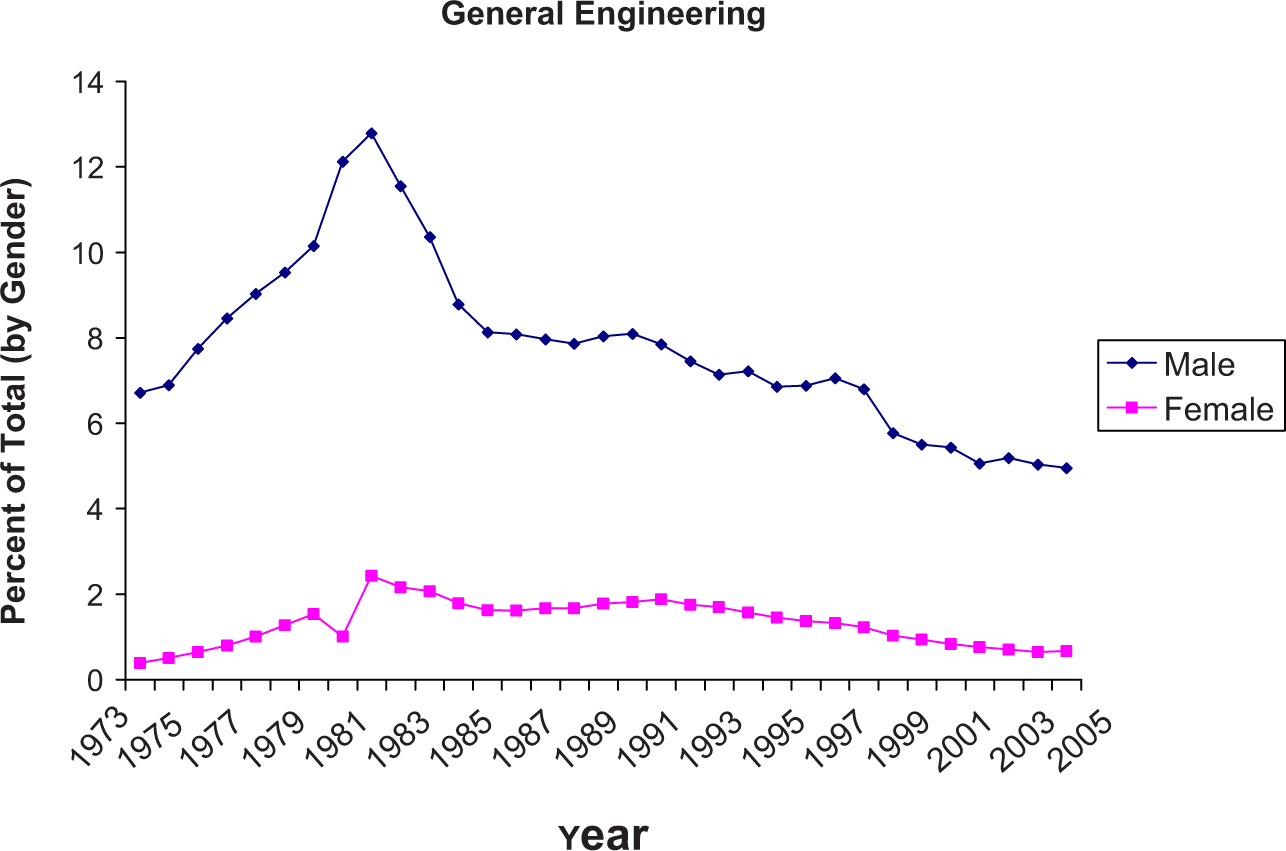
ACT historical data of expressed interest in general engineering career.
Figures 2 and 3 show the expressed interests of male and female students in two engineering college majors (electrical and mechanical engineering) and highlight the importance of historical analyses of interests. As may be noted, pronounced gender differences can be observed in both majors. While male interest in electrical engineering is on the decline, male interest in mechanical engineering has risen progressively since 1974. The female interest in these disciplines, however, has remained relatively stagnant in both majors during that same time period. The trend in male interest in electrical engineering may be attributable to the dot com era and the rise of personal computers and their associated hardware and applications during the 1980s. This trend (rise and fall of interest) is not seen in mechanical engineering, which has had a steadier rise over time. Similar to results seen for electrical engineering, however, female interest has not changed significantly during this period for either major.
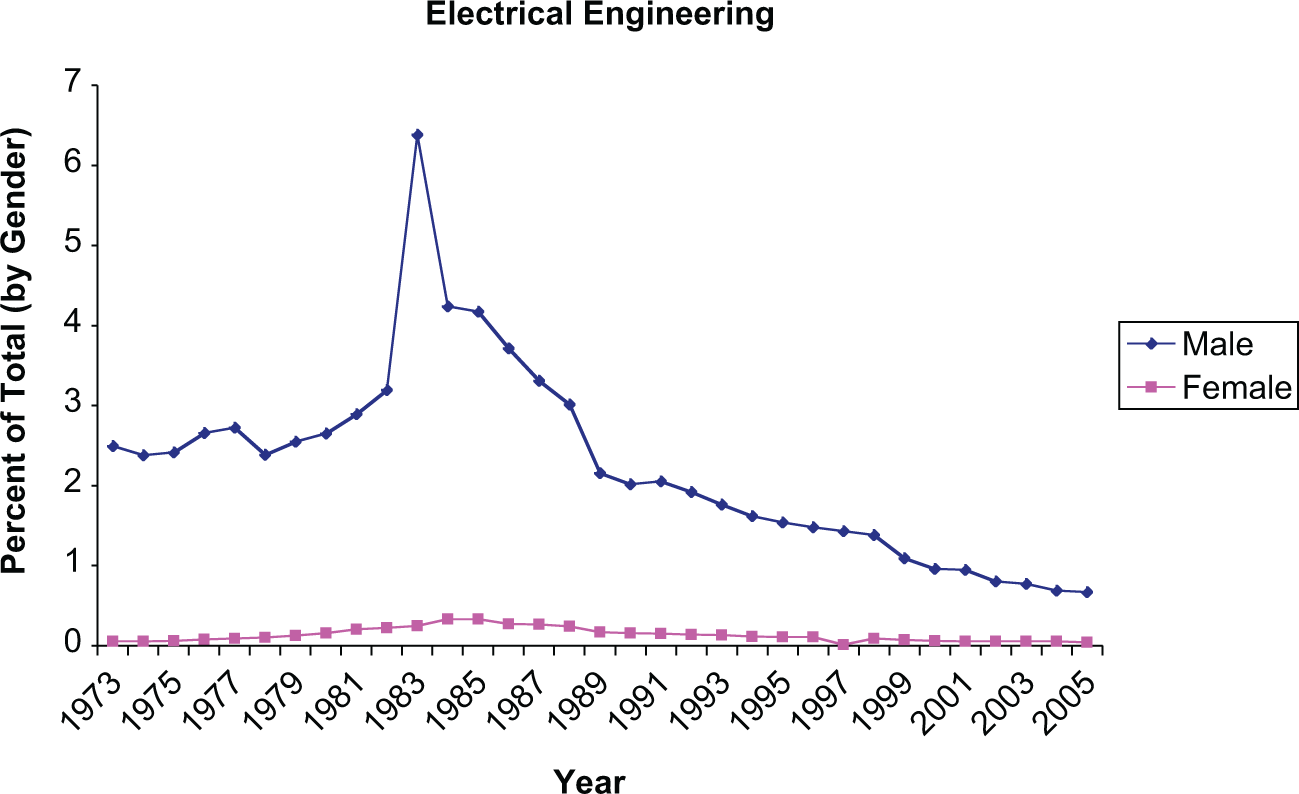
ACT data on students expressed interest in electrical engineering with focus on gender difference.

ACT data on students expressed interest in mechanical engineering with focus on gender difference.
Figure 4 shows student interest in computer engineering. The very strong peak expressed during the early 1980s was similar for both male and female students. This peak was also seen in the electrical engineering major for male but not female students. The expressed interest peaks seen in Figure 4 are the most profound of all of the engineering majors examined in this project. Within a 6-year period, expressed interest in computer and information sciences increased nearly 4-fold while in subsequent years these areas experienced equally precipitous drops. A similar spike can be observed in the mid to late 1990s but only for male students. Notably, female interest did not experience this second peak.
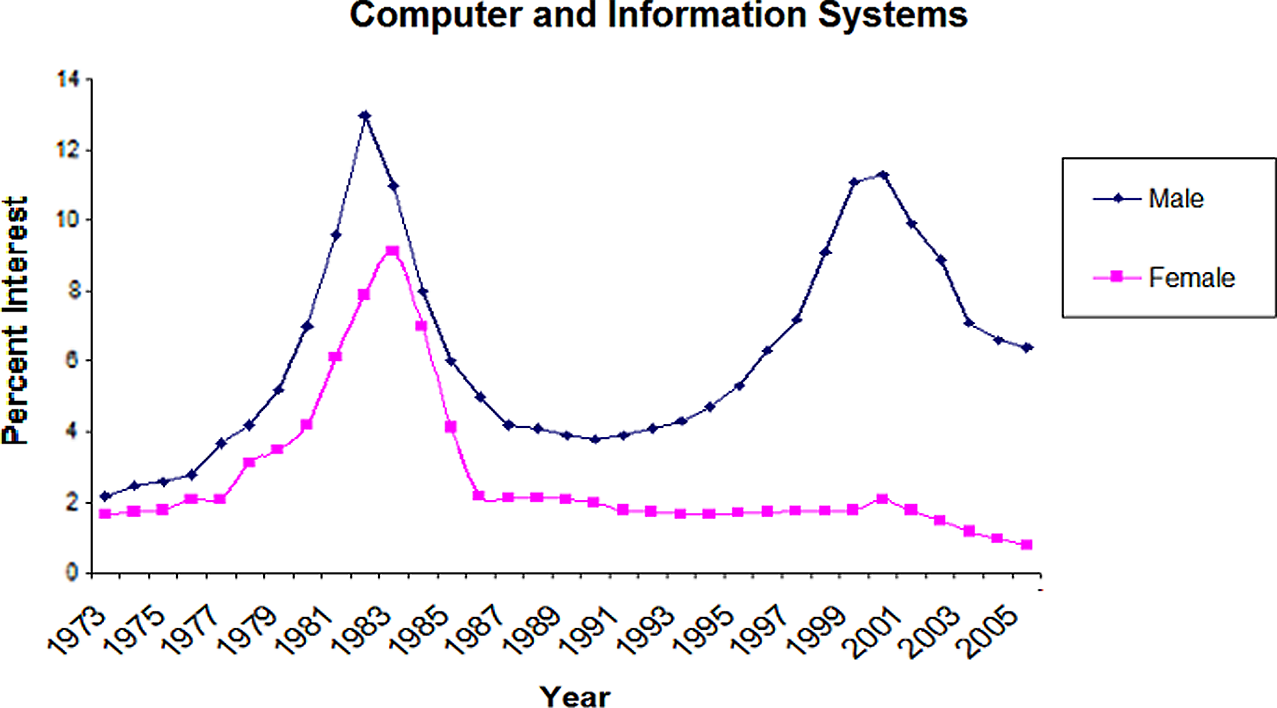
ACT data of students expressed interest in computer and information systems.
The next section of information that will be examined is that of intended major (i.e., area of interest) and how well students are prepared for these majors. This preparation is particularly critical for engineering fields and is a strong predictor of student success and retention (ACT.org, 2010).
Figure 5 shows results from an analysis of engineering college major and occupational interests of students by past achievement (ACT math scores). This research analyzes the last year (2006) of the available data in order to help understand the current level of disparity between interest (intended college major) and actual measured ability (student’s ACT score). Students who have ACT math scores below 19 are poorly prepared, and those with scores of 20–27 are marginally prepared for the major they have expressed interest in. Students who scored 28 or above on the ACT were considered prepared for their intended college major. By examining majors where the majority of students are poorly or marginally prepared, we can foresee probable challenges for retaining students in these majors, despite their expressed interest. The data in Figure 5 clearly highlight the large number of students who are expressing interests in engineering-related college majors and careers, but who may be poorly or only marginally prepared to succeed in these pursuits. These observations are particularly true for students expressing interests in computer-related engineering majors and general engineering. In contrast, students expressing interest in aerospace, bio, chemical, and mechanic engineering majors appear to have proportionately stronger preparation in high school mathematics.
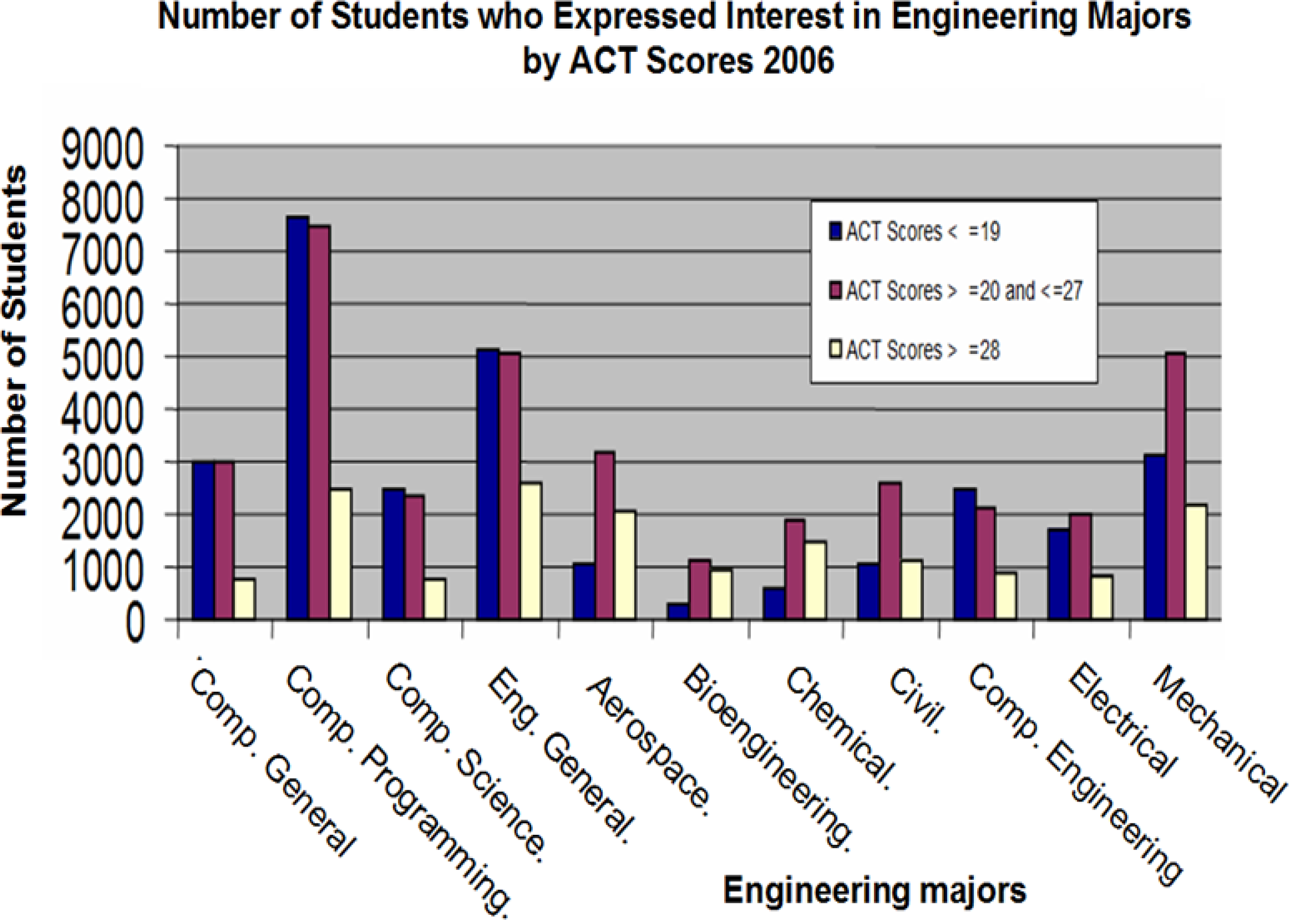
ACT data of students expressed interest in engineering majors.
Figure 6 presents results showing the number of students in each achievement group who expressed interest in engineering for the year 1982 (previously identified as a peek year of interests in engineering). It is clear from this graph that the relative proportion of highly prepared students (i.e., ACT score ≥ 28) across almost all engineering disciplines (with the exception of chemical engineering) are less than the number of students in the two other lower achievement groups.
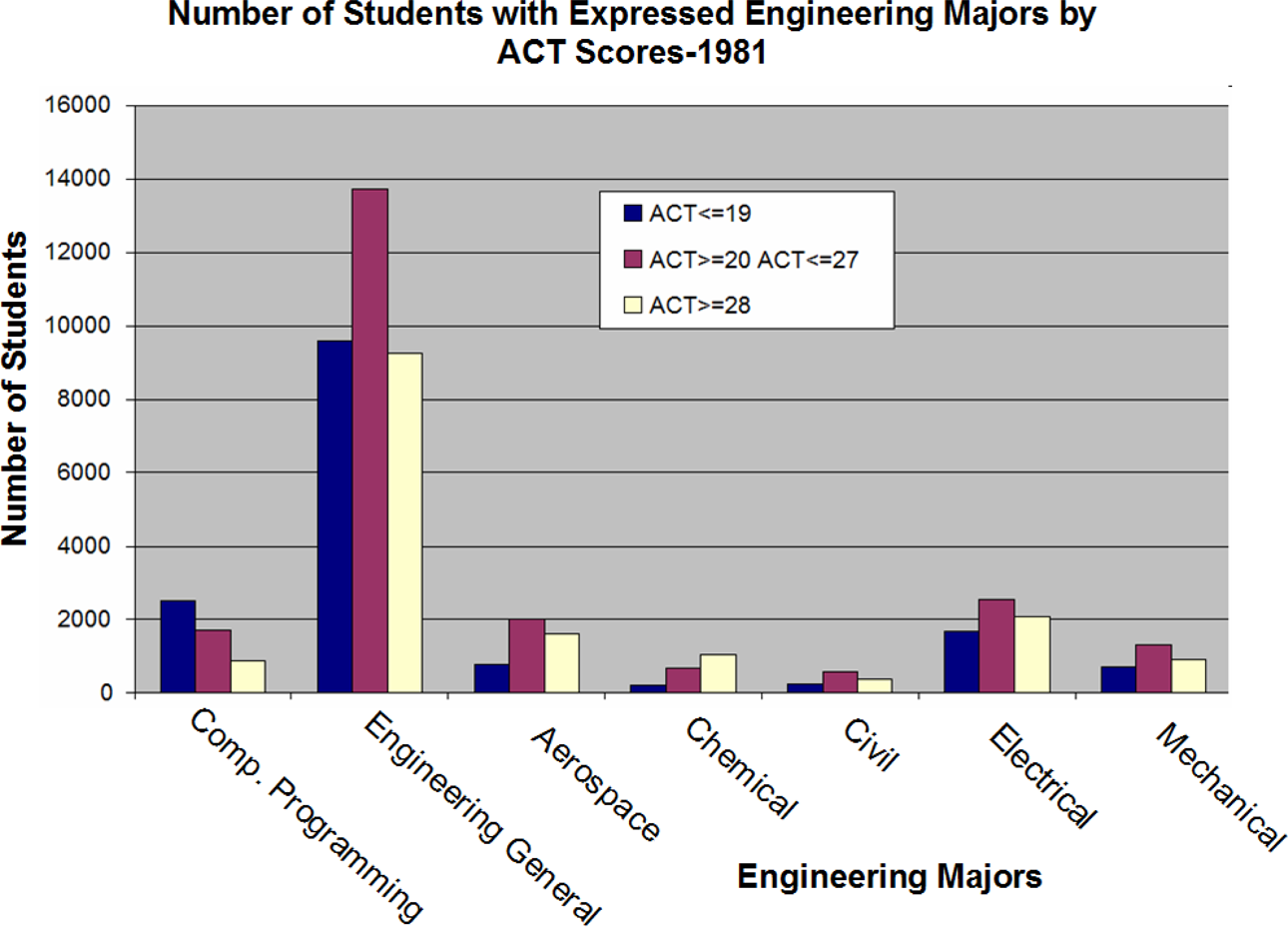
1981 ACT data for the number of students who expressed interest in engineering majors.
Figure 7 shows female students’ major interest data versus ACT scores (academic achievement) presented separately for female students. As may be noted from these results, females who expressed interest in engineering, particularly in chemical, biology, and aerospace engineering, are more likely to be in the prepared category in comparison to computer-related fields. However, when comparing the ratio of respondents, it seems that overall females who report interest in engineering fields are as underprepared as their male counterparts.
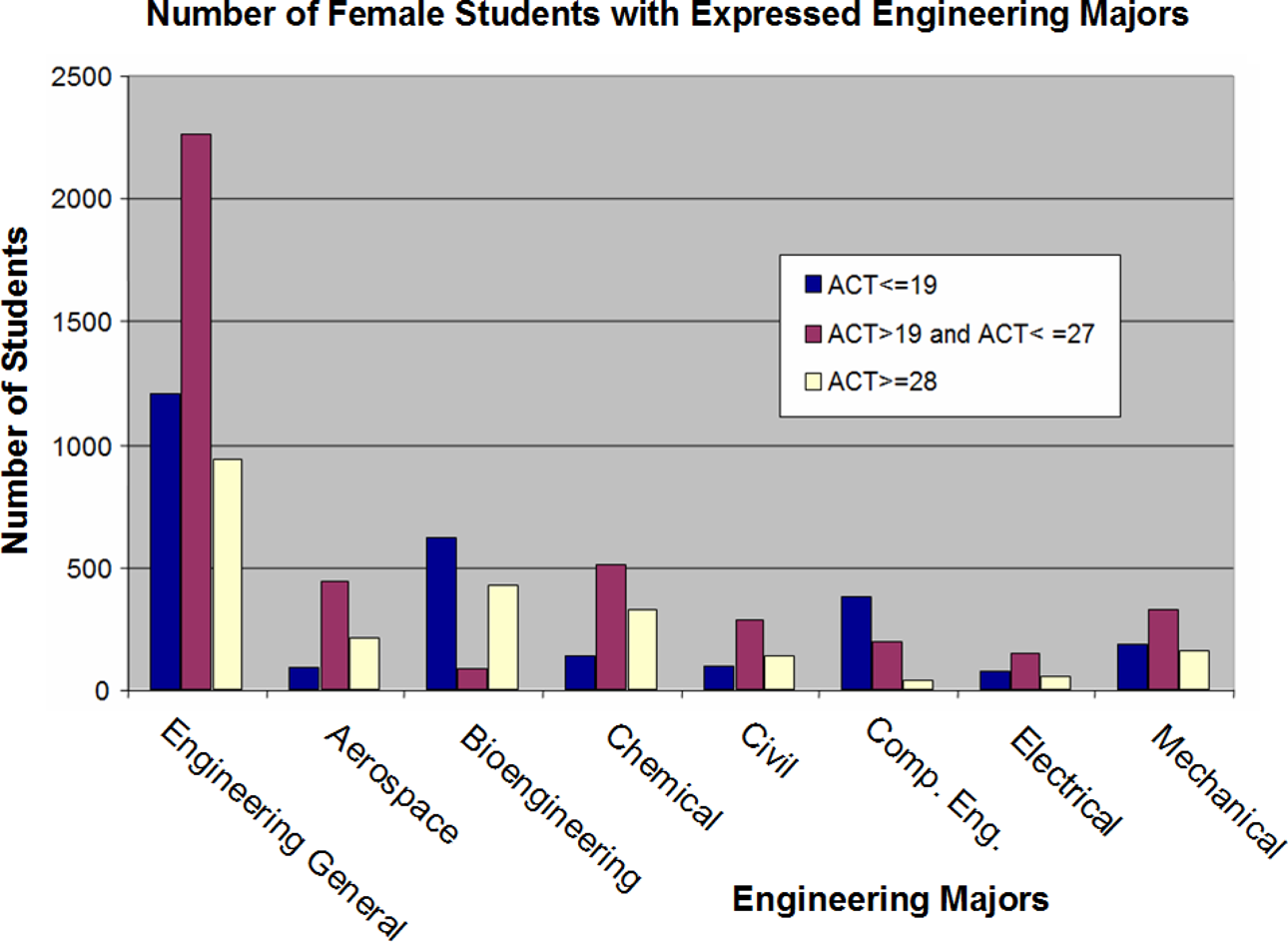
ACT data for female students expressed interest in engineering majors in 2006.
Discussion and Conclusions
This 30 years study of ACT historical data was conducted in order to gather informational trends about students’ interest. Results from the present study clearly demonstrate a historically sustained presence of gender differences in expressed engineering interests. For both Electrical Engineering and General Engineering, a peak occurred in the early 1980s. This peak was seen in male students whose interest increased from 4% to12%. A similar peak, however, was not observed in female interest. Conversely, in Computer Engineering there was a peak in both male and female students in the early 1980s with each increasing about 6 to 10%. Interestingly though, the second peak in Computer Engineering seen in the late 1990s resembled that of other engineering fields with no notable increase in female interest but an increase in male interest of about 10%.
These gender disparities could be due to many societal influences. By extending our understanding of these gender differences through a historical perspective and analysis by engineering subspecialty, we were able to see the prevalence and long-standing nature of the disparity, while also gaining an understanding of potentially unseen influences that could be affecting this disparity. Understanding the interest patterns is an important aspect in understanding the work force, hiring patterns, and recruitment in engineering-related fields. These results highlight the probability that sociocultural events, such as the emergence of the Internet and personal computers (1980s), dot com boom (1990s), and emergence of computer games (late 1990s), and so on, can have immediate and relatively profound influences on the expressed interests of American youth. The historical differences in interest in engineering-related fields are especially captivating due to the differences seen in some engineering subspecialties (such as computers) more than others (such as mechanical engineering). The 1980s were a bleak time for female interest in most engineering fields while male interest at this time hit an all time high. Interestingly, at this time the only subspecialties that encountered female interest peaks were the computer-related fields. By the late 1990s and early 2000s, male interest was once again increasing in the computer-related fields, but female interest and other engineering-related fields did not have the same experience. Female interest in Electrical Engineering, for example, has stayed relatively stagnant at less than 1% over the last 30 years. This is also the case with mechanical engineering where, despite the increasing interest in male students, the percentage of female students interested in this field has stayed well below 1%. This contrasts with the new field of computer and information systems, which saw a peak of both male and female interest in the early 1980s, with female interest reaching a high of almost 10%. This interest has widened since that time, and has held at a constantly low 2%, even when the male interest peaked again in the early 2000s. The newness of the computer fields during the early 1980s could have something to do with the lack of gender disparity and high interest from both male and female students in the early years. The subsequent drop in female interest since then is on par with other engineering-related fields, and thus may be explained by the decreased appeal of this field over time.
These trends are further confirmed by examining the differences in the graduating engineering class from 2002 and 2009. The University of Utah graduated 362 students with their bachelor’s degrees in engineering in 2009. This is up from 2002 at which time the number of graduates was only 257. This increase unfortunately does not necessarily reflect an increase in engineering overall, but rather, in specific concentrations. The biomedical engineering department was not around in 2002, but in 2009 it contributed 21 graduates, 10 of which were female. The biomedical and mechanical engineering departments alone accounted for about 70% of the growth seen in the last 7 years; reflecting the earlier discussed data that mechanical engineering is one of the few major departments that are on the rise in the United States. Also, parallel with the previous data is the fact that women at the University of Utah are greatly underrepresented in the graduation numbers compared to their male counterparts. Even for growing fields such as mechanical engineering, only 12 were female in comparison to the 117 male. This information demonstrates that the lack of female interest persists from high school juniors and seniors taking the ACT all the way through to college and graduation, thus, leaving a lack of female engineers in the workforce and in graduate programs. It seems then that necessary steps must be taken early to reverse this trend in a student’s career, and decrease disparity in the female participation in engineering careers.
Another very interesting analysis from the ACT data is the combination of expressed interest and (math) preparation. The disparity in interest and skills is particularly seen in computer fields, where the math preparation level is much lower than others. Students may think that they are interested in computer science, because they play computer games, but they are not actually that interested in the math (as measured by their lower ACT scores), which is required in this major. As a result, they may be poorly prepared to succeed in this major. For these poorly prepared students expressing interest in the field, it appears they are overconfident in their abilities, perhaps because of lack of advising and misinformation. Students expressing interest in these fields may require advising and encouragement at an earlier level to ensure that they take the necessary preparatory classes. Additionally, universities should be made aware of the differences between preparations for the different majors to help them define best practices for remediation for students with interest but poor or marginal preparation.
Interestingly, female and male interest patterns in STEM fields are markedly similar, despite the much greater number of male students. Female students seem to display the same lack of understanding and preparedness as their male counterparts. For instance, the proportion of female students who report interest in the STEM fields are moderately or poorly prepared (as measured by the ACT math score at or below 27) about 75% of the time. This is almost exactly equal the proportion of moderately or poorly prepared males who express interest in STEM fields. Students who express interest in computer-related STEM fields are even more likely to be underprepared for their major. The proportion of both male and female students who were moderately or poorly prepared for the major was about 85–90%.
Our preliminary analysis of the relationships between expressed interest and math achievement highlights the importance of early and aggressive educational guidance beginning as early as high school age. Clearly, students with math achievement scores of less than 19 on the ACT will struggle in most preprofessional engineering training programs; yet, there appear to be large numbers of these students who expressed interest in engineering. High school counselors might use data such as those shown in Figure 5 in an effort to help students identify more realistic career options or to timely target students for effective math remediation. Policy makers, educators, colleges, and employers may use these data to understand the engineering pipeline and use this knowledge to better prepare both young men and women for careers in STEM fields.
Based on these trends, it appears likely that the information students obtain and how they perceive these fields are skewed and may not accurately represent the actual work done in each discipline or the preparation required for entering the field. All of these fields are highly scientific and require strong math skills. Therefore, if a student really understood the type of work in that discipline, it is likely they would be more interested in both math and computer science, for example, and therefore have taken more math which would probably have resulted in a higher ACT math score (Lent, Brown& Larkin, 1984).
Given the identification of “interested but marginally prepared” students, we intend to follow-up with additional analyses that will enable us to identify “prepared but not interested” students and students who are mathematically prepared, have measured interests congruent with engineering-related fields but who express interests in nonengineering fields. This last category of students might represent a viable recruitment pool for engineering programs. It is plausible that students in this category have not been exposed to engineering-related experiences or career information. Analysis on ethnicity, demographic information, and socioeconomic status will also be part of the data collected in order to gain further understanding of who is interested in STEM fields and to identify areas, ethnicities, and socioeconomic status that will require more attention and may benefit the most from interventions (Hackett, Betz, Casas, & Rocha-Singh, 1992).
One such intervention may be to coordinate with high school career counselors in order to obtain information on exactly how students are being counseled and guided toward choosing their majors. For instance, a survey for school counselors is being developed in order to gain a better understanding of what a college counseling session may look like. A vignette study is also in development in order to pinpoint potential areas of bias in the major and career guidance given to students. This information will allow us to continue to identify leaks in the “pipeline” in order to rectify the current situation (Hanson, Creswell, Clark, Petska, & Creswell, 2005; Rodano, 2005).
These observations also make a case for continued efforts to encourage young women to enter engineering and related careers through early intervention from teachers and guidance from counselors (Sonnert, Fox, & Adkins, 2007; Seem, Johnson, 1998). Based on existing research, such efforts should focus not only on identifying and promoting math, science, and engineering interests in young women but also on the past math and science achievement of these students. Strong past achievement is likely to be associated with strong positive self-efficacy beliefs, which, according to the literature, are potent determinants of behavioral initiation and persistence (Lent, Lopez, Brown, & Gore, 1996).
Furthermore, educators and policy makers could target students with strong academic backgrounds who both have expressed interested congruent with engineering and are not explicitly aspiring to engineering-related careers with interventions designed to enhance awareness of engineering careers. Alternatively, academic enrichment programs might be targeted to students with measured and expressed interests, but who lag behind in their academic preparation. These as well as other related issues will be analyzed and discussed in future publications.
Footnotes
Declaration of Conflicting Interests
The authors declared no potential conflicts of interest with respect to the research, authorship, and/or publication of this article.
Funding
The authors disclosed receipt of the following financial support for the research, authorship, and/or publication of this article: This research is funded by the National Science Foundation, grant # DUE-0652982.