



Abstract
This study examined the nomological network for the Family Influence Scale in the United States and India. Specifically, the study assessed the relationship between family influences on career decision making and the constructs of family obligation, work volition, calling, work values, and occupational engagement across two countries. A total of 136 U.S. participants and 377 participants from India responded to a survey via Amazon Mechanical Turk. The study found support for the construct validity and the four different types of family influences both between the United States and the Indian population. Family influence was correlated in expected ways with family obligation, work volition, work values, calling, and occupational engagement.
Within the field of vocational psychology, researchers have explored the wide spectrum of influences that affect the career decision-making process. Among those factors, family influence has been given increasing attention (e.g., Paa & McWhirter, 2000; Schulenberg, Vondracek, & Crouter, 1984; Whiston & Keller, 2004). Since it is more likely that people look for assistance within their family structure, at least initially, it is critical for counseling psychologists to have a better understanding of the influence that family has on career development so that they might facilitate positive decision making (Whiston & Keller, 2004). Due to the varying role of family across cultures, it is important to assess how family influence is related to various career constructs in different cultural groups.
Since Roe’s preliminary work on family influence on career development in the 1950s, research in this area has been prominent within vocational psychology. Chope (2005) argued that there are other earlier theories that have helped career counselors take family into account. These include Bowlby’s (1982) attachment theory, drawn from family systems theory and its influence on career and life planning, Bratcher’s (1982) perspective on family’s myths, rules, and boundaries and their likelihood to affect the individual’s career development, and Ulrich and Dunne’s (1986) emphasis on family dynamics in terms of work changes.
The early work that examined the relationship between family background and work values orientation confirmed the critical role of family influences on the development of work values (Kinnane & Pable, 1962). A number of studies revealed that people of color, especially ones who are less acculturated, tend to be more influenced by family expectations regarding their career decisions, and they also have a tendency to endorse extrinsic work values over intrinsic work values (e.g., Fouad et al., 2008; Leong & Chou, 1994; Leong & Hayes, 1990; Tang, Fouad, & Smith, 1999).
It has also been argued that people from different cultures might not necessarily benefit from traditional career counseling that focuses on the individual (Sue & Sue, 2003). Therefore, the need to recognize the community and family when working with certain populations has been emphasized (Fouad et al., 2010; LaFramboise, Trimble, & Mohatt, 1990). Although there are tools that were developed to measure some aspects of family influence, such as the Parent Support Scale (PSS; Farmer et al., 1981) and the Sibling Support Scale (SSS; Ali, McWhirter, & Chronister, 2005), most scales focus on just one component of family influence, rather than looking at the broader picture of the way family influences career decision making (Fouad et al., 2010).
The Family Influence Scale (FIS) was developed by Fouad and her colleagues to identify the degree to which family members may influence career decision making and to assess perceptions of how one’s family origin influences career and work choices. Unlike existing scales that tend to measure single component of familial aspects (e.g., parental and sibling), the FIS measures different aspects of a family of origin’s influences. The FIS captures four distinct types of support from family, including financial, informational, and emotional support, but also assesses the perceptions of familial expectations about career choices. This could include perceptions that only certain careers are acceptable. These four constructs were identified through an exploratory factor analysis (EFA) and two confirmatory factor analyses (CFAs; Fouad et al., 2008, 2010). Fouad, et al.’s research was conducted with large groups of U.S. participants, but more information is needed to understand how contextual factors are related to family influence. Clearly, perceptions of family expectations and support will differ across many types of cultural context, including race, ethnic group, and national origin and socioeconomic status.
We were interested in exploring the construct validity of the FIS by examining aspects of the nomological network of family influence (Cronbach & Meehl, 1955). First, we wanted to examine whether those who perceived greater influence of family on career decisions also reported higher sense of obligation to family. Family obligation refers to a sense of obligation to assist, support, and respect the family’s collection of values and behaviors related to the children’s provision of assistance, support, and respect for their parents, siblings, and extended family (Fuligni, 1999]). Studies that have investigated family obligation among American adolescents from various backgrounds found that children and adolescents from immigrant families expressed a strong sense of obligation to support, assist, and respect the family, especially Asian and Latin American adolescents (Fuligni, 2001; Fuligni, Tseng, & Lam, 1999). These adolescents had to balance academic demands and family obligations, translating for parents or taking care of siblings (Yeh & Lempers, 2004). We hypothesized that participants who perceived a greater sense of family obligation would also have a stronger perception of familial influence on their career decision making. Specifically, we hypothesized that family obligation will be strongly related to family influence of people from collectivist cultures, such as Asian or Indian cultures.
Second, we wanted to examine whether strong family influence is related to an individual’s sense of choices about work. Work volition is conceptualized as an individual’s perceived capacity to make occupational choices despite constraints (Duffy et al., 2012b) and is theoretically based on the Psychology of Working Framework (PWF; Blustein, Kenna, Gill, & Devoy, 2008). Traditional career choice theories have focused on White, middle to upper class college students, so many contemporary researchers have taken steps to examine the groups of people who have been overlooked (e.g., Ali et al., 2005; Fouad & Kantamneni, 2008). With that effort, the PWF was developed to explain people’s experience of work from the point of view of all individuals, not just those from a privileged background but also those with a limited capacity or the resources to make occupational choices (Blustein et al., 2008; Duffy et al., 2012b). Duffy incorporated this PWF into the basic definition of volition which is the power of choosing or determining (Duffy et al., 2012b), defining work volition as a capacity to make occupational choices, despite one’s constraints. It is argued that with the dynamic aspects of work life today, understanding the occupational choices of people with limited capacity is more important than ever, and it is likely that the majority of American workers experience volitional constraints in one way or another (Duffy et al., 2012b). The construct of work volition is closely related to career barriers, as they likely occupy a similar scholarly space (Duffy, Diemer & Jadidian, 2012a). Among many different career barriers, perception of family demands is a critical one. Specifically, it can be hypothesized that the more family demands one perceives, the less sense of agency one feels regarding their career decision-making process and therefore less volition one perceives. As such, we wanted to explore how perceptions of volition in making career choices was related to familial influences on career decision making. Specifically, we would expect that individuals from Asian or Indian cultures would have higher sense of work volition than people from the United States.
We were also interested in exploring the relationship between the FISs and an individual’s sense of calling. Although the idea that work can be understood in the context of calling dates back to the 16th century, empirical investigation of calling is relatively new (Dik, Eldridge, Steger, & Duffy, 2012). Recently, Dik, Eldridge, Steger, and Duffy (2012) developed and validated the Calling and Vocation Questionnaire (CVQ) in response to measurement challenges associated with earlier instruments (e.g., lack of a psychometric report). Dik and Duffy (2009) conceptualized calling as two overlapping aspects of the construct, namely, presence and search. Presence refers to the notion that some individuals may perceive that they currently have a calling. Search refers to others who may not currently have a sense of calling but are actively looking for one (Dik et al., 2012). Calling has also been examined in relation to the meaning of life and how people derive meaning from work (Steger, 2009). Dik and Duffy (2009) defined calling as a career, which arises from an external source that includes family legacy. For example, if individuals perceive a strong family influence on their career decision-making process, they will likely feel the need to continue their family legacy in work/career. As such, we were interested to examine whether a stronger sense of family influence in career decision making was related to a perception of being called to a particular work or occupation.
In addition to the above-mentioned constructs, we examined the relationship of work values to the FIS. Work values have been used to explain a variety of notions ranging from business ethics to work preferences, although limited attempts have been made to understand this as a multidimensional construct. The importance of identifying personal values when planning a career has long been recognized. From Super’s (1970, 1973) theoretical framework, work values can be divided into two functional categories, namely, intrinsic and extrinsic. In our study, intrinsic values refer to values that relate to specific interest in the activities of the work itself or values that are associated with intangible rewards such as the benefits that an individual or society provides or values that relate to motivation or satisfaction from work. Extrinsic values refer to certain tangible advantageous or favorable conditions that are created through working, such as instrumental benefits or compensation, physical settings, job titles, or other external features (Taris & Feij, 2001). Conceptually, it can be hypothesized that if one perceives higher family expectation to support his or her family, it is possible that person likely places higher value on external aspects of work, such as monetary compensation. As such, we wanted to explore whether familial influence was more related to extrinsic work values than intrinsic work values.
Our final construct was to examine family influence on career decision making and occupational engagement. The latter construct is referred to as the optimal quality of decision making that a career decision maker employs when he or she recognizes the limitations of rational or intuitive processing (Krieshok, Black, & McKay, 2009). Although it is important to acknowledge the importance of both rational and intuitional aspects of career decision making, the full development and optimal tuning of career decision making is possible only when occupational engagement is taking place (Krieshok et al., 2009). From this point of view, it seems possible that individuals who perceive their family as supportive of their career development will likely report higher levels of occupational engagement. As such, occupational engagement is hypothesized to be related to individuals from collectivist cultures that have a higher level of familial influence.
We examined the relationships among the variables in this study for participants in the United States and India. Although studies have examined the relationship between contextual factors and vocational interests in Asian Americans (e.g., Tang et al., 1999), very little attention has been paid to Asian Indians and their career development. This allowed us to examine influences on family influence in two cultures but also to continue to contribute to our understanding of career constructs in India.
Asian Indians have been found to feel the pressure of achieving their parents’ dreams (Bhattacharya, 2000). Specifically, they tend to equate career choice with status, and students’ achievement can be considered as family’s status and reputations within the community (Joshi, 2005). A separate study by Roysircar and colleagues examined that parents’ perceived prejudice and preferences for science and math contributed significantly to their second-generation children’s preferences for science and math. Although second-generation children preferred nonscience majors more than their first-generation parents, the majority reported that their actual majors were in science and math (Roysircar, Carey, & Koroma, 2010).
Research on career development of Asian Americans are derived from distinguishing their occupational choices from other ethnic and racial groups (Fouad et al., 2008). It has been noted that family influence is a significant factor for career development of people from collectivistic culture, and yet few studies have examined the influence of family on career-related constructs from a cross-cultural perspective.
Current Study
The purpose of this study is to twofold. First, we wanted to examine the nomological network and construct validity of the FIS. Second, we examined differences in family influence between the United States and India, also investigating the relationships between family influence variables and sense of family obligation, work volition, work values, and sense of calling.
Method
Procedure
Participants responded to a request for participation in a survey through Amazon Mechanical Turk, a “crowd-sourcing internet market place” that is affiliated with Amazon.com and allows researchers to “hire” workers interested in work that requires human intelligence. In this case, participants responded to a request to complete a survey about factors involved in career change. Amazon Turk is increasingly used by psychological researchers to reach a broad sample of adults. The survey is posted on Amazon Turk and participants can choose to sign up for the Human Intelligence Task posted by our research team. Participants were given a survey link with all the surveys on Qualtrics, including informed consent. Participants were given US$.40 through their Amazon account, but the team was not able to link responses back to individual’s identifying information. Eligibility criteria for participation were identifying as 18 years and older and speaking English. The study received full institutional review board approval through the team’s university.
Participants
Overall, 568 participants responded to the study and completed all of the surveys. Of those, 136 were from the United States, 377 were from India, and 48 were from a variety of other countries, ranging from Brazil to China. This study only included the U.S. participants and Indian participants to allow us to examine the role of family influence on career decision making in those two countries. All of the surveys were completed in English.
U.S. participants included 59 who identified as men (42%), 77 as women, and 1 as transgendered. The majority (63%) of participants identified as White/Caucasian, while 15% identified as Asian American, 5% as African American, 5% as Hispanic/Latino, 2% as Native American, and 10% as multiracial. Thirty-four percent had a bachelor’s degree, 32% had some college education, 20% had a graduate degree, and 6% had some graduate school education. When asked about their current socioeconomic status, 46% indicated poor or working class, 40% indicated middle class, and 13% indicated upper middle class or wealthy. Twenty-two percent said they had grown up in a rural community, 54% in a suburban community, and 22% in an urban environment. The most frequent occupations in which participants worked, as coded by Standard Occupational Codes, were management (16%), teaching (15%), design and media (12%), business and finance (8%), and engineering (7%). Fifty-four percent of the participants indicated it was likely or very likely they would be changing jobs in the near future, while an additional 26% said it was somewhat likely they would be changing jobs.
One hundred ninety eight (63%) of the Indian participants were male, 40% had a bachelor’s degree and 33% had a graduate degree, 3% had a high school diploma, and the remainder had had some postsecondary training. Fourteen percent indicated their socioeconomic status as poor or working class, 71% as middle class, and 16% as upper middle class or wealthy. When asked to describe the community in which they were raised, 32% indicated they were raised in a rural community, 25% in a suburban community, and 41% in an urban community. Participants’ current occupations were coded using the Standard Occupational Classification. Although participants indicated they were working in a wide range of occupations, the most common were management (19%), business and finance (12%), computing/information systems (12%), engineering (12%), teaching (11%), and administrative support (6%). Finally, 61% indicated it was likely or very likely they would be changing jobs in the near future, while 24% said it was somewhat likely they would be changing jobs.
Instruments
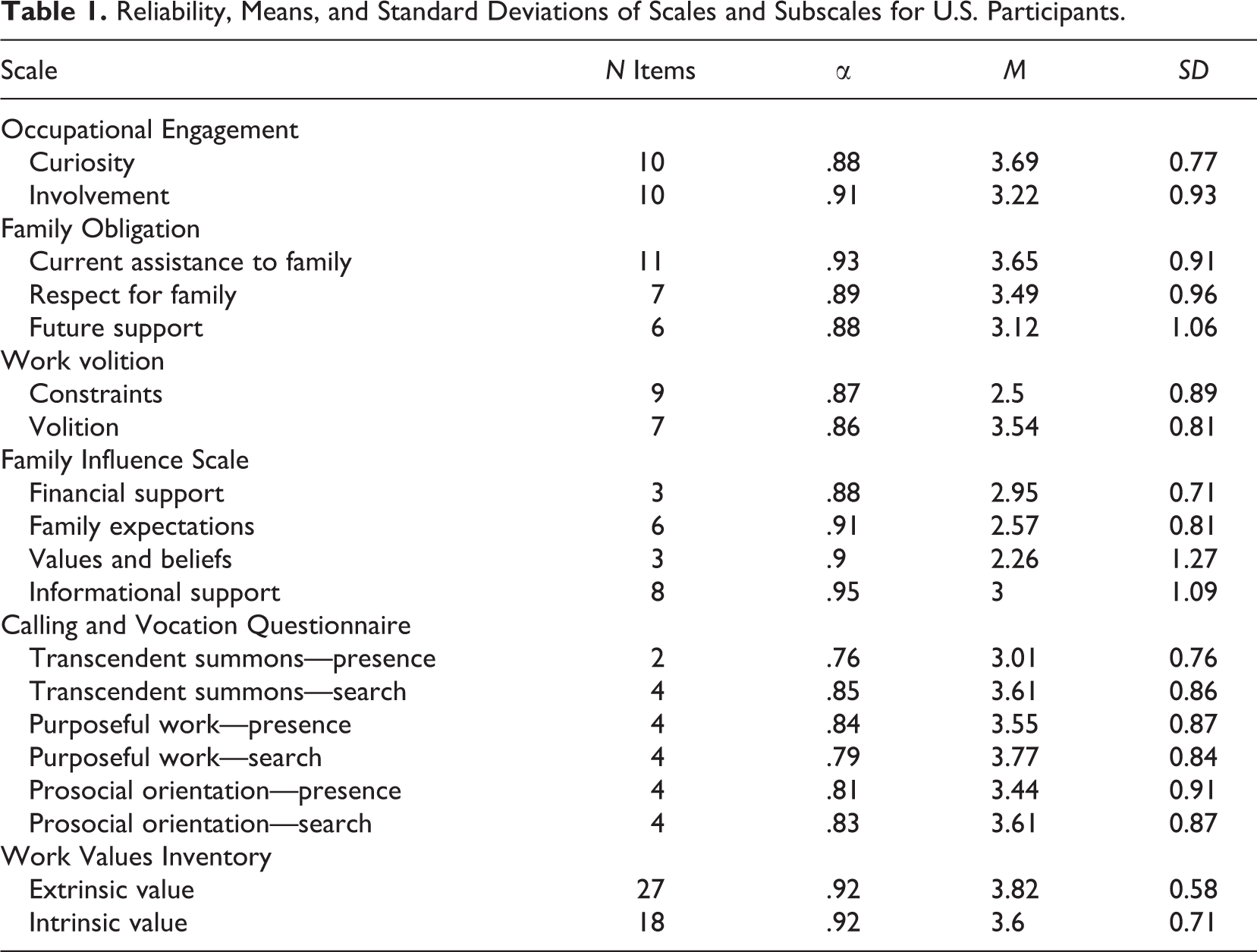
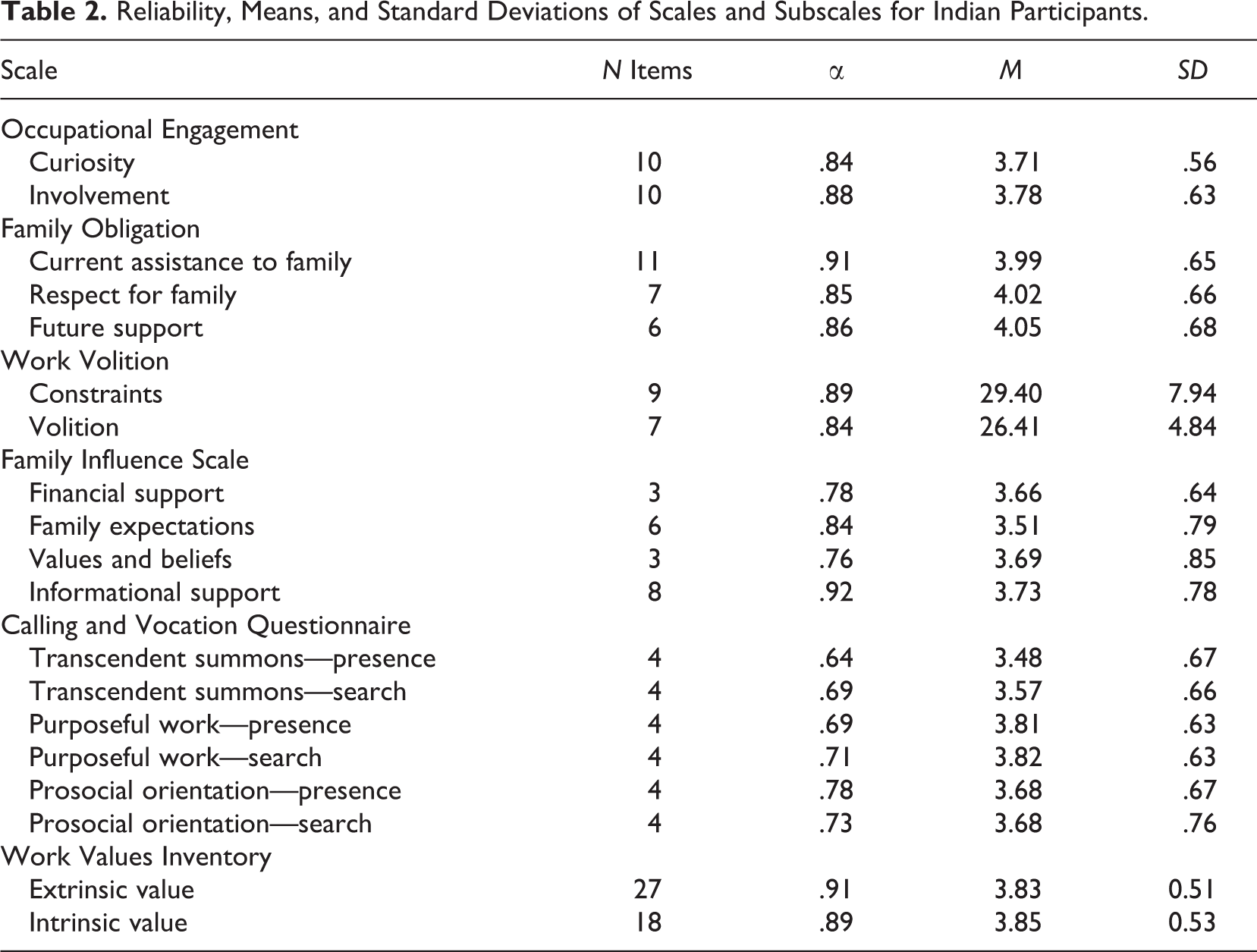
Please refer to Tables 1 and 2 for reliability estimates, means, and standard deviations for all scales and subscales according to U.S. participants and Indian participants, respectively.
Reliability, Means, and Standard Deviations of Scales and Subscales for U.S. Participants.
Reliability, Means, and Standard Deviations of Scales and Subscales for Indian Participants.
FIS
The FIS (Fouad et al., 2010) was developed to assess individuals’ perceptions of the types of influences their families had on their decision making. The scale has four subscales that are informational support, financial support, family expectations, and values and beliefs (Fouad et al., 2010). The informational support subscale includes 8 items assessing how much information was provided to individuals, such as sharing information about different careers and how to go about choosing a career. The financial support subscale is comprised of 3 items, assessing one’s family financial support for career choices. The family expectations subscale includes 5 items assessing expectations that career choices will fit with one’s family’s wishes, including expectations based on gender and culture. The values and beliefs subscale contains 3 items that ask individuals if their career choices reflect their family’s belief that career choices should reflect their values or spiritual beliefs. Fouad et al. (2010) demonstrated convergent validity for the FIS.
Work Volition
The Work Volition Scale Student Version (WV-S; Duffy, Diemer, & Jadidian, 2012a) was used in the survey. Although an adult version is available (Duffy, Diemer, Perry, Laurenzi, &Torry, 2012b), the Student Version asks questions about future choices, which were more closely related to the research questions in this study. The WV-SF has 16 items describing a number of future work situations, answered in a 5-point Likert-type scale, from 1 (not like me) to 5 (very much like me). The WV-SF has two scales, Work Volition (7 items) and Constraints (9 items). Examples of items in the Volition scale include “I will be able to change jobs if I want to” and “Discrimination will not affect my ability to choose a job”; higher scores indicate greater levels of volition in work choices in the face of constraints. Items in the Constraints Subscale include both financial constraints (e.g., Due to my financial situation, I will need to take any job I can find) and social constraints (e.g., I feel that my family situation limits the types of jobs I might pursue). Higher scores indicate concerns about constraints that may limit work volition. Duffy, Diemer, and Jadidian (2012a) demonstrated construct validity for the scales, including expected relationships between locus of control and perceptions of barriers.
Family Obligation Scale
The Family Obligation Scale (FOS; Fuligni et al., 1999) is a 24-item scale that assessed youth’s attitudes toward family obligation. The FOS has three subscales, namely, (1) Current Assistance to Family (2) Respect for Family, and (3) Future Support (Fuligni et al., 1999). The Current Assistance to Family has 11 items to assess the adolescents’ expectation of the frequency and the amount of household tasks they need to assist the family with (Fuligni & Pedersen, 2002]). It also assesses how long they should spend time with their family. Participants answered in a 5-point Likert-type scale ranging from 1 (almost never) to 5 (almost always). Sample items for this subscale are “Help take care of your brothers and sisters” and “Eat meals with your family” (Fuligni & Pedersen, 2002). The 7 items of respect for family measure the adolescents’ beliefs about the importance of taking other family member’s thoughts, wishes, and opinions into consideration. The scale ranges from 1 (not important at all) to 5 (very important); sample items are as follows: “follow your parents’ advice about choosing a job or major in college” and “respect your older brothers and sisters.” The last scale has 6 items related to young adults’ expectation of their obligations to support and live close with their family in the future. The sample items are “help your parents financially in the future” and “live or go to college near your parents.”
Calling
The Calling and Vocation Questionnaire (CVW; Dik et al., 2012) was used to assess participants’ perceptions of their vocational choice as responding to a sense of calling or vocation. The CVQ has 24 questions that assess participants’ sense of their vocational choice either the presence or search for a sense of calling in six 4-item scales: a summons from or search for a transcendent being, sense or search for work that has a sense of purpose, and sense of or search for work as contributing to the common good. Sample items from Presence of Transcendent Summons include “I was drawn by something beyond myself to pursue my current line of work” and “I am pursuing my current line of work because I believe I have been called to do so.” Examples of a Transcendent Summons include “I’m searching for my calling in my career” and “I’m trying to identify the area of work I was meant to pursue.” Sample items for Presence of Purposeful Work include “My work helps me live out my life’s purpose” and “My career is an important part of my life’s meaning.” Search for Purposeful Work includes “I am looking for work that will help me live out my life” and “Eventually, I hope my career will align with my purpose in life.” Items in Presence of Prosocial Orientation include “Making a difference for others is the primary motivation in my career” and “My work contributes to the common good,” while items in Search for Prosocial Orientation include “I am trying to find a career that will give my life meaning” and “I am looking for a job where my career clearly benefits others.” Dik et al. (2012) demonstrated construct validity for the CVQ in a multimethod, multitrait analysis. CVQ scores correlated in expected ways with participants’ self-reports and scores on scales assessing work hope, life meaning, and search for meaning.
Occupational Engagement
The Occupational Engagement Scale Worker (OES-W; Krieshok et al., 2009) was used to assess the curiosity about work-related decision making and involvement in career decision making. Krieshok, Black, and McKay (2009) propose that occupational engagement among working adults consists of engagement within their current position (Involvement) and curiosity about alternative options (Curiosity). The 20-item scale includes two 10-item subscales measuring each of these concepts, with higher scores corresponding to higher levels of involvement and curiosity. Items on the Curiosity subscale include “I imagine how another job might feel” and “I push myself to find jobs that pay more.” Items on the Involvement subscale include “I network with people in my field” and “I am fixed on my career path.” Krieshok et al. (2009) report evidence of construct validity for the OES-W, including expected relationships among the subscales and personality dimensions.
Work Values Inventory
The Work Values Inventory (WVI; Super, 1970) was used to assess for participants’ work values. The scale was developed to measure 15 work values which are altruism, aesthetics, creativity, intellectual stimulation, independence, achievement, prestige, management, economic returns, security, surroundings, supervisory relations, associates, variety, and way of life (Super, 1970). Based on Dagenais’s (1998) work on intrinsic and extrinsic categories, we split the WVI into extrinsic and intrinsic values. Extrinsic values include economic returns, security, supervisory relations, surroundings, prestige, way of life, and associates. Intrinsic values include creativity, intellectual stimulation, altruism, esthetics, and management (Dagenais, 1998). The current inventory uses a 5-point scaled response format from not important at all to crucial.
Results
Research Question 1: Similarity in Factor Structure
Based on the literature review and past research with the FIS, four factors of family influence for each group of participants were proposed. A principal axis factor analysis extraction with a varimax rotation was used to identify the factors of family influence on U.S. participants’ and Indian participants’ career development. Factor solutions were based on an examination of the scree plots, a minimum of 3 items per factor, eigenvalues greater than 1.0, minimum factor coefficient of .40 for each item, and interpretation of the factors (Tabachnick & Fidell, 2001).
Ideally, we would have had the sample size to split the sample to conduct separate EFA and CFAs. However, we were not able to do that and used the whole sample of both groups to conduct two separate CFAs to examine the factor structure of the FIS for U.S. participants and Indian participants. We evaluated the fit on both samples using a number of different indicators. We used the chi-square statistic (χ2), the comparative fit index (CFI), root mean square error of approximation (RMSEA), and standardized root mean square residual (SRMR). CFI values greater than .90 and RMSEA and SRMR values below .08 indicate an acceptable fit of the observed data to the model (Hu & Bentler, 1999) with higher and lower values, respectively, indicating greater fit.
U.S. sample
The fit indices indicated that the predicted 4-factor model (Informational Support, Financial Support, Family Expectations, and Values and Beliefs) was an acceptable fit to the observed data for the U.S. participants. The χ2 (273.48, p < .001) was significant (CFI = .95, RMSEA = .07, and SRMR = .06). The factor loadings for the four factors for the U.S. sample are presented in Table 3; the items that loaded on the four factors are identical to those found in Fouad et al.’s (2010) study.
Summary of Exploratory Factor Analysis Results for Family Influence Scale in U.S. Sample.
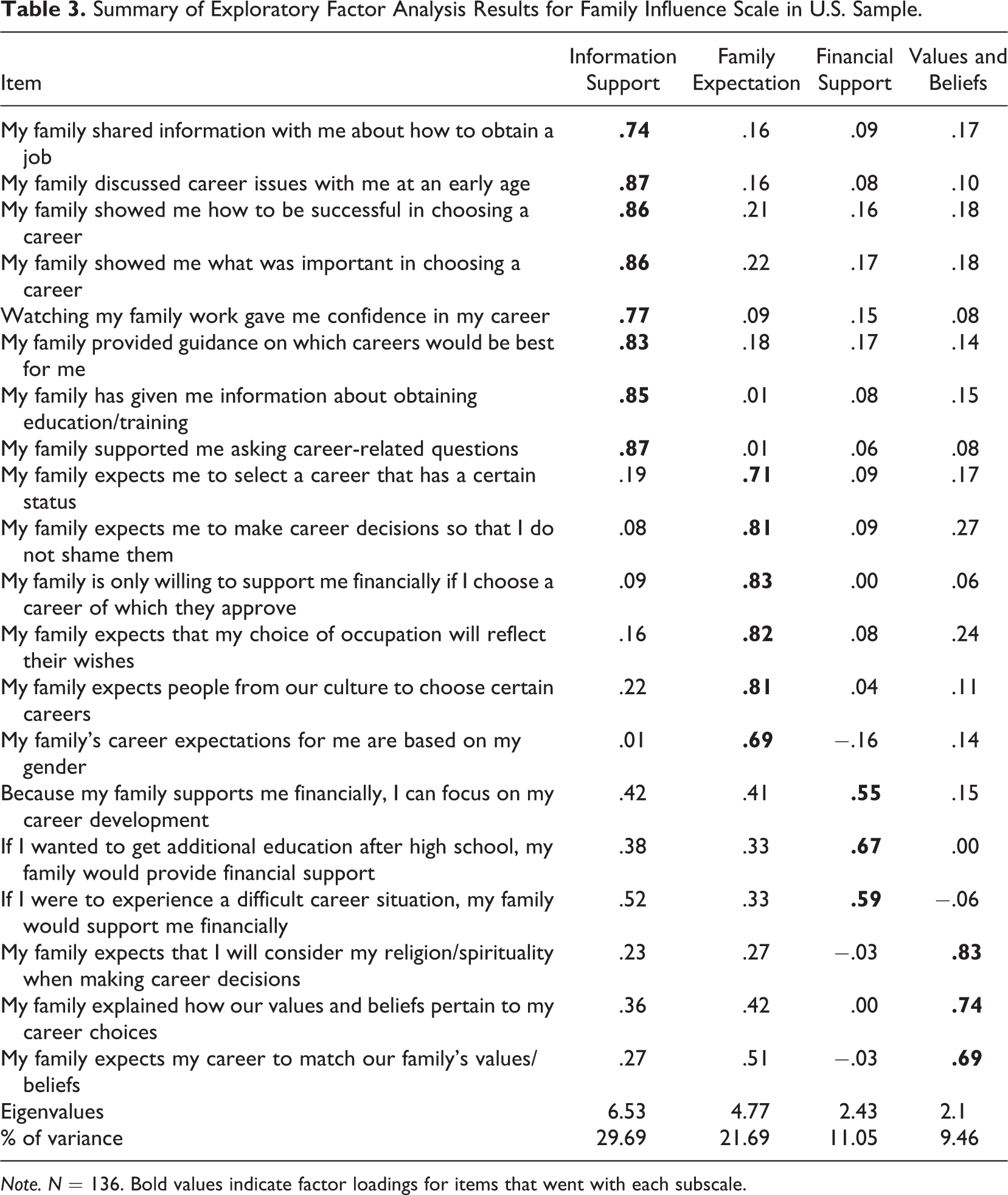
Note. N = 136. Bold values indicate factor loadings for items that went with each subscale.
Indian sample
The fit indices for the four-factor model did not fit the data for the Indian group of participants unless we removed the item “My family expected me to select a career that has a certain status” and allowed the residuals to correlate for items “My family showed me how to be successful in choosing a career” and “My family showed me what was important in choosing a career.” With these modifications, the χ2 statistic was significant, χ2 = 284.73 (128), p < .001, CFI was .94, RMSEA was .06, and SRMR was .05, indicating acceptable fit. The factor loadings for the four factors for the Indian sample are presented in Table 4. Eliminating the item “My family expects me to select a career that has a certain status,” the items that loaded on the four factors are similar to those of the U.S. sample, with two exceptions. The items “My family expects me to make career decisions so that I do not shame them” and “My family expects my career to match my family’s values/beliefs” load on both the Values and Beliefs subscale and on the Family Expectations subscale. The latter is slightly higher (.53 vs. .50) on the Family Expectations subscale, while the former is slightly higher on the Values and Beliefs (.47 vs. 49) subscale, suggesting these could be avenues for further exploration.
Summary of Exploratory Factor Analysis Results for Family Influence Scale in Indian Sample.
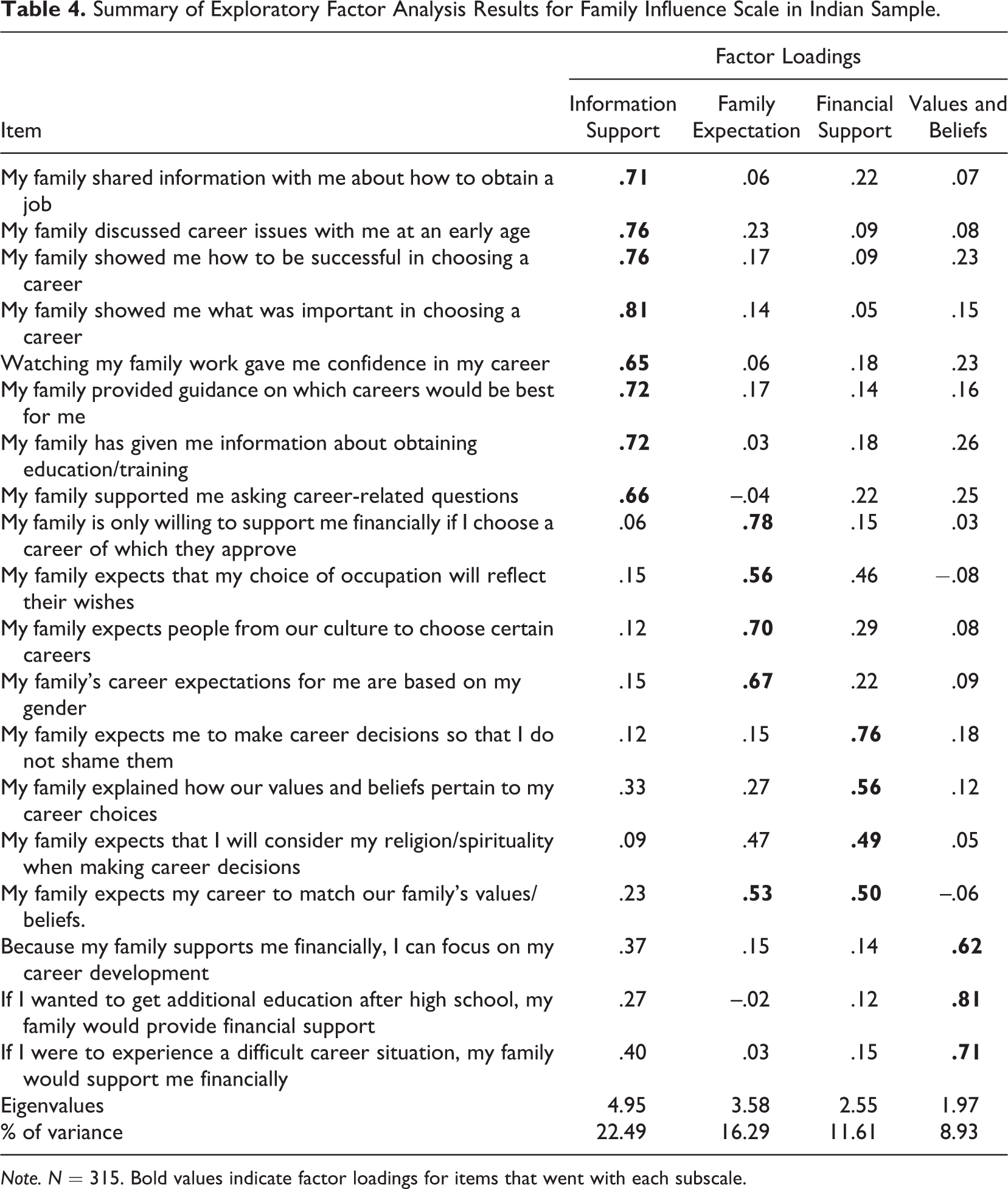
Note. N = 315. Bold values indicate factor loadings for items that went with each subscale.
Research Question 2: Convergent Validity of FIS
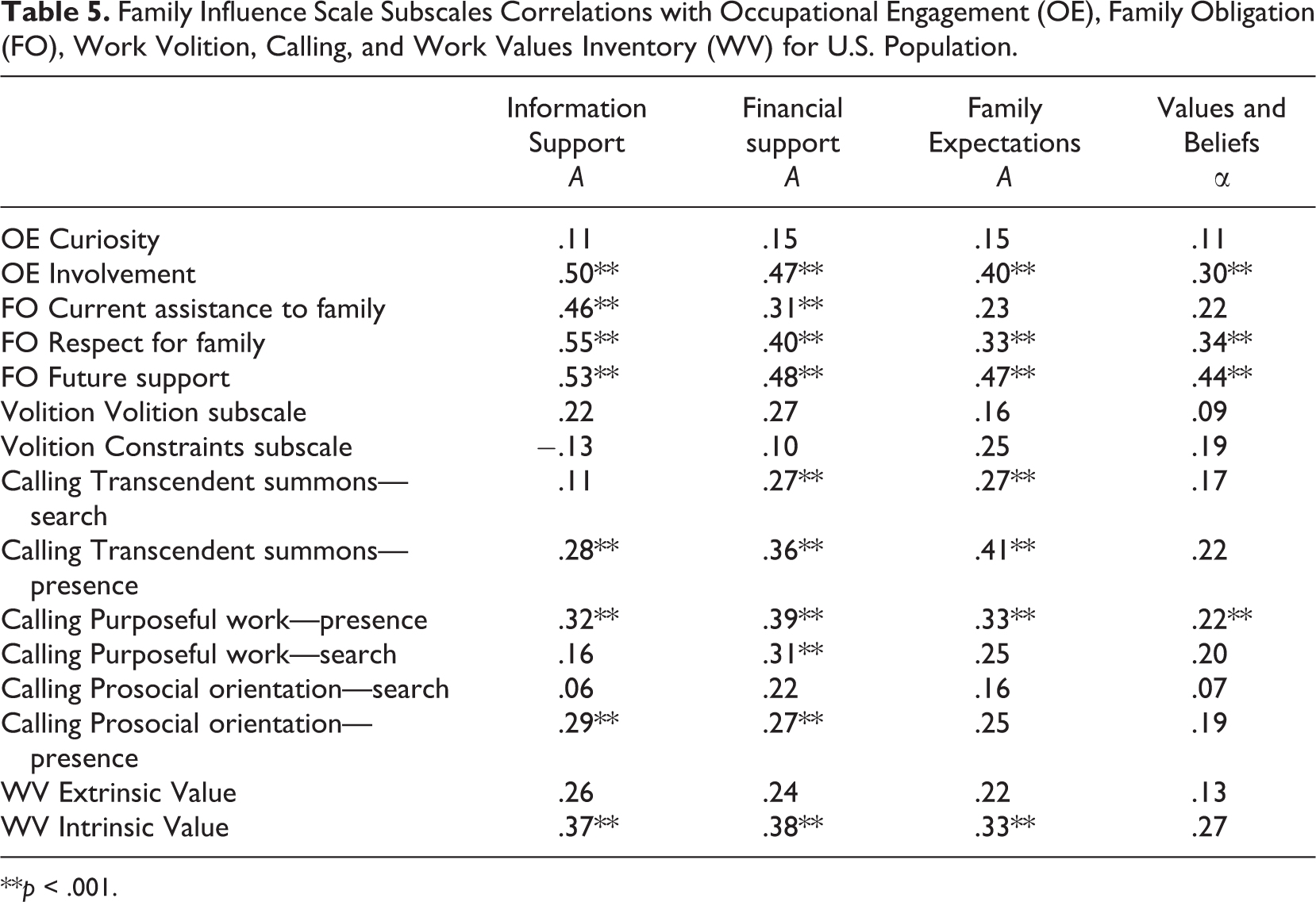
Correlations between FIS and the other variables are presented in Tables 5 and 6. For the U.S. participants, all three aspects of family obligation were highly correlated with all four FIS subscales, with the exception of Current Assistance to Family and the Family Expectations and Values and Beliefs subscales. The Curiosity subscale of Occupational Engagement was not related to any of the FIS subscales, but Involvement was highly positively correlated with all four subscales, particularly Informational Support (r = .50), Financial Support (r = . 47) and Family Expectations (r = .40). Family influence did not correlate strongly with either of the work volition scales. External work values did not correlate with any of the FISs, but Internal work values correlated strongly with Financial Support (r = .38), Family Expectations (r = .33) and Informational Support (r = .37). Finally, several of the CVQ subscales correlated with the FIS scales. Financial Support correlated with Search for and Presence of Transcendent Summons subscales (r = .27 and .36, respectively), and Search for and Presence of Purposeful work (r = .39 and .31, respectively), and Presence of Prosocial Orientation (r = .27). Family Expectations also correlated significantly with Search for and Presence of Transcendent Summons and Search for Purposeful work subscales (r = .27, .41, and .33, respectively). Values and Beliefs only correlated with Presence of Purposeful work (r = .22), while Informational Support correlated strongly with Presence of Transcendent Summons Presence of Purposeful work subscales (r = .28 and .32, respectively).
Family Influence Scale Subscales Correlations with Occupational Engagement (OE), Family Obligation (FO), Work Volition, Calling, and Work Values Inventory (WV) for U.S. Population.
**p < .001.
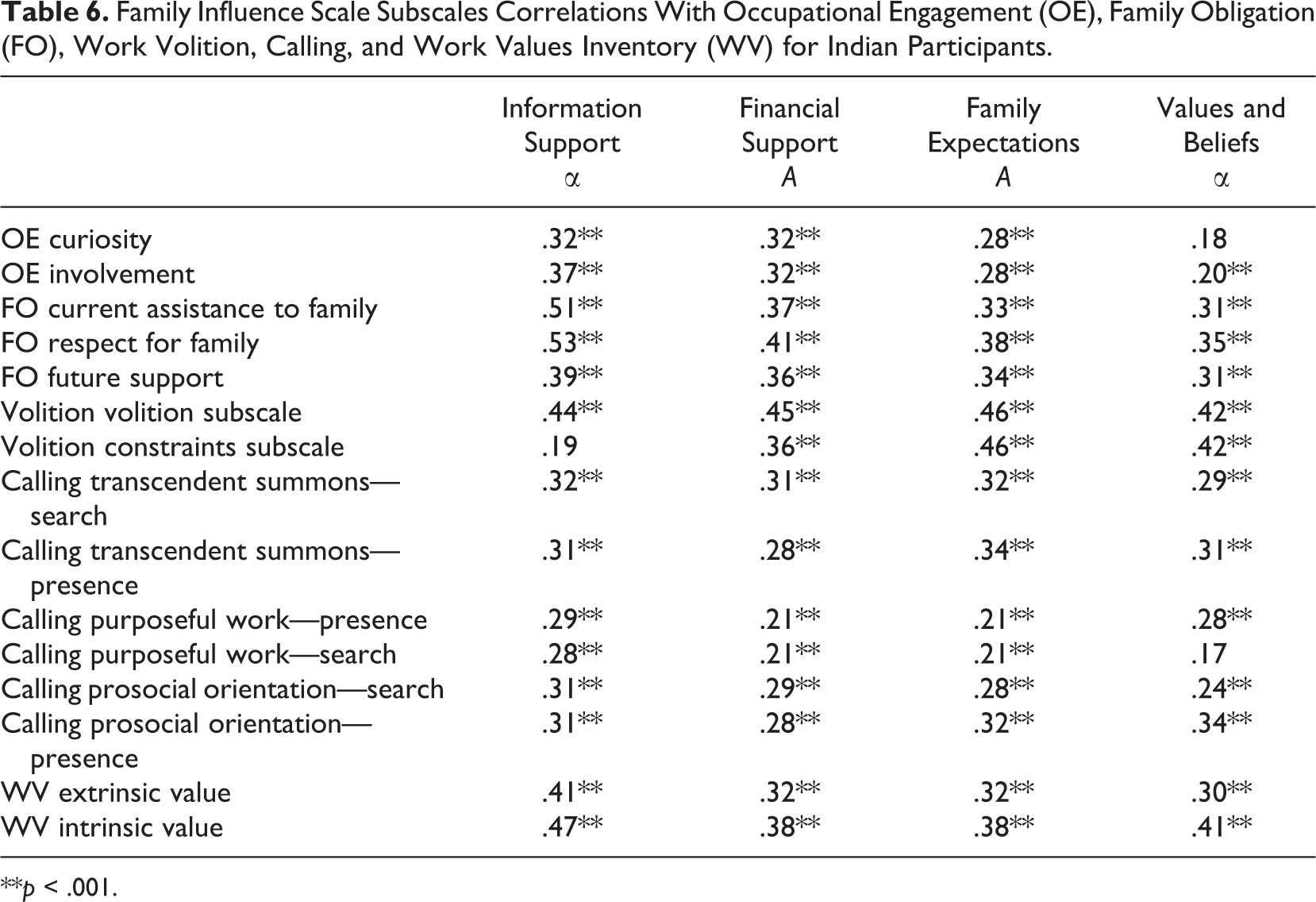
Family Influence Scale Subscales Correlations With Occupational Engagement (OE), Family Obligation (FO), Work Volition, Calling, and Work Values Inventory (WV) for Indian Participants.
**p < .001.
Correlations for the Indian participants indicated several similar patterns of relationships, although, overall, the correlations for the Indian participants were higher than the U.S. participants. All subscales of family obligation correlated moderately with all FIS subscales, with Informational Support having the highest correlations with Respect for Family and Future Support for Family (r = .51 and .53, respectively). FIS scales correlated moderately positively with both types of occupational engagement, although Curiosity did not correlate significantly with Values and Beliefs. Both Volition subscales correlated moderately with all FIS subscales with the exception of Constraints correlating with Informational Support. All of the CVQ scales had significant positive relationships with Family Influence subscales, with the exception of Values and Beliefs and Search for Purposeful Work. Finally, both Values scales correlated moderately with all FIS subscales.
Thus, we found support for the hypothesized relationships between family obligation and family influence subscales for both groups of participants. We conducted an analysis of the difference between the correlations for each scale for each group, correcting for experiment-wise error with p value of .001; none of the correlations were statistically significantly different between the Indian and the U.S. participants. The correlational analyses between family influence and the career-related variables of occupational engagement, work values, work volition, and calling were exploratory. Interestingly, Involvement in work-related decisions was more strongly related to family influence subscales than curiosity in both groups. Also, for both groups, intrinsic values were more strongly related to family influence subscales than extrinsic values. Finally, family influence was related to the construct of calling for both groups.
Discussion
Family influence is a key factor in career-related decisions and therefore of direct importance to researchers and clinicians developing effective career interventions for a diverse population. However, limited research on the scales to measure the overarching influence of the family has curtailed the study of family influence on people’s careers and also investigation of population differences in family influence. The present research addressed this need by examining the construct validity of FIS across samples from two countries—the United States and India. The data set collected and analyzed for this study is noncollege population and is diverse in terms of educational background and socioeconomic status. Therefore, it affords an opportunity to examine the psychometric properties of the FIS with a more diverse sample, particularly the factor structure cross nationally.
This study’s primary goal was to investigate the nomological network and construct validity of the FIS scale in two populations. Specific research questions examined the validity of FIS in Asian Indian and U.S. populations. Results indicated that a four-factor model was identified in both U.S. populations and Asian Indian populations, with some modifications in Asian Indian population. In regard to the second research question, examining the link between family influence and other related variables, results indicated support for the relationship between family influence and family obligations as well as with a number of career-related constructs.
The factor analytic results suggest a very similar four-factor structure to the original FIS within the United States and for Indian participants. In the Indian participants group, 19 of 20 items, or 95%, loaded on the original U.S. factors. The internal consistencies across country groups of workers (.76–.95) were consistent with previous report based on samples of college students (.85–.94; Fouad et al., 2010). The estimates of construct validity suggest similar relationships between the FIS and the career-related variables in both U.S. participants and Indian participants. These results suggest that the factors in FIS—informational support, financial support, family expectations, and value and belief—are cross-culturally applicable, and given these findings, it seems that overall the FIS assesses a construct that can be meaningfully measured across two cultural groups. Interestingly, 1 item was eliminated from the scale for Indian participants; that item was “My family expects me to have a career that has a certain status.” It may be that success is more culturally transmitted by the larger society in India than by individual families as appears more the case in the United States. In addition, the items “My family expects me that I will consider my religion/spirituality when making career decisions” and “My family expects my career to match my family’s values/beliefs” loaded highly on two subscales, suggesting that the difference between the perceptions of expectations from family and the transmission of values and beliefs are not that conceptually distinct in this Indian group of participants.
With regard to the Research Question 2, the current investigation also examined the validity of the FIS by examining its relationship with a sense of obligation to family and to four conceptually meaningful career variables. Results indicated that FIS scales are moderately to highly correlated with different aspects of family obligation, suggesting that, indeed, those who have a sense of obligation to family also perceive that their family has influenced their decision making. This was the case for both groups of participants. Family influence was also related in expected ways to involvement in work-related decisions, intrinsic work values, and calling in both the U.S. populations and Indian populations. Family influences were not related to work volition in the U.S. group but was related to volition for the Indian group, suggesting a strong relationship between families and motivation to work. These findings demonstrate convergent validity of the FIS across two different cultures, adding to evidence of the construct validity of the FIS.
Limitations
This study serves to contribute to the existing literature about the role of family influence on career-related choices among two specific populations. Among the studies that have researched family influence, the majority focus on U.S. samples. However, this study is not without its limitations.
First, the measures we used were limited as they relied on participants’ self-report. The constructs we examined may be conceptualized in different ways between the two populations. For example, other confounding variables, such as cultural values, could have influenced the roles of family, calling, work volition, family obligation, and occupational engagement. Second, access to the survey may have prevented individuals who wanted to participate from doing so. We utilized Amazon Mechanical Turk that was beneficial in obtaining a broader sample of participants. However, if potential participants did not have access to the Internet, did not have an Amazon.com account, or did not know about Amazon Mechanical Turk, they could not participate. Further, Mechanical Turk requires individuals to have an Internet connection and English-specific language skills, which restricts participation. It is also difficult to determine which wage will attract participants to complete the survey. This issue is compounded by recruiting internationally due to changes in currency.
Implications and Future Research
This study has several implications. For instance, there is limited research on the overall career development process of Asian Indians. Therefore, it is important to continue examining these constructs with Asian Indians to gain a better understanding of how this population makes career-related choices. Our results suggest that family plays an important role in career decision making for Indians, and further research should examine the nature of that influence.
Findings from this study also encourage researchers and clinicians to think critically about how contextual factors, such as family influence, impact career decision making, especially for U.S. racial/ethnic minority populations. These factors are important to examine within various theoretical frameworks such as Social Cognitive Career Theory, as they may impact one’s self-efficacy, outcome expectations, and personal goals (Lent, Brown, & Hackett, 1994). Examining family influence can be particularly important in examining how specific career interests are developed and ultimately expressed through career choices. One example is to learn whether the family’s choice for an individual is a stronger influence for some Asian American students than it is for dominant culture students in the United States.
From a counseling perspective, it is important that counselors assess for the role of family for clients who present with career concerns. Items from the FIS can be used practically in sessions to determine clients’ family influence on information about careers, degree of financial support, and expectations and values around careers. For U.S. clients who have a South Asian or Indian background, counselors may want to further explore how religion/spirituality may have played a role for their families and how that may be related to career influences. Clients can explore the messages their families have given them about career choices and career decision making, also examining which messages they choose to accept and the cultural consequences of accepting or rejecting those messages.
Methodologically, we used Amazon Mechanical Turk to recruit a diverse sample and demonstrate validity for the FIS with U.S. participants and Indian participants. It may be beneficial in the future to further investigate family influence with Indian participants residing both in India and in the United States to obtain more information about cross-cultural differences.
Footnotes
Declaration of Conflicting Interests
The author(s) declared no potential conflicts of interest with respect to the research, authorship, and/or publication of this article.
Funding
The author(s) received no financial support for the research, authorship, and/or publication of this article.