



Abstract
From the earliest days of the vocational guidance movement, controversy existed regarding the place of self-report in assessment. Contemporary career theories, cognitive information processing theory (CIP), and Holland’s typological theory (Realistic, Investigative, Artistic, Social, Enterprising, Conventional [RIASEC]) provide ideas and tools for informing this issue. CIP theory includes self-help among three levels of career service delivery. Readiness screening including in both theories is the mechanism for determining which individuals can benefit from differentiated services, for example, self-help, brief staff assisted, and individual case managed. This article shows how these theories can be used in career assessment and describes tools and procedures for service delivery. A narrative flowchart illustrates how a practitioner would work with individuals in this enhanced self-help approach.
Keywords
In a review of the literature on career development and vocational psychology published in 2013, Sampson et al. (2014) examined the integration of theory, research, and practice. They found the greatest amount of integration was theory into research at 54.5%, while the integration of theory into practice and research into practice were both substantially less at 38.9%. This article seeks to address this issue by examining how two career theories, cognitive information processing theory (CIP; Sampson, Reardon, Peterson, & Lenz, 2004) and Realistic, Investigative, Artistic, Social, Enterprising, Conventional (RIASEC) theory (Holland, 1997), could be used to inform practice. More specifically, the article focuses on an enhancement of self-help or counselor-free interventions in service delivery.
The article begins with a brief review of the historical controversy surrounding the use of self-directed career assessment and then moves to define self-help career interventions as described in the contemporary literature. Readiness screening as illustrated in both theories is the mechanism for determining which individuals can benefit from differentiated services, for example, self-help, brief staff assisted, individual case managed. This article shows how these theories can be used in career assessment and describes tools and procedures for service delivery in relation to social justice concerns. It concludes with a narrative flowchart illustrating how a practitioner could work with individuals with this enhanced self-help approach.
Some Historical Perspectives on Self-Help
Controversy has existed regarding the efficacy of self-reports in vocational guidance since the early 20th century (Savickas & Baker, 2005). The degree to which an individual was seen as having the capability to engage career planning successfully in a self-directed way was not universally agreed. For example, while Frank Parsons (1909) used responses to questionnaires and interviews to assess individual differences important for career planning, those committed to the use of science in psychology, such as Hugo Munsterberg and E. G. Williamson, believed that reliance on self-report from individuals was unreliable and naive (Savickas & Baker, 2005). Following World War I, the momentum for psychological testing accelerated with the creation of testing companies and the establishment of university faculties in educational and industrial and organizational psychology.
However, Harry Dexter Kitson, the leader of a movement in psychology called “self-analysis,” challenged these approaches. Kitson’s idea was to find the most efficient and efficacious way to help individuals find the information needed for career planning which led him to advocate self-assessment rather than the use of psychological tests. He was aware of Strong’s work (1943), but Holland’s (1997) contributions had not yet come to fruition. Kitson’s (1931, 1947) approach relied on individuals’ self-analysis of interests and abilities and included a sort of do-it-yourself technique of career counseling (Williamson, 1965). (Note: In 1929, Kitson published a vocational hexagon showing six ways an occupation could be studied: social, physical, mental, economic, moral, and physiological.)
In the past 50 years, the focus has shifted from the assessment of interests and abilities to the assessment of readiness to engage in the process of career decision-making and problem-solving itself, a cognitive process (Sampson, McClain, Musch, & Reardon, 2013). Moreover, Holland’s RIASEC theory introduced in the 1960s provided a new way to assess individual characteristics and the nature of occupational activities using an organizing theoretical schema that can be applied to both individuals and options. As a result, the focus moved to (a) the quality of an individual’s thinking about career planning and (b) the schema used to conceptualize personality and environmental congruence.
Sampson, Dozier, and Colvin (2011) introduced the idea of increasing social justice by reducing the costs of career guidance and making it accessible to more people. The use of self-assessment and self-help methods in career services, along with their attention to measures of readiness for career planning, received their attention in terms of cost reductions in services. In the following section, self-help services and related counselor-free career interventions are described in more detail.
Self-Help and Counselor-Free Career Interventions
Sampson, Reardon, Peterson, and Lenz (2004, p. 11) defined self-help career services as “self-guided use of self-assessment, information, and instructional resources in a library-like or Internet-based remote setting, where resources have been designed for independent use by individuals with a high readiness for career decision making.” In addition, they indicated that “self-help services involve a person’s self-guided use of resources in an actual setting (career center) or a virtual setting (Internet website) where it is possible to ask questions and receive support when needed” (p. 11). The last point is important because this conceptualization of self-help does not occur in a completely counselor-free environment.
In contrast to self-help services, Whiston, Brecheisen, and Stephens (2003) defined a counselor-free intervention in a different way. They saw it occurring when a counselor is not involved in the intervention, and this might include a broad range of possible activities from having a client use a stand-alone computer-assisted career guidance system to simply reading occupational information.
A review of literature on the effectiveness of counselor-free or self-help career interventions is not altogether encouraging. For example, Whiston (2011) noted that counselor-free vocational interventions are ineffective as shown in research (Whiston, Brecheisen, & Stephens, 2003; Whiston, Sexton, & Lasoff, 1998). Many of these studies appear to have involved stand-along use of computer-based career guidance systems such as System for Interactive Guidance and Information (SIGI)3 or Choices Planner available on the Internet. It is unclear how many of the studies reviewed were theory based.
Prior research with the Self-Directed Search–Form R (SDS-R paper–pencil version) showed increased career and occupational exploration (e.g., Jones, Sheffield, & Joyner, 2000; Krivatsky & Magoon, 1976; Miller, 1982; Zener & Schnuelle, 1976). A review of the literature revealed two studies examining the effectiveness of the SDS-R, Fourth Edition (Holland, 1994) in a stand-alone or counselor-free delivery mode. Behrens and Nauta (2014) examined the effectiveness of the paper version of the SDS as a stand-alone intervention with students in an undergraduate psychology course. The participants were not seeking career assistance and no assessment of readiness for career decision-making was used. The researchers compared a general sample of college students who completed the SDS (n = 39) with a no-treatment control group (n = 41) on several outcomes. Completion of the SDS was marked by an increase in the number of career alternatives being considered 4 weeks later but was not associated with career exploration, career decision-making self-efficacy, career indecision, or seeking of career counseling services.
Brown and Ryan Krane (2000) noted that while self-help interventions have been shown to be less effective, such interventions could be improved with appropriate practitioner intervention. In contrast to the findings of Whiston (2011) and others regarding counselor-free interventions, an earlier review by Craighead, McNamara, and Horan (1984) concluded that results of self-help in career counseling were generally favorable. Kivlighan and Shapiro (1987) indicated that two studies by Fretz and Leong (1982) and Holland, Daiger, and Power (1979) suggested that people who needed less help were the ones benefiting the most from self-help. Holland (1997) indicated that people with varied personalities might respond differently to various treatment interventions. Bruch (1978) elaborated on this idea and speculated that realistic, investigative, and/or conventional personality types, or those with stronger interests, would respond favorably to self-help or programmed instructional interventions. Gati and Asulin-Peretz (2011) have noted that Internet-based self-help interventions have the advantage of being carried out at the time, pace, and place most convenient to the user; are highly structured and standardized for repeated applications; and may be delivered at lower costs.
Evidence of the impact of a theory-based, counselor-free intervention was reported by Dozier, Sampson, Lenz, Peterson, and Reardon (2015). They used the SDS-R Internet Version (Reardon & Psychological Assessment Resources Staff, 2010) in an experimental study of counselor-free career exploration. College students (N = 125) were randomly assigned to complete the SDS-R Internet version or to a control group that did not complete the SDS. Results indicated that individuals who completed the SDS-R Internet and reviewed the Interpretive Report engaged in a greater frequency of exploratory career behaviors over 3 weeks and were considering more occupational alternatives than members of the control group. The amount of time spent reviewing the SDS Interpretive Report by members of the treatment group was associated with greater frequency of career exploratory behavior and with the increased number of occupations being considered. Furthermore, vocational identity, as a mediating variable, was inversely associated with the number of occupations being explored, that is, high vocational identity led to exploration of fewer occupations.
Another example of theory-based self-help career services was reported by Kronholz (2015). This career intervention used two artifacts from CIP and RIASEC theories, the CIP pyramid (Figure 1) and the RIASEC hexagon-type descriptions (Figure 2). The client, “Anna,” a sophomore, arrived at a comprehensive college career center without an appointment and was seen after a few moments by a career practitioner.
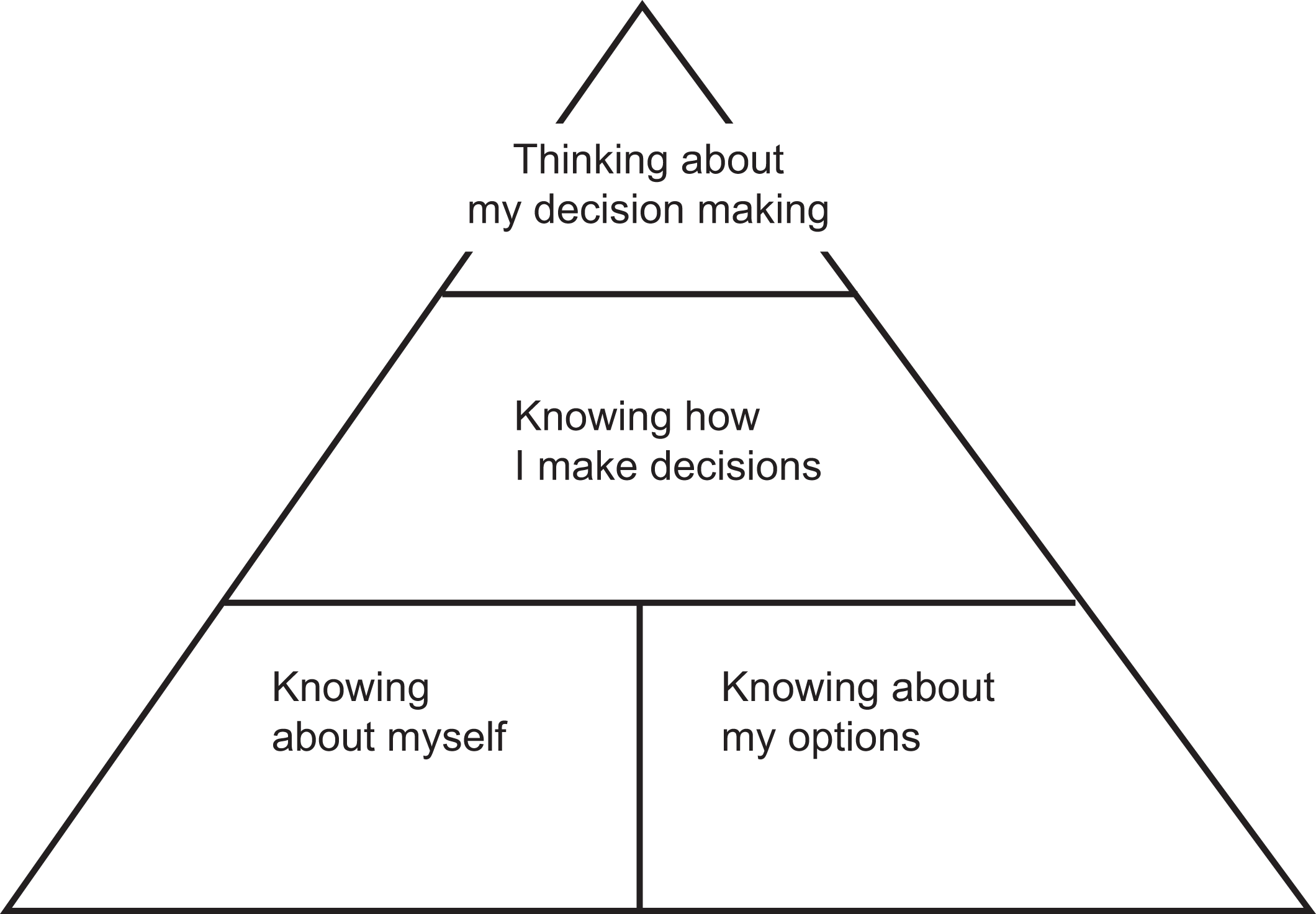
What’s involved in career choice.
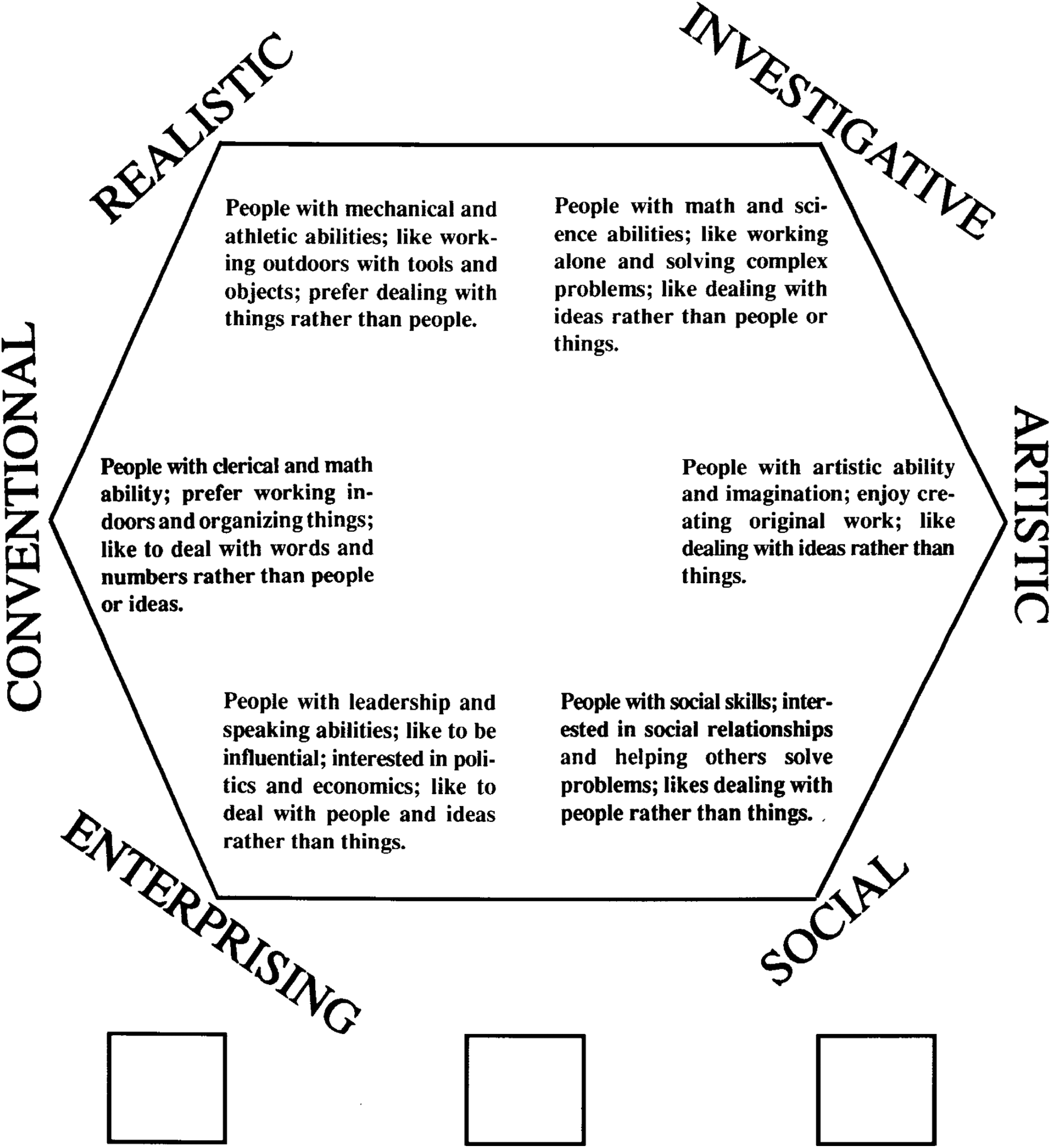
Realistic, Investigative, Artistic, Social, Enterprising, Conventional (RIASEC) hexagon.
In response to the query, “What brings you in today?” Anna indicated she was looking for occupational information related to her interests and values. After a brief discussion of her major in exercise science/physiology (coded SIR in the Educational Opportunities Finder [EOF; Messer & Holland, 2013]), the practitioner showed Anna Figure 1 and outlined the characteristics of each section of the pyramid. After a brief exchange, Anna indicated she needed more information in the options domain, including occupational titles, work settings, and a general schema regarding work arrangements. At this point, the practitioner showed her a copy of the RIASEC hexagon descriptions (see Figure 2) and asked her to read the descriptions and identify her top three areas. After a few moments, Anna chose the letters SAI.
Anna indicated that the differences in the code of her major (SIR) and her expressed interest (SAI) might be the basis for some of her uncertainty about her options. At this point, Anna reviewed The Occupations Finder (OF; Holland & Messer, 2013a), and after browsing the SAI occupations, Anna asked about “art therapist” and where she could learn more about that. The practitioner showed Anna how to use O*NET (www.onetonline.org/) and where to obtain more information about majors at the university. At this point, Anna indicated that she had obtained the information she needed, thanked the practitioner, and left the center.
In this 20-min self-help intervention, the practitioner initially determined that Anna was ready to engage in career exploration and decision–making, given the absence of negative career thinking. The assessment of Anna’s readiness for career decision-making was based on the initial screening interview and the finding of high capability and low complexity (see Figure 3). If Anna had shared any uncertainty in review of the CIP pyramid or selecting her top three types from the hexagon, the practitioner would have considered brief staff-assisted or individual case-managed services rather than self-help.
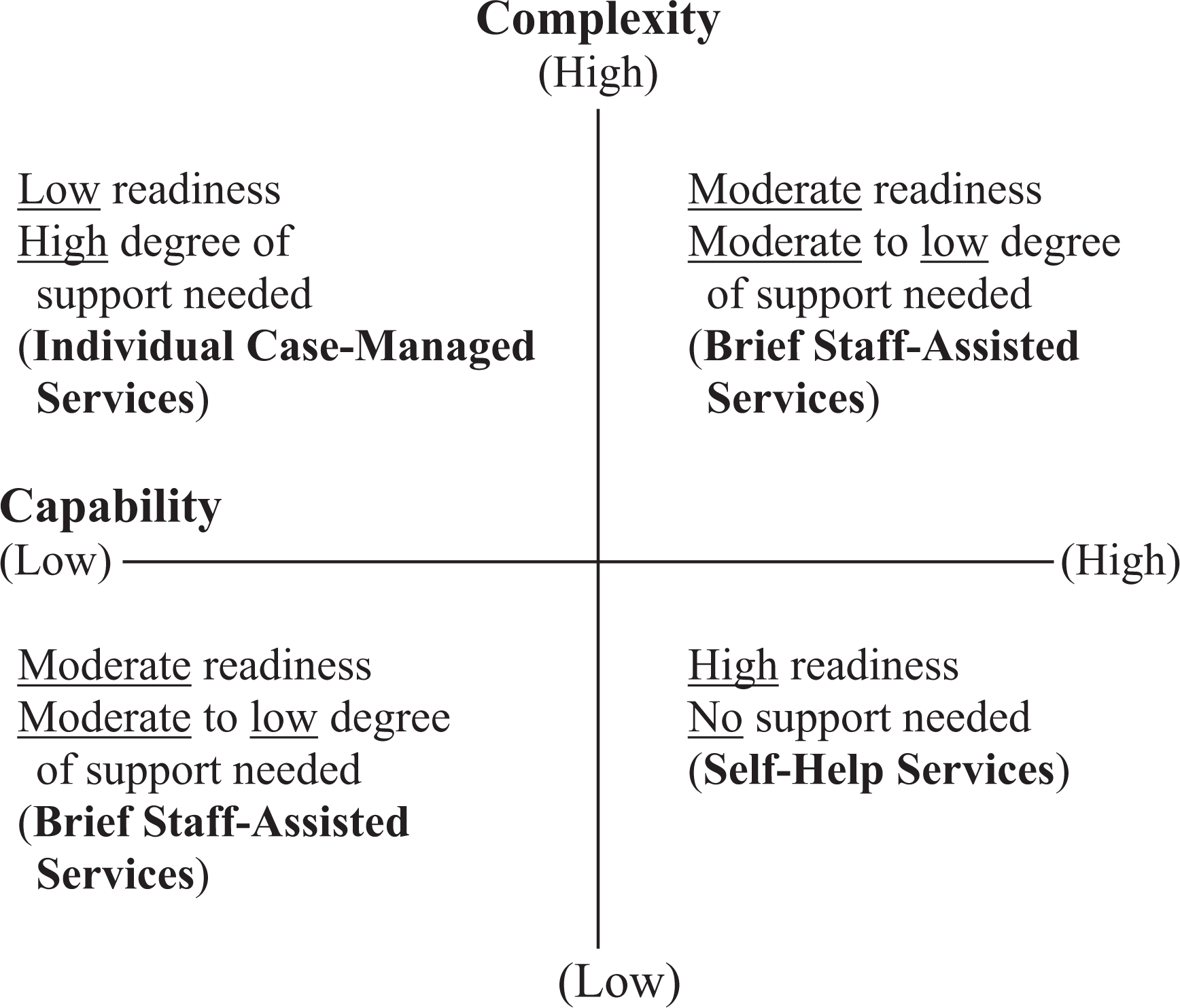
A two-dimensional model of readiness for career decision-making.
A literature review suggests that self-help or counselor-free career interventions reported in many studies may not have been based in theory, incorporated the five ingredients of successful interventions (Brown & Ryan Krane, 2000), or assessed the client’s readiness for career decision-making. The career intervention described in this article makes use of tools directly based on CIP theory (Sampson et al., 2004) and RIASEC theory (Holland, 1997). In addition, it makes use of four of the essential ingredients for successful career interventions identified by Brown and Krane, including a prescription for action (individual learning plan [ILP]), information about the world of work (OF, You and Your Career [YYC] booklet), modeling (theoretical descriptions of RIASEC types), and increased environmental supports (YYC booklet).
In career centers, self-help services are intended to maximize the cost-effective use of career interventions available by avoiding underserving clients needing more assistance and overserving clients needing less assistance. Self-help services are intended to be an immediate career intervention, limited in most instances to one session of 20–45 min, an alternative to brief-staff assisted or individual case-managed career services (Sampson et al., 2004), and provided at limited cost. Self-help resources such as the SDS may be used in this approach. In the following section, the theoretical bases for these foci will be identified and explained.
Theoretical Bases for Enhanced Self-Help Career Services
Information about the history, purposes, and tools for self-help or counselor-free career planning services as provided in CIP theory (Sampson et al., 2004) and RIASEC theory (Holland, 1997) are reviewed in this section. This article draws upon these two theories to suggest methods for improving the efficacy of self-help career interventions. Sampson et al. (2011) noted that counselors seem to have limited interest in translating theory to practice, which suggests a need to facilitate practitioners’ use of career theory by applying graphic tools related to CIP and RIASEC theories.
Cognitive Information Processing (CIP) Theory
Sampson et al. (2004) described three levels of service delivery: (a) self-help services, (b) brief staff-assisted services, and (c) individual case-managed services that take into account clients’ readiness levels. Self-help services often involve answering basic client questions at the career services office, on the telephone, or via a web chat site. Clients could be immediately assisted via computer- or web-based resources, DVDs/videos, books, and other print materials to answer these kinds of concerns. If it is apparent that self-help services may not be the most helpful, and that intensive individual case-managed services are not necessary, then brief staff-assisted services may be used.
Brief staff-assisted services are similar to self-help services in many ways (e.g., use the same materials and resources and are conducted in the same kind of setting), but they differ in that more staff time is spent in specifying the nature of the client’s problem, client goals are set in collaboration with practitioner, an ILP is created that outlines the sequence of materials and resources to be used by the client, and time is provided to review client progress in achieving the specified goals. If an initial screening indicates that neither self-help nor brief staff-assisted services are likely to be appropriate, then individual case-managed services are provided. In general, this approach might be described as career counseling by appointment in an individual office, where the client receives the undivided attention of a professional career counselor or other credentialed service provider.
The screening process may be as simple as asking individuals to describe their reasons for seeking assistance and judging readiness for career planning based on their responses. However, if this brief screening indicates that potential problems exist (such as uncertainty when a decision needs to be made, long-term confusion, or disabling emotions), then a more comprehensive screening may be needed (Sampson et al., 2004). The goal of such readiness assessment is to help both individuals and practitioners make informed, collaborative decisions about the level of assistance that will best meet the requirements of both the individual and the agency.
History
CIP theory was introduced by Sampson, Peterson, and Reardon (1989). The authors constructed an information processing model drawn from cognitive psychology to increase understanding of how career decision-making and problem-solving could be enhanced in an information age. They further elaborated their ideas subsequently in a book (Peterson, Sampson, & Reardon, 1991), which provided details on CIP theory for career decision-making and explained how a system of career interventions and services might be conceptualized and implemented. Detailed information for scholars, trainers, policy makers, and practitioners about the use and applications of CIP theory has developed over the past 25 years and is available at www.career.fsu.edu/techcenter.
Purposes
CIP theory serves two purposes. First, it helps the practitioner decide how much and what type of assistance individuals will need in order to solve career problems and make career decisions. Second, it helps individuals understand the content of career decision-making (what individuals need to know; the pyramid of information processing domains) and the process of career decision-making (what individuals need to do; the communication, analysis, synthesis, valuing, execution [CASVE] cycle, see Figure 4). This understanding can help individuals in three ways: (a) create a cognitive framework or schema for career choice that reduces ambiguity in the process, (b) manage the overwhelming amount of available information, and (c) provide clear criteria for self-monitoring progress in decision-making.
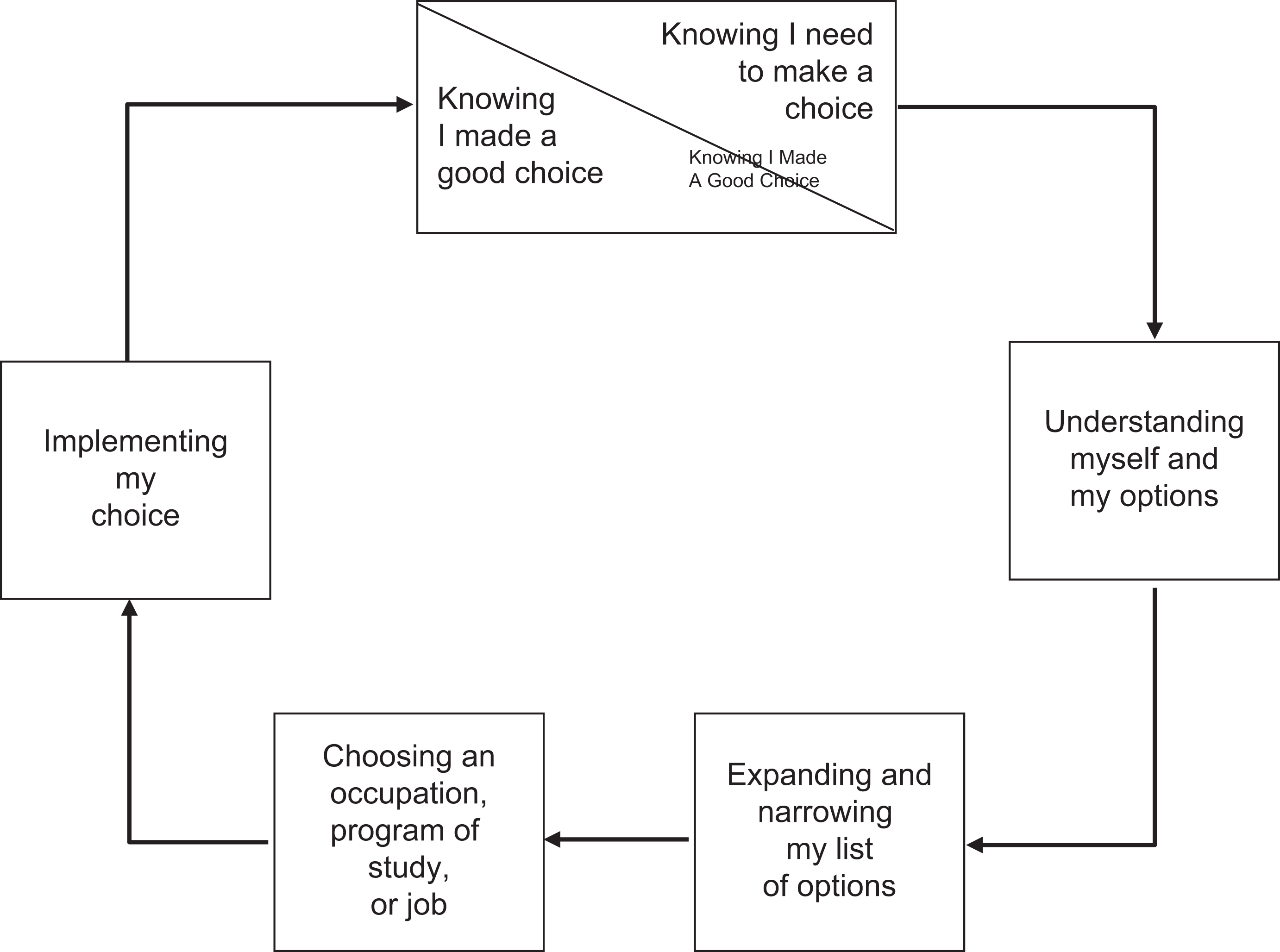
Guide to good decision-making.
Individuals who have moderate readiness for career planning are referred to brief staff-assisted services. This includes self-directed career planning involving the guided use of career resources and services in a career resource room or the Internet. Staff teamwork and the continuity provided by the use of an ILP allows individuals to work with one or more staff members of their choosing and to decide how quickly they will proceed. An ILP helps individuals and practitioners to collaboratively plan the use of resources and services necessary to solve a career problem. The written ILP includes learning goals and prioritized list of activities with related outcomes. Other brief staff-assisted services include shorter term group counseling (less than six sessions), undergraduate and graduate career courses with large-group interaction, and workshops. In each of these group interventions, the opportunity for interaction among participants is minimal to moderate.
Individuals who have low readiness for career planning are directed to individual case-managed services. This includes individual counseling, longer term group counseling (more than six sessions), and undergraduate and graduate career courses with small group interaction. By having a greater amount of time available for service delivery, staff can move at a pace slow enough for low-readiness individuals to process information more effectively and to deal with a diverse range of issues that make career planning difficult. Group interventions in this category allow maximum opportunity for interaction among participants.
The resulting net effect of the CIP approach is to focus expensive services on individuals with more extensive needs. About 70–80% of the costs of human services are for staff and personnel, so minimizing these costs is important (Peterson et al., 1991). The effectiveness of this differentiated service delivery approach is dependent on staff checking frequently with individuals receiving self-help and brief staff interventions to ensure that their needs are being met. The level of staff assistance can be increased when it is needed (Peterson, Sampson, Lenz, & Reardon, 2002; Sampson, Peterson, Reardon, & Lenz, 2000; Sampson et al., 2004).
Tools
In order for individuals to use CIP theory to better understand and manage career decision-making, theoretical constructs have been translated into terminology that individuals can readily comprehend. For example, the language of the original constructs developed by Peterson, Sampson, and Reardon (1991) was translated by Sampson, Peterson, Lenz, and Reardon (1992) to avoid professional jargon and improve clarity. These revised constructs are presented to individuals in handouts as part of self-help services, brief staff-assisted services, and individual case-managed services in order to help them understand and manage career planning. These translated concepts, supported by several metaphors, are also used in an instructional workbook designed to restructure negative cognition and enhance competence in career decision-making (Sampson, Peterson, Lenz, Reardon, & Saunders, 1996b). CIP theory, then, provides ideas and tools that can be used by both practitioners and individuals in career planning.
CIP theory provides a number of tools in the form of images or figures that can help some individuals quickly grasp a conceptual plan for assessing where they are and where they want to move in terms of career planning. Moreover, these tools along with research reports and other documents are freely available on a website for downloading (www.career.fsu.edu/techcenter) by practitioners and scholars.
Besides the figures of the pyramid of information processing domains, the CASVE cycle, and the ILP, the CIP approach has also introduced the Career Thoughts Inventory (Sampson, Peterson, Lenz, Reardon, & Saunders, 1996a), which may be used to assist staff in making a judgment about individuals’ readiness for career planning (Peterson et al., 2002; Sampson et al., 2000, 2004). The CIP approach also assumes that practitioners may have diverse levels of training and qualifications. The use of a team approach (with paraprofessionals, professionals-in-training, and professionals working collaboratively) has been shown to contribute to the cost-effectiveness of career service delivery (Reardon, 1996). Practitioners delivering services to low-readiness individuals need specific training in individual case-managed interventions that may include the integration of career and mental health issues.
Finally, CIP theory in practice makes use the ILP (see Figure 5). With this tool, a practitioner can collaborate with the client to specify learning outcome goals, activities to meet those goals, outcomes to be expected, the time commitment, and a suggested sequence of the career learning activities. The use of this tool is consistent with the essential ingredients identified by Brown and Ryan Krane (2000).
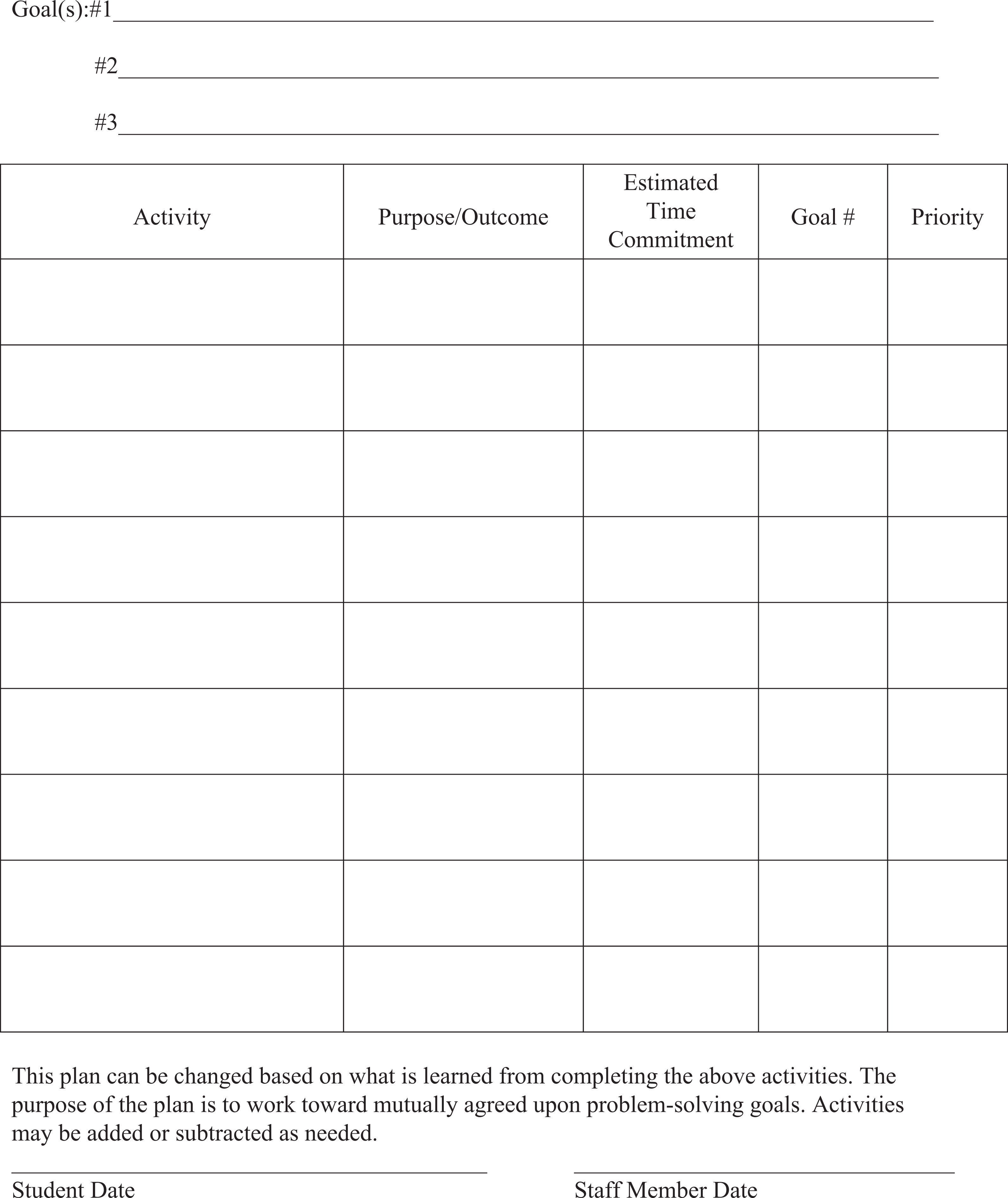
Individual learning plan.
Social justice
Sampson et al. (2011) advanced the idea that career guidance interventions ideally provide the proper amount of service for people, avoiding overserving those who need less help and underserving those needing more assistance. Niles and Harris-Bowlsbey (2005) summarized it thusly: People who show higher levels of readiness for career choice are better prepared to benefit from career guidance interventions with limited assistance, whereas people who show lower levels of readiness are less ready to benefit from a career intervention without assistance from a practitioner. (p. 331)
Spokane and Oliver (1983) described career interventions as “any treatment or effort intended to enhance an individual’s career development or to enable the person to make better career-related decisions” (p. 100). Sampson et al. (2011) observed that “Career guidance interventions offered on a one-to-one basis are simply more expensive and increasingly difficult to justify” (p. 330). Typically, much career theory used to design and promote career interventions is aimed at individual counseling interventions. A differentiated service delivery model can maximize cost-effectiveness of career interventions using readiness constructs (Sampson et al., 2004).
John Holland’s RIASEC Theory
History
RIASEC theory has evolved over almost 50 years, roughly from 1968 when it was first formally introduced to 2008 when Holland died. However, the theory continues to develop but not necessarily in an organized or systematic way. Holland (1996, p. 397) provided a succinct account of the theory in the American Psychologist: The typology assumes it is useful to characterize people according to their resemblance to six personality types and to characterize environments according to six ideal environments. Each type is assumed to flourish in an environment having the same label. For example, Realistic types flourish or do well in a Realistic environment, because it provides opportunities, activities, tasks, and roles that are congruent with the Realist type’s competencies, interests, and self-beliefs. More explicitly, it is assumed—other things being equal—that congruence of person and job environment leads to job satisfaction, stability of career path, and achievement. Conversely, incongruence (i.e., person and job are mismatched) leads to dissatisfaction, instability of career path, and low performance.
RIASEC theory and its application in various instruments and tools have been widely researched. Foutch, McHugh, Bertoch, and Reardon (2014) reported over 1,970 reference citations related to this work between 1953 and 2011. Over 297 different scholarly journals have published articles related to RIASEC theory and applications involving diverse groups using various tools based on the theory. Foutch et al. reported that Holland’s work has appeared in 275 publications (including books, journals, periodicals, reports, and chapters) produced in countries around the world in varied professional fields and disciplines. More specifically, 243 journals published worldwide included 1,617 citations of Holland’s work. This level of scholarly attention to a theory and its related interventions may be without peer in the field.
At a career theory symposium in 1968, Holland described his corridor approach to career counseling by verbally sketching out a long hallway with a desk at the far end from the door. The corridor walls had six large displays of information about types of students and environments with details about the characteristics of the types, for example, personality traits, interests, majors, occupations, club activities, leisure options, and more. If students found the information on the panels useful, they turned and walked back out the door, but if that didn’t happen, they headed to the desk at the end of the hallway. There, a staff person with keys to every building on the campus (indicating great knowledge and power), said “Can I help you?” If not, then an appointment was made for the student to see the counselor. I recall thinking that this was completely opposite from the way we were operating in our counseling center.
After that initial exposure, my ongoing contacts with Holland began in the early 1970s when I read about the new interest inventory that could be used in a self-guided way. The SDS emerged during 1953 and 1970 in rhythm with the development of the RIASEC theory. It was just what I had been seeking for the counselor-free career planning program we were creating, and it became Module 3. Most counselors in our center were not interested in doing educational or vocational counseling and we had a client waiting list. Our solution was to put more responsibility for these services directly into the hands of clients, and the SDS was just what we needed.
Purposes
In developing RIASEC theory, Holland wrote that “I wanted to continue using a small number of robust constructs and ideas that have a positive research history rather than including multiple constructs and ideas that would add little, go untested by researchers, and be ignored by practitioners” (1997, p. v).
Tools
Holland was often direct and outspoken in his views about career planning services. For example, in speaking to an assessment conference he wrote: “Counseling Must Be Personal.” The counseling and teaching professions attract a large proportion of friendly people who must love and be loved in order to get through the day. Consequently, they believe that other people also must have the same needs with the same intensity. As a natural corollary many also believe that any form of vocational intervention must provide for a person-to-person situation. These beliefs have prevented any major revision of the delivery system for vocational services. Some experience and recent experiments strongly imply that most people want help not love. In no case has an impersonal information or guidance system received a lower average rating than local counselors. To the contrary, most tests reveal that impersonal schemes are more highly rated as well as infinitely cheaper, have better attendance records, and are generally more dependable. In short, there is ample empirical evidence to support more impersonal approaches for the solution of vocational problems. (1974, p. 10) I conclude that the independent use of the SDS is not harmful and that a useful compromise between no supervision and intensive counseling is to provide access to counseling, to offer the interpretive booklet YYC, and to alert the test taker to the occupational files and services of the closest career or counseling center. This strategy means that counselors can provide more service to more people by occasional consultation for the majority and by intensive counseling for a minority.
In discussing how he might intervene with individuals who were undecided and seeking career planning assistance, Holland made several observations (Holland et al., 1994; Weinrach, 1980). If individuals were really upset, he would talk with them for a while before moving ahead. Holland noted that he would not accept “undecided” as a fact. He would see if there were tentative choices and if an individual wanted reassurance that those choices made sense. Holland noted that he would reinforce the exploration of tentative career goals and ascertain how much time an individual wanted to devote to educational and career planning. The intervention strategy would be formulated after determining the person’s need for personal help rather than reassurance and information.
Holland (1974) viewed undecided individuals having multiple subtypes. For example, he thought a large portion (perhaps 50%) just did not feel the need to make a decision at the moment and did not want help. Another subgroup, perhaps 25%, had some immaturity, interpersonal incompetency, anxiety, and alienation and needed some help, and another 25–30% had moderate-to-severe instances of these conditions and needed the most help. He thought the SDS would be useful for the second subgroup, but the third group might need personal counseling before career planning. Later, Holland refined the My Vocation Situation (Holland, Gottfredson, & Power, 1980; Holland, Johnston & Asama, 1993) and suggested it could be used to quickly assess readiness for career planning.
SDS
The best known tool in RIASEC theory is the SDS (Holland, 1994; Holland & Messer, 2013b). Holland described it this way: The SDS is a practical, self-help device—a pair of booklets that helps a person summarize who he/she seems to be and explore some occupational alternatives. It’s just a beginning for many people, and for other people it’s enough. They want a little reassurance and it provides a structure for giving just that. (Weinrach, 1980, p. 408)
As an aside, it may be noted that while the focus of this article is on self-help career planning services, Reardon and Lenz (1998, 1999, 2015) described how the SDS could be extrapolated for use in brief staff-assisted and individual case-managed services to examine trouble spots in self-knowledge, option knowledge, and decision-making. It is possible to use the SDS in this extended way because it is based on RIASEC theory, and it is a simulated career planning simulation that can be broken down and analyzed.
Personal Career Theory (PCT)
Although this is not technically a “tool,” Holland introduced the PCT concept in his last book published in 1997. He defined the PCT as one’s personal view about careers and work, including data about a typology of work personalities and environments. The PCT also included career thoughts about educational and career decision-making, job hunting, and life roles. Holland noted that PCTs may be complex and useful or weak and invalid. A weak PCT could possibly lead to career problems and difficulty in career decision-making, ultimately leading persons to seek career assistance.
Adherence
Consistent with Holland’s idea of the PCT, Tracey and Darcy (2002) and Tracey (2008) examined the extent to which individuals use the RIASEC structure in their career thinking. The authors reported that adherence to the RIASEC normative model made it easier for individuals to think effectively about their interests and occupational information. Persons who did not adhere to the model had more career decision difficulties. Moreover, Tracey (2008) found that learning more about the RIASEC schema was associated with more career exploration, concluding that career interventions should focus more explicitly and earlier on assisting people to understand the RIASEC model. Individuals who have high scores on adherence would presumably not need this intervention [intensive RIASEC model instruction] and could be presented with other aids, perhaps more focused on the provision of career information because they could more effectively use the information. (Tracey, 2008, p. 155)
Social justice
RIASEC theory (Holland, 1997) and the related tools also address social justice issues in several ways, but these are not often noted in the literature. First, the name of the primary application of the theory, SDS, clearly suggests a direct intervention that does not require the presence of a counselor. Second, the RIASEC hexagon and other elements of the theory are iconic in the field and widely used in many applications. A theory is not copyright protected which means that the ideas can be widely used throughout the world for free. Third, Holland developed the SDS–Form E concurrently with the SDS–R. It incorporated a simplified design and scoring procedure for persons with limited English-language skills, and this extended the use of the SDS for a broader population. Fourth, the SDS has been translated or adapted into more than 30 languages, which means that it can be used extensively worldwide (Bullock, Andrews, Braud, & Reardon, 2009–2010). Fifth, the SDS is less costly to use than some other assessment instruments which means that it can be used in a more cost-effective manner; however, this issue is infrequently examined by researchers (Utecht, Dozier, & Reardon, 2009–2010). Finally, the theory is both a simple, direct matching model for linking persons and career options, but it is also extensively layered with more complex interpretations and interventions supported by research.
Thus far, the present article has examined the history of self-help career interventions and some of the recurring issues associated with it. It has also examined varied conceptualizations of counselor-free or self-help career planning services and explored the contributions of two career theories, CIP and RIASEC, to enhance self-help service delivery. In the following section, we will provide an example of how this model might be used in practice.
Enhancing Self-Help Career Services: A Theory-Based Approach
Sampson et al. (2004) provided an extensive description of service delivery schemes based on CIP theory and operationalized in the career center at Florida State University. Current details about this service delivery setting are available at http://www.career.fsu.edu/.
The flowchart shown in Figure 6 graphically describes enhanced self-help career services in Steps 2, 3, 4, 5 (yes), 6, 7, and 8 (yes). The remaining steps beginning with 5 (no) are consistent with current service delivery procedures.
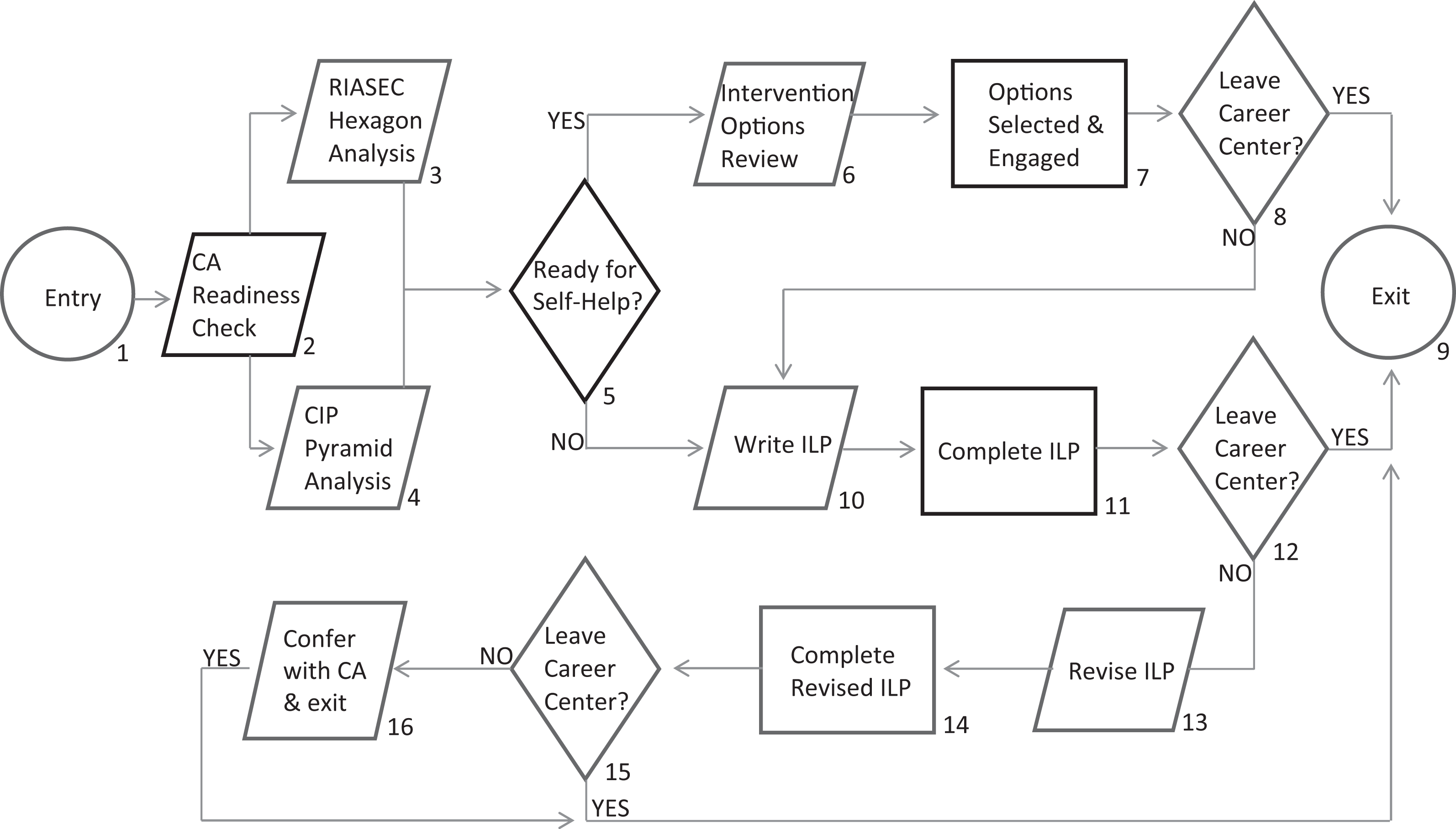
Optimizing self-help career planning: A theory-based scheme.
Narrative and Flowchart Depiction of the Enhanced Model
This section describes a flow and sequence of events associated with enhanced walk-in career advising procedures intended to optimize self-help career planning. The narrative and accompanying flowchart identify the entry (1) and exit points (9) in standard service delivery in this setting. The flowchart also identifies the decision points (5, 8, 12, and 15), where practitioners make judgments about what might be the most appropriate interventions with clients. Finally, the flowchart identifies the areas where practitioners (2, 3, 4, 6, 7, 10, and 13) and clients (7, 11, 14, and 16) will use materials and resources in the career center.
Flowchart Narrative
1. Entry. Client enters the career center and meets with a practitioner without an appointment. During busy times, a 5- to 10-min wait for service may be indicated.
2. Readiness Check. The practitioner inquires “what brings you in today,” and this reveals that the client is seeking career planning assistance. The practitioner then conducts a two-phase readiness check for self-help using RIASEC and CIP theories.
3. First Phase Practitioner Assessment. The practitioner inquires about current or recent thinking regarding career planning. If the client reveals prior thoughts about the topic and lists some preferred and nonpreferred occupations and majors, the practitioner uses the RIASEC hexagon figure to plot these mentioned in terms of adherence to the RIASEC hexagon. The practitioner then invites the client to review the six areas shown in the figure. Following this review, the client is invited to indicate which areas are of most interest or most liked.
Positive signs from this assessment include ability to identify high and low areas among the six, connecting an area to past or current interests, desire to confirm a tentative choice, and expressed desire to know more about the theory. Negative signs include (a) an inability to prioritize any of the areas, (b) little confidence in the choices made, (c) discrepancies voiced between interests and skills, or (d) low consistency. This information is then used to move to Step 4 to make an initial decision about how to assist the client.
4. Second Phase Practitioner Assessment. The practitioner uses the figure “What’s Involved in a Career Choice” (Figure 1) and invites the client to describe which of the four areas are most important for work at the moment. Positive signs include a focus on increasing self and option knowledge and curiosity about how the two areas are connected. Negative signs include the presence of dysfunctional career thinking, anxiety, low vocational identity, external conflict with a choice, or other indicators of problems in the executive processing domain.
5. Readiness for Self-Help Intervention?
Yes. The practitioner may determine the client is ready for self-help career planning if there is an absence of negative signs using the RIASEC hexagon (Figure 2) and the pyramid. The practitioner proceeds to Step 6.
Self-directed clients can be characterized by one or more of the following: good self-knowledge, 1–2 RIASEC areas targeted, good beginning knowledge about options, adherence to RIASEC schema, generally positive metacognitions about career problem-solving and decision-making, low/moderate decision anxiety, and high/moderate coherence in aspirations based on RIASEC theory.
No. If the practitioner’s decision is not to use client self-help, the practitioner proceeds to Step 10.
6. Review Self-Help Intervention Options. Self-help career planning is characterized as a brief time (20- to 45-min) in the Career Center, no written ILP, a low-cost rapid response, module handouts, and other print materials (e.g., OF, EOF, and YYC) as an alternative to brief staff-assisted or individual case-managed services. It could also include a brief tour of various learning stations in the career center.
7. Use Optional Selected Activities. Working in a self-directed manner, with periodic practitioner assistance, the client proceeds to work through the modules and related learning activities identified.
8. Leave the Career Center? The client, perhaps in consultation with a practitioner, decides whether or not to continue using career resources in the career center, including career advising.
Yes. If the client’s need for reassurance or information has been met, the client may exit the career center at Step 9.
No. If the client is not ready to exit the career center, a practitioner is reengaged and an ILP (Figure 5) is written at Step 10.
9. Exit the Career Center. The client may be referred to resources outside the career center, for example, reference book, academic advising, or even discontinue career work because the concerns can be better addressed in another setting.
10. Write ILP. The practitioner collaborates with the client to write an ILP that specifies, internal or external career center activities, expected outcomes, time frame, and priority order. The completed ILP becomes a conceptual map for how the client will use learning activities to accomplish specified career problem-solving and decision-making outcomes.
11. Complete the ILP. The client completes the activities on the ILP and may review the outcomes with a practitioner if that is one of the specified learning activities.
12. Leave the Career Center?
Yes. If the client’s need for career reassurance or information has been met, the client may exit the career center at Step 9.
No. The client’s decision is to remain in the career center for services.
13. Revise the ILP. Given the decision is to remain in the career center, a practitioner is engaged to review and possibly revise the ILP. This step involves a review of the desired learning outcome goals, a review of the activities previously undertaken and the outcomes of those activities, and the timeline for career decision-making. New learning activities may be identified depending on the goals specified.
14. Complete Revised ILP. The client completes the activities on the ILP and may review the outcomes with a practitioner if that is one of the specified learning activities.
15. Leave the Career Center?
Yes. If the client’s need for career reassurance or information has been met, the client may exit the career center at Step 9.
No. The client’s decision is to remain in the career center for services.
16. Confer with Practitioner and Exit. Depending on the client’s move through the career advising process, self-help, and brief staff-assisted services have now been used. At this point, the client confers with the practitioner and individual case-managed services or referral to an external agency is arranged by the practitioner.
This section has provided a detailed review of an enhanced self-help service delivery approach to career services. The flowchart included in Figure 5 provides a schematic view of this process.
Summary and Implications
Summary
The purpose of this article was to trace the history and effectiveness of self-help career services, including counselor-free interventions, and to suggest a method for improving this kind of career assistance using CIP and RIASEC career theories. Each theory was used to explain enhanced self-help services, and each is presented in terms of its history, purposes, practical tools, and social justice implications. The tools were operationalized in part with graphic figures and charts to visually present the theoretical ideas, and the flow and sequence of events associated with enhanced walk-in career advising procedures to optimize self-help career planning. A flowchart and accompanying narrative showing the points in the intervention where a practitioner makes decisions and appropriate interventions were provided with this enhanced service delivery scheme.
Implications
In 2001, the Organization for Economic Cooperation and Development (OECD, 2004) began to study career guidance policies in 14 OECD countries (OECD now has 34 member states). It looked at how the organization, management, and delivery of career guidance can help to advance important public policy objectives. The cost-efficient delivery of career guidance was viewed as having important national and international ramifications. The service delivery model described in this article seeks to address that need.
Conceptualizing career interventions based on a limited, carefully circumscribed counseling relationship flies in the face of the current myopic obsession in the profession shared by many with narrative-based approaches and the life-design model promoted by Savickas (2012) and others. Adherence to the full relationship-based intervention model may reveal more about the interpersonal needs of counselors than that of their clients. Holland’s (1974) observation noted earlier about the need for a personal relationship in a career intervention remains highly relevant in 2016.
The approach described in this article has many of the elements identified by Tyler (1960) with respect to minimum change therapy. The essence of her approach was to focus on counseling to bring about utilization of what the person already has rather than on therapy for personality. We would try in each case to help the person discover some unblocked path in which he [sic] could move forward, develop his [sic] unique personality, and thus transcend rather than delve into the anxieties and conflicts in which he [sic] is now enmeshed. (Tyler, 1960, p. 476)
The enhanced self-help career intervention described in this article requires expert work by a career practitioner who knows CIP and RIASEC theory, is dedicated to helping persons with career planning, and does not feel the need to create a counseling relationship with every client. This kind of service delivery may not presently be a focus of training in career counseling.
Finally, the approach described in this article needs to be replicated by many practitioners and the outputs and outcomes carefully evaluated in programmatic research. Do clients benefit from this kind of self-help service? Do they like it? Which ones benefit and which ones do not? Do counselors “buy in” to this model? Is there a back-up service system in place like the one described in this article when enhanced self-help is not productive? As Holland once noted, “The cost of writing a theory that is a literary venture is minimal, but the long-term cost of researching theoretical ideas for clarification, revision, or replication is great” (Holland, 1994, p. 46). Holland would say the same about writing this model of enhanced self-help career service delivery.
Footnotes
Author’s Note
I once wrote an article (Reardon, 1973) about the importance of educational and career information in the work of college counselors. Since then, I have become more aware of differences in career decision-making readiness that affects use of information in career planning. This article addresses how thinking processes informed by two career theories may affect the use of career information in such decision-making. I thank Julia Kronholz for sharing an individual case in counseling supervision that clarified my initial ideas.
Declaration of Conflicting Interests
The author(s) declared no potential conflicts of interest with respect to the research, authorship, and/or publication of this article.
Funding
The author(s) received no financial support for the research, authorship, and/or publication of this article.