



Abstract
This study investigated the contributions of academic performance and college-going support and barriers in predicting college-going self-efficacy and educational goals among Latina/Latino high school students. Concerns regarding assessment and measurement issues in prior research were addressed. Findings suggested that grade point average was the most important contributor of both college-going self-efficacy and educational goals. In addition, college-going support from family moderated the relationship between grade point average and college-going self-efficacy, such that for students with a high grade point average, high levels of support were related to higher self-efficacy, while students with a high grade point average but lower support had lower self-efficacy. Levels of family support were less important with regard to efficacy and goals for students with a lower grade point average, who tended to have low college-going self-efficacy. The implications of these findings are discussed and recommendations for future research and practice are provided.
Latinas/Latinos have lower rates of educational attainment than non-Latina/Latino Whites and Blacks (Pew Hispanic Center, 2016). Specifically, Latina/Latino students are more likely to drop out of high school and less likely to enroll in and complete college than students of other races (Pew Hispanic Center, 2016). Research has shown that Latina/Latino students have high academic aspirations (Hill & Torres, 2010; Perreira, Fuligni, & Potochnick, 2010) but low expectations for achieving their academic goals (Flores, Navarro, & DeWitz, 2008). In fact, the vast majority (89%) of Latinos ages 16–25 believed that a college education was important for success in life, but only about half (48%) indicated that they planned to obtain a college degree (Pew Hispanic Center, 2009). Research is needed to advance understanding regarding this college attainment gap for Latina/Latino students. Thus, the purpose of this study was to study factors that predict Latina/Latino high school students’ college-going self-efficacy and educational goals. Specifically, we examined academic performance, college-going support, and college-going barriers as predictors of college-going self-efficacy and educational goals with a sample of predominantly low-income Latina/Latino high school students. Understanding the specific factors that contribute to the underrepresentation of Latina/Latino students in postsecondary education is critically important to increase college-going self-efficacy and college completion among Latina/Latino youth.
Latinas/Latinos represent a growing population within the United States, and in 2015, Latinas/Latinos were our largest ethnic/racial minority group (17.6% of the nation’s population; U.S. Census Bureau, 2016). Furthermore, the population of Latinas/Latinos is projected to reach 28.6% of the U.S. population by the year 2060. The consequences of the educational attainment gap are severe, because people with low levels of education are more likely to be unemployed and earn low incomes than people with high levels of education (U.S. Department of Education, 2011). Thus, many Latinas/Latinos in U.S. society are missing opportunities to maximize their potential, earn a higher income, and develop satisfying professional careers.
This study, grounded in social cognitive career theory (SCCT; Lent, Brown, & Hackett, 1994, 2000), focused on predictors of college-going self-efficacy and educational goals for Latina/Latino high school students. SCCT suggested that in addition to individual variables, cognitive-person variables and contextual variables interact to influence career development. Cognitive-person variables include self-efficacy beliefs, defined as the confidence in one’s ability to succeed in a specific domain (Bandura, 1977). In this study, we were interested in college-going self-efficacy or how confident students were in their ability to apply to and be admitted to college. Numerous studies have demonstrated the importance of various forms of self-efficacy in educational and vocational pursuits (Flores, Ojeda, Huang, Gee, & Lee, 2006; Gonzalez, Stein, & Huq, 2013; Gushue, Clarke, Pantzer, & Scanlan, 2006; Jansen, Scherer, & Schroeders, 2015; Parker, Marsh, Ciarrochi, Marshall, & Abduljabbar, 2014; Tate et al., 2015).
SCCT also suggests that goals, defined by Bandura (1986) as intentions to carry out a behavior or activity, are predictive of academic and vocational behaviors (Lent & Brown, 1996). Educational goals include aspirations, realistic expectations, persistence, and plans. In this study, we were interested in students’ educational goals, specifically the level of education students planned to complete (i.e., high school, community college, 4-year college, graduate school). Setting goals helps to focus efforts and persevere to reach achievements (Lent & Brown, 1996), and goals have been shown to predict academic and career accomplishments (Dishon-Berkovits, 2014; Martin & Elliot, 2016; Morisano & Locke, 2013).
A meta-analysis of research on the educational and vocational goals of Latino students found that much of the variance in educational goals was not explained in the literature (Risco et al., 2011). Many SCCT studies failed to assess academic performance or cognitive ability when predicting academic or vocational outcomes (Lubinski, 2010). Other studies on students (across races) have shown that academic performance, as measured by grade point average (GPA) or standardized test scores, was related positively to success in college (Cohn, Cohn, Balch, & Bradley, 2004; Hoffman & Lowitzki, 2005; M. M. Kim, 2002). Moreover, current academic performance was related to persistence in college in ethnically diverse samples (Witkow, Huynh, & Fuligni, 2015). Thus, it is salient to assess academic performance when predicting college-going self-efficacy and future educational goals for Latina/Latino high school students.
In addition, and consistent with SCCT, this study examined the role of contextual or environmental variables in college-going self-efficacy and educational goals. Proximal contextual variables include supports and barriers in the environment that moderate both the relationship between interests and goals and the relationship between goals and actions (Lent, Brown, & Hackett, 2000). One study of Latina/Latino college students found that those who had more family support reported higher college self-efficacy (defined as accomplishing necessary tasks while in college; Torres & Solberg, 2001). Social support also has been found to be an important variable in helping adolescents pursue career goals. For example, in a sample of mostly Black and Latina/Latino urban high school students, general perceptions of support were related positively to aspirations for career success and expectations for attaining career goals (Kenny, Blustein, Chaves, Grossman, & Gallagher, 2003). In a study of 364 Mexican American female high school students, parental support was one of the most important predictors of students’ selection of prestigious careers and career aspiration (Flores & O’Brien, 2002).
Relatedly, perception of barriers may play an important role in the career and educational goals of Latina/Latino high school students (Gushue et al., 2006; McWhirter, Torres, Salgado, & Valdez, 2007; Ojeda & Flores, 2008; Ojeda, Navarro, & Morales, 2011). For example, Mexican American students perceived more internal barriers (ability, preparation/motivation) and external barriers (support and separation from family) to college than White American students (McWhirter et al., 2007). Also, perceived educational barriers predicted Mexican American high school students’ educational aspirations, above and beyond the contributions of gender, generation level, and parents’ educational level (Ojeda & Flores, 2008).
Furthermore, barriers have been associated with self-efficacy, though college-going self-efficacy has not been studied (Gushue et al., 2006). With a sample of urban Latina/Latino high school students, researchers found that the perceptions of career barriers were related negatively to career decision-making self-efficacy and vocational identity (Gushue et al., 2006). In addition, perceptions of barriers were related to career self-efficacy for a sample of Latina college students (Kim & O’Brien, 2016). Although some research has linked barriers to career decision-making self-efficacy and educational and career goals, no research has examined how perceived college-going barriers may relate to college-going self-efficacy and educational goals for Latina/Latino high school students.
Finally, this study addresses measurement concerns noted in the literature. Specifically, the meta-analysis of research on the educational and vocational goals of Latino students concluded that measurement problems contributed to contradictory findings in the literature (Risco et al., 2011). Many of the studies used single-item scales and the measurement of many constructs lacked domain specificity (Risco et al., 2011). This was problematic because single-item measures often lack adequate psychometric properties and global constructs do not enable identification of relationships among specific variables. This study carefully selected domain-specific constructs focused on going to college (support, barriers, efficacy, and goals).
Thus, the first purpose of this study was to learn more about the academic performance, college-going support, college-going barriers, college-going self-efficacy, and educational goals of a sample rarely studied in psychological research—Latina/Latino high school students. Second, we examined the contributions of school performance, college-going support, and college-going barriers to college-going self-efficacy and educational goals. Our hypothesis was that school performance, college-going support, and college-going barriers would contribute unique variance to self-efficacy and to educational goals, with performance and support being positively related and barriers being negatively related to the outcomes.
Third, this study investigated potential moderators that influenced these relationships. In particular, we wondered whether college-going support or college-going barriers moderated the relationship between school performance and college-going self-efficacy (and educational goals). We hypothesized that the effect of school performance on college-going self-efficacy (and educational goals) would depend on the level of college-going support, such that there would be a positive relationship between school performance and college-going self-efficacy (and educational goals) for those who had high levels of college-going support and a weaker positive relationship between school performance and college-going self-efficacy (and educational goals) for those with little support. Also, we expected that the effect of school performance on college-going self-efficacy (and educational goals) would depend on the level of college-going barriers, such that there would be a negative relationship between school performance and college-going self-efficacy (and educational goals) for those who had high levels of college-going barriers and a positive relationship between school performance and college-going self-efficacy (and educational goals) for those with few barriers.
Method
Procedure
Letters or e-mail messages were sent to community centers, churches, or personal contacts, containing an invitation for their students to participate in the study, and followed by phone calls to the agencies to talk about the study. Ten community centers, after-school programs, or nonprofit organizations that serve the Latina/Latino community were contacted; seven agreed to participate. We also recruited from five church youth groups, and three agreed to participate. Finally, personal contacts were asked to distribute information about the study. Our participants came from community organizations (61.3%), church youth groups (18.5%), and personal contacts (20.2%).
Prior to data collection, information about the study was shared with the students’ parents and those parents who did not want their children to participate in the study returned an “opt-out” form (written in both English and Spanish) to the school, church, or community center. On the day scheduled for data collection, the researchers gave a brief explanation of the study and distributed an assent form. The students who agreed to participate (and whose parents did not return the opt-out form) completed the anonymous paper surveys in the classroom. Thirteen students and/or their parents declined participation, and 120 agreed to complete the measures, resulting in a 90% return rate at the settings that chose to participate in our study.
To detect a medium effect size (power = .80, α = .01) for three predictors, a minimum of 108 participants were needed. One participant was missing more than 15% of the data and thus was eliminated from the study. Of the remaining 119 participants, 73 had no missing data, 22 had 1 missing item, 12 had 2 missing items, and 13 had between 3 and 7 items missing. The expectation–maximization algorithm was used to insert values for the missing data.
Participants
All 119 participants identified as Latina/Latino when asked about their ethnicity; 52.1% were female and 47.9% male. The average age was 16 (SD = 1.67), and participants were distributed throughout the four high school grades (28.6% 9th grade, 21.8% 10th grade, 24.4% 11th grade, and 21.0% 12th grade). The majority of the participants did not respond to a question on race (54.6%); the remainder of the participants identified as White/Caucasian (20.2%), biracial (11.8%), Black/African American (5%), Native American/Indigenous (5%), and Mestizo (mixed White/Native American ancestry; 3.4%). Twelve participants wrote “biracial,” and 11 of these described their Latina/Latino identity (“Hispanic,” “Latina,” “Salvadorean,” “White and Colombian”).
With regard to the country of birth, more than half (59.2%) of the participants were born in the United States. Others were born in El Salvador (11.8%), Argentina (9.2%), Colombia, Dominican Republic, Guatemala (3.4% each), Uruguay, Mexico, Peru, Paraguay, or did not report a country of birth (all 2.5% or less). Almost all of the participants’ parents were born in Latin America (96.7% and 97.5%, respectively). The countries of birth that appeared most frequently for the mothers were El Salvador (47.1%), Argentina (10.9%), Mexico (9.2%), Guatemala (7.6%), and the Dominican Republic (5%). For fathers, the most frequent countries of birth were El Salvador (48.7%), Argentina (10.9%), Guatemala (10.1%), Mexico (9.2%), and the Dominican Republic (5%). Participants identified their generation status most frequently as second-generation immigrants (parents immigrated to the United States and participants were born here; 57.1%). The other participants identified as first-generation immigrants (37.1%) or third (1.7%) or fourth generation (0.8%). Students reported using “mostly” or “only” Spanish at home (44.6%), equally using English and Spanish at home (44.5%), or using “mostly” or “only” English at home (10.9%). The majority of the participants (63.1%) received free or reduced price lunch, while 36.1% did not (one person did not answer the question).
Measures
School performance
Students’ performance was assessed by GPA. Performance was assessed by GPA in numerous studies (e.g., Cohn et al., 2004; Hoffman & Lowitzki, 2005), and a meta-analysis found that self-reports of high school GPA were correlated with actual GPA (r = .82; Kuncel, Credé, & Thomas, 2005).
College-going support
A modified version of the Career Support Scale (Binen, Franta, & Thye, 1995) was used to measure support from the mother and father in encouraging students’ career goals. The original measure was edited by Flores and O’Brien (2002) to assess support from both parents together and reduce the number of items to 10. Binen et al. (1995) found the internal consistency to be .87 for the mother scale and .90 for the father scale. Internal consistency was .76 for the modified scale (Flores & O’Brien, 2002). Support for validity was found in that scores on the measure were related to scores on instruments assessing career aspiration and career choice prestige in the expected directions (Flores & O’Brien, 2002). The scale was further modified in this study to assess college-going support instead of career support. For example, “My parents and I often discuss my career plans” was changed to “My parents and I often discuss my college plans.” Responses ranged from 1 (almost never) to 5 (almost always). In this study, we summed the scores to create a total score, and the α for this measure was .82.
College-going barriers
The Perceptions of Educational Barriers Scale Likelihood subscale was used to measure the students’ views on the likelihood that they would encounter barriers to postsecondary education (Perception of Educational Barriers Scale [PEB]; McWhirter, Rasheed, & Crothers, 2000). The original measure listed 28 barriers and each of the items had response options ranging from 1 (not at all likely/not a barrier/not at all) to 4 (definitely/huge barrier/extremely difficult; McWhirter et al., 2000). Three items that were relevant to Latina/Latino high school students were added later by McWhirter et al. for a total of 31 items (“my immigration status,” “parents don’t have access to the information I need,” and “lack of English language skills”; personal communication, October 27, 2011). A total score on barriers was created by summing the responses. Sample items on the measure include “not talented enough,” “family responsibilities,” “racial/ethnic discrimination,” “not enough money,” and “not wanting to move away.” The subscale had high internal consistency (Cronbach’s α = .89 in a sample of 196 high school sophomores; McWhirter et al., 2000 and .91 in a sample of 140 Mexican American students and 296 White high school students; McWhirter et al., 2007). Support for validity was found as the likelihood subscale related positively to subscales of magnitude and difficulty of barriers, as well as to scores on a measure of perceived job opportunity (McWhirter et al., 2000). For our sample, the internal consistency estimate was .93.
College-going self-efficacy
A 22-item College-Going Self-Efficacy Scale was used to assess confidence in completing tasks necessary to attend college (Jones, O’Brien, Diaz, & Kivlighan, 2011). Participants were asked, “How confident are you in each of the following?” and given a list of items that they rated from 1 (not confident at all) to 9 (a great deal of confidence). A few examples of items included “Describe the characteristics of three different colleges” and “Complete the Free Application for Federal Student Aid financial aid form.” In the instrument development study, scores on the measure had internal consistency estimates ranging from .81 to .87 and were correlated with vocational identity and achievement goals (Jones, 2014). For our sample, the scores were summed to create a total score, and the Cronbach’s α for this measure was .95.
Educational goals
Goals for education, including attending college, were measured using 2 items developed from studies by Farmer (1985) and used in previous studies (Flores et al., 2006, Flores et al., 2008). These items correspond to students’ educational expectations and aspirations (i.e., “What level of education do you expect to complete?” and “What level of education do you hope to complete?”). Responses ranged from 1 to 6 (from some high school to professional or doctoral degree). In one study of 105 Mexican American high school students, the 2 items were averaged and the scale had an α of .88 (Flores et al., 2006). Furthermore, support for the validity of the measure was noted in that career decision-making self-efficacy and acculturation were predictive of educational goals (Flores et al., 2006). In our study, the scores for the 2 items were summed to create a total goal score and the α was .75.
Demographic questionnaire
A demographic questionnaire assessed ethnicity, race, age, gender, grade in school, country of origin for student and parents, generation status, socioeconomic status (participation in their school’s free or reduced lunch program), level of education for parents, and language use at home.
Results
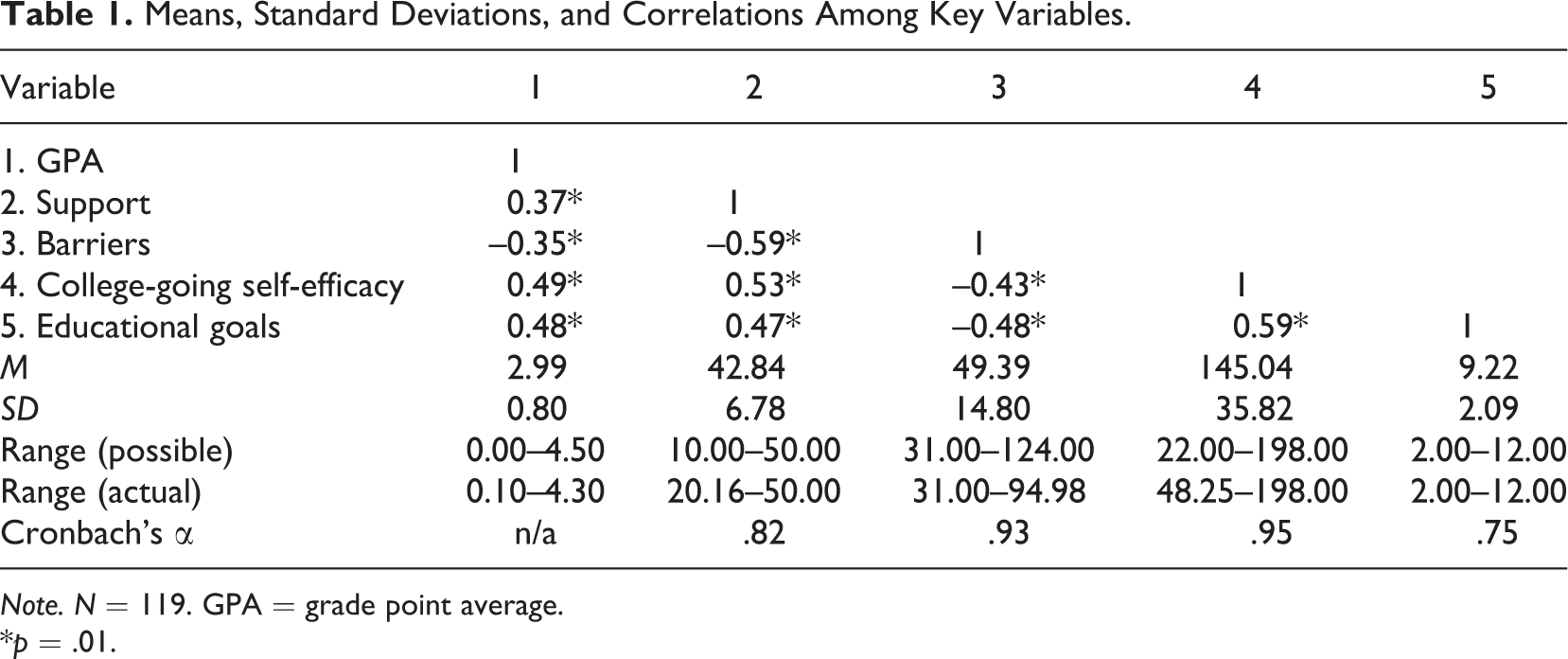
Overall, the participants reported high levels of family college-going support and fairly low levels of perceived college-going barriers (see Table 1). The barriers that were most highly endorsed were “not enough money” (93 students indicated it was maybe, probably, or definitely a barrier) and “school/program very expensive” (79 students); 22 students indicated their legal status might be a barrier to college. The mean GPA in this sample was 3.0 (SD = 0.79), and the students had moderately high levels of college-going self-efficacy; most planned to complete a bachelor’s or master’s degree.
Means, Standard Deviations, and Correlations Among Key Variables.
Note. N = 119. GPA = grade point average.
*p = .01.
Correlations were calculated among the variables of interest (see Table 1). Prior to conducting regressions, we determined that the data met the assumptions of linearity, independence of errors, homoscedasticity, and normality of the error distribution. z-Scores were calculated for the scales to reduce problems associated with multicollinearity in the regressions.
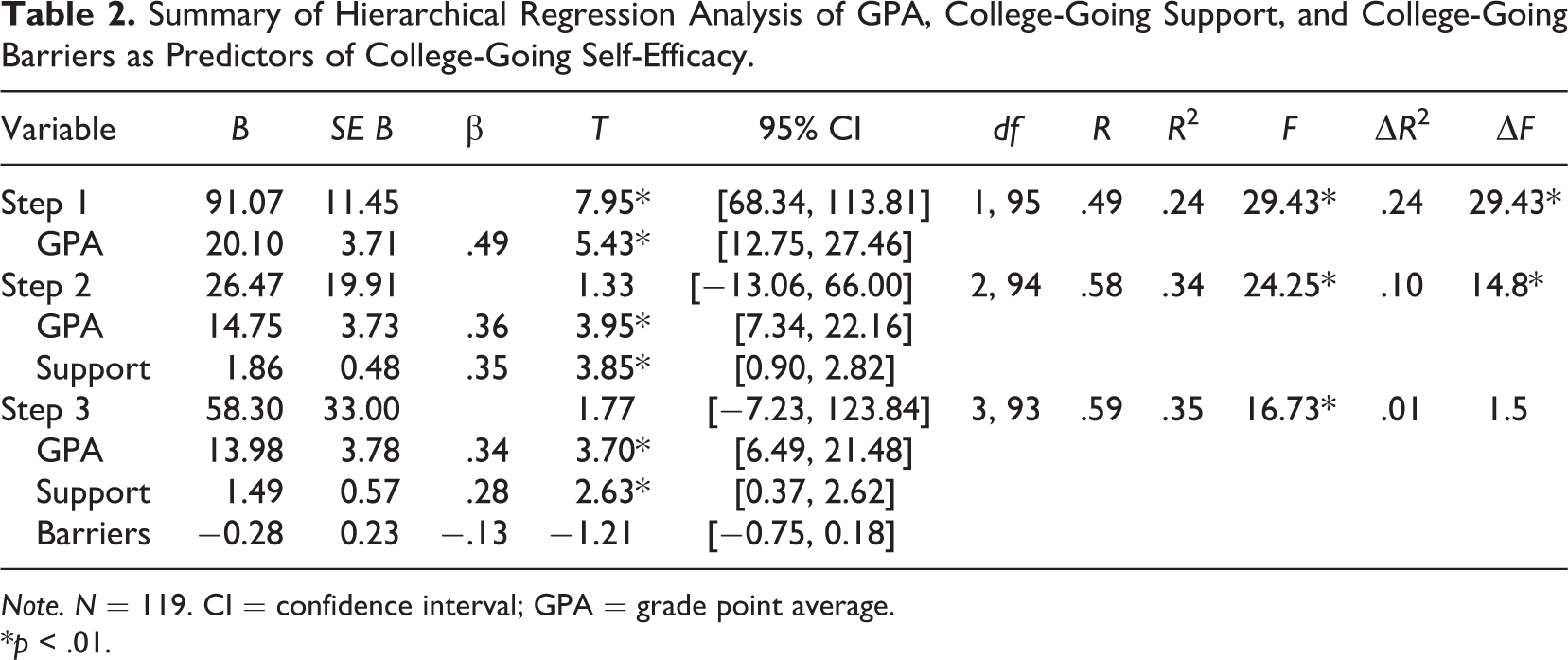
Next, we examined the contributions of academic performance (entered first in the regression), college-going support (entered second), and college-going barriers (entered third) to college-going self-efficacy (see Table 2). The variables collectively accounted for 35% of the variance, with GPA (24%) and college-going support (10%) contributing to the prediction of college-going self-efficacy. Both GPA and college-going support contributed unique variance when all variables were entered into the equation.
Summary of Hierarchical Regression Analysis of GPA, College-Going Support, and College-Going Barriers as Predictors of College-Going Self-Efficacy.
Note. N = 119. CI = confidence interval; GPA = grade point average.
*p < .01.
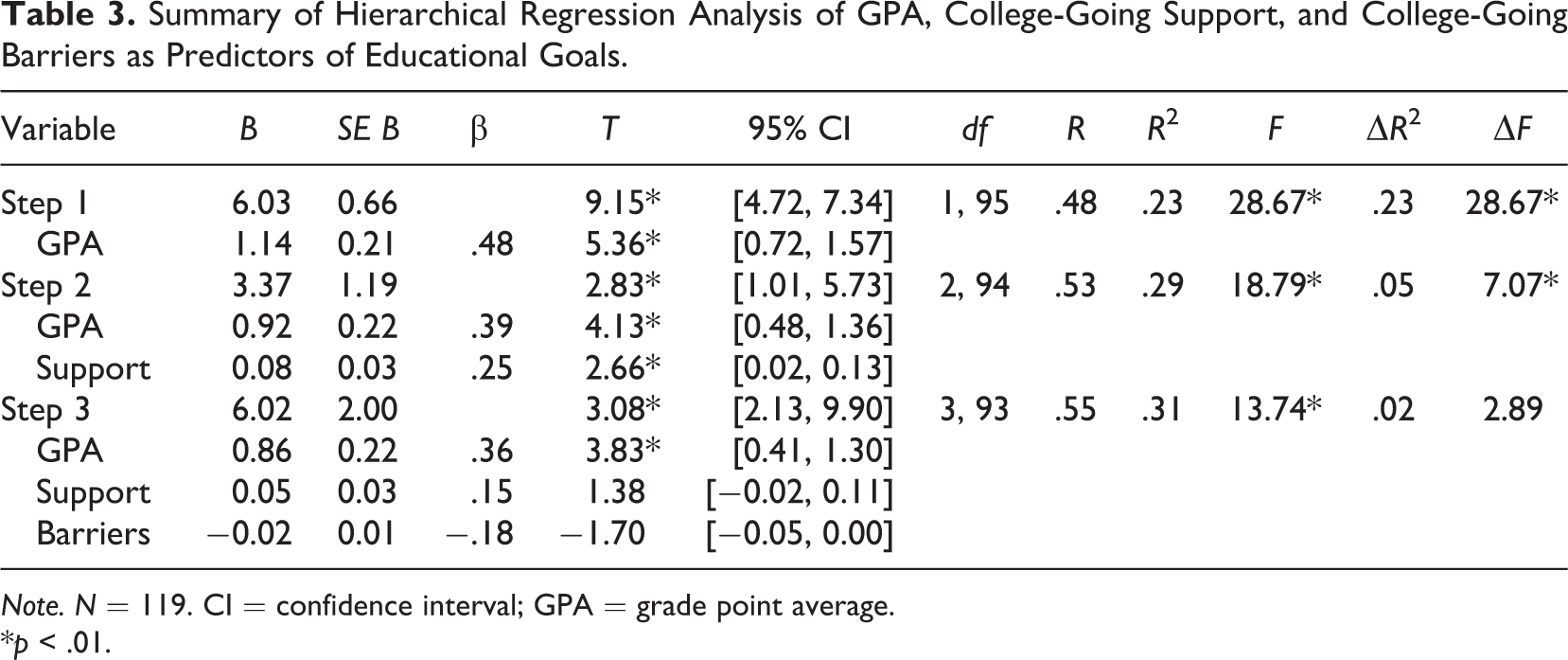
Also studied were the contributions of academic performance, college-going support, and college-going barriers to educational goals (with the variables entered in the same manner as the prior regression; see Table 3). The variables collectively accounted for 31% of the variance, with GPA (23%) and college-going support (5%) contributing to educational goals. GPA was the only variable that contributed unique variance when all variables were entered into the equation.
Summary of Hierarchical Regression Analysis of GPA, College-Going Support, and College-Going Barriers as Predictors of Educational Goals.
Note. N = 119. CI = confidence interval; GPA = grade point average.
*p < .01.
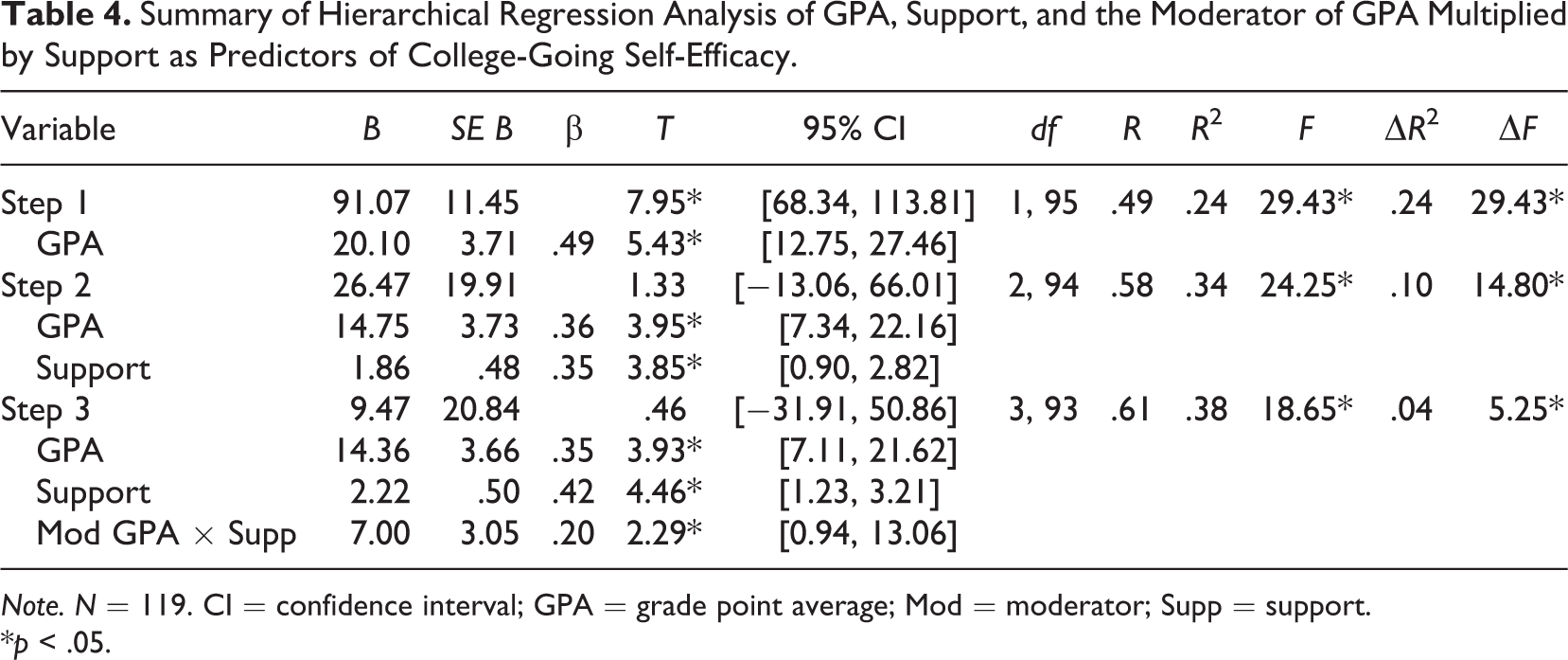
To test whether college-going support was a moderator of the relationship between performance and college-going self-efficacy, we first entered GPA, then college-going support, and finally, an interaction term created by multiplying the z-scores for GPA by the z-scores for college-going support (see Table 4). The model collectively accounted for 38% of the variance in college-going self-efficacy. Variance was accounted for by GPA (24%), college-going support (10%), and by the moderator variable, GPA multiplied by support (4%). The hypothesis regarding this moderation was supported, meaning that the effect of GPA on college-going self-efficacy depended on the level of support (see Figure 1). When GPA was high and support was high, college-going self-efficacy was higher, but if GPA was high and support was low, college-going self-efficacy was lower. Support did not make as much of a difference for students with low GPAs.
Summary of Hierarchical Regression Analysis of GPA, Support, and the Moderator of GPA Multiplied by Support as Predictors of College-Going Self-Efficacy.
Note. N = 119. CI = confidence interval; GPA = grade point average; Mod = moderator; Supp = support.
*p < .05.
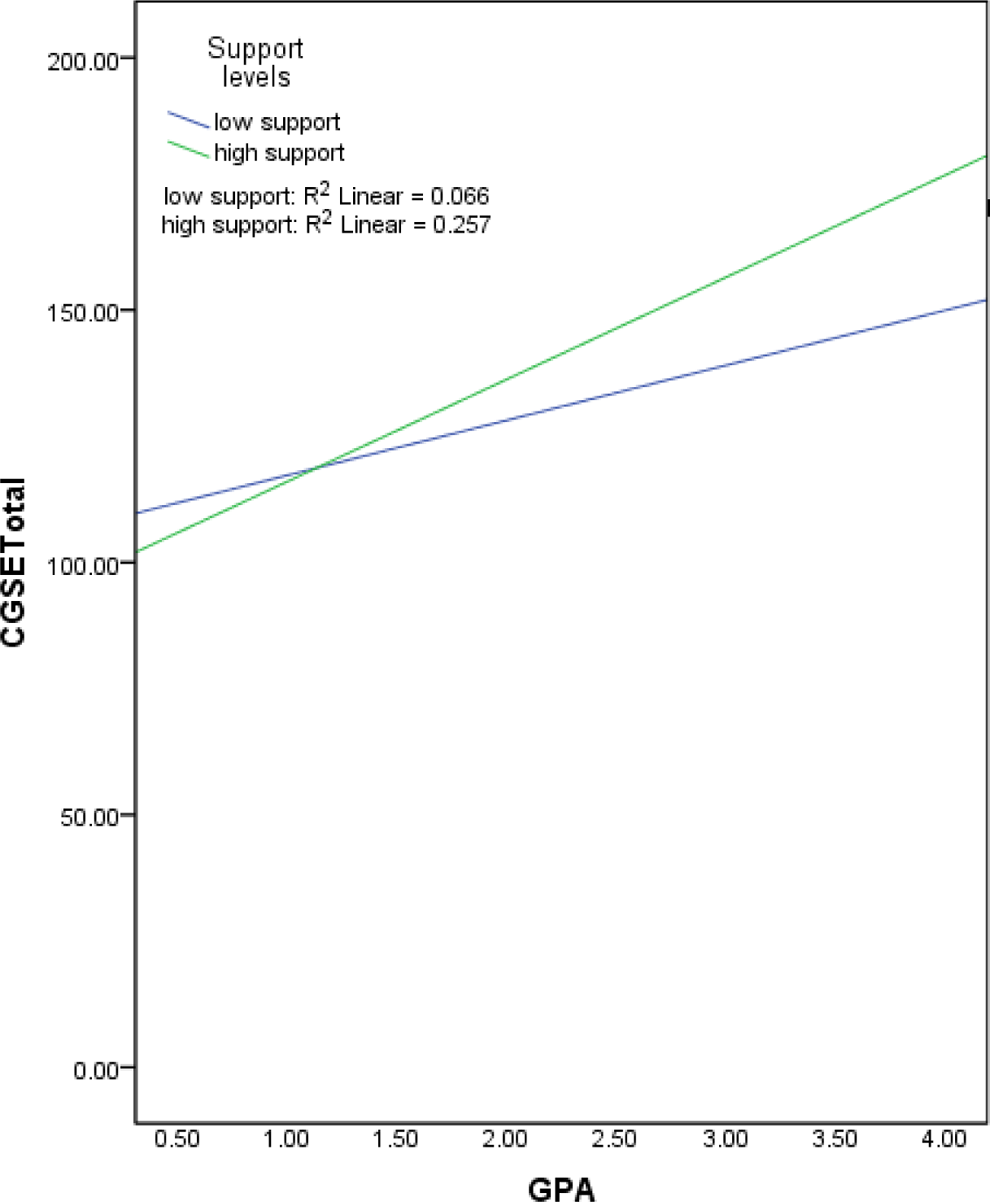
Plot of interaction.
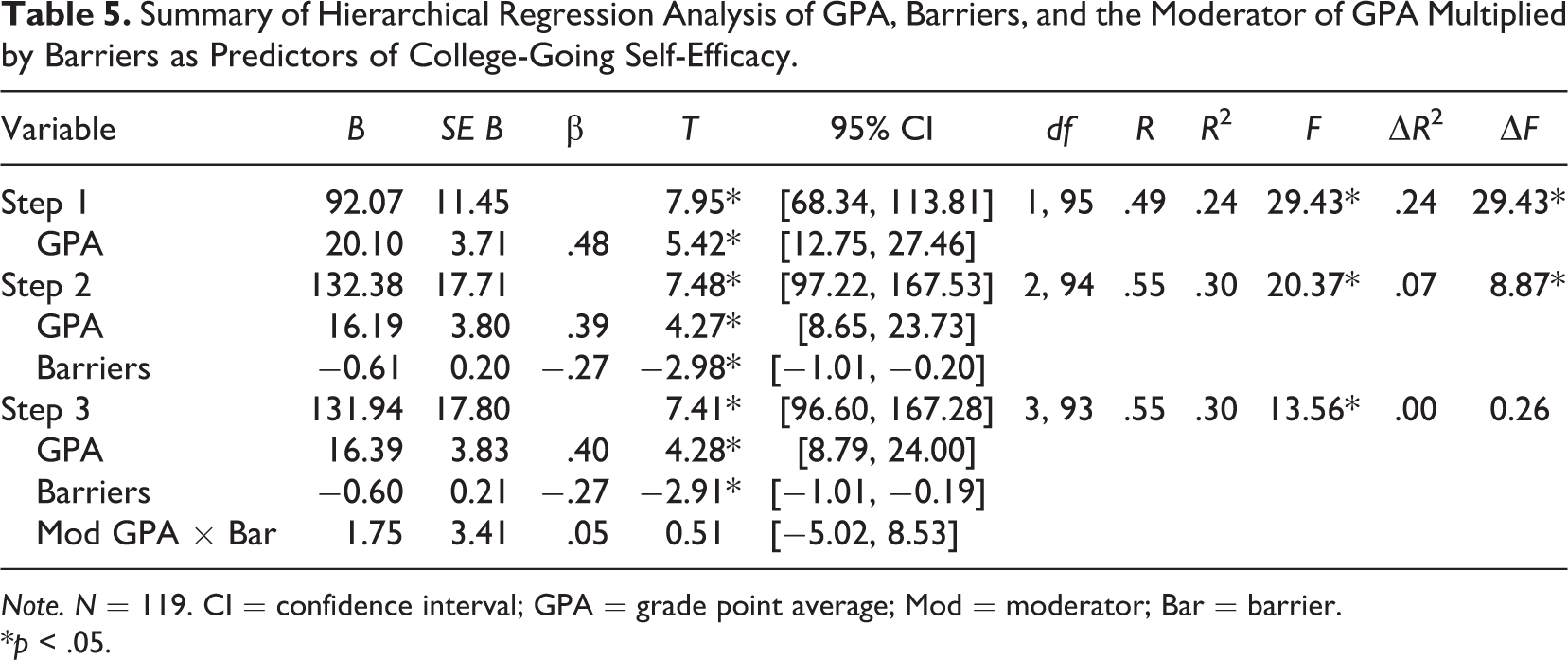
Similarly, we examined whether college-going barriers were a moderator of the relationship between performance and college-going self-efficacy (we first entered GPA, then college-going barriers, and finally an interaction term created by multiplying the z-scores for GPA and the z-scores for barriers; see Table 5). The model collectively accounted for 30% of the variance, with GPA (24%) and barriers (7%) contributing to college-going self-efficacy, but not the moderator variable (GPA multiplied by barriers).
Summary of Hierarchical Regression Analysis of GPA, Barriers, and the Moderator of GPA Multiplied by Barriers as Predictors of College-Going Self-Efficacy.
Note. N = 119. CI = confidence interval; GPA = grade point average; Mod = moderator; Bar = barrier.
*p < .05.
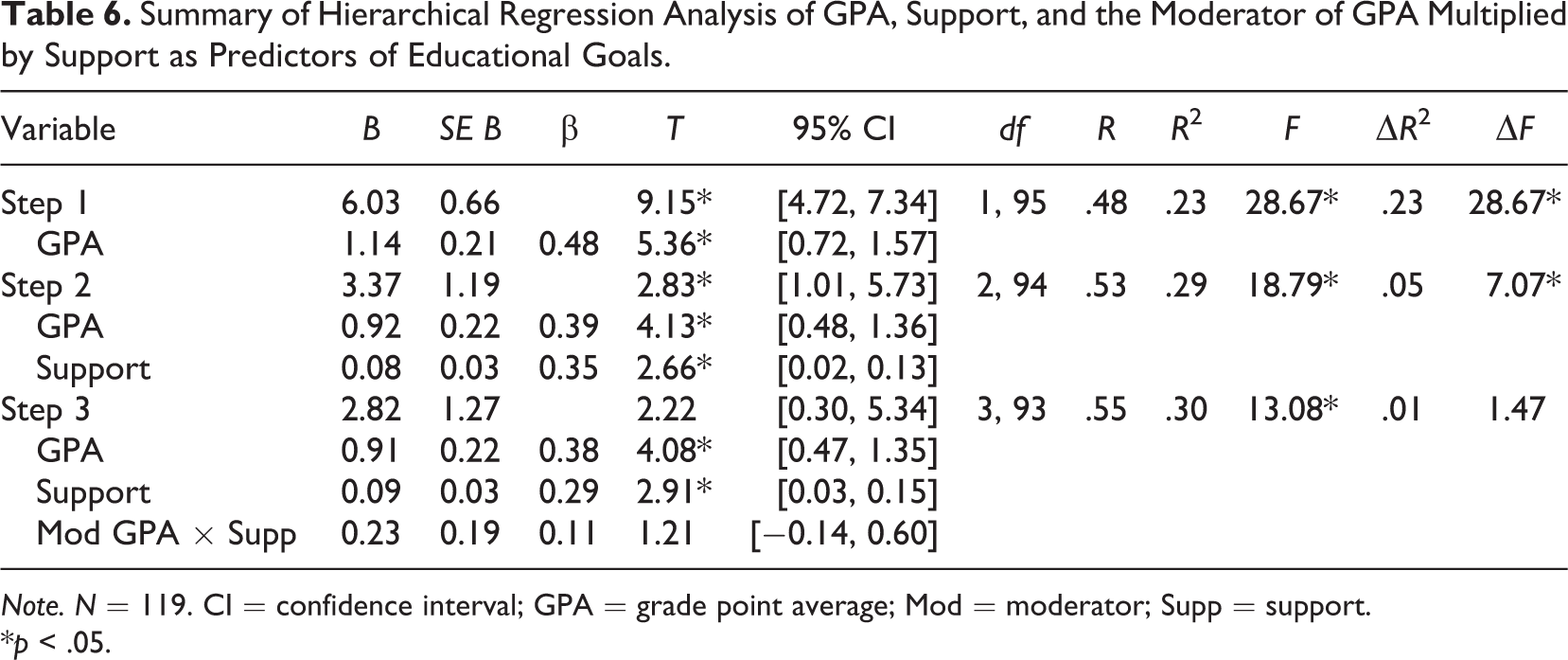
Also studied was whether college-going support was a moderator between school performance and educational goals (we first entered GPA, then support, and third an interaction term created by multiplying the z-scores of GPA by the z-scores for support; see Table 6). The model collectively accounted for 30% of the variance, with GPA (23%) and support (5%) contributing to educational goals, but not the moderator variable (GPA multiplied by support).
Summary of Hierarchical Regression Analysis of GPA, Support, and the Moderator of GPA Multiplied by Support as Predictors of Educational Goals.
Note. N = 119. CI = confidence interval; GPA = grade point average; Mod = moderator; Supp = support.
*p < .05.
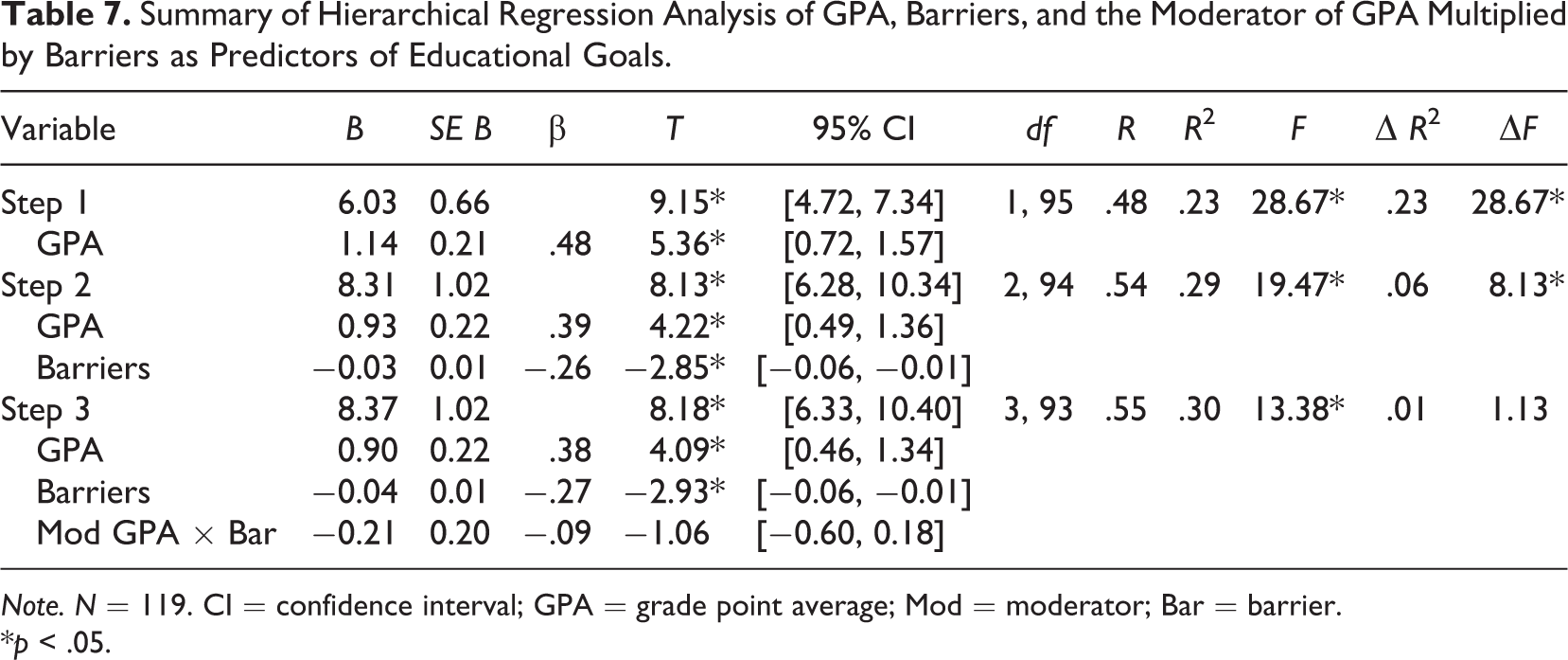
Finally, to test whether college-going barriers moderated the relationship between school performance and educational goals, we first entered GPA, then barriers, and then the interaction term created by multiplying the z-scores for GPA by the z-scores for barriers (see Table 7). The model collectively accounted for 30% of the variance, with GPA (23%) and barriers (6%) contributing to educational goals, but not the moderator variable (GPA multiplied by barriers).
Summary of Hierarchical Regression Analysis of GPA, Barriers, and the Moderator of GPA Multiplied by Barriers as Predictors of Educational Goals.
Note. N = 119. CI = confidence interval; GPA = grade point average; Mod = moderator; Bar = barrier.
*p < .05.
Post Hoc Analyses
In a previous study, no gender or generational status differences in educational expectations or aspirations were found (Flores et al., 2008). However, several post hoc multivariate analyses of variance (MANOVAs) were conducted to assess differences in the measures based on both gender and socioeconomic status (measured by whether they received free or reduced lunch in school). First, two MANOVAs were calculated to assess whether gender differences existed on support and barriers and GPA, college-going self-efficacy, and goals. The results indicated that there were no gender differences in support and barriers (Wilks’s λ = .99, F(2, 116) = .49, p > .61) or GPA, college-going self-efficacy, and goals (Wilks’s λ = .97, F(3, 93) = .87, p > .46).
Second, two MANOVAs were calculated to assess whether there were differences in free/reduced lunch status on support and barriers and GPA, college-going self-efficacy, and goals. A one-way MANOVA revealed a multivariate effect for free/reduced lunch status when predicting support and barriers, Wilks’s λ = .87, F(2, 115) = 8.73, p < .00. The power to detect the effect was .97. Significant univariate main effects for free/reduced lunch status were obtained for barriers, F(1, 116) = 17.33, p < .00, power = .99, with students who received free/reduced lunch reporting more barriers. The mean number of barriers reported by students who received free/reduced lunch was 53.56 (SD = 14.28), as compared to 42.54 (SD = 13.00) for students who did not receive free/reduced lunch.
In addition, a one-way MANOVA revealed a multivariate effect for free/reduced lunch status when predicting GPA, college-going self-efficacy, and goals, Wilks’s λ = .83, F(3, 92) = 6.13, p < .00. The power to detect the effect was .96. Significant univariate main effects for free/reduced lunch status were obtained for GPA, F(1, 94) = 12.06, p < .00, power = .93, and for goals, F(1, 94) = 8.38, p < .01, power = .82. Students who received free/reduced lunch had a lower mean GPA, 2.77 (SD = .84), compared to students who did not receive free/reduced lunch, 3.32 (SD = .60). When comparing educational goals, students who received free/reduced lunch reported lower goals (a mean score of 8.73, SD = 2.11) when compared to students who did not receive free/reduced lunch (X = 10.00, SD = 1.74).
Discussion
This study furthered knowledge regarding the contributions of academic performance and college-going support and barriers to the prediction of college-going self-efficacy and educational goals among individuals not often studied in psychology research—Latina/Latino high school students. Specifically, we learned that GPA was the most important contributor to both college-going self-efficacy and educational goals. In addition, college-going support from family moderated the relationship between GPA and college-going self-efficacy, such that for students with a high GPA, high levels of support were related to higher self-efficacy, while students who had a high GPA but lower support had lower self-efficacy. Levels of family support were less important with regard to efficacy and goals for students with a lower GPA, who tended to have low college-going self-efficacy.
The finding that GPA was the largest predictor of both college-going self-efficacy and educational goals advances the SCCT literature related to Latina/Latino students and underscores the importance of assessing school performance when investigating predictors of vocational and career goals for Latina/Latino high school students. Although many studies have shown a link between GPA and academic performance (e.g., Cohn et al., 2004; Hoffman & Lowitzki, 2005), previous studies on Latina/Latino high school students often neglected to include GPA as a predictor for college-related outcomes.
Our findings also suggested that parental support is critical for high-achieving Latina/Latino students, as the effect of GPA on college-going self-efficacy depends on the level of college-going support from the student’s family. This finding is consistent with previous research that demonstrated the importance of parental support for educational goals and/or self-efficacy (Flores & O’Brien, 2002; Navarro, Flores, & Worthington, 2007). This relationship was not present for students with a low GPA. Perhaps family support focusing on college attendance may be stressful to students who are struggling in school or perhaps parents may not encourage children who are not excelling to pursue college. These parents may be more focused on proximal goals (e.g., passing classes or graduating from high school).
Interestingly, environmental variables were not as important as academic performance in predicting educational goals as neither college-going support nor college-going barriers made contributions to educational goals over and above academic performance. Very few prior studies of Latina/Latino high school students included GPA as a predictor variable, which may explain why environmental variables were salient in other studies. Given that GPA was correlated strongly with support and barriers, it is possible that shared variance explains these findings. Students with a high GPA likely receive teacher and family support and perceive fewer barriers.
Similarly, the shared variance between support and barriers could explain the findings that college-going barriers did not uniquely contribute variance to self-efficacy or educational goals above GPA and college-going support. When support was not considered, barriers did not moderate the relationships between academic performance and college-going self-efficacy or educational goals. One explanation could be that this group of students did not believe barriers would impede their access to college or perhaps they underestimated barriers because they were not currently facing them. More likely, barriers may have related to academic success and thus the effects were shared with GPA. Finally, although the barriers to college that were most often reported were financial barriers, other barriers that were not listed could be salient (e.g., not having enough information about applying for financial aid, lack of role models, no access to scholastic aptitude test [SAT] preparation classes).
Strengths of the Study
One of the main strengths of this study was that the participants represented a population that has been understudied in psychology. Very little research examines the college-going experiences of low-income, first-generation, Latina/Latino students who are at greater risk for not attending college. Not surprisingly, parents’ levels of education correlated with their children’s GPA and their children’s reports of college-going support, barriers, self-efficacy, and educational goals. Thus, studying this population advances knowledge regarding students who often are not afforded the opportunity to attend college. Moreover, studying students at the high school level is especially important because interventions aimed at adolescents may have a powerful effect on their future educational goals.
In addition, this study addresses a salient critique of previous research on the career development of Latina/Latino students—the lack of domain specificity in the variables studied (Risco et al., 2011). We can be confident in the results of this study, given the selection of domain-specific constructs related to going to college. Furthermore, this study assessed the contribution of academic performance prior to examining contextual variables. Lubinski (2010) aptly noted that although many studies have shown that self-efficacy predicts vocational constructs, many studies have not shown that self-efficacy explains outcomes over and above cognitive ability. Although academic performance is not a measure of cognitive ability, the inclusion of high school GPA in this study includes a salient variable that often is shown to be predictive of academic persistence and success. Indeed, our results indicated that performance is perhaps the most important predictor of both college-going self-efficacy and educational goals.
Limitations
There were several limitations to this study. The study was correlational, so causal relationships cannot be determined. Also, we sampled mostly students who were active in community organizations or church youth groups; they may differ from students who are uninvolved in activities. Due to social desirability, students may have overreported their college-going self-efficacy, goals for college attendance, GPA, and levels of family support while underreporting perceived barriers. Also, students may not have a realistic perception of what it takes to gain admission to and attend college and they may not be aware of some barriers until they encounter them in the college application process. In addition, the educational goals measure, although widely used, contained only 2 items. The college-going self-efficacy instrument was developed recently, and although the measure had adequate psychometric properties, additional research on this measure is needed.
Future Directions
Future research may examine other factors that contribute to college-going self-efficacy and educational goals including personality factors such as self-esteem, resilience and perseverance, and knowledge about college (e.g., how to write application essays, how to apply for financial aid). Research should also expand on environmental factors, such as support from peers and teachers, school resources, neighborhoods, school districts, students’ experiences of racism, and whether the school has a college preparation emphasis. Socioeconomic status seems to be an important factor that needs to be included in all future research on Latina/Latino students’ career development. Ideally, researchers would follow students over time to determine which variables contribute to applying to college, college attendance, GPA, and graduation.
Implications for Practitioners
Should the findings of this study be replicated, interventions should be developed to improve the academic performance of Latina/Latino high school students. Our results suggest that two interventions may be needed for Latina/Latino youth who experience poverty: one for students with lower academic performance and one for students with higher academic performance. First, some Latina/Latino students need support to improve their academic performance. Helping students do better in school would most likely increase their college-going self-efficacy and educational goals. Psychologists should advocate for increasing resources to schools with low-income Latina/Latino students, for example, decreasing class sizes; improving the quality of books, teachers, and technology; and enhancing access to after-school tutoring and low-cost or free college admissions examination preparation classes.
Interventions should begin at early levels, such as preschool, elementary school, and middle school, so that students arrive at high school ready for academic challenges. It is important not to conclude from this study that the relationships between GPA and both college-going self-efficacy and educational goals mean that the low rates of college attendance among Latinas/Latinos are due to lower ability; academic performance is tied to the quality of schools that many Latina/Latino students attend.
For students who demonstrate high academic performance, the intervention should focus on increasing family support, perhaps by providing bilingual training and workshops about college for parents at hours that are convenient for parents who work outside the home. It is possible that some parents do not encourage college attendance because they are uncertain about paying for college or having their children move far away (or other concerns). Many of the students in this sample endorsed speaking mainly Spanish at home, so it would be important to provide resources in Spanish and have Spanish-speaking professionals available to answer questions. Most of the students’ parents did not have college educations, and since they were mainly immigrants, they may not have knowledge of the American educational system. Families could be educated in workshops not only on the importance of college but also about how to apply for financial aid and scholarships, how to help their children in the college application process, and how to emotionally support their children in the transition to college. Parents may also be provided with information about college early in their children’s development to support their academic achievement throughout elementary, middle, and high school.
It is also important for practitioners to advocate for Latina/Latino high school students on a larger, societal level. Many of our participants indicated that financial barriers presented challenges to college attainment, and their socioeconomic status appeared to relate to their GPA and educational goals as well. Psychologists can lobby for reducing the costs of higher education, making more need-based scholarships available, and providing more work–study opportunities for low-income students.
To conclude, this study examined predictors of college-going self-efficacy and educational goals in a sample of Latina/Latino high school students. After replication, the findings from this research may be used to provide the foundation for empirically informed interventions to improve Latina/Latino students’ academic performance, increase parental support, and enhance college-going self-efficacy and educational goals. Finally, this research can be used to advocate for academic resources for Latina/Latino students at the national level to ensure access to quality education and occupational opportunities for those at risk in our society.
Footnotes
Acknowledgments
The authors extend special thanks to Janice Castro and Maria Laura Pappa, whose dedication enabled the successful completion of this project. A previous version of this study was presented at the annual convention of the American Psychological Association.
Declaration of Conflicting Interests
The author(s) declared no potential conflicts of interest with respect to the research, authorship, and/or publication of this article.
Funding
The author(s) received no financial support for the research, authorship, and/or publication of this article.