



Abstract
Building on new developments in the psychology of working framework (PWF) and psychology of working theory (PWT), this article proposes a rationale and research agenda for applied psychologists and career development professionals to contribute to the many challenges related to human rights and decent work. Recent and ongoing changes in the world are contributing to a significant loss of decent work, including a rise of unemployment, underemployment, and precarious work across the globe. By failing to satisfy human needs for economic survival, social connection, and self-determination, the loss of decent work undermines individual and societal well-being, particularly for marginalized groups and those without highly marketable skills. Informed by innovations in the PWF/PWT, we offer exemplary research agendas that focus on examining the psychological meaning and impact of economic and social protections, balancing caregiving work and market work, making work more just, and enhancing individual capacities for coping and adapting to changes in the world of work. These examples are intended to stimulate new ideas and initiatives for psychological research that will inform and enhance efforts pertaining to work as a human right.
Lack of access to decent work is a growing reality for many people across the globe (International Labor Organization [ILO], 2018) and a major challenge to psychologists, whose ethical standards call for them to “respect and protect civil and human rights” (American Psychological Association, 2010) and “to help build a better world where peace, freedom, responsibility, justice, humanity, and morality prevail” (International Association of Applied Psychology, 2008). In this article, we seek to expand and enrich the psychology of working framework (PWF) and psychology of working theory (PWT; and related social justice–oriented perspectives) by linking these rich perspectives to the broader struggle for decent work as a human right. Aligned with the ethical principles of our profession, we call on applied psychologists to contribute to efforts to enhance access to dignified and decent work for larger segments of the population who are facing increasing challenges in the workplace. (In this article, we use the term applied psychologists to refer to those scholars and practitioners who apply psychological theory and research to various life contexts including counseling/vocational psychologists, industrial–organizational (I-O) psychologists, career counselors, organizational and management specialists, career development educators, and others interested in work-related challenges.) Our intention in this article is to stimulate a more inclusive vision and research agenda for applied psychology, which optimally will generate thoughtful responses to the problems evoked by the growing loss of meaningful and stable work.
As we present in this article, society is at a critical juncture with respect to the future of work, with consequences that may, if not carefully and thoughtfully managed, evoke growing levels of unemployment, underemployment, inequality, and instability across many parts of the world. Using the ILO’s (2008) concept of decent work as an aspirational standard for contemporary work, we discuss a number of the most compelling factors that are contributing to a decline in decent work including the growth of automation and precarious work. Although much of the intellectual framework for the responses to these changes has come from economics, public policy, and other social sciences (e.g., Autor & Dorn, 2013; Benzell, Kotlikoff, LaGarda, & Sachs, 2015; Brynjolfsson & McAfee, 2014; ILO, 2018; Organization for Economic Co-operation and Development [OECD] 2015), we propose that effective solutions must address psychological dimensions of work and involve the knowledge, creativity, and practices that applied psychology can contribute to these challenges. In this article, we propose that the PWF and PWT (Blustein, 2006, 2013; Duffy, Blustein, Diemer, & Autin, 2016) provide optimal conceptual road maps to inform solutions for the growing numbers of people who are marginalized in the workforce. Highlighting a basic premise of this article (and underlying assumption of the PWF/PWT) about the importance of work in people’s lives, we summarize theory and research examining the role of work in meeting essential human needs and fostering individual well-being. We follow this with a discussion of some of the social barriers that often limit access to decent work and detract from the expression of human rights at work including racism, sexism, and poverty. Building on this overview, we conclude with research directions informed by the PWF and PWT along with other justice-based perspectives in psychology that can identify promising solutions to many of the complex challenges that characterize the changing world of work.
Social Justice and Work/Career: The Psychology of Working Movement
Building on critiques of traditional discourses in vocational psychology and career development, which had privileged the lives of individuals with relative access to stable jobs (see Blustein, 2013, 2017, for historical reviews of these critiques), Blustein and colleagues (Blustein, 2001, 2006, 2013; Duffy et al., 2016; Kenny, Blustein, Liang, Klein, & Etchie, 2018) have developed a set of ideas and theories that seek to transform vocational psychology and expand its impact. In the sections that follow, the main tenets of the PWF and PWT are presented with a focus on how these transformative bodies of work can inform the struggle for decent work.
The Psychology of Working Framework/Theory
Initially advanced by Blustein (2001, 2006), the PWF has sought to highlight and examine the role of human rights in the workplace, the impact of work in the fulfillment of essential human needs (i.e., needs for survival, social connection, and self-determination), and the relation of work-related issues within broader psychological, social, and economic contexts. As Blustein (2013) summarized, the PWF is framed around the following assumptions: (1) work functions as a major context for individual well-being and the welfare of communities; (2) work shares psychological space with many other salient life domains with mutual and recursive impact; (3) access to work is constrained by powerful social, economic, and political forces; (4) working includes both efforts in the marketplace and in caregiving contexts; and (5) psychological and systemic interventions need to include all of those who work and who want to work.
The PWF fertilized the intellectual soil of the thoughtful critiques of traditional career development in a number of obvious and more subtle ways. The new perspective that was articulated in the PWF provided scholars, practitioners, and public policy advocates with ideas and language that informed efforts to enhance the inclusiveness of psychological studies and practices about work. The arguments developed by the PWF scholars created a clear case for shifting the focus away from those with privileges and relative access to choices to embrace those whose work lives did not consistently provide opportunities for self-expression and self-determination. By enhancing the net of inclusion, the PWF provided a foundation for a new counseling approach that integrated mental health and work-based issues along with an overt affirmation of diversity in all its variations, known as inclusive psychological practice (Blustein, 2006). In addition, the PWF fostered a more overt focus on public policy, culminating in collaborations with the United Nations (UN) Development Program (Blustein, Kenny, & Kozan, 2014) and, more recently, the ILO (Blustein, Masdonati, & Rossier, 2017). Furthermore, research on constructs central to the PWF, such as work volition (Duffy, Diemer, Perry, Laurenzi, & Torrey, 2012; Duffy, Douglass, Autin, & Allan, 2016) and critical consciousness (CC; Diemer, 2009; McWhirter & McWhirter, 2016) thrived, affirming many of the underlying assumptions of the PWF and earlier critiques of traditional career development scholarship and practice (e.g., Betz & Fitzgerald, 1987; Smith, 1983). Moreover, the relational theory of working (Blustein, 2011) established the first theoretical statement informed explicitly by the PWF, which has focused explicitly on the role of social connections throughout many aspects of contemporary working. Informed both by the PWF and by related perspectives within career development (e.g., Flum, 2015; Richardson, 2012; Schultheiss, 2003), the relational theory presented a set of propositions about the interpersonal and social contexts of working, encompassing work-based aspirations, choice, development, adjustment, transitions, and the interface of work and relationships throughout the life span. The relational theory also has generated considerable scholarship and practice applications that have examined the intersections between work and a diverse array of relational contexts (see, e.g., Braunstein-Bercovitz, 2014; Kenny, Blustein, & Meerkins, 2018; Kenny & Medvide, 2013; Whiston & Cinamon, 2015).
Specific elements of the PWF were recently elaborated into a full-fledged theory by Duffy, Douglass, Autin, and Allan (2016) that includes decent work as the centerpiece, connecting theory-driven predictors and outcomes. Using a multidisciplinary lens, Duffy and his colleagues have developed a model that examines the contribution of structural factors (economic constraints and marginalization) and individual strengths (work volition and career adaptability) to well-being and work fulfillment outcomes. Duffy et al.’s (2016) PWT centers access to decent work, in tandem with the capacity of this work to satisfy three aforementioned critical sets of human needs (i.e., needs for survival, social connection, and self-determination), as factors that shape people’s experiences at work and their individual well-being.
We believe that the PWT has considerable potential to advance research on decent work and human rights, given its broad, multidisciplinary perspective, the centrality of decent work in the model, the alignment of decent work with the satisfaction of central human needs, and the specification of both structural and individual factors as influencing access to decent work. The PWT also includes several proposed moderators including proactive personality, CC, social support, and economic conditions, which are thought to be modifiable and to influence the relations between the macro-level factors, mediators (work volition and career adaptability), and the attainment of decent work. Initial research using the PWT has produced promising results, including empirical support for many aspects of the theoretical model (e.g., Allan, Tebbe, Bouchard, & Duffy, 2018; Autin, Douglass, Duffy, England, & Allan, 2017; Douglass, Velez, Conlin, Duffy, & England, 2017; Tokar & Kaut, 2018) and the development of a self-report measure of decent work (Duffy et al., 2017; Işık, Kozan, & Isik, 2018). The PWT offers flexibility in defining specific constructs in ways that are consistent with a broad scholarly agenda. For example, decent work can be defined in multidimensional ways including macro-level indices of work conditions, self-reports of one’s work experiences, and other pertinent aspects of a given occupational context.
In a new development, Blustein (in press) has conducted a comprehensive qualitative study of 60 American adults ranging in ages, racial/ethnic background, immigration status, and social class, which has deepened and expanded the PWF and PWT literatures. One of the major themes of this book is the identification and explication of a growing erosion of the workplace, affecting people who are working, those who are unemployed or underemployed, and even those with stable work (many of whom live in fear that they will lose their jobs and security). This project culminated in the observation that the workplace is increasingly less able to support, nurture, and provide stability for people. As an update on the needs taxonomy that Blustein (2006) generated in his earlier work, this new book project separated the need for social connection into two separate dimensions—the need for relational connections and the need for social contribution. In addition, Blustein argued that work, at its best, functions as a way to support our need for aliveness, meaning, and purpose. Despite the compelling evidence that Blustein presented in this new contribution on the essential role of work in people’s lives, the deterioration of the workplace was palpably evident, significantly compromising the natural striving that people have to create, contribute, and collaborate.
Related Social Justice Movements
In addition to the PWF and PWT initiatives, the social justice movement within vocational and I-O psychology has continued to provide powerful critiques and knowledge that are reshaping fundamental assumptions and practices in our field. As will be reviewed later in this article, considerable scholarship emerging from feminist and multicultural scholars is highlighting the many injustices that are located in the workplace. (Please see Blustein, 2013; Roberson, 2013 for summaries of this literature.) In addition, a vibrant literature is examining the impact of poverty and unemployment on well-being, underscoring how lack of resources has a pervasive and devastating effect on people and their communities (e.g., Ali, 2013; Wanberg, 2012). Throughout this article, contributions that have not directly emerged from the PWF and PWT movements are integrated, underscoring the need for a broad community of scholars from diverse perspectives tackling the growing problems faced by people across the globe in their quest for decent and dignified work.
Within I-O psychology, social justice advocates have developed humanitarian work psychology (HWP; e.g., Carr, MacLachlan, & Furnham, 2012; McWha-Hermann, Maynard, & O’Neill Berry, 2015), which represents a specialized perspective that focuses on “the application of I-O psychology to some of the big issues facing society today, including poverty, inequality, social justice, and decent work” (McWha-Hermann et al., 2015, p. 1). HWP seeks to infuse more humanistic values into the I-O psychology discourse and stretch the boundaries and reach of organizational psychology to address regions of the world and marginalized groups of workers who traditionally have been neglected in I-O theory and research. The intent of HWP is to promote interdisciplinary collaboration and to bring the expertise of I-O psychology into areas such as information gathering, partnership building, conflict resolution, communications, staff selection, training, and evaluation, which can significantly inform poverty reduction solutions. The HWP perspective has informed thoughtful critiques of mainstream theories and research within I-O psychology and related fields with promising results in practice, research, and public policy (e.g., Berry, McWha-Hermann, & Maynard, 2016; Carr, 2013; Lefkowitz, 2016). HWP scholars argue further that the long and rich history of research and practice in I-O psychology, including such areas as job design, personnel recruitment and selection, reward and recognition systems, and the promotion of inclusion and prohibition of discrimination, can be applied to benefit all workers.
When considered collectively, the PWF/PWT contributions in conjunction with social justice initiatives in other related sectors of the career development and vocational/I-O psychology communities provide a coherent pathway for linking to broader movements on decent work and human rights in the workplace. In our view, creating specific avenues for integration and collaboration serves to enrich and expand the impact of the PWF/PWT while also creating potentially transformative research agendas that can inspire a new generation of social justice scholars and activists in vocational psychology.
Decent Work as a Human Right
As reflected in the PWF/PWT literatures and relative initiatives (Kalleberg & Vallas, 2017; Swanson, 2012), work is central to economic and psychological well-being for individuals and for society overall. We maintain that this connection is so profound that access to decent and dignified work is a basic human right, a position that is consistent with policy statements from both the ILO and the UN. We draw upon the notion of decent work as defined by the ILO (2008), as a consensually agreed-upon means of identifying the conditions and characteristics of work that are central to well-being. (Please note that the Decent Work Agenda refers to the specific ILO initiative. Other references to decent work, including new advances from psychology, are not capitalized and adopt a more generic view of work that is safe, secure, and stable and that provides a living wage.)
Decent Work: The ILO Perspective
The importance of work as a basic human right and vehicle for social justice was established by the ILO (1999), an international organization created at the end of World War I in connection with the Treaty of Versailles and the formation of the League of Nations. The ILO has authored a number of papers (e.g., 1999, 2008) that continue to inform discussions of human rights and work. The broad contours of decent work were first introduced as part of the 1948 UN Declaration of Human Rights, which included the following position with respect to work: (1) Everyone has the right to work, to free choice of employment, to just and favourable conditions of work, and to protection against unemployment. (2) Everyone, without any discrimination, has the right to equal pay for equal work. (3) Everyone who works has the right to just and favourable remuneration ensuring for himself and his family an existence worthy of human dignity, and supplemented, if necessary, by other means of social protection. (4) Everyone has the right to form and to join trade unions for the protection of his interests. (1) Promoting employment by creating a sustainable institutional and economic environment…(2) developing and enhancing measures of social protection—social security and labor protection —which are sustainable and adapted to national circumstances; (3) promoting social dialogue and tripartism [i.e., close connections between governments, worker organizations, and employers]; and (4) respecting, promoting, and realizing the fundamental principles and rights at work. (pp. 9–11).
Although the right to work and the concept of decent work constitute compelling aspirations, decent work has long been scarce for much of the world’s population and indeed for many working people within Western nations (ILO, 2018). Decent work entails not only access to work for all persons who want to work but also access to work that affords empowerment and social protection for individuals and their families. Access to work should be fair and equitable, affording basic rights in the workplace (e.g., absence of discrimination or harassment, opportunities to exercise voice, and participation through self-chosen representation). Moreover, working conditions ought to be safe, secure, offer adequate free time and rest, respect family and social values, and provide adequate compensation and benefits such as health care (Duffy et al., 2016; ILO, 2008).
One particularly useful way to understand decent work is to embed this concept into existing formulations in applied psychology about long-term employment, precarious work, short-term or contract work, underemployment, and unemployment. The continuum between unemployment and full employment essentially captures the degree of stability of one’s access to work in the marketplace (Sharone, 2014). Along this, continuum lies underemployment, which refers to situations in which an individual cannot locate full-time work and/or is working in an occupation that is not consistent with one’s skill set (Allan, Duffy, & Blustein, 2016; Wanberg, 2012). Precarious work entails jobs that do not offer an explicit or implicit long-term trajectory, often do not provide benefits or opportunities for skill development, and tend to be short term in nature (Kalleberg, 2009; Standing, 2014). The notion of precarious work is an increasingly important concept that captures both a continuity/stability dimension of work along with a content dimension (capturing the quality of the work), thereby providing a particularly evocative perspective that is well suited for the current time period (Kalleberg & Vallas, 2017; Standing, 2014).
Changes in the Nature of Working: Challenges to Decent Work and Well-Being
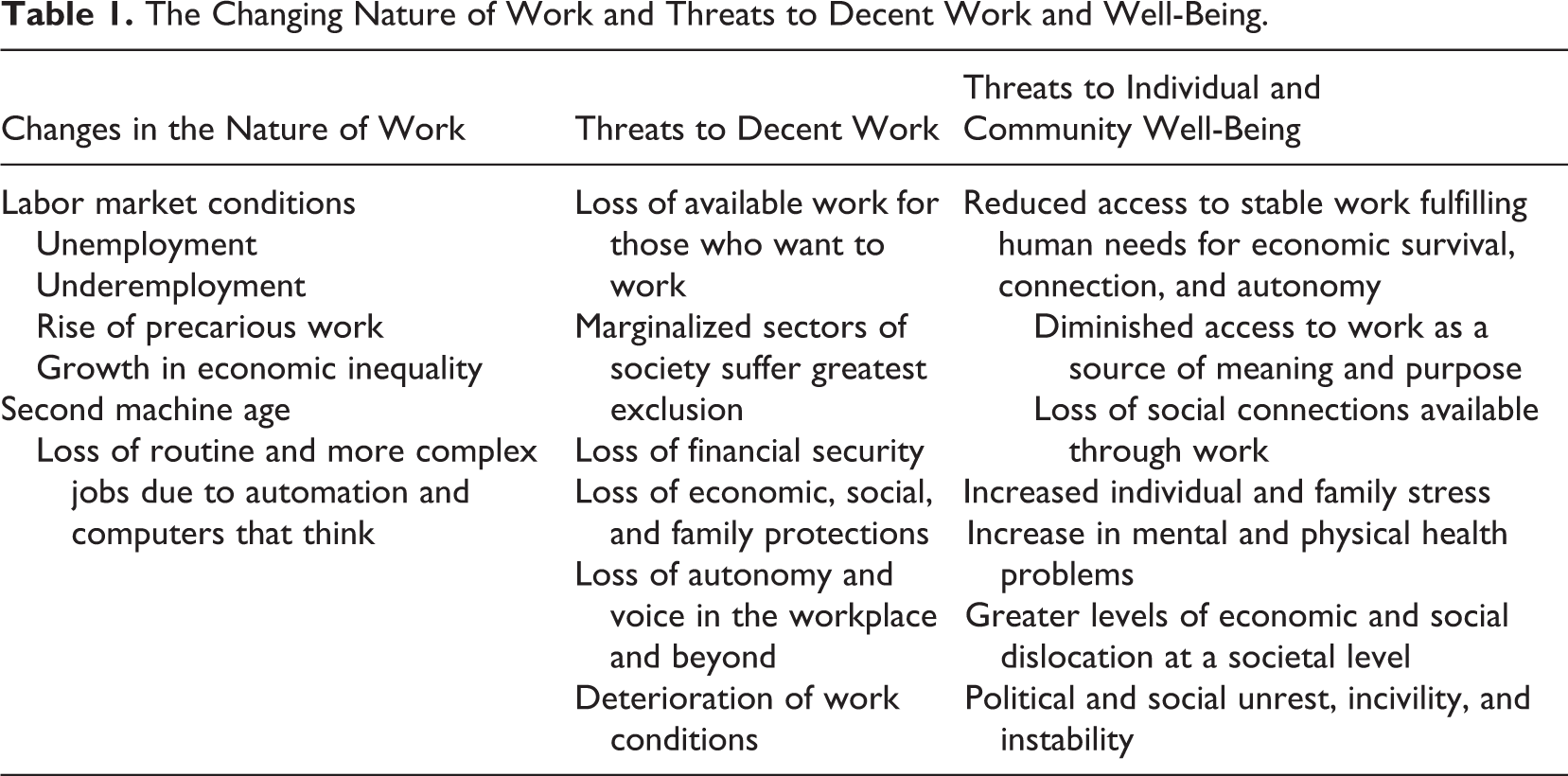
A confluence of social and economic forces is colluding to create a perfect storm that is radically transforming the nature of work around the globe, reducing the availability of decent work, and increasing precarious work (Brynjolfsson & McAfee, 2014; Guichard, 2013; ILO, 2016; Standing, 2014). Although unemployment and underemployment have been unwelcome problems in most societies, many experts and major nongovernmental policy organizations fear that profound changes in the workplace will dramatically reduce the availability of work, particularly decent work, for millions of people around the world (Benzell et al., 2015; Brynjolfsson & McAfee, 2014; Frey & Osbourne, 2013; National Academy of Sciences, 2017; OECD, 2015; World Economic Forum, 2016). Unemployment, underemployment, and the rise in contract, temporary and precarious work, and low wage jobs (Katz & Krueger, 2016) are particularly challenging for the poor and marginalized and for those without skills that are consistent with marketplace needs. However, these problems are increasingly impacting working-class, middle-class, and even upper-class workers who are also experiencing growing work insecurity (Blustein, in press; Sharone, 2014; Van Horn, 2014). Moreover, in other parts of the world, work in the informal economy (such as selling products or services informally as street vendors) continues to be prevalent and is characterized by a lack of social and economic protections (Ribeiro, 2015). (In Table 1, we offer an outline of the changes in the nature of working and their threats for decent work and well-being.)
The Changing Nature of Work and Threats to Decent Work and Well-Being.
Unemployment, the Rise of Precarious Work, and Inequality
A number of labor market conditions are undermining decent work opportunities and thereby threatening well-being for individuals and communities. One of the main culprits propelling the recent loss of decent work and related economic and social upheavals was the Great Recession (Guichard, 2013; ILO, 2018; OECD, 2015; Stiglitz, 2015), which began in late 2007 and officially ended between 2009 and 2010 in many Western nations. This recession was particularly challenging and disruptive in the United States, within most of Europe, and many parts of Asia and Africa (Guichard, 2013; Stiglitz, 2015; UN Development Program, 2014). Although the unemployment rate has rebounded in the United States, the labor market participation rate has declined by nearly 3% since 2007, underscoring the dramatic losses in sustainable employment (Blustein, in press). Even more troubling data are found in European countries that continue to grapple with pervasive levels of unemployment and underemployment (ILO, 2018). As an example, the unemployment rate in many of the southern countries within Europe continues to be very high (e.g., 17% and 21% unemployment in Spain and Greece, respectively; Statista, 2017).
With regard to the impact of unemployment on well-being, extensive research has supported the conclusion that most individuals who lose their jobs struggle to maintain their overall psychological well-being; in fact, long-term unemployment (6 months or longer) is associated with notable increases in mental health problems (Paul & Moser, 2009; Van Horn, 2014; Wanberg, 2012). In an extensive meta-analysis, Paul and Moser (2009) noted that the best solution to the mental health problems evoked by unemployment was a new job. Research from Australia by Butterworth, Leach, McManus, and Stansfeld (2013), however, has demonstrated that a return to a bad job can be worse than not working at all. This finding underscores the importance of the quality of a given job, hence supporting the need to consider a global standard of decent work, as articulated by the ILO, as an aspirational objective for workers across the globe.
The rise of precarious work has complicated the recovery following the Great Recession and has strongly shaped the nature of the jobs that have been created since the advent of the fiscal meltdown (Kalleberg & Vallas, 2017; Katz & Krueger, 2016). Standing (2014) noted that a core experience of precarious workers is the lack of voice, which he refers to as representation security. Considerable empirical research exists indicating that precarious work has detrimental effects on physical and psychological well-being as well as on the welfare of families and communities (e.g., Kalleberg & Vallas, 2017; Standing, 2014). From a psychological perspective, the loss of stability at work undercuts an individual’s need for security, thereby evoking considerable distress that has a substantial impact on one’s capacity to manage survival needs as well as the psychosocial demands of contemporary life (Blustein, 2013; Duffy et al., 2016). Furthermore, Standing has argued that the rise of precarious work is global in scope, affecting people across a wide array of skill sets and socioeconomic status levels.
Another trend that is changing the occupational landscape has been the growth of economic inequality, which has been increasing in many nations since the early 1970s (Stiglitz, 2015). The rise of inequality is creating a world where opportunity to thrive, via work and other agentic efforts in creating a good life, is limited by one’s social class, gender, race, and access to social and human capital (Ali, 2013; Allan, Tebbe, Bouchard, & Duffy, 2018; Flores, 2013). In our view, the gradual diminishment of equal access to decent work and the rise in inequality are striking aspects of the contemporary labor market, which clearly compromises the potential for fully realized human rights at work. The growing gap between the affluent and those without sufficient economic resources is creating an intergenerational problem. Specifically, the lack of access to good schools and training opportunities is increasingly serving as a barrier for people who cannot develop marketable skills for a workforce that is demanding high levels of education and training.
The Growth of Technology and Work
Advances in technology are another important theme in the story of working in the contemporary world (Coovert & Thompson, 2014; Redden, Elliott, & Barnes, 2014). On the plus side, Brynjolfsson and McAfee (2014) noted that the current era is increasingly characterized as one of brilliant technologies: Computers can play chess, voice commands are used to mobilize smart phones, and computers are increasingly able to engage in complex cognitive tasks. Some of these changes are responsible for the growing flexibility for workers, providing access to working remotely, enhancing productivity, and reducing rote tasks (Brynjolfsson & McAfee, 2014). However, there is an undercurrent to this trend that has a major transformative impact on the availability of decent work. Much as the First Machine Age (also known as the Industrial Revolution) completely changed the nature of work, the Second Machine Age is having an equally dramatic role on the nature of working. Individuals without specialized skills and training are struggling to find work as many of the unskilled or semiskilled jobs that had once provided stability are being replaced with technology (Benzell et al., 2015; Frey & Osbourne, 2013).
One of the most notable characteristics of the Second Machine Age is the development of computers that can think analytically, as evidenced by the emergence of robots and other devices that are changing the nature of people’s relationships with the world (Brynjolfsson & McAfee, 2014; Frey & Osbourne, 2013; Redden et al., 2014). The presence of robots and sophisticated computers in the contemporary workforce is creating a number of challenges, culminating in many organizations requiring fewer people to produce effective goods and services (Ford & Meyer, 2014; Redden et al., 2014). A recent report by the National Academy of Sciences (2017) provided cautionary conclusions about the impact of automation and artificial intelligence, noting that changes in technology and workplace could lead to growing inequality, decreased job stability, and increasing demands on workers to change jobs; [however], the ultimate effects of these technologies are not predetermined…. The outcomes for the workforce and society at large depend on our choices. (p. 159)
A recent analysis by a group of international economists, leaders of nonprofits, and policy analysts commissioned by the OECD (2015) concluded similarly that job creation is slowing around most parts of the globe, with technology being the “major game changer” (p. 12). What is clear from their analyses, particularly when considered in light of other reports from major policy organizations (e.g., ILO, 2018; National Academy of Sciences, 2017), is that the rise in automation is expected to increase the loss of decent work and thereby exacerbate the struggle for human rights within the workplace. Although the OECD and other macro-level reports (e.g., ILO, 2018; World Economic Forum, 2016) have been informative, they have tended to neglect the psychological impact of these changes, which we believe is essential to achieve the aspirational goals of the ILO in their Decent Work Agenda.
A Psychological Approach to Decent Work
Initially forged from activists and scholars in labor movements, public policy, and economics (ILO, 2008; Standing, 2014), the Decent Work Agenda has largely marginalized a critical aspect of people’s work lives—their psychological experience and meaning in relation to work. As a response to this notable gap in knowledge and public policy, psychologists have recently begun to focus theoretical and research attention to the problem of decent work (e.g., Blustein, Olle, Connors-Kellgren, & Diamonti, 2016; Di Fabio & Blustein, 2016; Di Fabio & Maree, 2016; Duffy et al., 2016, 2017; Isik et al., 2018; Pouyaud, 2016). Building on a social philosophical critique by Deranty and MacMillan (2012), which proposed that the ILO concept of decent work focuses too heavily on the social and economic aspects of work, Blustein, Olle, Connors-Kellgren, and Diamonti (2016) adopted an explicitly psychological perspective to critique the existing macro-level lens with which decent work has been defined and operationalized. Di Fabio and Maree, also using a broader conceptual perspective, offered an elaborated definition of decent work based on a transdisciplinary analysis, including philosophy, law, economics, sociology, and psychology: Decent work helps all workers attain a sense of self-respect and dignity, experience freedom and security in the workplace, and (as far as possible) affords the opportunity to choose and execute productive, meaningful and fulfilling work that will enable them to construct themselves adequately and without restrictions and make social contributions. (p. 26)
The Centrality of Work in Meeting Human Needs That Foster Well-Being
Working as a means of satisfying human needs and promoting individual well-being
Although the emerging trends in the world of work are characterized by change, one of the most stable aspects of a psychological understanding of working is that it has the capacity to fulfill important psychological needs for people. As already noted, the PWF/PWT (Blustein, 2006, 2013; Duffy et al., 2016) proposes that decent work contributes directly to well-being through its capacity to satisfy or frustrate central human needs (i.e., need for survival, self-determination, and social connection). Perhaps the most obvious need that working furnishes for people is access to resources needed for survival (e.g., Blustein, 2006; Maslow, 1948). It is important to note, however, that when work offers low wages and little security or benefits, simply having a job is not always sufficient to sustain one’s capacity to survive. In effect, the growth of precarious work is directly compromising people’s capacity to survive, particularly in nations and communities that do not provide a viable safety net or living wages. Optimally, however, work has the capacity to meet one’s survival needs, which can then provide the foundation for fulfilling a host of other psychological and social needs.
The sense of being able to accomplish tasks—to create and contribute—is integral in many aspects of work and indeed fosters the sense of aliveness that was mentioned earlier (Blustein, in press; Parker, 2014; Savickas, 2011). As a means of understanding the need for accomplishment and contribution, the PWF incorporated Ryan and Deci’s (2000) work on self-determination theory to delineate how people manage their striving for motivating and meaningful tasks. According to self-determination theory, people strive to engage in activities that are experienced as authentic, self-regulating, and motivating (Ryan & Deci, 2000). Considerable research and theory from the PWF/PWT and self-determination theory has indicated that the impact of precariousness at the workplace has an aversive effect on the capacity for work to fulfill natural strivings for self-determination, particularly for individuals who are marginalized from decent work (Blustein, in press; Kalleberg & Vallas, 2017; Parker, 2014; Ryan & Deci, 2000).
Another way in which working promotes well-being is via the fulfillment of fundamental relational needs, as reflected in the previously mentioned relational theory of working (Blustein, 2011; Flum, 2015; Richardson, 2012). Indeed, the loss of work often leads to a profound sense of isolation that can flood the psychological experiences of unemployed individuals (Paul & Moser, 2009). For many people, the relational interactions that exist in their working contexts offer important psychological resources (e.g., social support; a sense of shared purpose and community) that are often most notable when they are taken away or not available (Blustein, in press; Wanberg, 2012). Empirical research using both qualitative and quantitative methods (e.g., Bimrose, McMahon, & Watson, 2015; Kenny & Medvide, 2013) has documented the extensive relational needs that working can fulfill, which subsequently promote well-being. When the relational climate at the workplace is not positive (e.g., bullying), however, well-being can suffer (Blustein, 2011), thereby diminishing one of the core ingredients of decent work related to social protections from harassment. The existence of aversive workplaces has been associated with major problems for women working in nontraditional environments, such as contexts that are dominated by men (Fouad, Singh, Cappaert, Chang, & Wan, 2016), as well as for irregular migrants (i.e., undocumented workers) and other marginalized workers (see Marfleet & Blustein, 2011 for further details on irregular migrants).
In sum, working has the capacity to both fulfill and frustrate many of the needs that give us a sense of purpose, meaning, and joy in our lives. As indicated earlier in this article, growing instability and precariousness at work are evoking considerable distress for individuals and communities. By depriving people of the security and meaning that work can optimally provide, precarious work and unemployment are serving to diminish access to the external and internal resources that are needed to manage the complex challenges of life.
Working as a means of promoting the welfare of communities
A similarly compelling body of knowledge exists that supports the view that decent work contributes to the welfare of communities. Recent analyses by the ILO (2018) and OECD (2015) as well as numerous macro-level social scientists (e.g., Sen, 1999; Stiglitz, 2015; Wilson, 1996) have provided compelling data underscoring the relation between access to decent work and the stability of communities and nations. For example, a close examination of regions of the globe that are suffering from conflict, high levels of crime, and other forms of social dysfunction reveals the prevalence of unemployment and other forms of social disconnection as correlates of various forms of civil unrest (ILO, 2018; OECD, 2015; Sen, 1999). The classic quantitative and qualitative study by Wilson (1996) described the impact of loss of accessible and stable jobs within various Chicago communities in the United States that had been bastions of stability before the disappearance of decent work. In Wilson’s comprehensive investigation, the massive disruption of work was associated with a notable erosion of family stability, greater levels of individual despair and alienation, and a loss of a sense of community as people without work became disengaged from each other and their sense of purpose. In recent international studies of poverty and global economic development, numerous scholars have identified the role of work in creating stability, security, and meaning for people in various countries (e.g., Bhawuk, Carr, Gloss, & Thompson, 2014; McWha-Hermann et al., 2015). As in many other analyses pertaining to the impact of work, the direction of the causality is complex. Lack of work certainly contributes to individual and community instability; yet, at the same time, instability makes it harder for individuals to work and for communities to cohere in a way that will support the creation and sustenance of decent work (McWha et al., 2015; OECD, 2015).
Taken together, the literature on work and well-being is clear and compelling. As articulated in both the PWF and PWT, when work is going well, people are more likely to meet needs for survival, social connection, and self-determination and to thrive, enjoying their lives and feeling engaged in their tasks and responsibilities. Moreover, the availability of decent work is associated with positive developments in communities and nations (ILO, 2008, 2018; McWha-Hermann et al., 2015). Underlying this literature is a powerful message that when work is not available and/or not stable and secure, people and communities suffer, leaving considerable hardship and pain in its wake.
Psychology, Decent Work, and Social Barriers
Emerging from both within the PWF/PWT movements and in related lines of inquiry, considerable research and theory has examined the role of various social barriers in relation to human rights and work. A thorough exploration of this literature is beyond the scope of this article; the focus here is on identifying the range and depth of problems that people experience in locating and sustaining decent work and in considering how this knowledge can inform and advance new initiatives in applied psychology to advance decent work. In addition, we infuse an explicit intersectionality perspective into our discussion of social and structural dimensions of identities, with a clear emphasis on “how conceptualization of social categories (is) not as distinct or static entities (like identities), but as mutually constructed and fluid, continually shaping and shaped by dynamics of power” (Moradi & Grzanka, 2017, p. 506). Building on recent scholarship on intersectionality, we affirm that social identities are not inherent aspects of an individual’s life but rather reflect the social and psychological outcomes of systems of privilege and oppression, which function to constrain people from minoritized and marginalized communities in profound ways (Moradi & Grzanka, 2017).
Psychological studies of social identities and social barriers have a rich history and have been thoughtfully applied to work contexts for several decades (e.g., Fouad, 2007; Leong & Flores, 2015; Roberson, 2013). In the realm of work, human rights, and applied psychology, considerable research exists that has identified the pernicious way in which racism affects access to work and to the quality of work. Among vocational psychologists, Flores (2013), Fouad (2007), Leong and Flores (2015), and among others, have documented the degree to which racism affects hiring, quality of work, income, job stability, and social and psychological experiences at work. The problems of racism are particularly deleterious in multiracial societies where the legacies of colonialism and slavery continue to create social barriers that substantially compromise people’s access to decent work.
Gender issues are another major source of strain in the world of work. Women in many regions of the globe receive less remuneration than men do for similar work and are less likely than men to be in powerful and high paying occupations (Bimrose et al., 2015; Fassinger, 2008; ILO, 2018; Kantamneni, 2013). In addition, the struggles of women of color, which initially evoked the strong interest in intersectionality (Moradi & Grzanka, 2017), create a synergistic set of oppressive forces that have had, and continue to have, a deleterious impact on the work lives of so many women. Moreover, women are more likely to be socialized to assume (or be assigned to) more caregiving work than men. In this context, one of the more compelling perspectives in the exploration of gender and work is Richardson’s (2012) insightful definitional framework of market work and personal care work: Market work is defined as the work that people do for pay in public spheres of life as well as the work that they do in educational institutions to prepare for market work. Personal care work encompasses work that is done to care for the self, for dependent others, for relationships, and for communities in personal lives. (p. 191)
The fluidity of gender identities and diversity of sexual orientation presents another social barrier that has major implications for the workplace. As detailed in the review by Anderson and Croteau (2013), individuals from diverse sexual orientations and transgender individuals face barriers in attaining access to work and in sustaining their human rights at the workplace. For example, the degree to which individuals can experience freedom and dignity at work may be severely constrained if they cannot reveal their relational and sexual orientation identity to their colleagues and friends (Anderson & Croteau, 2013).
Among social barriers, migrant status and disability are also relevant to the understanding of decent work and human rights. Although international migrants can be economic and social assets to their host nations (West, 2002), they often lack access to decent work and engage in low wage and precarious employment as a result of political, language, and credentialing barriers and prejudice and discrimination (Marfleet & Blustein, 2011; UN Development Program, 2014). A powerful illustration of intersectionality is apparent in how migrant workers of color are treated in many Western countries, reflecting an intersection of social locations that creates oppressive forces, which fundamentally constrains the attainment of sustainable livelihoods for many people around the globe. Disability status also has proven to be a major obstacle for people in the workplace (Avery, 2011; Fabian, 2013). The range of disabling conditions encompasses physical issues, psychiatric conditions, and developmental delays; taken together, the existence of disabling conditions creates social barriers that plague workers across the globe, culminating in a reduction of their human rights and limiting their access to decent work (Fabian, 2013).
Diversity with respect to diminished access to financial resources has received considerable attention in recent years (e.g., Ali, 2013; Carr, 2013; Carr & Sloan, 2003; Smith, 2015; Thompson, Nitzarim, Her, Sampe, & Diestelmann, 2017). The growing literature on psychology, poverty, work, and human rights is complex and riddled with challenges in rooting out causal relations (Carr & Sloan, 2003; Flores, Navarro, & Ali, 2017; Smith, 2010). A major theme in this literature is that poverty affects a wide range of psychological, social, familial, and economic functions (Carr & Sloan, 2003; UN Development Program, 2014). Impoverished conditions leave people with few resources to obtain the social and financial capital needed to navigate increasingly complex education and training contexts and, ultimately, gain access to the highly volatile labor market.
The PWF/PWT movement has focused extensively on identifying the role of all of these forms of social marginalization as central factors in understanding the predictors and outcomes of decent work. The PWT, in particular, highlighted the role of intersectionality in understanding the complexity and impact of social barriers in the development of a decent and meaningful work life. Building on the guidelines detailed by Moradi and Grzanka (2017) about the need to understand the depth and complexity of intersectionality, we propose here that a focus on work in the context of human rights (as reflected in the PWT/PWF) provides a further elaboration of intersecting social and economic forces in relation to social identities. Specifically, we suggest that access to decent work may function as a particularly robust source of both privilege and oppression, which can enrich our understanding of intersectionality. A clear strength of integrating intersectionality with the PWF/PWT is the potential to fully understand how privilege and marginalization function to control access to the internal and external resources needed to manage the educational and career development tasks inherent in the 21st-century labor market. This brief overview of social barriers and working within an intersectionality framework supports the basic premise that the barriers to decent work are broad and pervasive, touching on a wide array of economic conditions, social structures, and psychological factors (Duffy et al., 2016). Moreover, these barriers are not random in their impact on people and communities; those who have been historically marginalized continue to struggle in gaining access to the resources that promote decent work.
Current Status and Moving Forward
Existing theory and research in applied psychology have provided substantial knowledge concerning the benefits of decent work and the aversive effects for individuals and marginalized groups who are deprived of the satisfaction of core human needs afforded through decent work. The rapidly changing workplace presents a number of challenges and the need for new knowledge that will inform policies and interventions designed to expand access to decent work and reduce marginalization. As a means of fostering this needed research, we underscore here the important role that the PWF/PWT can have in advancing scholarship that foregrounds the broad array of social and economic barriers that clearly frame so much of the process of negotiating and sustaining a meaningful and decent work life. The PWF/PWT was formulated with careful consideration to research documenting the role of decent work in meeting core human needs that contribute to individual and societal well-being. Moreover, the PWF/PWT documents the pervasive ways in which oppression and social marginalization intersect in ways that increase inequality and constrain access to decent work. These bodies of work, in conjunction with the ongoing critical perspectives that continue to transform vocational psychology, provide a powerful stimulus for further research considering both individual and contextual factors that would serve to substantively transform policy and practice and move beyond the status quo.
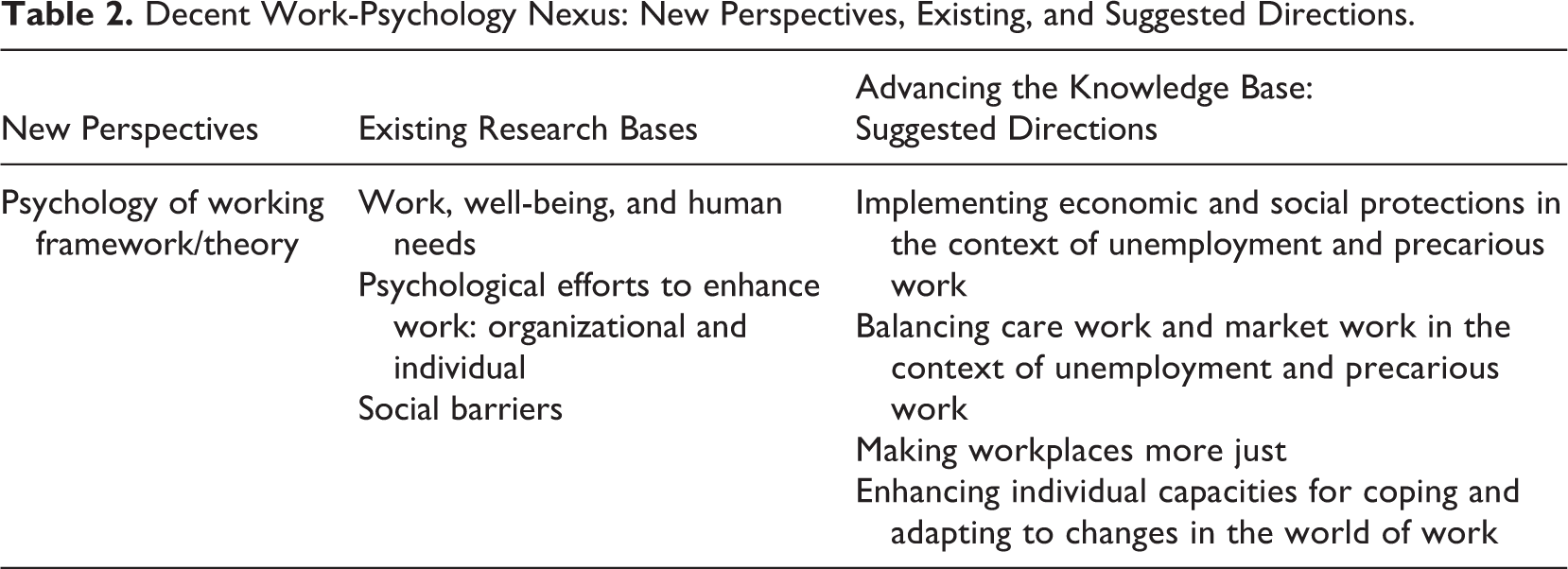
In the next section, we present some illustrative research ideas that could bring together the PWF/PWT and existing knowledge bases of psychology to further research that could expand the impact of psychology in the struggles for decent work and human rights. The proposed research agenda highlights the role of both individual and systemic factors in determining access to decent work. As such, this research will inform the efforts of applied psychologists in advocacy and public policy and expand and deepen the impact of counseling practice. (Table 2 summarizes our suggested directions for enhancing the knowledge base to advance decent work.)
Decent Work-Psychology Nexus: New Perspectives, Existing, and Suggested Directions.
Enhancing the Knowledge Base About Work and Human Rights: Developing an Integrated Research Agenda
In this section, we present four specific research directions that are informed by the PWF/PWT and related contributions, which we believe provide a foundation for creative and constructive responses on the part of applied psychology to the growing challenges emerging within the world of work. In suggesting these lines of inquiry, we urge psychologists and career specialists to collaborate with scholars from such fields as economics, sociology, and public policy to think broadly and to embrace a bold research agenda that includes the study of new work arrangements arising from a changing world of work. Optimally, collaborations that cut across specialties and disciplines may help to identify how people can manage their survival and psychological needs and sustain decent work as the labor market undergoes ongoing radical changes. At the same time, we also encourage research that will identify innovative solutions for making the workplace more just and will equip individuals with psychological resources to more effectively resist existing challenges.
Economic and Social Protections in the Context of Unemployment and Precarious Work
As reflected in our discussion of growing structural problems within the labor market, many people will likely continue to experience precarious work situations along with the economic, social, and psychological insecurities that accompany this status. Nations across the globe have implemented a variety of social protection policies that offer a safety net to citizens, with regard to economic compensation and benefits, such as health care. Although the debate about the value and costs of these policies is often politically charged, they are generally not informed by psychologically based and contextually grounded research that focuses on the attitudinal, motivational, and social consequences of such policies at the individual or societal level. Policy-oriented research grounded in psychology with attention to cultural and contextual fit could play a valuable role in informing these debates and the adoption of just policies.
One current debate where the knowledge of psychology would be valuable focuses on the role of income transfers or guaranteed resources as an alternative to work (OECD, 2015). The OECD’s (2015) report on sustainable futures, for example, advocated that basic income guarantees will be needed as a means of helping people to survive in a world of diminishing decent work. In light of the complex social and psychological issues surrounding this proposal, we believe research that explores the impact of a guaranteed income on motivation and well-being would be extremely informative and helpful. Both motivational theory (Ryan & Deci, 2000) and the PWF/PWT suggest that work contributes to well-being not only by meeting economic survival needs but also by fulfilling an array of human needs. Psychologically informed research might focus on how these latter needs would be met in the context of a guaranteed income system and evaluate the impact on well-being. What might the impact be on people and communities, furthermore, if substantial segments of the population can survive without the structure and social connections that work provides? Similarly, what other activities could furnish many of the positive psychological outcomes that result from decent work? How would these activities be viewed and valued by the society at large, without contributing to a larger marginalized and disempowered underclass? In effect, research on alternative forms of sustainability can be developed with the input of propositions from the PWF/PWT about the role of work in meeting psychological needs. For example, research using the PWT model may be informative in delineating how people may find satisfaction in nonwork types of sustainability by comparing how people fare with basic income guarantees as opposed to decent work.
Research might also focus on the structures and policies that would enable individuals to transition from guaranteed income to decent work opportunities as they become available, so the receipt of income transfers would be recognized for some as a temporary rather than permanent status. What educational and related activities would prepare potential workers and employers for the successful adaptation to transitions in and out of marketplace work? Also, new counseling interventions derived from the PWF/PWT can be developed and evaluated to help clients and communities maximize meaningful solutions to the challenges of the future labor market. Opportunities exist for psychology to investigate these issues across a variety of political and cultural contexts, since the effects on motivation and well-being and the broader societal attitudes toward these policies may vary across contexts. A diversity of work and policy options directly related to decent work, such as increased job-sharing, providing more leisure and vacation time, and increasing the minimum wage may be the focus of similar psychological research. Although all of these options have economic costs and could contribute to a better life for more people, research is needed to better understand the psychological underpinnings and consequences of these proposals. One viable way to begin this research trajectory would be to adapt the PWT model to diverse work and income conditions, which would allow for a more fine-tuned examination of how various forms of economic sustainability might contribute to the well-being of individuals.
The skills of psychology can be applied not only to study the determinants of human motivation and well-being in the context of varied policy options but can also inform efforts to shape the attitudes of the public, employers, and government and policy-maker attitudes concerning these issues. The field of social psychology, in particular, has expertise to offer applied psychology in efforts to effectively communicate the findings of our research to various stakeholders in ways that can be understood and implemented (e.g., Wood, 2000). In light of this challenge, we believe that psychologically informed research on how people construct meaning about the decline of decent work and the corresponding growth of unemployment and precarious work and the role of culture in the construction of these beliefs would be useful.
An emerging trend within some social and political discourses across many regions of the world is tending to blame certain institutions or groups of people for the growing instability at the workplace. In a creative infusion of the role of culture into this observation, Sharone (2014) found that Israelis tend to blame their society for long-term unemployment; in contrast, Americans tend to blame themselves, suggesting that Israelis might be more open than Americans to government and societal solutions. Further social psychological study of peoples’ beliefs about the causes of unemployment and underemployment, perhaps using the paradigms that have been developed for the study of meritocracy beliefs (e.g., Laurin, Fitzsimons, & Kay, 2011) along with the frameworks derived from the Decent Work Agenda, could provide a better understanding of the beliefs that need to be changed to make policy change possible. Integrating these social psychological explorations of the personal constructions of meritocracy and other beliefs about work would also enhance the PWF/PWT by expanding the focus on how people make meaning of their capacity to manage their work lives. For example, qualitative research that provides a means for people to describe how they view income guarantees as an alternative to work would be very informative and may also suggest some new adaptations of the PWT for a world with diminishing marketplace work options. These qualitative studies can be constructed based on the application of experience-near research and inquiry that has been so integral to PWF (Blustein, 2006, in press).
Balancing Care Work and Market Work
At the same time as the economy is witnessing a decline in the level of decent work available in the marketplace, there is ironically a growing need for care work both inside and outside of the market-based workforce (Osterman, 2017). With a large number of dual worker families, childcare remains an important need, and as the elderly population burgeons, the need for eldercare is rapidly expanding. Although manufacturing jobs have declined, employment health opportunities remain steady, and in many regions, are growing (Osterman).
This scenario presents several challenges with regard to concerns about decent work. As noted by Richardson (2012) and others (e.g., Blustein, 2006; Fassinger, 2008), care work has historically been gendered and devalued within many Western societies, resulting in lower status, lower wages, and less social protection. A clear contributor to the ongoing problems in affirming and legitimizing caregiving and care work is the capitalist economic system that privileges marketplace work as a source of products and services, which yield wealth and enhance consumption (Blustein, in press). The outcomes of caregiving are generally not monetized and therefore are not viewed as viable marketplace functions (Richardson, 2012). As such, the wages earned by persons employed in the care work sectors of the economy may be inadequate to pay for quality care for their children or the elderly or infirmed members of their family. The complex spaces shared by gender, race, sexual orientation, migrant status, poverty, and disability status, as detailed in the PWF/PWT and intersectionality literatures, often serve to augment the inequities in care work and other types of market work, which are both central work domains in the PWF framework. For those involved in personal care work for self, dependent others, or for the community outside of the marketplace, this work is not afforded the social status or any of the financial benefits of market work. At the policy level, the intersection of decent work and caregiving is clear (UN Department of Economic and Social Affairs, n.d.). Given the reality that work in the market place is changing so rapidly and radically, it would seem vital to examine the ways in which personal care work interfaces with work in other contexts. The loss of market work could represent an opportunity for both men and women to engage more fully and freely in personal care work in ways that truly enhance the well-being of families and communities. For this opportunity to be realized, significant individual and societal change will be needed, so that individual economic needs and psychological needs for self-determination and social connection will be met and societal well-being will be afforded.
Although psychologists have been engaged in theory development and scholarship on caregiving work (Blustein, 2013; Richardson, 2012), research is needed that will more fully inform an agenda of social change at the individual, employer, and public policy levels. Aligned with the recommendations for research on economic and social protections and precarious work, research that focuses on the motivational, personal, and societal well-being outcomes of varied childcare, family leave, and health-care policies could inform debates around policy change in diverse contexts. In the current economic context, policies that reward family caregivers both financially and with social recognition need to identified and evaluated. Scholars from applied psychology, career development, and related fields can collaborate in efforts to develop and assess policies and programs in the workplace and in community and educational contexts that clearly affirm and reward personal care work and that provide opportunities for employees to move from positions of care work to paid employment and vice versa without penalty or stigma. Adapting the basic framework of the PWT model to the challenges of caregiving work, both in the marketplace and personal space, may be useful to chart a new empirical research agenda that can have important public policy and practice implications. For example, conceptualizations for decent caregiving work may be useful in developing viable frameworks for research and public policy.
Psychologists and counselors who are working with clients in coping with the psychological devastation accompanying temporary or long-term unemployment often struggle in helping them to derive meaning from care work so long as this work is devalued by society, including employers (Richardson, 2012). In this context, counseling practitioners can join with educators to develop and assess educational and psychological interventions at the workplace, community, K-12, and university levels, as well as contributing to pubic media campaigns that seek to change deeply entrenched attitudes that denigrate care work.
Making Work More Just
At the core of the Decent Work Agenda is the intention to create access to dignified, stable, and supportive jobs that provide people with a viable connection to the economic and broader social world in a way that affirms human rights and justice. Two interrelated objectives underlie the essence of decent work in contemporary society—the first is to ensure that sufficient work exists and the second is the concern that the existing work be “decent” in ways that are consistent with the UN Declaration of Human Rights and the Decent Work Agenda.
The Decent Work Agenda emphasizes the importance of equity, fairness, and freedom from oppression in the workplace, yet a high level of incivility continues to be observed in our workplaces and society overall as related to race, disability, gender, and migrant status, among other group attributes (e.g., Flores, 2013; Fouad et al., 2016). Applied psychology has well-developed research related to job design (Dahling & Lauricella, 2017; Parker, 2014), life design (Savickas et al., 2009), and social justice in the workplace (e.g., Carr, 2013), which can be integrated and expanded to provide an improved knowledge base for enhancing decent work. For example, research in job design, as suggested by Parker (2014), can be applied to making work more just by encompassing varied settings, such as virtual work, contract, and precarious work, and can attend more fully to demographic changes in the workforce related to gender, aging, and diversity. Although virtual work and contract work can offer more flexibility and autonomy for workers, human needs for relationship, belonging, and identity may be threatened, along with uncertainty for many in meeting survival needs. Research might seek to better understand the conditions under which flexibility and precarity in work conditions can contribute to positive self-identities and well-being. Using the PWT as a framework, the decent work aspect of the model can be enriched by adding various elements of work contexts that may be relevant to the meaning and fulfillment that an individual can derive from a particular job. Job design research (e.g., Parker, 2014) can also seek to more intentionally include the voices of workers representing diverse and marginalized groups across varied work settings, whose needs might not be accurately represented in current research and workplace discourse.
Here again, we need to acknowledge the impact of capitalist economic policies that serve to privilege profits as the main outcome of working. The focus on profitability and enhancement of wealth has become a key attribute of neoliberal economics, which reflects a particularly popular version of capitalism that seeks to reduce regulations on the private sector. As we mull over the future of creating just work conditions, it may be wise to think critically about unpacking working from the profit system. Optimally, academics and activists can develop working scenarios that are not dependent upon profits or handouts from the wealthy. In a recent analysis of unemployment, Blustein, Connors-Kellgren, Olle, and Diamonti (2017) described the potential utility of alternative work arrangements such as workers’ self-directed enterprises and workers’ centers as potentially viable ways of considering work as a human right that is not so dependent upon capitalist economic structures and policies.
Another essential aspect of a decent work environment has to do with remuneration, which is also governed by marketplace forces. As indicated earlier, the growing levels of inequality across diverse regions of the globe have resulted in diminishing wages for many working people. HWP scholars (i.e., Carr, Parker, Arrowsmith, & Watters, 2015) have articulated an elegant theoretical model on the living wage that culminated in a series of propositions about the potential impact of living wages on capabilities to move out of poverty. The importance of living wages was underscored and contrasted to minimum wages, which provides an income that rarely allows people to move out of poverty (Smith, 2015). In Carr et al. (2015) analysis, psychological factors were integrated with a macro-level economic perspective, providing scholars with useful propositions that would allow for a precise examination of the impact of improving living wages on psychological, social, and economic outcomes. The research agenda outlined by Carr et al. (2015) provides an excellent exemplar of the sort of interdisciplinary scholarship that we believe is needed to advance the Decent Work Agenda. For example, psychologically sophisticated research on increases in wages using contemporary statistical approaches (such as structural equation modeling) might help to provide specific advice to policy makers about the critical importance of decent wages in such diverse areas as motivation, career adaptability, individual well-being, and overall social welfare.
In addition, adaptations of the PWT model may be particularly illuminating in examining how people react to variations in wages in relation to need satisfaction and overall well-being. From a counseling perspective, practitioners might find it helpful to explore issues pertaining to decent work, financial remuneration, and the human rights aspects of work in relation to a client’s specific set of issues and aspirations. In this context, we believe that opening up the discourse in counseling to embrace the nature of the work environment can be liberating for clients and can help to mobilize adaptive resources, which we review in depth in the next section.
Coping and Adapting to Changes in the World of Work
Psychology has historically provided rich insights into the nature of how people manage changes in their lives and contexts. In recognition of the changing and uncertain nature of the global economy, career development scholars (e.g., Guichard, 2009, 2013; Lent & Brown, 2013; Savickas, 2011, 2013; Savickas et al., 2009) have introduced career- and self-management models that have been designed to help individuals assume a proactive stance in creating their own career possibilities. These models do not necessarily focus on increasing access to decent work but do assist individuals in developing needed psychological skills to navigate the increasingly uncertain landscape of work opportunities, expanding personal awareness, empowerment, and the implementation of meaningful choices (Guichard, 2009; Lent & Brown, 2013; Nota & Rossier, 2015).
The focus on individual coping strategies certainly has an important place in research on human rights and work and in PWF/PWT-informed research and practice. Although we propose that caution be exercised in focusing primarily on individual attributes, particularly in light of so many challenges that are emerging from external sources, we also suggest that practitioners can foster considerable growth in people’s capacities to not just adapt to the world but to help create a world that affirms decent work for all who want and need to work. The PWT (Duffy et al., 2016) seeks to guide research and intervention that considers both personal and contextual (marginalization and economic constraints) factors that influence access to decent work and the attainment of well-being. Proactive personality, work volition, and career adaptability are individual factors in the PWT model that might be developed as part of life design and career counseling interventions to enhance individual control in navigating an uncertain and precarious work environment. Within the PWT model, CC is also identified as a modifiable individual attribute that can help individuals shape their lives and deflect some of the negative effects of harsh economic conditions and marginalization. With further research, interventions for enhancing CC might be effectively integrated in career development education, life design, and career counseling (Kenny, 2017; Kenny, Blustein, Gutowski, & Meerkins, 2018; Kenny et al., 2018; Kenny, Blustein, & Meerkins, 2018) in ways that promote access to decent work for all.
Current conceptualizations of CC are rooted in Freire’s (1973) education liberation movement with illiterate Brazilian peasants (Freire, 2007). Freire maintained that by developing an understanding of the political, social, and economic factors that are responsible for pervasive poverty, racism, unemployment, and other forms of social exclusion, people become less constrained by these conditions and gain a sense of agency to take action against oppressive forces in life (Diemer, Rapa, Voight, & McWhirter, 2016). During the past few decades, psychologists have been examining the nature of CC, developing tools to assess it, and designing interventions to foster growth in people’s capacity to understand the nature of political and social forces that shape their lives (e.g., Diemer, 2009; McWhirter & McWhirter, 2016; Watts, Diemer, & Voight, 2011). In the realm of work and career, research has demonstrated that CC is an important predictor of occupational aspirations and occupational attainment, with higher levels of CC associated with greater work salience and vocational expectations for youth of color (Diemer et al., 2010). Furthermore, Diemer (2009) found that CC influenced occupational expectations in 12th grade and had a positive longitudinal impact on adult occupational attainment.
Moving forward, research using ideas derived from the PWF/PWT may guide applications of CC scholarship that may inform the development of psychological and educational tools that individuals can use to empower themselves and advocate for human rights in their work lives. Although psychoeducational interventions and cultural education have been effective means for instilling CC among marginalized youth (Watts & Hipolito-Degado, 2015), further research is needed to determine which psychoeducational interventions are most effective for whom (i.e., age, social class, education level, and racial/ethnic background) and in what settings (i.e., school, work, and communities). Research might be productively directed toward understanding how a CC intervention (either individually or presented in organizations) may reduce the tendency for people to blame other marginalized groups for problems within the workplace and the economy. CC might be enhanced among members of the dominant group to reduce bias, discrimination, and acts of oppression. Although this is a nascent area of research, recent research demonstrated promise in developing the CC of White middle-class teachers through a year-long seminar in ways that changed their practice as change agents against oppression in the classroom (Zion, Allen, & Jean, 2015). Psychological research might also focus on understanding the emergence of social movements that strive to enhance the critical contextual conditions that support agency (e.g., young people in the United States who sought to promote the Dream Act, which offers a pathway to citizenship for the children of undocumented workers).
Conclusions
In concluding this contribution, we return to the ethical stance, highlighted at the outset of this article, which underlies this discussion of human rights and work and which we believe ought to guide psychology’s role in the struggle for decent work. In our view, applied psychology and career development can provide a clear and assertive ethical position with respect to decent work, which may help to temper some of the market forces that are driving many of the overt and covert decisions that are resulting in a loss of decent work. As we have detailed, we believe that the PWF/PWT movements are perfectly positioned to provide a clear and compelling pathway for research to inform policy actions and practice that will help to counter the market forces that are so pervasive in the workplace. In addition, we believe that the broad intellectual net that we have cast in this article can infuse the PWF/PWT movement with a wealth of new ideas, methods, and problems that will serve to stimulate new research and knowledge generation. With this new knowledge, we believe that scholars, activists, and practitioners interested in work can take an increasingly active role in ensuring that human rights and the well-being of people and communities are valued and respected as the workplace rapidly changes in the coming years and decades.
The ethical stance that we have adopted here is constructed around the belief that people have a natural striving to engage in creative and constructive work; indeed, when people have access to decent work, they are more likely to experience individual well-being and more likely to contribute to the welfare of their communities (Carr et al., 2012; Guichard, 2013; Lent & Brown, 2013; Savickas, 2011). As we have argued, access to decent work that offers opportunities for achievements and meaning is a central aspect of being alive in the world. Although the challenges that we have outlined in this article are certainly daunting, we are ultimately optimistic that careful, intentional, and ethical action on the part of the applied psychology and career development communities can create a research base and a broad array of interventions and policies that can enhance opportunities for decent work for all who want and need to work.
Footnotes
Acknowledgments
We acknowledge the insightful input of the following colleagues who reviewed a previous draft of this article: Saba Ali, Rachel Gali Cinamon, Alice Connors-Kellgren, Ruth Fassinger, Lori Foster, Nadya Fouad, Cindy Juntunen, Peter McIlveen, and Chad Olle.
Declaration of Conflicting Interests
The author(s) declared no potential conflict of interest with respect to the research, authorship, and/or publication of this article.
Funding
The author(s) received no financial support for the research, authorship, and/or publication of this article.