



Abstract
The present study investigated relations between basic psychological need satisfaction (autonomy, relatedness, and competence), autonomous motivation, and work meaning. With a sample of 462 working adults, we used structural equation modeling to test the incremental validity of including autonomous motivation in a model predicting meaningful work from basic psychological need satisfaction. The satisfaction of autonomy and relatedness needs directly predicted autonomous motivation, while competence need satisfaction directly predicted meaningful work. Mediation analyses supported the incremental contribution of autonomous motivation in the links from autonomy and relatedness to work meaning, but not from competence to work meaning. Our findings provide novel connections between the bodies of literature on Self-Determination Theory and meaningful work. We discuss practical implications for career counselors, organizational leaders, and policymakers, as well as future research directions.
Meaningful work is an important element of what constitutes a meaningful life (Allan et al., 2015; Steger & Dik, 2009). In recent decades, studies on meaningful work have shown that the construct is salient across different populations and has important implications for well-being both at work and in other life domains. Specifically, meaningful work has been found to predict work-related outcomes such as job satisfaction, work engagement and performance, and work motivation (Rosso et al., 2010). Meaningful work is also predictive of meaning in life, life satisfaction, and subjective well-being (Allan, Batz-Barbarich, et al., 2018; Lysova et al., 2019; Steger et al., 2012). Thus, identifying what facilitates meaningful work is essential to understanding the full scope of well-being both in work and other domains of a person’s life.
Despite the well-documented positive outcomes of meaningful work, only a handful of studies have examined predictors. Extant literature has identified the three basic psychological needs outlined in Self-Determination Theory (SDT; Ryan & Deci, 2002)—autonomy, competence, and relatedness—as strong predictors of meaningful work. However, no existing studies have examined the intermediate variables that may play a role in the link from these basic needs to meaningful work. The current study aims to extend existing research linking basic psychological need satisfaction with meaningful work by examining the incremental validity of autonomous motivation in these relations.
Establishing predictors of meaningful work is threefold: (1) it may inform counseling interventions help people derive greater meaningfulness from their work; (2) it may inform organizational policies create workplace environments that promote meaningful work, and (3) it may inform local and national labor policies aimed at making meaningful employment accessible for a greater number of workers. Further, determining the nature of relations between need satisfaction, motivation, and meaningful work is an important part of extending the application of SDT to the work domain. Although previous studies have examined direct links between variables in the current study, the model as a whole has yet to be tested. Thus, results from the current study will shed light on relative variance accounted for by predictors, guiding practical interventions and future theory testing.
Meaningful Work
Definitions of work meaning and meaningfulness are multifaceted and have been presented inconsistently within the literature (Rosso et al., 2010). For the current study, we define meaningful work as a person's subjective perception that their work allows them to contribute to the greater good, facilitates personal growth, and holds significance (Steger et al., 2012).
Previous scholars examining meaningful work have identified a host of sources and outcomes. Lips-Wiersma and Morris (2009) proposed four sources of meaningful work: (1) developing and becoming self, (2) unity with others, (3) serving others, and (4) expressing the self. The authors proposed that meaningful work experiences involve understanding and addressing the need to fulfill these four dimensions of needs. Rosso et al. (2010) conceptualized seven mechanisms that facilitated the perception of work as meaningful: authenticity, self-efficacy, self-esteem, purpose, belongingness, transcendence, and cultural and interpersonal sensemaking. They proposed a theoretical perspective that harmonized these mechanisms into two psychological dimensions that predicted meaningful work: (1) direction of action (i.e., toward self or others) and (2) a person’s underlying motives (i.e., communion or agency; Rosso et al., 2010). Steger and Dik (2010) posited that meaningful work is predicted by a person’s abilities to (1) make meaning (i.e., who a person is, their place in the world), (2) develop a sense of purpose, and (3) serve the greater good.
The body of literature investigating outcomes of meaningful work has primarily associated an individual’s experience of meaningful work with positive outcomes like increased job satisfaction and reduced turnover intentions (Allan, Batz-Barbarich, et al., 2018; Allan, Duffy, & Collisson, 2018; Esteves & Lopes, 2016; Wrzesniewski et al., 1997), increased work engagement (Allan, Batz-Barbarich, et al., 2018; Allan, Duffy, Collisson, 2018; Fairlie, 2011; May et al., 2004), performance (Wrzesniewski, 2003), work motivation (Allan, Batz-Barbarich, et al., 2018; Allan, Duffy, & Collisson, 2018; Roberson, 1990), organizational commitment (Geldenhuys et al., 2014), positive work behaviors (Wrzesniewski & Dutton, 2001), and living a calling (Duffy et al., 2014). Additionally, meaningful work has been found to inversely relate to poor outcomes. Specifically, a sense of meaningfulness in one’s work has been linked with reduced anxiety, work stress, depression, and hostility (Allan et al., 2015; Allan, Batz-Barbarich, et al., 2018; Allan, Duffy, & Collisson, 2018; Steger et al., 2012).
Theoretical Background
Self-Determination Theory (Ryan & Deci, 2002) is a macro-level theory of human motivation. It proposes three basic psychological needs that are essential for autonomous, self-directed behavior. Specifically, it conceptualizes autonomy, competence, and relatedness as vital aspects of a person’s ongoing external and internal regulation of behavior, psychological growth, and the overall ability to obtain a sense of well-being (Ryan & Deci, 2002, 2018). The theory posits that people demonstrate distinct forms of motivation that are predicted by these three basic needs.
The need for autonomy signifies a person’s need to act with a sense of ownership and feeling of psychological freedom (Ryan & Deci, 2002). The need for competence refers to a person developing new skills and pursuing mastery over their environment (Ryan & Deci, 2002). The need for relatedness refers to feeling cared for, connected, and safe around others within one’s community (Ryan & Deci, 2002). According to SDT, the satisfaction of these three needs predicts the extent to which a person’s behaviors are driven by autonomous forms of motivation and, in turn, their level of well-being (Vansteenkiste & Ryan, 2013).
SDT scholars theorize that human motivation manifests on a continuum ranging from autonomous (e.g., self-directed, with the intent of authentic self-expression) to controlled (e.g., pressured by external or internal forces; Ryan & Deci, 2018). Ryan and Deci (2018) defined five distinctive types of motivation along this continuum. At one end, intrinsic motivation is completely autonomous and stems from an individual’s innate desire to engage in behavior because they find pleasure in the behavior itself. At the other end, external regulation stems purely from external sources like gaining a reward or avoiding a punishment. Between these two ends of the continuum lie introjected regulation, identified regulation, and integrated regulation. These motivation types can be distinguished by the extent to which they allow for internalization of externally motivated behavior.
More autonomous forms of motivation, including intrinsic motivation and well-internalized forms of external regulation such as integrated regulation and identified regulation, are associated with positive vocational outcomes. SDT posits that more autonomous forms of motivation will predict increased wellbeing, higher quality performance at work, and greater persistence in work tasks (Deci et al., 2017). Evidence supports this assertion: autonomous forms of motivation have been found to positively predict work performance, satisfaction, and commitment, to protect against the stress of high job demands, and to negatively predict burnout and exhaustion (Deci et al., 2017). By investigating the relationships between need satisfaction, autonomous motivation, and work meaning, this study offers insight into possible mechanisms through which SDT variables results in these and other positive vocational outcomes
Meaningful Work and Self-Determination Theory
In a review of SDT in the work context, Deci et al. (2017) suggest that the more a person satisfies their basic psychological needs and, in turn, increases internalization of work motivation, the more likely they are to experience well-being. Although no known studies have empirically examined this mediational process posited to predict meaningful work, extant studies support these theoretical links. Below we provide evidence for each of the links within this proposed model.
Need satisfaction and work meaning
Regarding the link from need satisfaction to meaningful work, previous studies have provided correlational support with significant and positive associations between the two variables. In a study examining basic needs as a moderating variable in the relation from social class to work meaning, authors found that need satisfaction was strongly associated with meaningful work and moderated the link from desired meaningfulness to experienced meaningfulness (Autin & Allan, 2020). These results suggested that people who desired meaningful work only experienced it when their basic psychological needs were met, implicating need satisfaction as a critical component of attaining meaningful work (Autin & Allan, 2020). Although there is little research examining temporal relations between need satisfaction and meaningful work, some research examines closely related constructs suggesting that need satisfaction could be an important antecedent. For example, using experience-sampling data, Wang et al. (2020) found that when people increased their basic psychological need satisfaction via achievement and recognition, they also became more engaged in their work. Similarly, Dahling and Lauricella (2017) found that, over two time points, the satisfaction of self-determination needs predicted autonomous motivation and, in turn, career satisfaction, fit, and commitment.
Need satisfaction and motivation
Despite theoretical assertions that basic need satisfaction leads to autonomous motivation, empirical research on this relationship is still emerging. De Cooman et al. (2013) showed correlational support for the link, finding that workers who reported greater need satisfaction also reported more autonomous motivation. Similarly, meta-analytic data have shown that autonomy, competence, and relatedness contribute unique predictive variance in intrinsic motivation (Van den Broeck et al., 2016). Interestingly, Van den Broeck and colleagues also found that need satisfaction was predictive of more autonomous (e.g., intrinsic, integrated, and identified motivation) forms of motivation, but not of more controlled forms of motivation (e.g., introjected and external regulation). This finding is consistent with other research showing that basic need satisfaction is more predictive of well-being, whereas need frustration is more predictive of ill-being (Gillet et al., 2012; Vander Elst et al., 2012).
Recent longitudinal findings also support the positioning of need satisfaction as a temporal predictor of autonomous motivation. Olafsen et al. (2017) tested a four-wave cross-lagged model, finding that need satisfaction predicted work motivation over time, but not vice versa. This study addresses several extant gaps in the above literature, presenting different channels through which the satisfaction of autonomy, relatedness, and competence needs uniquely impact autonomous motivation.
Motivation and work meaning
Research has shown that different types of motivation lead to different outcomes (Manganelli et al., 2018). Broadly, autonomous motivation has been shown to lead to positive outcomes like greater engagement, higher energy levels, positive affect, and general psychological well-being (Deci & Ryan, 2008; Gagné et al., 2015; Manganelli et al., 2018). On the other hand, controlled motivation tends to correlate with psychological distress and lower levels of engagement (Trépanier et al., 2015). Research explicitly examining the relation from motivation to meaningful work is more limited but points to similar findings. In the validation of the multidimensional Work as Meaning Inventory (WAMI), Steger et al. (2012) found that each subscale positively correlated with intrinsic motivation and negatively correlated or was uncorrelated with extrinsic motivation. In another study examining the incremental validity of motivation in the link between contextual variables and meaningful work, autonomous motivation was a strong significant predictor of meaningful work, whereas controlled motivation was a weak negative predictor (Allan et al., 2016). Some scholars hypothesize that autonomous motivation leads to people experiencing their work as meaningful because it creates congruence between one’s self-concept and their work behaviors (Rosso et al., 2010). Although existing studies support this idea, more empirical data on the relationship between motivation and meaningful work are needed.
Present Study
In the current study, we aim to explore relations between need satisfaction, motivation, and meaningful work. Specifically, we propose a model based on Deci et al.’s (2017) theoretical assertions that satisfaction of autonomy, relatedness, and competence needs predicts greater well-being (operationalized here as meaningful work) via autonomous motivation. Because there is a limited number of studies that include need satisfaction and autonomous motivation together, our hypothesized model includes both direct and indirect links from need satisfaction to meaningful work. Additionally, because previous research has failed to show need satisfaction to be a consistent predictor of controlled motivation, we will only include autonomous forms of motivation in our model. Thus, based on the above-described empirical findings as well as the theoretical positioning of basic need satisfaction, motivation, and well-being outcomes within SDT, we propose the following hypotheses:
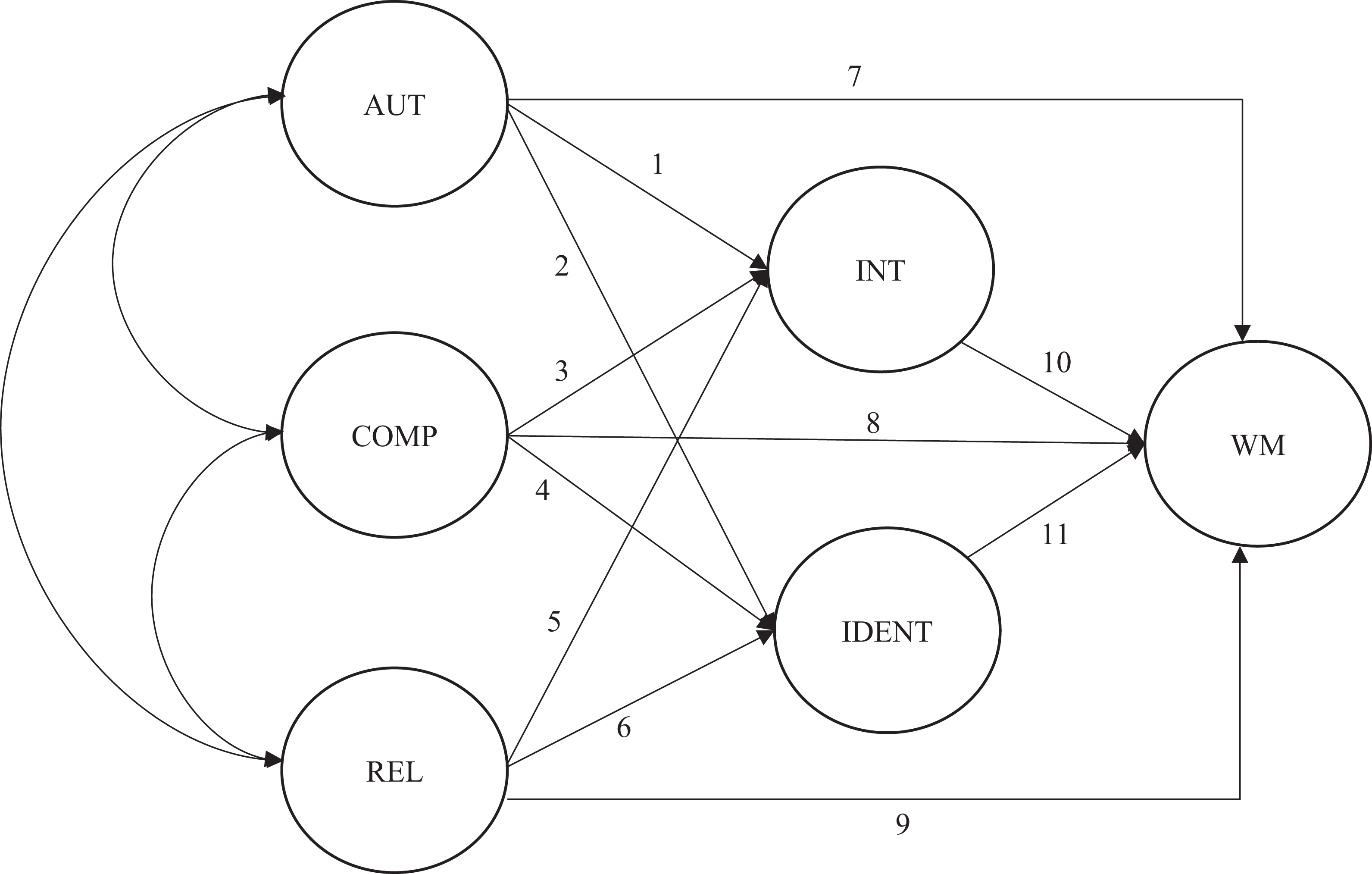
Hypothesized model. Note. AUT = Autonomy need satisfaction; REL = Relatedness need satisfaction; COMP = Competence need satisfaction; INTR = Intrinsic motivation; IDEN = Identified regulation; WM = Work meaning.
Method
Participants
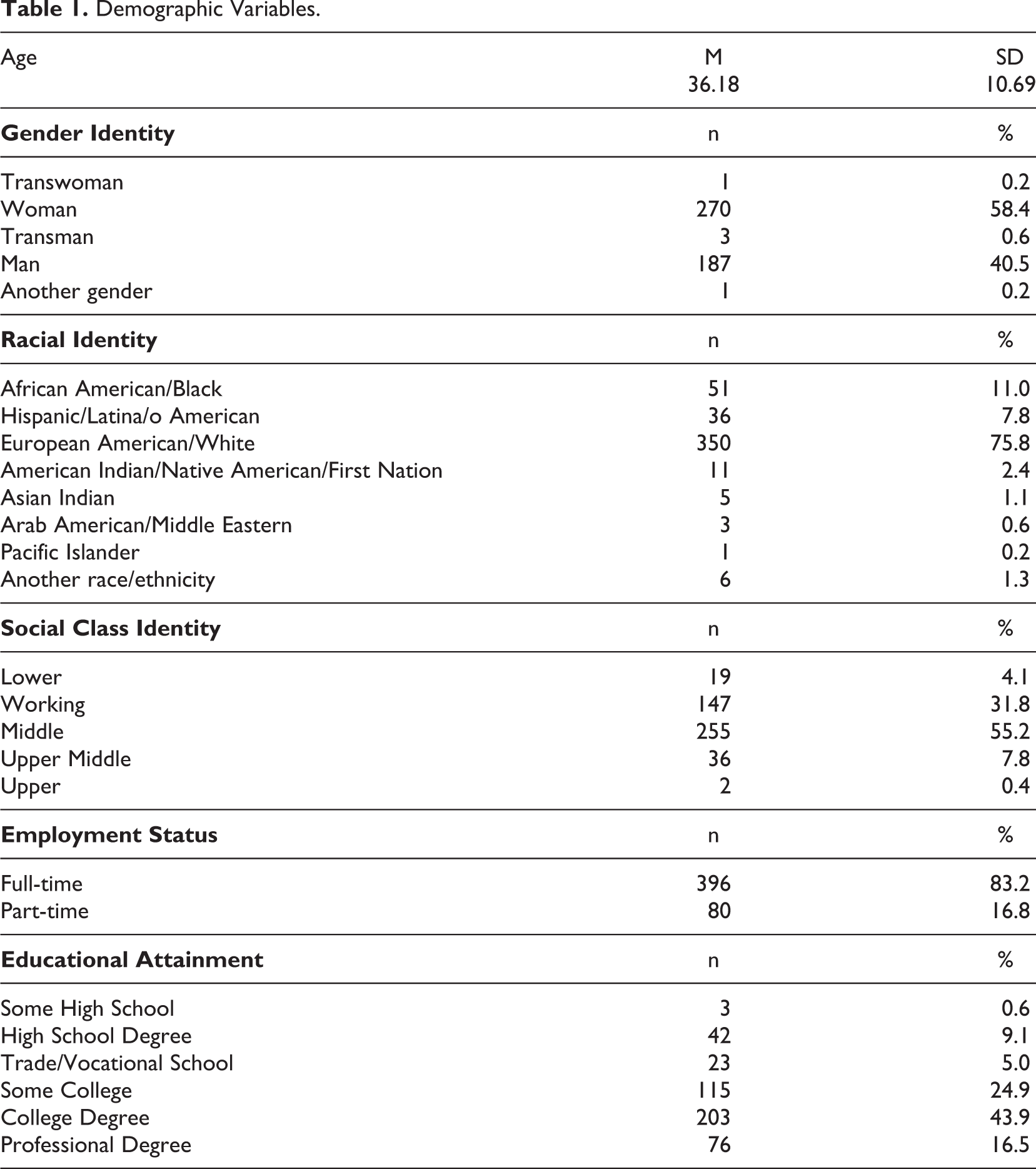
The sample consisted of 462 employed adults in the U.S. Participants ranged in age from 19 to 73 years (mean age = 36.18 years, SD = 10.69). They identified as men (n = 187, 40.5%), women (n = 270, 58.4), transgender men (n = 3, 0.6%), transgender women (n = 1, 0.2%), and “another gender” (n = 1, 0.2%). In terms of race/ethnicity, participants self-identified as African American/Black (n = 51, 11.0%), Hispanic/Latina/o-American (n = 36, 7.8%), Asian/Asian-American (n = 25, 5.4%), European American/White (n = 350, 75.8%), American Indian/Native American/First Nation (n = 11, 2.4%), Asian Indian (n = 5, 1.1%), Arab American/Middle Eastern (n = 3, 0.6%), Pacific Islander (n = 1, 0.2%) and “another race/ethnicity” (n = 6, 1.3%). Participants’ highest level of education completed was as follows: some high school (n = 3, 0.6%), high school graduate (n = 42, 9.1%), trade/vocational school (n = 23, 5.0%), some college (n = 115, 24.9%), college degree (n = 203, 43.9%), and professional degree (n = 76, 16.5). Participants identified as full-time employed (n = 396, 83.2%) and part-time employed (n = 80, 16.8%). Participants’ reported current social class was as follows: lower class (n = 19, 4.1%), working class (n = 147, 31.8%), middle class (n = 255, 55.2%), upper middle class (n = 36, 7.8%), and upper class (n = 2, 0.4%). A summary of demographic variables can be found in Table 1.
Demographic Variables.
Instruments
Need satisfaction
We measured need satisfaction with an adapted version of the satisfaction subscale of the SDT needs scale developed by Chen et al. (2015). We adapted each item to begin with “At work…” in order to capture the specificity of the work environment. The 24-item instrument has six subscales, each containing four items. The six subscales comprise on the one hand, the satisfaction of each of the three psychological needs of SDT (i.e., autonomy, relatedness, and competence) and on the other hand, the frustration of these needs. Sample items include, “At work, I feel a sense of choice and freedom in the things I undertake” and “At work, I make choices that express who I really am.” Each item was rated on a 5-point Likert scale ranging from 1 (completely untrue) to 5 (completely true). The scale has been validated across four different countries, and the three psychological needs were found to predict psychological wellbeing across cultures. Previous studies have shown internal consistency reliabilities ranging from α = .69–.88. The internal consistency reliability estimates for the current study were α = .87, .93, and .89 for the autonomy, relatedness, and competence subscales respectively.
Autonomous motivation
We measured the extent to which participants experienced autonomous motivation at work with the intrinsic motivation and identified regulation subscales of the Motivation at Work Scale (MAWS; Gagné et al., 2010). The MAWS is a 12-item with four subscales: external motivation, introjected regulation, identified regulation, and intrinsic motivation. The intrinsic motivation and identified regulation subscales represent forms of autonomous motivation. Respondents are asked to rate on a Likert scale ranging from 1 (not at all) to 7 (exactly) the extent to which items reflect reasons for doing their work. Sample items include, “Because this job fulfills my career plans” and “Because I enjoy this work very much.” In the initial development study, the four-factor structure was validated in English and French samples, and internal consistency reliabilities for subscales ranged from α = .69–.89. The internal consistency reliability estimates for the current study were α = .95 for intrinsic motivation and α = .90 for identified regulation.
Work meaning
We measured the extent to which participants experienced meaningfulness in their work with the Work as Meaning Inventory (WAMI; Steger et al., 2012). The 10-item scale consists of three subscales: positive meaning, meaning making, and greater good contribution. Sample items include: “I understand how my work contributes to my life’s meaning,” “My work helps me better understand myself,” and “I know my work makes a positive difference in the world.” Participants responded to the items on a scale of 1 (strongly disagree) to 7 (strongly agree). In the initial validation study, WAMI scores correlated in expected directions with work and well-being related constructs and accounted for unique variance in outcomes like job and life satisfaction (Steger et al., 2012). Authors reported high internal consistency reliability in the validation study (α = 0.93). The internal consistency reliability estimate for the current study was α = .95.
Procedure
After obtaining IRB approval, we used Amazon Mechanical Turk (MTurk) to recruit participants and distribute our online survey (generated via Qualtrics), including the informed consent document. Participants were informed about the nature of the study, risks and benefits of participating, and given the option to skip any questions or withdraw from the study without penalty. We compensated participants $.50 for completing the survey. Over the last several years, researchers have found MTurk to be a useful tool in recruiting diverse samples of workers. It allows for recruitment of more representative samples than those obtained through traditional methods (Buhrmester et al., 2018). Studies examining data quality have found that MTurk data are of comparable quality to data obtained through traditional online, college student, and community sampling methods (Buhrmester et al., 2018). Throughout the survey, we embedded validity check items (e.g., “Please choose ‘moderately agree’ for this item”) as a mechanism for preventing random answering and to assess if participants were paying attention.
Analytic Plan
We ran all descriptive statistics and preliminary analyses using SPSS 25. To test the hypothesized model paths, we used latent structural equation modeling using AMOS 22 with full information maximum likelihood estimation to account for missing data. We used a two-step procedure for SEM. In the first step, we assessed a measurement model in which all latent variables were allowed to correlate with each other. Indicator error terms were not allowed to correlate. In the second step, we ran a structural model including each of the hypothesized directional paths (Anderson & Gerbing, 1988). Latent workplace autonomy, workplace competence, and workplace relatedness factors were each represented by their four respective subscale items. Autonomous motivation variables—intrinsic motivation and identified regulation—were each represented by their three respective subscale items; disturbance terms for these two latent variables were allowed to correlate. For meaningful work, we used the three subscale totals as observed indicators. Thus, there was a total of 21 observed indicators.
We assessed model fit using χ2, comparative fit index (CFI), root mean square error of approximation (RMSEA), and Tucker Lewis Index (TLI). Although good fit is indicated by an insignificant χ2, this index is often unreliable in large samples (Tabachnick et al., 2007). Thus, we primarily assessed CFI, RMSEA, and TLI. The CFI and TLI compare the hypothesized model to a null model in which study variables are unrelated; values close to or greater than .95 indicate good fit (Hu & Bentler, 1999). The RMSEA assesses how well the hypothesized model would fit the population covariance matrices if the best parameter estimates were available; it is sensitive to model complexity, and values close to or less than .08 indicate adequate fit (Hu & Bentler, 1999). Because AMOS does not provide indirect effects for incomplete datasets, we used the RMediation (Tofighi & MacKinnon, 2011). RMediation is an R package that can use path coefficients and standard error estimates to generate confidence intervals for indirect effects. If the confidence interval includes 0, then the mediating effect is nonsignificant, indicating incremental validity (Shrout & Bolger, 2002).
Results
Preliminary Analyses
All variables had absolute values of skewness and kurtosis within acceptable ranges (> |3| for skewness and > |10| for kurtosis; Weston & Gore, 2006). A visual inspection of plots indicated that assumptions of heteroskedasticity and linearity and normality of residuals were met. Multivariate outliers were identified in 19 cases; however, upon examination of these cases there was no evidence of careless responding or inattention, so all were retained. All observed variables correlated in the expected directions. There were high correlations (r = .80 or above) between intrinsic motivation, identified regulation, and work motivation. However, the variance inflation factors and tolerances were within acceptable ranges (VIF < 5, tolerance > .2; Hair et al., 2011). The dataset was over 99% complete, with 18 missing values across two variables (meaningful work and motivation) and 10 cases. Thus, we proceeded to model testing with full information maximum likelihood estimation. The preliminary measurement model had adequate fit to the data, χ2 (174) = 560.86, p < .001, CFI = .95, TLI = .94, RMSEA = .07, 90% CI [.06, .08]. All indicators loaded onto their factors at .73 or above. All correlations can be found in Table 2.
Latent Correlations, Observed Correlations, Means, and Standard Deviations.
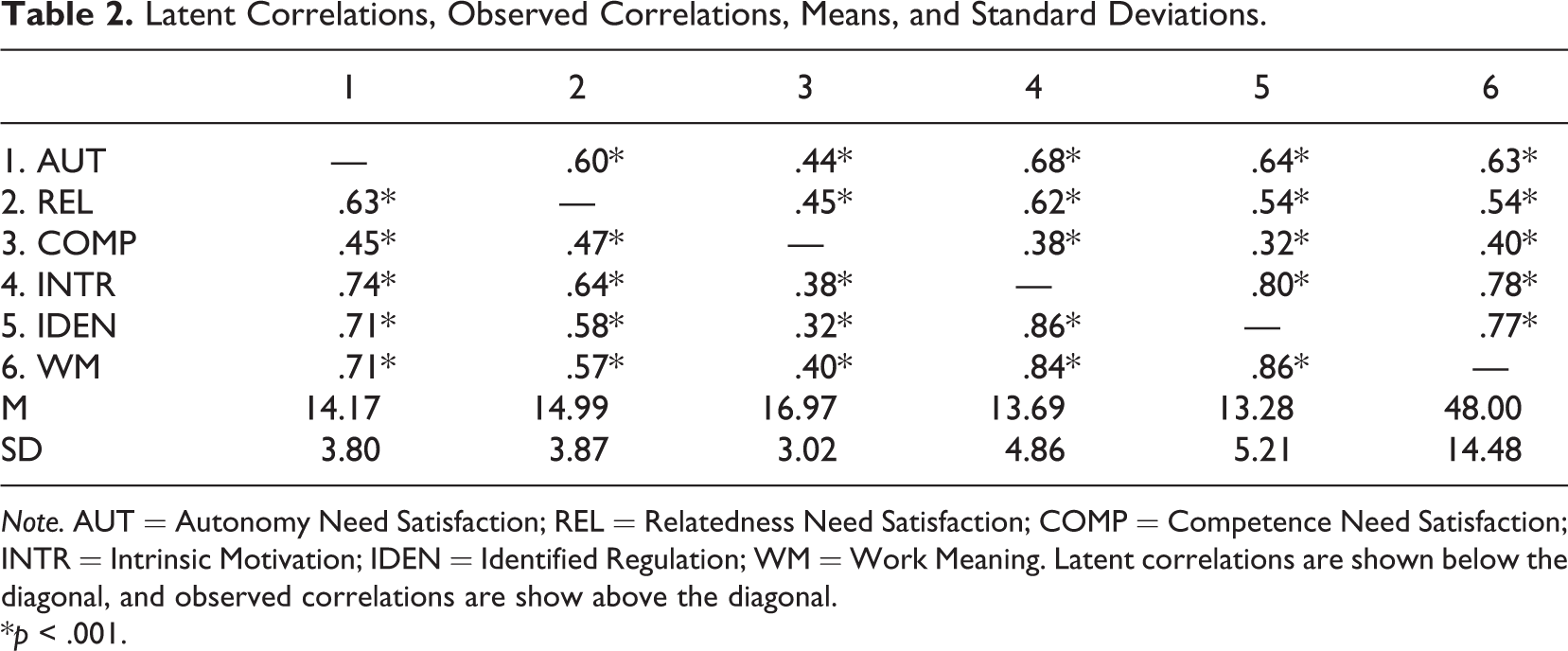
Note. AUT = Autonomy Need Satisfaction; REL = Relatedness Need Satisfaction; COMP = Competence Need Satisfaction; INTR = Intrinsic Motivation; IDEN = Identified Regulation; WM = Work Meaning. Latent correlations are shown below the diagonal, and observed correlations are show above the diagonal.
*p < .001.
Structural Model
The structural model had good fit to the data, χ2 (196) = 658.47, p < .001, TLI = .94, CFI = .95, RMSEA = .07, 90% CI [.07, .08]. Regarding direct effects, workplace autonomy and relatedness both significantly and positively predicted identified regulation and intrinsic motivation, but not meaningful work. Workplace competence directly and positively predicted work meaning, but not identified regulation or intrinsic motivation. We ran an additional structural model with nonsignificant paths removed; this yielded equally good fit to the data, χ2 (198) = 661.76, p < .001, CFI = .95, TLI = .94, RMSEA = .07, 90% CI [.07, .08], and explained 74% of the variance in meaningful work. Thus, this was retained as the final structural model (see Figure 2)
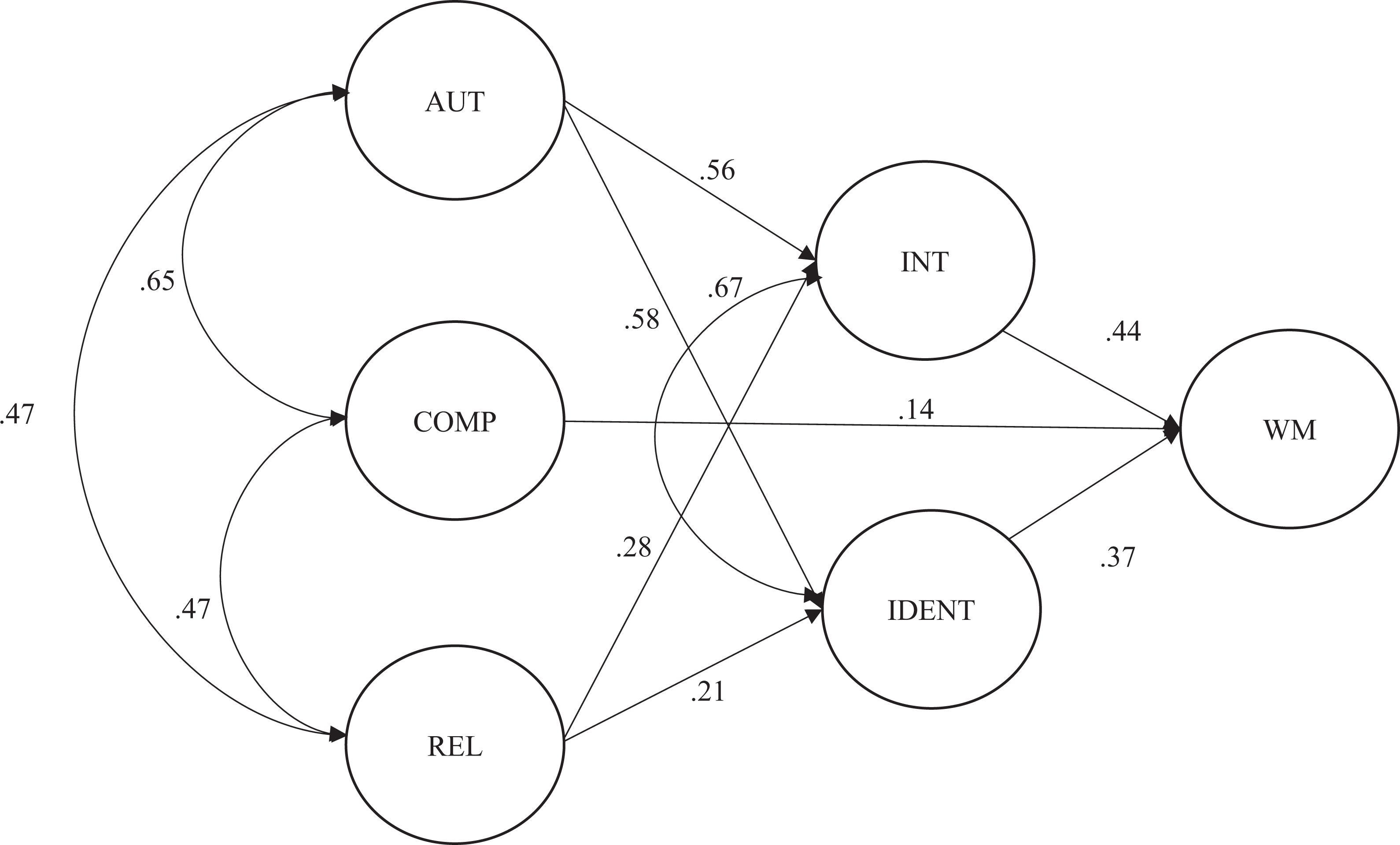
Final structural model. Note. AUT = Autonomy need satisfaction; REL = Relatedness need satisfaction; COMP = Competence need satisfaction; INTR = intrinsic motivation; IDEN = Identified regulation; WM = Work meaning. All paths significant at p < .001.
Regarding indirect effects, workplace autonomy indirectly predicted work meaning via identified regulation, 95% CI [.25, .55], and intrinsic motivation, 95% CI [0.31, .62]. Likewise, workplace relatedness indirectly predicted work meaning via identified regulation 95% CI. [08, .24] and intrinsic motivation 95% CI [.14, .33]. Because workplace competence need satisfaction did not directly predict autonomous motivation, we did not test for indirect effects.
Discussion
This study offers a new, integrative perspective on meaningful work, connecting it to the well-established body of literature on self-determination theory (SDT; Ryan & Deci, 2002, 2018). We investigated relations between the satisfaction of work-related autonomy, relatedness, and competence needs and the experience of meaningful work; we also examined the incremental validity of including autonomous motivation in this model. Overall, our results provided mixed support for our hypotheses and prompt further study of the complex relations between the satisfaction of SDT’s three basic psychological needs, work motivation, and work meaning.
Our first hypothesis, that autonomy, relatedness, and competence needs would directly predict intrinsic motivation and identified regulation, was mostly supported. Autonomy and relatedness both directly predicted intrinsic motivation and identified regulation. These findings align with extant literature on the relations between need satisfaction and autonomous types of motivation (Deci et al., 2017; Gagné et al., 2015; Van Den Broeck et al., 2016). However, competence did not directly predict work motivation, contradicting previous literature on the relations between satisfaction of three basic psychological needs and autonomous forms of motivation. In their meta-analysis exploring SDT’s three basic needs in the workplace, Van Den Broeck and colleagues (2016) found that autonomy, relatedness, and competence were all significantly related to and accounted for unique variance in identified regulation and intrinsic motivation. This is also in contrast to the theoretical framework proposed by Deci et al. (2017); as such, it remains unclear why this pathway was not supported in our data.
We propose several possible explanations for the failure of competence to predict autonomous work motivation. First, it could be that competence has a more complex relationship with motivation that previously thought. Some studies (e.g., Kim & Allan, 2019; Van Den Broeck et al., 2016) have demonstrated that competence relates to other variables in inverse ways compared to autonomy and relatedness. We also might have failed to consider other variables that may influence competence, such as occupational position (González et al., 2016), competence valuation (Chen et al., 2015), achievement striving (Chen et al., 2015), or need frustration (Deci et al., 2017; Van Den Broeck et al., 2016).
It is also possible that some characteristics of participants’ workplace reward systems influenced their perceived competence and levels of autonomous motivation. Findings from Cognitive Evaluation Theory (CET), a sub-theory within SDT, demonstrate that reward contingencies can negatively affect perceived competence and autonomous forms of motivation (Deci et al., 2017; González et al., 2016). Rewards can be interpreted as either informational or controlling; informational rewards can guide future performance and have positive effects on competence and motivation, while controlling rewards are viewed as coercive attempts to sway future performance and have negative effects on autonomy and motivation (Deci et al., 2017). These rewards can alter the relationship between need satisfaction and motivation by reducing levels of autonomy and competence, thus lessening levels of identified regulation and intrinsic motivation as well (González et al., 2016). Martela and Riekki (2018) suggest that more competent workers are rewarded with promotions and salary increases; especially in cultures that emphasize materialism such as the US, these rewards could adversely influence autonomous motivation through competence.
Competence did function as a direct predictor of meaningful work, partially supporting our second hypothesis. Autonomy and relatedness need satisfaction failed to directly predict meaningful work, but this is not surprising given that they were found to have significant indirect predictors, with mediation analyses suggesting incremental validity of autonomous motivation in these links, supporting our third and fourth hypotheses.
These finding align with extant literature on relationships between need satisfaction and meaningfulness. The three SDT needs have been found to each independently contribute to the perception of meaning in life, even after controlling for the effects of the others (Martela et al., 2018). Steger et al. (2012) found psychological need satisfaction to be correlated with meaningful work, and Kim and Allan (2019) found that autonomy and competence significantly predicted meaningful work in a sample of underemployed workers. These findings are also consistent with research conducted outside of the U.S., with competence predicting meaningful work in both Finlandish and Indian samples.
Taken as a whole, these findings extend the current literature base on meaningful work and SDT. Although several previous studies have provided support for the direct links hypothesized in the current study, no studies have examined the incremental validity of autonomous motivation by testing the structural model as a whole. Together, the direct and indirect paths in our hypothesized model explained a substantial portion—74%—of the variance in meaningful work. Overall, results suggest that meeting basic psychological needs and increasing one’s sense that their behavior is directed by their values, goals, and inherent pleasure are essential building blocks for experiencing meaningful work.
Practical Implications
Given previous research showing the benefits of meaningful work with regard to well-being (Allan, Batz-Barbarich, et al., 2018; Lysova et al., 2019; Steger et al., 2012) as well as work productivity (Ahmed et al., 2016; Roberson, 1990; Rosso et al., 2010), our research has practical implications for career counselors, organizational leaders, and policy makers. Our findings showed that meaningful work was predicted directly by autonomous motivation and satisfaction of competence needs and indirectly by satisfaction of autonomy and relatedness needs. Thus, it may be beneficial to target these variables in efforts aimed at increasing meaningful work. At the individual level, career counselors might work with clients to assess the extent to which their basic needs are being met and, if appropriate, implement interventions to increase satisfaction of needs and autonomous motivation. For example, Bakker and Oerlemans (2019) show how engaging in job crafting—physical and cognitive changes workers can make within their jobs to shift tasks and relational boundaries—increased workers’ engagement via basic need satisfaction. Thus, counselors might work with clients to identify potential cognitive, physical, or relational changes that might increase autonomy, competence, or relatedness need satisfaction on the job.
At the organizational level, leaders might implement policies aimed at improving competence, promoting healthy workplace relationships, and allowing for workers’ use of initiative and independence. For example, Jungert et al. (2018) demonstrate that a team-based intervention focused on teaching workers to take each other’s perspectives, communicate, and collaborate more effectively gave rise to the satisfaction of each participant’s psychological needs and subsequently increased autonomous motivation among the workers compared to a control group. Given our finding that competence directly predicted meaningful work, organizational leaders might also work toward providing employees with opportunities to increase their competency through training and professional development.
Finally, policymakers might increase public access to basic psychological need satisfaction by enforcing labor policies that fight systemic marginalization and oppression (e.g., enforcement of discrimination laws, guaranteed living wage; Autin et al., 2020). Duffy et al. (2016) identify marginalization as one of the key components that moderates people’s access to decent work, and in turn, need satisfaction. Thus, political and institutional policies that provide decent work opportunities for all who work and want to work will be essential for basic need satisfaction, autonomous motivation, and meaningful work.
Limitations/Future Directions
The current study has limitations that must be considered when interpreting our results and that might guide future research. First, the current study was conducted with cross-sectional data and, thus, was only able to examine the incremental validity of autonomous motivation as opposed to establishing causal mechanisms. Future research might employ longitudinal or experimental methods to gain further insight on directionality and causality. Second, this study was conducted in an affluent society and many of our participants were well educated with high-paying jobs. Previous research shows that people with more socioeconomic privilege experience higher levels of meaningful work than those with less socioeconomic privilege (Autin & Allan, 2020; Lips-Wiersma et al., 2016). Thus, it is necessary to replicate these findings among workers of diverse social class backgrounds, and particularly, with low wage workers. Third, future research might investigate the discrepancy between the current study and previous research by Van Den Broeck et al. (2016) regarding the relationship between competence and intrinsic motivation. As already discussed, the current discrepancy might stem from competency possessing a more complex relationship with intrinsic motivation and meaningful work than was previously thought. Subsequent research might evaluate this complexity. For instance, future research might explore how job characteristics moderate competency and intrinsic motivation. Fourth, these data were collected prior to the recent Covid-19 pandemic. Future research might explore how the recent pandemic and subsequent widespread isolation has affected people’s experience of need satisfaction and in turn, their experience of meaningfulness at work.
Conclusion
In sum, the current study applied SDT to the work domain, examining relations between basic psychological need satisfaction, autonomous forms of motivation, and work meaning. With a sample of working adults, we tested the hypothesis that autonomous motivation would demonstrate incremental validity in predicting meaningful work from basic psychological need satisfaction. Autonomy and relatedness need satisfaction did indeed directly predict autonomous motivation. Competence need satisfaction directly predicted work meaning. Mediational analyses suggested incremental validity of autonomous motivation in the relations between autonomy, relatedness, and work meaning. Our findings provide support for SDT hypotheses in the work domain and make novel connections between the bodies of literature on SDT and meaningful work.
Footnotes
Declaration of Conflicting Interests
The author(s) declared no potential conflicts of interest with respect to the research, authorship, and/or publication of this article.
Funding
The author(s) received no financial support for the research, authorship, and/or publication of this article.
