



Abstract
Research has suggested that individuals lower in self-esteem restrain from fully valuing romantic relationships because of relatively low confidence in positive regard from their partners (i.e., positive reflected appraisals). MacDonald and Jessica (2006) provided evidence that in Indonesia, where family plays an important role in mate selection, low self-esteem also leads to doubts regarding family approval of the relationship that, in turn, places an additional constraint on fully valuing a romantic relationship. In the current research, Study 1 replicated these findings, showing that the positive relationship between self-esteem and value placed on a romantic relationship was mediated by both reflected appraisals and approval from a partner’s family in Indonesia but only reflected appraisals in Canada. In Study 2, the relationship between self-esteem and relationship value was mediated by reflected appraisals and approval from own, but not partner’s, family in Japan whereas only reflected appraisals played a mediating role in Australia. These data suggest that in cultures involving family in mate selection, placing full value on romantic relationships may be contingent on confidence in both reflected appraisals and family approval of the relationship.
Given the pain that can arise from social rejection or loss (MacDonald & Jensen-Campbell, 2011), it is not surprising that individuals in romantic relationships carefully manage their emotions to hedge themselves against the enormous risk of hurt that is a structural part of such close bonds (Murray, Holmes, & Collins, 2006). One perspective that has proven useful in understanding how individuals regulate their emotions in romantic relationships to avoid such hurt is Murray and colleagues’ dependency regulation model (Murray, Holmes, & Griffin, 2000; Murray, Holmes, Griffin, Bellavia, & Rose, 2001; Murray, Holmes, MacDonald, & Ellsworth, 1998; Murray, Rose, Bellavia, Holmes, & Garrett Kusche, 2002). One way to limit one’s exposure to the risk of hurt in a romantic relationship is to place only limited value on that relationship. That is, if a relationship is not highly valued, facing the prospect of that relationship ending becomes less of a concern. For example, individuals who are worried that their partner may want to end a relationship may find that prospect easier to take if they construe themselves as not really being satisfied with the relationship. At the heart of the dependency regulation model is the notion that individuals will only allow themselves to fully value a romantic relationship when they feel certain that the relationship is viable for the long term. That is, in order to undercut the pain of rejection and loss, romantic partners allow themselves to fully appreciate the positive qualities of a relationship only once they are confident the relationship will last.
The dependency regulation model suggests that an important source of belief in the viability of a relationship is an individual’s self-esteem. According to sociometer theory (Leary & Baumeister, 2000; MacDonald & Leary, 2012), self-esteem is an evolved mechanism that functions to provide individuals with a gauge of their social value. In this framework, high self-esteem is a signal that one is acceptable to others. For example, trait levels of self-esteem are higher among individuals who feel successful in domains that they believe will bring interpersonal approval than among individuals who are successful in domains not as strongly linked to interpersonal approval (MacDonald, Saltzman, & Leary, 2003).
Individuals with lower self-esteem experience a range of negative outcomes in romantic relationships, including relatively negative evaluations of their partners (Murray, Holmes, & Griffin, 1996a, 1996b), less satisfying relationships (Fincham & Bradbury, 1993; Murray et al., 1996a), and less relational stability (Hendrick, Hendrick, & Adler, 1988). Murray and colleagues’ dependency regulation model helps explain these negative outcomes for individuals with low self-esteem (Murray et al., 1998, 2000, 2001, 2002). Specifically, the model suggests that if low self-esteem provides a general signal that one is at risk of rejection, then individuals low in self-esteem are likely to experience concerns over rejection from a romantic partner. This concern over rejection should in turn lead to placing relatively low value on the relationship as protection against the pain of the relationship ending. Overall, then, the model suggests that self-esteem should positively predict higher levels of confidence in positive evaluation from a romantic partner, which should in turn positively predict the value placed on the relationship. Indeed, Murray et al. have repeatedly demonstrated a link between low self-esteem and low value placed on the relationship (as operationalized by variables like partner evaluations and relationship satisfaction) that is mediated by perceptions of low regard from romantic partners (Murray et al., 1998, 2000, 2001, 2002).
For example, in a longitudinal study, Murray et al. (2000) showed that feeling less valued by a romantic partner was a negative predictor of perceptions of the partner up to 1 year later, controlling for initial levels of self-esteem. These data suggest that individuals whose insecurities lead them to doubt the viability of the relationship diminish the value placed on that relationship as reflected in negative perceptions of the partner. This emotion regulation strategy may allow insecure individuals protection from risk by minimizing what they stand to lose if the feared rejection from their romantic partner actually happens. On the other hand, individuals with more confidence in the viability of the relationship appear more free to experience positive feelings from the romantic bond, a stance that leaves less protection from hurt but seems likely to promote the kinds of positive relational exchanges that lead to satisfaction and stability (Holmes & Rempel, 1989).
Approval From Family And Relational Viability
The dependency regulation model was originally developed in the North American context and tested using data from that region. However, individuals’ calculations of what makes a relationship viable are a crucial part of the model, and there is reason to believe that calculations of relationship viability may be founded on different bases across cultures. In the Western context, a marriage is seen as the joining of two individuals to form a new family unit (Ingoldsby, 1995). In such a construal of marriage, relationship viability hinges relatively exclusively on personal concerns such as feelings of love for one’s partner and the expectation of receiving love in return (Dion & Dion, 1996; Levine, Sato, Hashimoto, & Verma, 1995). This view of relationship viability as being founded relatively exclusively on personal approval is consistent with the broader values endorsed in individualistic cultures, including personal choice, uniqueness, and the promotion of one’s own personal goals (Hofstede, 2001).
However, in more collectivistic cultures, marriage is not seen as the creation of a new family but rather the joining of two existing families (Ingoldsby, 1995). Framed this way, mate selection is a choice that affects not just the two individuals to be married but also the broader family units. Because of the stake in the marriage held by family members, the approval of family becomes an important consideration for the viability of any romantic relationship. Indeed, although traditional arranged marriages are becoming less common (Batabyal, 2001), in most parts of the world parents maintain a great deal of influence over their children’s choice of partner (Buunk, Park, & Dubbs, 2008; Georgas, 2006). Expectations of parental involvement in selection of a marital partner and positive attitudes toward parental influence on mate choice have been shown to be greater particularly in more collectivistic cultures (Buunk, Park, & Duncan, 2010). This is not to say that personal concerns such as love play no role in the viability of a relationship in more collectivistic contexts (Sprecher & Toro-Morn, 2002). However, the values of harmony promotion, belonging, and promoting the goals of others endorsed in collectivist cultures suggest that such personal concerns must be balanced with the needs of one’s family (Hofstede, 2001). Thus, in collectivist cultures, it seems reasonable to predict that calculations of relationship viability may include both security in positive regard from a romantic partner, and security in approval of the relationship from family members.
This collectivist notion of relationship viability suggests the need for an update to the dependency regulation model. Specifically, the model posits that it is perceptions of a relationship’s viability that lead to the highest levels of value placed on that relationship. Thus, in cultures marked by collectivism, both perceptions of positive regard from a romantic partner and perceptions of relationship approval from family members should have independent associations with high levels of relationship value. Furthermore, if generalized expectations of approval are a result of high levels of trait self-esteem, then expectations of both partner and family approval should themselves be predicted by self-esteem.
Previous research has borne out these predictions. Indonesia is a country marked by relatively high levels of collectivism (ranking 14th most collectivist among the 91 countries studied by Hofstede, 2001) and is also a country where parents play an important role in their children’s mate selection (Setiadi, 2006). Although few marriages in Indonesia are arranged, parents may dissuade children from involvement with partners who are low in status, come from disapproved families, or who seem too secular if the parents are religious (Nilan, 2008). In a direct test of the collectivist dependency regulation model proposed by MacDonald and Jessica (2006), data from Indonesia revealed a positive relationship between self-esteem and value placed on romantic relationships that was mediated both by reflected appraisals and by perceived approval from the partner’s family. Among Australian participants, a country marked by relatively low levels of collectivism (90th of 91; Hofstede, 2001) and where parents play a limited role in mate selection (Poole, 2005), only reflected appraisals emerged as a significant mediator, without a significant role for family approval. That is, perceived family approval of a romantic relationship was not a significant predictor of value placed on that romantic relationship among Australian participants.
Although these findings suggest an important cultural difference in dependency regulation dynamics, they contain important limitations. Most obviously, the data come from only a single investigation, leaving open the question of whether the findings are replicable. In the current research, Study 1 was designed to attempt such a replication through exploration of data from Indonesia (with Canada as a low-collectivist control, ranking 80th of 91 countries; Hofstede, 2001). However, even successful replication in Study 1 would leave open the question of whether the effects found in the Indonesian context could be attributed to collectivistic dynamics more generally, or something unique about Indonesian culture. Thus, Study 2 tests the generalizability of the effect of using data from Japan, a region marked by moderate levels of collectivism (46th of 91; Hofstede, 2001), and where parents historically have stronger influence in their children’s selection of marriage partners than is typical in Western countries (Muramoto, 2006). In Study 2, Australian data provide the low collectivist contrast.
Study 1
Participants in romantic relationships were recruited from university settings in Canada and Indonesia and completed questionnaires regarding their romantic relationships. Consistent with multiple past studies, we expected to find a positive relationship between self-esteem and the value placed on the relationship in both countries. We predicted that in Canada, a low-collectivist country with relatively little role for parents in mate selection (Kwak & Berry, 2006), feeling positively valued by the romantic partner (i.e., reflected appraisals) would mediate this relationship, but approval from family would not. However, as found by MacDonald and Jessica (2006), we expected the data to reveal both reflected appraisals and family approval as significant mediators in Indonesia.
Method
Participants
Participants were university students who were currently involved in dating relationships. Canadian participants were recruited from the University of Toronto, and Indonesian participants were recruited from Universitas Internasional Batam in Batam and Universitas Atma Jaya in Jakarta. In both countries, participants currently in romantic relationships were recruited from public spaces on campus and offered $5 Cdn. (approximately 40,000 Indonesian rupiahs) in exchange for participation. A total of 130 participants from Canada (65 women and 64 men; mean age = 21 years, range = 16 to 34 years, mean relationship length = 23 months, range = 1 to 106 months) and 99 participants from Indonesia (53 women and 46 men; mean age = 23 years, range = 19 to 31 years, mean relationship length = 25 months, range = 1 to 143 months) agreed to participate.
Measures
Demographics
Each participant completed a series of demographic questions assessing gender, age, time in their country of residence, involvement in a current dating relationship, and length of the relationship.
Self-esteem
The Rosenberg (1979) Self-Esteem scale consists of 10 items that assess the positivity of global self-evaluations (Cronbach’s α = .84 in the case of Canada, and .76 for Indonesia). Participants indicated their agreement with items such as, “On the whole I am satisfied with myself,” on a 6-point scale from 1 = totally disagree to 6 = totally agree.
Reflected appraisals
Participants indicated how positively they believed they would be rated by their romantic partner on a series of 19 positive and negative interpersonal traits such as “kind and affectionate,” and “emotional or moody” (reverse scored; Murray et al., 1998; Cronbach’s α = .76 for Canada, and .74 for Indonesia). 1 Participants indicated the extent to which their partner would evaluate each item as descriptive of the participant on a 6-point Likert-type scale from 1 = not at all to 6 = completely.
Relationship satisfaction
This 5-item scale (Murray et al., 2000) measured participants’ level of relationship satisfaction using items such as, “I am extremely happy with my current romantic relationship” (Cronbach’s α = .92 for Canada, and .81 for Indonesia). Evaluations were made on a 6-point Likert-type scale from 1 = not true at all to 6 = extremely true.
Trust
Participants rated their trust in their partner (e.g., “I can count on my partner to be concerned about my welfare”) based on items from Rempel, Holmes, and Zanna’s (1985) Trust scale (Cronbach’s α = .83 for Canada, and .83 for Indonesia). The ratings were given on a 6-point Likert-type scale from 1 = not true at all to 6 = extremely true.
Intimacy
The measure of intimacy consisted of the 15 intimacy items from the Triangular Love Scale (Sternberg, 1997). Example items include “I feel emotionally close to my partner,” and “I value my partner greatly in my life” (Cronbach’s α = .94 for Canada, and .90 for Indonesia). Participants were asked to indicate the extent to which they agreed with each item on a 6-point Likert-type scale from 1 = strongly disagree to 6 = strongly agree.
Approval of partner’s family
This one-item measure was designed by MacDonald and Jessica (2006) to measure the extent to which participants believed they had the approval of their partner’s family. The item read, “I feel confident that my partner’s family would accept me as her/his romantic partner.” Ratings were given on a 6-point Likert-type scale from 1 = totally disagree to 6 = totally agree.
To translate questionnaires from English to Indonesian, one native Indonesian speaker translated the English version of the questionnaires into Indonesian. Then, another bilingual individual back-translated the translation into English. Any disagreement regarding the translation was discussed among the translators.
Procedure
Participants were approached individually by a research assistant on the university grounds. When they agreed to participate, they were given an information sheet and questionnaire booklet. After completing all of the questions, they were asked to return the questionnaire booklet and were thanked, paid, and debriefed.
Results
To best ensure analyses reflected the home culture, participants were removed from analyses if they lived in their respective country for less than 10 years. This left 96 Canadian participants (47 women, 49 men; 63% born in Canada, 26% born in various Asian countries, 11% born elsewhere) and 97 Indonesian participants (53 women, 44 men; 98% born in Indonesia, 2% born elsewhere). Table 1 presents means and standard deviations for the Canadian and Indonesian samples and Table 2 presents the zero-order correlations. These analyses suggested a strong relationship between the outcome variables of relationship satisfaction, trust, and intimacy (all rs between .67 and .80). Consistent with past dependency regulation research (e.g., Murray et al., 1998), the mean scores for each of these variables were averaged to form a composite index of relationship value (Cronbach’s α = .87 for Canada, and .89 for Indonesia).
Means (With Standard Deviations in Parentheses) for Study 1 Variables
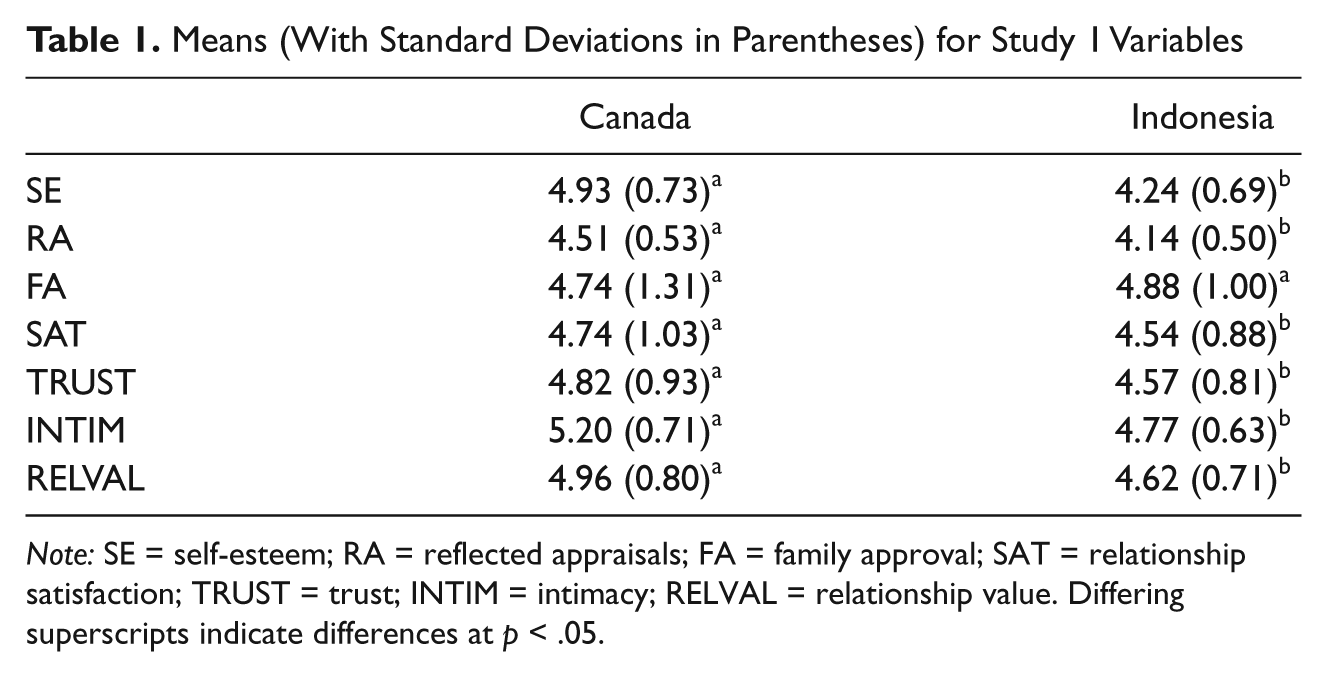
Note: SE = self-esteem; RA = reflected appraisals; FA = family approval; SAT = relationship satisfaction; TRUST = trust; INTIM = intimacy; RELVAL = relationship value. Differing superscripts indicate differences at p < .05.
Zero-Order Correlation Matrix for Study 1
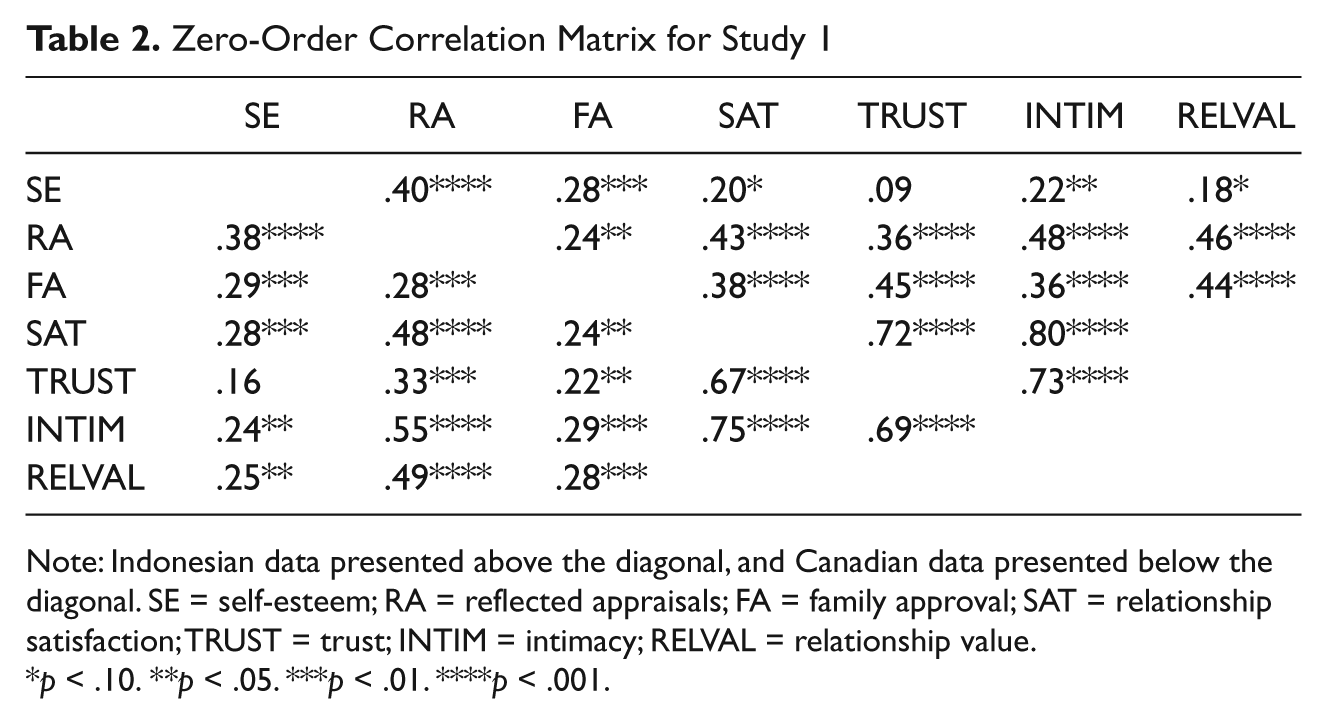
Note: Indonesian data presented above the diagonal, and Canadian data presented below the diagonal. SE = self-esteem; RA = reflected appraisals; FA = family approval; SAT = relationship satisfaction; TRUST = trust; INTIM = intimacy; RELVAL = relationship value.
p < .10. **p < .05. ***p < .01. ****p < .001.
Examination of the mediation of the relationship between self-esteem and relationship value was conducted via a bootstrap method for testing multiple mediation effects (Preacher & Hayes, 2008). In mediation, when the indirect effect of an independent variable on a dependent variable (i.e., through a mediating variable) is taken into account, the direct effect (i.e., controlling for the mediating variable) of the independent variable on the dependent variable should be smaller than the total effect (i.e., not controlling for the mediating variable). Statistically, an indirect effect can be described as the product of the regression coefficient representing the effect of the independent variable on the mediating variable and the regression coefficient representing the effect of the mediating variable on the dependent variable (Preacher & Hayes, 2008). Two commonly used tests of mediation are the causal steps strategy (Baron & Kenny, 1986) and the Sobel test (Sobel, 1982, 1986). Preacher and Hayes argue that neither method is optimal for testing mediation in the majority of cases. These authors argue that the causal steps approach offers no explicit test of an indirect effect, testing instead component parts of the indirect effect separately. They argue that the Sobel test relies on estimates of the standard error of the indirect effect that require an assumption of a normal distribution—an assumption these authors argue is unlikely to be met in all but the largest samples. Thus, Preacher and Hayes recommend bootstrapping methods for testing mediation as this approach does not rely on the assumption of normality.
For Canadian participants, the analyses showed that the total effect (i.e., not controlling for the mediating variables) of self-esteem on relationship value was significant, B = .28, p = .01 (see Figure 1). However, the direct effect (i.e., controlling for the mediating variables) of self-esteem on relationship value was not significant, B = –.05, p = .63. Indirect effects (calculated by multiplying the effect of self-esteem on a mediator by the effect of that mediator on relationship value) were tested to examine whether these paths could account for significant variance in the mediation effect (see Table 3). These analyses revealed that only reflected appraisals was a statistically significant mediator of the relationship between self-esteem and relationship value.
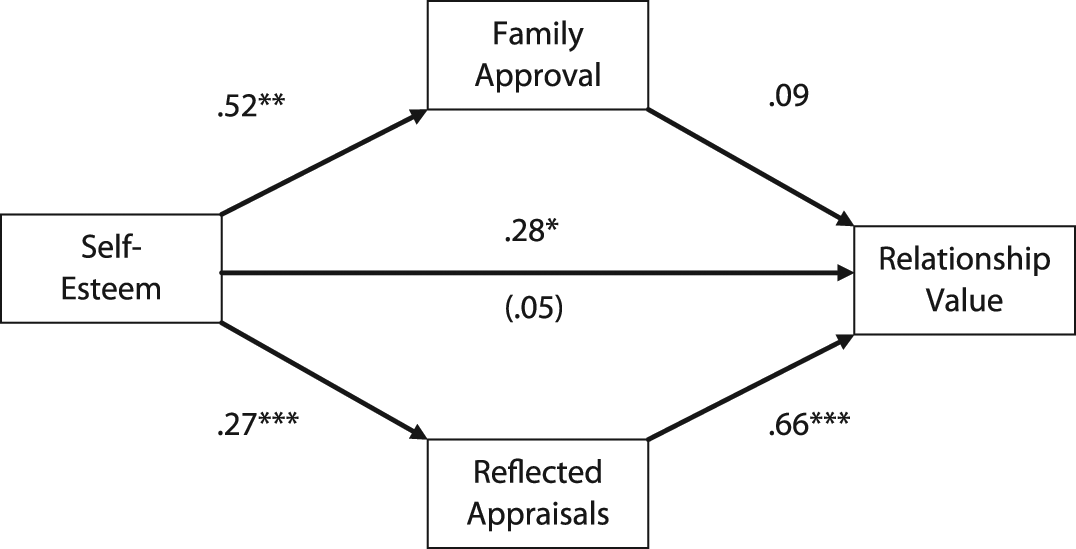
Unstandardized regression coefficients for indirect effects analyses for Canadian participants in Study 1. The value in parentheses represents the direct effect of self-esteem on relationship value (i.e., controlling for indirect effects).
Mediation of the Effect of Self-Esteem on Relationship Value by Reflected Appraisals and Family Approval for Canadian Participants in Study 1

Note: BCa = bias corrected and accelerated; 5,000 bootstrap samples. Confidence intervals containing zero are interpreted as not significant.
For Indonesian participants, the analyses showed that the total effect of self-esteem on relationship value was marginally significant, B = .18, p = .08 (see Figure 2). However, the direct effect of self-esteem on relationship value was not significant, B = –.09, p = .38. Indirect effects tests revealed that both reflected appraisals and family approval were separate, statistically significant mediators of the relationship between self-esteem and relationship value (see Table 4).

Unstandardized regression coefficients for indirect effects analyses for Indonesian participants in Study 1. The value in parentheses represents the direct effect of self-esteem on relationship value (i.e., controlling for indirect effects).
Mediation of the Effect of Self-Esteem on Relationship Value by Reflected Appraisals and Family Approval for Indonesian Participants in Study 1
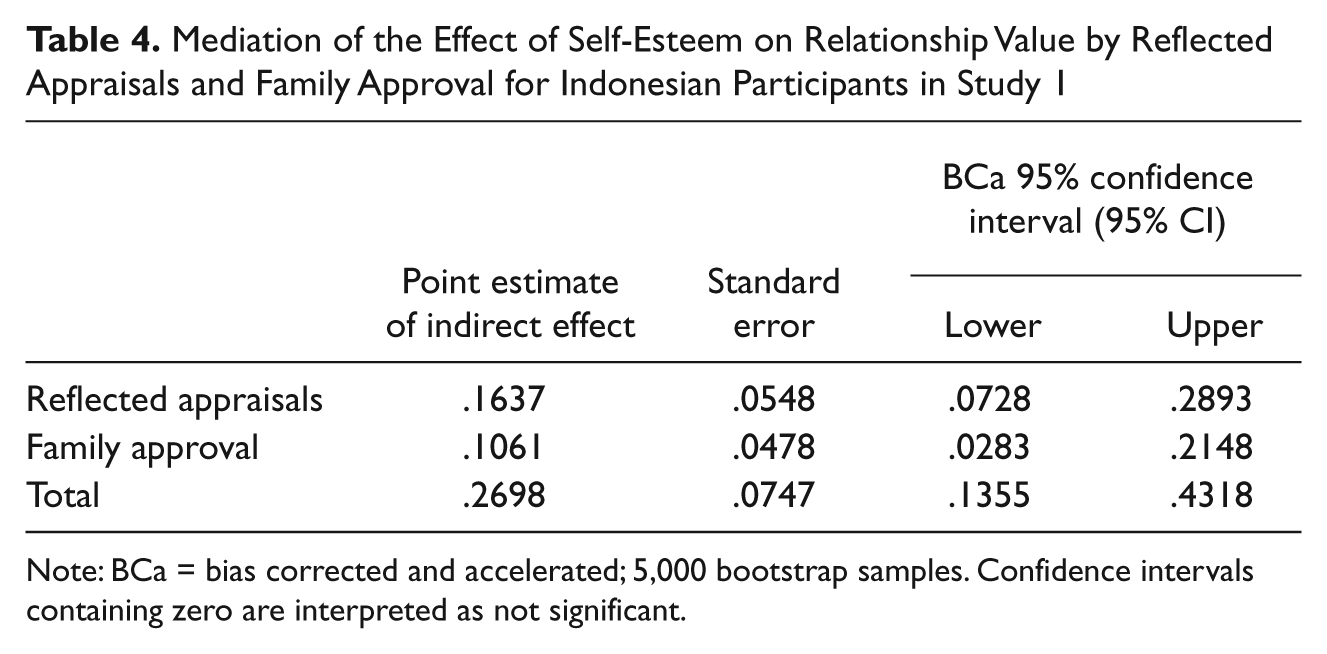
Note: BCa = bias corrected and accelerated; 5,000 bootstrap samples. Confidence intervals containing zero are interpreted as not significant.
Discussion
The data from Study 1 provide a clear replication of MacDonald and Jessica’s (2006) findings. As in previous dependency regulation research, a positive relationship was found between self-esteem and the value placed on a romantic relationship in both countries. In Canada, this relationship was mediated by reflected appraisals but not family approval. Indeed, although self-esteem did predict higher expectations of family approval, when self-esteem and reflected appraisals were accounted for, there was no significant relationship between family approval and value placed on the relationship. These data are consistent with dependency regulation’s theoretical position that individuals restrain the value they place on a relationship until confident of approval from their partners. However, the data do not suggest that Canadians factor in family approval as a restraint on relationship value. On the other hand, both reflected appraisals and family approval were revealed to be significant mediators of the relationship between self-esteem and relationship value in Indonesia. These data are consistent with the notion that the expectations of acceptance associated with higher levels of self-esteem are related to a higher degree of confidence in approval from both one’s partner and one’s family. In turn, expected approval from both of these sources were related to more value placed on the relationship. Thus, the data are consistent with the notion that in collectivistic cultures like Indonesia, both family and partner approval factor into decisions regarding relationship viability.
Although the data from Study 1 provide an important replication of cultural differences in the role of family approval in placing value on a romantic relationship, these data are not without limitations. First, to be certain the effects can be attributed to a collectivistic context, the effect must be tested in other collectivistic cultures. Thus, Study 2 involved data collected in Japan. Second, the single-item measure of family approval used in the past studies calls the reliability of this variable into question. Thus, multiple-item measures of family approval were developed for Study 2. Third, both the work of MacDonald and Jessica (2006) and Study 1 leave unclear the individual roles of approval from one’s own family and one’s partner’s family in placing value on romantic relationships. In cultures where marriage is seen as the joining of two families, either family could theoretically provide an impediment to the viability of the relationship. Our research allows examination of which family’s opinion can account for placing value on the relationship. Thus, Study 2 simultaneously assessed approval from both families to examine which, if either, was a significant mediator of the relationship between self-esteem and relationship value. In Study 2, Australian data provided the low-collectivist contrast. As in Study 1, we predicted that data from both samples would reveal a positive relationship between self-esteem and value placed on a romantic relationship. In Australia, we expected this relationship to be mediated only by reflected appraisals. In Japan, we expected this relationship to be mediated by both reflected appraisals and family approval. However, we had no firm predictions as to the relative roles of approval from own and partner’s family.
Study 2
Method
Participants
Participants were university students who were currently involved in dating relationships. The Australian sample consisted of 83 students (65 women, 18 men) from the University of Queensland introductory psychology participant pool. Participants’ average age was 19 years (range = 17 to 37 years) with an average relationship length of 14 months (range = 1 to 48 months). Japanese participants were 159 volunteers (117 women, 42 men) recruited from 5 universities (Senshu University, n = 32; Fukushima University, n = 27; Kanazawa University, n = 37; Nihon Fukushi University, n = 26; and Jumonji University, n = 43), who were currently involved in dating relationships. Participants were on average 20 years old (range = 18 to 28 years) with an average relationship length of 13 months (range = 1 to 85 months). 2
Self-esteem
Self-esteem was again measured using the Rosenberg (1979) Self-Esteem scale (Cronbach’s α = .85 for Australia, and .85 for Japan). However, in Study 2 an 8-point scale was used to measure self-esteem (1 = very strongly disagree to 8 = very strongly agree). All other scales in this study were 6-point scales.
Reflected appraisals
The Murray et al. (1998) scale was again used to measure reflected appraisals (Cronbach’s α = .79 for Australia, and .65 for Japan).
Relationship satisfaction
Satisfaction was again measured using the Murray et al. (2000) scale (Cronbach’s α = .92 for Australia, and .83 for Japan).
Trust
The same Trust scale as in Study 1 was used (Cronbach’s α = .84 for Australia, and .87 for Japan).
Partner evaluations
A scale asking participants to evaluate their partner on the same traits as in the reflected appraisals measure was added (Cronbach’s α = .84 for Australia, and .71 for Japan). Participants indicated the extent to which each item was descriptive of their partner on a 6-point Likert-type scale from 1 = not at all to 6 = completely. This scale is commonly used in dependency regulation research as a marker of relationship value, and thus, was substituted for intimacy in Study 2.
Family approval of partner
This scale was designed by the current authors to measure the extent to which participants believed their family approved of their current partner. The scale consisted of three items, “My family approves of my partner,” “I believe that my family would accept my partner as part of our family,” and, “If I continue my relationship with my partner, I’m sure that my family would be at least a little upset” (reverse scored). Ratings were given on a 6-point Likert-type scale from 1 = totally disagree to 6 = totally agree (Cronbach’s α = .90 for Australia, and .70 for Japan).
Approval from partner’s family
This scale was also designed by the current authors and mirrored the “own family approval” measure. The scale consisted of three items, “My partner’s family approves of me,” “I believe that my partner’s family would accept me as part of their family,” and “If my partner continues his/her relationship with me, I’m sure that his/her family would be at least a little upset” (reverse scored). Ratings were given on a 6-point Likert-type scale from 1 = totally disagree to 6 = totally agree (Cronbach’s α = .87 for Australia, and .55 for Japan).
Questionnaires distributed in Australia were written in English, whereas those distributed in Japan were written in Japanese. To translate these questionnaires from English to Japanese, one native Japanese-speaking PhD psychologist translated the English version of the questionnaires into Japanese. Then, another PhD psychologist back-translated the translation into English. Any disagreement regarding the translation was discussed among the translators.
Procedure
Participants in Japan were recruited during class time of various psychology classes. Participants at the University of Queensland arrived at a lab in groups of up to 15 and were given an information sheet and a booklet of questionnaires in an envelope to maintain confidentiality. All participants were asked to read the information sheet and complete all of the questionnaires. After the participants completed all the questions, they were asked to hand the booklet back to the researcher and were thanked and debriefed.
Results
Correlational Analyses
Time spent in each country was not included in the demographic questions, so no participants were removed on this basis in Study 2. Means and standard deviations for all variables can be seen in Table 5 and correlations can be seen in Table 6. Similar to Study 1, these analyses suggested a strong relationship between the outcome variables of relationship satisfaction, trust, and partner evaluations (all rs between .46 and .75). Again consistent with past dependency regulation research, the mean scores for each of these variables were averaged to form a composite index of relationship value (Cronbach’s α = .81 for Australia, and .75 for Japan).
Means (With Standard Deviations in Parentheses) for Study 2 Variables
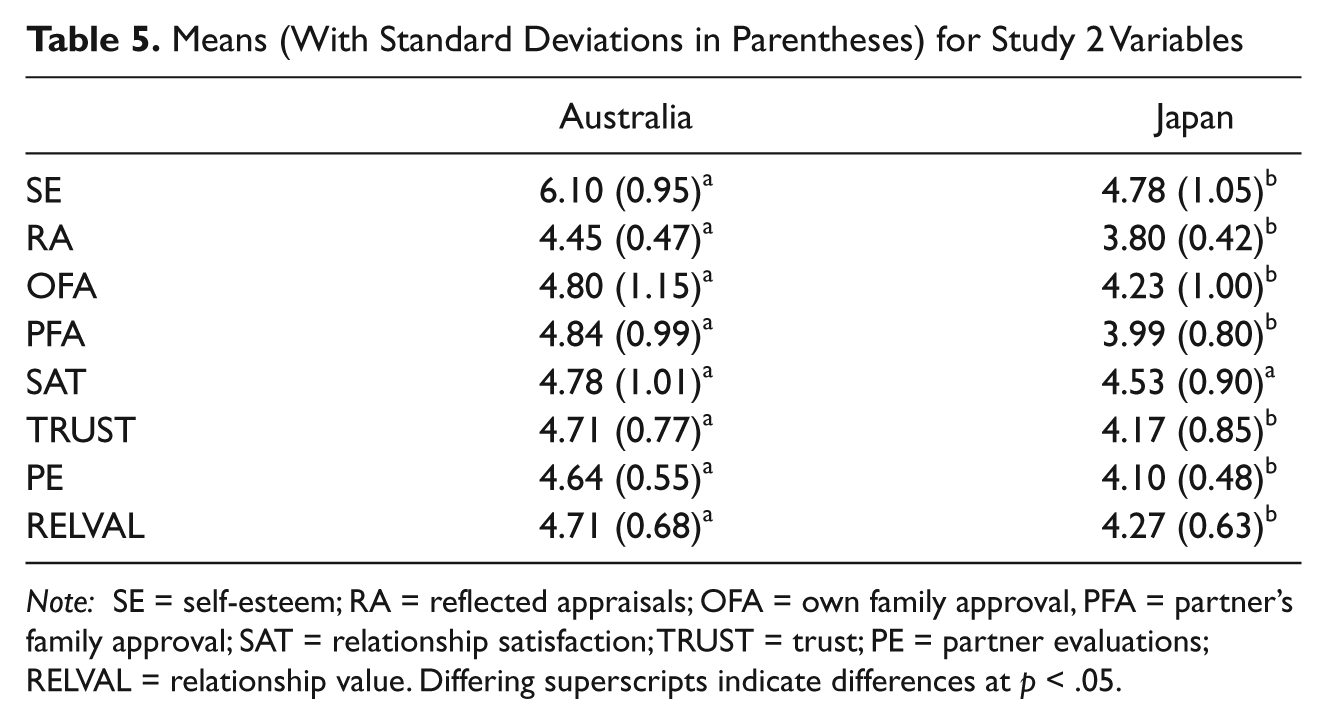
Note: SE = self-esteem; RA = reflected appraisals; OFA = own family approval, PFA = partner’s family approval; SAT = relationship satisfaction; TRUST = trust; PE = partner evaluations; RELVAL = relationship value. Differing superscripts indicate differences at p < .05.
Zero-Order Correlation Matrix for Study 2
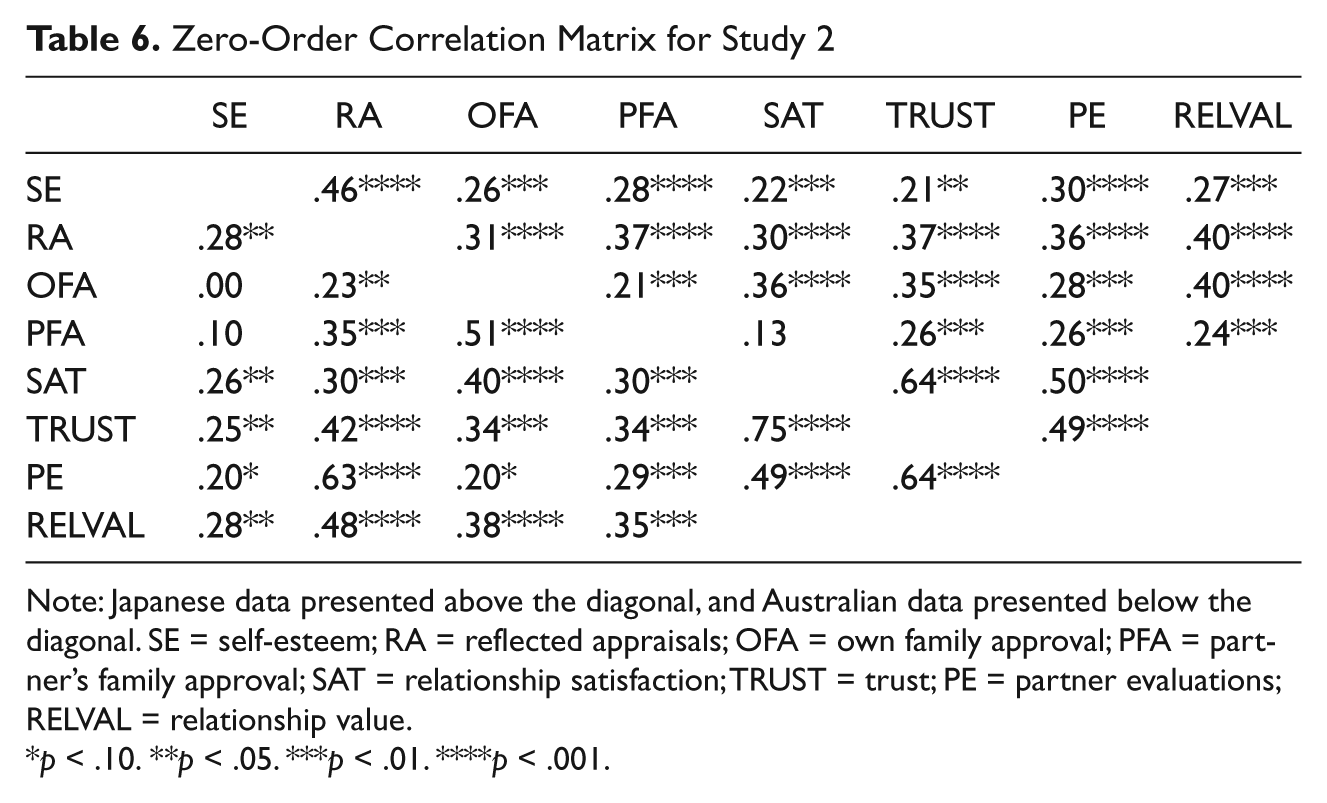
Note: Japanese data presented above the diagonal, and Australian data presented below the diagonal. SE = self-esteem; RA = reflected appraisals; OFA = own family approval; PFA = partner’s family approval; SAT = relationship satisfaction; TRUST = trust; PE = partner evaluations; RELVAL = relationship value.
p < .10. **p < .05. ***p < .01. ****p < .001.
The same procedure as in Study 1 was used for testing mediation. For Australian participants, the total effect of self-esteem on relationship value was significant, B = .20, p = .01 (see Figure 3). The direct effect (i.e., controlling for the indirect effects) of self-esteem on relationship value was marginally significant, B = .13, p = .07. Indirect effects tests revealed that whereas the indirect effect of reflected appraisals was statistically significant, the indirect effects of own family approval and partner family approval were not significant (see Table 7). For the Japanese sample, the total effect of self-esteem on relationship value was significant, B = .17, p < .001 (see Figure 4). The direct effect of self-esteem on relationship value was not significant, B = .03, p = .55. Indirect effects tests revealed that whereas the indirect effects of reflected appraisals and own family approval were statistically significant, the indirect effect of partner family approval was not (see Table 8). 3

Unstandardized regression coefficients for indirect effects analyses for Australian participants in Study 2. The value in parentheses represents the direct effect of self-esteem on relationship value (i.e., controlling for indirect effects).
Mediation of the Effect of Self-Esteem on Relationship Value by Reflected Appraisals, Own Family Approval, and Partner’s Family Approval for Australian participants in Study 2
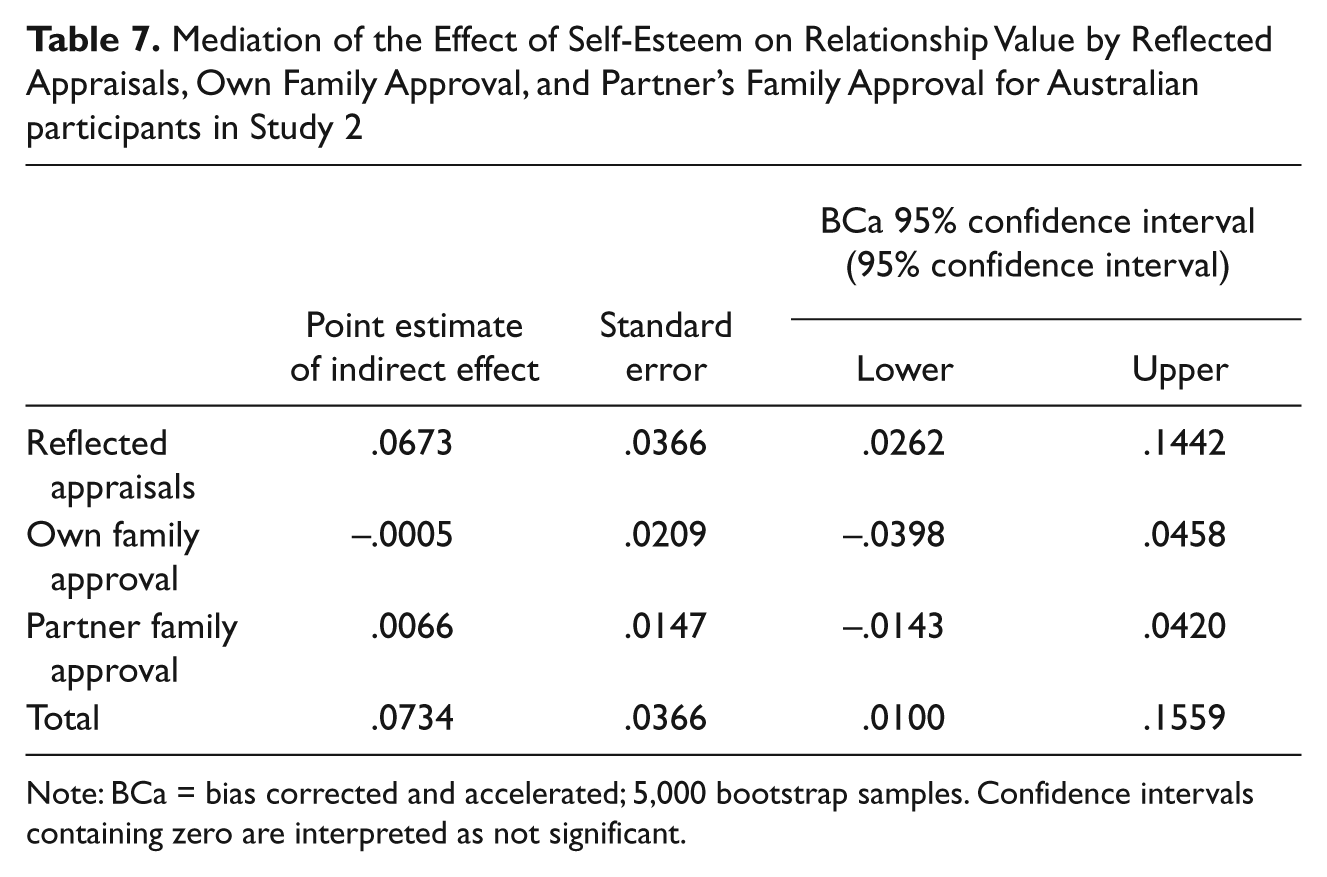
Note: BCa = bias corrected and accelerated; 5,000 bootstrap samples. Confidence intervals containing zero are interpreted as not significant.
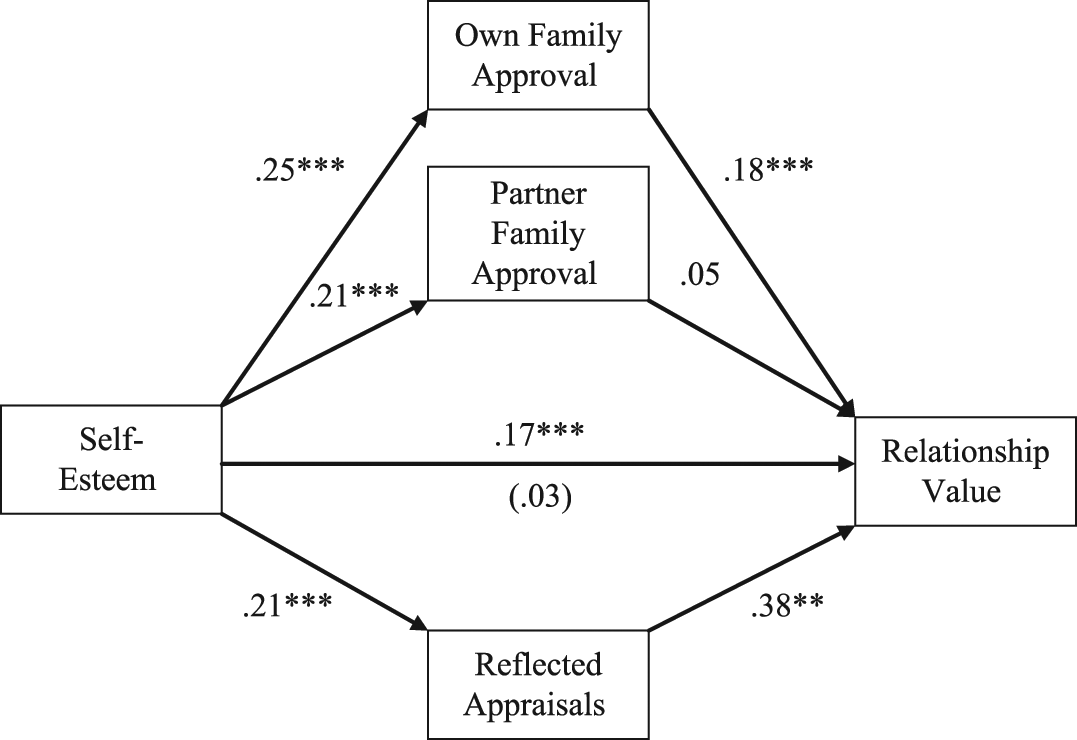
Unstandardized regression coefficients for indirect effects analyses for Japanese participants in Study 2. The value in parentheses represents the direct effect of self-esteem on relationship value (i.e., controlling for indirect effects).
Mediation of the Effect of Self-Esteem on Relationship Value by Reflected Appraisals, Own Family Approval, and Partner’s Family Approval for Japanese Participants in Study 2
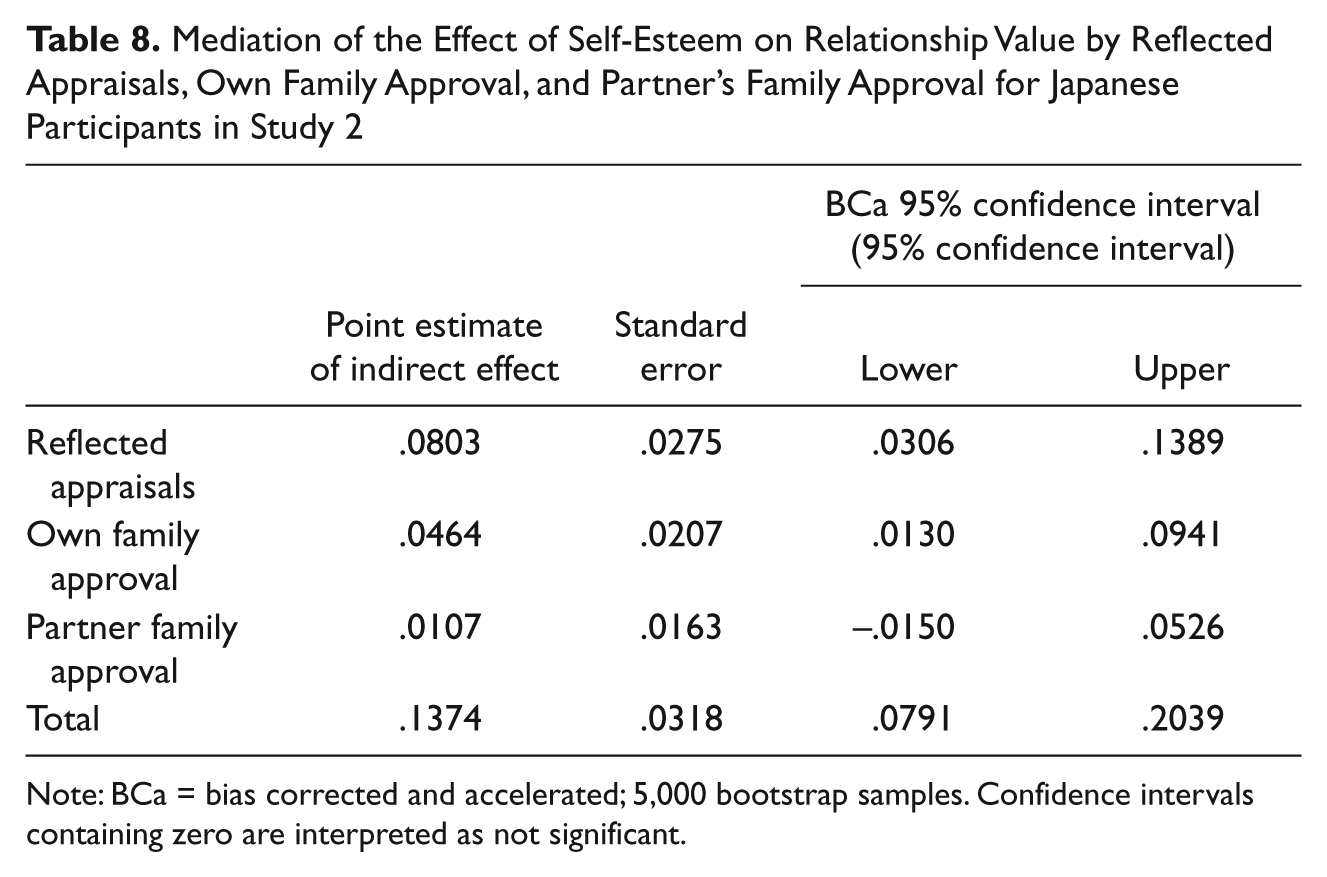
Note: BCa = bias corrected and accelerated; 5,000 bootstrap samples. Confidence intervals containing zero are interpreted as not significant.
Discussion
The data from Study 2 provide further evidence of our hypothesized processes regarding the relationships of family approval to value placed on a romantic relationship. Once again, in both countries, higher levels of self-esteem were associated with placing more value on the relationship. In Australia, this relationship was mediated by reflected appraisals but not own or partner’s family approval. One slight anomaly with earlier findings comes from the fact that a small, but significant, residual relationship was found between perceptions of own family’s approval and value placed on the relationship in the Australian sample. It is possible that this finding signals some degree of the weighing of family opinion in relationship valuation even in a Western context. If so, this is a finding that falls outside of the dependency regulation (and sociometer) framework, as perceptions of family approval were not predicted by self-esteem. As such, further theorizing would be needed to account for the result. However, the reliability of the finding is questionable given that it has not been replicated in our other data sets (unlike our other findings, MacDonald & Jessica, 2006) and given that the effect was not strongly significant (note, again, that the values in our figures are not standardized). On the other hand, the Japanese data revealed both reflected appraisals and own family approval to be significant mediators of the relationship between self-esteem and relationship value. Thus, in Japan as in Indonesia, the data are more clearly and strongly consistent with the notion that self-esteem is associated with confidence in approval from both partner and family, which in turn are associated with the value placed on a romantic relationship. However, as no effect of partner’s family approval was found, the data suggest that Japanese individuals may be attentive to the feelings of their own family more so than those of their partner’s family in weighing the viability of the relationship. Some caution must be maintained regarding this conclusion, however, given the relatively low reliability of the partner’s family approval measure.
General Discussion
The studies presented here are consistent with our theorizing regarding the role of perceived family approval when placing value on a romantic relationship. The current research not only replicates previous findings regarding family approval (MacDonald & Jessica, 2006) but also extends this work to previously untested countries and, in Study 2, more diverse and reliable measures. Data from two countries relatively low in collectivism and with traditions of relatively independent mate choice (Canada and Australia) show that self-esteem predicts the value placed on a relationship and that this relationship is mediated consistently by reflected appraisals. However, data from two countries relatively high in collectivism and in which parents play a larger role in mate selection (Indonesia and Japan) show that the relationship between self-esteem and value placed on a relationship is mediated both by reflected appraisals and the family’s approval of the relationship. In such cultures, confidence in approval from both partner and family, emanating from positive views of the self, may be needed for the sense of relationship viability that leads to a full willingness to value a romantic relationship.
The findings of the current research also add a degree of nuance to the accumulated body of evidence on the role of family approval across cultures. First, the data from Japan showed that whereas perceived approval of the relationship from one’s own family was strongly related to the value placed on a relationship, approval from a partner’s family was not. Because the findings regarding family approval from both Indonesian data sets (Study 1; MacDonald & Jessica, 2006) only test whether approval from a partner’s family relates to relationship value, it is unclear to what extent the Japanese finding is generalizable. Nevertheless, the data suggest that in the Japanese context, each individual may make peace with their own family regarding their decision on a marriage partner, with direct approval from the partner’s family considered a matter for the partner to concern themselves with. It is possible that such a weighing of relationship viability comes from historical norms in Japan, wherein arranged marriage was practiced only among wealthy elite (Blood, 1967; Walsh & Taylor, 1982). That is, historically, Japanese may have been strongly accountable to their own families due to a collectivistic societal structure, but not as accountable to the partner’s family in the manner practiced in cultures where arranged marriage has historically been more common and widespread (e.g., India; Yelsma & Athappilly, 1998).
It is also possible that any difference in the role of family approval across Japan and Indonesia may result from socioeconomic differences. In postwar Japan, families have increasingly become more nuclear as the nation has grown wealthier. Many people can afford their own separate dwelling and are less likely to live with parents after marriage than they did historically (Sugimoto, 2003; although it is still common for aged parents to live with one of their children). The nuclearization of the family may also be linked to increases in the age of first marriage (31 for men, 29 for women; United Nations World Marriage Data, 2008 United Nations World Marriage Data (2008). Singulate mean age at marriage. Retrieved from the World Wide Web 20/7/2012. http://www.un.org/esa/population/publications/WMD2008/WP_WMD_2008/Data.html)—people may hold off marrying until they have achieved enough economic success to support a family independently. In Indonesia, by contrast, people tend to marry at younger ages (27 for men, 23 for women; United Nations World Marriage Data, 2008), and newlyweds may lack the funds to live independently. Thus, in Indonesia there may be a constraint of partner’s family approval owing to economic realities. Indeed, this consideration highlights that there are many forms of culture (e.g., geographic region, socioeconomic status) that are likely to interact with each other in producing psychological phenomena (Cohen, 2009).
Overall, we believe the current work is an important step forward in not only highlighting the overlooked role of family approval in relationship valuation dynamics but also of beginning the examination of more fine-grained analyses of what sources of approval are considered relevant. Indeed, even more precise investigation of the roles of different sources of family approval may prove interesting. Such research could investigate dependency regulation dynamics not only with regard to own versus partner’s family but also with an eye toward approval from specific family members (e.g., mother, father, siblings) or friends (Zhang & Kline, 2009). Extending this work to include measures of approval provided by those family members and friends themselves could only enrich our understanding further.
As noted in the Discussion section of Study 2, the current results produced some evidence that family approval may play a role in relationship valuation in a less collectivist context (i.e., Australia). A small, but significant, relationship was found between perceptions that one’s own family approves of the relationship and value placed on the relationship. If replicable, the finding suggests the possibility that the role of family approval may be more universal than previously conceived. Arguably, this result is consistent with other research in the Western context showing that social network approval may exert influence on relationship commitment. Consistent with Johnson’s (1991) tripartite model of commitment, which holds that social network approval contributes to structural commitment, American couples who perceived greater approval from university friends (Etcheverry & Agnew, 2004; Etcheverry, Le, & Charania, 2008) and family members (Sprecher & Felmlee, 1992) reported greater commitment and were more likely to persist in their relationships. Moreover, partners who were more satisfied in their relationships perceived greater network approval, which was a more proximal predictor of commitment than actual network approval (Etcheverry et al., 2008). However, to our knowledge, none of this research on social network approval has first controlled for perceptions of approval from the romantic partner, as was done in the current research.
Altogether, then, we cannot at this point fully rule out a role for family approval in Western countries. Indeed, we believe a role for family approval in valuation of a relationship is more likely to be the rule than the exception globally because family maintains influence in mate selection in many of the world’s cultures (Buunk et al., 2008; Georgas, 2006). Indeed, Japan’s moderate levels of collectivism suggest it is a more representative country on this dimension than Canada or Australia. Given evidence for parental influence on mate selection in countries as geographically and culturally diverse as Ghana (Amponsah, Akotia, & Olowu, 2006), Brazil (Torres & Dessen, 2006), and Saudi Arabia (Achoui, 2006), consideration of family approval in valuing a romantic relationship is likely quite common. Nevertheless, the evidence thus far for the role of family approval above and beyond approval from one’s romantic partner in Australia and Canada is weak and inconsistent. More research on this point is needed.
Although much of the discussion of the current work has focused on the role of family approval, it is important to note that the current studies provide strong support for the role of reflected appraisals in the value placed on romantic relationships cross-culturally. In all four countries studied, the evidence consistently demonstrated that self-esteem predicted value placed on the relationship and that this relationship was mediated by perceived approval from one’s romantic partner. Thus, regardless of the importance of family approval in a particular region, feeling certain of a partner’s affections appears to be highly important for placing full value on a romantic relationship. This is consistent with the notion that, although family involvement in mate choices varies across the four cultures we studied, each culture allows for some degree of input from the individuals in the relationship. An interesting and strong test of the role of reflected appraisals would come from an investigation of fully arranged marriages with little independence in mate choice on the part of the partners.
Another important test of the generalizability of the current results would be examination of married, rather than dating, couples. It is possible that marriage cements the new family bond, leaving approval from family as less of a salient concern. However, given the social and economic enmeshment between extended family members in cultures featuring family influence in mate selection, a newcomer to the family is likely to affect the welfare of everyone else even after marriage. In Indonesia, for example, newlywed couples often live with either set of parents until they are able to afford their own residence (Williams, 1989)—a domestic arrangement that has important consequences for parents and extended family. Thus, at least early in marriage, we would expect family approval to continue to play a key role in regulation of emotional dependence. A related question is whether unmarried individuals from cultures relatively low in collectivism may begin to take family opinion more into account as they get closer to marrying age. As the participants in our research were still in university, it is an open question whether the current results would replicate with a sample of dating individuals who are older than those in our current sample.
Of course, a key limitation of these data is that they are purely correlational. Although we believe that our ability to replicate our results across studies and cultures speaks to the robustness of the findings, our methodological approach limits our ability to speak confidently to causation. Indeed, Maxwell and Cole (2007) have argued that cross-sectional mediation analyses may be subject to high degrees of imprecision. We believe that confidence in our causal interpretation is buffered by past research, which has supported the causal paths posited by the dependency regulation model using longitudinal methodology (Murray et al., 2000), but further research is ultimately needed to support our causal claims.
Another limitation is that in the current set of studies we were unable to test for the measurement equivalence of the measures used for the analyses. Tests of measurement equivalence examine to what degree the measures used to assess constructs have equal meaning across cultural groups (French & Finch, 2006). Although measurement equivalence is important to establish, its examination requires structural equation modeling. We were unable to use this analysis technique in our study because many of our measures contained a large number of items, but our sample was relatively small. The more items a measure contains and the more complex the hypothetical model that is to be tested, the larger the size of the sample that would be required to be able to use structural equation models (Bentler & Chou, 1987). Unfortunately, in our studies we had a complex mediation model, measures with a large number of items, and a small sample, which prevented us from being able to test for equivalence of our measures across cultural groups. We believe that this is a very important avenue for future research. It would greatly benefit scholars studying relationships to have an established set of measures that are shown to be equivalent across cultures that could be used in cross-cultural studies of relationship dynamics.
Future research on the influence of family in dependency regulation may benefit from more direct measurement of the importance placed on family opinion. For example, research with immigrant families in Canada has shown that children of immigrants adopt mate preferences similar to their parents particularly when they feel a strong connection to family (Hynie, Lalonde, & Lee, 2006; Lalonde, Hynie, Pannu, & Tatla, 2004). Thus, it is possible that the influence of family approval on dependency regulation is moderated by feelings of connection to family, especially in the context of immigration wherein the dominant culture exerts a direction of influence different from that of one’s parents. Furthermore, to the extent the Westernization is exerting an increasingly powerful, global influence, a resulting generational gap may increase the importance of family connection variables in mate preferences worldwide.
The present research serves as a reminder that romantic relationship research conceived and conducted in North America and other Western regions is vulnerable to ignoring at least one key dynamic integral to relationship processes in other world regions—the influence of family. Our results suggest that, in many parts of the world, full confidence in relationship viability is achieved only with belief in approval from family members.
Footnotes
Declaration of Conflicting Interests
The authors declared no potential conflicts of interest with respect to the research, authorship, and/or publication of this article.
Funding
The authors disclosed receipt of the following financial support for the research, authorship, and/or publication of this article:
This research was supported by a Social Sciences and Humanities Research Council of Canada Grant awarded to the first author.