



Abstract
Forager societies tend to value egalitarianism, cooperative autonomy, and sharing. Furthermore, foragers exhibit a strong gendered division of labor. However, few studies have employed a cross-cultural approach to understand how forager children learn social and gender norms. To address this gap, we perform a meta-ethnography, which allows for the systematic extraction, synthesis, and comparison of quantitative and qualitative publications. In all, 77 publications met our inclusion criteria. These suggest that sharing is actively taught in infancy. In early childhood, children transition to the playgroup, signifying their increased autonomy. Cooperative behaviors are learned through play. At the end of middle childhood, children self-segregate into same-sex groups and begin to perform gender-specific tasks. We find evidence that foragers actively teach children social norms, and that, with sedentarization, teaching, through direct instruction and task assignment, replaces imitation in learning gendered behaviors. We also find evidence that child-to-child transmission is an important way children learn cultural norms, and that noninterference might be a way autonomy is taught. These findings can add to the debate on teaching and learning within forager populations.
Introduction
Anthropologists and psychologists have long been interested in how cultural beliefs, chore assignment, and subsistence strategy influence the development of culturally sanctioned behavior and personality traits (e.g., Barry, Bacon, & Child, 1957; Barry, Child, & Bacon, 1959; Whiting & Whiting, 1975). Small-scale agricultural societies are well-represented in this research, but fewer studies have been conducted among the world’s hunter-gatherer (or forager) populations (see Nielsen & Haun, 2016, for discussion). Furthermore, although cross-cultural studies on how forager children learn subsistence skills have become more common within the anthropological discipline (e.g., Lew-Levy, Reckin, Lavi, Cristóbal-Azkarate, & Ellis-Davies, 2017; MacDonald, 2007), few studies have explored the ways social norms and values are transmitted among foragers. This is surprising for two reasons: first, forager cultures are tremendously diverse, occupying virtually every environment in the world. And yet, most exhibit common foundational schemas, including egalitarianism, an emphasis on cooperative autonomy and sharing, and a gendered division of labor (e.g., K. M. Endicott, 2011; Leacock & Lee, 1982; Lee, 1992; Marlowe, 2007; Woodburn, 1982). Thus, understanding how these foundational schemas develop and how their ontogeny might differ across foraging societies can contribute to our understanding of how cultural features are perpetuated across generations.
Second, within the field of social learning, the frequency and importance of teaching in small-scale societies has become a matter of debate (B. S. Hewlett & Roulette, 2016; Lancy, 2010). Although an increasing number of studies demonstrate that teaching occurs in small-scale societies (Boyette & Hewlett, 2017; Garfield, Garfield, & Hewlett, 2016; B. S. Hewlett & Roulette, 2016; Kline, Boyd, & Henrich, 2013), few studies have explored the role of teaching in the transmission of social and gender norms among foragers. Such research could contribute new data and propose novel theoretical implications for the debate surrounding the presence of teaching in small-scale societies in general, and in foragers in particular.
Considering these gaps, the present article aims to answer two main questions: first, what are the prominent methods and settings in which forager children learn social and gender norms cross-culturally? And, second, does the transmission of social and gender norms occur through teaching? To answer these questions, we conduct a meta-ethnographic analysis on how foragers learn social and gender norms across childhood. Although we are not the first to use a systematic cross-cultural approach to investigate children’s learning (Barry et al., 1957, 1959; Garfield et al., 2016), the meta-ethnographic method represents a novel approach to studying this topic. Indeed, meta-ethnographies are ideal for uncovering broad patterns from quantitative and qualitative data together, registering commonalities and differences otherwise overlooked (Britten et al., 2002; Campbell et al., 2003). Before we outline our methods and findings, we will briefly describe the foundational schemas of foragers, key features of hunter-gatherer childhood, and children’s learning processes.
Background
Foundational Schemas
Human development is not determined by biology alone. A variety of environmental, cultural, and psychological features interact to influence how a child grows (Bronfenbrenner, 1979; Super & Harkness, 1986). Within many foraging societies, several common cultural features, or “foundational schemas”—defined as “cultural values and ways of thinking and feeling that pervade several domains of life” (B. S. Hewlett, Fouts, Boyette, & Hewlett, 2011, p. 1171)—make up the cultural setting of children’s development. These are egalitarianism, the emphasis on sharing, cooperative autonomy, and the gendered division of labor (B. S. Hewlett et al., 2011; B. S. Hewlett, Lamb, Leyendecker, & Scholmerich, 2000).
Perhaps hunter-gatherers’ most talked-about foundational schema is egalitarianism. According to Woodburn (1982), equality among some forager groups is achieved through direct access to resources and mechanisms that prevent the accumulation of wealth, power, and prestige. Equality is promoted through flexible social groupings, and by allowing individuals freedom to choose with whom they associate in a variety of contexts, including subsistence activities, trade, and ritual activities (Lee & Daly, 1999; Woodburn, 1982). As a consequence, there are few effective means of coercion among egalitarian cultures, and leadership is often temporary, task-related, and constrained, rather than a permanent hold on power (Gowdy, 1997; Lee & Daly, 1999).
Sharing, often considered another foundational schema for hunter-gatherers, acts as a leveling mechanism, systematically disengaging people from property and therefore from the potential for property to create dependency (Woodburn, 1982). While most studies on sharing tend to focus on the distribution of large game meat (Bodenhorn, 1990; Hawkes, O’Connell, & Blurton Jones, 2001; Testart, 1987; Woodburn, 1998), the demand to share includes a wide variety of food items and objects, as well as the sharing of time, actions, spaces, and experiences (Bird-David, 1999; Kent, 1993). Socially, sharing is a primary axis around which relationships are formed and negotiated (Bird-David, 1990, 1992; Myers, 1986; Peterson, 1993).
While the notion of sharing highlights the importance of giving and being with others, many foraging peoples consider personal autonomy equally significant. Personal autonomy manifests in valuing and enabling individual decision making. Individuals are often free to choose their actions and behaviors, their whereabouts, and their social association. Such freedom makes it difficult to assert permanent social or political power over others (Gardner, 1966, 1991, 2000; Morris, 2014). Like sharing, autonomy acts as a social mechanism that undermines coercion, authority, or hierarchy. However, the notion of personal autonomy certainly does not imply independence from others. Autonomy can—and does—co-exist with a strong commitment to solidarity (Gibson & Sillander, 2011). K. M. Endicott (2011), working with the Batek, refers to this kind of autonomy as cooperative autonomy, emphasizing the sense of groupness rather than the single individual. He argues that ethical principles such as obligations to be self-reliant, nonviolent, and noncompetitive influence behavior and help to create balance between autonomy and cooperation (see also Boehm, 1997; Helliwell, 1995; Ingold, 2000; Myers, 1986; Schooler, 2013).
Gendered behavior plays an important role in allowing many hunter-gatherer societies to maintain cooperation and autonomy. And yet not all foragers have the same, or equally rigid, gendered behaviors. Factors like environment and technology influence the degree to which men and women will participate in different foraging endeavors. Marlowe (2007) found that, in environments with more plant growth, men are more likely to participate in gathering than in other environments. Mikea men, for example, often gather roots during Madagascar’s dry season (Kelly, 1995). Among the Aka, women commonly participate in net hunting, which requires the efforts of the entire community (B. S. Hewlett, 1991; Marlowe, 2007). In fact, many women hunt and trap small game across foraging societies, and some women, like the Agta, hunt large game, too (Goodman, Bion, Griffin, & Estioko-Griffin, 1985). Despite ongoing research on the cultural values shared by foragers, little research has been conducted on how forager children learn these gendered behaviors (see Boyette, 2016a; Boyette, 2016b; Crittenden, 2016; B. S. Hewlett et al., 2000, for notable exceptions).
Common Features of Hunter-Gatherer Childhood
Egalitarianism, sharing, cooperation, autonomy, and a gendered division of labor all provide the basis for common features of childhood within foraging communities. Indeed, Konner (1976, 2005, 2010) argues that across many hunter-gatherer societies, infants are in constant contact with others; they are nearly always held, they co-sleep with mothers and other adults, and they are nursed frequently. Furthermore, not only mothers but also fathers, other adults, and older children care for children frequently, and promptly respond to fussing and crying (Draper & Cashdan, 1988; B. S. Hewlett, 1991; B. S. Hewlett, Lamb, Shannon, Leyendecker, & Scholmerich, 1998). In most but not all hunter-gatherer societies, breastfeeding is child-led, and weaning is child-directed (Fouts & Lamb, 2005; Konner, 1976; Marlowe, 2010; Takada, 2005). Because of these features, anthropologists consider some hunter-gatherers to be “indulgent” parents. This is especially demonstrated in instances of foraging parents allowing infants and young children to touch or play with dangerous objects, such as machetes (B. S. Hewlett & Lamb, 2005). Konner (2005) also suggested that, from middle childhood to adolescence, childhood is relatively carefree. This is exemplified by the primacy of multi-age peer playgroups during this time. Because respect for autonomy is a key value among many hunter-gatherers, children receive relatively little instruction and chore assignment (Draper, 1976; B. S. Hewlett et al., 2011; Marlowe, 2010). Despite little parental intervention throughout childhood, foragers nonetheless grow up to be competent adults.
Learning Processes
Social learning can be defined as the transfer of information between individuals who are interacting socially. Individuals learn socially through processes including play, participation, observation, imitation, and teaching (Caro & Hauser, 1992; Chick, 2009; Crittenden, 2016; Gaskins & Paradise, 2009; B. S. Hewlett et al., 2011; Rogoff, Paradise, Arauz, Correa-Chávez, & Angelillo, 2003). Children learn through play, where they practice cultural scripts and specific skills. They recreate social scenes displayed in camps and villages (Göncü, Jain, & Tuerner, 2006; Lancy, 1996), pretend to pound grain using sand and sticks, and play at target shooting (Bock, 2002, 2005; Bock & Johnson, 2004). Participation allows children to refine their skills as they help family with chores (Hasse, 2014; Lancy, 2012; Rogoff et al., 2003). Finally, through observation and imitation, children learn proper etiquette, social skills, and subsistence skills without direct intervention from adults (Chick, 2009; Gaskins & Paradise, 2009).
The existence of formalized teaching in small-scale societies has been a matter of debate. Although many argue that teaching is a key human adaptation which does not exist in other animals (e.g., Gergely & Csibra, 2006; Tomasello, Kruger, & Ratner, 1993), others argue that teaching does not occur in all cultures, often using foragers as the example. Lancy (2010) defines teaching as “the active and systematic intervention of a teacher whose goal is to change the behaviour of a learner” (p. 1), leading him to conclude that teaching is absent in the small-scale societies he studied. On the contrary, a more functionalist definition argues that teaching involves a teacher modifying his or her behavior in the presence of the student “at some cost, or at least without obtaining immediate benefit” to facilitate a learning experience for the student (Caro & Hauser, 1992, p. 153). This cost to the teacher may be cognitive, such as developing the cognitive tools necessary to perform teaching, or may involve the direct input of time and energy involved in teaching. Benefits are usually defined as the inclusive fitness associated with the acquisition of new information through teaching (Fogarty, Strimling, & Laland, 2011; Thornton & Raihani, 2008).
Using this functionalist definition, B. S. Hewlett and Roulette (2016), Kline (2015), and others (Boyette, 2013; Boyette & Hewlett, 2017; B. S. Hewlett et al., 2011) propose that negative and positive feedback, chore assignment, and commands are all examples of teaching. When these behaviors are included in its definition, teaching does seem to occur within small-scale agricultural and forager societies (Boyette & Hewlett, 2017; B. S. Hewlett et al., 2011; B. S. Hewlett & Roulette, 2016; Kline et al., 2013). However, though teaching provides the quickest avenue for learning, teaching may also hinder autonomous exploration (Bonawitz et al., 2009, 2011). In an experiment conducted by Bonawitz et al. (2009) among Euro-American preschoolers, children who received direct instruction while completing a puzzle task were less likely to find novel, autonomous solutions to the task when compared with children who did not receive direct instruction. Considering the importance of autonomy among foragers, this article seeks to consider whether, cross-culturally, we see evidence of foragers teaching social norms.
Another debate within the field of anthropology is whether forager parents actively teach gendered behaviors or whether they are the result of self-identification with same-sex adults. For example, gendered behaviors are often reinforced by parents, who encourage gender typical behaviors and discourage gender-atypical ones (Montgomery, 2009). Furthermore, Whiting and Whiting (1975) and Whiting and Edwards (1973) suggested that chore assignment influenced gendered behaviors. When chores take children further from the home herding cattle, or keep them close to the domestic sphere sweeping the floor or caring for infant siblings, all of these choices influence the development of personality, including nurturant or responsible behaviors. Finally, the timing of chore assignment also influences the development of gendered behaviors; Munroe, Munroe, and Shimmin (1984) found that girls in four cultures were assigned chores earlier than boys. However, Draper (1975) has questioned whether parental intervention is the sole cause of gendered behaviors. Indeed, despite maintaining a gendered division of labor in adulthood, forager girls and boys are assigned few chores and grow up within the same learning environment (Blurton Jones & Konner, 1973; Draper, 1976; B. L. Hewlett & Hewlett, 2012; Marlowe, 2010). To account for these findings, Draper (1975) proposed the theory of self-identification, which posits that children imitate the behavior of adults who share the same biological sex as themselves. Thus, understanding how gendered behaviors are learned among distinct foraging populations might shed light on the degree to which teaching plays an important role in this learning process.
Considering the debates outlined above, the present study aims to examine how children acquire social and gender norms within foraging communities. This question adds to the timely debate regarding social learning and teaching among foragers, especially because recent studies have focused on learning subsistence skills, and thus have overlooked how children learn social skills. A cross-cultural approach can let us determine trends from broad available data, which can then serve as a meaningful comparison for previous research conducted on learning in other small-scale societies and industrialized cultures (Nielsen & Haun, 2016).
Method
To identify themes addressed by previous research on learning social skills, synthesize these results, and illustrate emerging questions, our team conducted a meta-ethnography. Meta-ethnographies involve “selecting relevant empirical studies to be synthesized, reading them repeatedly and noting down key concepts” (Campbell et al., 2003, p. 673). They are primarily used to synthesize qualitative findings in medical fields. However, meta-ethnographies provide a systematic approach to comparing various forms of research, including quantitative and qualitative studies, and thus are applicable across several fields of research (Britten et al., 2002; Lew-Levy et al., 2017; MacEachen, Clarke, Franche, & Irvin, 2006). Unlike meta-analysis, meta-ethnography by definition includes both quantitative and qualitative data, which allows us to include a much broader range of studies, including older material.
Identification of Papers
We identified papers using the following electronic databases: PsycInfo, JStor, Springer, Wiley, and Science Direct. We found book chapters and books using the above databases, Google Books, and the Cambridge University Library system. We used ProQuest to find dissertations. We searched with the following terms: “forager” OR “hunter-gatherer” with “child” and with “learn,” OR “transmission” OR “socialization” OR “skill acquisition.”
We searched the electronic Human Relation Area Files (eHRAF) World Cultures (ehrafworldcultures.yale.edu) online as of January 2016 for older publications. Specifically, we used the codes “socialization” (OCM code 860), “infancy and childhood” (OCM code 850), “learning behaviour” (modification of behavior—OCM code 153), and “learning processes” (ethnopsychology—OCM code 828) from the Outline of Cultural Materials (Murdock et al., 2008). We only read studies conducted among cultures considered hunter-gatherer or primarily hunter-gatherer by HRAF staff. This provided us with a list of references mentioning learning, which we then investigated individually to determine if the source focused on learning among hunter-gatherer children.
In addition, we found studies by searching the bibliographies of book chapters, published papers, and qualitative reviews on learning in hunter-gatherer childhood. We also searched the publication lists of all first authors, and contacted them to ensure we had not missed a published paper, PhD thesis, or unpublished manuscript. We also provided first authors with our working bibliography in case they noticed something missing. Finally, to ensure that we included as many papers from as many hunter-gatherer societies as possible, we contacted all authors who contributed sections to the Cambridge Encyclopedia of Hunters and Gatherers (Lee & Daly, 1999).
Study Selection
We included studies if they met the following three criteria: first, the societies in question needed to be hunter-gatherers; second, the study’s focus should be primarily on learning; and finally, we focused on learning in childhood. Over the years, researchers have variously defined hunter-gatherers as any people who do not tend domesticated plants and animals, as small-scale, egalitarian societies, or just generally as mobile peoples. And yet, for each of these categories, and any others ascribed to hunter-gatherers (lack of food storage, low birthrates, etc.), the tremendous diversity worldwide means there is always a group that does not fit. Our ultimate interest in this study is how children learn in small-scale, relatively egalitarian societies, so the social definition of hunter-gatherers became most important for us. Therefore, we remove groups whose economy historically relied entirely on foraged foods, but who are also densely socially stratified, like Pacific Northwestern tribes—the Kwakiutl, the Nootka, or the Makah. Economically, no forager today is completely isolated from agricultural or cash economies. Yet many still operate in small-scale, egalitarian societies. Thus, we have no qualms including foraging groups who also trade labor and goods with their farming neighbors, like the Aka.
We have exercised our judgment on the inclusion of studies about Australian and North American indigenous peoples, whose cultures are foundationally foraging ones and who continue to participate in foraging activities though they have been forcibly removed from their former lifeways. In such cases, we excluded studies about mission schools, for example, but included works about socialization among traditionally foraging cultures. Where we discuss such populations, which are relatively sedentarized and have access to schools, we discuss the potential impacts of these changes explicitly. Finally, the absence of a particular foraging group from our sample may simply mean that our search criteria did not return relevant research on children’s learning from that group. It does not necessarily mean that we excluded them purposefully from the study.
We only included studies devoting specific attention to learning social and gender norms in this review. These include some older publications, primarily retrieved from the eHRAF, that tend to have broader sections describing childhood that include discussions of socialization. We are interested in all stages of childhood, including infancy, early childhood, middle childhood, and adolescence.
It is important to note that we only included studies that are at least partially based on primary data, including ethnographic, quantitative, and experimental. We excluded studies with only secondary data, such as literature reviews, studies using the Standard Cross-Cultural Sample, or theoretical arguments. These were excluded because they are secondary sources, but their references were investigated to find relevant primary sources. We also excluded conference proceedings and publications in languages other than English. We then sorted these studies into two overall groups: studies on learning subsistence skills (Lew-Levy et al., 2017) and studies on learning social skills and gendered behaviors. The present article focuses on the latter topic. We created this artificial separation between these two topics because the extraordinary quantity and complexity of data involved made including all results in one paper prohibitive. Clearly, learning the social and subsistence skills of a forager are bound together. For these reasons, we link the results of our “learning to forage” paper with this one throughout the discussion.
Data Extraction and Synthesis
Data collection occurred between January and March 2016. For each paper, we outlined descriptive data, including the study field, the hunter-gatherers surveyed, the age groups included, and the year of publication. We also gathered methodological data, including whether the study was qualitative, quantitative, narrative, or experimental, and the objective or hypothesis of the study. Finally, we outlined the results of the study. We then categorized the publications according to theme. For each theme, like autonomy or sharing, we highlighted the age at which learning that skill takes place, the learning process and the transmission mechanism, and any emerging trends and debates.
Results
Descriptive Statistics
From the initial search, we identified 1,202 studies as potential papers to include (Figure 1). From these, we retained 596 abstracts, of which 236 full texts were examined. From those papers that met our inclusion criteria, we searched through the references for relevant publications, and contacted 60 first authors (we could not locate four email addresses), half of whom responded. We contacted 37 contributors from the Cambridge Encyclopedia of Hunters and Gatherers (we could not locate 14 email addresses), of whom nine responded. We also examined the references from six reviews on closely related topics (Bugarin, 2006; Eickelkamp, 2010; Herzog, 1984; B. S. Hewlett, 2014; Keith, 2008; MacDonald, 2007). This yielded another 348 publications. After refining our inclusion criteria, we extracted a total of 77 publications that focus on learning social skills in hunter-gatherer children. Of all the papers included in this review, 66 publications (86%) include qualitative data; 23 papers (30%) include quantitative data; and three papers (0.4%) include narrative accounts of learning social skills. 1 Finally, only one used an experimental paradigm. There has been an average of 0.9 publications a year since 1937 (Figure 2). However, with the publication of Montagu’s (1978) edited volume “Learning Non-Aggression: The Experience of Non-Literate Societies,” three chapters of which are included in this review, the number of publications per year has risen; prior to 1978, an average of 0.34 papers on the topic of learning social and gender norms were published a year, while after 1978, an average of 1.55 papers on the topic have come out per year. Note that the recent spike in studies on learning can be attributed to Terashima and B. S. Hewlett’s (2016) edited volume titled “Social Learning and Innovation in Contemporary Hunter-Gatherers: Evolutionary and Ethnographic Perspectives,” which includes seven chapters used in this review. The most commonly represented single groups are the Aka (13 publications; 17%), Inuit (12 publications; 16%), and San (10 publications; 13%; Table 1).
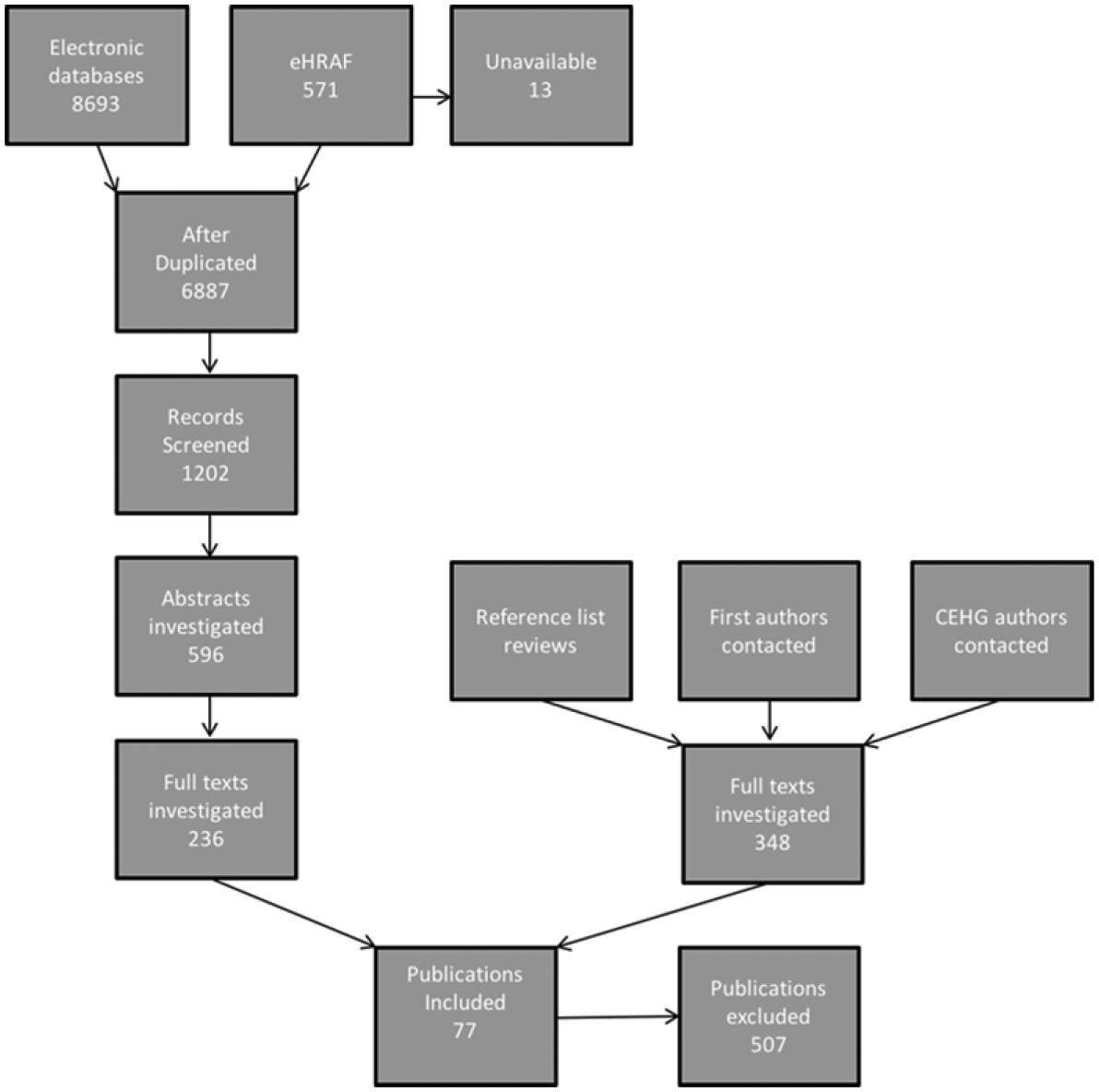
Flow chart of publication retrieval procedure.
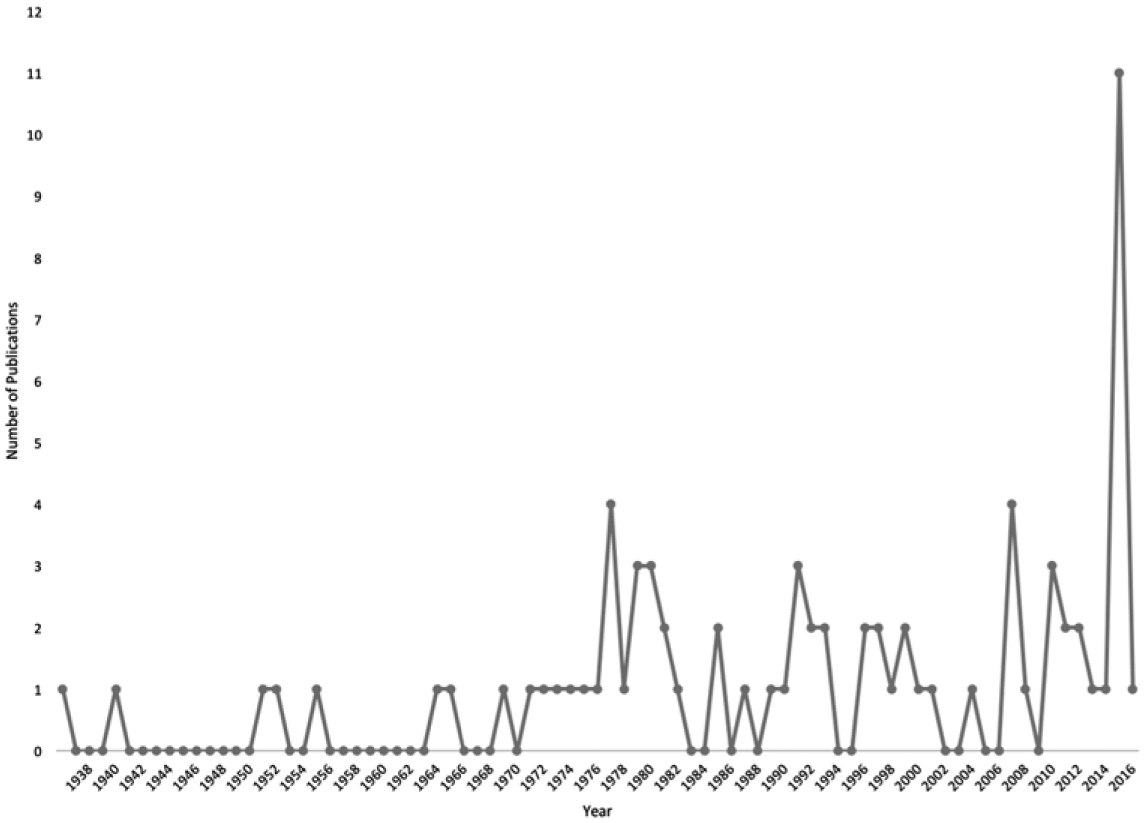
Number of publications meeting the review criteria, per publication year.
Contributing Authors and Number of Studies Included in the Review by Culture and Continent.
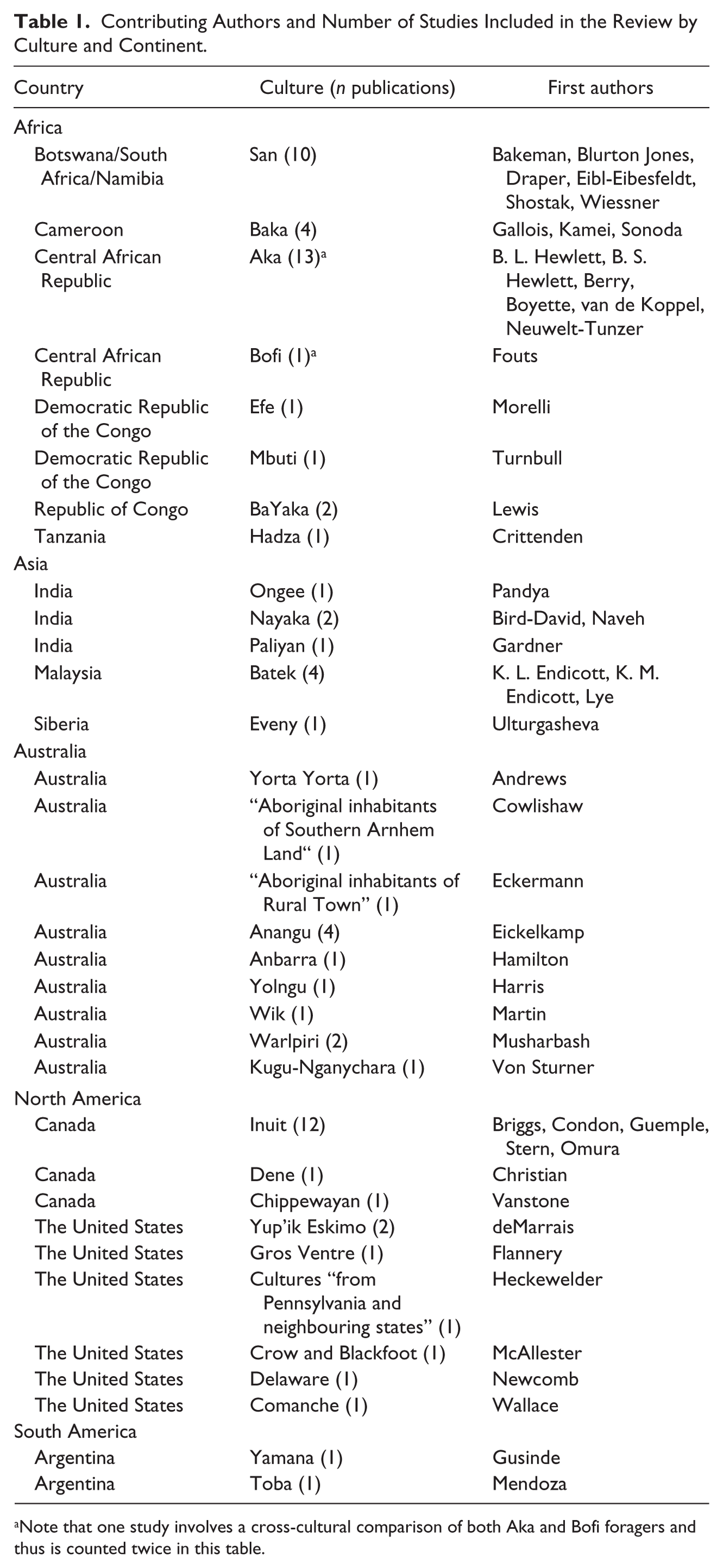
Note that one study involves a cross-cultural comparison of both Aka and Bofi foragers and thus is counted twice in this table.
The themes identified by our team include the following: 19 (25%) publications included data on learning to become a social persona, 36 (47%) publications focused on learning autonomy, 22 (29%) publications were on how children learn about cooperation and/or aggression, nine publications (12%) focused on learning to share; and finally, 24 publications (31%) discussed the development of gendered behaviors. Below each of these themes are unpacked in turn.
Learning to Become a Social Persona
The development of knowledge regarding morality, social structures, and kinship is central to becoming a social persona. Several studies (Briggs, 1970; Guemple, 1988; Stern, 1999) argue that the Inuit, specifically, believe social sense naturally develops as the child grows. Stern (1999) argues the Inuit perceive intelligence as the intellectual faculty that makes it possible for people to respond to their physical and social surroundings and conform to social expectations. Likewise, Briggs (1970, 1978) argues that people expect very little from young Inuit children as they have no ihuma (sense, reason). Growing up is a process of acquiring ihuma, as a child begins to respond to the social world, recognize people, speak, become shy and self-conscious, and learn to participate in activities. Both Briggs (1970, 1978) and Guemple (1988) agree that the Inuit believe there is no point in trying to teach a child before he or she shows signs of possessing some ihuma. Only once he or she does, around the age of 5 to 6, can adults act to direct and encourage social behavior (Briggs, 1970). Similarly, for the Nayaka, Bird-David (2008) and Naveh (2016) argue that growing up is associated with developing budi (the skill of living together with relatives). Children are expected to attain social skill and budi by themselves and, in fact, knowing how to be with others is seen as the main goal of learning in general. What B. S. Hewlett and Roulette (2016) call “distribution teaching,” where Aka parents routinely turn children on their laps to face others within the camp, might also be a way parents transmit the important skill of living together.
In her numerous publications, Briggs (1979, 1998, 2000) describes a specific Inuit socialization game she calls the “morality play,” played by adults with children, that teaches Inuit social values and proper behavior by proposing difficult hypothetical situations. In a playful mode, adults ask children questions that the child perceives as personally threatening, and then dramatize the consequences of various answers. This way, adults raise to consciousness issues that will be of great consequence for the child’s life (Briggs, 2000). By presenting and dramatizing social problems, the games make moral issues conceptually clear and emotionally vivid, and force children to solve them. Turnbull (1978) argued Mbuti children play their own morality games, without adult interference, by imitating adult fights they have seen and trying to solve them more effectively than the adults, allowing them to explore the rules of difficult social engagement.
One of the first things children learn when they start communicating with others is proper kinship terms and kin relationships. Andrews (2008), working with the Yorta Yorta, pointed out the importance of kinship terms in a culture where people often use such terms to address one another. Unsurprisingly, they are introduced early to babies as an important part of their socialization (Andrews, 2008). Among the Kugu-Nganychara (Von Sturmer, 1980), the child is firmly located within a network of close-kin called “sides,” which link the child with specific relatives. Names are transmitted from grandparents to children to establish a particular connection. Those ties are used to confirm and legitimize different social, economic, and political claims as well as rights to residence and tenure of land. In this context, adults confer knowledge of kinship terms through the idiom of nurturing, giving and receiving of care, and nourishment and protection. Guemple (1988) showed how games are used to teach kinship terms to Inuit infants by 18 months. In early childhood, adults ask children to bring objects to different people using kin terms and positively reinforce their success. By age 6, adults play a game with children which teaches relatedness between people. In addition, ritual relationships become a training ground where adults model appropriate treatment of relatives. The acquisition of ritual relatives at early ages provides a concrete basis for children to act out the values underlying the social system as a whole, including generalized exchange (Guemple, 1988). The Eveny extend the notion of kinship to include reindeer, who play an important economic and spiritual role in the lives of children and adults (Ulturgasheva, 2012). A child’s growth is marked through the development of reindeer, and children’s developmental milestones are measured in their ability to care for and train their reindeer.
Foragers also use stories and storytelling to relate broad social skills, sometimes specifically between children. Yupik girls even have a special tool for sketching stories in snow or earth: a story knife (DeMarrais, Nelson, & Baker, 1992, 1994). Stories told with story knives, related mostly by older girls to younger girls, teach the norms and values of the community, depict gender roles, and focus on environmental knowledge. They allow girls to practice subsistence and social skills without requiring adult time and attention. Sand storytelling among Australian Anangu children has many parallels with the Yupik, and is often used to emphasize particular social ideas, like autonomy (Eickelkamp, 2008a, 2008b). Specifically, Eickelkamp (2008a, 2008b) argues that sand storytelling transforms early life experiences into symbolic representations that link infancy and early childhood with the rest of Anangu cultural life. For example, sand stories emphasize the importance of having a mind of one’s own in the company of others, helping children to understand the dual principles of autonomy and relatedness.
Finally, song may also contribute to children’s development into social personas. Indeed, Lewis (2016) argues that the polyphonic singing of BaYaka foragers primes children behaviorally for their participation in adult life. As polyphonic singing requires acute awareness of another’s voice while maintaining a distinct melody, BaYaka adults are also aware of the behaviors and intentions of others, and act both independently and complementarily to those within their social group. As Lewis (2016) notes, polyphonic singing, ritual play, and a complex taboo system named Ekila
familiarizes participants with culturally specific ways of organizing themselves into groups and of understanding the world, shows them to be effective, and then leaves it up to the individual and group to make them relevant to the current moment, or not. (p. 153).
Learning Autonomy
One strong cross-cultural theme that emerges from our analysis is the importance many hunter-gatherers place on autonomy, even among infants. For example, by allowing a child to act autonomously, the Anangu believe children are able to grow into who they really are (Eickelkamp, 2017). Martin (1993) recounts similar beliefs among the Wik, and Hamilton (1981) among the Anbarra. Both quantitative and qualitative studies among the Aka, Batek, Paliyan, the Inuit, and the Wik (Briggs, 1979; K. L. Endicott & Endicott, 2014; Gardner, 1966; B. S. Hewlett, 1992; B. S. Hewlett et al., 2000) suggest that the indulgence children experience in the form of frequent touch, holding, and on-demand breastfeeding also support the development of autonomy, as parents wait for children’s initiative before they respond. Indeed, according to Bird-David (2008), the Nayaka believe babies feed themselves by actively reaching for the breast, rather than being fed. Here, too, constant closeness between mother and child allows for such autonomy. Later in childhood, Nayaka children are free to leave their parents and circulate among other relatives as they develop social knowledge. In addition, among the Wik and the Aka, Martin (1993) and B. S. Hewlett (1992) describe infants being given the opportunity to explore their environment both on foraging expeditions with their parents and at home. By 18 months, Wik parents do not interfere with children’s activities, even when they are playing with sharp knives or near fires (Harris, 1980). Eickelkamp (2017) and Briggs (1972, 1979, 1998) describe Anangu and Inuit infants testing their autonomy in relation to others by asking for food or by ignoring commands.
Children’s transition to the playgroup corresponds with their transition from infancy to early childhood, and with further development of autonomy. Studies among the Paliyan (Gardner, 1966), the Anangu (Eickelkamp, 2017), and the Batek (K. L. Endicott & Endicott, 2014) describe mothers trying to foster children’s transition into the playgroup by ignoring them or being stoic when they are injured. This highlights a clear shift away from the close parental attention observed in early life. However, Neuwelt-Truntzer (1981) notes that parents are nonetheless sensitive to children’s turmoil during this time. Briggs (1979) and Eckermann (1980) describe this process among the Inuit and Aboriginal inhabitants of Rural Town as a time when children begin to internalize the expectations placed upon them by their community.
Studying the socialization of children between the ages of 9 and 12, Berry et al. (1986) and van de Koppel (1983) found that Aka parents exert less parental control over their children than their neighboring Ngandu farmer parents. During early and middle childhood, children also exhibit autonomy through self-directed learning in the forms of observation, imitation, play, and experimentation (Berry et al., 1986; Eickelkamp, 2011; Gardner, 1966; B. L. Hewlett, 2012; B. S. Hewlett et al., 2000; Lewis, 2016; Sonoda, 2016a, 2016b; van de Koppel, 1983). Christian and Gardner (1977) noted that among Dene, children from the age of 7 are expected to start learning by listening and observing adults’ behavior and activities. There may be efforts to induce the child to listen, but it is believed that the listener cannot be compelled, and decides whether—and to what—he or she listens. This sense of autonomy continues into adolescence; using a cross-cultural sample of hunter-gatherers, B. L. Hewlett and B. S. Hewlett (2012) argue adolescents have sexual freedom, no restrictions with regard to long-distance exploration, continued engagement in self-directed learning, and minimal responsibility for subsistence and care of younger siblings. Harris (1980) and Martin (1993) also describe significant autonomy among Yolngu and Wik adolescents, but specify that boys experience more freedom than girls.
Through play with one another and participation in adult activities, children further develop their personal autonomy. In children’s playgroups across a wide range of hunter-gatherer cultures, activities are self-directed, without adult interference (Boyette, 2016b; Eickelkamp, 2017; K. L. Endicott & Endicott, 2014; Harris, 1980; B. L. Hewlett, 2012; B. S. Hewlett, 1992; Kamei, 2005; Martin, 1993; Shostak, 1976). Eickelkamp (2011) and Kamei (2005) described Anangu and Baka children developing their agency and autonomy by playing at activities and behaviors seen in camp. Through this play, children can make sense of the world around them while solidifying friendships. In doing so, children foster a sense of belonging, and of freedom. Similarly, Lewis (2016) notes that BaYaka children are motivated to learn through ritual play, or massana, through a combination of “the desire to be accepted by one’s peers and curiosity that that act as effective pedagogical motivators” (p. 149) rather than by being forced by their parents. Also, Boyette (2016b) found that 70% of Aka forest play was outside the view of adults, and that parents were rarely involved in children’s play.
Just as autonomy is co-created between children during play, it is also cooperatively constructed between children and adults (Sonoda, 2016a, 2016b). Sonoda (2016a, 2016b) described Baka children establishing their autonomy by participating in adult activities, such as butchering. By watching and helping to butcher animals, children overhear conversations, have the opportunity to observe, ask questions, and help with the task at hand. Adults, too, respect the autonomy of children to use cultural knowledge and practices in their own way. For example, Nayaka and Batek children take part in distributing food, which emphasizes the fact that children are agents in the joint consumption of food rather than passive actors (Bird-David, 2008; K. L. Endicott & Endicott, 2014).
Many of the studies also make it clear that self-sufficiency and autonomy are closely bound as children learn. Gusinde (1937) notes that Yaghan parents actively rear their children for independence. Among the San and the Aka, Shostak (1976, 1981), B. L. Hewlett (2012), and Neuwelt-Truntzer (1981) address the importance of learning self-sufficiency from parents and peers through walks in the forest and participation in foraging activities. Gardner (1966) argues that Paliyan children are socially skilled and independent by the age of 8, and economically independent between the ages of 13 and 14. According to Martin (1993), Wik children have their own fires and fish for themselves on camping trips. Finally, Harris (1980) describes Yolngu children between the ages of 6 and 8 foraging, fishing, and swimming away from the supervision of adults.
The value of autonomy is also apparent in how adults discipline children. Coercion or punishment is rarely used as a means for control (e.g., K. L. Endicott & Endicott, 2014; K. M. Endicott, 2011; Gardner, 1966; Kamei, 2005; Martin, 1993). For example, K. M. Endicott (2011) argues that Batek parents cannot force children to obey them, as this would violate the Batek ethical framework. Hamilton (1981) even uses the phrase “permissive parenting” for the parenting style of the Anbarra. Many of the studies argue that bad behavior is handled by distraction, persuasion, threats or threatening gestures, or even simply ignoring the offending child (e.g., Hamilton, 1981; Heckewelder, 1876; Newcomb, 1956; Wallace & Hoebel, 1952). Yet while actual violence against children does appear to be uncommon, the threat of violence, either through stylized gestures or through the invocation of a physical or supernatural boogeyman, is common. The Gros Ventre (Flannery, 1953), the Warlpiri (Musharbash, 2016), and the Batek (K. L. Endicott & Endicott, 2014; Lye, 1997) have classic bugaboo characters that parents threaten will come for bad children. Among the Comanche (Wallace & Hoebel, 1952), these beings are more metaphysical, but used in a similar fashion: to warn against bad behavior. In a departure from the overall trend, McAllester (1941) argued that the Crow and the Blackfeet sometimes used water as a disciplinary agent, dunking or pouring water onto children to stop them from crying or to encourage obedience.
Learning About Aggression and Cooperation
Toward the end of infancy and into early childhood, hunter-gatherer children begin to exhibit aggression, which is generally greeted with distraction rather than punishment. This display of aggression might be gendered; among San children between the ages of 2 and 6, Blurton Jones and Konner (1973) found that boys scored higher in aggressive behaviors than girls. The Inuit attribute such aggression to the fact that children have yet to develop ihuma, or sense (Briggs, 1970, 1978). Similarly, Musharbash (2011) argued that among the Australian Warlpiri, unsocialized children are placed in the same category as angry people, referred to as ramarama, which means crazy, unheeding, or deaf. Anger is an unsocialized behavior, which children may be expected to participate in because they themselves are unsocialized (Eckermann, 1980; Musharbash, 2011). Among the San and Inuit, sibling rivalry is one source of frustration to children, especially jealousy at the birth of a new child (Briggs, 1970; Eibl-Eibesfeldt, 1978; Shostak, 1976, 1981). Nisa, a San woman, likewise described feeling aggressive toward her younger brother and hating him for forcing her into weaning (Shostak, 1976, 1981). San infants show patterns of aggression by stealing objects, and exhibiting physical aggression in the form of slapping, beating, throwing objects or sand, and so on (Eibl-Eibesfeldt, 1974, 1978). B. S. Hewlett (1992) noted that such aggressive behaviors are not tolerated among the Aka. Among the San, Mbuti, Anbarra, and Batek, when children behave aggressively toward each other, they are not punished, but instead are separated and distracted (Draper, 1978; Eibl-Eibesfeldt, 1974, 1978; K. L. Endicott & Endicott, 2014; Hamilton, 1981; Turnbull, 1978). Draper (1978) also noted that, among the San, cultural features like the sharing of belongings and avoidance of individual prestige discourages children from displaying aggression and fosters cooperation. Furthermore, the proximity and interdependence of San camps limits antisocial behaviors.
As infants get older, adults begin to implement more active responses to aggressive behaviors. K. L. Endicott and Endicott (2014) noted that Batek children are not overtly taught nonaggression but are allowed to discover that this behavior is not considered appropriate. Among the Batek and the Inuit, parents tease and laugh at children’s aggressive behaviors (Briggs, 1972, 1998; K. L. Endicott & Endicott, 2014). Inuit parents play games with children that focus on antisocial and anxious emotions to create possibilities for thinking about conflict situations. These games allow children to imagine solutions, thus increasing their propensity for cooperation (Briggs, 1991, 1994). Humor plays a prominent role in diffusing aggression across Mbuti childhood, as well (Turnbull, 1978). As children transition into the playgroup, older children become the primary transmitters of nonviolence. For example, among the Mbuti, Mbendjele, Aka, and Batek, games played in the playgroup are noncompetitive, fostering cooperation (Boyette, 2013; K. L. Endicott & Endicott, 2014; Lewis, 2002; Turnbull, 1978). Older children often interfere in quarrels, by punishing the attacker (Eibl-Eibesfeldt, 1978) or through ostracism (Turnbull, 1978).
Various authors note that children tend to exhibit levels of aggression commensurate with the adults that surround them, often imitating adult fights within their playgroups. Among the Gros Ventre, where adults participated in warfare, groups of boys engaged in play fighting, using bows and arrows and mudballs as weapons (Flannery, 1953). Where adults rarely exhibit aggressive behavior, such as among the San and Batek, children have little opportunity to observe and imitate aggression (Draper, 1978; K. L. Endicott & Endicott, 2014). Yet even in those cases, Eibl-Eibesfeldt (1974) noted that San children do sometimes fight. Among the Toba, who participated in warfare until recently, aggression between children is rare, but does occur (Mendoza, 2001). Mendoza (2001) found Toba girls were more overtly aggressive, while boys were more likely to engage in antagonistic behaviors. Turnbull (1978) noted that Mbuti children would act out the fights they had seen occur in camp but would resolve the fights in their own way.
Turnbull (1978) is the only author to discuss learning about aggression and cooperation in adolescence. He argued Mbuti adolescents increasingly participate in more institutionalized forms of behavior, including economic tasks and rituals. These institutions, he argued, bring adolescents into greater contact with the omnipresent value of cooperation and perhaps make them less prone to aggression.
Learning to Share
Our results suggest that, cross-culturally, forager children begin learning to share as early as infancy (Bird-David, 2008; Crittenden, 2016; B. S. Hewlett et al., 2000). Bird-David (2008) showed that among the Nayaka, feeding infants is framed as sharing. Both Boyette (2013) and Crittenden (2016), studying the Aka and Hadza, respectively, emphasize the primacy of the mother in transmitting sharing knowledge. Among the Aka, social and emotional experiences, such as frequent touching, holding, and on-demand breastfeeding, help children develop an internal working model in which the environment is giving (B. S. Hewlett, 1992; B. S. Hewlett et al., 2000). This understanding of the world leads to trusting and sharing behaviors. According to Bakeman, Adamson, Konner, and Barr (1990), when San children begin to give objects to others at approximately 8 months, parents vocally encourage them. Wiessner (1982) showed that !Kung parents and grandparents involve children in the hxaro system of reciprocity as early as 6 weeks to 6 months, encouraging children to invest in their relationships by distributing wealth. They then carry hxaro in the child’s name until the age of 5 to 9, when the child starts maintaining his or her own relationships in this way.
In early childhood, younger children learn to share from older children through direct instruction, commands, participation, teasing, and norm enforcement (Boyette, 2013; Crittenden, 2016; Omura, 2016). Children also learn to share through participation in everyday social life; Bird-David (2008), K. L. Endicott and Endicott (2014), and Crittenden (2016), studying the Nayaka, Batek, and Hadza, respectively, showed that children take an active and crucial role in daily sharing practices throughout the community. They help in the distribution of plates of food and in the negotiation of portions and shares of game meat brought in by hunters. According to Crittenden (2016), as soon as Hadza children begin foraging, at around 3 years old, they also begin to share. In early and middle childhood, though Hadza boys and girls traveled roughly the same distances while foraging, Crittenden (2016) found that girls consumed less than boys, and brought more home to share. By this age, children are more likely to share with kin than with nonkin, and reciprocity in terms of amount shared characterizes relationships.
Among the Hadza, children share more as they get older, suggesting that the ethos of sharing becomes more formalized in middle childhood (Crittenden, 2016). Boyette (2013) also found that, though older Aka children spent less time observing sharing, they received more commands to share. In children’s playgroups, Crittenden (2016) found that children imitated adult activities, including sharing behaviors, with their peers, and thus could practice this central social behavior. During adolescence, Boyette (2013) suggests vertical transmission from parent to child once again becomes the most important method for learning to share, as the importance of horizontal transmission fades.
Learning Gendered Behaviors
Many of the papers included in this category argue that children exhibit little gender differentiation in behavior until middle childhood. Cowlishaw (1982) pointed out that in Arnhem Land, gender roles are not differentiated before 12 years of age. K. M. Endicott and Endicott (2008), Lye (1997), and Vanstone (1965) said that only around the age of 10 do the activities of Batek and Chippewayan boys and girls diverge. For example, Fouts, Bader, and Neitzel (2016) did not find difference in the amount of work-themed play performed by Aka and Bofi boys and girls in early childhood. In middle childhood, both Morelli (1997) studying the Efe and Boyette (2016a) studying the Aka found that boys and girls tend to participate equally in work-themed play or actual chores, while among neighboring farmers, girls were more likely to participate in work than boys. In a cross-cultural comparison between San children and children from London, aged 2 to 6, Blurton Jones and Konner (1973) found no significant difference between girls and boys in categories including level of activity, amount of play with objects, and sustained direct attention among the San, while London children did exhibit gendered differences in these areas. Draper and Cashdan (1988) also found that girls and boys participated in rough and tumble play at equal rates in mobile San camps. Among the Batek, both boys and girls equally take care of their younger siblings (K. M. Endicott & Endicott, 2008).
Part of the reason young children do not exhibit gendered differences in behavior is because parents do not assign different chores to boys and girls. When compared with Lese farmers, Efe forager adults were less likely to differentiate between boys and girls when asking children to participate in economic duties, and the proportion of economically related directives to other directives was similar for both boys and girls (Morelli, 1997). Furthermore, although chore assignment seems to be relatively infrequent overall, women were more active in telling girls to conduct errands or carry out chores, but both Efe men and women asked boys to participate in economic routines, thus leveling out girls’ and boys’ infrequent chore assignments. Lese adults, on the contrary, were more likely to ask girls to participate in economic routines than boys. Similarly, B. S. Hewlett and Cavalli-Sforza (1986) found that, among the Aka, “children . . . have none of the assigned responsibilities that village children do” (p. 930).
Once within middle childhood and into adolescence, however, gendered behaviors develop, with the help of observation, imitation, negative feedback, and occasional chore assignment (Flannery, 1953; Gusinde, 1937; Lye, 1997; Vanstone, 1965). B. S. Hewlett and Cavalli-Sforza (1986) found that, by late childhood, females know more than boys, put pick up fewer skills as they grow older, while the opposite is true for males. Draper (1975) and Blurton Jones and Konner (1973) found that San girls traveled smaller ranges, showed preference for face-to-face groups that included adults, gravitated less to peer-only groups, were more frequently in contact with others, and were more likely to be redirected by adults than boys, and that boys were more likely to participate in antagonistic behavior. Similarly, Aka girls were more likely to have mothers in their immediate group than boys, and boys participated in more physical play and chasing than girls (Neuwelt-Truntzer, 1981). Comparing Aka forager and Ngandu farmer socialization practices of children between the ages of 9 and 12, boys are afforded more independence than girls (Berry et al., 1986; van de Koppel, 1983). Finally, Gallois, Duda, Hewlett, and Reyes-García (2015) noted that from around the age of 7 onward, Baka girls were more involved in child caretaking, cooking, and fishing than boys, while boys were more involved in hunting than girls, reflecting the adult division of labor in this society.
B. L. Hewlett and Hewlett (2012) and Neuwelt-Truntzer (1981) argue that mobile hunter-gatherer girls generally, and Aka girls specifically, are not expected to participate in household chores, but they readily engage in gendered activities of their own volition, including child care tasks. As children increasingly participate in adult activities from age 6 onward, they identify with adults of their same sex, and thus imitate their behaviors (Draper, 1975; K. M. Endicott & Endicott, 2008; Flannery, 1953; Gallois et al., 2015; Wallace & Hoebel, 1952). Adolescents continue to learn gendered behaviors through self-directed imitation of same-sex models. For Ongee boys, for example, an elaborate version of hide-and-seek initiated by adult males in the camp helps them to learn important male behaviors like hunting (Pandya, 1992). Teaching may also be sex-segregated; B. S. Hewlett and Cavalli-Sforza (1986) found that Aka mothers were more likely to transmit knowledge to their daughters, and fathers to their sons.
Even though a gendered division of labor does exist among hunter-gatherers, this division is not rigid. Nisa, a San woman, described chasing down a Kudu as a teenager. Her peers celebrated her, though this would traditionally be a male activity (Shostak, 1976, 1981). Among the Batek, girls will sometimes hunt squirrels with blowguns throughout camp without repercussions (K. M. Endicott & Endicott, 2008). These findings hold true among the Baka as well; Gallois et al. (2015) noted that “while some activities are clearly gender-oriented, there are no strict gender exclusions in the performance of most activities” (p. 11). Finally, among the Eveny, flexible gender roles allow some girls to be raised to perform similar tasks to boys (Ulturgasheva, 2012).
In situations where foragers are settled, gender roles seem to become more rigid and begin developing earlier. According to Draper (1975), because girls tend to be closer to adults, they are called upon more frequently to run errands or tend children in settled camps. Although boys are also assigned chores in these settings, these chores tend to be further away from camp and less intensive, such as goat herding. Draper and Cashdan (1988) noted that the behavior of San children in villages, as opposed to in the bush, “had changed in the direction that begins to approximate that of children in societies with longer traditions of settled food production, sex-role differentiation and peer-rearing” (p. 359). More village-like behaviors, therefore, included chores for boys that increased their spatial range, such as herding, and chores for girls that kept them closer to home. Draper and Cashdan (1988) also found that participation in rough and tumble play became more frequent in boys and suppressed in girls. Girls were also more likely to comply with adult requests than boys. In this case, then, settling quickly influences gender socialization behaviors, which come to resemble those of farmers. Draper (1975) also argued that, among mobile San, parents tended to assign fewer chores and to place less value on gendered behaviors in general than among settled San. As children move into adolescence, Condon and Stern (1993) and Cowlishaw (1982) found cross-culturally that like with younger girls, recently settled adolescent girls are still more readily assigned household chores than boys. While girls can choose to ignore these assignments, they are often shamed for not doing them. Condon and Stern (1993) argued that settled Inuit adolescents already have a well-developed sense of gender identity and clear ideas as to the nature of gender differences.
Discussion
The findings outlined above suggest that the life history of learning hunter-gatherer social skills tends to go as follows: in early infancy, adults impart the value of sharing. This is apparent both in how parents react to infants handing objects to others, and in the view that infants are active participants in food sharing. Between infancy and early childhood, children transition from spending a majority of their time with mothers to participating in various activities with other children in the playgroup, signifying their increasing autonomy. Within these playgroups, children actively maintain relationships and learn cooperative behaviors from other children. Finally, toward the end of middle childhood and the beginning of adolescence, children begin to self-segregate into same-sex groups and to participate in gender-appropriate tasks. However, our findings suggest that adult interferences like chore assignment and negative feedback result in development of earlier, more rigid gender roles among settled foragers. And, access to aggressive adult models results in more aggressive children. In sum, repeated learning opportunities tailored to a child’s developmental maturity throughout childhood allow social skills to be continuously learned and recast to fit the child’s changing social context as he or she grows (Harkness et al., 2009; Lewis, 2016; Super & Harkness, 1999).
These results also demonstrate that the foundational schemas highlighted by B. S. Hewlett et al. (2000) of sharing, cooperative autonomy, and egalitarianism are repeatedly discussed in the papers extracted as part of this review. Despite the importance of these cultural values, and with the exception of Terashima and B. S. Hewlett’s recent edited volume (2016), the number of studies on how children learn cultural skills have nonetheless remained stable over the years. Furthermore, though certain authors, such as Briggs and Eickelkamp, have published extensively on the topic, these studies have been ethnographic in nature, while quantitative studies on learning social skills are especially rare. Thus, more studies, and especially quantitative studies, on how children learn cultural values could make important contributions to debates on teaching, the ontogeny of gendered behaviors, and the origins of autonomy and sharing.
Considering these results, we will now turn our attention to three main findings: (a) the teaching of social skills is active and extensive, and may include teaching by nonintervention; (b) imitation is a key form of learning, but as foragers settle, gender roles transition from being primarily learned through imitation to being primarily taught through direct instruction and chore assignment; and (c) the playgroup is an important space for social learning, and children may play a primary role in transmitting cultural norms of behavior within these playgroups.
The Teaching of Social Skills Is Active and Extensive
Lancy (2010) proposes that teaching does not occur in small-scale societies, and indeed, using his restrictive definition, it does not. And yet, using Kline’s (2015) more encompassing definition, we see various forms of teaching, such as negative feedback (e.g., teasing a child who is being aggressive), positive feedback (e.g., celebrating a child who is sharing), and direct instruction (e.g., telling a child to share) to be common among foragers. Sharing in particular is actively taught, and taught early, in hunter-gatherer contexts. Parents react positively when infants share and ask their older infants to run food-sharing errands. Other children, especially within the playgroup, transmit sharing behaviors through norm enforcement, commands, participation, and direct instruction.
Our findings corroborate those by Garfield et al. (2016) who found that teaching accounted for 58.3% of coded instances of learning in the domain of cultural values and kinship using data from eHRAF. And, in a previous paper, we found evidence for teaching in the learning of subsistence skills, as well (Lew-Levy et al., 2017). Specifically, our results suggested that children in late childhood and adolescence receive direct instruction on complex subsistence-related skills like basket-making or big game hunting. Thus, alongside B. S. Hewlett and Roulette (2016), Garfield et al. (2016), and Boyette and Hewlett (2017), we suggest that we have ample evidence for teaching in hunter-gatherer societies. Furthermore, we suggest that Kline’s framework for identifying teaching is more appropriate in a forager context than Lancy’s (2010), where the type of teaching exhibited might be qualitatively different from teaching in Western cultures.
The teaching of autonomy is a good example of how teaching may be qualitatively different from teaching in Western cultures, and difficult for researchers to see. As noted, forager children are largely self-directed learners; they are free to travel as they please during adolescence and sometimes earlier, and they frequently participate in adult activities. Furthermore, they are rarely punished (e.g., K. M. Endicott, 2011). However, the fact that children are free to learn at their own pace does not necessarily mean that parents are not aware of children’s whereabouts, progress, and behaviors (e.g., Naveh, 2016). As Naveh showed, adults are fully aware of children’s activities but actively and consciously choose not to interfere, as they believe that “children need to learn by themselves.” Although parents may be stoic in the face of children’s tantrums during their transition to the playgroup (e.g., K. L. Endicott & Endicott, 2014), parents nonetheless must be aware that their child is at a developmental stage where ignoring them is appropriate. Likewise, parents are required to a great level of restraint to avoid interfering in their infant’s experimentations with dangerous tools (e.g., Harris, 1980). And, though they do not force children to pay attention to the activities of adults, parents still expect them to learn from adults and often look for less direct ways to encourage it (e.g., Christian & Gardner, 1977). If teaching can be defined as an adult changing their behavior at an immediate cost for future benefit (Caro & Hauser, 1992; Fogarty et al., 2011; Thornton & Raihani, 2008), then monitoring children’s behaviors, through refraining from intervening and providing feedback, may indeed be costly. Not only does it require individuals to have the cognitive capacity to watch and assess the situation, and show self-constraint by not intervening, but it is also costly in terms of time, and risk to the child. And yet, the benefits may be large; children learn to develop their skills through autonomous exploration, while also having the potential to develop novel ways to perform these skills which may improve their individual fitness as well as the fitness of the group. The possibility that teaching autonomy may occur through noninterference provides a promising opportunity for exploring the diversity of ways in which teaching occurs within the world’s hunter-gatherer populations, and how these forms of teaching are often overlooked.
Imitation as a Key Form of Learning
Two cultural norms stand out as key areas for learning through imitation. These are aggression or cooperation and learning gendered behaviors. Unsurprisingly, our results suggest that aggressive behaviors among children correlate to aggressive behaviors among adults, and vice versa. Cooperation is a skill necessary to maintaining the group, both for food sharing and fostering more general social relationships with family and friends (Henrich, 2004). As such, certain forms of cooperation are encouraged throughout childhood in nearly all the hunter-gatherer societies surveyed here. Parents separate children who are exhibiting aggressive behaviors toward their siblings and other children. In the playgroup, children play cooperative games and learn to meet the various needs of others. By participating in activities with adults and/or with other children, children self-identify with members of their community, facilitating their internalization of cultural values (Bandura, 1977; Bandura, Ross, & Ross, 1961; Gaskins & Paradise, 2009; Mead, 1934). By exhibiting cooperative behaviors as adults do, hunter-gatherer children develop a sense of group membership, which in turn reinforces social cohesion.
However, in those forager societies where aggressive behaviors are exhibited by adults, either intergroup or intragroup, children also exhibit aggressive behaviors. These findings are, obviously, not restricted to hunter-gatherer societies; Bandura, Ross, and Ross’s (1961) landmark experimental study of aggression in Western children between the ages of 3 and 6 found those who viewed a model acting aggressively toward a human-like target (in this case, a bobo doll) were more likely to display imitative aggressive behaviors than children for whom aggression had not been modeled. The close physical proximity in hunter-gatherer settlements ensures that when aggressive behaviors occur, they take place in full view of children. Thus, the processes by which all children learn aggressive behaviors occur among foragers as well, though the close proximity and access to adults experienced by foragers might increase opportunities for imitation when compared with other cultures. Although Garfield et al. (2016) found that imitation never occurs in the domain of cultural values and kinship across childhood, this difference may be attributed to a bias in the ethnographic record which underrepresents observation and imitation. Indeed, Garfield et al. (2016) note that “despite the numerous accounts of observational learning in the ethnographic record, it may be that ethnographers simply document teaching more frequently than observational learning” (p. 31). For the learning of cultural norms, when compared with learning subsistence, the presence of observation and imitation might be even less obvious.
Gendered behaviors also seem to be primarily learned through imitation. Cross-culturally, our results suggest that gender roles in foragers begin to coalesce during and after middle childhood, although those roles can crystallize much more quickly once foragers are no longer mobile. Generally, where boys and girls play together throughout childhood and parents are less likely to assign chores, gender roles are less rigid, and children primarily learn gendered behaviors through identification with same-sex adults. Only B. L. Hewlett and Hewlett (2012) touched upon learning gendered behaviors among adolescents who are still mobile, and found their learning continues to be self-directed.
The question of how self-directed imitation of gender roles changes to teaching through direct instruction and chore assignment as forager populations settle is particularly interesting. Indeed, when hunter-gatherers settle, as described among some Australian Aboriginals, Inuit, and San (Condon & Stern, 1993; Cowlishaw, 1982; Draper & Cashdan, 1988), girls are quickly assigned specific tasks. Their experiences come to resemble small-scale agricultural and pastoralist societies, where girls and boys inhabit different learning environments, with girls nearer to home and boys farther away (Munroe et al., 1984; Whiting & Edwards, 1973; Whiting & Whiting, 1975). In these contexts, different chore assignments, rewards for participation in gender-appropriate behavior, and discouragement of gender-atypical behavior influence the expression of gender from an early age. Indeed, according to Montgomery (2009), “the earlier girls are drafted for domestic chores, the sooner gender segregation occurs and the stronger the sexual division of labour which will emerge” (p. 297). Why sendentarization contributes to this shift from imitation to teaching through direct instruction and chores assignment is still unclear. It is possible that, as foragers settle and household labor demands increase (e.g., Draper & Cashdan, 1988; Ember & Cunnar, 2015), the cost of directing children toward gendered tasks and norms is offset by the benefit of children’s contribution to the household, the by-product of which reinforces gendered behaviors. Alternatively, as households accumulate goods and social hierarchies emerge, autonomous learning might give way to more rigid forms of teaching, as noted by Bonawitz et al. (2009, 2011). These questions are an important, and as yet unexplored, area for future research.
The Primacy of the Playgroup in Social Learning
One theme that has emerged throughout our results is the primacy of the playgroup in the transmission of various social skills. Indeed, our review of how forager children develop subsistence skills (Lew-Levy et al., 2017) also emphasizes the importance of the playgroup. Across the world, children learn from other children, whether this is on the school playground, in the forest, or in the field (Ember & Cunnar, 2015; Moore, 2009). Yet, though sibling caretaking is common in many other cultures, hunter-gatherers are unique in that sibling rearing is rare 2 (Draper & Cashdan, 1988; Weisner et al., 1977). Instead, children spend much of their time in peer groups, during middle childhood especially. Although little focused research on this topic exists (e.g., Garfield et al., 2016, found no evidence for the child to child transmission of cultural values and kinship in middle childhood using eHRAF), nearly all the studies we have included in this meta-ethnography suggest that cooperation, sharing, and autonomy are transmitted in playgroups between children in middle childhood. Boyette (2016b) agrees arguing that “play represents children’s autonomous (evolved, not necessarily conscious) preferences for learning cultural roles, values, routines and meaning through imitative performance” (p. 167).
Alongside their peers, children use their playgroups to imitate adult social behaviors. They play games that recreate adult interactions, and practice resolving disputes. The playgroup is equally important for learning subsistence skills (Bock & Johnson, 2004; Ember & Cunnar, 2015); our previous work (Lew-Levy et al., 2017; see also Ember & Cunnar, 2015) suggests that with the help of skills practiced in the playgroup, children are economically competent foragers in their own right by middle childhood, though they continue to perfect more complex skills as they age. The structure of the playgroup itself, in fact, might also impart certain social skills. When compared with farming communities, forager children spend much more time in multi-age and mixed-sex playgroups (Boyette, 2013; Konner, 2005). These playgroups are microcosms of the larger forager society. By spending time with individuals older or younger, or of a different sex, children come to embody values of egalitarianism, cooperation, and autonomy through daily interaction. This article, along with Boyette and Hewlett (2017), is one of the few studies that highlights the importance of child to child transmission of cultural norms of behavior. Future studies should more fully and systematically explore the capability and agency of children in knowledge transmission. We also suggest that further studies should be conducted on the primacy of the playgroup as not only context for learning social skills but also a structure which, by its very nature, imparts the acquisition of forager foundational schemas.
Conclusion
Ultimately, then, some of our findings on the role of teaching and imitation in foragers support those found in other small-scale societies. First, we have found evidence for teaching within forager communities, especially with regard to kinship and sharing. We have also found that imitation is especially important for learning aggression or cooperation and gendered behaviors among mobile foragers. Finally, using the playgroup as a diverse, yet child-specific platform of learning, children’s social capabilities coalesce during middle childhood.
We have also identified three novel findings rarely discussed in the literature. First, nonintervention may be a form of teaching autonomy among hunter-gatherers. Second, though learning gender roles mostly occur through imitation, as foragers settle, teaching, in the form of direct instruction and chore assignment, becomes increasingly common. And, finally, child to child transmission is an overlooked but common pathway through which cultural knowledge is acquired. These three findings should be further explored to increase our understanding of forager child development and culture change. Furthermore, some of our findings differ from those of Garfield et al.’s (2016) eHRAF review on social learning among foragers. These differences highlight the fact that the cross-cultural methodology used by researchers should be diverse, to capture a diversity of results. Meta-ethnographies represent a novel way to study social learning among foragers.
Our study has several limitations. First, we did not include studies on language socialization in this review in an effort to keep the quantity of material manageable. Yet, we know that important elements of social learning more broadly are transmitted through language (Guemple, 1988). Second, we recognize that splitting subsistence skills away from social skills is an arbitrary distinction, though we sought to use our previous work on children’s learning of subsistence skills (Lew-Levy et al., 2017) to inform this article as much as possible. Third, many of the studies included may well suffer from an observation bias, where authors noted the presence of certain forms of learning but did not note forms that are absent. We set out to follow the trends we saw in the literature, but the literature itself is biased by our changing ideas and stereotypes of forager peoples. Nonetheless, we hope that the present study has elucidated overall trends so that examples of hunter-gatherer societies where social values are learned differently can come to light. Finally, our methodology restricted us to only using studies that focused, at least in part, on learning. In so doing, we sought to ensure that the authors were observing learning processes carefully, but we may also have missed illustrative examples of learning from ethnographic sources that focus on other topics.
Nonetheless, this review has highlighted the importance of investigating how hunter-gatherer children learn social and gender norms, and how cross-cultural studies can uncover interesting gaps that necessitate further investigation. We hope that this article, and other cross-cultural papers on forager children’s learning (e.g., Garfield et al., 2016; Lew-Levy et al., 2017), can be used to explore the various ways forager children’s learning is similar to, and differs from, learning in other small-scale societies, and the ways learning patterns change as foraging societies become increasingly enmeshed in the structure of the nation-state.
Footnotes
Acknowledgements
The authors thank the staff at King’s College library, Cambridge, which helped them find hard-to-access books. Lew-Levy acknowledges the Cambridge International Trust and the Social Sciences and Humanities Research Council of Canada (award number: 752-2016-0555) for support while conducting this research. Reckin thanks the Gates Cambridge Trust for support while conducting this research.
Authors’ Note
The authors take this opportunity to clarify the authors’ roles in creating this study. Lew-Levy sorted through the titles and abstracts to initially evaluate the studies using the inclusion criteria. Lew-Levy, Reckin, Lavi, and Cristóbal-Azkarate made the final decisions on inclusion, and read and coded the studies. Lew-Levy, Reckin, and Lavi wrote the text of the paper, with Lew-Levy providing figures. Ellis-Davies has served in a supervisory role throughout the process of preparing this article.
Declaration of Conflicting Interests
The author(s) declared no potential conflicts of interest with respect to the research, authorship, and/or publication of this article.
Funding
The author(s) received no financial support for the research, authorship, and/or publication of this article.
Notes
Author Biographies
 ).
).
).