



Abstract
Protected areas occupy about 27% of Tanzania’s land of 945,000 sq km and contribute 17.5% of its GDP. But who benefits from and pays for the cost of conservation? This study provides insights into these issues based on a survey conducted in the Serengeti ecosystem, involving 20 villages in Serengeti and Loliondo. The results show that villagers received insignificant benefits from conservation compared with the costs they are incurring. Governance of income at the village level was also a major challenge. There was a lack of capacity to handle large amounts of money and little or no planning, transparency, and accountability. It is recommended that income allocation to the communities is increased and external audits of village funds are conducted. Communities should furthermore be allowed to extract resources sustainably in protected areas. Youth should be encouraged to attend higher education and wildlife technical colleges to learn about the values of wildlife. Finally, the governance structures must be improved to make them gender equitable, participatory, transparent, and fully accountable to the communities and all citizens.
Introduction
Over the past three decades Tanzania has demonstrated its commitment to nature conservation by converting a significant amount of land into protected areas. Upto 2010 about 27.53% of Tanzania’s land of 945,000 sq km were designated as terrestrial protected areas (Omundi Index, 2010), which contribute significantly to the country’s GDP. In 2009 for example, tourism alone contributed 16% to the GDP (Lee, 2012), which increased to 17.5% in 2012.
In these protected areas, research programs are ongoing, run mainly by Western-funded conservation NGOs. These programs are dominated by species-based research (e.g., on wild dogs, lions, cheetahs, gorillas, chimpanzees, etc.). The objective is to protect these areas from incursion by local people, while solving the problems of the communities surrounding these areas through Integrated Rural Development Programs (DeGeorges & Reilly, 2008). Such an approach is opposed to the land use plan developed by the communities that gives them access and allows them to harvest some natural resources (DeGeorges & Reilly, 2008).
These protected areas are surrounded by millions of people, who to a great extent depend on natural resources for their livelihoods. The index of the importance of natural resources as a source of households’ cash is high, ranging from 0.33 for beehives to 0.72, 0.61, and 0.53 for thatching grass, charcoal and building poles, respectively. The nonuse status of the protected areas has prohibited these communities from accessing these resources and the benefits from conservation have not adequately compensated them, which has severely affected their livelihoods. On average, people would need more than a dollar per day to escape from poverty but a great proportion of the people in these areas live below the poverty line. A study by Schmitt (2010) showed that the annual per capita income in the Serengeti ecosystem is TZS (Tanzanian Shillings) 154,101 (US$97.5), which is much lower than the national average estimated to be TZS 748,000 (US$473.32). According to World Bank (2008 cited in Schmitt, 2010), 51.3% of the people in the Serengeti ecosystem live under the basic needs poverty line compared with the national average of 36%. These communities also have a low level of school enrolment of only 41.3% (Schmitt, 2010).
Nevertheless, this is only one side of the story. The other one, which is also equally important but unfortunately has not been looked into critically, is governance of the money received by the communities from conservation. A consultation with Tanzania National Parks (TANAPA, 2009) revealed that 7% of its revenue is allocated to assisting community development initiatives in villages surrounding the parks. These include support for education facilities, health centers, water schemes, and roads. Also each investor in village land with wildlife is required to pay US$3,500 per month and the Division of Wildlife in the Ministry of Natural Resources and Tourism (MNRT) disburses 15% of wildlife revenue to the district (although it is not clear what proportion of this is channeled to the villages in the protected areas), while the Ngorongoro Conservation Authority (NCA) disburses between US$700,000 and US$1,000,000 to the Pastoral Council annually. This money supports a number of pastoral activities, such as sponsoring pastoralists’ children to receive education at different levels, providing water and health services, and buying food for the pastoralists. Between 2001 and 2009 Serengeti National Park (SENAPA) disbursed a total of US$2.5 million to the villages surrounding the park during the same period, mainly to support public services.
In the newly established Wildlife Management Areas (WMA) such as Burunge communities are receiving 75% of the income (URT, 2002a, b). In 2011/12 Burunge WMA in Manyara Region earned more than TZS 435 million (i.e., US$275,316). Villages like Ololosokwan and Robanda receive more than US$100,000 and US$200,000 per annum, respectively. SENAPA and NCA also disburse about US$150,000 each to Serengeti and Ngorongoro Districts for their development plans. Other opportunities given to villages from protected areas include employment, markets for farm and nonfarm products and ecotourism. However, almost all the money that is channeled to the communities through the village governments is spent on public services such as education, health, and water. Very little (if any) is given directly to households.
Because of this there is a lack of appreciation of conservation by the majority of communities in the Serengeti ecosystem. Kaltenborn, Nyahongo, Kideghesho, & Haaland, (2008) indicated that local people in the Serengeti perceived the existing wildlife protected areas as a burden, due to competition for land and other resources, damage to property, and risk to life. Consequently, there have been an increasing number of poaching incidents in all the national parks and other conservation areas in Tanzania. Significant costs are incurred by TANAPA in terms of cracking down on poaching activities. For instance, SENAPA alone spends about US$1.2 million per annum on antipoaching initiatives, which is about 24% of its budget per annum (Wakibara; personal communication, 2010). At Selous Game Reserve, half of the income generated from tourist hunting is spent on antipoaching (around US$1.8 million per annum (Baldur, Kibonde, & Siege, 2003). Although Hilborn et. al. (2006) showed that expanded budgets and an increased number of antipoaching patrols since the mid-1980s have greatly reduced poaching and allowed populations of buffalo, elephants, and rhinoceros to rebuild in SENAPA, the question is whether this is the best way of solving the problem by utilizing such huge sums of money in a poor country like Tanzania.
The main objective of this article was to analyze the income from conservation received by villages and households in relation to other players in the protected areas 1 and how the income is governed. Specifically, the study sought to find out how much income was received at the community/household level and to assess the efficiency of village governance structures in relation to community participation, responsiveness to community needs, equitability, transparency, representation, and accountability. The study also sought to find out whether the cost of conservation to the communities surrounding the Serengeti ecosystem is greater than the benefits of conservation. The study covered 20 selected villages in the agricultural and livestock-based communities of Serengeti District and Loliondo area, respectively. The findings from this study will inform decision and policy makers on how the income earned from conservation could enhance conservation and alleviate poverty in the communities surrounding the national parks. It also informs investors, researchers, and other stakeholders on how conservation and poverty alleviation could complement one another rather than compete with each other. Furthermore the study adds to the body of knowledge regarding conservation and development.
Community-Based Natural Resource Management Programs in Southern Africa
The Origin of Community-Based Natural Resource Management
Over the past three decades southern African countries have witnessed a turning point from a fences and fines kind of natural resource management to one of community-based natural resource management (CBNRM). According to DeGeorges and Reilly (2008) CBNRM is based on several international conventions and declarations, including the Rio Declaration of 1992, with the theme “Leading to the Convention on Biological Diversity (CBD).” The Convention emphasized three equally important objectives: conservation, the sustainable use of biodiversity resources, and the fair and equitable distribution of benefits. Roe et al., (2000, cited in DeGeorges & Reilly, 2008), mention similar initiatives, such as the 1980 IUCN on “World Conservation Strategy,” which emphasizes linking the management of protected areas with the economic activities of local communities; the 1982 World Congress on National Parks in Bali, which emphasizes increasing support for communities through education programs, revenue-sharing schemes, participation in the management of reserves and the creation of appropriate development schemes near protected areas; the Wildlife and Human Needs Programme, launched in 1985 by the World Wildlife Fund, which attempts to combine conservation and development; and the 1986 World Bank “Policy on Wild lands,” which recognized that the protection of natural areas must be integrated into regional economic planning.
Generally, all these international conventions, agreements or declarations acknowledge the need to link conservation with development and the sustainable extraction of natural resources by communities surrounding the conservation areas. They also recognize the important role of surrounding communities as custodians of the resources and so the management and sustainable utilization of the resources through CBNRM needs to be emphasized.
Defining CBNRM
CBNRM is defined as the sustainable use of natural resources outside the park estate (DeGeorges & Reilly, 2008). CBNRM tends to be market driven with trophy hunting being the key source of revenue. The most beneficial CBNRM is in the form of tourism, both photographic and hunting, which results in added value in the international market (Murphree, 2001 as cited by DeGeorges & Reilly, 2008).
Despite the good intentions of the international and national declarations on conservation with development, the impact CBNRM on communities’ development has remained insignificant. A study by DeGeorges and Reilly (2008) revealed that in Zimbabwe, for example, the community income ranged from 7 to 8.4% of total hunting revenue, whereas in Zambia it ranged between 3.7% and 4.4% of the gross turnover. Out of this, only 1.7 to 2.0% went directly to community development, while the rest was allocated to local management. A study by DeGeorges and Reilly (2008) found that household income was less than US$20 per annum in most of the countries they studied.
In Tanzania, management of the Serengeti ecosystem is divided into two—the nonconsumptive SENAPA and the Loliondo Game Reserve, where the sustainable extraction of resources is allowed. The communities surrounding SENAPA are not allowed to extract anything from it, even for dead material like fuelwood. Instead they are promised support for public services such as roads, health, education, and water upon request and based on the availability of funds at that particular time. Meanwhile, the Loliondo Game Reserve is currently controlled by an investor, with the result that communities are not allowed to extract anything in the hunting block. Instead, they were promised by the investor that they would receive benefits from the hunting block. Nevertheless, some villages in Loliondo area are located in ecologically advantageous areas with a lot of wildlife, and investors such as hoteliers are providing the communities with a significant amount of money.
The current formula for income from game reserves is that 50% goes to the retention fund to meet management costs, 10% goes to the Wildlife Protection Fund to meet administration costs, 15% goes to the district councils as an opportunity cost of the game reserves, and 25% goes to the treasury. The villages surrounding the game reserve are also supposed to get a share of the 15% that goes to the districts. However, this is not guaranteed as the district may allocate funds according to its priorities. In contrast, the WMA concept would appear to be promising, as 75% of the income is supposed to be retained by the villages (URT, 2002b). The challenge concerning the WMA money is that there is no guarantee that the majority of communities and households will benefit. There is concern that the governance of funds at village level is indeed a major challenge.
Governance in Tanzania
Defining Governance
Governance is a process whereby societies or organizations make important decisions and determine whom they involve in the process and how they render account (Graham, Amos, & Plumptre, 2003). The concept of governance captures the manner in which power is exercised in the management of a country’s economic and social resources for development (World Bank, 1992). Governance can apply to several contexts, such as international governance, national governance, and local governance (Hyden & Mease, 2004). The governance of economic processes, property rights, and local political organization lies at the heart of CBNRM (Child & Barnes, 2010).
Good governance could stabilize biodiversity levels and provide a basis for poor local people to collaborate and improve the situation in the face of threats from development (Alcorn, Zarzyck, & de la Cruz, 2010). However, Bang (2003) cautions that governance need not entail complete symmetry in power relations or complete equality in the distribution of benefits. According to Bang (2003), this is highly unlikely regardless of the objective of governance in practice. Nevertheless, good governance should make sure that those who pay heavily benefit the most.
Governance Structure in Tanzania
Tanzania mainland is divided into 24 regions, each of which is divided into districts. Currently there are more than 150 districts in Tanzania. In each district there are divisions, wards, and villages in that order. There are more 10,000 villages in Tanzania (Shivji, 2002). A regional commissioner and a district commissioner at the regional and district level, respectively, represent the central government. The divisional secretary is the representative of the central government while the ward executive officer is employed by the District Council.
Governance Structures at Village Level
There are two major organs of governance at the village level—the village assembly (VA) and village council (VC). The VA is composed of all adult members of village residents and it elects the VC of 25 members headed by an elected chairman and assisted by an appointed Village Executive Officer (VEO). The political target in Tanzania is that at least 33% of the members should be women in different administrative and political positions. Villages are divided into sub-villages not exceeding five in number per village. Sub-village residents elect a chairman, who is an ex officio member of the VC (Shivji, 2002). The Councils are corporate bodies capable of owning property and entering into legal contracts with other parties. The village government constitutes the three main committees of finance and economic planning, social services and self-reliance activities, and security and defense.
The VA is theoretically the supreme body at village level but in practice its only major function is to elect the VC every five years. The reason is that neither in law nor in practice does the VA have ultimate legislative and executive powers, which are vested in the VC (Shivji, 2002), which is a corporate body.
Conceptual Framework for Good Governance
According to Graham et .al. (2003), there are five principles of good governance (Figure 1). Legitimacy and Voice, that is, governance is participatory and seeks the consensus of all the stakeholders.

Conceptual framework: Governance of income from and expenditure on conservation.
Direction, that is, leaders has a strategic vision with a long-term perspective on good governance and human development. Good governance is also responsive to the present and future needs of society.
Performance as measured by responsiveness and effectiveness
Responsiveness in that the institutions and processes try to serve all stakeholders.
Effectiveness and efficiency in that processes and institutions produce results that meet needs while making the best use of resources.
Accountability and transparency
As regards the former, decision-makers in the government, the private sector, and civil society organizations are accountable to the public and institutional stakeholders, while as regards the latter, information about institutions can be obtained by those concerned with them, and enough information is provided to understand and monitor them.
Fairness measured in terms equity and rule of law
Equity means that all men and women have the same opportunity to improve or maintain their well-being. Also the views of minorities are taken into account and the voices of the most vulnerable groups in society are listened to by decision-makers. Braathen, Chaligha, & Fjeldstad (2005) further add that gender issues should be mainstreamed. Good governance is assessed with respect to legal frameworks that are fair and enforced impartially, particularly concerning human rights. Good governance is expected to result in citizens enjoying a good quality of life (Santiso, 2001) and corruption minimized in society.
Method
The Study Area
The Serengeti ecosystem occupies about 25,000 square km in Tanzania and Kenya, between 1° to 3.30° South and 34° to 36° East, with about 80% of it lying in Tanzania. It is estimated that the ecosystem inhabits 2,549,612 people (Omundi Index, 2010 estimates)
SENAPA is a World Heritage and Biosphere Reserve and home to thousands of plant and animal species. It supports the largest concentration of plains game in the world with about 3,000 lions and 7,000 hyenas (Duma, 2012). The park is perhaps most famous for the migration of 1.2 million wildebeest and zebra that takes place each year from December to August (Duma, 2012).
SENAPA draws 90,000 visitors annually (Duma, 2012). It is one of the three protected areas (the others are Kilimanjaro national park and NCA) that contribute about three quarters of the income from tourism sector in the country.
Given the important biological value of the park, conservation and research activities by the national and international community are ongoing (Duma, 2012).
However, the sustainability of SENAPA is threatened by a number of factors, including extreme poverty (see Loibooki, Hofer, Campbell, & East, 2002), population growth (see URT, 1988; URT, 2002a; Newmark, 1996), development policies (see Jahi, Aiyub, Arifin, & Awang, 2009), economic incentives, and inadequate conservation status (Kideghesho et. al., 2006).
Data Collection
Both primary and secondary data were collected during the study. Secondary data were obtained from reviewing material in documentation units at national, regional, district, and village level. Also the internet was searched for literature material and archives were consulted.
Primary data were obtained mainly from discussions with VC because they are the ones that receive the money and plan how it will be spent at village level. There were also focus group discussions with women, youth, district authorities, SENAPA, and NCA. Furthermore, a questionnaire was administered to interview 200 households in Loliondo and Serengeti, and investors (mainly hunting block and hoteliers) and the district authorities in the two study areas were consulted to get information on the money received at village level and how it was spent. The study also investigated the composition of different village committees and the level of transparency, accountability, legitimacy, direction, performance, and fairness and whether people’s voices were heard. Items on which money was spent were investigated and the relative amounts of money spent were estimated. The study also analyzed the way in which planning activities are conducted. Structured and semi-structured questionnaires were used to gather the information. The data were analyzed using Excel and the results are presented in tables and figures.
Limitation of the Study
The issue of governance was also experienced by the researchers. It was generally difficult to obtain information relating to financial and expenditure in all the study villages. Many of the VCs visited were not prepared to reveal the actual amount of money earned from conservation and seemed suspicious because (as the authors came to realize) the expenditure did not reflect the amount of money received. Because of this, the results presented in this article should be taken as indicative rather than conclusive.
Results and Discussion
The study covered 20 villages and 200 households, of which 74% were males and 26% females.
Villages’ Sources of Income
The sources of income of the villages were diverse but to a great extent came from protected areas through tourism activities such as hunting blocks, campsites, land concession, and ecotourism. A comparison between Serengeti and Loliondo indicated that the former had fewer income sources than the latter. This is partly because most of the villages in Serengeti District are located in areas with less wildlife. Consequently, there are generally no investors in this area, as is the case with SENAPA which borders them and so they can only receive conservation benefits from the park. A consultation with SENAPA indicated that the support given to the surrounding villages depends on the demand and the money available at that particular time. Although villages like Ololosokwan, Soitsambu, and Robanda do not get much from SENAPA, they earn a good amount of money from investors, in terms of land concessions, individual tourists, and their own campsite businesses.
Annual Income Accrued From Conservation Across Study Areas
Using 4 sample villages out of 10 in Loliondo the income received per household was estimated. 2 The villages of Ololosokwan and Soitsambu received US$133,000 and US$38,600 per annum, respectively (Table 1), whereas the villages of Losoito Maalon and Orien Magaidulu received US$22,500 and US$19,500 per annum, respectively. Unfortunately, none of the sample villages in Serengeti District has received any money from conservation since 2004/5 and 2007/8 when the villages of Machochwe and Kisangura received US$49,286 and US$42,857, respectively, from SENAPA. This money was meant for the construction of classrooms. The villages of Ololosokwan and Soitsambu are located in wildlife-rich areas and therefore attract a large number of investors and tourists. Although all the villages are allowed by law to collect levies from their economic activities, almost all the sample villages in Serengeti District collected very little because of having few economic activities.
Estimates of Income Received Per Village in 2009 (US$ “000”).
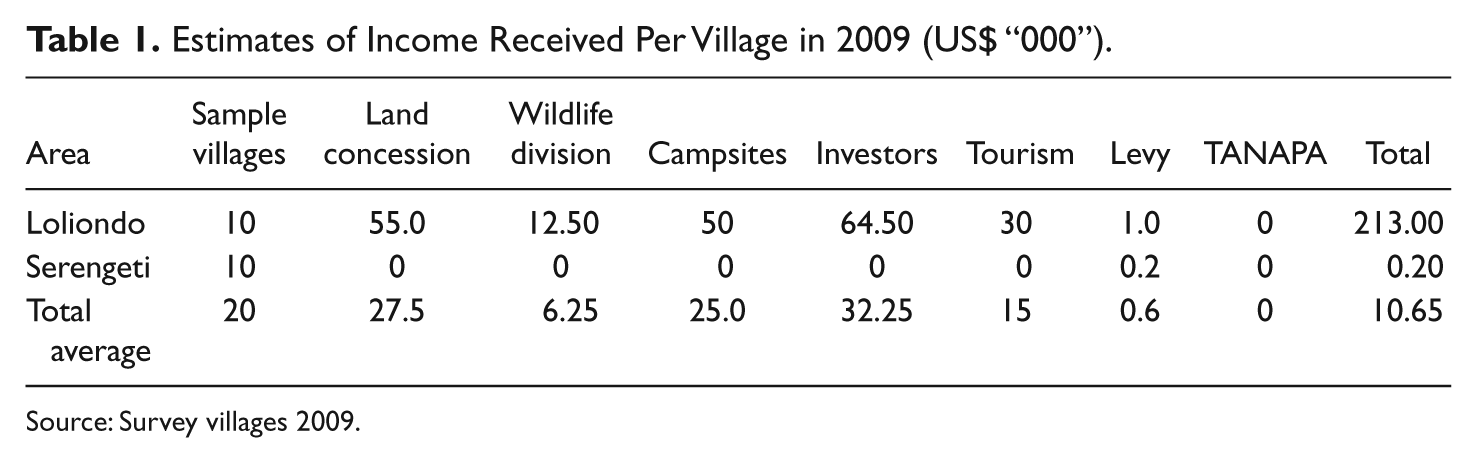
Source: Survey villages 2009.
Income at Household Level
The study attempted to compute income at household level using a total of 5,120 households in the villages sampled in Loliondo. Total income was US$213,000 for 2009 (Table 2) or US$41.7 per annum for Loliondo and nothing for Serengeti District. However, in practice part of the income goes to public services and the other to village governments’ administrative costs. In many villages only 50% is allocated to villages, 25% to running the village government, 15% to development activities, and 10% is saved. Assuming that 50% of the money received was allocated to households, the actual amount per household was therefore only US$20.35 for Loliondo and again nothing for Serengeti District. The average for each household of the total 11,025 in the 20 sample villages in Serengeti and Loliondo was US$9.65. Clarke (2001) also reports similar findings in his study in Cullman Hurt Community Wildlife Project in Tanzania, where households received US$2.41/year for Makao and US$12.23/year for Ukumbi Kakoko. These findings also tally with many other studies across the southern Africa region, as reported by DeGeorges and Reilly (2008). For example, in Mozambique, households were estimated to earn US$5.90 to US$9.39/per annum whereas in Zimbabwe it was between US$4 and US$19 depending on the program. In Zambia, the findings show that households earn between US$17 and US$37. It is only in South Africa where household income from conservation reached US$96 to US$257 per household/year (DeGeorges & Reilly, 2008).
Table Income at Household Level (US$ “000”).
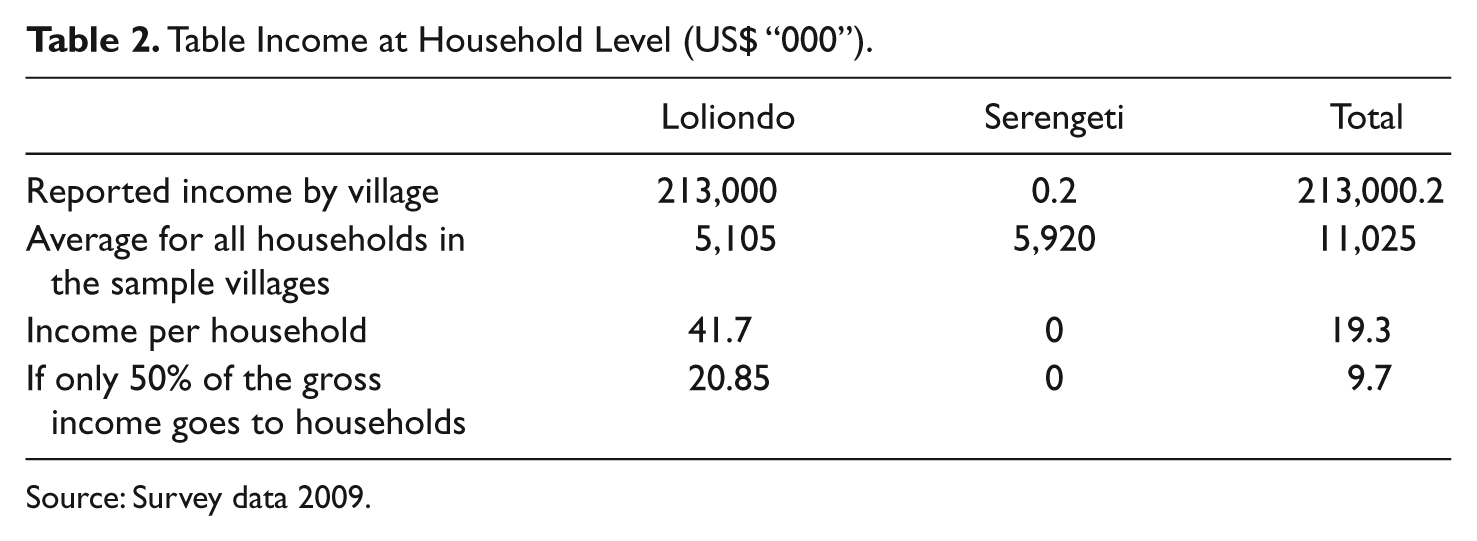
Source: Survey data 2009.
These findings and the others cited above revealed insignificant earnings from conservation at both household and village level for their daily lives and nutrition (DeGeorges & Reilly, 2008). The results from the household questionnaire also showed that income from conservation was low or zero in both study areas. With this kind of benefit nobody in the community will appreciate the existence of the protected areas. Although the income for other players (the government, investors, and tour operators) was not revealed, it is believed that they were earning much more money than the communities.
Access to Natural Resources
Households were asked to indicate the level of access to natural resources and the results show that it was limited in both study areas. Nevertheless, a chi-square analysis showed a significant difference (p < 0.01) in the benefits received by the two study areas (Table 3). About 24%, 28%, and 25% of the respondents from Loliondo reported to have utilized natural resources such as building materials, traditional medicine, and firewood from their localities, 3 respectively, while no benefits were received by the respondents from Serengeti. Surprisingly, as high as 42% and 32% of the respondents from Serengeti admitted consuming small and large quantities of bush meat, respectively, from SENAPA despite the fact that it is illegal. Why these people were so courageous in saying they consumed things that are illegal is not clear. One explanation is that when people are poor they will do anything to survive even if it costs them. There is empirical evidence that poverty and crime are interrelated (Hsieh & Pugh, 1993; Ludwig, Duncan, & Hirschfield, 2001; Mehlum, Migue, & Torvik, 2006; Sellers, 2008), suggesting that by reducing poverty the rate of crime would definitely go down (Sellers, 2008). Integrating resource users into the management of the protected areas through land use planning and off take monitoring to assure sustainability, could address most of these problems.
Access to Natural Resources.

Note: *** = significant at 1%.
Survey data 2009.
Socioeconomic Benefits
A similar trend was seen concerning socioeconomic benefits, which were very limited in both study areas. However, a comparison of the two study areas shows that a few respondents from Loliondo reported having received some benefit, such as tour operators (35%), access to some economic activities (35%) and reduced contribution to socioeconomic services (29%), whereas it was almost nothing for the respondents from Serengeti.
The Cost to the Communities Surrounding Protected Areas
There is empirical evidence that conservation exacerbates poverty and undermines democracy at the community level in SENAPA (Igoe & Croucher, 2007). This study’s results show that the loss of grazing land was seen to be a high cost by the majority of the respondents (57.5%) in the two study areas (Table 4). These protected areas had traditionally served as important dry season grazing lands for local inhabitants’ livestock and the formation of parks has greatly reduced the livestock carrying capacity for traditional pastoralists (DeGeorges & Reilly, 2008). In Serengeti, the respondents complained about inadequate grazing land, because of which quite often their livestock cross the border into SENAPA territory and they have to pay TZS 5,000 (US$3.2) per herd and that no receipt is given. In Loliondo the pastoralists reported that they are surrounded by investors, (including the Loliondo Game Reserve and hoteliers), which limits access to grazing land and cultural activities. The loss of livelihoods was more serious for the respondents from Serengeti District (90%) than Loliondo (30%). As pointed out earlier, most of the villages in Serengeti District do not receive anything from SENAPA and they complained bitterly about the heavy price they are paying in terms of the destruction of crops and livestock by wild animals as well as being denied access to natural resources in the park, and sometimes lives are lost. Forty five percent of the respondents from Serengeti District also complained that they have lost agricultural land to SENAPA, which has forced them to farm close to the park borders. However, this was denied by the SENAPA authority, which argued that villagers cultivate near SENAPA borders purposely so that they can easily invade the park to poach or to demand compensation for the destroyed crops or livestock. In addition, 32.5% of the respondents reported that they lose between 1 and 10 cows per annum (Table 4). Similar findings have been reported by Holmern, Nyahongo, & Røskaft (2007) in that 27.4% of the households surveyed reported losses amounting to 4.5% of their livestock due to predators over 12 months in SENAPA. Emerton and Mfunda (1999) estimated a negative net balance of US$1,005,100 for communities in western Serengeti suggesting that modern attempts to share benefits from conservation with rural communities have failed (DeGeorges and Reilly, 2009). Communities must sustainably manage their natural areas as a means of maximizing employment and thus household incomes, as well as meeting the often overlooked sociocultural ties to wildlife and other natural resources, which may be as important as direct material benefits in ensuring the conservation of wildlife and their habitats (DeGeorges & Reilly, 2008).
Cost of Protected Areas to the Surrounding Communities (%).
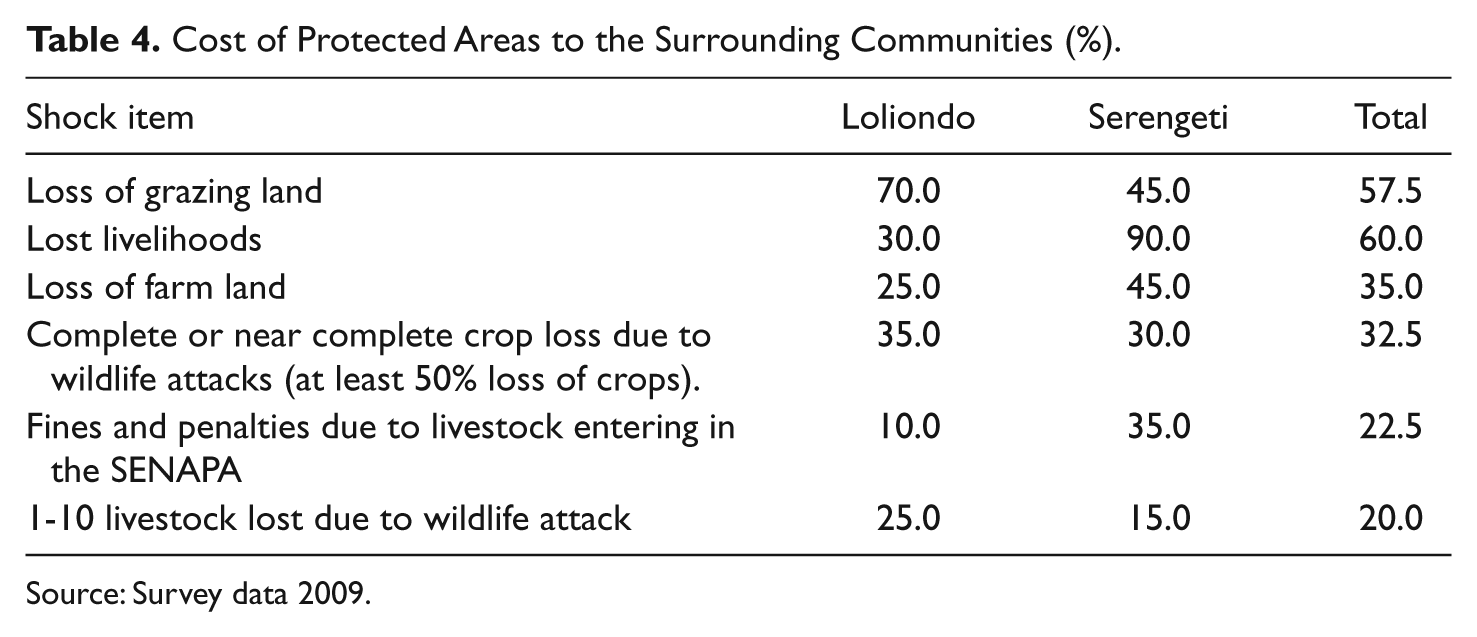
Source: Survey data 2009.
The Impact of Inequitable Benefit Sharing of Conservation
Seventy five percent of the respondents, especially those from Serengeti, had a negative attitude to conservation. The communities in Serengeti District do not like SENAPA mainly because of the cost they are paying. Factors that affect attitudes include level of conflicts, participation in the community-based project, inadequate pasture, lack of water, and education (Kideghesho et. al., 2008). Increased population and demand on agricultural has resulted in negative, inherently antagonistic attitude by local communities on conservation (Leader-Williams, 1996 cited in Emerton & Mutinda, 1999). Parry and Campbell (1992) reported similar findings from Botswana in that people with more crop losses were more negative than others in their attitude to wildlife. This suggests that, unless the wildlife sector generates real economic benefits for governments, the business community and the people who live in wildlife areas, it is likely to decline still further in the future (Emerton & Mfunda, 1999).
The unsatisfactory benefit from conservation has led to high level of poaching in SENAPA. In this study 32% of the respondents from Serengeti District reported to depend largely on bush meat for nutrition and incomes. In 1999, Tanzania lost 35% of its wildlife population and a total of 4,333 people resided in the sprawling SENAPA in Mara region, northern Tanzania (Odhiambo, 1999). During the 1980s a rapid increase in poaching led to a significant drop in elephant numbers in the Selous Game Reserve and 10 years later the numbers had dropped to approximately 55,000 (Baldus et. al., 2003). Studies suggest that between 52,000 and 60,000 people participated in illegal hunting within protected areas, and that many young men derived their primary source of income from hunting (Loibooki et al., 2002; see also Mfunda & Røskaft, 2010). There are also revenge killings of everything from predators to rhino have occurred in Tanzania and Kenya (DeGeorges & Reilly, 2008). In addition, if the villagers are not benefiting from conservation they are likely to facilitate commercial poachers to access national parks for poaching activities.
The success of conservation programs will depend on reducing or eliminating the negative impacts of wildlife (Parry & Campbell, 1992) and the true benefit of protected areas. These could be solved by involving various traditional resource users in determining how these natural areas should be managed and the benefits shared (DeGeorges & Reilly, 2008). Creating conservancies that would allow multiple use of bush meat, tree harvesting, and charcoal-making could solve most of these problems. Indeed, the authors are in agreement with one of the reviewers that if the community is forced to poach as a means of survival everyone loses. However, to be in a better position to negotiate, communities must learn the value of natural resources so that they can negotiate with both the private sector and the government to obtain a rightful share of the profits. This could be done by sending youth off for technical studies in places like Mweka and Pasiansi so that they become conversant with the economic values of wildlife. They should also study laws to know their rights to resource use and to fight for them. Child and Barnes (2010) suggest that property rights should be devolved to communities, which should be made responsible for the governance of resources and the benefits obtained from them.
Governance of Funds Received by Villages
Sections 4.1-4.7 discussed the level of funds and natural resource extraction by communities/households and concluded that the benefit received by the communities is insignificant. However, the study also revealed that the situation could be made worse by the poor governance of the little they receive from conservation. The following section looks at how governance of the money accrued from conservation is handled.
Governance of Money Accrued by Villages From Conservation
Planning for Expenditure
The findings showed that planning for expenditure of the money received from conservation was neither participatory nor inclusive, or gender mainstreamed. In all the villages only the Planning, Economic, and Finance Committees were involved in planning without any consultation with stakeholders. This committee then presented the plans and budget to the VC and then to the VA for approval. Although the process is probably transparent, as the budgets were presented to the villagers during the VA, it is not participatory. An ideal planning process should have started at the grassroots by consulting households (sample), followed by sub-villages and then the VC concerning the issues to be considered during the planning exercise. Although the VA is the approval organ it does not necessarily mean that the interests of the majority are taken on board. A discussion with the VC in Ololosokwan village revealed that normally the VA approves everything that is presented by the VC. There is a concern that the VAs do not know what is going on and they do not have much time to investigate and question during their meeting. The public’s involvement in governance structures serves to legitimize the planning process because the majority of voices are heard (Merce, 2003).
Expenditure of the Money
In this study the main expenditure items in almost all the villages were education and health services (Table 5). However, it was very difficult to reconcile expenditure with revenue as this information was not adequately presented. The researchers were shown a list of expenditure items for the past 10 years but the income per year was not revealed. Comparing the items listed under expenditure with the money earned during the past 10 years raised doubts. There is a concern that a considerable amount of money was consumed by a few elites in the villages. Also because the representation of women was limited, there is little expenditure (if any) that targeted women’s issues, such as expenditure on improved cooking stoves, water for domestic use, and milling machines. A discussion with key informants revealed that influential people in the villages are the ones enjoying the earned money. For example, it was reported that some of the elites in villages surrounding SENAPA have bought expensive houses in Arusha using community funds. Some villages have bank accounts in Arusha, hundreds of miles away instead of in their localities, which mean that people have to receive per-diems. A discussion with key informants revealed that four signatories have to go to Arusha and each of them receives about US$80 per day for 3 to 4 days, making a total of US$960 to US$1,280 per trip. These trips are likely to occur 5 to 6 times a year, leading to a significant amount of money been consumed. The village committee meets monthly, in addition to which there are “emergency meetings.” For each meeting each of the 25 members gets about US$8, which comes to USD 2,880 per annum. They also have to get meals and drinks amounting to an average of US$360 per annum per village. During the VA which involves all villagers nothing is served. In the village of Soitsambu, although about US$38,000 is collected per annum, less than US$20,000 was spent in 2009/2010. It is not clear where the rest of the money went. The funds from conservation are becoming vulnerable to capture by the elites at local level, and this problem must be dealt with if the benefit from conservation is to reach the intended beneficiaries (Platteau, 2004).
Expenditure for the Past 10 years in Four Sample Villages in Loliondo Area.
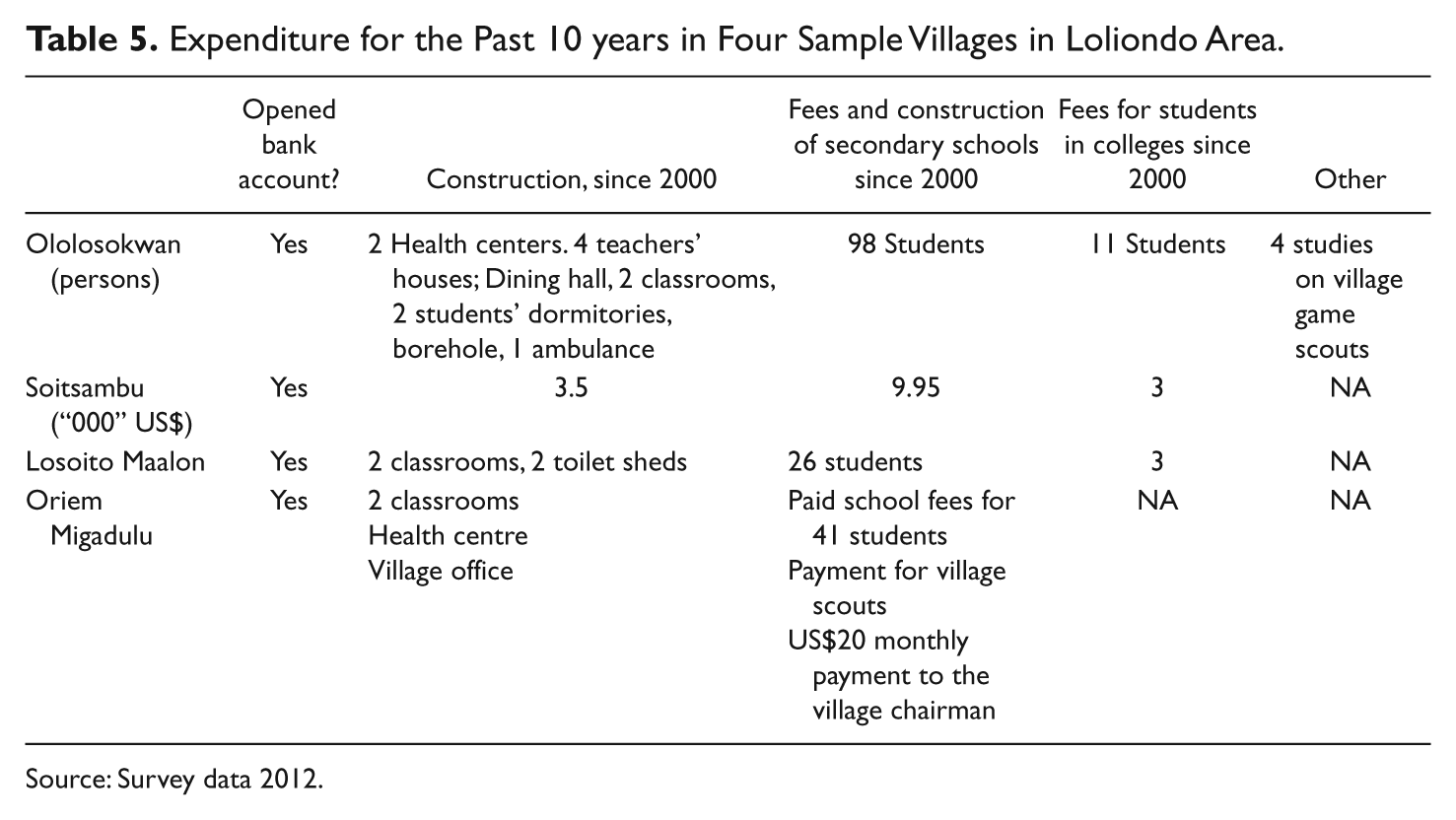
Source: Survey data 2012.
It should also be noted that some of the facilities listed in Table 5 were paid for by stakeholders directly without going through the VC bank accounts. For example, an investor company by the name of “Africa & Beyond” bought an ambulance and constructed a borehole for Ololosokwan village. Another tourist gave US$30,000 in cash to enable the village to construct classrooms. However, the ambulance ceased to work within a short time after it had been purchased. According to Tiffany this happened because of the lack of capacity to manage it, lack of motivation and prioritization.
Legitimacy and Voice
Generally all VCs consisted of 25 members 4 and in all the sample villages men dominated. The proportion of females was less than the proposed national average of at least 33%, suggesting a lack of gender equity. However, there was good composition in terms of age, as both youth and adults composed the VC. The mechanisms for selection were different from one village to another. In some villages, members outside the sub-villages were appointed by the village leaders, for example, in Ololosokwan, whereas in others it was through voting, for example, in most of the villages in Serengeti District. The latter is more democratic although it may not necessarily avoid gender bias in the communities. We have witnessed a high proportion of women in the country who contest seats in the Parliament, losing mainly because of the inherently patriarchal culture. Women are still not accepted as leaders in many African cultures, despite the fact that the few who managed to get through perform wonders (Hyde, Fennema, & Lamon, 1990; Kalleberg & Leicht, 1991), while Beall (1996) emphasizes that governance must be gender-sensitive if it is to be equitable, sustainable, and effective.
Reaching Consensus
A discussion with the village government indicated that the VA reached a consensus to adopt the proposal made by the planning committee. However, as long as the planning was dominated by men it is doubtful that they really reached a consensus if there were no women to give a word of caution. The VA meeting simply rubber stamped the issues raised mainly by one portion of society, the men. Truly consensus-oriented planning would help develop innovative approaches to achieve a common purpose and goal (Innes & Booher, 2007).[Please confirm if citation needs to be changed to Innes & Booher, 1999] Hove (2006) suggests that participatory approaches to planning should be on a continuum between being consensus-oriented to achieve a common goal and compromise-oriented to accommodate particular interests.
Direction and Plans
Direction and plans are important for any village if it is to use funds efficiently. None of the villages had made plans or projected what their income and expenditure would be. Quite often how the funds would be used was decided after they had been received. If there is no strategic vision and plans then the money accrued from conservation is likely to be used haphazardly and in areas not planned for. This is why it was difficult for them to indicate income and expenditure on an annual basis. Generally, little guidance has been given about what is essential and what is not, what can be achieved in the short term, and what can only be achieved over the longer term (Grindle, 2004). A strategic approach based on vision and creativity is needed by VC if they are to make effective use of the money earned from conservation. The core elements for achieving this are communication, learning, creative projects, and new governance models (Ache, 2000).
Performance of Governance of Village Funds
It has been demonstrated that there is widespread interest in measuring not only the quality of services but also in improving the quality of life and governance processes (Bovaird & Löffler, 2003). The findings from this study show that the income from conservation did not benefit households and villages. A large proportion of people in the study areas have remained poor despite the fact that they are surrounded by a rich ecosystem. Although the government could be blamed for allocating very little money to the communities, nevertheless even this small amount of money is not significantly reflected in the social services. There is concern that decentralization might have led to the emergence of local elites (Agrawal & Gupta, 2006). Although the bribes associated with the centralized bureaucracy might have disappeared under decentralization, at village level there is concern that they are being replaced by the political influence of local elites, who are enjoying the benefits the villages should receive from conservation initiatives (Agrawal & Gupta, 2006). Local capture tends to be manifested in the fact that services benefit the minority at the expense of the majority, which is both inefficient and inequitable. The results suggest that even in apparently successful conservation and development projects like the one in Ololosokwan village, local participatory decision-making institutions are fragile and require continued external support (Bardhan & Mookherjee, 2006). Indeed this poor performance has been criticized while some have cautioned against promoting full devolution of authority to the community level without safeguards to maintain good governance and to ensure adequate capacity (Balint & Mashinya, 2006).
Accountability and Transparency
This study generally found it difficult to obtain information relating to financial data and expenditure in all the villages under study. As pointed out earlier, many VCs were not prepared to reveal the actual amount of money earned from conservation, which made the researchers suspicious. This occurred because of the lack of proper record keeping but also (as the authors came to realize later) because the expenditure was not always for the benefit of the communities. It was also difficult to find out how much was spent by villages and in which areas due to the lack of records. Furthermore, it was difficult to relate the money accrued per annum to expenditure because the VC failed to present income and expenditure on an annual basis. Instead, the VC reported on cumulative investments since 2000 instead of expenditure per annum. At household level out of the 200 respondents only 10% said they were able to obtain information from the village governments when requested whereas 90% were not able to obtain information on funds received at any time except when the VA met. At this time details of how the funds are used are seldom given and so most people do not know what is going on. In the absence of a culture of transparency and civic engagement to ensure downward accountability, it is doubtful whether decentralization can promote both efficient service delivery and local empowerment (Francis & James, 2003).
Conclusion and Recommendations
This study examined the income generated from conservation relative to the costs incurred by the communities and investigated the governance of the income received by the VC. The main conclusions are that very little of the income reached the communities and virtually nothing reached the households. In Serengeti the situation was worse as nothing has gone to communities or households for several years. In contrast, communities are paying a heavy price for conservation due to the loss of agricultural and grazing land as well as the destruction of crops and livestock by wild animals. In extreme cases people sometimes lose their lives from attacks by wild animals. In addition, there is generally poor governance of the funds received at village level. A small team of about 3 to 4 people allocate the money in the way they wish. There is no participatory planning and quite often gender inequality. The expenditure did not tally with the income received and there was no satisfactory explanation for that.
The inadequate benefits from conservation have led to a negative attitude to it by the communities surrounding the Serengeti ecosystem, which has contributed to a high level of poaching in the area. The authors are in agreement with Emerton and Mfunda (1999) that unless wildlife populations can generate real economic benefits to governments, the business community, and to the people who live in wildlife areas, they are likely to decline still further in the future.
Recommendations
The communities should be allowed to sustainably utilize natural resources based on a quota system in predetermined areas, while others should remain out of bounds in terms of usage, depending on the richness of the biodiversity. This should go hand-in-hand with robust research (species based) and comprehensive monitoring.
The funds allocated to communities should be increased, reflecting the villages’ opportunity costs. The local communities should be regarded as equal players in negotiations, and the capacity of youth should be built by encouraging them to attend higher education and wildlife technical colleges to learn about the values of wildlife.
The governance structures must be improved to make them gender equitable, participatory, transparent, accountable to the communities, and responsive to all citizens. Also bank accounts should be opened within the localities to reduce the costs of operating accounts in Arusha. There should be capacity building for managing funds and the funds should be adequately audited internally and externally. Where communities are severely affected by wildlife in terms of crop and livestock damage, compensation should be given. The current policy only compensates lives lost due to wildlife attack.
Footnotes
Declaration of Conflicting Interests
The authors declare that there was no potential conflict of interests with respect to the research, authorship, and/or publication of this article.
Funding
The authors disclosed receipt of the following financial support for the research, authorship, and/or publication of this article: The author received financial support for the research from the Association for Strengthening Agricultural Research in Eastern and Central Africa (ASARECA), Transforming Agriculture for Improved Livelihoods. The views expressed in this study are strictly those of the authors and do not necessarily reflect those of their funders.