



Abstract
The increase in India’s carbon emissions and the decline in its environmental quality are a threat to the realization of the global sustainable development goals (SDGs). Minimizing the negative environmental impacts from fossil fuels through analysis of the determinants of India’s ecological quality is an important research topic. The objective of this study is to examine the impact of information and communication technologies (ICT), renewable energy, and structural changes on environmental quality in India. In this context, the study uses the novel Fourier quantile causality test for the period 1995m1-2021m12. The results of the study show that structural changes have no impact on carbon footprint and load capacity factor, while renewable energy and ICT contribute to the improvement of environmental quality. Based on the findings of the study, the Indian government is recommended to rise investment in ICT and renewable energy to pursue a growth strategy in line with the SDGs.
Keywords
Introduction
India has not committed to coal reduction at COP-26, which has been a major stumbling block and cause of concern for the SDGs. Many international organizations are committed to minimizing fossil fuels like coal. The Paris Agreement states the need to reduce global air temperature. However, 88.46% of India’s energy consumption in 2022 is still met by fossil fuels (Our World in, 2023). India has a population of 1.42 billion people (as of 2022), and this huge population accounts for 17% of the world’s total population (World Bank, 2023). Therefore, it is important at both the national and global levels to minimize fossil fuel consumption, carbon (CO2) emissions, and environmental degradation in India.
Researchers often study environmental degradation focusing on CO2 emissions. However, CO2 emissions are only one measure of air pollution. Rees (1992) proposed an ecological footprint (EF) that can reflect air, water, and soil pollution together. EF is an environmental metric that can be used to calculate human pressure on nature in global hectares (gha). However, an analysis that only considers EF neglects information on how much of the natural resource demand (biocapacity) is met by nature. To address this deficiency, Pata (2021) was the first to empirically analyze the determinants of the load capacity factor (LCF) proposed by Siche et al. (2010). Subsequently, studies analyzing the determinants of the LCF have been widely published (see, e.g., Guloglu et al., 2023; Jin et al., 2023; Pata et al., 2023; Wang et al., 2023).
LCF is a measure that can broadly indicate environmental sustainability. If the LCF, calculated as biocapacity/EF, is greater than “1,” the environmental situation is sustainable; otherwise, there is a problem in the ecosystem of the country or region in question. The LCF can provide a robust environmental assessment because it simultaneously captures both EF and biocapacity. The carbon footprint (CF) accounts for 61% of EF (Lin et al., 2021; Global Footprint, 2023), and therefore it is important to increase the LCF by reducing CF. In addition, minimizing air, water, and soil pollution is essential for achieving the SDGs. In this context, it is a necessity for a sustainable world order that countries develop the LCF and raise it above the sustainability threshold of “1.” India is one of the countries with LCF value less than “1.” The LCF and CF values for the analysis period of India are shown in Figure 1. LCF and CF in India (gha). 
As Figure 1 shows, India’s CF has increased tremendously and its LCF has decreased over the past 16 years. In 1995, India had an LCF of .49, while in 2021, the LCF decreased to .34. This shows that India’s environmental situation has deteriorated by 30%. While the demand for natural resources was twice as high 16 years ago, in 2021, Indian society is demanding three times as much from the ecosystem resources. India’s CF per capita increased by 108% from .28gha in 1995 to .58gha in 2021, indicating that India is undergoing an economic development process that is incompatible with its carbon neutrality goals. How can India achieve CF reduction and LCF development? Can RE sources, ICT, and structural transformation (SC) help India achieve its environmental sustainability goals? This study aims to explore these two research questions.
In India, 16% of final energy consumption is met from RE sources (S, 2023). India is among the top five countries investing in RE with $9.3 billion (Statista, 2023). India committed at the Paris Summit to invest more in solar and wind energy. India’s commitment to net-zero emissions in 2070 and its goal to meet half of its electricity demand in 2030 from RE sources are important steps toward a clean energy transition and combating climate change (IEA, 2022). In this context, India’s use of RE sources can have a positive impact on LCF and CF.
India also continues to undergo a period of significant structural change. The service sector, which accounted for about 30% of the economy in the 1900s, was responsible for about 48% of India’s economy by 2021 (World Bank, 2023). According to Grossman and Krueger (1991), the transition of economies from the industrial to the service sector can have environmental effects in addition to the composition effect, and therefore it is possible that this structural change in India also has environmental effects.
The influence of ICT on the environment can be explained by the use of smart devices, the life cycle of ICT products, and the ICT value chain (Charfeddine and Umlai, 2023). The use of smart devices can have an indirect positive impact on the quality of the ecosystem, while the ICT product life cycle indicates that the production processes of computer and network equipment manufactured for ICT use can cause significant environmental damage. Energy consumption due to ICT activities can cause an upsurge in global CO2 emissions (Malmodin & Lundén, 2018). In contrast, ICTs can reduce environmental degradation by promoting energy efficiency gains, efficiency, and improving RE production (Avom et al., 2020).
India has made significant progress in ICT, especially since the 2000s. The development of Internet usage (INT) and mobile cellular subscriptions (MCS) as India’s ICT indicators is shown in Figure 2. Internet usage and mobile cellular subscriptions in India. 
Figure 2 shows that half of the Indian population now uses the Internet and 80% of the Indian population has an MCS. This advancement of Indian society in ICT is also likely to have an impact on the environment. In this context, this study examines the impact of ICT, RE, and SC on environmental quality in India.
The study contributes to the literature in three ways. (i) The study is the first to examine the impact of ICT on LCF and CF in India. (iii) The study applies a causality approach that considers both Fourier transforms and quantiles. The study simultaneously accounts for nonlinearity and structural breaks by applying Fourier quantile causality test. (iii) The study comparatively tests CF and LCF and analyzes whether the impact of ICT on the environment differs according to environmental indicators.
Literature Review
Renewable Energy and Environment
It is widely recognized that fossil fuels cause massive environmental pollution (Adedoyin et al., 2021), and the solution is to limit fossil fuel use as much as possible. However, countries still need fossil fuels to sustain their economic expansion. Fareed and Pata (2022) found that fossil fuels can support economic growth more than renewable energy sources. However, increasing fossil fuel consumption is a major cause of global warming and needs to be urgently addressed. In this context, SDG-7 emphasizes the promotion of clean energy. RE sources can support economic growth and are environmentally friendly at the same time. In addition to its economic and environmental benefits, RE, a national energy resource, can be an important mechanism for promoting sustainable energy consumption and energy security (Quito et al., 2023).
RE sources and their environmental impacts are the focus of interest for empirical researchers. Bekun et al. (2021) for the E7 countries, Pata (2021b) for the United States, Adebayo et al. (2023) and Balsalobre-Lorente (2023) for BRICS countries, Hasanov et al. (2023) for Azerbaijan, and Pata et al. (2023) for six ASEAN countries, and Sharif et al. (2023) for five Nordic countries substantiated the beneficial role of RE sources in CO2 mitigation. Bekun et al. (2022) also used various time series approaches and concluded that RE mitigates CO2 emissions in India.
Some researchers have simultaneously studied the effects of RE on air, water, and soil pollution. Alola et al. (2019) conducted panel ARDL and found that RE reduces EF in 16 EU countries. Sharma et al. (2021) used the CS-ARDL approach and resulted that RE mitigates EF. Ahmed et al. (2022) found that RE provides a decline in the EF for G7 nations. Li et al. (2022) used a fixed effects model and reported that RE mitigates EF and also supports economic development in 120 countries. Quito et al. (2023) reported that RE reduces EF in all quantiles for 107 countries.
Although the effects of RE on EF provide important evidence for minimizing ecological degradation, they do not allow for a complete environmental assessment. This is because researchers have neglected nature’s ability to counter environmental stresses. In this context, researchers have begun to test the effects of RE on LCF. Fareed et al. (2021), Pata and Samour (2023), Sun et al. (2023), and Kartal et al. (2023) found that RE contributes to the development of LCF.
There is general agreement on the role of RE in reducing CO2, CF, and EF and promoting LCF. The researchers show that human pressure on nature should be prevented by the proliferation of RE sources.
Structural Change and Environment
Structural changes in economies can have a vital influence on the environment. Destroyed land in agriculture and the damage caused by industry can accelerate environmental destruction. However, with the structural change of the economy toward the service sector, more environmentally friendly energy resources can be consumed and environmental quality can be enhanced by reducing dirty industrial production. The environmental impact of the structural transformation of the economy remains controversial. Some studies have examined the environmental impact of the value added of the industrial sector as an indicator for SC, like Pata (2018) for Turkey, and Huan et al. (2022) for China. The service sector is considered to be more eco-friendly than the industrial sector, and the development of this sector is an important indicator of structural change.
Zhang et al. (2019) employed the ridge regression and concluded that SC has a less impact on CO2 emissions in China. Omri and Saidi (2022) utilized various panel data estimators and found that the impact of SC on CO2 emissions is insignificant in 14 MENA countries. Ehigiamusoe et al. (2022) ran the ARDL model for Malaysia and found that SC has an inverted U-shaped link with CO2 emissions. Ibrahim et al. (2022) used various panel data estimators and showed that SC mitigates CO2 emissions in the five most polluted African countries. Abdulmagid Basheer Agila et al. (2022) reported that SC reduces the LCF at higher quantiles in South Korea. Taghvaee et al. (2022) used panel data estimators and reported that SC upsurges CO2 emissions in 46 OECD countries. Adebayo et al. (2022) found that SC reduces CO2 emissions in India. The studies in the literature show that the environmental impact of SC varies.
ICT and Environment
The link between ICT and the environment is a new research topic. ICT development can promote the improvement of ecological quality by benefiting the development of green technologies. On the other hand, ICT can accelerate ecological degradation by increasing people’s production and consumption activities. There is an extensive literature on the environmental sustainability of ICTs. Charfeddine and Umlai (2023) examined 166 studies and found that developed countries use ICT as an environmentally friendly factor, while developing countries use ICT as an environmentally destructive factor.
There are several indicators related to ICT. Researchers use various variables or indexes, such as Internet usage (INT), mobile cellular subscription (MSC), fixed broadband subscriptions (FBS), the UNCTAD ICT index, and ICT indicators based on PCA analysis.
Ben Lahouel et al. (2022) applied a panel smooth transition model for 16 MENA countries and reported that ICT has an inverted U-shaped link with CO2 emissions. Chang et al. (2022) employed panel data methods for 10 developed nations and found that ICT increases ecological footprint. Dogan and Pata (2022) used the CS-ARDL and the AMG estimator and concluded that MSC improves the LCF in G7 countries. Similarly, Ni et al. (2022) found that FBS increases the LCF in 11 countries. Evans and Mesagan (2022) employed panel data estimators and concluded that the impact of ICT on CO2 emissions varies depend on cross sectional dependence (CSD). Considering CSD, the authors noted that ICT reduced pollution. Khan et al. (2022) reported that INT lowers CO2 emissions in Morocco.
Bibi et al. (2023) utilized the dynamic ARDL and noted that ICT reduces CO2 emissions and ecological footprint in China. Islam and Rahaman (2023) used panel non-linear ARDL and found that ICT reduces CO2 emissions in GCC countries. Jahanger et al. (2023) found that ICT improves ecological quality in the top nine nuclear power producing countries. Zheng et al. (2023) utilized the quantile ARDL and concluded that INT lowers CO2 emissions in China. Zulfiqar (2023) applied the ARDL and concluded that INT reduces ecological footprint and CF in the United Kingdom, while FBS and MSC increase ecological pollution.
As can be seen from the literature, the environmental impact of ICTs can vary depending on the indicator used, the country studied, and the empirical method. Therefore, the question of whether ICT is an environmentally friendly element is still controversial.
Research Gap
The beneficial effect of RE on LCF and CF is a common opinion in the literature. However, there is no consensus on the environmental effectiveness of SC and ICT. Also, there are no studies analyzing the impact of ICT on LCF and CF for India. The studies conducted so far for India generally neglect smooth structural changes. This study aims to fill the relevant gap by analyzing the impact of ICT on LCF and CF for the first time in the literature for India with updated data.
Data and Methodology
Data
Data Definitions and Sources.

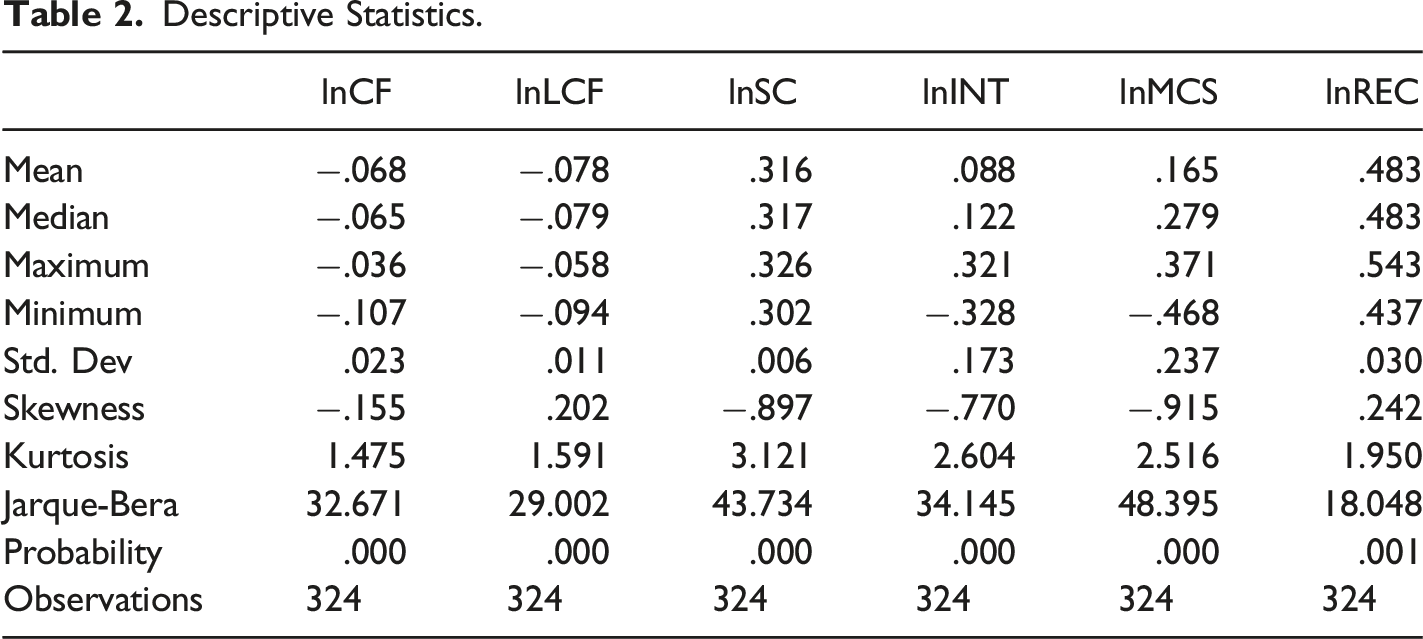
Descriptive Statistics.
Methodology
Many causality tests developed following Granger (1969) do not account for structural breaks. Toda and Yamamoto (1995) (TY) have proposed a causality test that prevents long-term information loss. Nazlioglu et al. (2016) added Fourier transforms to the TY causality test and ensured that causality analysis is performed to account for smooth structural shifts. The Fourier TY causality test is created by using the Fourier terms of Gallant (1981) in equation (1), assuming that the constant term has a variable structure over time.

The Fourier-TY approach has the advantage over traditional causality tests in that it accounts for structural breaks. However, this test may not be effective when analyzing non-normally distributed series. For the analysis of non-normally distributed series, quantile-based methods can give effective results. Cheng et al. (2021) addressed this shortcoming in the literature and proposed the Fourier quantile TY causality test. The Fourier quantile TY test considers both structural breaks as well as a non-normal distribution of the series with a non-linear structure. Equation (3) is used for the Fourier quantile TY causality test.

If the null hypothesis is rejected, it is decided that causality exists. In the Fourier quantile TY approach, the “pmax” value can be determined by unit root tests. The maximum order of integration of the variables is added to the model as an additional lag. Therefore, the study applies Augmented Dickey-Fuller (ADF) (Dickey & Fuller, 1981), and Zivot and Andrews (1992) (ZA) unit root tests before applying the Fourier quantile TY approach.
Empirical Results
The study first examines various statistical data on the variables such as mean, maximum, and standard deviation and present them in Table 2. As can be seen, CF and LCF have the lowest mean values. The variable with the highest mean and maximum values is REC. The variable with the highest volatility is MCS, while SC has the lowest volatility. Skewness, kurtosis, and Jarque-Bera values indicate that not all variables have a normal distribution. Therefore, it is more appropriate to apply econometric methods based on quantiles.
Unit Root Results.
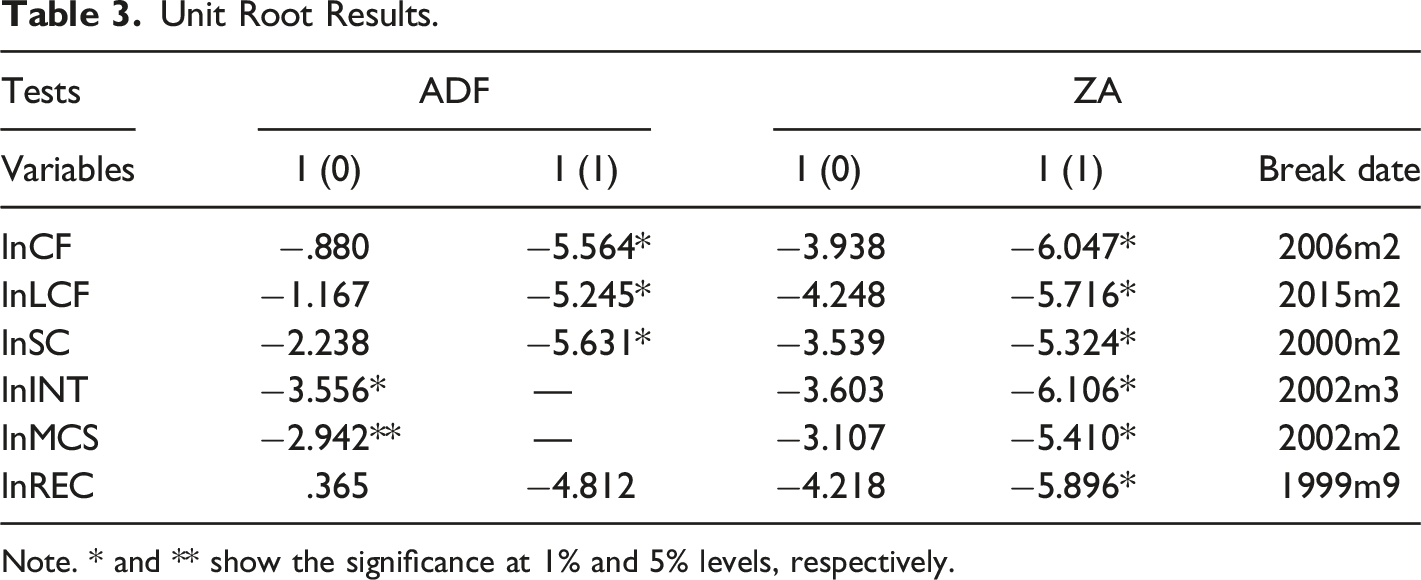
Note. * and ** show the significance at 1% and 5% levels, respectively.
F-Test Results.
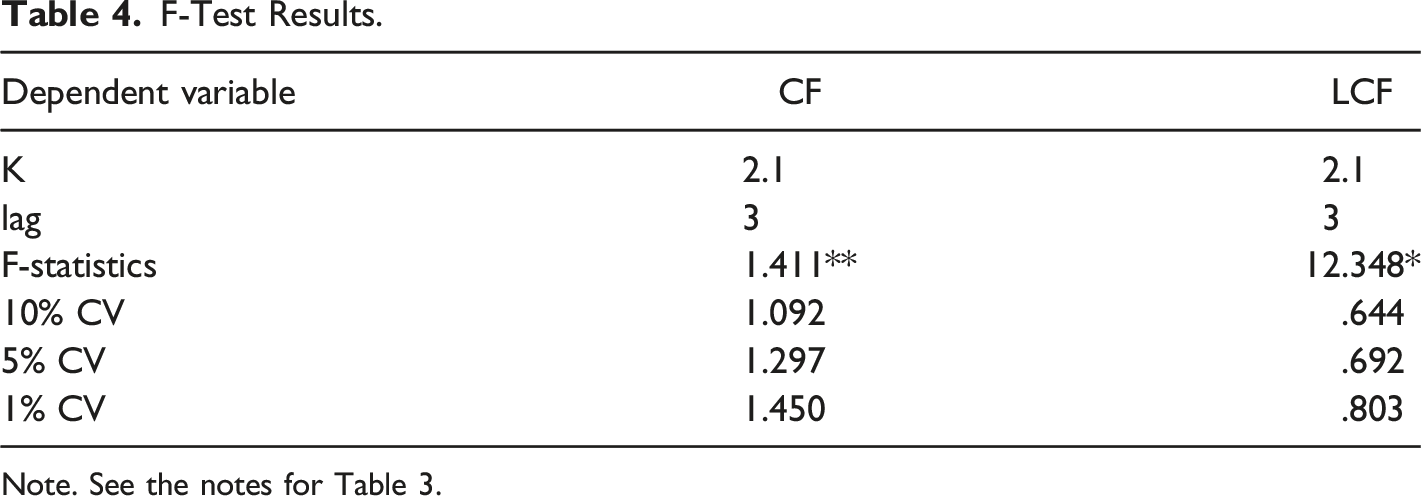
Note. See the notes for Table 3.
Causality Outcomes for CF.

Note. See the notes for Table 3.
Causality Outcomes for LCF.

Note. *, and *** show the significance at 1% and 10% levels.
Finally, the results of the study are presented visually in Figure 3. Summary of the causal effects.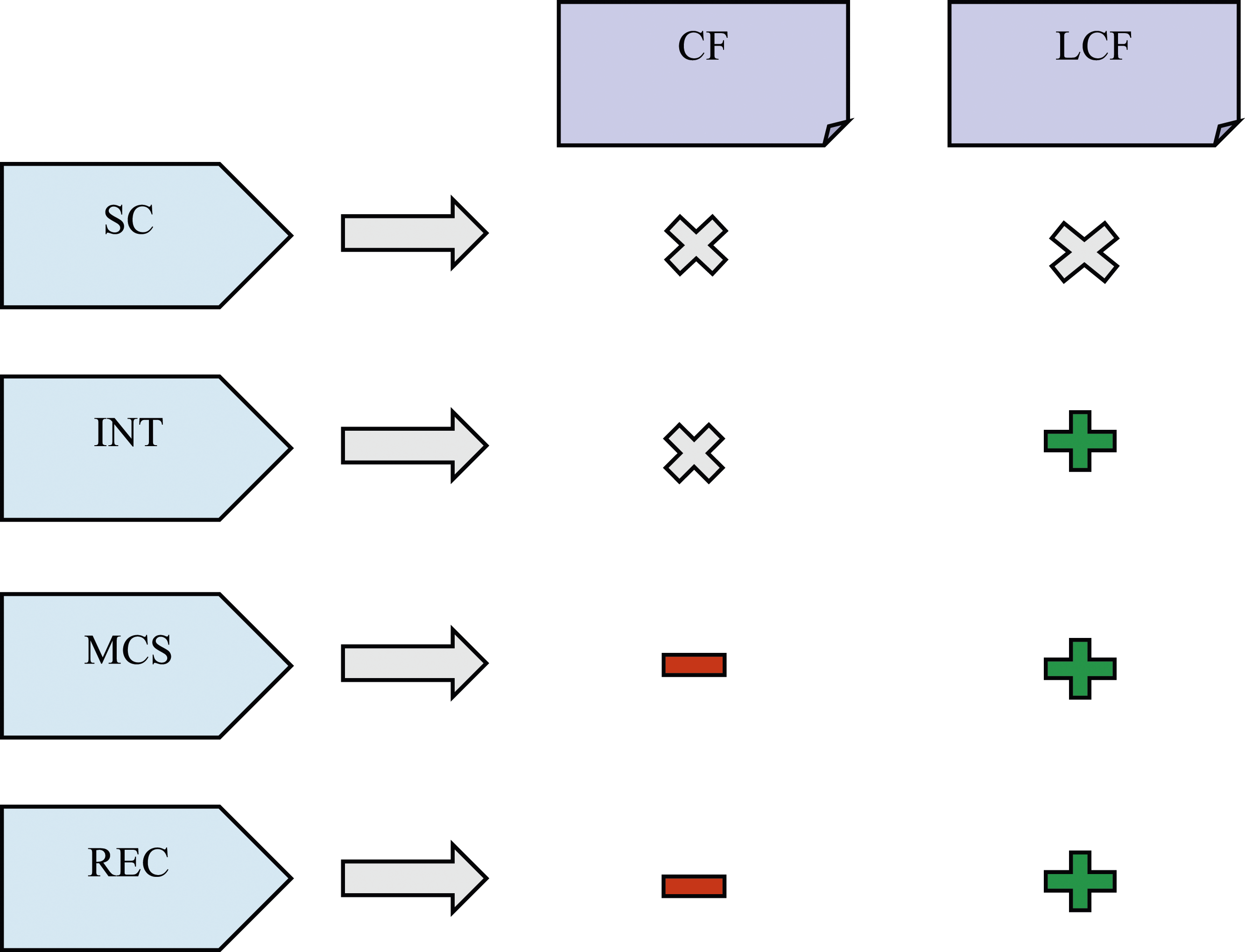
The results show that SC has no effect on CF and LCF. The conclusion that SC has no impact is consistent with the results of Zhang et al. (2019) and Omri and Saidi (2022). The sectoral change in economic structure in India has no significant impact on the environment. In terms of ICT indicators, MCS provides both CF reduction and LCF enhancement. INT supports the development of LCF. In contrast to Chang et al. (2022) and Zulfiqar (2023), the eco-friendly role of ICT is consistent with the results of Dogan and Pata (2022) and Ni et al. (2022) for and Bibi et al. (2023) and Islam and Rahaman (2023) for CF.
In India, ICTs can increase LCF and support environmental quality in aspects such as the environmental role of smart devices, the development of green information dissemination, and technological progress to increase energy efficiency. Similar to ICT, RE sources contribute to both the reduction of CF and the development of LCF. These results suggesting that RE increases LCF are consistent with Fareed et al. (2021), Pata and Samour (2023), Sun et al. (2023), and Kartal et al. (2023). Increasing use of RE sources in India can prevent air, water, and soil pollution and improve ecosystem quality. Fossil fuels are still heavily used in India, and since RE is a carbon-free source, the Indian government should increase the replacement of fossil fuels with RE. In addition, the proliferation of ICT can technologically support the use of RE. In this context, the findings of the study suggest that India should develop an environmental policy focusing on ICT and RE to achieve the SDGs.
Conclusion and Policy Recommendation
Conclusion
This study is the first to systematically examine the impact of ICT, RE sources, and SC on LCF for India. Thus, the study aimed to determine whether RE, ICT, and SC are effective policy tools for improving environmental quality (LCF) and reducing carbon pollution (CF). To this end, the study used the Fourier quantile causality test. This novel causality test can provide meaningful empirical evidence because it considers both smooth structural changes and quantiles. The results of the study show that RE and the ICT indicators (INT and MSC) play an environmental quality-improving role for LCF, while SC has no influence on ecological quality in India. For CF, the results show that INT and SC do not contribute to reducing CO2 emissions, while INT and RE can contribute to achieving carbon neutrality targets for India.
Policy Recommendation
India has undergone a significant transformation from the industrial to the service sector, but this sectoral transformation has not had an impact on CF and LCF as a whole. Therefore, it is not an important policy tool for the Indian government to regulate the service sector for environmental purposes. The service sector also requires fossil fuels to continue its activities. While the tourism sector and the Indian residential service sector carry out their activities, they continue to make intensive use of fossil fuels such as coal for heating. Therefore, it makes more sense for the Indian government to pursue an environmental policy based on RE and ICT rather than SC.
The role of ICT in increasing LCF and reducing CF demonstrates the importance of technological advancement in the environmental policy of the Indian government. The Indian government should integrate ICT into the industrial sector in an environmentally friendly manner. Integrating ICT with energy-efficient functions into the industrial sector can support LCF growth by reducing the need for fossil fuels. Online banking, e-commerce, and green smart applications delivered through ICT can reduce CF. As another option, the Indian government can encourage the expansion of RE through the use of energy-efficient ICT devices. In addition, policymakers can provide favorable loans and financial access to companies that deploy green ICT solutions for zero-carbon industrialization. Additional funds should be allocated for the deployment of green ICT and the use of ICT in wind and solar areas to reduce the cost of RE.
RE sources play a critical role in increasing LCF and reducing CF. Indian policymakers should promote the use of RE sources along with ICT. The Indian government should provide tax exemptions and financial incentives to companies making RE investments. It should support the low-carbon technologies and ICT investments of these companies. Policymakers should also enable entrepreneurs to develop technologies that reduce the cost of RE resources. Although India is investing significantly in renewable energy, this investment lags far behind that of China as a populous country. Indian policymakers should support investment at RE, implement a carbon neutrality strategy focusing on ICT and RE by adapting green ICT applications for the RE sector. An energy and environment policy with a simultaneous focus on RE and ICT could help India achieve the SDGs.
Limitations and Future Research
In conclusion, of course, this study has some limitations. The study focuses only on India with time series. In future studies, researchers can analyze the impact of ICT on LCF for other countries by using Fourier quantile causality test. In this way, the effectiveness of ICT in achieving carbon neutrality targets can be better determined. A second limitation is that the study focuses only on the time domain properties of the series. Future studies can provide insights into the environmental effects of ICT and RE by using a combination of Fourier and wavelet transforms to leverage more information from the time series. Finally, the study includes only two different indicators of ICT. Future studies can test the effects of different or cumulative ICT indicators on the LCF.
Footnotes
Author Contributions
Declaration of Conflicting Interests
The author(s) declared no potential conflicts of interest with respect to the research, authorship, and/or publication of this article.
Funding
The author(s) received no financial support for the research, authorship, and/or publication of this article.

Data Availability Statement
The data given in this article are the datasets analyzed during the current study are available from the corresponding author on reasonable request.