



Abstract
Improving corporate carbon performance is imperative for sustainable economic and social development. Using a sample of Chinese A-share-listed manufacturing firms from 2012 to 2019, this study explores how government environmental subsidies affect corporate carbon performance. The baseline results show that government environmental subsidies are positively associated with corporate carbon performance, suggesting an improving effect of government environmental subsidies on corporate carbon performance. These results are robust to a set of sensitivity tests. Further, the channel analyses show that government environmental subsidies improve corporate carbon performance by alleviating financial constraints and enhancing environmental information disclosure. Moreover, cross-sectional analyses show that the improving effect of government environmental subsidies on corporate carbon performance is stronger in state-owned enterprises, in firms with higher executive environmental awareness, and in firms with higher media attention. This study provides meaningful insights for the government seeking to promote low-carbon development through environmental subsidies.
Keywords
Introduction
In recent years, extreme weather occurs more frequently, and promoting low-carbon development has become a consensus globally. According to the Provisional State of the Global Climate 2022 released by the World Meteorological Organization, the global average temperature in 2022 is about 1.15°C above the pre-industrial level, and the concentrations of greenhouse gases continue to rise. Faced with the growing serious climate issues, countries around the world are keenly aware that carbon neutrality is an inevitable choice to cope with climate risks. As the world’s largest emitter of greenhouse gases, China actively undertakes the responsibility to reduce carbon emissions. The Blue Book on Climate Change in China 2022 states that China has become a sensitive area for global climate change, with a warming rate higher than the global average. Firms are the major carbon emitters and thus are expected to take the responsibility to reduce carbon emissions. Against such background, the existing literature has explored the determinants of corporate carbon performance, such as board characteristics (Cahyono et al., 2023; Haque, 2017; Moussa et al., 2020), managerial characteristics (Jiang et al., 2022; Wagner & Fischer‐Kreer, 2023), environmental information disclosure (Qian & Schaltegger, 2017), and internal carbon pricing (Zhu et al., 2022). Meanwhile, the government is the leader and manager of low-carbon economy, and its guiding role in regulating firms’ low-carbon development practices cannot be overlooked. However, few prior studies pay attention to the impact of the “visible hand” (i.e., the government) on corporate carbon performance. Using the Chinese setting, we fill this gap in the literature by examining the relationship between government environmental subsidies and corporate carbon performance.
Theoretically, environmental pollution has negative externalities. The key to motivating firms to engage in environmental management is internalizing such externalities, and one of the important means is subsidizing their pollution control expenses (Ding et al., 2015). Under the imperfect market mechanism, government environmental subsidies make up for market failure, promoting the firm to actively develop low-carbon technologies and to improve carbon performance accordingly. However, in reality, due to information asymmetry, it is possible that firms disguise their true intention of applying for environmental subsidies and divert the subsidies to other uses (Chen et al., 2020; Liu, Quan, et al., 2019; Liu et al., 2019). Such “adverse selection” makes government environmental subsidies less effective. Thus, whether and how government environmental subsidies improve corporate carbon performance is an empirical question.
China offers a rare opportunity and a good setting for our empirical analyses. First, as the largest developing country, China has achieved unprecedented economic growth over the past four decades, but its energy-intensive growth mode has also generated excessive carbon emissions and thus a series of environmental issues. According to the data released by British Petroleum, China’s carbon emissions nearly doubled from 6,862 million tons in 2005 to 11,311 million tons in 2019, accounting for 28.9% of global carbon emissions. In 2020, global carbon emissions fell significantly by 5.6% compared to 2019 due to the COVID-19; however, China’s carbon emissions continued to grow to 11,461 million tons, accounting for 31% of global carbon emissions. To address the increasingly serious environmental issues related to excessive carbon emissions, China has been taking the responsibility of a great power in the international community. For example, in 2020, China formally put forward the goals of achieving carbon peak by 2030 and carbon neutrality by 2060 (henceforth, dual-carbon goals). In 2022, the 20th National Congress of the Communist Party of China stressed the urgency to achieve dual-carbon goals by efficiently using coal and accelerating the construction of a new energy system. In 2023, the Government Work Report of China states that the priority of the government’s jobs is controlling for fossil energy consumption, strengthening clean energy use, and promoting low-carbon development.
Second, subsidizing green projects is relatively common in China. Compared to the governments in the developed markets, the Chinese government has a stronger control over economic activities and tends to use a variety of economic policies to guide corporate decision-making (Wang et al., 2021). In order to achieve both economic development and environmental protection, China makes full use of environmental subsidies. For example, according to the Opinions on Public Finance Support for Carbon Peak and Carbon Neutrality issued by the Ministry of Finance in 2022, the structure of public finance expenditure needs to be further optimized, aiming at enhancing firms’ green production capacity and supporting green transformation of high-carbon sectors through government subsidies; in 2023, the Government Work Report states that China will continue to pursue a proactive fiscal policy, speeding up the development of green economy. In a word, government environmental subsidies have a relatively mature policy foundation in China and thus provide an ideal setting for our empirical analyses.
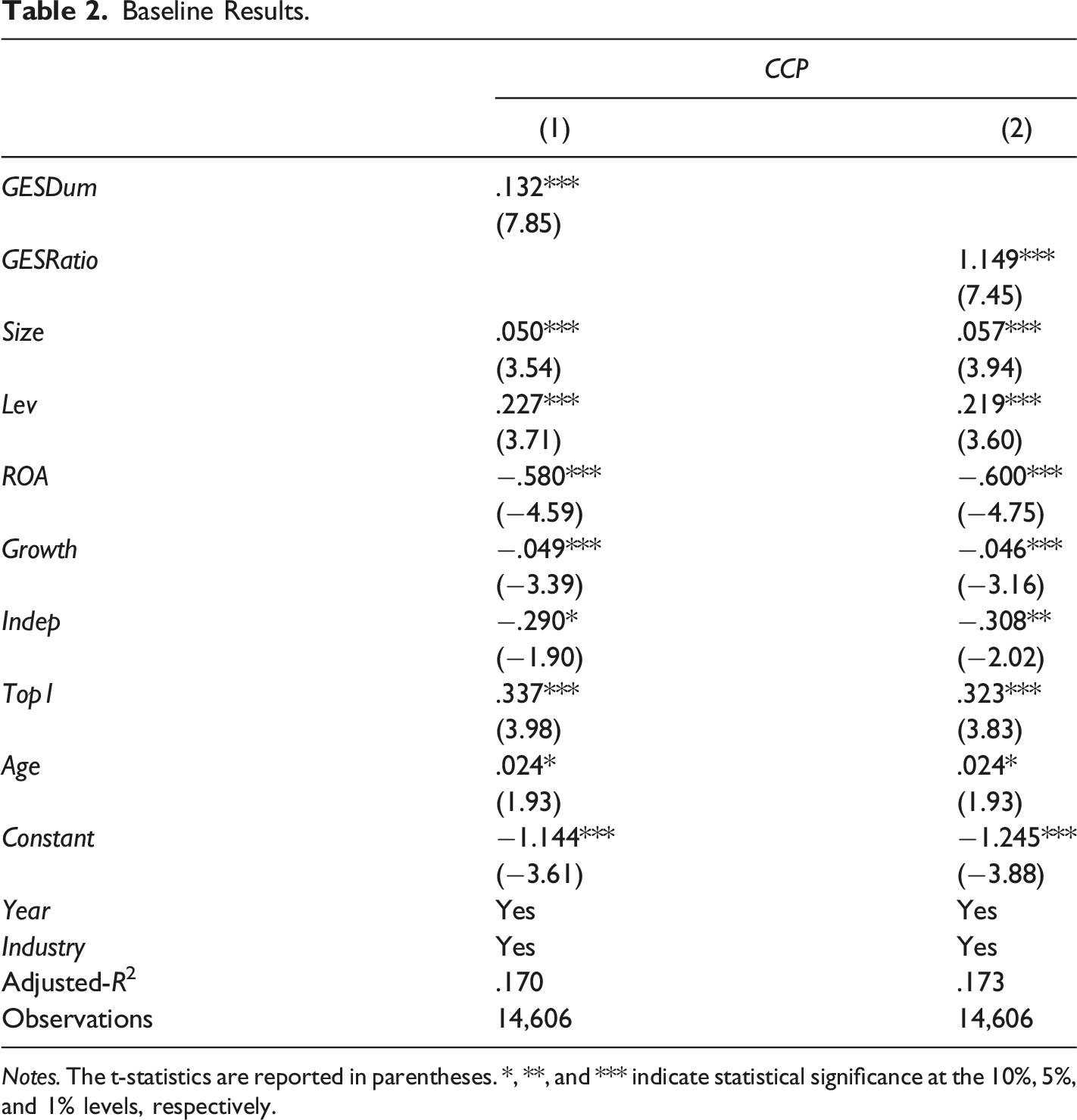
We start our empirical analyses by investigating the impact of government environmental subsidies on corporate carbon performance using a sample of Chinese A-share-listed manufacturing firms from 2012 to 2019. Based on prior studies (Bui et al., 2020; Sun et al., 2023; Zhu et al., 2022), we use the inverse of carbon emissions intensity as the proxy for corporate carbon performance. Following Hu et al. (2021) and Ren et al. (2021), we use an indicator variable to measure the presence of government environmental subsidies and use the ratio of government environmental subsidies to the firm’s total assets as the proxy for the amount of government environmental subsidies. The baseline results show that government environmental subsidies are positively associated with corporate carbon performance. Specifically, the presence of government environmental subsidies leads to a 48.4% increase in corporate carbon performance, and one standard-deviation increase in the amount of government environmental subsidies leads to a 25.3% increase in corporate carbon performance. These results suggest an improving effect of government subsidies on corporate carbon performance. The results are robust to a set of sensitivity tests.
Next, we explore the channels through which government environmental subsidies improve corporate carbon performance. The first channel we consider is financial constraints. To examine this channel, we directly investigate the impact of government environmental subsidies on financial constraints. Following Bellone et al. (2010), we use a composite indicator to measure financial constraints. Our results show that government environmental subsidies are negatively associated with financial constraints, suggesting that government environmental subsidies improve corporate carbon performance by alleviating financial constraints. The second channel we consider is environmental information disclosure. Following Lin et al. (2021), we develop an index to measure environmental information disclosure. Our results show that government environmental subsidies are positively associated with environmental information disclosure, suggesting that government environmental subsidies improve corporate carbon performance by enhancing environmental information disclosure.
Further, we explore whether the relationship between government environmental subsidies and corporate carbon performance varies with state ownership, executive environmental awareness, and media attention. Our results show that the improving effect of government environmental subsidies on corporate carbon performance is stronger in state-owned enterprises (SOEs), in firms with higher executive environmental awareness, and in firms with higher media attention.
Our study makes two contributions to the literature. First, our study contributes to the emerging literature concerning the environmental effect of government subsidies. The existing literature has investigated how government subsidies affect corporate social responsibility (CSR), corporate environmental responsibility (CER), innovation activities, green innovation, and nationwide carbon reductions (Liu, Quan, et al., 2019; Mukherjee & Chakraborty, 2014; Wang & Zhang, 2020; Xia et al., 2022; Zhang et al., 2021). It is worth noting that there are two gaps in the literature: (i) there are no studies that pay attention to the impact of government subsidies from the perspective of corporate carbon performance; (ii) there are only a few studies that differentiate government environmental subsidies from the general government subsidies, such as Ren et al. (2021) and Wu and Chen (2022). The closest prior study to ours is conducted by Mukherjee and Chakraborty (2014) who explore the impact of government subsidies on carbon emissions at the country level. Using a cross-country sample, they show that government subsidies increase carbon emissions. However, Mukherjee and Chakraborty (2014)’s findings could be biased due to the failure to extract government environmental subsidies from the general government subsidies. These two types of subsidies have heterogeneous impacts on CER (Wu & Chen, 2022); thus, the negative effect of government environmental subsidies on carbon emissions documented by Mukherjee and Chakraborty (2014) could derive from the overproduction effect induced by the general government subsidies. Besides, Mukherjee and Chakraborty (2014) focus on the carbon emissions at country level rather than firm level, which could lead to biased findings because the government subsidizes the firm’s environment-friendly projects but not the public who is also the contributor of carbon emissions. In this paper, we document a positive relationship between government environmental subsidies and corporate carbon performance and thus contribute to this literature stream.
Second, our study contributes to the emerging literature on the determinants of corporate carbon performance. The existing literature largely focuses on how various internal factors of the firm influence its carbon performance, such as board characteristics, managerial characteristics, environmental information disclosure, and internal carbon pricing (Cahyono et al., 2023; Haque, 2017; Jiang et al., 2022; Moussa et al., 2020; Qian & Schaltegger, 2017; Wagner & Fischer-Kreer, 2023; Zhu et al., 2022). However, little is known about the role of the government in shaping corporate carbon performance. Thus, we contribute to this literature by investigating how a vital external factor, that is, government environmental subsidies, influences corporate carbon performance.
The rest of the paper proceeds as follows. The section of Literature Review and Hypothesis Development reviews related literature and develops hypotheses, while the section of Methodology describes research methodology. The section of Empirical Results reports the results, and the section of Conclusion and Discussion concludes the paper.
Literature Review and Hypothesis Development
Literature Review
The Economic Consequences of Government Subsidies
Granting subsidies is a policy of the government to reallocate resources to firms or sectors in order to achieve specific economic and social goals. Such “visible hand” can effectively offset market imperfection and activate the vitality of the economy. In recent years, environmental protection and sustainable development have become the focus of global attention. Against such background, a positive effect of government subsidies on CSR has been widely confirmed in the existing studies. For example, Lee et al. (2017) show that government subsidies positively influence voluntary CSR disclosure. Liu, Quan, et al. (2019) show that government subsidies create an incentive for supply-chain firms to actively undertake CSR. As environmental issues have become global concerns in the international community, researchers have also paid attention to CER but obtained mixed findings. On the one hand, based on the political-cost hypothesis, Wang and Zhang (2020) find that firms receiving government subsidies are more environmentally responsible; Li et al. (2023) show that government subsidies encourage firms to improve their environmental performance through technological innovation. On the other hand, Li (2022) shows that government subsidies do not help energy firms to undertake CER. Meanwhile, a large number of prior studies have explored the relationship between government subsidies and corporate innovation and documented a positive or non-linear relationship between these two variables (Lin & Luan, 2020; Wu et al., 2022; Zhang et al., 2021). Given the unique characteristic of “double externality” of green innovation, some studies have differentiated green innovation from the general innovation. For example, Bai et al. (2019) find that government subsidies greatly promote the green innovation of energy-intensive firms. Xia et al. (2022) document a U-shaped relationship between government subsidies and green innovation in Chinese new energy vehicle firms. In addition, a few studies have looked at the impact of government subsidies on carbon emissions using a country-level data (Mukherjee & Chakraborty, 2014) and find that government subsidies increase carbon emissions.
Overall, the existing studies have extensively explored the economic consequences of government subsidies, but they made few attempts to examine how government subsidies influence corporate carbon performance. Our study aims to fill this gap in the literature. Further, compared to the general government subsidies, the economic consequences of government environmental subsidies have received much less attention in the existing literature, except for a few studies. For example, Ren et al. (2021) classify environmental innovation into technology (ETI) and management (EMI) dimensions and show that government environmental subsidies significantly promote EMI but not ETI. Wu and Chen (2022) argue that government environmental subsidies and non-environmental subsidies have asymmetric effects on CER. Given that government environmental subsidies have explicit targets, their impact on corporate environmental behavior differs from that of the general government subsidies. Thus, it is necessary to figure out how government environmental subsidies influence corporate carbon performance, and our study explores this research question in depth.
The Determinants of Corporate Carbon Performance
In recent years, with growing concerns on climate change worldwide, corporate carbon performance has received widespread academic attention. The existing studies have explored the determinants of corporate carbon performance mainly from the perspectives of board and managerial characteristics. In terms of board characteristics, Haque (2017) shows that both board independence and gender diversity positively influence the firm’s carbon reduction initiatives; Moussa et al. (2020) show that board environmental orientation improves corporate carbon performance; Cahyono et al. (2023) suggest that board tenure diversity is an important driver for the firm to reduce carbon emissions. In terms of managerial characteristics, Jiang et al. (2022) find that enhancing executives’ low-carbon cognition promotes low-carbon practices in high-tech and manufacturing firms. Wagner and Fischer-Kreer (2023) suggest that the promotion focus of a CEO increases corporate carbon emissions, but the prevention focus of a CEO reduces corporate carbon emissions. Additionally, several studies have investigated the impact of environmental information disclosure or internal carbon pricing on corporate carbon performance. For example, Qian and Schaltegger (2017) find that environmental information disclosure improves corporate carbon performance; Zhu et al. (2022) show that firms with internal carbon pricing mechanism have better carbon performance.
In sum, the existing literature has mainly focused on the firm’s internal factors to theorize the determinants of corporate carbon performance and has overlooked the role of the “visible hand” (i.e., the government). In reality, the government plays a leading role in the development of green economy; however, prior studies have not figured out whether and how government environmental subsidies influence corporate carbon performance.
Hypothesis Development
The government grants environmental subsidies to firms for the purpose of protecting the environment by helping them purchase environmental equipment and develop environmental technologies. Whether and how government environmental subsidies affect corporate carbon performance needs to be further analyzed.
On the one hand, government environmental subsidies motivate firms to improve corporate carbon performance for two reasons. First, government environmental subsidies provide firms with sufficient financial and resource support to improve corporate carbon performance. Improving carbon performance involves various procedures, including strengthening source reduction, refining process control management, and optimizing end-of-pipe treatment. As a result, firms need to purchase or upgrade environmental equipment and invest in environmental innovation projects, such as developing carbon-reducing technologies and optimizing production processes (Hu et al., 2021). However, when investing in environment-friendly projects, firms usually face financial constraints because such projects are subject to high uncertainty on returns as well as information asymmetry (He et al., 2021). The lack of financial resources blocks corporate transition to low-carbon development, but government environmental subsidies can support firms to reduce carbon emissions in a direct or indirect way. From the resource-based view, government environmental subsidies are direct resource inputs which effectively supplement the resources needed by firms for green activities (Ren et al., 2021). Except for the direct effect, government environmental subsidies can further offer financial support to firms by guiding social investments through the “endorsement effect” or “certification effect” (Yan & Li, 2018). Based on the signaling theory, government environmental subsidies serve as positive signals that firms’ legitimacy and green development have been endorsed and certified by the government; thus, the subsidized firms have more opportunities to obtain external funds and resources to improve carbon performance (Ren et al., 2021; Wei & Zuo, 2018). Further, due to information asymmetry, government subsidies are regarded as positive signals for firm quality and implicit guarantees from the government. This “certification effect” allows investors to save the costs of assessing corporate green development and to follow the government in making investment decisions, which in turn helps firms obtain more external funds to improve their carbon performance (Chen et al., 2018; Wu, 2017; Yan & Li, 2018). Second, government environmental subsidies increase the transparency of environmental information disclosure and thus improve corporate carbon performance. According to the political-cost hypothesis, engaging in socially recognized activities helps firms reduce potential political costs, and one of the feasible and important ways is improving corporate information transparency (Lee et al., 2017). Given the foreground of environmental concerns, the government exerts high pressure on firms to undertake social and environmental responsibilities. Government environmental subsidies are essentially supported by taxes and other fiscal resources. Thus, receiving government environmental subsidies exposes corporate environmental behavior to more external attention, such as government regulation and social supervision, which generates higher political costs to the subsidized firms (Wang & Zhang, 2020). To reduce political costs, the subsidized firms have incentives to enhance environmental information disclosure, which helps them maintain a reputation for transparency and reduce external scrutiny (Huang, 2022; Luo, Zhang, & Liu, 2022; Luo et al., 2022). Moreover, according to the “outside-in” management view, disclosing relevant information in response to public needs helps firms develop sustainability performance measurement and management activities (Qian & Schaltegger, 2017; Schaltegger & Wagner, 2006). Based on this view, environmental information disclosure facilitates the continuous penetration of stakeholders’ environmental demands and expectations, which increases firms’ attention to environmental management and thus improves corporate carbon performance (Burritt & Schaltegger, 2010; Qian & Schaltegger, 2017).
On the other hand, the risk of “adverse selection” could make government environmental subsidies ineffective in improving corporate carbon performance. As the Chinese government puts more and more emphasis on environmental issues, environmental governance has become one of the key criteria for the performance evaluation of local officials, and carbon emissions have been gradually introduced into the performance evaluation system (Wang et al., 2021). Against such background, the government pays more attention to corporate environmental performance and provides firms with more environmental subsidies in order to achieve specific political targets. However, in China, the current review system for the granting of environmental subsidies and the oversight system for the subsequent use of subsidy funds are defective, which provides opportunities for corporate insiders to misuse environmental subsidies. According to the information asymmetry theory, the government is at an information disadvantage, and it has difficulties in evaluating firms’ true purposes of the application for environmental subsidies and identifying projects with low-carbon prospects (Chen et al., 2020). After granting environmental subsidies, the government also has difficulties in continuously supervising the flow of environmental subsidies within firms (Chen et al., 2020). Thus, it is likely that firms “whitewash” their environmental governance information to obtain environmental subsidies and then misuse these subsidies for personal benefits (Liu, Quan, et al., 2019). Such “adverse selection” could lead government environmental subsidies to run counter to the policy goals and ultimately fail to improve corporate carbon performance.
Considering the above arguments, we propose the following competing hypotheses:
Government environmental subsidies are positively associated with corporate carbon performance.
Government environmental subsidies are not associated with corporate carbon performance.
Methodology
Sample and Data
We take Chinese A-share-listed manufacturing firms from 2012 to 2019 as the research sample. We choose this research period for two considerations. First, the National Economic Industry Classification of China in 2012 formulates a new industry classification for economic activities. Second, the China Energy Statistical Yearbook discloses the latest energy consumption data up to 2019. To construct firm-year observations, we conduct the following procedures: (i) excluding ST and *ST firms, (ii) removing observations with missing values on key variables, and (iii) winsorizing continuous variables at the 1% and 99% levels, respectively. Finally, we get a sample of 2,486 unique firms with 14,606 firm-year observations.
Data on corporate carbon performance is collected from the China Energy Statistical Yearbook, the China Statistical Yearbook, and the Guidelines for National Greenhouse Gas Inventories released by the Intergovernmental Panel on Climate Change (IPCC). Data on government environmental subsidies and executive environmental awareness are manually collected from annual reports and social responsibility reports. Data on media attention is collected from the Chinese Research Data Services database. Other relevant data, such as financial constraints, environmental disclosure, and state ownership, are collected from the China Stock Market and Accounting Research database.
Measures
Dependent Variable
Corporate carbon performance (CCP). Following prior studies (Bui et al., 2020; Sun et al., 2023; Zhu et al., 2022), we use the inverse of carbon emissions intensity (per million operating revenues divided by carbon emissions) as the proxy for corporate carbon performance, denoted by CCP. A higher value of CCP indicates better corporate carbon performance. Since only a few Chinese firms disclose carbon emissions, we estimate CCP using industry information. Specifically, corporate carbon emissions are estimated by the firm’s all types of energy consumption according to the IPCC method, and the firm’s energy consumption is estimated based on industry energy consumption (Yu et al., 2021). The calculation procedures for CCP are shown in equations (1) and (2).


Independent Variables
Government environmental subsidies (GESDum and GESRatio). Following prior studies (Hu et al., 2021; Ren et al., 2021), we use relevant keywords 1 to identify the items of government environmental subsidies disclosed in annual reports and CSR reports. We first use an indicator variable to measure the presence of government environmental subsidies, denoted by GESDum, which takes 1 for the firm receiving government environmental subsidies and 0 otherwise. To capture the impact of variation in the amount of government environmental subsidies, we create a continuous variable, denoted by GESRatio, which is measured by the ratio of government environmental subsidies to the firm’s total assets.
Control Variables
We control for variables that are shown to influence corporate carbon performance by prior studies (e.g., Haque & Ntim, 2022; Luo & Tang, 2021; Ren et al., 2019), including firm size (Size), firm age (Age), largest shareholder’s ownership (Top1), return on assets (ROA), leverage (Lev), revenue growth rate (Growth), and board independence (Indep).
Regression Model
We use the following model to examine whether government environmental subsidies are associated with corporate carbon performance:

Summary Statistics
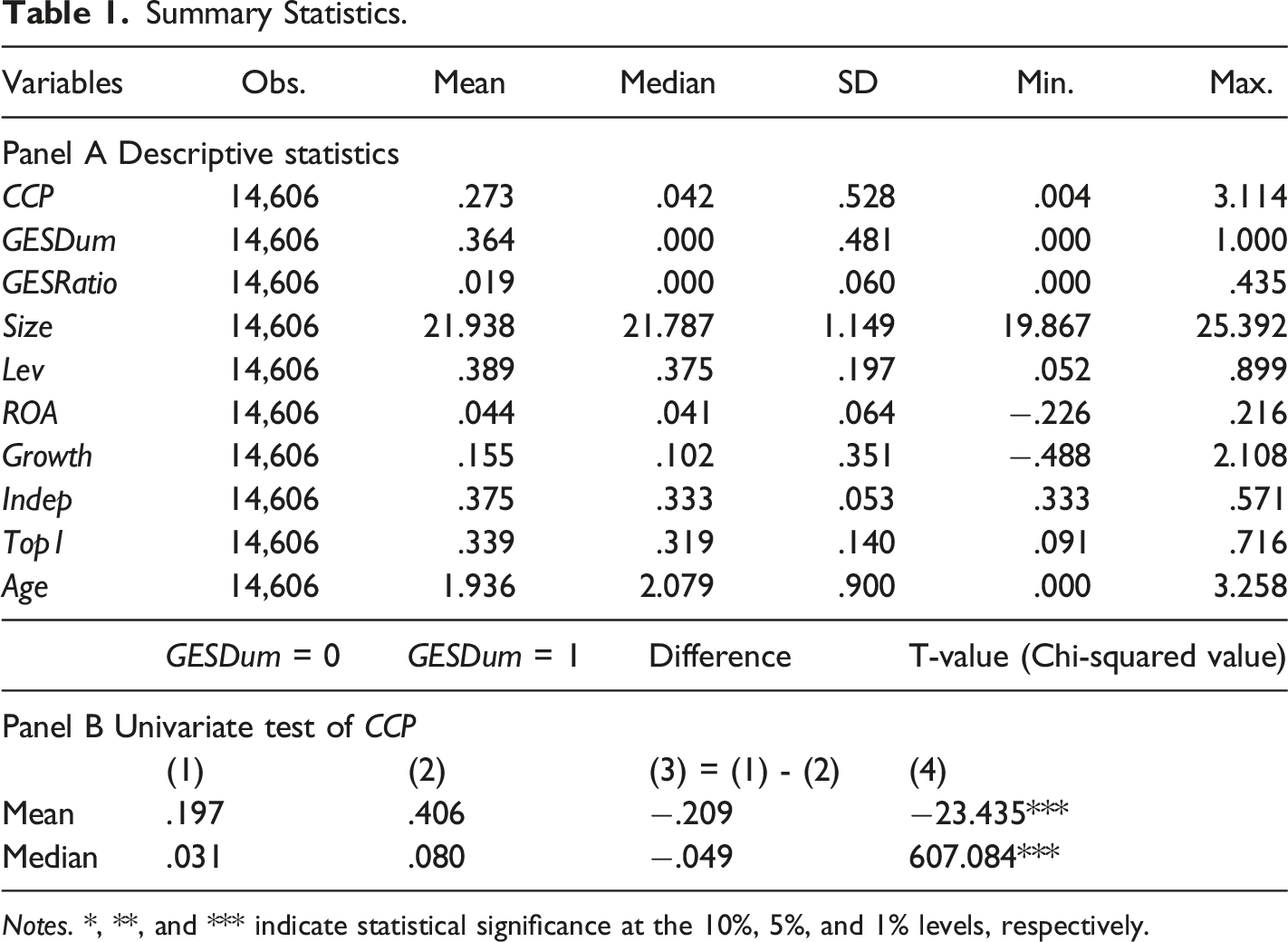
Summary Statistics.
Notes. *, **, and *** indicate statistical significance at the 10%, 5%, and 1% levels, respectively.
Meanwhile, we conduct univariate test for the means and medians of CCP, respectively. Panel B of Table 1 shows that firms with government environmental subsidies (GESDum = 1) have a mean (median) CCP of .406 (.080), which is significantly higher than that of firms without government environmental subsidies (GESDum = 0). The univariate test provides initial support for Hypothesis 1a.
In addition, we calculate the correlations between the key variables (not tabulated). The correlation between government environmental subsidies (GESDum and GESRatio) and corporate carbon performance (CCP) is positive and statistically significant, which also provides initial support for Hypothesis 1a.
Empirical Results
Baseline Results
Baseline Results.
Notes. The t-statistics are reported in parentheses. *, **, and *** indicate statistical significance at the 10%, 5%, and 1% levels, respectively.
Robust Checks
We make a set of sensitivity tests to check the robustness of our findings, including using alternative measures, controlling for the impact of economic policy uncertainty (EPU). To address potential endogeneity issues, we employ propensity score matched (PSM) sample analysis and instrumental variable (IV) approach.
Using Alternative Measures
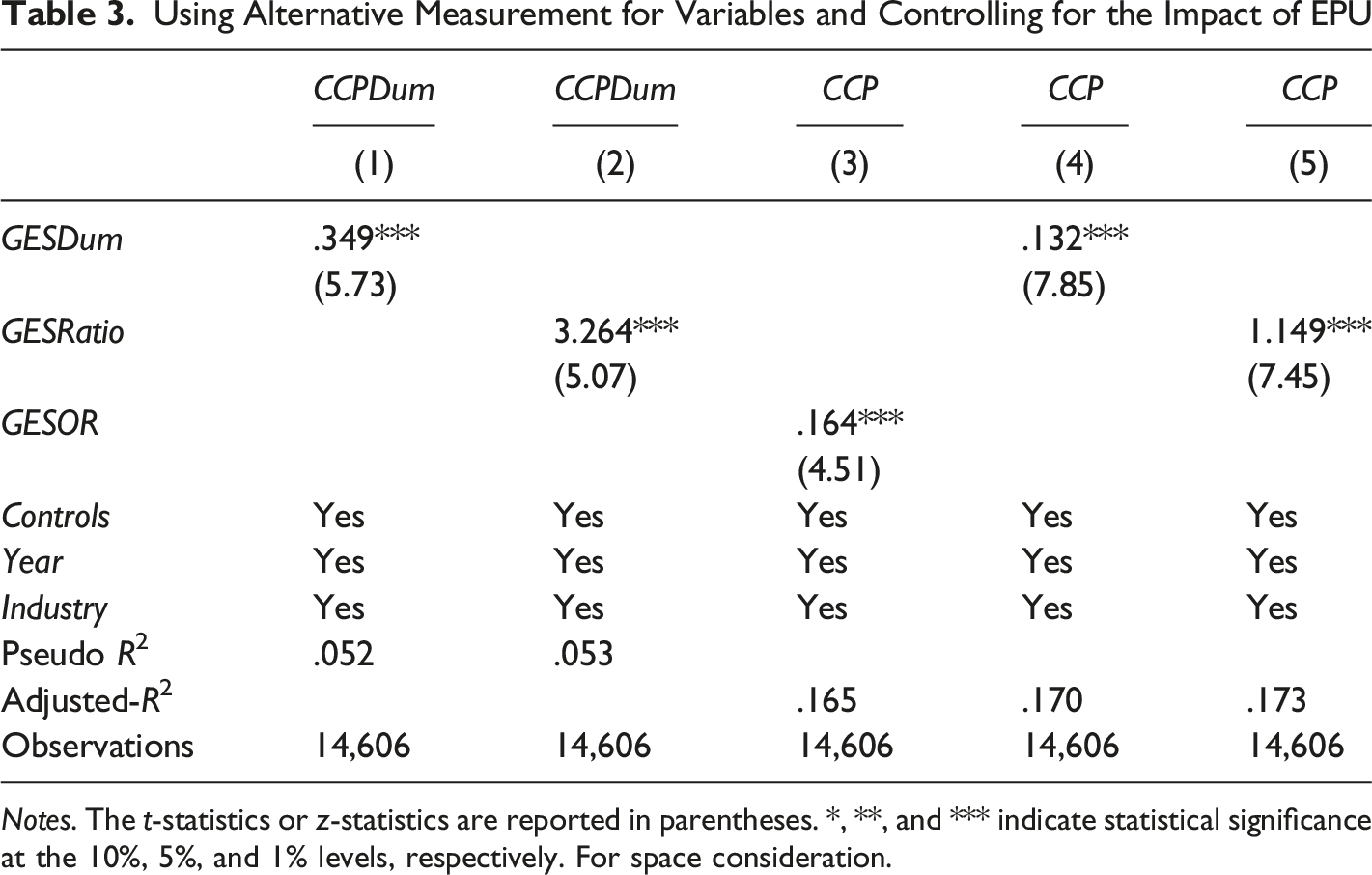
To alleviate the impact of measurement errors on the reliability of our findings, we use alternative measures. For the dependent variable, we create an indicator variable (CCPDum) that is set to 1 if CCP is greater than the industry-year median and 0 otherwise. We use logit model to regress CCPDum on GESDum and GESRatio, respectively. For the independent variable, we use the ratio of government environmental subsidies to operating revenues (GESOR) as a substitute for GESRatio (Wang et al., 2021). For the control variables, we use beta (Beta), return on equity (ROE), net profit growth rate (NPG), the top five shareholders’ ownership (Top5), and board size (Board) as substitutes for leverage (Lev), return on assets (ROA), revenue growth rate (Growth), the largest shareholder’s ownership (Top1), and board independence (Indep), respectively. For space consideration, we do not tabulate the results that use alternative measures for control variables.
Using Alternative Measurement for Variables and Controlling for the Impact of EPU
Notes. The t-statistics or z-statistics are reported in parentheses. *, **, and *** indicate statistical significance at the 10%, 5%, and 1% levels, respectively. For space consideration.
Controlling for the Impact of EPU
Except for firm characteristics, corporate carbon performance may also be influenced by institutional factors, for example, EPU. EPU refers to the uncertainty related to policy expectations, implementation, and stance, which changes firms’ external operating environment. EPU exacerbates information asymmetry and leads financial institutions to strictly control loan disbursement and lower loan granting rates (Hu & Gong, 2019), which in turn puts firms under greater financial pressure. As a result, when being subject to high EPU, firms tend to reduce or delay their investments in carbon-reducing projects (Yu et al., 2021). Besides, during times of high EPU, the government’s attention shifts from environmental sustainability to other tasks, and firms expect relaxed environmental regulations, which discourages corporate environmental efforts (Ahmed et al., 2021). Therefore, EPU is expected to have a negative impact on corporate carbon performance.
We measure China’s EPU (EPU) by calculating the arithmetic mean of the monthly Baker China index (Baker et al., 2016). The results in columns (4) and (5) of Table 3 show that EPU does have a significantly negative impact on corporate carbon performance. After controlling for EPU, government environmental subsidies (GESDum and GESRatio) are still positively associated with corporate carbon performance (CCP), which is consistent with the baseline results. 2
Performing PSM Sample Analysis
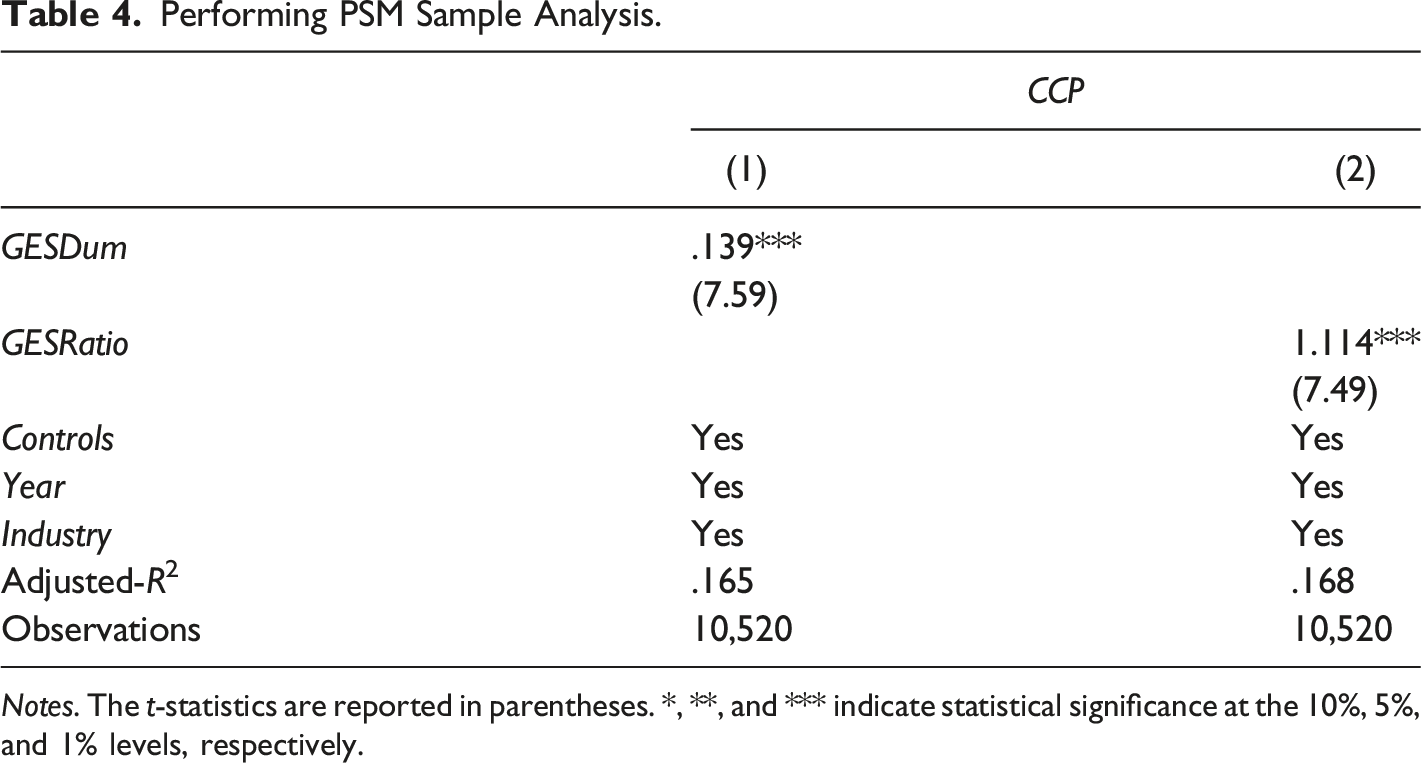
There are differences in corporate characteristics between firms with government environmental subsidies and those without, which suggests that the allocation of environmental subsidies may not be random. Thus, we employ PSM sample analysis to control endogeneity. We select the control variables that are included in the baseline model and use government intervention (GovIn) 3 as the matching variable. After performing one-to-one nearest neighboring matching without replacement, 4 we get a sample of 5,260 firm-year observations with government environmental subsidies (GESDum = 1) matched to 5,260 firm-year observations without (GESDum = 0).
Following Liu and Tian (2022), to ensure that our matching procedure is reliable, we make a series of diagnostic tests for the matched sample. The unreported results show that the matching variables do not influence the likelihood of receiving government environmental subsidies, and the differences in propensity scores and mean values of the matching variables between the two groups are not significant. The above results confirm that our matching procedure is successful.
Performing PSM Sample Analysis.
Notes. The t-statistics are reported in parentheses. *, **, and *** indicate statistical significance at the 10%, 5%, and 1% levels, respectively.
Employing IV Approach
We employ a two-stage IV approach to further overcome endogeneity. Following Huong and Cuong (2019), we use the median intensity of government environmental subsidies for firms in the same industry, province, and year as the instrumental variable, denoted by GESIV. In the same industry and province, the government implements similar subsidy policies, thus GESIV is correlated with an individual firm’s chance and amount to receive government environmental subsidies; however, GESIV is unlikely to be directly influenced by an individual firm’s carbon performance. Thus, the IV (i.e., GESIV) satisfies the relevance and exclusion conditions.
Using IV Approach.
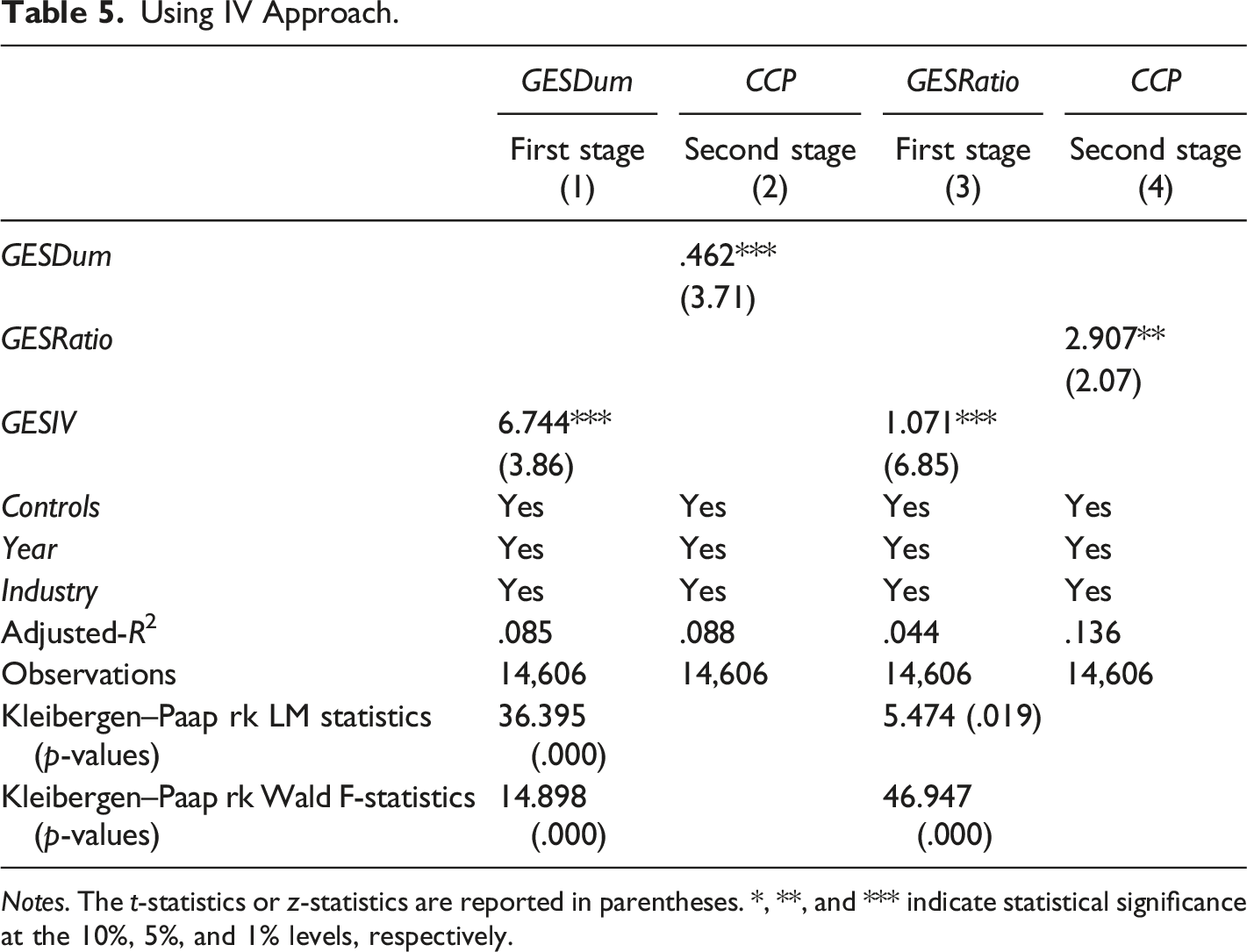
Notes. The t-statistics or z-statistics are reported in parentheses. *, **, and *** indicate statistical significance at the 10%, 5%, and 1% levels, respectively.
Channel Analyses
In section 2.2, we argue that government environmental subsidies improve corporate carbon performance through alleviating financial constraints and enhancing environmental information disclosure. We next examine these two channels.
The Channel of Financial Constraints
In order to clarify the channel of financial constraints, we examine whether government environmental subsidies directly alleviate firms’ financial constraints. Following Bellone et al. (2010), we measure financial constraints (FC) as a composite indicator which consists of six sub-indicators, including cash ratio, firm size, firm age, solvency, fixed assets ratio, and profitability. This measure comprehensively covers three main characteristics of internal financing, external financing, and investment opportunities. A larger value of FC indicates greater financial constraints.
Channel Analyses.
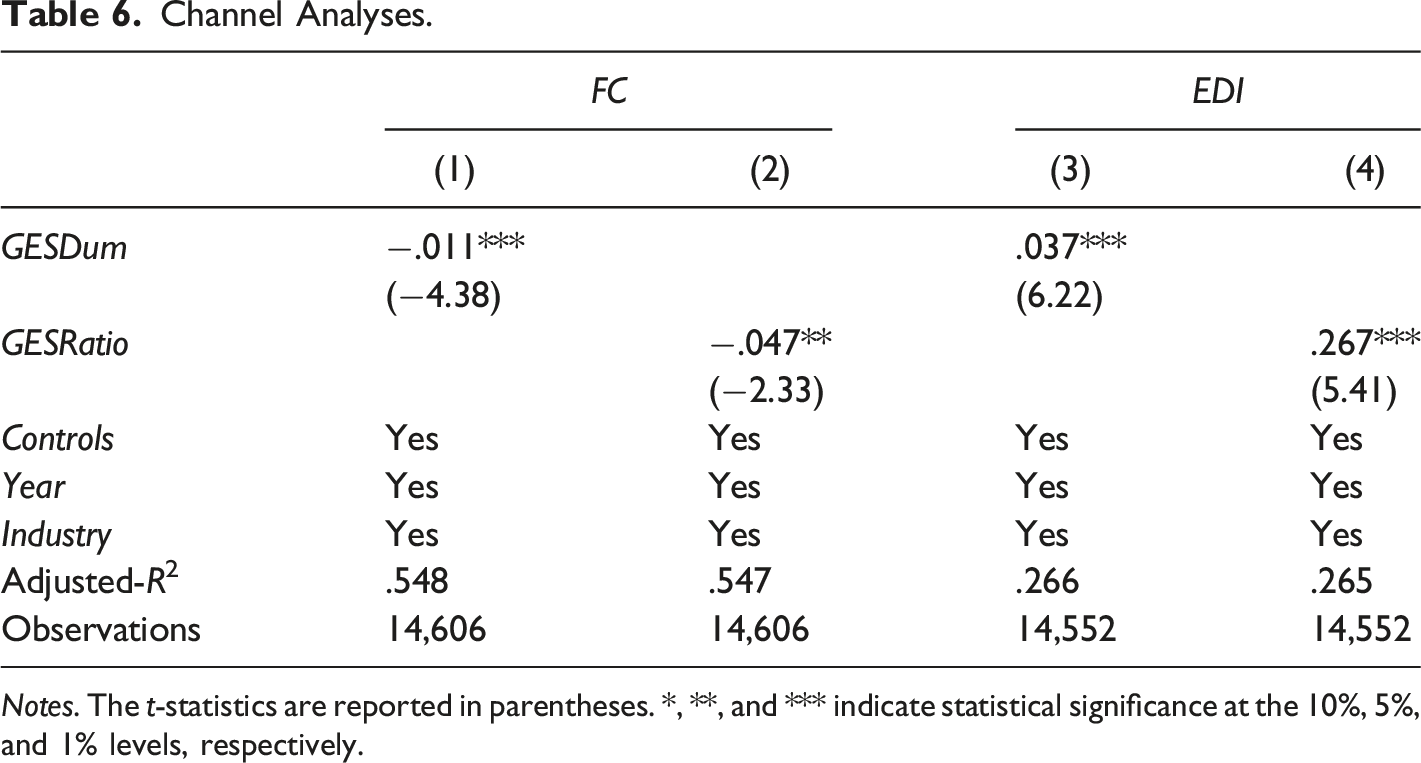
Notes. The t-statistics are reported in parentheses. *, **, and *** indicate statistical significance at the 10%, 5%, and 1% levels, respectively.
The Channel of Environmental Information Disclosure
In order to clarify the channel of environmental information disclosure, we examine whether government environmental subsidies directly enhance the transparency of corporate environmental information disclosure. Following Lin et al. (2021) and Article 19 of China’s Environmental Information Disclosure for Trial Implementation, we construct an index (EDI) to measure environmental information disclosure. EDI is set to 2, 1, and 0 for quantitative, qualitative, and non-disclosed items, respectively. A larger value of EDI indicates a higher transparency of environmental information disclosure.
The results in columns (3) and (4) of Table 6 show that government environmental subsidies (GESDum and GESRatio) are significantly and positively associated with environmental information disclosure (EDI), suggesting that government environmental subsidies enhance the transparency of environmental information disclosure. These results confirm the channel of environmental information disclosure.
Cross-Sectional Analyses
We have provided sufficient evidence that receiving government environmental subsidies leads firms to improve carbon performance. Such relationship might vary with internal and external factors of firms. Specifically, in this section, we analyze how state ownership, executive environmental awareness, and media attention influence the relationship between government environmental subsidies and corporate carbon performance.
Effect of State Ownership
We argue that the effect of government environmental subsidies on corporate carbon performance would vary across SOEs and non-SOEs for three reasons. First, the government background leads SOEs to take more social responsibilities (Luo, Zhang, & Liu, 2022). In recent years, the Chinese government has put emphasis on environmental issues, and SOEs are often used as pilots for new regulations and policies because of their state-owned nature (Cheng et al., 2017). SOEs are the “pioneers” of low-carbon development, and the Chinese government has imposed many requirements on their environmental initiatives. For example, by 2025, the energy consumption and carbon emissions per unit output of central SOEs should be reduced by 15% and 18% relative to 2020, respectively. Thus, SOEs are under greater environmental pressure and have a stronger motivation to make full use of government environmental subsidies to improve carbon performance. Second, SOEs have a natural advantage in obtaining government subsidies. In emerging markets, government officials have greater discretion on subsidizing firms, and the CEOs of SOEs have closer ties with government officials; thus, compared to non-SOEs, the government favors SOEs in terms of subsidy allocation (Pan et al., 2020). Third, the government has multiple identities in SOEs, including investors, business managers, and social managers. State-owned equity provides an important platform for the government to intervene in economic activities. As a result, SOEs have an information advantage over subsidies and are often able to get more subsidies in a timelier manner than non-SOEs (Wu, 2017; Xu et al., 2021). In addition, compared to non-SOEs, SOEs are the key contributors to taxes and employment and play a critical role in regional economic development; thus, they have stronger bargaining power and better access to governmental resource support (Wu, 2017).
Effect of State Ownership.
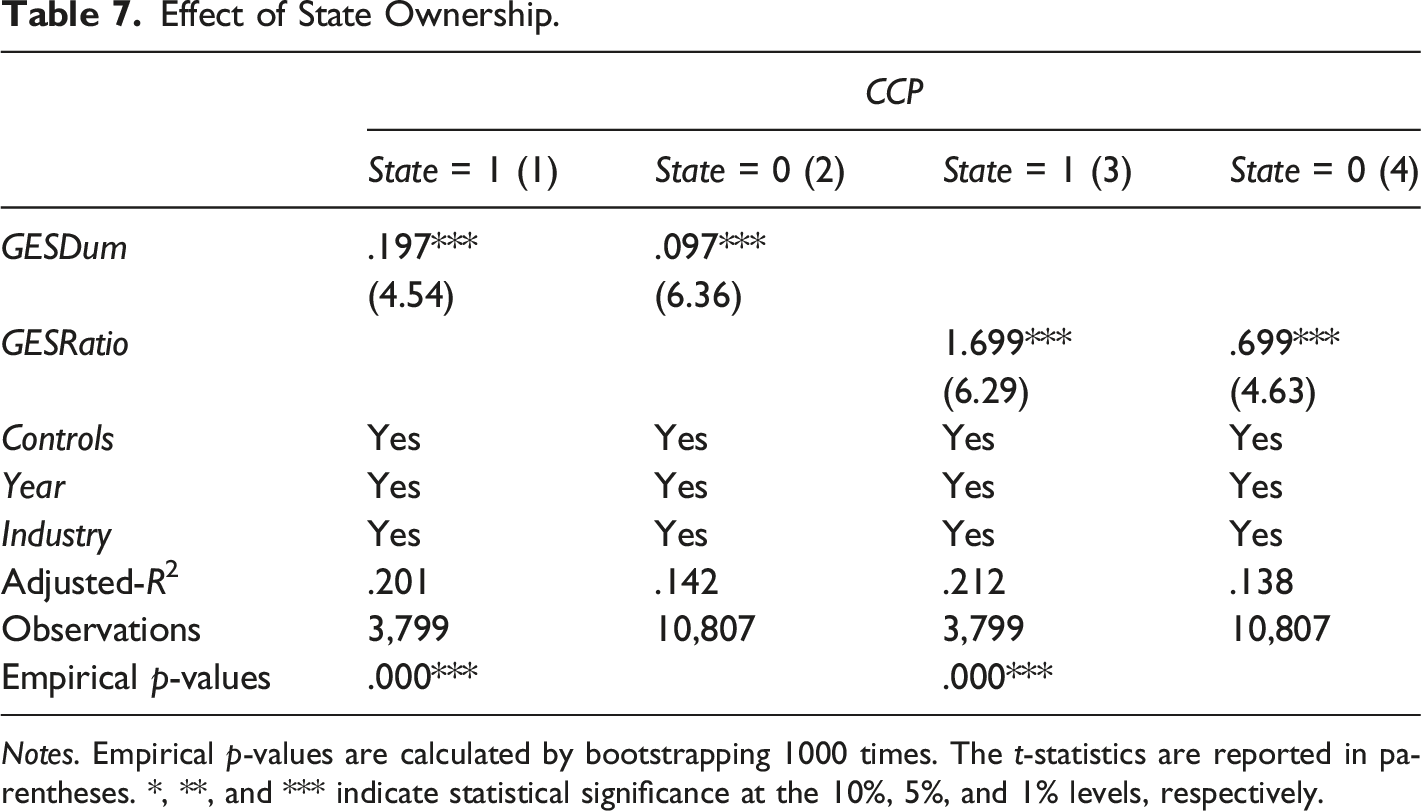
Notes. Empirical p-values are calculated by bootstrapping 1000 times. The t-statistics are reported in parentheses. *, **, and *** indicate statistical significance at the 10%, 5%, and 1% levels, respectively.
Effect of Executive Environmental Awareness
Government environmental subsidies are important resources for firms, and executive behavior is likely to influence the effectiveness of government environmental subsidies. According to the upper echelons theory, executive cognitive behavior influences corporate strategic decisions and performance (Tan & Zhu, 2022). Executives with strong environmental awareness are more sensitive to the potential benefits and market opportunities of green initiatives and thus are more willing to devote limited resources to environmental management (Sun & Sun, 2021). Nowadays, stakeholders, such as the government, community, and consumers, have higher environmental demands. Environmentally conscious executives tend to implement proactive environmental strategies (Yin et al., 2019). They are adept at integrating resources, information, and knowledge, and actively applying them to environmental management. Besides, environmentally conscious executives tend to actively incorporate green elements into daily management activities and strategy formulation, which is conducive to firms’ cultivation of green culture and low-carbon transition (Tan & Zhu, 2022; Zhang et al., 2015).
Effect of Executive Environmental Awareness.
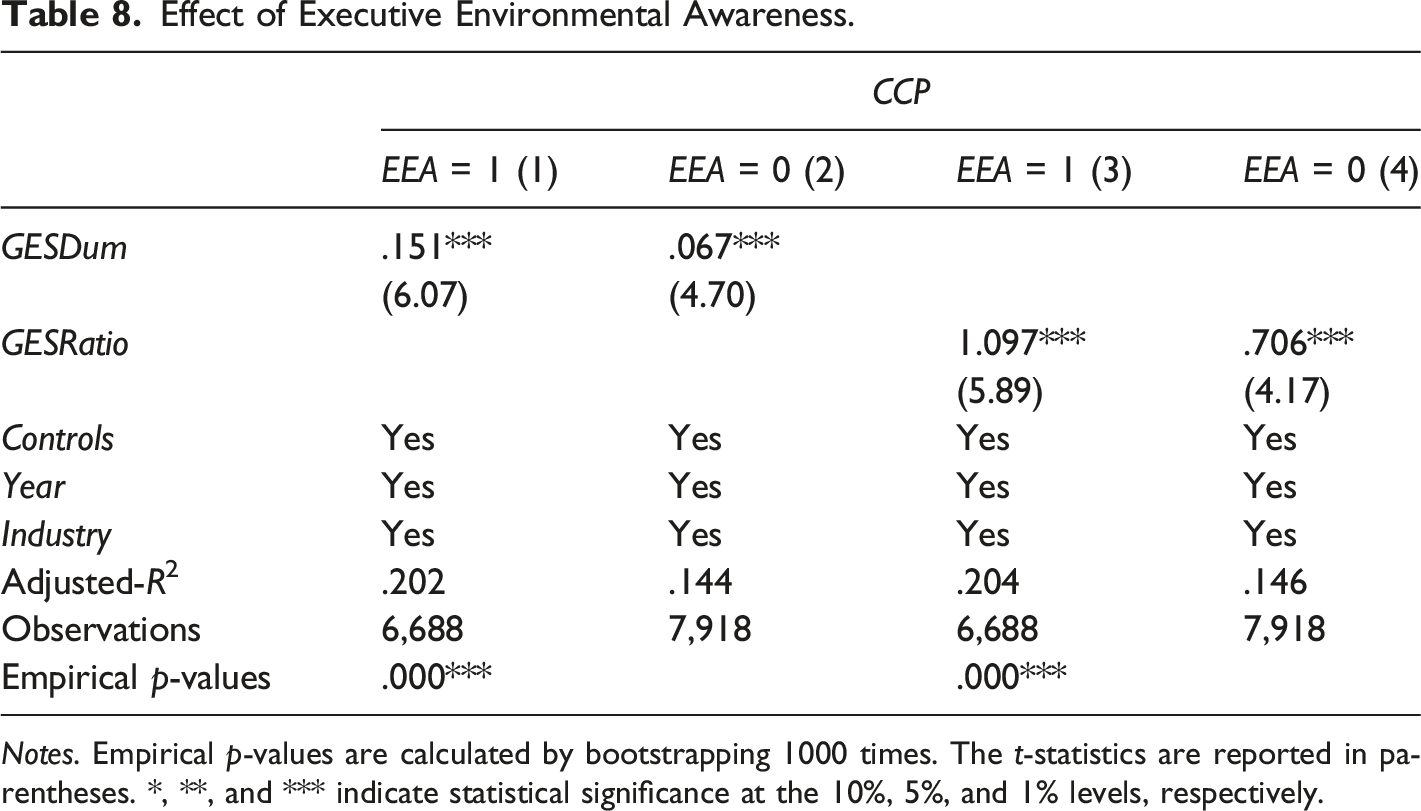
Notes. Empirical p-values are calculated by bootstrapping 1000 times. The t-statistics are reported in parentheses. *, **, and *** indicate statistical significance at the 10%, 5%, and 1% levels, respectively.
Effect of Media Attention
With the development of information technologies, public access to information has increased dramatically (Fan et al., 2020). The media plays an important role in regulating corporate environmental behavior. First, media coverage has a revealing function that leads to regulatory intervention. Through rapid media coverage, regulators can easily access corporate information and thus provide timely warnings to firms with undesirable environmental behaviors (Yang et al., 2020; Zhang et al., 2022). Second, as an informal external supervisory mechanism, media exposure makes corporate environmental behavior more transparent and shapes external stakeholders’ perceptions of corporate image and social reputation (Luo et al., 2021; Su et al., 2022). If firms fail to reasonably use government environmental subsidies for environmental management, and this failure is exposed by the media, firms’ reputation and sustainable operation will be threatened (Zhang et al., 2022). Thus, stronger media attention suggests greater external environmental pressure, which leads firms to better utilize government environmental subsidies to improve carbon performance.
Effect of Media Attention.
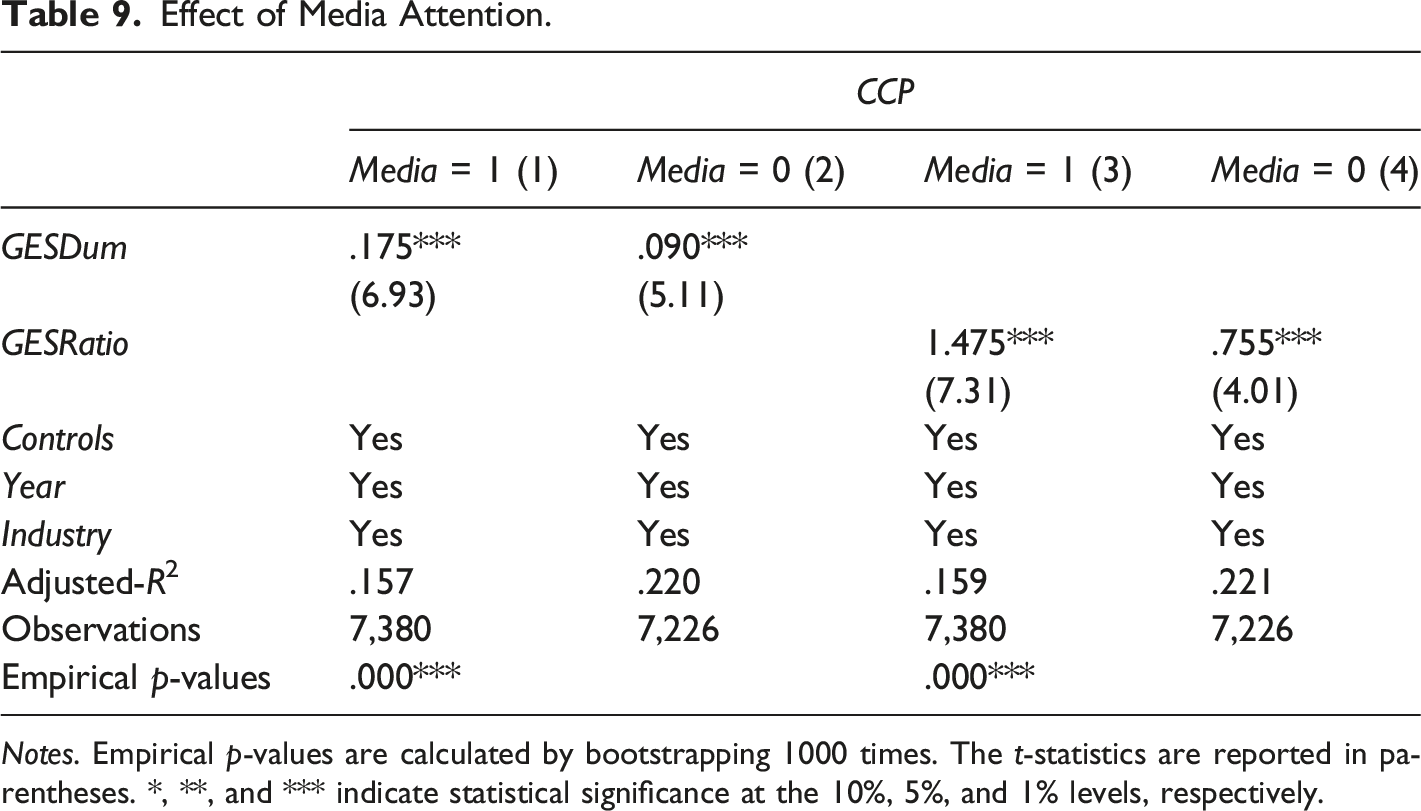
Notes. Empirical p-values are calculated by bootstrapping 1000 times. The t-statistics are reported in parentheses. *, **, and *** indicate statistical significance at the 10%, 5%, and 1% levels, respectively.
Conclusion and Discussion
Firms are the major carbon emitters, and thus improving corporate carbon performance is crucial for sustainable economic and social development. In China, government policy has become one of the key determinants of firms’ carbon emissions. Environmental subsidies are the major expenditure-based policy tools that are used by the government to promote corporate low-carbon transition. However, theoretically, it is unclear whether or not government environmental subsidies motivate firms to strive for better carbon performance, and no prior studies provide empirical evidence. In this study, using a large sample of Chinese A-share-listed manufacturing firms from 2012 to 2019, we show that government environmental subsidies improve corporate carbon performance through alleviating financial constraints and enhancing environmental information disclosure. Further, we show that the improving effect of government environmental subsidies on corporate carbon performance is stronger in SOEs, in firms with higher executive environmental awareness, and in firms with higher media attention. The results are robust to a set of sensitivity tests.
Our findings provide policy implications for regulators, firms, and investors in China and other countries facing similar environmental challenges. First, given that government environmental subsidies significantly improve corporate carbon performance, the government (i.e., the regulator) could expand the expenditure scale of environmental subsidies based on local realities. Meanwhile, our study suggests that the media plays an important role in regulating corporate environmental behavior; thus, the government could cooperate with the media when monitoring the firm’s use of environmental subsidies. Second, our study suggests that government environmental subsidies are key external resources for corporate carbon performance. Thus, to obtain sufficient policy resources and social support for sustainable development, firms should establish a carbon management system to enhance their environment-friendly reputation. Third, investors, especially responsible investors, play a vital role in corporate carbon performance, and they should adopt a “responsible investment strategy.” Specifically, investors need to initiate in-depth dialogues with firms on issues such as environmental risks and low-carbon emissions and actively exercise their voting rights and shareholder proposals to urge firms to improve carbon performance.
Our study is subject to two limitations that point to possible directions for future research. First, when measuring corporate carbon performance, we only include scope 1 and 2 carbon emissions because of data limitation. Future research could modify this measure if the data on carbon emissions that occur across the value chain is available. Second, our paper only investigates the determinants of corporate carbon performance from the perspective of government environmental subsidies. Future research could extend the study perspectives by exploring the impact of other policy instruments, such as carbon tax and carbon trading, on corporate carbon performance.
Footnotes
Author Contributions
Xiying Luo: Conceptualization, supervision, validation, project administration, and funding acquisition.
Xin Liu: Methodology, software, validation, formal analysis, investigation, and data curation.
Wei Liu: Conceptualization, writing, validation, and funding acquisition.
Declaration of Conflicting Interests
The author(s) declared no potential conflicts of interest with respect to the research, authorship, and/or publication of this article.
Funding
The author(s) disclosed receipt of the following financial support for the research, authorship, and/or publication of this article: This research was funded by the National Social Science Fund of China (Grant number: 22BJY215); the Guangdong Philosophy and Social Sciences “the 13th Five-Year Plan” Youth Project (Grant number: GD20YYJ07); the Guangdong Philosophy and Social Sciences Youth Project (Grant number: GD21YGL15) and; the Guangdong Basic and Applied Basic Research Foundation (Grant number: 2022A1515110479); the Scientific Research Project of the Education Department of Hunan Province (Grant number: 23B0455).

Data Availability Statement
The data that support the findings of this study are available from the corresponding author, upon reasonable request.