




Abstract
The HEXACO model divides the space of personality into six main dimensions: Honesty–Humility, Emotionality, eXtraversion, Agreeableness (vs. anger), Conscientiousness, and Openness to Experience. Despite the lexical foundation, no validated adjective-based instruments are available yet. This contribution describes the newly developed HEXACO Adjective Scales (HAS), a 60 adjectives instrument to measure the six main personality dimensions. Study 1 (N=368) proceeds to the first pruning of a large set of adjectives to identify potential markers. Study 2 (N=811) delineates the final list of 60 adjectives and provides benchmarks for the new scales’ internal consistency, convergent/discriminant, and criterion validity. Study 3 (N=411) confirms the HAS factorial structure, internal consistency, and criterion validity. The study also provides evidence of temporal stability (test–retest reliability) and convergence between raters (peer/self-evaluation). The HAS shows excellent psychometric properties and constitutes a valuable tool for assessing the HEXACO personality dimensions using adjectives.
Among the diverse theoretical frameworks that articulate personality into main dimensions, the most famous is the five-factor model (McCrae & Costa, 1987). However, lexical research has provided evidence for six—instead of five—main personality dimensions (Ashton & Lee, 2020; Ashton, Lee, Perugini, et al., 2004). The six dimensions of the HEXACO model (Lee & Ashton, 2004) divide the personality space into Honesty–Humility (H), Emotionality (E), eXtraversion (X), Agreeableness (vs. anger; A), Conscientiousness (C), and Openness to Experience (O) (Ashton & Lee, 2007).
From a theoretical standpoint, the six HEXACO personality factors gather into two broad conceptual groups. On one hand, individual differences in the engagement within three areas of effort projected out to the society: social/group-related, work-related, and idea-related, captured by the traits of Extraversion, Conscientiousness, and Openness to Experience, respectively. On the other hand, individual differences are clustered into three different forms of individual altruistic tendencies described by the Honesty–Humility, Emotionality, and Agreeableness dimensions.
This second cluster of traits differentiates the HEXACO from the five-factor (5F) model (for a detailed description of the HEXACO model, see Ashton & Lee, 2007). The variance of Agreeableness and Emotional Stability of the 5F model is redistributed into the Honesty–Humility, Emotionality, and Agreeableness dimensions of the HEXACO. While both models have an Agreeableness factor, the specific content is not identical. The HEXACO Agreeableness does not include aspects linked to sentimentality. In contrast, it includes aspects related to anger. Therefore, anger is not in the factor HEXACO Emotionality, which is the conceptual equivalent of the factor 5F-Neuroticism that contains anger. Emotionality instead includes aspects related to emotional bonds and sentimentality. In the HEXACO, Honesty–Humility and Agreeableness represent two forms of reciprocal-altruistic tendencies. Honesty–Humility is related to the tendency to treat others fairly even when one could successfully take advantage of them and Agreeableness to the tendency to be patient with others even when this comports an unfair treatment. Emotionality represents the tendency to prevent harm to self and close people, relevant to kin altruism (Ashton & Lee, 2007). Besides a clearer theoretical reconceptualization of the basic personality dimensions compared with 5F models (Ashton & Lee, 2020), the specific addition of the Honesty–Humility dimension contributed to the explanation of several criteria, especially those associated with antisocial or self-serving behaviors (Ashton et al., 2014; De Vries & Van Kampen, 2010).
The six dimensions of the HEXACO model are typically measured with the HEXACO Personality Inventory-Revised (HEXACO-PI-R), which is available in three formats, 200-, 100-, and 60-item versions (Ashton & Lee, 2009; Lee & Ashton, 2004) and in many languages (Thielmann et al., 2020). Each dimension can be divided into four facets that capture related—but empirically distinguishable—personality-relevant contents. Facets can be reliably assessed only with the 200-, 100-item versions of the HEXACO-PI-R (Ashton & Lee, 2007). The content of the HEXACO-PI-R is largely based on the six cross-culturally replicated lexical personality factors that emerged from the lexical studies on adjectives in natural languages used to distinguish people and their behaviors (Ashton & Lee, 2007; Ashton, Lee, Perugini, et al., 2004). Despite the lexical foundation of the HEXACO model, the measures are based on items with the typical format of short, contextualized sentences concerning relevant behaviors, affect, cognition, and motivations (Wilt & Revelle, 2015).
An alternative personality measurement format uses adjective lists, such as the 5F model traits (R. L. Goldberg, 1992; Perugini & Leone, 2008; Piedmont et al., 1991). The use of adjectives is based on the lexical hypothesis (Wood, 2015). Adjectives measure different aspects of the personality self-concept as reflected in people’s evaluations of themselves (or reported by their peers) using personality evaluative terms (L. R. Goldberg, 1981, 1993).
Both items and adjectives are used to assess personality through self-, peer-, and observer reports. Each format has its advantages and drawbacks. The contextualization and the reference to behaviors, affect, cognition, and motivations can be considered an advantage of the item format. However, the adjective format is faster in its administration. It also has the advantage of being easy for participants to read and understand.
Furthermore, adjective measures do not rely upon specific actions or contextualized descriptions and can be thus employed in different contexts. A particular context in which adjectives can be very useful is daily repeated experience sampling, a type of study that is steadily growing in popularity in the personality field (Fleeson & Gallagher, 2009; Horstmann & Ziegler, 2020). While validated adjective-based measures are available for the 5F models, we are unaware of similar tools for the HEXACO model.
Aims of the Contribution
This contribution’s primary goal is to describe the development and validation process of the HEXACO Adjective Scales (HAS), an instrument featuring 60 adjectives meant to cover the main six dimensions of personality as reflected in the HEXACO model. This contribution will fill a gap in the literature with three studies and provide a potentially widely usable measure. Study 1 aimed to reduce the potential candidate markers by restricting an initial broader list of adjectives for each trait to those with a high potential of being good markers of one of the six traits. Study 2 focused first on fine-tuning the final list of 60 markers (10 per trait) and, second, on providing convergent, discriminant, and criterion validity evidence. Finally, Study 3 aimed to confirm the factorial structure of the HAS measure on an independent sample, presenting empirical support for measurement stability over time (test–retest reliability), convergence between raters (peer/self-evaluation), and additional evidence concerning criterion validity. The HAS was developed in Italian. All the adjectives used in the three studies have been proposed in Italian to the different samples of Italian speakers. The final set of 60 HAS adjectives was translated into English using a back-translation procedure. To this aim, we involved a native English speaker from our lab (mentioned in the acknowledgements). Nonetheless, the English translation of these adjectives should not be used as a validated translation.
Participants in all studies gave informed consent. All studies were approved by the local Ethical Committee and conducted following the guidelines of the ethical standards of the Declaration of Helsinki (World Medical Association, 1996).
Study 1
The general aim of Study 1 was to identify an initial list of potential markers, in Italian, for the HEXACO traits. Thus, we generated a relatively broad starting set of 152 adjectives and we inspected their correlations with established measures of HEXACO traits. Study 1 was used to select the best potential markers of each trait, a selection further refined in Study 2.
Method
Participants
Three hundred ninety participants took part in the data collection. Participants were recruited from the Italian population disseminating the study link via multiple social networks. Participation was on a voluntary basis, and we did not offer any monetary reimbursement. The study was conducted online. Four participants were excluded from the analyses for failing the self-reported attention check, and 18 because of an insufficient self-declared level of Italian proficiency. The final sample thus included 368 participants (307 females and 61 males, Mage=26.5, SD=10.4, 155 had a university degree, 202 had a high school diploma, and 11 had a middle school diploma).
Procedure
After providing informed consent, participants completed in a fixed order the adjective list of 152 candidate markers and the 60 items version of the HEXACO-PI-R (Ashton & Lee, 2009). After the questionnaire, they answered a few demographic questions. They indicated their gender and age, level of education, their nationality (Italian vs. other), and their proficiency level in the Italian language (“low level,”“mid-level,”“high level,” and “mother-tongue.” Only participants indicating “high level” or “mother-tongue” have been included in the final sample). Finally, they completed the Self-Report-Single-Item (SRSI) indicator, a self-reported attention check (Meade & Craig, 2012). The completion of the entire survey required around 20 min.
Materials
The Adjective List of 152 Candidate Markers
We started by identifying around 25 markers per trait as a sufficiently broad starting set. The candidate adjectives were in Italian and were selected as follows. We considered all the adjectives from two lists of Italian adjectives analyzed for the HEXACO personality model (Ashton et al., 2004). The first adjectives list encompassed 285 adjectives (Caprara & Perugini, 1994; De Raad, Di Blas, & Perugini, 1998; De Raad, Perugini, et al., 1998), the second one 369 (Di Blas & Forzi, 1999). A first reduction consisted of choosing only adjectives present in both lists under the same trait to reduce the probability of including adjectives specific to an area. Being considered personality markers in both studies increases the likelihood that they are valid regardless of the specifics of the two studies. These selected adjectives were in Italian in the original studies. Then, we selected the adjectives identified as the best markers per trait identified in other languages (Ashton et al., 2006; Ashton, Lee, Perugini, et al., 2004), with particular attention to the extensive list of English adjectives (Ashton, Lee, & Goldberg, 2004). The adjectives identified from databases in different languages were translated into Italian by one author of this paper (DR) and checked by all co-authors. Subsequently, we checked that multiple adjectives represented all the facets of the HEXACO model and that each trait’s positive and negative polarities were equally represented. Finally, one irrelevant adjective was added to counteract the degree of freedom lost when ipsatizing data (see below for details). Participants rated the extent to which each of the selected 152 adjectives described them on a scale from 1 (it does not describe me at all) to 7 (it describes me completely).
HEXACO-60 (Ashton & Lee, 2009)
The short version of the HEXACO-PI assesses six major personality traits with 10 items each: Honesty–humility (α=.80, ω=.87), Emotionality (α=.76, ω=.82), eXtraversion (α = .82, ω=.89), Agreeableness versus anger (α=.75; ω=.80), Conscientiousness (α=.78; ω=.85), and Openness to experience (α=.71; ω=.76). A sample item is “I plan ahead and organize things, to avoid scrambling at the last minute” (Conscientiousness). Participants rated each item on a 5-point scale, from 1 (completely disagree) to 5 (completely agree). We used the Italian version of the HEXACO project website (https://hexaco.org/hexaco-inventory). This was used in previous studies (Costantini et al., 2015); a validation study has been published for the 100-item version (Thielmann et al., 2020) that includes the 60 items we used.
Results
Adjectives Component Structure
First, we ipsatized the 152 adjective items (standardization within participants, Hofstee et al., 1992; Ten Berge, 1999). An irrelevant adjective (sport person, sportivo 1 ) was removed to maintain a positive definite matrix for the principal component analysis (PCA; Ten Berge, 1999) performed on the 151 adjectives. For the selection aims of this study, we were exclusively interested in examining a six-component solution, which appeared in line with the scree plot that showed gaps after the fourth, the sixth, the eighth, and the 11th components. The MAP criterion suggested eight factors, the Bayesian Information Criterion (BIC) was minimum with six factors, while parallel analysis indicated 12 components. Thus, while a clear unique best component structure did not emerge, a six-component solution was among the possible ones and, theoretically, was the one in which we were interested. Six components explained 34.5% of the total variance and were rotated via varimax. The components reproduced the expected HEXACO model, albeit with some cross-loadings.
Markers Selection
Items were attributed to a factor based on their highest primary loading. We selected items based on several criteria.
First, an item should have had a simple factor solution-like pattern, with a primary loading on the expected trait and the absence of noticeable cross-loadings (i.e., any other loading < .20). For example, the item asocial (asocial) is a good marker for the eXtraversion trait as it has a primary loading of −.69 and no secondary loading above .|20.| We also considered items with a secondary loading if there were other reasons to include them in the list (see next points). For example, despite a sub-optimal loadings pattern (primary loading on λE=.48, two cross-loadings on λA=−.43 and λX=.34), the item serene (sereno) was included because its content is the core of the emotional stability facet of the Emotionality trait. It is a reasonable choice for a personality pole that is not as well represented in the lexicon as the opposite pole of the trait (e.g., Ashton et al., 2004).
Second, we projected the 151 adjectives on the space defined by the HEXACO-60 orthogonal factors by correlating ipsative scores and HEXACO-60 component scores (extension analysis, Gorsuch, 1997). Following the same reasoning of the PCA solution, a good marker is the one that correlates strongly and only with one HEXACO-60 trait, with slight deviations from this ideal status that have been considered in light of the other criteria. For example, the item full of complex (pieno di complessi) was excluded because, despite a strong primary loading on the E factor (λE=−.64 and cross-loadings with λC=−.22 and λX=−.28), its projection in the HEXACO-60 space fell primarily on X (rX=−.48, rA=−.22, rE=.34). Conversely, the item inconstant (incostante) was included because it projects only on C (rC=−.45) even if in the presence of a cross-loading (λC=−.55, λE=−.28). In brief, by considering projections on the HEXACO, we consolidated the selection to reflect the HEXACO structure instead of other possible blends of six factors.
Third, we also considered the breadth of content. We kept the overlap across different adjectives at a minimum and tried to represent all the facets of the HEXACO structure. For example, we included conscientious (coscienzioso) for Conscientiousness instead of ordered (ordinato) because we had already included organized (organizzato).
Fourth, we kept the balance between items that loaded positively and negatively on each dimension.
We ran a second PCA on the final pool of items to confirm that the selection process did not alter the marker factor attribution. The reduced six components’ solution explained 44% of variance (Table 1). This first selection ended up with a total of 80 adjectives: 14 for X, A, and C; 13 for E and H, and 12 for O.
List of 80 Markers With Varimax-Rotated PCA Loadings and Projections on the HEXACO-60 (Study 1, N = 368)
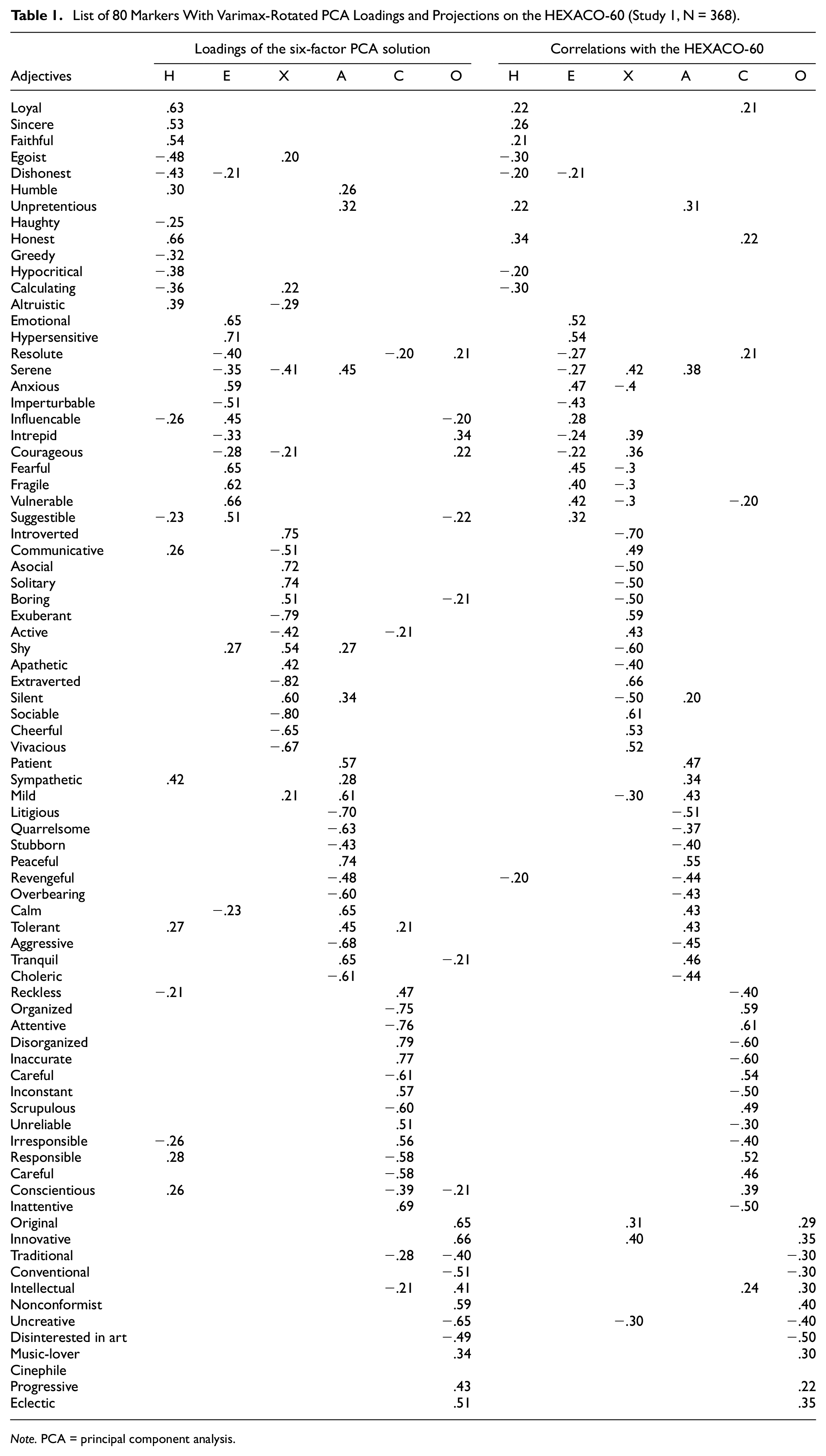
Note. PCA = principal component analysis.
Discussion
We aimed to individuate an initial set of items to build a tool to parallel the HEXACO-60 (Ashton & Lee, 2009) with adjectives as markers. To individuate the best markers, we started from a list of 151 candidates and ended with the first selection of 80 adjectives. We established the representativeness of each marker for the HEXACO model with two methods: PCA and extension analysis. The advantage of employing the projection of the adjectives onto the HEXACO space is to ensure that we select adjectives as good markers of a HEXACO six-component solution and not other possible six-component solutions. Besides the double quantitative approach aimed at choosing the best possible markers, we also verified each dimension manually to check whether the entire breadth of each dimension was represented and if both positive and negative poles were substantially and equally represented.
Study 2
Study 2 aims at defining the final list of 60 adjectives. Also, Study 2 aims to provide initial evidence of convergent, discriminant, and criterion validity and internal consistency of the new scales. The strict criteria adopted in Study 1 sometimes left fewer candidates than desirable, particularly for the Openness, Honesty–Humility, and Emotionality traits. Thus, we individuated additional potential markers to cover those areas, keeping in mind the representativeness of the traits and polarity of the markers. We, thus, obtained a list of 89 candidates for Study 2.
Method
Participants
Eight hundred sixty-six participants took part in the data collection. The data of 14 participants were excluded from the analyses for failing the self-report attention check, one because of a self-declared low level of Italian proficiency. The final sample, thus, included 851 participants (588 females and 261 males) and was composed of two subsamples that differed in terms of the additional measures included. Study 2.1 (N=427, 312 females, Mage=27.4, SD=10.7; 212 had a university degree, 183 a high school diploma, 31 a middle school diploma, and 1 attended only primary school) focused on nomological validity and Study 2.2 (N=424, Mage=29.5, SD=10.5, 276 females; 197 had a university degree, 205 a high school diploma, 21 a middle school diploma, and 1 attended only primary schools) on criterion validity. Recruitment was done as in Study 1. The study was conducted online.
Procedure
All participants completed the adjective list of 89 HAS candidate markers, the HEXACO-PI-R 100 items, and the BFI-2. In addition, participants of subgroup 2.1 completed a series of scales relevant to investigating nomological validity: The short dark-triad questionnaire (Jones & Paulhus, 2014), the Depression Anxiety Stress Scale (Lovibond & Lovibond, 1995), the Assessment of Sadistic Personality scale (Plouffe et al., 2017), the Short Mental Toughness Questionnaire (Dagnall et al., 2019), the Trait Emotional Intelligence scale (Cooper & Petrides, 2010), the Aggression Questionnaire (A. H. Buss & Perry, 1992), and the Satisfaction With Life Scale (Diener et al., 1985).
Participants of subgroup 2.2 answered a series of life outcomes and behavioral acts that served as criteria for concurrent validity for behaviors. After the questionnaire, they answered the same demographic questions described in Study 1 and the SRSI attention check (Meade & Craig, 2012). The completion of the survey took around 40 min. All materials were provided in Italian.
Materials
The 89 HAS Candidate Markers
Participants indicate how each of the 89 selected adjectives describes themselves. The response scale ranged from 1 (it does not describe me at all) to 7 (it describes me completely). The list was in Italian and included 80 adjectives selected in Study 1 plus additional nine adjectives: Snob (snob) and pretentious (pretenzioso) which were expected to load on H; trivial (banale), curious (curioso), unoriginal (poco originale), and appreciative of art (che apprezza l’arte) that were expected to load on O, emotionally stable (stabile emotivamente), secure (sicuro), and impassive (impassibile) which were expected to load on E. These additional adjectives were identified from the pool used for the initial selection of Study 1 on a theoretical basis.
HEXACO-100 (Lee & Ashton, 2018)
This version of the HEXACO assesses each factor with 16 items, Honesty–Humility (α=.85; ω=.95), Emotionality (α=.84; ω=.90), eXtraversion (α=.87; ω=.92), Agreeableness (α=.84; ω=.88), Conscientiousness (α=.80; ω=.89), Openness to experience (α=.78; ω=.82), plus four items for the interstitial facet of Altruism (α=.58; ω=.64). Participants indicated their agreement with each statement on a 5-point scale, from 1 (completely disagree) to 5 (completely agree). A sample item is “I plan ahead and organize things, to avoid scrambling at the last minute” (Conscientiousness). We used the Italian version (Thielmann et al., 2020).
Big Five Inventory–2 (Soto & John, 2017)
We used the Italian version of the BFI-2 (Baranski et al., 2021) to assess the Big Five personality traits with 12 items each, Openness (O; α=.85; ω=.98), Conscientiousness (C; α=.85; ω=.94), Extraversion (E; α=.78; ω=.87), Agreeableness (A; α=.77; ω=.80), and Neuroticism (N; α=.90; ω=.94). A sample item is “[I am a person who] is outgoing, sociable” (Extroversion). Participants rated each item on a 5-point scale, from 1 (completely disagree) to 5 (completely agree).
Short Dark-Triad Questionnaire, SD3 (Jones & Paulhus, 2014)
We used the Italian validated version (Somma et al., 2020). The 27-item questionnaire assesses the Dark Triad: Narcissism (α=.71; ω=.73), Machiavellianism (α=.79; ω=.82), and Psychopathy (α=.75; ω=.78). Participants indicated their agreement with each statement on a 5-point scale, from 1 (strongly disagree) to 5 (strongly agree).
Depression Anxiety Stress Scale, DASS-21 (Lovibond & Lovibond, 1995)
The 21-item questionnaire assesses Depression (α=.89; ω=.90), Anxiety (α=.86; ω=.87), and Stress (α=.89; ω=.91). We used the validated Italian version (Bottesi et al., 2015). Participants indicated how often they experienced events described in each statement (e.g., “I found it hard to wind down”), on a scale from 0 (did not apply to me at all) to 3 (applied to me very much or most of the time).
Assessment of Sadistic Personality (Plouffe et al., 2017)
We used the Italian translation (Kowalski et al., 2020). The nine-item scale assesses sadism (α=.80; ω=.85), the fourth element of the dark tetrad. Participants indicated their agreement with each statement (e.g., “I have made fun of people so that they know I am in control”) on a scale from 1 (strongly disagree) to 5 (strongly agree).
Short Mental Toughness Questionnaire (Dagnall et al., 2019)
The 10-item questionnaire assesses Mental Toughness (α=.79; ω=.81). Participants indicated their agreement with each statement on a scale from 1 (strongly disagree) to 5 (strongly agree).
Trait Emotional Intelligence (Cooper & Petrides, 2010)
We used the validated Italian version (Chirumbolo et al., 2019). The 30-item questionnaire measures emotional intelligence (α=.88; ω=.96). Participants indicated their agreement with each statement (e.g., “Expressing my emotions with words is not a problem for me”) on a scale from 1 (completely disagree) to 7 (completely agree).
Aggression Questionnaire (A. H. Buss & Perry, 1992)
We used the Italian version (Fossati et al., 2003). The 29-item questionnaire assesses aggression (α=.90; ω=.96). Participants indicated the extent to which each statement (e.g., “Some of my friends think I am a hothead”) characterized them on a scale from 1 (extremely uncharacteristic of me) to 5 (extremely characteristic of me).
Satisfaction With Life Scale (Diener et al., 1985)
We used the Italian version (Costantini et al., 2016). The five-item scale measures life satisfaction (α=.85; ω=.86). Participants indicated how much they agreed with each statement, on a 7-point scale, from 1 (strongly disagree) to 7 (strongly agree).
Criterion Validity
We assessed three behavioral acts, among those identified by Gruzca and Goldberg (2007), for which the HEXACO model proved to be a good predictor. Undependability (seven items, α=.67; ω=.70) is expected to be predicted by Conscientiousness and included behaviors like changing or canceling an appointment or not returning a phone call. Communication (eight items, α=.78; ω=.81) is expected to be predicted by Openness to experience and Emotionality and included behaviors like writing poetry or having made an entry in a diary or journal. Creativity (10 items, α=.76; ω=.82) is expected to be predicted by Openness to experience and included behaviors like producing a work of art or acting in a play. Participants indicated how frequently they performed each behavior on a 5-point scale from 1 (never) to 5 (very frequently).
We administered additional 78 items, assessing a subset of life outcome criteria (Ozer & Benet-Martínez, 2006) that were reliably predicted in the LOOPR project by personality traits, albeit in the Big Five model (Soto, 2019). Specifically, we included the subscales assessing Job Success (six items, α=.62; ω=.65), Job Involvement (six items, α=.67; ω=.74), Volunteerism (three items, α=.65; ω=.72), Identity integrity (six items, α=.64; ω=.71), Wellbeing (10 items, α=.64; ω=.73), Antisocial Behavior (four items, α=.48; ω= .52), Criminal Behavior (six items, α=.70; ω=.78), Romantic Satisfaction (six items, α=.59; ω= .60), Spirituality (Religious Believes; 11 items, α=.89; ω=.97), Spirituality (Existentialism; 12 items, α=.83; ω=.84), Spirituality (Wellbeing; six items, α= .81; ω=.82), Happiness (one item), and Popularity (one item). Response options varied by scale (see the LOOPR project for details https://osf.io/d3xb7/).
Results
Bifactor Solution
We used the method proposed by Lorenzo-Seva and Ferrando (2019) to identify the factor structure to obtain a pure exploratory bifactor model. Such a model is a refined and perhaps more elegant way to remove a general response factor, otherwise achieved by ipsatizing data. 2 The method requires four steps. First, we prepared a partially-specified target matrix, including one general and six specific factors. Second, we identified the loadings on the general factor. To this aim, we extracted seven factors, which were rotated using a semi-specified orthogonal Procrustes rotation (TargetT function in the R package GPArotation). Third, we further rotated the loadings on the six specific factors toward a simple structure (Varimax), leaving unchanged the general factor. Finally, we combined the general and the specific factors into a single bifactor solution. The final outcome can be read as a Varimax rotated six-factor solution, from which the general factor has been partialled out.
Markers’ Selection
We calculated the Marker Index (MI; Gallucci & Perugini, 2007) of the specific factors to select the markers. The MI evaluates the representativeness of a variable in representing a factor by weighting both primary and secondary loadings. Higher values correspond to better markers. Table 2 reports both the loadings of the bifactor solution and the highest MI of the final selected markers.
List of the 60 Selected Markers With P Loadings Matrix of the Exploratory Bifactor Model (Varimax Rotation), the Highest MI, and Parameters Estimated From the Confirmatory Factor Analysis (Study 2, N = 851; Study 3, N = 411)
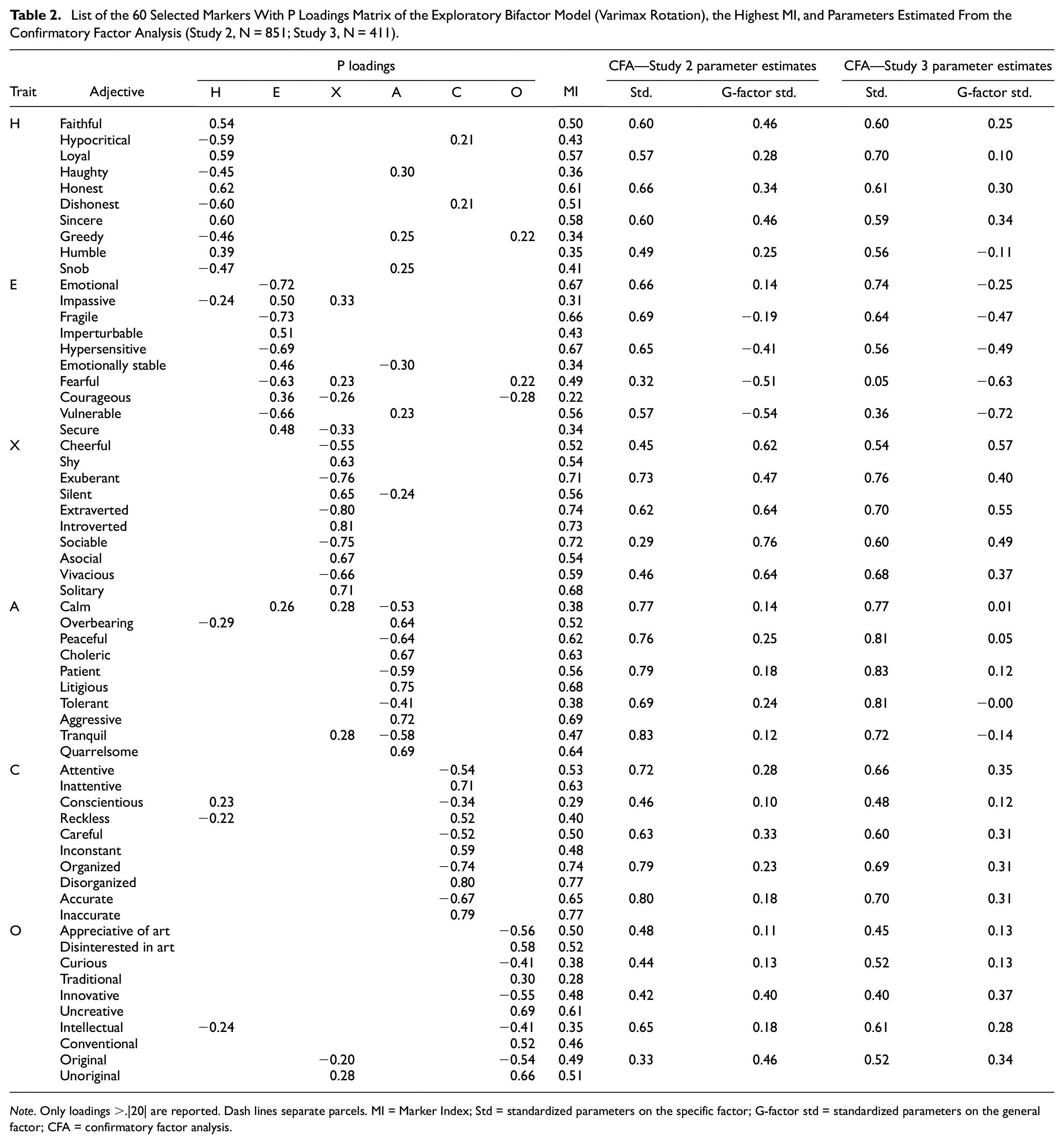
Note. Only loadings >.|20| are reported. Dash lines separate parcels. MI = Marker Index; Std = standardized parameters on the specific factor; G-factor std = standardized parameters on the general factor; CFA = confirmatory factor analysis.
We identified the best 10 markers per trait following three criteria: being a good marker (high MI), balancing the polarity of the adjectives in the trait (adjectives loading positively and negatively on the trait), and representativeness for the trait (e.g., humble). The final item selection was further analyzed with a confirmatory factor analysis (CFA) using lavaan (Rosseel, 2012). The model runs on parcels of adjectives of opposite meanings optimized with CFA on a factor-by-factor basis. The use of parcels instead of single items (Little et al., 2013) has the advantages of reducing the number of parameters to estimate, increasing the parameters’ stability, and enhancing the measure precision (Vispoel et al., 2022). The model reproduced the exploratory bifactor model, thus encompassing a general factor plus six specific factors. The model also had set free the covariance between the parcels’ original and innovative, the parcels’ emotional and fragile, and the parcel conscientious and the H factor (see Figure 1). The specific factors were free to correlate. The indices indicated a good fit, χ2(357)=1104.358, p < .001, comparative fit index (CFI)=.938, root mean square error of approximation (RMSEA)=.050, and standardized root mean square residual (SRMR)=.045.
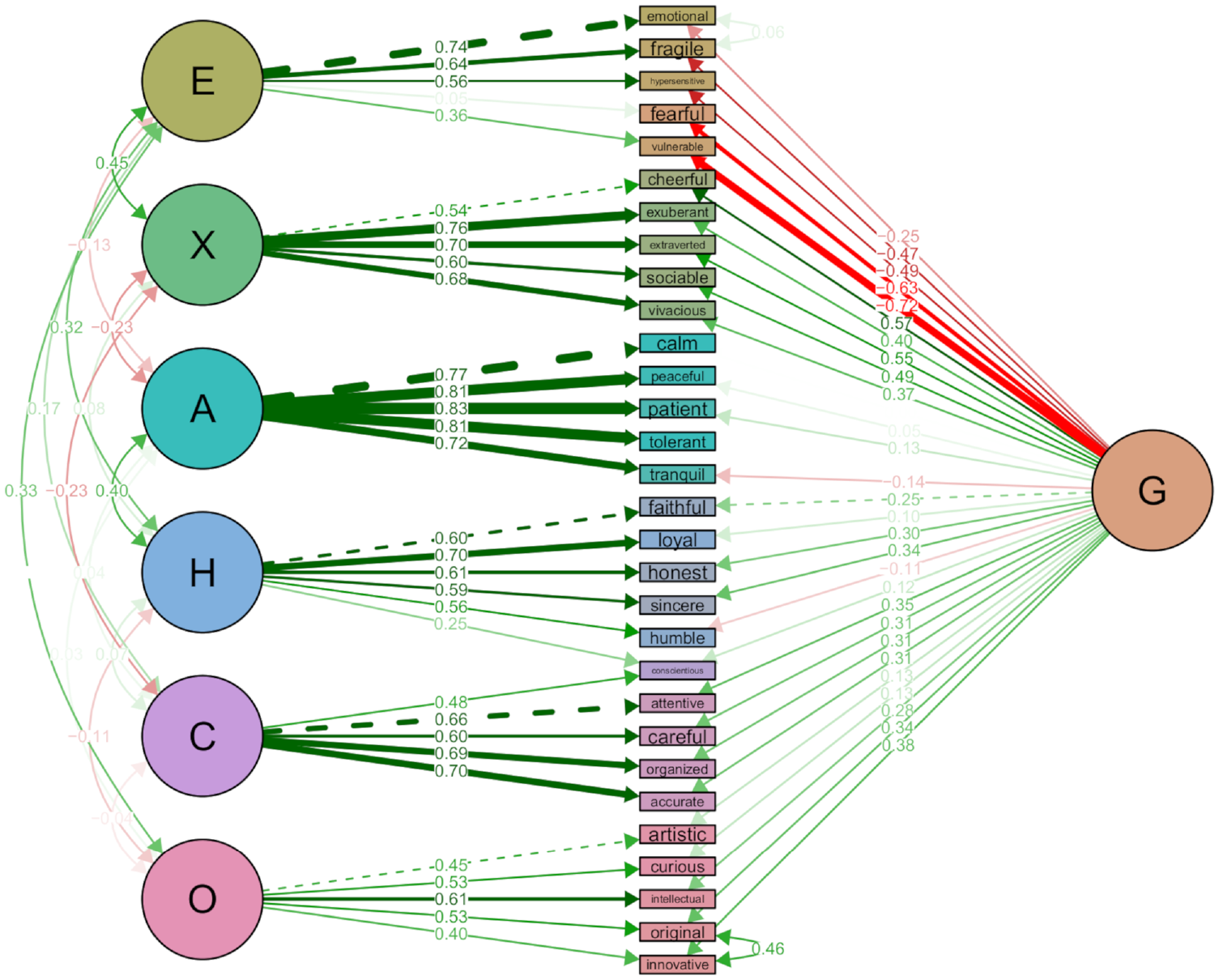
Bifactor Model Adopted for the CFA.
Internal Consistency
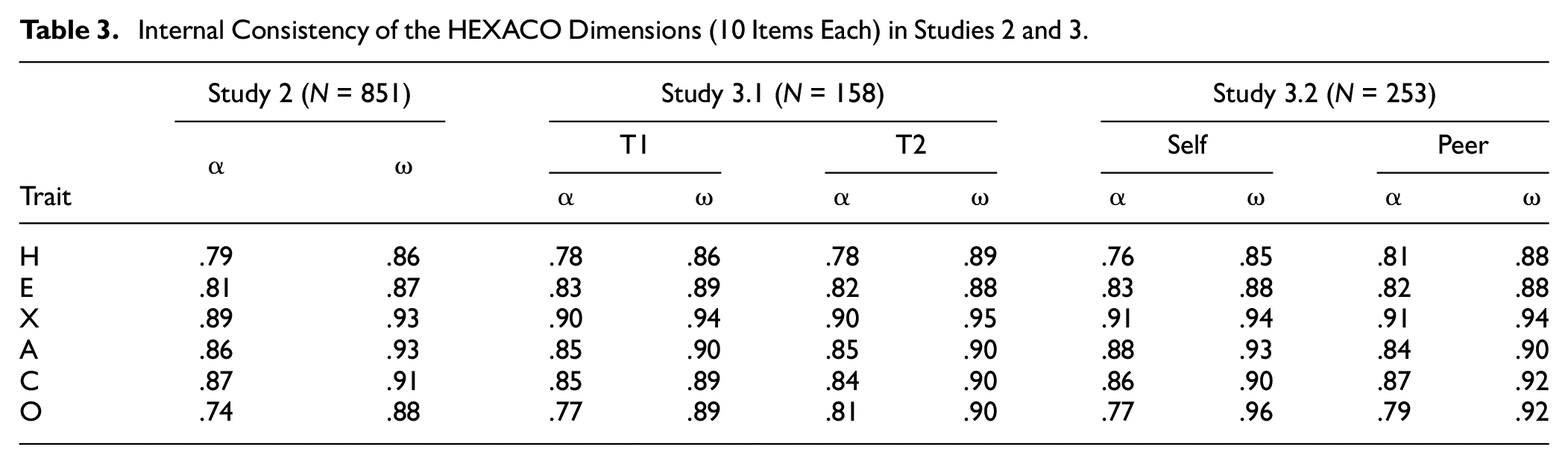
We computed scale scores by averaging the HAS items in the same subscale after recoding the scores of adjectives with a negative loading on the trait (see the appendix). Table 3 reports the internal consistency indices of the scales, which were satisfactory for all traits (α always >.70; ω >.85).
Internal Consistency of the HEXACO Dimensions (10 Items Each) in Studies 2 and 3
Convergent and Discriminant Validity
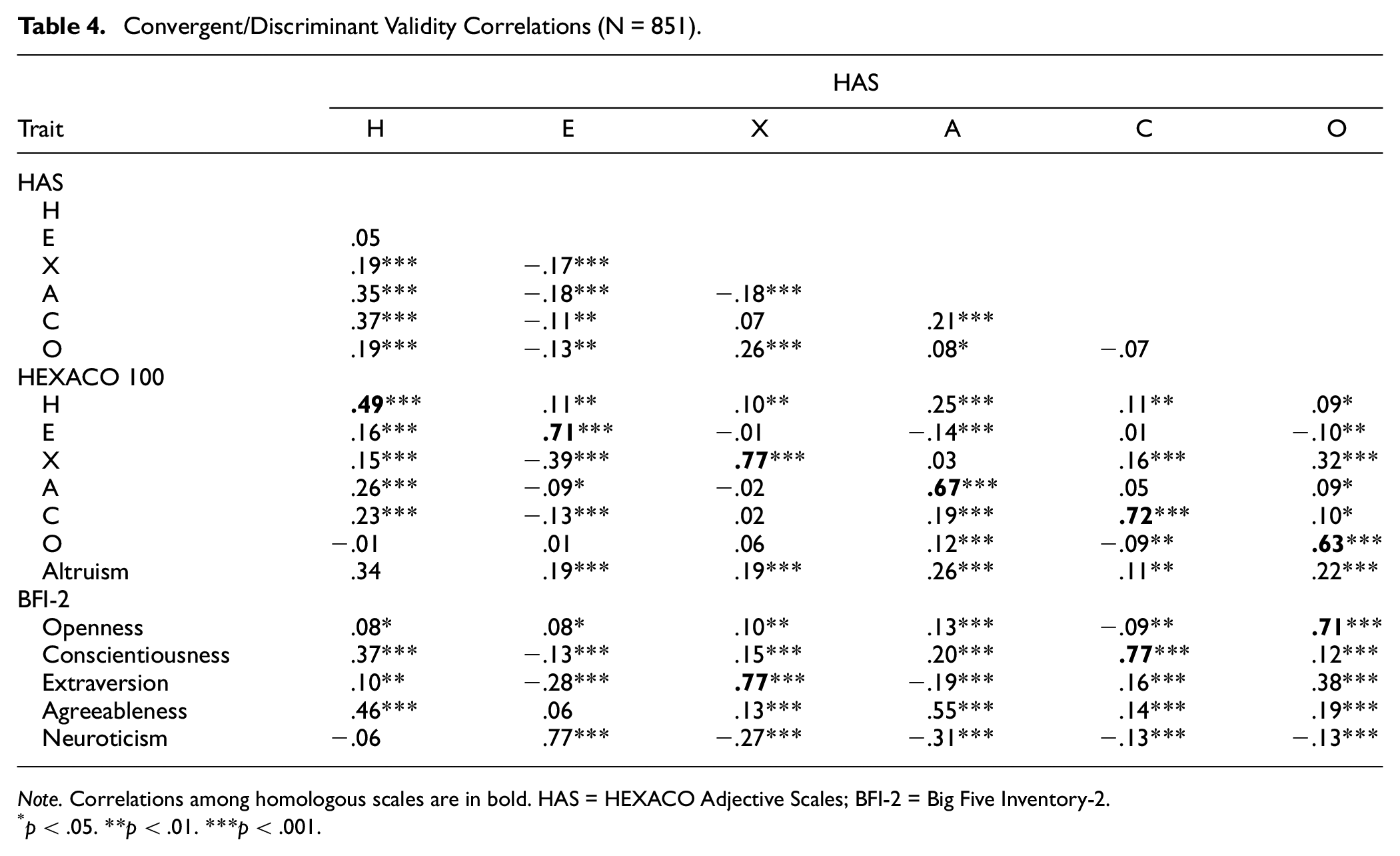
We then correlated the HAS scales with each other and the BFI-2 and HEXACO-100 (Table 4). Correlations with homologous scales of the HEXACO-100 were as expected (rs > .60), with a slightly less strong result for trait H (r=.49). It is also worth noting that all adjectives scale scores showed their highest correlations with the corresponding HEXACO-100 trait than with the other HEXACO-100 traits. It is also worth noting that we observed the strongest association between the HAS scales among H, A, and C. However, all were weaker than the correlations observed between the same dimension measured with different instruments. For example, the H factor measured with the HAS correlates more with H measured with the HEXACO-100 than with HAS A or C.
Convergent/Discriminant Validity Correlations (N = 851)
Note. Correlations among homologous scales are in bold. HAS = HEXACO Adjective Scales; BFI-2 = Big Five Inventory-2.
p < .05. **p < .01. ***p < .001.
The HAS eXtraversion, Conscientiousness, and Openness to experience scales (i.e., those with a direct correspondence to Big Five traits; Ashton & Lee, 2007) showed strong convergent correlations with corresponding BFI-2 scales (all rs >.70). The HAS Emotionality correlates slightly more with the Neuroticism trait of the BFI-2 than with the corresponding Emotionality of HEXACO-100. However, both correlations were very high, and a certain overlap between these traits can be expected.
Nomological Validity (Subgroup 2.1)
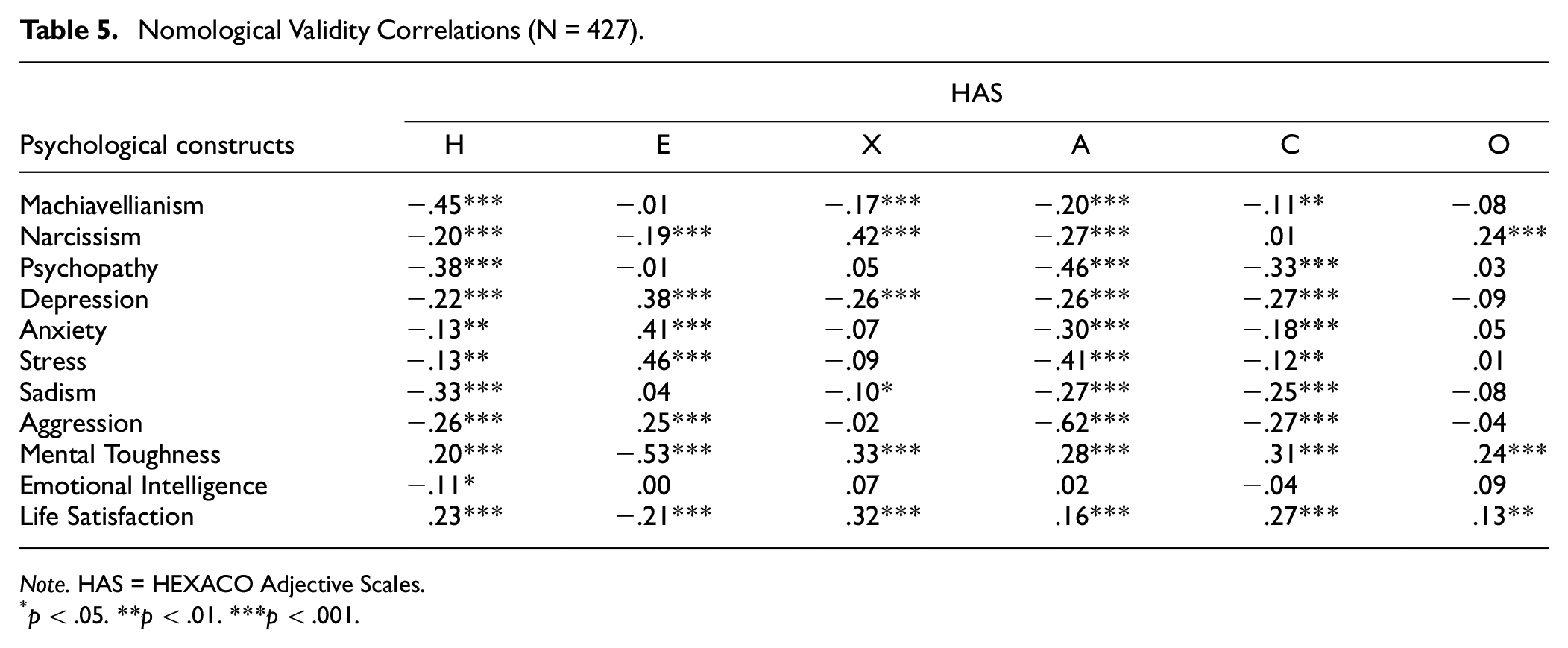
The strength of correlations for the nomological and criterion validity has been operationalized according to Cohen’s suggestions (Cohen, 1988): An r between .10 and .29 is considered a small effect, between .30 and .49 is a medium effect and above .50 is a large effect. The new measure showed solid evidence of nomological validity (Table 5), coherently anchoring the HAS to other psychological constructs. Honesty–Humility was negatively associated with Machiavellism, Sadism, and subclinical Psychopathy, with effect sizes that could be regarded as medium. However, it was pointed out that the questionnaire adopted does not tap properly into the true construct of Machiavellism (Miller et al., 2017; Sharpe et al., 2021), thus, correlations with Machiavellism should be interpreted cautiously. Anxiety, Stress, and Depression were all positively associated with Emotionality, with medium effect sizes. Mental toughness was negatively related to the same trait, with a large effect size. Extraversion was associated mostly with Narcissism, Mental toughness, and Life satisfaction, all with medium effects. Agreeableness was negatively related to subclinical Psychopathy and Stress with a medium effect size, and Aggression with a large effect size. Conscientiousness was also negatively associated with subclinical Psychopathy, but positively associated with Mental toughness, both with a medium strength of the effect. Finally, Openness to experience was positively associated with Narcissism and Mental toughness with a small effect size.
Nomological Validity Correlations (N = 427)
Note. HAS = HEXACO Adjective Scales.
p < .05. **p < .01. ***p < .001.
Criterion Validity (Subgroup 2.2)
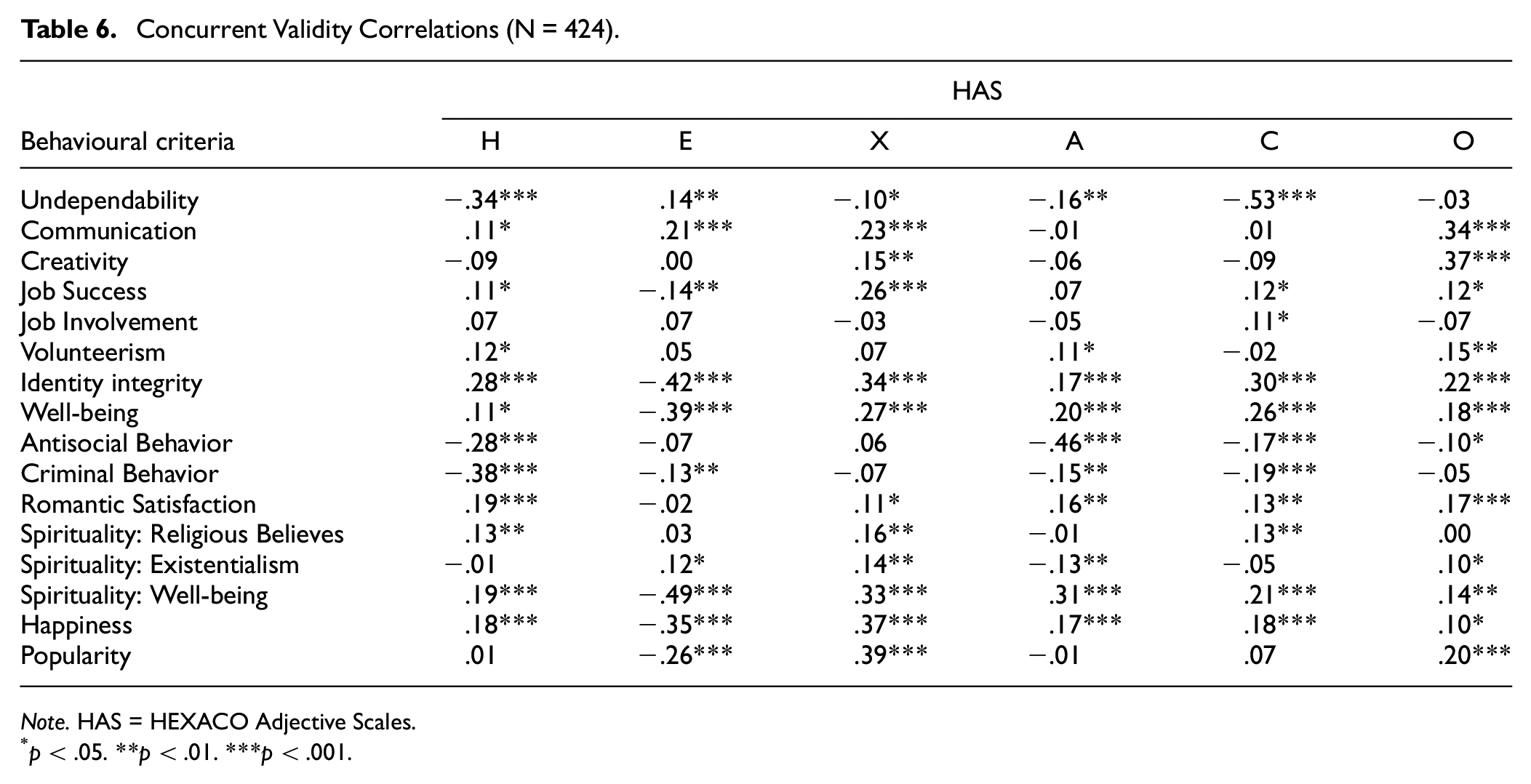
Criterion validity of the HAS with behaviors was demonstrated through many significant associations between the new personality measure and multiple behavioral acts and life outcomes (Table 6). As for the previous section, the strength of the effect size is presented according to Cohen’s rule. Honesty–Humility was associated with undependability behavioral acts (medium effect) and, crucially, with antisocial (small effect) and criminal behaviors (medium effect). It was also associated with volunteerism activity with a small effect size. Emotionality was related to behavioral communication acts with a small effect (.|21|), and it was negatively related to identity integrity, well-being, popularity, and happiness with medium effect sizes. EXtraversion was positively associated with communication and creativity behavioral acts with small effects. It was also associated with happiness, popularity, and job success with a medium effect size. Agreeableness correlated with undependability behavioral acts with a small effect. It is associated with well-being, happiness, and criminal behaviors with a small effect, and with antisocial with a medium effect. Conscientiousness strongly correlated with undependability behavioral acts. It is also associated with identity integrity (medium effect), and negatively with antisocial and criminal behaviors with small effect sizes. Openness to experience was related to communication and creativity behavioral acts with medium effects. It was also correlated with many other life outcomes with small effect sizes (e.g., identity integrity and popularity).
Concurrent Validity Correlations (N = 424)
Note. HAS = HEXACO Adjective Scales.
p < .05. **p < .01. ***p < .001.
Discussion
Study 2 aimed to define the final list of 60 marker adjectives. We increased the sample size and adopted an advanced method to identify the structure, a pure exploratory bifactor model (Lorenzo-Seva & Ferrando, 2019). We then identified the best markers per trait with the MI (Gallucci & Perugini, 2007) to take into account primary and cross-loadings. We further refined the selection to have half of the adjectives loading positively and half negatively on the trait, thus reflecting each personality dimension’s main facets. The final list of 60 adjectives was analyzed with confirmatory factor analysis. The good internal consistency values further confirmed the quality of adjective selection.
Moreover, the HAS showed excellent convergent validity with high correlations with scales of other instruments measuring the same personality dimensions.
A specific additional observation should be dedicated to the HAS Honesty–Humility correlation, which is nearly as strong with BFI-2 Agreeableness as with HEXACO-60 Honesty–Humility. While HAS Honesty–Humility is conceptually closer to HEXACO-60 Honesty–Humility than to BFI-2 Agreeableness, it should be noted that Agreeableness in the Big Five model includes a general aspect of prosociality that is more clearly detailed in the HEXACO model. Indeed, in the HEXACO model, the prosocial aspects of not exploiting others are attributed to H, while accepting exploitation from others is attributed to A (Ashton & Lee, 2007). These two aspects are instead merged in the sole Agreeableness factor of the big five model (McCrae & Costa, 2008). Although the BFI-2 has less contents specifically related to the HEXACO H dimension (Ashton & Lee, 2020), it still contains generic prosocial aspects (e.g., helpful, unselfish, cold, uncaring, polite, courteous) that are conceptually shared with both H and A in the HEXACO model. In fact, the correlation between BFI-2 agreeableness and the H dimension of the HEXACO is not limited to our instrument, but it has been found also for other instruments (Thielmann et al., 2021). The HAS also showed a pattern of relations with other personality constructs that are expected to share variance with the HEXACO traits (e.g., Machiavellism is negatively correlated with H, Narcissism is positively correlated with X). The HAS also showed good criterion validity, anchoring the measure of personality dimension with a varied range of behavioral criteria, confirming thus the predictive value of the HEXACO model (Zettler et al., 2020). Overall, the 60 markers selected for the HAS showed excellent psychometric properties in this study.
A final comment concerns the bifactor procedure thought to remove the overall elevation or acquiescence in responses so that all items should be expected to load positively on the general factor. However, the Emotionality adjectives did load instead negatively, suggesting that it might also remove aspects related to social desirability. Notably, ipsatization and bifactor procedures converged toward a very similar solution (with correlations above .98, see Note 2). So, from an empirical perspective, we can think they remove a similar bias: a general component of social desirability.
Study 3
Study 3 aimed to confirm the factorial structure of the HAS delineated in Study 2 on an independent sample and to provide evidence of stability over time (Study 3.1) and convergence between raters (peer/self-evaluation—Study 3.2). Study 3 also aimed to bring additional evidence concerning criterion validity.
Method
Participants
Four hundred and eleven participants took part in the data collection (316 females and 93 males). Participants were divided into two sub-groups. The first group (N=158, Mage=31.14, SD=13.63, 128 females, 69 had a university degree, 86 had a high school diploma, and three had a middle school diploma) participated in a test to establish the stability of the measure over time with test–retest reliability (Study 3.1). The second group (N=253, Mage =29.61, SD=12.13, 188 females; 139 had a university degree, 99 had a high school diploma, 13 had a middle school diploma, and 2 attended only primary school) served to assess the convergence among raters in a self/peer-observer study (Study 3.2). Participants gave informed consent, and the study was approved by the local Ethical Committee and conducted following the ethical standards of the Declaration of Helsinki (World Medical Association, 1996). Recruitment was done as in Study 1 and Study 2. The study was conducted online.
Procedure
Participants in Study 3.1, at Time 1, completed HAS. Then, at Time 2, participants completed the HAS again and the Behavioral Act criteria measure. Time 2 was scheduled 30 days after the first completion. Participants received an e-mail with a link to the questionnaire, reminding them that it was time to complete it. Responses were valid if completed within 3 days from this e-mail; after this time, the link expired, and the questionnaire could not be completed anymore.
Participants in Study 3.2 were instead assigned two questionnaires, one to complete him/herself and the other to be completed by an informed observer (e.g., a relative, a close friend) indicated by the participant. The self and observer versions included the HAS. A subset of study 3.2 participants (N=119, Mage =29.61, SD=10.19, 91 females) and their related observers also completed the full behavioral acts measure (Grucza & Goldberg, 2007). The peer was contacted personally by the participant, who sent a personalized link to access the questionnaires. The experimenter matched the two questionnaires (self and peer) through a unique code assigned to both copies of the questionnaires. Doing so ensured participants’ and peers’ anonymity, and neither the participant nor the peer had direct access to the responses given by the other at any time. Participants finally answered a few demographic questions, as in the previous studies, and completed the self-report attention check (Meade & Craig, 2012).
Materials
HEXACO Adjective Scales
Participants indicated how each of the 60 Italian adjectives selected in Study 2 described themselves on a scale from 1 (it does not describe me at all) to 7 (it describes me completely).
Behavioral Acts
The full list of criteria presented by Grucza and Goldberg (2007) clustered into six classes of behavioral acts was adopted. Notably, this included three behavioral acts adopted in Study 2 (Undependability: seven items, Study 3.1: α=.69; ω=.75, Self Study 3.2: α=.61; ω=.65, Peer Study 3.2: α=.75; ω=.77; Communication: eight items, Study 3.1: α=.73; ω=.75, Self-Study 3.2: α=.71; ω=.75, Peer Study 3.2: α=.75; ω=.79; Creativity: 10 items, Study 3.1: α=.74; ω=.85, Self Study 3.2: α=.76; ω=.84), plus three new clusters of behavioral acts: Friendliness (eight items, Study 3.1: α=.76; ω=.82, Self-Study 3.2: α=.78; ω=.84, Peer Study 3.2: α=.79; ω=.86), Drug Use (12 items, Study 3.1: α=.83; ω=.84, Self-Study 3.2: α=.86; ω=.86, Peer Study 3.2: α=.86; ω=.86), Erudition (six items, Study 3.1: α=.85; ω=.88, Self-Study 3.2: α=.80; ω=.83, Peer Study 3.2: α=.83; ω=.88) (Grucza & Goldberg, 2007).
Results
Stability of the HAS Structure—Confirmatory Factor Analysis (N=411)
First, we aimed to confirm the goodness of the factor structure estimated in Study 2 (Figure 1) by fitting the exact same structure model. For study 3.1, we considered the Time 1 administration, and for study 3.2, we considered the self-assessment. The fit indices suggest that the model is appropriate, confirming the quality of our item selection, χ2 (357)=792.825, p < .001; CFI=.921; RMSEA=.055; SRMR=.056; see Table 2 and Figure 1). We also checked the internal consistency of the scales in both subgroups (see Table 3). All values were good (all αs >.70 and ωs >.80) and comparable to the ones in Study 2, demonstrating the good psychometric properties of the HAS.
Stability Over Time (Subgroup 3.1, N= 158)
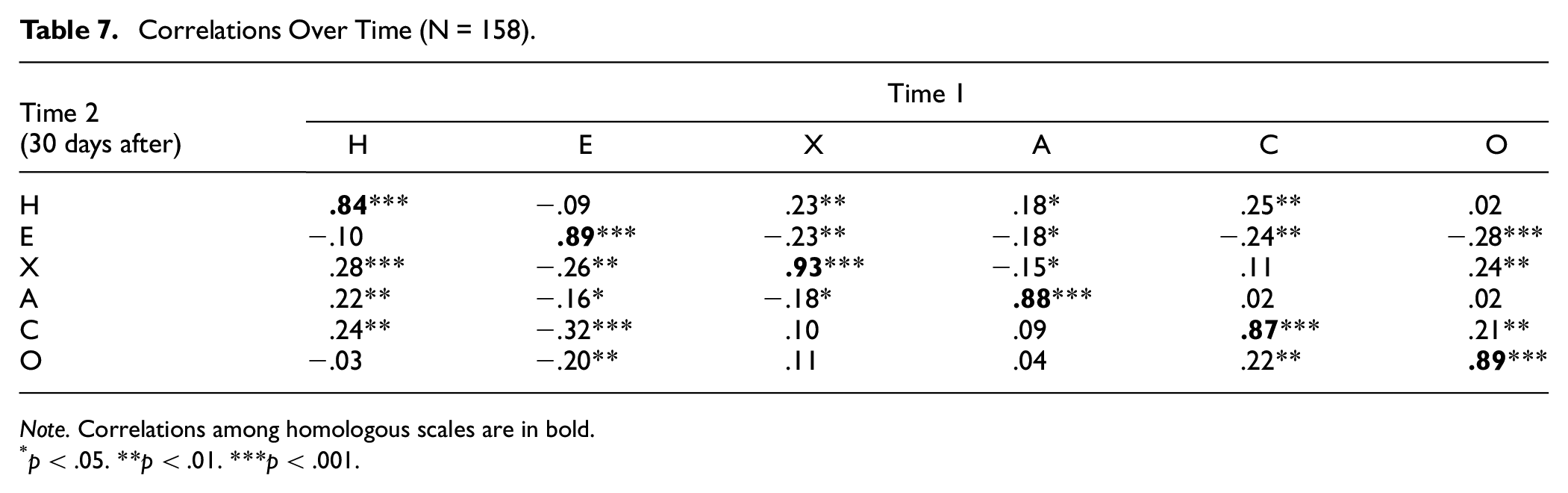
The stability over time was excellent, with the raw correlations well above .80 for all the traits, ranging from .84 to .93. Therefore, the results suggested that each ’trait’s measure was highly reliable also in the sense of temporal stability (see Table 7).
Correlations Over Time (N = 158)
Note. Correlations among homologous scales are in bold.
p < .05. **p < .01. ***p < .001.
Criterion Validity (Subgroup 3.1, N= 158)
Most trait-criterion correlations observed in Study 2 were replicated in Study 3 not only in terms of significant effects but also for the strength of the effects. Furthermore, they did not change substantially when predicting behavioral criteria at Time 2 (see Table 8), thus supporting the HAS’s criterion validity. Undependability correlated more strongly with H (medium effect) and C (large effect) than the other traits in both Studies. Communication (medium effect) and Creativity (large effect) correlated more with O. We observed a few minor differences in results from Study 2. The Communication criterion did not correlate with Honesty–Humility and Emotionality in Study 3 as in Study 2, and Undependability did not correlate with Agreeableness. The new criteria showed similar correlations with the HAS factors and the HEXACO-PI-R (Grucza & Goldberg, 2007). Drug use was negatively associated with H and C with a small effect. The social aspect of the extraversion trait as measured in the HAS was confirmed by its relationship with the Friendliness behavioral acts with a medium effect, which was also, at the descriptive level, less strongly correlated with H (small effect). Finally, Erudition was associated with O and A with a medium effect.
Concurrent and Predictive Validity of the HEXACO Adjective Scales (N = 158)
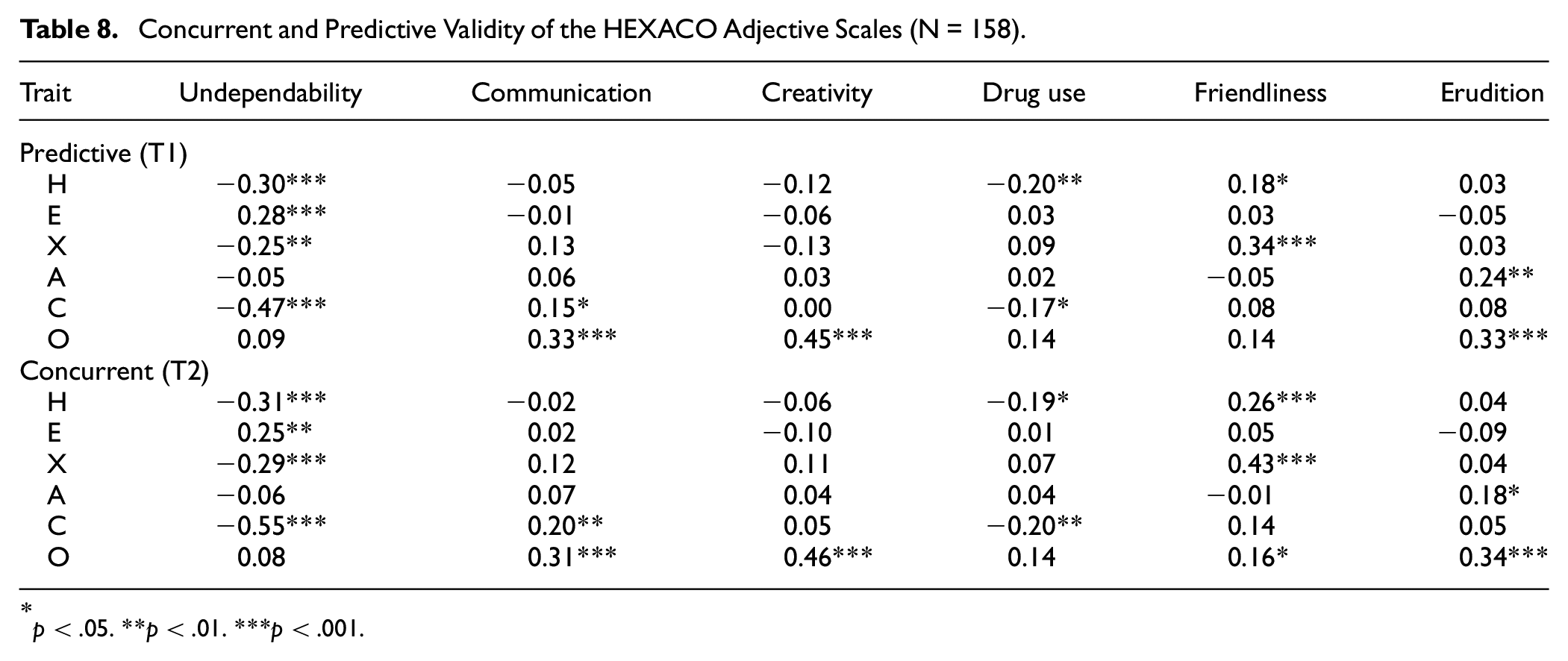
p < .05. **p < .01. ***p < .001.
Convergence Between Raters (Subgroup 3.2, N= 253)
The self/peer-observer correlations were significant for all homolog traits. Correlations were in the expected range (all rs>.5) except Honesty–Humility, which was lower (r=.27) (Table 9).
Correlations Between Self and Observer Raters (N = 253)
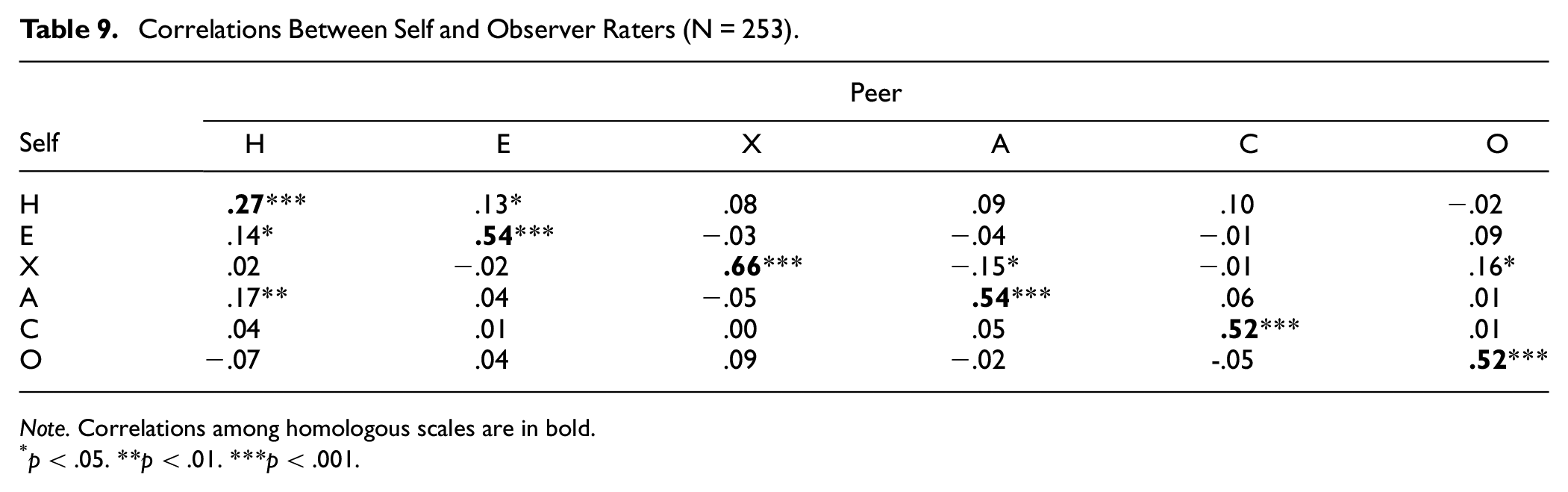
Note. Correlations among homologous scales are in bold.
p < .05. **p < .01. ***p < .001.
Criterion Validity Convergence Between Raters (Subgroup 3.2, N= 119)
The self and peer evaluations largely converged in terms of associations with the criteria, although a few differences showed some specific effects for each combination of evaluators. In Table 10, the upper left quadrant was directly comparable to the previous studies because the criteria and the HAS were self-reported. The lower right quadrant shows correlations between the HAS and the criterion measures, both completed by peers. At a descriptive level, we noted that Undependability correlated with C and H in those quadrants, and Communication and Creativity were more correlated with O, confirming previous results also in terms of effect size. Also, Friendliness and Erudition confirmed their correlations with X and O, respectively. Instead, the drug use criterion was confirmed to be significantly correlated with H and C only in the peer assessment. Although the correlation was similar in the effect size yet, it did not reach the significance for the self-rating.
Predictive Validity Correlations (N = 119)
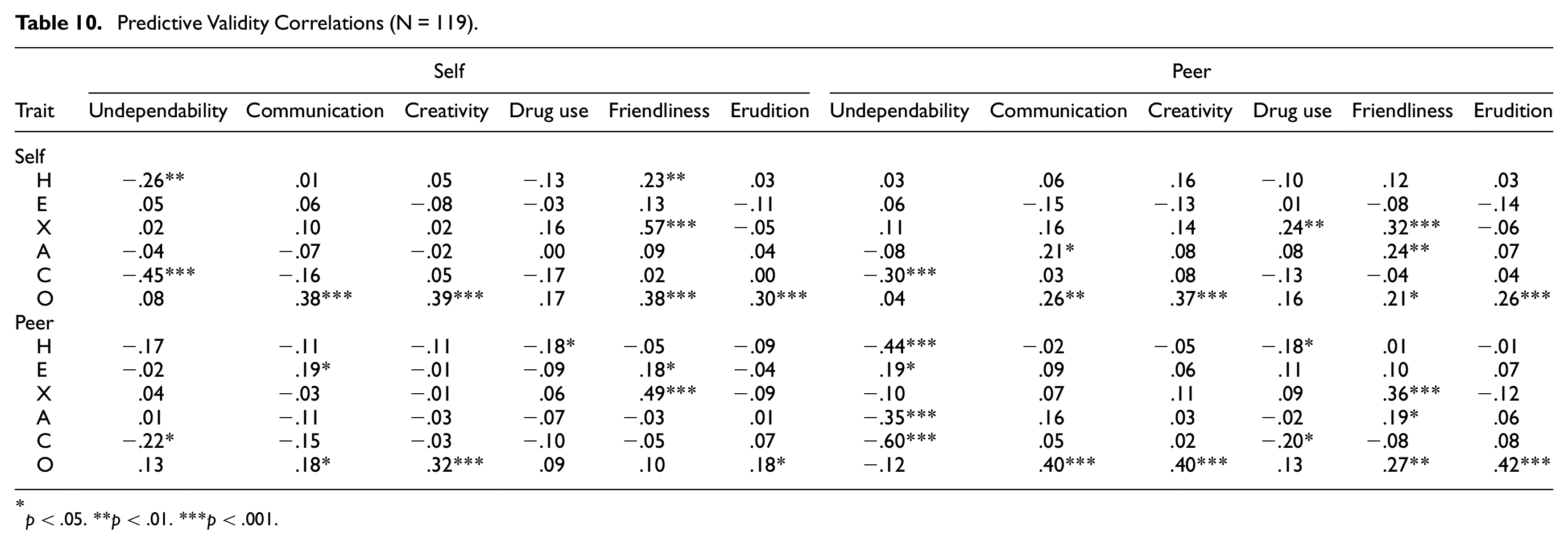
p < .05. **p < .01. ***p < .001.
The pattern of results was somehow less consistent when crossing the ratings of the HAS with the criterion’s ratings. For example, the self-H did not correlate significantly with how the peer evaluates the Undependability criterion. However, C was always correlated to Undependability across raters. Another difference is in the Drug use criterion, which showed a less clear pattern of results. The Drug use rated by a peer was correlated with the self-assessed X, whereas when rated by the self was negatively associated with H rated by the peer. Overall, the main expected correlations between traits and criteria were still observed even when crossing the raters. Undependability was always negatively related to C, Communication, Creativity, and Erudition were always positively associated with O, and Friendliness was always positively associated with X.
Discussion
The HAS structure has been fully confirmed in Study 3 by adopting a confirmatory factor analysis on the model validated in Study 2, sustaining the quality of the markers’ selection and the new measure’s reliability (internal consistency and temporal stability). In particular, the stability over time was excellent and sometimes even higher than the internal consistency for all dimensions. Study 3 also confirmed the psychometric quality of the HAS in terms of criterion validity, confirming the effects found in Study 2 and adding new pieces of criterion validity for novel criteria. The convergence between raters presented a more nuanced pattern of results. The correlations between raters were in the expected typical range of values, greater than or around r=.50 (Lee & Ashton, 2018), for all dimensions except for Honesty–Humility, with a value of r=.27.
The pattern of results suggests that the H measure works well both in the self and in the peer version, and the lack of correlation between raters might be a substantial issue related to the H trait rather than a method problem (see the general discussion). Notably, the convergence is larger when using items instead of adjectives (Lee & Ashton, 2018), suggesting a potential difference in describing a peer’s personality when adopting adjectives or item-based instruments.
General Discussion
The HEXACO model is grounded on cross-cultural psycho-lexical studies relying on adjectives to describe and differentiate individuals (Ashton, Lee, Perugini, et al., 2004). The main instrument to measure the HEXACO dimensions is the HEXACO-PI-R (Ashton & Lee, 2009; Lee & Ashton, 2018). It adopts the typical item format, presenting a series of short items exemplifying behaviors that individuals may adopt, asking to judge how much the sentence would describe their behavior. Items are probably the most common format for self-report questionnaires in personality (Ashton & Lee, 2009; Soto & John, 2017). Another possible format is adjectives (R. L. Goldberg, 1992; Ledesma et al., 2011; Perugini & Leone, 2008; Piedmont et al., 1991). The two methods differentiate for both practical and theoretical reasons. Nonetheless, we are not aware of a properly validated psychometric tool to measure the HEXACO main dimensions with adjectives. We aimed to build a tool to parallel the HEXACO-PI-R (the short version with 60 items) but use adjectives as markers. Thus, we sought to individuate 10 markers for each dimension of the HEXACO. We optimized the markers’ selection by balancing the positive and negative loadings on the factors (i.e., five regular and five reversed-key adjectives per trait) and reflecting the breadth of the traits. The selection procedure ended in a new measure composed of 60 adjectives that we called HAS. Across the three studies, the HAS showed very good psychometric properties. The factorial structure of the measure was shown to be adequate in Study 2, and it was replicated in Study 3 with a CFA showing a substantial good fit of the model. All six dimensions were highly reliable, both in terms of internal consistency and in terms of temporal stability. All the adjectives adopted were in Italian and administered to a sample of Italian speakers. We provided their English translation for the sake of communication.
Validity
In the second and third studies, we also collected substantial empirical evidence concerning different aspects of validity: indices of nomological validity in terms of convergent and discriminant validity, convergence between raters, criterion validity, and the replicability of these criteria correlations. We demonstrated the validity of the HAS from the nomological and predictive perspectives. The HAS converged properly toward the HEXACO-PI-R, while the divergence from some traits in the 5F model measured with the BFI-2 (Soto & John, 2017) was less remarkable. The overlap with the homologous scales was expected and achieved by either comparing the HAS with the HEXACO-PI-R or the BFI-2. The pattern of convergent and divergent correlations between the HAS and the BFI-2 scales was as expected, considering that HEXACO Agreeableness (vs. anger) and Emotionality can be seen as rotational variants of the 5F Agreeableness and Neuroticism (Ashton & Lee, 2007). However, HAS Emotionality showed an unexpectedly strong correlation with BFI-2 Neuroticism and a low correlation with BFI-2 Agreeableness. Nonetheless, there is a strong convergence between the HEXACO-PI-R Emotionality and the HAS Emotionality, and thus we do not see this result as problematic.
It should also be noted that HAS Emotionality showed a relatively lower correlation with BFI-2 Agreeableness that it could be expected (e.g., Ashton & Lee, 2007). This seems to be the case in general for studies using the BFI-2, and thus it might depend on how factor Agreeableness is operationalized in the BFI-2 (Thielmann et al., 2021).
Study 2 also verified how the HEXACO dimensions measured with the HAS converge toward other psychological constructs. The results supported the nomological validity of the HAS scale, showing reliable correlations that anchor the HAS dimensions to the constructs of the dark tetrad (i.e., machiavellism, narcissism, psychopathy, and sadism), anxiety, depression, stress, aggression, mental toughness, and life satisfaction.
The convergence between raters was in the expected range for all dimensions (Lee & Ashton, 2018), with a lower level of agreement only for the Honesty–Humility one. This last result may look unsatisfactory, but it may reflect a genuine feature of the H trait: Honesty–humility might be simply less transparent for an observer, showing a self-other knowledge asymmetry (SOKA) (Vazire, 2010). The H asymmetry may have passed unnoticed by previous research that focused SOKA investigation on the 5F model. This idea is corroborated by the fact that, besides the diminished convergence, self- and peer-reports of H showed good psychometric properties in terms of internal consistency (Table 3) and criterion validity. The self-reported H trait was associated with self-reported undependability and drug use criteria. Similarly, the peer-observed H trait was associated with peer-rated undependability and drug use. This asymmetry is also in line with the recent meta-analysis on the HEXACO model, which found that H is more sensitive to the difference in predictive criteria when these are set by an observer or by oneself, as compared with other traits, and especially so when assessing criteria related to immoral behaviors (Zettler et al., 2020).
Another non-mutually-excluding possibility is that the H factor is more susceptible to the peer’s desirability bias (Fisher, 1993). On one hand, someone very high in H might be likely to under-rate themselves on evaluative traits. On the other hand, an observer could be more generous, attributing a higher, unrealistic level of honesty–humility. Related to this, a specific aspect of our procedure might have played a role. In our study, participants choose their observers. They likely indicated persons close to them (parents, close friends) who may positively represent them. Our results can be inscribed in this vein, pointing toward an interesting area of exploration for the H trait. Furthermore, adjectives might be particularly sensitive to this effect because they refer to a general representation of personal attributes instead of specific actions or behaviors (Wiedenroth & Leising, 2020). The anchoring of specific behaviors may reduce the impact of desirability bias in the peers’ eyes, favoring the convergence of indices in the item-based scales, around .48 for the HEXACO-PI-R (Lee & Ashton, 2018). It is also possible that the H factor correlation was attenuated by a restriction of range induced by the high average values attributed to the participants by the peer observers (see Table 11).
Descriptive Statistics of Scale Scores
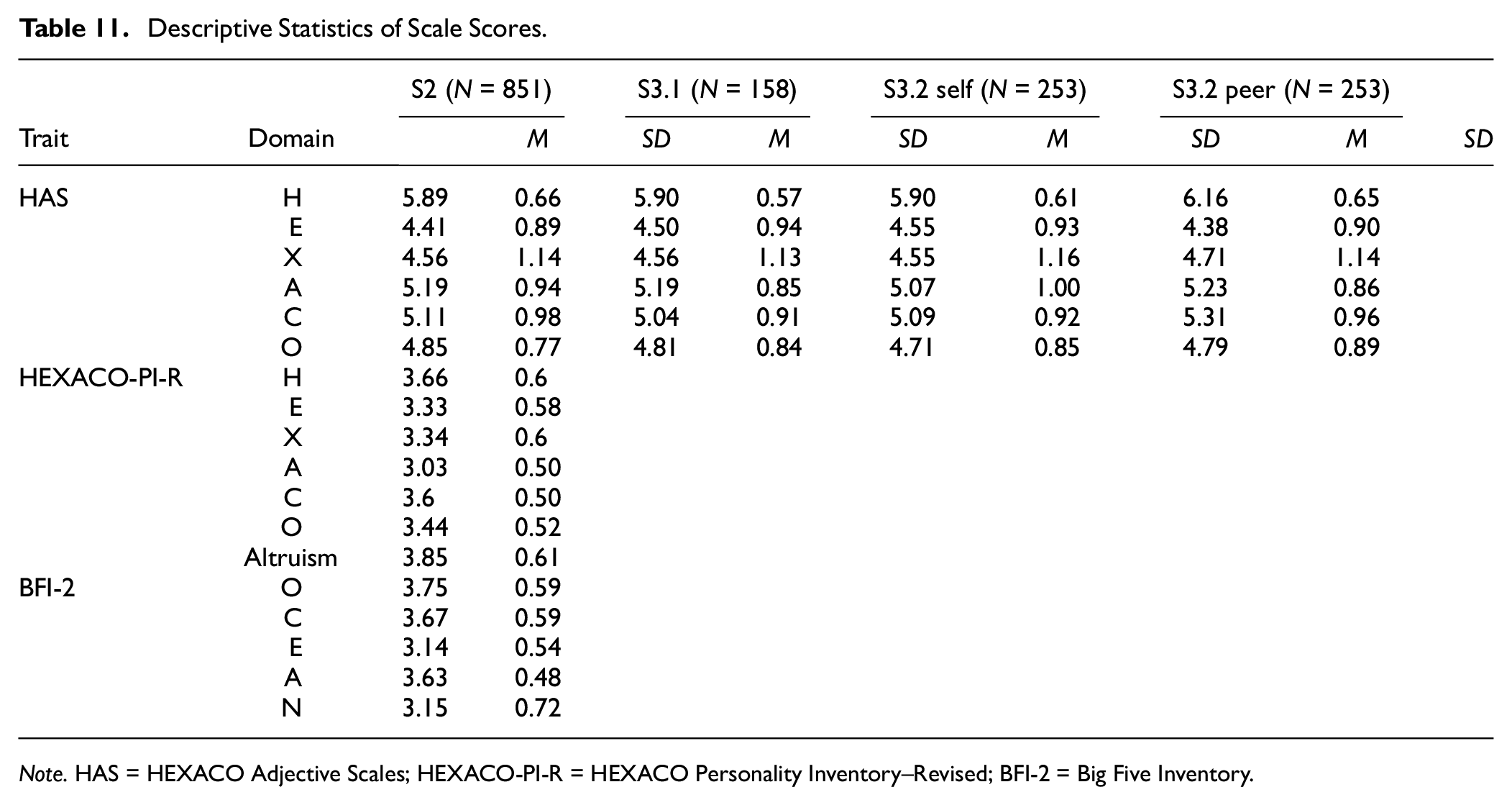
Note. HAS = HEXACO Adjective Scales; HEXACO-PI-R = HEXACO Personality Inventory–Revised; BFI-2 = Big Five Inventory.
Bearing in mind that the adjectives’ peer-reported H dimension held very similar and valuable psychometric properties compared with the adjectives’ self-reported H dimension, this is not necessarily a drawback of the HAS. Instead, it reveals an area of discrepancy between item-based scales and adjective-based scales, suggesting areas of investigation for the personality field and key elements to choose the specific instrument in future research.
From the criterion validity perspective, the HAS appears to be a valid instrument. Each HEXACO domain measured with the HAS showed significant correlations with the behavioral acts and the life outcome criteria. In addition, Study 2 and study 3 shared three behavioral acts’ criteria. Thus, Study 3 immediately replicated the strongest and most crucial correlations observed in Study 2 when assessing the stability over time or the convergence between the raters. These replications support the stability of the HAS.
The HAS can be an interesting instrument because it offers a specific perspective on personality traits. Adjectives are indeed generally thought of as a relatively efficient means of conveying information about people’s personality dispositions (Wiedenroth & Leising, 2020). Adjectives may refer to a variety of behaviors, driving to more general and predictive descriptions when the meaning of the adjective is shared (Wiedenroth & Leising, 2020). Thus, the practical advantage of having a new tool of short administration, easy to use and interpret, like the HAS, is paralleled by the additional value of a complementary representation of the personality, boosting the potentiality of the new scales. Adjectives are likely more closely related to the self-concept (Back et al., 2009) than the items that refer to the personality in terms of actions or similar (D. M. Buss & Craik, 1981; Chapman & Goldberg, 2017).
The HAS looks solid, psychometrically sound, and ready to use in personality research. However, it also presents several opportunities for potential future developments. For example, it seems very well suited to measure personality states within Ecological Momentary Assessment—EMA (Shiffman et al., 2008; Trull & Ebner-Priemer, 2013). EMA would benefit from quick and easy-to-fill questionnaires as many assessments are usually repeated during the days. Validating the HAS for EMA looks like a promising direction. The HAS has been developed and validated in the Italian language. Extending this instrument to assess personality traits in other languages and cultures would be important for further use in cross-cultural investigations of personality.
Finally, we individuated an area potentially worthy of future research. We highlighted a potential difference in the description of a peer personality adopting adjectives or item-based instruments. Although the two measures converge toward measuring the same constructs, they might hold specific features that should be considered when researchers select adequate psychometric tools for their studies.
Conclusion
The HEXACO model is derived from psycho-lexical studies, and it would seem natural to have an assessment tool directly derived from the lexicon. Yet, we are unaware of a properly validated adjective measure of the HEXACO. The HAS covers this gap, presenting a new instrument with excellent psychometric properties in terms of internal consistency, convergent validity, nomological validity, criterion validity, and stability of the measure over time and raters. The convergence between raters of the Honesty–Humility dimension deserves attention and further investigation.
Footnotes
Appendix
Full list of the Italian adjectives of the HEXACO Adjective Scales and their English translation. The relative domain and the reversed-key adjectives are indicated.
Acknowledgements
We wish to thank Raynae Dumpfrey for double-checking the English translation of the Italian adjectives.
Declaration of Conflicting Interests
The author(s) declared no potential conflicts of interest with respect to the research, authorship, and/or publication of this article.
Funding
The author(s) received no financial support for the research, authorship, and/or publication of this article.
