




Abstract
Teachers of students with or at risk for emotional and behavioral disorders (EBD) may face obstacles and feel isolated when implementing social and emotional learning (SEL) programming with students. The teacher study group (TSG) offers an effective way to overcome barriers and improve SEL. These groups provide a gathering space for teachers to investigate problems of practice, celebrate points of pride, and strengthen professional learning in a focused area. In this article, we summarize existing research on SEL and TSGs and describe available SEL programs that incorporate TSGs. We provide an example of SEL-focused TSGs in practice, offering guidance and tips for early elementary school teachers—and the administrators who support them—who work with students with or at risk for EBD.
Keywords
Ms. Carpenter manages a second-grade general education class of 30 students. Several students with or at risk for emotional and behavioral disorders (EBD) frequently disrupt the class by being negative, being uncooperative, or not following directions. Their behavior angers classmates and creates stress for the teacher, while the whole class falls behind academically. Ms. Carpenter feels alone in dealing with these problems. She has heard that instruction in social and emotional learning (SEL) can help disruptive students improve their behavior, and foster a better classroom climate, but she has received no training in SEL and does not know where to turn for support. After 3 years as a teacher, she is burned out.
This scenario is common and not limited to isolated groups or classrooms. Rather, it reflects the day-to-day reality confronting many teachers and students across diverse settings. In this article, we offer guidance for early elementary school teachers and their administrators to help them overcome the challenges that exist in teaching SEL skills to students with or at risk for EBD. We begin with a description of SEL. We then list challenges experienced by teachers in implementing SEL programming and describe how teacher study groups (TSGs) can be implemented to address obstacles and improve SEL. We briefly describe available SEL programs that incorporate TSGs. We then provide an example of SEL-focused TSGs in practice from one of these programs—Social and Emotional Learning Study Groups+ for Educators of Students with EBD (SELSG+). The vignette is intended to help busy early elementary grade teachers see how they can successfully incorporate SEL instruction with TSGs into their current schedules and settings.
Heightened Social and Emotional Learning Challenges
Prior to the COVID-19 pandemic, the National Research Council and Institute of Medicine (2009) estimated that one in five youth had been diagnosed with, or were at risk for, EBD, indicating a need for SEL development among a wide range of students. The pandemic heightened this issue (Galea et al., 2020; Yao et al., 2020) as the number of mental health-related emergency room visits in 2020 increased by 25% over the previous year among children ages 5 to 11 years (Leeb et al., 2020).
According to the Collaborative for Academic, Social, and Emotional Learning (CASEL, 2022), SEL is defined as the process through which students “acquire and apply the knowledge, skills, and attitudes to develop healthy identities, manage emotions and achieve personal and collective goals, feel and show empathy for others, establish and maintain supportive relationships, and make responsible and caring decisions.” Development of SEL skills is critical for success in school and life (Melnick & Martinez, 2019). To improve academic and behavioral outcomes for students, educators must be equipped with the knowledge and skills to differentiate SEL instruction based on individual needs (Nelson et al., 2008).
However, teacher preparation programs, in general and special education, provide little or no SEL instruction (Schonert-Reichl et al., 2017) or classroom management. Teacher education candidates receive an average of 8 hr of training on effective SEL strategies, and even less on how to differentiate instruction for youth with social and behavioral health concerns (Greenberg, Walsh et al., 2014). Ongoing training regarding SEL for inservice teachers, while crucial, is often lacking or delivered as a one-time approach (Jennings & Frank, 2015; Murano et al., 2019). Even though federal laws mandate appropriate instruction for students with disabilities (IDEA; U.S., 2004), educators feel unprepared to provide explicit, differentiated SEL instruction, particularly for students with or at risk for EBD (State et al., 2019).
Improvement in social and emotional skills benefits all students. It is especially important for students with or at risk for EBD because their social and emotional difficulties often lead to negative educational and life outcomes (e.g., Gresham, 2015; Kramer et al., 2014). As more than 80% of these students are served in general education classrooms (U.S. Department of Education, Office of Special Education Programs, 2022), general and special educators need practical, research- or evidence-based approaches to meet these students’ individual learning and behavioral needs.
Teachers of students with or at risk for EBD experience high stress and burnout (Brunsting et al., 2014, 2022) and often leave their positions (Gilmour & Wehby, 2020). Fifty-eight percent of current teachers report burnout, with the percentage higher for teachers who work with challenging students (Wheelock College of Education and Human Development, 2021). These teachers also have lower self-efficacy—less belief in their abilities to manage classroom behavior (Zee & Koomen, 2016). Disruptive classroom behaviors are a major source of teacher stress, job dissatisfaction, and attrition (Haydon et al., 2019).
Professional Development and Teacher Study Groups
Developing student SEL can improve these student behaviors. Therefore, researchers and practitioners are seeking new ways to help teachers become proficient in fostering prosocial SEL. Professional development has been shown in meta-analyses to improve student outcomes (Didion et al., 2020). Professional development holds promise for enhancing the academic and behavioral outcomes of students with or at risk for EBD. Teacher professional development, whether in the form of courses, workshops, conferences, or formal and informal learning communities, can provide opportunities for educators to improve their knowledge, skills, and teaching practice (Kennedy, 2016).
Teacher study groups are grounded in research on professional learning and validated models of professional development (Cunningham et al., 2015; Garrett et al., 2019; Kraft et al., 2018). For professional development to be effective, instruction for teachers must be linked directly to improving student outcomes (Desimone & Garet, 2015). Educators should also be given a clear rationale for the use of research-based practices and shown how to apply instructional practices, immediately and directly, in the classroom (Desimone & Garet, 2015; Greenberg, Putman et al., 2014). Professional development is more effective when practices are modeled and educators are actively engaged in learning (Garrett et al., 2019). Program duration must be enough to have significant and sustained impacts on teacher practice (Desimone & Garet, 2015).
Teacher coaching is a key component of professional development. In a meta-analysis of 60 studies, Kraft and colleagues (2018) reported that educator coaching had moderate, educationally meaningful, and statistically significant effects on educator instruction and student achievement. In another meta-analytic investigation, Garrett et al. (2019) reported that the 33 interventions which included an individualized coaching component produced the largest impacts. Individual, peer-to-peer, and group coaching have been successfully incorporated in the design and delivery of TSGs (e.g., Reiser et al., 2017).
The goal of TSGs is to provide collaborative peer support to educators to help strengthen their professional knowledge—in this case, of SEL instructional practices—and facilitate the successful transfer of the knowledge gained to their classroom practice. Teacher study groups are designed to provide teachers the space to collaborate, discuss, reflect, and give and receive personalized coaching (Blitz, 2013). A previous design experiment of the TSG model demonstrated its positive effects on teacher and student outcomes (Cunningham et al., 2015). In prior studies for SEL interventions, in-person TSG protocols were shown to be effective in building and sustaining teacher classroom management skills (Benner et al., 2012, 2013; Benner, Filderman et al., 2022; Benner, Strycker et al., 2022). Moreover, TSGs that incorporate online programming can help reduce barriers to participation, such as time and distance, and offer convenient training opportunities to build SEL knowledge. Through on-site or online TSGs, teachers support each other in learning and then transferring knowledge to classroom practice.
Empirical research on TSGs has focused on both academics and behavioral supports. Researchers have found TSGs to be effective in improving K–12 teacher knowledge and skills in science, literacy, writing, math, behavioral supports, and music education (Firestone et al., 2020). Teacher study groups have been used to build capacity of both preservice and inservice educators. Researchers have used TSGs to increase educator efficacy to provide effective behavioral supports, including SEL (Meyers et al., 1997).
In an integrative review of TSGs, mostly at the elementary level, Firestone and colleagues (2020) analyzed 32 studies with varying research designs (e.g., mixed methods, quantitative, qualitative). Findings showed that teachers improved their knowledge and that teacher practice and student outcomes improved in some, but not all, studies included in the review. Benner and colleagues conducted a feasibility study (Benner, Strycker et al., 2022) and a randomized controlled trial (Benner, Filderman et al., 2022) investigating the impacts of digitally delivered TSGs with a sample of elementary teachers of students with or at risk for EBD. The major takeaways were that (a) TSG teachers were more confident in classroom management, instructional strategies, and student engagement and (b) students with or at risk for EBD served by participating TSG teachers made significant improvements in academic competence, including academic skills and enablers (i.e., motivation, engagement, interpersonal skills, and study skills). On the Academic Competence Evaluation Scales (ACES; DiPerna & Elliott, 2002), TSG students improved SEL behaviors conducive to learning compared with control students whose SEL scores did not change (Benner, Filderman et al., 2022).
Available Social and Emotional Learning Programs Incorporating Teacher Study Groups
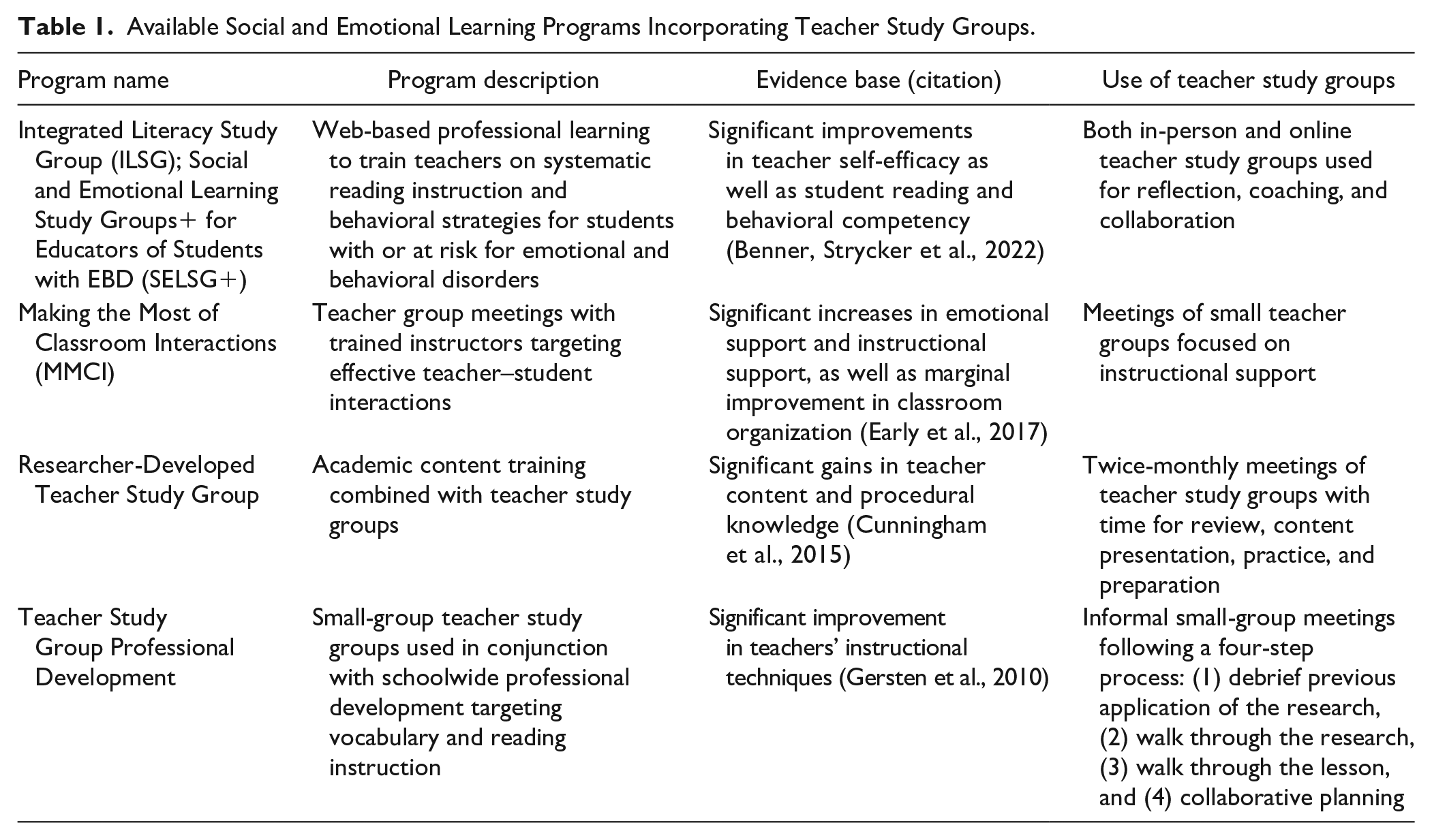
Table 1 summarizes four available SEL programs incorporating TSGs, along with their evidence bases. The Integrated Literacy Study Group/SELSG+ (Benner, Strycker et al., 2022), designed to train teachers on systematic reading instruction and behavioral strategies for students with or at risk for EBD, features both in-person and online TSGs for reflection, coaching, and collaboration. The Making the Most of Classroom Interactions program (Early et al., 2017) aims to train instructors for effective teacher–student interactions and incorporates TSGs for instructional support. The goal of the Researcher-Developed Teacher Study Group project (Cunningham et al., 2015) is to provide academic content training for teachers, with twice-monthly TSGs for review, content presentation, practice, and preparation. The Teacher Study Group Professional Development program (Gersten et al., 2010), used in conjunction with schoolwide professional development to improve vocabulary and reading instruction, includes TSGs to help teachers debrief and plan collaboratively. Each program has demonstrated significant improvement in targeted outcomes, pointing to the effectiveness of TSGs.
Available Social and Emotional Learning Programs Incorporating Teacher Study Groups.
A Practical Example of Social and Emotional Learning-Focused Teacher Study Groups: SELSG+
Like the teachers in the scenario, most early elementary educators, special and general educators alike, are ill-equipped to deliver SEL instruction to their students—especially those with or at risk for EBD. The section below uses one available SEL program (SELSG+) as an example to show how SEL-focused TSGs and coaching may help educate and support teachers in implementing SEL strategies in the classroom.
SELSG+ Overview
SELSG+ is a hybrid-delivered teacher professional development and student curriculum package for early elementary educators. It is designed to provide effective, multitiered, research- or evidence-based SEL instruction to all learners in Grades K–3 (Tier 1), including those with or at risk for EBD (Tier 2 and Tier 3). The program targets Grades K–3 because the early elementary years present an especially critical and malleable period for students to learn to interact with others, develop positive attitudes about schoolwork, engage in behaviors that support critical thinking, maintain focus, and cope with frustration (Mondi et al., 2021).
SELSG+ is composed of the following digital resources: (a) research-based professional learning opportunities and resources for teachers, including a 12-module online training course (about 24 hr of instruction) to prepare educators to implement SEL with students; (b) a research-based, 8-week, Tier 1 video-based SEL curriculum for all students in Grades K–3; (c) SEL assessments for teachers to identify students who need Tier 2 or Tier 3 intervention, such as those with or at risk for EBD, and monitor student progress; and (d) a flexible, research-based Tier 2 and Tier 3 SEL curriculum delivered in small groups or individually and tailored to students’ needs. These components are supported by in-person and web-facilitated TSGs and personalized coaching.
Educators access SELSG+ via a secure website that includes the teacher training course, protocols and virtual access for TSGs and personalized coaching, student curriculum materials, teacher curriculum guides, and instruments to identify student needs and measure student progress. Digitally delivered professional learning has emerged as a viable alternative to traditional professional learning activities, with comparable or better results than face-to-face training (Lay et al., 2020). The appeal of web-based delivery of professional learning includes flexibility and convenience, the ability to tailor the pace to fit individual or group needs, access to resources not locally available, and extended opportunities for learning (Darling-Hammond et al., 2017).
Professional Learning Supported by Peers
A meta-analysis of SEL explicit and systematic programs demonstrated that the quality of implementation affects program outcomes (Durlak et al., 2011), with effective implementation leading to better student outcomes (Jones et al., 2018). Thus, TSGs should follow research- or evidence-based best practices to ensure high-quality program implementation. The challenge for educators is to create a professional learning experience that is sequential, active, focused, and explicit, with teachers learning and practicing new skills as they proceed with implementation.
Before implementing Tier 2 SEL supports (Algozzine et al., 2019), TSGs are encouraged to assess the degree to which the school’s existing professional development program prepares teachers to deliver the intervention. This assessment can be achieved with the Professional Development feature (2.9) of the Tiered Fidelity Inventory (https://www.pbis.org/resource/tfi). On this inventory, TSGs rate the degree of Tier 2 SEL professional development implemented in their school as 0 (no process for teaching staff in place), 1 (professional development and orientation process is informal), or 2 (written process used to teach and coach all relevant staff in all aspects of intervention delivery, including request for assistance process, using progress report as an instructional prompt, delivering feedback, and monitoring student progress). Using the data, TSGs evaluate current Tier 2 SEL professional development activities in their school and plan areas for improvement.
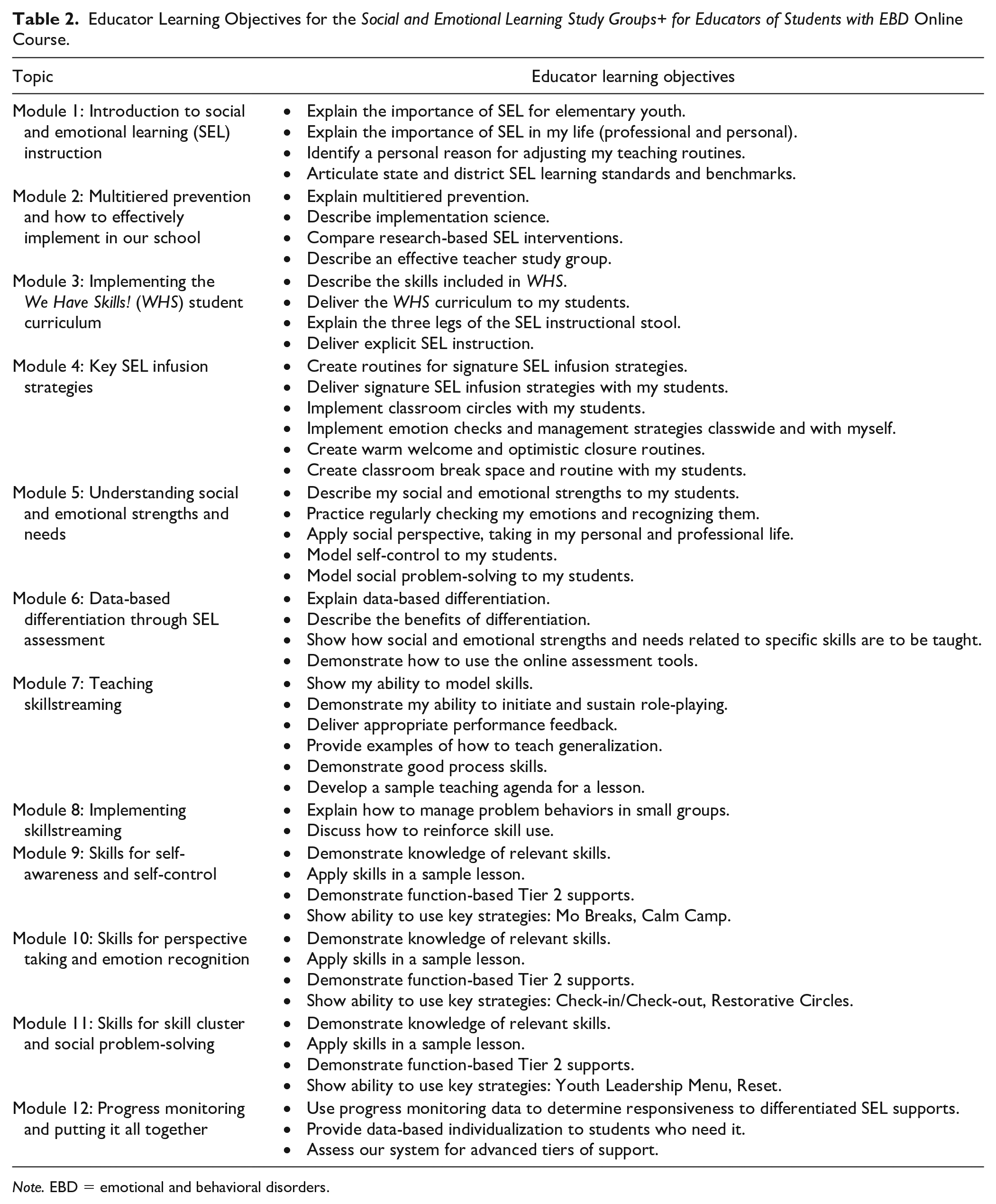
The SELSG+ professional learning component is an online course. It guides educators through 12 modules (see Table 2) to help them learn, reflect, and implement the featured SEL content and assess student progress. Incorporating essential elements for high-quality professional learning (DeMonte, 2013), the course content is linked to student outcomes and integrates knowledge types by having educators: (a) learn about and discuss research-based SEL instructional and assessment practices, (b) change existing instructional practices to align with the research base, and (c) rehearse how to implement these practices in their classrooms. The course also includes video modeling to support teachers’ skill acquisition and appropriate use in teacher–child interactions (Bandura, 1986).
Educator Learning Objectives for the Social and Emotional Learning Study Groups+ for Educators of Students with EBD Online Course.
Note. EBD = emotional and behavioral disorders.
While completing the course, SELSG+ encourages teachers to engage in interactive practice and receive coaching feedback through TSGs. In this way, TSGs enhance instruction and learning transfer (Joyce & Showers, 2002). The use of TSGs is a research-based professional development approach for building teacher capacity for effective classroom practices (Cunningham et al., 2015; Jayanthi et al., 2018). Research shows that online collaborative teacher professional learning groups are better than in-person groups for engaging participants in reflective practice (Darling-Hammond et al., 2017; Lay et al., 2020). The asynchronous nature of the SELSG+ course allows educators to increase duration and intensity based on their own personal professional development needs (Yoon et al., 2020). Teacher study groups support teachers working toward mastery prior to implementing the multitiered student curriculum. Most schools already have grade-level teams with common weekly planning time to participate in professional learning communities. SELSG+ TSGs fit into this existing framework. Teacher study groups may meet in person or virtually to provide feedback on teaching learning and practice.
In SELSG+, teachers may coach each other in TSGs. There is empirical support for peer coaching within groups of teachers having different strengths and weaknesses (Papay et al., 2016; Rock, 2019a, 2019b). In addition, SELSG+ teachers may request personalized coaching. Virtual coaches provide individualized feedback and additional opportunities to practice skills, both of which have been demonstrated to improve implementation, instruction, and student outcomes (Joyce & Showers, 2002; Kraft et al., 2018; Rock et al., 2013, 2014). Coaching may be requested directly on the SELSG+ web interface. It is delivered by trained instructors through written messages and phone and video calls.
Effective, Research-Based Tier 1 Social and Emotional Learning Instruction for All Students
Researchers at Harvard University’s Ecological Approaches to Social Emotional Learning Laboratory (Jones et al., 2021) identified 33 research-based SEL programs that can be implemented as Tier 1 curricula. In SELSG+, teachers deliver universal SEL instruction digitally using one of the research-based programs, the We Have Skills! Tier 1 curriculum (Marquez et al., 2014). Through virtual and in-person TSGs, teachers provide continuous support to each other as they implement the Tier 1 curriculum with students. We Have Skills! is a print- and video-based program designed to teach SEL skills to students in Grades K–3. It consists of two core components: (a) an 8-week video curriculum with classroom materials and (b) a 40-page printed Teacher Curriculum Guide.
The curriculum includes eight 30-min classroom lessons, practice exercises, and take-home materials. The first lesson defines classroom behavioral skills and explains their importance. The remaining lessons teach seven core behavioral skills derived from research (Hersh & Walker, 1983; Walker & Rankin, 1983): (a) listen, (b) ask for help, (c) follow directions, (d) do the best you can, (e) follow the rules, (f) work out strong feelings, and (g) get along. Classroom instruction includes daily practice through problem-solving discussions, role plays, and games, and review of skills during activities like classroom instruction, independent work, and transitions. Educators give students independent activities that reinforce the skills and lessons learned in class and send home parent materials to support learning goals.
In addition to implementing the curriculum, SELSG+ teachers are encouraged to collaborate through their TSGs to incorporate research-based SEL and behavioral “kernels” in their classrooms. Kernels are activities shown to change behavior (Bailey et al., 2019; Jones & Bouffard, 2012) and are common in widely adopted social and behavioral interventions to improve student outcomes. SELSG+ offers a range of strategies to help teachers identify the most appropriate kernel for a given student and situation. Strategies include routines for teaching clear behavioral expectations, responding to unwanted student behavior, organizing the learning environment, and maximizing engagement.
Data-Based Social and Emotional Learning Assessments for Tier 2 and Tier 3 Screening and Progress Monitoring
Central to effective implementation of multitiered prevention systems is accurate identification of the intensity of support necessary to meet student needs. Universal screening data can be used to identify areas of SEL strength and need. Screening is the essential first step toward addressing the SEL requirements of youth with or at risk for EBD in need of Tier 2 and Tier 3 intervention. The importance of screening cannot be overstated. Without screening information, teachers and students are destined to face frustration. For instance, students with or at risk for EBD may continue to struggle in a SEL skill, such as self-management—despite being asked repeatedly to demonstrate it—either because the task is too hard or too easy. Teachers who devote time to screening students have a better understanding of SEL strengths and deficits.
Teacher study groups can prepare to implement Tier 2 SEL supports (Algozzine et al., 2019) by completing the first four features of the Tiered Fidelity Inventory: (2.1) Team Composition, (2.2) Team Operating Procedures, (2.3) Screening, and (2.4) Request for Assistance (2.4). On each feature, TSGs rate the degree of implementation as 2 (fully implemented), 1 (partially implemented), or 0 (not implemented). With this instrument, TSGs assess Tier 2 SEL implementation in their school and plan areas for improvement.
SELSG+ TSGs focus on two types of SEL assessments: screening to make informed decisions (see Tiered Fidelity Inventory feature 2.3) and progress monitoring of those identified as in need of additional support. A number of reliable and valid SEL screening and progress monitoring tools are available, listed in the Best Practices in Universal Social, Emotional, and Behavioral Screening: An Implementation Guide (https://smhcollaborative.org/wp-content/uploads/2019/11/universalscreening.pdf) (Romer et al., 2020) as well as the National Center on Intensive Intervention Behavior Screening Tools Chart (https://intensiveintervention.org/).
To make the data-gathering process easier for TSGs, the SELSG+ digital platform provides student assessments of social and emotional skills to facilitate assignment to Tier 2 intervention. The website also offers simple teacher progress monitoring measures for all students, with more frequent monitoring recommended for those receiving targeted small group or individual instruction. The data-based differentiation approach promoted by SELSG+ is supported by strong evidence from a What Works Clearinghouse practice guide, Reducing Behavior Problems in the Elementary Classroom (Epstein et al., 2008).
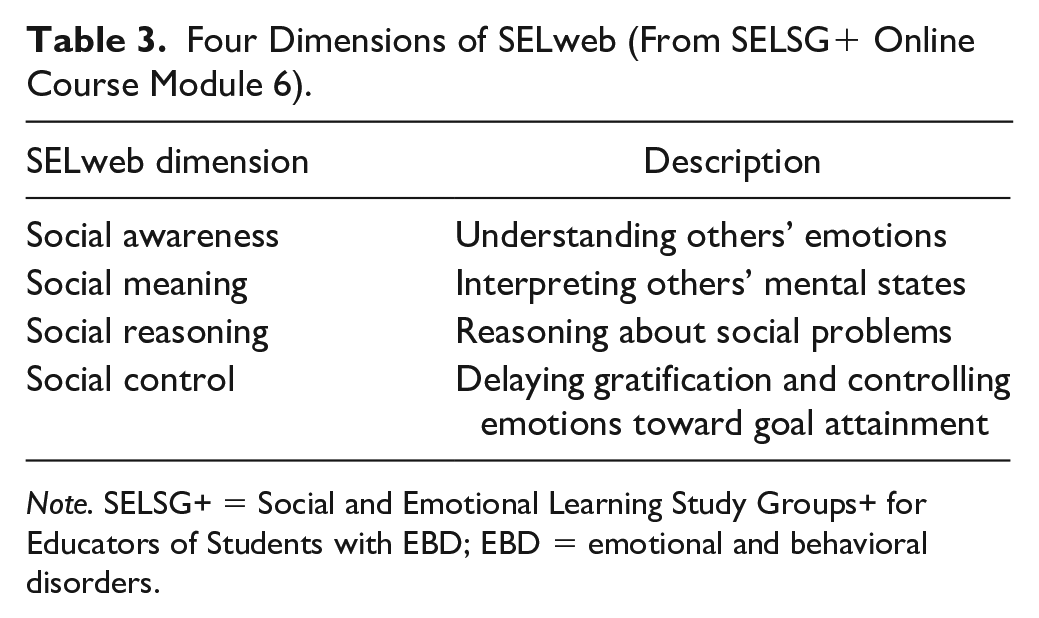
For screening, SELSG+ incorporates SELweb EE, a web-based tool to assess social-emotional comprehension for K–3 students (xSEL Labs, 2020). SELweb is a child-friendly, digitally delivered 25-min assessment designed for independent student use without staff assistance on a computer or tablet. Based on a previous model of social-emotional comprehension (Lipton & Nowicki, 2009), SELweb assesses four dimensions: social awareness, social meaning, social reasoning, and social control (see Table 3). Across two studies with a large ethnically and socioeconomically diverse sample, the measure reports high internal consistency reliability, a theoretically coherent four-factor model, and convergent and discriminant validity (McKown, 2019; McKown, Russo-Ponsaran, Allen, et al., 2016; McKown, Russo-Ponsaran, Johnson, et al., 2016).
Four Dimensions of SELweb (From SELSG+ Online Course Module 6).
Note. SELSG+ = Social and Emotional Learning Study Groups+ for Educators of Students with EBD; EBD = emotional and behavioral disorders.
Based on results from SELweb and the Elementary Social Behavior Assessment (ESBA; Pennefather & Smolkowski, 2015; described below), plus additional data from direct observation, skill checklists, and other sources, teachers can group students deficient in particular skills for Tier 2 intervention. The 12-module online SELSG+ course shows educators how to effectively select and apply differentiated research-based SEL skills aligned to the five CASEL core competencies. Module 6 focuses on data-based differentiation through SEL assessment (see Supplemental Material to view Module 6 course content and examples of assessment instruments). Course modules focusing on Tier 2 assessment and implementation show teachers how to administer assessments, interpret results using data reports, and combine these results with additional data. The SELSG+ platform enables student grouping through visualization of data and identification of students with similar patterns of strengths and deficiencies. Teachers can view this information in grade-level or Tier 2 TSGs to efficiently and effectively sort students for small group and individual instruction.
As part of SELSG+, teachers monitor student progress using the ESBA, a teacher-report of student social and emotional skills (Pennefather & Smolkowski, 2015). This instrument was developed to assess the skills teachers report as important in students (Walker et al., 2015). It allows teachers to screen an entire class and monitor progress of individual students on their use of prosocial behaviors in the classroom. Teachers rate students’ engagement in positive behaviors on 12 items: (a) listens to and respects the teacher, (b) follows teacher directions, (c) works with effort, (d) does seatwork as directed, (e) asks for help appropriately, (f) follows classroom rules, (g) avoids breaking rules even when encouraged by a peer, (h) behaves appropriately outside the classroom, (i) works out strong feelings appropriately, (j) can have “normal” conversation without becoming hostile, (k) gets along with peers, and (l) resolves peer conflicts adequately without teacher assistance. The items were derived from research by Walker and Rankin (1983). SELSG+ offers SimpleScreener, a digital, user-friendly assessment tool with data visualization. The information can also be exported to other data systems. With SimpleScreener, educators can establish baseline data for a class and quickly assess response to intervention and measure improvement for students receiving Tier 2 instruction.
The final four Tier 2 features of the Tiered Fidelity Inventory are useful for TSGs to monitor progress and examine the effectiveness of Tier 2 SEL supports (Algozzine et al., 2019): (2.10) Level of Use, (2.11) Student Performance Data, (2.12) Fidelity Data, and (2.13) Annual Evaluation. Ratings on these features inform TSGs of the degree to which Tier 2 SEL supports are being implemented in their school and identify areas for improvement.
Research-Based Tier 2 and Tier 3 Intervention
When preparing to implement Tier 2 and Tier 3 SEL supports, TSGs may be guided by four relevant features of the Tiered Fidelity Inventory (Algozzine et al., 2019): (2.5) Options for Tier 2 Interventions, (2.6) Tier 2 Critical Features, (2.7) Practices Matched to Student Need, and (2.8) Access to Tier 1 Supports. With Tiered Fidelity Inventory data, TSGs can assess the degree to which Tier 2 SEL intervention supports are being implemented in their school and identify areas to improve.
It is not easy for TSGs to choose Tier 2 SEL interventions because most programs are intended either for all students (Tier 1) or for students in need of more intensive Tier 2 and Tier 3 supports. To make the process easier, the SELSG+ platform offers teachers a digitally delivered Tier 2 SEL student curriculum. Teachers can select research-based SEL skills lessons to use with small groups and individual students to address social and emotional skills deficits. SELSG+ uses Skillstreaming the Elementary Child (McGinnis & Goldstein, 2003)—a widely adopted Tier 2 social skills training program that targets: (a) classroom survival skills, (b) friendship-making skills, (c) skills for dealing with feelings, (d) skill alternatives to aggression, and (e) skills for dealing with stress. Students learn these skills through an explicit instruction process that includes teacher modeling, role playing, provision of performance feedback, and generalization training.
The Skillstreaming program has considerable research supporting its use to teach SEL skills (e.g., Kocaoz et al., 2019; Kolbe-Holden, 2017; Sheridan et al., 2011). As a SELSG+ Tier 2 component, Skillstreaming is flexible, allowing for the differentiation and individualization of programming. Only skills (out of 60 available) in which students are deficient are taught and pacing through the curriculum is adjusted to meet individual needs. The program has been adapted for a range of students with and without disabilities. The program is socially valid and easily implemented and has also been shown to be efficacious for K–3 youth with or at risk for EBD (Zigler et al., 1992). Skillstreaming is designed for collaboration, using an instructional format that encourages family and teacher engagement (McGinnis & Goldstein, 2003). Finally, it is well aligned with WHS (We Have Skills!) in its use of collaboration, learning procedures, modeling, role-playing, feedback, and skill development.
The SELSG+ online assessment system automatically routes students in need of Tier 2 SEL supports into one of four SEL instructional groups: (a) classroom survival, (b) friendship making, (c) dealing with feelings, and (d) dealing with stress. With progress monitoring data, TSGs can track daily SEL growth (mastery) of the key skills taught within each of the four SEL instructional groups. Teacher study group teams can use data to adjust and differentiate for each youth or the whole group. This makes it easy for educators to know how well students are mastering the skills and whether to reteach skills. Educators use drag-and-drop features on the SELSG+ platform to rearrange the order of intervention components to better meet the context and student instructional needs. Teachers may add and remove skills as needed. SELSG+ guides teachers in their instruction with a small group, providing digital instructional materials such as skill outlines and modeling videos, and offering printable student skill cards and resources for parents.
To promote SEL instruction and a positive school environment, Ms. Carpenter and her colleagues decided to create a SEL-specific TSG. As the teachers were trained to deliver classroom SEL instruction, they developed and practiced new skills in their TSG. The TSG then supported Ms. Carpenter and her coworkers as they delivered SEL instruction in their classrooms. Because of busy schedules, the teachers could not always meet in person. Instead, they used their electronic devices at their convenience to tap into online TSG and coaching support. Each week, TSG members used discussion forums to communicate with each other. Ms. Carpenter also requested peer coaching from TSG members and personalized coaching from a virtual coach to help her find solutions when specific challenges arose with individual students. The web-based interface enabled Ms. Carpenter and her colleagues to efficiently learn and work collaboratively, reflect on their current practices, plan implementation of the SEL strategies, and give and receive practical and timely feedback.
Six months after setting up the SEL-focused TSG, Ms. Carpenter is less stressed, more confident in managing her classroom, and more satisfied with her job. The TSG support and personalized coaching sessions really helped. She thought connecting and learning from other teachers was the most enjoyable aspect of the program. She found the study group and peer support format extremely helpful to understanding, implementing, and troubleshooting research-based SEL strategies in her classroom. Ms. Carpenter still faces student problem behavior challenges, but she feels well-equipped and well-supported to deal with them. With fewer students misbehaving and less tension overall, her class is now a place where all students are better able to learn and grow.
Final Thoughts
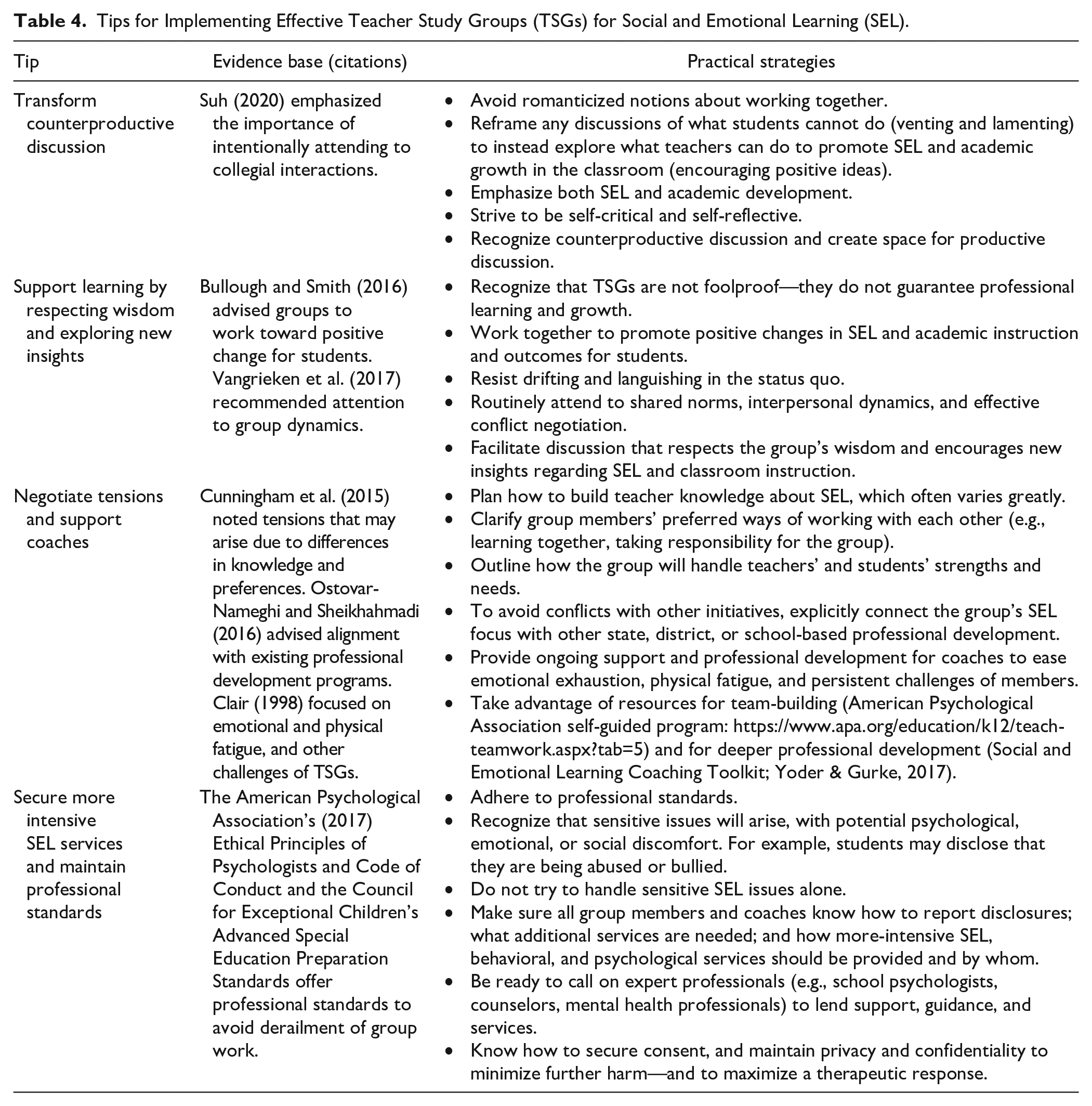
In this article, we documented the importance of SEL in the classroom, emphasizing its utility in working with students with or at risk for EBD. We presented TSGs as a research-based professional development approach for improving SEL and enhancing student behavioral and academic outcomes. To support busy early elementary school teachers and administrators in carrying out TSGs, we described implementation of a research-based SEL curriculum within a multitiered prevention framework in a K–3 setting. Table 4 includes additional tips for implementing effective SEL-based TSGs.
Tips for Implementing Effective Teacher Study Groups (TSGs) for Social and Emotional Learning (SEL).
Supplemental Material
sj-docx-1-bbx-10.1177_10742956221143497 – Supplemental material for Working Together: Leveraging Teacher Study Groups to Improve Social and Emotional Learning in the Classroom
Supplemental material, sj-docx-1-bbx-10.1177_10742956221143497 for Working Together: Leveraging Teacher Study Groups to Improve Social and Emotional Learning in the Classroom by Gregory J. Benner, Marcia L. Rock, Lisa A. Strycker, Erica O. Lee, Pamela Bailey and Ashley S. Virgin in Beyond Behavior
Footnotes
Declaration of Conflicting Interests
The authors declared no potential conflicts of interest with respect to the research, authorship, and/or publication of this article.
Funding
This manuscript was supported, in part, by the U.S. Department of Education Institute of Education Sciences, grant R324A180220, awarded to The University of Alabama. The opinions expressed are those of the authors and do not represent the views of the institute or the U.S. Department of Education.

Supplemental Material
Supplemental material for this article is available at on the Beyond Behavior website with the online version of this article.
References
Supplementary Material
Please find the following supplemental material available below.
For Open Access articles published under a Creative Commons License, all supplemental material carries the same license as the article it is associated with.
For non-Open Access articles published, all supplemental material carries a non-exclusive license, and permission requests for re-use of supplemental material or any part of supplemental material shall be sent directly to the copyright owner as specified in the copyright notice associated with the article.
