




Abstract
Functional communication training (FCT) is a strategy to address problem behavior for students with various disabilities that is supported by a broad evidence base. Despite this support, multiple factors continue to dissuade educators from utilizing FCT in their classrooms. This article outlines the process of developing and implementing FCT plans through an efficient approach that includes essential components and tools to aid application while also highlighting potential pitfalls for practitioners to avoid.
When addressing challenging behaviors exhibited by students with disabilities, educators often encounter multiple hurdles that inhibit the identification of reasons for the behaviors, including deficits in communication skills (Mancil & Boman, 2010). Researchers have found that individuals with impaired speech have a higher frequency of challenging behaviors than those with more developed speech skills (Bott et al., 1997; Chung et al., 1995). In addition, students with or at risk for behavioral disorders often have underlying undiagnosed language impairments (Hollo et al., 2014). With the identification of this connection between communication challenges and the display of problem behavior, several studies have measured the effectiveness of treatment plans that focus on teaching communication skills to reduce targeted behaviors (Mancil & Boman, 2010; Muharib & Pennington, 2019). These studies included behavioral intervention strategies that provided instruction in the areas of social and communication skills while limiting access to reinforcers gained through the display of problem behavior (Muharib & Pennington, 2019).
Functional communication training (FCT) is one strategy utilized to address challenging behaviors. It focuses on increasing an individual’s skill area in the use of a socially acceptable functional communication response (FCR) in lieu of the challenging behaviors to access reinforcers (Carr & Durand, 1985). This technique is derived from a basic principle of reinforcement called differential reinforcement. This type of reinforcement can be used when two or more behaviors serve the same function; that is, they produce the same consequence on the environment.
For example, a student may raise her hand in class that results in help from a teacher on an assignment. She may also shout, “This is stupid!” In this case, this action also results in obtaining help from a teacher. The teacher can influence the rate of the child’s use of either behavior by responding (i.e., reinforcing) to them differently—hence the term differential reinforcement. If the child raises her hand, the teacher may respond to each hand raise quickly with guidance and a word of encouragement. If the child shouts out for help, the teacher can temporarily withhold direct attention and instead gesture toward a printed card reminding the student to raise her hand for help. If implemented consistently, the child will learn that hand-raising is a more efficient and effective means to access teacher help, and all else being equal, she will likely start to raise her hand more often than shouting out. For more information on the theoretical and practical applications of differential reinforcement, see Reed and Kaplan (2011).
Resulting from several decades of research, FCT is one of the most used and efficacious strategies for reducing problem behaviors exhibited by students with disabilities (Muharib & Pennington, 2019). Much of the research has focused on use of this intervention with students ages 5 to 11 years with diagnoses that fall into multiple disability categories. Multiple reviews evaluating studies that examined the effects of FCT on challenging behaviors exhibited by children with autism spectrum disorder (ASD) have identified FCT as an evidence-based practice with this population (Muharib & Wood, 2018; Wong et al., 2015). Additional reviews indicated that there is evidence supporting the use of FCT with students both with and at risk for a wide variety of disabilities, including intellectual disabilities, other health impairments, and multiple disabilities (Gerow et al., 2018). Continued examination of the practical application of FCT in multiple locations with varied populations has led to an increasing awareness of its efficacy across groups and settings (Ghaemmaghami et al., 2021).
Brief Review of the Functional Communication Training Evidence Base
In their seminal article, Carr and Durand (1985) identified FCT as a method to increase appropriate replacement behaviors while decreasing maladaptive behaviors. They noted that an appropriate communicative response can be taught that serves the same function as the targeted behavior they are replacing. Consequently, it may be possible to utilize this relationship to reduce the occurrences of problem behaviors. To demonstrate the functional relationship between FCT and behaviors targeted for reduction, they conducted a series of experiments that involved identifying the function of maladaptive behaviors before teaching participants to utilize communicative phrases to access the same reinforcer produced by the problem behavior. This series of experiments demonstrated three key factors for effective use of FCT:
The communicative response should require low response effort;
The communicative response should be functionally equivalent (i.e., it should access the same desired response as the problem behavior); and
The interventionist should provide access to the desired reinforcer when the communicative response is utilized correctly while (when possible) ignoring the behavior targeted for reduction.
Since these initial validations, practical application of FCT has been demonstrated across multiple settings to address varied behaviors. A recent review by Ghaemmaghami et al. (2021), who examined 208 empirical studies investigating FCT, found that use of this intervention resulted in a significant reduction of problem behavior (≥80%) in 90% of recorded research applications. While the reviewers noted that FCT has demonstrated success in reducing targeted behaviors, the initial success of the strategy was dependent upon several factors, further outlined by Tiger et al. (2008). These factors included proper identification of the variables influencing the target behavior, the delivery of relevant reinforcers (e.g., attention, assistance, and escape) when FCRs were presented, and the efficiency of the initial FCR (Tiger et al.). Ghaemmaghami et al. also noted the importance of including reinforcement schedule thinning, a process of systematically reducing the number of times the individual contacts reinforcement to expose them to conditions similar to a natural environment. The importance of this component was also highlighted by Hagopian et al. (2011) in their review of FCT. Both reviews reported the presence of a significant evidence base supporting the promotion of FCT as an efficacious intervention to reduce engagement in maladaptive behaviors.
Focus of Current Article
Considering the wealth of data supporting its implementation, why is the use of FCT not more widespread in public schools? There are multiple contributing factors that potentially dissuade educators from implementing this intervention in their classrooms. First, the process may seem arduous and require more effort than other procedures. FCT initially requires continuous reinforcement (i.e., every occurrence of the replacement behavior is reinforced), and additional efforts and expertise are needed to successfully reduce schedules of reinforcement to levels that naturally occur in the environment. Second, paraprofessionals may also be involved in implementing FCT plans in which they have had little or no training, and teachers providing support may have minimal experience in providing supervision (Gregori et al., 2021). Finally, utilizing FCT may also seem impractical as the intervention initially requires high rates of reinforcement (Muharib & Pennington, 2019). Outlining the process for educators by providing training and tools for implementation might lower the response effort and increase implementation of the strategy across students and settings.
In this article, we aim to encourage increased use of FCT in public schools by outlining a streamlined process for utilizing the intervention and providing multiple tools to aid in its implementation. Description of the process includes methods for identifying the target behavior and its function(s), developing an FCR that is both socially acceptable and easy to use, creating and employing an implementation plan that has training for the student and support staff, and programming for maintenance and generalization. We also discuss common pitfalls that can be encountered when implementing FCT and include “pro tips” describing how educators can plan to avoid them. Finally, we present tools that outline processes that supplement each section to aid teachers in executing components of FCT with ease.
Key Steps in Functional Communication Training
While the details of a specific application are tailored to the context in which it is employed, FCT interventions share four common features (Tiger et al., 2008). First, a functional behavior assessment (FBA) is completed to determine the function of the target behavior. Second, the participant is taught a communication response that serves the same purpose as the target behavior. Third, a behavior plan using differential reinforcement is implemented to strengthen the communication response and weaken the target behavior. Finally, intervention gains are maintained across time and extended to other settings and with other caretakers. The following sections expand on these features in the context of typical classroom applications.
Step 1: Identify the Function
Before developing an intervention plan, the response class of behaviors targeted for reduction must be identified. A response class consists of behaviors that produce the same effect on the environment. In other words, they share a similar function (Cooper et al., 2020). As behaviors are often strengthened by gaining access to or avoiding something, functions of behaviors are described in terms of the behaviors’ interactions with the environment. The four primary functions of behavior are access to attention, access to tangibles, escape or avoidance, and automatic reinforcement (Cooper et al.). For example, a student may push books off a table or make loud, inappropriate comments to avoid completing a difficult task. Both behaviors serve the same function (i.e., escape from a difficult task) and would, therefore, belong to the same response class. However, if the student pushes books off a table to escape a difficult task but makes loud, inappropriate comments to gain attention from peers, these behaviors would not belong to the same response class and could not utilize the same FCR. This outlines why accurately identifying the function in addition to defining the targeted behavior is a crucial first step in developing a plan for implementing FCT.
Once the behavior has been identified, additional information is needed before developing an intervention plan. Where and when does the behavior commonly occur (setting)? How often does the behavior occur (frequency)? What is typically present in the surrounding environment before (antecedents) and after (consequences) incidences of the behavior? These questions can all be answered by conducting an FBA. Figure 1 shows a tool that educators can utilize to conduct a basic FBA to help identify the function of the behavior targeted for reduction. In addition, Lloyd et al. (2017), Murdick et al. (2003), and Park (2007) describe various approaches to conducting FBAs in a school setting.
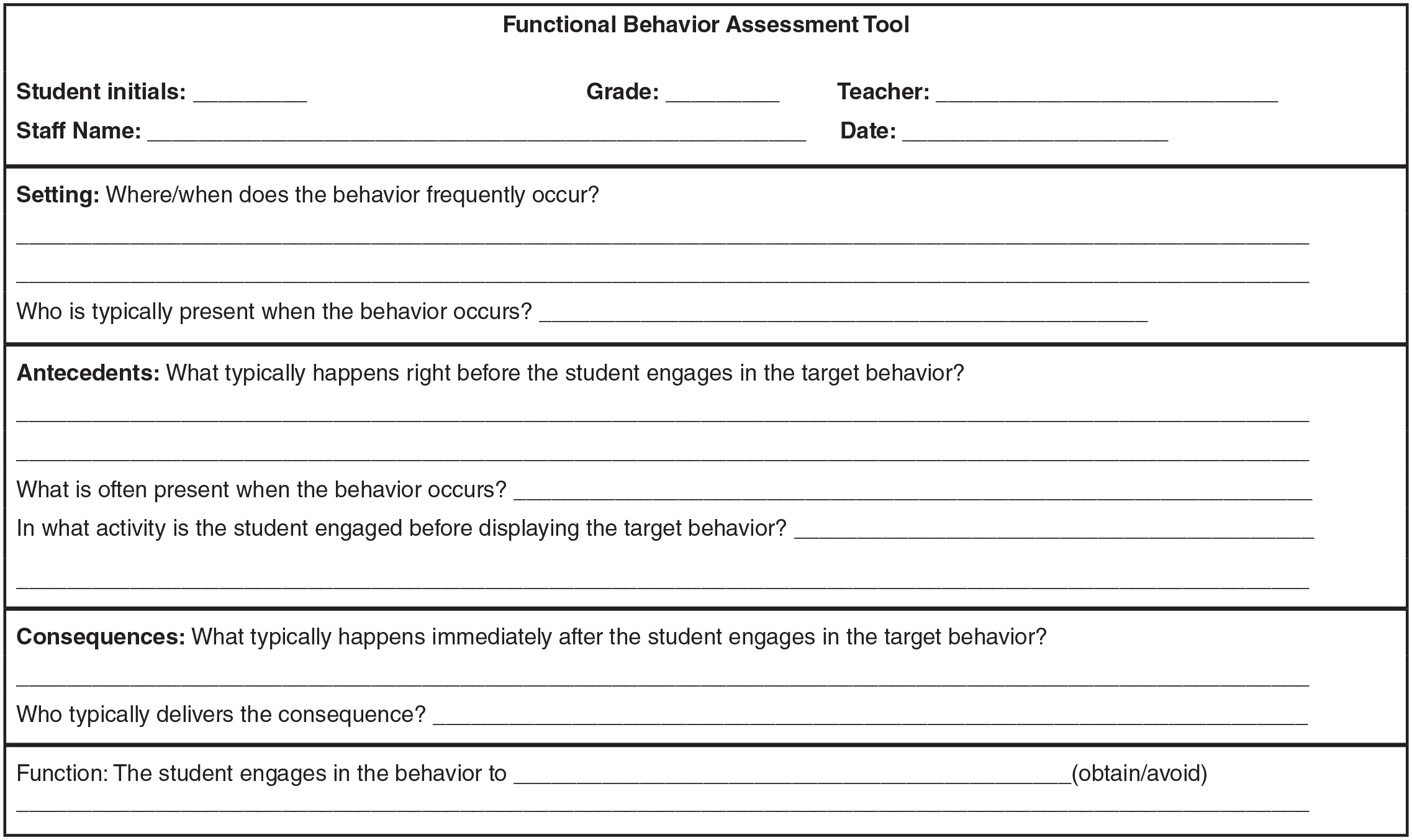
Functional Behavior Assessment (FBA) Tool.
When completing the tool, educators begin by operationally defining the behavior in a way that is observable and measurable (Scott et al., 2010). The definition should include both examples and nonexamples, and the description of the behavior should be written so that random observers would recognize it when it occurs. Once the behavior has been defined, the individual completing the FBA should then identify when, where, and how often the behavior is occurring (Scott et al.). After these conditions have been identified, the educator would identify the antecedents and consequences surrounding the behavior, either through direct observation or an established pattern of previous observations. By examining what occurs immediately before and after the behavior, educators can determine what the student is attempting to obtain or avoid (e.g., attention and task).
As outlined previously, information describing the setting, antecedents, and consequences can be analyzed to identify the function(s) of the target behavior. Correctly identifying the function(s) before developing the intervention plan can permit the accurate inclusion of appropriate research- or evidence-based strategies, including FCT, that are more likely to lead to a reduction in the target behavior (Cowl & Vargo, 2018).
Pro tips
As many behaviors often result in some form of attention from staff or peers, it is very easy to assume that the function is to gain attention. If the hypothesized function is to obtain attention, development of the plan would likely benefit from a quick experiment. When the student engages in the target behavior, observe what happens if the behavior is ignored. Does the behavior escalate or increase in frequency? If so, then the function may be attention-seeking. If not, then other functions should be considered (e.g., escape/avoidance, access to tangibles, automatic/sensory). Once the behavior begins to de-escalate and it is evident that attention was probably maintaining the behavior, planned ignoring should be discontinued. Staff can resume responding to the behavior with attention as needed. Also be sure to ignore behaviors only if it is safe to do so. If the behavior is likely to result in significant harm to anyone, including the student, respond appropriately to ensure safety of the student and others in their environment.
Step 2: Select and Train a Replacement Behavior
After the function has been identified, a replacement functional communication response (FCR) should be selected. Initially, the FCR should be simple for others to understand and easy for the student to use (Muharib & Pennington, 2019). Depending upon the student’s communication skills, the FCR may be a verbal request (e.g., “I want a break, please”), a gesture (e.g., raising a hand), a textual card (e.g., “I need a break” printed on a card), or a card with a pictorial representation (e.g., a card with a picture of the student taking a break). The selected FCR needs to be socially acceptable and easy for staff to recognize to ensure that student use of the FCR will appropriately cue delivery of the selected reinforcer (Tiger et al., 2008). Perhaps most important, however, the FCR should naturally result in access to the same consequence as the problem behavior. In other words, if the student engaged in problem behavior to escape from academic tasks, the FCR should involve asking for a break or modified task. If problem behavior resulted in adult attention, the replacement behavior should incorporate some type of request for attention. Figure 2 serves as a guide to creating an FCT intervention plan, including clearly defining the alternative behavior, describing the identified reinforcer, and outlining staff responses.
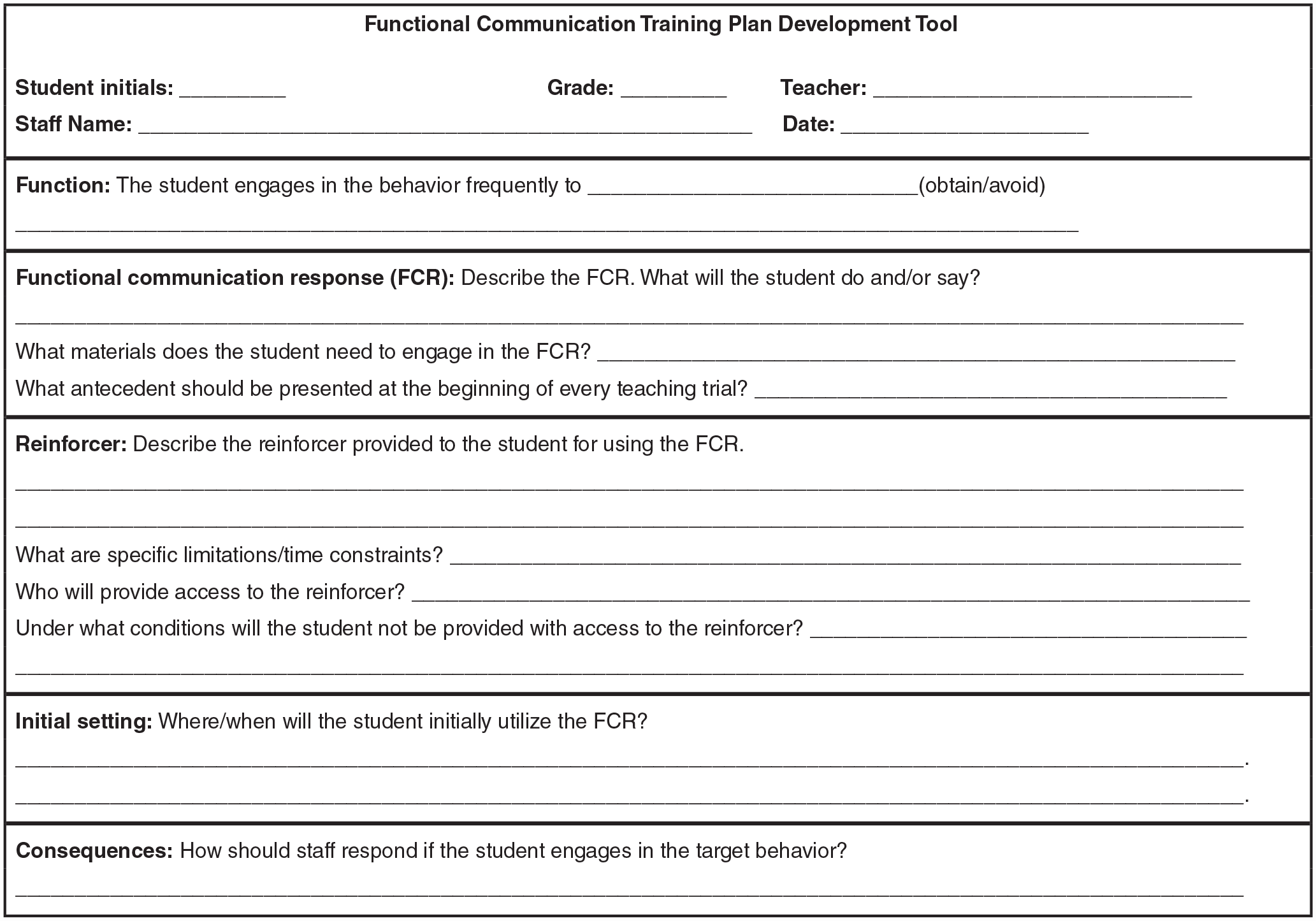
Functional Communication Training (FCT) Plan Development Tool.
Before finalizing the FCR, practitioners should consider if the response is likely to be consistently reinforced (Burt & Whitney, 2018). The delivery of the reinforcer should not be dependent upon the presence or absence of a specific individual. While the plan can identify staff members who will deliver the reinforcer in each setting to ensure that it is consistently delivered, anyone familiar with its contents should be able to implement the plan to ensure continuity. This also promotes generalization of the plan across service providers and settings (Falcomata & Wacker, 2013). In addition, the reinforcer should correspond with the function of the behavior targeted for reduction (Cowl & Vargo, 2018). While a student may find Goldfish® crackers highly reinforcing, they do not provide the same escape from a difficult task that ripping up an assignment might.
Once the FCR has been selected, practitioners must then train both the student and relevant staff on the proper use of the FCR. While there are research studies supporting a wide variety of training approaches, Behavioral skills training (BST) is a commonly used, well-researched method for delivering training (Kirkpatrick et al., 2019). BST includes four steps that promote skill acquisition:
Instruction, during which the trainer provides direct instruction in use of the skill;
Modeling, in which the trainer demonstrates application of the skill;
Rehearsal, during which the trainees are provided with multiple opportunities to practice application of the skill while the trainer observes; and
Feedback, in which the trainer provides specific feedback to each trainee on their performance of the skill (Hogan et al., 2015).
This method can be easily individualized for each trainee and include additional supports, such as video modeling, verbal versus visual feedback, and supported practice (Kirkpatrick et al.).
Regardless of the selected method, the training plan should include three essential features: (a) clear definitions of the target behavior and FCR, (b) mastery criteria and a description for how this will be assessed, and (c) any specific needs for support or differentiation. The training plan should begin with a clear definition of the target behavior and replacement FCR. Both definitions should be operationally defined in a way that is observable and measurable. The description of the FCR must also include any materials the student will need to engage in the FCR (e.g., a picture, a card with specific text) to ensure that the student has consistent access to these necessary items. In addition, all training sessions should begin with the antecedent to the problem behavior identified by the FBA. Withholding access to the reinforcer (e.g., preferred attention directed elsewhere, limiting access to a desired tangible item) or exposing the student to an aversive condition (e.g., giving the student a math worksheet) establishes motivation for the individual to use the replacement FCR. Staff can then prompt the student to use the FCR to access the reinforcer (e.g., teacher attention, a different assignment).
Next, the educator should establish mastery criteria that include acceptable frequencies of the FCR/target behavior, the conditions under which they will be monitored, and how much support will be provided for the behavior to be considered as mastered. For example, mastery criteria may require a student to independently present his teacher with a green card when he needs assistance solving a math problem in three consecutive observations with zero instances of target behaviors. The exact metrics of the mastery criteria will be specific to the ability of the student and the setting conditions.
Training of the FCR should be differentiated to reflect the skill levels and experiences of those involved. All materials that are necessary components of implementing FCT should be included in the training, which should be provided in the initial setting in which FCT will be implemented or in a similar location that shares crucial components (Mancil & Boman, 2010). Training should then continue until the student and staff reach the predetermined level of mastery. As the training is initiated and proceeds, the trainer needs to evaluate the progress of the included trainees and adjust the training plan to encourage acquisition. These decisions should not be arbitrary. Throughout the training, the trainer should collect specific data on each trainee’s performance and identify areas of mastery and deficit before providing feedback or making changes to the training. Figure 3 provides sample performance evaluation tools that can be utilized to collect and provide feedback to trainees (student and staff) during training.
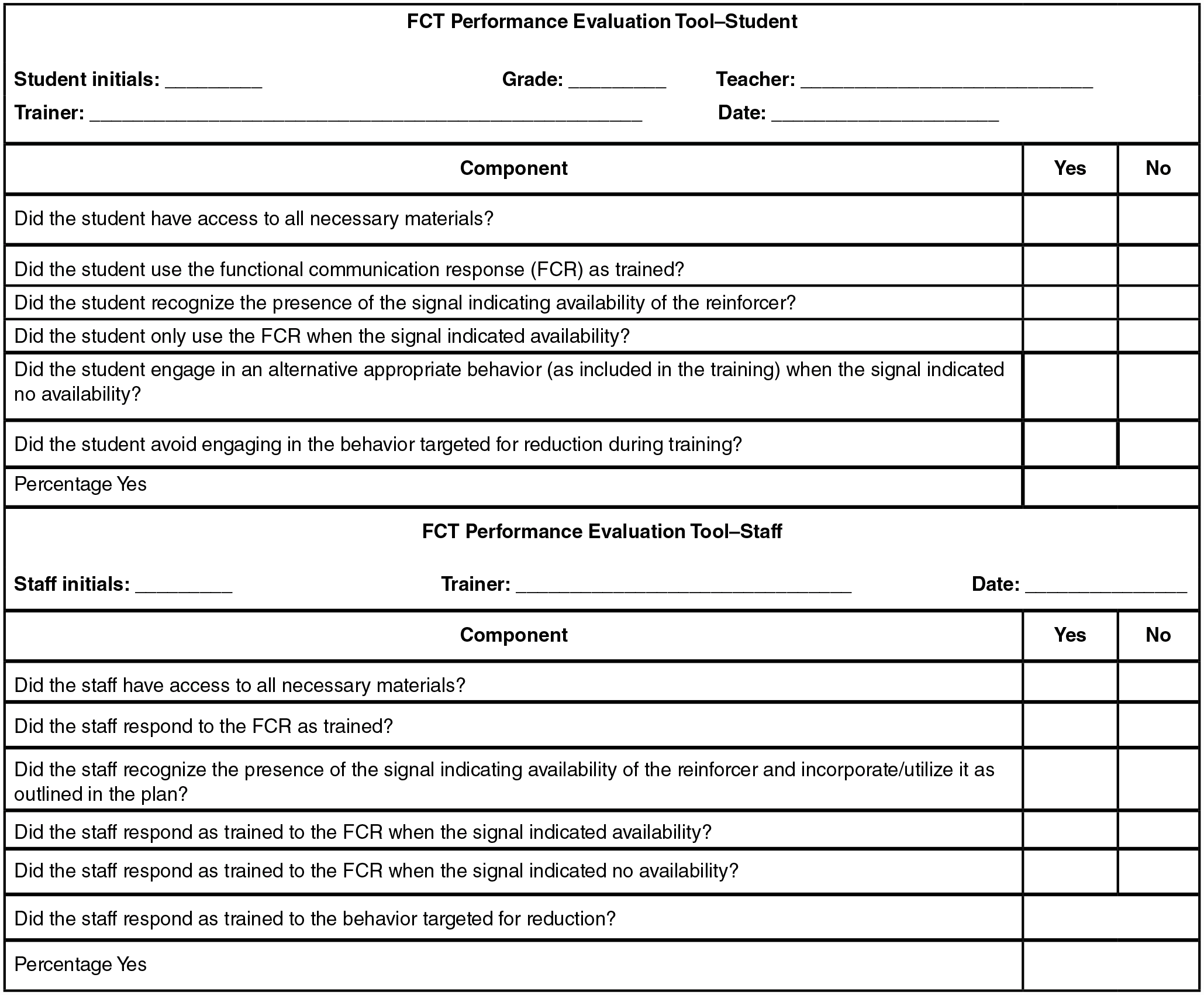
Functional Communication Training (FCT) Performance Evaluation Tool.
Pro tips
If the student demonstrates difficulty mastering use of the FCR, practitioners may want to collaborate with other service providers (e.g., speech–language pathologists, occupational therapists) to ensure that the FCR is leveled appropriately. These service providers may be able to provide additional support throughout the training process. If other service providers have reviewed and approved the FCR and the student is still struggling, consider breaking the FCR down into smaller steps, simplifying the FCR, or reviewing the training process to ensure that adequate opportunities are being provided for modeling, rehearsal, and feedback.
Step 3: Design and Implement a Behavior Plan
After the student has demonstrated mastery in using the FCR, practitioners should develop and implement a behavior plan. Figure 4 provides a tool that outlines the process for developing a general plan that includes training and implementation. Potential limitations should be identified when developing the FCT plan, as they will significantly impact training and implementation. Examples include the following: If the reinforcer provides the student with a break, how long should that break last? Should the break occur inside the classroom, or does the student gain access to another environment? If the student uses the FCR to access teacher attention, how long can the teacher feasibly provide support or attention to the student without neglecting other students in the classroom?
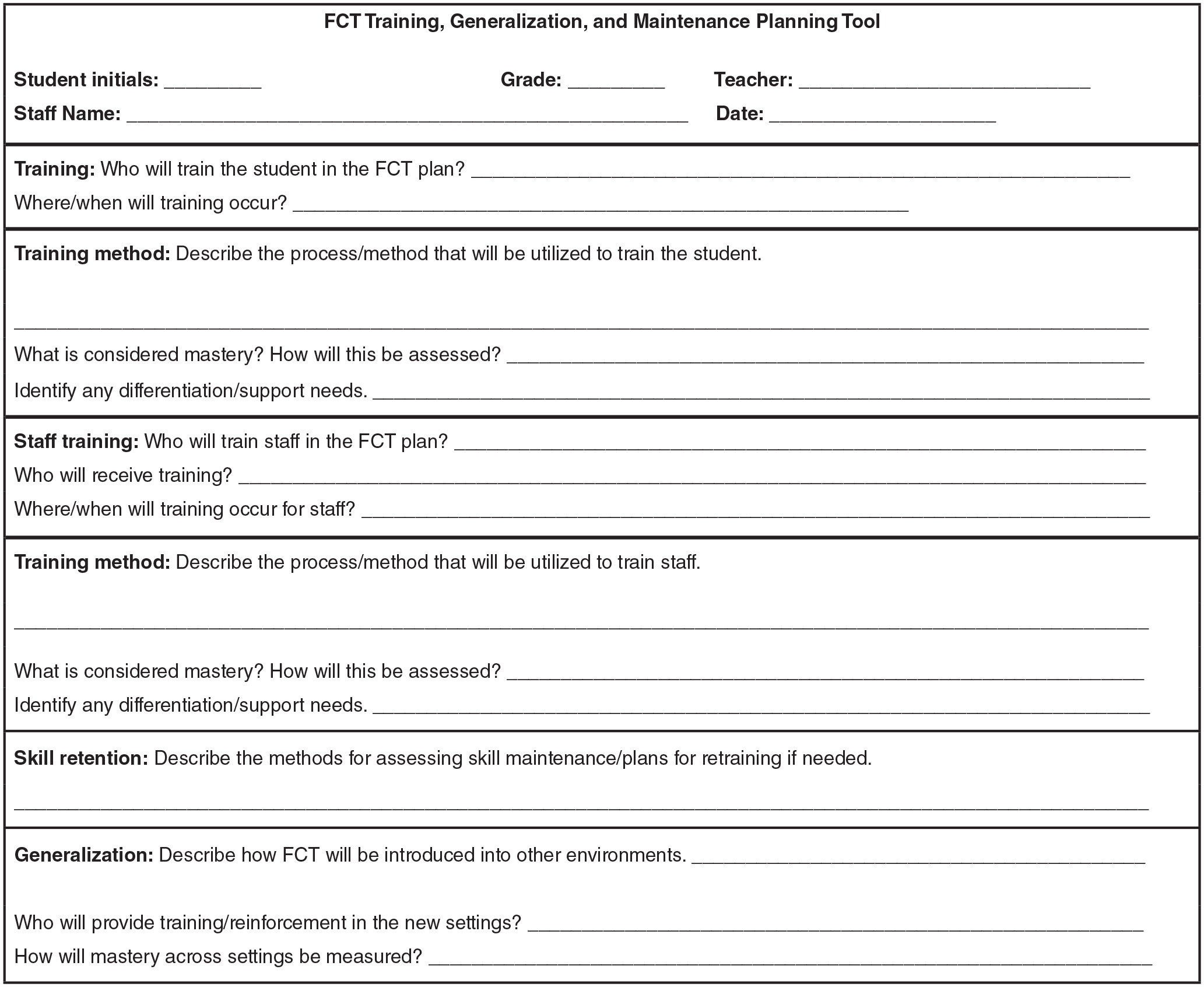
Functional Communication Training (FCT) Training, Generalization, and Maintenance Planning Tool.
The plan should identify how staff will respond when the student engages in the target behavior, utilizing differential reinforcement of alternative behavior to reinforce engagement in the FCR while providing limited reinforcement for engagement in the target behavior (Hagopian et al., 2011). The student’s access to the identified reinforcer would be ideally limited or removed if the student engages in the behavior targeted for reduction. Otherwise, access may end up reinforcing the target behavior instead of the FCR.
As FCT can initially require high rates of reinforcement, depending on the frequency of student engagement in the FCR, and both the student and staff need opportunities to practice engagement in the plan, FCT may be initially implemented in one setting with an intent of expanding to other environments once mastery has been achieved in the initial setting (Schindler & Horner, 2005). This initial setting should be where the student engages in the highest frequency of the target behavior, although training may occur in another setting if needed. For example, if the individual is engaging in higher rates of property destruction during reading instruction in the general education classroom, the training and initial implementation would ideally occur in that setting. Training could occur in the general education classroom, with the teacher presenting the antecedent conditions (e.g., independent reading activity) that frequently occur prior to student engagement in the problem behavior.
Following presentation of the antecedent stimulus, the staff providing training would then model engagement in the FCR (e.g., asking for a break). This would be followed by an opportunity for the student to use the FCR. Any engagement in the FCR would result in positive feedback and access to the requested reinforcer. The student would be more likely to encounter opportunities for practice and reinforcement in a setting with higher rates of the target behavior, which would increase the likelihood of generalization to other settings with additional supports in place.
The plan must outline how staff will respond to occurrences of the behavior targeted for reduction (Tiger et al., 2008). While FCT is designed to reinforce use of the identified FCR, the student will likely still engage in the target behavior, though FCT should result in a significant reduction in frequency. Staff need to know how to respond to avoid unintentionally reinforcing the target behavior. The consequence for engaging in the target behavior must be different from the consequence noted during completion of the FBA. The previously provided consequence was likely reinforcing and, as a result, increased the frequency of the target behavior (Falcomata & Wacker, 2013). The consequence included as part of the FCT plan can be a prompt to engage in the FCR to gain access to the reinforcer, or staff can use differential reinforcement to provide a lower quality reinforcer in response to the target behavior (e.g., ripping the assignment may result in a 15-s break during which another copy is obtained and the student is reminded how to use the FCR to request a break vs. the student using the FCR to request a break and receiving a 2-min break).
Once trainees have met mastery criteria (ideally more than once; trainees should be able to demonstrate the requisite skills multiple times in succession under conditions like those they will encounter during implementation), staff should implement a plan to consistently reinforce the FCR while withholding or reducing reinforcement for the target behavior. Throughout implementation, but especially during initial phases, staff will likely need continued supervision, feedback, and support to ensure accurate and consistent application of the FCT plan as trained. The tool included in Figure 3 can be used during implementation to collect data measuring fidelity, that is, consistent and accurate application of the trained skills. Both versions in Figure 3 can also be utilized to collect data on use of the trained skills, which could then be analyzed to identify if additional training is needed for the student or staff.
Staff should also collect data on the student’s behaviors, including the frequency of FCRs, the frequency of the target behavior, and frequency or duration of the desired behavior (e.g., number of appropriate comments and length of time on task; Mancil & Boman, 2010). The amount of data can be overwhelming, but collection of accurate data is essential when assessing the efficacy of interventions. There are many free applications, including MultiTimer, ABA Teamwork Express, and Google Forms, that digitize the data collection process and make it easier to collect data on multiple behaviors concurrently. The collected data should be analyzed on a frequent schedule (weekly if possible) to determine if the FCT intervention is resulting in a reduction in the target behavior and an increase in use of the FCR and other desired behaviors. Figure 5 provides a data analysis tool that can be utilized to identify possible supports or changes to the plan that may be warranted based on observed trends in the collected data.
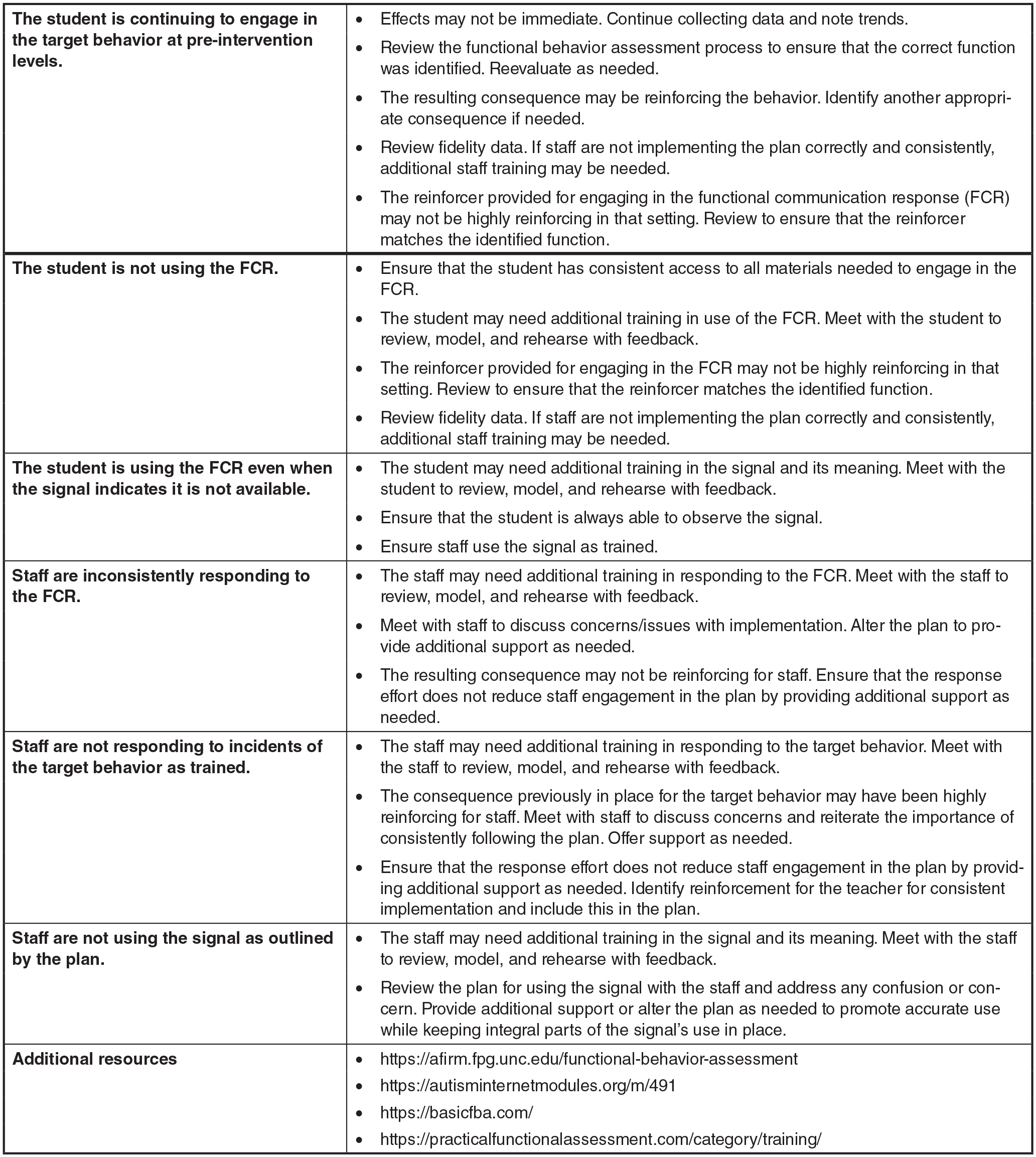
Functional Communication Training (FCT) Data Analysis Tool.
Once the FCT plan has been successfully implemented in the initial setting, and student behavior data are showing a stable, significant reduction or elimination of the target behavior, FCT can begin in a second environment. FCT can begin sooner as needed if behavioral contrast occurs (i.e., the target behavior begins to occur or significantly increase in another setting). It is important to remember, however, that additional training may be necessary before implementation in another setting, particularly if new staff are included in implementation or if the setting is significantly different from the initial implementation environment (Falcomata & Wacker, 2013).
Continued data collection and analysis are also crucial to ensure that the intervention is being implemented with fidelity across settings and staff and that student behaviors are continuing to move in the desired direction (Mancil & Boman, 2010). If undesired changes in student behavior are observed after implementing the plan in an additional setting, the tool in Figure 5 can help identify an appropriate response, or staff may decide to scale back implementation to one setting until the behaviors stabilize and begin moving in the desired direction again.
Pro tips
Often the consequences the student has been receiving for engaging in the target behavior are highly reinforcing, which is why the student continues to engage in the behavior despite staff attempts to dissuade them from doing so. Even with the provision of reinforcement in response to student use of an FCR, behaviors targeted for reduction can reappear, persist, or even increase in frequency if they are placed on extinction (i.e., reinforcement is no longer provided for these behaviors). Educators can include differential reinforcement as part of the planned response to occurrences of the behavior targeted for reduction in lieu of extinction to avoid possible negative side effects.
For example, a student who yells in class to receive attention from staff may receive a brief nonverbal prompt to raise their hand if they need assistance. The educator is still providing attention in response to the behavior, but the attention is not the same amount or quality of attention that the student will receive if they raise their hand. The response to the target behavior must be lower in quality or quantity. If FCT is going to be successfully implemented, the selected reinforcer should be highly desirable and the consequences for the target behavior should be less preferable.
Step 4: Maintain and Extend Intervention Outcomes
Even if the student successfully masters the training criteria in the initial training settings, additional steps will likely be necessary to extend these behavior changes across time and to other settings/situations. The extension of behavior change across time is known as maintenance. Although this is an essential feature of successful interventions, it frequently does not happen naturally (Stokes & Baer, 1977). Therefore, programming for maintenance is an important component of developing FCT implementation plans.
Maintenance programming should include a plan for fading reinforcement of the FCR to decrease its frequency, as well as a plan for increasing natural (or, if necessary, contrived) reinforcers for engaging in a desired behavior (e.g., remaining quietly engaged during independent work, making appropriate, on-topic comments during group instruction; Hagopian et al., 2011). While the student will likely engage in the FCR in lieu of the target behavior, the provided reinforcer may result in the student missing out on educational or social opportunities. Also, sustaining provision of the reinforcer at initial rates may not be feasible, especially if implementation of the intervention expands to multiple environments (Tiger et al., 2008). The plan should identify and clearly define a desired behavior, which can simply be the behavior expected of all students in that setting during the selected activity or another behavior specific to the student included in the FCT intervention.
To promote maintenance of the desired behaviors, once the target behavior has been reduced to acceptable levels or eliminated, staff should begin differentially reinforcing FCRs and desired behaviors as outlined in the maintenance portion of the FCT plan. This should involve reducing the amount of time that the signal indicates availability of the reinforcer while increasing reinforcement of engagement in desired behaviors (Muharib & Pennington, 2019). Any occurrences of the target behavior should trigger the same consequence as outlined in the FCT plan, as should appropriate use of the FCR when the signal indicates availability. Eventually the signal may indicate a very limited time frame during which use of the FCR will be reinforced, and reinforcement for desired behaviors may be reduced or transferred to natural consequences (Muharib & Pennington). As with all components of the FCT plan, reductions in reinforcement should be systematic and based on data analysis.
To encourage maintenance of a behavior, it is important to shift rates of reinforcement in a specific, preplanned fashion. Schedule thinning (i.e., gradually and systematically decreasing the rate of reinforcement) facilitates the transition to naturally occurring reinforcement rates while avoiding possible negative side effects of extinction (e.g., resurgence and extinction burst). This may involve a delay in the reinforcement procedure (the length of time between use of the FCR and access to reinforcement is increasingly delayed), response restriction (removal of the mode of communication when reinforcers are unavailable), or an alternative activity (an alternative activity is provided during times which the reinforcer is unavailable; Muharib & Pennington, 2019).
A delay-to-reinforcement procedure could involve staff requiring a student to complete part of an assigned task (e.g., solving one additional math problem and writing one additional sentence) before providing access to a requested break and gradually increasing the requirement until the student is able to complete the task before taking a break. A response restriction procedure may involve removing a card that requests access to teacher assistance during brief whole-group instruction or the educator (a) designating a certain time of day during which the individual can access reinforcement and (b) gradually decreasing the length of time the reinforcer is available. The rate of decreasing reinforcement should be preplanned but also based on data collected during implementation, as thinning schedules of reinforcement too rapidly can lead to a resurgence of the target behavior.
If the student is appropriately using the FCR and has significantly decreased engagement in the target behavior, the length of reinforcer access time may be decreased at a preselected rate. If the target behavior resurfaces or begins to increase in frequency, the reinforcement schedule should return to the rate at which the student was most recently successful. During this process of fading reinforcement for the FCR, engagement in the desired behavior should be reinforced while engagement in the target behavior should result in the consequences outlined as part of the FCT plan.
In addition to programming for maintenance, every FCT intervention should include plans to generalize behavior change across settings and situations (Mancil & Boman, 2010). Figure 5 provides a tool that outlines the process for developing a plan for maintenance and generalization. It is worth noting that plans for FCT can and should be adjusted based on data collected before and during implementation to ensure student mastery of the FCR and its use across settings and service providers (Mancil & Boman). This may mean delaying generalization, selecting a different environment, or adapting fading procedures. Training should also be differentiated to meet individual student and staff needs, as these can vary.
For example, some individuals may need training materials presented in another, more accessible format (e.g., audio, video), or prompting levels may need adjustment during practice/rehearsal to assist with completing components correctly. The development of a training plan should consider multiple factors, as outlined in Figure 5. A trainer should be identified, as well as a date, time, and location for the training. Ideally the training would occur in the initial setting in which the FCT plan will be implemented, though this is not always practical for a variety of reasons (Tiger et al., 2008). Timing is also an important factor. Training should be provided when the student is most likely to be positively engaged and less likely to be distracted or experiencing duress (e.g., stressful situations, hungry, and tired). For training to be successful, consideration of these factors should influence the selection of a time and location for training.
Both the student and staff should receive training in all components of the plan and should be notified of changes in delivery, including elements of generalization and maintenance. The signal indicating availability of the reinforcer should be included in all aspects of the training, and the student should be able to practice responses to both its presence (e.g., FCRs) and its absence (e.g., desired behaviors and alternative behaviors; Muharib & Pennington, 2019). Staff training should also include data collection methods and how data will be analyzed to identify progression through reinforcement schedules. While training should be differentiated to meet varying skill levels and needs, all training sessions should include opportunities to practice application of the skills and receive individualized feedback from the trainer. Training in all aspects of the plan, when coupled with opportunities to practice the required skills, increases the likelihood of successful implementation and desired outcomes (Tiger et al., 2008).
Pro tips
Many people involved in implementing an intervention have likely been attempting to address or reduce the target behavior for some time and are hoping to find a magic wand that can easily erase the behavior from the student’s repertoire. Behavior is learned, however, and a long history of reinforcement can be difficult to counteract (Cooper et al., 2020). While effects of FCT during the initial training phase will likely appear quickly, it will take time and effort to thin the reinforcement schedule and generalize FCT to additional settings. Avoid abandoning FCT before the student has had a chance to learn a new behavior and repeatedly contact reinforcement for engaging in it. There are multiple reasons a plan may not work. Use data and the tool included in Figure 5 to assess and address missteps before abandoning the intervention completely.
Conclusion
Decades of research studies provide a significant evidence base to support the use of FCT to reduce problem behaviors (Ghaemmaghami et al., 2021). Results of these studies show that FCT can be utilized with a variety of students across multiple settings to address a multitude of behaviors (Muharib & Pennington, 2019). To use FCT, educators must create a thorough plan for implementation that describes the target behavior and its function, the FCR, training, and how staff and the student will participate in FCT. The intervention plan can and should be individualized to meet the needs of those involved, and ongoing data collection and analysis should inform how the plan is implemented and adjusted. As the goal of FCT is to replace the target behavior with a socially acceptable behavior, generalization and maintenance of the behavior are crucial components that should be considered throughout development of the plan and its execution. The tools included in this article can help educators produce and carry out a plan for FCT that includes all the crucial elements outlined in the previous sections.
There are several factors that should be considered throughout the plan’s development and implementation to ensure effective application. The correct function of the target behavior should be identified before selecting an FCR and its reinforcer. If the function’s description is inaccurate, the FCR and reinforcer will likely be ineffective. In addition, the consequence the student contacts for engaging in the target behavior should not be as desirable as the reinforcer provided for using the FCR. Otherwise, educators could end up unintentionally reinforcing the target behavior and minimizing the value of the FCR.
Finally, the FCT intervention will likely need a significant length of time (weeks or, possibly, months) of consistent application to yield desired results that are maintained and generalized. Throughout the duration of the intervention, retraining and reevaluation of the plan may be warranted. Frequent data collection and analysis will help educators identify these needs and address them when they arise. When utilizing FCT, planning, patience, and consistency are likely to yield positive outcomes for both student and educators.
Footnotes
Declaration of Conflicting Interests
The author(s) declared no potential conflicts of interest with respect to the research, authorship, and/or publication of this article.
Funding
The author(s) received no financial support for the research, authorship, and/or publication of this article.