




Abstract
Preservice teacher candidates acquire and develop numerous competencies in their teaching programs, including how to teach writing. Effective writing instruction is critical across all ages and content areas, especially when working with students with and at risk of emotional and behavioral disorders, making it an important aspect of teacher preparation. This article outlines what preservice teachers should know about writing instruction at the conclusion of their program, including resources and ideas for advocating for professional development.
Do you enjoy writing? Were you taught to write well? Think back to the best experience you had with writing. What made it positive? Can you remember the worst experience you had with writing? If so, it was probably in school, was high stakes, had a time limit, had many technical rules, or did not result in helpful feedback. Writing has most often been used in school as a testing tool. One teacher recalled writing in school as “torture.” Writing is communication and, just like talking with a friend, it can be delightful. Teaching writing can be delightful as well, even if we are not comfortable with writing ourselves.
Before we go further, let us agree on the following: (a) writing is an essential mode of communication—it is not just for assessing learning; (b) writing must be taught explicitly—it does not happen naturally; (c) learning to write requires adequate time to teach and practice writing, just like reading; and (d) all teachers can learn to teach writing and all students can learn to write. Despite the importance of writing, “There is no single agreed-on set of skills, knowledge, processes, or dispositions for teaching writing” (Graham, 2019, p. 288).
In this article, we outline what new writing teachers would benefit from knowing, emphasizing foundational knowledge and skills along with instructional moves appropriate for early career teachers to support all students in their classroom, including those with and at risk of emotional and behavioral disorders (EBD). For students with EBD, poor academic performance often leads to both short- and long-term negative outcomes (e.g., school failure, increased dropout rates, ineffective transition to the job market; U.S. Department of Education, 2006). Therefore, preservice teachers must be prepared to address the academic gaps and deficiencies of students with EBD, including their ability to communicate through writing.
Writing Abilities of Students With EBD
Listening, reading, speaking, writing, and behavior are all used to communicate with others. Language development predicts writing achievement. Therefore, deficits in language lead to deficits in writing (Dockrell et al., 2009; Kent et al., 2014). Language and behavior are linked. Research has shown that children with deficits in language are 10 times more likely to engage in antisocial behaviors compared with the population in general (Donahue et al., 1994). Students with EBD exhibit behaviors that interfere with effective communication, including communication at school. New teachers must understand that behavior is a form of communication as well (Chow & Wehby, 2018).
Research has shown that students with EBD have greater deficits with speaking and writing (expressive language) than with listening and reading (receptive language) (Nelson et al., 2005). Writing is one of the most cognitively demanding tasks required in school (Alevriadou & Giaouri, 2015). That task is made even more challenging by the struggles that students with EBD face, such as difficulty focusing, ignoring distractions, or other complex tasks that are required when writing (Garwood, 2018). When teachers understand such struggles, writing instruction and strategies can be selected and implemented to maximize the writing skills and potential of these students.
The knowledge and skills we will share about teaching writing are relevant to all students, including those with EBD. When teachers understand the connection between development, learning, and instruction, they are better equipped to make instructional decisions, respond to assessment data effectively, and increase student outcomes. Educational intervention/instruction is where teachers have the best opportunity to influence a student’s outcomes. As with all skills, experience increases expertise. We hope the guidance on writing instruction provided will be viewed as a good beginning, not an end.
Background Knowledge
Cognitive Load
Students who are learning something new or challenging and have difficulties learning, such as students with EBD, usually require more intensive support and guidance to reduce the working memory needed to process and store information, the cognitive load (Martin & Evans, 2018). Cognitive load refers to the total amount of mental effort or capacity required to perform a task or complete a specific cognitive activity. Sweller (1988) argued that when cognitive load exceeds the working memory capacity of an individual, it can result in cognitive overload, which can impair learning and performance (see Figure 1).
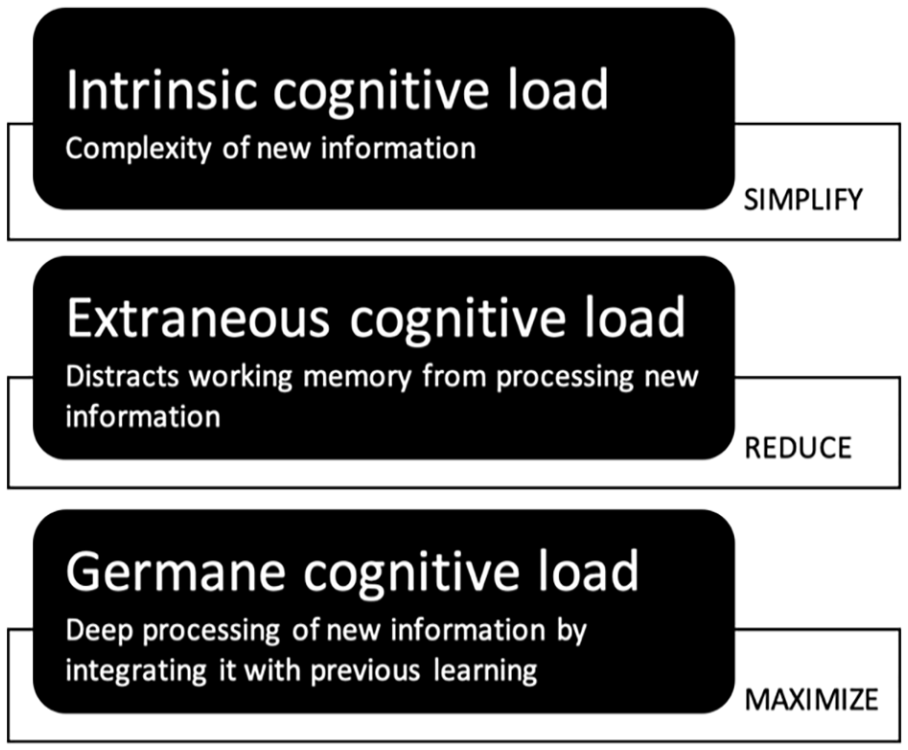
Three Types of Cognitive Load According to Cognitive Load Theory (Sweller et al., 1998).
Students identified with EBD have a limited ability to manage their impulses and behaviors, likely associated with reduced executive function and a lower tolerance for cognitive overload (Cumming et al., 2019). This may contribute to negative outcomes such as academic failure, incarceration, and unemployment (Bradley et al., 2008). Studies have demonstrated that reducing cognitive load through instructional design strategies—providing clear explanations, organizing information, and modeling, for example—can improve learning outcomes (e.g., Gathercole & Alloway, 2007).
Stress and Cognitive Default
Teachers report having twice the rate of job-related stress than most working adults (Steiner et al., 2022). Teachers who are stressed and/or new to the field tend to revert to cognitive default (i.e., older, more reinforced, more comfortable knowledge and skills) rather than using newer, often more effective, approaches (Clark, 2001) because doing so takes less effort (Feldon, 2007). In other words, the cognitive default is a lower cognitive load. Preparing preservice teachers in effective, research- or evidence-based writing instruction is best achieved with structured, purposeful practice of those instructional skills. Practice increases the likelihood teachers will default to effective writing instruction rather than little or no writing instruction, which is the state of the field today (see Brindle et al., 2016; Graham, 2019). Developing expertise takes time, so we encourage new teachers to try some of the suggestions, but not all at once. Then, across time, incorporate more, refining your practice in response to your own cognitive load, student needs, and professional aspirations.
This is especially important for teachers of students with EBD. The top two sources of teacher stress in 2022 were addressing student learning loss due to the pandemic and managing student behavior (Steiner et al., 2022). Thus, teachers of students with EBD need to provide research- or evidence-based writing instruction in tandem with behavioral strategies to address known and predictable behavioral challenges that arise when these students are presented with writing tasks. Such challenges may include (a) dysregulation (e.g., Sanders et al., 2021), (b) fatigue and stamina issues (e.g., Pitzel et al., 2023), and (c) missing writing instruction due to inappropriate behaviors (e.g., Michael, 2022). Persistent practice in research- or evidence-based instruction and behavior management techniques will aid teachers in resisting a return to the cognitive default.
Writing Development
Teachers need to know that writing development is complex (for a quick explanation, watch the first few minutes of this video, Writing Matters—shorturl.at/pIMQ3). Although we do know writing develops across a lifetime, there is not yet agreement on exactly how writing develops across that lifespan. Individual history, experience, context, community, language(s), family, responsibilities, and more shape the writer and their writing skills. Writing requires the development and integration of at least five domains: (a) sensorimotor, (b) language, (c) cognitive (e.g., memory), (d) social-emotional (e.g., desire to communicate, audience awareness), and (e) attention/executive/self-regulatory functions, all of which are affected by development in other areas (e.g., speech, hearing, reading, language, identity, emotions; Bazerman, 2016) and differences in biology, culture, politics, society, and linguistics (Bazerman et al., 2017). Thus, writing should be taught with and used throughout instruction across content areas.
While there is a relationship between oral and written language, research shows producing written text is significantly more difficult than producing oral narratives for students (Gillam & Johnston, 1992). Moreover, writing requires more cognitive resources (Bourdin & Fayol, 2000). For teachers of students with EBD, it is important to consider the fragmented educational experiences and gaps in foundational skills these students may have experienced across the above domains. Any skill gap may affect writing instruction and student outcomes. Teachers can create a writing community and design writing instruction that is nearly fail-safe for all students by making the learning accessible, achievable, and scalable across time.
Ingredients for Effective Writing Instruction
Now with a clear understanding of the importance of writing and the challenges students face while writing, we look at how to implement effective writing instruction. In the next section, we discuss practical approaches to help teachers create engaging and successful writing lessons for students with EBD.
Time
Teaching writing and learning to write well requires time. There is no shortcut. Teachers can work with administrators to ensure class schedules include dedicated time to provide explicit writing instruction (not just time for students to write), in addition to instruction for handwriting and keyboarding (when appropriate), spelling, grammar, and reading. Simply put, “Quality writing instruction cannot occur if sufficient time is not available” (Graham, 2019, p. 287). The investment in writing instruction is worthwhile as writing is a gatekeeper skill in life. Also, many studies demonstrate that increases in writing achievement also improve reading achievement (Graham & Hebert, 2010).
Explicit Instruction
Writing well requires multiple specialized skills which Graham (2019) classifies as (a) purposes and features of text types; (b) transcription (e.g., spelling, handwriting, keyboarding); (c) sentence construction (e.g., capitalization, punctuation, clauses); (d) writing processes (planning, organizing, revising); (e) writing tool use (e.g., pencil, text app); and (f) audience awareness. Writing instruction, thus, needs to address all these skills. However, it is not possible, or effective, to address all these at once. Writing instruction needs to be planned, prioritized, and explicit. Researchers have found students with EBD benefit most from explicit instruction when learning new information (Gunter et al., 2000).
Explicit instruction is an approach to teaching in which the teacher makes no assumptions about preexisting student knowledge and skills. It engages active student participation, explains thoroughly and models using the knowledge or skill, and emphasizes progress through small steps controlled through frequent checks for understanding and adequate guided practice (see Table 1). Begin by teaching essential skills, strategies, vocabulary terms, concepts, and rules that align with student instructional needs (Archer & Hughes, 2011). Sequence easier skills before teaching more challenging ones. Prioritize high-frequency skills over those less frequently used. Use observation and formative assessment to ensure mastery of prerequisites before introducing a new skill. Carefully separate similar skills and strategies that may cause confusion for students (Archer & Hughes, 2011).
Elements of Explicit Instruction Applied to Writing Instruction.
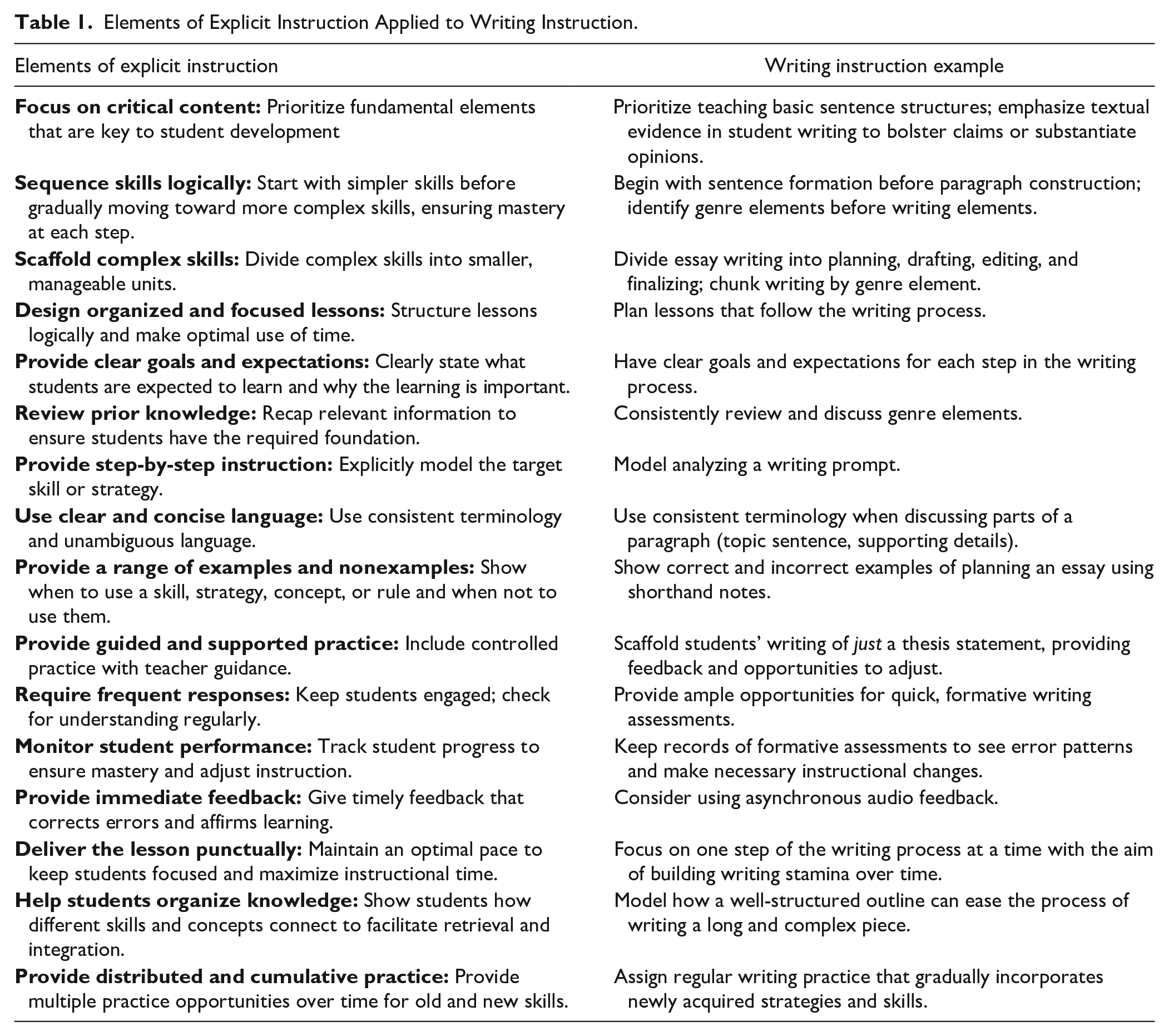
Students with EBD benefit from guided practice that includes sufficient guidance and supports during instruction (i.e., scaffolding) which are systematically faded when students demonstrate they are ready to be more independent. Such scaffolds can be added back if needed. It is also important to appropriately engage and motivate students with EBD to ensure they know they will be successful, which helps prevent behavioral problems from arising (Landrum et al., 2018). A lack of engagement can lead to a lack of structure and sustained attention to understand the content (Hudson et al., 2012).
Given the complexity of writing, it is imperative that teachers break down the knowledge and skills into manageable chunks for themselves and their students. Also, researchers recognize explicit instruction as an essential instructional method for increasing educational outcomes for students with EBD (Benner et al., 2013; Morris et al., 2021). Later, we introduce an evidence-based writing instruction framework that uses explicit instruction and controls the cognitive load for instructor and learner.
Advocate for Research- or Evidence-Based Instruction
Not all teachers have input on the writing curriculum or programs used in their school. A quick search through any major language arts textbook will reveal a plethora of writing activities covering all the learning standards, but textbooks are not designed for teaching writing effectively. Textbooks rapidly introduce new genres (e.g., persuasive, informational, narrative) and forms (e.g., essay, letter, speech, constructed response) of writing, not giving students the opportunity to master one genre before requiring them to move on to another. It is common for teachers and textbooks to include a wide range of writing genres, activities, and forms but typically engage with each only once or twice a year. For students with EBD, writing instruction needs to be taught to mastery, often requiring repeated instruction, with allowances made for additional supported and then independent practice before introducing newer and more complex skills.
There are many writing instruction programs available. However, rarely are they research- or evidence-based. Given the limited time teachers have, the best choice is to use those precious instructional minutes to provide research- or evidence-based writing instruction, such as suggested by What Works Clearinghouse, that gives students adequate time to master a writing genre before moving on to another (see Table 2 for resources).
Resources to Support Writing Instruction.
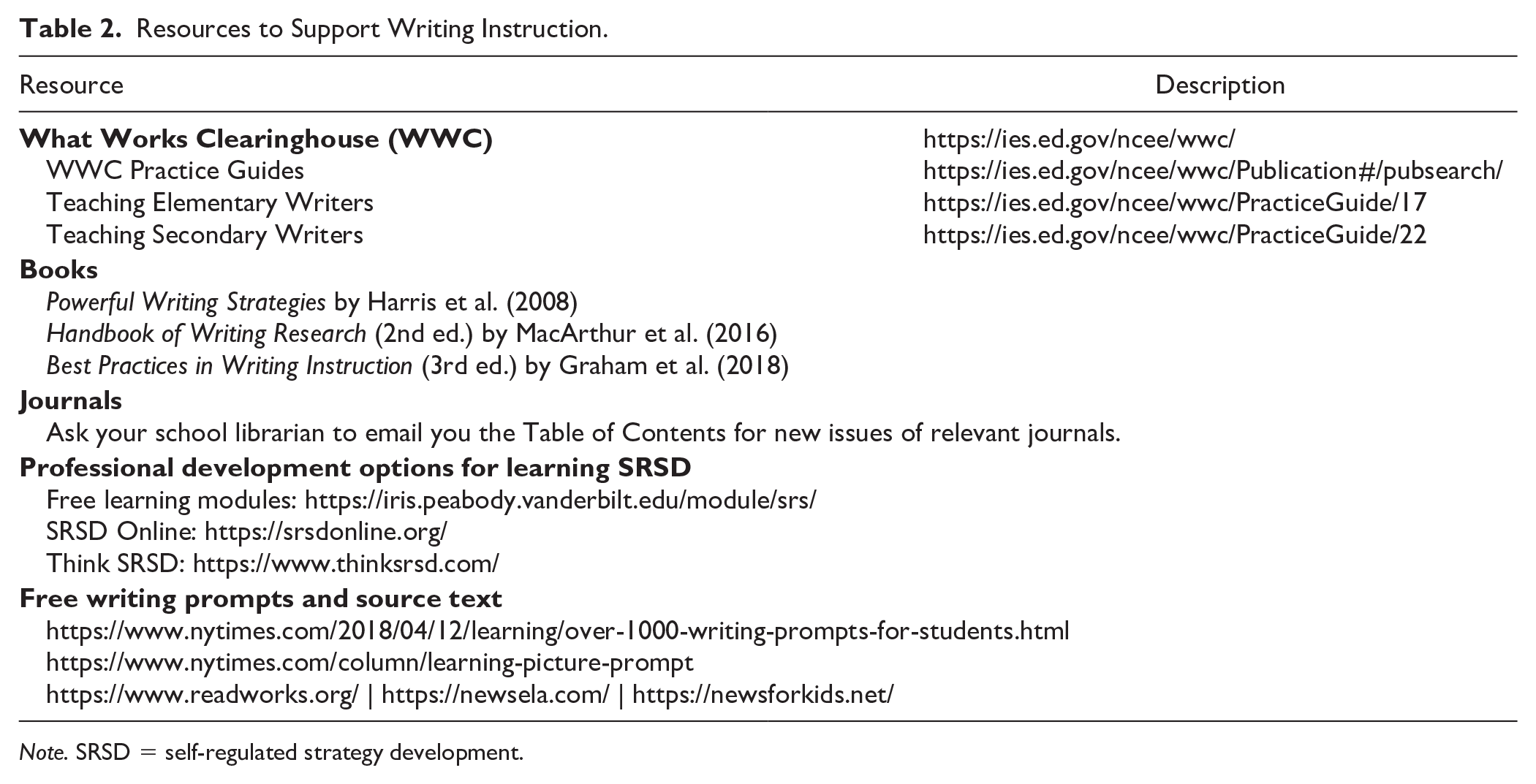
Note. SRSD = self-regulated strategy development.
Dialogue and Discussion
Speaking and writing are both expressive forms of communication. Encouraging students to discuss topics gives them the opportunity to try out thoughts, rumble with ideas, and think deeply about key topics (Winn & Johnson, 2011). When engaging in persuasive or argumentative writing, discussion can be an important step in the process because it is less demanding to consider and test different perspectives orally than in writing. Given that students with EBD often have deficits in expressive forms of communication, additional practice in listening, speaking, and writing may lead to improved outcomes.
When guiding discussions and asking questions, teachers should frontload questions with necessary information to increase the likelihood that students, especially those with EBD, will be successful in answering accurately, increasing opportunities for teachers to provide specific praise. Including student voice, ideas, and experiences in the classroom discourse helps students link one form of expression to the other (Winn & Johnson, 2011). Also, it can build normalcy around discussing topics from multiple perspectives. Furthermore, writing is a social activity, and all students benefit from interacting with other writers (see Writer[s]-Within-Community Model by Graham, 2018).
Evidence-Based Instruction: Self-Regulated Strategy Development
If you are looking for Step 1 of how to teach writing, this is it. Self-regulated strategy development (SRSD), developed by Dr. Karen Harris, combines explicit writing instruction with self-regulation strategies: goal setting, self-instruction, self-monitoring, and self-reinforcement. Research shows instruction that includes explicit instruction and self-regulation skills often results in positive academic and behavioral outcomes (Mooney et al., 2005). Multiple studies of SRSD have shown it is effective at improving writing outcomes for students with EBD (Ennis & Jolivette, 2014; Losinski et al., 2014).
Self-regulated strategy development is an evidence-based practice and the SRSD framework can be used to teach any genre or form of writing. All instruction follows the same flexible, recursive stages, summarized below. Lessons are organized to provide instruction and practice to mastery in one genre before moving to another genre or variation of form. The SRSD framework for writing helps students develop the necessary skills to become strong, self-regulated writers (Harris et al., 2008).
Self-regulated strategy development is not a complete writing curriculum. It is not scripted. It does not include instruction for all of the learning standards associated with writing. However, it is a solid foundation for both teachers and students and has been effectively used with students with EBD (Losinski et al., 2014) across ages and settings (e.g., Harris et al., 2022). It is free, evidence-based, and with a bit of preparation, easy to use in the classroom (McKeown et al., 2018). Moreover, students appreciate it because they learn to be successful writers. Students with EBD have consistently rated it as a socially valid practice (Ennis & Jolivette, 2014). Below are the stages of SRSD.
Develop background knowledge
The first stage involves activating prior knowledge and introducing new information that is necessary for the upcoming writing task. This often involves activities such as previewing content or genre-specific vocabulary. In this stage, teachers can discuss genre and remind students of books the class has read or movies seen that are in the target genre. Teachers also introduce and discuss the importance of self-regulation, which is beneficial to support the behavioral needs of students with EBD.
Discuss it
The second stage involves the teacher and students engaging in a dialogue about writing. The teacher guides students in discussing the importance of writing, including information about specific genre elements. The teacher introduces mnemonics to help students memorize each step of the writing process and the important genre elements. A focus should be placed on how the use of the strategies can lead to higher levels of success and mastery as well as helping students generalize the strategies to other contexts. Linking writing to other educational and lifelong areas may provide students with EBD motivation to engage in the writing task as they can see links to other tasks.
In this stage, teachers share a written example response like what most students will be expected to produce at the end of the instructional cycle, an attainable example. Teachers lead a discussion on what makes the response good and what genre elements are present (based on the prior discussion of genre elements).
Many teachers choose to model taking notes to “backward plan” the model essay. To do this, they create a graphic organizer listing the necessary genre elements. Then, the class reads the model text one sentence at a time, discusses which genre element the sentence might be, and chooses a few representative words to make a note on the graphic organizer. Emphasizing the need to take brief notes when planning to write is important. Writing lengthy notes or complete sentences on the plan spends energy that is best saved for the draft and beyond. Some students with EBD may benefit from taking on leadership roles during instruction as it gives them a specific task with public responsibility and attention. For instance, a student can be the note taker during this activity.
Model it
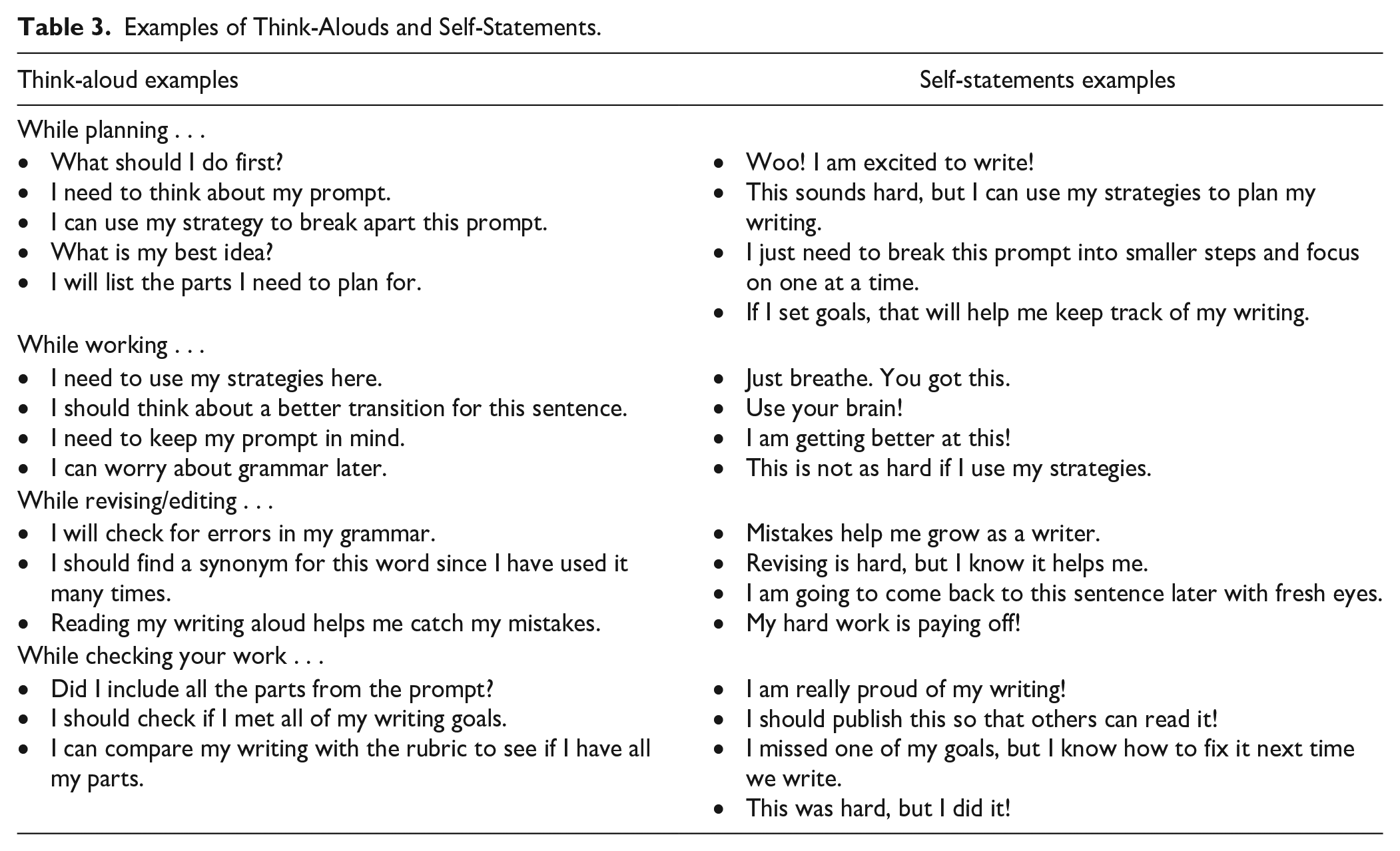
In the third stage, the teacher explicitly models completing a writing task using all strategy components. The teacher uses think-alouds to demonstrate the thinking, decision-making, and other cognitive processes needed to write. Think-alouds can include statements such as, “I need to think about what I want to say before I start writing,” or “I need to revise this paragraph to make sure I am communicating what I want to say.” Teachers also use self-statements to model positive self-regulatory behaviors such as self-evaluation and coping with frustration. Possible self-statements include, “This is hard, but I can do hard things!” and “This essay is getting good. I am getting better with my writing.” Self-statements promote motivation and persistence while writing.
When modeling, the teacher should be authentic and display enthusiasm for writing, while also modeling the difficulties faced while writing. Think-alouds, self-statements, and instructions should be tailored to fit the student context, modeling specific frustrations they may encounter (see Table 3 for examples). Teachers should model multiple times, beginning by completing nearly all the work themselves while students watch and contribute occasionally. Then, they can invite collaboration from students in subsequent models.
Examples of Think-Alouds and Self-Statements.
Some collaboration from students is necessary to maintain attention, but the teacher should control the writing process at first and let students contribute content ideas. Teachers also must model self-evaluation and future goal setting at the conclusion of the writing process. To support students with EBD, consider providing leadership opportunities. For example, at their desk, on the board, or other public location (whatever may be motivating), students can tally the number of self-statements used or tally self-statements by category.
At this stage, teachers explicitly model each step they expect students to take in the writing process. This includes analyzing the writing directions, setting goals, using notes to plan, drafting, self-evaluating, revising, editing, and publishing. Teachers also emphasize self-regulation by modeling the struggles and successes of writing. The teacher should explicitly and actively model writing each word of the plan, the draft, and the final draft live in front of students across multiple class sessions.
While they may rehearse, it is ineffective (and arguably unfair) to copy something prewritten. After all, students do not have the same benefit and it is important for students to see that writing is difficult, that good writers make mistakes, and that no one writes perfectly without spending the time and effort to make it so. We encourage teachers to plan difficulties and mistakes their students are likely to experience. Then, they can model for students how to recognize the issue and overcome it.
For example, students with EBD often exhibit challenging behaviors during instruction which disrupts their self-regulatory skills (Ennis et al., 2014, 2019). This, in turn, negatively affects their writing performance and self-efficacy which decreases their motivation to engage in current and future writing instruction and tasks. By modeling self-regulation of emotions and behaviors, teachers give students an idea of how to participate in the learning process. This is an established practice in instruction for students with EBD (Sanders et al., 2021).
Some teachers may be uncomfortable making mistakes. We would like to invite all to consider acknowledging the discomfort and then do the uncomfortable task anyway because, like students, we, too, can do hard things. Modeling the struggle, acknowledging writing is hard, and modeling how to overcome the struggle makes writing accessible to students and gives them permission to be challenged while still knowing there is a pathway to success. For students needing a leadership opportunity, teachers can cross out items on the plan as the teacher creates sentences from the notes. Crossing out notes as they are used and finding the next item is often ignored, so asking a student to perform this task can help students to remember the process.
Memorize it
The fourth stage involves the teacher assessing each student’s memory of the processes and components they have been learning, which are often associated with mnemonics. Mnemonics can be used for analyzing the writing task (e.g., TAPP = Topic, Audience, Purpose, Parameters), the writing process (e.g., POW = Pick an idea/apart the prompt, Organize my notes, Write and say more), genre elements (e.g., TREE = Topic/Thesis; R = Reason/Response; E = Elaboration, Example, Explanation, Evidence; E = Ending/Examine your work), revision steps (e.g., ROAD = Replace, Organize, Add, Delete), and editing (e.g., GAME = Grammar, Acronyms, Mechanics, Error-Free). There are many established mnemonics, but the best mnemonic is one that is used repeatedly across the school year and, preferably, across grades and subject areas.
Students will be learning the mnemonics throughout the stages, and at this point, students should be able to recite the mnemonics with ease and explain the meaning and importance of each mnemonic. It is important for students to memorize the mnemonics before attempting supported or independent writing practice. This is particularly important for students with learning and behavioral difficulties as it will lower the cognitive demand when writing in later stages and lessen writing frustration. In addition to memorizing the mnemonics, it is appropriate to ask students to memorize some self-regulatory statements that they can use when beginning their own practice. Knowing how to support and encourage themselves is especially important for students with EBD because they have difficulty with self-regulation.
Memorizing processes and standard elements helps to reduce the cognitive load when writing, freeing up working memory for thinking of good ideas, formulating effective sentences, and other creative acts. Memorizing is a way to put the mechanical aspects of writing on autopilot. To increase engagement, students can lead small groups in rehearsing and testing memorization of the mnemonics.
Support it
The fifth stage involves guided release of writing responsibility from teacher to student. Teachers usually select pairs or small groups to work together as they begin to use the strategies, genre knowledge, and self-regulation skills they have been learning. Teachers guide students as needed and may utilize collaborative writing with individuals or groups of students as needed to support success. The criteria for success gradually increase until students are able to meet all writing goals. Students with EBD have difficulty managing their behavior when working with peers or independently. By interacting with students during this time, teachers can provide support for both writing and self-regulation. It is also important for teachers to chunk the assignments and to set only one or two reasonable goals for students with EBD to ensure they can achieve the goals with a reasonable amount of effort.
Independent performance
In the sixth stage, students take responsibility and write independently. They continue to use the strategies to plan, write, and evaluate their writing. Goal setting and monitoring should continue to be utilized. Teachers should encourage students to continue using self-regulatory statements privately while independently writing. Teachers need to be mindful of moving students with EBD forward before they are ready as this can result in shutdown or resistance to future writing tasks. If students are moved to this stage but are not yet ready, they can move back a stage or two until ready to move forward again. Each of the stages can be repeated as many times as needed to reach mastery.
Writing Genres
In school, we are expected to engage with three genres: (a) informational, (b) opinion/persuasive/argumentative, and (c) narrative. Research indicates that it takes approximately 8 to 12 weeks to learn a single genre using evidence-based writing instruction (see Harris et al., 2022; McKeown et al., 2023), that student writing quality varies between genres, and writing well in one genre does not transfer to other genres (Graham et al., 2011).
So, what writing genre should we teach first? The commonly held belief is that we should start with narrative, personal narrative specifically, because students love stories, they know their own stories, and it is easier to write about what we know. Yet we have found that students and teachers find opinion or persuasive writing is the best and easiest place to start (Harris et al., 2012; McKeown et al., 2018, 2023). A simple opinion paper needs two elements (i.e., opinion, reason), while a simple personal narrative needs four or five elements (e.g., main character, setting, at least two plot points, conclusion).
Students have opinions and they have experience trying to convince others (e.g., peers to play a certain game, parents to make a certain purchase). Once mastered, it is easier and faster to learn subsequent genres and variations (e.g., constructed response, informational). For instance, the only difference between a simple persuasive paragraph and a simple informational paragraph is there is no need to try to persuade the audience in the informational paragraph.
Audience and Authenticity
Writing for a specific audience helps students develop an understanding of the purpose and tone of their writing. This is supported by writing process theories which highlight the importance of considering the needs and expectations of the audience when composing written texts (e.g., Bereiter & Scardamalia, 1987; Flower & Hayes, 1981). Research shows students most often write to their own teacher (Applebee & Langer, 2011). Students need to practice writing to a variety of audiences (Graham et al., 2017). Teachers can cultivate audience awareness by talking about and then modeling how we might change arguments, reasons, evidence, vocabulary, or tone for different audiences. Teachers can use the same writing prompt and only change the audience (e.g., younger students, peers, local government officials) as an exercise to practice audience awareness. Be aware, though, that students need explicit instruction in writing for different purposes and in different forms as they do not generalize across writing tasks without instruction (Harris et al., 2009; Santangelo & Olinghouse, 2009).
An authentic writing task is a writing activity that mirrors and/or will transfer to real-world writing situations and requires students to use writing skills and strategies in meaningful ways. It involves writing for a genuine audience, with a clear purpose and context, and often involves using a variety of genres and forms. Authentic writing tasks can include writing letters, emails, stories, reports, persuasive essays, and other types of writing that students may encounter in their daily lives or future careers. Authentic writing tasks can incorporate diverse perspectives, cultures, and experiences, which may help students develop an understanding and appreciation for diversity in writing. This promotes inclusivity and cultural awareness among students, preparing them to be effective communicators in a global society (Gay, 2010).
Creating Writing Tasks
Teachers can create their own writing tasks. Writing tasks should be relevant, interesting, and match a reasonable set of expectations for students. Tasks can be individualized for students to decrease or increase complexity by altering the prompt components. Figure 2 provides guidance on creating and adapting writing prompts. Keep in mind that students with EBD prefer having a choice of writing task (Ennis et al., 2017; Michael, 2022). Students also need practice responding to required tasks, which is more common in both education- and job-related writing. It is also generally advisable to design writing tasks to include the writing process, either simplified (e.g., plan and draft as for a timed test) or complete (e.g., brainstorm, plan, draft, revise, edit, publish). This ensures even long, complex writing assignments have smaller, manageable steps to prevent students, including students with EBD, from being overwhelmed.
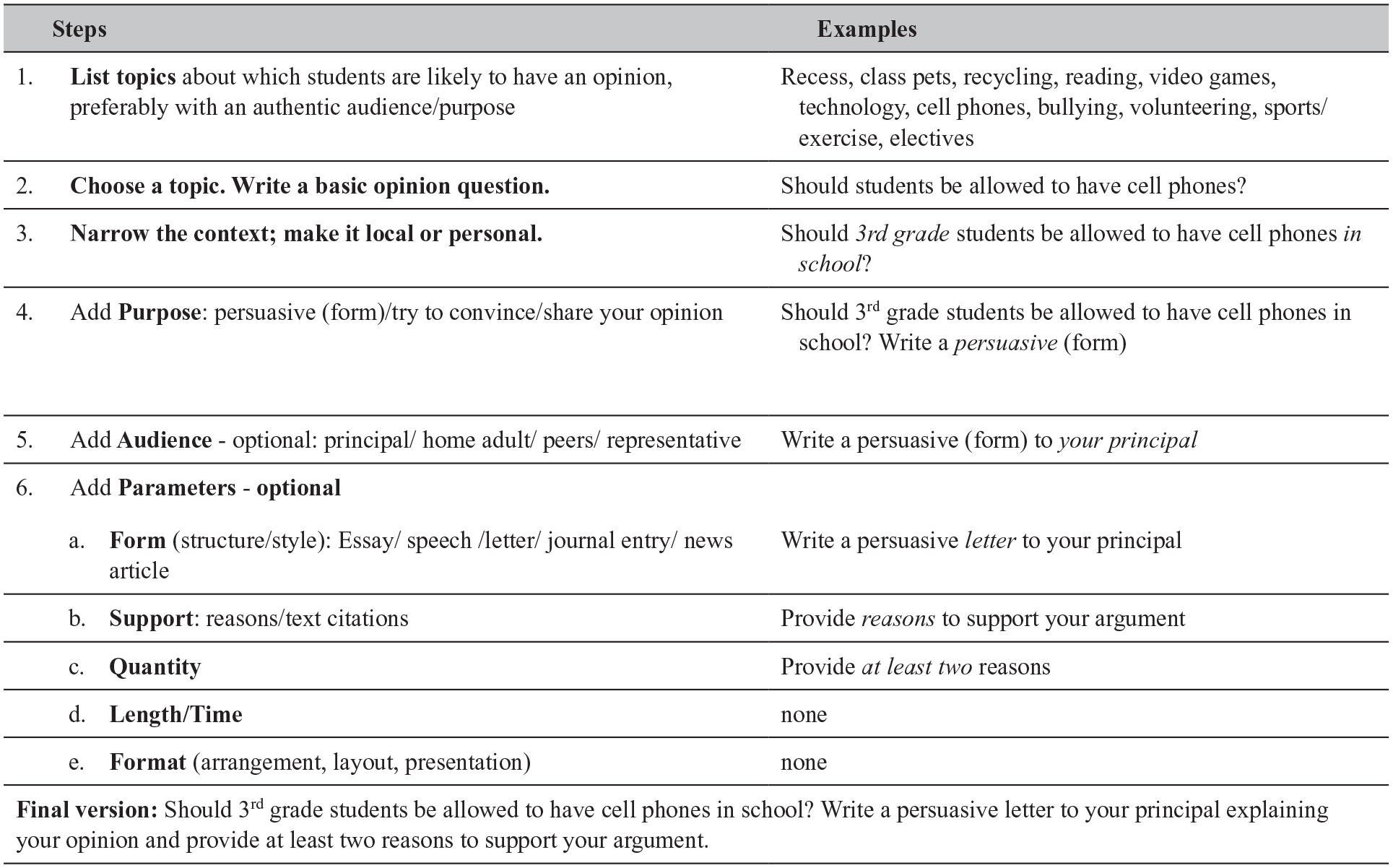
Developing Writing Tasks: Persuasive Examples.
Writing Task Analysis
Researchers have shown that students benefit from learning strategies to analyze the writing task before they write. This can be beneficial for any set of directions and is especially important for high-stakes writing tasks such as state standardized tests. For example, students who earn a score of one or zero on the state writing assessment do so most often because they do not respond to the prompt or all parts of the prompt (McKeown et al., 2023). Providing students with a systematic approach to analyzing the writing task can increase the likelihood that students plan their writing in response to all expectations in the task.
In a recent randomized controlled trial, students in the treatment group who were taught a strategy for analyzing the writing task outperformed those in the control group on addressing all parts of the prompt in their writing, with an effect size of 1.87, a large effect (McKeown et al., 2023). This indicates it may be impactful to teach students to systematically analyze the writing task before planning and writing. Students with EBD may benefit from task analysis and strategies to support their self-regulation.
The mnemonic we tested for analyzing the writing task is TAPP. T is the topic, A is the audience, P is the purpose, and the last P is parameters. We underline the topic—what students are being asked to write about. Often, there are multiple components in the topic and it can be helpful to double underline individual components. We star the audience—the reader. Often the audience is not provided. Students should be taught that if not given, the audience is someone they do not know, but who knows a lot about writing (and the topic). This encourages students to include detail and avoid assumptions. It may also allow students to have higher expectations than they would for someone known to them. Teachers in our studies have called this audience member Ms. Know-it-all (Ms. KIA), but any name will work (preferably short, so it is quick and easy to note in the plan).
Purpose is the reason for writing, the genre—to persuade, inform, or entertain. We circle the purpose. To persuade, we take a position and try to convince the audience. To inform, we provide objective responses, facts, and/or explanations without the expectation to change someone’s mind. To entertain, we tell a story. Parameters are the technical and practical guidelines of the task. We put parentheses around the parameters. Parameters may specify the form, length of the text, time limit, format, text citations, or other requirements. Figure 3 is an example of a writing prompt that has been “TAPPed.”

An Example of Using Topic, Audience, Purpose, and Parameters to Analyze a Writing Task.
To teach students how to analyze the writing task, teachers can begin by sharing and discussing many writing prompts. Then, the teacher can introduce the mnemonic, discuss, and explain each of the steps. Next, the teacher can model using the mnemonic to analyze a writing task, thinking aloud about the task while modeling uncertainty as well as clarity to reflect student needs. After the teacher models analyzing a prompt, students may be ready to help the teacher or work in pairs to analyze a different prompt. Scaffolds are released as students demonstrate their proficiency in analysis of writing.
Graphic Organizers
Using graphic organizers can be helpful to students. Graphic organizers extend the working memory by adding a graphic to temporarily hold and organize ideas, but there are caveats. Introducing a new graphic organizer for singular purposes can create confusion and barriers to more generalized learning. Thus, teachers should choose one to three graphic organizers that serve multiple writing purposes across the year (and beyond). Explicitly teach students when and how to use the organizer. After students are comfortable with the organizer, they need to be taught how to create their own graphic so they do not rely on the external support. Use of graphic organizers needs to be faded out, eventually.
Learning Standards
Teachers are responsible for teaching the learning standards for their grade. A reality rarely stated is that it is not generally possible to effectively teach all the learning standards in a single school year. That is why the term “cover” is used when discussing learning standards. So, teachers can work with their curriculum specialists or team leaders to identify the non-negotiable writing standards and prioritize those for explicit instruction.
Assessing Writing
No matter whether one teaches students with EBD or not, assessing writing should be an act of instruction—assessment for learning, not for grading. When teachers think about assessing writing, most often, we think about scoring a stack of essays for dozens of skills with an end goal of producing a grade. However, assessing writing can be efficient and approached in a variety of ways that guide learning and inform instruction.
Teachers can assess the prerequisite or supporting knowledge and skills of the writing task (e.g., knowing the purpose for writing, essential genre characteristics, how to analyze a writing task, organizing a writing plan). In fact, evaluating each step of the writing process can be beneficial by ensuring students use the steps of the writing process to keep the cognitive load of writing at manageable levels. For instance, a common occurrence is that students will create a plan for writing because their teacher requires them to but never refer to the plan when writing the draft. An observation-based formative assessment during drafting can help to identify those needing further support and allow teachers to nudge students to use their writing plans.
It is also good assessment practice to separate evaluation of content knowledge and skill from work habits such as effort, timeliness, neatness, and response to feedback (see McKeown, 2019). Because students with EBD need support for tasks requiring extensive executive function skills, work habits are affected. Separating grades for the writing standards from grades for work habits gives teachers and students a clearer picture of where students are successful and the instructional needs for improvement.
Rubrics
Assessing written products is made easier when we have clear, specific expectations such as a checklist or rubric. Teachers can create a checklist of basic elements and expectations related to the writing assignment. It is best to first focus primarily on the content, organization, and genre elements rather than technical features. Teachers can build rubrics based on their state’s learning standards, specific expectations of an assignment, or requirements of a target writing genre. Rubrics can be used flexibly. For example, instead of using the rubric scale, teachers can score the characteristics/attributes as either present or not.
Teachers also can focus on one or two characteristics on a rubric. Not all must be evaluated for every piece of writing every time. Use the rubrics to serve the instructional task, to communicate how to improve, and to see, across students, where instruction may need to be expanded or refined. Rubrics should not be the only form of assessment used, though. (For a critique of rubrics, see Howe & Correnti, 2020). Feedback and self-assessment also are impactful practices. Regardless of what assessment tools teachers use, students may benefit most when they are expected to act on the feedback, especially requiring them to revise based on the feedback and resubmit (for an increased grade). Figure 4 is an example of a persuasive elements rubric teachers could adapt to suit the instructional needs. In this example, both a binary (0 or 1) and a quality scale (0–3) are included as options so teachers can choose the preferred level of specificity for the task.
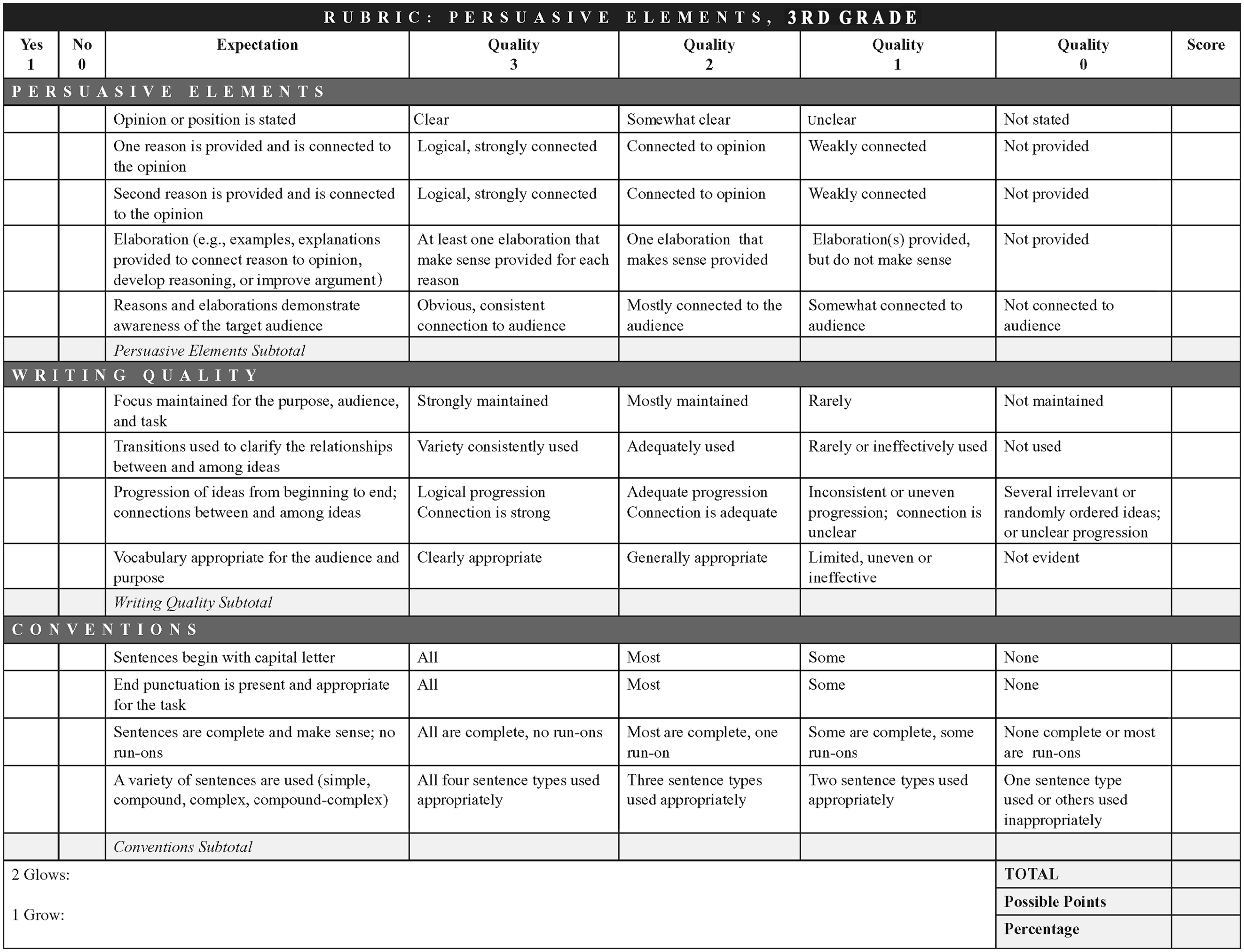
An Example of a Persuasive Elements Rubric.
When creating rubrics from scratch, please note that all rubrics should contain a zero value to distinguish between “nothing” (0) and something of poor quality (1) as instruction to address these different outcomes would vary. The quality scale can be any range of scores teachers prefer. The larger the range, the longer it takes to score, but the more sensitive the rubric will be to small improvements. Even if teachers design a rubric with a larger scale, they can choose to use only part of the scale for a given task. For instance, teachers could use the scores of 0, 3, and 5 on a 0 to 5 scale or, if evaluating a new skill, use only scores of 0, 1, and 2. In addition, teachers can choose to focus only on specific characteristics/attributes such as a thesis statement or evaluating the quality of text evidence to support a claim. Not all characteristics/attributes need to be evaluated for every writing task. Let the assessment reflect the instruction, learning standard(s), and learning needs.
Adherence to Writing Task
Earlier, we explained the importance of teaching students to systematically analyze the writing task. Figure 5 is an example of a sensitive rubric to determine if students respond to all parts of the prompt in their written response to the task. The example is based on the prompt: “Should 3rd grade students be allowed to have cell phones in school? Write a persuasive letter to your principal explaining your opinion and provide at least two reasons to support your argument.” In this evaluation, teachers are not considering the quality of the response, only if students addressed all parts of the prompt. Teachers can choose to simplify both the writing task and the corresponding checklist to meet the needs of instruction and individual students and then complicate the evaluation and feedback as students grow in their skills.
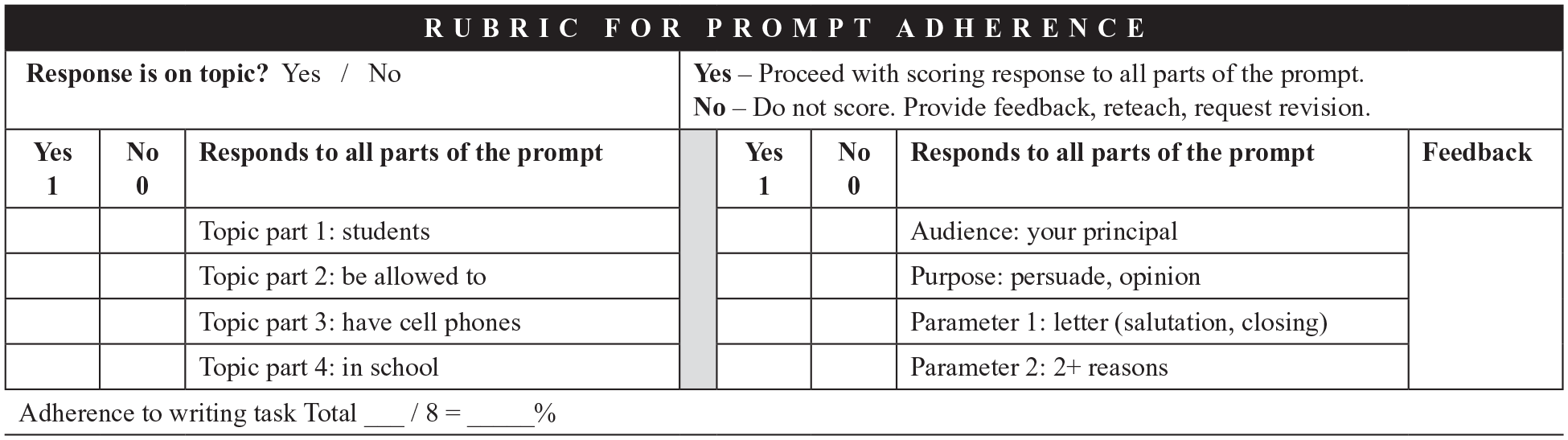
An Example of the Adherence to Writing Task Rubric.
Feedback
Providing feedback on writing is a key component of writing instruction and assessment. Formative writing assessments that include teachers giving feedback to students improve student writing quality (Graham et al., 2015). To be effective, teachers must provide timely and individualized feedback focused on not only the final writing product but also the whole of the writing process (Graham et al., 2012). Adult feedback, peer feedback, and self-assessment are effective methods of providing feedback for student writing (Graham et al., 2012, 2015).
Adult feedback
When looking at the types of writing feedback that are effective, teachers providing individual feedback to students yield some of the best results (Graham et al., 2015). Even though individualized feedback, such as one-on-one writing conferences, is known to positively affect student writing outcomes, teachers often struggle with finding the time to provide this time-consuming feedback (Graham et al., 2012). Technology continues to dominate the classroom and the writing classroom is no different.
McKeown et al. (2015, 2020) studied the use of asynchronous audio feedback using an iPad app and found it to be an effective way for teachers to provide timely and individualized feedback. In this study, students with EBD demonstrated improvements in overall writing quality and stated they enjoyed receiving audio feedback, especially because it was private and they could replay and respond in their own time. Written feedback is also helpful. Teachers should prioritize feedback on the most important aspects of the writing task and avoid spending time and energy on copyediting, which can be done later when the ideas are organized, focused, and clearly communicated. For a teacher-friendly description of using audio feedback, see FitzPatrick and McKeown (2020).
Peer feedback
Peer feedback and assistance are often used during writing instruction and are shown to have a positive impact on student writing quality (Graham et al., 2012, 2015; Graham & Perin, 2007). Peer assistance can be effective throughout the writing process, including during planning, drafting, and revising (Graham & Perin, 2007). For peer assistance to be effective, students need to be taught how to provide an effective peer review and then devote time to practice those procedures prior to using them (MacArthur, 2016). Peer-mediated interventions (e.g., tutoring, assessment, modeling, reinforcement) all have an evidence base to support their use with students with EBD (Ryan et al., 2008).
Self-assessment
Self-assessment and revision are important parts of the writing process. When teachers provide instruction in how to self-assess writing, student writing quality increases (Graham et al., 2015). Instruction in self-assessment should include explicit instruction in the use of rubrics or goal sheets as well as revision strategies. Self-monitoring, self-instruction, and self-evaluation all have an evidence base to support their use with students with EBD (Ryan et al., 2008).
Resources for Learning
There are many resources to help teachers learn to teach writing well. Researchers continue to study what works in writing instruction and teacher preparation. So, it is important to regularly schedule time to stay current with the research. Resources for research- or evidence-based writing instruction can be found in Table 2.
Research syntheses and meta-analyses provide a scientific overview of the evidence available on the effectiveness of an intervention. The magnitude or strength of outcomes is reported as effect sizes, which are easy to understand. A small effect size is around .30, .50 is moderate, and .80 and above is large. Using these guidelines, teachers can read a meta-analysis and quickly see what strategies might work for their students. See Table 4 for meta-analyses related to writing instruction and students with EBD. If teachers do not have access to the reports, writing to the first author of the paper to request a copy may make someone’s day.
Meta-Analyses on Writing.
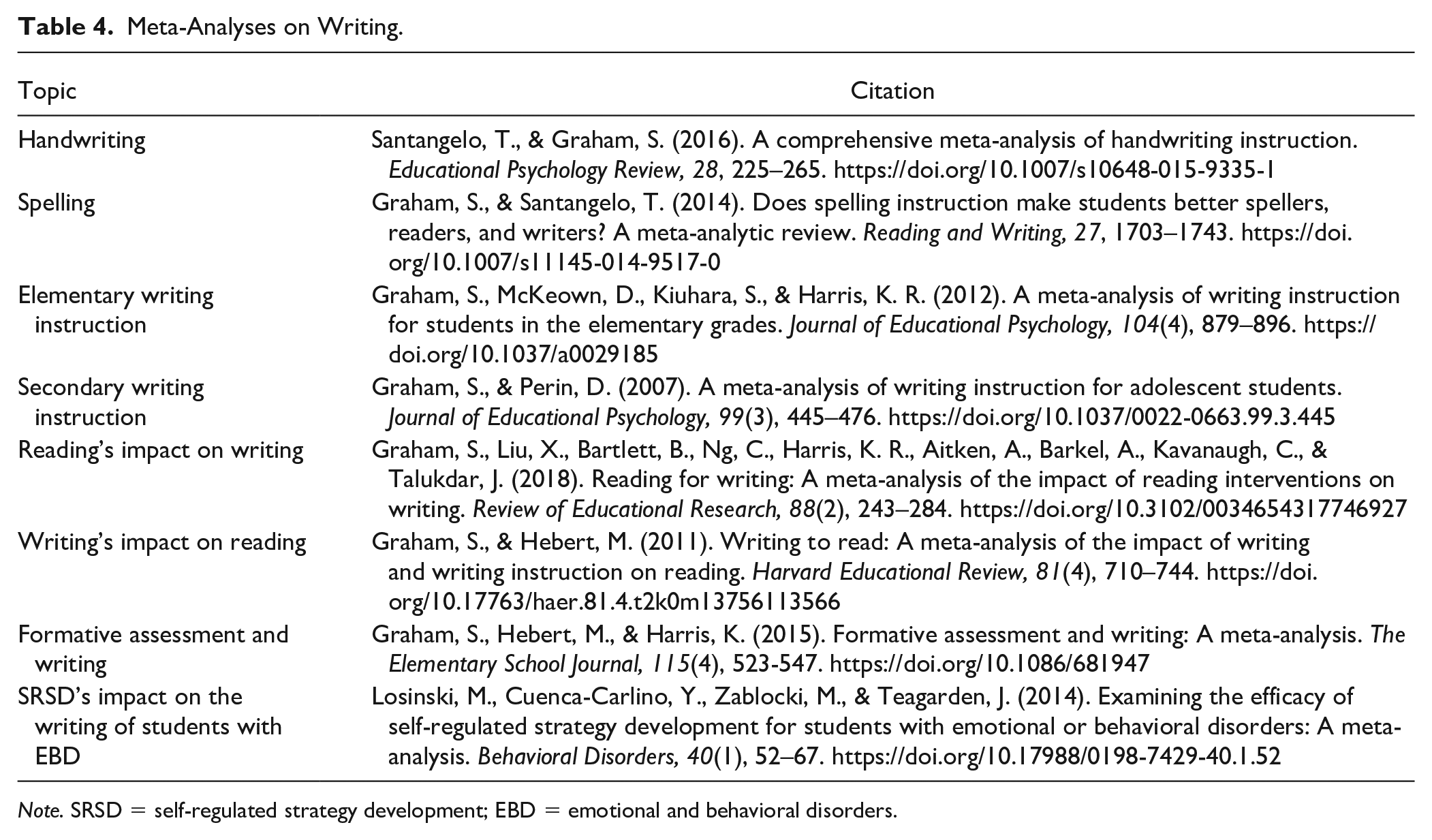
Note. SRSD = self-regulated strategy development; EBD = emotional and behavioral disorders.
Preservice teachers can organize their own learning to be better prepared to teach writing to students with and without EBD. Some recommendations for organizing their learning are the following:
Understand specific needs of students with EBD.
Prioritize learning about effective use of formative assessments.
Learn how to give good, effective feedback in a timely manner.
Establish which technology tools will support your writing instruction.
Become proficient in research- or evidence-based writing instruction.
Conclusion
Learning to teach writing takes time and effort, but it is a rewarding investment in yourself and your future students. Writing is important for school success. It fosters critical thinking, self-awareness, and understanding. If you need a bottom line, though, here it is. Economic mobility in the United States is very low compared with other developed nations and is further constrained by race and geography (e.g., Mazumder, 2022). Increases in literacy increase earnings, economic mobility, and career growth (National Center for Education Statistics, 2002). Writing can change lives, communities, and the world.
Footnotes
Declaration of Conflicting Interests
The author(s) declared no potential conflicts of interest with respect to the research, authorship, and/or publication of this article.
Funding
The author(s) received no financial support for the research, authorship, and/or publication of this article.
