




Abstract
This study examined the effectiveness of using comics to communicate scientific information on COVID-19 vaccine safety to Black Americans. Although the effects of comics on interest, recall, and information sharing intention were not significant compared to expository texts and infographics, comics featuring abstract, racially ambiguous characters facilitated greater learning among participants with lower knowledge of COVID-19 vaccines, as opposed to comics with realistic representations of Black individuals. Furthermore, the effects of comics varied depending on individuals’ interest in comic reading. These findings highlight the potential of comics in science communication, but their design and target audience should be carefully considered.
A vast number of comics and picture stories were circulated across various mainstream news outlets and social media during the COVID-19 pandemic, contributing to what has been called the “visual culture of contagion” (Callender et al., 2020, p. 1061). From January 2019 to April 2021, a team of researchers from the United Kingdom collected more than 15,000 unique comics on Instagram that focused on COVID-19 (Feigenbaum et al., 2022). These comics typically contain only one or a few panels and are designed to translate scientific information into relatable material (Feigenbaum et al., 2022). Notably, it has been found that around 30% of Americans obtain news through comics or memes on social media (Fernandes, 2022). This trend could be particularly pronounced among Black Americans, who are more likely to seek information on visual-based social media platforms (Auxier & Anderson, 2021). For instance, while 49% of Black Americans use Instagram, only 35% of White Americans use it as of 2021 (Auxier & Anderson, 2021).
Moreover, the global comic book market experienced significant growth, with a 12.3% increase in market size from 2019 to 2020 (Fortune Business Insights, 2022). North America, one of the largest comic markets worldwide, has seen an increase in the creation and consumption of comics featuring Black characters (Pineda, 2021). Science comics have taken advantage of some of the bestseller superhero comics, including Black Panther, and diversified the images of scientists with a Black protagonist (Brozo & Mayville, 2012). In addition, the use of Black female comic book characters with an Afrofuturist framing has become popular in the production of science fiction, which has played a role in introducing young Black girls to the Science, Technology, Engineering, and Mathematics (STEM) fields (Gipson, 2017). The growing popularity and influence of Black characters and creators in the comic book industry, especially in science comics, underscores the importance of studying comics as a means of engaging Black communities regarding scientific issues.
Meanwhile, there has been a growing recognition of the potential of comics in communicating scientific information to traditionally marginalized populations. For example, through comic strips featuring diverse characters, the U.S. Centers for Disease Control and Prevention (CDC, 2022a) takes a culturally sensitive approach to explain scientific information related to COVID-19 vaccine safety and makes it relatable to the intended audience. Such comics also offer a unique advantage for scientists to establish their credibility through identifiable characters and storytelling without appearing condescending or overtly displaying titles (Hosler & Boomer, 2011). However, despite their claimed benefits, there is limited empirical evidence on the effectiveness of comics as a tool for science communication (Farinella, 2018). Although science comics are extensively studied in the K-12 settings and in the field of graphic medicine, there is a lack of research on how adults, especially those belong to traditionally marginalized groups, may respond to them (Farinella, 2018).
With these considerations in mind, we conducted an online experiment examining the effects of comic strips with different character designs on Black Americans’ interest, recall, and willingness to share scientific information about COVID-19 vaccine safety. We also compared the effects of comics with that of conventional formats of messaging, including infographics and expository texts (defined as written material that informs, rather than entertains, about a specific topic through descriptions, definitions, and explanations structured by arguments) (Mar et al., 2021). In addition, as comics can require greater cognitive resources than widely assumed (Cohn, 2020), we investigated how existing interest in reading comics might moderate the potential effects of science comics on the emotional, cognitive, and behavioral outcomes. By doing so, we intended to make theoretical contributions to enhance the accessibility of science for racial minority groups using comics and understand how comics can be effectively used in future.
Literature Review
Comics, Narrative Transportation, and its Consequences
Comics have a long history of being a powerful tool for science education (Robin et al., 2021), dating back to the 1940s (Sones, 1944). However, early representations of Black characters in science-related comics were limited, reflecting the lack of diversity among American illustrators at the time (Marqua, 2020). Despite this, Black comic book characters evolved from being sidekicks to becoming major characters in the 1950s (Marqua, 2020). Lion Man, the first Black superhero, was a United Nations-affiliated scientist who defeated White antagonists, inspiring Black artists to create their own Black superheroes and diversify the images of scientists over the decades (Gooden, 2022). In recent years, Black scientists in South Africa have been depicted as Marvel Comics–style superheroes, generating interest among American teachers and children as well (O’Grady, 2021). These initiatives not only highlight the need for increased representation of diversity in science media, but also demonstrate the power of comics to engage Black communities regarding science.
Comics employ a sequential series of images to tell a story, making them a form of visual narrative (Cohn & Magliano, 2020). By using identifiable characters and imaginable plots, comics have the power to elicit empathy and imagination, allowing readers to absorb themselves into the story (McCloud, 1993). For example, when comics depict realistic stories of concerned publics or patients navigating the challenges of the COVID-19 pandemic, they have the potential to heighten readers’ sense of realism and belief in the narrative, leading to an elevated level of narrative transportation (Feigenbaum et al., 2022). Narrative transportation refers to the state of being absorbed in a story, where all mental capacities are focused on events unfolding within the narrative (Green & Brock, 2000). When readers are transported into a story, they become less aware of their surroundings and may experience an immersive experience that affects their attitude and behavior (Green & Brock, 2000; Shen et al., 2015; Vafeiadis et al., 2020). As Neeley et al. (2020) pointed out, “It is that resemblance, the verisimilitude of the story, that matters. It matters so much that even fictional stories can have real-life consequences” (p. 3).
In addition, the Extended Transportation-Imagery Model (ETIM) systematically identified a series of consequences that are associated with narrative transportation by integrating findings from diverse fields of study (Van Laer et al., 2014). Generally, narrative transportation can lead to affective responses (e.g., expressions of feelings), cognitive responses (e.g., information recall), and behavioral intentions (Van Laer et al., 2014). These outcomes are thought to arise from the unique cognitive pathways through which narratives are processed (Van Laer et al., 2014). Specifically, while factual evidence is typically assessed for its accuracy, the legitimacy of a narrative is evaluated based on the verisimilitude of situation-based exemplars, which makes narrative processing more efficient (Dahlstrom, 2014). Consequently, narratives tend to generate greater interest, ease of comprehension, and engagement with the material than nonnarrative content (Dahlstrom, 2014; Mar et al., 2021). Considering these findings, we aim to investigate the potential effects of comics, as a form of visual narrative, on the interest, recall, and intention to share science information.
Notably, as infographics continue to gain popularity as a tool for communicating science to various audiences (Alcíbar, 2018), it is worth examining whether comics can outperform infographics that use visual elements to enhance expository texts (Lazard & Atkinson, 2015). While previous research has suggested that infographics can engage viewers more effectively by integrating images and texts, studies examining the effects of infographics on cognitive and behavioral outcomes have yielded mixed results (Li et al., 2018; Li & Molder, 2021). This study considers infographics and expository texts as two forms of nonnarrative content and compares their impact with that of comics.
Interest
Comics can be a powerful tool for evoking interest in science information through different mechanisms (Harp & Mayer, 1997; McCloud, 1993). For example, when used to explain the cause-and-effect steps involved in a scientific process, comics can demonstrate the structural coherence of scientific explanations, thereby eliciting strong cognitive interest (Harp & Mayer, 1997). In addition, using identifiable characters and relatable plots, comics have been found to be an effective medium for conveying emotional interest in science information (McCloud, 1993). In a study involving 196 Taiwanese adults, Lin et al. (2015) found that the participants recognized the emotional appeal of comics and reported that “comics can induce my interest in learning,” whereas “reading technology information, as usual, is boring” (p. 288). However, the emotional advantage of comics over nonnarratives can be reduced when the content of both formats is equally comprehensible (Lin et al., 2015). For instance, the same study found no significant difference in individuals’ interest in learning scientific facts about nanotechnology after reading comics as opposed to reading booklets (Lin et al., 2015). Therefore, we pose a research question regarding the potential impact of comics on the interest of Black Americans in COVID-19 vaccine safety information:
Information Recall
Comics have been a valuable tool for aiding students in comprehending and retaining complex scientific concepts (Tribull, 2017; Williams, 2008). By integrating narratives and visually oriented materials, comics can effectively address emotional and cognitive barriers among young learners, resulting in enhanced recall and retention of scientific facts (Hutchins & Prelock, 2006; Smith et al., 2021). However, most studies demonstrating the learning benefits of comics have been conducted within formal educational settings (Sones, 1944), using long, illustrative comic books (Hosler & Boomer, 2011), and implementing some form of scaffolding strategies during the experimental observation (Smith et al., 2021). In certain cases, shorter visual narratives in which images only add emotional interest but do not illustrate the content may not yield better recall of scientific information compared to nonnarrative formats (Flemming et al., 2018). For instance, a study involving college students revealed that both visual narratives and nonnarrative texts significantly improved their knowledge of wildlife animals (Flemming et al., 2018). Nonetheless, there was no discernible difference in the impact between visual narratives and nonnarrative texts on participants’ recall of the conveyed information (Flemming et al., 2018). Therefore, we raise a second research question regarding the impact of comics on Black Americans’ recall of COVID-19 vaccine information in contrast to nonnarratives:
More specifically, the potential effects of comics on information recall as compared to nonnarratives may vary as a function of individuals’ existing knowledge of the subject matter (Hosler & Boomer, 2011). Comics leverage the combination of words and images to create a story that provides context and coherence for the presented information (Glaser et al., 2009). This enhanced context has been shown to facilitate efficient learning from comics, especially among individuals with limited knowledge on the topic (Hosler & Boomer, 2011). However, for individuals with advanced knowledge, the format difference may have less impact, as they already possess a solid understanding of the content (Alexander et al., 1994; Hosler & Boomer, 2011). For instance, Hosler and Boomer (2011) found that college students in an introductory biology class significantly improved their understanding of evolution after reading the science comic book Optical Allusions. The observed effect, however, was more significant among students with lower content knowledge than among those with higher knowledge. A hypothesis was therefore proposed based on these findings:
Information Sharing
Information sharing is a crucial factor in disseminating scientific information to racial minority groups who often rely on interpersonal connections and social networks for accessing science information (National Academies of Sciences Engineering and Medicine, 2017). Previous research has found that individuals’ inclination to share science information online is associated with their assessment of how interesting, practical, surprising, and visually appealing the content is (Gheorghiu et al., 2017; Milkman & Berger, 2014). In comparison to expository texts and other conventional messaging formats, comics possess an inherent visual appeal and element of surprise (Farinella, 2018). In addition, by using identifiable characters and relatable stories, comics can convey social norms and a sense of belonging, thereby enhancing the perceived usefulness of the presented information (Farinella, 2018; Pavelle & Wilkinson, 2020). Moreover, this focus on character and diversity enables communicators to create a shared space that fosters discussion and knowledge transfer (Humm & Schrögel, 2020). Consequently, exposure to comics can increase the social sharing of scientific information among underserved audiences. We therefore propose the following hypothesis:
Character Depictions and Comic Effectiveness
Notably, the visual representation of characters can significantly impact the effectiveness of science communication materials (Gheorghiu et al., 2017; Shanahan et al., 2019). Muzumdar and Pantaleo (2017) found that Black Americans responded more positively to a comic strip promoting adult vaccinations with stylized characters than to a flyer featuring photographs of Black people. Comics, therefore, hold great potential to engage Black readers by depicting their racial identity in an appealing and visually compelling manner. However, while comics featuring Black characters may be well-received by their intended audience, it is important to consider their potential limitations. According to McCloud (1993), when a viewer looks at a realistic drawing or photo of a face, they may perceive it as belonging to someone else if certain identifying features clash with their own (e.g., gender, sex, or even facial features like glasses or facial hair). This is because such features can create an identity dissonance that prevents the viewer from fully identifying with the character. As a result, even realistic representations of Black characters may limit their effectiveness in reaching readers with various identities, such as gender, age, and socioeconomic status.
To broaden the audience for science-themed comics, cartoonish and unrealistic characters can be more effective, as they act as blank slates that allow Black Americans to identify with the characters regardless of their age or other identifying features (Lu, 2009; McCloud, 1993). The potential of extremely simplified characters has been highlighted by comic artists and scholars who suggest that they “exploit our innate pareidolia” and enable diverse audiences to connect with the story regardless of race, gender, or ethnicity (Farinella, 2018, p. 7). In this study, we created two comics featuring characters with varying levels of racial cues and examined how the visual portrayal of characters can affect the effectiveness of comics on Black American readers. A research question was hence raised:
Role of Comic Interest
Comprehending comics may require several cognitive processes, such as recognizing abstract drawings, following sequential panel images in the correct order, connecting meaning across images, and deducing missing plots (Cohn, 2020). To access the cognitive resources necessary for inference generation and segmentation, fluency in the graphic modality is essential. However, those who lack interest in reading comics or other forms of visual narratives composed of sequential images may find the medium unappealing, difficult to grasp, or not shareable due to their lack of interest and understanding (Carrington et al., 2007; Søreide et al., 2018). Hence, the potential effects of comics might be more significant among those with higher level of interest in comic reading than those with lower interest. Therefore, we hypothesized that the effects of comics on the outcome variables would differ for individuals with varying levels of interest in reading comics.
Effects of Extraneous Factors
Our dependent variables of interest are also subject to the influence of dispositional and extraneous factors. For example, prior attitudes toward COVID-19 vaccines may affect individuals’ interest and intention to share information about the topic (Paul et al., 2021). Furthermore, vaccine literacy, which refers to one’s ability to obtain, comprehend, and use information in making vaccine-related decisions, is likely to relate to the outcome variables (Biasio, 2019). Similarly, individuals’ science literacy, which pertains to their general knowledge of scientific concepts and processes, can affect their interest and recall of information from exposure to scientific material (National Science Board, 2020). Furthermore, political ideology has been identified as a potent predictor of individuals’ responses to COVID-related information in the United States (Agarwal et al., 2021). To ensure the homogeneity of the treatment groups and minimize any potential confounding effects, we compared the means of these variables across the treatment groups. Variables with uneven distributions across groups would be included as covariates in the analytical models.
Methods
Data and Sample
A total of 167 participants were recruited through online panels provided by Forthright Access between January 7 and 21, 2022. Forthright is an online research panel available through the Bovitz, Inc., a marketing service agency. Panelists were recruited with both online and offline channels, including digital networks and mail campaigns via address-based sampling methods. The survey took approximately 15 minutes to complete, and the participants received $2 in cash as compensation upon the completion of surveys. With regards to the sample size, sensitivity analysis conducted via G*Power 3 (Faul et al., 2007) with an alpha of .05 and a power of 85% suggested that a total N of 167 would allow us to detect effect of f = .27 in analyses of covariance with four independent groups and one covariate. This effect size is in the range of previous studies (e.g., Lin et al., 2015).
The sample’s average age was 37.6 years (SD = 11.2), with 60.5% being females, and 40.7% had attained high school education or less. In addition, 61% of respondents’ household income was lower than $40,000 per year, and 41.3% had generally liberal views on social and economic issues. The study was approved by the University of Wisconsin-Madison Institutional Review Board (ID 2021-1081), and we obtained informed consent by using a written form administered via the Qualtrics platform.
To ensure the perceived relevance of the materials used in our study, we intentionally recruited a sample of adults who were not fully vaccinated at the time of data collection. To achieve this, a filtering question was asked to exclude individuals who had been fully vaccinated. This sample allowed us to minimize potential confounding effects that could arise from participants who were already vaccinated, as they might have high levels of familiarity with the topic and not interested in the stimuli. Among the participants in our study, only a small portion (21.6%) of the sample had received one dose of the COVID-19 vaccine, while the majority (78.4%) had not received any dose. Another 38.1% reported concerns regarding the long-term side effects of COVID-19 vaccines, while 18.6% expressed concerns about the immediate side effects. Other commonly cited reasons included underlying health conditions and concerns about “the fact that they are the fastest developed.”
Stimuli
We used four stimuli in the experiment: a comic strip with Black characters, a comic strip with racially ambiguous characters, a short article, and an infographic (Figure 1). One short comic strip featured two young, Black characters: one sharing concerns about COVID-19 vaccine safety, and another addressing such concern with information provided by the CDC in 2021 (CDC, 2022b). To ensure the composition consistency of the comics, the researchers first staged and photographed two college students on a university campus. The photos were then organized into a five-panel strip and used as a template for all comic drawings. The drawings were commissioned from a professional illustrator specializing in character design and comic art (Figure 1).
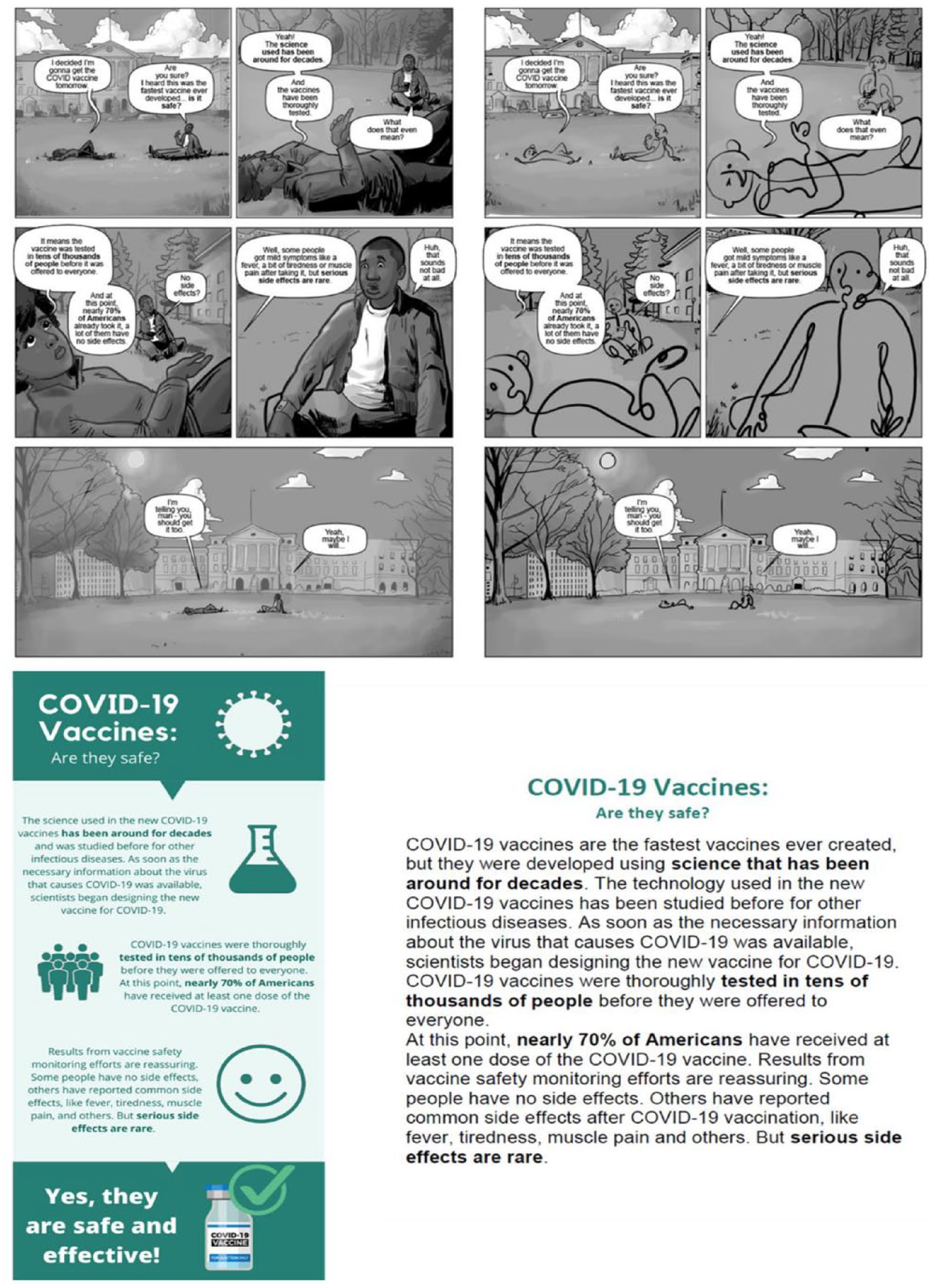
Experimental Stimuli: Comics With Black and Racially Ambiguous Characters, Infographics, and Expository Texts
The study explored the impact of character appearance on comic effectiveness by creating stylized characters with no apparent racial cues, in addition to realistic-looking characters. To make the ambiguous-character comics visually interesting for the participants, the illustrator mimicked the “counselor” character in the 2020 Pixar movie Soul, which is one of the only two American animated movies with Black protagonists released in the past decade. These characters, like the “counselor” character in the movie, are abstract, cartoonish, and devoid of racial identity, yet still engaging and visually captivating (Figure 1).
The authors drafted the dialogue between two characters based on the CDC’s (2022a) public information on the COVID-19 vaccine safety and avoided any use of technical jargon. Key facts included (1) the vaccines were developed using “science that has been around for decades”; (2) the vaccines were “tested in tens of thousands of people” before being released to the public (3) “at this point, nearly 70% of Americans already took it”; and (4) “serious side effects are rare.” These points were also included in the nonnarrative stimuli, which included a short piece titled “COVID-19 Vaccines: Are they safe?” and an infographic that contained the same information. The wording of the key facts was bolded and kept consistent across all stimuli. The stimuli were carefully designed to resemble content that is commonly shared on social media or other online platforms, and we presented all the stimuli as stand-alone images in the questionnaire.
Procedures
Upon consent to participate, participants were randomly assigned to one of four treatment groups. Participants first answered a series of questions regarding their knowledge of and experience with the pandemic and COVID-19 vaccines and then reported vaccine literacy, science literacy, existing knowledge of COVID-19 vaccines, and attitude toward COVID-19 vaccines. After viewing the assigned stimuli, participants were asked to recall the key facts, report interest in the shown materials and indicate their willingness to share the information. At last, participants reported their general interest in reading comics, demographics, and political ideology. The survey questionnaire was developed by the researchers and pretested with a group of undergraduate students (N = 346) at the University of Wisconsin-Madison.
Measures
Dependent Variables
Interest
Interest was measured on a 7-point scale (1 = strongly disagree, 7 = strongly agree) with two statements: “The comic/article/infographic is interesting,” and “I enjoyed reading the comic/article/infographic.” These items were chosen based on previous research highlighting the importance of interest and enjoyment in emotional responses to comics for science learning (Lin et al., 2015). The two items were averaged to form an index (Pearson’s r = .70 for comics, .78 for infographic, and .85 for textual facts, p < .001; M = 4.7, SD = 1.5).
Information recall
To measure participants’ information recall, we asked four questions based on the stimuli content with a 4-point scale (1 = definitely false, 2 = likely false, 3 = likely true, 4 = definitely true). The items were “The science used for developing COVID-19 vaccines was created during the pandemic” (false), “Nearly 50% of Americans have received at least one dose of COVID-19 vaccines” (false), “The COVID-19 vaccines were tested on tens of thousands of people before they became available to the public” (true), and “Severe side effects, such as blood clots, are common after COVID-19 vaccination” (false). We recoded participants’ answer to each question into a dichotomous variable (1 = correct, 0 = incorrect). The sum of correct answers (range 0–4) was used as an index to measure information recall (M = 1.8, SD = 1.2; KR-20 = .49).
Information sharing intention
Participants reported their intention to share the shown information on a 7-point scale using the question “How likely are you to share this comic/article/infographic with others?” (M = 3.4, SD = 1.9). This single-item measure was adapted from Milkman and Berger’s (2014) study on the factors influencing the public’s sharing of scientific discoveries.
Moderating Variables
Existing knowledge of COVID-19 vaccines
We measured individuals’ knowledge regarding the COVID-19 vaccines using five true and false statements: “Antibiotics can be used to kill the coronavirus” (false), “You may get COVID-19 by receiving a vaccine shot” (false), “People are considered fully vaccinated two weeks after their final dose of COVID-19 vaccines” (true), “Having a food allergy means you should not get a COVID-19 vaccine” (false), “It is still unclear how long COVID-19 vaccines protect people” (true). These statements were created based on previous studies on vaccine knowledge (Zingg & Siegrist, 2012). The sum of correct answers (range 0–5) was used as an index to measure the construct (M = 2.3, SD = 1.3; KR-20 = .39).
Comic interest
Respondents reported their interest in reading comics by indicating agreement with two statements on a 7-point scale, including “I read comics on a regular basis.” and “If given the choice I would rather read a comic than a written article.” These statements were shared by a comic researcher who created and tested these items but never included them in a formal publication (see acknowledgment). The two items were averaged to form an index (Pearson’s r = .46, p < .001; M = 3.7, SD = 1.6).
Potential Covariates
Existing attitude toward COVID-19 vaccines
Attitude toward COVID-19 vaccines was measured by items adopted from previous studies on vaccine attitudes (Martin & Petrie, 2017), asking participants to indicate their agreement with six statements on a 7-point scale. Some of the items were COVID-19 vaccines “can cause serious side effects,” “are not safe enough,” and “fail to protect you and others against the coronavirus and/or its variants.” Other items were “COVID-19 vaccines help bring life back to pre-pandemic normal,” “Getting COVID-19 provides better immunity than COVID-19 vaccines,” and “COVID-19 is not dangerous enough, there is no need to get vaccinated.” All items were averaged to form a reliable measure (Cronbach’s alpha = .69, M = 3.6, SD = 1.0).
Vaccine literacy
Vaccine literacy was measured by four items adopted from previous literature on health literacy (Sørensen et al., 2013), asking respondents to indicate how easy or difficult to “find information about vaccinations that you should have,” “understand why you need vaccines,” “judge which vaccinations you may need,” “decide if you should have a flu vaccine” on a 5-point scale (1 = very difficult, 5 = very easy) (Cronbach’s alpha = .79, M = 3.6, SD = 0.8).
Science literacy
Science literacy was measured by nine standardized questions contained in the National Science Foundation science literacy scale (National Science Board, 2020). These questions measure both factual knowledge (e.g., “The center of the Earth is very hot,” “All radioactivity is man-made”) and process knowledge (e.g., the likelihood of getting inherited illness from parents). The questions were asked using a true/false scale; correct answers were counted and used as an indicator of science literacy (M = 3.8, SD = 2.2; KR-20 = .64).
Political ideology
In addition, we measured political ideology by asking how liberal or conservative people perceive themselves to be regarding social and economic issues respectively. The two items were averaged to form an index measuring one’s political ideology (Pearson’s r = .85, p < .001; M = 3.6, SD = 1.5).
Analytical Approaches
Homogeneity of Samples
To ensure the homogeneity of the treatment groups, we conducted a series of one-way analysis of variance (ANOVA) tests to examine the means of comic interest and other potential covariates. We found that comic interest was evenly distributed across all groups in our study. Moreover, no significant differences were observed between the groups in terms of their existing attitudes toward COVID-19 vaccines, vaccine literacy, science literacy, and political ideology. Therefore, we did not include any of these variables as potential covariates in our models.
Statistical Analysis
To investigate the treatment effect on the outcome variables (RQ1, RQ2, H2), we developed three models using one-way ANOVA. In addition, these models allowed us to answer RQ3, which asked whether the visual portrayal of the comic characters would have an impact on all dependent variables. To examine H1, which hypothesized an interactive effect of comic exposure and one’s existing knowledge of COVID-19 vaccines on information recall, we included an interaction term (i.e., treatment * knowledge) in the analysis of covariance (ANCOVA) model and investigated whether the effects of stimuli would differ for people with different levels of prior knowledge. In addition, H3 hypothesized that the effects of comics on the outcome variables would vary as a function of individuals’ preexisting interest in reading comics. To test this hypothesis, interaction terms (i.e., treatment * comic interest) were created and included in the ANCOVA models.
Results
Effects on Interest
The first research question (RQ1) sought to determine whether exposure to comics would lead to higher interest in the provided information than exposure to expository texts and infographics. Results showed no significant difference in the reported levels of interest among participants when they viewed the four stimuli, F (3, 163) = 0.52, p = .666. Therefore, exposure to comics did not have a significant impact on Black Americans’ interest in COVID-19 vaccine safety information.
Effects on Information Recall
Similarly, the effect of the experimental treatment on information recall was not statistically significant, F (3, 163) = 0.41, p = .746. In other words, participants’ accuracy in responding to recall questions showed no significant difference following exposure to comics compared to nonnarrative stimuli.
However, the effect of experimental treatment on information recall varied as a function of prior knowledge of COVID-19 vaccines as the interaction term combining the two was significant, F (3, 159) = 4.19, p = .007, η2 = .073. To probe the interaction, we examined how the relationship between prior knowledge and information recall varied across groups. Interestingly, while knowledge was positively related to information recall for individuals exposed to infographics, expository texts, and comics featuring Black characters, this relationship did not exist for participants who viewed comics with racially ambiguous characters (Figure 2).
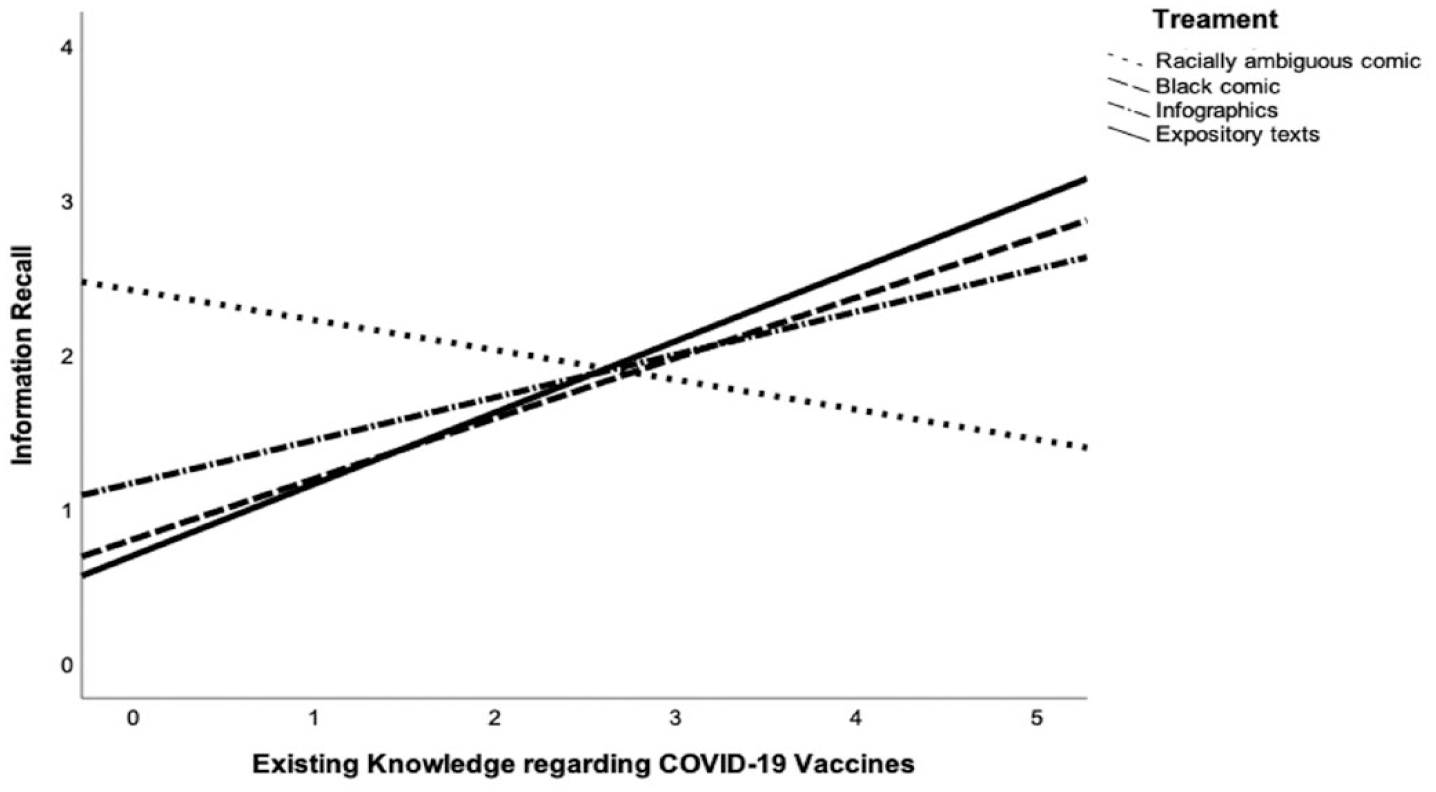
Interactive Effects of Experimental Treatment and Existing Knowledge Regarding COVID-19 Vaccines on Black Americans’ Information Recall
In addition, we conducted a comparison of the predicted means of information recall for individuals with different levels of prior knowledge (mean ± SD) across the treatment groups. Among participants with lower levels of prior knowledge, exposure to racially ambiguous comics led to a higher level of recall compared to exposure to comics featuring Black characters and expository texts (Figure 3). However, this difference was not observed among participants with medium and higher levels of knowledge. Therefore, H1 was partially supported, as only one type of comic exhibited the hypothesized effect.
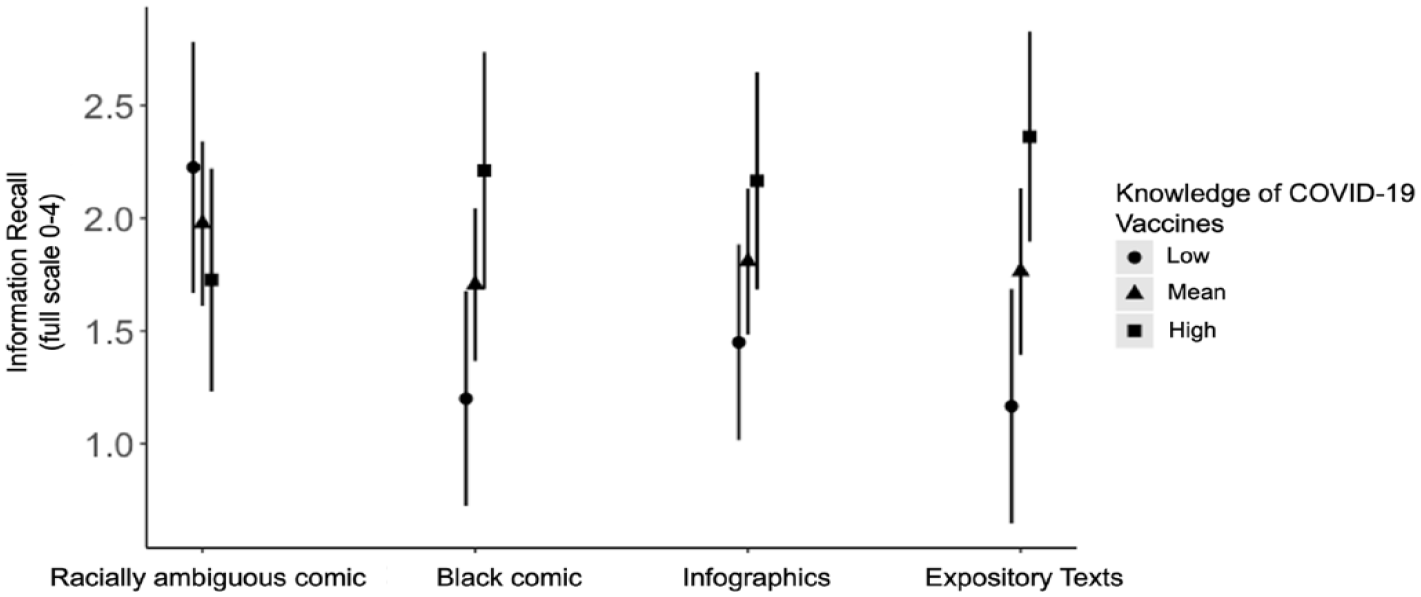
Exposure to Racially Ambiguous Comics Resulted in Greater Recall Levels Than Exposure to Racially Concordant Comics Among Black Americans With Limited Knowledge of COVID-19 Vaccines
Effects on Information Sharing Intention
H2 predicted that Black Americans would be more likely to share comics than nonnarratives. Results of a one-way ANOVA showed that the main effect of the experimental treatment was not significant, F (3, 163) = 1.81, p = .147. Therefore, contrary to our expectation, Black readers were not more likely to share the comics than expository texts or infographics. H2 was rejected.
Role of the Visual Representations of Comic Characters
In response to RQ3, we examined whether Black Americans would respond differently to comics with racially congruent versus ambiguous characters. The results of ANOVAs and post hoc pairwise comparisons revealed that there were no statistically significant differences in interest, information recall, and information sharing intention between participants who viewed comics featuring different characters. Despite the absence of significant main effects, we found that comics with racially ambiguous characters were more effective than those with Black characters in enhancing information recall for Black Americans with lower levels of knowledge (see results on information recall).
Role of Comic Interest
In line with H3, which proposed that the effects of comics on interest, information recall, and information sharing intention would depend on individuals’ pre-existing interest in reading comics, ANCOVA analyses revealed that the interaction term (treatment * comic interest) was significant in predicting interest, F (3, 159) = 4.05, p = .008, η2 = .07. However, this interaction term was not significant in predicting information recall, F (3, 159) = 1.90, p = .131, or information sharing, F (3, 159) = 1.57, p = .200.
Specifically, the study found a positive correlation between comic interest and interest in the presented information. This relationship was slightly stronger among participants who viewed comics compared to those who viewed nonnarrative stimuli (Figure 4). Moreover, additional analyses revealed that while individuals with varying levels of interest in comic reading showed similar levels of interest in nonnarrative stimuli, those with greater interest in reading comics preferred the comic stimuli more than those with lower interest (Figure 5). In other words, these findings indicated that the influence of comics, in contrast to nonnarrative materials, was more pronounced among individuals with a higher affinity for comic reading. The results provided partial support for H3.

Interactive Effects of Experimental Treatment and Existing Interest in Reading Comics on Black Americans’ Interest in Reading COVID-19 Vaccine Safety Information
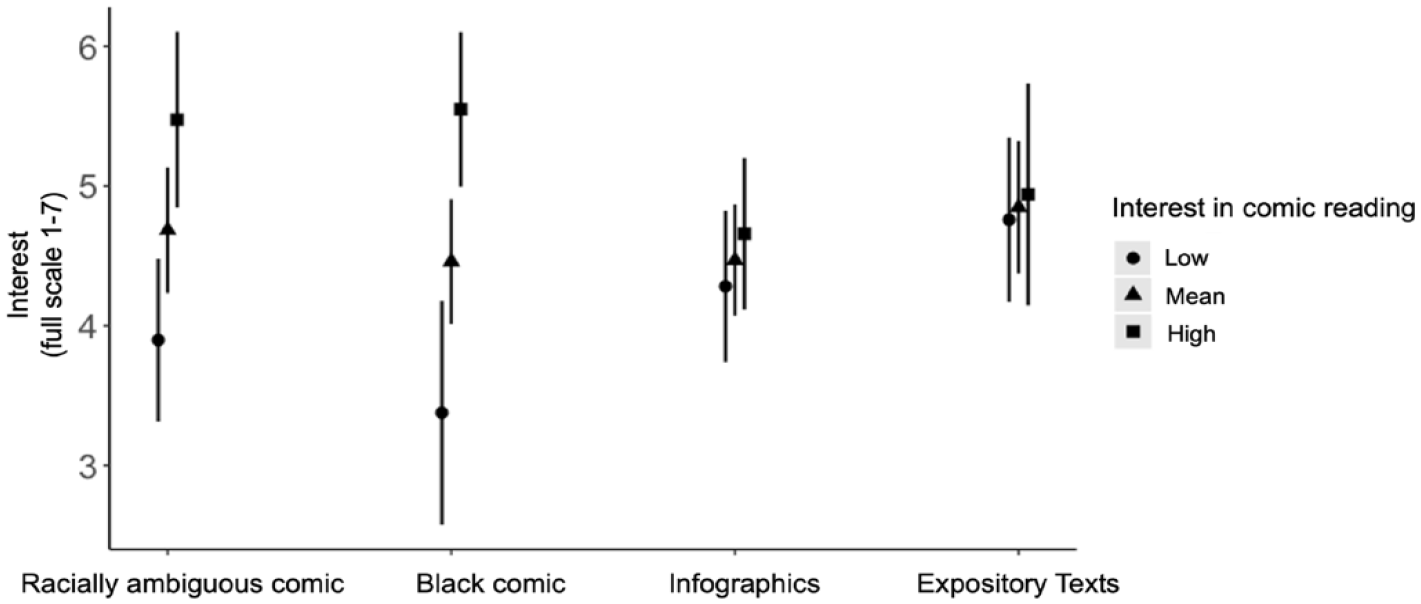
Exposure to Comics Resulted in Higher Interest Among Those With Higher Levels of Existing Interest in Comic Reading
Discussion
The COVID-19 pandemic has seen a resurgence in the popularity of web comics that have been increasingly used to communicate science to traditionally underserved audiences. To determine the effectiveness of comic strips in reaching diverse audiences, this study examined how comics of various designs can influence Black Americans’ interest, recall, and willingness to share scientific information regarding COVID-19 vaccine safety. We aim to contribute empirical insights into the conditions under which comic strips outperform nonnarratives to achieve various objectives, such as attracting interest, facilitating learning, or increasing social sharing of science information among racial minority groups. By using professionally designed stimuli, a relevant sample, and a timely research context, we can shed light on the psychological effects of comics beyond the health and formal educational settings and inform future strategies for practice.
Before delving into the results, we would acknowledge several methodological limitations. First, the data were collected during the Omicron peak in the United States; the country reported an alarming 1.35 million COVID-19 cases in 1 day on January 10—3 days into the data collection (Shumaker, 2022). This situation may have increased respondents’ concern over COVID and made them more attentive to any information regarding vaccine safety. Therefore, any interpretation of the experiment treatment’s nonsignificant effect should keep this crucial context in mind. Second, the use of a nonprobability sample of Black Americans may limit the generalizability of the findings. Future studies should examine how comics featuring other racial minority groups may affect their intended audiences. In addition, this study only used two comic strips drawn by one illustrator. Although the drawings aimed to be representative of many comics featuring Black characters, the effects may be limited by the specific visual designs and plots used. Finally, this study relied on self-reported measures to gauge the interest and perceived shareability of the comics. Future studies may use social media analytics, such as examining the number of likes, shares, retweets, on a large sample of web comics to strengthen the findings.
Despite its limitations, this study has produced intriguing yet mixed findings about the potential effectiveness of comics as a tool for science communication. First, contrary to common belief that comics are entertaining and accessible, adult viewers may not find them more interesting, memorable, or shareable than nonnarrative formats, such as expository texts or infographics. Although the insignificant results may be partially due to the history effect noted earlier, we suspect that comics are less likely to outperform nonnarratives (1) when the content is equally comprehensible and (2) if the images and plots do not add much explanatory and/or emotional value to the content. Moreover, as web comics are typically constrained on space that can be dedicated to a full story arc, they may not be as effective in transporting readers into a meaningful story or creating highly identifiable characters, both of which are prerequisites for maximizing the effectiveness of visual narratives when conveying science information.
Despite concerns surrounding their effectiveness, comic strips have the potential to enhance learning outcomes. This study showed that for Black Americans with limited knowledge of COVID-19 vaccines, exposure to comics featuring racially ambiguous characters resulted in higher levels of information recall than exposure to other forms of stimuli. However, this effect was not observed among those with a higher level of knowledge about COVID-19 vaccines prior to message exposure. Notably, the racially ambiguous comic stimulus in this study used characters inspired by a popular animated film that featured Black protagonists. These findings suggest that comic strips, particularly those with abstract characters that hold potential cultural relevance to the target audience, can effectively facilitate the learning of scientific facts among racial minority groups who may be less receptive to traditional messaging approaches.
In contrast, using racially concordant characters in comics to engage minority groups regarding science may not necessarily lead to increased interest, knowledge acquisition, or engagement. The findings showed that the Black-character comic did not elicit a different response from the participants compared to other stimuli. This suggests that while using racially concordant characters is a common strategy to engage Black Americans, it may not be as effective as previously believed. Instead, the key may be to use Black characters to tell stories that reflect cultural values, such as spirituality, collectivism, and racial pride (Kreuter & McClure, 2004). Future research should further identify the specific contexts in which the use of racially concordant characters is effective (or ineffective) for not only Black Americans, but also other racial and ethnic groups (see Despres, 2021 for an example).
With regards to theoretical implications, the Extended Transportation-Imagery Model suggests a crucial aspect for persuasive narratives: the audience must possess a certain level of knowledge about the topic being depicted (Van Laer et al., 2014). In addition, the degree of narrative typically correlates positively with individuals’ familiarity with the plotlines (Van Laer et al., 2014). In other words, the more familiar and comprehensible a story is, the greater the likelihood that individuals will immerse themselves in it, leading to attitudinal and behavioral changes. However, our research indicates that familiarity may interact with other factors, such as message genre and visual representation of characters, to influence narrative transportation and its associated outcomes.
To advance our understanding of the (in)effectiveness of comics as a science communication tool, it is imperative for future studies to delve deeper into the psychological mechanism at play. Specifically, researchers should investigate how the visual representation of comic characters interacts with story-level factors, including content comprehensibility, length, conveyed emotions, and plot verisimilitude, to determine the extent to which comics can transport readers and effectively communicate scientific concepts. Examining these aspects will yield valuable insights that can be used to enhance and optimize comics as a medium for conveying science to diverse audiences.
More importantly, the use of comics should primarily focus on engaging audiences with an existing interest in reading them for either entertainment or informational purposes. The study’s comic stimuli had adverse effects on individuals with low interest in reading comics, resulting in less interest compared to exposure to nonnarratives. However, the difference was not observed among individuals with higher levels of interest in comic reading. As the popularity of comics among adult readers increases, researchers should develop more robust measures for comic interest and explore its implications in future studies. It is also essential to investigate how graphical/comic literacy may moderate the effects of comics on readers (Cohn, 2020).
Communication scholars and practitioners have long been advocating for making emerging sciences more accessible and comprehensible to traditionally underserved audiences (Canfield & Menezes, 2020; Scheufele, 2018). Using the issue of COVID-19 vaccine safety as a case study, we now offer evidence-based recommendations for future practice. First, it is recommended that web comics should be considered as an effective alternative to nonnarratives for conveying scientific information to the public. To achieve optimal outcomes, science comics should present a coherent story arc that allows readers to organize and retain the otherwise hard-to-remember information. Accordingly, the choice of characters and plots should add emotional, cognitive, and cultural interests to the content. Second, when human figures are depicted, generic and realistic representations should be avoided, and instead stylized and simplified characters should be used. Third, comics and other visual narratives should be used to target individuals with sufficient interest in consuming these media for informational purposes. Our results suggest great potential for comic strips to inform racially diverse audiences in early and mid-adulthood. With deliberate and goal-oriented decisions on the choice of storyline, characters and an empirical assessment of audiences’ interest and literacy levels, comic artists, professional communicators, and even individual scientists can leverage the power of comics to increase the inclusiveness and equity of their public outreach efforts.
Footnotes
Acknowledgements
The authors would like to thank Dr. Matteo Farinella for creating and sharing the items measuring “comic interest” in this study.
Declaration of Conflicting Interests
The author(s) declared no potential conflicts of interest with respect to the research, authorship, and/or publication of this article.
Funding
The author(s) disclosed receipt of the following financial support for the research, authorship, and/or publication of this article: Support for this research was provided by the Office of the Vice Chancellor for Research and Graduate Education at the University of Wisconsin –Madison with funding from the Wisconsin Alumni Research Foundation.
