




Abstract
In this article, educators at University Primary School in Champaign, Illinois, share examples and understandings of the ways The Project Approach challenges young children to think critically about topics of importance in their world. Project investigations that provoke academic and social challenges for individuals and classroom communities of children are provided as a means to foster interest in children’s experiences, questioning, research, and representations.
“The Project Approach provides endless opportunities for challenges, because each project is only restricted by the investigators’ own questions and resources.”
Each time one prematurely teaches a child something he could have discovered himself, that child is kept from inventing it and consequently from understanding it completely.
At University Primary School, Piaget’s idea is a tenet of our practice. We listen carefully to children’s questions and employ The Project Approach to challenge and engage young children’s learning.
University Primary School (Uni Primary) is a Reggio Emilia inspired laboratory school, affiliated with the College of Education at The University of Illinois Urbana–Champaign, where children are engaged in creative, challenging, and meaningful curricular inquiries using The Project Approach. Uni Primary serves the mission of the University by providing opportunities for research, teaching, and service. It is composed of a preschool (3- through 5-year-olds), kindergarten/first-grade, second-/third-grade, and fourth-/fifth-grade classrooms with co-teachers in each classroom. Families visit the school prior to application, and students are admitted based on a philosophical match with the program goals and approaches to learning. There is no test to enter Uni Primary nor does the school use standardized testing as a measure of achievement or growth. Typically, the student body is composed of 40% non-White and 60% White students, 18% low-income, 15% special education, and a valued variety of religions, cultures, and family formations.
Uni Primary is a demonstration site for The Project Approach (Katz, Chard, & Kogan, 2014). Our school shares building space with the Office of the Illinois Early Learning Project (illinoisearlylearning.org), which provides educators with resources related to project work. A project, by definition, is an in-depth investigation of a real-world topic worthy of a student’s attention and effort. The study may be carried out with an entire class or with small groups of students. Projects typically do not constitute the whole educational program; instead, teachers use them alongside systematic instruction and as a means of achieving curricular goals.
At Uni Primary, the school community selects a topic that is typically investigated across all classrooms for the duration of a semester. Each project tends to lead into another distinct topic, and there are stories/justifications as to “why” a particular topic is selected. There is designated project time during the daily schedule, along with other subject area studies. Designated project time takes place through whole-group provocations, field trips, and experimentation. Over time, the students and teachers create study groups that focus on more specific aspects of the project topic. Study groups are guided by a teacher and are comprised of students interested in a particular aspect of the topic. The Project Approach is an emergent curriculum that is attuned to state learning goals and the essential questions and understandings determined by the teachers.
In this article, we will share our classroom experiences to illustrate the ways in which the Project Approach challenges young thinkers. While we recognize that “students with gifts and talents benefit from meaningful and challenging learning activities addressing their unique characteristics and needs” (National Association for Gifted Children [NAGC], 2010, Standard 1.6), we find that The Project Approach investigations address these needs as well as the needs of children with varied abilities. We will present examples of these challenges as they occur during the three main phases of a project as they are implemented at our school—Phase I: Sharing Understandings and Further Questioning; Phase II: Investigation; and Phase III: Representation of Learning.
Project Phase I: Sharing Understandings and Further Questioning
At the beginning, children share their prior understandings of the topic through memory stories, ideas, and experiences, and they are eager to ask questions about aspects they wish to discover. How does the questioning process challenge children? Young children have lots of questions! Why is the sky blue? How old is the earth? Where did I come from? Utilizing The Project Approach provides teachers with the framework for taking questioning seriously and for supporting children as they investigate.
Sharing Understandings and Questions
Some young children are accustomed to the adult providing the questions and the answers. Often, adults make the mistake of deciding for children what information is important. Teachers who use The Project Approach have to remind themselves to step out of that role, giving the young learner the time and the safe environment to wonder and then represent those musings through artifacts, artwork, and writing.
During Phase I, students are asked to brainstorm what they know and think about a topic. In follow-up discussions, students are prompted to develop questions about the topic—“What do you want to find out?” A study of the region’s tallgrass prairie (Burns, Chi, & Hertzog, 2008) led to these questions:
“Do dolphins live on our prairie?”
“I wonder where deer sleep?”
“How can we find out if raccoons come to our playground?”
While teachers have learning goals for students during a project, they also value and encourage questioning that may not seem related to those goals. Teachers challenge young learners to find answers to their genuine questions. During the tallgrass prairie project, the students observed the reclaimed prairie, talked to experts, and tested their hypotheses.
Healthy Disagreement and Skepticism
The challenge of articulating a question is presented through the duration of a project. In the preschool classroom, teachers presented the concept of warm and cool colors, naming the colors in fire as warm colors. A 5-year-old student countered with her observation that blue must be a warm color because she has observed blue in a flame on her stove. The Project Approach invites children to be “disagreeable” in a positive way. Their natural inclination to be contrary is supported by this opportunity for dialogue. The child, who knew a blue flame as warm, supported her theory by citing her observation. The teacher did not negate this important idea but instead helped the child understand that, while her observation of the blue flame is true, artists categorize colors differently.
Even scientists disagree about theories. When we tackle big problems in a democracy, all do not have to agree. In a classroom embracing The Project Approach, teachers foster this healthy disagreement. Students are safe to express opinions, theories, and hypotheses without the fear of being wrong. It is through the follow-up investigations that some of these theories are either supported or debunked. Some students find this uncertainty uncomfortable and challenging, but it is this discomfort that leads the young thinker to the realization that there is more to explore.
When beginning an investigation of water, teachers posed the general prompt, “What do you already know about water?” Student ideas included “We swim in it.” “We drink it.” “It comes down as rain.” One 8-year-old student initially did not have questions about water because he had completed a unit focusing on water at his previous school. He said, “I already know everything there is to know about water.” This student assumed that, as he met the assessment expectations at the end of that unit, he had mastered all the content there is to be explored about water. Once he engaged in the project provocations, he realized that the topic was limitless and he had many questions to investigate.
This occurred again at the beginning of a project where students were going to explore “birds and flight.” A student interested in mechanical flight expressed frustration because he also felt he already knew all there is to know about the topic. The challenge to the students in both of these examples is to think more broadly and to ask deeper questions. During the flight project, this same student discovered alternate forms of mechanical flight, such as the Gyrocopter and Autogyro. He explored how human flight has changed global access and commerce. What a worthwhile investigation!
Metacognition
A specific challenge also arises when a student wants to know everything there is to know about complex topics, such as prehistoric life or, in one 8-year-old student’s case, string theory. That challenge is to be specific about what she or he wants to know. For children who think very broadly, it is a metacognitive challenge to reflect upon their thinking process and define their ideas to articulate answerable questions. As children mature, they develop their ability as “independent investigators” (NAGC, 2010, Standard 3.4), owning their questions and discoveries.
Project Phase II: Investigation
Throughout the investigation phase of a project, students are challenged to think critically. Critical thinking occurs through forming and testing hypotheses, trial and error, experimentation, representation, and dispelling assumptions.
Trial and Error and Testing Hypotheses
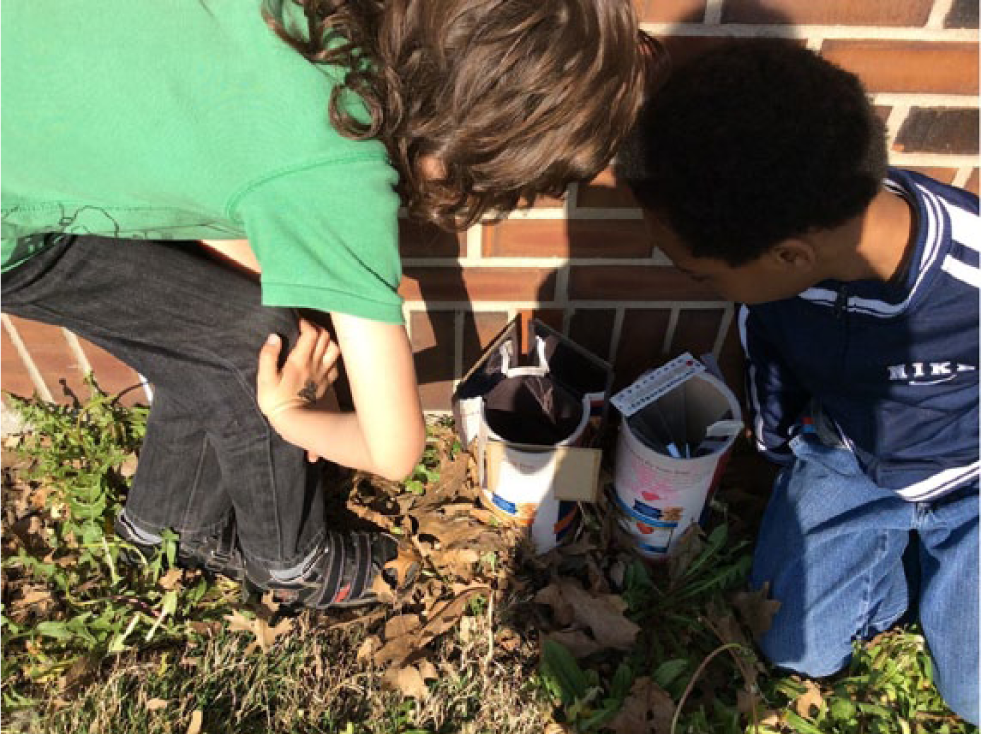
During an investigation of tools, one study group took an interest in solar cookers. They researched the attributes and history of solar cookers, and they observed a commercial solar oven in action. In planning to make their own solar cookers using a variety of materials, the students hypothesized that the inside of the cooker must be dark, the window of the cooker had to point toward the sun, and that the cooker had to seal well enough to trap sun-warmed air.
Individuals and pairs designed, constructed, and tested their solar cookers, measuring the temperature achieved in each. Children encountered frustrations during each stage of development: Materials did not fit together as planned and temperatures did not reach goals. The challenge for these learners was to understand and embrace the value of trial and error. Together they explored the problem and made improvements to their designs and materials. They read books about different kinds of ovens (including solar cookers), observed and experimented with an actual solar cooker, and conducted surveys about appliances families use to cook food in their homes.
Experimentation
In a preschool investigation of the way plants grow, children noticed that many garden plants have flowers. As they prepared for their own garden, they planted carrot seeds and wondered if their plants would have flowers. As the debate between votes of “yes” and “no” began, the teacher asked students to consider, “What makes you think so?”
“In the garden when we planted them, it had flowers.”
“Once I was planting with my mom and I saw only carrots.”
“No, that’s silly. Because it has only leaves, no flowers.”
Young children want to see proof of their theories. The class transferred their sprouted carrot plants to the outdoor garden and, at the time of this writing, are awaiting the results of this experiment.
Dispelling Assumptions
During an investigation of water, the second-/third-grade teacher posed the question, “What do you think a water tower is for?” Most students were certain that it was an open-topped structure used to collect rainwater. They rationalized that this is why it is up high. The teacher then asked, “How can we find out for sure?” A field trip was not reasonable, but students were able to find photographs of water towers that negated the assumption that they were open on top. During a field trip to the local water treatment plant, students asked the employees about the function of a water tower and learned that it is storage for emergencies if the pump is disabled. Through this inquiry, students met the challenge of formulating and posing credible, testable hypotheses.
Project Phase III: Representation of Learning
At the conclusion of a project, students visually represent their new understandings to share with families and the school community. These may be in the form of three-dimensional artifacts, collections, written reports, photographs, graphs, and so on. A main challenge for a study group may be coming to consensus on what to represent and how to represent it. This process requires the social competencies of negotiation and concession. (NAGC, 2010, Standard 4.2. Social Competence. Students with gifts and talents develop social competence manifested in positive peer relationships and social interactions.)
Once the group agrees upon representations, the design and construction aspects present their own challenges. During an investigation of local fauna, one study group learned about the groundhogs that lived around the school. They observed the entrances to many burrows and had questions about the way in which the groundhogs live. They talked with experts here at the University of Illinois to find answers to their questions then agreed as a group to build a human-size burrow. The challenge came in the form of realizing their physical limitations as they taped together refrigerator boxes that tended to collapse. They had to rely on one another and allow multiple people to be involved in the building. One student’s vision may not come to fruition when another child is involved in the construction.
Other times, the challenge comes in the form of feasibility of the representation. During an investigation of creating an outdoor learning environment on the playground, one study group designed a waterfall and pool. While interesting and potentially educational, the group discovered that the construction was not feasible in the area, which had no electricity. They were still able to build a model of what they had hoped to create, demonstrating their newfound engineering understanding of design and construction.
Many young thinkers have the ability to think about the interconnectedness of everything. Deciding what to share through a representation can pose a daunting challenge. During an investigation of trees, one such student had to decide how to share his new understandings. Other students were creating tree models with boxes and junk to illuminate their understanding of tree parts and functions. Our “everything” thinker began building a tree model using recycled electronic parts. At first, teachers were skeptical. Is he just playing with electronics? But as the construction continued, the student demonstrated the ability to explain his rationale for using various electronic parts to represent living tree parts. He said, “The tree is a representation of all the many parts of a tree and how we can help them.”
The Project Approach gives the “everything” thinker the freedom to deeply explore, synthesize speculations, and share new thinking beyond merely echoing facts that have already been collected.
Challenges of Critical Thinking During Project Work
Project Approach work offers children opportunities for challenge, deep thinking, multi-step problem solving, and perspective taking each of which is important personal competencies (NAGC Standard 4.1. Personal Competence. Students with gifts and talents demonstrate growth in personal competence and dispositions for exceptional academic and creative productivity. These include self-awareness, self-advocacy, self-efficacy, confidence, motivation, resilience, independence, curiosity, and risk taking).
Acquired information and further questioning allows a project topic to expand based on a child’s interest and resolve. We find that critical thinking opportunities and skills are infused into conversation, wondering, and action during project pursuits. As children mature and have experience with multiple projects, they become more independent in their abilities to conduct research and to make connections, build theories, and test and represent these theories in complex ways.
Mathematics
Children crave the opportunity to solve math problems related to questions or dilemmas of importance to them. In the Project Approach, expressing a mathematical understanding to a question fuels the young researcher with powerful data. For children with advanced math development, project work presents challenges through unusual numerical quantities and multi-step problems. Using a website called Journey North (http://www.journeynorth.org), our kindergarten/first-grade students graphed the decline of the monarch population during the “Birds and Flight” project. The monarch population decline shocked them. After graphing the data, they harvested and packaged milkweed seeds and made a plea for families to plant them to protect this beautiful species. Despite the hundreds of milkweed plants that emerged this spring and were individually identified and flagged by the students in our nearby field, the students still hypothesize that the monarch population will continue to decline.
Literacy
As children research project questions in books, on-line, and through other media, they are challenged to expand their technical vocabulary. Sometimes this vocabulary poses a real challenge to accessing some of the literature students wish to read! We often see this challenge turn into a zeal for word collection and pride in being able to convey new scientific language and vocabulary when writing or speaking on a project discovery. Writing and speaking about exciting discoveries made during project work is abundant, and gives children practice with the written and spoken word with a variety of audiences including classmates, teachers, parents, experts, and community members.
Social Justice
Opportunities for socially just pedagogies abound through Project Approach work. As we wonder about people in other times and places, we wonder if some of the truths discovered today have historical or future significance. Big concepts like “conservation” or “freedom” can be threaded through many projects with resulting advocacies for peoples, places, and our planet. For children with an adept sense of justice, discovering the multiple perspectives in a project question can be eye opening and even confrontational.
Creativity
Creative expressions of project work delight us at the culmination of each project. When a study group in the kindergarten/first-grade class pursued “how movies are made” as part of a “How Things Work” project, they met with filmmakers, set designers, scriptwriters, and actors to immerse themselves in the creative process. Children visited our University of Illinois performing arts center where they saw sets and costumes being created. This study group made their own movie for their culminating project (and to take it one step further, acquired movie theater seats donated for the night as families watched). The study group submitted their script to a local film group that produced a professional version of their story on the “big screen” at a local movie theater—red carpet and everything!
Conclusion
The Project Approach provides endless opportunities for challenges, because each project is only restricted by the investigators’ own questions and resources. Students and teachers have the freedom to investigate many different topics, not simply those offered through a traditional curriculum. The inquiries necessitate an emergent curriculum based on the community of students and their questions. Even if the topic is reinvestigated, it provides different challenges when new questions arise. This makes The Project Approach very interesting for the teachers, too!
Footnotes
Conflict of Interest
The author(s) declared no potential conflicts of interest with respect to the research, authorship, and/or publication of this article.
Funding
The author(s) received no financial support for the research, authorship, and/or publication of this article.
Bios
Marcia V. Burns, MA, is the head teacher of the second-/third-grade classroom, University Primary School, University of Illinois Urbana–Champaign.
Alisha L. Lewis, EdD, is the director of University Primary School, University of Illinois Urbana–Champaign.