




Abstract
Parental self-efficacy may serve as a protective factor against parental stress among parents of intellectually gifted/ADHD children. In this study, we aimed to describe perceived parental self-efficacy, along with its developmental and influential factors, within this population. Using a qualitative exploratory design, 11 parents (M age = 42.4 years; SD = 4.9; 5 mothers) of intellectually gifted/ADHD children (M age = 12 years; SD = 2.4; 6 boys) participated in semi-structured interviews. Thematic analysis allowed us to structure the data into three axes: (1) general parenting experiences with intellectually gifted/ADHD children, highlighting both challenges and positive aspects; (2) perceived ups and downs of parental self-efficacy, including elements that contributed to a sense of efficacy and those associated with a perceived lack thereof; and (3) perceived factors related to the parent, child, and environment influencing parental self-efficacy. These findings suggest that parents may benefit from additional support, and future research might explore the potential of structured group-based interventions to foster parental self-efficacy in this population.
Keywords
Parents of intellectually gifted children with a co-occurring condition face distinct and complex challenges due to their children’s unique developmental profile and increased psychosocial vulnerabilities (e.g., Neumeister et al., 2013; Tasca et al., 2024; Wells, 2018). These challenges, particularly regarding parenting strategies, educational advocacy, and the regulation of emotional and behavioral difficulties, have been well documented (e.g., Brault-Labbé et al., 2024) and can represent a significant source of parental stress (Khoo, 2023; Wells, 2018). Despite this, their lived experiences remain underexplored in the literature.
Among the co-occurring conditions, attention-deficit/hyperactivity disorder (ADHD) is the most commonly documented in intellectually gifted children, as evidenced by clinical records (Barnard-Brak et al., 2015; Cordeiro et al., 2011; Foley‐Nicpon & Assouline, 2020). This neurodevelopmental disorder characterized by symptoms of inattention, hyperactivity, and impulsivity, affects an estimated 3%–7% of children under the age of 12, disrupting daily functioning across multiple settings, including school and home (American Psychiatric Association, 2022).
Regarding intellectual giftedness, it remains a concept for which there is no clear consensus within the scientific community, mainly due to its complexity and the diversity of models proposed to define and assess it (Carman, 2013; Dai, 2020). Despite this conceptual ambiguity, the National Association for Gifted Children (2019) defines giftedness as the potential for high performance in one or more domains, such as skills or creativity, relative to peers of the same age, experience, and environment. In the present study, the focus is specifically on intellectual giftedness.
Parental Self-Efficacy
Emerging evidence suggests that parental self-efficacy, defined as parent’s beliefs or judgments regarding their capabilities to effectively organize and execute tasks associated with parenting (de Montigny & Laliberté, 2005), may act as a protective factor against parental stress in parents of intellectually gifted/ADHD children (François-Sévigny et al., 2025; Wells, 2018). Rooted in Bandura’s (1977) theory of self-efficacy, this construct is considered a dynamic process shaped by mastery experiences, vicarious experiences, verbal persuasion, and physiological and emotional states. However, little is known about how parents of intellectually gifted/ADHD children experience, develop, and sustain this sense of efficacy over time.
The Current Study
The current study aimed to describe perceived parental self-efficacy, along with its perceived developmental and influential factors, from the perspective of parents of intellectually gifted/ADHD children.
Methods
Study Design
To explore how parental self-efficacy is experienced by parents of intellectually gifted/ADHD children, we adopted a qualitative approach through an exploratory design. Anchored in a comprehensive paradigm (Paillé & Mucchielli, 2021), we focused on participants’ subjective experiences to better understand the theme under study.
Participants
The sample consisted of 11 French-speaking Quebec parents of intellectually gifted/ADHD children aged nine to 16 (M age = 12.00; SD = 2.49; n boys = 6; n girls = 5). Among them, four were in late childhood (ages 9–11), while seven were adolescents (ages 12–16). Four of the children were taking daily medication to manage ADHD symptoms.
The participating parents included six fathers and five mothers, with a mean age of 42.36 years (SD = 4.88). Regarding relationship status, eight were in common-law partnerships, two were married, and one was divorced. Most parents had either two (n = 5) or three (n = 5) children, while one parent had four children. Nine parents held a university degree and ten were employed full-time, with a median household income of $120,000 CAD (SD = 53 264 $).
Procedures
This study, conducted as part of a larger research project on the psychosocial adjustment of intellectually gifted/ADHD children, received approval from the University of Sherbrooke Research Ethics Board. We invited all 52 parents of intellectually gifted/ADHD children who participated in the initial project and had consented to be recontacted to take part in this follow-up study during winter 2024. This ensured standardized identification procedures for both intellectual giftedness (IQ ≥130 on the WISC-V combined with parent-reported developmental indicators; Silverman, 2018) and ADHD (based on the K-SADS-PL-DSM-5 interview and Conners-3 questionnaires), as these assessments were part of the methodological procedure of the initial research project.
Of the 19 parents who expressed interest in participating, we selected 11 through purposive sampling based on three criteria, aiming to capture a broad range of experiences within the target population (Pires, 1997; Savoie-Zajc, 2007). First, parental gender was considered to ensure a balanced representation of both mothers and fathers, given that most studies on parental self-efficacy focus predominantly on mothers (Seah & Morawska, 2016; Sevigny et al., 2016). Second, the age of the child was taken into account to include parents of both school-aged children (6–11 years) and adolescents (12–16 years), in order to capture a range of parenting experiences across developmental stages (Branje, 2018; Smetana & Rote, 2019; Tessier & Comeau, 2017). Third, child gender was included as a criterion to ensure equal representation of boys and girls, addressing the underrepresentation of girls in giftedness research (Bianco et al., 2011; Michael-Chadwell, 2011; Peterson, 2013) and acknowledging potential gender-based differences in socio-emotional functioning (Eren et al., 2018; Tasca et al., 2024).
Selected parents participated in individual semi-structured interviews. Prior to the interview, we provided the interview guide (excluding follow-up questions) to allow for prior reflection given the abstract nature of the concept of parental self-efficacy. Interviews, lasting approximately 60 minutes, were conducted by the researcher—primarily via Teams, with one in-person session at Evaluation and Intervention Clinic in Psychology at the University of Sherbrooke (Longueuil campus)—and were recorded using digital or platform-based tools.
Although the protocol required individual interviews, we made an exception for one participant who requested the presence of their partner for emotional support. The partner was informed of their non-participatory role, and this accommodation was permitted in line with ethical standards to ensure participant comfort while preserving data integrity.
Materials
We collected data on parental self-efficacy, along with its developmental and influential factors, using a semi-structured interview guide (see Appendix A). This guide was developed by the principal researcher and the co-authors specializing in intellectual giftedness. The guide comprised five sections: (1) sociodemographic information (e.g., age, gender, marital status, occupation, education, number of children); (2) general parenting experiences with an intellectually gifted/ADHD child; (3) parents’ experience of parental self-efficacy; (4) its perceived developmental and influencing factors over time; and (5) an open section for additional relevant input. Primary and follow-up questions were used flexibly to allow for in-depth responses.
A pretest of the interview guide was conducted with three mothers of intellectually gifted/ADHD children (not involved in the main study) to assess the clarity and relevance of the questions. All three mothers expressed discomfort with the term “parental self-efficacy,” which they associated with productivity, a notion they felt was ill-suited to the relational and emotional nature of parenting. Independently, each suggested using the term “parental self-competence” instead, which they found more appropriate and accessible. This preference illustrates the polysemy of the word “competence,” as noted in the Cassell Dictionary (1997), and its French origins likely contributed to its resonance with francophone participants. Consequently, we adopted the term “parental self-competence” in the study, while retaining the conceptualization of parental self-efficacy (de Montigny & Laliberté, 2005).
Researcher Positionality
The first author is a doctoral researcher in child, adolescent, and parent psychology, specializing in the psychosocial adjustment of gifted and twice-exceptional youth and their parents. She has professional experience working with families of intellectually gifted and neurodivergent children. This background provided familiarity with the subject matter and facilitated rapport during interviews, while also requiring conscious reflexivity to limit potential interpretative bias. To address this, the researcher employed several strategies to ensure the rigor and scientific validity of the qualitative study (Lincoln & Guba, 1985), which are described in the final paragraph of the following section on Data Analysis.
Data Analysis
We used a thematic analysis following the guidelines of Paillé and Mucchielli (2021) to address the research objective while remaining closely aligned with participants’ narratives and limiting interpretative bias. Interviews were transcribed verbatim and anonymized by a research assistant, who was not involved in the coding or interpretation process. The principal researcher (first author) reviewed all transcripts for accuracy and carried out the initial coding and theme development.
Before proceeding with qualitative data processing using MAXQDA software (version 2024), the first author conducted multiple readings of the corpus to become sufficiently familiar with it, facilitating the segmentation into meaning units and the identification of relevant themes and sub-themes. This analytical work was conducted in continuous consultation with the co-authoring researchers, beginning with the early interviews and continuing throughout the process. These iterative and collaborative discussions informed and refined each phase of analysis, leading to ongoing adjustments to the coding scheme and thematic organization across different segments of the dataset. Themes were then grouped into categories and organized into broader axes, culminating in a thematic tree representing the phenomenon under study (Paillé & Mucchielli, 2021). Occasional differences in interpretation regarding specific themes or sub-themes were addressed during these discussions through re-examination of the corresponding verbatim excerpts until a shared interpretation was reached. This iterative process led to what we refer to as “intersubjective agreement,” meaning a collaboratively developed consensus on the final thematic representation (Miles et al., 2014).
Given the small sample size, we preferred a continuous thematization approach, involving in-depth analysis of each verbatim, unit by unit, to iteratively and progressively build the thematic tree. This approach allowed for a more nuanced and rich analysis of the corpus while enhancing the validity of the qualitative process (Paillé & Mucchielli, 2021).
As interviews and analysis were conducted in French, the thematic tree and selected verbatim excerpts were first translated into English by the first author, who is bilingual in French and English. These initial translations were then cross-validated using AI-assisted translation with DeepL Translator (DeepL SE, Cologne, Germany) and ChatGPT (OpenAI, San Francisco, USA), following a systematic and scientifically rigorous process: each excerpt was compared line by line between the human and AI versions, with any discrepancies examined and resolved to preserve both semantic nuance and contextual accuracy. The resulting translations were subsequently reviewed and validated by the co-authoring researchers, who are also bilingual in French and English, to confirm the integrity and fidelity of the final English version. Back-translation was not used; instead, this multi-step process was implemented to ensure translation accuracy and scientific rigor.
We employed several strategies to ensure the rigor and scientific validity of the qualitative study (Lincoln & Guba, 1985). Reflections, decisions, and observations underpinning the approach were documented in a research log to support the reliability and confirmability of the analysis. Transferability was achieved through the inclusion of rich quotations and illustrations throughout the results, enabling readers to connect these findings to their own experiences. Finally, the thematic structure, coding, and selection of coded excerpts were reviewed by the co-authoring researchers, one of whom is an expert in thematic analysis, as described by Paillé and Mucchielli (2021).
Results
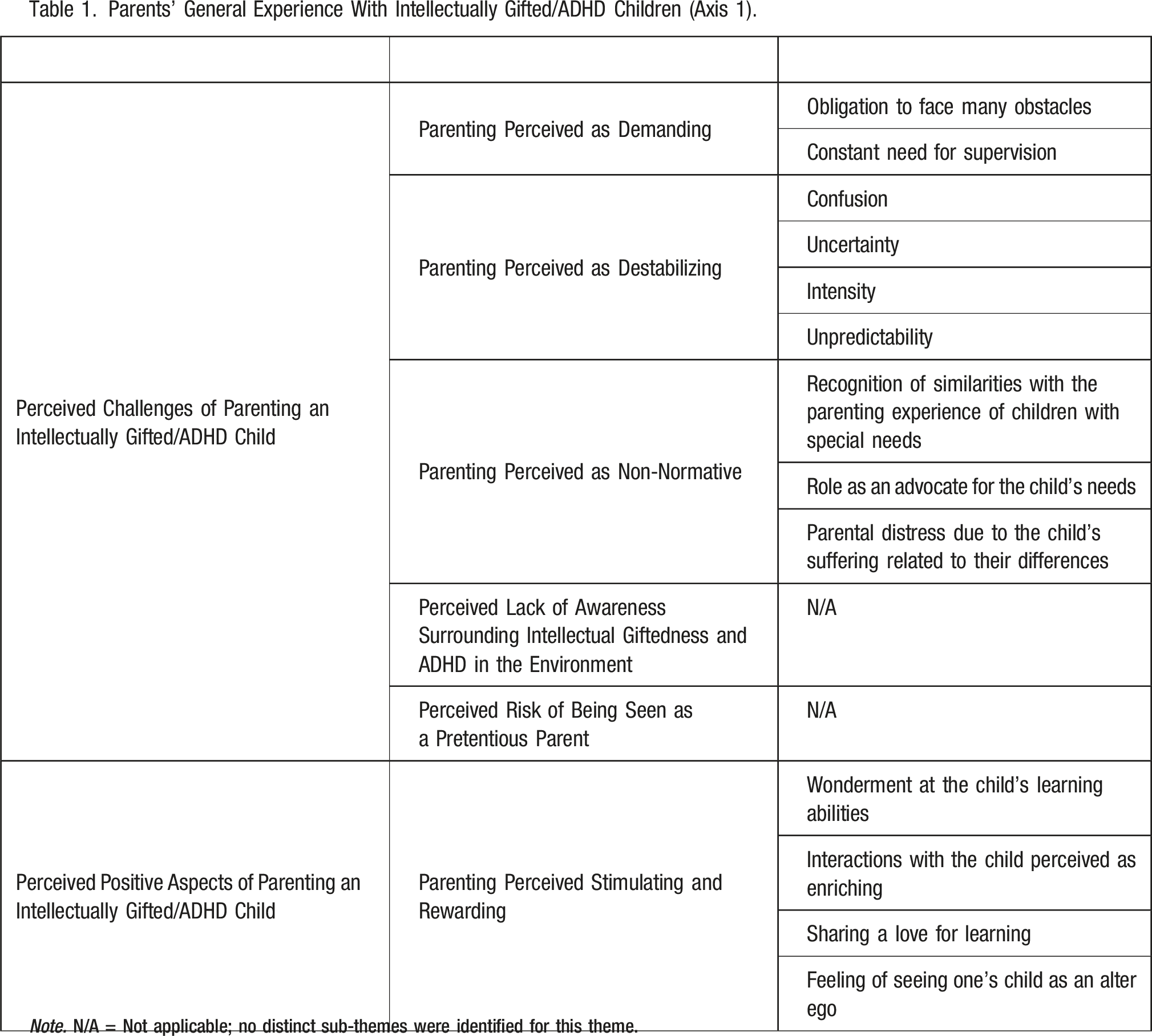
Parents’ General Experience With Intellectually Gifted/ADHD Children (Axis 1).
Note. N/A = Not applicable; no distinct sub-themes were identified for this theme.
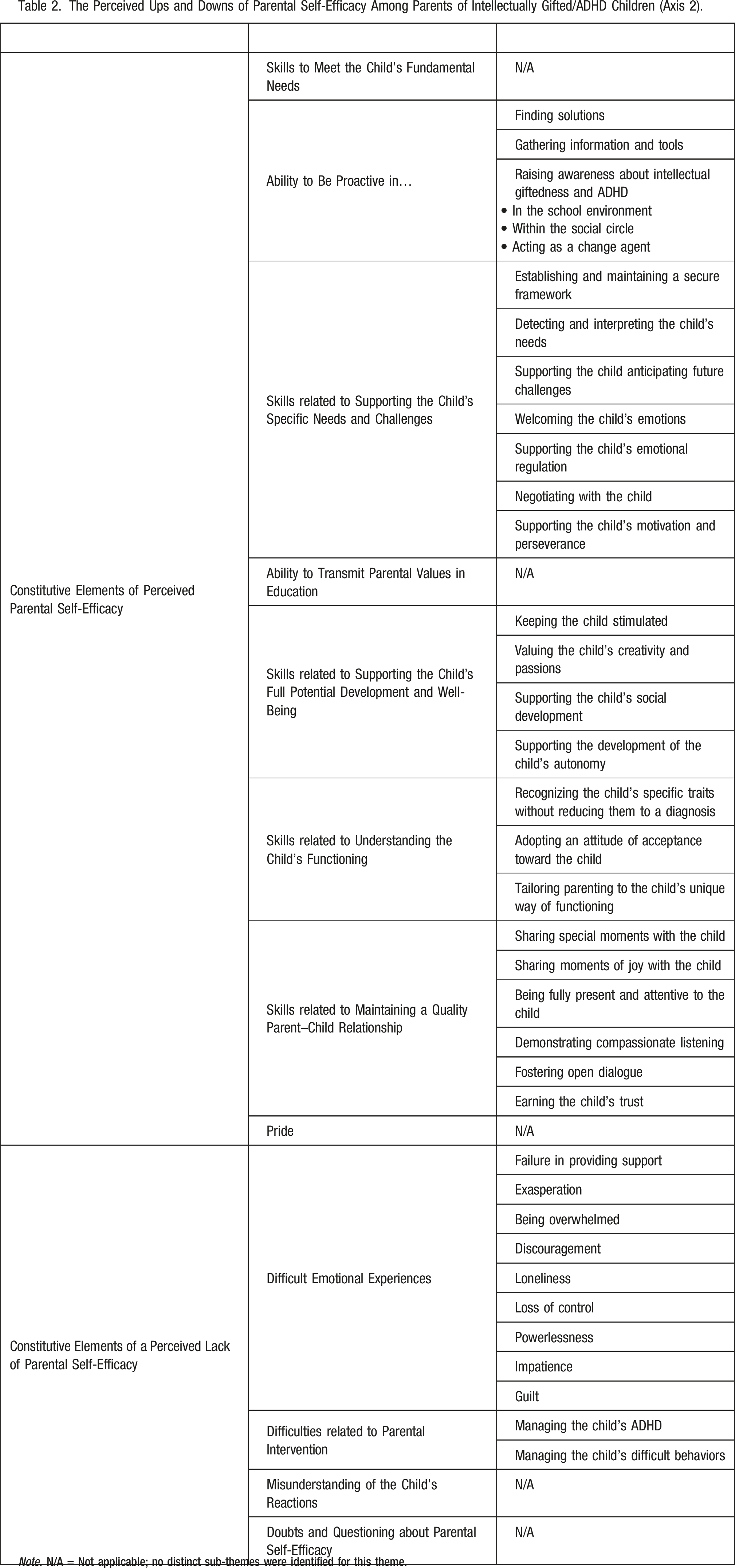
The Perceived Ups and Downs of Parental Self-Efficacy Among Parents of Intellectually Gifted/ADHD Children (Axis 2).
Note. N/A = Not applicable; no distinct sub-themes were identified for this theme.
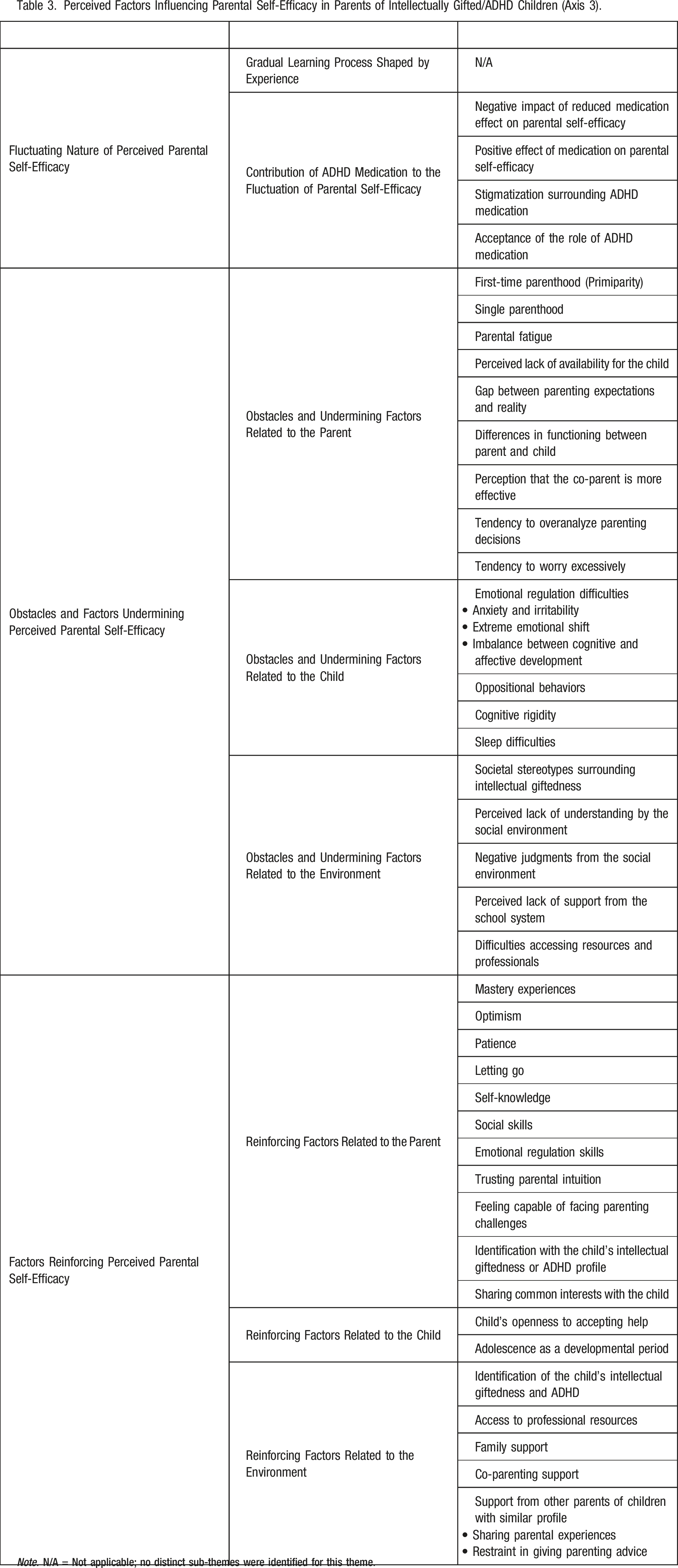
Perceived Factors Influencing Parental Self-Efficacy in Parents of Intellectually Gifted/ADHD Children (Axis 3).
Note. N/A = Not applicable; no distinct sub-themes were identified for this theme.
Parents’ General Experience with Intellectually Gifted/ADHD Children (Axis 1)
The first axis was divided into two categories that described the parents’ general experience with an intellectually gifted/ADHD child: one focused on perceived challenges, the other on perceived positive aspects (Table 1).
Many parents perceived their parenting experience as demanding: “It’s a real obstacle course” (P4). This perception was often linked to the need for constant supervision: “These children are curious… and reckless. In my case, she was also reckless. It requires continuous supervision…” (P1).
The experience of parenting an intellectually gifted/ADHD child was also frequently described by parents as destabilizing, marked by confusion, uncertainty, intensity, and unpredictability: “There are challenges that arise along the way, without us necessarily seeing them coming” (P1).
Some parents experienced this as non-normative parenting: “Ultimately, these are the same challenges faced by any parent of a child who does not fit the norm” (P2). For some, this experience was associated with taking on the role of advocate for their child’s specific needs: “When it comes to services, I […] constantly must play watchdog and say, ‘Hey, my child has the right to this or that. Where are we at with this?’” (P1). For others, it was marked by feeling of parental distress in response to their child’s perceived suffering due to their differences: “It is painful for me to see the suffering of a child who feels different, who may feel less valued…” (P9).
Moreover, many parents expressed feeling that there was a lack of awareness surrounding intellectual giftedness and ADHD in their environment (e.g., school, social circles, or other parents), which they perceived as exacerbating a feeling of unease, not least because of the risk of being perceived as a pretentious parent: “There’s an awkwardness in saying, ‘My child is gifted’. It can sound a bit pretentious sometimes…” (P1).
Despite these challenges, most parents described their experience as also being stimulating and rewarding. Some expressed a deep sense of wonder toward their child’s learning abilities, while others emphasized the richness of the interactions they experienced with them. A few highlighted how sharing a love of learning with their child was perceived as a source of joy: “I love learning and taking an interest in many things, and my child fuels this passion by asking infinite questions” (P2). In this context, the feeling of seeing one’s child as an alter ego was mentioned by some parents: “My child and I share the same interests, which allows us to exchange ideas and have the impression of being almost on an equal footing. […] It sometimes gives me the impression of having a friend more than a son” (P5).
The Perceived Ups and Downs of Parental Self-Efficacy Among Parents of Intellectually Gifted/ADHD Children (Axis 2)
The second axis was divided into two categories that described the range of perceived experiences regarding parental self-efficacy (Table 2). The first category comprised themes highlighting the constitutive elements of perceived parental self-efficacy per se, while the second included themes illustrating the elements contributing to a perceived lack of parental self-efficacy.
Constitutive Elements of Perceived Parental Self-Efficacy
Parents’ descriptions of their perceived parental self-efficacy were based on multiple elements, one of which was their skills to meet their child’s fundamental needs. However, beyond this, parents also emphasized their ability to be proactive, particularly in seeking solutions, information, and tools: “I’m always looking for solutions. And when I think I’ve found one, then suddenly I realize that maybe it wasn’t enough, so I must dig deeper to find more.” (P11). This proactive role extended, for some, to raising awareness about intellectual giftedness and ADHD in schools and social settings: “I kind of became an ambassador for this…I try to inform people about it.” (P4). Others sought to support families facing similar challenges by acting as change agents: “If this can prevent other parents from feeling helpless or from repeating the mistakes I made…it creates a sense of community.” (P1). Participating in research was also seen to promote broader understanding: “We want to move things forward and make it better known.” (P1).
Additionally, parents emphasized that their skills related to supporting the child’s specific needs and challenges were important components of their perceived parental self-efficacy. These included the skill to establish and maintain a secure environment for the child, as well as the skill to detect and interpret their needs: “It’s all about that sensitivity, recognizing what she doesn’t always say. Sometimes, going and seeking out that information… to understand what the child is experiencing.” (P10). For some parents, these skills also encompassed supporting their child anticipate future challenges: “It’s about being there to support him when he eventually hits a wall… or maybe not—but I think it’s important to be realistic about the challenges this brings.” (P4). Moreover, welcoming the child’s emotions and supporting their emotional regulation were perceived as contributors to parental self-efficacy. One parent perceived negotiation as essential in guiding the child’s self-discovery: “I assume that being a negotiator is part of being effective… having succeeded in getting him to discover an activity he initially didn’t want to try, and now, his level of engagement is completely different.” (P8). For some parents, the skill to support their child’s motivation and perseverance, particularly among those with elementary school-aged children, was seen as a key lever in helping them meet their needs and overcome challenges. Regarding this last point, transmitting parental values in education, particularly perseverance, was perceived as contributing to their parental self-efficacy: “I feel effective, as a parent, when my child shows commitment to his activities, I feel like I’ve done something right.” (P5).
Several parents also described their skills to support both their child’s full potential and well-being as a constitutive component of their perceived parental self-efficacy. In relation to supporting the child’s potential, one parent stated: “Being effective as a parent means helping them understand themselves… becoming the best person they can be.” Regarding the child’s well-being, some parents perceived parental self-efficacy was reflected in their child’s fulfillment and happiness: “I feel effective as a parent when they thrive, when they are happy.” (P2). Among these perceived skills, parents emphasized the importance of keeping their child stimulated, notably by nurturing their curiosity and encouraging exploration: “We succeeded… by stimulating him in all sorts of different ways, by contributing to this personal growth.” (P3). Others expressed that fostering a child’s full potential involved valuing their creativity and passions by actively supporting their interests, as well as encouraging their social development and autonomy: “So, being effective as a parent means being able to guide them properly toward autonomy.” (P8).
For many parents, skills related to understanding the child’s functioning represented a constitutive component of their perceived parental self-efficacy: “For me, being an effective parent means trying to understand how he thinks, why he reasons the way he does.” (P5). For some, these skills involved recognizing their child’s unique traits without reducing them to a strict identification or adopting an attitude of acceptance toward their child: “Accepting him in the fact that he was different.” (P4). For others, these skills included tailoring parenting approaches to the child’s unique way of functioning, as generic advice often fell short: “You read advice online, the method that’s supposed to work, and even though I apply it properly with my child, something doesn’t click… I didn’t know my child was, let’s say, neurodivergent.” (P9).
Another perceived constitutive component of parental self-efficacy concerned the skills related to maintaining a quality parent–child relationship: “When I feel particularly effective, it is in my bond with my child.” (P9). This manifested through special moments with the child and shared moments of pleasure: “That makes him laugh. We both have a lot of fun.” (P7). Among the skills that foster that parent–child relationship, parents mentioned being fully present and attentive to the child, as well as demonstrating compassionate listening. Fostering open dialogue with their child was often described as particularly meaningful skill, contributing to their parental self-efficacy. For many, this involved respecting the child’s pace and boundaries, as well as acknowledging their intellectual maturity: “She wants the real answer, and she’s capable of understanding it.” (P2). For some parents, this approach was closely tied to a commitment to transparency in their interactions with their child: “It’s about being real with these children.” (P1). Another skill related to maintaining a high-quality parent-child relationship was earning the child’s trust: “I was proud that she told me about it already. That means that, at the core, I am worthy of her trust, that she dares to talk to me about it.” (P9). In parents’ experiences, building trust with their child often required an attitude of humility, including being able to acknowledge when they made mistakes: “And you know, trust comes with admitting when we make mistakes.” (P3). Finally, pride emerged as a recurring emotional experience, closely connected to the various constitutive elements of parental self-efficacy described above (e.g., the ability to transmit parental values in education, skills related to supporting the child’s full potential development and well-being). In this sense, pride served both as a reflection of effective parenting practices and as an emotional reinforcement sustaining parents’ sense of efficacy.
Constitutive Elements of a Perceived Lack of Parental Self-Efficacy
Several difficult emotional experiences were mentioned as constitutive elements of parents’ perceived lack of parental self-efficacy. First, many parents described experiencing a sense of failure, which they perceived as contributing to feelings of exasperation, being overwhelmed, and discouragement: “Well, of course, it’s this kind of feeling of failure, of not having managed to support them better.” (P6). For some, this discouragement was accompanied by a sense of endless repetition, as they felt they had to constantly intervene to compensate for their child’s difficulties. In some cases, this experience led to feelings of loneliness, especially due to their child’s high support needs: “Personally, I feel like we don’t see anyone anymore since they started school—we’re shut in all the time.” (P2). Ultimately, this emotional sequence—beginning with a sense of failure, followed by exasperation, being overwhelmed, discouragement, and for some, loneliness—was perceived by parents as contributing to a sense of losing control over the situation, which led them to express a profound sense of powerlessness. This powerlessness emerged as the most frequently reported difficult emotional experience: “When you don’t know what to do anymore—you’ve tried being kind, directive, even funny—and it feels like you have no response left. So, of course, that feeling of lacking parental self-efficacy and not being able to do it—I find that really hard in those moments.” (P5)
Furthermore, impatience, whether felt or expressed toward the child, was perceived by parents as contributing to this sense of inefficacy: “When I feel like I’m being impatient with my own child, it makes me feel like I’m really lousy.” (P1). This impatience was often followed by feeling of guilt, as parents reflected on moments when they felt they had not sufficiently regulated their emotions: “Sometimes, you raise your voice, and then afterward, you tell yourself, ‘This doesn’t make sense, I can’t talk to them like that’.” (P5). Guilt was also experienced by some parents in relation to relying on their partner, particularly in moments when they felt they were struggling with certain parenting tasks.
Beyond difficult emotional experiences, parents also reported specific difficulties related to parental intervention, which further contributed to their perceived lack of parental self-efficacy. Managing ADHD symptoms (e.g., hyperactivity and impulsivity) was among the most frequently mentioned difficulties by parents: “It’s like I feel effective in supporting her intellectual giftedness, but maybe not as much when it comes to ADHD.” (P9).
For several parents, misunderstanding their child’s emotional and behavioral reactions was described as a key factor contributing to their perceived lack of parental self-efficacy. This often left them feeling disoriented and without reference points: “When she has tantrums sometimes, I think, ‘Okay, but where is this coming from? Did I miss something?’” (P10).
This perceived lack of understanding often led parents to experience doubts and questioning about their own parental effectiveness: “At some point, when nothing works, you start thinking, ‘What are we doing wrong?’” (P4). For some, these doubts were amplified by the complexity of managing both intellectual giftedness and ADHD: “I started wondering, am I really supporting my child properly, knowing she has this dual profile? Before, I was treating her as if she only had a single profile” (P9).
Perceived Factors Influencing Parental Self-Efficacy in Parents of Intellectually Gifted/ADHD Children (Axis 3)
The third axis synthetized the factors that parents seemed to perceive as influencing their parental self-efficacy (Table 3). Three main categories emerged: the inherently fluctuating nature of parental self-efficacy, perceived obstacles and factors that undermined it, and perceived factors that supported its reinforcement. The latter two categories—undermining and reinforcing factors—were each divided into themes related to three domains: the parent, the child, and the environment.
Fluctuating Nature of Perceived Parental Self-Efficacy
Several parents reported experiencing fluctuations in their parental self-efficacy: “It’s a long, rollercoaster-like journey where sometimes we feel highly effective, and other times completely inadequate, all within the same day.” (P11). For most, the development of this self-efficacy was perceived as a gradual learning process shaped by their experiences with their child. Moments of success were seen as reinforcing this sense of efficacy and encouraging further engagement: “Success breeds success, and with a growing parental self-efficacy, we feel encouraged to try more things.” (P8).
For some parents, fluctuations in their perceived parental self-efficacy were tied to the effects of ADHD medication, such as psychostimulants, on their child’s symptoms. When medication was absent or perceived as less effective, parents reported a diminished sense of their own parenting abilities: “I find it much harder to be a good mom when she… hasn’t taken her medication.” (P9). Conversely, for others, medication provided a sense of relief, restoring a balance between their child’s intellectual giftedness and ADHD symptoms. However, some parents perceived the use of medication as a sensitive or even taboo subject, especially when addressing ADHD-related challenges in a child with significant cognitive strengths. In this context, the decision to medicate was experienced by some of them as a source of external judgment or internal questioning. Still, certain parents emphasized that they viewed medication as a necessary neurochemical adjustment, rather than as a reflection of their own parenting effectiveness: “It’s a chemical imbalance in the brain, something is missing, so we add it, and that’s just how it is.” (P2).
Obstacles and Factors Undermining Perceived Parental Self-Efficacy
Obstacles and Undermining Factors Related to the Parent
Among the personal obstacles and factors perceived by the parents as undermining parental self-efficacy, first-time parenthood (primiparity), single parenthood, and parental fatigue were frequently mentioned. Fatigue was sometimes associated with a perceived lack of availability for the child: “My unavailability at that moment made me feel as a less effective mother.” (P9).
Additionally, several parents described difficulties reconciling their expectations of parenthood with its reality, especially when they perceived differences in functioning between themselves and their child. These differences often made it harder to relate and feel effective: “If I had gone through what my child is going through, I could say, ‘Oh yeah, I remember how tough that was, and what helped me was this or that’. But now, I have absolutely no idea what’s going on in their head…” (P9).
Furthermore, some parents reported that comparing themselves to a co-parent whom they perceived as more effective contributed to feelings of self-doubt and hesitation in taking initiative: “I can’t compete with their skills.” (P7). Additionally, a tendency to overanalyze parenting decisions and to worry excessively was described as limiting their perceived parental self-efficacy. Within this pattern of perceived excessive worry, parents expressed concerns about failing to instill a strong work ethic, being unable to support their child as their knowledge evolved, or facing serious emotional consequences from perceived missteps: “What if, at some point, she sees me as impatient, and that pushes her to her limit… and then she starts thinking about suicide? Whoa, wait… I really need to be careful…” (P11).
Obstacles and Undermining Factors Related to the Child
The most frequently reported child-related obstacle perceived as undermining parental self-efficacy was the child’s difficulty with emotional regulation, including anxiety, irritability, or extreme emotional shifts in response to distress: “It was hard to feel effective as a parent when facing a child who had meltdowns every night for a period of time.” (P2). Four parents reported witnessing their child’s emotional distress through expressions of suicidal ideation. Some parents perceived that these emotional regulation difficulties were exacerbated by an imbalance between their child’s cognitive and emotional development: “Intellectual giftedness doesn’t necessarily come with emotional maturity. We have adult-level conversations with our children, and then, moments later, they have a meltdown over the smallest thing… It feels like there’s a disconnect between their intellectual potential and emotional maturity, and that’s really difficult—it really gets to us.” (P3)
Other child-related factors, though mentioned less frequently, were also perceived as undermining parental self-efficacy, including oppositional behaviors, cognitive rigidity, and sleep difficulties.
Parents identified several developmental periods between the ages of 0 and 12 as particularly challenging for the development of their self-efficacy. However, no consistent pattern emerged regarding a specific age range, as the previously mentioned obstacles were reported across various stages of the child’s development.
Obstacles and Undermining Factors Related to the Environment
Among the obstacles and factors related to the environment perceived as undermining parental self-efficacy, societal stereotypes surrounding intellectual giftedness emerged as particularly challenging: “For most people, it’s perceived as, ‘Well, be quiet, you’re lucky, your child does well in school’, but it’s so much more complicated than that.” (P1). Parents also perceived a lack of understanding from their social environment regarding the complexity of their parenting role: “Outsiders don’t grasp the magnitude of it.” (P2). This sense of being misunderstood was often compounded by perceived judgment from others, with external criticism directly impacting parental self-efficacy: “Sometimes, you can feel that people assess your parenting skills differently because they don’t understand the situation.” (P2).
A major challenge identified by parents was the perceived lack of support from the school system, which often left them shouldering an increased educational burden: “There is no support at school. Now, there is starting to be a little, but speech therapy, we had to do that at home ourselves.” (P2). Many parents also reported experiencing tensions with the school, often feeling blamed for their child’s difficulties: “At some point, we were having biweekly meetings with the school…my partner would come out in tears every time…it really put our parental self-efficacy to the test.” (P6). Difficulties accessing professional resources were also perceived as limiting their sense of efficacy.
Factors Reinforcing Perceived Parental Self-Efficacy
Reinforcing Factors Related to the Parent
Parents identified several personal factors as contributing to their parental self-efficacy. Among these, previous mastery experiences were frequently cited: “I worked a lot in summer camps, I had a lot of experience with children, so I started out feeling that I would be effective in this.” (P2).
Several personal dispositions were perceived by parents as contributing to their sense of self-efficacy. Among these, optimism was frequently experienced as helpful: “Well, what helped the development of my parental self-efficacy is that I’m positive, that’s for sure.” (P4). This optimism was also reflected in the ability to maintain a positive outlook on the child’s progress over time. Patience and the ability to let go were also viewed as helpful: “You’re going to make mistakes… things won’t always work out… and it’s about letting go a little.” (P8). For one parent, self-knowledge was also perceived as a factor supporting their parental self-efficacy: “I think being effective as a parent, I want to associate it with self-knowledge.” (P10).
In terms of skills, social abilities and emotional regulation were perceived as essential to maintaining a sense of efficacy: “Being able to keep some control over our own emotions.” (P10). In supporting their emotional regulation, some parents highlighted the importance of engaging in personal strategies, such as meditation: “I’ve meditated for several years to help me manage my emotions and, as a result, to be a better parent.” (P9).
Furthermore, several parents perceived trusting their parental intuition as a key element supporting their sense of self-efficacy. In the same vein, feeling capable of facing parenting challenges was also described as essential: “I think what helped me was starting out with the feeling of ‘yes, I can handle this’.” (P28).
Additionally, parents who shared neurodevelopmental traits with their child felt this similarity supported their self-efficacy, particularly by enhancing understanding and empathy: “Probably being that way myself helps—maybe it brings a kind of empathy that’s necessary to try to understand.” (P8). Sharing common interests with their child was also perceived by some parents as facilitating their ability to connect and provide support more effectively: “I think I’m lucky in that regard—it makes it easier for me to support my son through this.” (P6).
Reinforcing Factors Related to the Child
Among the child-related factors, only one characteristic was explicitly mentioned by parents as supporting their parental self-efficacy, namely the child’s openness to accepting help: “You know, we offered her the option of seeing a psychologist, and she accepted, so I was happy… in moments like that, I feel effective as a parent.” (P11).
Adolescence was the developmental period most frequently mentioned—or anticipated—as a stage where they felt more effective in their parenting role, particularly due to the maturity they perceived in their child: “I find that now, it’s like, she’s at an age where I really feel comfortable… It’s great because she’s reached a stage where her emotional side has sort of caught up with her cognitive side.” (P1).
Reinforcing Factors Related to the Environment
Among the environmental or contextual factor that seemed to contribute to strengthening their parental self-efficacy, several parents mentioned the access to the identification of their child’s intellectual giftedness and ADHD, primarily because it enhanced their understanding of their child’s functioning: “If I had known earlier, maybe there would have been even more positive outcomes. I kind of feel a bit jealous of parents now who get an identification earlier—just to understand, not for the label. But to understand…” (P4). For some, this identification also helped guide access to professional services adapted to their child’s unique needs.
Social support was perceived, by parents, as a key factor supporting their parental self-efficacy. This included help from extended family and co-parenting exchanges: “We could take turns and explain things to each other, like ‘when you said this, it escalated instead of calming him down’.” (P5). Support was also found in exchanges with other parents of intellectually gifted/ADHD children: “We have other parents with similar children that we talk to… I wish I’d had that kind of support, so now I offer it.” (P2). In this context, many parents stressed the importance of sharing experiences humbly and empathetically, rather than offering direct advice: “I’m not sure giving advice like a coach is the best strategy—unless people specifically ask for it. I think sharing our experiences, the difficulties we faced, and the choices we made is more valuable for other parents than just giving advice.” (P6).
Discussion
Although parental self-efficacy may serve as a protective factor in managing parental stress among parents of intellectually gifted/ADHD children (François-Sévigny et al., 2025), little is known about how it is experienced, as well as how it develops and evolves over time within this population. The main objective of this study was to describe perceived parental self-efficacy, along with its developmental and influential factors, according to parents of intellectually gifted/ADHD children. The data were organized through thematic analysis into three main axes and corresponding categories, highlighting the fluctuating nature of perceived parental self-efficacy, shaped by diverse parent, child, and environmental factors.
The findings from the first axis revealed several themes that captured how parents experienced raising intellectually gifted/ADHD children. They described this experience as both demanding and intense, in a context marked by a perceived lack of societal awareness surrounding intellectual giftedness and ADHD. These results are consistent with the limited body of literature specifically addressing parents of intellectually gifted children with co-occurring conditions such as ADHD (e.g., Arnstein, 2020; ; Arnstein, 2020; Brault-Labbé et al., 2024; Matthews et al., 2014; Wells, 2018), as well as with broader research on parenting experiences related to either intellectual giftedness or ADHD independently (e.g., ; Brault-Labbé et al., 2021; Corcoran et al., 2017; de Souza Fleith et al., 2024; Guthrie, 2019; Papadopoulos, 2021; Peebles et al., 2023). While the specific needs of these children may differ, the parenting experience across these profiles may share common features, possibly reflecting broader dynamics associated with raising a neurodivergent child. In this regard, parents in the present study described their experience as non-normative and reported perceiving similarities between their own parenting journey and that of parents of children with special needs. These findings are consistent with previous studies suggesting that the parenting experience of intellectually gifted children differs significantly from that of parents whose children are neurotypical (Jolly & Matthews, 2012; Morawska & Sanders, 2008; Papadopoulos, 2021; Peebles et al., 2023; Renati et al., 2017, 2022).
Alongside the challenges reported, the results also brought to light several perceived enriching aspects of the parenting experience with intellectually gifted/ADHD children, an area that remains underexplored in the existing scientific literature. Many parents highlighted the richness of their interactions with their child, a shared love for learning, and, in some cases, a profound sense of connection, describing their child as an alter ego with whom they share mutual understanding and intellectual affinity. These moments of closeness may have supported parents’ sense of efficacy by strengthening the perceived quality of their relationship with their child.
In line with this, findings from the second thematic axis—which focused on the perceived ups and downs of parental self-efficacy among parents of intellectually gifted/ADHD children—revealed that skills related to maintaining a high-quality parent–child relationship were viewed as a constitutive element of that self-efficacy. This finding may be understood in light of the study by Brault-Labbé and colleagues (2024), which suggests that maintaining a positive parent–child bond is particularly challenging for parents of gifted children with co-occurring conditions. It is therefore plausible that, for these parents, their sense of parental self-efficacy is closely tied to their perceived ability to preserve and nurture this relational quality. Additionally, as highlighted by Papadopoulos (2021) in a literature review on parenting gifted and talented children, five of the 16 reviewed studies reported a tendency among parents of gifted children to adopt an authoritative parenting style, which is consistent with findings from more recent research (de Souza Fleith et al., 2024). This style, characterized by an environment of acceptance, open dialogue, and affection (Calafat et al., 2014), was also echoed in the accounts of multiple participants. Such a parenting style may encourage a more positive attitude from the child toward the parent (Yazdani & Daryei, 2016), which may help the parent earn the child’s trust and, in turn, reinforce their sense of efficacy in the caregiving role. However, despite the consensus emerging from the literature associating gifted parenting with an authoritative style, Yazdani and Daryei (2016)—whose study was included in the literature review—highlighted that their findings may have been influenced by sampling biases. Indeed, their sample consisted of achiever gifted children enrolled in gifted children’s programs, thereby excluding unidentified gifted children in regular classrooms or those experiencing academic difficulties, groups that may be more likely to encounter family environments characterized by conflict and instability (Yazdani & Daryei, 2016). In such contexts, the presence of heightened familial stress, reduced emotional availability, or repeated relational ruptures may compromise the parent’s skill to connect meaningfully with their child, which could, in turn, negatively impact their sense of parental self-efficacy (Fang et al., 2024). Similarly, Papadopoulos (2021) warned against generalizing these findings to all parents of gifted children, noting that many studies rely on samples composed predominantly of parents with higher educational and socioeconomic status, which may not reflect the experiences of families from more disadvantaged backgrounds.
Furthermore, the findings revealed several skills related to supporting the child’s needs and challenges, which were perceived as constitutive elements of parental self-efficacy by parents of intellectually gifted/ADHD children. Among these was negotiating with the child, partially echoing the findings of Gutherie (2019), who noted that parents of gifted children often use negotiation strategies to manage emotionally intense situations. In the present study, however, negotiation was used not only for emotional regulation, but also as a means to support the child’s exploration and, ultimately, self-understanding. Another skill identified was supporting the child’s perseverance, which several parents linked to their ability to transmit deeply held values—particularly the importance of perseverance. These findings align with two qualitative studies who observed that parents of gifted children (n = 12; de Souza Fleith et al., 2024), as well as those of gifted children with co-occurring conditions (n = 11; Park et al., 2018), reported aiming to foster self-determination values in their children. The importance placed by some parents on transmitting such values may be understood in light of parents’ broader concern for fostering both the talent and psychological well-being of their gifted child (de Souza Fleith et al., 2024). Notably, in the present study, the emphasis on perseverance was expressed exclusively by parents of elementary school-aged children, who perceived that their child’s intellectual giftedness had allowed them to achieve academic success up to that point with relatively little effort. For these parents, promoting perseverance may represent a concrete expression of parental self-efficacy, both as a means of preparing their child to face future challenges, such as the transition to high school, and as a way of supporting the longer-term actualization of their child’s potential. These results also resonate with those of Garn and colleagues (2010), who, from a Self-Determination Theory perspective, documented that parents of gifted children often combine autonomy-supportive strategies, such as scaffolding and connecting academic work to the child’s interests, with other approaches to sustain motivation. In line with our participants’ emphasis on negotiation and fostering perseverance, Garn and colleagues (2010) showed that such parental practices aim not only to address immediate academic tasks but also to promote long-term self-determined motivation and the child’s overall potential actualization.
Moreover, many parents of intellectually gifted/ADHD children in the present study perceived being proactive in seeking information and solutions as contributing to their sense of parental self-efficacy. This finding echoes prior studies highlighting the high level of parental involvement typically observed in this population (e.g., de Souza Fleith et al., 2024; Neumeister et al., 2013; Park et al., 2018). As previously noted, these results should be interpreted with caution, as the studies cited here often involve samples composed of parents from socioeconomically advantaged backgrounds. Nevertheless, such proactivity may serve as a way for parents to regain a sense of control and agency in situations often marked by uncertainty regarding how to support their child’s unique needs. In particular, actively engaging in problem-solving may reinforce their perceived parental self-efficacy by positioning them as capable and resourceful agents in their child’s development (Shokoohi-Yekta & Ghasemzadeh, 2020).
This finding aligns with another theme that emerged from the present study regarding the parenting experience with intellectually gifted/ADHD children—namely, their advocacy role. In this context, parents’ efforts to have their child’s specific needs recognized and addressed within educational or clinical systems can also be interpreted as a form of proactive coping (Besnoy et al., 2015; Park et al., 2018; Renati et al., 2022; Webb, 2007). These efforts may be particularly meaningful, as parents in the present study commonly associated perceived lack of parental self-efficacy with a range of difficult emotional experiences—including failure, exasperation, being overwhelmed, discouragement, loneliness, loss of control, powerlessness, impatience, and guilt. This is consistent with Bandura’s (1977) assertion that affective states can undermine individuals’ sense of self-efficacy. In this context, proactive behaviors may function as a protective factor, allowing parents to counteract these emotions—often reported by parents of intellectually gifted children with or without co-occurring conditions caregivers (e.g., Free, 2014; Guthrie, 2019; Peebles et al., 2023; Renati et al., 2017, 2022; Sodergren & Kettler, 2025; Wells, 2018)—by affirming their role as effective and engaged.
Parent-, Child-, and Environment-Related Factors Influencing Perceived Parental Self-Efficacy
Furthermore, the findings from the third axis revealed several parent-, child-, and environment-related factors that parents perceived as influencing their parental self-efficacy. Among the parent-related factors, several parents described what could be interpreted as mastery experiences—moments in which parents felt they had successfully met a challenge, effectively supported their child, or observed positive outcomes resulting from their actions, a theme directly informed by Bandura’s (1977) framework. Other parent-related dispositions that emerged from the analysis—such as patience, self-knowledge, letting go, optimism, and trust in one’s intuition—may interact with mastery experiences by helping create the conditions for them to occur. For example, approaching situations with patience or optimism may increase the likelihood of positive outcomes, while relying on intuition and witnessing favorable results may further reinforce a sense of parental self-efficacy.
Regarding child-related factors, emotional regulation difficulties were perceived by parents as particularly challenging and undermining their sense of parental self-efficacy. This aligns with previous research highlighting such difficulties as a significant source of strain for parents of intellectually gifted children, with or without co-occurring conditions (Bishop, 2012; Brault-Labbé et al., 2024; Free, 2014; Guthrie, 2019; Renati et al., 2022). It is possible that these emotional regulation difficulties made it harder for parents to understand or manage their child’s reactions, which in turn could contribute to feelings of failure and self-doubt regarding their ability to support their child adequately. According to the present findings, while parents of both children and adolescents reported difficulties related to their child’s emotional regulation, the intensity of this parenting challenge appeared to decrease during adolescence. In parallel, during this developmental stage, several parents observed a reduction in the asynchrony between their adolescent’s cognitive and emotional development, which might facilitate a better understanding of their child’s emotional responses and, in turn, foster a greater sense of parental self-efficacy.
The findings also revealed that societal stereotypes surrounding intellectual giftedness were perceived as an environmental factor that could undermine the parental self-efficacy among parents of intellectually gifted/ADHD children. In Quebec, Canada—where the study participants resided—historical ideological conflicts from the 1980s, which associated giftedness with elitism (Massé, 2000), may have contributed to a delayed recognition of gifted students’ needs, thereby fostering societal stereotypes that could negatively affect parental self-efficacy. Beyond this specific socio-cultural context, the persistence of societal stereotypes may also relate to another finding concerning their parenting experience, namely the perceived risk of being seen as pretentious when disclosing their child’s giftedness—a theme that echoes previous studies in the field (Brault-Labbé et al., 2024, 2025; Matthews et al., 2014). Despite calls to deconstruct the often-mythologized notion of giftedness as a “gift” or a form of privilege (Cross et al., 2019), this societal perception may still weigh heavily on parents. On the one hand, when their situation is perceived as enviable, parents may feel illegitimate in expressing the challenges they encounter. On the other hand, they may feel misunderstood or invalidated by those around them in their parenting role (Peebles et al., 2023). This combination of perceived social judgment and lack of understanding may lead them to downplay or conceal their difficulties, thereby limiting their access to meaningful support and contributing to a sense of loneliness (Matthews et al., 2014).
Yet, according to the findings, parents in the present study recognized social support as contributing to their perceived parental self-efficacy. One form of support frequently mentioned was that received from other parents of intellectually gifted/ADHD children. This finding is consistent with the study of de Souza Fleith and colleagues (2024) study and may echo Bandura’s (1977) concept of vicarious experiences, through which observing or identifying with others in similar situations can help strengthen one’s sense of efficacy. As Free (2014) noted, such peer connections may serve as a valuable strategy for sharing parenting experiences in a space where parents feel heard and understood. This process may also engage the mechanism of social persuasion, another source of self-efficacy described by Bandura (1977), whereby verbal encouragement and validation helps reinforce individuals’ belief in their own efficacy. In this regard, the results revealed that experience-sharing was valued more highly by parents than by giving or receiving advice from other parents. It is possible that, given the specific and complex nature of raising an intellectually gifted/ADHD child, parents may view generic advice as insufficiently tailored to their unique realities. In contrast, sharing lived experiences may offer a sense of resonance and contextual relevance that feels more authentic and supportive.
Furthermore, the results of the present study highlighted the impact of ADHD medication on the fluctuations observed in perceived parental self-efficacy among parents of intellectually gifted/ADHD children. This finding is consistent with the meta-analysis conducted by Corcoran and colleagues (2017), which reported parental ambivalence regarding the use of medication to manage their child’s symptoms of ADHD. Given that difficulties related to managing the child’s ADHD were viewed as contributing to a perceived lack of parental self-efficacy, it is possible that medication—when perceived as effective—may help temporarily alleviate some of these challenges, thereby enhancing parents’ sense of efficacy. Conversely, stigma associated with medicating children may reinforce feelings of doubt or inadequacy in the parenting role (Corcoran et al., 2017), especially when the child’s intellectual giftedness appears to contrast with the need for medication. Although ADHD medication (e.g., methylphenidate) has been shown to be equally effective for ADHD children, regardless of intellectual giftedness (Grizenko et al., 2012), societal stereotypes that equate giftedness with high achievement (Spiteri, 2022) may amplify feelings of doubt, guilt, or fear of judgment when parents consider medication as a support option.
Strength and Limitations
This study is innovative as it is among the first to explore the parenting experience through the lens of parental self-efficacy among parents of intellectually gifted/ADHD children, a population that remains understudied. The clarity and precision of the inclusion criteria, along with the rigorous identification of intellectual giftedness and ADHD using standardized tools such as the WISC-V and the K-SADS-PL-DSM-5 interview, represent important strengths of this research. Conducted as part of the primary study to which this research is linked, these procedures helped reduce a common sampling bias frequently observed in studies on intellectual giftedness that require prior identification for participation. Additionally, the intentional sampling method adopted in this study allowed for the formation of a balanced sample in terms of parental gender, the child’s gender, and age group, thereby promoting a more diverse representation of parental experiences among parents of intellectually gifted/ADHD children.
However, the limitations of this study must be considered. Although the pretest of the interview guide led the three interviewed parents to suggest using the term “parental self-competence” instead of “parental self-efficacy,” this change may have influenced how parents conceptualized their experiences. Nevertheless, it is important to note that the definition provided to them remained that of parental self-efficacy (de Montigny & Laliberté, 2005). Furthermore, the study relies solely on individual interviews with parents, without cross-referencing with other data collection tools (e.g., diaries or recordings), which limits the methodological triangulation and the depth of data validation (Fusch et al., 2018).
Practical Implications
Considering growing calls in the scientific literature for the development of targeted interventions for parents of gifted children—with or without co-occurring conditions (Morawska & Sanders, 2008; Renati et al., 2022)—the findings of this study highlight clinical implications for supporting parental self-efficacy among parents of intellectually gifted/ADHD children. Notably, many participants perceived support from other parents navigating similar challenges as a key contributor to their sense of efficacy, underscoring the relevance of group-based interventions that facilitate peer connection and experience-sharing (de Souza Fleith et al., 2024; Khoo, 2023). While participants reported benefits from self-selected support networks, these may differ in important ways from structured, externally provided groups. Such groups may also enhance parents’ sense of proactive engagement in seeking information and solutions, particularly in a context where stereotypes surrounding giftedness and ADHD may hinder access to resources. Existing literature, including studies on SENG Model Parent Groups (Supporting Emotional Needs of the Gifted) and the Positive Parenting Program, suggests that such programs can enhance parental understanding and quality of life (Costa-Lobo et al., 2019; Saranli & Metin, 2014).
More specifically, the development of group-based interventions could be considered as a potential avenue for future research, guided by the constitutive elements of perceived parental self-efficacy identified in the present study. For instance, to support skills related to understanding the child’s functioning, psychoeducational content could be provided on the co-occurrence of intellectual giftedness and ADHD, along with practical parenting tools tailored to navigating the challenges associated with this neurodevelopmental profile. Moreover, given that several difficult emotional experiences—such as guilt, powerlessness, and exasperation—were associated with a lack of perceived parental self-efficacy, the development of such group interventions could incorporate strategies for parental emotion regulation (e.g., self-compassion; Shenaar-Golan et al., 2023) to reinforce parental self-efficacy.
Future Directions
The results of this study suggest several directions for future research. First, given that the findings offer clear directions for designing a group-based intervention to support parental self-efficacy among parents of intellectually gifted/ADHD children, an action-research approach could be employed to evaluate the impact of such an intervention on the development of parental self-efficacy within this population. Second, longitudinal studies could examine whether changes in medication status (e.g., initiation, discontinuation, dosage adjustments) are associated with fluctuations in perceived parental self-efficacy, and whether this association is moderated by factors such as perceived stigma or societal stereotypes related to giftedness and ADHD. Third, future work may benefit from focusing on more narrowly defined subgroups of parents, based on child age, educational stage or diagnosis profile, to better understand contextual factors influencing self-efficacy. Finally, although the present study focused exclusively on parents from Quebec, Canada, offering valuable context-specific insights into parenting experiences in this setting, future research could examine whether these findings are applicable across more diverse cultural, social, and geographical contexts. In particular, research on the experiences of families of intellectually gifted/ADHD children would benefit from including participants from more socioeconomically disadvantaged backgrounds, in proportions reflecting their actual representation in the population, as these families remain underrepresented. Recognizing that such families may be more difficult to reach due to barriers like limited time, mistrust of research, or lack of access to information, researchers should consider using targeted recruitment strategies, building community partnerships, and ensuring participation is as accessible and relevant as possible (Emery et al., 2023; Kolovou et al., 2020).
Supplemental Material
Supplemental Material - Parenting Intellectually Gifted/ADHD Children: A Qualitative Exploration of Parental Self-Efficacy and Its Influential Factors
Supplemental Material for Parenting Intellectually Gifted/ADHD Children: A Qualitative Exploration of Parental Self-Efficacy and Its Influential Factors by Juliette François-Sévigny, Anne Brault-Labbé, and Mathieu Pilon in Gifted Child Today
Footnotes

Ethical Considerations
This study received ethical approval from the University of Sherbrooke’s Research Ethics Board (approval #2023-4086) on September 14, 2023.
Funding
The authors disclosed receipt of the following financial support for the research, authorship, and/or publication of this article: This work was supported by a grant from the Fonds de recherche du Québec (FRQ) and the Social Sciences and Humanities Research Council (SSHRC) to Mathieu Pilon. Juliette François-Sévigny was supported by a graduate fellowship of the Social Sciences and Humanities Research Council (SSHRC) and the University of Sherbrooke.
Declaration of Conflicting Interests
The authors declared no potential conflicts of interest with respect to the research, authorship, and/or publication of this article.
Supplemental Material
Supplemental material for this article is available online.