




Abstract
Maltreatment that begins during infancy is likely to be chronic in duration and developmentally consequential if the appropriate intervention is not delivered. Repeated reports of maltreatment may signal unmet service needs. This study prospectively followed infants who remained at home following an initial report of maltreatment to determine the rate of re-reporting within 5 years. Birth records for all children born in California in 2006 were linked to statewide child protection records through 2012; 5.2% (n = 29,135) of children were reported for abuse or neglect prior to age 1. Following an initial report, 81.9% of infants remained in the home, the majority (60.7%) of whom were re-reported within 5 years. The highest rate of re-reporting was observed among infants whose initial allegation was substantiated and who had a case opened for family maintenance services (69.1%). Infants whose initial allegation was not investigated had re-reporting rates that were equal to or higher than other infants remaining in the home without services. Findings highlight that most families with infants reported for maltreatment are not formally served through the child protection system. High rates of re-reporting underscore the challenge of delivering services that remedy conditions necessitating child protection follow-up and call attention to the importance of accessing data from community service providers.
In 2012, reports involving approximately 6.3 million children believed to have been harmed or at risk of harm were made to child protective services (CPS) agencies in the United States (U.S. Department of Health and Human Services [USDHHS], 2013). More than 3 million children were the subjects of an investigation and 686,000 were identified as victims of abuse or neglect. For an estimated 250,000 children, the maltreatment was deemed severe enough to necessitate the child’s removal from the home. Yet these numbers almost certainly understate the true public health burden of child maltreatment, both because many unsubstantiated reports involve undetected maltreatment (Drake, 1996; Hussey et al., 2005) and because many instances of child abuse and neglect go unreported in any given year. The Fourth National Incidence Study (NIS-4), which estimated the number of children abused and neglected in the United States based on formal reports made to CPS and knowledge of maltreated children gleaned through other sources, determined that more than 1.2 million (1 in 58) children are demonstrably harmed or injured by child abuse or neglect annually (Sedlak et al., 2010). If a more inclusive “endangerment” standard for defining child maltreatment is applied, the NIS-4 suggests that nearly 3 million (1 in 25) children are endangered by maltreatment each year. Other recent findings indicate that one in eight children in the United States will experience maltreatment severe enough to be substantiated by CPS between birth and age 18 (Wildeman et al., 2014).
Available data suggest that the rates of child maltreatment in the United States may be 2 to 3 times higher than the number of identified victims in any given year. Yet, it is not clear how or why the nation’s surveillance system is falling short. Certainly, CPS cannot be faulted for failing to protect children who are never reported. Among children with an initial allegation of maltreatment, however, the high rates of re-reporting highlight the challenge of accurately discerning future risk and point to a still limited understanding of how to most effectively triage and respond to reports of child abuse and neglect (Fluke, Shusterman, Hollinshead, & Yuan, 2008; Hindley, Ramchandani, & Jones, 2006; Jonson-Reid, Emery, Drake, & Stahlschmidt, 2010; Proctor et al., 2012; Thompson & Wiley, 2009).
Nationally, the highest rate of reported maltreatment occurs during infancy (USDHHS, 2013), and data indicate that infants account for an increasing share of the population of victims substantiated for maltreatment in the United States (Leventhal & Gaither, 2012; USDHHS, 2008, 2010, 2011, 2012). A growing body of research links early childhood adversity to poorer outcomes throughout the life course, including lower educational achievement and lower earnings (Currie & Widom, 2010); increased drug and alcohol use, depression, and increased suicide risk (Felitti et al., 1998); post-traumatic stress symptoms and elevated intimate partner victimization (Lilly, London, & Bridgett, 2014); and a wide range of health problems (Widom, Czaja, Bentley, & Johnson, 2012). As such, there is perhaps no greater opportunity for CPS and other systems to positively intervene than during the first year of life, both because maltreatment that begins during infancy has the potential to be quite chronic in duration and because its timing is developmentally consequential (Kaplow & Widom, 2007; Perry, Pollard, Blakley, Baker, & Vigilante, 1995).
Due to the physical vulnerability of infants, a larger proportion of children in this age-group enter foster care compared to their older counterparts (Needell et al., 2013; USDHHS, 2013; Wulczyn, Hislop, & Harden, 2002). Less is known, however, about the subsequent safety of infants who remain at home following an initial report of maltreatment. Studies examining re-reporting rates have produced widely varying estimates based on both the follow-up time frame (Drake, Jonson-Reid, Way, & Chung, 2003; English, Marshall, Brummel, & Orme, 1999) and the characteristics of the child and family (Connell, Bergeron, Katz, Saunders, & Tebes, 2007). Perhaps not surprisingly, the highest rates of re-reporting are observed for the youngest children, with a recent study finding that roughly 42% of infants substantiated as victims were re-reported to CPS when followed for 11 to 15 years (Thompson & Wiley, 2009). Yet current literature underscores the fallibility of the substantiation determination as a predictor of children’s future risk of harm or outcomes (Drake et al., 2003; English, Marshall, Coghlan, Brummel, & Orme, 2002; Hussey et al., 2005; Kohl, Jonson-Reid, & Drake, 2009). A narrow focus on only infants identified at the outset as substantiated victims of maltreatment may be overly restrictive, preventing an understanding of chronic child protection involvement for this vulnerable population. Likewise, limiting examinations of re-reporting to children who received an investigation is based on the premise that initial CPS hotline exclusions of maltreatment reports are valid.
This study builds on previous research by examining re-reporting patterns for infants reported to CPS, including those whose first reports were not substantiated as well as those whose first reports were not investigated. Specifically, in this study we examine maltreatment re-reporting for the full population of infants born in California in 2006 who were reported for maltreatment before age 1. Infants with an initial maltreatment report were then followed for 5 years to analyze re-reporting patterns based on the initial report disposition and delivery of formal CPS services. Multivariable models were developed to adjust for birth characteristics associated with an initial maltreatment report (Putnam-Hornstein & Needell, 2011; Wu et al., 2004). The objective was to generate knowledge of infants at high risk of continued adversities (as indicated by repeated reports of maltreatment) to guide more strategic practice and policy responses.
We addressed the following three questions in this analysis: (1) What is the rate of re-reporting among infants remaining at home following an initial CPS report? (2) Do re-reporting rates vary based on the initial maltreatment disposition? and (3) Are variations in re-reporting explained by the presence of other risk factors? Although our questions were largely epidemiological in nature, we expected that the rate of re-reporting in the present analysis would be high, both because we were focused on infants (a high-risk population) and because we were following those infants for a full 5-year period. We also anticipated that rates of re-report would be similar across initial disposition types, including those infants screened out without an investigation, given the challenge of ascertaining current and future risk of harm. Finally, although existing research indicates characteristics at birth are strong predictors of a first report of maltreatment, it was anticipated that the explanatory power of these variables would be relatively modest in the present context because we were investigating a high-risk population of infants who had already been reported to CPS.
Method
Data
This study was based on a data set constructed by linking birth records to CPS records. Vital birth records were obtained from the California Department of Public Health. CPS records were extracted from California’s statewide administrative data system, available to the authors as part of a long-standing university–agency data-sharing partnership with the California Department of Social Services. These records were unduplicated, and longitudinal records of contacts with CPS were created using the unique identifier assigned to individual children.
Children reported to CPS were matched to their birth records using probabilistic matching software and clerical review (Division of Cancer Prevention and Control, 2007). We sought to link all CPS records in which the child’s year of birth was recorded as 2006, the maltreatment report occurred during the first year of life, and there was no indication the child was born outside of California based on Social Security number. We succeeded in matching 91.9% of all eligible infant CPS records to a birth record. Additional methodological details regarding record linkages have been detailed in prior publications involving the larger archive of data from which these records were extracted (Putnam-Hornstein & Needell, 2011; Putnam-Hornstein, Webster, Needell, & Magruder, 2011). All data linkages and subsequent analyses fell under state and university institutional review board approvals.
After linking CPS and birth records, we performed additional data cleaning to identify potentially errant records based on inconsistencies between fields. We excluded the records of 92 children (0.31% of all reported infants) identified as removed from the home and placed into foster care despite a single report that was either evaluated out or deemed unfounded or inconclusive. Likewise, we excluded the records of 33 infants with a single report that was evaluated out, but for whom a CPS case appeared to have been opened. For these excluded records, the assumption was made that data entry errors had occurred in one or more fields, or that there were nuances to the situation unlikely to generalize. Given uncertainty as to which fields were correct and the generalizability of findings, the entire record was excluded.
We also excluded all infants who were placed into foster care at the time of the initial maltreatment report (n = 5,264). These infants were excluded given the likelihood that the window in which they could have been exposed to conditions leading to a second report of maltreatment was different than for infants who remained at home. Additionally, it was assumed that infants placed into foster care were more likely to differ from infants remaining at home across a range of other unobservable domains.
Variables
Outcome
A second report of maltreatment within 5 years of the initial report served as the dependent variable in this analysis (not re-reported and re-reported). Re-report was defined as any follow-up allegation of maltreatment made to CPS, independent of investigation or disposition. Efforts were made to identify follow-up maltreatment reports that were distinct from the initial allegation of abuse or neglect. We excluded all follow-up reports of maltreatment received within 1 week of the first report, as well as those received prior to the first report disposition date (n = 362).
Initial report disposition
We examined the initial report disposition as a predictor of a subsequent report within 5 years among infants remaining in the home, sorting infants into one of five mutually exclusive groups. As reflected in Figure 1, infants were classified based on whether the initial report of maltreatment was (1) evaluated out via the hotline without any in-person investigation, (2) investigated and determined to be unfounded, (3) investigated with the results deemed inconclusive, (4) investigated and substantiated with no formal CPS services provided, and (5) investigated and substantiated with a formal CPS case opened and family maintenance services provided. California Penal Code defines an inconclusive report as an allegation determined by the investigator to be inconclusive due to insufficient evidence to determine whether child abuse or neglect occurred (Section 11165.12(c); Child Abuse and Neglect Reporting Act, 1980), and a substantiated report refers to a maltreatment report determined by a CPS investigator to constitute child abuse or neglect based upon evidence that makes it more likely than not that child abuse or neglect occurred (Sections 11165.12 and 11165.6; Child Abuse and Neglect Reporting Act, 1980).
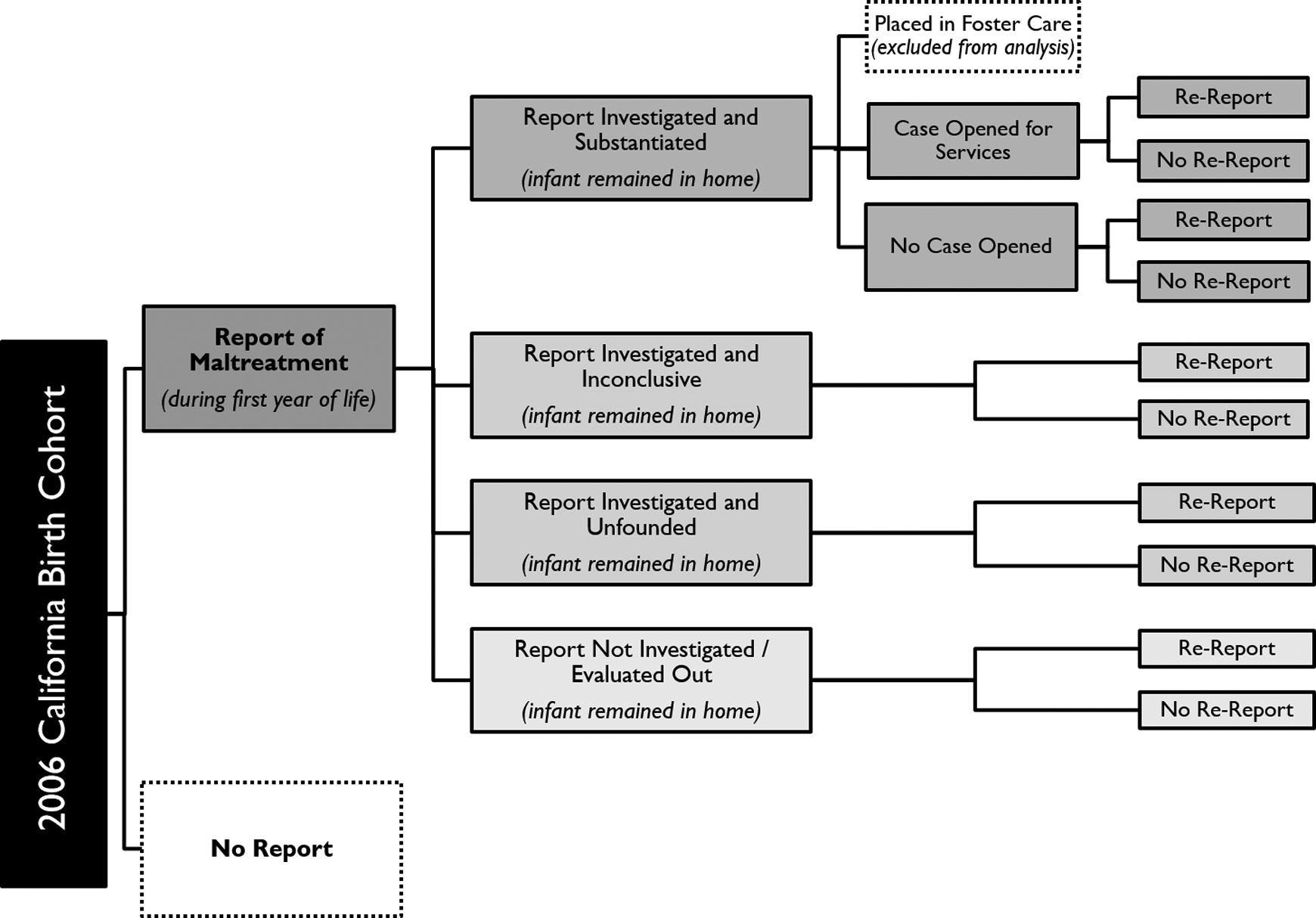
Population of infants followed from first report of maltreatment (before age 1) to re-report, by initial disposition.
Initial report characteristics
In addition to the disposition of the first report, we examined variations in re-reporting risk based on the most serious form of alleged maltreatment in the initial report (abuse, neglect, emotional maltreatment, and at risk due to sibling abuse) and whether the initial report was made by a mandated reporter (mandated and nonmandated). A mandated reporter is described in California Penal Code Section 11165.7 and incorporates individuals in nearly 50 professions who are likely to come into contact with children, such as teachers, social workers, coaches, and physicians. Our abuse category included both physical and sexual abuse. The small number of infants who had an initial allegation of sexual abuse (0.79%) prevented this allegation type from being examined separately.
Characteristics at birth
We included 10 covariates captured in birth records based on self-reported maternal data as well as information entered by hospital medical providers. These variables included: (1) child’s sex (female and male); (2) birth weight (normal ≥2,500 g and low <2,500 g); (3) start of prenatal care (first trimester, second trimester, third trimester, and no care or missing care); (4) the presence of one or more birth abnormalities (none and abnormality); (5) maternal race and ethnicity (White, Black, U.S.-born Hispanic, foreign-born Hispanic, Asian/Pacific Islander, and Native American); (6) maternal age at birth (≤19 years, 20–24 years, 25–29 years, and ≥30 years); (7) maternal educational attainment (high school degree or less and some college or more); (8) paternity (established and missing); (9) birth order (first born, second born, and third born or higher); and (10) birth payment method (private insurance and public insurance).
In California, Medi-Cal functions as the state’s public health insurance (or Medicaid) program. Mothers who do not have insurance at the time of birth are retroactively enrolled in the public program with public insurance therefore reflected in the birth record. The presence of a birth abnormality was gleaned from a list of more than 30 congenital anomalies and other abnormalities identifiable at birth. Paternity was coded based on the absence or presence of a named father on the birth record. Using linkages to historical CPS data, we also adjusted for whether an infant had an older sibling who was currently involved with CPS or had a prior report. Family CPS involvement was coded as a three-level variable for each infant (no sibling CPS involvement due to a one child family; no sibling CPS involvement for a family with two or more children; and prior sibling CPS involvement for a family with two or more children).
Analysis
Descriptive statistics are reported as counts and percentages, with chi-square tests used to assess covariate distributions across initial report dispositions. An infant’s risk of being re-reported for maltreatment within 5 years of a first report was calculated using multivariable Cox regression models. We modeled the characteristics of the initial report of maltreatment and adjusted for potential confounders by including time-invariant sociodemographic characteristics at the time of birth. We reported hazard ratios and corresponding 95% confidence intervals; proportional hazard assumptions were evaluated graphically and through Schoenfield residuals (Cleves, Gould, Gutierrez, & Marchenko, 2008). Interactions examining a family history of CPS involvement by the infant’s initial report characteristics were tested. The decision was made to look at these interactions given the likelihood that CPS surveillance and maltreatment determinations would be influenced by the family’s past or current CPS involvement. All statistical analyses were conducted using Stata Version 13. Please note that given space constraints, not all statistical test values are reported; the corresponding author can be contacted for this information.
Results
Children Reported During Infancy
Of the 563,871 children born in California in 2006, 5.2% (n = 29,135) were reported for abuse or neglect before age 1. More than one in four of these infants was reported to CPS within 3 days of birth (29.0%); slightly more than three quarters of all reports involved allegations of neglect (77.4%), followed by roughly equal shares of emotional abuse (8.8%) and risk due to sibling abuse (7.6%). More than three (77.0%) of every four infants had allegations that were received from mandated reporters. Following the initial report, 5,264 (18.1%) infants were removed from their homes and placed into foster care; 81.9% of infants remained at home. Among infants who remained at home and were included in the current analysis, 14.5% had been evaluated out over the phone without any investigation, 40.9% had received an investigation in which the report of maltreatment was deemed unfounded, 20.4% had an investigation that was inconclusive, and the remaining 24.2% had been substantiated as victims of abuse or neglect.
As reflected in Table 1, the sociodemographic and health characteristics of the overall birth cohort varied notably compared to those reported to CPS during infancy. Differences were also observed in this subset of infants based on the initial report disposition, with statistically significant (p < .001) variations among reported infants emerging across dispositions for all variables except child sex. Although patterns were not always consistent, infants with a substantiated first report of maltreatment tended to be more prevalent in the high-risk categories of each covariate (e.g., late prenatal care, birth abnormalities, and low education). For example, 13.0% of infants initially substantiated for maltreatment were born with low birth weight (11.6% of those to whom no services were offered; 15.0% of those who received services), compared to only about 10% of infants with an evaluated out, unfounded, or inconclusive report of maltreatment. Although infants with a substantiated report of maltreatment tended to be concentrated in the high-risk levels of variables, there was no discernible gradation of risk across other disposition types (i.e., from evaluated out to unfounded to inconclusive).
Descriptive Characteristics of California’s 2006 Birth Cohort and Children Reported for Maltreatment During Infancy.
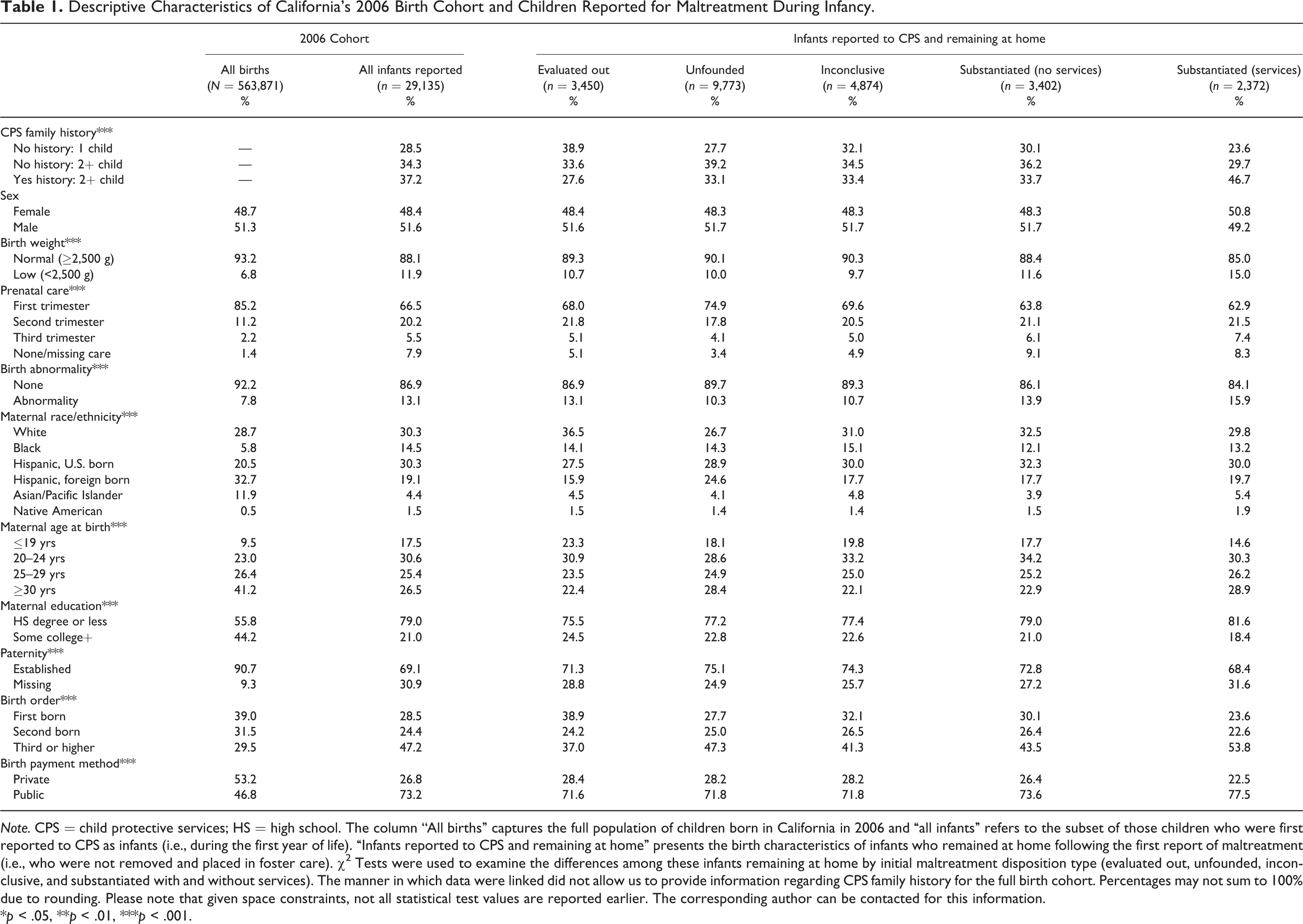
Note. CPS = child protective services; HS = high school. The column “All births” captures the full population of children born in California in 2006 and “all infants” refers to the subset of those children who were first reported to CPS as infants (i.e., during the first year of life). “Infants reported to CPS and remaining at home” presents the birth characteristics of infants who remained at home following the first report of maltreatment (i.e., who were not removed and placed in foster care). χ2 Tests were used to examine the differences among these infants remaining at home by initial maltreatment disposition type (evaluated out, unfounded, inconclusive, and substantiated with and without services). The manner in which data were linked did not allow us to provide information regarding CPS family history for the full birth cohort. Percentages may not sum to 100% due to rounding. Please note that given space constraints, not all statistical test values are reported earlier. The corresponding author can be contacted for this information.
*p < .05, **p < .01, ***p < .001.
Table 2 outlines the characteristics of infants remaining at home stratified by initial maltreatment allegation type and reporter status. Infants who were born with low birth weight, a birth abnormality, late prenatal care, low levels of maternal education, public insurance, and missing paternity were overrepresented among initial reports for neglect. For those infants reported due to sibling abuse, maternal age was a strong correlate, as was having a foreign-born Hispanic mother. Prior research using linked data also found that, on average, foreign-born Hispanic mothers who give birth in California are older (Putnam-Hornstein, Needell, King, & Johnson-Motoyama, 2013). There were no statistically significant variations in the likelihood that an infant’s initial report originated with a mandated versus nonmandated reporter based on birth payment method, establishment of paternity, or maternal education. Sibling reports of maltreatment were excluded from examination of birth order given that, almost by definition, first-born infants could not be reported due to sibling abuse.
Descriptive Characteristics of California’s 2006 Birth Cohort and Children Reported for Maltreatment During Infancy by Initial Report Allegation and Mandated Reporter Status.

Note. CPS = child protective services; HS = high school. The column “Infants reported to CPS and remaining at home” presents the birth characteristics of infants who remained at home following the first report of maltreatment (i.e., who were not removed and placed in foster care). χ2 Tests were used to examine differences across maltreatment allegation types and mandated reporter status. Risk due to sibling abuse category was excluded from the examination of birth order. Percentages may not sum to 100% due to rounding. Please note that given space constraints, not all statistical test values are reported earlier. The corresponding author can be contacted for this information.
Rates of Re-Reported Maltreatment by Disposition and Time
As reflected in Figures 2 and 3, the rates of re-report were fairly similar regardless of the initial disposition type. More than half of infants remaining in the home following a first report of abuse or neglect were re-reported within 5 years; the median time from the first to second report was 312 days (data not shown). The highest re-reporting rate was observed for infants with an initial substantiation and a CPS case opened for family-maintenance services. Slightly more infants evaluated out prior to an investigation were re-reported than infants with a report that was investigated and deemed unfounded. Infants remaining at home following an initial allegation of neglect were more likely to be re-reported within 5 years compared to infants reported for other reasons. A greater share of infants whose initial allegation originated with a nonmandated reporter were re-reported than infants whose reporter was mandated.
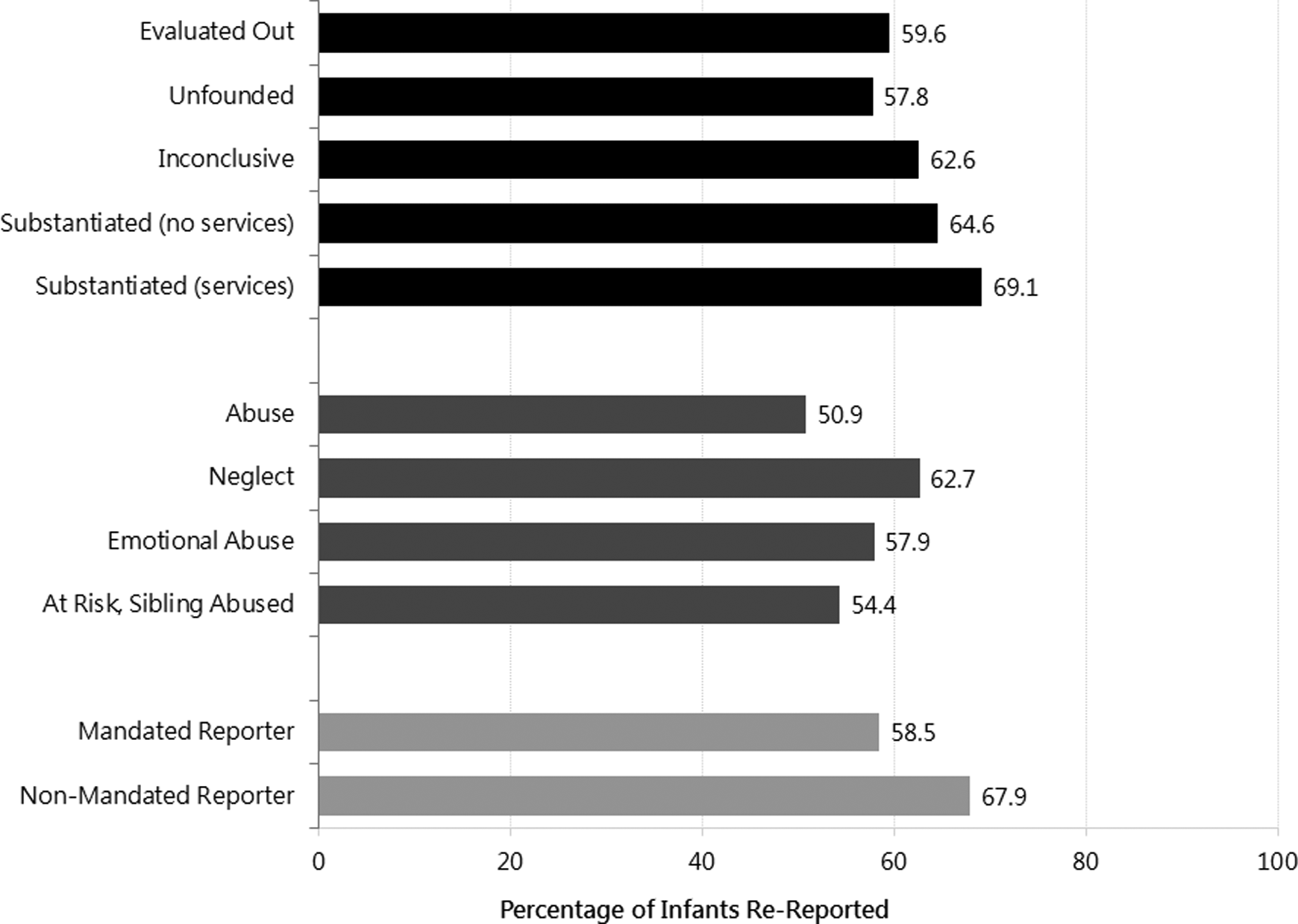
Percentage of infants re-reported following an initial report of maltreatment after which the infant remained in the home.

Cumulative percentage of children experiencing a second report of among infants remaining at home, by initial disposition type and time to second report. Time zero represents the date of the first report received during infancy. Infants placed in foster care following this initial report were excluded from the analysis. Percentages reflect the cumulative percentage of children who had been re-reported for maltreatment by initial disposition type and time from initial report.
Bivariate and Multivariable Models
As depicted in Table 3, significant differences across child and family characteristics were observed by initial report disposition, allegation type, and whether the report originated with a mandated reporter. In Model 1, we examined the likelihood of re-report within 5 years for each of these variables separately. In Model 2, we simultaneously estimated the likelihood of re-report based on initial report disposition, allegation type, and mandated reporter status. Finally, in Model 3 we estimated the likelihood of re-report based on the characteristics of the initial report with adjustments for covariates at birth. We tested for interactions between sibling CPS involvement and the three variables related to the nature of the initial report: (1) disposition type, (2) allegation type, and (3) reporter type. Although statistically significant variations emerged between sibling CPS involvement by both disposition type, χ2(8) = 46.0, p < .001, and allegation type, χ2(6) = 16.3, p = .012, these interactions did not alter our main effects and therefore were examined separately. Both before and after adjusting for allegation type, reporter status, and baseline characteristics, infants initially evaluated out (i.e., those whose reports were not investigated) were re-reported at a significantly higher rate than infants whose initial report was investigated and deemed unfounded (p < .001). Re-reporting rates for infants evaluated out did not vary significantly (p = .070) from infants whose initial reports were investigated and determined to be inconclusive or substantiated but received no services.
Bivariate and Multivariable Cox Regression Models Examining the Likelihood of a Re-report Within 5 Years of a First Report During Infancy.
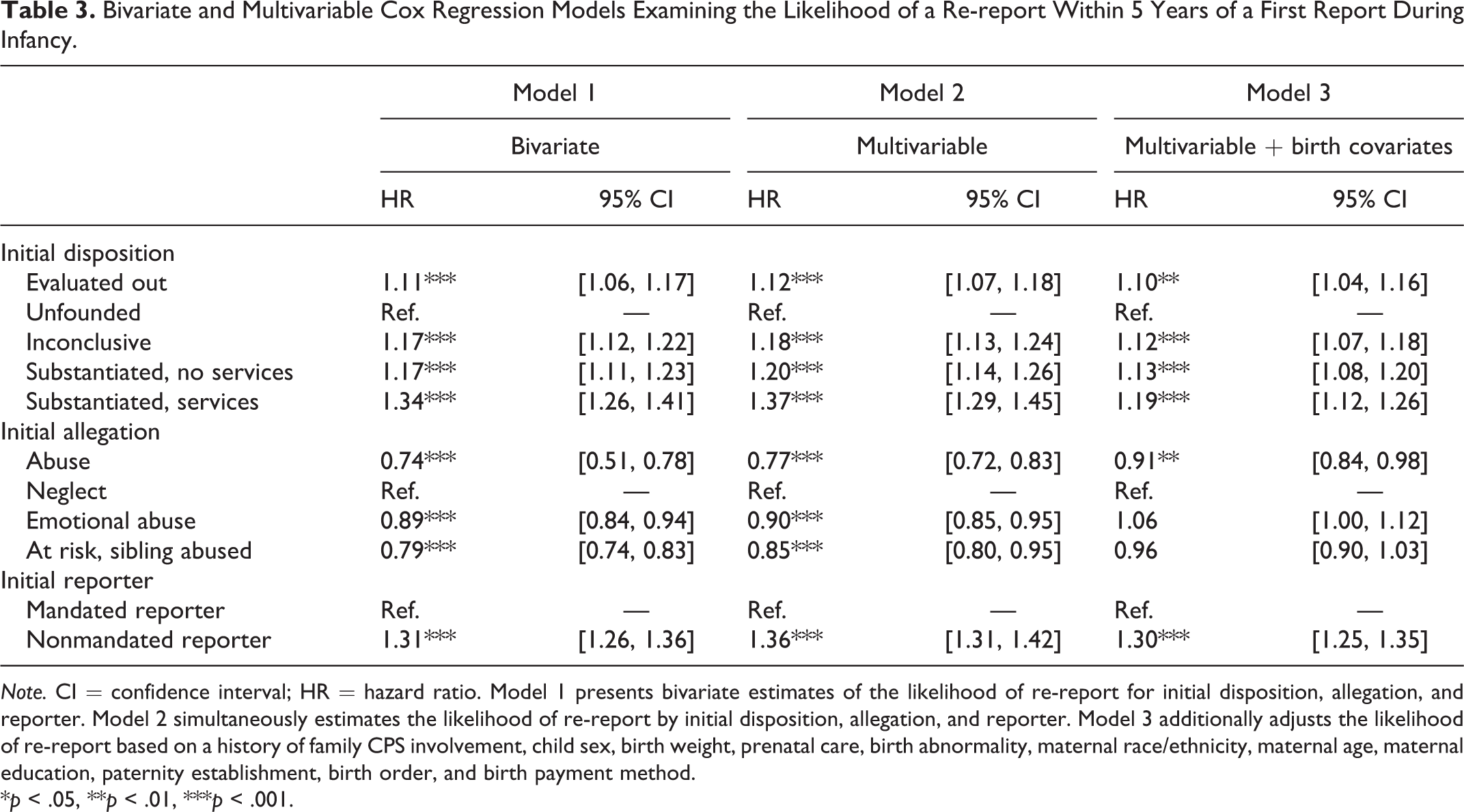
Note. CI = confidence interval; HR = hazard ratio. Model 1 presents bivariate estimates of the likelihood of re-report for initial disposition, allegation, and reporter. Model 2 simultaneously estimates the likelihood of re-report by initial disposition, allegation, and reporter. Model 3 additionally adjusts the likelihood of re-report based on a history of family CPS involvement, child sex, birth weight, prenatal care, birth abnormality, maternal race/ethnicity, maternal age, maternal education, paternity establishment, birth order, and birth payment method.
*p < .05, **p < .01, ***p < .001.
The highest re-reporting rate was observed for infants with reports that were investigated and substantiated and had a case opened by CPS for services. Infants with an abuse allegation were significantly less likely to be re-reported relative to infants with a neglect allegation across all models. Independent of which covariates were included, infants reported by nonmandated reporters had a higher rate of re-reporting during the subsequent 5 years compared to those whose initial reports originated with a mandated reporter. Although not shown in Table 3, the rate of re-reporting was 67% greater for infants with a family (sibling) history of CPS involvement as compared to infants without a family history of CPS involvement (p < .001).
Discussion
Prior literature has pointed to repeated reports of maltreatment as a predictor of adversities throughout childhood and adolescence (English, Graham, Litrownik, Everson, & Bangdiwala, 2005; Jonson-Reid, Kohl, & Drake, 2012; Lanier, Jonson-Reid, Stahlschmidt, Drake, & Constantino, 2010). In this study, we examined the rate at which infants who remained at home following an initial report of abuse or neglect were re-reported within 5 years. Several key findings emerged that both extend our understanding of maltreatment risk and confirm research that has documented the vulnerability of infants known to CPS.
First, we found that 6 in 10 infants remaining at home following an initial allegation of abuse or neglect were re-reported within 5 years. Although previous research has established high rates of re-reporting among children with an initial maltreatment allegation (DePanfilis & Zuravin, 2002; Drake et al., 2003; Fluke et al., 2008; Kohl et al., 2009), findings from the current analysis represent the highest published estimate to date. Our findings align most closely with those of Drake, Jonson-Reid, Way, and Chung (2003), who found that nearly half of children with an initial report were re-reported within 4.5 years, and Thompson and Wiley (2009), who followed maltreated infants and found that 29.5% were re-reported within 4 years. In another recent study, 44% of children were re-reported within 5 years (Dakil, Sakai, Lin, & Flores, 2011). The high rate of re-reporting identified in the current study is likely a function of several methodological decisions, including the exclusion of children placed in foster care after the initial report (including children placed in foster care would have artificially deflated re-reporting rates), the ability to administratively follow our cohort for 5 years, and our focus on an acutely high-risk subset of children—those first reported during infancy.
Second, high rates of re-reported maltreatment were observed among infants with unsubstantiated reports following an investigation (i.e., reports deemed unfounded or inconclusive) and among infants whose initial reports were evaluated out prior to any investigation (i.e., were not accepted by the hotline). As Drake and colleagues (2003, p. 249) described, “If unsubstantiated cases are mainly spawned of erroneous, false, or similarly unimportant situations, then we would expect them to differ radically in terms of future risk when compared with substantiated cases.” Data from the present study not only support research indicating the vulnerability of infants with unsubstantiated reports, but also broaden the discussion to include infants who are evaluated out through the child protection hotline. These data also call into question the effectiveness of efforts to gather meaningful information and screen reports of maltreatment over the phone for infants and young children.
Third, findings suggest that despite variations in the sociodemographic characteristics of infants by initial report disposition, with a higher concentration of risk factors observed among infants with substantiated reports, these factors do not substantively alter the relationship between an initial disposition and re-reporting risk. As expected, across all three models, re-reporting rates by initial disposition were fairly constant, both before and after adjusting for the initial allegation type, mandated reporter status, and factors at birth. Previous analyses examining maltreatment re-reporting and recurrence risk have found significant rate variations by the sociodemographic characteristics of the child and family (Connell et al., 2007; Dakil et al., 2011; English et al., 1999; Swanston et al., 2002). In the context of the present analysis, although sociodemographic variations emerged, these factors did not change re-reporting findings.
Fourth, these data document how few infants remaining at home following a first report of maltreatment receive formal CPS service interventions. High rates of re-reporting following an initial allegation of maltreatment invariably raise questions as to whether there are certain high-risk groups of children and families for which attempts to modify risk are not achievable (Thompson & Wiley, 2009). As much as this is true, that some children cannot safely remain with their birth families, one policy response may be to intervene sooner rather than later so that children can move quickly to alternative forms of permanency, such as adoption (Bartholet, 2014).
Yet, any argument for an aggressive removal response presumes that CPS agencies deliver services that are unsuccessful at remedying familial risks to protect children - that the services needed to prevent conditions leading to later reports simply do not exist or do not work. Data from the current study, however, do not provide evidence of failed or ineffective services by the CPS system. Rather, findings align with Jonson-Reid’s (2011) analysis and underscore just how few infants and families are provided with CPS services after an initial report of abuse or neglect. Among all reported infants, three of every four did not receive any formal CPS intervention services following the report (i.e., no foster care placement and no case opened for family maintenance services). Of the 82% of infants who remained at home following the first report, only 1 in 10 received CPS services through an open case. Although it is unknown how many of these infants and their families may have received voluntary services through community agencies, data from our study suggest that if interventions were delivered, they were inadequate in terms of service slots, dosage, or quality, to prevent conditions leading to later reports of abuse and neglect for a majority of infants. It should also be noted that, not surprisingly, infants who did receive formal CPS services had the highest rates of re-reporting. Infants and families prioritized for in-home CPS services likely constituted the group at highest risk, those on the very margin of foster care placement. Additionally, the surveillance of these families was almost certainly higher.
Finally, we found that both before and after adjusting for other factors, infants with initial reports from nonmandated reporters were more likely to be re-reported. This finding aligns with prior studies examining re-reporting rates among mandated and nonmandated reporters (Bae, Solomon, & Gelles, 2009; Fluke et al., 2008) and likely arise from a number of different dynamics (King, Lawson, & Putnam-Hornstein, 2013). Mandated reporters may be better equipped to accurately obtain, document, and communicate relevant evidence of maltreatment to CPS, potentially leading to better initial determinations and interventions and thereby reducing the rate of follow-up reports (Drake, 1995). Additionally, there may be subtle differences in how CPS agencies view allegations from mandated reporters, selectively acting under the assumption that these reports are more credible (Cross & Casanueva, 2009; Drake, 1995). Regardless, the handling of initial abuse and neglect reports is particularly critical when infants are involved.
Limitations
Our findings must be interpreted with several notable limitations in mind. First, as noted earlier, we were unable to determine how many infants and families may have had risks that were offset by the receipt of voluntary services through referrals to community agencies. In California, as well as other states, differential response, also known as alternative response, is increasingly used as a means of assessing and then triaging families into voluntary, community-based services when concerns about child safety and well-being are less immediate. Although evaluations of differential response have not produced evidence that these efforts are effective in reducing a child’s future risk of maltreatment (Conley & Berrick, 2010; Hughes, Rycus, Saunders-Adams, Hughes, & Hughes, 2013), administrative CPS records used for the current analysis did not allow us to determine whether or not families were engaged in other services. Our study was also limited by the usual shortcomings of research based on linked administrative records, including errors in the underlying data sources, relatively crude proxy or surrogate variables, and an inability to ascertain how many infants for whom no subsequent report of maltreatment was recorded were simply lost to follow-up because they no longer lived in California. Additionally, these analyses only involved data for a single state, limiting generalizations to other jurisdictions.
Implications
More than half a million children were born in California in 2006, roughly 5% of whom were identified as possible victims of maltreatment during the first year of life. Although some initial allegations to CPS were undoubtedly false indications of risk or harm, recent research points to a report of abuse or neglect as a reliable signal of a child whose vulnerability runs deeper than poverty alone would predict (Putnam-Hornstein, 2011; Putnam-Hornstein, Schneiderman, Cleves, Magruder, & Krous, 2014). As much as these early maltreatment reports to CPS are meaningful signals of future harm and later adversities, they may also provide a useful means of identifying infants and families with the most pronounced need for support and intervention and potentially the greatest opportunity for impact. Data from the current study indicate that the child protection system has the resources to formally serve only a small number of infants remaining at home following an initial report of abuse or neglect. Although it is unknown how many of these families were referred to or effectively engaged by voluntary community-based service providers, the fact that more than 60% of infants were re-reported points to the challenges of delivering services that are adequate in engagement, quality, retention, dosage, and substantive value to prevent conditions necessitating CPS follow-up. Unfortunately, there is limited information available concerning the provision of non-CPS services to families following an initial report of maltreatment. Expanded efforts to gather and integrate community sources of data are critical to better understanding the delivery and effectiveness of programs for families with children remaining at home following an initial report to CPS.
Footnotes
Acknowledgments
The authors wish to acknowledge collaborating colleagues at the USC Children’s Data Network, the UC Berkeley California Child Welfare Indicators Project, and the California Department of Social Services. Barbara Needell provided feedback and guidance; Michael N. Mitchell offered statistical and technical assistance. The Children’s Data Network is funded by First 5 LA and the Conrad N. Hilton Foundation. Support for the Child Welfare Indicators Project is provided by the California Department of Social Services and the Stuart Foundation.
Declaration of Conflicting Interests
The author(s) declared no potential conflicts of interest with respect to the research, authorship, and/or publication of this article.
Funding
The author(s) disclosed receipt of the following financial support for the research, authorship, and/or publication of this article: This analysis was funded through a grant from First 5 LA to the Children’s Data Network.