



Abstract
Each year in the United States, approximately 1,720 children die from a child maltreatment fatality (CMF). Although many of these children are survived by siblings, few studies have examined the child protective service (CPS) involvement of these siblings.
Objective:
This study examined CPS involvement of children surviving the CMF of a sibling as well as predictors of subsequent CPS reports.
Method:
Department of Human Services and Child Death Review Board data about children who died from a CMF during 1993–2003 (n = 416) and their siblings in the state of Oklahoma were used to examine CPS involvement and predictors of subsequent CPS reports for surviving siblings.
Results:
Surviving siblings of a victim of a CMF experienced substantial CPS involvement; 81% of the original victims had siblings who were subsequently reported to CPS (n = 1,840). Original victim and family characteristics that predicted a greater rate of siblings’ subsequent reports to CPS included younger original victim age, greater number of children in the original victim’s home, and more previous reports of the original victim to CPS.
Discussion:
A large portion of families with a CMF struggle to adequately care for their surviving children. Such families may need additional support after a CMF.
Child maltreatment affects a substantial portion of families in the United States. Indeed, approximately 674,000 children in the United States were victims of child abuse and neglect in the year 2017 (U.S. Department of Health and Human Services, 2019). Maltreatment can result in a wide range of short- and long-term negative physical, emotional, and social outcomes (e.g., Barrett, Katsiyannis, Zhang, & Zhang, 2014; Collishaw et al., 2007; Norman, Byambaa, Butchart, Scott, & Voss, 2012). And, unfortunately, in the most severe circumstances, maltreatment can lead to a child’s death. Indeed, approximately 1,720 children died in United States in 2017 as a result of abuse or neglect (U.S. Department of Health and Human Services, 2019), and experts agree that this number is likely an underestimate (Crume, DiGuiseppi, Byers, Sirotnak, & Garrett, 2002; Herman-Giddens et al., 1999; Schnitzer, Covington, Wirtz, Verhoek-Oftedahl, & Palusci, 2008). The Child Abuse Prevention and Treatment Act defines child abuse as “any recent act or failure to act on the part of a parent or caretaker which results in death, serious physical or emotional harm, sexual abuse or exploitation, or an act or failure to act which presents an imminent risk of serious harm” (U.S. Department of Health and Human Services, 2019). However, specific definitions of maltreatment vary by state (U.S. Department of Health and Human Services, 2019). Deaths related to child abuse or neglect are those that are determined to be primarily caused by abuse (e.g., shaking, beating) or neglect (e.g., lack of supervision, failure to provide adequate medical care) on the part of a caregiver. Common causes of fatal maltreatment include head trauma, drowning, smoke inhalation/asphyxia, shaken baby syndrome, and many others (Damashek, McDiarmid Nelson, & Bonner, 2013).
Surviving Siblings of Fatal Child Maltreatment
When a child dies as a result of abuse or neglect, surviving siblings may be at continued risk for maltreatment; however, little research has examined outcomes to siblings after a child maltreatment fatality (CMF). It can often be difficult for child welfare workers to accurately predict when children are at serious risk and should be removed from their homes (Palusci & Covington, 2014). One of the few studies that examined the outcomes to remaining siblings following a CMF investigated sibling removal from the home after a maltreatment-related death (Damashek & Bonner, 2010). The study examined 250 families in the state of Oklahoma who experienced the death of a child due to maltreatment (as determined by the state Department of Human Services [DHS]). In slightly more than half (56%) of the families, one or all siblings in the household were removed immediately after the fatality. The study also examined whether child, family, and maltreatment characteristics predicted removal of siblings. Predictors of sibling removal from the home included younger surviving sibling age, more previous family reports to child welfare, and the type of maltreatment that caused the victim’s death; children were more likely to be removed when the fatal maltreatment incident primarily involved physical abuse rather than neglect (Damashek & Bonner, 2010). Although this study provided some initial data regarding outcomes to surviving siblings (i.e., immediate removal from the home), the study did not examine the surviving siblings’ longer-term involvement in child protective service (CPS), such as subsequent child maltreatment reports. Thus, it’s unclear whether they were at continued risk for maltreatment after the death of their sibling. Additional research is needed to examine whether siblings of fatal child maltreatment victims are adequately protected from future maltreatment. The present study examined the frequency of CPS involvement of siblings of victims of fatal maltreatment as well as predictors (based on the original victim and family) of the frequency of subsequent CPS reports to siblings of victims of a CMF subsequent to the original victim’s death. Given the limited literature on outcomes for siblings of victims of a CMF, below we discuss research on factors related to risk for subsequent maltreatment reports after initial involvement in CPS for nonfatal maltreatment cases.
Predictors of Recurring Child Maltreatment Reports
In cases of fatal maltreatment, research indicates that few of these children (typically fewer than 25%) were previously known to CPS (Anderson, Ambrosino, Valentine, & Lauderdale, 1983; Damashek, McDiarmid, & Bonner, 2013; U.S. Department of Health and Human Services, 2019). However, children who experience nonfatal maltreatment often are the subjects of repeated reports to CPS. Indeed, between 30% and 50% of families involved with CPS experience re-reports (e.g., Connell, Bergeron, Katz, Saunders, & Tebes, 2007; Putnam-Hornstein, Simon, Eastman, & Magruder, 2015; Thompson & Wiley, 2009) and future substantiated cases of maltreatment (Lipien & Forthofer, 2004).
Researchers have examined a variety of factors predicting subsequent reports in nonfatal cases including demographics (e.g., victim age, victim race, poverty); initial maltreatment experience (e.g., substantiation of cases, type of maltreatment); and family variables (e.g., parenting styles). Study findings indicate that children are at higher risk who are younger at the initial maltreatment report (Connell et al., 2007; Connell et al., 2009; Lipien & Forthofer, 2004; Thompson & Wiley, 2009; Zhang, Fuller, & Nieto, 2013), live in a home with more children (Bae, Solomon, & Gelles, 2009; Fuller, 2005; Zhang et al., 2013), and live in a family that struggles with poverty (Palusci & Ondersma, 2012; Jonson-Reid, Drake, & Kohl, 2009). Additionally, while some research indicates that White youth are at higher risk for subsequent reports than are youth of color (Lipien & Forthofer, 2004; Zhang et al., 2013), other research indicates this relationship may be more complicated. For example, some research indicates that frequency of and time to recurrence for White versus African American youth vary by state (e.g., Fluke, Yuan, & Edwards, 1999). Moreover, some researchers speculate that Whites appear to be at a higher risk of re-report because they are less likely to be removed from the home than are children of color (Connell et al., 2007).
Aspects of the maltreatment experience and system involvement also predict re-report. For example, when the initial case of maltreatment is substantiated, rather than unsubstantiated, there is a higher likelihood of future subsequent reports and substantiated cases of maltreatment (Lipien & Forthofer, 2004; Putnam-Hornstein et al., 2015; Thompson & Wiley, 2009). Maltreatment type has also been found to predict subsequent reports to CPS, though data are equivocal. For example, some researchers have found that experiences of physical abuse increase the likelihood of subsequent reports compared to neglect (Thompson & Wiley, 2009; Connell et al., 2007), while other researchers have found that neglect more strongly predicts subsequent reports to CPS and future instances of substantiated maltreatment (Connell et al., 2009; Lipien & Forthofer, 2004).
Summary and Present Study Goals
In summary, children who are referred to CPS for maltreatment are often at risk for experiencing subsequent maltreatment reports. Similarly, once a family becomes involved in CPS due to a CMF, surviving siblings may be at high risk for experiencing subsequent maltreatment. However, little research has examined the CPS involvement of children who survive the CMF of a sibling. Thus, more research on the surviving siblings of fatal maltreatment victims is needed to protect siblings from future harm. Literature on nonfatal maltreatment re-report indicates that child, family, and maltreatment incident factors predict additional maltreatment reports. The literature examining outcomes for surviving siblings following a maltreatment-related fatality is limited; however, factors predicting maltreatment reports following a sibling’s fatality may be similar to those for nonfatal maltreatment.
The present study had two aims, which were to examine: (1) CPS involvement (i.e., subsequent reports to CPS, removals from the home, and parental termination of rights) for siblings of fatal child maltreatment victims and (2) predictors of surviving siblings’ subsequent reports to CPS. Predictors included characteristics of the original victim of a CMF (i.e., age, gender, number of prior reports to CPS), the original victim’s family (i.e., number of children in the home, prior sibling reports to CPS), and the fatal child maltreatment incident (i.e., relationship of the original victim’s alleged perpetrator to the victim, type of maltreatment that caused the original victim’s death). Based on previous literature regarding outcomes to siblings of fatally maltreated children and predictors of re-reports of nonfatal maltreatment, it was hypothesized that the following variables would predict greater numbers of subsequent reports to CPS for surviving siblings: younger age of the original victim, greater number of children in the original victim’s home, and greater number of CPS reports for the original victim and siblings prior to the original victims’ death.
Method
Participants
The sample included 416 youth who died from child maltreatment in a the state of Oklahoma between 1993 and 2003 as well as siblings who were the subjects of a subsequent report to CPS between the time of the original victim’s death and the point of follow-up data collection (June, 2012). Demographics of the original victims who died as a result of maltreatment are presented in Table 1. The majority (73.24%) of victims were ages 0–3 (M = 3.08, SD = 4.28; ranging from 0 to 17). The largest portion of the original victims were less than 1 year of age (35.5%), and there were slightly more male than female victims. The majority of the sample was White, followed by African American, and then Native American. The median number of children in the victim’s home (including the original victim of a CMF) was 2 (ranging from 0 to 9). At the time that the original victims died, there were a total of 677 siblings. It is unknown how many total siblings the original victims had at the time of follow-up data collection. However, 1,840 siblings were victims of later CPS reports; unfortunately, we did not have access to demographic information about these children.
Child, Family, and Incident Characteristics of the Original Victim of a Child Maltreatment Fatality and Siblings’ Subsequent Reports to CPS.

Note. CPS = child protective service; CMF = child maltreatment fatality.
Procedures
For the present study, two databases were linked. The first database included archival data provided by the Oklahoma Department of Human Services (OKDHS) and the Oklahoma Child Death Review Board (OKCDRB) for children who had been determined to be victims of a CMF by DHS and who died between the years 1993 and 2003. This data set included information about victims of fatal maltreatment, their families, and the circumstances surrounding their death. Data were entered into an electronic database using paper files that were housed by the OKCDRB. These files included data from OKDHS as well as police reports, medical examiner reports, and related materials.
The second data set from OKDHS provided information about CPS involvement of siblings of the children who had died from maltreatment from the date of the original victim’s death through June 2012. Data included subsequent reports to CPS, removals from the home, and placements of siblings of the original victim of fatal maltreatment. The data also included information about termination of parental rights. Siblings were identified by DHS as children who were connected to the original victim of fatal maltreatment by case number; thus, these siblings included stepsiblings, half-siblings, and biological siblings. We removed cases from the data set in which a report was made when a sibling was not placed in their home (5% of reports). However, it is possible that, at the time of report, the siblings may not have lived in the same home as the original victim but still were in the care of one of the original caregivers (e.g., parents divorced and mother remarried and had another child).
Measures
Outcome variables
For the first study aim, outcomes included the number of surviving siblings who were subsequently reported to CPS, the number of siblings who were removed from their home, and the number of siblings whose parental rights were terminated. The outcome of interest for the second study aim was the rate of subsequent sibling CPS reports associated with each victim of a CMF that occurred after the original victim’s death. Due to the fact that some children died at earlier time points than other children, there was variation in the number of years that had elapsed since the original victim’s death. Thus, for Aim 2, a CPS report rate variable was created by dividing the number of subsequent sibling maltreatment reports by the number of years that had elapsed since the original victim’s death; this rate variable was used as the primary outcome variable.
Predictor variables
For the second study aim, child, family, and incident characteristics of the original victim of fatal maltreatment were used to predict subsequent sibling reports to CPS. Predictor variables included original victim age (in years) and sex, the number of children (including the victim) in the original victim’s home, the type of maltreatment leading to the original victim’s death (abuse or neglect), the number of previous CPS reports for the victim (prior to the death), the number of previous CPS reports for siblings in the home (prior to the original victim’s death), the alleged perpetrator’s relationship to the original victim (biological or nonbiological caregiver), and whether any children were removed from the home after the original victim’s death (yes/no).
Data analysis plan
Below we report descriptive characteristics about the original sample of victims of fatal maltreatment. We then report data regarding the frequency of subsequent CPS involvement for the siblings of these original victims. We did not have access to demographic data about these siblings. Next, we report bivariate associations between characteristics of original victims and their death to the rate of subsequent CPS reports for siblings of these original victims. Finally, we report results of our model predicting the rate of subsequent sibling CPS reports using predictors that were significant in the bivariate analyses. Although it is relatively common practice to use survival analysis to predict recurrence in studies examining child maltreatment re-reports, given the high percentage of families that had recurrence in this sample (see below), we were interested in predicting the frequency of subsequent reports rather than predicting the likelihood of or the time to subsequent report.
Results
Descriptive Statistics for Original Victims of Fatal Maltreatment
Table 1 shows descriptive information about the characteristics surrounding the death of the original victim of a CMF as well as subsequent CPS report frequency for surviving siblings. The majority of the original victims died as a result of neglect. In most cases, the alleged primary perpetrator was a biological parent. The mean number of CPS reports for the original victim prior to the fatal maltreatment incident was less than one, and the mean number of CPS reports for siblings prior to the fatal maltreatment incident was slightly over 1. In approximately half of the original cases of fatal maltreatment, siblings were removed from the home.
Subsequent CPS Involvement for Siblings of Fatal Maltreatment Victims
Figure 1 shows information regarding the number of subsequent reports and removals for surviving siblings. The follow-up data for siblings of the original victim indicate that there were subsequent sibling reports of maltreatment associated with 81% (n = 337) of fatal maltreatment victims. Subsequent to the original 416 victims’ deaths, 1,840 siblings were reported to CPS regarding potential experiences of child maltreatment. This number includes only those who had reports associated with their biological parents; an additional 159 children were subsequently reported as victims of maltreatment by other caregivers (e.g., foster parents, childcare providers). The median number of sibling reports associated with each original victim was 3 (M = 6.3, SD = 9.0, ranging from 0 to 57). Note that this number only includes cases in which there was at least one subsequent sibling report associated with the original victim. The median number of siblings associated with each original victim who were subsequently reported for maltreatment was four (M = 6.9, SD = 7.2, ranging from 1 to 45). When accounting for the number of years since the original victim’s death, the median number of subsequent reports associated with each victim per year was 0.21 (M = 0.46, SD = 0.65, range: 0 to 3.8).
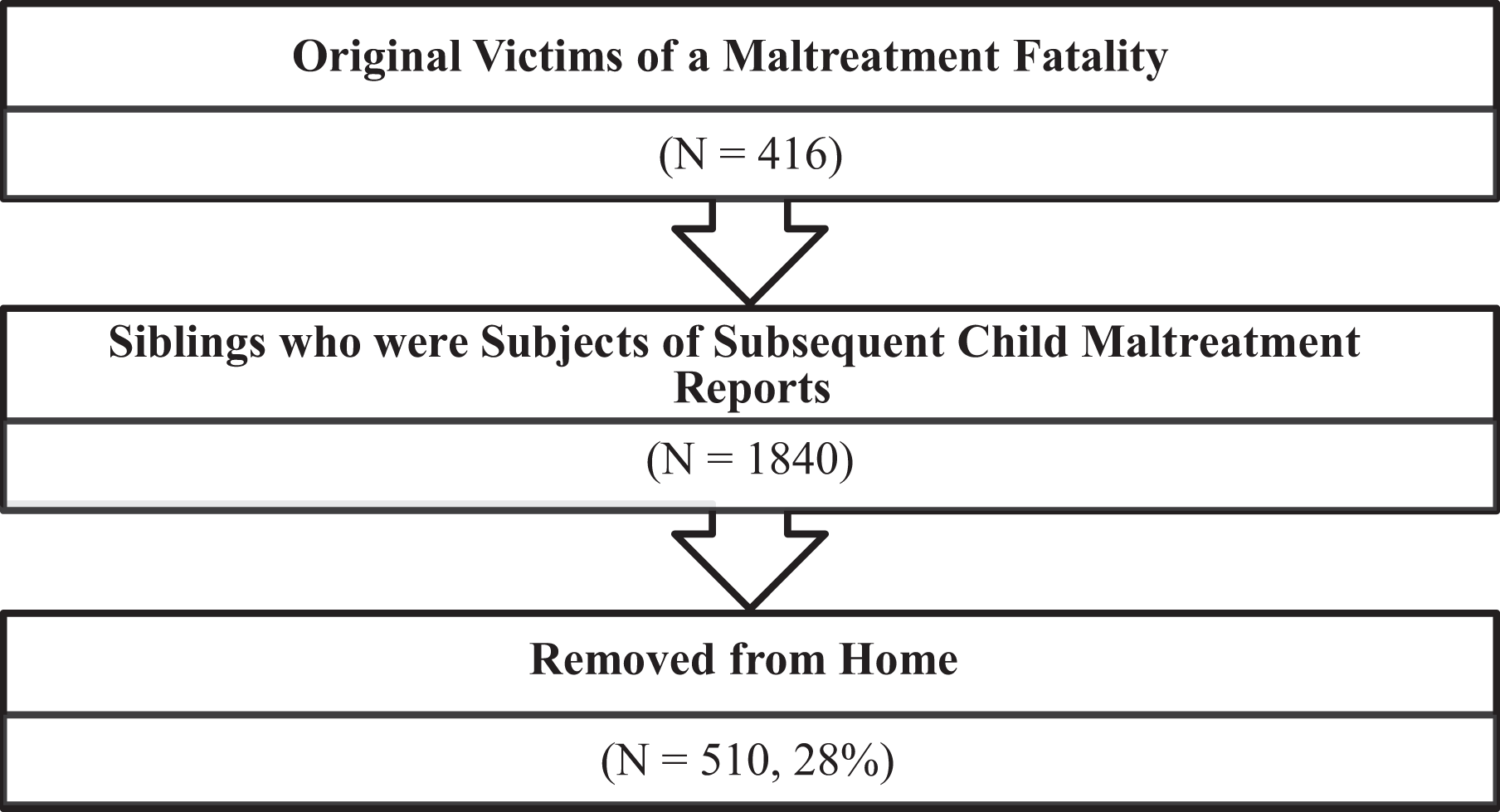
Surviving siblings’ subsequent child protective service involvement.
Subsequent sibling CPS reports were primarily related to neglect (83.1%), followed by physical abuse (20.8%), and sexual abuse (5.8%). Of children who were the subjects of subsequent reports to CPS, 510 (28%) were removed from their home on at least one occasion. Moreover, of siblings with subsequent reports to CPS, 463 (25%) siblings were children of parents whose rights were terminated subsequent to the original child’s death.
Bivariate Associations of Subsequent Sibling Reports to CPS and Characteristics of the Original Victim, Family, and the Fatal Child Maltreatment Incident
Bivariate analyses were used to examine associations between characteristics of the original victim, family, and maltreatment incident and the rate of subsequent CPS reports for surviving siblings. Correlations can be seen in Table 2. The original victim’s age was negatively associated with the rate of subsequent sibling CPS reports, such that there were more sibling reports associated with children who died at younger ages. The rate of subsequent sibling CPS reports was positively associated with the number of children in the original victim’s home and the number of previous CPS reports for both the original victim and siblings. Additionally, the rate of subsequent sibling CPS reports was related to the type of maltreatment that caused the original victim’s death; there were more subsequent sibling reports associated with deaths due to neglect rather than abuse. Finally, there was a trend for there to be more subsequent sibling reports when siblings had previously been removed from the home.
Bivariate Relations Between Original Victim and Family Variables and Subsequent Sibling Reports to child protective service.
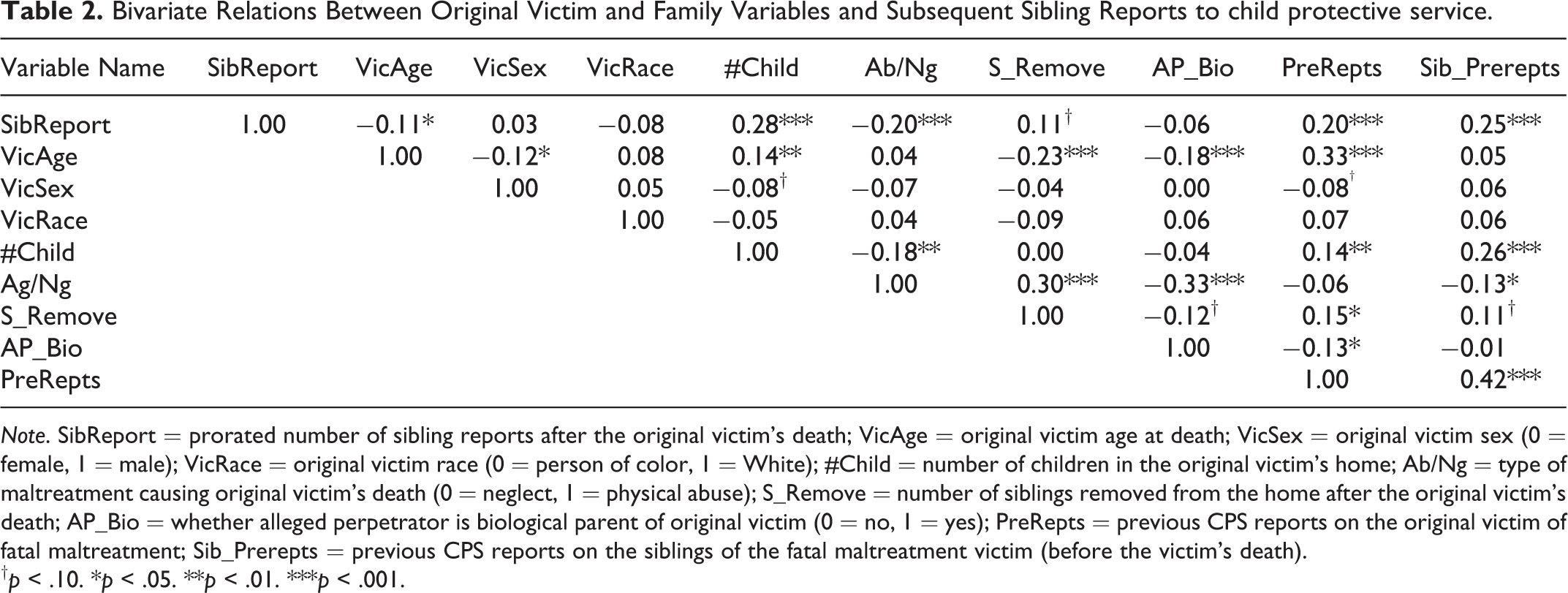
Note. SibReport = prorated number of sibling reports after the original victim’s death; VicAge = original victim age at death; VicSex = original victim sex (0 = female, 1 = male); VicRace = original victim race (0 = person of color, 1 = White); #Child = number of children in the original victim’s home; Ab/Ng = type of maltreatment causing original victim’s death (0 = neglect, 1 = physical abuse); S_Remove = number of siblings removed from the home after the original victim’s death; AP_Bio = whether alleged perpetrator is biological parent of original victim (0 = no, 1 = yes); PreRepts = previous CPS reports on the original victim of fatal maltreatment; Sib_Prerepts = previous CPS reports on the siblings of the fatal maltreatment victim (before the victim’s death).
† p < .10. *p < .05. **p < .01. ***p < .001.
Predicting Subsequent Sibling Reports to CPS from Original Victim, Family, and Incident Characteristics
To examine our hypothesis regarding which victim, family, and incident characteristics would predict subsequent sibling reports to CPS, variables that were significant in the bivariate analyses were used to predict subsequent sibling reports to CPS (see Table 3). A zero-inflated Poisson regression was used because the dependent variable was skewed toward zero. The model included the original victim’s age, number of children in the home of the original victim, type of maltreatment that caused the original victim’s death (abuse or neglect), whether or not siblings were removed after the original victim’s death, and the number of previous reports for both the original victim and their siblings. Original victim age, number of children in the victim’s home, and previous victim reports to CPS significantly predicted the number of subsequent CPS reports for siblings following the original victim’s death. Specifically, younger victim age, more children in the victim’s home, and more previous victim reports predicted greater subsequent CPS reports for the surviving siblings.
Predicting Rate of Subsequent Child Protective Service Reports for Surviving Siblings by Characteristics of the Original Victim’s Death.
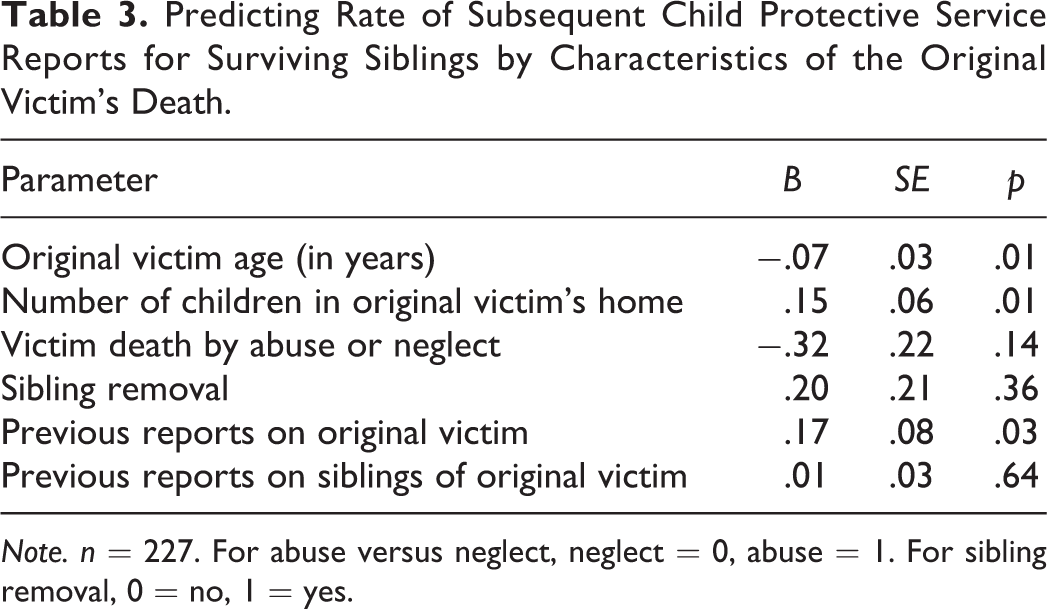
Note. n = 227. For abuse versus neglect, neglect = 0, abuse = 1. For sibling removal, 0 = no, 1 = yes.
Discussion
Child maltreatment fatalities often occur in a family context that includes other children. Surviving children may be at continued risk for harm; however, little research has examined the outcomes of siblings following a maltreatment-related death. Understanding whether these youth are at continued risk for maltreatment is critical to understanding whether surviving siblings are adequately protected from harm. The present study examined the extent of CPS involvement of children who survived the child maltreatment death of a sibling as well as predictors of subsequent CPS reports for surviving siblings.
We found that surviving siblings of victims who died from child maltreatment experienced substantial CPS involvement including frequent reports to CPS and removals from the home. Specifically, 81% of the original victims of fatal maltreatment had siblings who later were the subjects of CPS reports. This is much higher than the rate of subsequent reports for nonfatal cases of maltreatment, which has been estimated to range from 30% to 50% (Connell et al., 2007; Putnam-Hornstein et al., 2015; Thompson & Wiley, 2009). Moreover, the median number of subsequent CPS reports associated with each original victim was three. Thus, these data provide evidence that the siblings of victims of fatal child maltreatment are at significant risk for experiencing future instances of child maltreatment. Moreover, nearly a quarter of these siblings were children of parents whose parental rights were terminated, which indicates that subsequent maltreatment was relatively severe. These findings suggest that families of children who die from maltreatment are in need of continued monitoring and support after the death of a child in order to increase the safety of surviving siblings.
Regarding the type of maltreatment that was reported, the majority (80%) of subsequent sibling reports were related to neglect, which is consistent with national data indicating that the majority (75%) of substantiated maltreatment reports are identified as neglect rather than other types of maltreatment (U.S. Department of Health and Human Services, 2019). Indeed, the majority of the original victims in our sample died as a result of neglect, which may suggest that many of the families in the sample may struggle with chronic neglect of their children.
We also found that subsequent sibling reports to CPS after a maltreatment fatality were predicted by characteristics of the fatal maltreatment victim and their family, including younger victim age, a greater number of children in the victim’s home, and a higher number of previous victim reports to CPS. These findings are consistent with our hypotheses and also reflect findings from previous studies that examined outcomes to surviving siblings of a maltreatment fatality. Indeed, Damashek and Bonner (2010) found that younger child age and previous family reports to CPS predicted sibling removal from the home. Our findings are also consistent with the larger literature examining risk for re-reports of nonfatal maltreatment. For example, research indicates that previous CPS involvement (Lipien & Forthofer, 2004; Putnam-Hornstein et al., 2015), younger victim age (Connell et al., 2009; Lipien & Forthofer, 2004; Thompson & Wiley, 2009; Zhang et al., 2013), and having more children in the home (Zhang et al., 2013) are associated with higher re-report rates. The fact that the number of children in the home predicted subsequent reports, combined with the higher number of neglect reports, may indicate that families with more children may simply have difficulty providing adequate material and emotional care for all of the children in their home. Moreover, the fact that a higher number of previous victim reports to CPS predicted subsequent reports to siblings may indicate that families may not have received the support they needed to adequately meet the needs of their children, even after experiencing the death of one of their own children.
Study Limitations and Directions for Future Research
Limitations of the present study are important to note. First, the study only represented one geographic location; thus, it is difficult to know whether the results are generalizable to other states in the United States. Second, the predictor variables were only related to the original victim of fatal maltreatment. It is likely that characteristics of the surviving sibling (e.g., age, race) may also predict subsequent CPS involvement. Third, important indicators of family functioning that are related to child maltreatment such as parental substance use and mental health status were not available in our data set (Magura & Laudet, 1996; Walsh, MacMillon, & Jamieson, 2003; Zuravin, 1989). Nor did we have access to information about families’ income level, which is also an important risk factor for CPS re-reports (Palusci & Ondersma, 2012; Jonson-Reid et al., 2009). Future research should examine these factors as possible predictors of surviving siblings’ CPS involvement. Fourth, as noted in the Method section, the study could not determine whether the surviving siblings lived in the same home as the original victim of maltreatment; thus, our results should be interpreted with caution. However, we did attempt to address this limitation by removing any reports of maltreatment that occurred outside of the home. Fifth, the number of reports for each original victim may be inflated by the number of total siblings associated with each original victim. This limitation is mitigated by the fact that the number of children in the original victim’s home was a covariate in analyses; however, data on subsequent siblings that may have been born after the original victim’s death were not available. Finally, data were not available on the total number of siblings that were associated with each original victim. Data were only available on siblings who were reported to CPS. Thus, it was not possible to examine the true risk of subsequent report for siblings of fatal child maltreatment victims. However, a substantial number of the original victims (81%) had siblings who were subsequently reported for later maltreatment.
Future research should examine the role of length and type of service provision to families who lose a child from maltreatment to help to determine what type of services can help to prevent subsequent CPS involvement. It would also be beneficial to gather data on families whose surviving siblings did not have subsequent CPS involvement to try to identify protective factors. Finally, it is important to examine whether families with a CMF experience subsequent maltreatment-related deaths and to attempt to examine whether there are particular risk factors for such families that may be addressed to reduce the risk of subsequent fatalities.
Implications for Practice
These findings indicate that a large portion of families who experience a CMF continue to be at risk for engaging in subsequent maltreatment, particularly child neglect. Those families with a previous history (prior to the victim’s death) of involvement in CPS and those with a greater number of children in the home are particularly at risk. Thus, these findings may suggest that many families who lose a child due to maltreatment could substantially benefit from additional services and may need continued monitoring and support until the issues that were related to the victim’s death are resolved. In cases in which a child dies from neglect, authorities may view such events as accidents (e.g., unintentional drowning) and providers may be hesitant to place responsibility on families for accidents. However, such neglect-related accidents are largely preventable, and families should be provided with the education and resources they need to prevent future harm to their other children. Previous research with this sample (Damashek, Drass, & Bonner, 2014) found that a large portion of neglect deaths could be attributed to lack of adequate supervision; thus, it may also be that families with many children have difficulty adequately supervising them. Together, these findings may suggest that caregivers may need support in obtaining adequate childcare resources as well as training and support in the need to closely supervise young children, to avoid serious injury. There may be other barriers to parenting that caregivers need assistance with, such as financial strain as well as mental health or substance abuse problems (Magura & Laudet, 1996; Walsh et al., 2003; Zuravin, 1989). Given the various factors that can contribute to neglect, families may need to be carefully assessed for such factors after a CMF and provided with support services until such issues are satisfactorily addressed.
Conclusion
This is one of the few studies to examine the CPS involvement of siblings following the maltreatment-related death of a child and to examine predictors of subsequent CPS report. Our findings are important because they suggest that a large portion of families who experience the maltreatment-related death of a child still struggle significantly to adequately care for surviving children. Moreover, the study identified factors that may particularly put surviving siblings at risk for subsequent CPS reports, including previous involvement with CPS and having more children for which to care. These data may help CPS personnel to make more informed decisions about which families should receive services or continue to be monitored after a CMF.
Footnotes
Authors' Note
Kate Meister is now affiliated with Nemours/ A.I. duPont Hospital for Children, Wilmington, Delaware.
Declaration of Conflicting Interests
The author(s) declared no potential conflicts of interest with respect to the research, authorship, and/or publication of this article.
Funding
The author(s) received no financial support for the research, authorship, and/or publication of this article.
