



Abstract
Childhood adversities are associated with compromised behavioral health later in life. However, less attention has been paid to how time contributes to the damaging effects of adversity exposure. In addition, the differential impact of childhood maltreatment and household dysfunction has been understudied. The current study tested (a) the sensitive period hypothesis regarding timing of childhood adversity on externalizing behavior, (b) the accumulation hypothesis regarding the associations between the duration of childhood adversity and externalizing behavior, and (c) the domain-specific impact of childhood adversity on externalizing behavior. Data came from the Young Women and Child Development Study (N = 240). Childhood adversity was measured at seven periods (age range: 5.5–16), which were used to test the sensitive period hypothesis. Childhood adversity at each time period was summed across seven time periods to test the accumulation measure representing the duration of childhood adversity. Least angle and multiple regression analyses were conducted. Results supported the sensitive period hypothesis—the effect of childhood adversity was the most prominent at age 11.5, whereas the accumulation of childhood adversity time periods was not a significant predictor of later externalizing behavior. Probing childhood adversity by subdomains revealed maltreatment primarily accounted for externalizing behavior (p < .05). Findings suggest intervention efforts for children of teen mothers during early adolescence to prevent externalizing behavior in later adolescence. Unpacking childhood adversity may illuminate key areas of vulnerability to externalizing behavior.
Childhood adversity has significant long-term effects on the developmental outcomes of children and adolescents (Fava et al., 2019; Lanier et al., 2018) and includes maltreatment (i.e., abuse and neglect) and household dysfunction (i.e., parental divorce, substance abuse, mental illness, and incarceration of family members; Felitti & Anda, 2010). Prior works have established the dose–response link between childhood adversity and poor health and behavioral outcomes (Lanier et al., 2018), including externalizing behaviors; as the number of adverse childhood experiences (ACEs) increases, the risk of externalizing behaviors also rises (Hunt et al., 2017).
Externalizing behavior problems tend to elevate during adolescence (Figge et al., 2018). They refer to a wide range of symptoms, including aggression, disruptive or oppositional behavior, and hyperactivity (Boeldt et al., 2012; Fanti & Henrich, 2010). Research has documented the developmental nature of externalizing behavior problems (Burke et al., 2008). Given that adolescents’ externalizing behaviors have been linked to disruptive behavior and offending during adulthood (Barnes et al., 2013), understanding the factors that influence adolescent externalizing behaviors is essential. Children of teen mothers are at increased risk of externalizing behavior (Lee et al., 2020), underscoring the importance of understanding the factors that influence externalizing behavior in this vulnerable population (Handley & Chassin, 2013).
Experiencing childhood adversity can lead to externalizing behavior problems (Brown & Shillington, 2017). Longitudinal studies have found a significant association of childhood adversities with externalizing behavior. For example, Hunt et al. (2017) documented the dose–response associations of childhood adversity and externalizing behavior, in that children with four or more ACEs before age of 5 had increased externalizing behavior. Children of teen mothers may be at heightened risk of externalizing behavior (Schleider et al., 2014) and adverse exposures during childhood (Easterbrooks et al., 2019; SmithBattle & Leonard, 2012), because teenage parents are more likely to experience poor mental health (Quinlivan et al., 2004), less social support (SmithBattle, 2007), and poverty and unemployment (Easterbrooks et al., 2019).
Despite providing important insights into the role of childhood adversities in shaping externalizing behavior, prior research is limited in three critical ways. First, limited studies have considered timing when analyzing the impact of childhood adversity on externalizing behavior (Dunn et al., 2018). Particularly, whether the developmental timing of exposure to childhood adversity matters in shaping future risk of externalizing behavior has been understudied. Locating a critical period of exposure to adversity is increasingly being recognized as essential to tailoring intervention strategies for youth to improve behavioral health, because experiencing traumatic events in key developmental periods can generate particularly harmful effects on mental and behavioral problems (McLaughlin et al., 2016; Slopen et al., 2012). Similarly, it is not extensively understood whether the duration of childhood adversity has an important effect on externalizing behavior. It is important to understand the duration of adverse exposures because risk exposures are compounded over time. Second, developmental researchers have encouraged the practice of unpacking risk factors to better understand how specific types of childhood traumatic events may influence developmental outcomes. Particularly, specific effects of different domains of childhood adversity—child maltreatment versus household dysfunction—on mental and behavioral problems have been explored. Yet limited studies to date have expanded this work to experiences among children of teen mothers. Third, most studies largely depended on retrospective reports of childhood adversity. Although retrospective accounts offer the benefit of capturing data about experiences across childhood, they have several limitations. For example, they are affected by various kinds of recall bias. Details from retrospective reports may be inexact because recalled information can be distorted when people are asked about their childhood experiences of maltreatment and household dysfunction. The current study, in contrast, leveraged data from longitudinal cohort studies of teen mothers and their children in which children’s exposure to adversity has been assessed prospectively and repeatedly over time, eliminating concerns about possible recall bias.
Childhood Adversity Exposure in Relation to Time: Accumulation vs. Sensitive Period
Scholars have argued that the timing of adversity likely matters for children’s mental health and developmental outcomes. Although the importance of understanding adversity exposure in relation to its time dimension has been consistently noted (Dunn et al., 2020; Nelson & Gabard-Durnam, 2020; Schroeder et al., 2018), relative empirical findings on the timing of childhood adversity have been mixed and inconclusive (Harpur et al., 2015; Jaffee & Maikovich-Fong, 2011), calling for further investigation in childhood adversity research. Specifically, two specific hypotheses postulate how the dimension of time intersects with childhood adversity exposure to influence later developmental outcomes.
The sensitive period hypothesis posits that periods of increased plasticity of the brain occur throughout development (Heim & Binder, 2012), and thus experiences in specific developmental periods are most influential in shaping subsequent mental health problems. Prior studies have typically aggregated adversity exposure across childhood and adolescence (prior to age of 18). By extension, very few studies have evaluated the sensitive period hypothesis, and they reported mixed findings. On one hand, some studies reported that negative experiences in the early life stage, particularly the first 3 years of life (Sonuga-Barke et al., 2017), may generate more deleterious impacts on later behavioral health outcomes (Dunn et al., 2017). Consistently, domestic violence experiences in early childhood, as opposed to middle or late childhood, has been reported to result in more psychological risk (Enlow et al., 2012; Slopen et al., 2013). Similarly, child maltreatment before age 5 was associated with greater risk of youth externalizing behavior compared to no or later exposure to child maltreatment (Dahl et al., 2017; Thornberry et al., 2010). Adding to the confusion, other studies found that the developmental timing of adversity experience did not generate differential impacts on emotional and behavioral problems (Dunn et al., 2018). Although previous studies have established the link between the timing of exposure to child maltreatment and behavioral health risks (Harpur et al., 2015) including externalizing behavior problems, studies on the timing of childhood adversity as a whole—including household dysfunction—are lacking, limiting us to more comprehensive forms of adversity experiences. Extending previous work focused on the developmental timing of child maltreatment, the current study explored the sensitive period of childhood adversity—specifically, maltreatment and household dysfunction—and its impact on later externalizing behavior.
Relatedly, another critical question that needs to be answered is the impact of the accumulation of childhood adversity over time. The accumulation hypothesis posits that risk exposures are compounded over the life course (Cohen et al., 2010; Kuh et al., 2003), in that every additional year of exposure to adversity is associated with an increased risk of poor health in a dose–response manner, irrespective of timing (Dunn et al., 2019; Evans et al., 2013). In other words, the duration of length of exposure to adverse experiences may also shape further development (Fine & Kotelchuck, 2010), including externalizing behavior. Comparing these two hypotheses—sensitive period versus accumulation—may be important, because a greater understanding of the time dimensions of childhood adversity could shed new light on the mechanisms underlying risk of externalizing behavior. More importantly, it could also help in determining the optimal times to intervene, because childhood spans multiple developmental periods when different types of interventions could be deployed to minimize the adverse effects of childhood adversities based on the age of the child or the duration of the exposure (Dunn et al., 2018). Existing relevant studies (Harpur et al., 2015; Jaffee & Maikovich-Fong, 2011) generated mixed findings, highlighting the need for studies that simultaneously compare these two hypotheses in relation to childhood adversities among children of teen mothers. The current study simultaneously evaluated these two theoretical hypotheses. The findings of the current study could improve our understanding of how the time dimension of childhood adversity affects externalizing behavior and elucidate the fundamental risk of externalizing behavior by suggesting developmental processes that are disrupted by adversity exposure.
Unpacking Childhood Adversities: Maltreatment vs. Household Dysfunction
Because many of these adverse experiences co-occur, it is challenging to tease apart the unique contribution of each type of adversity. For these reasons, childhood adversity items are often used as a cumulative score to indicate a dose–response effect of each additional adversity. However, this cumulative approach to childhood adversity may apply equal weighting, which may oversimplify childhood adversity as a risk factor for the outcome variable. Although recent studies of childhood adversity and child development have encouraged the practice of “unpacking risk factors” (Greeson et al., 2014; Negriff, 2020), findings are inconclusive regarding which domains of childhood adversity—maltreatment or household dysfunction—render stronger impacts on youth externalizing problems. In some studies, child maltreatment typically had a stronger impact on adolescent externalizing behaviors (Herrenkohl & Herrenkohl, 2007; Schilling et al., 2008). Notably, more specific forms of maltreatment, like physical and sexual violence in early childhood, resulted in a heightened risk of externalizing behavior in later years (Dunn et al., 2020). In contrast, others revealed that household dysfunction was more predictive of externalizing problems (Higgins & McCabe, 2003; Ryan et al., 2000). For instance, household dysfunction during early adolescence predicted externalizing problems, particularly substance use behavior (Hsu & Kawachi, 2019). Yet another study found that maltreatment and household dysfunction independently predicted adolescents’ antisocial behavior (Schilling et al., 2007). Such discrepancies in the existing literature underscore the importance of further clarifying what domains of adversity, independently or jointly, drive the associations of childhood adversity and externalizing behavior in later adolescence.
Current Study
Although evidence suggests that a relationship between childhood adversity and externalizing behavior in adolescence exists, the current knowledge base regarding how the timing and duration of childhood adversity affect externalizing behavior is lacking. Furthermore, little is known about the relative contribution of maltreatment versus household dysfunction to externalizing behavior in late adolescence, particularly among children of teen mothers. Understanding how the time dimension of childhood adversity is associated with externalizing behavior could elucidate the ideal intervention timing, because there are multiple developmental periods when different types of interventions could be implemented to reduce the impact of adversity. In addition, attention to specific adversity domains could capture meaningful information related to the relative contribution of maltreatment and household dysfunction to externalizing behavior in late adolescence.
The current study addressed these gaps in research on childhood adversity by: (a) testing the impact of the developmental timing of childhood adversity on externalizing behavior at age 17 (sensitive period hypothesis); (b) examining the impact of the duration of childhood adversity on externalizing behavior (accumulation hypothesis); and (c) dividing childhood adversity into maltreatment and household dysfunction and testing their associations with externalizing behavior.
Method
Samples and Procedures
The current study used data from the Young Women and Child Development Study, a longitudinal study examining a broad range of developmental outcomes spanning multiple developmental time points of teen mothers and their offspring. Eligible participants were pregnant, unmarried adolescents aged 17 years or younger who were planning to carry their babies to term at the time of enrollment (Lee et al., 2017). Participants were recruited from public and private hospital prenatal clinics, public school alternative programs, and social services in three urban counties in the Northwest United States (Oxford et al., 2010). The data collection began in 1987 and concluded in 2007 with a total of 240 children of teen mothers. The current analysis utilized the data from waves when children were 5.5, 6, 9.6, 10.5, 11.5, 15.1, 16, and 17 years old. Sample retention rates were consistently high across study years, averaging 94.6%. The sample was racially diverse (37.9% White, 32.4% African American, and 29.7% mixed or other racial groups); 58.3% of the analytic sample was boys. The sample varied with respect to maternal education (50.2% had mothers with a high school diploma) and grandmother’s education (71.4% had grandmothers with a high school diploma). The study was approved by the human subjects review committee at the affiliated university.
Measures
Childhood adversity (Ages 5.5–16 Years)
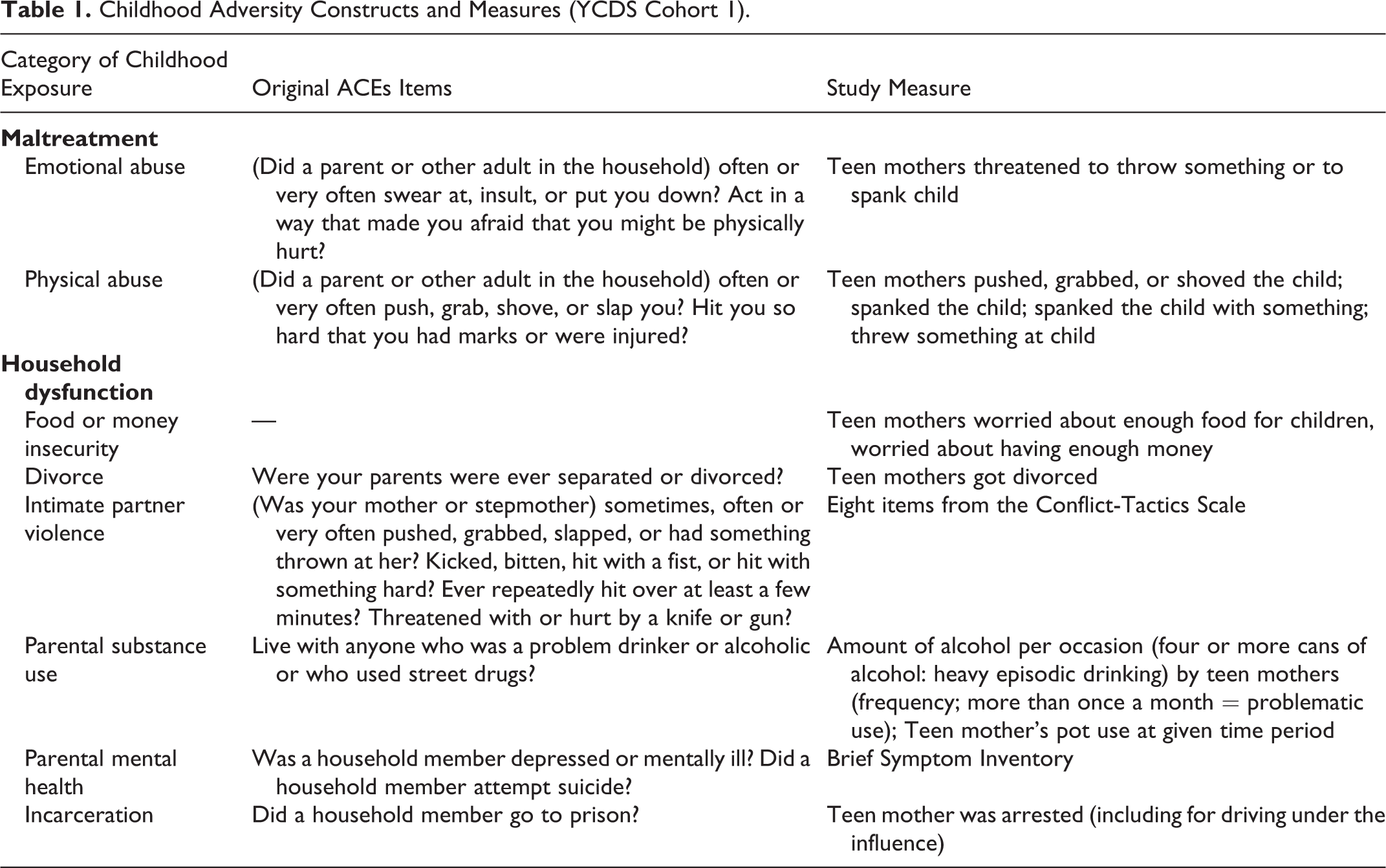
The current study measured offspring’s childhood adversity before age of 17 by obtaining teen mothers’ self-report of their experiences while raising their children. Our childhood adversity items were informed by the original ACEs study (Anda et al., 2002; Felitti et al., 1998). In the existing dataset, eight items mapped onto the original 10 items (Table 1). Childhood adversities before age 17 were measured at seven time periods (ages 5.5, 6, 9.6, 10.5, 11.5, 15.1, and 16). At each time period, each childhood adversity item was coded as 1 when participants positively endorsed a given item; otherwise, they were coded as 0. The resultant dichotomized childhood adversity items were summed to form a childhood adversity composite measure at each wave of data collection that also was dichotomized, with exposure to more than three adversities as the threshold (Felitti et al., 1998). Subsequently, these dichotomized measures were summed across all seven time periods (ages 5.5–16), representing the accumulated duration of childhood adversity (range = 0–7), assuming that every additional year of exposure to adversity is associated with an increased risk of poor outcomes. This measure was used to test the accumulation hypothesis. More details about these measures are provided in Supplementary Table 1.
Childhood Adversity Constructs and Measures (YCDS Cohort 1).
Child externalizing behavior at age 17
Children’s externalizing behaviors were measured using the Youth Self Report (Achenbach & Rescorla, 2001), a 112-item child report measure designed to assess competencies, adaptive function, and problems for children aged 11–18. Items on externalizing behaviors were scored on a 3-point Likert scale (0 = not true, 1 = somewhat or sometimes true, 2 = very true or often true), summed to calculate t-scores for total externalizing behavior.
Covariates
Covariates included teen mother’s age (continuous), child’s sex (0 = male, 1 = female), child’s race (1 = White, 2 = African American, 3 = American Indian, 4 = Asian or Pacific Islander, 5 = multiracial, 6 = other), teen mother’s educational attainment at baseline (at offspring’s age 5.5; 0 = < high school, 1 = ≥ high school), grandmother’s educational attainment at baseline (at teen mother’s age 16.6; 0 = < high school, 1 = ≥ high school), and externalizing behavior at age 5.5, which was assessed using the Child Behavior Check List (Achenbach et al., 1991).
Analyses
The study followed a two-stage structured life course modeling approach (SLCMA; Dunn et al., 2018; Smith et al., 2015) to evaluate two theoretical hypotheses—sensitive period versus accumulation—regarding the time dimension of childhood adversity. Compared to the traditional regression modeling strategy, which has a limited capacity for handling highly correlated variables, SLCMA enabled us to enter all childhood adversity measures (i.e., seven measures representing childhood adversity at each age and a single measure representing the total number of childhood adversity exposures) simultaneously to predict externalizing behavior, then choose only those childhood adversity measures that have the strongest association with the outcome variable, externalizing behavior at age 17. The SLCMA used least angle regression (LARS; Efron et al., 2004), a variable selection technique for identifying childhood adversity measures that explains the most variability (R2) in children’s externalizing problems (Dunn et al., 2018). LARS begins by identifying the variable with the strongest association with the outcome variable. It then identifies the combination of two variables with the strongest association, followed by three variables, and so on, until all variable combinations are included. LARS, therefore, achieves parsimony by identifying the smallest combination of encoded variables that explain the most outcome variation. Through this process, it provides an unbiased way to evaluate two competing hypotheses (Dunn et al., 2018) without overinflating the estimates of effect size (Efron et al., 2004).
In the first stage, to test two competing hypotheses simultaneously, childhood adversity variables (i.e., each of seven time period [ages 5.5–16] vs. accumulation of time periods [total periods of childhood adversity exposure, ranging from 0 to 7]) were entered into the LARS variable selection procedure. Then we examined elbow plots (Figure 1) to determine whether the selected models were supported by our data.
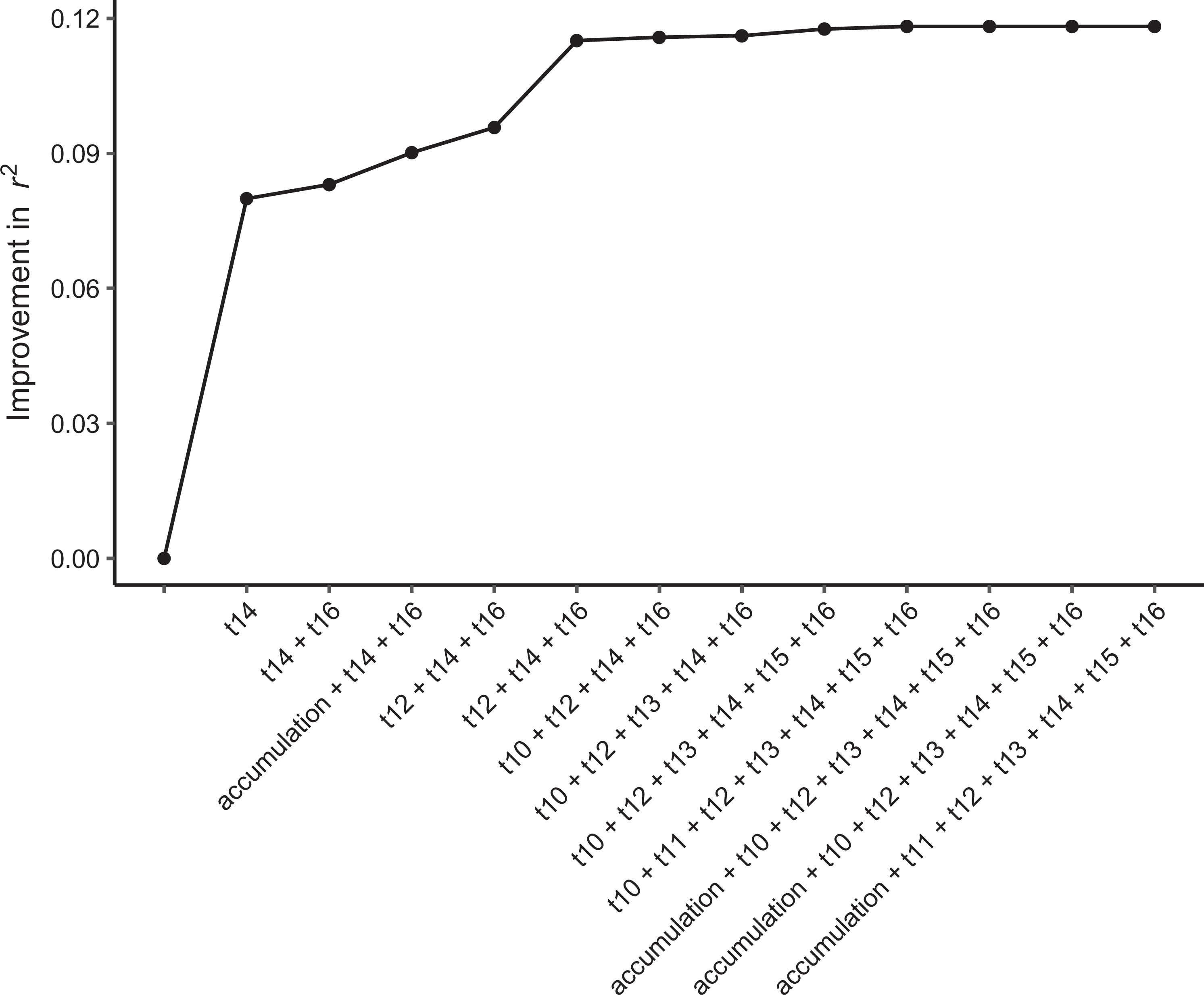
Elbow plots illustrating the LARS variable selection procedure testing life course models.
In the second stage, based on the elbow plot and variability (R2), the chosen hypothesis in the first stage that best fit the outcome variable was then carried forward to the multiple regression framework. The hypothesis that most explained the outcome variable, determined by a p-value threshold of .05 in this stage, was selected.
With the selected hypothesis tested in the LARS and multiple regression in previous stages, the study extended the multiple regression to domain-specific childhood adversity (maltreatment vs. household dysfunction) to identify which specific area of childhood adversity is more detrimental to externalizing behavior at age 17. All covariates were included in the models. Analyses were conducted in R version 1.2 and Mplus 7 version 1.6. Missing data were managed with full information likelihood estimation, a recommended way to address missingness (Schlomer et al., 2010).
Results
Sample Characteristics and Distribution of Exposure to Childhood Adversity
Table 2 shows the frequencies of childhood adversities at each wave of data collection (seven waves; offspring ages 5.5–16; teen mother’s age 22.4–32.8) and across the time periods. At each wave of data collection, 2.3% to 15.5% of youth experienced at least four types of adversities; 19% of adolescents reported experiencing more than four childhood adversities for at least one wave of data collection; and 12.8% experienced adversity for more than two waves of data collection. Across the time periods, children at age 6 (teen mother’s age at 22.9) experienced childhood adversity the most (15.5%), whereas age 15.1 (teen mother’s age at 31.9) experienced least childhood adversity (2.3%).
Descriptive Statistics of Analysis Variables (N = 240).
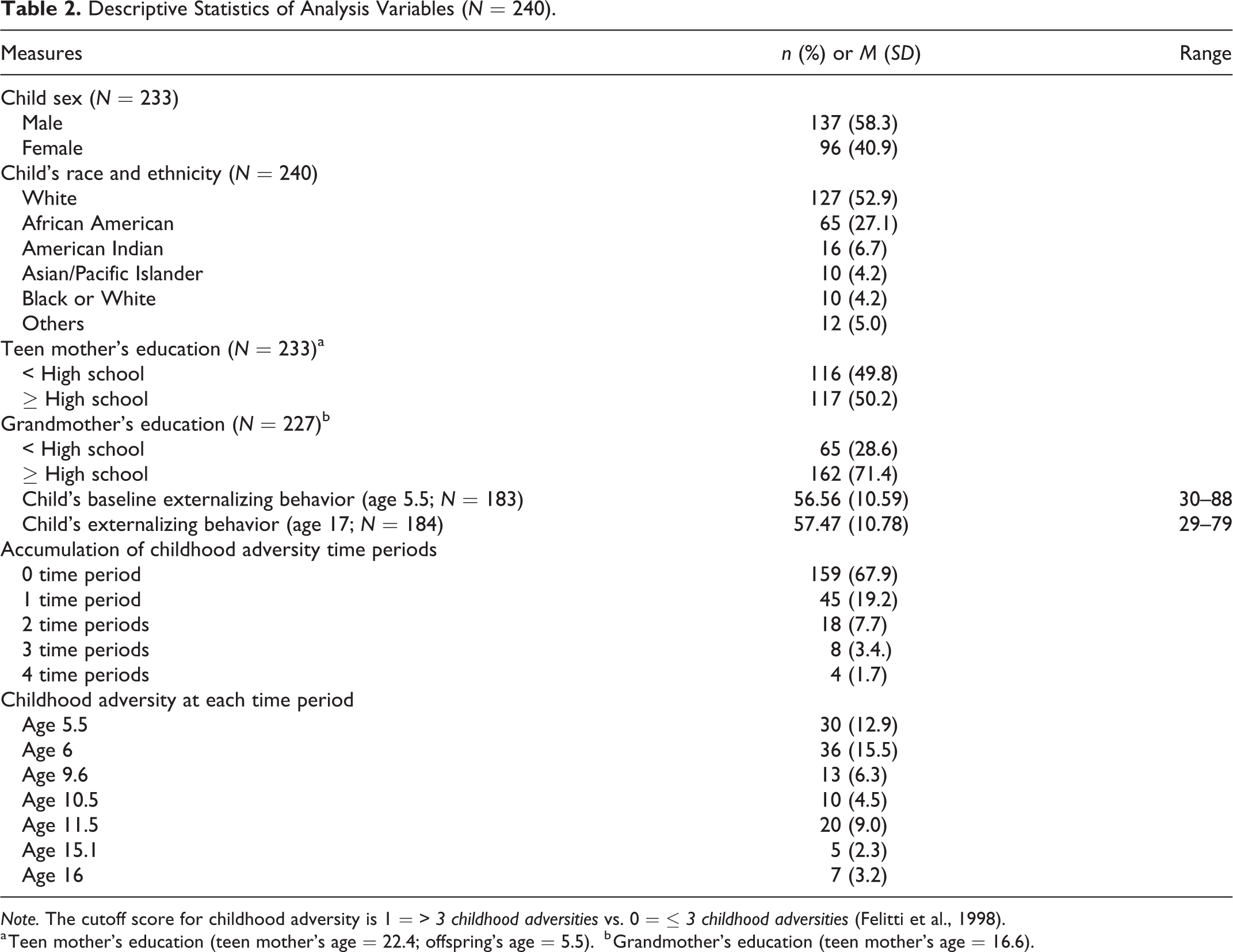
Note. The cutoff score for childhood adversity is 1 = > 3 childhood adversities vs. 0 = ≤ 3 childhood adversities (Felitti et al., 1998).
a Teen mother’s education (teen mother’s age = 22.4; offspring’s age = 5.5).
b Grandmother’s education (teen mother’s age = 16.6).
Least Angle Regressions
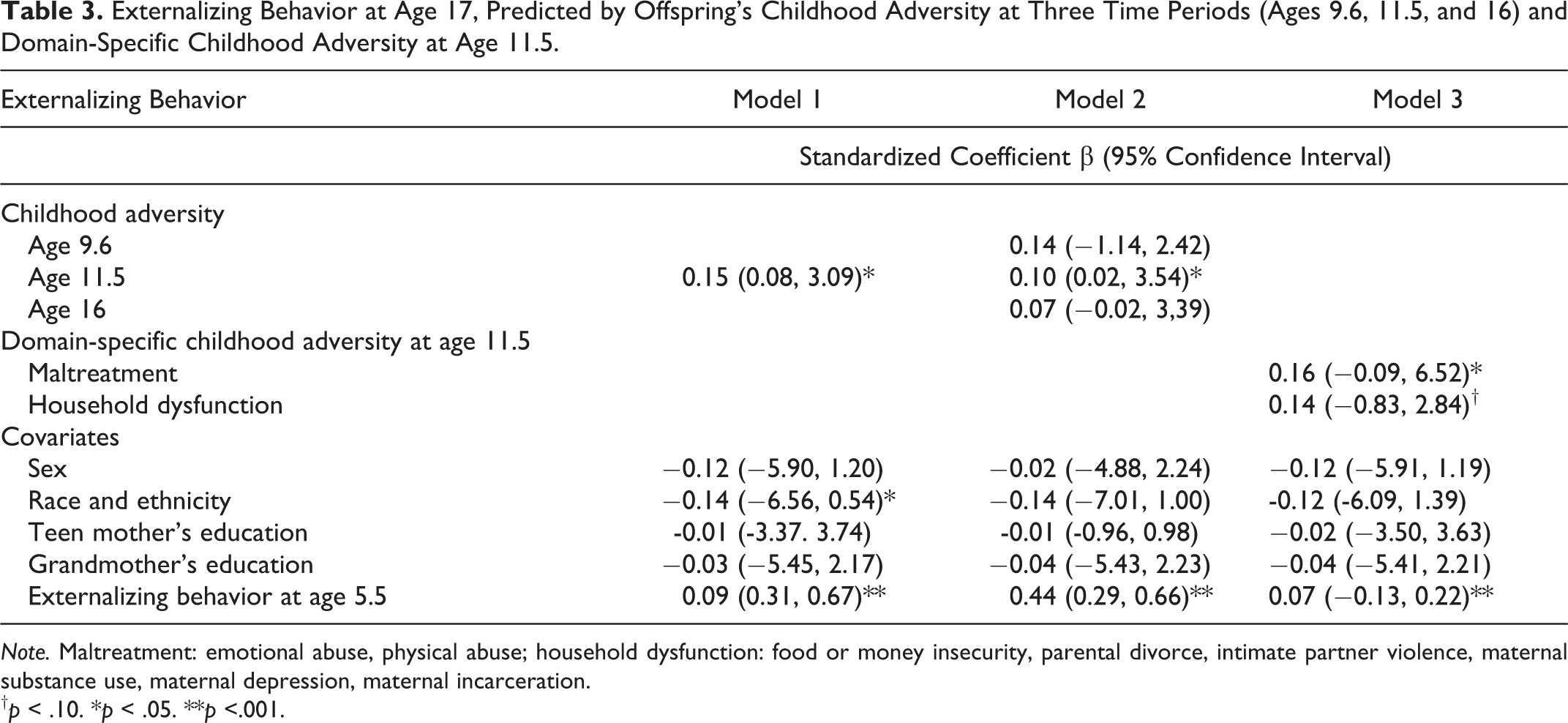
Figure 1 shows elbow plots guiding the model selection using the LARS procedure. Based on the elbow plot, the point where the plot levels off indicates the point of diminishing marginal improvement to the model goodness-of-fit from adding additional predictors, suggesting that the predictors included in the model at this point represent an optimal balance of parsimony and thoroughness. Two models were selected as the best-fitting time periods explaining externalizing behavior at age 17: childhood adversity exposure at age 11.5 and childhood adversity exposure at the combination of ages 9.6, 11.5, and 16. The model with childhood adversity exposure at age 11.5 years explained 7.9% of the variation in child externalizing behavior at age 17 (Model 1, Table 3), whereas the models with childhood adversity exposure at ages 9.6, 11.5, and 16 years explained 11.5% of the variation (Model 2, Table 3). Accumulation of the childhood adversity time periods was not selected as one of the best-fitting models from the elbow plot; therefore, the accumulation hypothesis did not move to further steps of effect estimation.
Externalizing Behavior at Age 17, Predicted by Offspring’s Childhood Adversity at Three Time Periods (Ages 9.6, 11.5, and 16) and Domain-Specific Childhood Adversity at Age 11.5.
Note. Maltreatment: emotional abuse, physical abuse; household dysfunction: food or money insecurity, parental divorce, intimate partner violence, maternal substance use, maternal depression, maternal incarceration.
†p < .10. *p < .05. **p <.001.
Effect Estimation
After identifying the model that explained the most variance in externalizing problems using LARS, a multiple regression with all selected measures, along with covariates, was estimated to test the significance of selected adversity measures (i.e., at ages 9.6, 11.5, and 16), after controlling for covariates in cases where more than one hypothesis was chosen in the first stage. In the regression, childhood adversity exposure at age 11.5 emerged as a statistically significant predictor of externalizing problems at age 17 (β = .15, p < .05; Model 1, Table 3), suggesting that age 11.5 may represent a sensitive period in relation to the influences of childhood adversity exposure on externalizing problems in adolescence. Further probing this association by two domains of adversities, child maltreatment at age 11.5 was a significant predictor of higher externalizing behavior at age 17 (β = .16, p < .05; Model 3, Table 3) controlling for corresponding covariates in the prior steps, whereas household dysfunction was not.
Discussion
The purpose of the current study was to better understand the timing and duration of childhood adversity and externalizing behavior at age 17. The primary finding indicates that adolescent externalizing behavior at age 17 was largely explained by exposure to adversity in early adolescence (age 11.5), compared to any other developmental periods from ages 5.5–16. Capitalizing on the longitudinal dataset with repeated assessment across multiple developmental epochs, our findings extend the existing literature by revealing the importance of adversity exposure during early adolescence and teasing apart the effects of child maltreatment versus household dysfunction.
Several possible explanations might explicate this finding. First, adolescents are more prone to engage in problematic behaviors in response to adverse experiences than younger children (Thornberry et al., 2001). Particularly, early adolescence is known to be a sensitive period of development (Knudsen, 2004). During this stage, adolescents undergo dramatic physical, social, cognitive, and emotional changes (Dahl & Gunnar, 2009), as well as environmental changes, which may contribute to the overall health outcomes of adolescents (Steinberg, 2019). Because puberty is the most salient biological event during adolescence, the events youth experience during this transition period may be significant, influencing developmental outcomes later in adolescence. Given these characteristics in this developmental period, childhood adversity experienced during early adolescence may be important, particularly given the vulnerability that early adolescents face during this stage.
Second, early adolescence represents a transition period from primary (or elementary) to secondary (or middle or junior high) school. This developmental junction point is characterized by changes in school environment, along with increased pressure regarding academic performance and adjustment to new school environment (Neal et al., 2016; Riglin et al., 2013). Especially, the transition to middle school likely requires more guidance, structure, and support from parents as children in early adolescence learn to navigate their new environment and social context (Way et al., 2007). In this period, children who experience adversity in their family may lack attention from parents and have fewer parental attachments (Strong et al., 2016); therefore, they might be less likely to observe healthy relationship patterns and may fail to develop problem-solving skills (Herrenkohl et al., 2010). Thus, co-occurrence of adversity experiences such as physical abuse, food or money insecurity, or parental divorce during this transition period may be significant and require extra support, particularly given the risk of externalizing behaviors in adolescence (Bos et al., 2018).
When childhood adversity was divided into maltreatment and household dysfunction, exposure to maltreatment significantly predicted higher externalizing behavior at age 17, whereas household dysfunction did not. This finding aligns with previous studies that have documented the particularly negative effects of child maltreatment on externalizing behavior (Negriff, 2020) and deviates from other studies reporting the predictive capacity of household dysfunction for externalizing behavior (Higgins & McCabe, 2003). Child maltreatment may be particularly harmful for children of teen mothers because it represents a severe disruption of the parent–child relationship, involving a significant betrayal by a trusted caregiver that leads to conflict because the child continues to rely on the caregiver for care (Atzl et al., 2019). Nevertheless, it might be premature to conclude that household dysfunction is not important for youth developmental outcomes. Conclusions drawn from current study need to be replicated, given the significant impact of household dysfunction.
Strengths and Limitations
This study has at least three important strengths. First, it leveraged data from longitudinal cohort studies of teen mothers and their children in which children’s exposure to adversity and developmental outcomes have been assessed prospectively and repeatedly across childhood and adolescence. Second, the study tested two competing hypotheses—sensitive period and accumulation hypotheses—using an innovative analytic strategy, LARS. Although other studies created a childhood adversity measure without reference to developmental periods, there are several benefits to separating these periods. Our study findings suggest that early adolescence may represent a developmental period during which the impact of experiencing childhood adversity on later externalizing problems will be most pronounced. Third, the study tested domain-specific childhood adversities to clarify the effects of different domains of adversities on externalizing behavior and identified the importance of maltreatment in assessing risk of externalizing behavior in later adolescence.
While the current study added to the extant literature in very important ways, it was not without limitations. First, although the study closely mirrored the items from the original ACEs scale, some of the items were missing. For example, the study did not have an item on neglect, a potent predictor of adolescents’ externalizing behavior (Chen et al., 2011; Shin et al., 2013), leaving only child abuse as part of the maltreatment measure. To my knowledge, there is no reason to speculate that including a neglect measure will necessarily change the conclusion of the study findings. Nevertheless, incorporating a neglect measure will be a fruitful future direction to further clarify the time dimension of childhood adversity and its effect on youth externalizing problems. Second, measures of children’s childhood adversities relied on teen mothers’ self-report, creating possible errors or biases. However, the current study has administered private and confidential surveys with the sample of teen mothers for many years, and such methods are likely to provide valid self-report data (Hindelang et al., 1981). Third, our analytic sample included only children of teen mothers. Thus, these results may not be generalizable to other populations. Fourth, other elements may be linked to externalizing behavior in late adolescence, such as youth’s school performance, peer associations, or neighborhood environment. As such, our parsimonious models indicate that there is much variance left to be explained. Since this is beyond the scope of the current study, the study did not incorporate other related factors. As a next step in research on childhood adversity and child development, attention should be given to other critical factors that lead to later externalizing behavior problems. Fifth, when creating the “divorced” variable among the eight childhood adversity items, the study limited the sample to those who had been previously married. Incorporating more detailed information on parenting (i.e., main caregiver, current parenting status) may provide more information about the adverse marriage or divorce environment. In future work, it will be informative to consider coparenting status to further clarify the association between childhood adversity and later externalizing problems. Sixth, although prospectively collected in short intervals, the repeated assessments of childhood adversity through self-report may have produced recall biases, impacting the accuracy or completeness of the data. However, having a prompt anchoring time window can mitigate this concern to some degree, at least in relation to repeated assessments. Seventh, although previous studies consistently suggested gender differences in child externalizing behaviors (Mandara et al., 2012), our sample did not have gender differences in externalizing behavior. One possible explanation may be the measurement of externalizing behavior, because gender differences may be less prominent with continuous forms of externalizing behavior. Eighth, the co-occurrence of maltreatment and household dysfunction needs to be further considered to better understand the impact of early adversity on child development. Follow-up studies should examine more detailed possibilities of maltreatment and household dysfunction (i.e., experiencing both categories of maltreatment and household dysfunction vs. only one category vs. no experience at all). This could expand our knowledge about the impact of childhood adversity and guide decisions about the types of intervention provided.
Conclusion and Implications
This is the first study to examine the time dimension of childhood adversity and its impact on subsequent externalizing behavior among children of teen mothers. There are several implications of our findings. First, identifying heightened vulnerability related to developmental timing is critical, because our findings indicate that experiences of childhood adversity during early adolescence are particularly disruptive among children born to young mothers. This information can be used to tailor interventions for children of teen mothers who have experienced traumatic life events during this period, an important developmental period of puberty and educational transition. Second, interventions geared toward child maltreatment are necessary. To raise awareness of child maltreatment and move toward prevention, it has been continuously suggested that professionals work together with parents and community members (Tyler et al., 2008). In fact, prevention programs have contributed to positive outcomes for children and families (Dagenais et al., 2004). Namely, Triple P—the Positive Parenting Program—can be a possible intervention strategy for children of teen mothers, because it caters to the entire population, including teenagers and children of divorced parents. It may respond to consequences of adversity (Prinz et al., 2009) and have a great preventive impact on subsequent externalizing behavior. Third, universal and primary prevention is recommended to increase resources available to teen mothers and their children to raise awareness of childhood adversities. Taken together, our findings demonstrate that it is important to consider when the adversity occurred, a question that prior studies have not addressed. Such an approach may prevent children of teen mothers from experiencing externalizing behaviors in late adolescence. Future research is needed to identify various mechanisms by which the developmental timing of adversity is linked to behavioral problems across childhood and adolescence.
Supplemental Material
Supplemental Material, sj-pdf-1-cmx-10.1177_1077559520984249 - Time Dimension of Childhood Adversities and Externalizing Behavior Among Children of Teen Mothers: Sensitive Period Hypothesis vs. Accumulation Hypothesis
Supplemental Material, sj-pdf-1-cmx-10.1177_1077559520984249 for Time Dimension of Childhood Adversities and Externalizing Behavior Among Children of Teen Mothers: Sensitive Period Hypothesis vs. Accumulation Hypothesis by Yoewon Yoon in Child Maltreatment
Footnotes
Acknowledgment
I would like to extend my gratitude to Drs. Jungeun Olivia Lee, Lei Duan, Chih-Ping Chou, and Julie Cederbaum who provided insights on conceptualization and analytic approach of this manuscript.
Declaration of Conflicting Interests
The author(s) declared no potential conflicts of interest with respect to the research, authorship, and/or publication of this article.
Funding
The author(s) disclosed receipt of the following financial support for the research, authorship, and/or publication of this article: The YCDS project itself is supported by R03HD097379 from The Eunice Kennedy Shriver National Institute of Child Health and Human Development.

Supplemental Material
Supplemental material for this article is available online.
References
Supplementary Material
Please find the following supplemental material available below.
For Open Access articles published under a Creative Commons License, all supplemental material carries the same license as the article it is associated with.
For non-Open Access articles published, all supplemental material carries a non-exclusive license, and permission requests for re-use of supplemental material or any part of supplemental material shall be sent directly to the copyright owner as specified in the copyright notice associated with the article.
