




Abstract
Over recent decades, Egypt has witnessed developments in gender equality. This article discusses recent changes relating to violence against women within this context. Statistical data from the Egyptian DHS surveys is used to describe trends in reported violence and in attitudes toward marital abuse, as well as to examine the survey tools used to measure violence. While findings reflect a growing awareness regarding the issue, the number of women reporting spousal violence remained stable during the study period. The results are contextualized within the political and social debate in which NGO’s and women’s rights activists play a central role.
Introduction
Egypt, like many countries in the world, has been witnessing over recent decades gradual shifts in gender equality, due to campaigns and women’s activism. This rising awareness of women’s concerns is in line with the international political debate on gender issues (for example, the Cairo ICPD Plan of Action [United Nations, 1994], which strongly condemned violence against women and children). In 1995, the Egyptian Demographic and Health Survey (DHS) questionnaire was one of the first to contain a module dealing with domestic violence (El-Zanaty, Hussain, Shawky, Way, & Kishor, 1996). The 2005 DHS questionnaire (El-Zanaty & Way, 2006) contained a similar but broader module. Other studies have been conducted in the region: for instance, in Jordan (Khawaja & Barazi, 2005), Lebanon (Khawaja, Hammoury, Afifi, Mahfoud, & Madi, 2009), the Palestinian territories and among the Arab population in Israel to document attitudes about “wife abuse” (Haj Yahia, 2000, 2003).
This article proposes a critical analysis of recent changes in issues relating to (in)equality between men and women in Egypt. We will focus on intimate partner violence as an indicator of such changes. Our approach combines quantitative and qualitative data. The analysis of the statistical data from the DHS surveys will describe, on one hand, trends in reported violence and in attitudes toward marital abuse and, on the other hand, examine the survey tools used to measure violence and the limitations to interpretation. Analysis of legislative texts and media reports of political and social debate surrounding legal reforms is then used to shed light on the reporting of violence. The findings are analyzed within a framework that builds on scientific knowledge on gender-based violence in the Middle East and also within Europe.
The Role of Mass Media, NGOs, and Other Institutions in Legal Reform and the Gender Equality Debate
As pointed out by Moghadam (2004), legislation efforts in terms of gender equality can be viewed as an indicator of social change in the Middle East. However, the mere existence of laws does not necessarily affect hegemonic perceptions and patriarchal norms. Women’s rights NGOs in Egypt, as in neighboring Arab countries, resist gender-based violence through proposed amendments to the personal status or the Penal Code and through international conventions. One of the recent reforms of the Personal Status code in Egypt in 2000 (Law n. 1/2000) gave women the right to divorce without necessitating the spouse’s consent, which did not apply to women from the Christian minority (Bernard-Maugiron, 2005, 2010). Even though the law does not clearly refer to violence in marriage, there is reason to think that women used this legal provision as a strategy to escape a violent marriage (Al-Sharmani, 2010). According to the Egyptian national statistics bureau, mistreatment, abuse, and violence were among the main reasons for seeking divorce (during 2005 there were 149 final divorce judgments for harm and injury, while in 2008 there were 617 cases).
The emergence of a debate on violence against women, particularly in the independent media and on the Internet, reflects the breaking of some taboos on the matter. For instance, the Egyptian NGOs’ debate on sexual harassment in public space resulted in the presentation of a new bill to Parliament, demanding an increase in the punishment of perpetrators of this form of violence (Zayed, 2010). Similarly, the amended Egyptian law on child rights (June, 2008), strongly condemns physical, psychological, and sexual exploitation of children (article 1, article 291 of Law n. 126/2008). The law takes a clear stand against family violence against children (under the age of 18) by prohibiting any violent action, mistreatment, neglect, or child marriage (by raising the marriage age for women from 16 to 18).
The “reform trend” may be attributed to women’s NGO efforts in the Arab world, as well as to the emergence of regional networks that contributed to this objective (e.g., the Network for monitoring images of women in the Arab media, created in Cairo on November 2006). Yet, obstacles to obtaining divorce in cases of spousal abuse remain as a result of the difficulties in providing evidence of domestic violence. In addition, the necessity for conciliation meetings in accordance with the law of 2000 and the reluctance of some judges to grant divorce, combined with family pressures, fear of social sanction, and economic constraints on women all render the process complex. Therefore, even though more women tend to adopt legal strategies, the implementation of these reforms does not always offer an adequate solution to difficulties and suffering faced by women (Al-Sharmani, 2010).
Measurement of Violence: Acts and Contexts
The Demographic and Health Survey: A Major Contribution to International Statistics on Gendered Violence
Violence against women takes many forms. There is now a wide international consensus that it includes not only physical and sexual violence, but also psychological abuse. Another aspect of variation in the types of violence is the context in which it takes place. Most surveys have focussed on the married or cohabiting couple relationship, or alternatively on the household. Violence in this context is often referred to as “domestic violence,” although the use of this term is questioned by some who claim that it confuses violence against a partner with violence toward children (as well as other violent family relationships; Hester, 2007). Others have widened the scope to include other contexts (the workplace, public space; Jaspard et al., 2003; Schröttle & Müller, 2004).
Whereas in Europe, statistical knowledge about violence against women has been accumulated due to a number of national surveys, many countries in the South have been part of the international MEASURE DHS project. 1 Women in Egypt have taken part in three DHS surveys—in 1995 (El-Zanaty et al., 1996), 2005 (El-Zanaty & Way, 2006), and 2008 (El-Zanaty & Way, 2009)—in which the topic of interpersonal violence was covered. In addition to the DHS surveys, several small- or large-scale studies on gender-based violence have been conducted in Egypt over the last 15 years. These have been carried out by a variety of bodies: state, international, and NGOs. These locality-based studies took place in the Cairo suburb of Manshiet Nasser (Tadros, 1998), in Ismailia (Hassan et al., 2004), in Minya Governorate (Yount, 2005) and, more recently, in three Egyptian Governorates (Cairo, Sharkeyah, and Minya; El-Sheneity & Al-Sharmani, 2009). Using various sources, the Cairo Center for Social Research and Criminology carried out a study indicating that 28% of women were victims of interpersonal violence (including homicide) during their lifetime (Ammar, 2006). Using different types of samples and different survey instruments and techniques, the studies produced apparently different rates of violence. The studies have shown that while women are ready to report spousal violence to scientific surveys, and often talk to someone about what they have endured (62% of women who had experienced spousal violence in the survey led by Yount), they are reluctant to seek help from public authorities or other organizations, because of feelings of shame and fear about the consequences of reporting the behavior of their husband.
The 1995 survey in Egypt, along with the Columbian survey, is one of the precursors of the study of violence within the DHS. The 1995 data are interesting as questions were asked within a general module on women’s status. However, the single question threshold approach used to focus questioning about experience of violence, with only those women having responded positively to a question on whether they had been beaten by anybody since they were married, means that no further exploration was possible on experiences that they might not identify as being “beaten.” Furthermore, Ellsberg and colleagues (Ellsberg, Heise, Pena, Agurto, & Winkvist, 2001) noted that this was a serious limitation of the method. Based on their analysis of the Nicaraguan DHS (2001), they concluded “that higher prevalence estimates were obtained with the use of multiple, behaviorally specific questions than with broader, aggregate questions. Moderate violence was more likely than severe violence to be misclassified using the general questions. This finding provides support for the view, advanced by many researchers, that general, global questions are less effective in eliciting disclosure of violence” (Ellsberg et al., 2001, p. 12). Nonetheless, the data are rich in two ways. First, the different types of violence reported can be studied in relation to one another, comparing experiences by age and other characteristics. Second, the experience of violence can be analyzed in relation to various autonomy status indicators and also to responses on attitudes to different instances of male dominance in the couple.
The 2005 survey (El-Zanaty & Way, 2006) uses the DHS module developed through consultation with experts on violence against women and following World Health Organization (WHO) guidelines on interviewing on this sensitive topic. This module is based on the Conflict Tactics Scales (CTS) and includes questions investigating violence caused by perpetrators other than the husband, as well as one on violence experienced during pregnancy. This is in line with most recent surveys exploring the occurrence of individual acts, not referring to “violence” or being “beaten” and then building indicators post hoc. Unfortunately, the 2008 DHS (El-Zanaty & Way, 2009) wave in Egypt did not include a module on women’s experience of domestic violence, but did ask women questions relating to their attitudes on violence.
We have chosen to base our study on these sets of survey data as they allow us to explore the notion of changing attitudes toward violence against women. Despite the differences in methodology, comparison is both valid and worthwhile. First, we can build and compare indicators of different types of violence during the last 12 months (prevalence indicators) and experience of violence within the marital union, whatever its duration. 2 Second, we can compare risk factors from one date to the other and evaluate their pertinence. Third, bringing in the results of the 2008 survey to our analysis, a comparison of attitudes to marital violence and male dominance within the couple can be conducted. Fourth, we can comparatively examine reporting rates; although this can only lead to tentative conclusions as the single question method may have produced underreporting and, by the later date, following campaigns on the topic of violence against women, reporting rates may increase sharply (Schröttle et al., 2006). Clearly, a detailed analysis of the social, legal, and political context relating to the status of women and gender relations is necessary to interpret any changes suggested by the statistical data analysis.
Reported Violence During the Marital Union
The first conclusion drawn when looking at the reporting of marital violence (i.e., throughout women’s experience of marriage) is that rates have been stable from 1995 to 2005 (Table 1). Although the period is short, given the high profile of political and societal debate on women’s status and violence against women, the two survey dates had the potential of revealing some transformations. While on the overall reported rates of marital violence there seems to have been little change, other aspects of the analysis suggest a lowering of the tolerance threshold for violence against women.
Frequency of Reported Violence Experienced During the Marital Union and in the Last 12 Months.
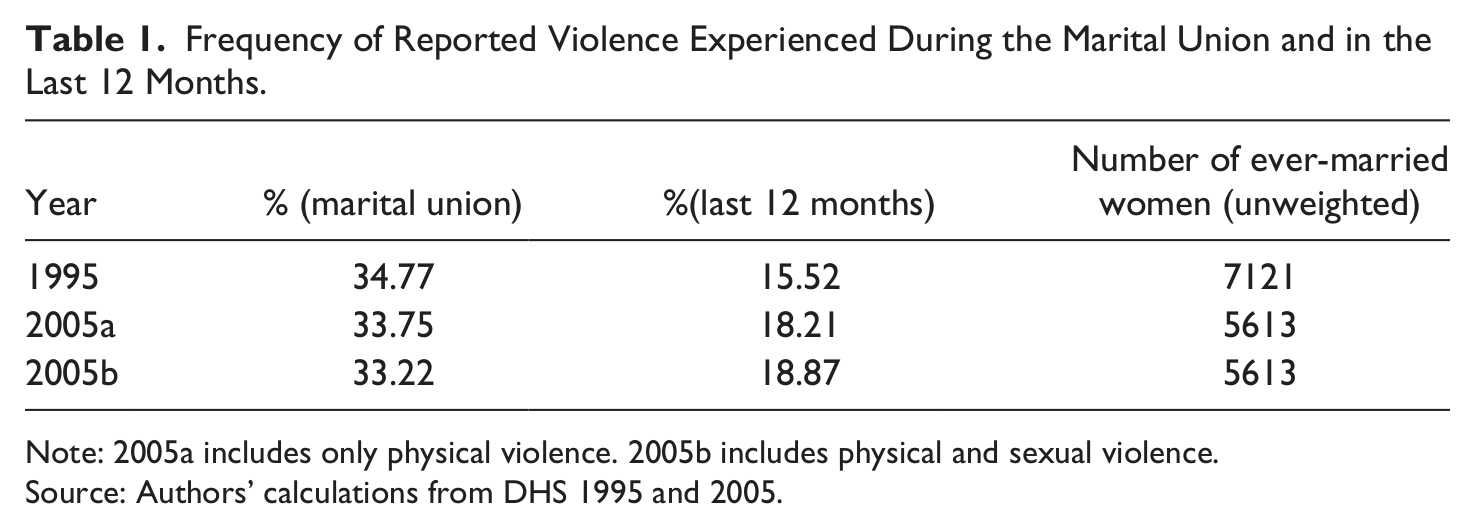
Note: 2005a includes only physical violence. 2005b includes physical and sexual violence.
Source: Authors’ calculations from DHS 1995 and 2005.
Research in the field over the last decade or so has sought to define “risk factors.” Women shown to be lacking in autonomy, according to recognized indicators, tend to be those most at risk of experiencing marital violence. Thus, women’s age, education level, age at first marriage, marital status, and economic activity status are generally used to examine in various contexts women’s “vulnerability” (Jaspard & Condon, 2007; Schröttle et al., 2006). Where possible, it is relevant to take into account characteristics of the husband and compile indicators of inequality between the couple (Hindin, Kishor, & Ansara, 2008). Elsewhere, experience of other forms of interpersonal violence has been shown to be a “risk factor” (Jaspard et al., 2003). Another indicator available from the DHS is “attitudes toward wife beating.” 3 Given the dominant norms in the public sphere in Europe, this type of question does not feature in surveys on gendered violence; yet one could argue that this has prevented us from having a benchmark to understand what is commonly tolerated, although not openly expressed in so-called Western societies.
We decided, therefore, to examine the results of reported marital violence for all these indicators (Table 2). Reporting experience of violence during their marital union is highest among women aged 30 to 39 years than for other age groups, both in 1995 and 2005. This age group, corresponding to a time of the life course when women are most often mothers, has been found elsewhere to be the one reporting most marital violence. Clearly, this experience is related to the duration of the marriage. In Egypt, age at first marriage is still low for women. Age at marriage is important in relation to women’s autonomy within the household and freedom of choice. The results of the 1995 survey show a significant difference in rates for women married below the age of 20 years and those after that age, a difference slightly less at the 2005 survey. However, rates according to the length of marriage show little difference, other than the lower rates for those women married for less than 5 years. The lower level of reported rates for women aged 15 to 24 years at the time of the survey is certainly linked to this, suggesting a need for multivariate analysis. Yet, before doing such analysis, the result raises the question of whether younger women feel less inclined to report enduring situations of violence, as society increasingly expects them to be more demanding, more resistant toward domination. Alternatively, the reasons for this lower rate in reported violence among younger women may be ascribed to better terms of negotiation at the time of marriage and more freedom in choice of partner. In the first DHS in 1995 (El-Zanaty et al., 1996), there was a measurement of women’s freedom in marriage decisions as well as participation in decision making: it appeared that most women did not have much choice in spouse selection, nor over decision making in the family sphere. For example, more than three out of four women interviewed in DHS 1995 (El-Zanaty et al., 1996) did not select their own spouse, and among those who did, they did so with parental approval. Unfortunately, similar questions were not posed in the subsequent DHS. Nevertheless, reporting less violence among younger women may point out some changes in the gender power relations between spouses. This could be interpreted as an outcome of Egyptian women’s NGO efforts and to public debate surrounding the late legal reform on the divorce law, khol (2000) mentioned earlier. The khol law is particularly important for women who experience violence, as a way of escaping from their violent partner. As the DHS data show, there are significant differences in the experience of violence by married women and divorced women (Table 2), the latter reporting higher rates than the former. Although the number was relatively small (just over 100 women in the sample), the 1995 survey revealed that, while the vast majority of women reporting violence during their married life said that their current husband was the perpetrator, 5% stated that the perpetrator was their former husband and the rates of divorced women reporting this were twice as high as for widowed women (32% and 15%, respectively). This trend of higher rates of violence being attributed to former partners is found internationally, and shown through quantitative surveys such as those conducted in Europe (Schröttle et al., 2006). Furthermore, the rate of reported violence for divorced women has increased between 1995 and 2005, from 47% to 68%. This appears to go hand-in-hand not only with an increase in the number of divorces “for injury because of hurting” since the khol reform of 2000, but also would suggest that women are divorcing to escape violence. The last legal reform on divorce would then facilitate this and offer women more effective strategies to protect themselves.
Frequency of Reported Violence Experienced During the Marital Union and in the Last 12 Months by Characteristics of Woman, Household, Husband, and Couple 1995-2005.

Note: 2005 includes physical and sexual violence.
Source: Authors’ calculations from DHS 1995 and 2005.
As we noted earlier, women’s status indicators are often used to analyze experience of violence, weaker status being considered a risk factor. However, Sunita Kishor (2005) warns against taking prevalence differentials at face value. These differentials doubtless include differentials in reporting, with some women more likely to underreport, thus complicating the observation of actual differences. More educated women may have more power in the household and may be better informed on how to protect themselves against violence. Moreover, the shame associated with talking about violence to which one should not be exposed may prevent them from reporting. The ambivalence of certain results, making the identification of “risk factors” difficult, is shown in the results presented here. We have used variables describing women’s education level, indicators of wealth status, and whether women are rural or urban residents. These variables are often closely correlated. Indeed, examining them separately shows that rates progress similarly, from highest to lowest, among women with no formal education to those with secondary education or more, and from the poorest to the wealthiest women. However, in comparing rates at the two survey dates, we observe in particular that women with secondary-level or higher education more frequently reported violence in 2005 than in 1995 (Table 2). Thus, the results reflect a combination of reported “realities” and the effects of higher awareness—and resistance to—acts of violence experienced by more educated women. At the same time, the results shift the focus away from poorer, less educated women as victims, and stress that women may be universally subjected to violence, whatever their social status.
The urban/rural divide, shown elsewhere to play a variable role in women’s exposure to violence from one context to another (Hindin et al., 2008) appears less clear. The 1995 data indicate that rural women may be more exposed to violence than those living in urban areas (Table 2). While we agree that rural women do not benefit from the same conditions in different geographic contexts, their particular vulnerability to spousal and family violence can be explained in terms of their relative isolation compared to urban women (Lanier & Maume, 2009). Moreover, those differences between rural and urban women’s exposure to violence in Egypt seem less marked by 2005, which can be explained by the increased action of NGOs throughout the country in supplying both concrete and ideological resources necessary for the struggle against domestic violence.
In an attempt to refine the consideration of social variables, we looked at those relating to the husband (reported by the women) and also built variables combining the status of women and their husbands. While the rates according to men’s educational level and age reflected similarities to what had been observed for women (higher marital violence rates for the 35 to 39 age group and for the least educated), indicating the similarity in social status between husband and wife, the variables combining their statuses to focus on the difference in age and education level did not clarify reporting rates. Similarly, the role of husband’s working status, while showing lower rates for women whose husbands were not working at the 1995 survey and slightly higher rates for women whose husbands worked in agriculture (certainly correlated with rural residence or lower education levels), do not lead to easy interpretation. Multivariate analysis is called for, to hopefully throw light on the most significant variables. We turn to this below.
Another example of the complexity of constructing reliable indicators is the use of autonomy indicators such as those relating to decision making by the couple or in the household. The 2005 survey included questions on women’s autonomy relating to decisions on health care and household purchases. When reporting rates of women according to their role in decision making were measured, it was found that rates were lower when women and their husbands both took part in the final say (Table 2). The same trend has been observed in other studies (Hindin et al., 2008). With respect to household purchases, when the husband (or another member of the household) alone had the final say, reporting rates were highest. Yet, the results regarding women’s own health care showed high rates of reported violence both for women having the final say and for those whose husbands had the final say.
Finally, an aspect of life experience that has commonly been shown to be a risk factor in being a victim of violence later on in marital life is having had such experiences in other relationships, inside or outside the household (Jaspard et al., 2003). This question was asked at the 2005 survey. The results show a very high level of significance for this variable, with rates almost twice those for women having experienced interpersonal violence outside the marital union since the age of 15 years than for those who have not.
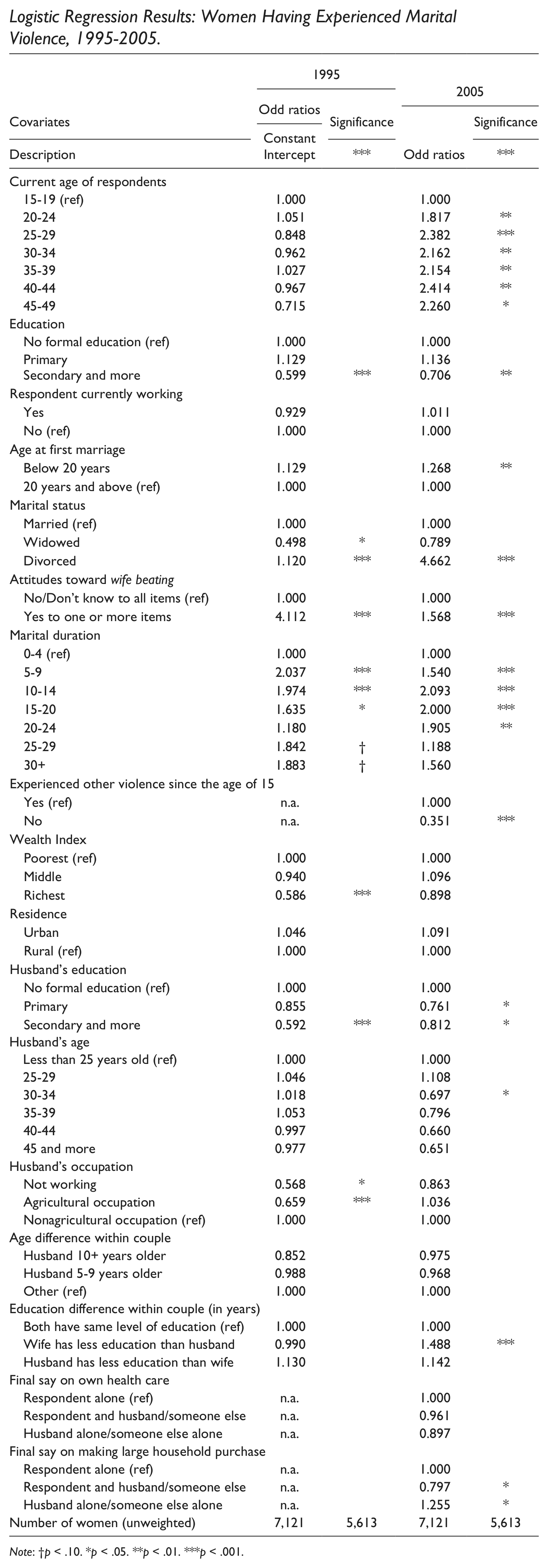
In order to attempt to go further in identifying the factors that significantly increase or decrease the risk of experiencing violence, multivariate logistic analyses were conducted for DHS 1995 (El-Zanaty et al., 1996) and 2005 (El-Zanaty & Way, 2009). Bringing together the effects of the different variables, we were able to examine the role of age, education level, duration of marriage, and so on, while controlling all the other variables. The advantage of running the analyses on the two data sets gathered at separate dates is that it allows us to see which factors appear constantly linked to violence and those whose effects are less clear. Perhaps such inconsistencies over time are behind other variations encountered between different regions or states (Hindin et al., 2008).
We considered individual factors as well as partner and household characteristics; the dependent variable is any kind of physical violence experienced in marriage. The analysis is restricted to ever-married women aged 15 to 49. Results are presented in the appendix. On one hand, at both surveys, education level (both women’s and husbands’), marital duration, marital status, and attitudes toward “wife beating” are factors influencing the probability that a woman will experience violence: more educated women and husbands, women married for less than 5 years or for more than 15 years, and divorced women are more likely to report experience of violence during their lifetime. On the other hand, some factors were strongly correlated at one survey and not the other: the wealth index and husband’s education are significant covariates only at the 1995 survey: current age of respondent, age at first marriage, and difference in educational levels between the couple are significant covariates only in the 2005 regression model. This, combined with the change in degree of significance from one survey to the other, suggests that the interplay of the different variables, as well as factors that are not covered by the survey or the impact of the survey instrument on response rates, leads to one or another factor emerging as significant. Nonetheless, the importance of marital status, education, and attitudes to partner violence appear as strong factors linked to experiencing marital violence.
Prevalence Indicators of Marital Violence
The previous discussion of results relates to reported violence during women’s entire married life. Clearly, since the sample contains women of different age groups and different marriage durations, these can only be indicators referring to a particular moment in time and to the proportion of women in a given population having endured violence. Since many surveys do contain such comprehensive indicators, it is useful to examine them here, but also in parallel to prevalence indicators. The latter aim to give a view of current violence experienced by women, by asking them about violent acts or situations that occurred over the 12 months prior to the survey (Schröttle et al., 2006). In general, and following our critical view of results in the last section, we found a higher reported overall rate of violence at the 2005 survey compared to the rate in 1995 (Table 1). Akmatov and colleagues (Akmatov, Mikolajczyk, Labeeb, Dhaher, & Khan, 2008), who analyzed prevalence rates from these two surveys, attributed this to two factors: changing attitudes and a more detailed questionnaire module in the 2005 survey. An examination of rates during the year previous to the survey is very useful, as it means that while all women, whatever their age, report experience of violence during their marriage, this experience may or may not have been recent.
The reported rates across different age groups exhibit a higher prevalence of violence at most ages in 2005, other than for the youngest group. This is rather difficult to interpret since, for overall marital violence, these very young wives also reported high rates (Table 2). Despite the fact that there has been little change in the age of women at marriage during the period and not in the mean age difference between partners, it is possible that the results indicate improved terms and conditions of entry into marriage since the turn of the century due to legislation changes and women’s rights NGO activism. Similarly, fewer recently married women reported experiences of violence over the previous year than did women married for more than 5 years. Early age at marriage still appears to be a risk factor in both overall marital violence and in the prevalence of such violence. Reported violence rates for divorced women tend to corroborate what was found for overall rates and what has been found elsewhere (Schröttle et al., 2006). Although based on small numbers and without details on current partnerships, we can posit these women either have very recently divorced or remain in contact with their former husband.
The level of women’s and husbands’ education has an effect on prevalence rates similar to that on overall marital violence. Yet, it must be added that higher rates are reported in 2005 for all educational level groups, reflecting a readiness to report violence that extends throughout Egyptian society. Similarly, the gap between the rates reported by currently working women and those who are not in the work force is narrower in 2005 than in 1995. At the same time, it must be acknowledged that part of these higher rates could be explained by violence being more frequently experienced by some women. Increased tension and violence may exist in couples in which the woman, through stable, skilled employment, is contributing to the household budget more than her husband. This interpretation was also given following the results of Haj Yahia’s (2000) survey in Palestinian society, which showed that in some cases women who were in a better financial and educational position were more often victims of violence. Violence against women in these cases can be interpreted as a reaction to the power reversal within the family, and to patriarchal resistance to change, female independence, perceived as loss of control, and loss of “male” identity.
Just as the production of prevalence rates (previous 12 months) allows international comparison of trends and factors underlying violence against women, the importance of examining the different forms of violence was stressed by the Beijing Platform. The 2005 Egyptian DHS (El-Zanaty & Way, 2006) posed questions about the different acts defined internationally as violent and also about the frequency of these acts. Using these data and referring to the DHS Survey Report 2005 (El-Zanaty & Way, 2006), we can compare the different types of violence according to whether they were experienced sometimes or often during the previous 12 months, and to whether they were common over the whole of married life (see DHS 2005 Report tables 17.4-17.6). Types of acts are then distinguished according to whether they are psychological, sexual, or physical.
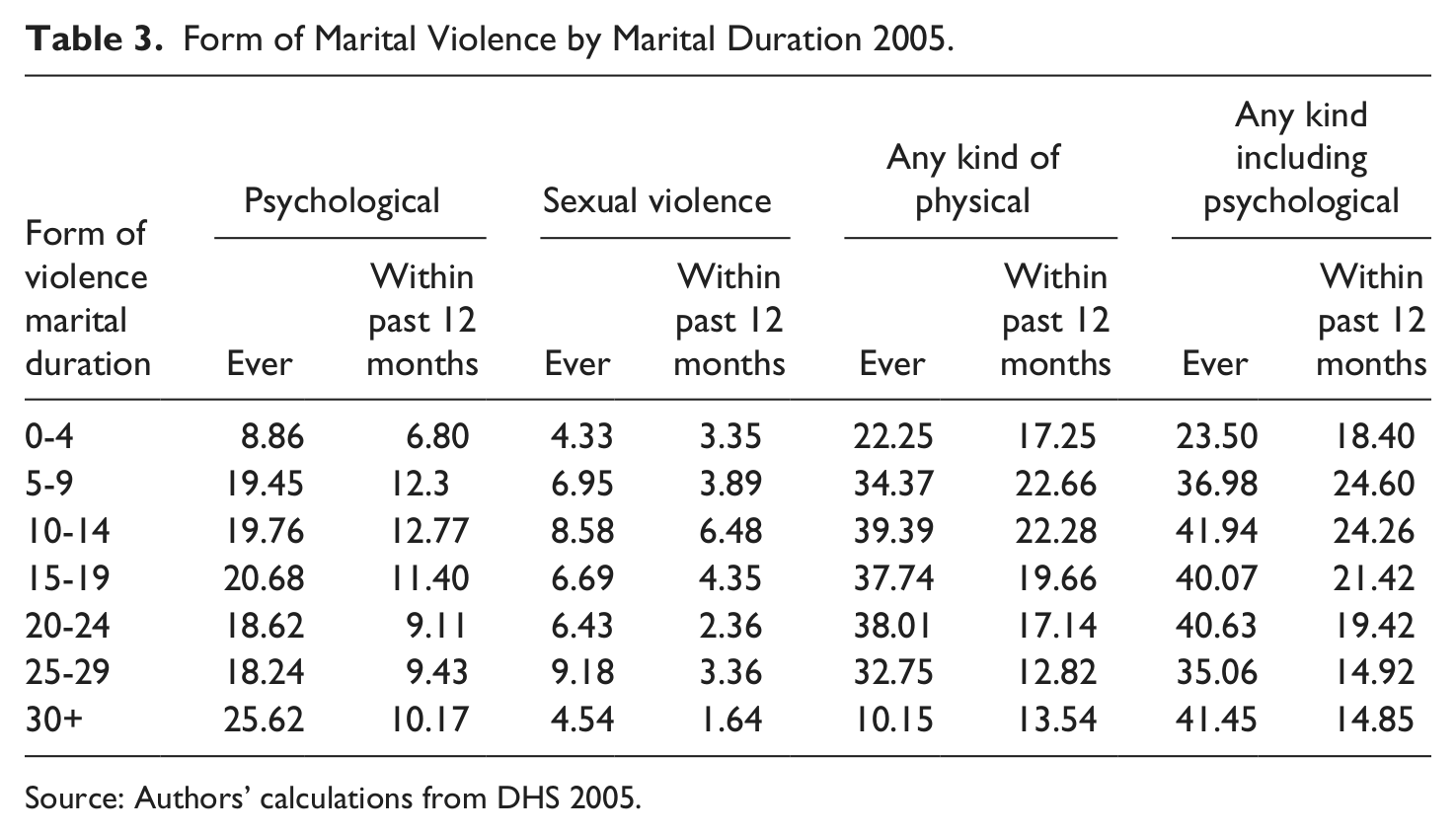
Results show that different forms of violence are often experienced by the same woman. Furthermore, in a context in which the concept of “wife-beating” places the focus on physical violence, the results show a readiness to report psychological violence (17.5%), as well as sexual violence (6.6%). We then sought to examine whether some types of acts were more common in the earlier years of marriage. It was already clear from the results that many acts occurred throughout the duration of marriage as prevalence rates were much lower than overall violence in marriage rates. This was the case, for example, with regard to being punched, hit with an object, kicked or dragged, or being raped. Only by cross-tabulating these forms over the previous 12 months and age/duration of the union can we determine whether some forms are more common in the early years of marriage (or among younger women; Table 3).
Form of Marital Violence by Marital Duration 2005.
Source: Authors’ calculations from DHS 2005.
The analysis showed that most forms of violence are perpetrated throughout the marital union. For example, psychological violence and any type of physical violence were experienced during the previous 12 months by over one in 10 women married for 30 years or more. Reporting rates peak for all types for marriage durations of 5 to 14 years; however, the gap between rates for recently married women (in the previous 5 years) and the highest reporting marriage duration group is significantly less when we consider levels of violence experienced in the past 12 months.
Measuring Changes in Attitudes Toward Spousal Violence
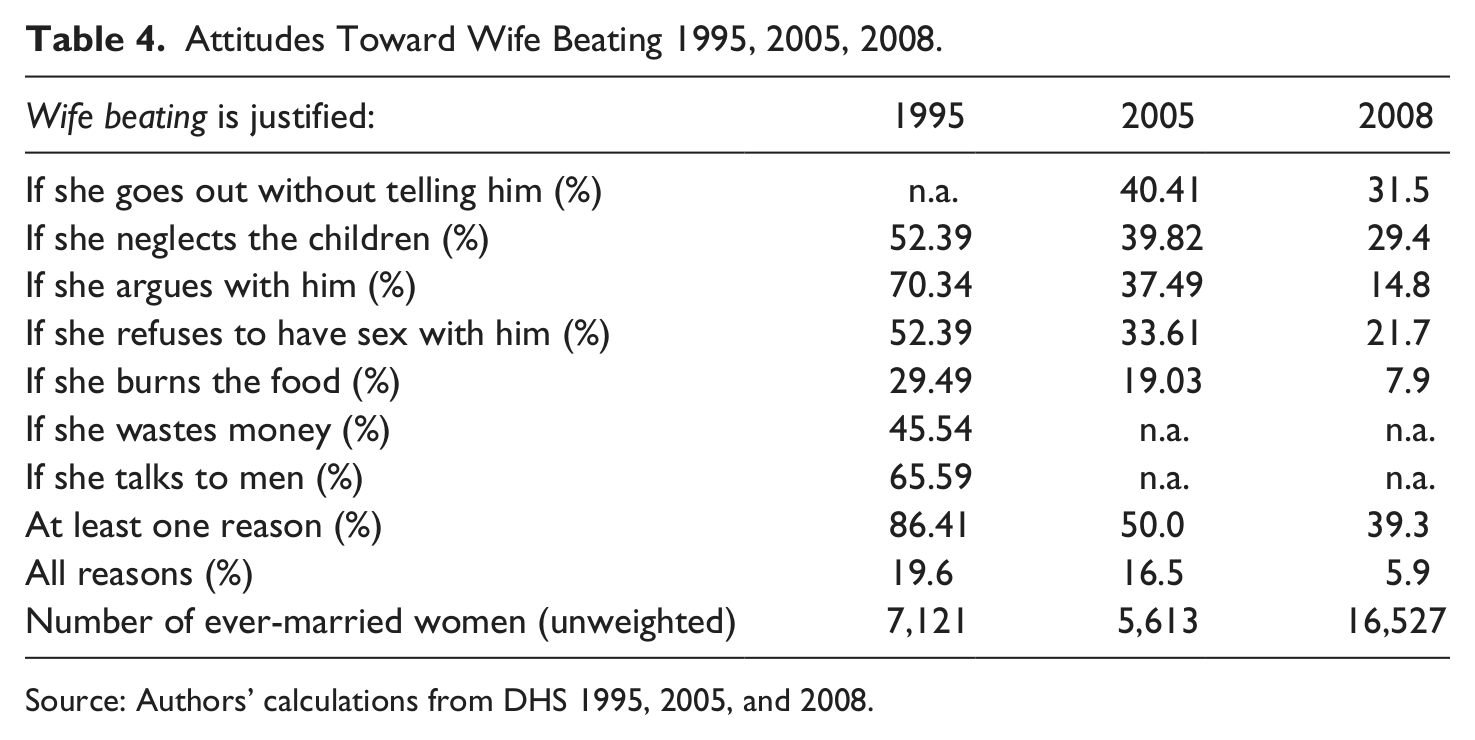
The presence of questions in all three surveys on women’s attitudes toward spousal violence offered the opportunity to explore the link between different attitudes and an experience of violence. As we showed above, those women who approved of or justified such behavior reported far higher rates of violence, both throughout married life and during the previous 12 months (Table 4).
Attitudes Toward Wife Beating 1995, 2005 2008.
Source: Authors’ calculations from DHS 1995, 2005, and 2008.
In several countries, a strong association has been identified between experiencing violence and women’s attitudes toward spousal violence (see for instance Hindin et al., 2008). In Egypt, too, women who said “no” to one or more items—that is, those that were less likely to justify violence—were also less exposed to violence during their marital union, compared to women who justified such violence in at least one situation. However, in 2005, women who reported violence were more numerous in both cases compared to 1995. That difference may be caused by a different way of asking the question in the two surveys, with underreporting occurring as a result of using the single question method, and also a greater readiness to report violence by the mid-2000s.
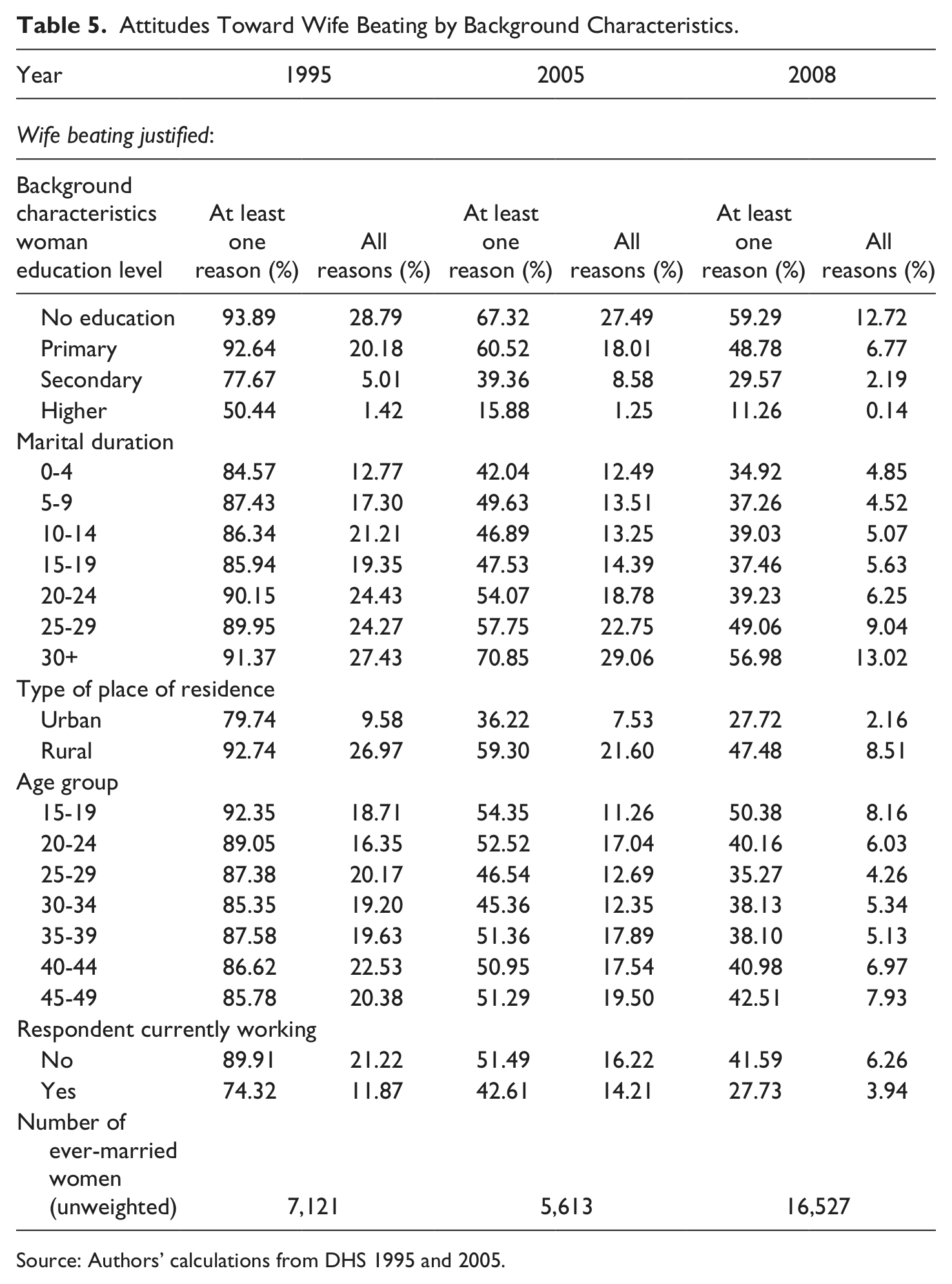
From the DHS data, it is apparent that attitudes toward spousal violence have evolved over time: women are far less likely to justify such violence in 2005 and 2008 compared to 1995 (Tables 4 and 5). This analysis reveals a clear and significant decrease in tolerance of male dominance in marital unions, reflecting changes in awareness of legal rights, in gender relations, and in a desire for more egalitarian relationships within the household. However, Seif el Dawla, Abdel Hadi, and Abdelwahab (1998) noticed that for the DHS 1995 (El-Zanaty et al., 1996) there was probably a problem of understanding by some women on the “right of the husband” to “beat” his wife, mentioned in the question. According to these authors, the question had been understood by some women as a query about why the women are subjected to such violence and not about the legitimacy of these reasons. Yet, when we examine the different reasons for asking whether men are justified in “beating” their wives, the rate of positive responses is not systematically high (Table 4). Furthermore, when compared (for those items featured in all three surveys) with subsequent rates, the 1995 levels seem in reasonable and linear proportion to the latter ones. In the later surveys, the interviewers were better trained and they could take advantage of the experience of other surveys and from a changed context with a growing awareness of women’s status issues among younger generations. In our opinion, the decline in the proportion of women justifying violence between the 2005 and 2008 surveys confirms a real change in attitudes, and this at all levels of society (Table 5). As we see in Table 5, attitudes to marital violence changed most substantially among the less educated women, those living in rural areas, women not in paid employment at the time of the survey, and those aged 25 to 34. The point to stress here then is that it is among the women most exposed to the risk of marital violence that attitudes have been changing. While this must eventually have a positive outcome, if women can rely on support to resist violence in the meantime, these changing attitudes may lead to increased tension within couples and families.
Attitudes Toward Wife Beating by Background Characteristics.
Source: Authors’ calculations from DHS 1995 and 2005.
The analysis of justifications given by women according to social characteristics reveals that more educated couples are less likely to justify violence. Moreover, women married for less than 15 years are less likely to justify violence. There is no significant effect of age or duration of marriage on justifying for at least one reason; however, those women justifying all reasons for violence against a spouse explored in the survey tend to be the older women and those married the longest, indicating a generational effect. As far as residential location is concerned, we observe that women living in urban areas are less likely to justify violence. Yount and Li (2009) report that women living in rural settings and exposed to violence were more likely to justify violence than women living in urban areas and who were less exposed to violence. The authors interpret that difference using the theory of social learning, in addition to considering the resources that a woman has in marriage (e.g., education, income).
Discussion
This article has attempted to draw together the different strands of contextual processes leading to recent changes in attitudes toward violence against women in Egypt. State institutions’ activities are important in preventing violence against women, but they provide very few solutions for women who experience violence, and rural women are particularly disadvantaged in these situations (Ammar, 2006). Although a few NGOs (Cewla, Al Nadeem) offer legal and social support to victims of violence, they usually operate within short-term funded projects in extremely socially deprived areas. Thus, such NGOs do not have the mandate or the means to provide sustainable solutions for emergency violence victims (Sholkhamy, 2010). It has often been argued that women’s “empowerment” in the economic and educational spheres may help to achieve progress in gender equality and therefore reduce violence against women (Zuhur, 2003). However, the DHS results imply that, to some extent, better economic and educational opportunities do not protect women from experiencing violence within the family sphere. We argue that change in gender relations requires a questioning of hegemonic patriarchal norms and family values, influencing women’s freedom to choose their spouses, their status in their family and the couple, and their participation in decision making within the household. As we have argued here, the sociolegal reforms are also reflected in changing attitudes toward violence against women, with fewer women justifying spousal violence as reported in the more recent DHS surveys. As this reflects a slow change toward a growing awareness on the subject, we should mention that in general, the number of women reporting spousal violence remained similar at the two surveys. While we recognize that social and demographic changes require time, the results suggest that there is a need for cooperation between state and women’s rights groups in order to promote sustainable prevention policy against gender-based violence.
In light of the recent social and political changes in Egypt, new research can shed light on the way the new state’s institutions will deal with violence against women and women’s rights in the context of a historic struggle for democracy (Baron, 1994). Future studies on women’s autonomy indicators, such as choice of marriage partner, decision making within the household, and attitudes toward violence against women, would be mostly revealing in this respect. Finally, cross-cultural academic research using an approach such as that used here, based on existing high-quality survey data, contributes to a better understanding of this problem in different sociological contexts and, set in an international research context, will strengthen the bridge of knowledge between Northern and Southern countries.
Footnotes
Appendix
Logistic Regression Results: Women Having Experienced Marital Violence, 1995-2005.
| Covariates |
1995 |
2005 |
||
|---|---|---|---|---|
| Odd ratios |
Significance |
Odd ratios | Significance |
|
| Description | Constant Intercept | *** | *** | |
| Current age of respondents | ||||
| 15-19 (ref) | 1.000 | 1.000 | ||
| 20-24 | 1.051 | 1.817 | ** | |
| 25-29 | 0.848 | 2.382 | *** | |
| 30-34 | 0.962 | 2.162 | ** | |
| 35-39 | 1.027 | 2.154 | ** | |
| 40-44 | 0.967 | 2.414 | ** | |
| 45-49 | 0.715 | 2.260 | * | |
| Education | ||||
| No formal education (ref) | 1.000 | 1.000 | ||
| Primary | 1.129 | 1.136 | ||
| Secondary and more | 0.599 | *** | 0.706 | ** |
| Respondent currently working | ||||
| Yes | 0.929 | 1.011 | ||
| No (ref) | 1.000 | 1.000 | ||
| Age at first marriage | ||||
| Below 20 years | 1.129 | 1.268 | ** | |
| 20 years and above (ref) | 1.000 | 1.000 | ||
| Marital status | ||||
| Married (ref) | 1.000 | 1.000 | ||
| Widowed | 0.498 | * | 0.789 | |
| Divorced | 1.120 | *** | 4.662 | *** |
| Attitudes toward wife beating | ||||
| No/Don’t know to all items (ref) | 1.000 | 1.000 | ||
| Yes to one or more items | 4.112 | *** | 1.568 | *** |
| Marital duration | ||||
| 0-4 (ref) | 1.000 | 1.000 | ||
| 5-9 | 2.037 | *** | 1.540 | *** |
| 10-14 | 1.974 | *** | 2.093 | *** |
| 15-20 | 1.635 | * | 2.000 | *** |
| 20-24 | 1.180 | 1.905 | ** | |
| 25-29 | 1.842 | † | 1.188 | |
| 30+ | 1.883 | † | 1.560 | |
| Experienced other violence since the age of 15 | ||||
| Yes (ref) | n.a. | 1.000 | ||
| No | n.a. | 0.351 | *** | |
| Wealth Index | ||||
| Poorest (ref) | 1.000 | 1.000 | ||
| Middle | 0.940 | 1.096 | ||
| Richest | 0.586 | *** | 0.898 | |
| Residence | ||||
| Urban | 1.046 | 1.091 | ||
| Rural (ref) | 1.000 | 1.000 | ||
| Husband’s education | ||||
| No formal education (ref) | 1.000 | 1.000 | ||
| Primary | 0.855 | 0.761 | * | |
| Secondary and more | 0.592 | *** | 0.812 | * |
| Husband’s age | ||||
| Less than 25 years old (ref) | 1.000 | 1.000 | ||
| 25-29 | 1.046 | 1.108 | ||
| 30-34 | 1.018 | 0.697 | * | |
| 35-39 | 1.053 | 0.796 | ||
| 40-44 | 0.997 | 0.660 | ||
| 45 and more | 0.977 | 0.651 | ||
| Husband’s occupation | ||||
| Not working | 0.568 | * | 0.863 | |
| Agricultural occupation | 0.659 | *** | 1.036 | |
| Nonagricultural occupation (ref) | 1.000 | 1.000 | ||
| Age difference within couple | ||||
| Husband 10+ years older | 0.852 | 0.975 | ||
| Husband 5-9 years older | 0.988 | 0.968 | ||
| Other (ref) | 1.000 | 1.000 | ||
| Education difference within couple (in years) | ||||
| Both have same level of education (ref) | 1.000 | 1.000 | ||
| Wife has less education than husband | 0.990 | 1.488 | *** | |
| Husband has less education than wife | 1.130 | 1.142 | ||
| Final say on own health care | ||||
| Respondent alone (ref) | n.a. | 1.000 | ||
| Respondent and husband/someone else | n.a. | 0.961 | ||
| Husband alone/someone else alone | n.a. | 0.897 | ||
| Final say on making large household purchase | ||||
| Respondent alone (ref) | n.a. | 1.000 | ||
| Respondent and husband/someone else | n.a. | 0.797 | * | |
| Husband alone/someone else alone | n.a. | 1.255 | * | |
| Number of women (unweighted) | 7,121 | 5,613 | 7,121 | 5,613 |
Note: †p < .10. *p < .05. **p < .01. ***p < .001.
Acknowledgements
We would like to thank the ORC, Macro International for providing us with the data sets from Egypt Demographic and Health Surveys 1995, 2005, and 2008. We also thank the reviewers for their extensive comments on the manuscript.
Authors’ Note
Ambrosetti performed the statistical analysis and wrote the introduction and the section of survey results of the article. Abu Amara developed the social context in which the research takes place, developed the discussion and conclusion and also provided the sociological interpretation of the results. Condon contributed to the development of the research question and to writing the methodological section, supervised the analysis and was in charge of the revision of the drafts and the final version of the article. All authors read and approved the final article.
Declaration of Conflicting Interests
The author(s) declared no potential conflicts of interest with respect to the research, authorship, and/or publication of this article.
Funding
The author(s) disclosed receipt of the following financial support for the research, authorship, and/or publication of this article: The authors wish to thank the French National Demographic Studies Institute (INED) for funding this research.