




Abstract
Despite having received gender sensitivity and domestic violence (DV) education in the post-war reformation era, anecdotal evidence from across Bosnia and Herzegovina indicates that most police officers view DV as a private family affair and continue to hold negative attitudes toward women and DV victims. This study assessed these claims by examining gender and DV attitudes held by 137 Bosnian police officers. It was hypothesized that officers who received DV training would be less likely to hold sexist attitudes toward women or view DV as justifiable compared with untrained officers. Results, as well as policy implications and suggestions for future research, are presented.
Introduction
Generally speaking, the police play an important, if not critical, role in the establishment and maintenance of peace in war-torn communities (Collantes-Celador, 2005; Day, 2000). Once peace is sustained, law enforcement resources are often directed toward the public arena, including assisting in refugee return, election monitoring, reviving failed institutions, and overall police restructuring and reformation (Jackson & Lyon, 2002). Consequently, fewer, if any, resources are directed toward the private (i.e., “domestic”) sphere, including policing crimes committed against women. In addition, acts of gender-based violence (e.g., domestic violence [DV], intimate partner violence, and sexual violence) are generally considered to be private matters that occur within the confines of one’s home. As such, many believe that they do not require “due diligence” from public authorities as a whole, nor the police more specifically (Zinsstag, 2005).
However, Zinsstag (2005) argues that the “unique opportunity arising at the end of a conflict, when institutional, constitutional and legislative changes are being initiated, [can] be used to transform old-fashioned and unjust customs and laws” (p. 145). Nowhere has this been truer than in Bosnia and Herzegovina (hereinafter referred to as Bosnia). Prior to the wars that ripped across Yugoslavia in the 1990s, victims of DV had few, if any, legal protections (South Eastern and Eastern European Clearinghouse for the Control of Small Arms and Light Weapons [SEESAC], 2007). This changed when, in the post-war years, Bosnia was required to recognize DV as a violation of human rights per Council of Europe membership requirements (and subsequent signing of the European Charter on the Protection of Human Rights and Fundamental Freedoms 1 ). Subsequently, Bosnia added human rights protections into its constitutional provisions and has slowly passed laws to prohibit gender-based violence in the country (SEESAC, 2007).
While the passage of legislation outlawing DV is an important first step in combating gendered violence, examples from across Bosnia indicate that such initiatives have been less than successful (Global Rights, 2004). Despite changes in protocols granting the police more power to respond in DV situations (e.g., legislation allowing police officers to enter homes and remove and/or arrest DV suspects), some police remain reluctant to intervene in DV situations and rarely arrest DV perpetrators (Deljkic, 2006; SEESAC, 2007). Simultaneously, local non-governmental agencies (NGOs) and international victim advocacy groups indicate that most police officers do not view policing DV as “real” police work and hold negative attitudes toward women in general and DV victims specifically (Bolkovac & Lynn, 2011; Global Rights, 2004; Helms, 2006). This is especially problematic considering that the police are said to have received specialized training in “domestic violence” as part of the overall post-conflict police reformation process.
Understanding officers’ attitudes regarding policing DV is important because, as Logan, Shannon, and Walker (2006) assert, “negative police attitudes may influence the outcome of the police call and women’s attempts to seek help through the justice system in the future” (p. 1365). Victims who have a bad experience with the police are unlikely to turn to the police for assistance in future DV incidents. In Bosnia, victim advocates assert that women are acutely aware of gender prejudices held by criminal justice professionals, service providers, and the public, and as such are deterred from seeking assistance (Global Rights, 2004).
There has been abundant research devoted to the study of police officers’ attitudes regarding DV calls (Belknap, 1995; DeJong, Burgess-Proctor, & Elis, 2008; Friday, Metzgar, & Walters, 1991; Gracia, Garcia, & Lila, 2010; Logan et al., 2006; Saunders & Size, 1986; Stalans & Finn, 2000). Some of this research indicates that in DV situations, officers who hold sexist views toward women are more likely to blame women for their own victimization (DeJong et al., 2008; Saunders & Size, 1986), and are less likely to intervene in matters considered to be “private” (Feder, 1997; Homant & Kennedy, 1985).
It is important, however, to highlight that existing research related to policing DV has largely been conducted with police officers outside of Bosnia, limiting its usefulness especially for informing Bosnian criminal justice policy. Furthermore, the only published study related to the police and their attitudes regarding DV in Bosnia (Helms, 2006) suffers from several limitations including generalizability, timeliness, and a weak empirical design. 2 The current study is designed to address some of these issues by examining the attitudes and beliefs held by 137 Bosnian police officers toward women, DV, and DV police practices in a post-conflict setting, with special attention directed at the impact training has had on officers’ viewpoints concerning DV.
DV in Bosnia and Herzegovina
While DV is a serious problem around the world, individuals residing in post-conflict areas, such as Bosnia, may be more vulnerable to this type of violence because of the confluence of risk factors resulting from war (e.g., overall economic, political, and social instability; high rates of unemployment and poverty; the proliferation of firearms among the general population; exposure to state-sponsored violence; and an increasing number of individuals experiencing post-traumatic stress disorder, substance abuse, and depression), as well as the transition from a communist, socialist system to a democratic, capitalistic country (Avdibegović & Sinanović, 2006; Nelson, 2003; SEESAC, 2007).
What is more, Bosnia’s culture is largely marked by patriarchy, which greatly influences how Bosnians view gendered violence. Research indicates that the vast majority of Bosnians believe that DV is a private matter between a husband and a wife and, as such, the state has no right interfering in the affairs of family members (Bolkovac & Lynn, 2011; Deljkic, 2006). Many Bosnians also assume that if a woman has been battered by her husband, she must have contributed in some way to her own victimization (Global Rights, 2004). The end result is that Bosnian woman endure years of abuse and rarely, if ever, seek assistance from others, including the criminal justice system (Helms, 2003; Zene Zenama, 2008).
Because few women report DV to the authorities, it is difficult to estimate the exact incidence of DV in Bosnia. Various self-report studies indicate that anywhere from one quarter to two thirds of Bosnian women have experienced psychological, physical, or sexual abuse at least once in their lifetime (Avdibegović & Sinanović, 2006; Ćopić, 2004; Muftic & Bouffard, 2010; Smailkadić, 2008; Zene Zenama, 2008). For instance, Avdibegović and Sinanović (2006) surveyed 283 Bosnian women from the Tuzla Canton on the frequency and forms of DV experienced in their intimate relationships. The results showed that a large majority (75.9%) of these women had been physically, psychologically, or sexually abused by their partners at some point in their relationship. Similarly, Muftic and Bouffard (2010) examined the frequency of DV victimization among 43 Bosnian Muslim women residing in Mostar, Bosnia. The results revealed that 76.7% of the women had been psychologically abused, 30.2% physically abused (with 14.0% resulting in physical injury), and 74.4% had ever been sexually abused by their intimate male partner. While hampered by small, non-representative samples and inconsistent victimization measures, overall these studies indicate that DV is a pervasive problem affecting all segments of Bosnian society.
DV and the Law
In the past decade, acts of DV have been criminalized in Bosnia via several different statutes (Deljkic, 2006; SEESAC, 2007). Specifically, DV is prohibited under the Family Law of the Federation of Bosnia-Herzegovina (FBiH 35/2005; 41/05), the Republic of Srpska (RS 118/05, 54/02, 41/08), and the Brčko Distrikt (BD 23/07) and is separate from the Law on Protection from Domestic Violence. The Law on Protection from Domestic Violence was passed in the FBiH (22/05) and the RS (118/05, 17/08). Furthermore, the Strategy on Prevention and Combating Family Violence in Bosnia-Herzegovina (2009-2011) has been adopted (70/09), as well as the Strategy on Prevention of Family Violence with the Action Plan for the FBiH (2009-2010; 75/08). 3 The government of the RS adopted the Action Plan for Combating Family Violence in the RS (2007-2008) 4 in June 2007 (58/07), while the Strategy for Combating Family Violence (2009-2013) 5 in the RS was adopted in June 2010.
Overall, this legislation stipulates what constitutes family violence, defines who family members are, and specifies sanctions for perpetrators, including removal of the offender from the victim’s place of residence, short-term incarceration sentences, monetary fines, and/or treatment for psychosocial or substance abuse needs. Protection and supportive measures for the victim, including protection orders, are theoretically available per legislation, but in practice are rarely provided due to a lack of resources, training, and/or knowledge on the part of the courts and service providers (SEESAC, 2007).
It should be noted that the legal makeup of Bosnia is remarkably complex (a legacy of the brokered peace agreement that brought an end to the war in 1995), impacting the overall effectiveness of the aforementioned statutes (as well as police response to DV). As stipulated by the Dayton Peace Accords (which created Bosnia’s constitution), Bosnia is fractured into two entities (the FBiH and the RS), as well as an autonomous district (the BD); each has a different legal system. To further complicate matters, Bosnia has a common federal legal system that is decentralized and consists of local, cantonal, BD, entity, and State levels. This complexity hinders the application of law throughout Bosnia. In addition, “there is legal ambiguity in defining cases when domestic violence should be considered a crime (applying the Criminal Law) and cases when it should be considered a minor misdemeanor act (applying the specific law on DV)” (SEESAC, 2007, p. 9). As a result, despite legislative initiatives to treat DV as a serious crime and to prosecute cases ex officio, few DV cases are prosecuted, either as felonies 6 (Federal Office of Statistics [FOS], 2008) or misdemeanors (Deljkic, 2006). Case in point, research conducted by Deljkic (2006) found that while police responded to 2,865 reported DV incidents in 2004, less than half (43.0%) went before a judge. Of the 1,632 cases that were dropped, prosecutors indicated that decisions not to prosecute were largely based on behaviors of the victim (including withdrawal of original complaint, recanting earlier statements made to the police, and returning to live with the abuser), as well as perpetrator remorse and lack of evidence.
DV and the Police
In terms of actual police practice, local NGOs assert that the police generally react to DV cases in one of two ways. They intervene only if the victim suffered “serious” harm (e.g., a homicide takes place), or if the victim files a “serious” complaint (Brennan-Krohn, 2008; SEESAC, 2007). In the later scenario, the police often treat the victim as though she was responsible for her own victimization (Global Rights, 2004; International Helsinki Federation for Human Rights [IHFHR], 2000). Moreover, many officers interpret a victim staying with her abuser as proof that she’s lying about the abuse (with the police reporting that 80% of victims return to an abusive partner after police intervention; Deljkic, 2006), or that the violence has been exaggerated, excusing their inaction in DV situations (Bolkovac & Lynn, 2011). In light of this, local NGOs and the international community (largely through police reformation efforts) have pressured the Bosnian government to change police protocol regarding DV (Kovacevic, 2010). Despite these efforts, there is evidence that officers continue to downplay victims’ calls for assistance, refrain from removing the offender from the family home (despite legislation that supports separation as the police intervention of choice), and infrequently arrest perpetrators despite probable cause to do so.
Reforming Policing Practices in Bosnia and Herzegovina
After the conflict in Bosnia, the United Nations stepped in to reform the police largely due to the level of corruption present, as well as inflated numbers of officers, separate mono-ethnic forces, and widespread reports of human rights abuses during and after the war (International Crisis Group [ICG], 2002; Maljevic, Datzer, Muratbegovic, & Budimlic, 2006). One aspect of reform has focused on how police respond to human rights abuses, including DV. This has included changing policies pertaining to gendered violence and by educating police officers on gender sensitivity and DV. By and large, the reformation of the police in Bosnia has led to a major shift in policing philosophy and organizational management with community policing strategies having been advocated in place of traditional, more reactive policing (Deljkić & Lučić-Ćatić, 2010; Ivkovic & Shelley, 2005).
Another critical component of the reformation process has been the professionalization of the police. It is believed that professionalization will lead to a more efficient, democratic police force in Bosnia. Professionalization has largely involved training officers across Bosnia on a variety of topics including community policing, traffic awareness, investigation techniques, technology, and human dignity/human rights (ICG, 2002). In some regions, training has involved workshops on DV education sponsored by local NGOs and the international community (Brennan-Krohn, 2008; Helms, 2003).
Unfortunately, DV training in Bosnia is not mandatory, nor is it offered in all jurisdictions (Avdeyeva, 2007). In addition, questions remain as to the content, quality, and length of training provided. For instance, in 2000, a 20-min video titled “Legal Rights—Domestic Violence” was produced by the Organization for Security and Co-Operation in Europe (OSCE) for training police officers “on the significant procedural changes defined in the newly adopted criminal code and criminal procedure code of the Federation” (OSCE, 2000). It is not clear, however, how many officers have watched the video or if it has been updated to reflect recent changes in legislation related to DV. Furthermore, is watching a short video equivalent to having been trained? It is sufficient to say that little is known about the impact such training has had among the police, despite claims that this training has “produced dramatic and very positive results in attitudes and practices of how survivors were treated at state and community institutions” (Helms, 2003, p. 184).
Finally, the police have been less receptive to what they perceive to be a loss of power due to the aforementioned initiatives. Helms (2006) argues that this is somewhat ironic considering that “one of the few areas in which the police have been granted more power in recent years has been in the response to domestic violence” (p. 349). For instance, in the last decade, DV has been “elevated from misdemeanor to felony, giving the police more jurisdiction and powers in terms of entering homes and prosecuting perpetrators” (Helms, 2006, p. 349). Some police complain, however, that DV is not “real” police work, and that time spent answering DV calls could be better utilized responding to “catching criminals” (Helms, 2006, p. 350).
Current Study
DV remains a significant problem in Bosnia. Recognition of this issue has led to the recent creation of various formal (state) and informal (social) responses to DV, including the creation of laws prohibiting DV (Deljkic, 2006), the provision of safe houses (Smailkadić, 2008), hotlines (Tuzlanski Info Portal [TIP], 2009), and services for DV victims (Zene Zenama, 2008). Research indicates that these changes have made little headway in reducing DV in Bosnia, and governmental officials, including the police, remain reluctant to involve themselves with DV calls (Centar za Istrazivacko Novinarstvo [CIN], 2004; Deljkic, 2006). Why the police continue to resist intervening in DV situations remains unknown. Speculation would have it that the police, like a large portion of Bosnian society, hold traditional, patriarchal attitudes toward women and view DV as a private matter not worthy of police intervention. Little, however, is empirically known about police officers’ attitudes regarding DV (i.e., neither personally held attitudes related to wife beating nor attitudes about policing DV) in Bosnia. This lack of research attention concerning officers’ views about DV is troubling considering that research conducted in the United States finds that officers who hold sexist, patriarchal views about women are less willing to intervene in DV situations, unlikely to arrest DV perpetrators, and generally do not consider DV as important police work (DeJong et al., 2008; Feder, 1997; Homant & Kennedy, 1985; Saunders & Size, 1986).
The current study sets out to empirically explore the impact DV education and training has had on the attitudes and beliefs of Bosnian police officers related to DV. Specifically, it is hypothesized that officers who have received specialized DV training will be less likely to hold sexist attitudes toward women or view DV as justifiable under certain circumstances. It is also hypothesized that trained officers will be more likely to view DV (and DV victims) as worthy of police response compared with officers who have not received DV training. To test these hypotheses, the authors use self-report survey data to compare the responses of officers who have received DV training (n = 63) with the responses of officers who have not received DV training (n = 74).
Method
In the spring of 2008, law enforcement officers employed by the State Investigation and Protection Agency (SIPA) in Sarajevo, Bosnia and Herzegovina, were surveyed. 7 The questionnaires, which were translated from English into Bosnian, were distributed by SIPA administrators to all SIPA officers working over the course of 2 days. Officers were provided US$10 as remuneration for participation in the study. Over the course of 2 days, 150 surveys were distributed of which 137 surveys were returned (91.1% response rate). Data entry and analysis were conducted in the United States.
Sample
Overall, the officers surveyed were primarily male (92.7%) and ranged in age from 23 to 60 years; the mean age of the sample was 35.32 years (SD = 6.83). Among this population, nationality and religion are closely tied (i.e., Bosniaks are mainly Muslim, Bosnian-Croats are mainly Catholic, and Bosnian-Serbs are mainly Orthodox.). As the survey was administered in a Bosniak majority area of the Federation, it was not surprising to find that the vast majority of officers self-identified as being Bosniak (68.4%) and Muslim (66.9%). A large proportion of the officers were married (82.1%). The average length of marriage was 10.66 years (ranging from 1-28 years; SD = 6.62). A little more than three quarters of the officers (79.4%) had at least one child (ranging from 1-4 with a mean of 1.59 children; SD = 0.58).
Officers who participated in the survey had worked for the police and average of 12.39 years (SD = 5.16; range = 1-26 years). In terms of rank, 12.9% of surveyed officers were low-ranking (i.e., Policajac), 46.8% were mid-ranking (i.e., Mladi Inspector), and 40.3% were high-ranking officers (i.e., Stariji Policajac).
DV Training Received
Respondents were asked to self-report if they had ever received training pertaining to DV. Almost half of the officers (47.0%) responded in the affirmative. Few differences were found between officers who had received training and those who had not (see Table 1). Respondents were quite similar in terms of age, nationality, religion, length of marriage, and parental status and number of children.
Differences Between DV Trained and Non-DV Trained Officers (N = 137).

Note. DV = domestic violence.
Calculated among those married (n = 110).
Calculated among those with children (n = 108).
p < .05. **p < .01, one-tailed.
Slight differences were found related to marital status, education, and rank, but none of these differences was statistically significant. For instance, a higher percentage of trained officers were married (83.6% of trained officers compared with 81.4% of not trained officers), whereas a higher percentage of not trained officers were separated or divorced (7.2% of not trained officers compared with 0.0% of trained officers). Regarding education, trained officers were slightly more likely to have a high school diploma (53.8% compared with 44.4% of not trained officers) and/or completed some college (17.9% compared with 15.6% of not trained officers). In contrast, officers who had not participated in DV training were almost twice as likely to have completed college (40.0%) compared with their trained colleagues (28.2%). Finally, trained officers were more likely to be ranked higher (43.9%) than officers who had not undergone DV training (34.4%). Again, none of these differences was found to be statistically significant.
Interesting differences emerged when the gender of the officer was taken into consideration. While female officers comprised a very small proportion of the sample, it might be expected that because of their gender they were more likely to have received DV training than male officers. On the contrary, the vast majority of female officers (80.0%) had not undergone DV training, compared with only half (50.8%) of their male colleagues. This difference was statistically significant (χ2 = 3.166; p < .05).
Slight differences were also found in terms of time on the force. Police officers who had participated in DV training had been on the force, on average, 2.25 years longer than officers who had not participated in DV training (13.5 years compared with 11.25 years for not trained officers). This difference was statistically significant (t = −2.35; p < .01).
Attitudinal Measures
Participants were asked to respond to a variety of statements reflecting attitudinal factors. These items were derived from three separate scales: the short versions of the Attitudes toward Women Scale (ATW; Spence, Helmreich, & Stapp, 1973) and Inventory of Beliefs About Wife Beating (IBWB; Saunders, Lynch, Grayson, & Linz, 1987), as well as a series of questions measuring attitudes toward policing DV (Saunders et al., 1987; Stalans & Finn, 2000). Participants indicated their level of agreement or disagreement with each statement on a 4-point scale with higher values signifying greater levels of agreement with each individual item.
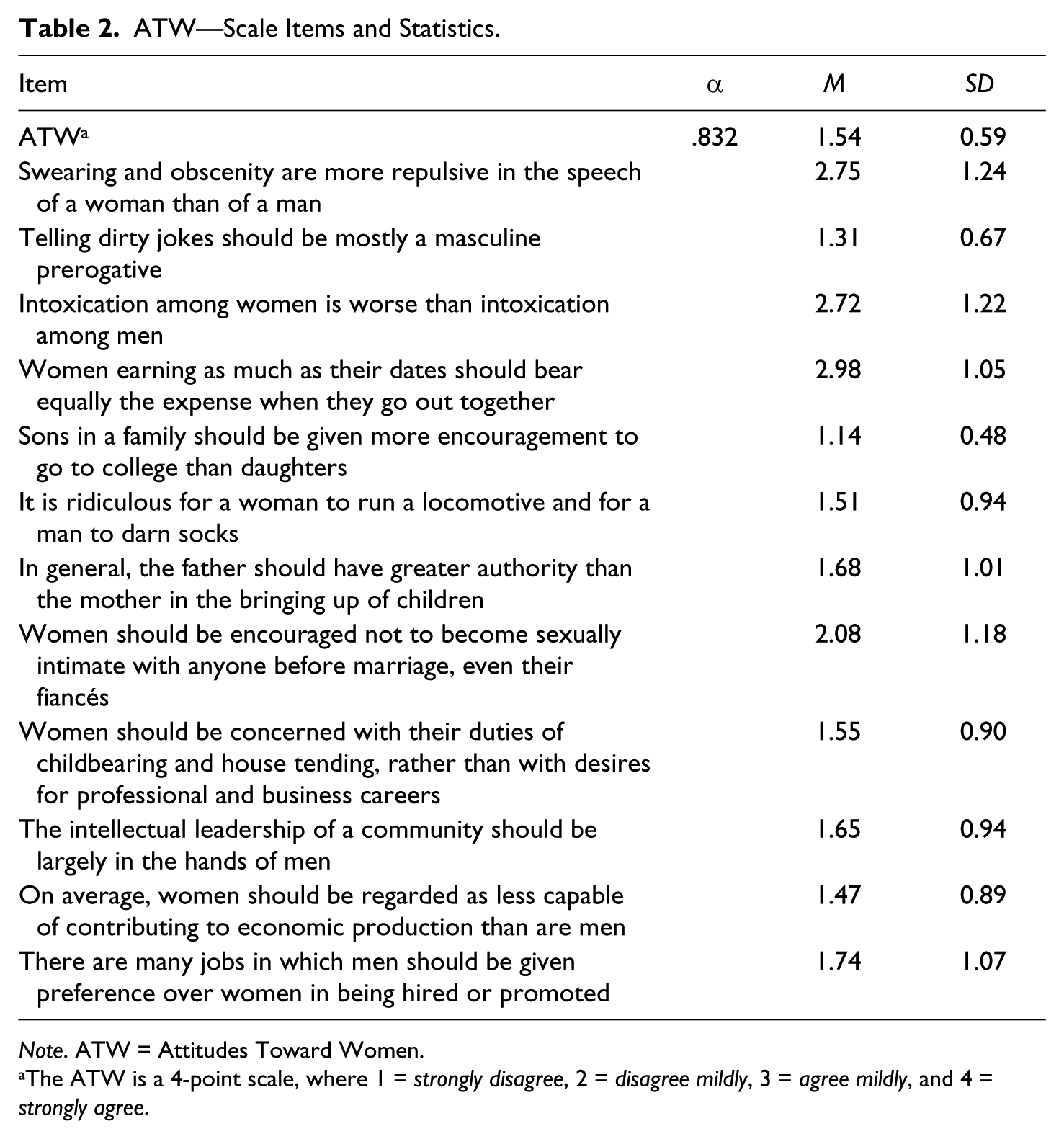
The ATW is described as “reflecting the degree to which the individual holds traditional or liberal views” (Spence et al., 1973, p. 219) and consists of 25 items. These items were factor analyzed and anything with a loading of less than .4 was excluded, resulting in a 12-item scale (α = .812). The 12 questions included in the ATW scale (see Table 2) were as follows: (a) swearing and obscenity are more repulsive in the speech of a woman than of a man (M = 2.75, SD = 1.242); (b) telling dirty jokes should be mostly a masculine prerogative (M = 1.31, SD = 0.671); (c) intoxication among women is worse than intoxication among men (M = 2.72, SD = 1.218); (d) women earning as much as their dates should bear equally the expense when they go out together (M = 2.98, SD = 1.047); (e) sons in a family should be given more encouragement to go to college than daughters (M = 1.14, SD = 0.480); (f) it is ridiculous for a woman to run a locomotive and for a man to darn socks (M = 1.51, SD = 0.944); (g) in general, the father should have greater authority than the mother in the bringing up of children (M = 1.68, SD = 1.007); (h) women should be encouraged not to become sexually intimate with anyone before marriage, even their fiancés (M = 2.08, SD = 1.181); (i) women should be concerned with their duties of childbearing and house tending, rather than with desires for professional and business careers (M = 1.55, SD = 0.895); (j) the intellectual leadership of a community should be largely in the hands of men (M = 1.65, SD = 0.938); (k) on average, women should be regarded as less capable of contributing to economic production than are men (M = 1.47, SD = 0.894); and (l) there are many jobs in which men should be given preference over women in being hired or promoted (M = 1.74, SD = 1.066). The mean of these items was calculated to create the 4-point ATW scale, with higher values indicating more conservative/traditional views toward women (M = 1.54, SD = 0.592).
ATW—Scale Items and Statistics.
Note. ATW = Attitudes Toward Women.
The ATW is a 4-point scale, where 1 = strongly disagree, 2 = disagree mildly, 3 = agree mildly, and 4 = strongly agree.
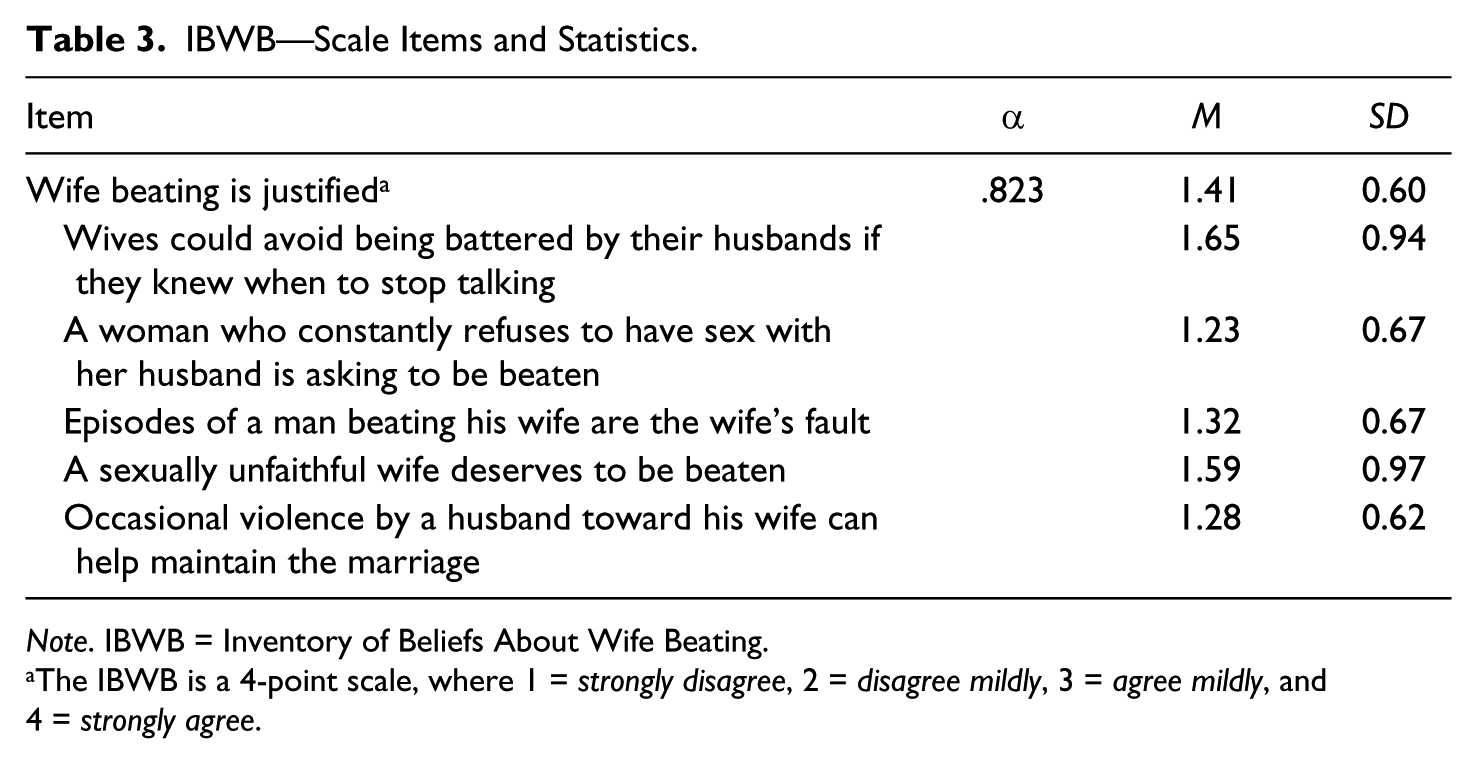
The IBWB short form (Saunders et al., 1987) includes eight items that gauge an individual’s belief that wife beating is justified under certain circumstances. These items were factor analyzed and anything with a loading of less than .4 was excluded, resulting in a five-item scale (α = .823). The five questions include the following (see Table 3): (a) wives could avoid being battered by their husbands if they knew when to stop talking (M = 1.65, SD = 0.94); (b) a woman who constantly refuses to have sex with her husband is asking to be beaten (M = 1.23, SD = 0.67); (c) episodes of a man beating his wife are the wife’s fault (M = 1.32, SD = 0.67); (d) a sexually unfaithful wife deserves to be beaten (M = 1.59, SD = 0.97); and (e) occasional violence by a husband toward his wife can help maintain the marriage (M = 1.28, SD = 0.62). Again, the overall 4-point scale score was calculated by averaging responses across the five items. Higher values represent a belief that in certain situational contexts DV is appropriate and justifiable (M = 1.14, SD = 0.60).
IBWB—Scale Items and Statistics.
Note. IBWB = Inventory of Beliefs About Wife Beating.
The IBWB is a 4-point scale, where 1 = strongly disagree, 2 = disagree mildly, 3 = agree mildly, and 4 = strongly agree.
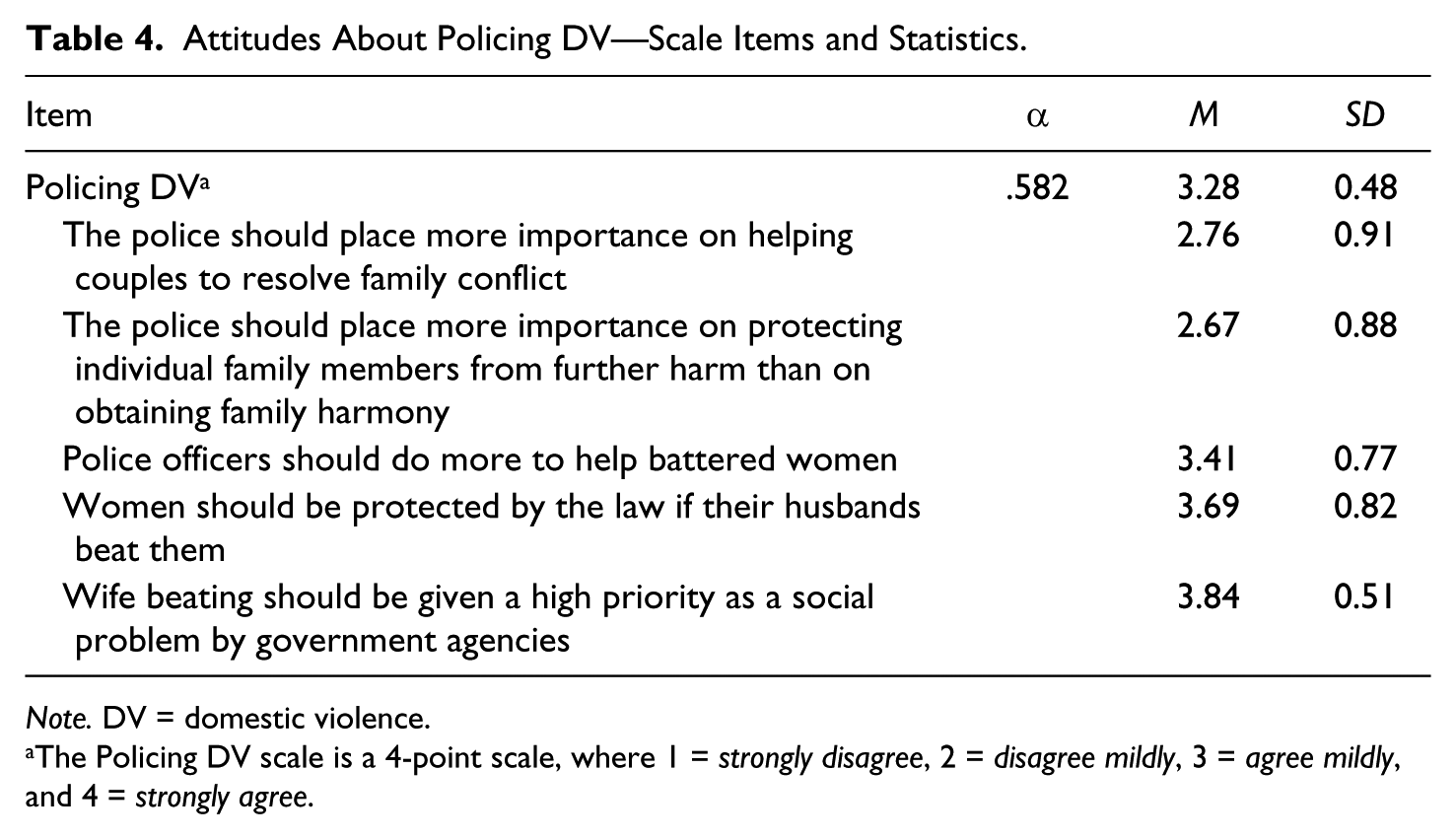
To measure police officers’ attitudes toward policing DV, questions from two separate studies were utilized (see Table 4). First, questions pertaining specifically to perceptions officers hold regarding their role in DV cases were taken from a study conducted by Stalans and Finn (2000). Two questions were analyzed: (a) the police should place more importance on helping couples to resolve family conflict (M = 2.76, SD = 0.908) and (b) the police should place more importance on protecting individual family members from further harm than on obtaining family harmony (M = 2.67, SD = 0.877). Three additional questions, derived from the “Help Should Be Given” subscale of the ATW, were also included to measure the belief that violence is a social problem deserving a strong legal response. These questions included the following: (a) police officers should do more to help battered women (M = 3.41, SD = 0.768); (b) women should be protected by the law if their husbands beat them (M = 3.69, SD = 0.815); and (c) wife beating should be given a high priority as a social problem by government agencies (M = 3.84, SD = 0.512). The overall 4-point policing DV scale score was created by averaging responses across the five items (α = .582). Higher values represent a belief that police intervention in DV cases is necessary (M = 3.28, SD = 0.48).
Attitudes About Policing DV—Scale Items and Statistics.
Note. DV = domestic violence.
The Policing DV scale is a 4-point scale, where 1 = strongly disagree, 2 = disagree mildly, 3 = agree mildly, and 4 = strongly agree.
Findings
As a consequence of war and in preparation for European Union ascension, Bosnia has undergone innumerable economic, political, legislative, social, and cultural changes. One such change has been how the state responds to DV, with much attention directed at police practice. Surprisingly, there has been an overall lack of research consideration given to police attitudes concerning policing DV in post-conflict Bosnia. This study provides one of the first empirical analyses of Bosnian police officers’ attitudes, as well as the impact DV training and education have had on officers’ attitudes about DV. It was hypothesized that trained officers will hold more progressive attitudes regarding gender and DV. Results from a series of bivariate statistical analyses are presented below.
The Influence of Attitudes on Each Other
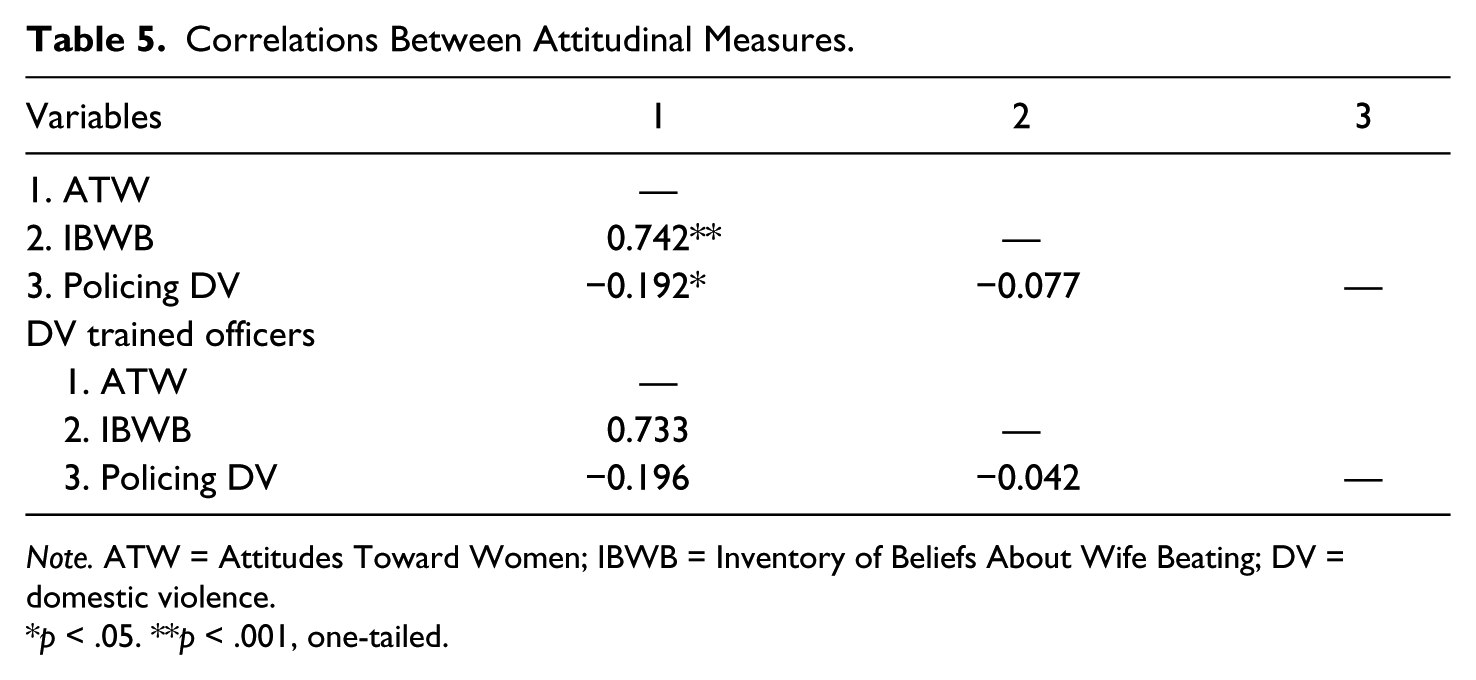
For each attitudinal scale, individual items were averaged, and possible scale scores ranged from 1 to 4. For the AWS, higher values indicate more conservative, traditional attitudes, whereas low scores reflect more liberal, profeminist attitudes. For the IBWB, higher values represent a greater degree of agreement that wife beating is justified under certain circumstances. In this sample, attitudinal measures appear to be related to each other. Specifically, holding conservative/traditional attitudes toward women in general was significantly related to an increased likelihood that the officer believed wife beating to be an appropriate response under certain conditions (t = 0.742, p < .001). Moreover, officers who were more likely to view women in a negative light or justify wife beating were less likely to feel that the police should intervene in DV situations; however, a significant difference emerges only for one item. In particular, officers who held traditional, sexist attitudes toward women were less likely to view DV as a worthwhile police endeavor compared with officers who held liberal, profeminist attitudes (t = −0.192, p < .05; see Table 5).
Correlations Between Attitudinal Measures.
Note. ATW = Attitudes Toward Women; IBWB = Inventory of Beliefs About Wife Beating; DV = domestic violence.
p < .05. **p < .001, one-tailed.
The Impact of Training on Attitudes
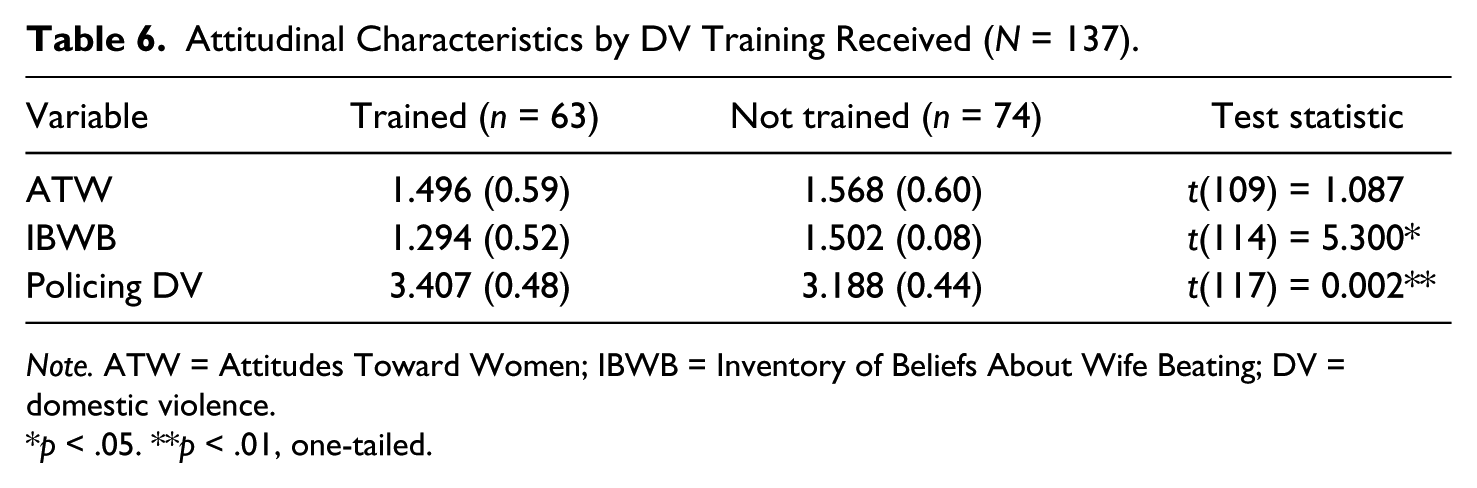
Bosnian officers who had received DV training had slightly lower average scores on the AWS measure (1.50) compared with officers who had not received DV training (1.57), but this difference is not statistically significant (see Table 6). It should be noted that overall lower scores indicate more liberal, profeminist attitudes. As such, it appears that Bosnian officers in general do not adhere to traditional, patriarchal views of women as has been suggested in the literature.
Attitudinal Characteristics by DV Training Received (N = 137).
Note. ATW = Attitudes Toward Women; IBWB = Inventory of Beliefs About Wife Beating; DV = domestic violence.
p < .05. **p < .01, one-tailed.
On the IBWB scale, trained officers had lower average scores compared with officers who had not received DV training (1.29 and 1.50, respectively; t = 1.87, p < .05). This difference was statistically significant. Relatively speaking, lower scores indicate more disagreement, so trained officers were less likely to believe that wife beating is justified compared with untrained officers.
Finally, attitudes related to policing DV were evaluated. As expected, police officers who had undergone DV training were more likely to perceive DV as worthy of police intervention as reflected by higher scores held by trained officers (3.41 compared with 3.19 for non-trained officers; t = −2.60, p < .01). When training is controlled for (see Table 5), the effect of holding negative, traditional views regarding women and wife beating on attitudes toward policing DV disappears. In support of our hypotheses, these findings provide some suggestion that trained officers are more likely to hold more liberal, progressive attitudes toward women and DV and view police response to DV as important compared with untrained officers.
Discussion
Traditionally when DV incidents are reported, it is the police who respond to and handle such cases. The police, however, have historically been reluctant to get involved in DV situations largely because these situations were seen as family matters and thus did not fall within the scope of traditional police work (Belknap, 1995). Because of their direct involvement in DV cases (when reported), their role (and response) has been the focal point of the criminalization movement in the United States and other western democracies. 8 This focus has carried over to newly emerging nation states, such as Bosnia and Herzegovina, where reformation of the police and police practices has become a critical component of the peace process.
Empirically, not a lot is known about police DV practice in Bosnia. Rather, most research has focused exclusively on the overall police reformation process in Bosnia (Aitchison, 2007; Collantes-Celador, 2005, 2009; Hansen, 2008; Rosga, 2010), police corruption (Ivkovic & Shelley, 2008, 2005; Maljevic et al., 2006), and community policing initiatives (Deljkić & Lučić-Ćatić, 2010; Vejnovic & Lalic, 2005). Similarly, DV research from the region has focused primarily on DV incidence (Avdibegović & Sinanović, 2006; Ćopić, 2004; Muftic & Bouffard, 2010; Smailkadić, 2008; Zene Zenama, 2008) with little to no mention of policing practices. When policing DV is mentioned, it is usually negative and lacking in detail. For example, when asked about the usefulness of the police when it comes to DV, a therapist with a local NGO responded, “Some of them are great, some are so-so, but many of them are senseless and rude” (Brennan-Krohn, 2008, p. 25). This study is believed to be one of the first to empirically evaluate Bosnian officers’ attitudes regarding DV, both personally and professionally, as well as the impact training may have had on such attitudes.
Overall, the results from this study support the idea that officers’ attitudes about women and wife beating influence their views on policing DV. We found that police officers who express sexist attitudes toward women and view wife beating as justifiable under certain circumstances are less likely to feel police intervention in DV situations is warranted. Interestingly, when DV training is controlled for, traditional, patriarchal attitudes have a negligible effect on officers’ attitudes pertaining to police intervention in DV cases. In other words, training appears to reduce the impact sexist, antiquated views toward women and wife beating have on police officers’ schemata concerning policing DV.
Considering that previous work portrays the Bosnian police in a rather stereotypical, sexist fashion (Bolkovac & Lynn, 2011; Helms, 2003, 2006), the findings from this study are quite unexpected. This is especially true considering that the vast majority of officers surveyed (regardless of training received) were found to hold relatively liberal, profeminist attitudes. These progressive results, however, may be an artifact of the research methodology employed. The Bosnian police are acutely aware of real (and perceived) external influences on the police 9 (Ivkovic & Shelley, 2005). Likewise, the police are conscious of the fact that in the last decade a considerable amount of pressure has been put on the police (by the international community and local women’s advocates) to take abuses of human rights (including DV) seriously and respond accordingly. As such, the fact that the lead researcher was an American (and a woman) may have been taken into consideration when officers completed the survey (which asked them to self-report their attitudes and beliefs). Thus, it is plausible that respondents censored their answers accordingly, responding as to what they thought the researcher wanted to hear, rather than what they actually believe (Deljkić & Lučić-Ćatić, 2010; Helms, 2006). Future research designed to examine police officers’ attitudes would benefit from a variety of research methodologies, including police ride-alongs (DeJong et al., 2008; Miller, 2005; Sherman & Berk, 1984) and hypothetical scenarios (Finn & Bettis, 2006; Stith, 1990a, 1990b).
While understanding the impact attitudes have on police practices is important, more research is needed specifically related to how (and why) Bosnian police respond to DV calls, how arrest decisions are made, and how DV offenders and victims are treated. Officers’ personal experience with DV perpetration is another important line of research that remains unexplored in Bosnia. Considering the high rates of DV found among the general female population in Bosnia (Avdibegović & Sinanović, 2006; Ćopić, 2004; Muftic & Bouffard, 2010; Smailkadić, 2008; Zene Zenama, 2008), it is not farfetched to assume that some officers engage in DV against their own intimate partners and family members. Research indicates that officers who engage in DV are more likely to treat victims of DV negatively (Stith, 1990a, 1990b), are rarely fired from their jobs or punished when convicted of DV (Erwin, Gershon, Tiburzi, & Lin, 2005; Kocieniewski & Flynn, 2008), and are less likely to report colleagues’ DV perpetration (Kocieniewski & Flynn, 2008). This is an important line of research that should be explored in the future.
The results from this study offer some implications when it comes to police education. Practically speaking, these results suggest that existing DV training may be effective at reducing negative gender attitudes and DV. Questions remain, however, as to the actual educational content being delivered to police officers in Bosnia. Research indicates that the most successful police education challenges sexist views, emphasizes the seriousness of all forms of violence against women, and promotes feelings of responsibility and concern about victims—all while highlighting “sensitive and empathic policing” (Gracia et al., 2010, p. 202). Most police training falls short of this. Rather, it often revolves around family intervention techniques that advocate mediation as the police response of preference and “present wife abuse as a non-serious matter arising from marital conflict,” essentially blaming the victim for her own victimization (Saunders & Size, 1986, p. 26). It is unknown what type of training model and/or DV education the police in this sample received. Future research needs to examine the training curriculum and materials used in Bosnia for faulty messages, sexist language, victim blaming, and other forms of bias that will hinder the effectiveness of police intervention in DV cases (Saunders & Size, 1986). Training duration, as well as frequency, should also be evaluated.
It should be noted that this study is limited in its use of a fairly small sample that is not representative of the Bosnian police as a whole. Future research should concentrate on other regions and police divisions within Bosnia, as well as larger stratified samples. It would also be interesting to compare officers’ attitudes across nation states. Bosnia’s neighbors have also made massive legislative and policy changes pertaining to gendered violence in the last decade (Avdeyeva, 2007; SEESAC, 2007). Interestingly, Croatia, Kosovo, Serbia, and Slovenia have responded differently as to how they train their police officers on DV. For instance, Kosovar and Slovenian governments provide resources for systematic and routine training of police officers on DV, while Croatian and Serbian governments have allocated resources to conduct training on a limited basis or in limited jurisdictions within their respective borders (Avdeyeva, 2007). It would be interesting to evaluate whether differential training programs impact policing practices and attitudes differently.
Finally, it is unknown how or why some officers in this sample received training and others did not. Recall that more than half of the officers surveyed had not received DV training. It is reasonable that in some jurisdictions training is voluntarily. As such, it may very well be that those individuals who held certain attitudes toward DV volunteered, while those who held other attitudes did not. Future research should examine how officers are selected for training as well as incorporate other research methods (e.g., random assignment and/or pre/post designs) to control for alternate explanations for the findings presented here.
In conclusion, the Bosnian police (as well as society in general) may well be on the cusp of a cultural shift. Stereotypically viewed as archaic, patriarchal, violent, and sexist, this study paints a rather different picture of the police in Bosnia. Specifically, Bosnian police officers surveyed appear to hold what could be interpreted as relatively liberal, profeminist viewpoints regarding gender as well as DV. 10 Pressure from the international community, which has greatly shaped post-war policing in Bosnia, and local NGOs to pay more attention to the plight of (victimized) women within the country may be paying off. More, however, needs to be done. Government-supported initiatives that educate not only the local police but also criminal justice professionals and the general public on the etiology (and consequences) of DV are desperately needed in Bosnia. Financially strapped local NGOs have taken on the lion’s share of this task. The result has been a fragmented, underfunded, and often ignored campaign against DV (Global Rights, 2004; Helms, 2003). Consequently, much of this movement has been on educating the police (and public) that DV is now a crime (OSCE, 2000). Future efforts need to be devoted to educating officers on the complexity of DV (e.g., why the victim may stay with her abuser), avoidance of victim blaming (e.g., not asking what the victim did to provoke her partner), and consideration of DV as a serious criminal act worthy of police intervention (DeJong et al., 2008).
Footnotes
Declaration of Conflicting Interests
The author(s) declared no potential conflicts of interest with respect to the research, authorship, and/or publication of this article.
Funding
The author(s) received no financial support for the research, authorship, and/or publication of this article.