




Abstract
Findings are from an investigation of 24 criminal domestic violence courts (DVCs) across New York, testing their effect on recidivism, case processing, and case resolutions. Overall, we found a small positive impact on recidivism among convicted offenders. We further found that the sex of defendants moderated the court impact on case resolutions; that is, among male defendants only, DVCs increased conviction rates and sentences involving jail or prison. In addition, multi-level, multivariate analyses found that court policies specifically designed to increase victim safety, hold offenders accountable, and reduce offender recidivism (through deterrence or rehabilitation) were instrumental in reducing recidivism.
Introduction
Over the past 15 years, a growing number of jurisdictions have established specialized domestic violence courts (DVCs). There are currently an estimated 208 such courts in the United States (Labriola, Bradley, O’Sullivan, Rempel, & Moore, 2009), as well as more than 50 in Canada (Quann, 2006) and nearly 100 in the United Kingdom (Crown Prosecution Service. Home Office Her Majesty’s Courts Service, 2008). These courts typically hear all or most of a jurisdiction’s domestic violence cases on a separate calendar, presided over by a specially assigned judge. In theory, the judge gains expertise in the unique legal, personal, and case processing issues presented by domestic violence, leading to more informed and consistent decisions.
Although DVCs did not all arise in response to a common analysis or set of priorities, they can be situated in the context of two general trends. First, pressed by activists to treat domestic violence as a serious crime rather than a private matter among individuals, a variety of institutional responses followed since the late 1970s, including pro-arrest policies, evidence-based or “no drop” prosecution, and specialized prosecution units (Buzawa & Buzawa, 1996; Rebovich, 1996; Sherman, 1992). DVCs complemented these strategies, providing a mechanism for courts to promote consistency in sentencing and efficiency in processing the growing numbers of domestic violence cases that began to flood criminal courts nationwide (e.g., see Ostrom & Kauder, 1999).
Second, the rise of DVCs dovetailed with a broader trend toward establishing specialized “problem-solving courts” to handle cases that arise in connection with some underlying social problem. Drug courts were the first problem-solving model, and along with DVCs, current models now include mental health courts, reentry courts, gun courts, veteran’s courts, prostitution courts, and community courts (Berman & Feinblatt, 2005). Although each of these models has distinct goals and policy elements, some propose that they are unified by an overarching focus not primarily on case processing efficiency or legal issues but on substantive outcomes, such as reduced recidivism, enhanced victim services, or greater responsiveness to community needs (Berman & Feinblatt, 2005; Porter, Rempel, & Mansky, 2010; Wolf, 2007).
Although they emerged concurrently with the broader problem-solving court movement, DVCs differ from other problem-solving courts on a number of principles and practices. Whether a case is heard in DVC is not at the discretion of the defendant or defense attorney; instead, specific charges are automatically routed to the DVCs. Thus, DVC “participation” is not voluntary. While cases in some jurisdictions enter the DVC following an initial appearance in traditional court (e.g., arraignment, bond hearing), cases in other jurisdictions are automatically flagged for arraignment in the specialized court, where they remain through disposition. Generally, DVCs feature a single presiding judge, a fixed prosecutorial team, and enhanced staffing to monitor defendant compliance and provide assistance to victims. Although some courts may offer services pre-disposition, for the most part, defendants are mandated to programs (e.g., batterer programs, substance abuse treatment) and judicial monitoring only if they are convicted, as part of their sentence. Thus, while defendants may be sanctioned if they do not complete the requirements of their sentence, the sentence itself will not be altered (unlike other problem-solving court models).
Despite these general programmatic tendencies, in their everyday practice, national descriptive studies have made clear that today’s DVCs are remarkably diverse, lacking a singular set of goals, policies, or evidence-based principles to guide them (Keilitz, 2001; Labriola et al., 2009; Shelton, 2007). For instance, some DVCs have one specialized judge and calendar, whereas others have multiple calendars. Some DVCs hear only cases related to intimate partner violence, whereas others include violence between non-intimate family or household members. Some practitioners believe that it is important for DVCs to reduce recidivism, whereas others are not convinced that such a goal is attainable and, consequently, place a greater emphasis on holding offenders accountable for misconduct through aggressive sanctions, while seeking to improve service linkages for victims.
The diversity entailed by today’s DVCs presents a challenge for research. Broad generalizations based on single-site evaluations are particularly problematic, given that other sites may operate quite differently. Furthermore, few impact evaluations with strong quasi-experimental comparison groups have been conducted in the first place, and findings to date are inconsistent. To address these methodological concerns, this study evaluates 24 New York State criminal DVCs. The goal is to determine the average effects of these courts on a core set of quantifiable criminal justice outcomes, including re-arrest, conviction rates, final sentences, and other aspects of case processing. A secondary goal is to illuminate how and why some DVCs have different effects than others, whether as a result of serving different target populations or of operating with different policies, practices, and priorities.
Prior Research
A handful of studies have examined the experience of victims, and their results generally concur that DVCs are more effective than non-specialized courts in linking victims with victim advocates and in eliciting positive victim perceptions of the court process (e.g., Eckberg & Podkopacz, 2002; Gover, MacDonald, & Alpert, 2003; Harrell, Newmark, & Visher, 2007; Henning & Klesges, 1999; Newmark, Rempel, Diffily, & Kane, 2001). However, based on a review of 10 prior evaluations (see Cissner, Labriola, & Rempel, 2013), the impact of DVCs on core offender outcomes—recidivism in particular—remains elusive.
Impact on Recidivism
Across 10 sites that were previously evaluated, 4 demonstrated a significant reduction in recidivism, whereas 6 revealed either the lack of any such effect or mixed results across measures. Results are particularly notable for the 3 sites that participated in the U.S. Department of Justice’s Judicial Oversight Demonstrative (JOD) Initiative, which served as a large-scale, heavily funded effort to test the effects of DVCs and other elements of a coordinated community response. In the end, 2 of the JOD sites reduced official re-arrests, whereas a third site did not, and victims reported less re-victimization in 1 of 2 sites where victim interviews were conducted (see Harrell et al., 2007; Harrell, Schaffer, DeStefano, & Castro, 2006; Visher, Harrell, Newmark, & Yahner, 2008). In both of the sites that produced positive effects on recidivism (Milwaukee, Wisconsin, and Dorchester, Massachusetts), JOD offenders were more likely than comparison offenders to have their probation revoked and to be re-sentenced to jail. Hence, the positive impact of the DVC was qualified in that the impact hinged at least in part on enforcement—detecting misbehavior and responding with incarceration—not behavioral changes while the offenders were out in the community. Of course, reducing recidivism through enforcement is not, per se, a less positive outcome than reducing recidivism through any other mechanism, but insofar as revoked probationers will eventually be re-released, recidivism reductions that rely exclusively on enforcement do not necessarily suggest sustainable impacts.
Besides the JOD evaluation, while two other studies reported reductions in the re-arrest rate after introducing a DVC (Angene, 2000; Gover et al., 2003), on the other end of the spectrum, two studies reported increased re-arrests after the establishment of DVC (Newmark et al., 2001; Peterson, 2004). The authors of these latter studies speculated that changes associated with the DVC’s establishment may have led to better identification of recidivist domestic violence crimes, meaning that the courts may have spawned increased detection of crime but not necessarily increased crime itself. Finally, three studies found mixed effects on recidivism, depending on whether re-arrests were tracked pretrial or after the initial case ended (Eckberg & Podkopacz, 2002), or depending on the severity of the offense or on whether victim report or official re-arrest measures were utilized (Davis, Smith, & Rabbitt, 2001; Quann, 2006).
It is entirely plausible that the four sites, in total, that have been shown to have clearly reduced recidivism use policies that are particularly conducive to such effects, whereas the other sites have a different constellation of policies that are better suited to other goals. It is also plausible that DVCs have genuinely mixed or null effects on average, with site-to-site variations simply an artifact of differences in research methodology. Moreover, in the absence of comparative research utilizing a common methodology across multiple sites, it is difficult to draw reliable generalizations about the DVC model overall.
Impact on Other Criminal Justice Outcomes
The evaluation literature provides a more consistent set of findings related to several other justice outcomes, case processing efficiency in particular. Ironically, case processing efficiency is not currently among the most commonly embraced goals among DVC practitioners nationwide (Labriola et al., 2009), yet quasi-experimental evaluations of misdemeanor DVCs in Milwaukee (Davis et al., 2001), Minneapolis (Eckberg & Podkopacz, 2002), Manhattan (Peterson, 2004), and San Diego (Angene, 2000) all found that these courts sped up case processing time from arrest to disposition. In contrast, an evaluation of the felony DVC in Brooklyn (Newmark et al., 2001) found that case processing time increased after the specialized court opened. It is possible that in more serious felony cases, specialization leads to greater attention being afforded to each case, resulting in a longer time to disposition; however, caution is indicated before generalizing based on the results obtained at only four misdemeanor-level and one felony-level programs.
Although the literature is not unanimous, most studies that have examined conviction rates found that DVCs produce increased convictions. Such results materialized (although not all by statistically significant margins) in separate studies of the DVCs in Brooklyn and Queens, New York (N. Miller, 1999; Newmark et al., 2001), Dorchester, Massachusetts (Harrell et al., 2007), Miami (Goldkamp, Weiland, Collins, & White, 1996), Milwaukee (Davis et al., 2001), Minneapolis (Eckberg & Podkopacz, 2002), and Ontario, Canada (Quann, 2006). In contrast to these seven studies, two others did not detect a change in the conviction rate (Angene, 2000; Peterson, 2004). It is not altogether clear whether increased conviction rates stem from improved evidence collection, increased victim cooperation in a DVC (an explanation suggested by Peterson, 2013), or other dynamics, nor is it clear why two of the sites previously studied did not produce a change in convictions.
Among those who are convicted, the impact of DVCs on sentencing is similarly undetermined and/or variable by site. DVCs have variously been associated with both a greater (Harrell et al., 2007; Harrell et al., 2006; Quann, 2006; Ursel & Brickey, 1996) and a lesser (Angene, 2000; Davis et al., 2001; Peterson, 2004) use of jail sentences than non-specialized courts. Evaluations that reported less use of jail generally attributed this finding to an increased reliance on monitoring defendants through batterer programs or drug and alcohol programs in lieu of incarceration (Goldkamp et al., 1996; Peterson, 2002).
Method
Sampling Plan
The current DVC sample included 24 criminal DVCs that had been in operation as of 2007. 1 The courts included in the sample represented a range of jurisdictions, including New York City (n = 7) and its suburbs (n = 4), mid-sized cities in upstate New York (n = 4), and small cities, semi-rural, or rural areas in upstate New York (n = 9). From each of the 24 sites, the DVC sample was drawn from all cases arrested and processed during the first two full calendar years of court operations. A final sample of 9,292 cases was randomly drawn from the 37,174 available DVC cases. Because we were particularly interested in the possible impact of DVCs on cases ending in a conviction—for example, via policies such as post-disposition program mandates, compliance monitoring, or sanctions for non-compliance—we also isolated a randomly drawn subsample of 3,726 DVC cases that ended in conviction.
A total of 21,046 potential comparison cases were drawn from the same 24 jurisdictions during the two full calendar years preceding the opening of the local DVC. Eligible comparison cases were identified using the statewide Order of Protection Registry. The cases had a criminal protective order (temporary or final) issued 2 and included a domestic violence-type charge. Again, we also isolated the subsample of 8,761 comparison cases that ended in conviction.
Adjustment for Selection Bias
Propensity score matching was implemented to reduce differences between the DVC and comparison samples. Propensity score matching eliminates the need to control for additional measures, as the process creates a (near) equal distribution of the variations among those in the DVC and comparison samples (see Bryson, Dorsett, & Purdon, 2002; Rubin, 1973).
To create the matched samples, the 24 sites were divided into four strata: New York City sites (7), suburban sites (4), upstate mid-sized cities (4), and upstate small city/semi-rural/rural sites (9). Within each stratum, we examined the p values for all bivariate comparisons of defendant baseline characteristics. Next, we entered all characteristics with any evidence of a possible difference between the samples (p ≤.50) into a backward stepwise logistic regression model, for which the dependent variable was sample membership (0 = comparison, 1 = DVC). 3 We used a one-to-one matching strategy—in which each DVC defendant’s propensity score was compared with the pool of potential comparison subjects, and the comparison subject with the closest score (of those not already selected) was selected for the final sample. Matches across sites within the same stratum were allowable. 4 The propensity score matching process was implemented separately for the full sample and for only those cases ending in conviction. Diagnostics revealed 39 significant differences between the full samples prior to matching; only 13 differences remained following the matching process. Among the subsamples of cases ending in a conviction, however, there was only one difference following the matching process. Due to the extremely large sample size in this study, significant differences existed even after matching for the simple reason that substantively negligible differences tended to be statistically significant.
Adjustment for Site-Level Variation
We used hierarchical modeling using HLM 6.04 software (Raudenbush & Bryk, 2002). Multilevel modeling addresses the problem created by the clustering of outcomes at the site level. For example, in this study, our sites (i.e., jurisdictions) may have different police or prosecution policies, DVC policies, or other community-level variations. The consequent “nesting” of individual offenders within site-specific contexts violates the standard regression assumption that all observations should be equally independent. More importantly, site-specific differences may influence observed differences in re-arrest rates or other outcomes, particularly as we did not insist upon maintaining equal numbers of DVC and comparison cases from each individual site as an outcome of the propensity score matching process.
Outcome Measures
The principal outcome of interest is official re-arrest over 3 years. Separate re-arrest measures were created to distinguish charge severity—that is, whether the case is a misdemeanor or felony—and charge type (e.g., domestic violence, domestic violence with the same victim, violent offense, and drug offense). Additional outcomes of interest included time from arrest to disposition and case outcomes, including conviction rates, sentencing decisions (among convicted cases), and length of time sentenced to probation, jail, or prison (for offenders receiving one of those sentences).
Independent Variables
The data set included demographics (e.g., age, race/ethnicity), criminal history (e.g., number of prior arrests/convictions; prior violent felony, domestic violence, and prior drug arrests/convictions), non-compliance history (e.g., warrants for not appearing in court on prior cases), and current charges (e.g., charge severity; assault, criminal contempt, or drug charge).
In addition to determining whether DVC impacts varied by site, we sought to test alternative reasons for why differences between sites might exist. Specifically, we sought to examine whether courts that serve certain target populations or that have adopted certain policies and practices were more effective than other types of DVCs. Court-level policy measures were derived from a series of court surveys and included measures from key domains, summarized in Table 1. As shown in the table, multiple items representing the same underlying construct (e.g., coordinated community response, assessment, monitoring) were combined into single multi-item indices, confirmed with reliability tests. Each resulting index was then divided into three parts: DVCs that do not implement the policy at all (coded “0”), DVCs that implement a low level (i.e., implement the policy to a small extent; coded “1”), and DVCs that implement a high level of the policy construct (coded “2”). Some measures did not lend themselves to three categories and were simply dichotomized (they either have the policy or not). In a typical analysis, the 24 comparison court sites were coded as “0” on each DVC policy in question, since the comparison courts did not use DVC-specific policies. (The research team’s general knowledge of court policies that preceded each New York State DVC’s operation confirmed the appropriateness of this classification scheme.) 5
Community- and Court-Level Characteristics Operationalized.

Note. DVC = domestic violence court.
Analytic Strategy
In the final impact analyses, DVC status was analyzed as a random effect, based on confirmatory analyses (results not shown), which indicated both that re-arrest outcomes varied by site and that the relative impact on those outcomes of DVC status also varied by site.
We conducted logistic regressions on dichotomous outcomes (e.g., any re-arrest) and Poisson regressions on right-skewed count distributions (e.g., number of re-arrests). We conducted separate analyses for (a) all sampled cases and (b) only those cases that were convicted. For all our results tables, we transformed the HLM regression coefficients for the intercept and DVC status to produce adjusted averages. Thus, although many of the reported results appear to consist of simple percentages or averages, all such outcomes are never based on the raw data but are always adjusted utilizing HLM regression procedures.
When examining the main effects of DVC status, because the propensity score matching process effectively minimized differences between the samples, we simply entered DVC status as a single random effect parameter in the HLM model. When examining the effects of more specific DVC policies, we first established a standard set of control parameters. Specifically, we examined the baseline individual- and community-level predictors of each key outcome of interest—exploring, to name a few examples, whether defendants with more extensive criminal histories, or defendants who live in the 9 rural/semi-rural sites as opposed to the 15 other sites, were especially likely to be re-arrested. We then established a standard set of control variables to be included in every analytic model that tested for the mediating effects of different court-level policies on outcomes. The final variables were sample (DVC vs. comparison), defendant age, defendant sex, prior arrest (yes/no), number of prior domestic violence arrests, number of prior warrants (for failure to appear in court on prior cases), and jurisdiction location (New York City, suburbs, semi-rural/rural; reference category = mid-size city). This standard set of control variables ensured that the analysis did not mistakenly attribute an effect to court-level policies, when the courts that operated according to those policies might, instead, have simply had a lower-risk defendant population based on individual characteristics. Then, one at a time, we entered each DVC policy of interest (see policy measures in Table 1), effectively testing whether DVCs that possessed each court policy outperformed other DVCs. To explore whether defendants with certain characteristics were particularly responsive to the DVC intervention—that is, whether effects varied by target population—we added the appropriate interaction terms to the multivariate models.
Results
Description of the Sample
Table 2 presents the baseline characteristics of all defendants in the final sample. Overall, the findings are consistent with previous research, suggesting that domestic violence defendants are predominately males from racial and ethnic minority groups in their early 30s, with extensive criminal histories (e.g., Buzawa & Buzawa, 1996; Labriola et al., 2009). Specifically, 59% of the full sample had previously been arrested, with an average of nearly four prior arrests. Although 40% had been arrested for domestic violence, prior criminal activity was not limited to this type of arrest; nearly one third of the sample had previously been arrested on drug (31%) or weapons (28%) charges. The incidence of past convictions is lower (37%) than arrests, which may in part reflect the difficulty of obtaining a conviction in domestic violence cases.
Sample Characteristics.

Note. DV = domestic violence.
The charge information presented is not limited to the top charge; because a single case frequently includes multiple charges, the sum of the percentages is greater than 100%.
p < .05. **p < .01. ***p < .001.
The DVC Impact on Re-Arrest
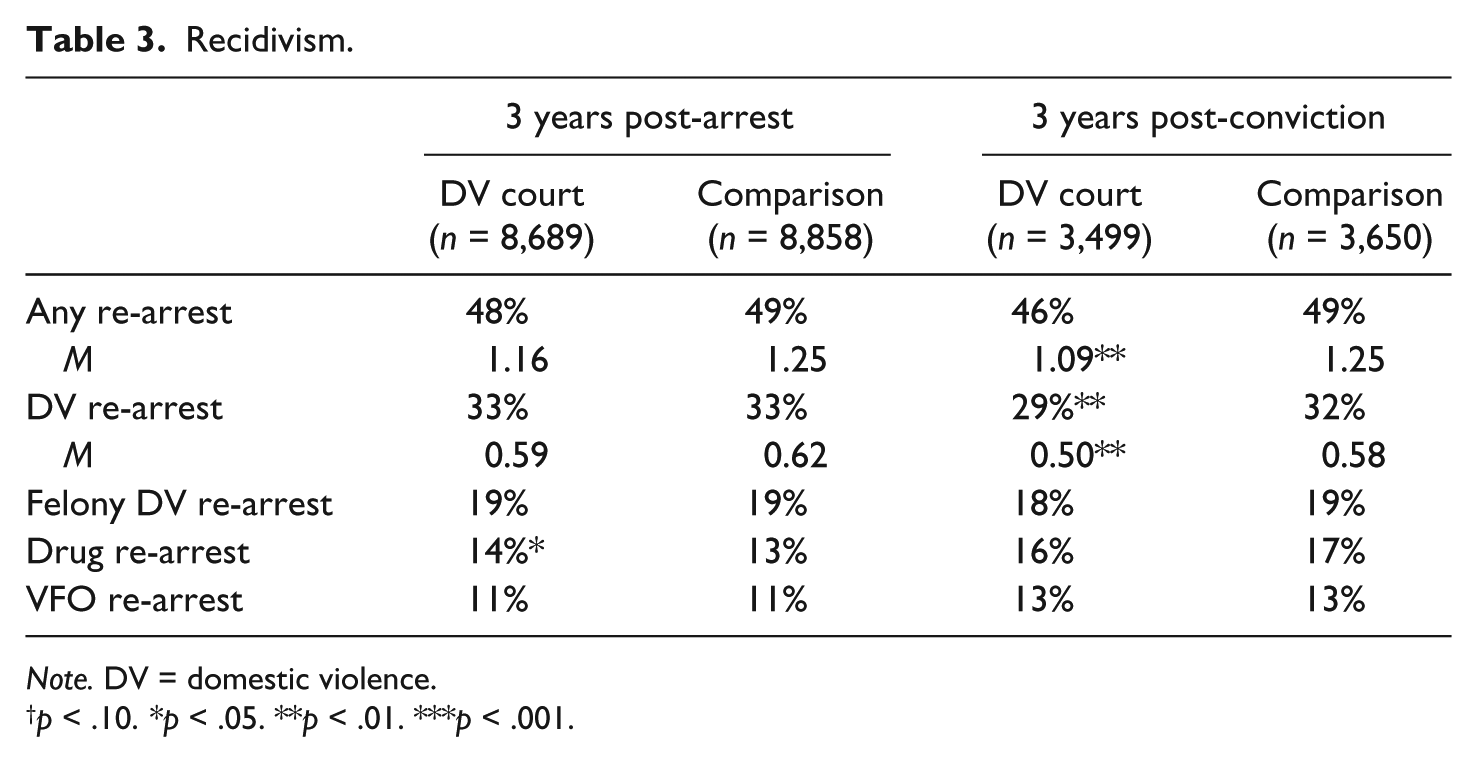
Table 3 displays the main findings for the DVC impact on recidivism. The leftmost columns of the table display the impact of DVCs on re-arrest within 3 years of the initial arrest. The average statewide results indicate that about 48% of the defendants in both samples were re-arrested within 3 years, with 33% re-arrested on domestic violence charges. DVC defendants were significantly more likely to be re-arrested on drug charges (14% vs. 13%), but this difference was only one percentage point in actual magnitude. Other differences between the samples were not statistically significant.
Recidivism.
Note. DV = domestic violence.
p < .10. *p < .05. **p < .01. ***p < .001.
Many DVC policies—including program mandates, ongoing judicial and/or probation supervision, and sanctions for non-compliance—apply only to those defendants who are convicted of a crime. For this reason, we conducted separate 3-year analyses for defendants who were convicted. As shown in the righthand columns of Table 3, 46% of DVC defendants and 49% of the comparison group were re-arrested within 3 years of conviction, with 29% and 32%, respectively, re-arrested on a domestic violence charge (p < .01). Similarly, the average numbers of re-arrests and domestic violence re-arrests specifically were significantly lower for the DVC than the comparison sample. These differences point to a positive impact overall, with the difference on three of the four measures statistically significant.
Multivariate models (not shown) confirmed that, consistent with the general criminal justice literature, younger defendants, males, defendants with a more extensive criminal history (i.e., any prior arrest and more prior domestic violence arrests), and those who have previously shown non-compliance with court orders by failing to appear in court and having a warrant issued were significantly more likely than others to be re-arrested. This was true both when examining all re-arrests and when isolating domestic violence re-arrests. Interaction terms (presented below in Table 5) revealed that no category of defendants was disproportionately likely to benefit from the DVC intervention with regard to recidivism (at the.05 significance level).
The DVC Impact on Case Outcomes
Consistent with nearly all previous studies (e.g., Angene, 2000; Davis et al., 2001; Eckberg & Podkopacz, 2002; Peterson, 2004), our results indicate that DVC significantly reduced case processing time. As reflected in the top section of Table 4, the average DVC case took approximately 6.5 months (197 days) to reach disposition, as compared with 8.6 months (260 days) in the comparison sample.
Case Processing, Conviction, and Sentencing Outcomes.

Note. DV = domestic violence.
Jail sentences, jail/probation split sentences, and prison sentences have been collapsed into a single category representing offenders who received any incarceration sentence. Twenty-one percent of offenders (participant and comparison) received a jail sentence, 31% received a split sentence, and 16% received probation.
Other sentence includes time served, fine, unconditional discharge, no incarceration, convicted with no sentence.
Days incarcerated calculated for those who were sentenced to jail or jail/probation split. Probation time calculated for those who received any probation.
p < .10. *p < .05. **p < .01. ***p < .001.
As the data in Table 4 further demonstrate, there were small differences between the DVC and comparison samples in the percentages of cases convicted, dismissed, and ending in an adjournment in contemplation of dismissal (ACD), of which the latter is an interim disposition that nearly always ends in dismissal. 6 The only significant difference was in the rate of ACDs. In multivariate analyses (results not shown), we found that those offenders who are more likely to be convicted are male, have a prior criminal history, were arrested on a criminal contempt (generally signifying a violation of a previous order of protection) or on a drug charge, and were arraigned on a felony charge on the instant case.
Among cases that ended in conviction (see Table 4), there were no differences in either the severity of the top conviction charge (felony, misdemeanor, or violation) or in sentencing practices between the DVC and comparison samples. Across both samples, conditional discharges were the most frequently used sentence; sentences including some incarceration time were the next most common type.
Offenders sentenced to jail or prison time spent around 3.5 months incarcerated on average. Neither the length of jail/prison or probation sentences differed between DVC and comparison samples. Of all convicted offenders (including the 55% who did not receive either a jail/prison or probation sentence), both DVC and comparison offenders spent less than 1 month in jail (29 and 28 days, respectively) and less than 1 year on probation (0.7 years for both samples).
How and for Whom Do DVCs Work?
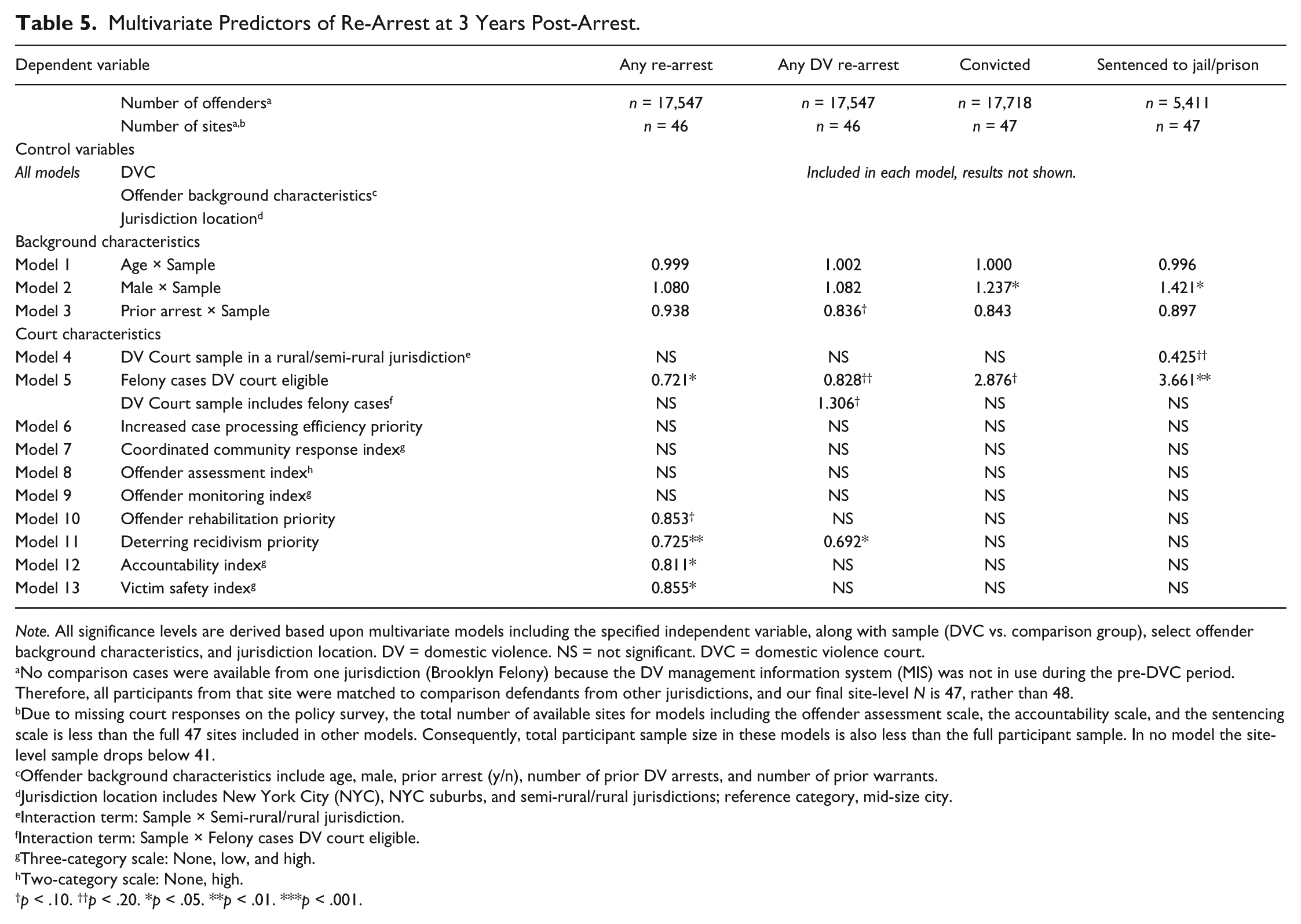
Table 5 presents the results of analyses measuring the moderating and mediating role of, respectively, offender background characteristics (Models 1-3) and court-level policies (Models 4-13) in explaining the impact of DVCs on re-arrest at 1 year and on conviction and sentencing outcomes. Each model includes DVC status, individual-level control variables, and jurisdiction location, along with a single background characteristic or policy construct of interest (as well as an interaction term where necessary; see analytic strategy above for a review of specific control variables). 7
Multivariate Predictors of Re-Arrest at 3 Years Post-Arrest.
Note. All significance levels are derived based upon multivariate models including the specified independent variable, along with sample (DVC vs. comparison group), select offender background characteristics, and jurisdiction location. DV = domestic violence. NS = not significant. DVC = domestic violence court.
No comparison cases were available from one jurisdiction (Brooklyn Felony) because the DV management information system (MIS) was not in use during the pre-DVC period. Therefore, all participants from that site were matched to comparison defendants from other jurisdictions, and our final site-level N is 47, rather than 48.
Due to missing court responses on the policy survey, the total number of available sites for models including the offender assessment scale, the accountability scale, and the sentencing scale is less than the full 47 sites included in other models. Consequently, total participant sample size in these models is also less than the full participant sample. In no model the site-level sample drops below 41.
Offender background characteristics include age, male, prior arrest (y/n), number of prior DV arrests, and number of prior warrants.
Jurisdiction location includes New York City (NYC), NYC suburbs, and semi-rural/rural jurisdictions; reference category, mid-size city.
Interaction term: Sample × Semi-rural/rural jurisdiction.
Interaction term: Sample × Felony cases DV court eligible.
Three-category scale: None, low, and high.
Two-category scale: None, high.
p < .10. ††p < .20. *p < .05. **p < .01. ***p < .001.
As shown by the interaction terms in Model 2, DVCs were significantly more likely than non-specialized courts to convict male offenders and to sentence male offenders to jail or prison. Conversely, although these results are not explicitly shown in the table, the analysis in Model 2 found that DVCs were neither more nor less likely than non-specialized courts to convict or incarcerate female defendants. We explored additional interactions between sex, race, and age, in light of literature suggesting that the interaction of these identities impacts outcomes in general criminal justice settings (e.g., Steffensmeier, Ulmer, & Kramer, 1998); however, none of the additional interaction terms rose to significance in our analyses. Thus, it appears that male sex is the factor driving the differential conviction and incarceration rates in New York’s DVCs shown in Model 2.
Concerning effects on re-arrest, as shown in Model 3, the DVC appeared to reduce re-arrest by a greater magnitude with individuals who did than with those who did not have at least one prior arrest, but the odds ratio for this effect was relatively modest (0.836), and significance was only at the .10 level. Regarding policy-level effects, DVCs that limit their eligible caseload to felony cases (mainly out of necessity given jurisdictional limitations) appeared to be less successful than misdemeanor DVCs in reducing domestic violence re-arrests (see Model 4, p < .10). While this finding suggests that DVCs handling more serious felony cases fare worse, it is worth noting that the misdemeanor DVCs—the courts that serve the majority of offenders—in fact perform better than non-specialized courts. The results also suggest that DVCs that prioritize offender rehabilitation, deterring re-offense, offender accountability (and that have more accountability-oriented practices in place), and victim safety (and that have more safety/service measures in place) were more likely to reduce re-arrest, as compared with other types of DVCs (see Models 10-13). Only one of these policies, deterrence focus, was found to significantly impact domestic violence re-arrests specifically. 8
Of final interest, as suggested by the bivariate results above, multivariate analyses that included our full set of control variables in addition to our propensity score matching adjustment confirmed a modest but significant effect of DVCs in reducing re-arrest among defendants who were convicted on the instant case (results not shown).
Discussion
Utilizing a multisite design with 24 criminal DVCs from across New York State, this article set forth to assess the impact of DVCs on recidivism, case processing, and case resolutions. We found a small positive impact of New York’s DVCs on recidivism among convicted offenders, but not among all offenders.
We did not detect a significant overall impact of DVCs on conviction rates on the instant case, although the percentages indicated slightly higher conviction rates in the DVC sample—by a margin of 4 percentage points. Neither did we find any overall impact of DVCs on sentencing. Specifically, convicted offenders in DVCs were not, on the whole, more likely to receive a sentence involving prison or jail than offenders processed in traditional courts, although the raw percentages suggested slightly greater use of jail or prison sentences in the DVC (again by 4% points). Finally, consistent with previous research, we found that DVCs increased case processing efficiency, and across our 24 sites, the average reduction in the time from arrest to disposition was more than 2 months, making for a fairly large and robust effect.
Besides seeking to answer the primary questions of whether DVCs produce a change in re-arrest or case outcomes, this article addressed two additional research questions of interest. The first of these concerned possible differential effects of the DVC with specific defendant subgroups. Our results revealed that, whereas DVCs did not significantly change conviction rates overall, they significantly increased conviction rates among male defendants (but not among female defendants). In addition, DVCs significantly increased the use of sentences involving jail or prison among convicted male defendants (but not among convicted female defendants). Achieving more severe case outcomes with male but not with female defendants is largely consistent with the intended impact of the model. In cases of intimate partner violence, males are more often the primary aggressor, more often resort to injurious forms of violence, and more often seek to manipulate their female partners and the justice system by filing cross-complaints (Gondolf, 2012). One of the intended benefits of having dedicated DVC judges is the special training they receive in the ways that abusive males may attempt to manipulate both their victims and the criminal justice system. This training might well have the effect of yielding more severe case outcomes only among male defendants. In short, the lack of a statistically significant “main effect” (combining male and female defendants), coupled with a significant moderation effect (with males only) is probably appropriate to interpret as a positive finding for the model.
The other secondary question concerned which DVC policies and practices resulted in greater recidivism reductions. In general, this study found that policies related to promoting victim safety and reducing offender re-offense—specifically, through deterrence, rehabilitation, or accountability—were more instrumental in reducing re-arrest than policies targeting court structure (e.g., coordinated community response) or other outcomes (e.g., case processing). This study cannot provide a definitive answer as to which policy factors enable some DVCs to reduce recidivism and others to be less successful. Nonetheless, the findings suggest that recidivism reductions are enhanced by a greater focus on deterrence and accountability mechanisms, and a greater array of victim safety and service provisions.
Study Strengths and Limitations
This study possessed several unique strengths, as compared with the previous literature. The multisite framework produced findings with stronger external validity than nearly all previous studies, which were implemented in single sites (mainly excepting the three-site JOD study). Nonetheless, the external validity of this study is qualified by its limitation to a single state court system. Although courts were examined throughout New York State, not merely in New York City or other urban regions, the analysis was still limited to a single state. In the past, New York’s approach to domestic violence has been somewhat known for eschewing offender rehabilitation, although in other respects, our analysis of policy survey data revealed comparable variation across the 24 New York sites as one might find nationwide.
Besides a reasonable claim to external validity, a second strength of the study design is the use of rigorous propensity score modeling methods to control for selection bias. Although a randomized controlled trial would be a stronger design, randomly assigning defendants to the DVC across 24 sites was not practical. By instead using a propensity score matching strategy, this study was able to achieve relatively comparable samples across a wide array of individual demographic, charge-related, and criminal history characteristics. A third strength of the study was the sample size, including more than 2,000 cases in each study group for all main effect analyses (and a great deal more cases for most such analyses). Of particular importance, the sample size was sufficient to enable a rigorous study of subgroup effects, enabling the significant and meaningful finding that the state’s DVCs were particularly likely to convict and impose severe sentences on male defendants.
However, because the sample involved only 24 sites, it was difficult to tease out precisely which DVC policies were most conducive to greater or lesser impacts. The results begin to suggest some policy areas that may be effective for specialized courts (a focus on misdemeanor offenders, policies to sanction non-compliant offenders, concrete victim safety measures, and prioritizing rehabilitation as a court goal), but because many of these factors are inter-correlated, disentangling them with statistical certainty is difficult. In addition, many of our policy measures were limited by the lack of direct observation of practice, and reliance instead upon self-reported policy survey information provided by court project coordinators and judges.
Another study limitation was the pre–post design. Methodologically, the use of a pre–post design may create historic bias if identification, enforcement, or arrest for domestic violence crimes change over time. This weakness may be somewhat mitigated by the use of different pre–post periods for each DVC, based on when each court opened.
The lack of a uniform evidence-based risk/needs assessment also hampered the study. Such an assessment would have allowed for the identification of high- and low-risk defendant subgroups (between which impacts might vary). The present study did control for classic static factors and detected a suggestive finding (p < .10) that DVCs are more effective with those who had at least one prior arrest. But the study lacked information sufficient to validly classify offenders effectively by risk level or psychosocial needs.
Finally, this study focused exclusively on official criminal justice outcomes: re-arrest and case resolutions. It did not examine case-level data related to victim services, victim perceptions, uses of different program mandates in individual cases, supervision strategies, or responses to non-compliance. Instead, in addressing these topics, we had to rely only on our court-level policy survey. Related, our recidivism measures were limited to official re-arrests, while omitting victim reports of re-abuse.
Conclusion
This article demonstrated that New York’s specialized DVCs yield an increased conviction rate and increased likelihood of a jail or prison sentence among male defendants. The article also revealed a modest positive impact of DVCs on recidivism among convicted offenders, though not among all defendants. The recidivism results also indicated that those DVCs that prioritize deterrence and that both prioritize and implement specific policies to sanction offender non-compliance, while also addressing the needs of victims, are most effective in reducing recidivism. Research on other specialized problem-solving courts has similarly indicated that deterrence strategies, including the establishment of swift and certain legal consequences for non-compliance and the creation of clear perceptions among the offenders that these consequences will truly be imposed, contribute to recidivism reductions (e.g., Cissner Rempel, Franklin, Roman, Bieler, Cohen, & Cadoret . 2013; Young & Belenko, 2002). Prior research with other offender populations also points to the effectiveness of evidence-based treatment strategies, including treatments that target multiple criminogenic needs and treatments that use cognitive-behavioral approaches (e.g., Andrews & Bonta, 2010; Gutierrez & Bourgon, 2009; Lipsey, Landenberger, & Wilson, 2007). Therefore, it is similarly unsurprising that DVCs in New York that prioritize offender rehabilitation appeared to outperform others; moreover, it is conceivable, although not yet empirically confirmed, that the relatively modest effect size associated with prioritizing rehabilitation in this study could increase as the use of evidence-based treatment practices increases (in support of this view, see also results in M. Miller, Drake, & Nafziger, 2013). In any case, knowing that modest recidivism reductions are indeed achievable can set the stage for future research and development of promising practices that offer the prospect of maximizing the benefits of these specialized courts.
Footnotes
Acknowledgements
The authors would like to thank Bernie Auchter and Karen Stern at the National Institute of Justice for their assistance throughout the project described in this publication. We would also like to thank staff at New York’s Office of Court Administration, the Center for Court Innovation, and the New York State Division of Criminal Justice Services (DCJS) for their assistance in procuring data utilized in this publication. Finally, thanks to Greg Berman, Liberty Aldrich, and two anonymous Violence Against Women peer reviewers for their comments on an earlier draft.
Authors’ Note
The opinions, findings, and conclusions or recommendations expressed in this publication are solely those of the authors. The authors are solely responsible for the methodology used and results obtained with these data.
Declaration of Conflicting Interests
The author(s) declared no potential conflicts of interest with respect to the research, authorship, and/or publication of this article.
Funding
The author(s) disclosed receipt of the following financial support for the research, authorship, and/or publication of this article: This study was supported by a grant from the National Institute of Justice of the U.S. Department of Justice (Contract 2008-WG-BX-0001).