




Abstract
Research is lacking on how power processes can influence women’s reporting of their attitudes about intimate partner violence (IPV) against women. Structural elements of textual data were investigated as potential evidence of latent power. Overall, the majority of the women switched their response at least once throughout the interview, and the context of these contradictory responses provide evidence that women’s reporting of attitudes about IPV against women may be understood as arising in part from latent power processes. New methodological tools are needed to better understand women’s personal attitudes about IPV against women.
Introduction
Intimate partner violence (IPV) against women is a global public health problem that can greatly affect a woman’s quality of life (Abramsky et al., 2011; Diop-Sidibé, Campbell, & Becker, 2006). Although the frequency and severity of IPV have been linked to the distribution of power in marriage and the family (Yount, 2005; Yount & Carrera, 2006; Yount & Li, 2010), research is lacking on how different forms of power may influence women’s reporting of exposure to IPV and their attitudes about it (Jewkes, 2002; Johnson, 1995; Yount, Halim, Head, & Schuler, 2012). The conceptualization of power within marriage has evolved from one in which influence over others derives from a material base (e.g., the number of resources a partner acquires; Blood & Wolfe, 1960; Duvvury, Grown, & Redner, 2004) to one in which influence over others is a process emanating from more and less observable sources. The exercise of power, for example, would include the felt threat among subordinates of adverse consequences arising from their transgression of dominant ideas about marital relations. Although the definition of marital power is evolving, the effects of power dynamics on IPV against women are substantial (Sassler & Miller, 2011).
In a seminal article published in 1989, Aafke Komter set the foundation for examining power dynamics within marital relationships. In this article, Komter referred to the work of McDonald (1980) to define power processes as the strategies that individuals use to gain control over the decision-making process. Also adapting concepts of power and hegemony from the work of Lukes (1974) and Gramsci (1971), Komter conceptualized three kinds of power processes that may surface in the context of marital relations.
Manifest power refers to observable forms of marital conflict that emerge when the subordinate partner holds a view that contradicts the dominant norm about marital relations, expresses that contradictory view, and actively seeks change (Komter, 1989). Latent power surfaces when the subordinate partner holds a view that contradicts the dominant norm, but does not attempt change, and so conflict is not apparent. In the case of latent power, the subordinate does not act because she or he anticipates the more powerful partner’s (contrary) desires, needs, and wishes, and avoids conflict because of fear of negative reactions or a risk to the marital relationship. The subordinate partner, for example, may decide against addressing a conflict that may follow multiple failed attempts at change (Komter, 1989).
Power is not always measurable, however (McDonald, 1980). As Komter posited, invisible power can arise when the subordinate adopts as their own the more dominant views of their more powerful partner. It is a reflection of systematic and community beliefs around patriarchal marital relations, and those involved are often unaware of its effects (Komter, 1989).
Recent quantitative findings suggest that latent power processes may underlie women’s ambivalent responses to attitudinal questions about IPV against women; however, the nature and extent of this influence are unclear (Schuler, Yount, & Lenzi, 2012; Yount, Halim, Head, & Schuler, 2012; Yount, Halim, Schuler, & Head, 2012). Extending prior qualitative research on women’s contradictory responses to such questions (Schuler, Lenzi, & Yount, 2011; Schuler et al., 2012), this study explores the applicability of Komter’s formulation of power processes in marital relationships to understand women’s reporting of their attitudes about IPV against women. Our research questions are threefold.
This work provides an important basis for interpreting women’s responses to attitudinal questions about IPV against women that have been administered widely through the Demographic and Health Surveys (DHS; Yount, Halim, Hynes, & Hillman, 2011) and provides insights about the potential need for new instruments to measure such attitudes in highly patriarchal contexts.
Method
Study Setting
With a population of approximately 155 million and a Gross National Income (GNI) per capita of US$610.10, Bangladesh ranks 146th out of 187 countries on the Human Development Index (World Bank, 2012). In addition to being poor, Bangladeshis face a life expectancy at birth of 69.0 years for women and 66.5 years for men. The majority of the people are socially conservative and ethnically Bengali (99.8%). Although 88.3% of the people identify as Sunni Muslim, 10.5% are Hindu, and about 1.0% are Buddhist or Christian (United Nations Development Program, 2011). A Gender Inequality Index (GII) of 0.550, on a scale of 0.000 to 1.000 reflecting the inequality between women and men in reproductive health, empowerment, and employment, ranks Bangladesh in the bottom third (112th) of 146 included countries (United Nations Development Program, 2011).
Bangladesh is known for high reported levels of IPV, with between 32-72% of married women in rural areas reporting some lifetime exposure (Bates, Schuler, Islam, & Islam, 2004; Khan, Rob, & Hossain, 2001; Koenig, Ahmen, Hossain, & Khorshed Alam Mozumder, 2003; Schuler, Syed, Riley, & Akhter, 1996; Steele, Amin, & Naved, 1998). In the four villages in the Faridpur, Magura, and Rangpur districts that were selected for this study, 67% of married women less than 50 years old have reported experiencing physical violence perpetrated by their husbands (Schuler et al., 2011).
Given these high reported levels of IPV and persistent gender imbalances rooted in Bangladeshi culture and society, the effects of familial power dynamics on women’s reporting of their attitudes about IPV against women, especially when these attitudes are perceived to contradict the local norm, warrant further study.
Ethical Considerations
The study protocol was approved by the Institutional Review Boards (IRB) of the Academy for Educational Development (AED), Emory University, and Bangladesh Medical Research Council. The qualitative data were collected following the World Health Organization (WHO; 2001) guidelines for the ethical conduct of research on IPV. Informed consent was obtained before initiating (and recording) the interviews, and only one woman from each household was interviewed to ensure the confidentiality and safety of the study participants. Interviews typically were held in the participant’s home, but were conducted outside the home as needed to ensure privacy. Interviewers were instructed to terminate an interview when privacy could not be assured.
Study Participants
The research sites for the parent project were six villages in Faridpur, Magura, and Rangpur districts. Men and women were included in the qualitative component of the parent study and were selected from separate villages (two each) to enhance privacy and confidentiality (Schuler et al., 2011; Schuler et al., 2012). Eligible participants for this analysis were married women 18-49 years, as our objective was to examine how marital and familial power dynamics influence women’s reporting of their attitudes about IPV against women. To maximize the diversity of the women’s qualitative sample, they were selected from one village in the northern district of Rangpur and from one village in the western district of Magura (Schuler et al., 2011; Schuler et al., 2012). The sample for this analysis included 48 women who participated in cognitive interviews, and with different women, two focus group discussions, one group of 5 women and one group of 7 women. All of these women were identified from the remaining women in the two above-mentioned study villages after a random sample was chosen for a separate survey for the parent study (Yount, Halim, Schuler, & Head, 2012).
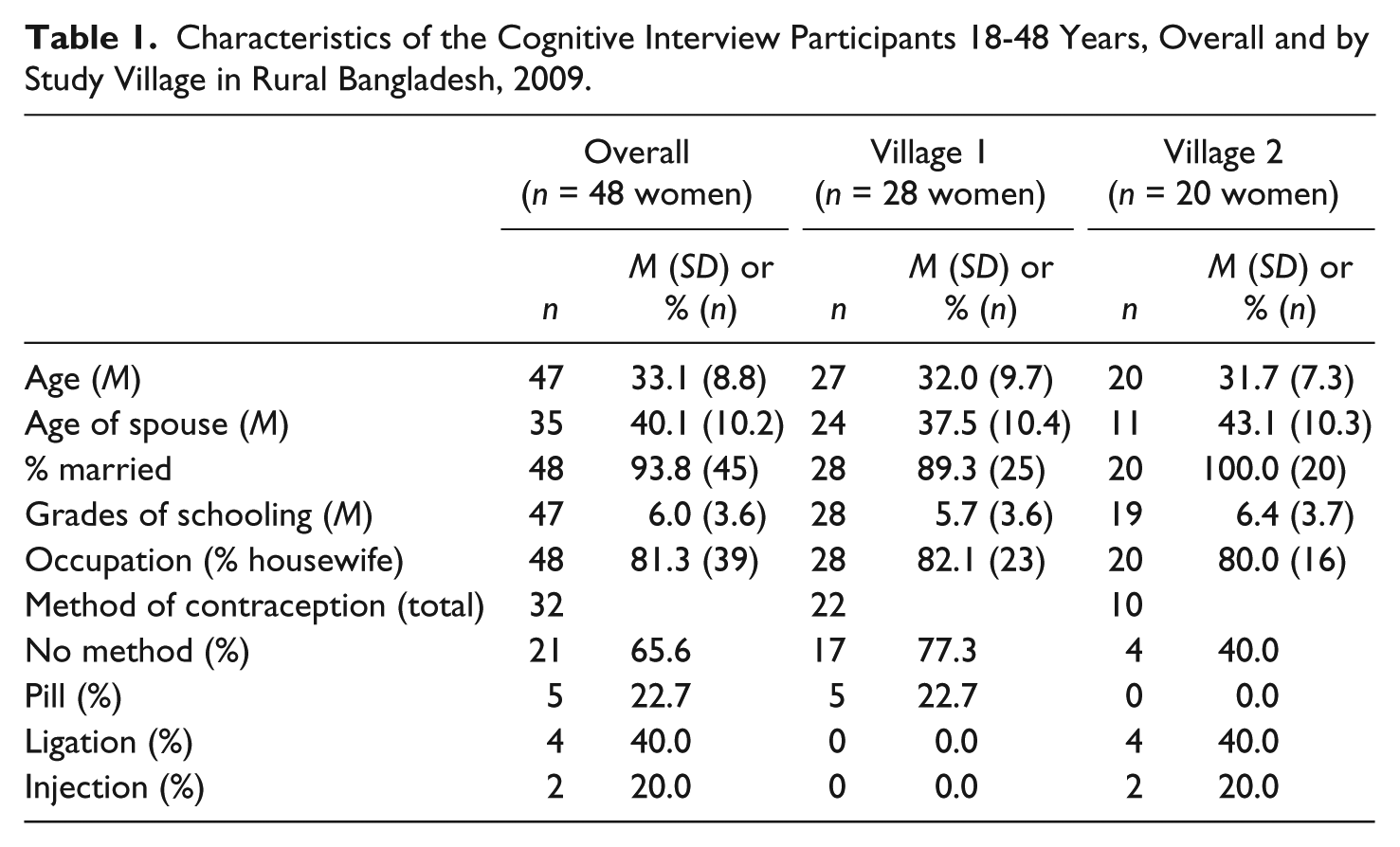
Table 1 summarizes the characteristics of the 48 women informants who form our primary sample for analysis. Participants had a mean age of 33.1 years (SD = 8.8), and their spouses had a mean age of 40.1 years (SD = 10.2). On average, participants had 6.0 grades of schooling (SD = 3.6). Most were married (93.8%), and a majority stated their occupation as a housewife (81.3%) and used no method of contraception (65.6%).
Characteristics of the Cognitive Interview Participants 18-48 Years, Overall and by Study Village in Rural Bangladesh, 2009.
Cognitive Interviews
In general, the cognitive interviews (CIs) were developed to explore the thought processes underlying participants’ responses to standard attitudinal questions about IPV against women taken from the 2004 and 2007 Bangladesh DHS (National Institute of Population Research and Training [NIPORT], Mitra and Associates, & Macro International, 2005, 2009). The technique encourages participants to verbalize their thoughts as they formulate responses and to explain the context of their responses (Ericsson & Simon, 1980). Interviewers encouraged participants to state their understanding of each question and to explain the reasoning behind their response. Although not the primary objective of the cognitive interviews, the theme of power dynamics in marriage and the extended family emerged spontaneously throughout the interviews, suggesting that a more detailed analysis was warranted of the potential influence of latent power processes on women’s reported attitudes about IPV against women.
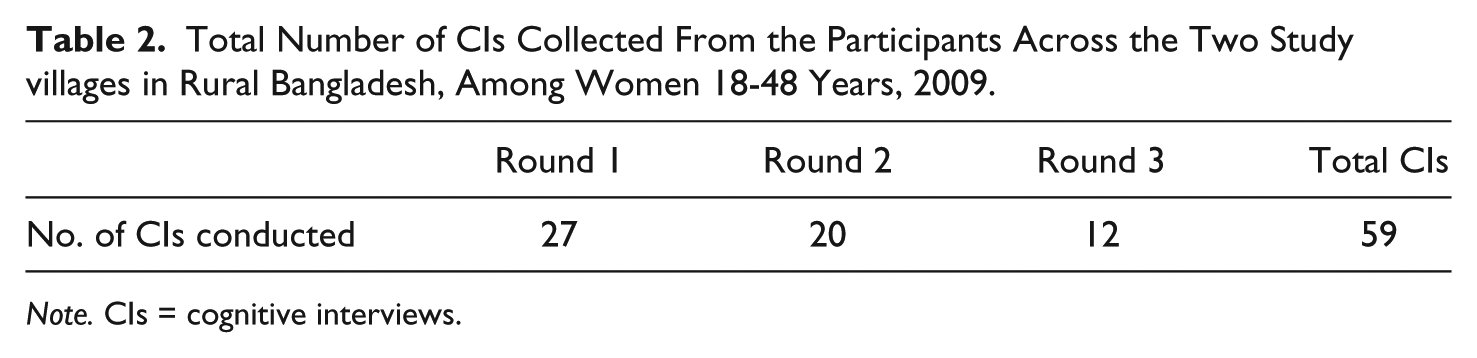
Three highly trained, local female interviewers conducted three rounds of cognitive interviews. They conducted the first set of cognitive interviews with 27 women using the questions on attitudes about IPV against women from the 2004 Bangladesh DHS. After preliminary analysis of the data from these interviews, a second round of cognitive interviews with 20 new women included new contextual details to assess how participants’ responses might differ. In addition, two scenarios used in the 2007 Bangladesh DHS were added, and interviewers asked participants what, if anything, should be done to stop husbands’ violence against their wives. The third round of cognitive interviews included 12 new women. In this round, interviewers used the revised guide from the second round of cognitive interviews, adding a question clarifying to whom the participants were referring when they discussed community attitudes about IPV against women and who in their community is responsible for gossiping about the actions of others. Thus, across all three rounds, interviewers conducted 59 cognitive interviews with 59 women. Forty-eight of these interviews had full transcripts and were included in the final sample for analysis (Table 2).
Total Number of CIs Collected From the Participants Across the Two Study villages in Rural Bangladesh, Among Women 18-48 Years, 2009.
Note. CIs = cognitive interviews.
The interviews with women in Village 2 were unique in that interviewers asked whether these women would justify wife beating under the four situations asked of women in Village 1, but the women in Village 2 were probed three different times. In each probe, the women received a slightly different version of the original situation and asked again whether they would justify wife beating. Prior research has shown that participants often misunderstand common survey questions on women’s attitudes about IPV against women and identified the need for added context (Schuler & Islam, 2008) to clarify the intentionality of the wife’s gender-transgressive behavior in each scenario about which attitudes were being elicited (NIPORT et al., 2009). Thus, to obtain more meaningful responses on attitudes about IPV against women, interviewers used these contextual questions (Schuler et al., 2011).
Focus Group Discussions
Eligible women not selected for the CIs were organized into two focus group discussions ranging in size from five to seven people. The second CI guide was adapted for use in these focus groups. The purpose of the discussions was to assess whether women more often opposed IPV when in a group with other women. For this analysis, data from these focus group discussions were used to triangulate findings from the CIs.
Data Analysis
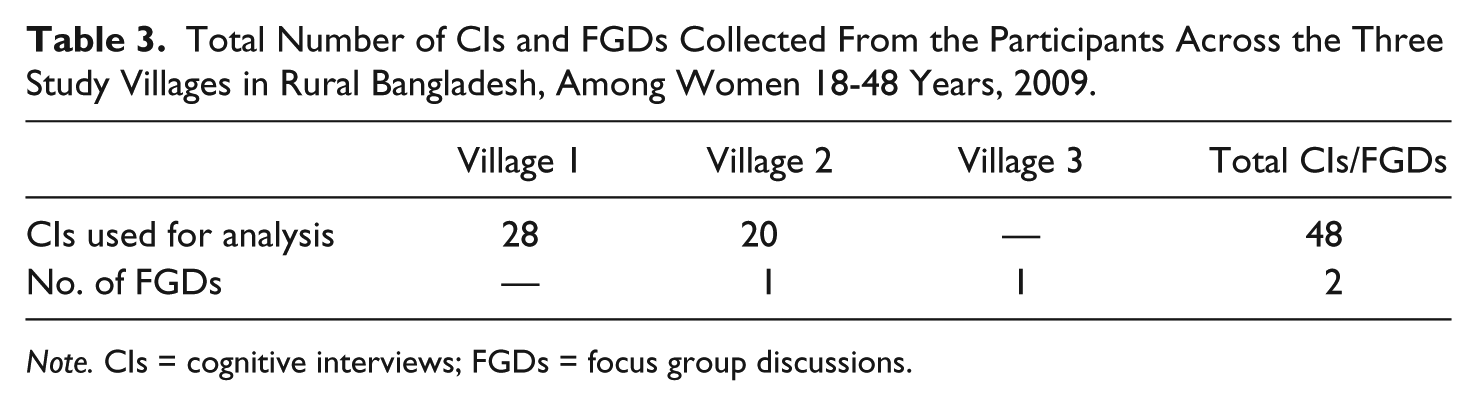
The interviews of consenting women were tape recorded, transcribed, and translated into English for analysis. There were 28 CIs from Village 1, 20 cognitive interviews and 1 focus group discussion from Village 2, and 1 focus group discussion from village 3 that were used for analysis (Table 3). Although saturation was reached at around 30 interviews, we analyzed all 48 interviews and both focus group discussions. The transcriptions were analyzed and coded using MAXqda software to facilitate the coding and retrieval of textual data through advanced search and retrieval functions.
Total Number of CIs and FGDs Collected From the Participants Across the Three Study Villages in Rural Bangladesh, Among Women 18-48 Years, 2009.
Note. CIs = cognitive interviews; FGDs = focus group discussions.
Preliminary analysis of transcripts from three CIs and a concurrent literature review informed the creation of a preliminary codebook. This codebook summarized the primary domains of familial power dynamics and consisted of 17 codes organized under three general themes: personal views, community norms, and family. We then undertook a second round of coding with the analysis of transcripts from 23 interviews and produced a second codebook composed of 67 codes organized under four themes: structural elements, types of violence, latent power, and manifest power. We restructured and redefined these preliminary codes throughout subsequent rounds of coding; however, the general themes from the second round of coding remained consistent. The final codebook included 92 codes and the four above-mentioned general themes. The first author used the lumping method of text segmenting, which allows themes to be linked to large sections of text, and memo-ing to code the data and to identify preliminary themes (Hennink, Hutter, & Bailey, 2010).
After three rounds of coding and analysis, we used MAXmaps to analyze the identified codes and themes further. Visual representations of the linkages between codes and the frequencies of each code informed the development of the key themes that emerged from the data. The first author also used the text retrieval function, available through MAXqda, to identify the text segments linked to specific codes. The first author read and reread the text segments to create analytical memos that she then used to develop themes based on Komter’s recommendations for textual analysis to uncover latent power processes.
Measures of Power Dynamics
Following Komter (1989), we measured latent power by reviewing the transcripts to identify and analyze contradictory (or switched) attitudinal responses within each interview. We coded contradictory responses and misunderstanding or avoidance of the questions as potential evidence of latent power. We documented the frequency of these contradictory responses within each interview to assess the influence of latent power on women’s reporting of personal views about IPV against women. As Komter recommends further, we then analyzed the context of these responses to assess to what extent latent power processes may be reasons for contradictory responses. We focused on informants’ expressed desires for change, attempts at change, structural or emotional barriers to change, the more powerful partner’s reactions to change, informants’ anticipation of conflicts that might arise from the process of change, and strategies to realize or prevent change. In the analysis, we categorized these elements into themes relating to patriarchal marital relations, the husband’s role, the wife’s fault, family structure, societal expectations, and the inevitability of IPV. Finally, we identified manifest power when the participant described a desire for change that they perceived as in opposition to either their family members or the community norm. This form of power was evident through themes regarding the recognition of opposing patriarchal marital relations and the belief that times are changing in the reported personal attitudes about IPV.
Results
Frequencies of Women’s Contradictory Responses to Attitudinal Questions About IPV
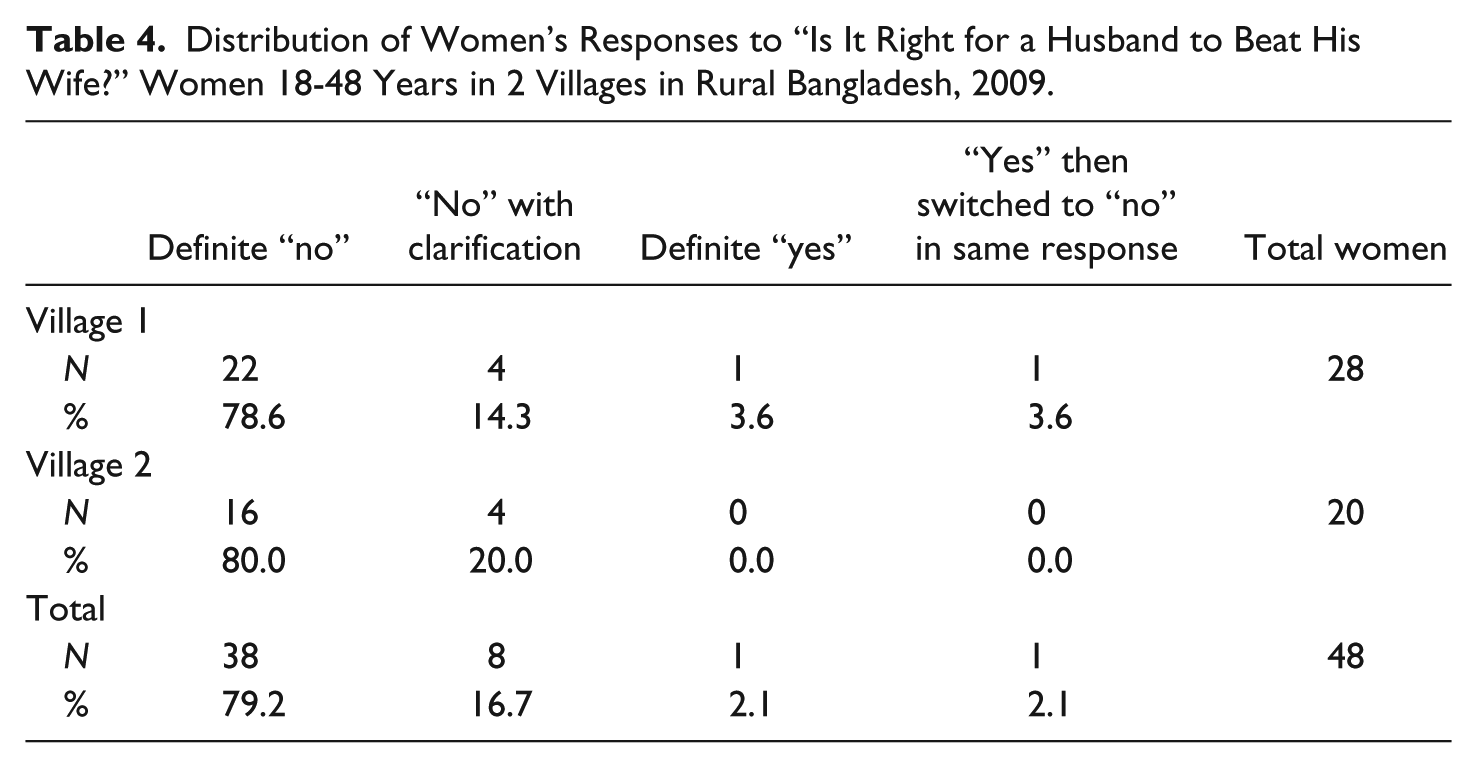
Consistent with prior research (Schuler et al., 2011; Schuler et al., 2012), overall across all interviews, when asked, “Is it right for a husband to beat his wife?” the majority of women responded with a definite “no” (79.2%); although 16.7% answered “no” but then provided an immediate clarification, 2.1% offered a definite “yes,” and 2.1% responded “yes” then switched to “no” within the same response (Table 4). Of women in Village 1, 47.8% reported that a husband is justified to beat his wife if she leaves the house without permission, 12.0% reported that wife beating was justified if she neglects the children or argues with the husband, and 11.1% reported it would be justified if the wife failed to prepare food in a timely manner (Table 5).
Distribution of Women’s Responses to “Is It Right for a Husband to Beat His Wife?” Women 18-48 Years in 2 Villages in Rural Bangladesh, 2009.
Distribution of Women’s Responses to the Justification of IPV Against Women Across Four Situations, Answered by Women 18-48 Years, Village 1, Rural Bangladesh, 2009.
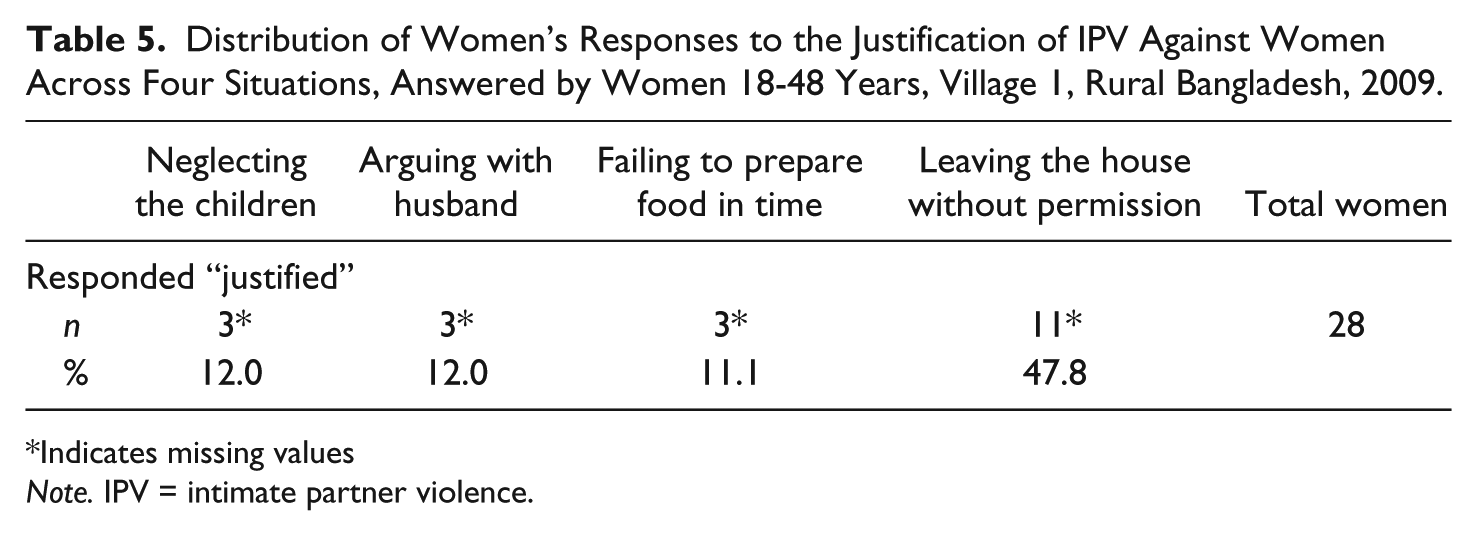
Indicates missing values
Note. IPV = intimate partner violence.
In Village 2, 85.0% of women switched their initial response when asked whether IPV is justified if the wife leaves the house without permission, or if she argues with her husband. A majority of women also switched their initial responses about whether IPV is justified if the wife fails to prepare the food on time (75.0%) or if she neglects the children (70.0%; Table 6). When all women from Village 2 also were asked whether they would justify IPV if the wife refuses sex to her husband, 15.0% responded “yes” compared with 30.0% who responded “yes” if the wife disobeys her elders (Table 6).
Distribution of Women’s Contradictory Responses to Their Original Response on the Justification of IPV Against Women When Probed Within Each Situation, and the Justification of Violence When Refusing Sex and Disobeying Elders, Among Women 18-48 Years, Village 2, Rural Bangladesh, 2009.
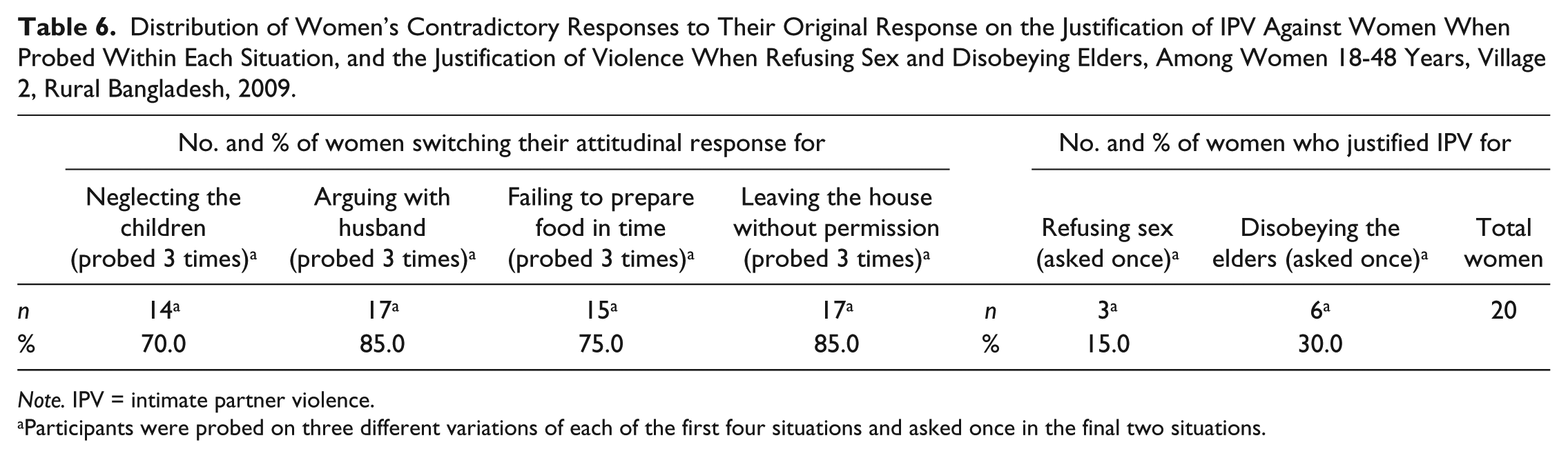
Note. IPV = intimate partner violence.
Participants were probed on three different variations of each of the first four situations and asked once in the final two situations.
All participants were probed with four unique situations that permitted them to switch their original response to “Is it right for a husband to beat his wife?,” and participants from Village 2 were given six opportunities. Within each village, the majority of participants (60.4%) switched their original statement at the fourth probe when asked whether a husband is justified to beat his wife if she left the house without permission (Table 7). The majority of women switched their response from not justified to justified (75.0%), 22.9% stayed with their original response of not justified, and one woman switched her original response from justified to not justified (2.1%) when probed with the first situational question (Table 8).
Timing of Contradictory Responses From the Participant’s Original Response Across Six Situations, Among Women 18-48 Years, Rural Bangladesh, 2009.
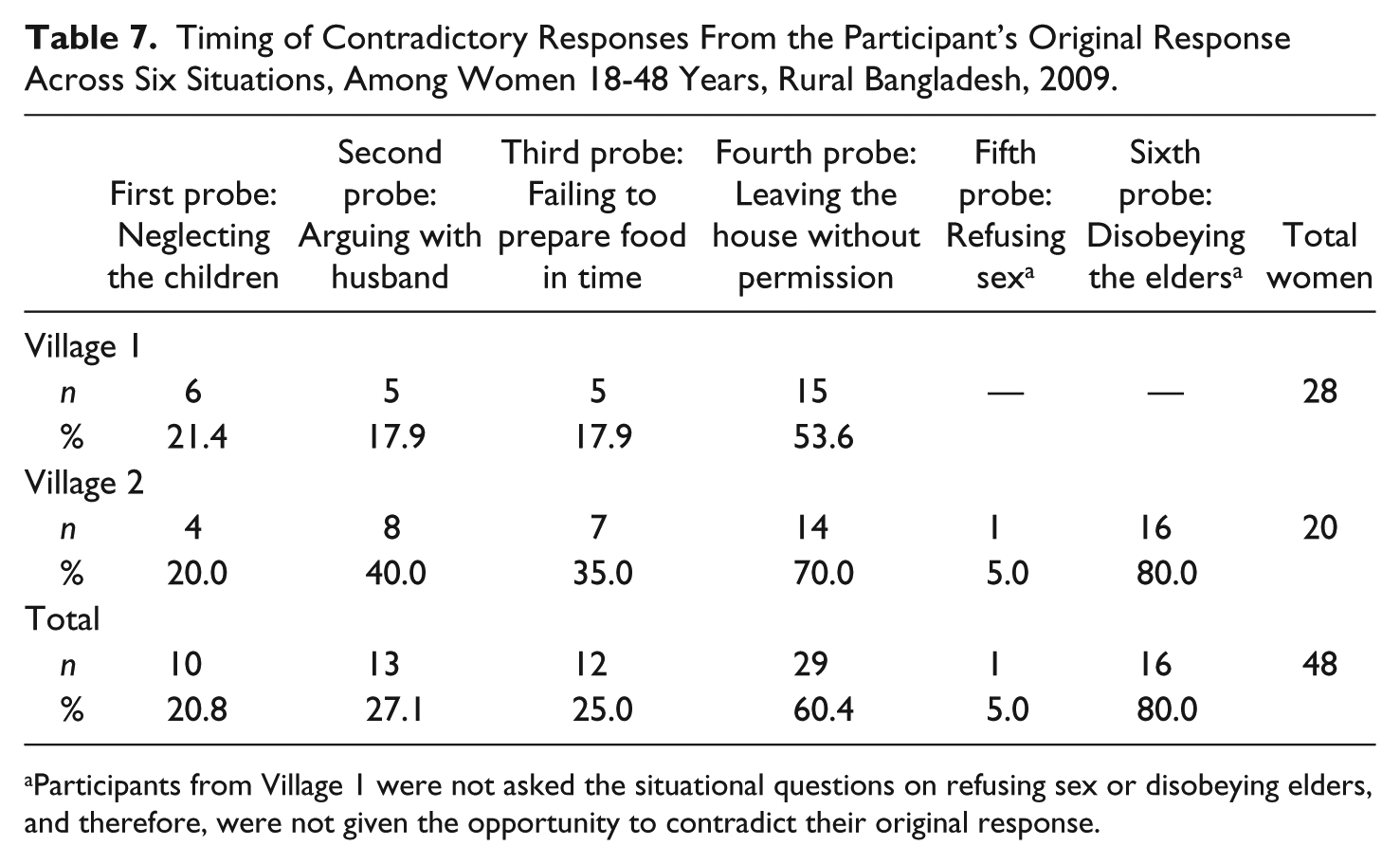
Participants from Village 1 were not asked the situational questions on refusing sex or disobeying elders, and therefore, were not given the opportunity to contradict their original response.
Direction of Responses From the Original Question (Is It Right for a Husband to Beat His Wife?) to the First Situational Question, Answered by Women 18-48 Years, Rural Bangladesh, 2009.
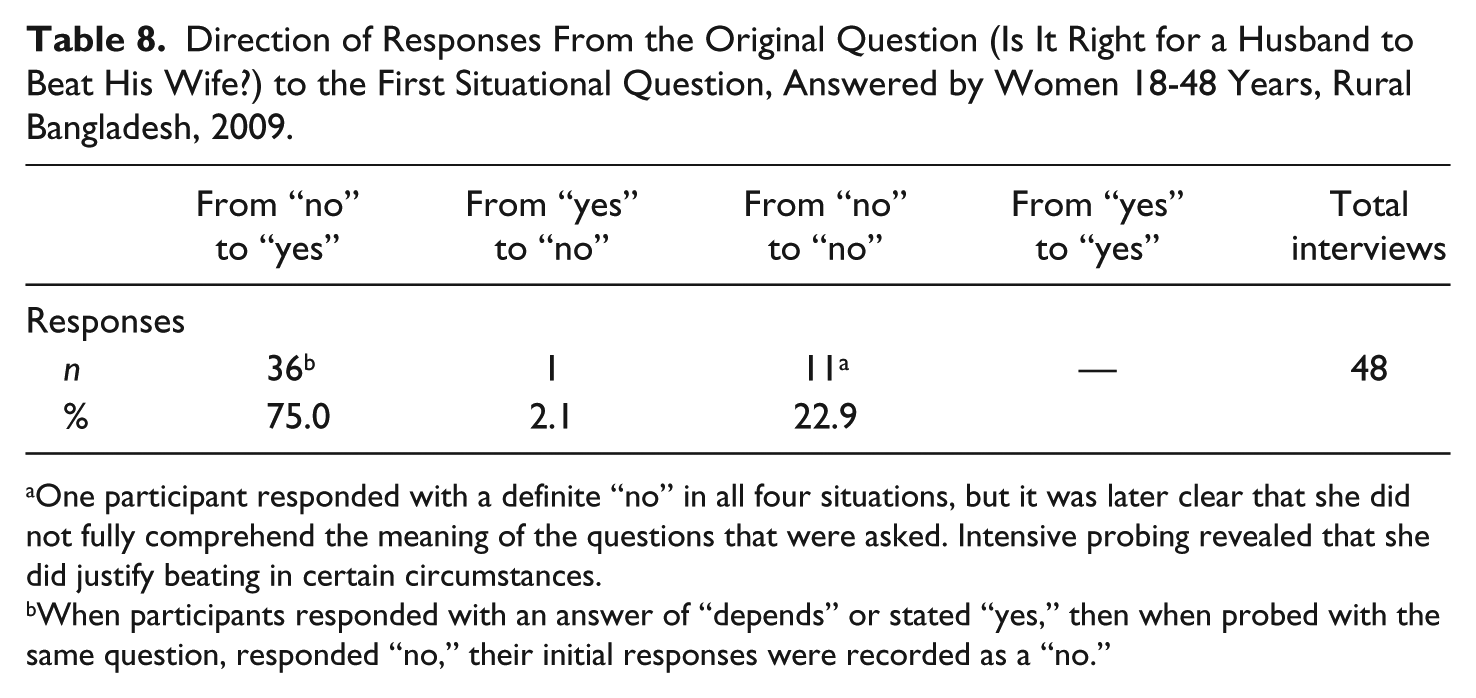
One participant responded with a definite “no” in all four situations, but it was later clear that she did not fully comprehend the meaning of the questions that were asked. Intensive probing revealed that she did justify beating in certain circumstances.
When participants responded with an answer of “depends” or stated “yes,” then when probed with the same question, responded “no,” their initial responses were recorded as a “no.”
The Marital Context in Which Women Express Contradictory Attitudes About IPV Against Women
Themes including the inevitability of IPV, a lack of alternatives to IPV, and patriarchal social norms and a lack of familial support were identified as major themes that influenced women’s immediate contradictory responses to attitudinal questions about IPV against women. Although it is difficult to link directly through quotes from women these contexts as reasons why women gave immediately contradictory responses, the proximity of women’s contradictory reports with text reflecting these themes suggests that they may play an influential role in the way women discuss their attitudes about IPV against women in Bangladesh. Otherwise, themes including patriarchal marital relations and fear of the husband emerged as potentially important contexts in which women gave contradictory responses to the more detailed attitudinal questions about IPV against women that were administered in Village 2.
The inevitability of IPV
Consistent with prior qualitative interviews from these villages (Schuler & Islam, 2008), a majority of the participants who provided contradictory responses throughout the interview described the inevitability of wife beating within marital relationships and how it is seen in their community. The majority of the women contradicted themselves by stating that beating is not a justifiable action, but it happens anyway. Many women make a distinction between what a husband can and will do in comparison with what women consider a justifiable action: Beating is never justified. However, husbands beat their wives. (Age 38, Education Level 10; CI)
The women often referred to the Islamic law or, Hadis, to explain the occurrence of wife beating (also see Schuler, Hashemi, & Badal, 1998). Several women described the role of the wife as a servant to the husband according to the law of society and stated that the law allows men to beat their wives if they do not fulfill the role of the wife. This role of the wife also includes following rules such as where they can go, what they can wear, and how they should speak. In more extreme situations, some women described the ultimate control of the husband according to the law: “It’s not illegal for a husband to beat up his wife. It is in the law” (age 25, Education Level 9, CI). Beyond what was described as the law of society, participants also made several references to the community’s views on the inevitability of wife beating using the phrase “it is the way” (age 40, Education Level 4, CI). One woman stated that there is no way to avoid it; regardless if a woman is at fault, she must “digest” the beatings because of the way their society is set up (age 29, Education Level 5, CI). Therefore, it is seen as “natural” (Schuler et al., 1998). It was also made clear that they believed this was how their society had always been. Regardless of what women or other community members think, beating wives is the way their society operates.
It is not right to beat someone. But sometimes they say that it is right and sometimes they say it is not right. Yes, that is the way it is in our village. Our society has set it up like this. Doesn’t matter it’s right or wrong but a husband can beat his wife—that is the way it is here. (Age 25, Education Level 2, CI) Actually, beating no matter with what you beat a person—is not a good thing. But husbands beat their wives when she makes mistakes—that is the way it is (Ain). In our society, everyone think it is right. (Age 40, Education Level 4, CI)
The participants also described how a husband’s indiscriminate beating (e.g., without a clear reason) contributes to their perceptions about the inevitability of wife beating. Although the majority of women described how beating was inevitable if the wife was at fault, several women described how beating can occur without a clear reason. These women described how these husbands who beat without reason do not make an effort to understand the situation and beat before they know who should be at fault.
What else can a man do to make things right except beating his wife? So, I agree with it. On the other hand, a woman does not have the ability to beat her husband, does she?
Is it right for a husband to beat his wife?
There is nothing to do if a man raises his hand to his wife.
But what do you think? Is that right for him to do?
No. (Age 42, Education Level 0, CI)
Lack of alternatives to IPV
Another factor that contributed to the participants’ tendency to contradict their perspectives on IPV against women was the lack of feasible alternatives they viewed in their lives. As a result of the anticipated lack of options for women, the participants mentioned the idea of keeping silent as a potential means to decrease the severity or frequency of beating. Women described the importance of keeping silent, regardless of whether the wife is right, as a means to avoid potential beatings. Similarly, women described the advantage of forfeiting or giving up the fight when arguing with the husband to avoid being beaten. Furthermore, the community expects the wife to fulfill her role as the subordinate partner by staying quiet despite the situation: “a wife who would endure everything silently is a good wife and who would use the mouth is too bad – she is a Satan” (age 24, Education Level 9, CI). Some of the women described keeping silent as a result of beating, believing they were at fault and deserving the beating. Many participants described how wives who do not keep silent or know when to give up the fight deserve the punishment they receive. They have made a mistake and see no other alternative ending to the situation.
I made the mistake. And I can’t say anything even if he beats me. (Age 47, Education Level 0, CI)
Patriarchal social norms and lack of familial support
The role of the family was another influential factor in the tendency for women to provide contradictory responses when reporting their views on IPV against women. Several participants discussed the concept of “handing over the responsibility” from the wives’ parents to the husband after marriage and a shift from dependence on parents to dependence on the husband. The women described how the exchange of responsibilities also meant an exchange of ownership and power, which contributed to the hopelessness of the situation: “Now I’ve to stay here, what else can I do?” (age 22, Education Level 8, CI). The participants described the process of losing all their possessions and support system when they were married and of being forced to move to an unfamiliar household and sometimes an unfamiliar community.
I do not belong to my parents anymore. I belong to my husband and his family now. So, if I go somewhere without my husband’s permission, he has the right to beat me. It would be justified for him to beat me. (Age 30, Education Level 10, CI)
Although there was some disagreement on how beating influences the stability of the family unit, many participants discussed the association between the two concepts. The majority of the participants agreed that beating brings unrest and creates chaos for the family. Some women stated that their husbands do not like beating and instead believe that wives should be disciplined through words, not physical harm. Others admitted that they were concerned about the status and dignity of the family and that beating would harm their reputation. Several women distinguished good men, who desire peace in their families and do not beat their wives, from bad men, who consider wife beating a good, masculine act. One woman contradicted herself by explaining how her village is a peaceful place where nobody approves of beating and generally nobody beats a wife unless she talks “indiscreetly,” in which case, the villagers would consider beating justified (age 40, Education Level 3, CI). Participants also recognized that quarrels between the husband and wife are a common function of family life but that beating is not the solution to these arguments. Women described respect for the family as an influential factor in the experience of IPV. Most women described the importance of serving and caring for their husband’s parents. When a wife has disrespected her husband’s parents, beating is not only expected, but also justified by the community and the majority of the participants.
Influence of the mother-in-law
Various participants described the role of the mother in law, or Sasuri, as either a proponent or an opponent of IPV against women (also see Schuler, Bates, & Islam, 2008). As a proponent of beating, the participants described how the mother-in-law would support the husband and therefore justify wife beating regardless of the situation because he is her son. Some women expressed how family members, and especially the mother-in-law, never take the side of the wife and always think beating the wife is a justified action. This notion can extend to every action in which she is found at fault, despite her good intentions. The participants also described situations where the mother-in-law gave the wife a warning, explaining that she must listen to her husband and anticipate his needs. When the wife does not follow the advice or warnings of her mother-in-law, it is expected that the mother-in-law supports the beating. A few participants explained how the husband may beat his wife to make his mother happy if his mother believes that the wife is at fault for her actions. Some women stated that it is difficult to know what their mother-in-law thinks about wife beating because she may have different opinions at different times.
Here everyone should say that beating would be an unjustified action here, but Sasuri (said about mothers-in-law in general) would say that their son did it right by beating her. (Age 23, Education Level 9, CI)
In contrast, several women described how their mother-in-law opposes wife beating. In some cases, the participants described their mother-in-law as being an advocate for their role as a woman and as a wife. Women explained how their mother-in-law never viewed beating as a justified action and even displayed their dominance over their sons by scolding them when they beat their wives. As a woman, the mother-in-law understands how busy the wife may be with all her household chores and can therefore empathize with the situation. Although a majority of the participants were living in nuclear households at the time, the role of the mother-in-law still held power over how women spoke about IPV against women.
My Sasuri would rather get angry. Because, she can see that I work every day, I take care of things properly every day. Maybe, I could not do things properly on some particular day but should my husband beat me for that? (Age 21, Education Level 5, CI)
Patriarchal marital relations
Across the two villages and age groups, women consistently spoke of the husband as the dominant partner in the relationship. The participants clarified that, because of their husbands’ greater earnings and capacity to do more work, men have greater power than the wife in a marriage. Power was identified as a force that the husband possesses and the wife lacks, as well as something that increases for men when they are married. Similar to the explanations of women in these villages some years earlier (Schuler & Islam, 2008), the participants expressed how the power men hold in the marital relationship is used as an explanation for beating, simply stating, “that is why he can beat [his] wife” (age 42, Education Level 3, CI). By contrast, a wife’s lack of power prevents her from doing anything on their own. Power is fluid and can increase over time as the husband asserts control over his wife and becomes the sole “guardian” over her.
I do not have the power to go a single step out from this house without his permission. (Age 42, Education Level 2, CI)
As the man marries a woman, he becomes her husband and his power increases. A husband is valued more than his wife.
Doesn’t the wife have any right?
Yes, a wife has her rights too, but nobody says anything about that and nobody even acknowledge that. (Age 48, Education Level 8, CI)
The women spoke of the husband’s power as being a function of the higher level in which he is placed according to Hadis, or Islamic “law,” and the prescribed patriarchal marital relations of their society. A man must always be superior, and a woman must always act inferior because of the Ain, or law of society. A frequently heard saying was, “A woman’s heaven [paradise] lies under the feet of her husband” (age 40, Education Level 3, CI), to further demonstrate the inferiority of women in their society.
The higher status of men also was used to explain the greater value of men in society and the subsequent beating of women who have less worth. Beating is used as a means of control and a way to maintain power over the wife. Women discussed how the power and superiority of men were reason enough for a husband to have the right to beat his wife.
But a husband needs to beat his wife from time to time to keep her under control. Otherwise, she would go beyond any control. (Age 23, Education Level 5, focus group discussion)
In relation to the idea that the husband maintains the living of the wife and the household, participants described the husband as the sole provider of the family. As such, the husband is responsible for providing material goods such as food, clothing, and shelter for the family’s survival. In light of these responsibilities, the participants often referred to the husband as the wife’s “owner.” Several participants referred to the transfer of ownership of women from their parents to the husband and his family after marriage. This transfer is described as a reflection of the predetermined ways of the community that cannot be changed. A few participants explained further that the husband becomes the wife’s owner and everything she possesses in all aspects of her life.
My husband married me and brought me to his family here. This was not my home, but then he gave me this house for living and he has given me a family. He has all the rights over my body. And he can beat me. But sometimes a husband beats his wife without a reason—that is wrong. (Age 40, Education Level 4, CI)
Fear of the husband
Women reported how wives live with an overwhelming fear of the actions of their husbands and the consequences of not living up to their husbands’ expectations (see also Schuler et al., 2008; Schuler et al., 2011; Yount, Halim, Head, & Schuler, 2012). Women discussed the husband’s temper as a reason for their fear. Temper was described as a trait that increased with the amount of power a man had. Although not all men exhibited a hot temper, the participants noted that those who did used their temper to justify beating their wives even for so-called “minor mistakes.” One woman implied that men’s temper may be innate, and that men beat their wives because “men have hot blood (high temper)” (age 29, Education Level 5, CI). In comparison, women’s blood is cold; therefore, “a man has the right to beat, but a woman doesn’t have it” (age 29, Education Level 5, CI). Women identified the release of tension through beating as a means to address a husband’s temper.
But there’s a problem here. If he does not beat his wife then how would he get rid of his tension? (Age 21, Education Level 9, CI) Beating is not a justified action, but when a husband gets angry he cannot control his anger and hits his wife. (Age 34, Education Level 2, CI)
Consequently, beating is one way men’s temper is translated. Women described how men’s temper constantly runs high, even when there is no reason to get angry, and that beating is a result of that temper. High temper also was used to describe men who are considered bad members of the community, people who create problems for the community and the family unit. The level of temper also can vary across individuals; whereas some men exhibit a “quick” temper, other men are calm when speaking with their wives.
Reasons Why Women Did Not Give Contradictory Responses
They oppose prescribed patriarchal marital relations
Only a few participants did not express contradictory views about IPV against women. These women consistently opposed typical patriarchal marital relations. Participants described how it is the husband’s responsibility to make the wife understand by using words and speaking patiently and politely. They described how speaking with the wife without beating can modify her behavior and explained that a wife does not make mistakes on purpose and the husband should be aware of this and be patient with her. The women also described the importance of husbands listening to the wives when they are arguing or discussing important issues. If the husbands do not listen, they may start beating their wives and will become ashamed of what they have done. Few participants described equal rights among husbands and wives as it applies to caring for their children and in the relationship. Participants stated that husbands also make mistakes and should be held accountable for their actions. Husbands and wives should be treated equally as humans: “A man is a human being and a woman, too, is a human being” (age 37, Education Level 9, CI).
They believe that things are changing
The women who did not contradict their views on IPV against women also expressed a belief that times were changing for the better (see also Schuler, Lenzi, Nazneen, & Bates, 2013; Yount, Halim, Head, & Schuler, 2012).
Nowadays, husbands rather listen to their wives. In the past, women had more difficulties to face; their lives were filled with miseries. (Age 37, Education Level 9, CI)
One woman expressed how nowadays arguments between the husband and wife will settle down over time, therefore making beating unnecessary. Other participants explained how there is no use or purpose to wife beating anymore and how beating would not be beneficial in any situation and therefore is not justified. These women consistently spoke of wife beating as a bad thing that people in the community dislike for reasons including it being wrong, bringing unrest to the family, and not solving anything. Women suggested that there should be love and a “sweet” relationship between the husband and wife.
Arguments and quarrels happen in family life, but that does not mean a husband has to raise his hand to his wife. It is not right. Everything cools down automatically after a little time (sighs). (Age 37, Education Level 10, CI) Husband would love the wife and wife would love the husband. It is not right for the husband to beat his wife. It breaks the heart of the wife when she is beaten by her husband. (Age 42, Education Level 2, CI)
Discussion
Two overarching conclusions of the analysis are that (a) women often provided contradictory reports of their attitudes about IPV against women (see also Schuler et al., 2011; Schuler et al., 2012), and (b) power dynamics in marriage and the extended family appears to influence, at least in part, these contradictory reports. Specifically, when provided additional context and asked whether beating was justified in a particular situation, a majority of the women contradicted their original statement. In addition, the results suggest another type of contradiction that is the focus of this article. This type of contradiction was evident when women contradicted themselves in the same thought or response, providing an immediate contradiction. As Komter (1989) has discussed, this kind of contradiction may be a sign of latent power processes at play.
Proximity searches of the context of these responses reveal four potential explanations for why women contradicted themselves when asked whether it is right for a husband to beat his wife: the inevitability of IPV, a lack of alternatives to IPV, patriarchal social norms, and a lack of familial support. Overall, the data suggest that latent power processes may keep at least some women from reporting their true personal attitudes about IPV against women. In comparison with their original statements, a majority of the contradictory responses emerged when the women were provided with additional contextual information to specific scenarios. Notably, these contradictory responses are different from spontaneous contradictions. Still, the minor themes of patriarchal marital relations and fear of the husband suggest possible explanations for the contradictory responses given when additional context was provided. Because there is controversy among Islamic scholars about whether and to what extent Islam justifies wife beating, the participants’ own statements should be acknowledged as their personal beliefs (Ammar, 2007). Therefore, the reporting of attitudes about IPV against women must be understood at least in part within the context of latent or underlying power, which does not surface as direct conflict between partners. Despite evidence of frequent latent power, a few women openly expressed their opposition to IPV against women, which suggests that long-held beliefs about gender and the treatment of women may be changing (see also Yount, Halim, Head, & Schuler, 2012).
Although the majority of women (75.0%) switched their responses about whether it is right for a husband to beat his wife from “no” to “yes” in at least one of the four situational questions, a minority of women retained their original response of “not justified” (22.9%), a reflection of manifest power. Only one participant contradicted her original response in the direction of “yes” to “no,” suggesting that the participant may have envisioned a different situation when asked the original question and then changed her mind once given additional context (Schuler et al., 2011). Overall, the majority of women (79.2%) from both villages responded with a definite “no” when asked whether wife beating is right, suggesting that the majority of women do not instinctively support wife beating. A small percentage of women (16.7%) responded “no” with a follow-up explanation such as “no, but if a woman is defiant” (age 40, Education Level 4), or “it is not right, but if she does not do what [the] husband says, it is justified” (age 18, Education Level 8). These findings suggest that some women may hold intermediate, ambivalent, or contingent views about IPV against women (Schuler et al., 2011; Yount, Halim, Head, & Schuler, 2012).
The inevitability of IPV against women was a concept that emerged as a reason why women provided immediate contradictory responses (see also Schuler & Islam, 2008). Women who did not justify beating simply stated that it happens anyway. The participants often referred to the “way it is” as an explanation for the occurrence of beating, and further explained that this is the way their society has always been. These findings suggest their acceptance of the current situation and a hopelessness of change to come. Participants also spoke of beating without reason and the inevitability of it. One woman who provided a contradictory response stated that a man does not need a reason to beat his wife, yet immediately exclaimed that beating is wrong. This finding suggests that although women may state the reality of the situation, “men do not need a reason to beat,” this response may be more a reflection of community norms as opposed to their own feelings about IPV (see also Schuler et al., 2011). These findings suggest that invisible power, or the subordinate’s adoption of the dominant view under constrained alternatives, may influence some women’s attitudes about IPV in this setting (Komter, 1989).
Similar to the idea of inevitability, participants also mentioned a lack of alternatives to IPV against women. One interesting theme that emerged was the idea of keeping silent to reduce the frequency and to decrease the severity of beating that was viewed by the women as the only option in certain situations. Women described the importance of keeping silent when disagreeing with the husband and as a trait of a “good” wife. This theme is critical to our central research questions because it is a direct reflection of latent power processes at play (Komter, 1989; Yount, 2011). Similar to strategies that women have reported using to avoid conflict or to mitigate IPV in this and other patriarchal contexts (Head, Yount, & Sibley, 2011; Yount, 2011), women know that keeping silent is one aspect of normative femininity and hope that expressing this trait may avoid punishment from their husbands. Efforts to fulfill this ideal, however, serve to maintain the status quo (Yount, 2011).
A lack of family support and, more specifically, the role of the mother-in-law was another reason why women provided immediate contradictory responses. Women stated that IPV against women is not right, yet the wife’s family is seen as unable to facilitate change. As participants described the role of their mother-in-law as exclusively a proponent or opponent of IPV and often both, their contradictory responses could indicate their desire to reflect the ambivalent attitudes about wife beating that the mothers-in-law provide. Although the majority of the participants did not live with their mothers-in-law at the time of the interviews, mothers-in-law still were influential. Therefore, these findings corroborate prior research showing that living with in-laws can have both detrimental and protective effects on beating against women (Stith, Smith, Penn, Ward, & Tritt, 2004).
Among the small percentage of women who did not provide a contradictory response when asked whether it is right for a husband to beat his wife, the theme of opposing traditional patriarchal roles emerged. These women stressed the importance of the husband listening and being patient with the wife when she is at fault. Participants also explained that husbands also make mistakes and should be accountable for their actions. Such findings reveal that these women believe that women and men should have equal rights, although their society may not support this view. Another theme that helped explain why women did not provide contradictory responses was the concept that times were changing for the better. The women described how the older generation would justify beating under certain circumstances, whereas nowadays people do not accept wife beating.
According to Komter (1989), the high percentage of women who provided contradictory responses, whether it occurred when additional context was provided or an immediate response, suggests that latent power is influencing women’s reporting of IPV against women (Komter, 1989). These findings support research showing that standardized survey questions may fail to capture women’s underlying personal attitudes about IPV against women (Schuler & Islam, 2008; Yount, Halim, Hynes, & Hillman, 2011).
Strengths and Limitations
A major strength of the study was the depth and breadth of the interviews and focus group discussions. The interviewers probed the participants when they provided contradictory responses to understand the context behind their response. This method of intensive probing allowed the researchers to understand the context of responses, and in particular, the reasons why participants reported contradictory responses across different demographic variables.
Some limitations of the analysis are notable. The cognitive interview data analyzed from two locations in rural Bangladesh used different interview guides, which could have influenced the content of the interviews and the subsequent analysis. The participants from Village 1 were asked only about personal and community views on IPV against women, whereas the participants from Village 2 were probed further on their household’s views of IPV against women. Moreover, these sections of the interview guide were ordered differently for interviews conducted in Village 2, which may have influenced the reliability of the data. This issue is especially true when community views and household views were asked before personal views on IPV against women; however, the nature and direction of this influence are difficult to determine.
Other limitations of this study include the focus of the cognitive interviews on question comprehension and not on power dynamics and the general limitations of a secondary data analysis. However, the data used for this analysis were rich in content, and the interview guide was structured in such a way that participants were encouraged to reveal the reasons why they were providing contradictory responses. In addition, despite the limitations associated with performing a secondary data analysis including but not limited to data coding errors, the limited research bias is a substantial advantage to be considered.
Conclusion
Given the deeply rooted nature of latent power processes, survey researchers should be cognizant of how latent power can affect women’s reporting of personal attitudes about IPV against women. The results of this study reveal that latent power processes may lead to contradictory responses when discussing a topic as sensitive as IPV, which is heavily embedded within patriarchal marital relations and gender inequitable community norms.
Furthermore, these findings have implications for interventions and program development in addressing IPV against women. If women are not reporting their underlying attitudes, it is difficult to enact change and engage policymakers when the justification of IPV may be overrepresented (Schuler & Islam, 2008). In addition, these findings could inform primary health care providers during IPV screenings. Given that latent power processes may influence women’s disclosure of personal attitudes about IPV, medical professionals should be trained in ways to enhance disclosure of women’s underlying attitudes about and experiences of IPV (Gage & Hutchinson, 2006; WHO, 2001). Methodological tools that explore these factors should be applied in other contexts to understand more fully women’s views about IPV against women, which would inform contextually appropriate interventions aimed at reducing the prevalence and adverse health outcomes related to IPV. However, designing culturally appropriate, effective interventions differs greatly depending on the context and the way IPV against women is viewed within that society.
If IPV interventions focused on women aim to reduce the prevalence and adverse health outcomes associated with exposure to IPV, then intervention researchers and policymakers must consider the implications of women’s own attitudes. Future research should explore further the ways in which power processes may affect women’s reporting on such attitudes.
Ultimately, the parent study aimed to create new structured questions that could be used in standard surveys to capture more effectively women’s personal attitudes about IPV against women (Schuler et al., 2011; Schuler et al., 2012; Yount, Halim, Head, & Schuler, 2012). The data collected from such questions should provide a deeper analysis of the relationship between community norms about IPV against women, women’s own attitudes about such violence, and the chance that women will experience it. Marital and family power dynamics, including latent power processes in particular, are important factors to consider when designing and asking women such questions. With better methodological tools, increased awareness and improved knowledge on the topic will lead to effective interventions in Bangladesh and ultimately reduce the prevalence of IPV against women.
Footnotes
Acknowledgements
The authors thank the anonymous reviewers for constructive comments on an earlier version of this article.
Authors’ Note
S.R.S. and K.M.Y. were co-principal investigators (PIs) of and designed the parent qualitative study on which this secondary analysis is based. S.R.S. managed the qualitative data collection for the parent study. K.M.Y. proposed the idea for this article, guided the data analysis, and drafted parts of the article. K.S. analyzed the data and drafted the article. S.R.S. revised the full draft. All authors agree with the contents of the publication.
Declaration of Conflicting Interests
The author(s) declared no potential conflicts of interest with respect to the research, authorship, and/or publication of this article.
Funding
The author(s) disclosed receipt of the following financial support for the research, authorship, and/or publication of this article: The authors thank the National Institutes of Health (NIH) for supporting the parent research grant (1R21HD058173–01/02) that provided the data for this analysis.