




Abstract
Studies demonstrate the negative effects of violent coercive control but few examine coercive control without violence. This study describes the characteristics of nonviolent coercive control among 8 divorcing mothers and compares them with 47 mothers who experienced violent coercive control or no violence/no control. Mothers with nonviolent coercive control reported more coping strategies, risk, harassment, and perceived threat than mothers with no violence/no control; similar levels of fear and control during marriage as mothers with violent coercive control; and more postseparation fear than both groups. Findings highlight the need to include nonviolent coercive control in screening methods and research measures.
Intimate partner violence (IPV) refers to physical assault, sexual assault, or psychological abuse of one’s partner (Basile & Black, 2011). About one in every four women experience IPV in their lifetime (Centers for Disease Control and Prevention, 2008) and an estimated 1,300 women are murdered by intimate partners each year in the United States (Bureau of Justice Statistics, 2007). Increasing attention has been given to IPV in divorce and custody situations. However, identifying when risk continues for mothers and their children after separation is a challenge and prior research provides no clear answers. Recent research has paid more attention to distinguishing between two main types of physical IPV: situational couple violence, in which physical violence occurs in the context of conflict, and intimate terrorism (or violent coercive control), in which both physical violence and coercive control tactics (e.g., monitoring, isolating, or threatening one’s partner) are used to control one’s partner (Frye, Manganello, Campbell, Walton-Moss, & Wilt, 2006; Graham-Kevan & Archer, 2003; Hardesty, Khaw, Chung, & Martin, 2008; Johnson, 2008). This research suggests that violent coercive control (intimate terrorism) is associated with more risks after separation than situational couple violence (Johnson, 2008). However, little is known about coercive control without the presence of physical violence (i.e., nonviolent coercive control, or what Johnson refers to as incipient intimate terrorism), and even less about variations in ongoing control after separation when there is no history of violence (Johnson, 2008). To begin to address this gap, this study provides a descriptive analysis of eight mothers’ experiences of nonviolent coercive control during marriage and after separation, with comparisons with two other groups’ reports (violent coercive control and no violence or control).
Types of IPV
Johnson (2008) identifies two main types of IPV: intimate terrorism (or what is also referred to as violent coercive control; Kelly & Johnson, 2008) and situational couple violence. These types of IPV are qualitatively different in that violent coercive control is rooted in control of one’s partner and situational couple violence is not (Johnson & Leone, 2005). Violent coercive control involves a variety of tactics to exert power and control over one’s partner, including physical assault, sexual coercion, intimidation, isolation, or any means to get one’s partner to do something they do not want to do (Johnson, 2008; Stark, 2007). Feminist theorists posit that violent coercive control is perpetuated by macro-level, highly influential societal structures that uphold and reproduce gender inequalities, power differences, and patriarchy (Graham-Kevan & Archer, 2003; Johnson, 2008). Empirical work indicates that violent coercive control between heterosexual partners is perpetrated primarily by men, estimated at 75-97% (Johnson, 2008). In contrast, situational couple violence is perpetrated by both men and women. It does not involve an underlying motive to control one’s partner, and occurs when violence is provoked in situations of conflict, anger, or frustration (Ansara & Hindin, 2010; Graham-Kevan & Archer, 2003; Johnson, Leone, & Xu, 2008).
On average, violent coercive control is more frequent, severe, and injurious than situational couple violence (Anderson, 2008; Ansara & Hindin, 2010; Frye et al., 2006; Graham-Kevan & Archer, 2003; Johnson & Leone, 2005; Johnson et al., 2008; Leone, Johnson, & Cohan, 2007), although situational couple violence in some instances can be chronic and/or severe (Johnson, 2008; Johnson & Leone, 2005). Moreover, research documents the numerous negative psychological consequences of violent coercive control, including depression (Anderson, 2008; Dobash & Dobash, 1979; Kirkwood, 1993), posttraumatic stress disorder (PTSD; Anderson, 2008; Dobash & Dobash, 1979; Johnson & Leone, 2005; Kirkwood, 1993), low self-esteem (Sackett & Saunders, 1999), intense fear (Sackett & Saunders, 1999), and a sense of losing one’s identity (Johnson, 2008). Furthermore, research documents women’s risk for ongoing and increased physical violence, lethality, and intrusion after separation from controlling, violent partners (Ansara & Hindin, 2010; Campbell et al., 2003; DeKeseredy, Rogness, & Schwartz, 2004; Fleury, Sullivan, & Bybee, 2000; Hotton, 2001; Johnson et al., 2008; Johnston, 1995; Nicolaidis et al., 2003). Much of this research pays specific attention to the experiences of mothers who remain in contact with former partners for the purposes of coparenting (Davies, Ford-Gilboe, & Hammerton, 2009; Ford-Gilboe, Wuest, & Merritt-Gray, 2005; Hardesty & Ganong, 2006; Hardesty et al., 2008; Wuest, Ford-Gilboe, Merritt-Gray, & Berman, 2003). Thus, marriage and separation in the context of violent coercive control in particular presents unique risks for women.
The literature reviewed thus far highlights some of what is known regarding the two main established types of IPV and the associated effects on women during and after a relationship. Less is known about another type of intimate partner abuse that has been suggested by Johnson (2008) through his research on IPV, nonviolent coercive control.
Making a Case for Nonviolent Coercive Control
Nonviolent coercive control (or what Johnson calls incipient intimate terrorism) is characterized by the use of coercive control tactics (e.g., intimidation and isolation of one’s partner) without physical violence (Johnson, 2008). Little is known, however, about the nature and consequences of coercive control apart from physical violence because most research examines control and physical violence concurrently. Stark (2007) critiques this approach to IPV research and urges more attention to coercive control as a distinct and central feature of women’s experiences of abuse.
Despite a lack of theoretical and empirical descriptions of nonviolent coercive control, literature on battering and psychological abuse provides some clues as to the nature and consequences of coercive control without physical violence. As cited in Stark (2007), dissertation research by Lischick (1999) revealed a group of women with controlling but nonviolent partners who met the cutoff score for battering using the Women’s Experiences of Battering (WEB) scale (Smith, Smith, & Earp, 1999). Interestingly, despite no experiences of physical violence, or what we typically consider a “battering” relationship, women in Lischick’s study reported a similar emotional experience as women who reported being physically beaten. Practitioners, too, have recognized the negative impact of psychological abuse and other nonphysical means to harm or control one’s partner (Hoffman, 1984; Shepard & Campbell, 1992). Indeed, the emotional and mental health consequences of nonphysical abuse identified in this literature appear similar to the consequences of violent coercive control, including intense fear, anxiety, guilt, diminished self-esteem, diminished identity, and depression (e.g., Anderson, 2008; Baldry, 2003; Lammers, Ritchie, & Robertson, 2005; Straight, Harper, & Arias, 2003). Furthermore, research suggests that some coercive verbal and nonverbal behaviors (e.g., slamming doors, smashing objects, degrading partner), may play a role in men’s use of physical violence toward women (Deschner, 1984; Marshall, 1994; O’Leary, Malone, & Tyree, 1994; Pence & Paymar, 1993). In fact, Murphy and O’Leary (1989) identified psychological abuse as a predictor of physical violence in early marriage. Thus, research suggests that nonviolent coercive control may, indeed, be an “incipient” intimate terrorism (Johnson, 2008).
Although there is a growing body of literature on the risk for violence after separation for women leaving physically violent partners (Campbell et al., 2003; Johnson, 2008; Ornstein & Rickne, 2013), there is little known about women’s risk for ongoing coercive control or physical violence after leaving a nonviolent, controlling partner. Hardesty and Ganong (2006) identified the presence of coercive control as the defining feature of women’s experiences of ongoing abuse and harassment after separation from a physically violent partner; however, it is unknown if control issues remain after separation without a history of violence. Research on psychological abuse suggests that harassment by former partners may continue after separation. Examples include men interfering with their former partner’s life or accusing women of not maintaining a satisfying relationship by straying away from the traditional duties or roles associated with being female (Lammers et al., 2005). Separation from dependent male partners may also pose a risk for physical violence by previously nonviolent men seeking to maintain dominance over their female partners after separation (Toews, McKenry, & Catlett, 2003). Thus, literature on psychological abuse suggests ongoing issues of harassment and risk for physical violence after separation from controlling partners.
Although the psychological abuse literature provides some clues regarding experiences of nonviolent coercive control, a “labeling dilemma” (Lammers et al., 2005, p. 30) prevents drawing accurate conclusions. Reviews of much of this literature suggest pervasive definitional and measurement dilemmas, with similar behaviors overlapping with a myriad of different constructs, including emotional abuse, psychological abuse, psychological maltreatment, emotional blackmail, psychological aggression, coercion, and verbal abuse (Follingstad, 2007; Lammers et al., 2005). Although many definitions of these constructs appear strikingly similar to definitions of coercive control in the IPV literature on violent coercive control, or intimate terrorism (Johnson, 2008), there remains a need for clearer conceptualizations of coercive control as distinct from other forms of nonphysical abuse. Thus, further research is needed to determine if findings from the psychological abuse literature also apply to women’s experiences of nonviolent coercive control.
To address these gaps and limitations in the literature, this study describes the characteristics of relationships with nonviolent coercive control and the factors associated with ongoing control and risk after separation through case study analysis of eight mothers’ experiences. Results reported from two additional groups (violent coercive control and no violence or control) are also presented for comparison purposes.
Method
Sample
The current study took place within a larger study on coparenting after separation with specific attention to IPV. Institutional review board (IRB) approval was obtained prior to participant recruitment and numerous precautions were taken to ensure mothers’ safety and privacy (e.g., recruitment materials and telephone protocols framed the study as one on divorce and women’s health with no mention of violence). Mothers were identified via public divorce records from a large county in one Midwestern state and were sent a letter inviting them to participate if they had at least one child below age 18 with their former partner, and if either they or their partner had filed for divorce within the past 12 weeks. Of 723 divorce filings, 328 (45.3%) met the study’s criteria, and current addresses for 227 mothers were available. When addresses were not available, mothers’ attorneys were provided a letter to pass on to their clients when possible. After mailing letters or providing letters to attorneys, follow-up phone calls were made. Contact was made with 85 mothers who were screened using the following inclusion criteria: had custody of their child(ren) at least 25% of the time, were physically separated from their former partner for less than 3 years, and spoke English. Of the 85 mothers contacted, 70 agreed to participate but 10 of these 70 did not meet the study criteria. Thus, 60 mothers qualified and agreed to participate in the study. Of these 60 mothers, 55 (91.6%) completed an in-person interview lasting 45-180 min (M = 83 min) within 12 weeks of their divorce filing; five mothers scheduled interviews but did not show up or respond to follow-up contact attempts. Mothers were paid US$30 and given a list of local and national resources for their participation.
Mothers were between the ages of 21-54 years (M = 35.8 years) and predominantly White (n = 49, 89.1%). Five mothers (9.1%) identified as Black or African American and one mother (1.8%) identified as Asian or Asian American. Average income ranged from less than US$10,000 to more than US$80,000 (M = US$25,000) and 63.6% (n = 35) of mothers were employed at least part-time. They had one to three children (M = 1.65), ages less than 1 year to 17 years (M = 6.6 years). Mothers had been physically separated or living apart from their former partners for less than 1 month to 34 months (M = 7.95 months).
Measures
Demographic and background information was collected on mothers and their former partners (e.g., age, race/ethnicity, education, employment status, income, date separated, date of divorce filing, divorce status, custody and child support arrangements) as well as their children (e.g., number, sex, age).
Physical violence during marriage was measured using the Revised Conflict Tactics Scale (CTS2; Straus, Hamby, Boney-McCoy, & Sugarman, 1996), which included a modified version of the Sexual Coercion Subscale (Goodman, Dutton, Weinfurt, & Cook, 2003). Mothers indicated whether and how often they experienced 13 acts of physical violence (e.g., he choked me, he slapped me). The CTS2 scales have demonstrated good reliability (αs = .79-.95) as well as construct and discriminant validity (Straus et al., 1996).
Coercive control during marriage was measured using the Psychological Maltreatment of Women Inventory (PMWI)–Short Form (Tolman, 1992). Mothers indicated on a scale of 1 (never) to 5 (always) how often their former partners used controlling behaviors in the last year of marriage (e.g., he monitored my time and made me account for my whereabouts). The PMWI is a widely used measure of coercive control and has demonstrated good discriminant validity and reliability (α = .91; Bell, Goodman, & Dutton, 2007).
Mothers’ degree of fear of their partners during marriage was assessed with the WEB Scale (Smith, Earp, & DeVellis, 1995; Smith et al., 1999). Mothers responded to 10 items (e.g., he made me feel unsafe even in my own home) on a scale of 1 (agree strongly) to 6 (disagree strongly). The WEB has been widely used to measure the subjective experience of women in battering relationships. The items primarily tap into women’s degree of fear, which may also be salient for women who are emotionally or psychologically abused but not physically battered. In research on battered women, the scale has been shown to have good construct validity and strong internal consistency (α = .91; Smith, Thornton, DeVellis, Earp, & Coker, 2002). Scores greater than 19 met the cutoff score for battering in prior research (Smith et al., 1999). The same cutoff score was used in this study to indicate high levels of fear. Fear after separation was measured with one item created for the larger project, “Since you physically separated, how often have you been afraid of your former partner?” with response categories ranging from 1 (never) to 5 (frequently).
Ongoing threats, harassment, stalking, and controlling behaviors after separation were measured with the Harassment in Abusive Relationships: A Self-Report Scale (HARASS; Sheridan, 2001). Mothers indicated how often 23 behaviors (e.g., he sits outside my home) had occurred since separation on a scale of 1 (never) to 5 (very frequently). The scale has demonstrated adequate internal reliability (α = .65; Sonis & Langer, 2008).
Risk factors for homicide or serious injury present at the time of separation were assessed with 20 items on the Danger Assessment (DA; Campbell, 1995). Sample items include whether or not mothers believed their former partner was capable of killing her at the time of separation and whether or not he owned a gun during the last year of marriage. The number of items answered “yes” was determined, providing a total number of objective risk factors present. The DA has been widely used and has demonstrated acceptable reliability (αs = .69-.80) as well as construct and predictive validity (Campbell, 2005).
Subjective risk was also measured with the IPV Threat Appraisal (Dutton, Goodman, Lennig, Murphy, & Kaltman, 2006), which assesses women’s own perceptions of the likelihood of 16 future harmful, injurious, or controlling behaviors by former partners (e.g., physical assault, control, or domination). Mothers rated how likely each behavior would occur in the next 3 months on a scale of 1 (low risk) to 5 (high risk). Subscales of violent, nonviolent, and child-related threats demonstrate alphas ranging from .81-.91 (Dutton et al., 2006).
Time spent interacting with former partners since separation was measured using 10 items based on Ahrons (1981; e.g., since the time of separation, how often, on average, do you speak by phone with your former partner?). The Content of Coparental Interactions Scale (Ahrons, 1981) was also used to assess the topics or content of conversations or interactions, including topics not related to childrearing (e.g., talking about personal problems) and topics related to childrearing (e.g., discussing finances in regard to children). Coefficient alpha was .93 for women in Ahrons’ (1981) study.
Mothers’ strategies for coping with their former partners’ behavior were measured using the IPV Strategies Index (Goodman et al., 2003). This index includes subscales reflecting six categories of coping strategies: Placating (e.g., tried to avoid him), Resisting (e.g., fought back verbally), Safety Planning (e.g., changed locks or somehow improved security), Use of Informal Help (e.g., sought help from family or friends), Use of Formal Help (e.g., called a mental health counselor), and Use of Legal Resources (e.g., called the police). An additional legal item was added (sought changes to custody/visitation agreements) for a total of 32 items. Mothers indicated whether they used each strategy in the year prior to separation and since separation. The measure has shown good ecological and convergent validity and interrater reliability (Goodman et al., 2003).
Finally, the level of hostility at separation was assessed with 1 item, “On a scale of 1 to 5 with 1 being not at all hostile and 5 being extremely hostile, how would you describe your initial separation?” A similar item was used by Madden-Derdich and Arditti (1999).
Analysis
Data analysis consisted of three main steps. First, women’s experiences were categorized based on the presence of physical violence and coercive control. Johnson (2008) recommends a holistic analysis of women’s experiences to distinguish types of violence. In line with his recommendation, a case analysis of mothers’ reports on the CTS2 and PMWI was conducted to classify mothers into four groups: no physical violence or control, nonviolent coercive control, violent coercive control, or situational couple violence. First, the CTS2 was used to group the mothers into physical violence versus no physical violence groups. Consistent with prior research (Johnson & Leone, 2005), mothers were included in the violence group if they reported ever experiencing one or more incidents of physical or sexual violence during marriage. Next, two coders with extensive training in case analysis and Johnson’s typology of violence created a table for each mother that included their descriptive responses (vs. scale numbers) on the PMWI. Coders independently categorized women into coercive control versus low or no coercive control based on an analysis of mothers’ responses. Then, women were further categorized based on the presence or absence of physical violence during marriage to produce four groups: violence involving coercive control (i.e., Johnson’s violent coercive control), violence with little to no coercive control (i.e., Johnson’s situational couple violence), coercive control without violence (i.e., nonviolent coercive control), and low to no coercive control without violence (i.e., no violence or control).
Second, a quantitative case study approach was used to provide a picture of the subsample of the eight mothers who experienced nonviolent coercive control during marriage. A case study approach involves in-depth analyses of individuals for the purpose of identifying what factors are important for understanding unique experiences, in this case nonviolent coercive control (Glass, Koziol-McLain, Campbell, & Block, 2004; Yin, 2009). A case study approach is useful when there is little prior research on the phenomenon of interest. Furthermore, case study inquiry is appropriate when the goal of research is to explain and understand complex social phenomena while retaining the “holistic and meaningful characteristics of real-life events” that constitute the phenomenon of interest (Yin, 2009, p. 4). Although qualitative data are more commonly used to create case study descriptions, quantitative case studies, or case studies that aggregate and sort numerical data in a meaningful way, can also be used to “arrange happenings and the dynamics of a story” to provide a narrative description when qualitative data are not available (Scholz & Tietje, 2002, p. 338; Stake, 1995). For the current analysis, we created a table for each mother that included her descriptive responses (vs. scale numbers) for each measure. Data displays and flowcharts were then used to organize the data into meaningful categories. Last, written case studies synthesized and aggregated the data into narrative form to depict the mothers’ stories.
Finally, group descriptive analyses were conducted to summarize and compare women’s experiences after separation from nonviolent, coercive controlling partners, including custody and child support arrangements, ongoing contact with former partners, assessment of future risk, and coping strategies used.
Results
Group Categorization
Case analysis revealed 21 cases of no physical violence or control (38.2%), 8 cases of nonviolent coercive control (14.5%), 23 cases of violent coercive control (41.8%), and 3 cases of situational couple violence (5.5%). The two coders had an interrater reliability score of .98 (agreement on 54/55 cases). Due to the small number of situational couple violence cases and the current study’s focus on coercive control, the situational couple violence cases were excluded, leaving a subsample of 52 mothers from the original sample of 55 for analysis.
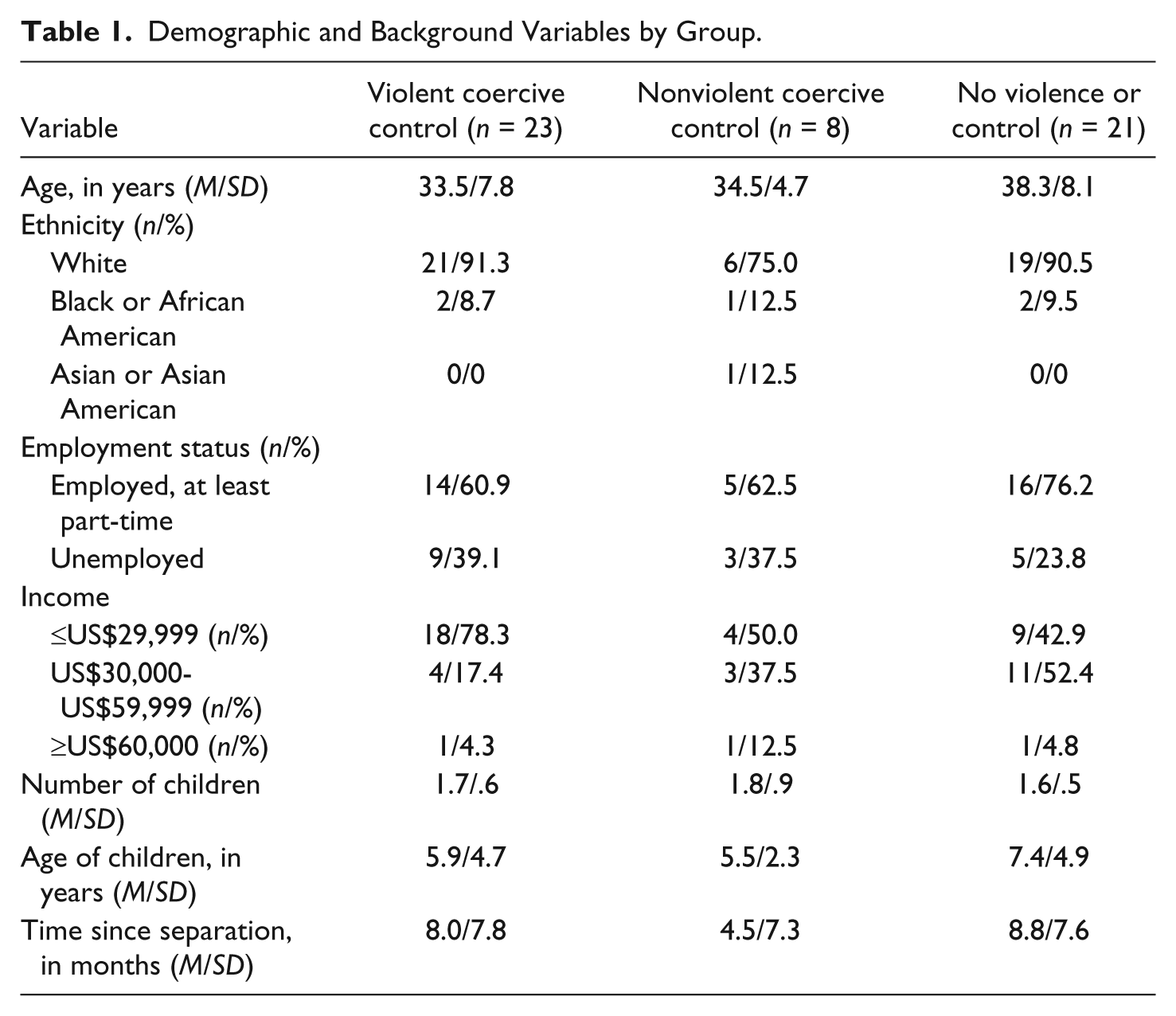
Table 1 provides demographic information for each of the three remaining groups, and Table 2 presents descriptive data for comparison purposes. Mothers in the nonviolent coercive control and the violent coercive control groups report similar degrees of control and levels of fear during marriage. However, mothers in the nonviolent coercive control group report higher levels of fear after separation than mothers in the violent coercive control and the no-violence or control groups. Furthermore, women in the nonviolent coercive control group report using more coping strategies both during marriage and after separation than women in the no-violence or control group. Finally, mothers in the nonviolent coercive control group report a higher level of risk, harassment, and perceived threat in comparison with women in the no-violence or control group.
Demographic and Background Variables by Group.
Group Comparisons.
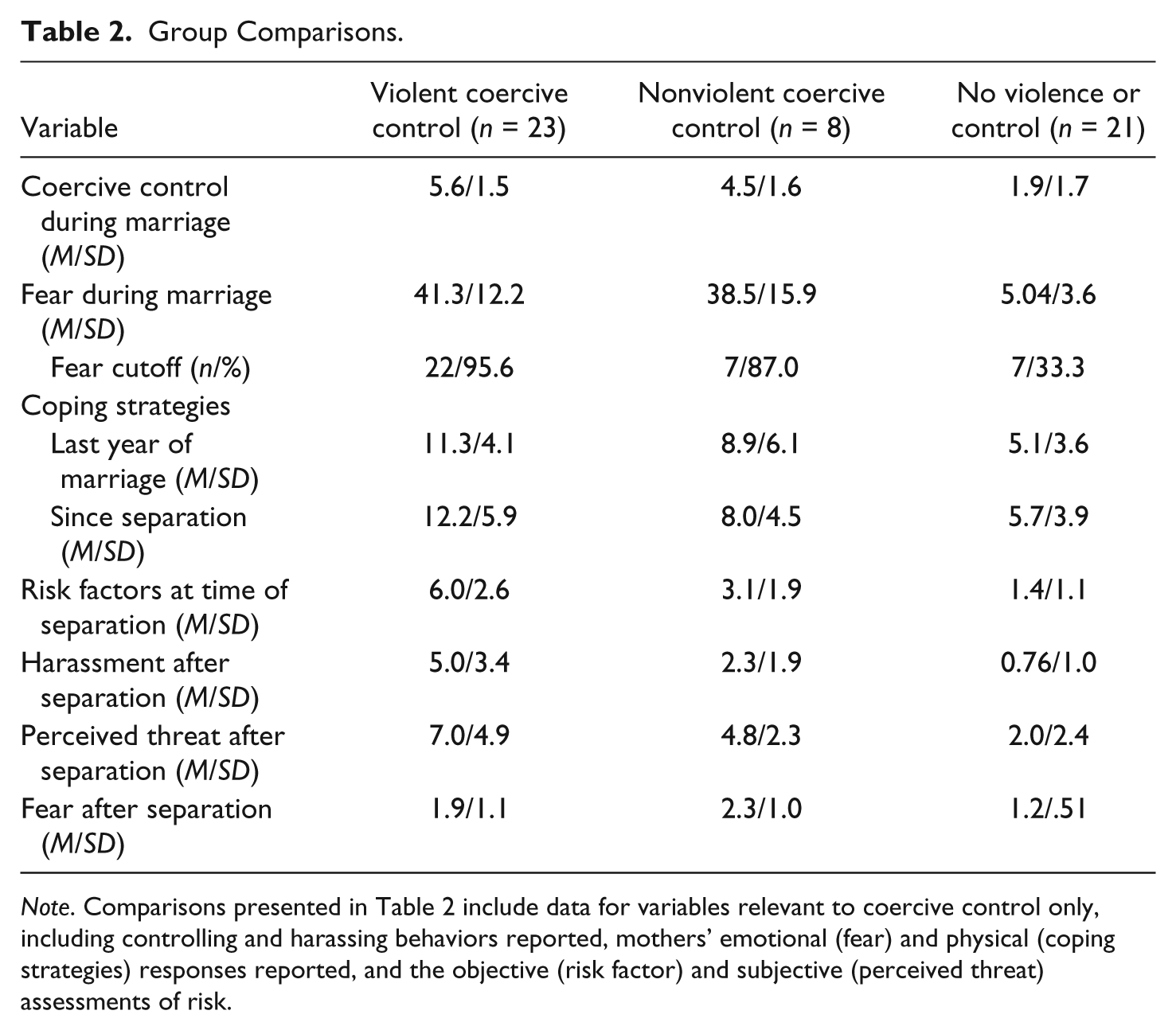
Note. Comparisons presented in Table 2 include data for variables relevant to coercive control only, including controlling and harassing behaviors reported, mothers’ emotional (fear) and physical (coping strategies) responses reported, and the objective (risk factor) and subjective (perceived threat) assessments of risk.
Case Descriptions of Nonviolent Coercive Control During Marriage
Individual case study analysis revealed that all eight mothers reported a myriad of controlling, isolating, threatening, and intimidating behaviors by their partners but no direct physical violence. Seven (87.5%) of the eight mothers also reported intense fear of their partner during marriage and met the cutoff score on the WEB, indicating high levels of fear. Furthermore, all eight mothers implemented various coping strategies in response to their partners’ controlling behaviors during marriage, including legal help-seeking, formal help-seeking, informal help-seeking, resistance, and placating. Table 3 provides the number of behaviors present for each case.
Summary of Behaviors Reported for Each Case, Ordered From Highest Control (Left Column) to Lowest Control (Right Column).
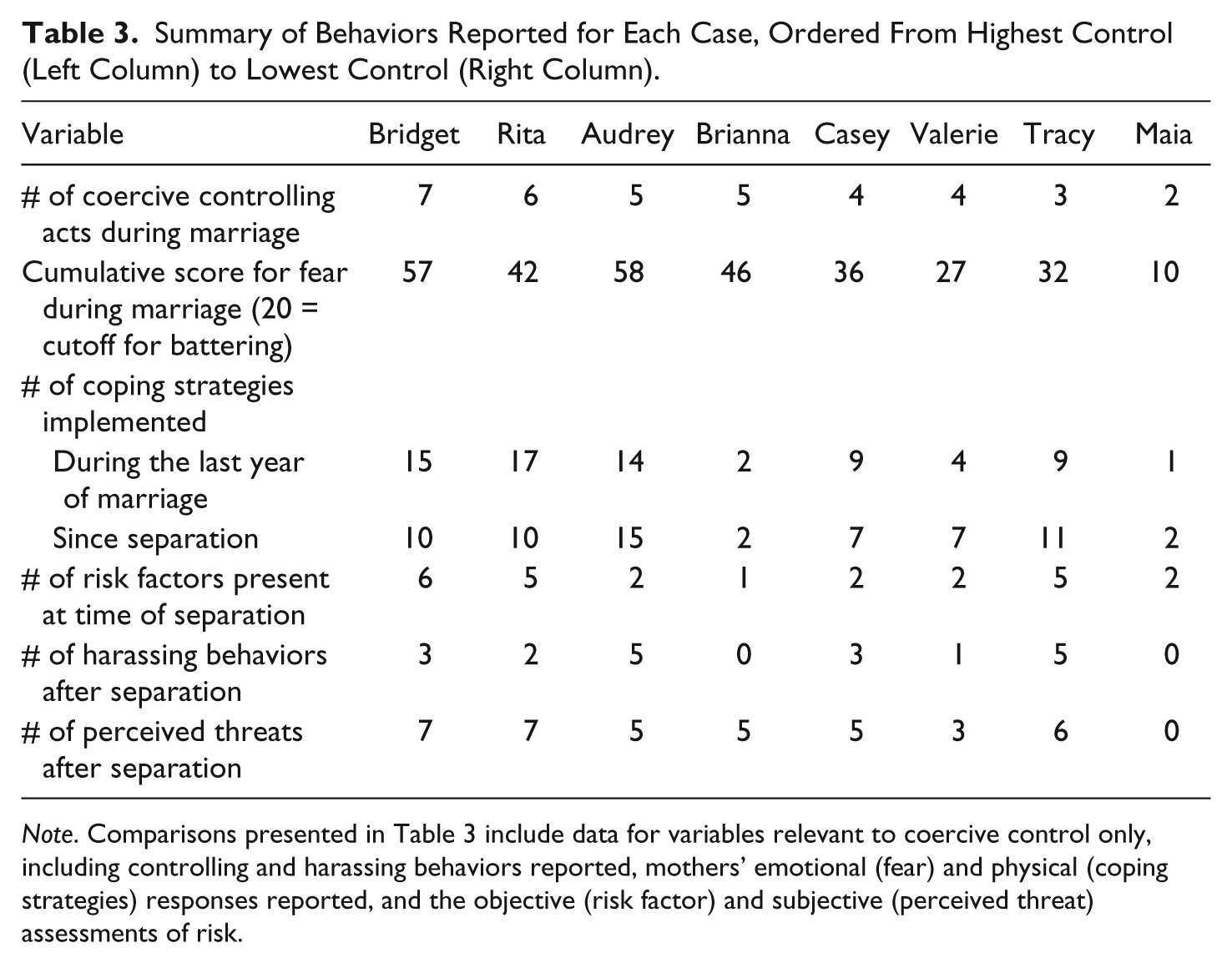
Note. Comparisons presented in Table 3 include data for variables relevant to coercive control only, including controlling and harassing behaviors reported, mothers’ emotional (fear) and physical (coping strategies) responses reported, and the objective (risk factor) and subjective (perceived threat) assessments of risk.
Although case studies of all mothers were created for analysis purposes, only four are included here to provide a sample of mothers’ experiences of nonviolent coercive control. Pseudonyms are used to maintain mothers’ confidentiality. The four cases chosen represent the range of experiences of all eight mothers, including variations in the level of coercive control (e.g., very high for Bridget whereas more moderate yet equally powerful for Tracy), in the level of fear (e.g., very high for Brianna whereas not reported at all by Maia), and in the range of sources from which women sought help (e.g., from no sources sought by Maia to 10 sources sought by Bridget). Furthermore, the cases present some unique characteristics that highlight the variety of tactics used by partners to exert control over their wives (e.g., Bridget’s partner’s intimidation tactics that involved punching or throwing objects near her; Tracy’s partner’s sexual coercion) and demonstrate that nonviolent coercive control cuts across a variety of social locations and situations (e.g., race/ethnicity, employment status, length of marriage, number of children).
Case 1
Brianna, a 36-year-old, full-time employed, Black mother of a 7-year-old son, filed for divorce after 10 years of marriage to Markus. Markus exhibited controlling behaviors throughout their last year of marriage, including always accusing Brianna of having an affair, being jealous or suspicious of her friends, keeping her from doing things to help herself, and restricting her use of the phone. Brianna was afraid of Markus during this time and felt like she had no power, protection, or control over her life. For example, she reported often feeling unsafe in her own home and trying not to rock the boat because she was afraid of what Markus might do. She also hid the truth about their relationship from others because she was afraid of what Markus would do if she disclosed. Much like a prisoner, Brianna felt owned and controlled by Markus and programmed to react a certain way to him. In response to Markus’ behaviors during the last year of marriage, Brianna sought formal help from a mental health counselor and tried to avoid arguments to placate Markus.
Case 2
Tracy is a 37-year-old, full-time employed, White mother of a 9-year-old daughter. Her former partner, Jack, is an alcoholic. Jack filed for divorce after 6 years of marriage. During their last year of marriage, Jack was almost always jealous or suspicious of Tracy’s friends, always monitored her time and made her account for her whereabouts, and sometimes accused her of having an affair. Tracy reported feeling afraid of Jack. During their marriage, she had sex with him multiple times when she was afraid of what he would do if she did not. Like Brianna, Tracy tried not to rock the boat because she was afraid of what he might do and felt programmed to react a certain way to him. She felt unsafe in her own home and like she had no power, control, or protection. She said he could scare her without laying a hand on her. In response to Jack’s behavior, Tracy sought formal help from an employer or coworker, talked to a doctor or nurse, and called a mental health counselor. She also implemented safety planning by improving security in her home. In some situations, Tracy resisted Jack’s behavior by refusing to do what he said and fighting back verbally. At other times, she placated to protect herself by trying to avoid an argument and doing whatever he wanted to protect herself.
Case 3
Bridget, a 35-year-old Asian mother of two girls, ages 3 and 5, was involuntarily unemployed. Her former partner, Steven, filed for divorce after 6 years of marriage. In addition to the controlling behaviors described by the other mothers, Bridget reported that a handful of times during their marriage, Steven threw something at her that could hurt, and he often punched in the air or within an inch of her face to intimidate and scare her. Steven made her feel unsafe, controlled, and programmed without laying a hand on her. She too felt ashamed and like a prisoner. In response to Steven’s behavior, Bridget sought formal help from someone at work, from a mental health counselor, and from a domestic violence service provider. Informally, she talked to her family and friends about how to protect herself and her daughters and stayed with family or friends for protection. Bridget hid important personal documents from Steven during their last year together to protect herself. She resisted him by refusing to do what he said and tried to end contact with him, placated him by trying to avoid him, and used physical violence against him to protect herself.
Case 4
Maia, a 31-year-old White mother of three children ages 1, 4, and 6, filed for divorce after 5 years of marriage to Lewis, who was an alcoholic. According to Maia, Lewis was controlling in that he always monitored her time, made her account for her whereabouts, and used money or made important financial decisions without talking to her about it. Maia resisted Lewis by fighting back verbally during their last year of marriage. Unlike the other mothers, Maia did not feel afraid of Lewis during their last year of marriage nor did she feel that he was successful in exerting control over her.
Case Summaries of Nonviolent Coercive Control After Separation
Hostility at separation and legal agreements
When asked about the degree of hostility at the time of separation, half (n = 4) of the mothers described the initial separation from their partners as “very to extremely hostile”; the other four described it as “not at all to mildly hostile.” Most divorces (n = 5, 62.5%) were not finalized at the time of the interview. Five mothers reported temporary or permanent custody agreements. These arrangements included mother sole legal custody (n = 3) and joint legal custody (n = 2). Physical custody was primarily awarded to mothers (n = 4) with only one joint physical custody arrangement in place. Four of the five cases with a custody agreement in place included unsupervised visitation with fathers; one father was not awarded visitation. Half of the mothers (n = 4) reported a temporary or permanent child support agreement, with three reporting regular receipt of child support (US$600-US$1,200/month, M = US$750/month). Thus, in general, mothers shared legal and physical custody with their former partners to varying extents, which necessitated ongoing contact after separation.
Ongoing contact
All mothers were in frequent contact with former partners at the time of their interviews, via in-person interactions (n = 7, 87.5%), phone (n = 8, 100%), and/or email or text messaging (n = 7, 87.5%). In-person interactions were arranged primarily to accommodate custody and visitation schedules (n = 5, 62.5%). Frequency of in-person contact ranged from once a month to two to three times per week (M = once per week), for an average of 11-15 min. Frequency of telephone contact ranged from two to three times per week to once daily for an average of 5-10 min. Frequency of email or text messaging ranged from never to more than once daily (M = twice per month). For all eight mothers, contact with former partners consisted of conversations that were both related and unrelated to childrearing.
For six mothers (75%), ongoing contact after separation also included at least one harassing, stalking, threatening, or controlling behavior by their former partner. The most commonly reported behaviors included former partners using their children to get physically close to the mother (n = 4, 50%) and frightening people close to the mother (n = 4, 50%). Other behaviors included leaving threatening messages (n = 3, 37.5%), pretending to be someone else to get to the mother (n = 2, 25%), and taking things that belonged to the mother so that she would have to see her former partner to get them back (n = 2, 25%). Less common control tactics included bothering the mother at work when she did not want to talk to him (n = 1, 12.5%), making the mother feel like he can force her into sex (n = 1, 12.5%), showing up wherever the mother is (n = 1, 12.5%), calling the mother on the phone and hanging up (n = 1, 12.5%), showing up without warning (n = 1, 12.5%), and threatening to kill himself if the mother leaves or does not come back to him (n = 1, 12.5%). Thus, six (75%) of the eight mothers experienced ongoing harassment while sharing custody with their former partners that involved child-related threats or control tactics as well as personal violations unrelated to childrearing. Half (n = 4, 50%) of the mothers reported still feeling afraid of their former partner after separation; all four had experienced ongoing harassment and control issues after separation. Table 3 provides the number of behaviors present for each case.
Assessment of risk
Six women (75%) reported at least one factor that indicated risk for serious injury or lethality at the time of physical separation. Five women (62.5%) indicated more than one risk factor with two women reporting four risk factors and three women reporting two. Thus, although their former partners had never been physically violent toward them, many of the mothers reported risk factors for physical assault at the time of separation.
All but one mother (n = 7, 87.5%) reported at least one harmful behavior they believed their former partner would attempt to do or threaten to do within the next 3 months after separation. More specifically, two women reported seven behaviors, one woman reported six behaviors, three women reported three behaviors, and one woman reported two behaviors. Thus, in addition to reporting risk factors for physical assault at the time of separation, the majority of mothers also believed that the risk would persist.
Coping strategies
In response to their former partner’s behavior, all eight mothers implemented coping strategies after separation (ranging from 2-15 different strategies per woman; M = 8.0). Strategies included resistance (n = 7, 87.5%), placating (n = 7, 87.5%), use of informal help (n = 6, 75%), safety planning (n = 5, 62.5%), legal help-seeking (n = 5, 62.5%), and use of formal help (n = 4, 50%). Thus, women continued to resist and to seek help from various sources after separation in response to their former partners’ ongoing controlling behaviors and/or their perceptions of ongoing risk.
Discussion
The current study begins to address a gap in the IPV literature by exploring the concept of nonviolent coercive control through descriptive case analysis of eight mothers’ experiences during marriage and after separation. Analyses revealed that all mothers experienced an array of controlling behaviors by their partners and negative consequences of such control, including intense fear of partners during marriage and perceived risk for future threats or harassment. After separation, all eight mothers remained in contact with former partners for custody, child support, and visitation arrangements. The majority of the women reported that this contact often involved opportunities for ongoing stalking, harassing, or threatening behaviors by former partners. The most common behavior reported involved former partners using children as pawns to get former wives physically close to them, suggesting that visitation and child support exchanges with former partners may serve as an opportunity for ongoing control after separation. Mothers also reported using various coping strategies both during marriage and after separation to resist, placate, or protect themselves from their former partners.
These findings contribute to understanding nonviolent coercive control in several important ways. First, they provide a glimpse into the nature and consequences of nonviolent coercive control. Women in the nonviolent coercive control group reported similar levels of fear and coping strategies as women in the violent coercive control group, despite no history of physical violence. Results are in line with prior research on psychological abuse and violent coercive control that identifies fear as a salient consequence of control for women with abusive partners (Johnson, 2008; Lammers et al., 2005) and active help-seeking as a common response among survivors of abuse (Goodman et al., 2003). The greater effects of violent coercive control indicated across all variables reaffirm IPV researchers’ focus on the serious impacts of physical violence in conjunction with coercive control. However, findings also highlight the consequences of coercive control even without physical violence. Indeed, results for mothers in the nonviolent coercive control group suggest potential differences across all variables in comparison with results from mothers in the no-violence or control group. Thus, the current study reveals a subgroup of mothers who have experienced no physical violence but are dealing with coercive controlling partners and are in need of support and services. They are overlooked in current health care and legal systems’ screening procedures that tap primarily into physical violence.
Second, despite their seeking help from a variety of sources, the majority of mothers in the nonviolent coercive control group continued to experience ongoing coercive control after separation. For example, they reported control issues in the context of coparenting or negotiating custody and visitation arrangements. However, ongoing harassment also appeared to involve personal threats and violations unrelated to child care, revealing the variety of ways that men can continue to exert control over their former wives after separation. Reports appear similar to descriptions of intrusion in prior studies on mothers’ experiences after leaving physically violent, controlling former partners (Davies et al., 2009; Ford-Gilboe et al., 2005; Hardesty & Ganong, 2006; Hardesty et al., 2008; Wuest et al., 2003), and suggest the need for more attention to coercive control issues when making custody recommendations or encouraging former partners to work together in situations of divorce. Recent research suggests that allegations of IPV are sometimes ignored in divorce or custody proceedings, even when physical violence is present (Haselschwerdt, Hardesty, & Hans, 2010), and controlling behaviors or threats are rarely considered credible by policy makers, law enforcement, or the justice system without a prior history of physical violence (Stark, 2007). Further empirical work is needed to identify effective ways to intervene, safety plan, and allocate resources for women leaving nonviolent controlling partners.
Third, results reveal variations in mothers’ responses to nonviolent coercive control. Maia, the fourth case described above, presents a case of nonviolent coercive control with few negative consequences. Although Maia’s partner attempted to control her in multiple ways, Maia was neither afraid of him nor felt he successfully overpowered her. Maia also was able to escape the relationship without the issues of control or harassment that other women in the study reported. In contrast, Bridget, the third case, reported intense feelings of fear in response to her partner’s severe coercive control and sought help in various ways, including resisting his control with her own physical violence, yet she was not able to successfully escape the control of her partner. Upon calling her for a follow-up interview, we found that Bridget had reunited with her former partner. Further inquiry is needed to understand how or why some women are able to escape coercive controlling relationships without negative consequences or ongoing control issues and the most effective ways to help women safely remain apart from coercive partners if they wish to separate.
Last, the current findings suggest a need for further empirical work on measuring coercive control more broadly. Although the use of multiple measures may provide some clues as to the nature of nonviolent coercive control, the development of a measure that includes items beyond discrete acts or feelings is needed to fully contextualize women’s experiences and the process of how coercive control occurs and is effective or ineffective. For instance, the PMWI (Tolman, 1992) provides a general description of the coercive controlling behaviors but lacks a fuller picture of when and how the behavior occurred or how successful it was in exerting control. Interestingly, 14 women in the original study (seven of whom were included in the case analyses and seven in the no-violence and no-control group) also met the cutoff score for battering on the WEB scale (Smith et al., 1999) despite no prior history of physical violence. This raises questions as to the construct validity and use of the WEB to identify battering relationships. Rather, the WEB appears to tap into the construct of fear. Indeed, mothers in this study reported intense fear of their partners in response to their attempts to exert control over them. Furthermore, mothers who reported no violence and mild or infrequent control, yet still met the WEB’s cutoff score, appeared to be afraid of their partner for reasons other than battering (e.g., partner’s alcoholism, illegal drug use, or maltreatment of their children or the couple’s high levels of conflict). This further suggests the need to re-evaluate the WEB as a measure of battering.
The findings should be considered in the context of several limitations. The small sample size limits the generalizability of study findings to other women’s experiences of nonviolent coercive control. Further research and replication of findings using larger samples are needed to determine if these eight mothers’ experiences apply to other women in nonviolent coercive controlling relationships. In addition, the small sample size and the nature of descriptive case study analyses did not allow for more advanced statistical analyses to confirm whether or not the nature of nonviolent coercive control and associated risks are, in fact, similar to that of violent coercive control. Finally, the current study provides only a glimpse into mothers’ experiences. Longitudinal research is needed to provide a fuller picture of the nature and trajectories of nonviolent coercive control both during marriage and after separation, and qualitative, in-depth interviews could be particularly useful for collecting more comprehensive data on mothers’ experiences of nonviolent coercive control in their own words.
Despite these limitations, the current study provides an important contribution to future policy, practice, and research efforts, particularly given the paucity of research in this area. This study provides a preliminary understanding of the needs of mothers leaving nonviolent, coercive controlling partners and suggests that policymakers, practitioners, and researchers may be missing opportunities to help women by restricting their focus to physical violence. For instance, current screenings and assessments in health care settings that focus on physical violence may miss opportunities to identify other types of abuse or may deter providers from acknowledging the consequences of coercive control as serious. Furthermore, without the occurrence of physical violence or physical injury, women may be limited in the amount of help they receive from the police or in legal settings with little proof that abuse has occurred. Thus, regular assessments for coercive control should occur in various practice-oriented settings along with screenings for violence to provide adequate services to women who seek or are in need of help or resources. Indeed, the Uniform Collaborative Law Act (Ver Steegh, 2009) and the model policy for police (International Association of Chiefs of Police, 2006) encourage screening for both violence and coercion. Findings from this study begin to highlight the needs and experiences of mothers in nonviolent coercive controlling relationships, but further research is needed to fully inform changes in how we screen for and assess abuse in health care and legal settings.
Footnotes
Acknowledgements
The authors sincerely thank Michael P. Johnson for providing constructive feedback on an earlier version of this article.
Authors’ Note
A previous version of this article was presented at the 2011 annual conference of the National Council on Family Relations in Orlando, Florida.
Declaration of Conflicting Interests
The author(s) declared no potential conflicts of interest with respect to the research, authorship, and/or publication of this article.
Funding
The author(s) disclosed receipt of the following financial support for the research, authorship, and/or publication of this article: This study was part of a larger project supported by the College of ACES Office of Research and the Department of Human and Community Development at the University of Illinois at Urbana-Champaign and the USDA National Institute of Food and Agriculture, Hatch project number 793-348.