



Abstract
Data from a national, population-based longitudinal study of Australian women (26-34 years) were analyzed to investigate the association between domestic relocation and multiple explanatory factors, namely intimate partner violence (IPV), metropolitan versus non-metropolitan residence, education, income, housing tenure, number of children, and changes in relationship status. Experience of IPV in the past 12 months was significantly associated with increased odds of domestic relocation. This association remained significant after controlling for age, social support, area of residence, income, number of children, education, and housing situation. Change in relationship status attenuated the association between recent IPV and domestic relocation. Metropolitan versus non-metropolitan residence had no major influence on these results.
Introduction
Intimate partner violence (IPV) is a major cause of breakdown in intimate relationships and, as a consequence of IPV, many women may choose or may be forced to move from their homes. IPV has been recognized as one of the main causes of housing instability for women (Jategaonkar & Ponic, 2011; Pavao, Alvarez, Baumrind, Induni, & Kimerling, 2007; Ponic et al., 2011). Housing instability is characterized by factors such as multiple unwanted moves, ongoing problems in accessing affordable housing, difficulty paying rent, being denied housing or being threatened with eviction due to financial problems or problems with damage to property, being forced to share accommodation with family and friends, or being forced to live in suboptimal accommodation (Kushel, Gupta, Gee, & Haas, 2006; Pavao et al., 2007). Housing instability has been directly associated with negative health and diminished social outcomes such as reduced quality of life, increased work/school absence, increased use of hospital/emergency departments, and increased reporting of symptoms consistent with both depression and post-traumatic stress disorder (Jategaonkar & Ponic, 2011; Rollins et al., 2012). Lack of suitable, affordable accommodation for women, especially those with children, is seen as one of the main barriers to women leaving abusive partners (Spinney & Blandy, 2011) and can also be a prime reason for women returning to an abusive partner (Champion et al., 2009). In a U.S. study of women’s shelter residents, Griffing et al. (2002) found that 53% of women planned to return to their abusers due to economic need and lack of housing.
Residential mobility and domestic relocation are features of life in the whole population, not just among women who encounter IPV in their relationships. Demographic studies indicate that many factors influence residential mobility in the general population, including age, housing tenure, employment status, household income, and life stage factors such as relationships and number of children within the household (Bell, 1996; Hassan, Zang, & McDonnell-Baum, 1996). Residential mobility rates are highest for people below 30 years of age, with high mobility in this age group attributed to life stage changes in education, employment, and changing relationships, including marriage, cohabitation, and childbearing (Duke-Williams, 2009; Hassan et al., 1996). Studies of residential mobility in pregnant mothers and families with young children, from the United States and the United Kingdom, indicate that a higher level of residential mobility is associated with single motherhood, being a young mother and a higher degree of socioeconomic disadvantage (Long, 1992; Tunstall, Pickett, & Johnsen, 2010). Residential mobility of pregnant women and mothers with infants and young children in the United Kingdom has been associated with poorer health outcomes of both mothers and children (Tunstall, Cabieses, & Shaw, 2012; Tunstall et al., 2010). This poorer health has not only been attributed in part to disadvantaged socioeconomic status, but it has also been linked to the negative circumstances of some moves such as relationship breakdown and housing problems (Tunstall et al., 2012).
The specific role that IPV plays in residential mobility remains relatively unexplored, both internationally and within the Australian context, where those studies and reports that have been published focus on women from domestic violence shelters (e.g., Champion et al., 2009) or homeless shelters (e.g., Spinney & Blandy, 2011) rather than from community-based samples. The current study investigates the association between experience of IPV and domestic relocation in young women in Australia from a population-based perspective and their relationship with multiple explanatory factors, namely, area of residence, marital status, level of education, ability to manage on income, housing tenure, number of children in the household, and changes in relationship status.
The research questions under investigation are as follows:
Method
Participants
This study analyzed data from the Australian Longitudinal Study on Women’s Health (ALSWH). This is a national longitudinal study of four age cohorts of Australian women, representing young, mid-life, and older women to provide a life-course perspective on women’s health. It commenced in 1996 and uses postal and online forms to collect data on health and lifestyle aspects of the participating women. Details of the recruitment and sampling procedures of ALSWH have been reported elsewhere (Brown et al., 1999; Lee et al., 2005). Participants were recruited via random selection from the national health insurance database (Medicare), and there was deliberate oversampling of women living in remote and very remote areas to achieve sample sizes large enough for statistical comparisons between urban and non-urban women (Lee, 2001).
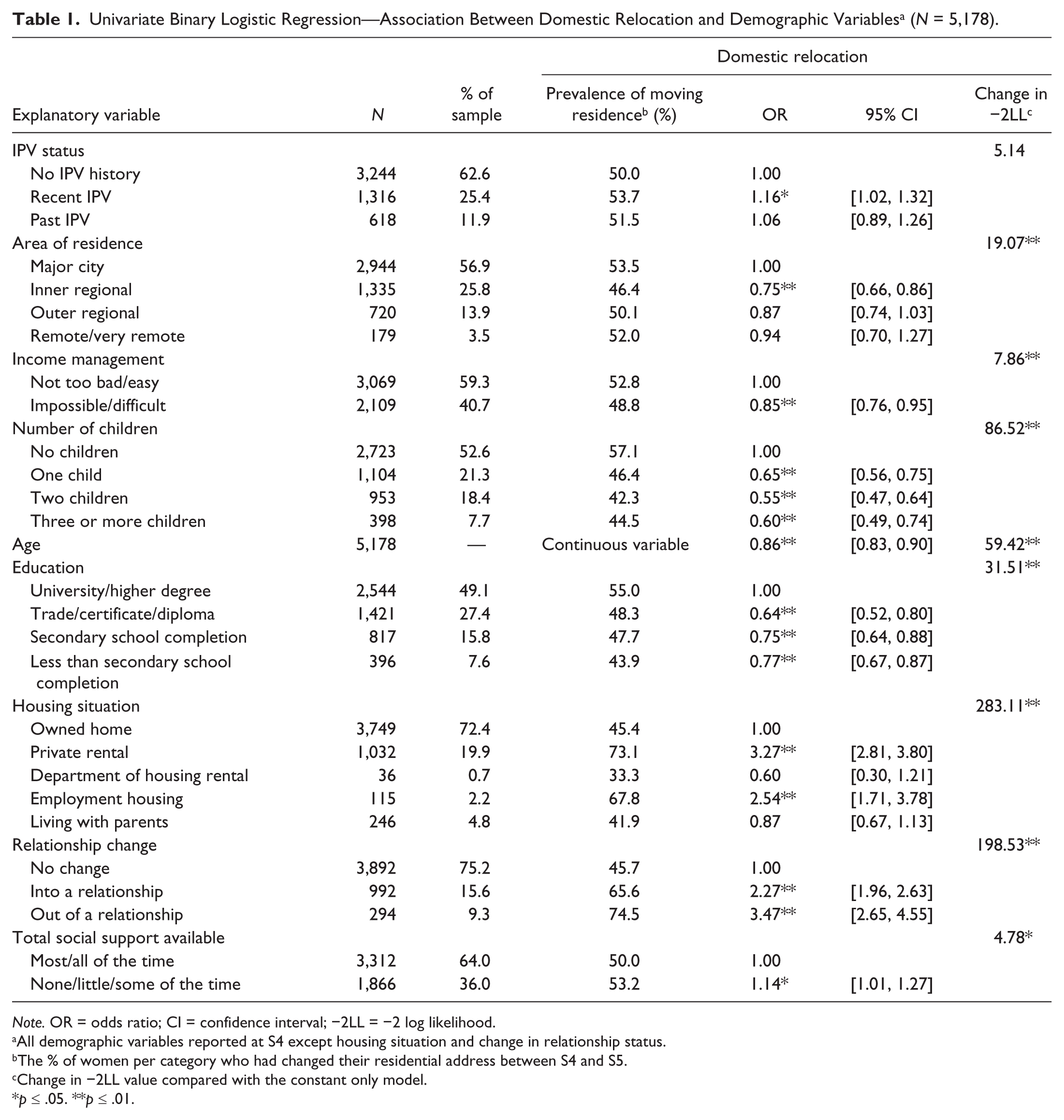
The current analysis examines domestic relocation in a subset of women from the ALSWH 1973-78 birth cohort between Survey 4 (S4), conducted in 2006, and Survey 5 (S5), conducted in 2009. This cohort has been shown to be nationally representative of women of this age at the commencement of the survey (Brown et al., 1999). The current sample consists of 5,178 women who responded to both S4 and S5 and have complete data for all of the analysis variables. At the time of returning S4, their ages ranged from 26.6-34.1 years, with a median age of 30.6 years. Detailed demographic characteristics of the sample are summarized in Table 1. At S4, the majority of participants lived in major cities or inner regional areas. Most of the women were partnered, reporting either being married (56%) or in a de facto 1 relationship (18.5%), 22% of women had never married and 3.5% were separated, divorced, or widowed. In addition, just more than half of the sample (52.6%) reported having no children in the household, and the majority of women had achieved post-secondary school education qualifications. Information related to housing tenure was unavailable at S4; however, at S5 approximately 20% of women were renting their home on the private market and 72% of the women reported owning their home (including having a mortgage).
Univariate Binary Logistic Regression—Association Between Domestic Relocation and Demographic Variables a (N = 5,178).
Note. OR = odds ratio; CI = confidence interval; −2LL = −2 log likelihood.
All demographic variables reported at S4 except housing situation and change in relationship status.
The % of women per category who had changed their residential address between S4 and S5.
Change in −2LL value compared with the constant only model.
p ≤ .05. **p ≤ .01.
Dependent Variable
Domestic relocation
Domestic relocation was the outcome variable for this analysis, and it was defined in two ways, depending on the statistical technique being conducted. For the majority of the analyses, domestic relocation was treated as a dichotomous variable, that is, domestic relocation has occurred (yes/no). Domestic relocation was recognized as having occurred if there had been one or more changes in residential address registered with the ALSWH survey database during the 3-year period between S4 and S5.
To investigate the scale of domestic relocation, a three-level categorization was used: no move; one or more moves within the same postcode area; or one or more moves to a new postcode area between S4 and S5. Australian postcodes are similar to the American system of ZIP codes. Although they were designed primarily to aid in mail delivery, they are also used in research and business as an easily available link to a geographical area (ABS, 2011). The size of area covered by a single postcode can vary, and in metropolitan areas postcodes often equate to single suburbs within a larger city. In rural areas, postcodes can cover much larger areas but usually relate to a single town center and its surrounding districts.
Independent Variables
IPV status
Respondents were classified in response to two questions relating to experiences of IPV. At each survey wave (S1-S4), participants had been asked, “Have you ever been in a violent relationship with a partner/spouse?” ALSWH surveys from S4 onward have included additional questions about specific experiences of IPV using the Community Composite Abuse Scale (CCAS) (Loxton et al., 2013). This scale lists 27 individualized items of abuse and asks respondents if they have experienced them in the previous 12 months. The scale includes measures such as: My partner . . . “told me that I wasn’t good enough”; “pushed, shoved, or grabbed me”; “harassed me at work”; and “used a knife or gun or other weapon.” The IPV status variable constructed for this analysis includes three categories:
Recent IPV: Defined by an experience of IPV in the past 12 months, indicated by a positive response to any of the 27 individualized items on the CCAS at S4.
Past IPV: Status applied to women who had reported a history of IPV, via a positive response to the question, “Have you ever been in a violent relationship with a partner or spouse?” in S1-S4, but had not reported an incidence of abuse in the past 12 months via the CCAS at S4.
No IPV: Refers to women with no reported history of IPV, that is, they had never answered positively to the question, “Have you ever been in a violent relationship with a partner or spouse?” at S1-S4 and had not recorded a positive response to any of the CCAS items at S4.
Area of residence
The area of residence for each participant is part of the ALSWH database and is indicated by the Accessibility/Remoteness Index of Australia (ARIA+). This measure of remoteness has been categorized according to a nationally recognized index comprising five categories: major cities, inner regional, outer regional, remote, and very remote regions (Australian Bureau of Statistics [ABS], 2013). Due to small sample numbers in the remote and very remote categories, these two categories were combined (Table 1).
Change in relationship status
At S4 and S5, respondents were asked to indicate their current marital status as either “never married,” “married,” “de facto (opposite sex),” “de facto (same sex),” “separated,” “divorced,” or “widowed.” For this analysis, the category of “de facto” was combined for both opposite-sex and same-sex de facto relationships. A comparison of each participant’s responses at S4 and S5 allowed changes in relationship status between the two surveys to be categorized, as outlined in Figure 1.

Categorization of change in relationship status based on responses at S4 and S5.
The change in the relationship status of a woman between S4 and S5 was categorized as follows:
Moved into a relationship: Having changed from a S4 status of never married, separated, divorced, or widowed to a S5 status of married or de facto.
Moved out of a relationship: Having changed from a S4 status of married to a S5 status of separated, divorced, de facto, or widowed; or having changed from a S4 status of de facto to a S5 status of separated, divorced, widowed, or never married; or having moved from a S4 status of never married to a status of separated, divorced, or widowed at S5.
No change in partnership status: Having the same relationship status at both S4 and S5. Included in this category were also the women who reported a S4 status of de facto and a S5 status of married. The assumption was made that these women (n = 350) had moved from a de facto relationship to a marriage with the same partner, and therefore their relationship status had not in effect changed as they had remained partnered during the inter-survey period.
Social support
Perceived levels of social support were taken from the Medical Outcomes Study Social Support Survey (MOS-SSS) (Sherbourne & Stewart, 1991) included within S4. Nineteen survey items asked questions relating to perceived levels of social support in four domains: emotional/informational support, tangible support, affection, and positive interaction. Participants were asked, “How often is each of the following kind of support available to you if you need it?” Each of the 19 items had a 5-point scale response, ranging from 1 (none of the time) to 5 (all of the time). The responses to the MOS-SSS items were summed to give a score for total social support across all domains. For analysis, this total social support score was dichotomized to having social support available “none/little/some of the time” (total social support score <76) or having social support available “most/all of the time” (score ≥76).
Housing situation
Information regarding the housing situation of survey participants was derived from a question that was first asked at S5 and records the current housing situation as owned home (with or without mortgage), private rental, Department of Housing rental, employer provided housing, or living with parents.
Ability to manage on available income
The ability to manage on current household income was gauged by responses to the S4 question: “How do you manage on the income you have available?” Response options were “impossible,” “difficult all of the time,” “difficult some of the time,” “not too bad,” and “easy.” For this analysis, these categories were dichotomized as “impossible/difficult all or some of the time” and “not too bad/easy.”
Number of children
The number of children resident in the household at S4 has been categorized as follows: no children, one child, two children, and three or more children.
Age
The measure of age included in the analysis was based on the participant’s age (years) at the time of S4 return.
Education
Participant’s highest completed educational qualifications were recorded at S4 based on four categories:
Less than senior secondary school completion
Senior secondary school completion
Trade/certificate/diploma: Completion of trade, apprenticeship, certificate, or diploma.
University degree/higher degree: University undergraduate or higher degree.
Statistical Methods
The influence of rurality of residence on IPV status, rates of domestic relocation, and scale of domestic relocation were investigated via cross-tabulation and chi-square analysis. Logistic regression analysis techniques were used to model domestic relocation in relation to IPV status and the other listed explanatory variables. The research question of whether IPV status was associated with domestic relocation was investigated using domestic relocation as a binary variable (i.e., Has relocation occurred? yes/no). Furthermore, the question of whether IPV status influences the scale of domestic relocation–that is, small-scale or large-scale relocations–was investigated through the process of multinomial logistic regression with domestic relocation defined at three levels, namely, no domestic relocation, a small-scale move (within the same postcode area), or a large-scale move (to a new postcode).
Preliminary investigation
The association between IPV and domestic relocation was initially investigated using univariate logistic regression. Recent IPV status was found to be significantly associated with the binary form of the domestic relocation variable, so the investigation was extended to consider the association between IPV status and the scale of domestic relocation. In this phase of analysis, multinomial logistic regression techniques were used to investigate if the occurrence of IPV was associated with the scale of a domestic relocation.
Results from the univariate binary logistic regression indicated that IPV status was significantly associated with the action of moving house. However, the multinomial regression analysis found that there was no significant difference between the likelihood of domestic relocation within the same postcode and the reference category of “Move to a new postcode,” for either recent IPV (OR = 0.99; 95% confidence interval [CI] = [0.81, 1.20]) or past IPV (OR = 1.08; 95% CI = [0.83, 1.41]). This indicates that IPV status is not significantly related to the scale of domestic relocation. Given these results for the primary variable of interest (IPV), subsequent investigations, including building extended models with additional explanatory variables, were performed using the binary coding of the domestic relocation variable in logistic regression analysis.
Association between IPV and domestic relocation controlling for demographics and social support
The association between IPV and domestic relocation was further studied by constructing a series of multivariable logistic regression models in which additional explanatory variables were progressively added to control for the influence of demographic factors and life circumstances. Interaction of IPV with each explanatory variable was explored as part of the multivariable logistic regression analysis.
Results
Comparison of the IPV status of women across different areas of residence (Figure 2) indicates significant (p < .01) differences, with rates of recent IPV being highest in the remote/very remote area and lowest in major cities. Past IPV rates are highest in inner regional, followed by outer regional areas. Remote/very remote areas have the lowest proportion of women with no history of IPV.
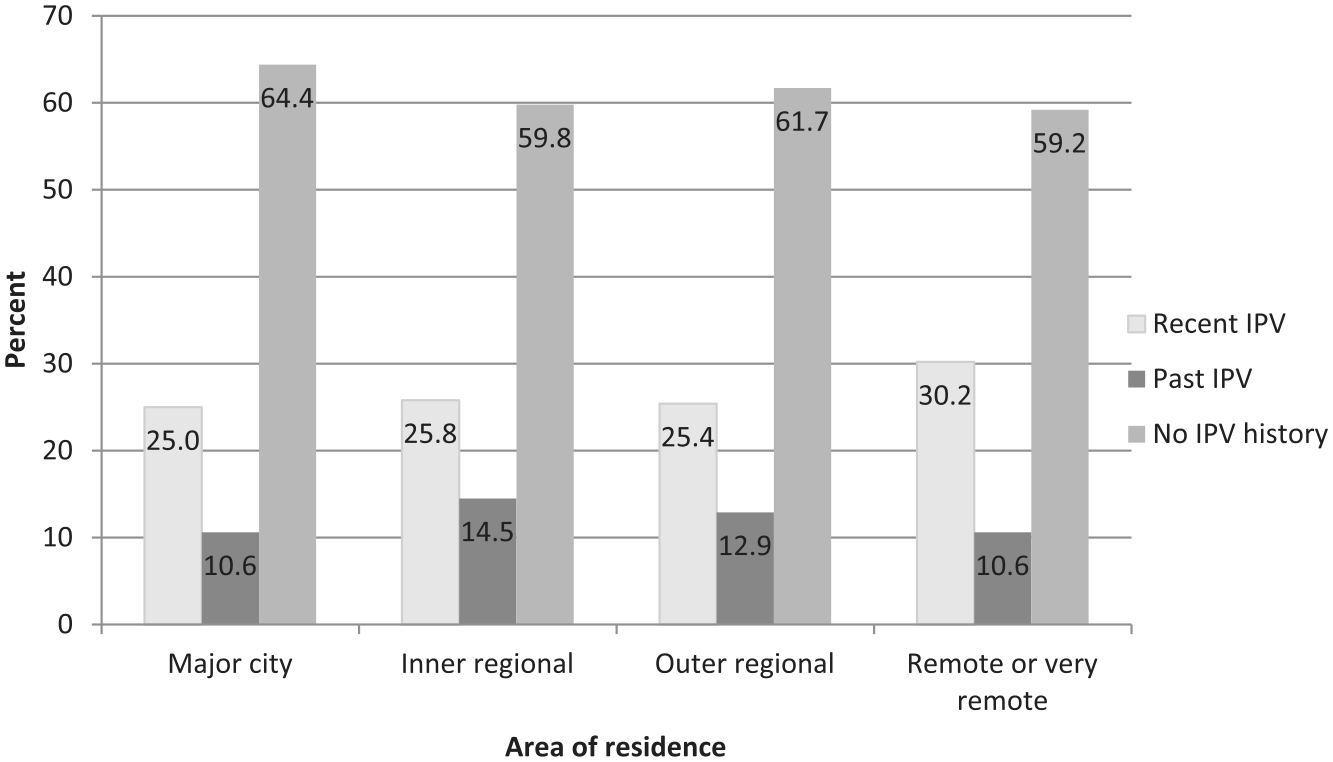
Percentage of women reporting current or past IPV at S4 by area of residence (N = 5,178).
The overall rate of domestic relocation during the reference period was 51.1%. That is, just more than half of the women from the cohort registered a change of address between S4 and S5. There were relatively small but significant differences (p < .01) in the rates of relocation in different regional areas (Figure 3), with a higher percentage of women from remote/very remote areas and major cities relocating, compared with women from inner or outer regional areas.
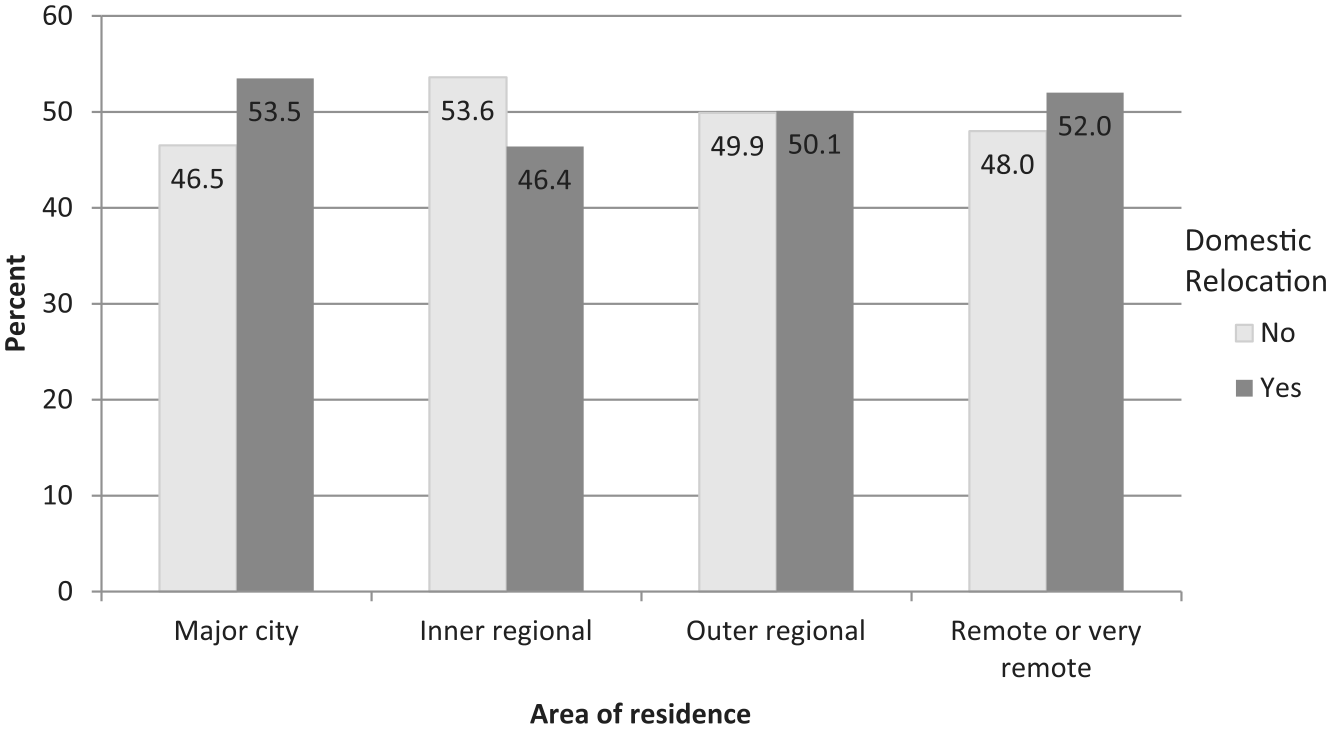
Percentage of women undertaking domestic relocation between S4 and S5 by area of residence (N = 5,178).
Upon comparing the scale of movement involved in a domestic relocation, 1,904 of the 2,648 (71.9%) women who moved during the reference period relocated to a new postcode area (Figure 4).
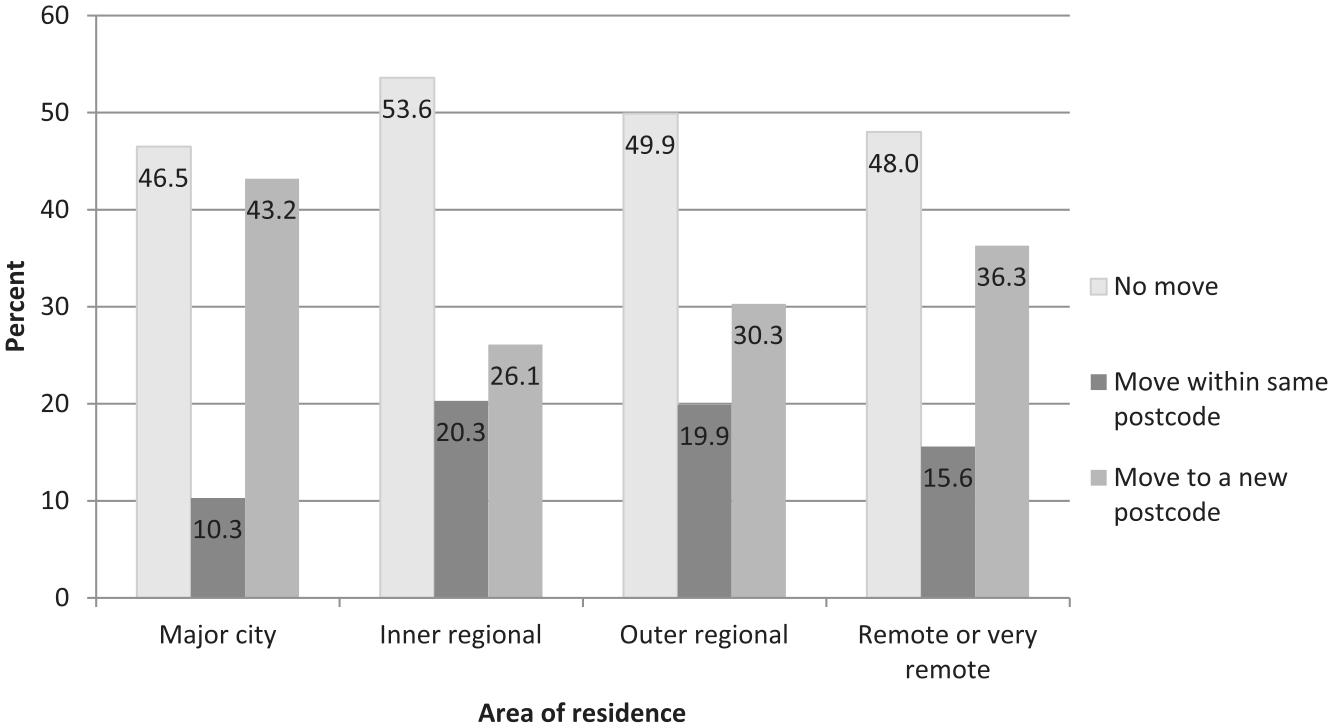
Percentage of women undertaking small-scale (same postcode) or large-scale (new postcode) domestic relocation between S4 and S5 by area of residence (N = 5,178).
The highest proportion of small-scale moves, that is, within the same postcode, were within inner regional areas, where 20.3% of all women in this regional area had recorded a move that was within the same postcode. Large-scale moves, that is, to a new postcode, were most common for women from the major cities, with 43.2% of all women in this category registering a change of address, with a new postcode, in the time period between S4 and S5.
Factors Associated With Domestic Relocation
Results of the univariate analysis are presented in Table 1. Housing situation, relationship change, and number of children in the household had the highest predictive power in univariate models as shown by the log likelihood statistics.
In comparison with women with no history or a past history of IPV, women with recent IPV showed higher odds of having relocated in the study reference period. Area of residence was associated with domestic relocation, with women residing in inner regional areas at reduced odds of having moved compared with women from a major city. There were no significant differences between odds of domestic relocation for women from outer regional or remote/very remote areas and those from a major city.
Finding it “impossible or difficult” to manage on available income was significantly associated with decreased odds of moving residence. Women in households with at least one child were at significantly lower odds of moving than a household with no children. There was an association between age and domestic relocation, with the odds of moving residence significantly decreasing with increasing age. Lower levels of education were associated with reduced odds of domestic relocation. Having low levels of available social support–that is, only having support available “none/little/some of the time”–marginally increased the odds of domestic relocation compared with women who had social support that was available “most/all of the time.”
There were strong associations between current housing situation and domestic relocation, with women living in rental accommodation exhibiting odds of domestic relocation more than 3 times that of women living in their own home. Change in relationship status also exhibited high levels of association with domestic relocation, with any form of relationship change being significantly more likely to be associated with a residential move compared with no change in relationship status. Women moving out of a relationship exhibited odds of changing residential address that were more than 3 times that of women whose relationship status had not changed, and moving into a relationship was also positively associated with domestic relocation.
IPV and Domestic Relocation
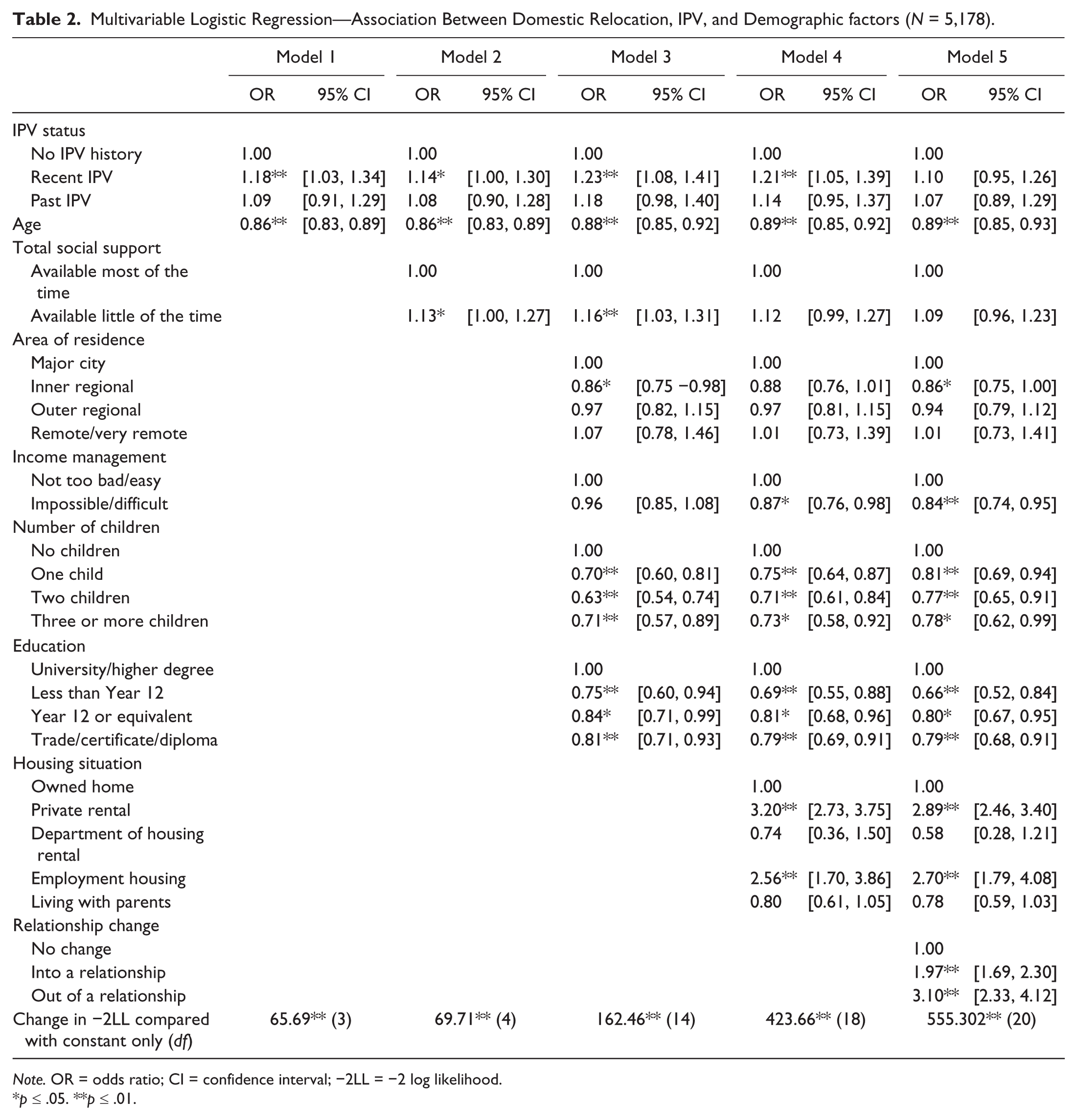
Multivariable logistic regression was used to further investigate the association between IPV and domestic relocation. Additional explanatory variables relating to demographic and life situation were included to see if they attenuated the relationship between IPV and domestic relocation (Table 2). Model 1 indicates that after controlling for age, recent IPV maintains a significant association with domestic relocation. However, there was no significant difference in the odds of domestic relocation between women with a past history of IPV and women with no IPV history.
Multivariable Logistic Regression—Association Between Domestic Relocation, IPV, and Demographic factors (N = 5,178).
Note. OR = odds ratio; CI = confidence interval; −2LL = −2 log likelihood.
p ≤ .05. **p ≤ .01.
The addition of total social support (Model 2) is associated with a reduction in the significance of recent IPV in the explanatory model with the 95% CI of the adjusted odds ratio coming very close to the reference value of 1. This indicates a weakening of the importance of recent IPV in predicting domestic relocation, once age and the level of available total social support were controlled for in the model.
With the addition of demographic factors, area of residence, ability to manage on current income, number of children in the household, education level (Model 3), and housing situation (Model 4), recent IPV still maintained a significant association with domestic relocation, but it must be noted that the CI values again come close to 1. The final model (Model 5), adjusting for all demographic factors, included a variable accounting for the change in relationship status between S4 and S5. With this inclusion, the adjusted odds ratio for recent IPV was no longer significant.
In other words, after accounting for differences in age, availability of social support, income, number of children, level of education, and housing situation, women with recent IPV were still more likely to have moved residence than either women reporting IPV that had occurred more than 12 months ago or women with no record of IPV. However, when changes in relationship status between S4 and S5 were considered, IPV status no longer explained the differences in levels of residential relocation. In terms of relationship change, it was found that women who had moved into a relationship were almost twice as likely to have changed residence (OR = 1.97, 95% CI = [1.69, 2.30]) as women with no relationship change. Women who had left a relationship were more than 3 times as likely to have changed residential address as women with no relationship change (OR = 3.10, 95% CI = [2.33, 4.12]).
An investigation of change in relationship status in relation to IPV status found a significant association (p < .01) between these two variables. Figure 5 shows that less than 4% of women with no history of IPV moved out of a relationship between S4 and S5, but 10% of women reporting recent IPV and 7% of women reporting past IPV had moved out of a relationship. Similarly, while less than 17% of women who reported no history of IPV moved into a new relationship in the reference period, approximately 23% of women reporting recent IPV or past IPV moved into a new relationship.

Percentage of women experiencing a change in relationship status between S4 and S5 by IPV status (N = 5,178).
With regard to the influence of metropolitan versus non-metropolitan residence, when all other explanatory variables were accounted for (Model 5), there were only minor differences in the odds of domestic relocation between metropolitan and non-metropolitan women. The only statistically significant result with regard to area of residence was for the inner regional area, which had marginally lowered odds of relocation compared with the category of major cities, but the significance of this result was marginal with the upper bound of the 95% CI actually being equal to 1.
Interactions between IPV status and each additional explanatory variable (age, social support, area of residence, income management, number of children, education, housing situation, and relationship change) were investigated, and it was found that none of these interaction terms was statistically significant.
Summary of Results
This investigation found that the experience of IPV in the past 12 months (recent IPV) was significantly associated with increased odds of domestic relocation. This association remained significant after controlling for age, level of social support, area of residence, ability to manage on current income, number of children in the household, level of education, and housing situation. Change in relationship status was found to be a strong predictor of domestic relocation, with women who had moved in or out of a relationship in the reference period at higher odds of domestic relocation than women with no change in relationship status. Once change in relationship status was added as an additional explanatory variable in the model, the association between recent IPV and domestic relocation was no longer significant. Metropolitan versus non-metropolitan residence had no major influence on these results. IPV status was not significantly associated with the scale of domestic relocation in the study cohort.
Discussion
This is the first Australian study of domestic relocation and IPV that has utilized a population-based sample, and its findings will be relevant to both government and non-government agencies working to reduce the vulnerability of abused women to homelessness. Current findings align with a U.S. population-based study by Dugan and Mattingly (2005), who analyzed data from the American National Crime Victimization Survey for the years 1996-1999, and found that IPV victimization resulted in a 24% increased risk of moving within the following 6 months, compared with non-IPV victims.
From the current investigation, it is interesting to note that the rates of domestic relocation of women from the “past IPV” status were not significantly different from the relocation rates of women with no history of IPV. The status of “past IPV” includes women who have experienced IPV at a previous time in their life but not within the past 12 months. This long time span relating to “past IPV” means that IPV may have happened many years prior to the reference period for domestic relocation in this analysis. The lack of association between past IPV and domestic relocation suggests that it is the recent occurrence of IPV that is the important factor driving the domestic relocation within this study.
IPV is known to occur among all social classes; however, it is acknowledged that there is a link between low socioeconomic status and increased incidence of IPV (Cunradi, Caetano, & Schafer, 2002; Goodman, Smyth, Borges, & Singer, 2009; Heron, 2009). This association is also evident in the current study cohort (Dillon, Hussain, & Loxton, 2015), with lifetime experience of IPV being positively related to difficulty managing on current income and low levels of education. This same association was also reported in an older cohort (45-50 years) of women from the ALSWH (Loxton, Schofield, & Hussain, 2004). Given the clustering of socioeconomic variables with IPV, it is interesting to consider how this may intersect with domestic relocation. From this study, at a univariate level of analysis, difficulty managing on available income was significantly associated with a lowered rate of domestic relocation. However, the group of women reporting recent IPV had elevated rates of domestic relocation, despite a demographic group being shown to be associated with income management difficulties. This could be interpreted as an indication of the urgency of domestic relocation associated with IPV; even when finances would normally curtail a change of residence, women with recent IPV show a trend toward relocation. The current study, therefore, indicates a possible pathway for IPV leading to higher levels of poverty via the financial burden of increased rates of domestic relocation. However, it has to be acknowledged that the links between IPV and low socioeconomic status are complex and the causal pathways may be bidirectional, or as Goodman et al. (2009) indicate, it may be a complex and inextricable downward spiral of co-occurrence between IPV and poverty.
Many previous studies have reported that social support can reduce the negative effects of IPV on physical and psychological health (Beeble, Bybee, Sullivan, & Adams, 2009; Coker, Watkins, Smith, & Brandt, 2003; Coker et al., 2002; Kamimura, Parekh, & Olson, 2013; Liang, Goodman, Tummala-Narra, & Weintraub, 2005) and help bolster coping strategies (Goodman et al., 2009). There are however less published data on the influence of social support in the decision to leave and the process of leaving an abusive partner. Barnett (2001) named inadequate support from workplaces, clergy, and health care providers as an inhibiting factor in a woman leaving an abusive relationship. In their study on IPV and housing problems, Baker, Cook, and Norris (2003) found that women who received higher levels of information support after leaving an abusive relationship experienced fewer housing problems.
Within the current study cohort, there is an association between lifetime experience of IPV and lower levels of social support (Dillon et al., 2015), and this finding corresponds with previous studies (Logan, Walker, Cole, & Leukefeld, 2002; Logan, Walker, Cole, Ratliff, & Leukefeld, 2003; Lown & Vega, 2001; Ruiz-Perez et al., 2006; Shuman et al., 2008). In the present analysis, higher levels of social support were associated with reduced levels of domestic relocation. A possible interpretation of this is that women with greater social support had more ties within their present community, which might deter relocation. The ALSWH data did not allow the current study to distinguish between sources of social support as being either from within an intimate relationship or from external sources such as extended family or friends. The association between having a functional intimate relationship and the provision of adequate social support will be a strong one. So the breakdown of that intimate relationship, either through IPV or other means, may result in the prime source of social support being lost, as well as a need to relocate to a new home. Thus, to better unravel the possible role of social support in moderating IPV-induced domestic relocation, it would be helpful to identify and investigate social support available beyond the immediate intimate relationship, something that was beyond the scope of the current study.
The results for prevalence of IPV by geographical location indicate that rates of recent IPV were highest for remote/very remote areas and lowest for the major cities. Also, the percentage of women reporting no history of IPV was higher in major cities than in other regional areas. These results agree with the reported higher levels of IPV in regional and rural Australia compared with metropolitan areas (Women’s Safety Network [WESNET], 2000). The absence of significant interaction between IPV status and area of residence with regard to predicting domestic relocation indicates that IPV status is acting in the same way across all regional areas when it comes to predicting domestic relocation. However, the problems associated with finding suitable housing for rural victims of IPV could conceivably be far greater than for women in metropolitan areas of Australia, due to reduced resources, greater distances, less public transport, and less anonymity in smaller communities making it harder for women to separate themselves physically and emotionally from an abusive partner (Wendt, 2009, 2010). The combined negative effects of raised levels of IPV and lack of suitable accommodation for women experiencing IPV are highlighted by elevated levels of domestic violence-related homelessness in remote areas compared with metropolitan areas of Australia (Australian Institute of Health and Welfare [AIHW], 2012). This is evidenced by figures from the Specialist Homelessness Services branch of the AIHW, which signal that domestic violence was the main reason for seeking assistance from homelessness services for 24% of clients in major cities, a figure that rises to 38% in remote areas and 54% in very remote areas of Australia (AIHW, 2012).
The connection between IPV and high use of homelessness services within Australia highlights the current lack of suitable housing options available to women escaping from IPV, especially in regional and remote areas. The Synthesis Report on Women, Domestic and Family Violence and Homelessness (Tually, Faulkner, Cutler, & Slatter, 2008) states that the key problem with the current domestic violence and women’s services system is the “lack of exit points from crisis and transitional accommodation” (p. 45). The lack of affordable long-term housing solutions means that women are forced to remain for extended periods in what is intended to be temporary accommodation, or women are simply turned away because of lack of resources. Adequate provision of services at the post-crisis stage is crucial to stop IPV-related housing instability spiraling into a position of homelessness for women forced into domestic relocation due to IPV. Provision of safe, affordable housing can be an important step to eliminating violence from the lives of women and children currently living with IPV, to provide them with long-term stability and safety, thus allowing them to attain improved social and economic well-being (Champion et al., 2009; Jategaonkar & Ponic, 2011; Spinney & Blandy, 2011).
This investigation has a number of limitations, several of which relate to the nature of the data. First, identification of domestic relocation was restricted to a change in the notified address of the survey respondents between S4 and S5. Therefore, there is no distinction between single and multiple moves within this time period. Also, short-term relocation that was followed by a return to the original residence, which might occur if a woman temporarily left the family residence, then returned, would not be captured by this analysis. Second, it is acknowledged that the use of change in postcodes is a poor approximation of migration distance (Larson, Bell, & Young, 2004) due mainly to the differences in the size of postcode areas, especially between urban and rural areas. It is also recognized that attrition from the ALSWH survey is likely to be higher for those women who change address and who lose contact with the survey organizers. This potential difference in attrition may bias the retained sample toward women who have not moved residence. To further investigate possible associations between IPV and domestic relocation, it would be beneficial to design a study to collect specific information on the incidence of IPV in addition to number and distance of all residential relocations within a given period.
In the ALSWH, women were not asked explicitly if the relationship of reference in one survey was the same relationship referred to in the next survey. For the purposes of this analysis, if relationship status was the same from S4-S5, then it was assumed that the woman was still in the relationship with the same partner as previously. This assumption may not be true for an unknown proportion of women in the sample. There was also some inconsistency in the number of women reporting a lifetime experience of IPV via the question, “Have you ever been in a violent relationship with a partner or spouse?” and in the number of women reporting the occurrence of abuse on the CCAS. As these measures were both included in the same ALSWH survey, it would be expected that the answers to these measures would concur; however, this was not the case for some participants. Specifically, more women were reporting abuse on the itemized CCAS questions than were responding “yes” to the question regarding experiencing a violent relationship, indicating that some women who were experiencing particular types of abuse did not perceive that abuse as forming a “violent relationship.” This tendency for underreporting IPV on a single question measure of abuse compared with more detailed measures has been discussed by Loxton et al. (2013) and has also been noted in other studies of IPV (e.g., Robbé, March, Vinen, Horner, & Roberts, 1996). In the current analysis, this underreporting would result in a marginally lower rate of reporting of past IPV but would not affect the rate of reporting recent IPV.
Despite the listed limitations, this study contributes important data to the research into IPV and domestic relocation, with the findings indicating that IPV has a distinct role in predicting domestic relocation within the study cohort. The results from this study add quantitative evidence to the previously reported links between IPV, domestic relocation, and pathways to housing instability. Uniquely, these results have been derived from an Australian nationally representative population-based sample of women, rather than women from domestic violence shelters. This represents a new area of enquiry within Australia, and the results from this investigation might be used by policymakers in future decisions regarding IPV funding and interventions. In addition, the findings of this investigation will be of importance to women’s services and homelessness support agencies, as they lobby for additional resources to address the issues of housing instability and homelessness as a result of IPV. The lack of other Australian studies in this area highlights the need for additional targeted research into IPV, increased domestic relocation, and the specialist housing needs of women and families exposed to this type of violence.
Footnotes
Acknowledgements
The authors are grateful to the women who provided the responses for the survey data. They also acknowledge the contribution made by the Collaborative Research Network for Mental Health and Wellbeing in Rural Communities, supported by the Department of Industry, Innovation, Science, Research and Tertiary Education, Commonwealth Government of Australia.
Authors’ Note
The data for this study were collected as part of the Australian Longitudinal Study on Women’s Health, University of Newcastle, and the University of Queensland.
Declaration of Conflicting Interests
The author(s) declared no potential conflicts of interest with respect to the research, authorship, and/or publication of this article.
Funding
The author(s) disclosed receipt of the following financial support for the research, authorship, and/or publication of this article: The data for this study were funded through the Australian Government Department of Health and Ageing.