



Abstract
We report on the development of, and findings from, two scales measuring coercive control and space for action over a period of 3 years in a sample of 100 women who had accessed domestic violence services. We present statistical evidence to show a significant correlation between coercive control and space for action. However, dealing with violence is not a linear process, and support needs to extend beyond being enabled to separate. The scales advance measurement of women’s experience of coercive control and, through the space for action scale, document their ability to restore agency and freedom in contexts of relative safety.
Introduction
The term domestic violence is often associated with images of physical violence, men assaulting their wives in the family home. While such scenarios do occur, research with victim-survivors shows that the abuse they are subjected to is much more varied (Dobash & Dobash, 1992; Harne & Radford, 2008). In particular, intimate partner violence (IPV) involves patterns of behavior that extend beyond physical force, beyond the home, and beyond the duration of an intimate relationship. In the academic literature, this understanding has been articulated through the concepts of power and control (Pence & Paymar, 1986), coercive control (Stark, 2007), and intimate terrorism (Johnson, 2008). In the project (Kelly, Sharp, & Klein, 2014) this article reports on, we draw on the concept of coercive control, including the understanding that Stark (2007) attaches to this as a “liberty crime” in which a woman’s freedom is limited both literally and symbolically through restricting her thoughts and her behavior. Coercive control thus restricts a victim-survivor’s “space for action,” a concept that Kelly (2003) developed, inspired by Lundgren’s (1998) earlier work on “women’s life space.” Although an inverse relationship between coercive control and space for action is intuitively plausible, there has been little, if any, empirical evidence to demonstrate that this is actually the case. In this article, we report on the development of, and findings from, two scales that measured coercive control and space for action over time in a sample of women in London who had accessed domestic violence services.
The “Costs of Freedom” project was a partnership between researchers and Solace Women’s Aid, a nongovernmental organization (NGO) which provides a range of support services to women experiencing domestic violence. The basic research aim was to explore how women and children rebuild their lives after exiting services. The sample was composed of 100 women who were followed over 3 years and interviewed face-to-face 4 times (Waves 1, 2, 3, and 4); 96% experienced abuse from an intimate partner and 4% from a family member. All the abusers were men. In this article, we report on developing the scales and present findings from the W1-W4 interviews.
Coercive Control and Space for Action
The significance of theorizing and measuring coercive control lies in the need to develop a better understanding of abuse as it is lived and survived. Prevalence studies have not been effective here, because they focus on incidents rather than patterns, and much of the criminal justice data are limited even further to incidents that constitute crimes. Qualitative research with victim-survivors often emphasizes the harmful and lasting impacts of “psychological abuse”—ways women are demeaned and controlled (see, for example, Kirkwood, 1993). Although “social power” in the sense of being able to influence others may be part of most, if not all, social relationships (French & Raven, 1959), coercive control constitutes a form of ruthless dominance with little room for negotiation and compromise. Evan Stark (2007) argued that it comprises
structural forms of deprivation, exploitation and command that compel obedience indirectly by monopolizing vital resources, dictating preferred choices, micro-regulating a partner’s behaviour, limiting her options, and depriving her of support needed to exercise independent judgement. (p. 229)
This process of being repeatedly diminished and under surveillance results in the often noted “entrapment” (Kirkwood, 1993; Ptacek, 1999) that makes it difficult to extricate oneself from an abusive man. Coercive control erodes confidence and is corrosive of self-belief, including the belief that change is possible and that one deserves to be safe and treated with respect.
We also draw on Eva Lundgren’s concept of “gender constitution” through violence: Domestic violence asserts and recreates a form of masculinity which is based on imposing the man’s version of acceptable femininity: Abuse here is understood as an attempt to impose his gender regime in the household (Lundgren, 1998; Morris, 2009). It is through the limitations imposed that women’s “space for action” (Kelly, 2003) is narrowed, as they adapt their behavior in attempts to avoid abuse. Although some women constantly accommodate to this changing “abusive household gender regime” (Morris, 2009), most recall occasions when they resisted demands and expectations either overtly or covertly. But the cost of such assertions of autonomy is often high.
Developing the Scales
Dutton, Goodman, and Schmidt (2006) measured “IPV coercion” (p. 3) with three interrelated scales. One focused on demands (that she dresses only in a certain way, buys certain foods, or does certain things sexually), and the second focused on coercive behaviors and included some measures that are common in prevalence surveys (threats to her, children, family and friends; isolation). The final Surveillance subscale included items such as checking her mail and phone calls, and making her account for her whereabouts. Based on clinical experience and feedback from domestic violence experts, Dutton and Goodman (2005) suggested nine “domains of coercion,” in which the abusive partner threatens negative consequences for noncompliance with his demands. For this study, the Demand and Surveillance subscales were modified and investigated in relation to space for action.
The Coercive Control UK (CCUK) Scale
The modified scale used in this study included items measuring controlling and surveillance behaviors. The response format was adapted from a simple yes/no to a 5-point Likert-type scale which enabled us to measure the frequency of behavior if it did occur (from always to never; with an additional item for not applicable if, for example, a woman did not have children). The CCUK scale as used in this study had 19 items: 14 on controlling acts and five on surveillance. In recognition that coercive control can be highly personalized, respondents could add other significant behaviors relating to their particular situation and rate their frequency on the Likert-type scale. Of the 95 women who reported experiencing coercive control, 41 mentioned another significant behavior. Analysis of these showed that they involved the perpetrator using other sources of power—including, for example, race, nationality and citizenship, personal histories, and mental health or faith to demean and/or create a climate of fear. These personalized strategies show the importance of an intersectional lens—Women’s experiences of abuse are not only gendered but also informed by overlapping locations of disadvantage, resulting in unique lived experiences (Mason, 2010).
The 14 items measuring controlling behavior address personal appearance, household organization, socializing and taking part in activities, money, and sex. The five items measuring surveillance cover monitoring the use of phones, mail and social media, checking on whereabouts, and stalking/following. The items were selected for their fit with the coercive control concept but were limited in length because the scales formed part of a much longer interview process (see Table 1). Questions were asked verbally by the researcher with the respondent being given a show card with the Likert-type scale. High scores on the scale indicate that women experienced high levels of control. Low scores indicate that women experienced little or no control.
Coercive Control UK Scale.

Challenges of Measuring Normalized Violence
The CCUK scale is based on the assumption that women shared a household with their partner. Some of the women had never lived with their partners, or the abuse had not started until the relationship had ended: Thus, some of the items were not relevant to their circumstances. Another limitation emerged when the findings were compared with qualitative data from the interviews. Women reported relatively low levels of control on the scaled measures but, during the interview, talked about behaviors by their ex-partner which indicated they had been subject to high levels of control. It is unlikely that a short scale could have sufficient discriminant validity to pick up on all potential elements of controlling behavior. But at the same time, the process of normalization (Lundgren, 1998) means that not all women name control as abuse. The nature of coercive control is so insidious that women were not always explicitly told that they were not allowed to do something but learned it in different ways. This made it complex to decide whether and how often they had experienced different forms of coercive control. It also highlights one of the limits of survey questions which require an immediate decision about whether a category applies or not. As researchers, we still face a methodological challenge to operationalize concepts, such as coercion, in ways that enable participants to relate them to their actual, and often complex, experiences. These quotes show the negotiations women did in interviews about whether their experiences “fitted”:
Everyone was complimenting me “look at you, really nice—that top really suits you” . . . and he just said to me “that top’s not your colour” and I never wore it ever, ever again. I would often not invite people over on the basis that it became awkward or difficult. So in fact I’d never been told that people couldn’t come but I would just impose that. So what I am saying is that I never felt completely free to have anybody over.
The findings on correlations between coercive control and space for action (see below) also suggest that some elements of women’s experiences may be difficult to put into words and map onto survey questions. This is consistent with previous studies (Walby & Myhill, 2001), which have shown that the way questions are phrased and delivered influences reported victimization experiences and resulting prevalence estimates. The present study therefore adds to this body of evidence.
In particular, we found considerable variation in reports of being subjected to sexual abuse depending on whether women were asked about sexual violence or about sexual coercion. Three items on the coercive control scale measure whether women experienced sexual control from their partner. These items ask whether the partner controlled when they had sex, what they did sexually, and if/how the woman used contraception. Evidence that their partner controlled when they had sex and what they did sexually implies that the woman was not able to exercise control and thus suggests that the freedom and capacity to consent (part of rape law in England and Wales at the time of the research) was compromised. Thus, including questions about sexual behaviors in measuring coercive control offers a route to exploring sexual violence.
This is confirmed when comparing these items with those embedded in a different part of the interview schedule exploring the forms of abuse (physical, sexual, emotional, and financial) women had experienced. Here, 3% reported experiencing sexual violence only, whereas 37% reported experiencing sexual violence alongside other forms of abuse. Responses to the sexual abuse items within the coercive control scale resulted in higher reporting: More than two thirds (68%) reported that their partner at least sometimes controlled when they had sex, more than half (56%) that they controlled what they did sexually at least sometimes, and 44% that their ex-partner had exerted control over their use of contraception at least sometimes.
The Space for Action Scale
The space for action scale was developed from scratch, as searches revealed no existing measurements. As a starting point, we drew on the nested ecological model of IPV used by Dutton et al. (2006) to develop their Coercive Control Measure. This identifies a number of domains across which power can be exerted, including individual, social, economic, and community. The more domains in which coercion occurs, the more systematic and pervasive the pattern of control exerted. The intention here was to focus on how women’s lives were limited by coercive control, to test whether ending violent relationships resulted in expanded space for action. Recognizing that physical and psychological abuse affect women’s sense of self, we explored both physical and psychological well-being alongside ability to parent for mothers. We expected to see increased space for action in all of these areas as a result of separation and therefore reduced physical proximity to the abuser, as coercive control relies, at least in part, on repetition in the context of everyday lifes. For the same reason, we expected women’s social support systems, relationships, and wider community connections to flourish. Although recognizing that women’s economic resources were likely to reduce after separation, we anticipated that they would at least be in position to decide how these resources were used, therefore also increasing their efficacy. Statements seeking to measure different aspects of women’s autonomy were developed for each domain. We consulted Rosenberg’s Self-Esteem Scale (Rosenberg, 1965), the Index of Psychological Abuse (Sullivan, Parisian, & Davidson, 1991), the Patient-Reported Outcomes (PROMS) for violence against women’s services (based on the Supporting People and Every Child Matters high-level outcomes; Department of Health [DoH], 2011), and a scale measuring general functioning and service utilization, which Ursel and colleagues (Tutty & Nixon, 2009) used for a similar longitudinal study in Canada.
Participants could respond to each statement using a 7-point Likert-type scale that ranged from 1 (strongly agree) to 7 (strongly disagree) (participants could also indicate if a statement was not applicable). The items were recoded so that high scores indicate that women felt free to do what they wanted to in their lives. Space for action was measured repeatedly (see the “Main Study” section). The final space for action scale included 39 items (see Table 2) and could be presented in two ways: Either the interviewer would present the scale by reading each statement along with a show card for the Likert-type responses or participants could complete the scale on their own.
Space for Action Across Seven Domains.

Main Study
Of the 100 women who took part in W1, 94 completed both the coercive control and space for action scales. The findings reported first come from the W1 interviews where the CCUK scale was completed and the space for action scale was completed based on (a) when women were in the relationship and (b) at the time of the interview—the latter being a time when they were out of the relationship, having received support from Solace. The space for action scores were then taken at three further time points (W2, W3, and W4) to track how space for action changes over time. By the end of the study, almost two thirds (W4, n = 65) of the women were still in the sample (W2, n = 83; W3, n = 72).
The Sample
The sample was diverse across a number of sociodemographic variables. The women’s ages ranged from 18-61 years. Slightly less than half (42%) were White, 39% were Black, and 17% were from other backgrounds. The race/ethnicity of one woman was unclear and one woman chose not to define herself. The majority were British citizens (74%), a further 10% had leave to remain 1 in the United Kingdom, and 15% described their citizenship status as “other” which included those on spousal visas, those who could remain on compassionate grounds, and asylum seekers. In terms of formal education, just under a third (31%) had a school leaver’s qualification (age 16), the same proportion (31%) had a Level 3 qualification (age 18), and 26% had a degree or professional qualification. Only 6% reported they had no qualifications; 84% of the women had children. All had accessed one or more forms of support from the specialist NGO research partner: refuge (shelter) accommodation, legal advice, floating support, 2 an independent domestic violence advisor (IDVA), 3 and counseling.
Findings
Here, we report on the internal consistency of scales and subscales, then on findings pertaining to coercive control and space for action separately, the relationship between the two constructs, and whether women have more space for action after leaving and over time. Excluded from these analyses were four cases in which women did not experience abuse from an intimate partner but from a family member, because the concepts of coercive control and space for action are grounded in heterosexual, intimate partnerships. All statistical analyses were done with SPSS version 22.
Internal Consistency
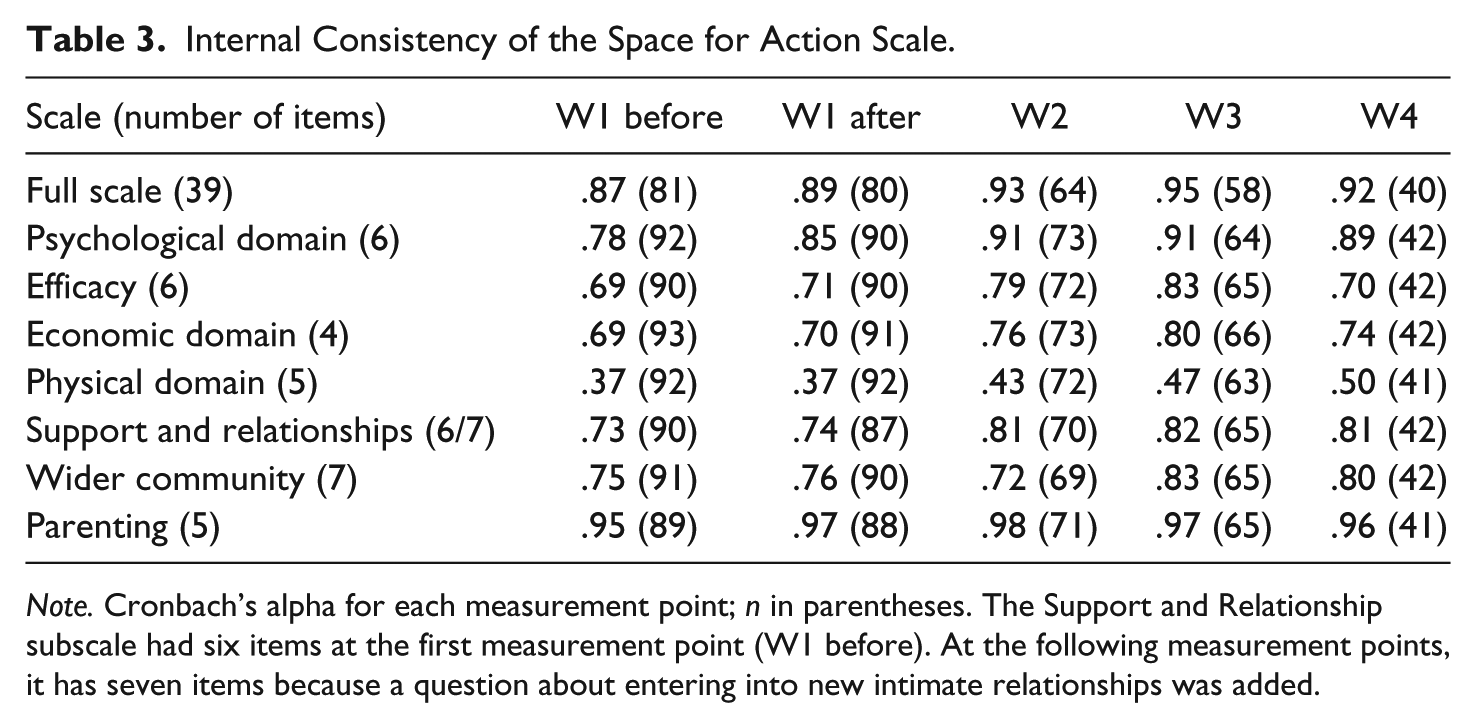
The internal consistency of the coercive control scale was high with Cronbach’s alpha values of .93 for the entire scale, .90 for the Control subscale, and .83 for the Surveillance subscale, indicating good reliability of subscales and full scale. Reliability analyses for the space for action scale were more complicated because these measures were taken 5 times, twice during W1 when women were asked to rate their space for action before and after leaving the abuser, and once each during W2, W3, and W4. Initial factor analyses of only W1 data suggested that before leaving, women’s space for action was relatively fragmented in terms of different life domains, whereas after leaving, some of these aspects appeared to become more integrated. However, factor structures were not stable over time, and by W4, the sample was too small for factor analysis. Still, the overall pattern of a greater integration of space for action over time can also be seen in the internal consistencies. Moreover, internal consistencies were, for the most part, reasonably high so that we report findings for the space for action subscales as they were originally conceived.
Table 3 shows that, with the exception of the physical domain, the subscales and the full scale had good to very good internal consistency. Parenting had the highest internal consistencies and also the least change in internal consistency over time. This suggests that, for this sample of women, parenting was a highly distinct and stable domain. For all other scales, including physical, internal consistencies increased slightly over time. This suggests that space for action in these domains became more consistent and integrated over time.
Internal Consistency of the Space for Action Scale.
Note. Cronbach’s alpha for each measurement point; n in parentheses. The Support and Relationship subscale had six items at the first measurement point (W1 before). At the following measurement points, it has seven items because a question about entering into new intimate relationships was added.
An inspection of potential changes if items were deleted revealed that the internal consistencies of the efficacy scale at the four last measurement points would increase if the item on managing child care were dropped. Adding this item to the parenting scale, however, does not increase that scale’s already high internal consistency. For the physical domain, the two items on managing one’s illness and controlling the use of alcohol and drugs do not fit well with the other items; however, dropping them would considerably increase the internal consistencies of this subscale only in one instance (if in W3 the drug and alcohol item were dropped, Cronbach’s alpha would rise to .70). In sum, the internal consistencies are, for the most part, satisfying to very satisfying; dropping or rearranging items seems to make little difference across all measurement points. We next report on findings using the scales as they were originally conceived, keeping in mind that for the physical domain, it may be meaningful, depending on the research question, to analyze each item separately.
Correlations Among Space for Action and Coercive Control Subscales
Pearson’s correlation coefficients for the space for action subscales were calculated for each measurement point (W1 before and after leaving, W2, W3, and W4). Considering the large number of variables, spurious correlations due to chance cannot be ruled out. Therefore, we will not discuss minor differences in the size of the coefficients, nor do we make claims about statistically significant differences over time. However, the overall pattern of correlations exhibits several striking characteristics that we discuss below.
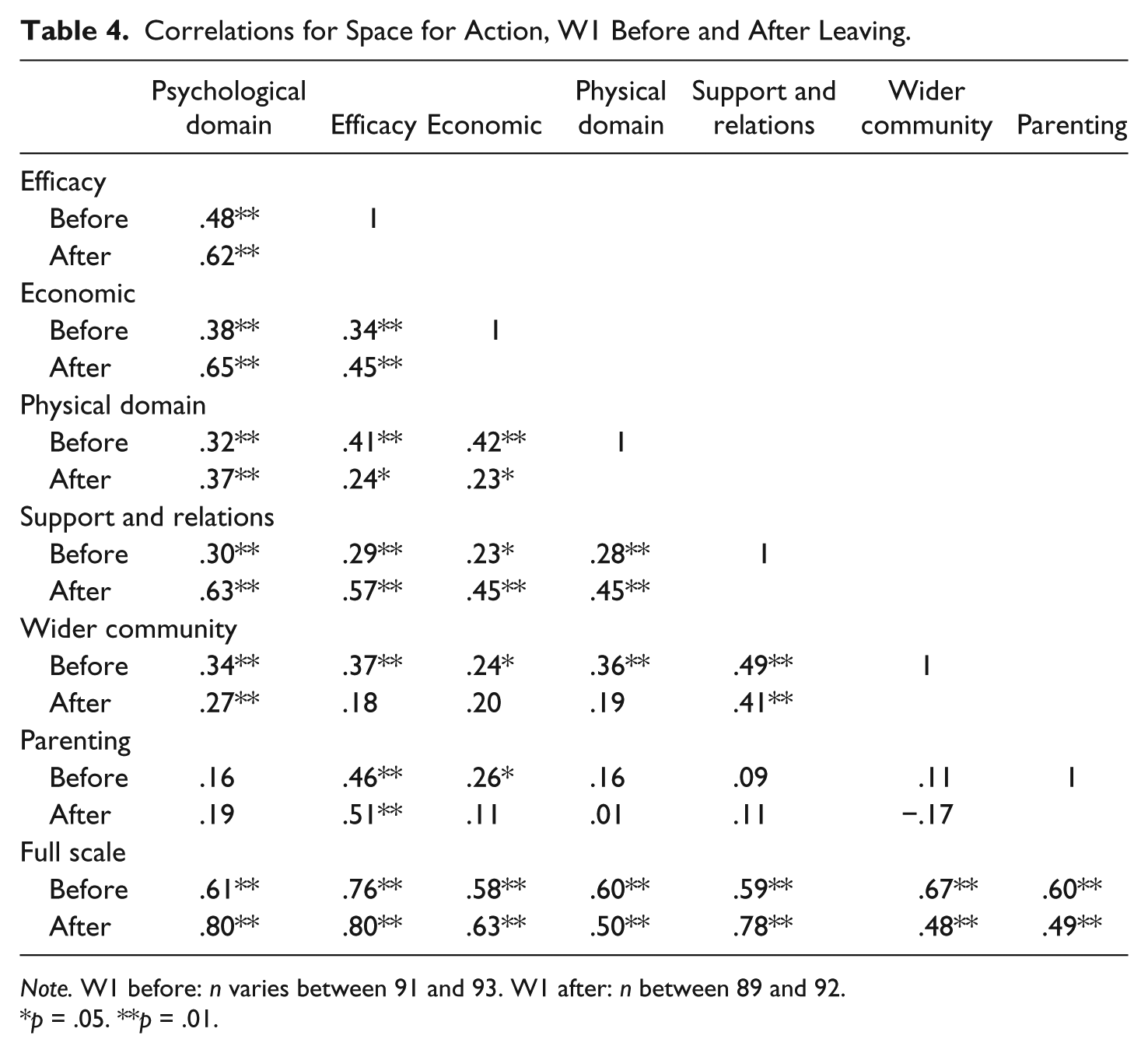
Table 4 shows the correlations of space for action domains before and after leaving the abuser (W1). Several findings stand out. On the whole, the space for action subscales, as would be expected, were moderately and positively intercorrelated, indicating that more space for action in one domain goes along with more space for action in another domain. However, the correlations are not so high as to suggest that the subscales measure the same underlying construct; rather, it is meaningful to assess space for action for different domains. That said, after leaving, some correlations become considerably higher, suggesting that space for action becomes more similar or integrated across these domains. For instance, correlations between the psychological domain and the efficacy, economic, and interpersonal domains after leaving are greater than .60. However, other correlations became lower after leaving, for instance with regard to wider community. This may indicate that the increased freedom women experience after leaving is experienced differently in different domains; indeed, qualitative analysis showed that women deliberately chose to focus on small, trusted networks that could be “managed,” thereby minimizing the potential risk posed by wider community members who might inadvertently share information about their whereabouts/actions with the perpetrator (Kelly et al., 2014).
Correlations for Space for Action, W1 Before and After Leaving.
Note. W1 before: n varies between 91 and 93. W1 after: n between 89 and 92.
p = .05. **p = .01.
Parenting before leaving was correlated significantly with efficacy and economics but unrelated to the psychological, physical, and social/interpersonal domains, again suggesting that for the women in this sample, parenting forms a relatively distinct aspect of experience. After leaving, space for action in the parenting domain is even more distinct and no longer correlates with economics.
Before leaving, total space for action (full scale) is dominated by the efficacy domain (r = .76), whereas immediately after leaving, it is also closely correlated with space for action in the psychological domain (r = .80) and in support/relationships (r = .78).
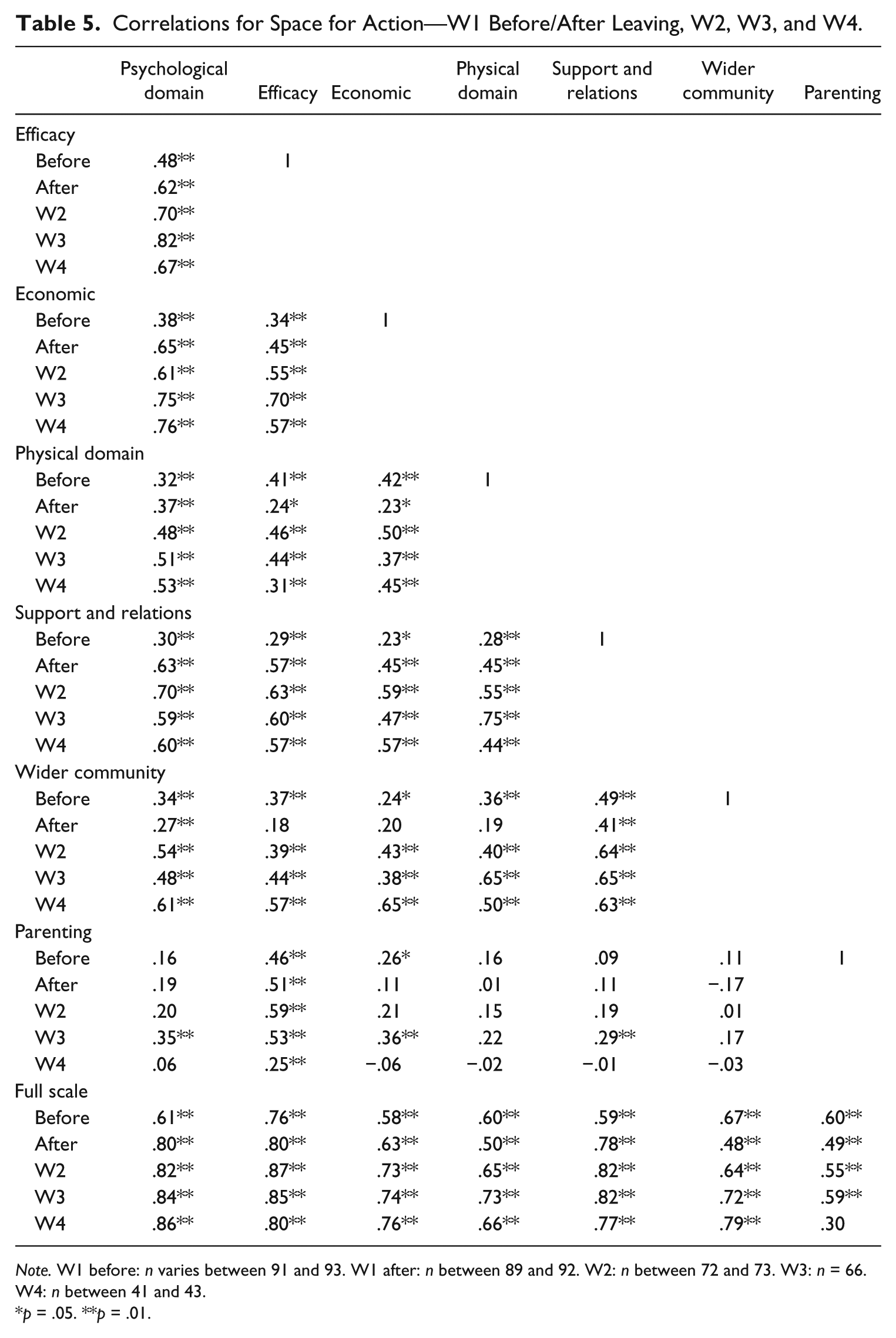
In Table 5, the correlations for W2, W3, and W4 are added. For the most part, the correlation coefficients increase, suggesting that the experience of space for action becomes more similar across domains over time, although some distinctions remain.
Correlations for Space for Action—W1 Before/After Leaving, W2, W3, and W4.
Note. W1 before: n varies between 91 and 93. W1 after: n between 89 and 92. W2: n between 72 and 73. W3: n = 66. W4: n between 41 and 43.
p = .05. **p = .01.
Reading Table 5 by column, space for action in the psychological domain (feeling good about oneself, liking one’s life) over time becomes more integrated with space for action in other domains, except parenting. Similarly, space for action regarding efficacy becomes more integrated over time with other domains, in particular economic and social matters. Space for action in economic matters becomes more integrated with social domains but less so with the physical domain and parenting. Parenting stands out as a distinct domain, to some extent integrated with aspects of efficacy, but otherwise almost entirely independent from other domains. Although a body of research demonstrates how domestic violence perpetrators may deliberately undermine women’s ability to parent and the mother–child relationship, other research suggests that women’s parenting is not always compromised and that they are able to “parent through” domestic violence (Radford & Hester, 2006). The Coercion and Surveillance subscales were highly intercorrelated at r = .71** (p = .01) but retained some separate variance; that is, they measure highly related but not identical aspects of coercive control. The coercion component dominates the full scale (r = .98**, p = .01), compared with surveillance (r = .85**, p = .01).
Correlations Between Space for Action and Coercive Control
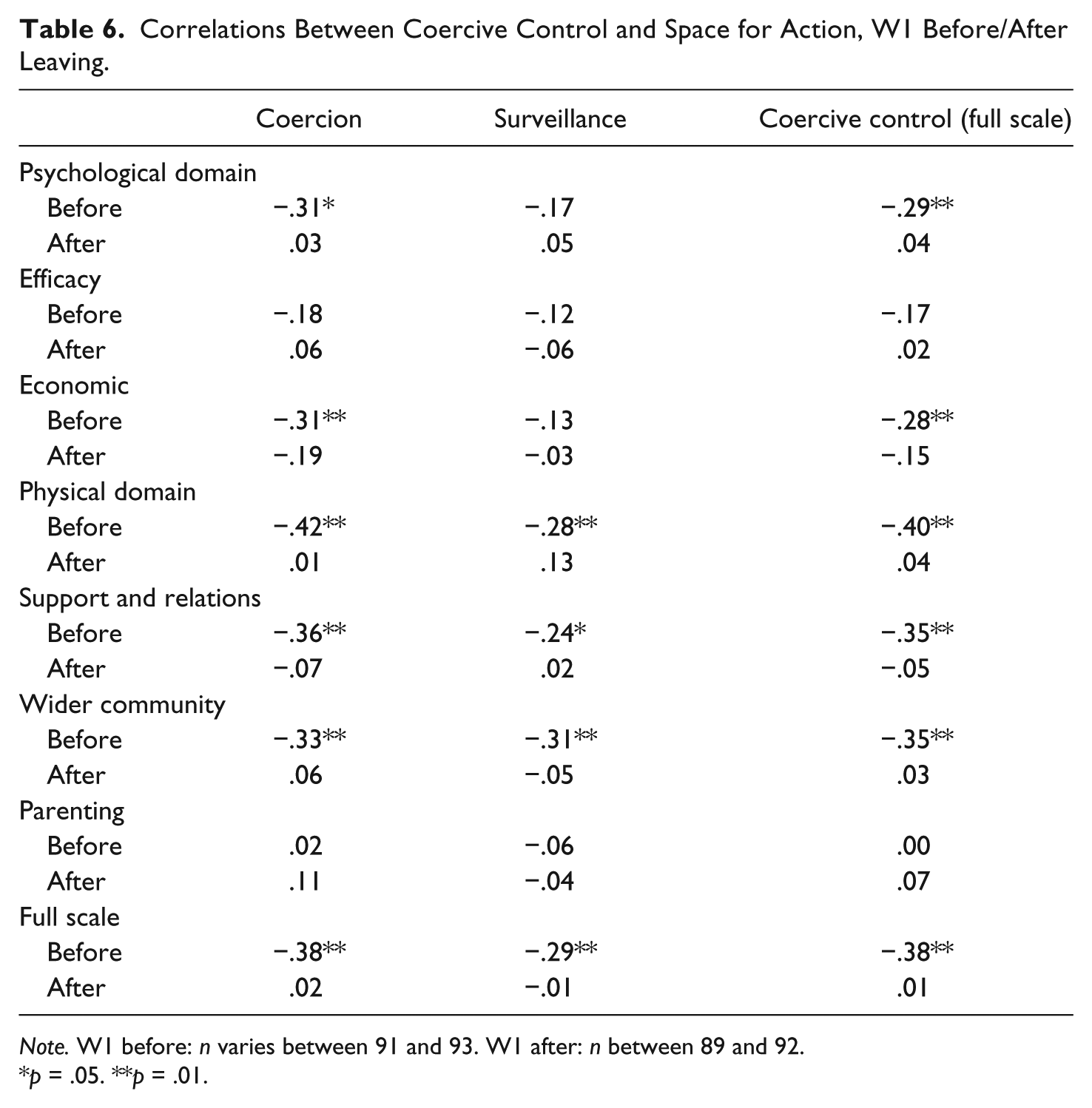
Table 6 presents correlations between coercive control and space for action for W1 before and after leaving the abuser. There are clear differences between before and after leaving. Before leaving, total space for action and several space for action subdomains are significantly correlated with coercive control. The coefficients are negative, indicating that high control goes along with low space for action, and low control with high space for action. Of the two coercive control subdomains, coercion is more consistently correlated with space for action than surveillance. Surveillance correlates significantly with the physical and social/interpersonal domains (wider community; support and relationships), suggesting that these are the domains most strongly related to the abuser’s monitoring of his victim, her whereabouts, who she sees and talks to, and her freedom of movement. Perhaps this is also the reason why surveillance is correlated with the physical domain, although considering the low consistency of the Physical subscale, it would be valuable to look at the correlations of the individual “physical” items with surveillance.
Correlations Between Coercive Control and Space for Action, W1 Before/After Leaving.
Note. W1 before: n varies between 91 and 93. W1 after: n between 89 and 92.
p = .05. **p = .01.
After leaving, none of the individual items in the physical domains correlated with coercive control or surveillance, but before leaving, some of them did and one very strongly so. Women were happier about the way they looked when the abuser was less controlling (r = −.28**). Women also felt better about their overall health when the abuser was less controlling (r = −.29**) and engaged in less surveillance (r = −.22*). However, the strongest association was with the item “I dressed how I wanted to dress.” Before leaving, women felt they could not dress how they wanted the more controlling their partner was (r = −.60**) and the more he engaged in surveillance (−.39**). Negative correlations between coercive control and space for action are what we would expect given the theory that the abuser’s coercive control restricts women’s freedom. Thus, the findings confirm this thinking and support Stark’s (2007) assertion that coercive control is a liberty crime. In addition, however, there is the unexpected finding that two space for action subdomains were independent of coercive control. These are efficacy and parenting. With regard to these two domains, the abuser’s coercive control had less or no influence and women were able to protect their space for action. Why this was the case is a different question. Perhaps because the abuser “let” them do so, or perhaps because the women were more successful in being able to hold onto space for action in these domains, or a combination of both. For instance, perpetrators may view child care as a woman’s responsibility. Other explanations for parenting might be that women overestimated their capacity to parent when they were living with the perpetrator and/or consistently put their children’s needs before their own, doing all in their power to protect them.
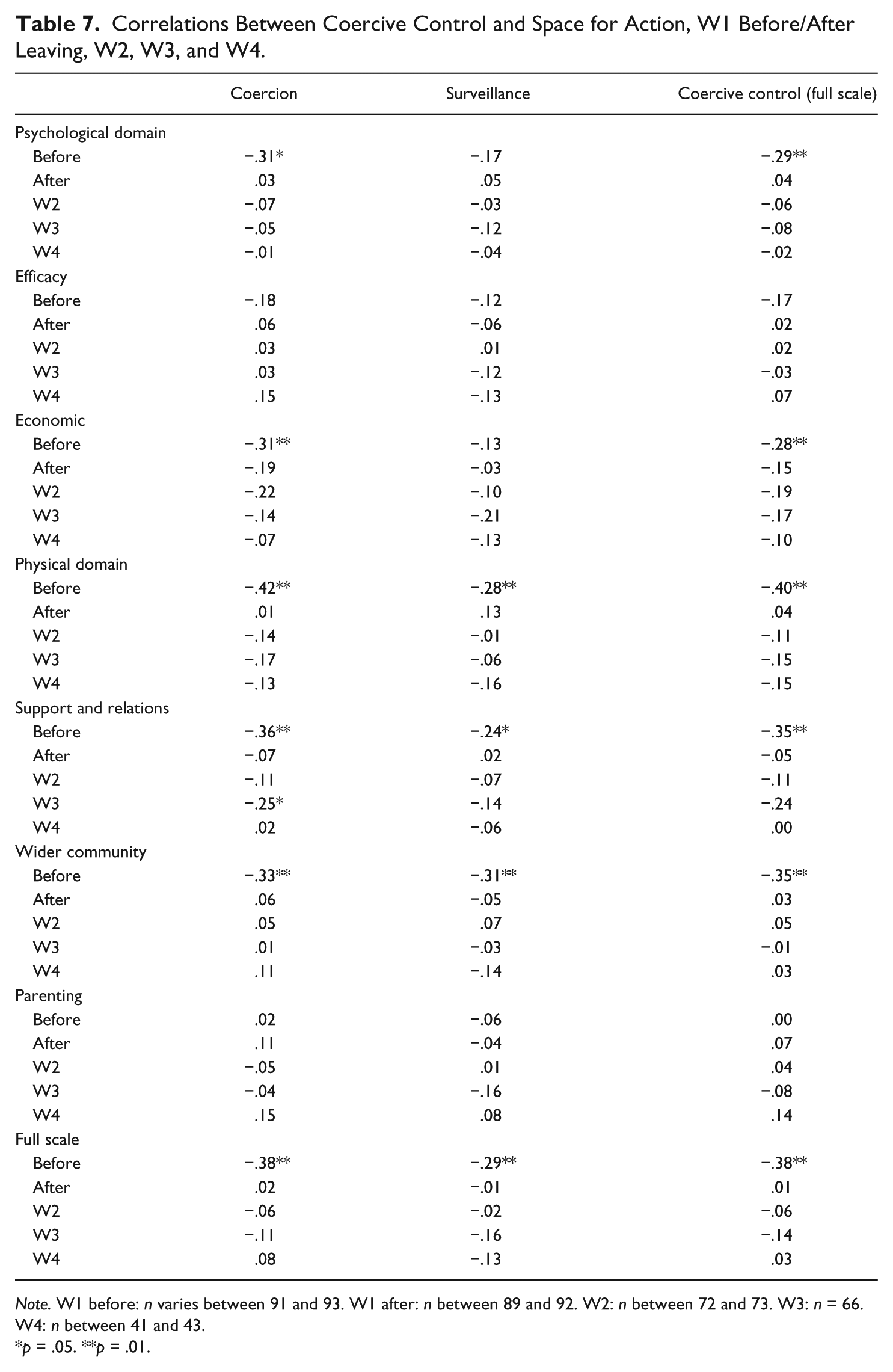
Also confirming our expectations, after leaving, the abuser’s coercive control is no longer related to space for action. Women’s freedom to live their lives, however much it may be influenced by external conditions, is no longer controlled by the abuser. Table 7 builds on Table 6 by adding the coercive control/space for action correlations for W2, W3, and W4. With one exception, space for action remains independent of coercive control; the abuser’s past coercive control does not determine women’s space for action in the future. The exception is a significant correlation between coercion and support/relationships in W3.
Correlations Between Coercive Control and Space for Action, W1 Before/After Leaving, W2, W3, and W4.
Note. W1 before: n varies between 91 and 93. W1 after: n between 89 and 92. W2: n between 72 and 73. W3: n = 66. W4: n between 41 and 43.
p = .05. **p = .01.
Relationships of Coercive Control and Space for Action With Demographic Variables
Although we did not make predictions about relationships between demographic variables on one hand and coercive control and space for action on the other, we undertook exploratory analyses to examine effects for age, religion, citizenship status, education, and employment status. For age, we used correlation; t tests for three dichotomous variables: being religious (yes/no), having children (yes/no), and citizenship (citizen/not citizen). One-way ANOVAs were run for a three-level citizenship variable (citizen/leave to remain or permanent resident/all others, including asylum seekers and refugees), a four-level ethnicity variable (White, Black, Asian, and Other), and a four-level religion variable (Catholic, Christian, Muslim, and not religious).
Age
Women’s age was not correlated with coercive control. Women’s age was correlated moderately with space for action in some domains (but not others, for instance, not with parenting) and at some points in time and not at other times. Coefficients are negative, indicating that younger women experienced more space for action and older women less (r = −.27**, −.27*, and −.25* for the full space for action scale after leaving, at Wave 2, and at Wave 3, respectively). Space for action was not correlated with age before leaving, suggesting that the constraints created by the abuser while in the relationship were such that any impact of women’s age did not significantly influence their space for action. After leaving and in W2 and W3, age influenced space for action in some domains but apparently less so as time went on (e.g., for the psychological domain r = −.30** after leaving and r = −.25* at Wave 3). One interpretation is that younger women may have found it easier to seize their new freedom than older women. By W4, space for action was no longer correlated with age, perhaps indicating that by then, older women had “caught up” with younger women.
Ethnicity
There was one small effect of ethnicity on space for action in the physical domain after leaving, F(3, 86) = 3.46, p = .02. Asian women experienced the least space for action (M = 3.50, n = 8), compared with White women (M = 4.74, n = 39), Black women (M = 4.05, n = 27), and women of other ethnicities (M = 4.35, n = 16). Post hoc Student–Newman–Keuls (SNK) tests show that what is statistically significant in this comparison is the difference between Asian and White women (not between Asian and Black or Asian and Other women).
Religion
Whether women identified as religious was related to space for action in parenting and to coercive control. Compared with women who identified as not religious, those who identified as religious experienced not only more space for action in parenting before leaving (M = 3.31 vs. M = 4.70, t = 2.47*) but also more coercion (M = 3.14 vs. M = 3.60, t = 2.21*), suggesting a moderate but complex influence of religiosity. Being religious might not only make women more vulnerable to coercion but also allow more space for action in parenting, possibly through the way the abuser is using religion as a tool for coercion, restricting her freedom of movement everywhere but in parenting. However, for most measures, religiosity made no difference.
Children
Women with children reported having more space for action in regard to efficacy than women without children, but this difference was due to the fact that the Efficacy subscale included an item on managing child care, and parenting was the one area in which women had the most space for action. Without the child care item, the difference in efficacy between women with and without children is no longer significant. At W4, women without children had more economic space for action (M = 6.38) than women with children (M = 4.90, t = −3.42*), perhaps reflecting the costs associated with child-rearing as children get older and women struggled for long-term financial stability.
Residence status
Women who were citizens had more economic space for action before leaving (M = 2.89) than women who were not citizens (M = 2.15, t = 2.63*). After leaving, women who were citizens had more space for action in the physical and relationship domains compared with noncitizens (physical: M = 4.52 vs. M = 3.81, t = 2.65*; relationship: M = 5.22 vs. M = 4.69, t = 2.12*). However, by W4, women who were not citizens felt better about their lives in terms of the psychological domain (M = 6.13) than citizens (M = 5.33, t = −2.15*). Women who were not citizens experienced slightly more coercive control and surveillance than women who were citizens, but these differences were not statistically significant. Overall, demographics had little to no effect on space for action and coercive control. In the instances where mean values were statistically significant, the difference was small.
Space for Action After Leaving and Over Time
Mean values of space for action over time were compared with repeated-measures ANOVAs. The main finding here is that space for action increased dramatically after leaving the abuser (see Figure 1) as women were no longer subjected to everyday micromanagement and control. This difference is significant for all subdomains and the full scale. It is least pronounced for parenting, which starts out relatively high, and most pronounced for the psychological domain in which the effect of the abuse is particularly strong.
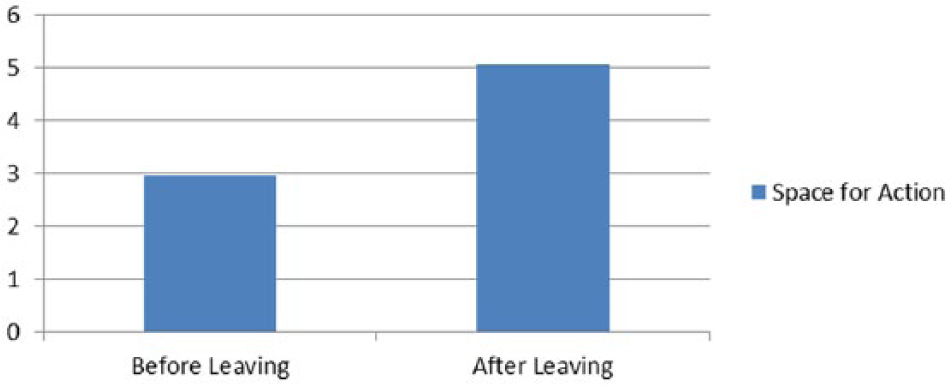
Increase in space for action immediately after leaving (full scale).
Scores for subscales (see Figure 2) reveal greater changes in relation to sense of self, help-seeking, and competence even though there appeared to be no statistically significant relationship between these three areas and coercive control. Here, actual freedom from the abusive household regime clearly made a difference.

Increase in space for action immediately after leaving (all domains).
Although space for action increased considerably after leaving the abusive partner (W1: 2011), change leveled off over the following 2 years (W2 and W3: 2012-2013) as women faced new challenges and constraints brought about by relocation and the experience of postseparation abuse. A new period of expansion began at the final wave of interviews in 2013-2014 (see Figure 3).
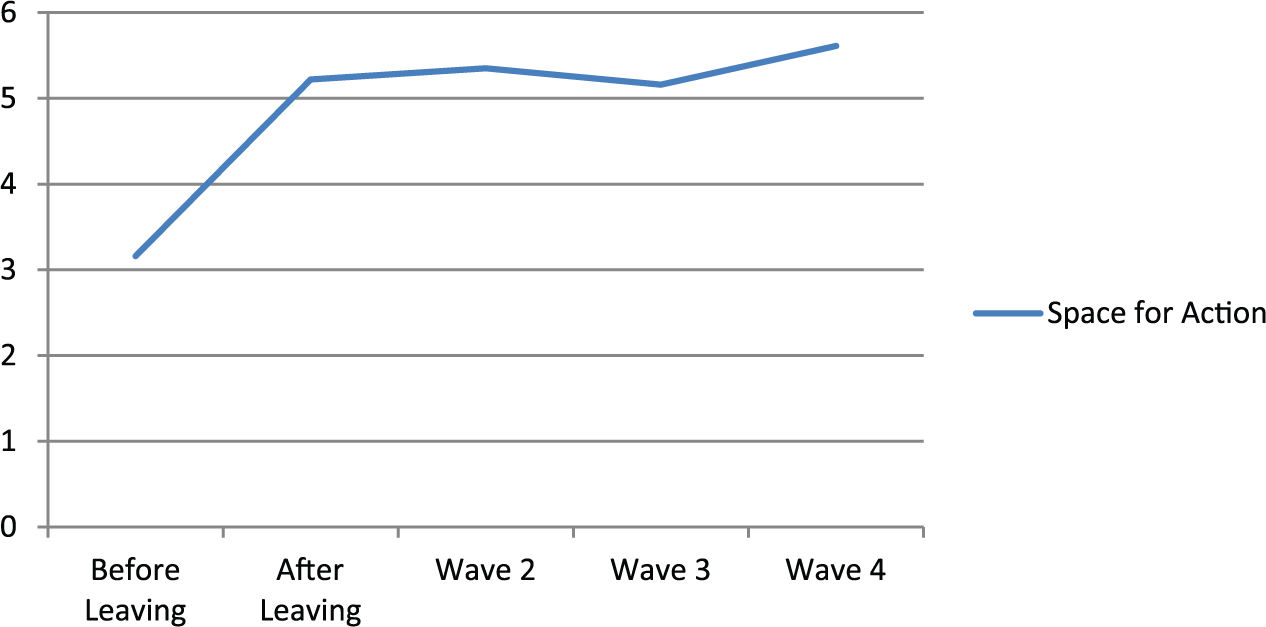
Space for action over 3 years (all areas).
There is no basic norm for space for action for women who had not experienced coercive control as the scale used was developed as part of this project. It is not possible therefore to compare a normative “high” or “low.” We can see, however, how participants were distributed over the scale and how this changed over time. Taking the midpoint of the scale as a score of 4 before leaving, average scores were clustered below this, whereas scores afterward clustered above it. The distribution over the waves also shows a progressive movement “up” the scale over time.
In addition, it is possible to explore the proportion of participants locating themselves within the scale over the research period. Table 8 compares the lowest 25%, the middle 50%, and the highest 25% before leaving, after leaving, and at W2, W3, and W4. For example, before leaving, the 25% of respondents with the lowest scores were in a range of 1-2.4, whereas after leaving, the lowest 25% were in a range from 1.60-4.4. At all levels, space for action improved dramatically after leaving and continued to improve over time, although gains in space for action seem to follow a slightly different pattern depending on where women started out. The table shows that over time, there are shifts at all layers of the sample.
Mean Space for Action Ratings for Bottom 25% of Sample, 50%, and Top 25%.
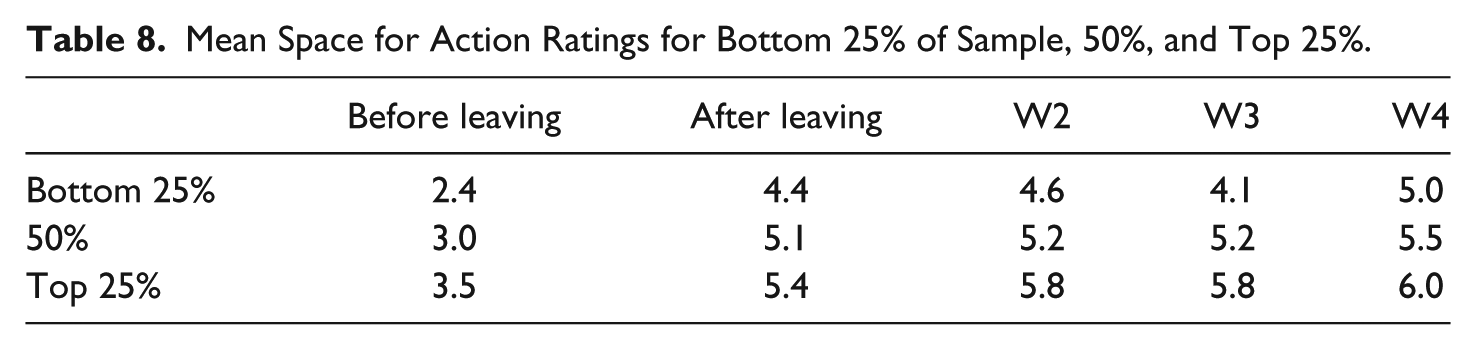
The bottom line in Figure 4 represents mean space for action ratings of women with relatively low ratings (“bottom 25%”), the middle line represents mean space for action ratings of women with ratings in the middle of the scale, and the top line represents the ratings for women at the upper end of the scale (“top 25%”). For each group, expansion of space for action is most significant after leaving the abuser. From then on, space for action increases only slightly, and for the women at the lower end of the scale, it decreased at W3 but then increased again at W4.
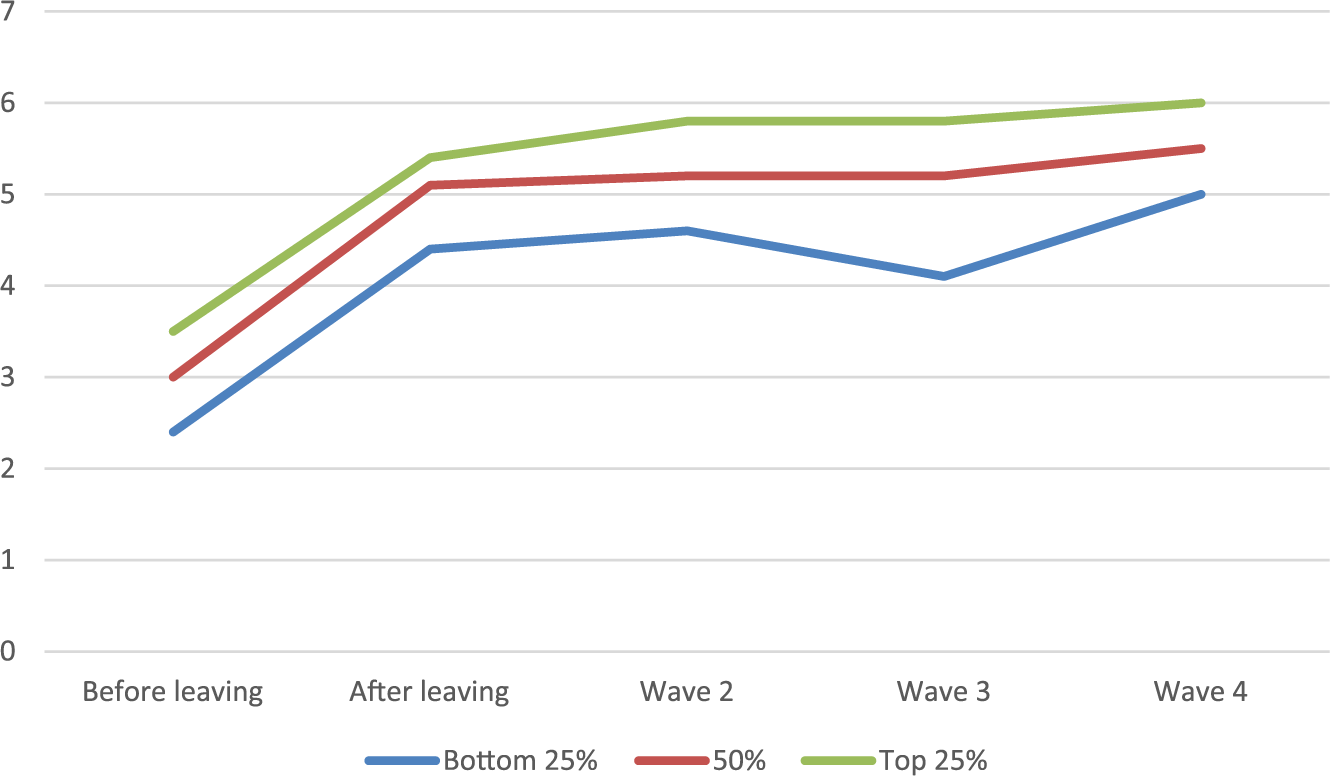
Expanded space for action across time and layers of the sample.
Also of note is that by W4 of the data collection, there was a statistical “collapse” between the different domains explored in the space for action scale. There was more integration between parenting, sense of self, community, friends and family, help-seeking, competence, well-being and safety, and finances resulting in women feeling more comfortable and relaxed. As we moved through the waves of interviews, there was also a tangible difference in women’s capacities to think and act from their own perspectives (Figure 5):
I’m not in an environment where I’m being controlled, where I think “if I do this maybe this man will come and beat me up” or “if I dress this way” or “if he sees me talking to this person” so I can go anywhere I want and come back at any time I want; nobody can tell me what to do.

Change in space for action in six domains over nearly 4 years.
Discussion
The significant correlation between coercive control and space for action scores provides statistical evidence to show that the two concepts are connected. High levels of coercive control mean that a woman’s space for action is more likely to be limited, especially with respect to psychological well-being and connections with others. Indeed, the impacts on mental health have recently been confirmed by reanalysis of a large survey in the United Kingdom, with strong links to coercive control (Scott et al., 2013). The initial and rather dramatic expansion of space for action after separating from the abuser demonstrates the difference that no longer living in an abusive gender regime makes for women. The leveling off of change before a new period of growth shows clearly that dealing with violence and its legacies is not a linear journey and that support needs extend far beyond being enabled to separate (Kelly et al., 2014).
The qualitative interview data provided an insight into the many twists and turns that interfered with the process of rebuilding lives. Nearly 90% of the women still in the study at W3 (n = 72) reported experiencing different forms of postseparation abuse and had to face these challenges within a changed legal and policy context during a period of economic downturn. Reduced access to social and permanent housing and welfare benefit reform increased the potential that seeking to end violence impoverished women and children. Cuts in legal aid meant that women struggled to claim their rights. The failure of statutory agencies to recognize postseparation abuse meant that women and their children were not protected from ongoing manipulation. Many women, therefore, expended considerable time and energy battling “the system” and, over the course of the study, began to comment that their space for action was now constrained by structural barriers (Kelly et al., 2014). We did not find statistically significant correlations between space for action and postseparation abuse, but women’s comments in the qualitative interviews suggest complex influences on space for action that include structural barriers and the abuser’s manipulation of such barriers, for instance, by bad-mouthing her to social services. This finding complicates the distinction between “batterer-generated risks” on one hand and “life-generated risks” on the other (Davies, Lyon, & Monte-Catania, 1998).
Key for most of the women was the support that they had received from Solace Women’s Aid and in particular the holistic services that they had been able to access, including advocacy. The funding of short-term risk reduction and time-limited interventions by commissioners of violence against women services in England and Wales means that fewer resources are invested in interventions that address the long-term support needs highlighted in this study. Support continued to be needed so that women could begin to “feel” safe as well as “be” safe. Although the small sample means that the results cannot be generalized, the scales represent a new starting point in designing research tools that measure both women’s experience of coercive control and, through the space for action measure, whether and to what extent they are able to restore agency and freedom in contexts of relative safety. The scales developed and presented here were also valuable in that they enabled women to visually conceptualize their space for action tracked over time. Such an application in practice will help them and practitioners identify both change and outstanding support issues. Results can also demonstrate impact to commissioners and funders. It is hoped future research will provide more rigor in testing and adapting these additions to our methodological toolbox.
Footnotes
Acknowledgements
The authors wish to acknowledge Harriet Fearn who set up the research project and carried out the data collection in Waves 1 and 2.