




Abstract
We examined the effects of victim and perpetrator alcohol intoxication on perceptions of campus sexual assault. Participants (N = 276) read a campus assault vignette; both perpetrator and victim intoxication levels were manipulated. Participants reported attitudes toward both parties and perceptions of responsibility, blame, and criminal and civil liability. Contrary to some past research, participants blamed victims less—and more strongly considered the incident rape or sexual assault—when victims were highly intoxicated. Perceptions were most punitive toward sober perpetrators with highly intoxicated victims. Results suggest possible shifts in perceptions of consent, further discussed in the context of historical and population factors.
A sizable number of sexual assaults occur in the context of alcohol consumption (Abbey et al., 2004; Haikalis et al., 2018). In some cases, only the victim or perpetrator (but not both) has consumed alcohol. When it comes to campus sexual assault, however, the most common scenario is that both parties have been drinking (Abbey et al., 2004). This dual intoxication can complicate responses to a crime that is already difficult to prosecute, as perceived responsibility and blame may shift in the presence of alcohol. Although alcohol consumption (by either party) has historically corresponded to an increase in victim blaming, recent high-profile rape cases (some in which substances played a strong role in the media narrative) and increases in social awareness (e.g., the “Me Too movement”) have likely made dynamics between alcohol use and sexual assault more salient, possibly contributing to societal changes in perceptions of responsibility in rape cases.
Sexual Assaults on College Campuses
Unfortunately, the culture on many college campuses creates an environment ripe for excessive drinking and sexual assault. Recent surveys estimate that approximately 37% of undergraduates will binge drink in a given month, with alcohol-related incidents (e.g., injury, death) reaching into hundreds of thousands each year (Hingson et al., 2017). The public also perceives a strong connection to campus sexual assault, citing alcohol use as the biggest factor in sexual assaults on college campuses (National Sexual Violence Resource Center, 2017).
Studies have long reported high rates of sexual assault perpetrated against female college students (e.g., Koss et al., 1987), and recent data suggest no significant improvement. A recent study of 27 colleges and universities found approximately 27% of the female seniors reported experiencing sexual assault during their time on campus (Cantor et al., 2015). Of course, men are also victims of sexual assault. In fact, depending on how sexual assault is operationalized, men may even be at an equal risk for certain types of sexual assaults (Hines et al., 2012; Reitz-Krueger et al., 2017). However, taken as a whole, women have a significantly higher risk of experiencing some type of sexual assault during their college years.
Many sexual assaults among college students involve alcohol consumption, with estimates upward to 80% of campus sexual assaults involving alcohol use by both parties (Abbey et al., 2004). The relationship between alcohol consumption and sexual assault perpetration is complicated, involving pharmacological effects and beliefs surrounding sexual scripts, gender roles, and the effects of alcohol. For example, alcohol consumption may inhibit a person’s ability to effectively read nonverbal cues from others, including in situations where risk for sexual assault is elevated (Davis et al., 2009). The presence of alcohol during an assault can also affect how these incidents are interpreted and later handled (e.g., Schuller & Stewart, 2000).
Alcohol and Perceived Responsibility and Blame
A rape myth is any belief that serves to discredit sexual assault victims or excuse the behavior of perpetrators (Burt, 1980). These myths often revolve around gender norms and what constitutes a “good girl” or believable victim. Since Burt’s work in the 1980s, the idea that a woman who has been drinking was “asking for it” is included in most operationalizations of rape myth acceptance (e.g., Burt, 1980; Payne et al., 1999). If a woman had been drinking prior to her assault, so the myth goes, she is at least partially to blame for what happened.
Though sometimes discussed interchangeably, some consider responsibility and blame conceptually parallel but different (Gravelin et al., 2019), with the latter implying more moral judgment. Alcohol use appears to impact perceptions of responsibility and blame after an assault. Richardson and Campbell (1982), finding people perceived a female victim more responsible if she were drunk but a male perpetrator less responsible if he were drunk, noted a double standard in how we react to victims and perpetrators who consumed alcohol. Numerous studies have since suggested alcohol can mitigate responsibility and blame placed on male perpetrators and increase victim blame (Sims et al., 2007; Starfelt & White, 2015; Stormo et al., 1997; Untied et al., 2012). Endorsing such ideas on rape myth scales predicts increased victim blame (Grubb & Turner, 2012; Rollero & Tartaglia, 2018).
The double standard in how people treat victim and perpetrator alcohol use can have serious consequences. Victims who engage in self-blame, which might be expected to increase in the face of external blame, report more post-rape adjustment issues and depression (Frazier, 1990). Police officers often view intoxicated victims as less credible, which may ultimately lead to fewer charges being filed (Schuller & Stewart, 2000). College students reflecting on rape vignettes tend to rate victims who had been drinking as less similar to themselves (Maurer & Robinson, 2008) and more promiscuous (Abbey, 2004).
Several studies, however, suggest a more nuanced response to sexual assaults involving alcohol. Recent findings suggest other contextual cues, such as accepting a drink from the assailant, can impact perceptions of responsibility and potentially complicate victim blame (Lynch et al., 2013; Romero-Sánchez et al., 2011, 2017). Relative levels of intoxication between the victim and perpetrator appear to shape perceptions as well. Stormo and colleagues (1997) found perpetrators were rated more blameworthy if the victim was more intoxicated than them. Perceptions might also differ across people of different genders; some findings suggest women judge intoxicated victims less harshly than do men (Cameron & Stritzke, 2003; Schuller & Stewart, 2000), though interpretations of what drives these differences can vary across studies (e.g., Maurer & Robinson, 2008).
In a study similar to the current investigation, Maurer and Robinson (2008) manipulated alcohol use (as well as attire) in a sexual assault vignette, noting whether individuals involved were not drinking or were drunk. The presence of alcohol impacted perceptions of the victim (e.g., desires to have sex) but not decisions on whether a rape occurred. A follow-up study failed to find evidence that male assailants’ intoxication impacted perceptions of rape when the victim was severely incapacitated (Maurer, 2016).
A lot has changed in the years since Richardson and Campbell’s initial examination of alcohol and victim perceptions, which may partly explain recent findings. One, rates of alcohol use among college women has been approaching that of their male counterparts for years (Keyes & Miech, 2013). Such trends may suggest drinking by college-age women has normalized, thus diminishing the relationship between alcohol consumption and victim blame.
Recent media attention to cases of sexual assault might also potentially shift perceptions of how alcohol use affects responsibility and blame. Cases involving “upstanding” college students, such as Brock Turner, and high-profile individuals, such as Bill Cosby, Brett Kavanaugh, and Jeffrey Epstein, have sparked outrage and increased awareness of rape in general and particularly rapes that involve alcohol (Augustine, 2019; Kingkade, 2016; Pollitt, 2019). In addition, the “Me Too” movement, founded by Tarana Burke in 2006 but gained momentum in 2017, stirred a national conversation about the prevalence of sexual assault and prompted calls for research and broader discussion about sexual assault and reactions to victims (Gravelin et al., 2019). These emerging trends suggest perceptions of alcohol use within sexual assault scenarios involving college-aged women might differ from past research findings and are worth examining, particularly at a time of increased public awareness.
Current Study
This study is designed to expand upon prior research on alcohol use and perceptions of sexual assault by examining different ways intoxication levels impact perceptions of campus sexual assault. Using a vignette-based, between-subjects factorial design, we examined overall intoxication levels of both a victim and a perpetrator, multiple levels of intoxication, and relative levels of intoxication (e.g., intoxication of a victim relative to intoxication of a perpetrator). We also conceptualized perceptions of sexual assault broadly to include empathy toward the victim and the perpetrator, responsibility of both parties, blame assigned to both parties, interpretations of the encounter as sexual assault or rape, and compensatory damages if the victim had filed a civil suit against the perpetrator. Such an approach allows for a multifaceted, nuanced approach to understanding reactions to campus sexual assault immediately following increased public attention to sexual assault (e.g., #MeToo).
Method
Participants
Participants included 417 college students (age M = 19.31 years, SD = 4.80, median = 19 years) enrolled at a large rural public university in the mid-Atlantic United States (n = 383) and a small rural private liberal arts college in the southeastern United States (n = 34). We recruited the public university participants from introductory psychology courses; they received credit toward a research participation requirement for that course by participating. We recruited participants from the liberal arts college through classroom announcements, and they were not offered compensation for participation. We collected data across four semesters (Fall 2017–Fall 2019).
Participants were predominantly White (81.3%), non-Hispanic (93.3%), female (74.0%), and heterosexual (86.3%). Approximately one in 10 participants (9.6%) reported they were in a fraternity or sorority. We excluded data from participants who did not complete the study or failed our manipulation checks (n = 124). Finally, we excluded 17 participants who appeared to have taken part in the study multiple times and consequently were randomly assigned to a different condition during their second effort to participate (thus revealing the study manipulation), resulting in a final analysis of 276 participants. The final sample provides sufficient statistical power (≥0.95, α = .05) for detecting group differences in a 3 × 3, three-predictor multivariate analysis of variance (MANOVA) at an effect size of f2(V) ≥ 0.05.
Materials
Vignette
We developed a vignette based on those used in related research (e.g., Maurer & Robinson, 2008) that described an interaction between two acquaintances (one man, one woman) at a university party, leading to a sexual encounter at the man’s residence (despite expressions of discomfort and disinterest from the woman). We incorporated our experimental manipulations (intoxication of the victim and perpetrator) into the vignette, resulting in nine versions. Research assistants reviewed versions of the vignette for clarity, length, and language (e.g., terms and phrasing consistent with current students’ experiences). We pilot-tested the vignette to assess interpretations of the vignette that could limit our ability to evaluate our experimental manipulations (e.g., potential ceiling or floor effects). Pilot-test results suggested participants’ responses differed across conditions in the hypothesized directions. The version(s) used in this study are available on the Open Science Framework.
Rape Myth Acceptance Scale
The Illinois Rape Myth Acceptance (IRMA) Scale is a widely accepted and established assessment measure for rape myth acceptance (Payne et al., 1999). Respondents endorse 22 statements representing different attitudes and myths about rape (e.g., “A lot of times, girls who say they were raped often led the guy on and then had regrets”) on a 5-point scale ranging from 1 (strongly agree) to 5 (strongly disagree); thus, higher scores on the IRMA correspond with lower rape myth acceptance. We reverse-coded scores on the IRMA so results would read more intuitively (i.e., higher scores indicating higher myth endorsement).
IRMA scores demonstrated strong internal consistency (α = .91). IRMA scores ranged from 22 (complete disagreement with all rape myth items) to 110 (complete acceptance of all rape myth items). Participants overall expressed low levels of rape myth acceptance (M = 44.38, median = 41.50, SD = 14.95, skewness = 0.64, kurtosis < −0.01, range = 22–92).
Manipulation Check
The study questionnaire incorporated a manipulation check assessing our experimental manipulation: intoxication levels of each individual in the vignette. We asked participants about the alcohol use for each individual separately. Participants selected one of three options to describe the individual’s alcohol use: “[Person] did not drink,” “[Person] had a few drinks,” or “[Person] was drinking heavily.” We excluded data from participants who did not pass both manipulation checks.
Design and Procedure
We used a 3 (victim intoxication: none vs. low vs. high) × 3 (perpetrator intoxication: none vs. low vs. high) factorial design. Participants accessed the online study using a link to a Qualtrics survey. After providing informed consent, participants randomly received one of nine experimental vignettes. We manipulated intoxication levels by varying both descriptions of the amount of alcohol use (“was not drinking,” “had a few drinks,” “was drinking heavily”) and outward behavioral manifestations of alcohol use (“feeling buzzed” or “stumbling and slurring [his/her] words”; no behaviors were reported in the no alcohol condition). We included behavioral manifestations to limit personal interpretations of our conditions and biases defining different intoxication levels (e.g., what constitutes “drinking heavily”). After the intoxication manipulation, the vignette described a case of sexual assault in which the man persists until the pair engage in sex, despite expressions of discomfort and disinterest from the woman. 1
After reading the vignette, participants completed a questionnaire assessing perceptions of the people involved, the incident itself, responsibility and blame, and legal liability. Participants indicated their agreement with statements about the victim and perpetrator, their experiences, and their responsibility for what happened on the following scale: 1 = completely disagree, 2 = strongly disagree, 3 = disagree, 4 = somewhat disagree, 5 = slightly disagree, 6 = slightly agree, 7 = somewhat agree, 8 = agree, 9 = strongly agree, or 10 = completely agree. We counterbalanced the victim and perpetrator question sets.
We then assessed perceptions of blame. Participants maneuvered a sliding scale for who was ultimately to blame for the event. The blame scale ranged from −10 (full blame on the perpetrator) to +10 (full blame on the victim), though the numeric values were hidden from participants. We reverse-coded the blame scale for analysis (higher scores indicating more blame toward the perpetrator) so that results would read more consistently with other outcome items (e.g., higher agreement indicating the incident was rape or sexual assault).
Participants completed free-response items assessing how each individual could have and should have behaved differently (in considering space and focus, we do not cover analysis of the open-ended responses in this article). After completing the manipulation check, participants rated how much they agreed the incident was sexual assault or rape on the same 10-point scale described in the preceding paragraph. We assessed liability by asking if the perpetrator should be found liable or not liable in a civil court case. Participants who considered the perpetrator liable were asked to generate a monetary amount the perpetrator should pay the victim for pain and suffering. Participants then completed the IRMA Scale and demographic/background questions, after which they were debriefed.
Analyses
A series of mixed analyses of variance (ANOVAs) examined between- and within-group differences in perceptions toward the victim and perpetrator. Within-group analyses compared differences in how participants responded to matched questions for the victim and perpetrator (e.g., sympathy toward the victim vs. sympathy toward the perpetrator). To assess for differences in perceptions of rape, sexual assault, and blame, we ran MANOVA to assess for victim blame and perceptions of culpability. For these analyses, we decided not to include the IRMA scores as a covariate. There was little variation in the IRMA scores, and recent methodological recommendations include avoiding the addition of covariates to reduce the potential for Type I error and p-hacking (e.g., Head et al., 2015). Moreover, the addition of the IRMA scores did not significantly impact the pattern of results. We have included the results conducted with IRMA scores as a covariate in the supplemental information on OSF (see link in the “Supplemental Material” section). We used regression analyses to examine the extent to which intoxication levels uniquely predicted perceptions of legal liability. Finally, for those who considered the perpetrator legally liable, we examined differences in monetary compensation awarded to the victim via one-way ANOVA.
Results
Participants generally perceived the incident as rape (M = 6.97, median = 7.00, SD = 2.57, skewness = −0.66, kurtosis = −0.35) and sexual assault (M = 7.77, median = 8.00, SD = 2.19, skewness = −1.07, kurtosis = 0.97). Participants also generally perceived the perpetrator as being ultimately to blame (M = 4.93, median = 5.00, SD = 4.59, skewness = 0.51, kurtosis = −0.39). Overall, 77.0% of participants perceived the perpetrator as more to blame, with 31.6% rating him as entirely to blame for the incident. Of the remaining responses, 16.4% rated blame as not belonging to either side (i.e., positioning the slider exactly in the middle for a score of 0), and 6.6% perceived the victim as ultimately more to blame. Two of those participants (0.8%) rated the victim as entirely to blame for the incident.
Participant Gender Effects
As only three participants identified as transgender or nonbinary, gender effects compared only participants that identified as male or female. There was no significant difference in the distribution of gender across study conditions, χ2(8, N = 267) = 5.47, p = .706. Because the data were unbalanced with respect to gender, we used Welch’s t tests for analysis as they keep the potential for Type I error in unbalanced designs low as long as there are at least 10 participants per group (Delacre et al., 2017). Gender effects were observed for perceptions of rape, t(88.32) = −3.89, p < .001, d = −0.60, 95% confidence interval (CI) = [−0.89, −0.30] and sexual assault, t(80.59) = −3.56, p < .001, d = −0.59, 95% CI = [−0.88, −0.30]. Participants who identified as male were less likely to perceive the incident as rape (M = 5.85, SD = 2.63) or sexual assault (M = 6.80, SD = 2.50) compared with female participants (M = 7.33, SD = 2.44 and M = 8.06, SD = 2.02, respectively). We observed the same pattern for perceptions of overall blame, t(86.08) = 2.01, p = .048, d = 0.31, 95% CI = [0.004, 0.61]; male participants perceived less blame on the part of the perpetrator (M = 3.83, SD = 4.44) compared with female participants (M = 5.21, SD = 4.51). We also observed gender differences on IRMA scores, t(82.37) = 5.35, p < .001, d = 0.87, 95% CI = [0.57, 1.17], with males endorsing higher levels of rape myth acceptance (M = 54.08, SD = 16.07) than participants who identified as female (M = 41.85, SD = 13.43).
Empathy for Both Parties
We examined reactions to statements indicating the extent that participants felt the events depicted would affect the individuals involved (What happened that night will seriously affect [name of victim or perpetrator]). Given the related nature of these ratings, and to allow for a direct comparison of the ratings for both parties, we conducted a 2 (person of focus) × 3 (perpetrator intoxication) × 3 (victim intoxication) mixed ANOVA with person of focus (perpetrator vs. victim) as a within-subjects factor. Perpetrator and victim intoxication were again between-subjects factors. Table 1 presents means for empathy-related ratings for each condition.
Descriptives of Participants’ Perceptions of the Perpetrator and Victim in Relation to the Alleged Offense.
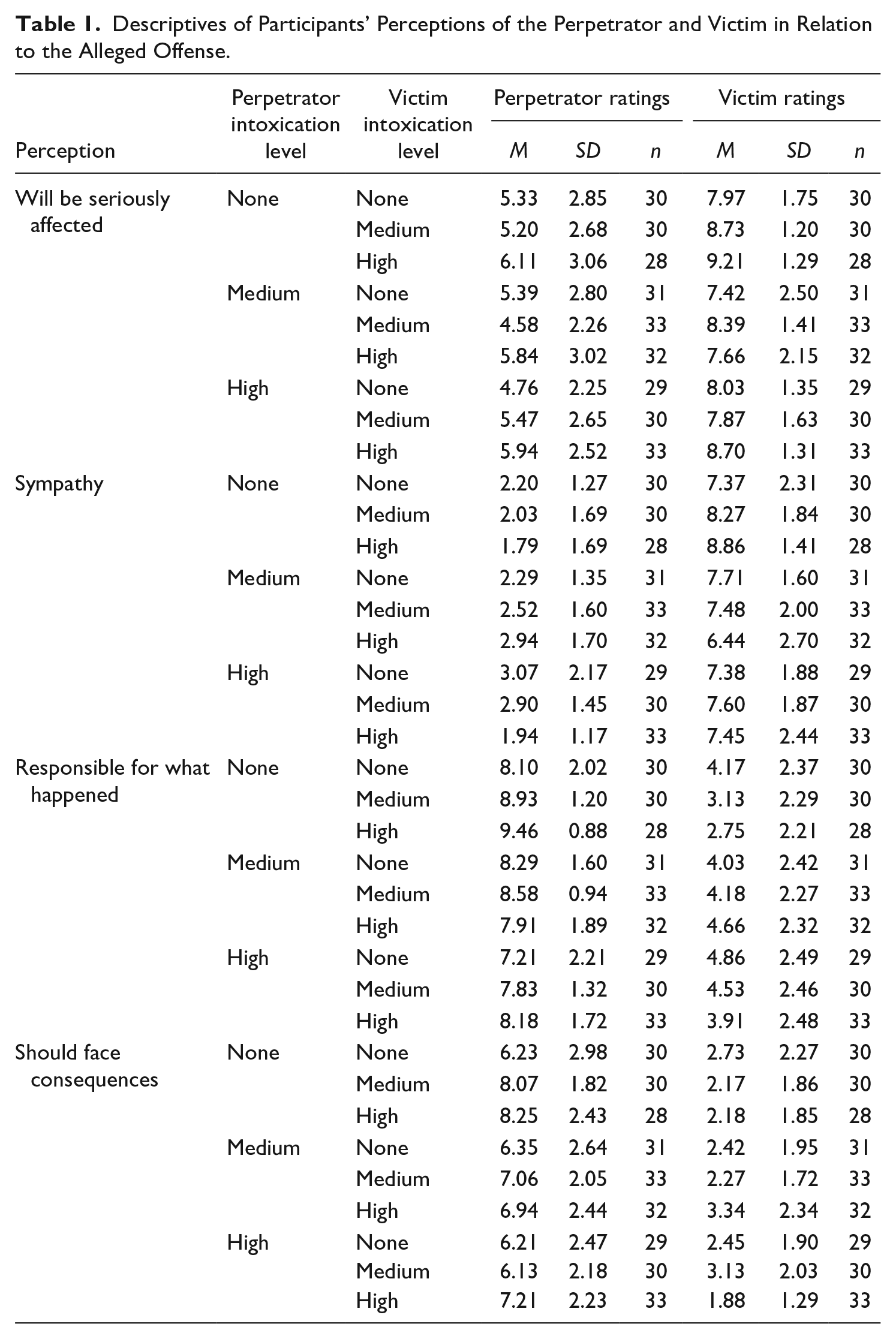
Participants generally agreed that the victim would be seriously affected and were overall neutral on the idea that the perpetrator would be affected. Mixed ANOVA results suggested participants believed the events would affect the victim at notably higher rates than the perpetrator (see Table 2). Mixed ANOVA results also revealed a weak main effect of the victim’s intoxication level. Bonferroni post hoc tests revealed perceptions that the events would have a serious effect overall and were greater if the victim had been highly intoxicated than if she had not been drinking, Mdiff = −0.75, SE = 0.26, p = .014. There were no other significant differences (ps ≥ .124).
Participants’ Perceptions of the Perpetrator and Victim in Relation to Alleged Offense by Perpetrator and Victim Intoxication Level.
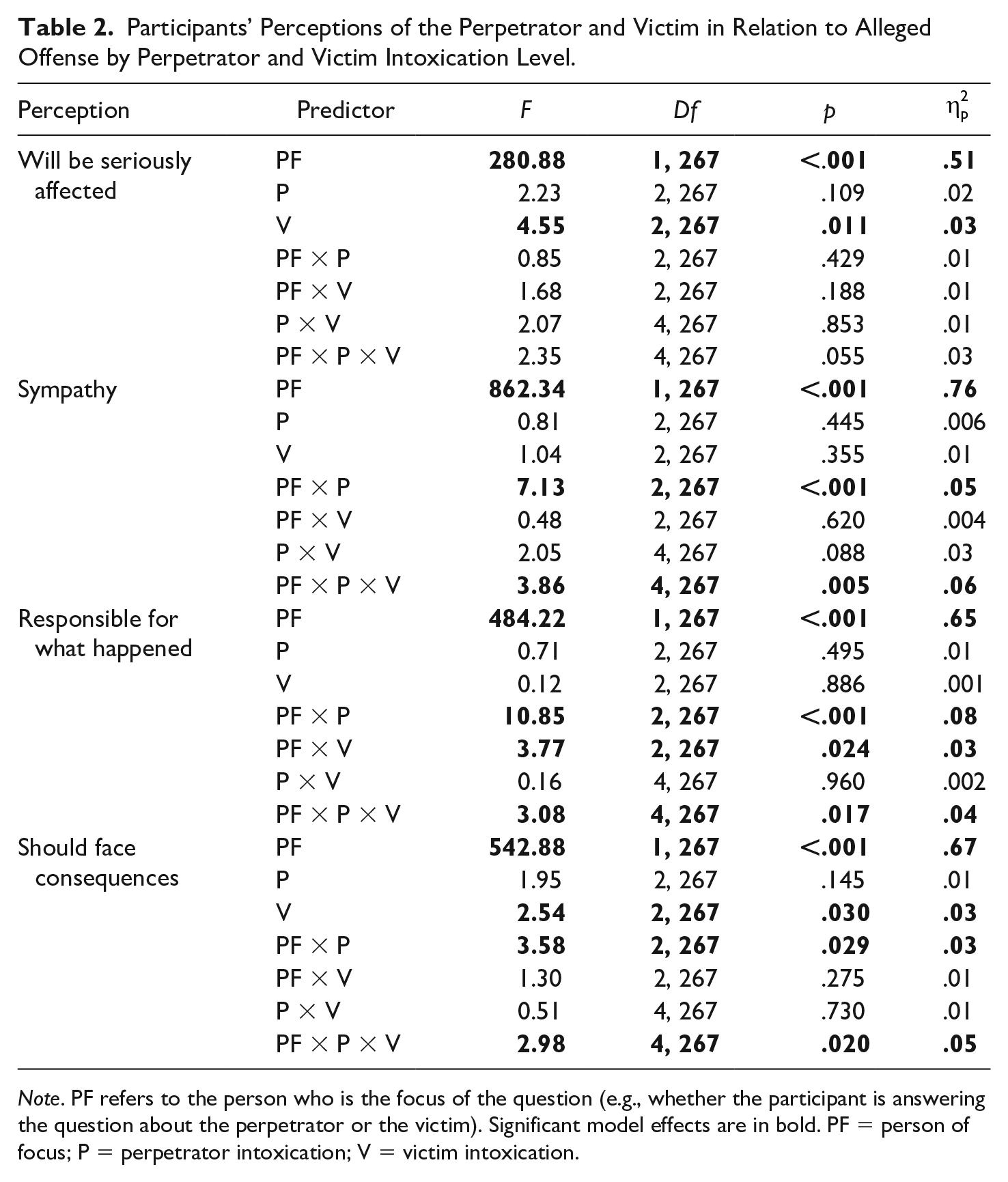
Note. PF refers to the person who is the focus of the question (e.g., whether the participant is answering the question about the perpetrator or the victim). Significant model effects are in bold. PF = person of focus; P = perpetrator intoxication; V = victim intoxication.
We repeated the above analyses on responses regarding whether participants felt sympathy for the individuals depicted (I have a lot of sympathy for [name of victim or perpetrator]). Although participants consistently expressed greater sympathy for the victim than the perpetrator, there was also a person of focus by perpetrator intoxication by victim intoxication three-way interaction (Table 2). Follow-up two-way interactions (conducted separately for each person of focus) break down the three-way interaction. When expressing sympathy for the perpetrator, there was a significant perpetrator intoxication by victim intoxication interaction, F(4, 267) = 2.79, p = .027,
Perceptions of Responsibility
Participants rated both the victim’s and perpetrator’s responsibility for what occurred ([Name of victim or perpetrator] is responsible for what happened that night). Given the related nature of these ratings, and to allow for a direct comparison of the ratings for both parties, we conducted a 2 (person of focus) × 3 (perpetrator intoxication) × 3 (victim intoxication) mixed ANOVA with person of focus (perpetrator vs. victim) as a within-subjects factor. Perpetrator and victim intoxication were again between-subjects factors. Table 1 presents mean results for responsibility ratings across conditions.
Participants overwhelmingly rated the perpetrator as more responsible compared with the victim (large effect), but this effect was mildly qualified by a person of focus by perpetrator intoxication by victim intoxication three-way interaction (Table 2). Follow-up two-way interactions (conducted separately for each person of focus) break down the three-way interaction. Due to violations of ANOVA assumptions, we conducted a 3 (perpetrator intoxication) × 3 (victim intoxication) mixed model analysis on ratings of the perpetrator’s responsibility. There were significant main effects for both perpetrator and victim intoxication that were qualified by a significant perpetrator intoxication by victim intoxication interaction, F(4, 142.32) = 2.63, p = .037. Post hoc tests indicate when the perpetrator had not been drinking (no intoxication), participants rated him as more responsible if the victim had been highly intoxicated than if she had not been drinking (no intoxication) as well, Mdiff = −1.36, SE = 0.41, p = .005, d = −0.86, 95% CI = [−1.40, −0.32]. There were no changes in perceptions of perpetrator responsibility based on victim intoxication at the other levels of perpetrator intoxication (ps ≥ .074). For perceptions of the victim’s responsibility, there was only a significant main effect of perpetrator intoxication, F(2, 267) = 5.54, p = .004,
Participants reported the extent they agreed the individuals involved should “face consequences” for what happened. We again conducted a 2 (person of focus) × 3 (perpetrator intoxication) × 3 (victim intoxication) mixed ANOVA with person of focus (perpetrator vs. victim) as a within-subjects factor (Table 1). Participants overwhelmingly agreed the perpetrator should face consequences, but this effect was mildly qualified by a person of focus by perpetrator intoxication by victim intoxication three-way interaction (Table 2). Again, the three-way interaction was broken down into separate two-way interactions for each person of focus. For perceptions that the perpetrator should face consequences, there was a significant main effect of the perpetrator’s intoxication level, F(2, 267) = 4.24, p = .015,
Overall Perceptions of What Happened
We assessed perceptions of three overarching issues related to the incident: blame (Who should blame themselves for what happened that night?), rape (What happened that night was rape), and sexual assault (What happened that night was a form of sexual assault). Table 3 includes means for each of those questions by condition. Pearson’s correlations were all significant and suggested the three variables were sufficiently correlated to conduct multivariate analysis (rs = .48–.83).
Descriptive Statistics of Participants’ Sexual Assault Perceptions.

Note. Higher blame scores indicate greater perpetrator blame (and less victim blame). Higher ratings for the sexual assault and rape items indicate stronger agreement.
We then included all three variables in a 3 (victim intoxication: none vs. low vs. high) × 3 (perpetrator intoxication: none vs. low vs. high) MANOVA (see Table 4). A small but significant multivariate effect emerged for victim intoxication, Wilks’ λ = .92, F(6, 490) = 3.33, p = .003,
Multivariate and Univariate Effects for Participants’ Sexual Assault Perceptions by Perpetrator and Victim Intoxication Level.
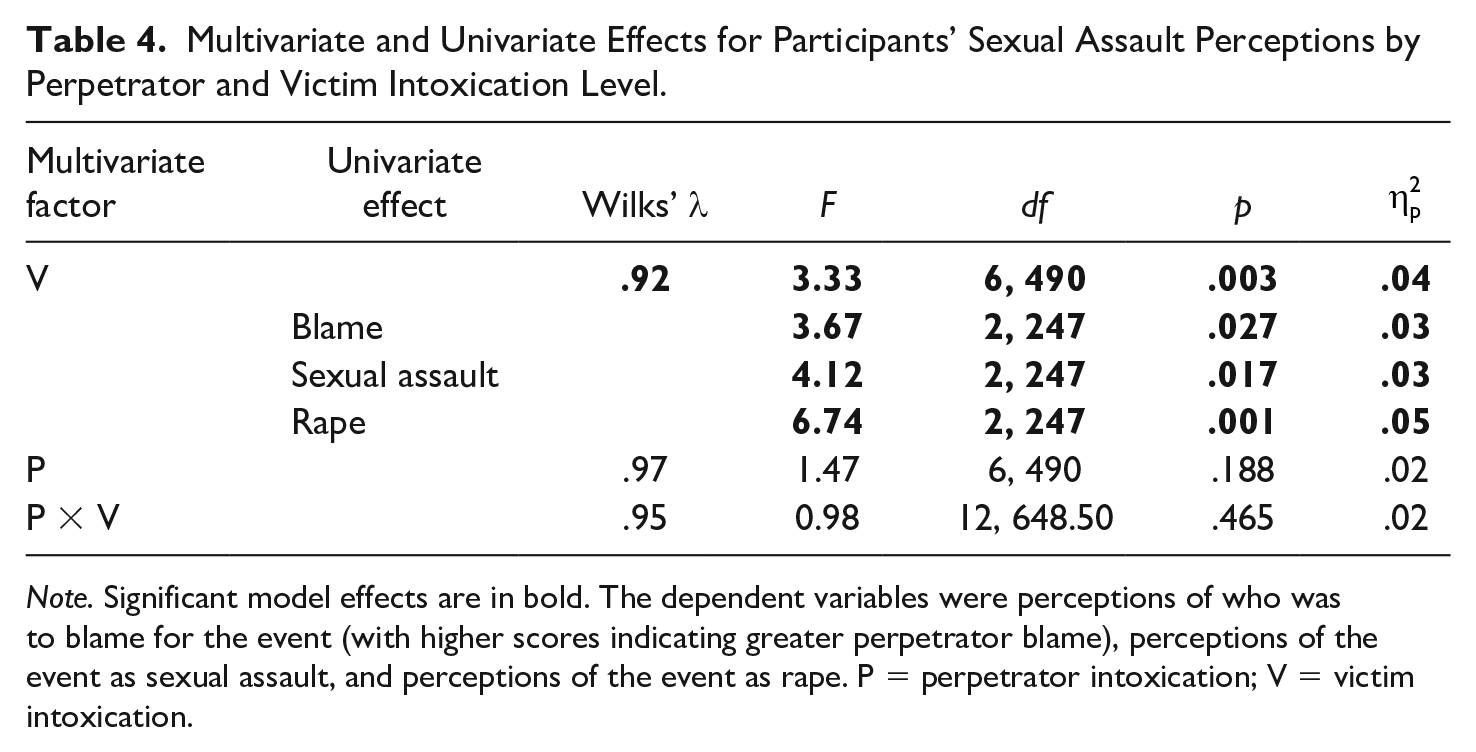
Note. Significant model effects are in bold. The dependent variables were perceptions of who was to blame for the event (with higher scores indicating greater perpetrator blame), perceptions of the event as sexual assault, and perceptions of the event as rape. P = perpetrator intoxication; V = victim intoxication.
Compensatory Damages Awarded
Participants reported whether they considered the perpetrator liable if the victim had filed a civil suit against him for sexually assaulting her. Overall, 72.4% of participants (n = 199) reported they considered the perpetrator liable for the harm experienced by the victim, whereas 27.6% (n = 76) considered the perpetrator not liable. We entered victim intoxication and perpetrator intoxication as predictors. We then entered the interaction into the model and, finally, entered IRMA scores into the model.
Table 5 includes logistic regression results for predicting judgments finding the perpetrator liable. The first model (victim and perpetrator intoxication levels) was significant, χ2(4) = 10.89, p = .028, Nagelkerke’s R2 = .06. Perpetrator intoxication level was not a uniquely significant predictor, but victim intoxication level predicted liability decisions. Odds ratios indicate that, compared with when the victim had not been drinking (no intoxication), the odds of judging the perpetrator liable were 2.42 times higher if the victim had low levels of intoxication and 2.01 times higher if the victim had high levels of intoxication. Adding the interaction between victim and perpetrator intoxication type did not significantly improve the fit of the model, χ2(4) = 3.45, p = .486. At this stage, the victim’s intoxication level again significantly predicted decisions of liability, with the odds of finding the perpetrator liable being 5.33 times higher if the victim had been highly intoxicated the night of the incident compared with if she had not been drinking (no intoxication).
Logistic Regression: Predicting Finding the Perpetrator Liable.
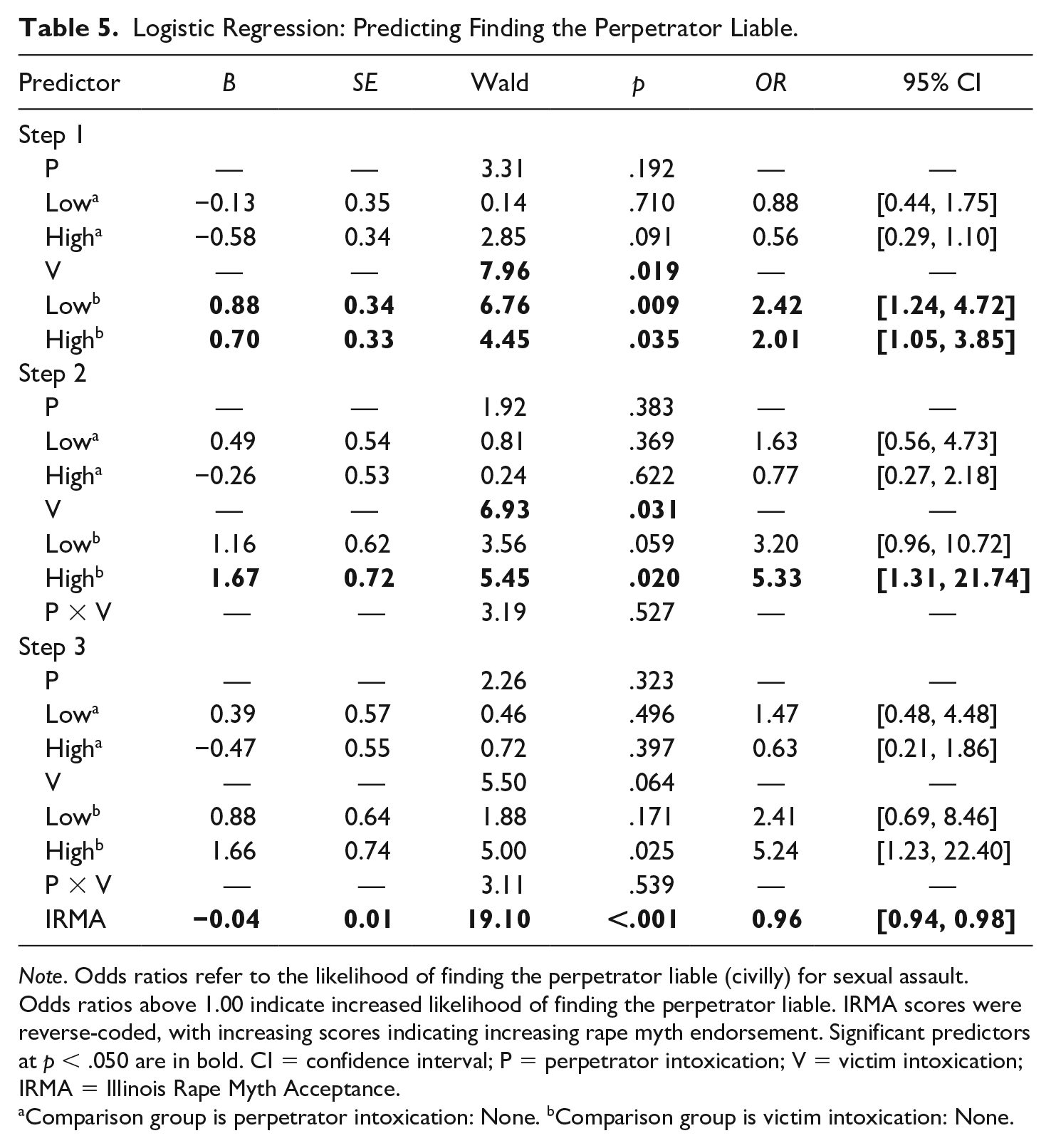
Note. Odds ratios refer to the likelihood of finding the perpetrator liable (civilly) for sexual assault. Odds ratios above 1.00 indicate increased likelihood of finding the perpetrator liable. IRMA scores were reverse-coded, with increasing scores indicating increasing rape myth endorsement. Significant predictors at p < .050 are in bold. CI = confidence interval; P = perpetrator intoxication; V = victim intoxication; IRMA = Illinois Rape Myth Acceptance.
Comparison group is perpetrator intoxication: None. bComparison group is victim intoxication: None.
Adding rape myth endorsement scores on the IRMA significantly improved the fit of the model, χ2(1) = 20.49, p < .001, resulting in an overall significant model, χ2(9) = 34.82, p < .001, Nagelkerke’s R2 = .17. As presented in Table 5, rape myth endorsement significantly predicted liability decisions. Each one-point increase in rape myth endorsement on the IRMA was associated with 4.4% decreased odds of judging the perpetrator to be liable.
Participants who judged the perpetrator liable for harm caused to the victim (n = 199) were asked how much money the perpetrator should be ordered to pay the victim for pain and suffering. Two participants provided monetary figures well above the rest (both US$100 trillion). Even after excluding these responses as outliers, data distribution had a strong positive skew. As a result, we conducted a logarithmic translation on the compensatory damages. Table 6 includes the monetary compensation awarded (unaltered, pre-logarithmic translation) across conditions.
Monetary Compensation Offered by Intoxication Levels of the Victim and Perpetrator.
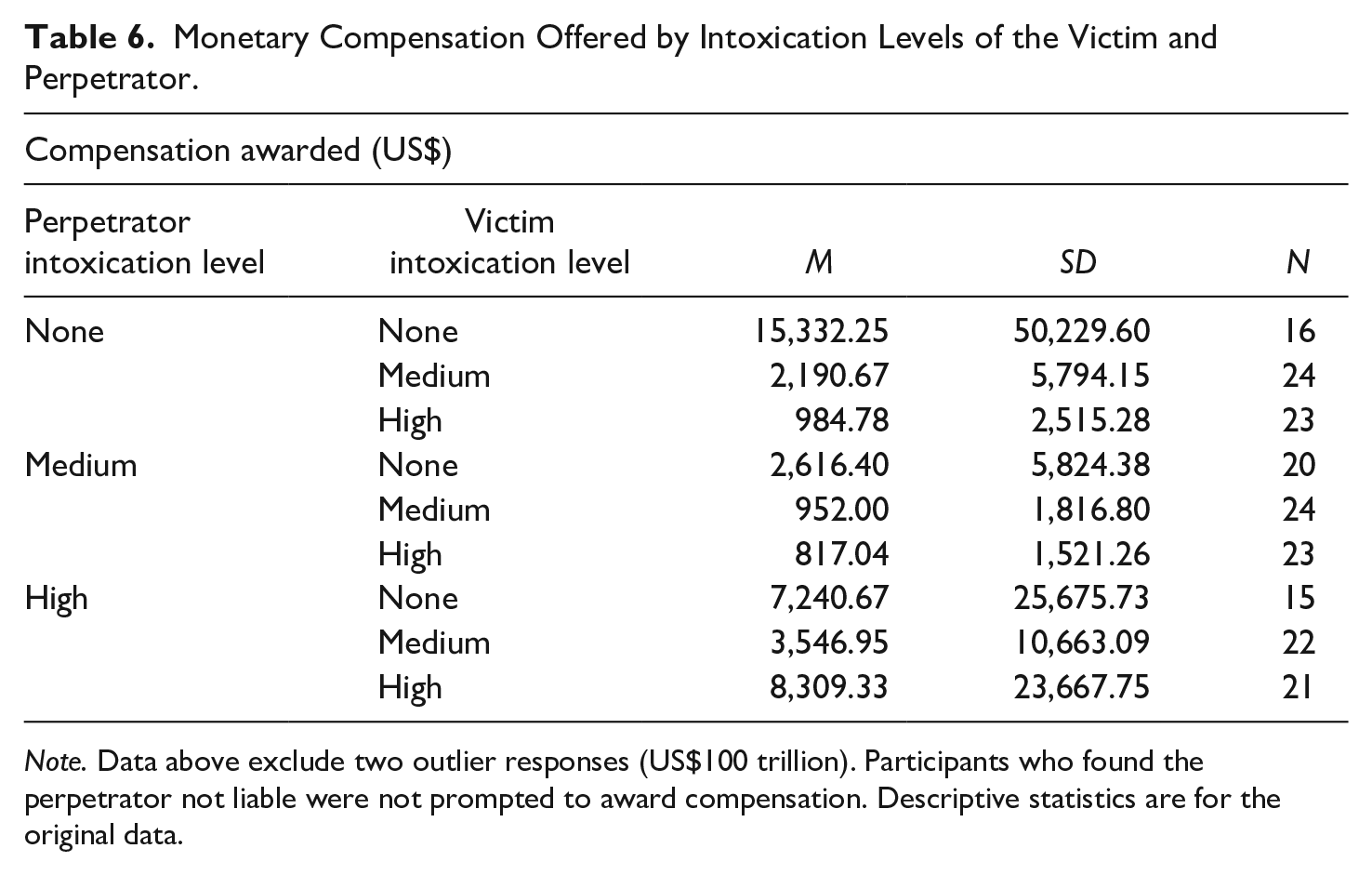
Note. Data above exclude two outlier responses (US$100 trillion). Participants who found the perpetrator not liable were not prompted to award compensation. Descriptive statistics are for the original data.
A 3 (perpetrator intoxication) × 3 (victim intoxication) ANOVA showed no significant main effects or interaction on the logarithmically translated data (Table 7).
One-Way Analysis of Variance of Monetary Compensation Offered by Intoxication Levels.
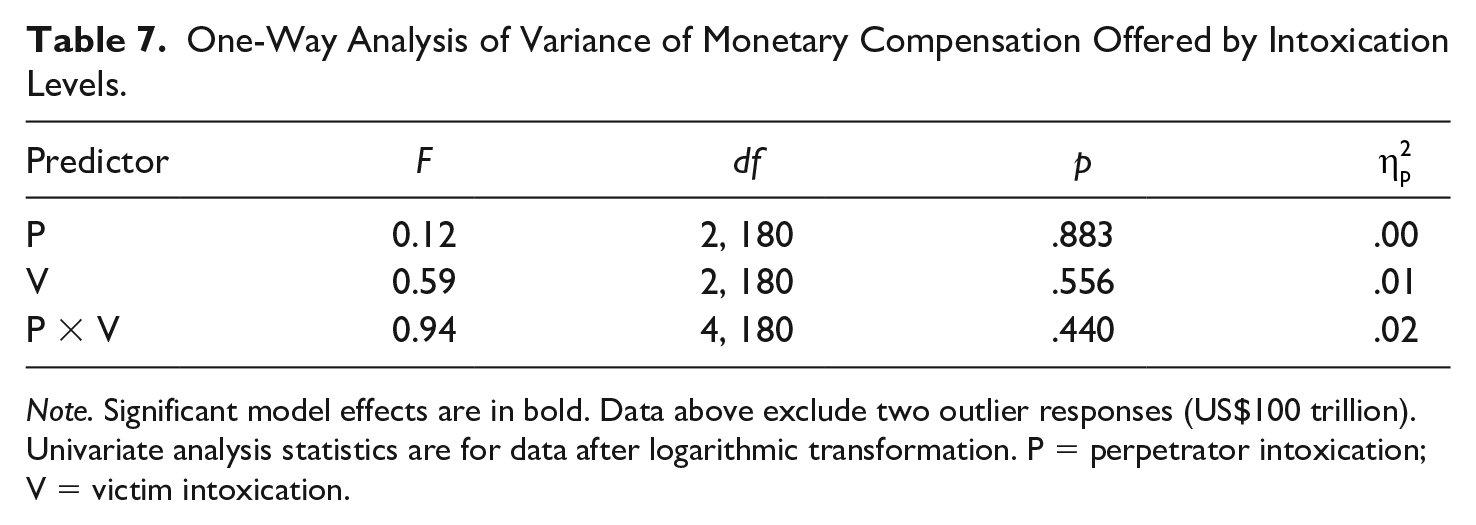
Note. Significant model effects are in bold. Data above exclude two outlier responses (US$100 trillion). Univariate analysis statistics are for data after logarithmic transformation. P = perpetrator intoxication; V = victim intoxication.
Discussion
Alcohol use, commonly documented in cases of campus sexual assault (Abbey et al., 2004), has been identified as a particular factor increasing victim blame and decreasing perpetrator blame (see Richardson & Campbell, 1982). Consequently, some perceive a double standard in how people consider alcohol use in cases of sexual assault and how alcohol use impacts victim blame and perceptions of responsibility. Some recent trends, however, bring such perceptions to question. One, research across time has not consistently demonstrated this to be a straightforward pattern (e.g., Maurer & Robinson, 2008). Two, diminishing gender disparities in college drinking behavior (Keyes & Miech, 2013) may subtly alter gender-based double standards about what might be normative or acceptable behavior in ways that subtly alter reactions toward intoxicated victims. Finally, recent social movements, such as #MeToo, and high-profile sexual assault cases (e.g., Brock Turner, Bill Cosby) have been widely publicized and debated throughout the country, and these salient discussions may impact how individuals perceive alcohol use and victim blame and responsibility.
This study examines how varying levels of alcohol use impact perceptions surrounding cases of campus sexual assault with an actual college sample. Participants largely perceived the incident as rape and, even more so, as sexual assault. This trend may suggest broader interpretation of sexual assault, which could encompass more types of unwanted sexual contact. Stereotypical sexual scripts about rape might lead people to reserve the term for specific, violent sexual assaults (Bondurant, 2001). Research suggests even women who have experienced sexual assault are less likely to describe their experience as “rape” if alcohol had been involved (Kahn et al., 2003).
The overall pattern of findings suggests reduced victim blame for highly intoxicated victims. Participants overall perceived highly intoxicated victims as more deserving of sympathy, more seriously affected, and less responsible for a possible rape or sexual assault. These trends appeared particularly relevant when an intoxicated victim was assaulted by a nonintoxicated perpetrator. Incidents involving an intoxicated victim were also more likely to be perceived as a crime (rape and/or sexual assault).
Meanwhile, perpetrator alcohol use impacted sexual assault perceptions in fewer, more subtle ways. Even then, intoxication levels of the perpetrator appeared to impact perceptions primarily in the context of the victim’s intoxication level. In other words, when the perpetrator’s intoxication level affected people’s perceptions of a potential rape, this was contingent on the intoxication level of the victim. Results from this study suggest participants tended to react most punitively to perpetrators—and place less responsibility and blame on the victim—when a sober perpetrator had assaulted a highly intoxicated victim. Nonetheless, participants reported higher levels of sympathy for the perpetrator if he was intoxicated and the victim was sober. Together, these patterns suggest greater harm and less blame perceived as the parties become increasingly intoxicated, particularly when one party is not intoxicated. Such findings may suggest that participants perceive the individual who is intoxicated in the scenario to be more vulnerable and therefore taken advantage of in some regard by the sober party.
One exception to this trend of increased support for intoxicated victims appeared: liability damages for pain and suffering. Despite people being more likely to find perpetrators with intoxicated victims to be liable, the victim’s intoxication had no impact on awarded damages. In this study, we did not offer participants guidelines for arriving at financial figures for damages (e.g., maximum damages allowable, average compensation figures) for fear of subtly guiding participants toward certain figures. We noted significant variability in damages rendered, likely in part because of the lack of guidance on damages. Having each participant essentially use their own scale to assess damages might have masked any potential differences in damages offered toward victims who had been intoxicated during their assault.
We examined varying levels of intoxication by including a manipulation where either party was experiencing clear but subtle effects of alcohol use (low intoxication). Results did not suggest a linear trend of increasing levels of alcohol use corresponding with increasing impact on victim blame and perceptions of rape/sexual assault. In general, when differences emerged, low intoxication conditions differed more when compared with no intoxication (as opposed to when compared with high intoxication); however, most intoxication manipulation differences occurred between the high intoxication and no intoxication groups. These trends suggest that although perceptions surrounding low intoxication generally appeared to differ more from perceptions surrounding sobriety than severe intoxication, significant intoxication appears to impact victim blame and overall perceptions more than alcohol use more broadly.
Implications
Patterns in this study may suggest improved understanding and awareness of the limitations of consent (at least among the college student participants involved). Specifically, findings of stronger perceptions of rape or sexual assault when the victim was highly intoxicated suggest that participants understood and clearly defined sexual activity with a highly intoxicated individual as being nonconsensual. We do see a continued gender divide, however; men were less likely to rate the incident as rape or sexual assault than women. These trends support prior research indicating men engage in more victim blame (Gravelin et al., 2019) and prior research suggesting greater identification with a perpetrator can decrease perceptions of rape (in this study, the perpetrator was a college-aged man; see Grubb & Harrower, 2009).
Previously, research has suggested victim intoxication increases perceptions of responsibility and victim blame (Cameron & Stritzke, 2003; Sims et al., 2007; Starfelt & White, 2015; Stormo et al., 1997; Untied et al., 2012); however, patterns in this study suggest college students are attributing less responsibility and decreased blame to the more intoxicated party. Despite the fact that these findings conflict with some previous findings, they may reflect a possible shift in attitudes consistent with some of the variability in previous research and historical factors surrounding sexual assault attitudes in the sociopolitical sphere. Behavioral patterns may alter how people perceive substance use, with rates of alcohol use in college-aged women becoming increasingly similar to rates in men in this age group, and women using alcohol to intoxication may be judged less harshly than in previous years. Heightened awareness of issues surrounding sexual assault through famous cases and social movements, such as #MeToo, may also be causing an increased awareness of the definitions of sexual assault and rape and how these are impacted by substance use. We may be seeing increased recognition that substance use can impair an individual’s ability to consent to sexual activity.
If these changes in perceptions reflect a broader shift in understanding and attitudes regarding sexual assault and victim blame, these changes might actually reflect rejection of rape myths broadly, rather than about alcohol use specifically. Our participants endorsed low levels of rape myth acceptance, which may explain part of our findings here. Rape myths, many of which promote victim blaming attitudes and double standards between male perpetrators and female victims, have also been the target of significant broader community focus. For example, statements regarding women’s clothing choices have been the focus of the transnational “SlutWalk,” which calls to end victim blame and, more broadly, rape culture (Herriot, 2015). Because rape myth acceptance appears to continue predicting victim blaming attitudes, the current findings might indicate weakened acceptance or endorsement of these myths, which subsequently impact specific perceptions of cases of sexual assault.
Ultimately, this study suggests a change in how alcohol use impacts perceptions of sexual assault and victims of those assaults. These patterns may be explained by a variety of factors surrounding each issue that should be further explored in future research.
Limitations
The findings of this study, while promising, should be interpreted in light of several limitations. We conducted this study with a convenience sample of university students. Although we attempted to diversify this sample by not relying on solely one university/college, students from the current sample are unlikely to represent college students as a whole. Even more so, college students deviate from the broader population in several ways. Statistically, this population uses alcohol at higher rates than the rest of the population, and rates of alcohol consumption in college-aged women have increased in recent years (Keyes & Miech, 2013). Our sample may be more aware of issues surrounding substance use and perhaps more empathetic or forgiving of an individual who engaged in heavy alcohol use. Combined with other factors (e.g., age, identity as a college student), college students might better identify with the individuals in the scenario than others in the community, which has been shown to be relevant to both victim and perpetrator blame (Grubb & Harrower, 2009). In addition, our sample predominantly identified as female; men tend to engage in more victim blame (Gravelin et al., 2019), which might explain some differences in perceptions that contrast with past research.
In addition, many college campuses promote education regarding substance use and consent, which may alter how students understand these subjects. Participants may be more attuned to the limitations of consent and how alcohol use may negate an individual’s ability to consent. This awareness may increase participants’ perceptions of rape and sexual assault in incidents involving high alcohol use, which may be evidenced in the duality of our findings. Participants rated responsibility and severity primarily based on either sobriety or heavy alcohol use and did not demonstrate much sensitivity to the intermediate use of alcohol, despite the fact that any inebriation impacts an individual’s ability to consent.
We collected data for this study over an extended period of time; however, we feel it critical to acknowledge that during this time period, multiple high-profile sexual assault cases appeared in the news. Several of these cases involved scenarios which involved assault in conjunction with substance use, so the shift in perceptions seen here might be a byproduct of historical factors. Specifically, the public dialogue around sexual assault at the time of the study might have made participants more acutely aware of or responsive to cases of sexual assault and substance use. This acute awareness could increase demand characteristics, evoking some pressure on participants to respond in ways that deviate from the true strength of their beliefs or perceptions. Although in our analysis we saw no evidence that participant responses differed across semesters, we cannot rule out the possibility that findings were impacted by participants’ reactions to the surrounding cultural environment, rather than reflecting a true shift in attitudes toward knowledge of consent.
Future Directions
Based on these limitations, many avenues of future research appear merited. Research should examine whether these findings replicate outside of a college sample; specifically, studies should incorporate more diverse samples representative of the broader population. Similarly, further insight on broad perceptions toward sexual assault will be gathered by having individuals reflect on instances of sexual violence outside of the university setting.
Considering our concerns that public focus on sexual assault might have heightened demand characteristics during this study, future research should also account for ongoing public discourse and media attention. Seeing how individuals respond to these scenarios specifically involving alcohol relative to how much these issues are receiving explicit media coverage would be particularly valuable. It may also be beneficial to incorporate measures of media involvement or use in future studies to evaluate how broader cultural factors may impact findings.
Another issue for future research involves the impact of question wording on results. In this study, blame perceptions required participants to decide between both parties as to amount of blame (i.e., high blame for perpetrator indicates low blame for victim), which approximates liability decisions in court. Indeed, results for both of those variables appear highly similar, with only victim intoxication impacting ratings. In contrast, participants rated responsibility of the perpetrator and victim separately, which allowed both to be rated similarly high in responsibility. We observed more nuance in responsibility judgments, with perpetrator responsibility impacted by both perpetrator and victim intoxication but perceptions of victim responsibility impacted by perpetrator intoxication only. As previously noted, blame and responsibility are highly correlated yet distinct concepts (Gravelin et al., 2019), which may account for the differences in the ratings; however, the rating scales may also be responsible for these differences. Given that past research has varied with respect to using forced-choice single items (e.g., Maurer, 2016) or separate perpetrator and victim ratings (e.g., Rusinko et al., 2010), future research should explore the impact of measurement on results.
Finally, this research examines the impact of a single overarching factor on victim blame (intoxication). Future research should seek to expand this to explore a variety of different factors that may affect perceptions of sexual assault and victim blame, as this research has found few factors to decrease victim blame specifically. It may be beneficial to explore how these factors interact in changing perceptions in highly sensitive and sometimes complex cases.
Footnotes
Acknowledgements
The authors thank Kate Appolonia, Heather Baker, Tonia Ballantyne, Molly Bernoski, Casey Boland, Hannah Brouse, Hannah Duminske, Sofia Goltsberg, Jen Guido, Aleah Koerbel, Elissa Nolte, Juliette Sauter, Alayna Shoenfelt, and Lindsay Snoke for their data coding assistance and input on the vignette language.
Declaration of Conflicting Interests
The author(s) declared no potential conflicts of interest with respect to the research, authorship, and/or publication of this article.
Funding
The author(s) received no financial support for the research, authorship, and/or publication of this article.
