



Abstract
This article examines whether a shortage of marriageable women induces trafficking of women for forced marriage in China as commonly expected. I assemble a data set of 1,215 transactions of women for forced marriage from 2010–2018 using court documents. My analysis suggests that the trafficking of women is not a direct consequence of the local shortage of marriageable women. The fundamental causes are entrenched patriarchal values as indicated by a high local sex ratio at birth, sex-specific internal migration, and the marriage squeeze endured by socially marginalized men in the context of a shortage of women in the population.
Introduction
There are public concerns that the shortage of marriageable women in China drives the prevalence of human trafficking of women for forced marriage (Banister, 2004; Das Gupta et al., 2009; Jiang & Sánchez-Barricarte, 2011; Lee, 2005; Tiefenbrun, 2008; Zhao, 2003). Skewed sex ratios at birth (excess of male births) generate a shortage of brides and increase the value of betrothal gifts in a normal marriage (“bride price”), creating a breeding ground for black markets in trafficked women. However, researchers have not yet established a causal relationship between skewed sex ratios and the trafficking of women for forced marriage. The black market for trafficked women is a rarely explored field in empirical research. Current studies often rely on media reports, small-scale interviews, official announcements, and reports from international organizations (Davis, 2006; Jiang & Sánchez-Barricarte, 2011; Kim et al., 2009; Lee, 2005; Stöckl et al., 2017; Tiefenbrun, 2008; Yik-Yi Chu, 2011). These descriptive and qualitative materials provide a general profile of the black market for trafficked women but do not allow for the identification of quantitative relationships. One recent empirical study used court documents to map and document the trafficking of women in China (Xia et al., 2020).
This article aims to examine whether a shortage of marriageable women induces the trafficking of women for forced marriage in China and identify the fundamental causes of the trafficking. The article innovates by using a new data source: court documents of criminal trials in China, providing the first in-depth quantitative analysis of the relationship between sex ratio imbalances and the trafficking of women for forced marriage. Transaction information was extracted from narratives of investigations in the court documents. The information includes the time, location, destination, purpose, price as well as the victims’ and buyers’ characteristics. The case-level features were matched with the prefecture- and county-level variables in the buyer’s place of residence. This article distinguishes between two types of sex ratios as a measure of the shortage of women: the sex ratio at birth (SRB) and the sex ratio among the never-married (SRNM) in the marriage market. High SRB reflects son preference and patriarchal values. SRNM measures the shortage of marriageable women. Both sex ratios vary across regions in China. Regional SRBs and SRNMs are not the same due to internal migration between birth and marriageable ages. Regression analyses that control for socioeconomic variables show that contrary to common intuition, the local shortage of marriageable women represented by SRNM imbalances is not associated with the prevalence of trafficking of women for forced marriage in the prefecture, nor with the price of trafficked women. Instead, prefectures with higher SRBs have more trafficking cases, and this positive association is stronger where the SRNM is low. Prefectures with higher SRBs also witness a higher price of trafficked women. Prefectures with more inward migration have significantly fewer cases and a lower price. Combined with the descriptive findings, these results suggest three main factors at play in the demand for trafficked women: the patriarchal desire for the continuation of family lineage, sex-specific migration flows due to uneven regional economic development, and the marriage squeeze endured by socially marginalized single men in the context of a shortage of women in the total population.
Background
Human Trafficking in China
Human trafficking is a modern version of the slave trade (Scarpa, 2008). Victims are sold as commodities for various kinds of exploitation. Human trafficking violates fundamental human rights, causes family tragedies, threatens social stability, and affects international security (Omelaniuk, 2005). Women and children are more likely to fall victim to trafficking due to physical and social vulnerability. According to the United Nations Office on Drugs and Crime (UNODC), 49% of the victims detected globally in 2016 were adult women and 30% were children. Trafficking can happen within or across national borders. It is hard to get a complete profile of trafficking due to its clandestine nature. The detected cases are always the tip of the iceberg (Kelly, 2002; Tyldum & Brunovskis, 2005).
China is both a source and a destination of human trafficking (United Nations Inter-Agency Project on Human Trafficking [UNIAP], 2010; UNODC, 2018). Trafficking for forced marriage constitutes more than 80% of the convicted inward and domestic trafficking of women in China. Women are mainly sold to disadvantaged single men in poverty-stricken rural areas for forced marriage (Jiang & Li, 2009; Lee, 2005). In this article, the trafficking of women for forced marriage is defined as the trafficking of women for exclusive sex and reproductive exploitation against the women’s will, regardless of official marital status.
Selling and buying women have a long history in China, as it used to be legal to buy women as household servants or concubines (Zhao, 2003). After the founding of the People’s Republic of China, the government launched stringent campaigns against human trafficking. After years of constant and determined efforts, the nationwide campaign almost eliminated human trafficking in the mainland. However, the practice revived during the economic transition period in the late 1970s and became rampant during the 1980s (Zhao, 2003). The government carried out several large-scale crackdowns in the early 1990s to reverse the rising momentum (Jiang & Sánchez-Barricarte, 2011; UNIAP, 2010). Despite these efforts, human trafficking remained a problem in China. Under the current criminal law, abducting, trafficking, and buying women are severe criminal offenses. According to Article 240 of the Criminal Law of the P.R.C., “Abducting and trafficking women or children refers to abducting, kidnapping, buying, selling, transporting, or transshipping women or children for the purpose of selling them.” The investigation of trafficking is conducted by the Ministry of Public Security. The trafficking cases have high priority in investigation. Public Security and the United Nations also launched public awareness programs targeting rural villagers at risk of buying women (Lee, 2005).
The campaigns against the trafficking of women encounter strong resistance at the grassroots level (Jiang & Sánchez-Barricarte, 2011; Tiefenbrun, 2008; Zhao, 2003). In rural China, especially in remote mountain areas, many villagers are not aware that selling and purchasing a woman against her will are illegal. Noting the traditional practice of concubines and bride price in a normal marriage, they believe that purchasing a wife for the continuation of family lineage is justifiable (Gates, 1996). For some villagers, a woman is still considered the property of her father before marriage and of her husband afterward (Jiang et al., 2011; Zhao, 2003). Meanwhile, they think getting married and having a son is a man’s responsibility to the family. Villagers are loyal to a sizable patriarchal clan in the community, so they share the interest in preventing the trafficked women in the village from escaping or being rescued. Such resistance to rescue efforts can be organized and violent. Some village leaders consider importing brides as a practical solution to the unstable and violent environment due to the excess of single men. Therefore, they have little incentive to report and cooperate with the Ministry of Public Security in rescuing trafficked women (Zhao, 2003; Zhuang, 1998). As a result, many trafficking cases still go undetected.
Sex Ratio Imbalance
The sex ratio, measured by the number of males per 100 females, is an index of the population structure. Sex ratios vary by age, cohort, marital status, and region. A sex ratio imbalance is the abnormal excess of one sex in the population. In the context of this article, the sex ratio imbalance refers to the excess of men. The normal SRB ranges from 103–107 in a human population without any intended social and behavioral intervention (Hesketh & Xing, 2006). China, however, has experienced imbalanced SRBs since 1980 when the implementation of the family planning policy met the introduction of ultrasound technologies that enabled prenatal sex selection (Ebenstein, 2011). Entrenched son preference manifests in prenatal sex selection when the number of children is restricted by the family planning policy. The national average SRB climbed from 108.5 in 1982 to a peak of 121.2 in 2004, then gradually declined to 111.9 in 2017 (National Bureau of Statistics of China [NBS], 2019).
The skewed SRB results in a shortage of brides when the birth cohort reaches marriageable ages. Projections indicate that by 2020, one in five men in China will not be able to find a domestic bride, and the fraction lingers between 15 and 20% in the next few decades depending on fertility and SRB trajectories (Guilmoto, 2012; Jiang et al., 2011; Sharygin et al., 2013). The absolute shortage of marriageable women hinders marriage for a considerable proportion of bachelors in the marriage market. However, the sex ratio in the local marriage market is not entirely or even mainly determined by the SRB. Figure 1 plots the prefectural SRB against contemporary SRNM (prefecture, formally known as prefecture-level division, is the second level of the administrative structure in China, ranking below a province and above a county), showing that the correlation between the prefectural SRB and SRNM is small and insignificant. The mean and variance of the SRNM are much higher than those of the SRB. Such changes in regional sex ratios are driven by sex differences in mortality, fluctuations in cohort size, assortative mating, internal migration, and marriage squeeze.
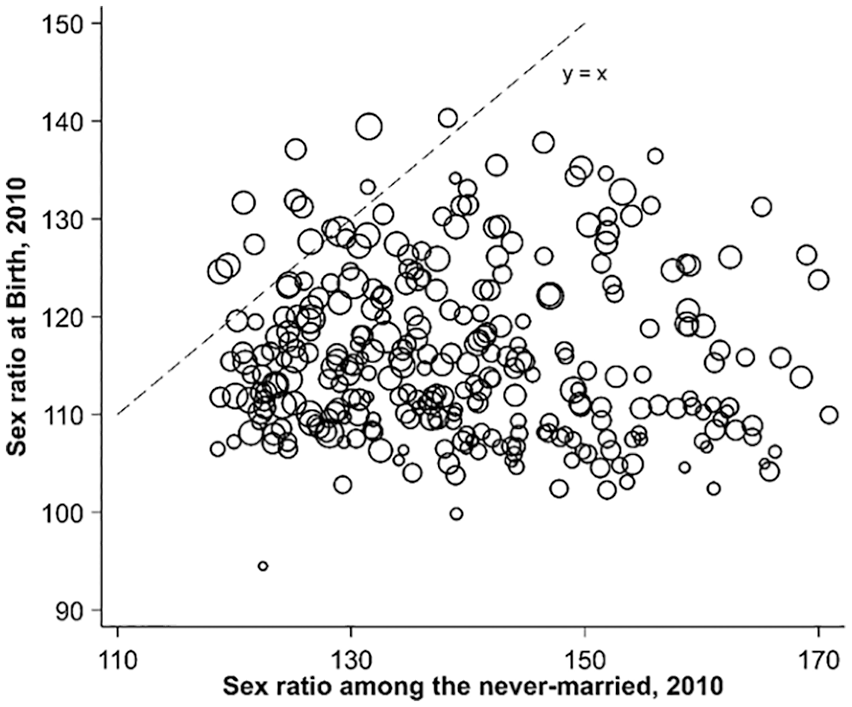
Prefecture-level sex ratios at birth versus sex ratios among the never-married, 2010.
Sex ratio imbalances create many social problems (Ebenstein & Sharygin, 2009; Poston & Glover, 2005). Old age support for disadvantaged single men is an obvious one (Huang, 2014; Jiang et al., 2011). Empirical studies have established a general association between high sex ratios and crime. A study exploiting provincial-year level variation in sex ratios showed that the presence of excess men raised violent and property crime rates (Edlund et al., 2013). A recent study using data from prison inmates in China found that high sex ratios in the marriage market increased men’s propensity to commit financially rewarding crimes (Cameron et al., 2019). This study extends the literature by investigating the association between different kinds of sex ratio imbalances and the trafficking of women for forced marriage, a seemingly direct and extreme consequence of the shortage of marriageable women.
Data
Court Documents
I acquired the court documents of criminal trials from China Judgments Online (located at http://wenshu.court.gov.cn), the official national public platform for the issuance of court documents by the people’s courts (Supreme People’s Court, People’s Republic of China, 2013). According to The Provisions of the Supreme People’s Court on the Issuance of Judgments on the Internet by the People’s Courts (henceforth the Provision of Issuance), which came into force on January 1, 2014, the people’s court at all levels shall uniformly issue the effective court documents on the internet under the principles of legality, timeliness, standardization, and truthfulness. Court documents shall be issued on the internet within 7 days after their entry into force, except for those involving any state secrets, infringements on individual privacy, or juvenile delinquency. Court documents are altered before posting to protect personal information and business secrets. Documents before 2014 are issued on a selective basis. By the end of 2018, there were more than 50 million judicial documents on the platform, with an ongoing daily increase of more than 10,000. The court documents have been used in sociological and criminological research on topics such as divorce and human trafficking (Michelson, 2019; Qiu et al., 2019; Xia et al., 2020).
The cases in the sample include those convicted under Articles 240 and 241 of the Criminal Law of the P.R.C., covering abduction, trafficking, and purchase of women. Keyword “Cause: Trafficking of women or children” (including “trafficking” and “buying the trafficked” women or children) and “Keyword: Judgment” (excluding other types of documents such as rulings and payment orders) were used in the internal search engine on the website to select relevant court documents. All the qualified judgments issued through December 31, 2018, were downloaded and archived.
The unit of observation is the transaction. Each completed transaction involving a female victim and a buyer constitutes one observation. I read every qualified judicial record and coded the information. For each transaction, the following information was extracted: the title, court, and trial date of the judgment; date, purpose, and price of the transaction; pseudonym, nationality, and other characteristics of the victim; and family name as well as place of residence (up to county-level) of the buyer. A judicial record may contain more than one transaction, whereas one transaction could be referred to in multiple records. Duplicate cases were identified and merged as one observation.
The full sample contains 2,001 transactions in 996 court documents issued between 2008 and 2018. The sample covers transactions occurring from 1986–2018 in 504 counties (as destination) across 205 prefectures and 29 provinces (out of 31 province-level units) in mainland China. The median duration between the transaction and conviction is 24 months. In the full sample, 85.9% of the victims were trafficked for forced marriage or sex and childbearing. Among the rest, 9.3% of the victims were purchased by traffickers, 2.3% were sold to the sex and entertainment industry, and the remaining reported unknown purpose.
Each year, the Supreme People’s Court announced the annual number of convicted cases of trafficking of women and children. Table 1 compares this number with the annual number of reports of missing women and children that are placed on file for investigation by Public Security and the number of issued court documents online. Most of these reports of missing women or children turned out to be irrelevant to human trafficking. The total issuance rate of trafficking cases since the Provision of Issuance came into force in 2014 through the end of 2017 is 45.9%.
Annual Number of Investigations and Convictions of Trafficking of Women and Children.
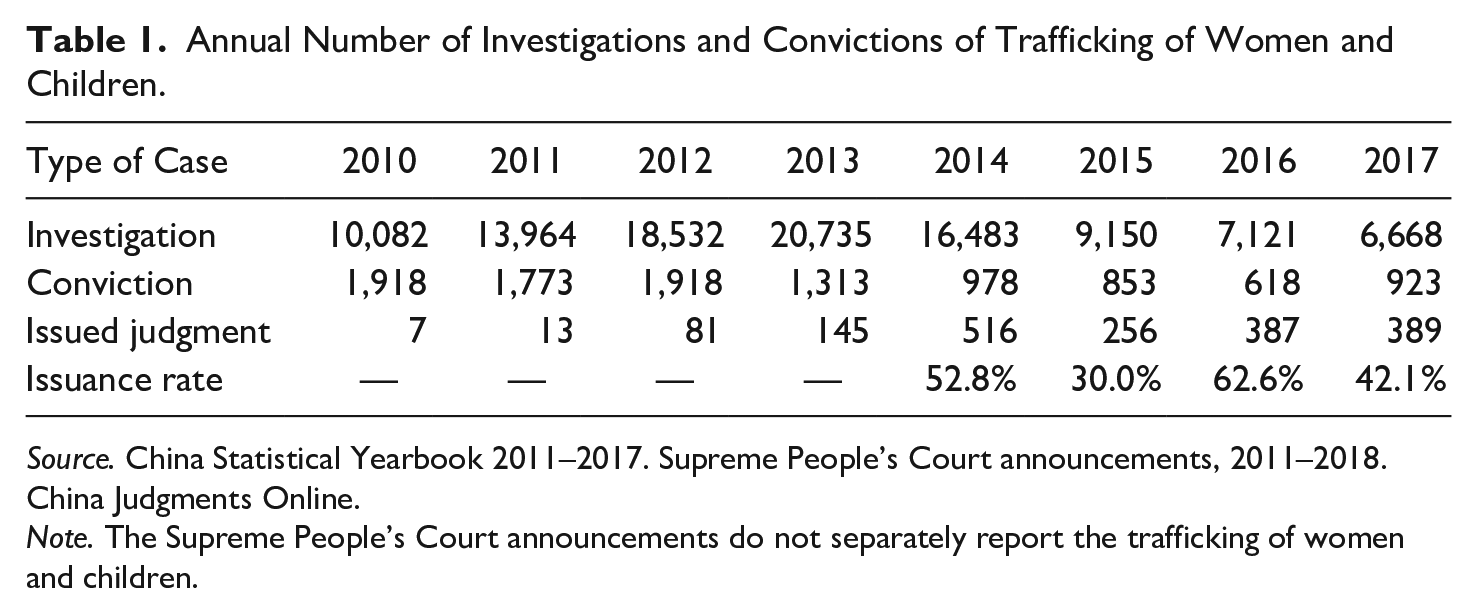
Source. China Statistical Yearbook 2011–2017. Supreme People’s Court announcements, 2011–2018. China Judgments Online.
Note. The Supreme People’s Court announcements do not separately report the trafficking of women and children.
The complied data set is a subsample of the detected cases of trafficking of women in China, but it is the best one available. Sample selection could happen in the detection of cases and the issuance of documents. Many factors influence the likelihood of a case being detected—for example, the local government’s ability and determination in the campaign against human trafficking, the degree of cooperation of the residents, and the degree of organization of the traffickers. Selective detection, though inevitable, is less of a problem in this research if the detected cases are a constant proportion of the actual cases across regions. Unfortunately, there is no way to verify this assumption. In the document issuance stage, the degree of compliance with the Provision of Issuance mainly depends on the local court’s administrative ability and efficiency. Local courts in less developed regions may lag in issuing their judicial documents online. Therefore, caution is needed in the interpretation of the results. I will discuss the direction of potential bias in the results section. The fact that a criminal case falls in the jurisdiction of the local court where the crime (transaction) takes place or the suspect lives alleviates the selection bias because this study focuses on the buyer’s place of residence, which is often a different place. For example, courts in provinces near the border reported the greatest number of cases, whereas the buyers were concentrated in inner provinces. I also documented child trafficking cases using the same data source, and the summary statistics are largely consistent with a recently published study of trafficking networks that used a massive online database of self-reported incidents of child trafficking (Wang et al., 2018).
Analytical Sample
I constructed three analytical samples based on the full sample: one at the transaction level, one at the prefecture level, and one at the county level. For the transaction-level sample, I excluded 138 cases from court documents of trials occurring before January 1, 2014, when the Provision of Issuance came into force. I further excluded 383 cases that took place before 2010 and 224 cases for purposes other than forced marriage. Finally, I dropped 41 cases that have missing values for key variables, such as the buyer’s place of residence or the price. The final analytical sample includes 1,215 transactions from 26 out of 31 province-level units in mainland China (see Supplemental Appendix Table A1 for details).
Table 2 shows the summary statistics of the transaction-level analytical sample. The price ranges from zero to 372,000 yuan (about US$57,000), with a mean of 43,599 yuan (about US$6,700; see descriptive findings section for more details). The relative price is measured by the ratio of the actual price in the transaction to the local average annual wage of employed workers in the transaction year to capture inflation and regional differences in living standards. Historically, the national average wage of employed workers is about 160% of the annual per capita disposable income of rural households (NBS, 2019). Therefore, a mean relative price of 0.96 means that the average price of a trafficked woman is no less than the annual disposable income of a farmer. In the sample, 33% of the female victims are physically disabled or mentally challenged. Half of the victims come from neighboring countries.
Summary Statistics of the Transaction Level Analytical Sample.
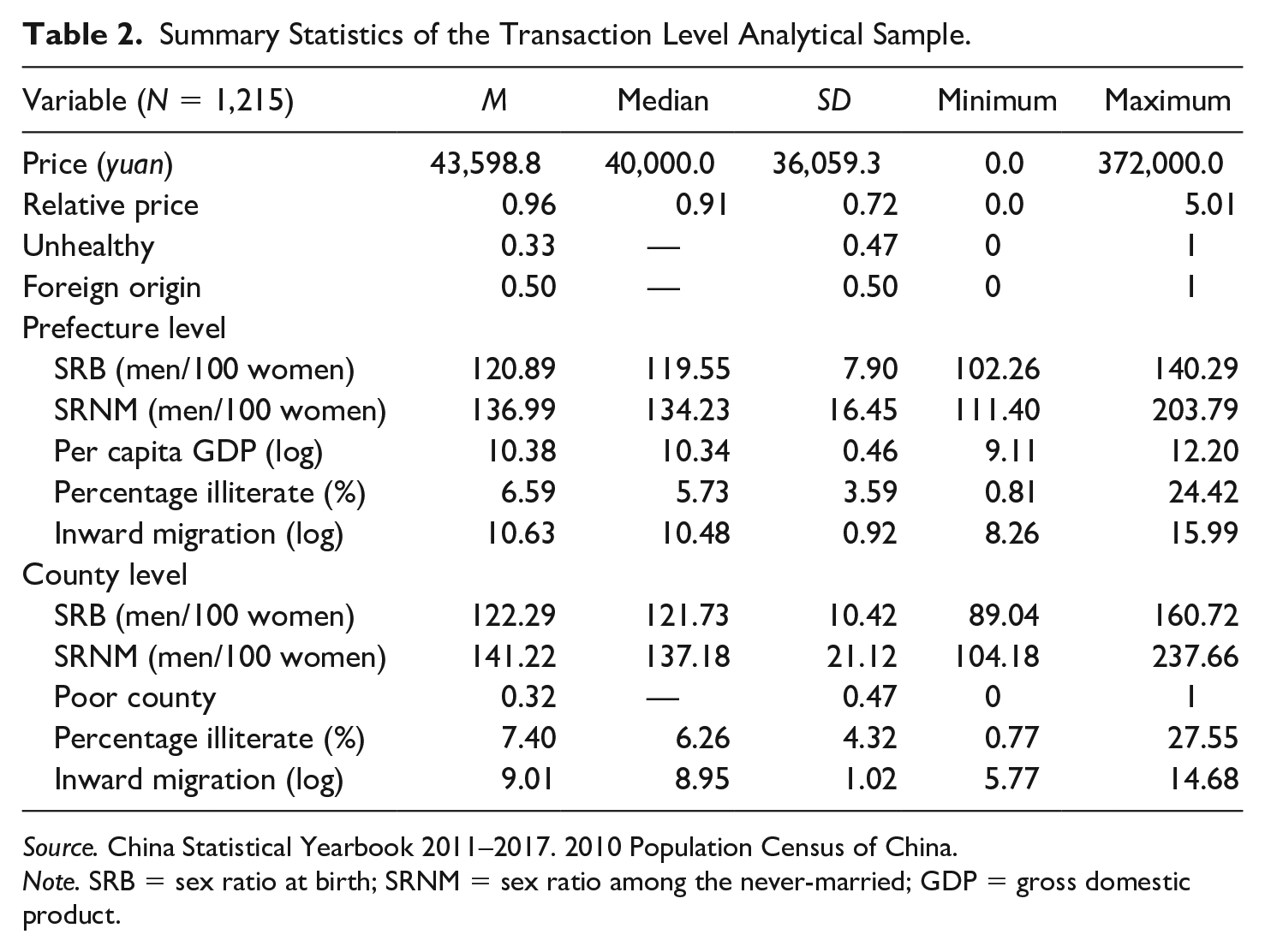
Source. China Statistical Yearbook 2011–2017. 2010 Population Census of China.
Note. SRB = sex ratio at birth; SRNM = sex ratio among the never-married; GDP = gross domestic product.
In the prefecture-level analytical sample, the unit of analysis becomes the prefecture. The cases in the transaction-level sample spread across 179 prefectures (as destination). I exclude prefectures in remote areas and autonomous regions in Tibet, Xinjiang, and Qinghai provinces due to the lack of accurate population and socioeconomic statistics. Only two cases appeared in these regions. Among the 307 prefectures in the sample, 26 had missing data on key socioeconomic variables. The final sample contains 281 of 334 prefecture-level municipal units in mainland China, out of which 164 have reported cases. The top five destination provinces with the most cases are Anhui (364), Henan (300), Shandong (161), Hebei (139), and Hunan (100).
The county-level analytical sample is constructed similarly to the prefecture-level sample. The sample contains 2,620 counties, out of which 393 have reported cases. Table 3 shows the summary statistics of the prefecture- and county-level analytical samples.
Summary Statistics of the Prefecture- and County-Level Analytical Sample.
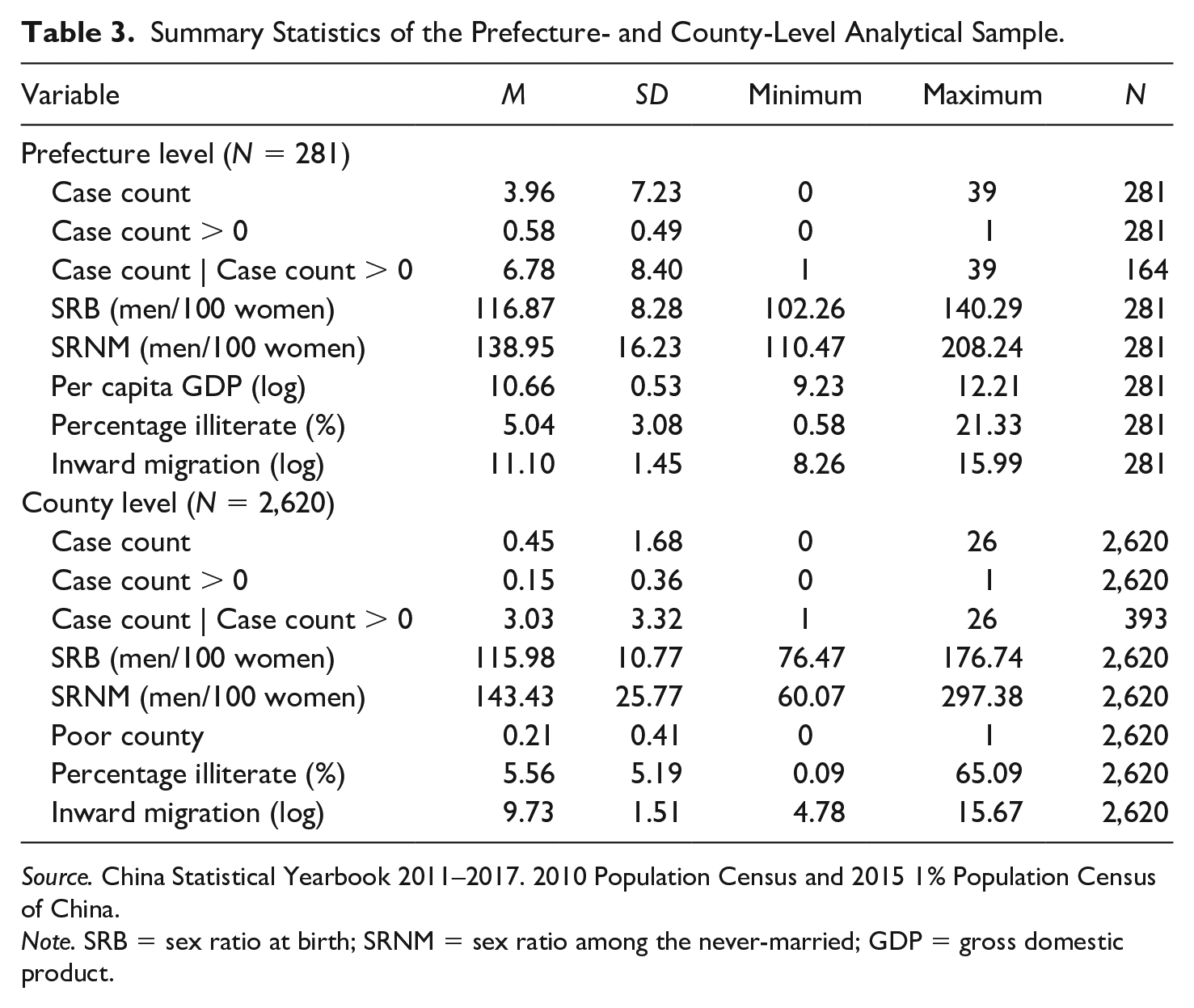
Source. China Statistical Yearbook 2011–2017. 2010 Population Census and 2015 1% Population Census of China.
Note. SRB = sex ratio at birth; SRNM = sex ratio among the never-married; GDP = gross domestic product.
Sex Ratio
The sex ratio data at the prefecture and county levels come from the 2010 population census. The census counted current residents at the standard time of the census, regardless of household registration (“hukou”) status. I matched the sex ratios with the buyer’s place of residence. The mean year of transaction in the analytical sample is 2014, so it is an acceptable compromise to use the SRB in 2010 as a proxy for SRB at the time of the transaction because regional SRBs are relatively stable across time. The correlation between 2000 and 2010 prefectural SRBs is significantly positive with a coefficient of .73.
For the SRNM, I proxied the condition in the marriage market at the time of the transaction using the SRNM aged 15 years and above in 2010. Although the buyers of trafficked women are not limited to never-married men, I used their sex ratio instead of that among singles (including the never-married, divorced, and widowed) because the latter is confounded by sex differences in mortality. Descriptions in court documents suggest that most buyers had never married (see Supplemental Appendix A2 for descriptive findings; Fan, 2000 cited in appendix).
Demographic and Economic Statistics
The prefectural demographic and economic statistics come from China Data Online. I acquired the annual prefecture-level average wage of employed workers, the per capita gross prefecture product (gross domestic product [GDP]), and other economic variables from 2010–2016. I matched this information to the cases based on the transaction year and the buyer’s place of residence (the 2016 variables are used as proxies for cases after 2017). For the prefecture-level analytical samples, I matched macroeconomic variables in 2014 to capture the general economic development of the region. For 2the county-level analytical sample, I tag all the counties that were listed as impoverished by the central government for the anti-poverty campaign in 2012 as an indicator of extreme poverty. I also used the percent of the population aged 15 years and above that is illiterate as a proxy for the civil development in the region. For migration, I used the number of inward migrations from other counties for the county-level sample, and that from other provinces for the prefecture-level sample because the prefecture-level migration data are not available.
Method
I applied the hurdle model and random-intercept Poisson regression model to the prefecture- and county-level analytical sample to study the association between sex ratios and the number of trafficking cases. I used the ordinary least square (OLS) regression and multilevel random-intercept models to analyze relative prices using the transaction-level analytical sample.
Number of Cases
The key dependent variable in the prefecture- and county-level sample is the number of cases since 2010. The classical model for discrete counts is the Poisson regression model. However, the sample contains excess zeroes compared with the Poisson standard, meaning that the number of prefectures that have no reported cases of trafficking of women for forced marriage since 2010 is greater than expected in a Poisson model. I explored two approaches to deal with this form of overdispersion. One is a hurdle model, which uses a logit equation to model whether a prefecture has any cases at all, combined with a zero-truncated Poisson model for the number of cases among prefectures that report at least one case (Mullahy, 1986). Denote the number of cases in prefecture
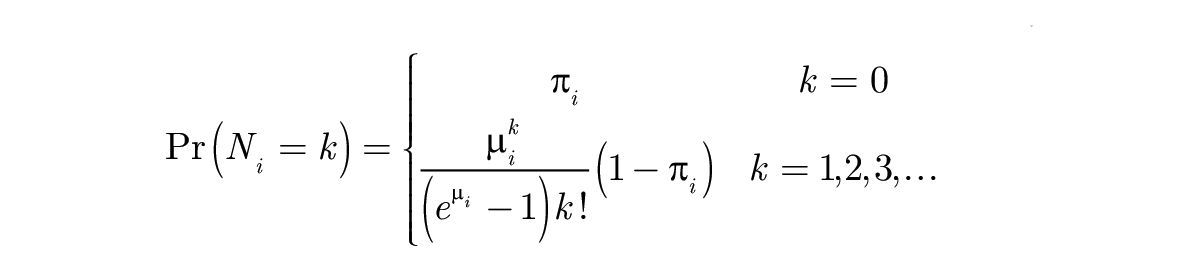
I model πi and µi as:


where
Another approach to handle overdispersion is a random-intercept Poisson model with a random effect at the prefecture level. The number of cases reported in each prefecture depends on unobserved factors like geographic barriers to rescue efforts, characteristics of trafficking networks, and the local government’s determination to combat trafficking. Most of these unobserved variables are assumed to be exogenous to the local sex ratios, yet not necessarily independent of the local level of economic development. Introducing a random effect adds overdispersion and helps to predict the counts more accurately. In the random-intercept Poisson model, the number of cases in prefecture

where
For the county-level sample, the model specification is similar, except that I did not have the county-level per capita GDP data. Instead, I used a dummy variable indicating whether the county was listed as a target for the anti-poverty campaign as a proxy for poverty.
Relative Price
I used the transaction-level sample, in which the key variable is the relative price of each transaction, to analyze whether the sex ratios affect the price. The explanatory variables have a multilevel structure, with cases nested in counties and prefectures, so I used the multilevel random-intercept model (Goldstein, 2011).
The multilevel random-intercept model is:

where
Results and Discussion
Figure 2 shows the trend of price and the relative price of trafficking of women for forced marriage cases since 2010 (in the transaction-level analytical sample). We can see that the price and the relative price fluctuated before 2013 and steadily rose afterward. The consumer price index (CPI)-adjusted trend in Figure 2A shows the adjusted mean price using the annual CPI in rural areas. The upward shape implies that the price increase was faster than that of the CPI in rural areas. In Figure 2B, we can see that the relative price exceeded one in 2017, meaning that the mean price was higher than the local annual wage of employed workers. The price trends diverged by type of women. Women from foreign countries and those without physical or mental disabilities were sold at a higher price. The mean price of the trafficked women of foreign origin is consistently the highest. This is not surprising because trafficked women from neighboring countries tend to be younger, healthier, and physically more attractive.
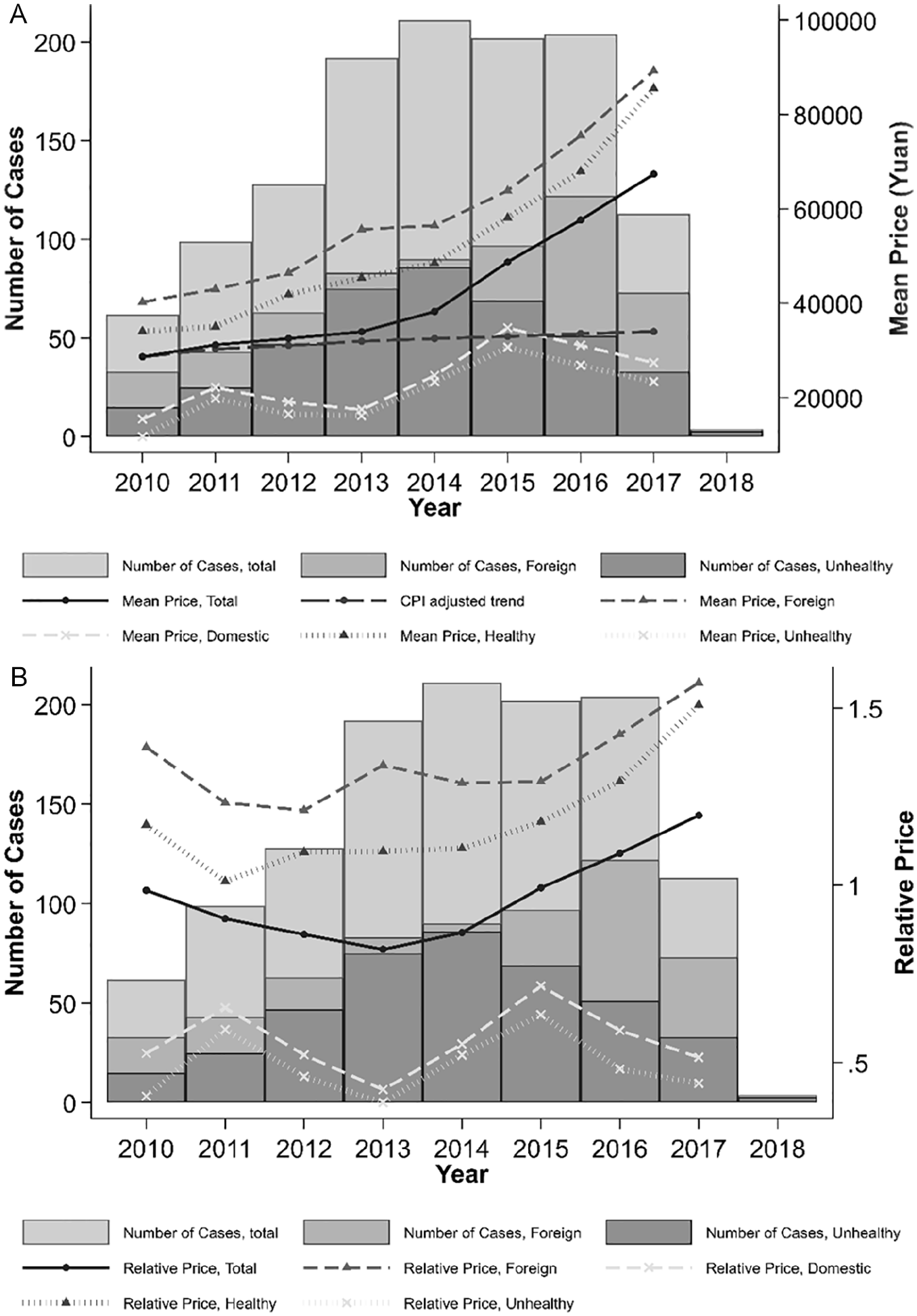
Trends of price and number of transactions by year since 2010. (A) Price. (B) Relative price.
Number of Cases
Table 4 shows estimates of the models for the number of trafficking cases. The coefficients have been transformed to odds ratios for the logit model and incidence rate ratios for the Poisson model.
Estimates of Hurdle Model and Random-Intercept Poisson Model for Number of Trafficking Cases.

Note. Robust standard errors are in parentheses. OR = odds ratio; IRR = incidence rates ratio; SRB = sex ratio at birth (men/100 women); SRNM = sex ratio among the never-married (men/100 women); GDP = gross domestic product.
p < .10. *p < .05. **p < .01. ***p < .001.
In the baseline models where the SRB and the SRNM are included separately, the coefficient of the SRB is significantly positive, and that of the SRNM is statistically insignificant. When both are included but without their interaction term, only the SRB has a statistically significant positive association with the probability of having a recorded case (Column 3). Adding the interaction term reveals that the effects of the SRB and the SRNM are interdependent. The coefficients for the SRB and the SRNM are both significantly positive but that of their interaction term is negative. I calculated the average marginal effect (AME) of each sex ratio to present their effects intuitively (see the bottom rows in Table 4). The AME is the average difference in the predicted outcome due to a one-unit change in the variable of interest, fixing all other covariates at their observed values. The zero-truncated Poisson model shows that among the prefectures that have reported cases, a one-unit increase in the SRB is associated with on average 0.26 increase in the predicted number of cases (Column 2). Similar interdependency of the SRB and the SRNM effect is evident in the estimates of the random-intercept Poisson model. In the model that controls for all the covariates (Column 5), a unit increase in the SRB is associated with a 0.35 increase in the predicted number of trafficking cases on average, whereas a unit increase in the SRNM is associated with a 0.11 decrease in the number of cases on average, with a p value of .057. I plotted the predictive margins at different values of each sex ratio in Figure 3. It clearly shows that the AME of the SRB increases with higher SRBs (see Figure 3A), whereas that of the SRNM is marginal and not statistically significant (see Figure 3B).
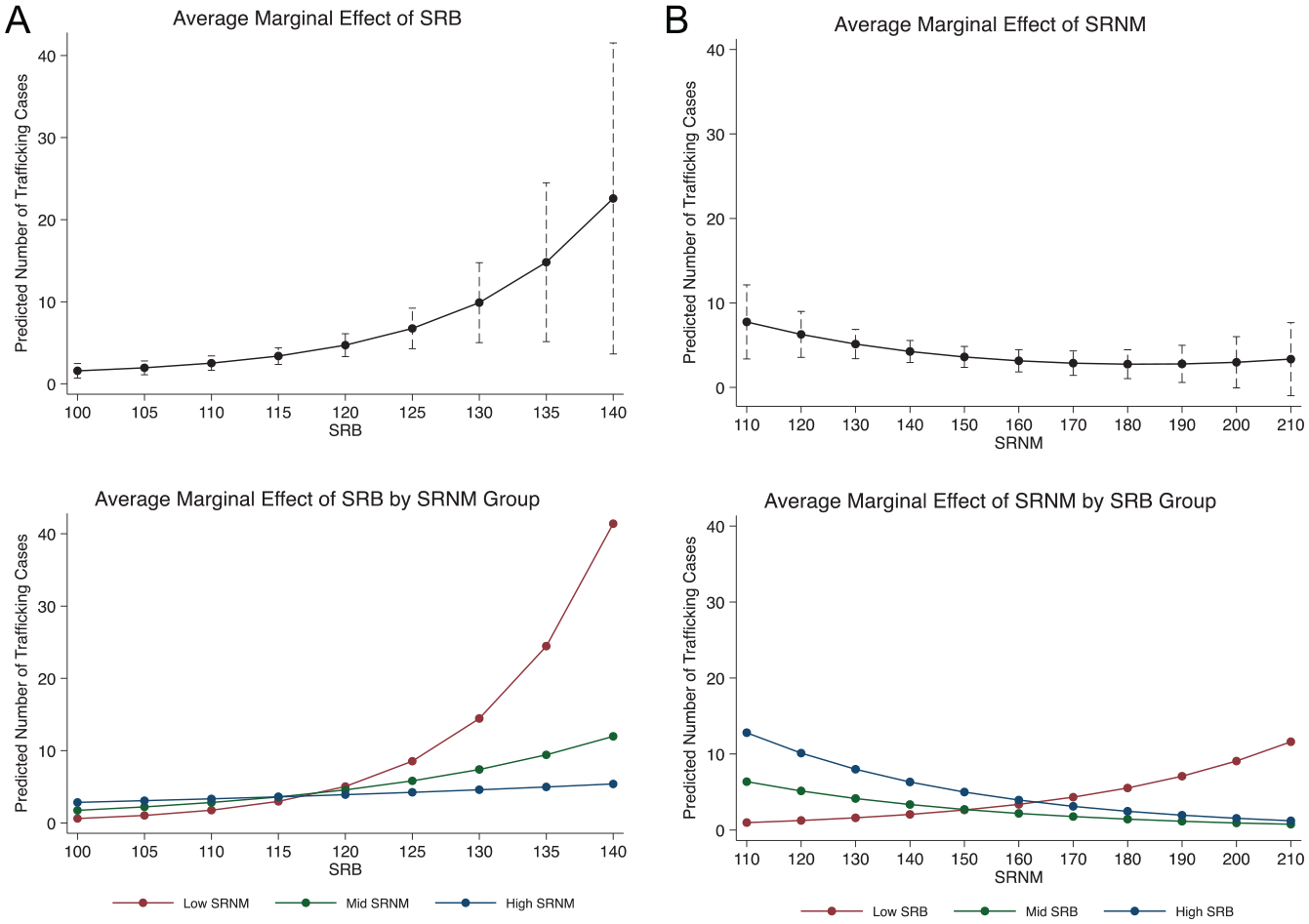
Average marginal effect plots of the sex ratio at birth (SRB) and the sex ratio among the never-married (SRNM). (A) SRB. (B) SRNM.
The interaction term between the SRB and the SRNM is consistently negative and statistically significant in all model specifications, meaning that the effect of one sex ratio is high when the value of the other is low. I ran auxiliary regressions with categorized SRB or SRNM to present the interaction effect. I categorized the sex ratio into three groups of the same size (SRB: low < 111, 111< mid < 119, high > 140; SRNM: low < 131, 131 < mid < 144, high > 144), and interacted the categorical sex ratio with the other continuous sex ratio in the regression. Graphs of the results of these regressions give a clear visual representation of the interaction effect (see Figure 3). Figure 3B shows that in prefectures with low SRBs, the predicted number of trafficking cases increases slightly with the SRNM. However, the effect of the SRNM gets reversed in places with mid or high SRBs. Figure 3A tells the story from another angle: The SRB has a more significant effect in prefectures with lower SRNMs.
A high SRB is a manifestation of son preference in traditional Chinese patriarchal values. It is common in qualitative narratives in the court documents that the buyer mentioned their desire to continue the family lineage by having a son. These buyers are usually single men in rural areas, who lack the education and labor skills to seize economic opportunities in the cities. Some parents arrange the purchase for their physically or mentally challenged sons only to have a grandchild. Put in the demand-supply framework, an SRB imbalance represents a specific force that drives up the demand in the black market of trafficked women because the high SRB and the high utility gain from purchasing a wife for childbearing share the same underlying cause: traditional patriarchal values. For some buyers, the need for a wife and the desire for a son could be essentially the same thing. A high SRB also implies that the residents have the means to violate the ban on prenatal sex selection in China. This mentality is consistent with purchasing a wife as an illegal solution to marriage. Therefore, the consistently positive association between the SRB and the trafficking of women is reasonable.
The lack of a consistent association between the SRNM and the trafficking of women for forced marriage might be unexpected. Theoretically, a high local SRNM would increase the potential demand in the black market because there would be fewer women available for marriage, and this shortage could be addressed through human trafficking. Another possible channel is that with a large shortage of marriageable women in the normal marriage market, the cost of a normal bride rises in terms of search costs and bride price. Those who find that price unaffordable might turn to the black market (Jiang & Sánchez-Barricarte, 2012). Empirical evidence partially supports this speculation. The coefficients of the SRNM are significantly positive after adding the interaction term. That means conditional on low SRBs, a higher SRNM increases the predicted likelihood as expected. Places where both the SRB and the SRNM are low have the smallest average number of cases. These prefectures are also wealthier and more developed than others on average. However, in places with a high SRB, a higher SRNM is associated with a lower predicted probability of trafficking. Prefectures with the combination of a high SRB and a low SRNM witness the highest number of trafficking cases. These prefectures concentrate in Anhui, Shandong, Henan, and the less developed regions in Guangdong and Fujian provinces. These places tend to have lower-than-average per capita GDP, a large population size, and a high out-migration rate.
The coefficients of the SRNM, as well as its interaction with the SRB, are significant after controlling for the prefecture-level variables, indicating that the mechanism of how the SRNM affects the trafficking of women for forced marriage is not as straightforward as expected. As discussed in the background section, the availability of “marriageable” women in the local marriage market is affected by the regional SRB, fluctuations in cohort size, assortative mating, internal migration, and marriage squeeze. These factors each have their deeper causes so we might need to distinguish different types of SRNM imbalance. For example, a low SRNM in a high SRB region is more likely to be a result of male-dominated out-migration than female-dominated in-migration. Single men who choose to stay are negatively selected. On the other side, places that attract in-migration for work are more likely to have a high SRNM. In this case, the pressure from a high SRNM could partly be relieved by a larger and more dynamic marriage market, thanks to high population mobility. The combined effect of the in-flow of single men depends on specific conditions. It is also possible that the overall SRNM fails to capture the social segmentation of the marriage market, so it is not an accurate measure of local stratified marriage market conditions.
The per capita GDP significantly lowers the likelihood of trafficking cases. The AME in the random-intercept Poisson model (Table 4 column 4) shows that a 10% increase in local per capita GDP is associated with a 0.4-unit decrease in the predicted number of trafficking cases. Per capita GDP is an indicator of general economic development, which affects many aspects of social development. First, better economic opportunities attract migrants and retain residents. High population mobility expands the size of the normal marriage market and lowers the demand for trafficked women. This channel is supported by the fact that the effect of per capita GDP reduces to be statistically insignificant after controlling for domestic migration. Second, economic prosperity generates room and hope for social mobility. Women from less developed regions can achieve upward social mobility through marriage-oriented migration (Fan & Huang, 1998; Gates, 1996). Young bachelors who seize the economic opportunities have better chances in the normal marriage market. Third, a high level of economic development reflects and undergirds stronger government capacity, which forestalls trafficking. Finally, economic prosperity is usually accompanied by the acceptance of modern social values. The general acceptance of gender equality, marital autonomy, and legal awareness would undermine the grounds for trafficking (Zhao, 2003).
Two socioeconomic characteristics might be especially relevant to the trafficking of women. First, it is commonly argued that better civil development would reduce trafficking cases by enhancing legal awareness. There is no direct measurement of civil development, so I used the percentage illiterate in the population as a reasonable proxy. The coefficient is positive as expected with a p value of .064 (see Table 4 Column 5). Second, because migration significantly reshaped the geographic distribution of sex ratios, it makes sense to include it in the model. We can see that migration has a substantial and statistically significant effect on the number of trafficking cases in the destination place, and that explains a large proportion of the uncontrolled prefecture random effect. A 10% increase in inward migration reduces the predicted number of cases by 0.24. Meanwhile, trafficking cases heavily concentrate in provinces that are experiencing sizable net out-migration. Internal migration may thus be a double-edged sword in its effect on human trafficking. While migration may alleviate marriage market pressures in the destination regions, it may also shift the burden of skewed sex ratios to the sending region. One study shows that individual trafficking risk is much higher in regions with large emigration flows in Eastern Europe (Mahmoud & Trebesch, 2010). The conclusion is consistent with the finding in this article that trafficked women were often lured by false promises of jobs in the destination region.
Columns 6 through 10 of Table 4 show the county-level regression estimates. The county-level sex ratios measure a more specific condition in a more confined marriage market. The estimates tell a very similar story.
Selection due to the regional variation in detection of trafficking would potentially bias the estimates toward zero. We would expect that more developed cities are better at detecting trafficking cases because they have stronger government capacity, resources, and grassroots cooperation. Therefore, a larger proportion of unreported cases is expected in less developed regions. It is reasonable to expect more undetected cases in places with higher SRBs based on the estimated strong positive association between the SRB and the number of cases. Considering these scenarios, the estimates using detected cases may provide a lower bound of the effect. The actual effect of sex ratio imbalances and poverty on the trafficking of women is very likely to be higher than the current estimates.
Price
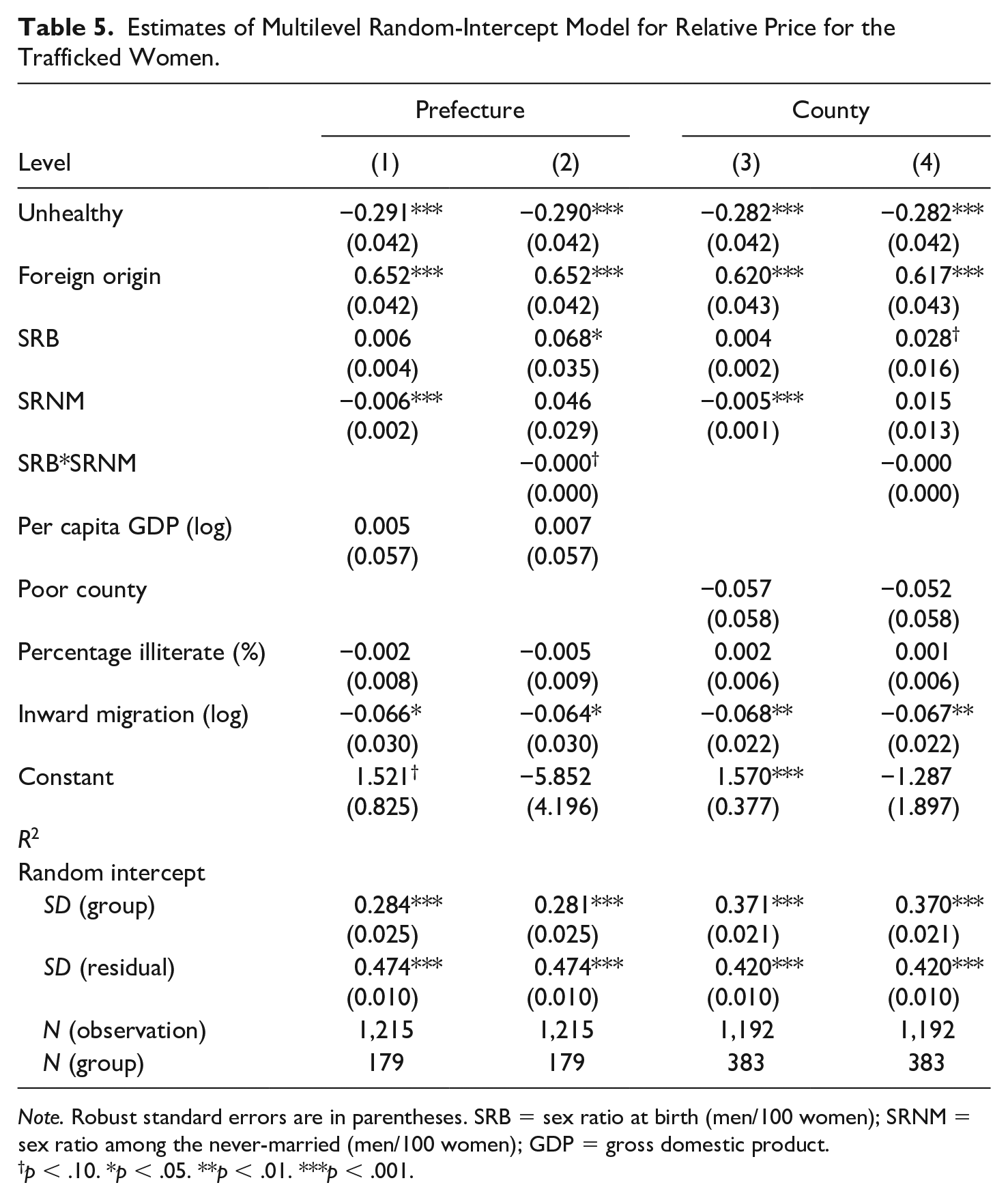
Table 5 shows the analysis of price using the transaction-level analytical sample. Price is measured by the ratio of the actual price to the local annual wage of employed workers at the time of transaction. The first two columns show the estimates of the model using prefecture-level controls and random intercepts, and the last two columns, the county-level ones.
Estimates of Multilevel Random-Intercept Model for Relative Price for the Trafficked Women.
Note. Robust standard errors are in parentheses. SRB = sex ratio at birth (men/100 women); SRNM = sex ratio among the never-married (men/100 women); GDP = gross domestic product.
p < .10. *p < .05. **p < .01. ***p < .001.
Women’s characteristics matter a lot in determining prices. Trafficked women of foreign origin are significantly more expensive, with a premium of around 0.7 times the local annual wage. The premium is partly attributable to the fact that these “imported brides” tend to be younger, healthier, and physically more attractive as mentioned in the descriptive findings. Those with physical or mental disabilities are sold at 30% below the average. These findings imply that the price is highly dependent on women’s reproduction value in the black market of trafficked women.
In a regression without the interaction term, the coefficient of the SRB is positive, whereas that of the SRNM is significantly negative (Column 1). After taking into account their interaction term, only the SRB has a statistically significant positive effect on the relative price. A 10-unit increase in the SRB brings up the relative price by 0.68. This is consistent with the previous finding that the SRB is positively associated with the number of trafficking cases. The finding that the SRNM has no effect on the price of trafficked women again calls into question the common belief that the local shortage of women in the marriage market directly causes the trafficking of women for forced marriage.
The local per capita GDP is not statistically significantly associated with the relative price, but higher rates of in-migration significantly lower the price. This supports the previous claim that population mobility affects the trafficking of women. The pricing mechanism of trafficked women in the black market involves lots of complications. For example, the qualitative description of the trafficking process in the court documents often mentioned referrals from family, friends, and acquaintances. The referral mechanism lowers search costs and risks for both the trafficker and the buyer. If the search cost and risk premium constitute a large share of the cost, economies of scale would result in a lower price in places with high population mobility. Estimates using the county-level controls confirm these findings.
Conclusion
This article examines whether a shortage of marriageable women induces the trafficking of women for forced marriage in China using a unique data set from court documents. Empirical analyses show that imbalances in the SRNM on their own have neither a consistent nor substantial association with the trafficking of women for forced marriage. More cases of trafficking of women for forced marriage are detected in places with higher SRBs, especially in those with low SRNMs. A higher SRB is also associated with a higher price for trafficked women. Economic development and inward migration reduce the number of trafficking cases, and more in-migration is associated with a lower price. Combined with the qualitative description from the court documents that most buyers are villagers in deprived and isolated areas, the analyses suggest that entrenched patriarchal values as indicated by a high SRB, sex-specific migration due to uneven regional economic development, and the marriage squeeze felt among low-status men in the context of a shortage of marriageable women in the total population are the fundamental causes of trafficking of women for forced marriage in China. The shortage of marriageable women is a social problem, but it is not a direct cause of the trafficking of women.
This study would benefit from more detailed information about trafficking transactions, including the place of origin of the domestic victims, age, and education of the victims and the buyers. Unfortunately, such information is unavailable in most court documents. A second limitation of the empirical analysis is the lack of detailed annual SRNM and inward and outward migration data. If such data become available, future research could further investigate the structure of the marriage market and reveal how son preference, population mobility, and marriage squeeze work together to generate undesirable outcomes.
Trafficking of women is an extreme example of how demographic factors affect public safety and everyday life. It brings fear and panic to communities, as every woman is a potential victim (Zhao, 2003). Whenever news reports about the trafficking of women come out, the general advice for women is to stay at home at night for safety and avoid traveling alone to unfamiliar places. While this advice affords some protection, it restricts women’s ability to pursue economic opportunities and enjoy social activities. To avoid being trapped in trafficking, women are confined to a larger prison in their daily life. In fact, the trafficking of women for forced marriage is a tragedy for everyone: Disadvantaged men are paying a high price for a trafficked wife, and the trafficked women are paying an even higher price. Everyone in society is taxed in this transaction for living in instability and insecurity.
Solutions to the human trafficking of women for forced marriage in China are twofold: one features social enlightenment and the other emphasizes balanced economic development and social mobility. Social enlightenment programs about legal awareness and gender equality target the cultural roots of the practice, namely, patriarchal values and clan loyalties, which are also the causes of the skewed SRB in China. One remedy for the existing net shortage of women and the uneven regional distribution of marriageable women would be fiscal transfers regulated by the central government to support social security programs in poor regions where bachelors are highly clustered (Sharygin et al., 2013). Policies that remove the institutional barriers against rural-urban migration would also alleviate the pressure in the marriage market by increasing social mobility. However, policymakers should be aware of the “bride drain” caused by internal migration that shifts the burden of the shortage of women from the developed regions to the poorer regions, and the central government should take measures to achieve more balanced social development.
Supplemental Material
sj-pdf-1-vaw-10.1177_10778012211014565 – Supplemental material for Does the Shortage of Marriageable Women Induce the Trafficking of Women for Forced Marriage? Evidence From China
Supplemental material, sj-pdf-1-vaw-10.1177_10778012211014565 for Does the Shortage of Marriageable Women Induce the Trafficking of Women for Forced Marriage? Evidence From China by Wanru Xiong in Violence Against Women
Footnotes
Acknowledgements
The author thanks Arun Hendi, Noreen Goldman, Alícia Adserà, Germán Rodríguez, Cheng Cheng, Shuang Chen, and Marianne Tønnessen for support and comments. The author also thanks the editor and reviewers for their suggestions. All errors are my own.
Declaration of Conflicting Interests
The author declared no potential conflicts of interest with respect to the research, authorship, and/or publication of this article.
Funding
The author disclosed receipt of the following financial support for the research, authorship, and/or publication of this article: This work was supported by the Eunice Kennedy Shriver National Institute of Child Health and Human Development of the National Institutes of Health (award number: P2CHD047879). The content is solely the responsibility of the author and does not necessarily represent the official views of the National Institutes of Health.

Supplemental Material
Supplemental material for this article is available online.
Author Biography
References
Supplementary Material
Please find the following supplemental material available below.
For Open Access articles published under a Creative Commons License, all supplemental material carries the same license as the article it is associated with.
For non-Open Access articles published, all supplemental material carries a non-exclusive license, and permission requests for re-use of supplemental material or any part of supplemental material shall be sent directly to the copyright owner as specified in the copyright notice associated with the article.
