



Abstract
An online survey was completed by victims/survivors of intimate partner violence (IPV), living in both urban and rural areas, who owned pets and/or livestock. The majority of the sample had not received services from domestic violence shelters and services. Quantitative and qualitative data regarding barriers to accessing support and escaping IPV are presented for both pet and livestock owners. Using validated measures of IPV and animal abuse, differences in experiences of IPV are described for victims who had experienced their partners mistreat their animals and those who had not. Recommendations are offered for training, legislation, and pet-friendly domestic violence shelters and rental housing.
Research has demonstrated the prevalence of animal maltreatment in relationships where intimate partner violence (IPV) is occurring (Ascione et al., 2007; Barrett et al., 2018, 2020; Collins et al., 2018; Fitzgerald et al., 2022; Hartman et al., 2018; Simmons & Lehmann, 2007; Stevenson et al., 2018). Victims/survivors of IPV experience their pets being threatened, emotionally and physically abused, neglected, and killed (Barrett et al., 2018, 2020; Fitzgerald et al., 2016, 2022). In some cases, victims experience their pets going “missing” (Doherty & Hornosty, 2008; Fitzgerald, 2007).
Extant research has examined the connection between type and severity of IPV and animal maltreatment (Barrett et al., 2020; Hartman et al., 2018; Simmons & Lehmann, 2007) and types of animal maltreatment and survivors' decisions to end relationships (Barrett et al., 2018). The connection between coercive control and threats and abuse directed at pets is documented in existing research (Barrett et al., 2020; Flynn, 2000; Giesbrecht, 2021; Hardesty et al., 2013; Johnson, 2008; McDonald et al., 2019). Violence against pets and other animals has been recognized as a risk factor for severe IPV (Barrett et al., 2020; Walton-Moss et al., 2005) and domestic homicide (Office of the Chief Coroner for Ontario, 2019).
Children are harmed by exposure to IPV and threats and abuse directed toward pets (Ascione et al., 2007; Crawford & Bohac Clarke, 2012; Fitzgerald, 2007; McDonald et al., 2019). Furthermore, just as IPV and child maltreatment commonly co-occur (Wathen & MacMillan, 2013), child maltreatment and abuse of pets often coincide (Ascione et al., 2007; Simmons & Lehmann, 2007). Adult victims, children, and animals can be killed by IPV perpetrators.
Pets are an important source of comfort and support for victims/survivors of IPV and their children (Barrett et al., 2018; Collins et al., 2018; Crawford & Bohac Clarke, 2012; Fitzgerald, 2007; Flynn, 2000; Hardesty et al., 2013; McDonald et al., 2019). When victims of IPV are isolated, they may come to rely on their pets even more. For many survivors, companion animals also provide a sense of protection and security (Barrett et al., 2018; Fitzgerald, 2007; Hardesty, et al., 2013). Perpetrators of IPV attempt to control victims by exploiting the bonds they have with their pets (Ascione et al., 2007; Barrett et al., 2020; Collins et al., 2018; Crawford & Bohac Clarke, 2012; Doherty & Hornosty, 2008; Hardesty et al., 2013; Simmons & Lehmann, 2007; Wuerch et al., 2020).
When victims of IPV own animals, they may delay ending the relationship due to responsibility for and concern for animals. Many victims/survivors do not want to be separated from their animals and may delay leaving if they are unable to take their animals with them. When animals have been threatened or harmed, victims fear for the animals’ safety if they leave them behind with their partner (Ascione et al., 2007; Barrett et al., 2018, 2020; Collins et al., 2018; Fitzgerald, 2007; Hardesty et al., 2013; Hartman et al., 2018; Stevenson et al., 2018; Wuerch et al., 2020). Research has illustrated that when a victim's companion animal is also harmed by the abusive partner, this impacts decision making—in some cases, women are more likely to delay leaving as they do not want to leave the pet with the abuser; in other cases, harm to animals can solidify a victim's decision to end the relationship and try to escape to safety with their pet (Barrett et al., 2018; Collins et al., 2018; Wuerch et al., 2020, 2021).
When survivors relocate after ending a relationship where IPV is taking place, traveling and finding accommodations with pets poses significant difficulties (Fitzgerald et al., 2022; Hardesty et al., 2013). Many people who are experiencing IPV and own companion animals are not aware of animal safekeeping options or are only informed of these options by shelter staff upon their arrival at a domestic violence shelter, limiting their ability to plan for animals’ safety before leaving (Barrett et al., 2020). Victims/survivors may choose to return to their former home because the partner has their pet (Barrett et al., 2020; Fitzgerald, 2007) or visit to care for pets or livestock (Giesbrecht, 2021; Wuerch et al., 2020).
This research was conducted in Saskatchewan, where the rate of police-reported IPV (655 victims per 100,000 population) is over double the national rate (322 victims per 100,000). Nearly eight of every 10 (79%) victims of IPV are female. Women in rural areas of Canada experience higher rates of IPV (789 victims per 100,000 population) (Burczycka, 2019). Saskatchewan has a higher rate of residents living outside a census metropolitan area (35.6%) than the national average (16.8%) (Statistics Canada, 2017). Examples of rural, remote, and northern (RRN) communities in Saskatchewan include small towns and farms located near small towns, First Nations reserves, and northern communities that do not have road access and can only be accessed by air. Women in RRN Canada are more likely to be killed by violence than those living in urban areas (Dawson et al., 2018, 2021). Barriers to safety experienced by victims/survivors in RRN communities include geographic distance to service agencies and transportation challenges, which are exacerbated during the winter months. Further, leaving RRN communities means leaving culture, community, and lifestyle (Moffitt et al., 2022).
Purpose
Much of the previous research on IPV and animal maltreatment was conducted with women who were receiving services at domestic violence shelters (Ascione et al., 2007; Barrett et al., 2018, 2020; Crawford & Bohac Clarke, 2012; Doherty & Hornosty, 2008; Fitzgerald et al., 2019; Hardesty et al., 2013; Simmons & Lehmann, 2007). Therefore, how many women choose not to leave due to concern for animals, and how their experiences differ from those who do not seek shelter, is largely unknown. For this reason, it was important to seek responses from victims/survivors of violence who had not accessed shelter. In addition, extant research primarily focuses on the experiences of victims/survivors who own pets; research on the intersection of IPV and ownership of livestock is limited (Crawford & Bohac Clarke, 2012; Doherty & Hornosty, 2008; Giesbrecht, 2021; Wuerch et al., 2020, 2021).
The goals of the present study were to: (a) gather responses from victims/survivors who had not accessed domestic violence shelters, as well as those who had; (b) document the experiences of victims/survivors who owned different types of animals (pets, service animals, livestock); (c) describe victims/survivors’ experiences with animal safekeeping in the context of IPV; (d) document the impact on children when IPV and animal maltreatment are present; (e) identify connections between different types of animal maltreatment and different types of IPV, including physical and sexual violence and controlling behavior.
Method
The present study consisted of an online survey for people who had experienced IPV and owned animals (pets/companion animals, service animals, or livestock). The survey was part of a larger mixed-methods study which included interviews with victims/survivors who owned animals, an online survey for the general public, and online surveys for human service and animal welfare professionals.
Measures
Demographic Variables. Participants were asked their age, gender, ethnicity, and if they were born in Canada in open-ended text boxes. Yes/no questions asked if participants lived in a rural area and on a farm.
Composite Abuse Scale Revised–Short Form (CASR-SF; Ford-Gilboe et al., 2016). The CASR-SF is a self-report measure designed to measure IPV. The CASR-SF assesses if respondents have ever experienced IPV, as well as if they have experienced IPV in the past 12 months. The CASR-SF includes four initial questions to assess if the respondent has ever been in an adult intimate relationship, is currently in an adult intimate relationship, and has been afraid of a partner—current or former. The measure includes 15 questions relating to various experiences of IPV, asking if each one has ever happened (yes/no; maximum score of 15) as well as how often it happened in the last 12 months. The CASR-SF includes subscales to measure experiences of physical (five items), sexual (two items), and psychological abuse (eight items).
Checklist of Controlling Behaviors (CCB; Lehmann et al., 2012) is an 82-item self-report measure of coercive control. The CCB includes 10 subscales including physical abuse (10 items), sexual abuse (nine items), emotional abuse (nine items), economic abuse (seven items), intimidation (seven items), threats (seven items), minimizing/denying (seven items), blaming (seven items), isolation (10 items), and using male privilege (nine items). The frequency of behaviors is scored on a scale of never (0) to very frequently (4), for a maximum score of 328. Wording of items was changed from male-specific (him/his) to gender neutral (they/their or his/her), with the exception of the question regarding using male privilege.
Partner's Treatment of Animals Scale (PTAS; Barrett et al., 2020; Fitzgerald et al., 2016) is a 21-item self-report measure of animal abuse within the context of IPV that includes five scales: threats to harm animal (four items), physical neglect of animal (three items), emotional abuse of animal (five items), physical abuse of animal (five items), and severe physical abuse of animal (four items). The frequency of behaviors is scored on a scale of never (0) to very frequently (4), for a maximum score of 84. The words “a pet” were replaced with “an animal” in PTAS items to include respondents who owned large animals or service animals. For the items, “Left a pet [or service animal] outside longer than I thought safe” and “Killed a pet [or service animal],” the phrase “or service animal” was added.
Experiences of IPV and Animal Ownership. Using open-ended text boxes, respondents were asked about the relationship in which IPV occurred and about the animals that they owned during that time. Respondents were asked if care for their animals prevented them from seeking help. A “select all that apply” multiple-choice question asked participants to identify barriers or challenges that they experienced when owning different types of animals and experiencing IPV. Respondents were asked if they believed that their partner's mistreatment of their animals was motivated by a desire to control them, if ownership of animals impacted how they responded to the abuse, and if they sought help in relation to their animal(s). A multiple-choice question also asked respondents to identify service providers from whom they had sought assistance.
Participants who identified that they had children were asked yes/no/not sure questions regarding whether their child(ren) witnessed animals being abused, harmed, threatened, or killed; if they felt that their child(ren) were affected by witnessing abuse of animals; and if they had observed their child(ren) hurting or engaging in other abusive behavior toward animals.
Open-ended text boxes (“Why or why not? Please feel free to tell us more, if you wish” or “Please describe”) were included after yes/no and multiple-choice questions, allowing participants to elaborate on their experiences, if they chose to do so. Qualitative survey responses were coded with NVivo qualitative data analysis software.
Procedure
The study was approved by the University of Regina's Research Ethics Board. The online survey was open from January 3, 2020, to March 31, 2020. The recruitment poster was posted on Provincial Association of Transition Houses and Services of Saskatchewan's (PATHS) and Saskatchewan Society for the Prevention of Cruelty to Animals’ (SPCA) websites and social media accounts and shared in the organizations’ email newsletters. Information about the study was also shared in radio and print stories by media outlets across the province of Saskatchewan. An email message inviting participation was sent to various organizations, with a request that they share the invitation to participate with their contacts (e.g., disability organizations, animal rescues, and services that assist victims of violence).
Before beginning the survey, participants were provided with information regarding the purpose of the study, the voluntary nature of the study, the right to withdraw, and confidentiality. Participants indicated their consent before moving on to the survey questions. Prior to beginning the survey, participants were informed that the survey would ask questions about violence/abuse, and a link to download a list of service providers was provided. After survey questions asking about children, a note was included to encourage respondents to reach out to a service provider for help for the child, if they felt that their child had been impacted by exposure to violence. Links were also provided for information regarding technology safety and clearing browser history. This information, as well as the list of service providers, was shared again at the end of the survey.
The survey asked about three kinds of animals--pets/companion animals, livestock, and service animals--and provided a definition 1 for each. A definition of IPV 2 was also provided at the beginning of the survey.
Results
Demographic Variables
Research participants included 60 survey respondents, ranging in age from 23 to 66 (M = 43 [SD = 11.84]), who identified as having experienced IPV and owning animals. Participants were asked their gender and ethnicity in open-ended text boxes. For ethnicity, the majority of participants (84.7%) self-identified as “white” or “Caucasian” and 8.5% self-identified as Indigenous (“First Nations,” “Métis,” or “Aboriginal”). The remainder identified simply as “Canadian.”
Animal Ownership
Respondents were asked if they owned pets, livestock, or service animals at the time they experienced IPV (Table 1). Nearly all respondents (96.7%) owned a pet. Pet-owners were asked what type of pet, and how many, they owned at the time they were experiencing IPV. The 58 pet-owning respondents collectively owned 70 dogs, ∼53 cats, 3 five birds, and two pet rodents (guinea pigs and hamsters) at the time IPV was occurring. Three respondents also reported owning a reptile or fish. Thirty-eight percent (38%) had only one pet, 31% had two pets, and the remaining 31% had three or more pets. On average, respondents owned two pets (M = 2.37 [SD = 1.84]).
Respondent Demographics.

Note: Total percentages may not sum to 100 and ns may not sum to 60 due to nonresponse. IPV = intimate partner violence.
Eleven respondents (18.3%) reported that they had owned livestock at the time IPV was occurring, with the majority of these (91%) owning horses. Five (45%) owned cattle, one owned fowl, one owned sheep, one owned pigs, and another owned donkeys and mules. Six of those who owned horses owned other types of livestock, such as cows, as well. One respondent did not identify what type of livestock they owned. No survey respondents had a service animal at the time they were experiencing IPV.
Experience of IPV and Animal Maltreatment
Lifetime experience of IPV was calculated by totaling the “yes” responses to all 15 Composite Abuse Scale Revised-Short Form (CASR-SF) items. Subscale scores for lifetime physical, sexual, and psychological violence were similarly calculated. The total score on the Checklist of Controlling Behaviors (CCB) was used to provide an overall score for an experience of IPV (specifically, coercive controlling violence). In addition, scores for the 10 subscales (physical abuse, sexual abuse, emotional abuse, economic abuse, intimidation, threats, minimizing/denying, blaming, isolation, and using male privilege) were calculated. Similarly, PTAS provided a total score for animal maltreatment in the context of IPV as well as scores on the five subscales: physical neglect, emotional abuse, physical abuse, and severe physical abuse of animal, and threats to harm animal (Table 2).
Participant Mean Scores on Experiences of IPV and Animal Abuse.
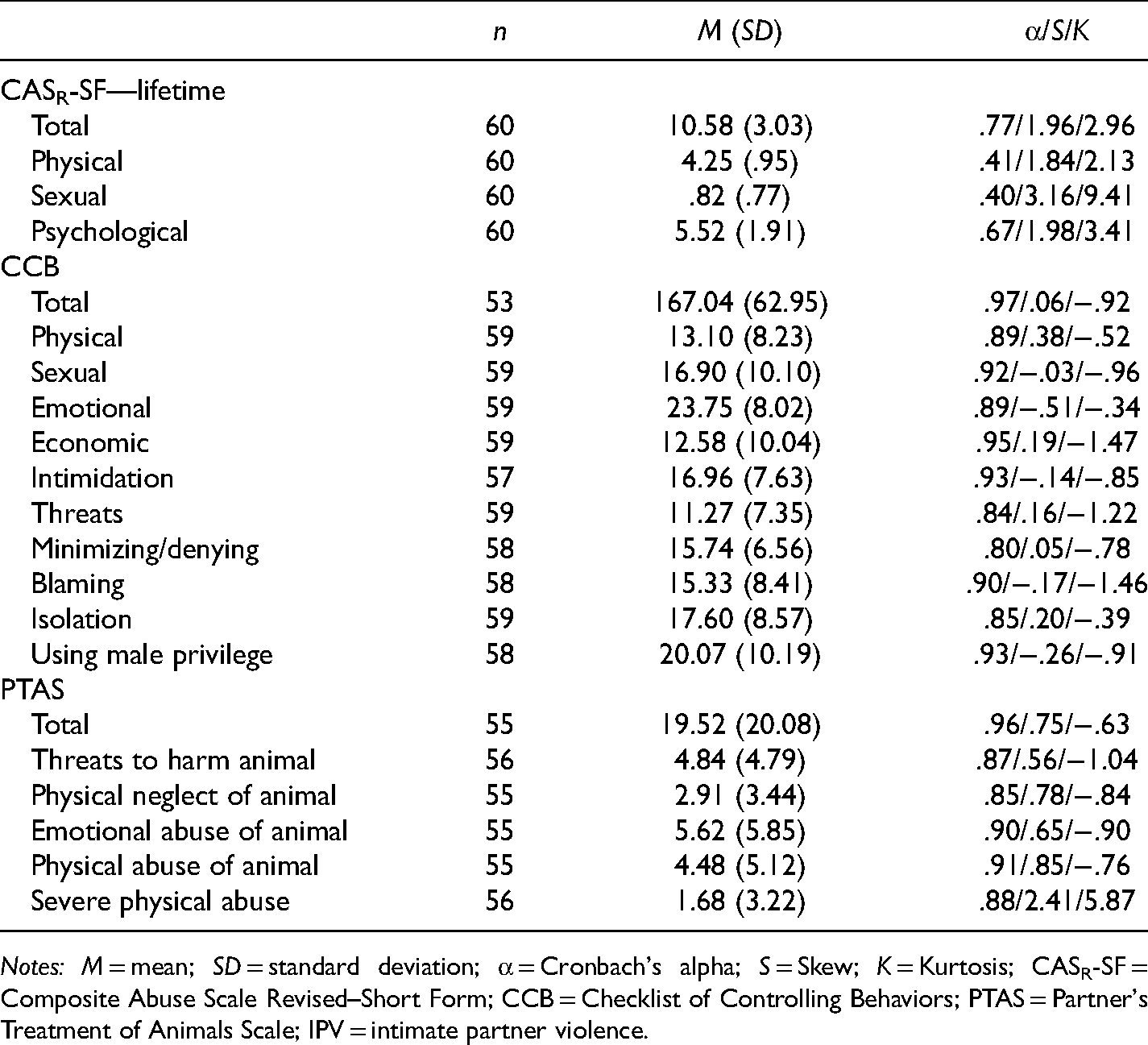
Notes: M = mean; SD = standard deviation; α = Cronbach's alpha; S = Skew; K = Kurtosis; CASR-SF = Composite Abuse Scale Revised–Short Form; CCB = Checklist of Controlling Behaviors; PTAS = Partner's Treatment of Animals Scale; IPV = intimate partner violence.
Most participants (95%) reported that they were no longer in the relationship in which they had experienced IPV. These respondents were asked approximately how many times they had left or ended the relationship. Those who provided a number had left the relationship an average of five times (M = 5.34 [SD = 8.01]). Some respondents provided responses including “frequently” and described the cycle of abuse over a decades-long relationship. Of the three respondents who reported that they were currently in a relationship in which IPV was taking place, two had previously attempted to leave.
Help Seeking
Less than half (41.7%) of the respondents reported IPV to the police. Around one quarter (26.7%) had received assistance from a domestic violence counseling agency or support center, 25% from a medical professional, 8.3% from a domestic violence shelter, and 6.7% from an animal welfare agency. Over 40% (43.3%) identified receiving support from other sources. In the open-ended text box associated with this question, the most common “other” source of support accessed by respondents was family members, both for emotional support and animal safekeeping. Friends, workplaces, and counselors also provided support. Several respondents noted that they were unable to access support, including some who reached out to police but did not receive a helpful response and a man who did not find any supports for male victims/survivors.
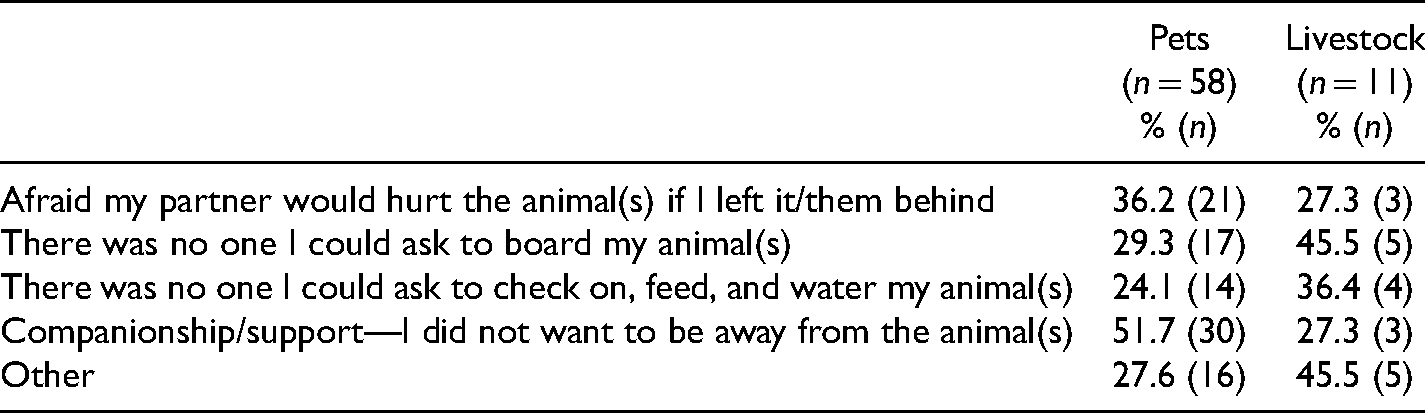
Over one-third (34.5%) of victims/survivors who owned pets stated that care for their companion animal(s) prevented them from seeking assistance related to IPV. For those who owned livestock, 27.3% reported that care for their livestock prevented them from seeking help. Victims/survivors were asked what barriers or challenges they experienced in relation to their animals in a question that asked respondents to select all that apply and also included an option to share other barriers. Examples of other challenges respondents experienced included difficulty finding rental housing that would allow pets and fear that their partner would harm them if they tried to take or keep an animal that belonged to the partner (Table 3).
Barriers for Victims Who Care for Animals.
Group Differences
The majority (80%) of the sample reported one or more of the 21 items on the PTAS. Victims/survivors of IPV were divided into two groups: those who owned animals but did not experience their animals being mistreated or experienced low levels of animal maltreatment, and those whose animals were mistreated by their partner. The criteria used by Barrett et al. (2020) were applied—i.e., the low/no animal maltreatment group indicated four or fewer behaviors on the PTAS, but no items on the severe physical abuse subscale.
Of the 57 survey respondents who completed the PTAS, 24 fell into Group 1 (low or no animal maltreatment) and 33 fell into Group 2 (animal maltreatment). Of those in Group 1, 12 reported a score of zero on the PTAS. The other 12 indicated that between one and four behaviors on the PTAS had occurred. Respondents in both groups reported that living with animals impacted how they responded to IPV (Table 4).
Group Differences.
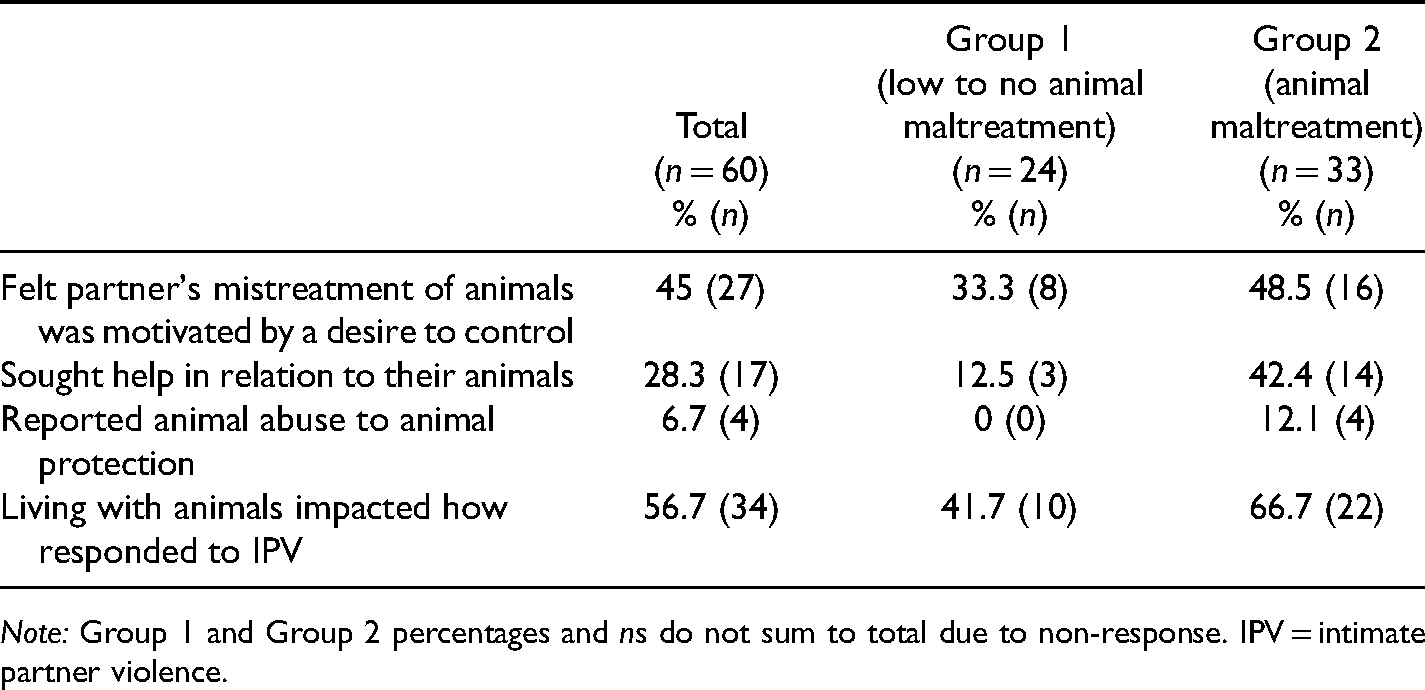
Note: Group 1 and Group 2 percentages and ns do not sum to total due to non-response. IPV = intimate partner violence.
Means were calculated for Group 1 and Group 2 on CASR-SF lifetime and CCB scores. The group that experienced animal maltreatment had higher mean scores than those who reported low to no animal maltreatment, as well as the total sample, on total CASR-SF and CCB scores, as well as on every subscale (Table 5).
Group Means on IPV Subscales.
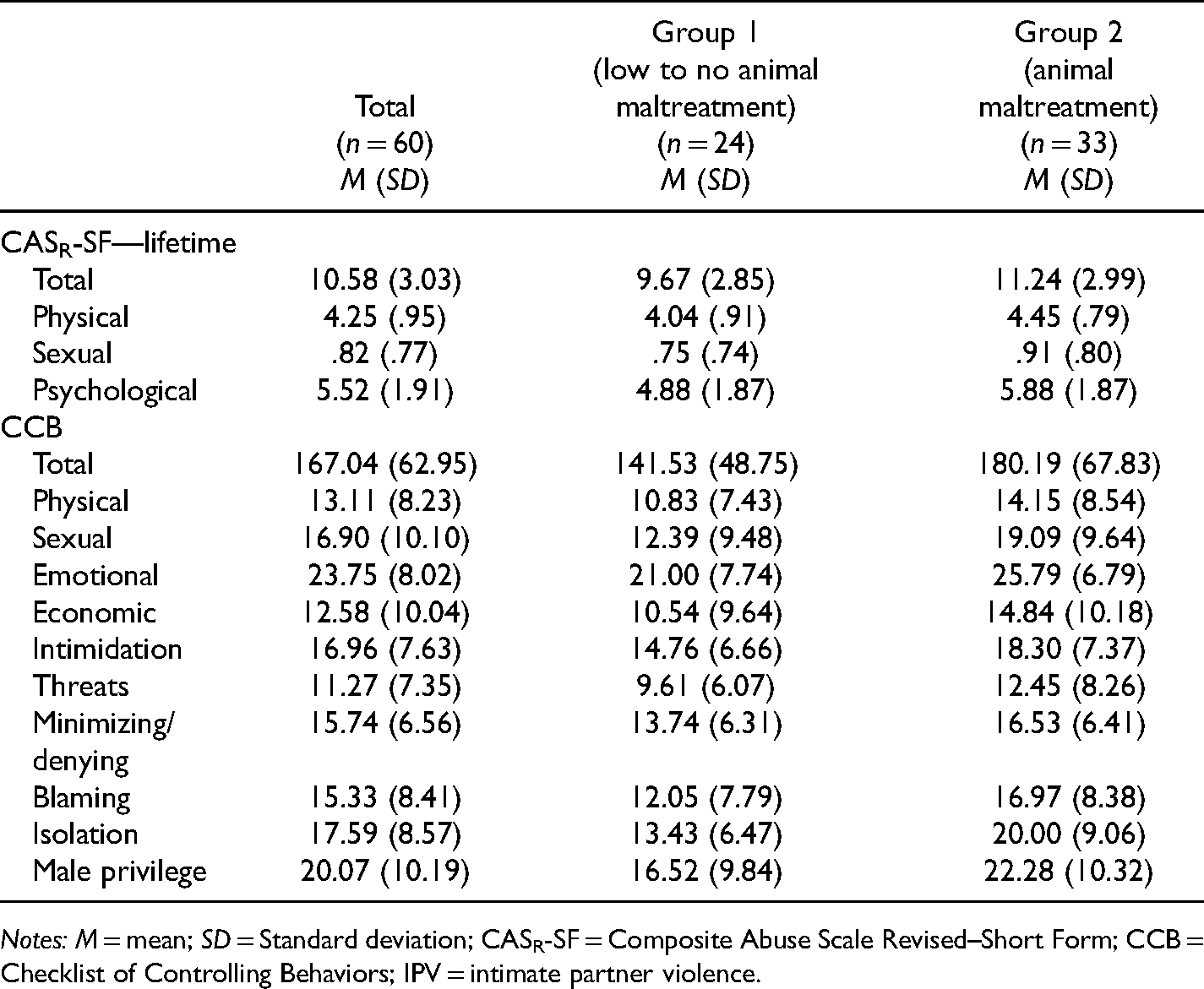
Notes: M = mean; SD = Standard deviation; CASR-SF = Composite Abuse Scale Revised–Short Form; CCB = Checklist of Controlling Behaviors; IPV = intimate partner violence.
Independent samples t-tests were used to compare the two groups. Results of the t-tests indicate that victims/survivors in Group 2 had significantly higher scores on the CASR-SF overall (p ≤ .05) and the CASR-SF psychological violence subscale (p ≤ .05), as well as the sexual violence (p ≤ .05), emotional abuse (p ≤ .05), blaming (p ≤ .05), isolation (p ≤ .01), and using male privilege (p ≤ .05) subscales on the CCB (Table 6).
t-Tests of Group Differences.
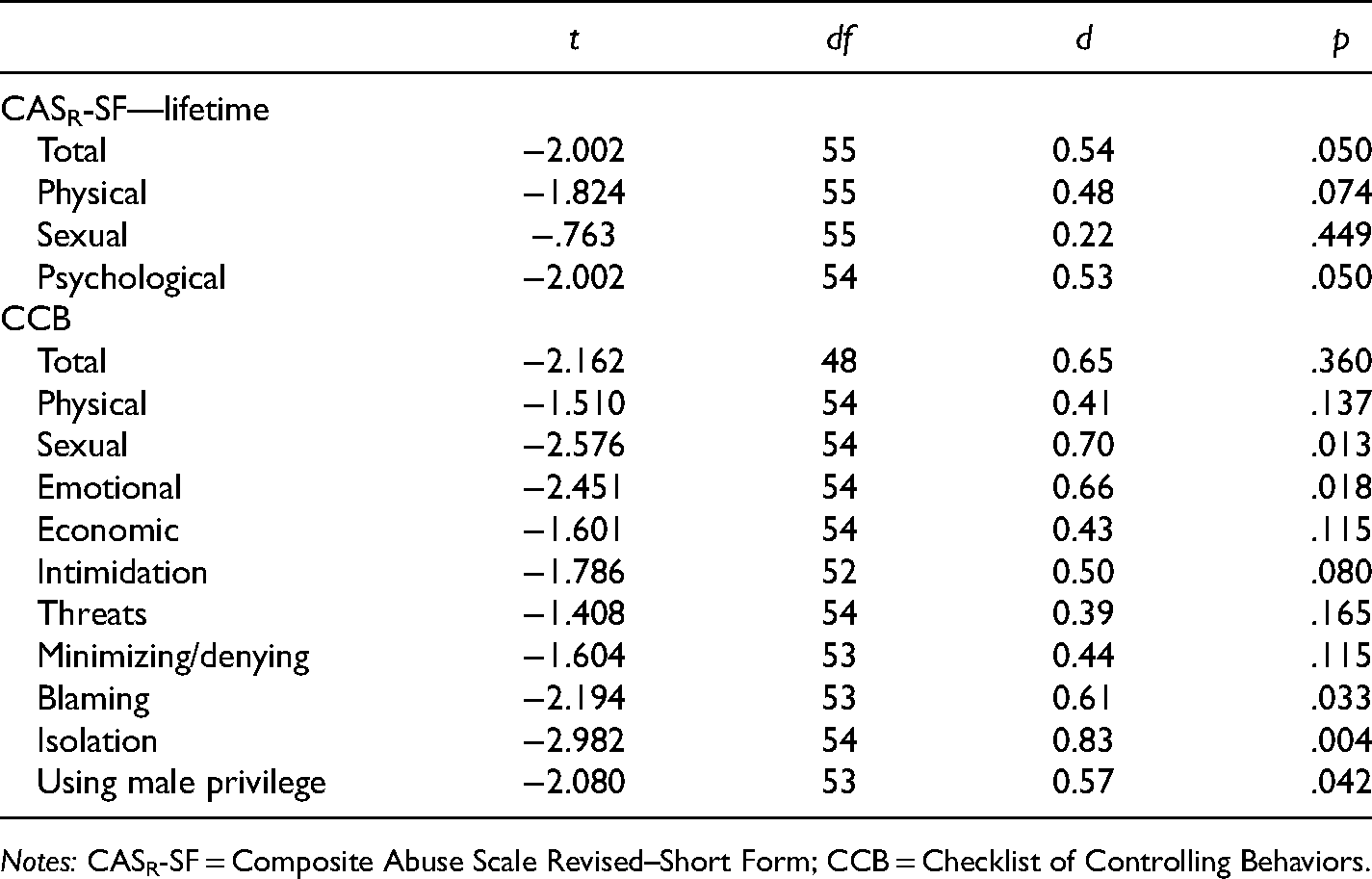
Notes: CASR-SF = Composite Abuse Scale Revised–Short Form; CCB = Checklist of Controlling Behaviors.
Correlations
As expected, the CASR-SF and CCB were significantly correlated (r = .802, p ≤ .01). Further, the physical abuse (r = .480, p ≤ .01) and psychological/emotional abuse (r = .626, p ≤ .01) subscales on these measures were significantly correlated, though the two sexual abuse subscales were not (r = .244). Statistically significant correlations were found between the PTAS and both abuse scales (CASR-SF lifetime total, r = .552, p ≤ .01 and CCB, r = .730, p ≤ .01), as well as on the majority of subscales (Table 7).
Interscale Correlations.
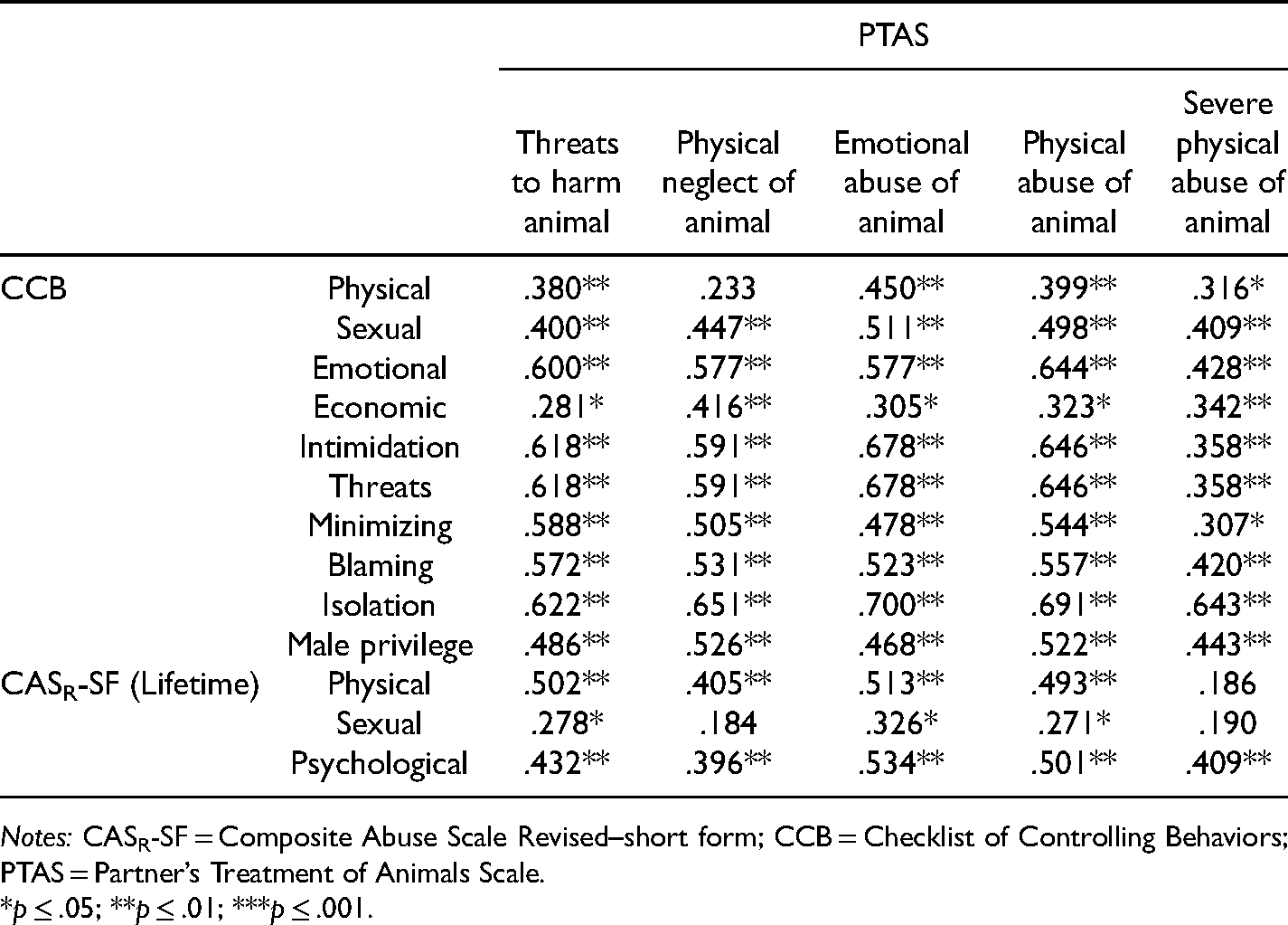
Notes: CASR-SF = Composite Abuse Scale Revised–short form; CCB = Checklist of Controlling Behaviors; PTAS = Partner’s Treatment of Animals Scale.
*p ≤ .05; **p ≤ .01; ***p ≤ .001.
IPV, Child Abuse, and Animal Maltreatment
Over half of the sample (58.3%) had children. Most respondents with children also had companion animals (97%). Approximately one-third (32.4%) said that their children witnessed pets being abused, threatened, or otherwise harmed. Two reported that children witnessed pets being killed. Eight respondents with children (22.9%) had livestock. Three of these (37.5%) stated that their children witnessed livestock being abused, threatened, or otherwise harmed. In accompanying qualitative comments, some respondents who stated that their children did not witness the abuse of animals clarified that their children were either grown and moved out or were babies at the time the IPV was taking place. When asked if they felt that their children have been affected by witnessing abuse of animals, 28.6% reported that they felt they had, and another two (6%) were unsure. Respondents were also asked if they had observed their children hurting or engaging in other abusive behavior toward animals. One respondent reported they observed this, adding a comment that “When we lived there I did. But now we are out of that life they have healed.” Respondents also remarked on the importance of children's bond with animals.
Qualitative Responses
Not all of the victims/survivors who participated in the present study experienced their partner being cruel to animals. While some victims/survivors who owned animals stated that animals did not impact the way they responded to abuse or planned for the future, for the majority of respondents, care for animals impacted them in numerous ways. In some cases, animals were threatened if the victim tried to leave; in others, the victim was told by their partner they could not take the animal(s) or they felt that they would not be able to, due to concerns regarding shelter, housing, or animal safekeeping, thus creating a barrier to leaving.
Experiences of Animal Maltreatment in the Context of IPV
In qualitative survey responses, victims/survivors contextualized their experiences of caring for animals while experiencing IPV. Several respondents shared that their partner had killed their pets, including dogs and puppies, cats and kittens, birds, and hamsters. In one case, a calf was beaten to death. Animals were killed in front of survivors, in an attempt to hurt and terrorize them. Animals can be killed as a warning to victims not to leave or as a punishment after they leave. A male survivor shared, “She had the dog put to death to punish me for leaving.”
Animals were killed by neglect, such as birds that were starved, and through violence, including a dog that died after being beaten by the partner. Sometimes animals “went missing” or had “accidents” that victims attributed to their partner's violence. Respondents detailed severe violence inflicted on their pets. Additionally, abusive partners prevented victims/survivors from accessing veterinary care for animals after they had been abused, thus prolonging their suffering.
Several survey respondents reported that they had feared for their lives, as well as the lives of their animals, during the relationship and after exiting. Victims whose animals were murdered in front of them understood that this was a message that they could be killed next.
He enjoyed the fear [the animals] had. It's what he started doing to me. He didn't have to threaten to kill me with an object because I knew he could with his bare hands. He beat a calf so bad that it died the next day from its injuries. I knew that was a message to me that he could kill me any time he wanted to.
At the time I didn't know for sure if he would kill the cat or not or if it was just mind games but I didn't want to take that chance.
They were my babies. I couldn't leave them. I was scared that if I told or left he would find me, kill them and make me watch. Then do the same to me. He threatened to burn down my house.
He shot my dog with a .22 in the shoulder to permanently wound him. He stated next time it would be me and I would suffer.
Respondents explained how their animals’ behavior was impacted by the violence: “the dog was injured and terrified and still suffers today from the mental part of the abuse (always worried someone is going to hurt her, flinches).” Another dog became protective of the victim and would react aggressively when others were near her.
Some IPV perpetrators intentionally threatened and harmed animals to control victims/survivors. Others were violent to animals as well as to people, though the abuse may not have happened in front of the victim/survivor and may not have been enacted as an intentional means of control. No matter the abuser's intention, however, care for animals controlled victims by creating fear and increasing barriers to safely ending the relationship. Respondents described how they complied with their partners’ wishes in an effort to prevent further violence to their animals.
I didn't want to do anything to anger him further, as he could turn from me and direct it towards the cats.
I took more abuse from him because he’d killed one of my kittens and I was afraid that if he didn't get his way (my abuse was almost exclusively sexual) he’d kill my other kitten too. I became more compliant.
Victims became adept at anticipating their partner's anger and worked to deflect violence aimed at their pets.
I was constantly hyper-vigilant and anticipating his anger. If I sensed something was going to happen, I put myself in his path.
Would defend the cat more vigorously than myself.
Several respondents stated that at the time they were experiencing it, they were unaware of the dynamics of IPV. Some stated that they initially thought what was happening to them was “normal.” In this way, animals were a catalyst for victims/survivors to realize that the situation was dangerous and to begin thinking about escaping the relationship.
It is when he started abusing my dogs that I realized how bad the situation was. Before then, I was simply accepting his abuse.
Animal ownership may have increased isolation experienced by some survivors, as some reported becoming reluctant to go out as they did not trust their partner not to harm the animals when they were not there. Just as IPV often does not end with separation, neither does animal maltreatment: “The animals were harmed when the relationship ended as he knew hurting them was a way to get to me.”
Barriers to Ending Relationships
Victims/survivors who own livestock or large animals, such as horses, face many barriers when trying to leave relationships in which IPV is occurring. There are financial barriers relating to the division of joint property, and logistical barriers, such as finding places that can board horses. Survivors experienced others failing to recognize the bond that they had with their animals and not understanding their desire to keep their horses after leaving a relationship.
I had one horse. He was a gift from a friend and was a rescue. … I saved him from slaughter. Anyone I turned to for help felt I had no right to be asking, because my horse was considered a luxury and I should just give him up.
In situations where animals are linked to financial livelihood, the prospect of separating is daunting. Furthermore, when victims/survivors have an emotional attachment to animals, such as horses, partners may work to gain ownership of the horses in the division of assets or threaten to do so if the victim ends the relationship. Ownership of livestock is often a barrier for farm women who have been caring for the animals and fear that livestock will not be cared for after they leave. Some respondents described how they had no choice but to leave their livestock behind when they fled with their children.
I’m the one that took care of them until I left the farm when he threatened to kill me. It was the hardest thing I’ve ever had to do because I knew the farm animals would be neglected.
One participant noted that she returned to check on the animals, when her partner would allow it. This may have put this respondent in harm's way.
Pet-owning victims/survivors described how they stayed in relationships where they were subjected to violence because of animal ownership. Some did not leave as they could not take their pet, either because their partner would not allow it or they could not find anywhere to go with their pet and they did not want to be separated. Finding somewhere to go with pets proved to be a challenge for many respondents. Respondents commented that domestic violence shelters do not allow residents to have their pets with them and spoke of the challenges of finding affordable rental housing that would allow pets. Victims/survivors noted that most rental housing does not allow pets, with dogs (especially larger dogs) allowed less often than cats. Those that do allow pets are often more expensive, which created a barrier to access and caused some survivors to delay their plans to leave until they felt they could afford to do so.
A couple of times, I had opportunities to flee with my young sons but because I had our three dogs, I had nowhere to go where they would be welcome. The boys' hearts would have broken had I left the dogs behind and I did not trust my ex to care for them or maybe he might have even taken his rage out on them.
The survivor who had witnessed her partner kill one of her two kittens could not bear to leave without the remaining kitten: “I still had one kitten. I couldn't leave her behind but I had nowhere to go that I could bring her with me.”
While some survivors chose to stay in the relationship until they could leave with their animals, others left and housed their animals elsewhere (temporarily or permanently), and others had to leave their animals behind.
It limited my options as far as where I could go, as shelters do not take pets and subsidized housing did not allow them either. I had to choose to give them up in order to be safe.
For some respondents, family members were able to temporarily care for their companion animals. One survivor reported that she was able to stay in her home: “I eventually had him leave the home and I kept the pets. He stated he could not properly care for them and that he didn't like the cats at all.”
Sometimes the animals in harm's way belonged to the victim or were owned jointly, adopted while in the relationship. In other cases, the animal belonged to the abusive partner, which limited the victim's ability to leave with the animal, rehome it, or seek care for it. Some respondents shared that they could protect and care for animals while in the relationship, but feared leaving animals in harm's way after ending the relationship.
The parrot belonged to my partner. When we were in the transition of breaking up and he moved out, I offered to keep the parrot and offered to pay for him. My partner at the time said he would rather kill the parrot than let me have him. I was fearful of retaliation to me and the parrot if I moved the parrot to a safe place.
Barriers to Accessing Support
Some animal owners stated that at the time they were experiencing IPV they were not aware of how to access support: “I did not know who would help or who would believe me that the dog mattered.” Several victims/survivors shared that they felt that they would not be believed if they were to reach out for help, due to their partners’ threats and attempts to make them look “crazy.” Others were denied the help they sought.
He convinced the police I was unstable and emotionally disturbed.
I did try to report him to the RCMP. He always talked his way out of things. Made himself out to be the good guy. He lied to them every time I tried to get help.
Some survivors explained that they did not involve police due to fear that they would anger their partner further, resulting in increased danger to them, their children, and their animals. One explained how she felt: Shame, fear. (He had promised to kill the boys first while making me watch then to slowly kill me if I ever tried to lie and say he abused me or the boys.) After the churches failed me, I did not trust anyone to help us. To have him taken away for a night or two was not worth the fear of what it would have been like when he was released.
Others reported that they had involved police in the past and did not receive assistance.
I reported a couple of incidents to the police, but it made the abuse worse. On one occasion I had left and I needed a police escort to get some personal belongings and one officer was chatting with my husband and admiring my husband's rifles and the other officer told me that I better answer my husband when he was asking me a question so didn't really trust the police after that.
There were examples where police attended but did not charge the perpetrator of violence. Some partners had perpetrated multiple assaults without being charged.
He [police officer] said charging him with domestic violence would “open a whole can of worms” so they left it at that.
My first husband put me in the hospital and was never even charged. I have no faith in law enforcement to protect me. I have even less that they would protect my animals.
I had reported it numerous times but it was not effective. Either he would not be charged, or he would be released on limited conditions and ultimately the charges would be dropped. It only went all the way through to a trial once, despite at least 8 calls to police.
Several victims/survivors explained that the IPV they experienced was primarily comprised of behaviors other than physical assault (such as coercive controlling violence, emotional abuse, financial abuse, and property damage) and, not offenses where criminal charges would be laid. Additionally, respondents expressed challenges with trying to prove these forms of violence when “there were never any ‘marks’ to prove that something happened.” One respondent explained, “Second husband didn't hit. He stalked, raped, threatened, and isolated me. That could not be proven.”
While some respondents stated that they had access to legal mechanisms (such as Peace Bonds or other orders stating that the perpetrator not contact them) to help keep them safe, some stated that their partners would breach orders without consequence. Others shared examples where the legal system failed to take victim safety into account. In the example below, the perpetrator used livestock as an excuse to maintain access to the victim after separation.
However when arrested for domestic violence and released on conditions, they granted him an exception to care for “the livestock” without consulting me. I was staying on the farm and able to care for them. This should have never been granted. I would have never agreed if asked. This gave him access to us. When he would come on the property to spy, intimidate, or take things, he simply claimed he was caring for the livestock and the RCMP could do nothing.
Planning for Safety with Animals
A challenge encountered by some victims/survivors who were seeking temporary animal safekeeping was that some animal welfare organizations and rescues do not take owned animals and therefore would not temporarily care for animals. One victims/survivor said: I reached out to rescue agencies to try to collaborate and find fosters. I was made to feel like I was a horrible person by the agencies for asking. I asked friends and family to put the word out to find homes. There was no support, even though everyone knew I was being abused.
She went on to explain how the process of rehoming animals delayed her escape: “It took years, and I suffered with the abuse the whole time.”
Several respondents shared that they relied on family members to care for their animals when they were in the process of exiting IPV, though not all victims/survivors live near family members or have family or friends who would have the ability to care for animals. Others may not want to get involved because of a lack of awareness about IPV or due to concerns for their own safety: “When I was trying to leave, I spoke to a neighbor to see if I would be able to stay there and bring some of my horses. She said ‘no’ as she did not want to get involved.”
Victims/survivors stated the need for accommodations that allow families to keep their companion animals with them, mentioning both domestic violence shelters and rental housing.
I just wish that all safe houses would include whatever pets the woman and her family have.
Affordable housing needs to be made available for low income families so that people can transition together with their pets to a safer life.
Human Animal Bond
Respondents shared how their companion animals comforted them when they were experiencing IPV. For some, pets were an additional reason to end the relationship. Pets also provided comfort and support when survivors were starting over.
After every outburst he had, I always had my dog and cuddled with her and she licked my arm like she understood. She has helped me through so much. She was by my side through it all.
My dog helped me get through the situation and come to the conclusion I needed to leave in order for both of us to be safe.
One survivor explained how her dog saved her life when she was contemplating suicide.
My dog saved my life. I wanted to kill myself. I was laying in bed figuring out which pills I could take to die in my sleep and he came up and laid directly on top of me. He would not let me get up. I cried myself to sleep. I knew I had to keep going for him. He truly saved my life.
Respondents also shared how their partners were jealous of the bond they had with their companion animals. Some partners complained or attempted to interfere or prevent animals from bonding with the victim. One survivor stated: “While I was required to clean up after them I was not permitted to play or pet them.” Some respondents described their animals’ fear of their partners, such as a puppy that would pee when the husband was near or dogs that became aggressive in attempts to protect the victim.
Discussion
IPV and animal maltreatment frequently co-occur. Some survey respondents experienced severe violence toward their animals, including animals being killed. Human victims put themselves in harm's way to protect their animals; and pets were harmed trying to protect their humans. Qualitative survey responses provide additional insight into types of perpetrators who harm intimate partners, as well as animals—those who use violence toward animals to terrorize and control victims; those who may not enact violence but use threats toward animals to terrorize and control victims; and those who are abusive and cruel to both animals and people, though it may not be rooted in dynamics of power and control. No matter the abuser's intention, care for animals controlled victims by creating fear and increasing barriers to safely exiting the relationship. The most dangerous time for many victims of IPV is when they have left, or are planning to leave, the relationship (Office of the Chief Coroner for Ontario, 2019). As stated by respondents in the present study, danger to animals can also escalate when the victim has left or is planning to leave. Some perpetrators threaten, harm, or kill animals to impress upon the victim that she will not get out alive.
Not all victims/survivors who participated in the study experienced their partner abusing animals, however; 20% did not witness their partner mistreating animals, and several others experienced low levels of animal maltreatment. It is important to note that survivors who own pets and livestock experience barriers to seeking safety for themselves, their children, and their animals, whether or not their animals are also abused. Regardless of whether their partner had also mistreated their animals, many respondents who owned pets and livestock reported that living with animals impacted how they responded to IPV and that care for animals delayed or prevented them from seeking help and exiting the relationship. Care for animals impacts victims/survivors in numerous ways; planning to leave, finding temporary shelter, and permanent housing is much more complicated for those who also need a place for pets. Transporting and boarding livestock poses incredible difficulties.
These findings demonstrate the need to work toward increasing awareness of the connection between IPV, animal abuse, and concern for animal safekeeping. It is necessary to assess risk to people when indicators of animal abuse are present and to assess risk to animals when indicators of IPV are present. Victims are at risk both because someone who harms animals is especially dangerous to people and because ownership of animals is a barrier to escape. Safety planning with victims/survivors must also consider safety for animals.
Results of the present study show statistically significant correlations between the PTAS and both measures of IPV (CASR-SF and CCB) (Table 7). These findings demonstrate the connection between animal abuse (including threats to harm animals, physical neglect of animals, emotional abuse of animals, physical abuse of animals, and severe physical abuse of animals), and IPV generally, as well as physical, emotional, sexual violence, and controlling behaviors specifically. Findings regarding the relationship between different types of IPV and the existence of animal maltreatment differ somewhat from previous studies. In a large U.S. sample from whom data were collected between 1998 and 2002, Simmons and Lehmann (2007) found that women whose pets were abused reported higher scores on the CCB overall, as well as on every subscale of the CCB, than those whose pets were not abused. Barrett et al. (2020) found significant differences between victims/survivors whose pets were abused and those who experienced little to no animal maltreatment on the physical and sexual abuse subscales of the CCB. The present study, using similar methods to Barrett et al. (2020), found that victims/survivors who experienced their animals being maltreated had significantly higher scores on sexual violence, emotional abuse, blaming, isolation, and using male privilege subscales on the CCB, as well as the CASR-SF overall and the CASR-SF psychological violence subscale. The present study and Barrett et al. (2020) had relatively small sample sizes (n = 24 and 33 and n = 21 and 34, respectively) collected in Canada. Barrett et al. (2020) included women who had stayed in domestic violence shelters, whereas the majority of the sample in the present study had not. The present study also included victims/survivors who owned livestock as well as pets.
Results from the present study confirm that people who experience IPV often make several attempts to leave before ultimately ending the relationship. Even then, victims/survivors are unable to fully separate from their abusive partner if they have shared children. Results of the present study indicate that many victims/survivors do not report their abuse to the police or access other formal supports. Few respondents reported staying in a domestic violence shelter, likely because few shelters in the province currently shelter families and pets together. Whether or not their animals were maltreated by their partner, participants indicated that living with animals impacted how they responded to IPV.
Barriers victims/survivors who own companion animals or livestock experienced in leaving the relationship included fear that their partner would hurt the animals if they were left behind and not having anyone to ask to board or check on and care for the animals. Another significant barrier is the human–animal bond, a finding that is consistent with extant research (Barrett et al., 2018; Fitzgerald, 2007). Both pets and large animals, such as horses, provide companionship and comfort. Victims/survivors of IPV and their children did not want to be separated from their animals. It is difficult for pet owners to find rental accommodations that allow pets, and boarding options for horses and other livestock are often limited. Given the demonstrated connection between economic abuse, IPV, and care for animals (Fitzgerald et al., 2022), many survivors may struggle to pay boarding costs after leaving home.
One respondent shared, “Anyone I turned to for help felt I had no right to be asking, because my horse was considered a luxury and I should just give him up.” Thinking of pets, such as dogs and cats, and large animals, including horses, as “luxuries” denies the human-animal bond that has been documented in research (Barrett et al., 2018; Collins et al., 2018; Crawford & Bohac Clarke, 2012; Fitzgerald, 2007; Flynn, 2000; Hardesty et al., 2013). When victims/survivors are forced to give up their animals to be safe, this exacerbates harm to these victims and their children, denying them a consistent source of companionship, love, and support. When victims/survivors have to give up their animals, this undoubtedly causes emotional harm to the animal as well. Furthermore, survivors of violence are often forced to leave their homes and communities, give up their jobs, and start over financially simply to be free from abuse. Those who perpetrate violence rarely have to start over in the same way. When support is not available to victims/survivors who own animals, this reinforces the expectation that the victim must lose everything in order to be safe.
Approximately one-third of victims/survivors with children reported that their children witnessed pets or livestock being threatened or harmed. In situations where IPV is occurring, children are often exposed to both abuse of the victim parent as well as animal abuse. Extant research demonstrates the frequency of co-occurring child abuse in situations of IPV (Wathen & MacMillan, 2013). After separation, pets provide a source of comfort and support for children who have been exposed to IPV and experience other forms of abuse. Leaving pets behind likely increases the trauma that children experience.
Respondents in the present study stressed the need for pet-friendly domestic violence shelters. On average, victims/survivors owned two pets. This finding is important for considering ways that animal safekeeping, including pet-friendly domestic violence shelters, can accommodate families with multiple animals, including different types of animals (most often dogs and cats).
Limitations
While an attempt was made to recruit respondents who had service animals, no victims/survivors who owned service animals took part in the survey. Little is known about the ways that care for service animals and partners’ maltreatment of service animals impacts people who have experienced IPV while living with disability.
While the present study adds to the small body of knowledge on the experiences of victims/survivors of IPV who lived on farms and owned livestock, and therefore significantly contributes to the knowledge base on this topic, a small number of respondents (n = 11) owned livestock, including horses and cows. More studies are needed to examine the ways that victims/survivors who own livestock are impacted, to inform recommendations for support.
Recommendations
Less than half of respondents had reported IPV to police. Many of those who had reported shared that they did not receive a helpful or supportive response. These findings indicate the need for police and others who work with victims of IPV, including medical professionals, to be educated on the dynamics of IPV, and coercive control in particular; the link between IPV, animal maltreatment, and concerns for animal safekeeping; and the intersection of IPV and animal maltreatment with child abuse.
Further, participants expressed challenges with receiving assistance and access to justice, including having charges laid against their partner or being offered protective orders, when they experienced coercive control, which is presently not a criminal offense in Canada. A legislated criminal offense of coercive control would increase access to support and safety measures for victims of this particularly dangerous form of IPV.
Many respondents reported receiving support related to the IPV they were experiencing, as well as assistance with temporary animal safekeeping, from “natural” supports, such as family and friends. Some victims received judgmental and unhelpful responses when they reached out for help. Increasing public awareness of the dynamics of IPV and the connections to animal ownership will help to ensure that victims/survivors receive a supportive response when they reach out for assistance.
Pet-friendly domestic violence shelters are necessary, to ensure the safety of victims/survivors as well as pets. Without a safe place to stay with their animals, many victims will delay leaving relationships in which IPV is taking place. Pets are an important source of support and comfort for survivors and their children during an incredibly difficult time. Being separated from companion animals exacerbates this difficulty. Further, pet-friendly rental housing is necessary, to ensure pet owners can access safe longer-term housing after leaving a domestic violence shelter. Saskatchewan's publicly funded rental housing should allow pets, and the province of Saskatchewan should consider implementing legislation like Ontario's Residential Tenancies Act, which prevents landlords from having “no pet” policies (Government of Ontario, 2020; Residential Tenancies Act, 2006).
Further investigation is needed to determine effective interventions to support victims/survivors of IPV who own livestock. This includes determining effective solutions for temporarily assisting with animal care and boarding, as needed. One possibility may involve increasing cross-sectoral collaboration and establishing a network of individuals who can assist with care and safekeeping of livestock in various areas of the province. This requires thorough consideration as it is necessary to carefully implement safety measures for those who assist. Further, increasing public awareness of the intersection between IPV, animal abuse, and the need for animal safekeeping is necessary for building public support for initiatives to help survivors and their animals.
Few victims/survivors reported staying in their home with their animals while their partner left. Temporary orders, such as Emergency Intervention Orders, 4 can allow the victim to stay in the home after IPV has occurred. This allows victims/survivors to continue living with their pets and maintain regular care for livestock, in cases where they feel safe to do so, alleviating the need to seek temporary domestic violence shelter and animal safekeeping.
Just as the most dangerous time for many victims is when they have ended the relationship or are planning to leave, danger to animals can also escalate when the relationship has ended. Additionally, just as IPV does not end with separation, neither does animal maltreatment. Animals can be harmed or killed as an act of revenge by a violent partner after the victim has left. Therefore, it is necessary to always include animals in safety planning and for professionals to have the necessary training and information to assist people at risk in planning for their animals’ safety. Of course, this means that resources must be available, such as the development of pet-friendly domestic violence shelters, pet-friendly rental housing, and increased animal safekeeping programs are urgent and necessary.
Further research is needed to understand connections between types of IPV (including physical, emotional, and sexual violence, as well as other controlling behaviors), types of offenders, and types of animal abuse. Further research into types of IPV perpetrators and animal abuse will help professionals better assess and manage the risk posed by these individuals.
Footnotes
Acknowledgments
Sincere thanks to the survivors who shared their experiences. This study is part of a partnership between the Provincial Association of Transition Houses and Services of Saskatchewan (PATHS) and the Saskatchewan SPCA (Society for the Prevention of Cruelty to Animals).
Declaration of Conflicting Interests
The author declared no potential conflicts of interest with respect to the research, authorship, and/or publication of this article.
Funding
The author received no financial support for the research, authorship and/or publication of this article.
