




Abstract
This study examined the relationship between DNA evidence and outcomes of prosecution of sexual assault. Researchers coded data from prosecutor and crime laboratory files for sexual assault cases referred to prosecutors between 2005 and 2011 in a metropolitan jurisdiction in the northeastern United States. Cases with a DNA match were significantly more likely to move forward and result in conviction, even with other predictor variables statistically controlled. Analyses suggest DNA evidence contributes to case progression but also is a result of it. These findings strengthen the case for quality forensic medical examinations, investment in DNA analysis, and increased prosecutor training.
Research suggests that DNA evidence from sexual assault medical forensic evidence kits (also known as rape kits) has the potential to influence the outcomes of prosecuting sexual assault (see, e.g., Campbell et al., 2009; Davis & Wells, 2019). Yet, the analysis of the relationship between DNA and these outcomes is limited, and several studies do not address the possibility that DNA evidence could be either a contributing factor influencing prosecutor actions or a result of law enforcement and prosecution actions. The current article explores the relationship between DNA evidence and criminal justice outcomes in a district attorney's office in a metropolitan area in the northeastern United States, while controlling for other potentially confounding factors like the presence of other evidence. It also includes analyses designed to capture more effectively the influence of DNA evidence on the outcome of prosecuting sexual assault. Our hypothesis is that DNA evidence is both a contributing factor influencing prosecutor actions and outcomes and a result of prosecution action. Unlike some studies, the key DNA variable is DNA match to suspect, since a DNA profile in itself has limited utility until it is matched to a suspect.
Interviews with police and prosecutors in several qualitative studies detail how DNA is used (Alderden et al., 2021; Menaker et al., 2017; Peterson et al., 2010; Peterson et al., 2012; Spohn & Tellis, 2012). Sexual assault cannot be prosecuted unless an assailant is identified, and a match to previously collected DNA may be the only way to identify a stranger who commits sexual assault (Henry & Jurek, 2020; Nesvold et al., 2011). Davis and Wells (2019) studied a sample of hundreds of sexual assault “cold” cases in which DNA identified the assailant. A number of these resulted in prosecution and conviction, supporting the value of testing DNA. DNA testing can also link cases committed by serial sex offenders (Campbell et al., 2019; Lovell et al., 2017), if DNA matches across multiple cases. DNA may also identify assailants in cases in which the victim is nonverbal, such as some cases involving children (Alderden et al., 2021; Menaker et al., 2017). DNA evidence derived from samples collected during a forensic sexual assault medical examination can also rebut suspects’ claims that they did not have sexual contact with the victim (Henry & Jurek, 2020). Sexual contact is typically the only plausible explanation for finding the suspect's DNA in the victim's genital areas. Nesvold et al. (2011) found that medical evidence contradicted suspects in 9 out of 27 cases in which interrogated suspects denied sexual contact. In addition, DNA evidence could influence perpetrators’ legal defense against charges of sexual assault. Offenders who might have contemplated denying sexual contact with the victim without DNA evidence might instead claim consent as a defense because they know or have reason to believe that DNA evidence will provide evidence of sexual contact (Alderden et al., 2021). DNA evidence may not be probative if offenders claim consent as a defense (Alderden et al., 2021; Spohn & Tellis, 2012). Even then, there are circumstances in which it can be probative, if the specific details of the DNA evidence (e.g., where the DNA evidence is on the victim's body or found at the crime scene) corroborates the victim's account over the assailant's (Alderden et al., 2021; Menaker et al., 2017). Presentation of DNA evidence at trial may help ensure that the defendant does not deny sexual contact (Alderden et al., 2021; Spohn & Tellis, 2012). It may also help persuade juries of the defendants’ guilt, even if the DNA evidence is not strictly probative because defendants claim consensual sexual contact. The “CSI Effect” may apply to sexual assault cases; that is, jurors may have expectations for forensic evidence because of fictional television shows about crime scene investigators (Alderden et al., 2021; Henry & Jurek, 2020; Peterson et al., 2012), although researchers disagree whether a CSI effect on juror expectations exists (Shelton et al., 2011; Smith et al., 2011; Young et al., 2009).
DNA Evidence as a Correlate or Result of Criminal Justice Actions
The relationship between DNA evidence and criminal justice outcomes could also be correlational and not causal. DNA evidence may be more likely if other, more probative evidence is available (see Table 2 for other types of evidence). A vigorous investigative effort by police or prosecutors may produce a wide array of evidence, including DNA evidence. Kruse (2012, 2016) argues that medical and laboratory findings such as DNA evidence are useful when prosecutors make them meaningful by combining them with other evidence from the investigation to create a compelling narrative about the case.
Moreover, law enforcement and prosecutor actions, such as making an arrest and filing criminal charges, can make DNA match to the suspect more likely (Alderden et al., 2021). Developing DNA evidence requires several actions even after biological samples are collected in forensic medical examinations. The forensic evidence kit must be sent to a crime laboratory. The crime laboratory must conduct an analysis to attempt to develop a DNA profile. A separate DNA profile must be obtained from the suspect. Occasionally, a DNA profile is available in CODIS (the Combined DNA Index System, the national DNA database maintained by the FBI, see Federal Bureau of Investigation, n.d.), but more often it is obtained by collecting a comparison biological sample directly from the suspect, by court order if necessary (a common method is to do a buccal swab in the suspect's mouth). A DNA match is obtained when the crime laboratory compares DNA from the forensic examination with DNA from the comparison suspect sample. Only if there is a match does the DNA become evidence that could be probative.
Prosecutors influence several steps of this process (Kreeger & Weiss, 2004). They can ask crime laboratories to expedite DNA analysis in certain cases and not make such a request in other cases. The prosecutor also decides whether to collect a suspect sample and coordinates the effort to get the sample (i.e., asking law enforcement to get the sample and seeking a court order requiring the suspect to submit to sampling). Prosecutors use discretion in taking these actions, particularly because each requires time and money. They are likely to take action to obtain a DNA match in cases that they intend to prosecute and not do so in cases they decide not to prosecute. If no arrest is made and criminal charges are not filed, they are not likely to seek to obtain a DNA match, unless such a match would be necessary to advance the investigation toward possible charges. If criminal charges are filed but the case is later dismissed, the dismissal may lead the prosecutor not to seek a suspect sample, or not to ask the crime laboratory to analyze the comparison suspect sample if it was obtained already. Thus, it is possible for DNA evidence to be a result of prosecutor actions as well as a contributing factor influencing prosecution actions and outcomes.
This raises questions about studies that have found a statistical relationship between DNA evidence and law enforcement and prosecution outcomes. DNA evidence could be statistically related to arrests because the DNA evidence helped law enforcement establish probable cause. However, DNA evidence could also be related to arrests because police and prosecutors sometimes seek DNA evidence when an arrest is made and typically do not when no arrest is made. DNA evidence could help prosecutors establish the basis for filing criminal charges, but filing criminal charges could also lead prosecutors to seek DNA evidence. DNA evidence could help lead prosecutors to decide to take a case to trial, but deciding to take a case to trial might also lead prosecutors to seek DNA evidence to strengthen their case in court. Thus, prosecutor actions that lead to criminal justice outcomes such as conviction could also influence whether DNA evidence is produced, and thus a relationship between DNA evidence and criminal justice outcomes could be a simple byproduct of the actions prosecutors take. At each of these steps, any correlation between DNA evidence and third variables (such as presence of other evidence) could also help explain a relationship between DNA evidence and criminal justice outcomes.
Studies Relating DNA to Criminal Justice Actions in Sexual Assault Cases
Johnson et al. (2012) studied a sample of sexual assault incidents reported to police across five U.S. jurisdictions. Forensic evidence was significantly related to making an arrest and filing criminal charges, but not to conviction. However, in 98.4% of cases that had both crime scene evidence (including evidence from the forensic evidence kit) and an arrest, the arrest was made before forensic evidence was analyzed. Thus, forensic evidence could not have influenced the decision to arrest; what seems likely is that arrest had an impact on forensic evidence by causing evidence kits to be analyzed. Cross and colleagues (2020) analyzed the relationship between DNA evidence and arrest in a statewide sample of sexual assault cases in which there were both a forensic medical examination and a report to police, but again, the vast majority of arrests (91.5%) occurred before crime laboratory results were available, so DNA evidence could not have influenced the decision to arrest in those cases. In 10 cases in which the crime laboratory report preceded arrest, Cross et al. (2020) found a higher rate of arrest when there was a DNA match to suspect, but these results must be interpreted cautiously because of the small size of this subsample. Briody (2002) found that DNA evidence was not significantly related to cases reaching court versus being dismissed or to obtaining guilty pleas, but did find that DNA evidence was significantly related to juries finding defendants guilty at trial in which defendants did not argue consent as a defense. Ingemann-Hansen and colleagues (2008) did not find a significant relationship between a positive DNA match and conviction in a Danish sample. Unlike the current study, these studies did not attempt to distinguish between DNA evidence as a contributing factor influencing prosecution action and outcomes versus a result or correlate of prosecution action.
Campbell et al. (2009) studied adult sexual assault cases from a Sexual Assault Nurse Examiner (SANE) program. The availability of a DNA profile was significantly related to progress in the criminal justice system, as measured by the following ordinal variable: (a) not referred by the police for prosecution, (b) referred to the prosecutor but not warranted for prosecution, (c) warranted by the prosecutor but later dropped or acquitted, and (d) guilty plea or conviction. However, the timing of laboratory reports and criminal justice actions was not considered, so it is impossible to distinguish between the influence of DNA on case progression in their study versus the influence of case progression on obtaining a DNA profile. Moreover, unlike the current study, this study did not assess whether the DNA profile matched a suspect sample, which is the only way in which a DNA profile is probative.
The current article explores the relationship between DNA evidence and criminal justice outcomes in a district attorney's office in a metropolitan area in the northeastern United States, while controlling for other potentially confounding factors like the presence of other evidence. It also includes analyses designed to distinguish more effectively between the influence of DNA evidence on the outcome of prosecuting sexual assault and the possibility that moving forward with prosecution made it more likely for DNA evidence to be obtained.
Methods
Sample
Data for this study came from a sample of 257 cases of sexual assault involving victims age 12 or older that were referred to a metropolitan prosecutor's office by the police from 2005 to 2010 (Cross, et al., 2016). Quantitative data from the project are available at the National Archive of Criminal Justice Data (Cross & Alderden, 2018). In a qualitative component of the study, prosecutors in a unit that handled sexual assaults were interviewed about how they used forensic evidence in prosecuting sexual assault cases and their perceptions of its effects (Alderden et al., 2021; Schmitt et al., 2017). In this particular jurisdiction, prosecutors were sometimes involved in cases early on, including those in which the suspect had yet to be identified. The study was approved by the Institutional Review Board of the University of Illinois at Urbana-Champaign.
Data Collection
Officials from the prosecutor's office provided the research team with access to prosecution paper case files that contained a host of information from a variety of sources, including, but not limited to: police department initial crime reports taken by the patrol officer who responded to the call for service; detailed follow-up reports from the sexual assault unit detectives that had been assigned to the investigation; forensic medical examinations forms filled out by medical personnel; internal prosecutor's office documentation; and court records. The case files contained extensive information about the assault, the victim(s), the witnesses (if any), and the suspect(s). Police also documented whether physical evidence was recovered from the crime scene, what evidence was taken into custody, whether the victim underwent a forensic medical examination, and what evidence was included as part of the rape kit. Prosecutors documented evidence pertinent to the case, including any issues that may influence the trajectory of the case (e.g., victim credibility), decisions about how to move forward, and reasons for cases to be closed.
The second and third authors regularly visited the prosecutor's office and coded data from these files. The research team used a codebook that was adapted from one developed by Spohn and Tellis (2012). Among the variables coded were victim demographic and background characteristics, suspect demographic and background characteristics, assault characteristics, injuries noted in prosecutor files, victim credibility issues noted in the file (e.g., victim used drugs or alcohol prior to or during the incident, victim story was inconsistent), types of evidence collected by law enforcement, types of evidence used by prosecutors, and criminal justice actions and outcomes (including dates of actions and outcomes when available).
Data on biological evidence were gathered from the primary crime laboratory serving the prosecutor's office. This crime laboratory served the major city in the county and dealt with a large majority of the sexual assault cases referred to the prosecutor; another crime laboratory that we did not have access to processed cases from three outlying towns in the county. The state in which the study occurred requires medical examiners to complete a standardized forensic evidence kit for any medical examination conducted within 120 hours of the assault. The kit involves a 20-step protocol of specimen collection that includes a standard blood sample from the victim, a saliva sample, vaginal swabs and smears, external genital swabs, anorectal swabs and smears, perianal swabs, and oral swabs and smears. Kits sent to the crime laboratory for screening undergo standardized analysis, which allows laboratory personnel to report on the presence of forensic evidence in the kit. A project research assistant working at the crime laboratory coded data from the standard documentation forms completed by medical examiners on the sample cases. Crime laboratory data were available for 65.1% of the cases in the analysis sample. In 18.9% of cases, no forensic evidence kit was collected; and in 16.0% of cases, a kit had been collected by forensic medical examiners but had not been analyzed at the crime laboratory. The data gathered from the crime laboratory were merged with the case data collected at the prosecutor's office.
Data Reliability
To assess interrater reliability of the coding of prosecutor files, the second and third authors each coded the first 50 cases independently, and Cohen's kappas were calculated for the vast majority of variables. Most kappas were in an acceptable range (>.60). Most of the independent and dependent variables used in our analyses for this article had moderate to high kappas: case not being accepted for prosecution or being dismissed after charging (1.0), guilty plea (.89) going to trial (1.0), victim drug or alcohol use during the incident (.79), and suspect arrest record (.61). It was difficult to achieve interrater reliability on coding specific types of evidence, in part because some forms of evidence were very infrequent, and most kappas for these variables were below .60. Consequently, an intraclass coefficient calculated to measure interrater reliability on the number of types of evidence was .34, too low to claim interrater reliability. The research team implemented improvements on the coding of evidence (e.g., a simpler protocol for coding these variables, better operationalization of the variables), but time limitations made it impossible to measure interrater reliability again, so the reliability of the number of types of evidence variable remains in question. It was impossible to measure interrater reliability for the crime laboratory data, since we were only able to have one coder there, but the crime laboratory variables used here come from standardized crime laboratory report documents provided to prosecutors, which suggests they are reliable.
Analysis Sample
Given that a major purpose of this study was to examine the relationship between a DNA match to the suspect and conviction, the sample was narrowed to include only those cases in which prosecution and conviction were possibilities. Two contingencies effectively ruled out prosecuting a case in the sample: a) a suspect not being identified, and b) a victim not participating in the prosecution. Victim participation was coded as yes when information in the case record indicated that victims expressed an interest in prosecuting the case and/or acted in a way to support prosecution (e.g., meeting with prosecutors). Victim participation was coded as no when information in the case record indicated that victims opposed prosecution or when there was no response to prosecutor outreach. No case in which a victim declined to participate was accepted for prosecution. In the original sample of 257 cases, the suspect was not identified in 22.6% of cases (n = 57), the victim actively declined to participate in the prosecution of the alleged offender in 19.4% of cases (n = 49), and victims passively declined to participate in prosecution (e.g., stopped responding to the prosecutor's attempts to contact them) in 25.3% (n = 65). Excluding these cases resulted in a final sample of 106 cases.
Primary Analyses
We used the Statistical Package for the Social Sciences (SPSS) to conduct all analyses. We calculated descriptive statistics (means, standard deviations, percentages) on a number of variables to describe the sample. Other primary analyses assessed the relationship between a DNA match to the suspect and prosecution and conviction. The primary analyses did not enable us to distinguish between DNA influencing prosecutor decision-making versus the prosecutor decision to move forward with a case increasing the likelihood that a DNA match would be sought. We computed cross tabulations with a Pearson χ2 test to see whether DNA match was related to progression in the prosecution process. For this, we used a prosecution progression variable with four levels representing the furthest point a case progressed in the prosecution process: 1) not criminally charged or accepted for prosecution, 2) criminally charged/accepted for prosecution (some cases were prosecuted by seeking a grand jury indictment directly rather than filing criminal charges), 3) carried forward without prosecutor dismissal, and 4) trial. Out of 28 cases that were carried forward without prosecutor dismissal but did not go to trial, 20 resulted in guilty pleas, five were diverted to another court without the outcome being recorded in the prosecutor case file, and three did not secure an indictment from the grand jury. The prosecution progression variable represented a series of stages in which it may be more likely for prosecutors to use DNA. Next, we examined the relationship between DNA match to suspect and conviction using a cross tabulation with a Pearson χ2 test. When more than 20% of cells in any cross tabulation had expected frequencies less than 5, we judged that the Pearson χ2 test was not valid (see McHugh, 2013) and used exact significance tests developed for SPSS (Mehta & Patel, 2011).
We then took steps to develop a multivariable logistic regression model that controlled for third variables that could potentially explain the relationship between DNA match to suspect and conviction. Potential confounding variables included victim demographics, suspect demographics and criminal history, assault characteristics, and composite variables representing the number of victim credibility concerns noted in case files and the number of types of nonbiological evidence available in each case. We used cross tabulations with Pearson χ2 tests and one-way analyses of variance to examine which variables were related significantly both to conviction and to DNA match to suspect. Variables significantly related to both conviction and DNA match to suspect could potentially create a spurious relationship between DNA match to suspect and conviction. Those variables that were significant were included in a multivariable logistic regression to examine whether DNA match predicted conviction, controlling for possible confounding variables. We examined the correlation of the predictor variables in the logistic regression to assess multicollinearity and used regression diagnostics to assess whether extreme or outlier cases had an undue influence on the results. Note that our limited sample size influenced our decision to take a more practical than theory-driven approach to developing the logistic regression model.
Supplementary Analyses
In addition, we conducted supplementary analyses to explore the possibility that DNA match to suspect influenced prosecutor decision-making and the possibility that moving forward with prosecution increased the likelihood that a DNA match would be sought and obtained. Date variables were used to examine the relative timing of the crime laboratory report vis-à-vis the filing of criminal charges and/or obtaining a grand jury indictment. If the crime laboratory report predated these prosecutor actions, then it is plausible that the DNA match influenced the prosecutor's action in those cases. If the crime laboratory report post-dated these prosecutor actions, this provides support for the inference that the relationship between DNA match and prosecution outcomes is at least in part a result of prosecutor actions leading to a DNA match.
We also computed a cross tabulation with a Pearson χ2 test and a multivariable logistic regression examining the relationship between DNA match to suspect and conviction in a subsample of cases in which a suspect buccal swab had been obtained. If a suspect buccal swab was obtained, it was very likely that the prosecutor was seeking a DNA match to the suspect. Using a subsample in which suspect buccal swab was a constant eliminated the effect of prosecutors’ seeking a DNA match as a factor, to better assess the influence of DNA match on conviction. Finally, we conducted a qualitative assessment of the 16 cases in which there was a DNA match to suspect and a conviction to try to infer the role of DNA in each case.
Results
Case Characteristics
Table 1 presents information on case characteristics in the analysis sample. The vast majority of victims were female. Although the largest percentage of victims was White (non-Hispanic), a majority of victims were people of color. The median victim age was 23. All of the suspects in the sample were male. Just over half of the suspects were Black, and their median age was 29.5. Over half of suspects had a prior arrest record. More than half of the suspects were acquaintances of the victim, while smaller percentages were strangers or current or former intimate partners. The majority of cases involved vaginal penetration, and bodily force was used in almost two-thirds of incidents. In nearly half of the cases in the analysis sample, victims used recreational drugs and/or alcohol prior to or during the incident. We were not able to determine what the suspect's final defense was in almost half of the cases; however, in just over a quarter of cases, we determined that the suspect maintained that the victim fabricated the assault, and in just over one-fifth of cases, we were able to determine that the suspect maintained that the victim consented to sexual activity.
Characteristics of Cases in Which Suspects were Identified and Victims Participated in Prosecution (N = 106).
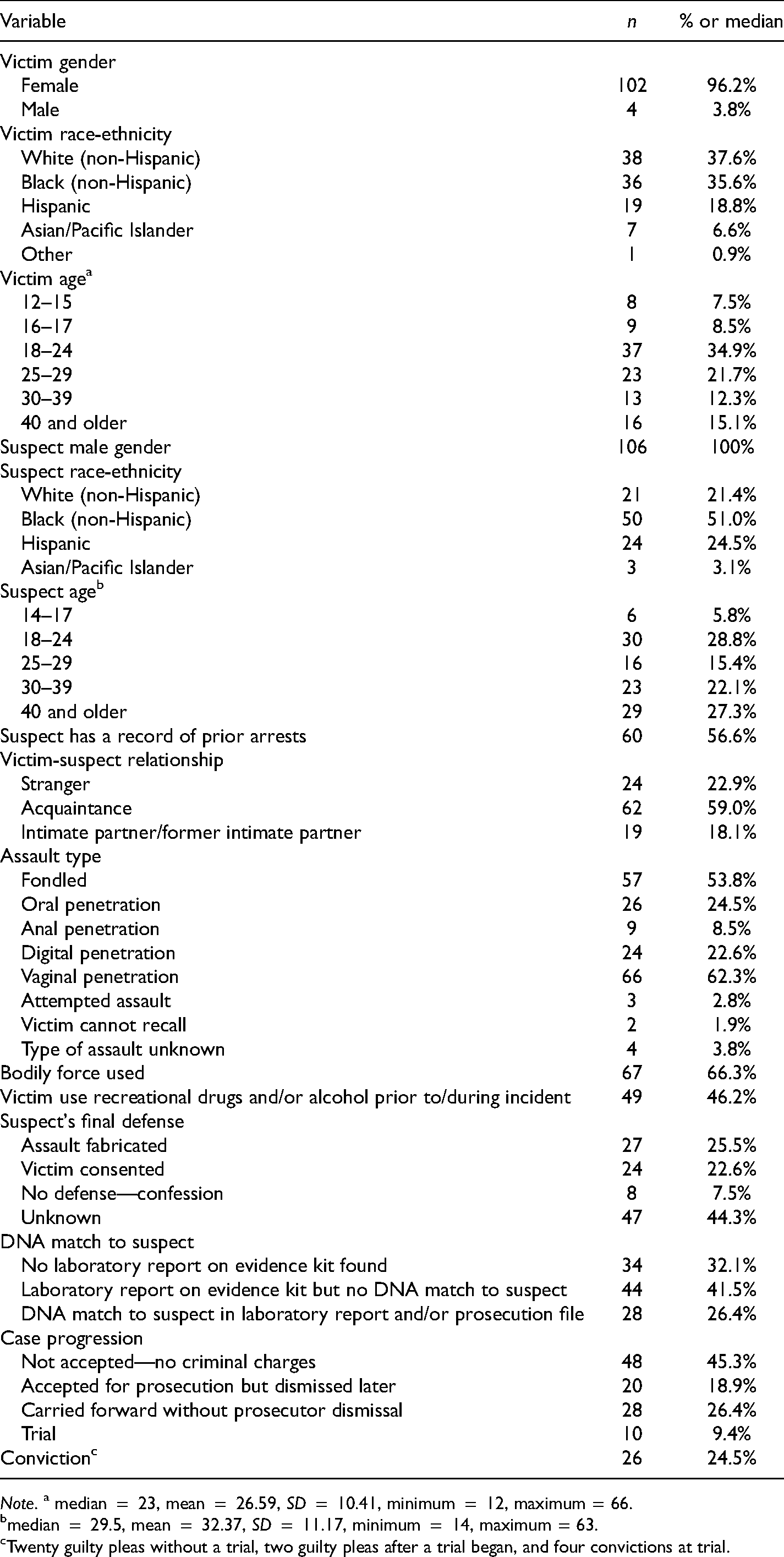
Note. a median = 23, mean = 26.59, SD = 10.41, minimum = 12, maximum = 66.
median = 29.5, mean = 32.37, SD = 11.17, minimum = 14, maximum = 63.
Twenty guilty pleas without a trial, two guilty pleas after a trial began, and four convictions at trial.
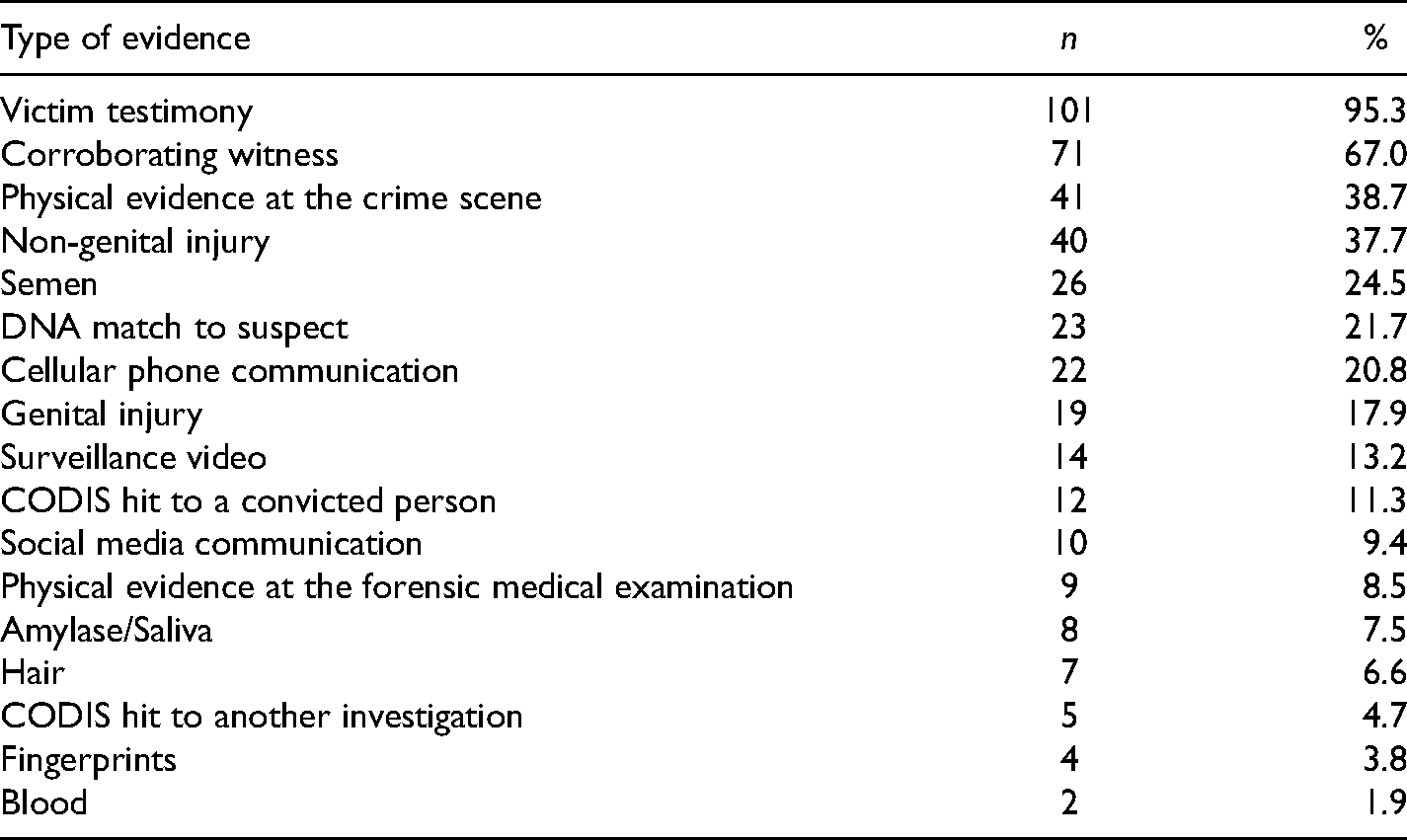
Frequency of Different Types of Evidence Used by the Prosecutor (N = 106).
In a plurality of cases, there was a crime laboratory report but no DNA match to suspect; in over one-quarter of cases a DNA match to the suspect was noted in either the crime laboratory report or prosecution file; and in just under one-third of cases there was no laboratory report. Regarding case progression in the criminal justice system, just under one-half of cases were not accepted and had no criminal charges filed, less than one-fifth of cases were accepted for prosecution but were later dismissed, over one-quarter of cases were carried forward without prosecutor dismissal (most of these cases had guilty pleas), and less than one-tenth of cases went to trial. A conviction was obtained in less than a quarter of cases, including six of the ten cases that went to trial.
Table 2 shows the frequency of different types of evidence used by the prosecutor. Victim testimony was one source of evidence in almost all cases. Two-thirds of cases had witnesses who could corroborate some part of the victim's account, though they were not eyewitnesses to the assault. Over one-third of cases had physical evidence from the crime scene and nongenital injury was evidence in over one-third of cases. Other forms of evidence were less common, including DNA match to suspect, which was noted as a form of evidence used in just over one-fifth of cases. A CODIS hit to a convicted person occurred in just over one-tenth of cases and a CODIS hit to another investigation in 4.7% of cases.
The Relationship of DNA Evidence to Case Progression
Table 3 shows differences in case progression for different categories of the DNA match to suspect variable. Cases with a DNA match were significantly more likely to move forward in the criminal justice system. About three-quarters of cases with a DNA match resulted in a guilty plea or went to trial. On the other hand, 86.4% of cases at the crime laboratory that did not have a DNA match did not proceed to a guilty plea or trial, and over two-thirds of cases for which there was no crime laboratory report did not proceed to a guilty plea or trial. Nine out of ten cases that went to trial had a DNA match to suspect. The one case that went to trial without a DNA match had other evidence that was particularly damning—multiple voicemail messages in which the suspect admitted to committing rape.
Case Progression and Conviction for Cases with and Without a DNA Match to Suspect (Excluding Cases Without an Identified Suspect and Without a Participating Victim) (N = 106).
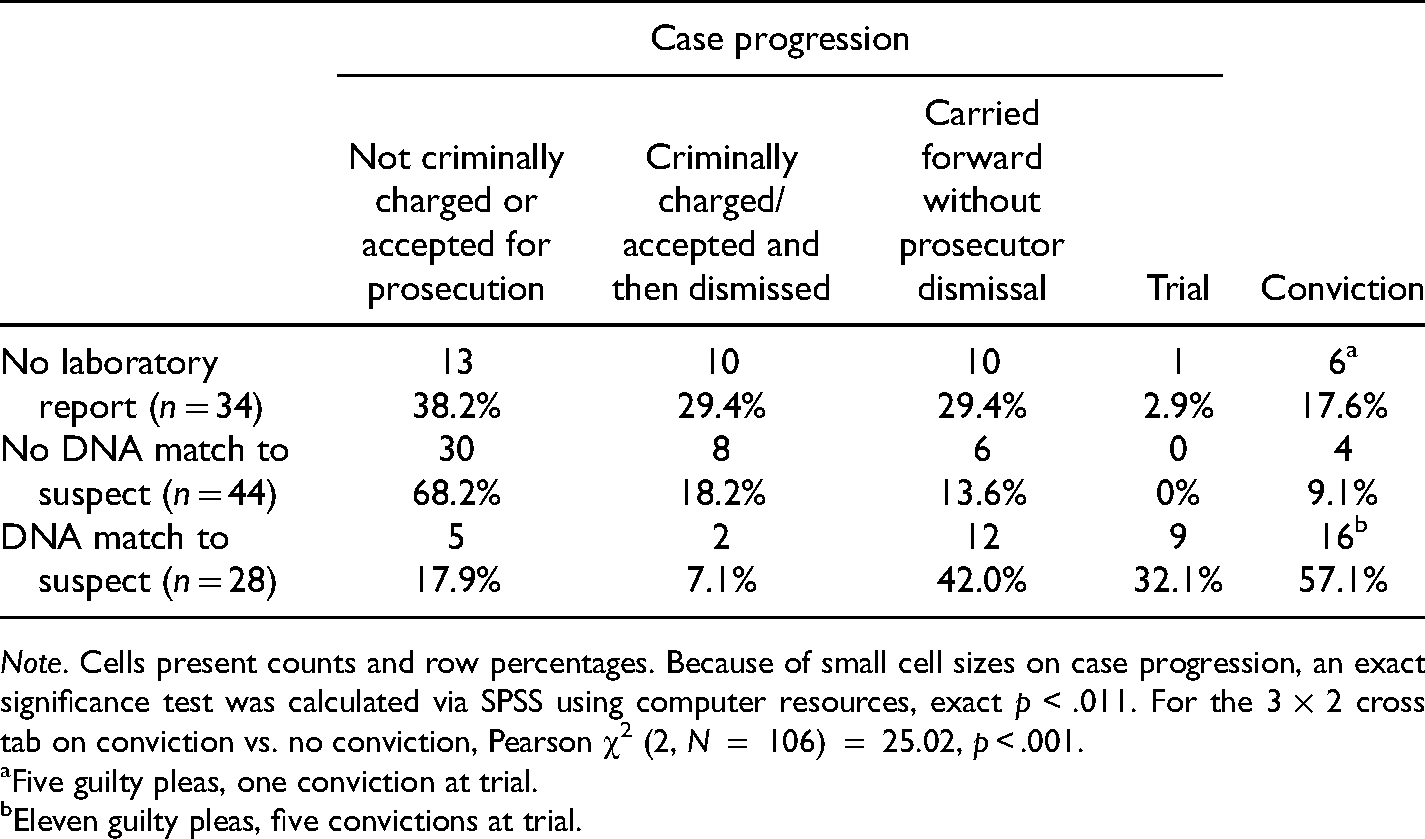
Note. Cells present counts and row percentages. Because of small cell sizes on case progression, an exact significance test was calculated via SPSS using computer resources, exact p < .011. For the 3 × 2 cross tab on conviction vs. no conviction, Pearson χ2 (2, N = 106) = 25.02, p < .001.
Five guilty pleas, one conviction at trial.
Eleven guilty pleas, five convictions at trial.
Analyses Examining the Relationship of DNA Match to Suspect to Conviction
More than half of cases with a DNA match to the suspect led to a conviction, versus less than one-tenth of cases that were processed at the crime laboratory in which there was no DNA match to suspect, and less than one-fifth of cases in which there was no kit or the kit was not analyzed at the crime laboratory (see Table 3). The result was statistically significant at p < .001. Similarly, a logistic regression found a statistically significant bivariate relationship between DNA match to suspect and conviction, Wald χ2 (2, N = 106) = 18.85, p < .001. Tests of contrasts in the analysis found that the odds of conviction with a DNA match were 13.33 times greater than the odds if the kit was analyzed, but there was no DNA match (Wald χ2 [1, N = 106] = 15.94, p < .001), and 6.22 times greater than if there was no kit or the kit was not analyzed (Wald χ2 [1, N = 106] = 9.60, p = .002).
In our analysis of third variables that could possibly confound the relationship between DNA match to suspect and conviction (see Table 4), we found that the following variables were significantly related at α = .05 to both DNA match to suspect and conviction: victim age, suspect having an arrest record, and victim using recreational drugs and/or alcohol prior to or during the offense. Victims in cases with a DNA match were significantly younger than victims in cases in which there was no kit, or the kit was not analyzed at the crime laboratory. But an analysis of variance showed that neither of these groups was significantly different in age from victims whose kits were analyzed but did not yield a DNA match to suspect [F(2,103) = 3.23, p = .043]. In a majority of cases with a DNA match or no analyzed kit, the suspect had an arrest record, but the suspect had an arrest record in just over one-third of cases in which the kit was analyzed but there was no DNA match to suspect, Pearson χ2 (2, N = 106) = 12.55, p = .002. Only a minority of cases with a DNA match to suspect or without a DNA kit analyzed had a victim who used recreational drugs or alcohol prior to or during the assault. However, in cases with analyzed kits but no DNA match, a majority of victims had used recreational drugs or alcohol prior to or during the assault, Pearson χ2 (2, N = 106) = 9.24, p = .011. The count of the number of types of nonexamination related evidence (see Table 2 for a list of such evidence types) was also significantly related to conviction but was related to DNA match to suspect at the level of a statistical trend, F(2,103) = 2.85, p = .057. Cases with a DNA match had more types of nonexamination evidence than cases that were analyzed but yielded no DNA match to suspect and cases that did not have an analyzed kit, but the pairwise comparisons were not statistically significant. Because this variable could still be a confounding variable in analyzing the relationship between DNA match to suspect and conviction, we included it in further analyses.
Relationship of DNA Match to Suspect to Potentially Confounding Third Variables.
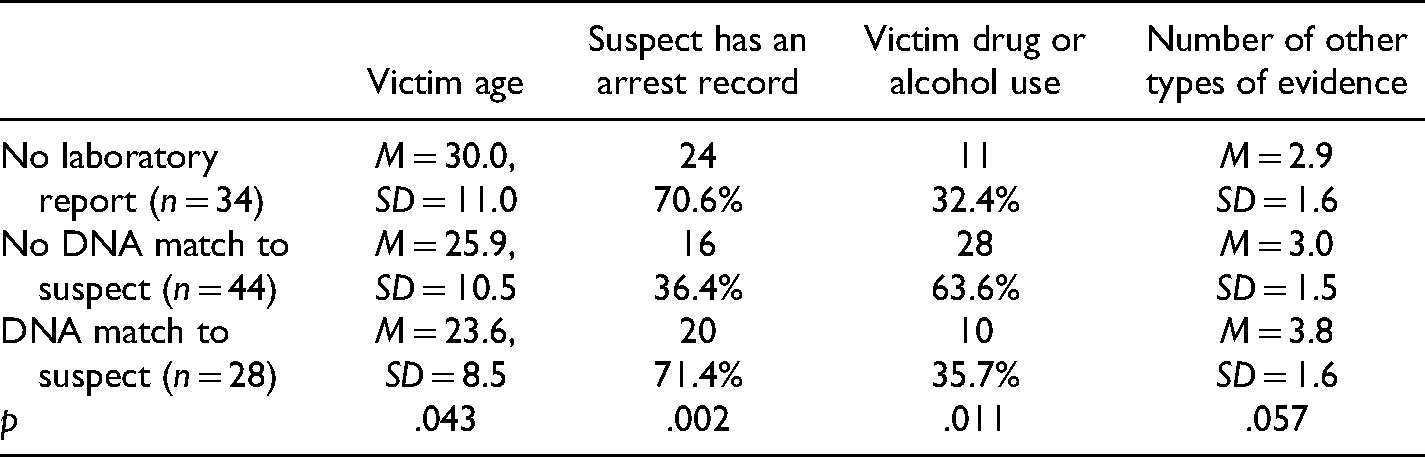
Table 5 shows the results of the multivariable logistic regression analysis. The model χ2 indicated a statistically significant relationship of the independent variable set to conviction, and the Nagelkerke R2 indicated a strong relationship between the predictor variables and conviction. The Hosmer–Lemeshow χ2 was highly nonsignificant, indicating a good fit of the data to the model. In a correlation matrix of the predictor variable, the highest correlation between variables was −.265, suggesting that the multicollinearity among the predictor variables was modest. Regression diagnostics revealed a modest number of cases (5) with studentized residuals greater than 2 and only one case with a Cook's d greater than 1. The DFBeta statistics revealed that removal of any of the outlier cases would have had a minimal effect on the results for individual variables. These diagnostics indicate that it is unlikely that a small number of outlier cases produced the results.
Bivariate and Multivariable Logistic Regressions Explaining Conviction (Excluding Cases Without an Identified Suspect and/or Without a Participating Victim) (N = 106).

Note. Model χ2 (6) = 41.925, p < .001. Nagelkerke R2 = .49. Hosmer–Lemeshow χ2 (8) = 1.61, p = .991.
Victim used drugs and/or alcohol prior to and/or during the offense.
DNA match to suspect was significantly related to conviction in the logistic regression model. The odds of conviction were 9.31 greater when there was a DNA match to suspect than when the crime laboratory processed the kit but there was no DNA match, controlling for other variables. In a related version of the logistic regression with the same predictor variables but different contrasts for the DNA match variable, the odds of a conviction were 4.53 times greater when there was a DNA match to suspect than when no evidence was found at the crime laboratory, p = .029. The only other variable that was significantly related to conviction was the number of types of nonbiological evidence. The odds of conviction were 1.71 times greater with an increase of one type of evidence, other predictor variables controlled.
Supplementary Analyses
Analysis of timing of crime laboratory report
In 21 cases with a DNA match to suspect, criminal charges were filed and/or there was a grand jury indictment. In 15 of those cases, we had enough data on dates of events to determine the relative timing of the crime laboratory report to police and prosecution actions. In five of those cases, the crime laboratory report preceded the filing of criminal charges. In 10 of those cases, the crime laboratory report to police post-dated the filing of criminal charges and/or a grand jury indictment.
Analysis of cases with a suspect buccal swab
To control for the effect of prosecutors seeking a DNA match by obtaining a suspect buccal swab, we conducted additional analyses with the 29 cases in which prosecutors obtained a suspect buccal swab. Since there were only two cases in which prosecutors obtained a suspect buccal swab but a kit was not processed at the crime laboratory, we used a dichotomous version of the DNA match to suspect variable: DNA match versus no DNA match. As Table 6 shows, this variable was significantly related to case progression in cases with a suspect buccal swab. All but two cases with a suspect buccal swab and DNA match to suspect resulted in a guilty plea or trial, while all but one of the cases with a suspect buccal swab but no DNA match were either declined or dismissed. Over two-thirds of cases with a suspect buccal swab and DNA match resulted in conviction, versus only 14.3% of the suspect buccal swab cases without a DNA match. We examined other potential predictors of conviction within the 29 cases with a suspect buccal swab and found that suspect arrest record was significantly related both to DNA match to suspect and conviction in this subsample. We conducted a logistic regression examining the relationship of DNA match to suspect (dichotomous version) and suspect arrest record with conviction. As Table 7 shows, the independent variable set was significantly and strongly related to conviction. The correlation between DNA match to suspect and suspect arrest record was −.64, indicating that multicollinearity was not a problem. There were no outliers among the studentized residuals. The odds of a conviction with a DNA match were 15.25 the odds without a DNA match, controlling for suspect arrest record.
Case Progression and Conviction in Cases with a Suspect Buccal Swab (n = 29).

Note. Because of small cell sizes, exact significance tests were calculated via SPSS using computer resources. For case progression, exact p < .001. For 3 × 2 cross tab on conviction vs. no conviction, exact p < .001.
Multivariable Logistic Regression Explaining Conviction in Cases with a Suspect Buccal Swab (Excluding Cases Without an Identified Suspect and/or Without a Participating Victim) (N = 29).
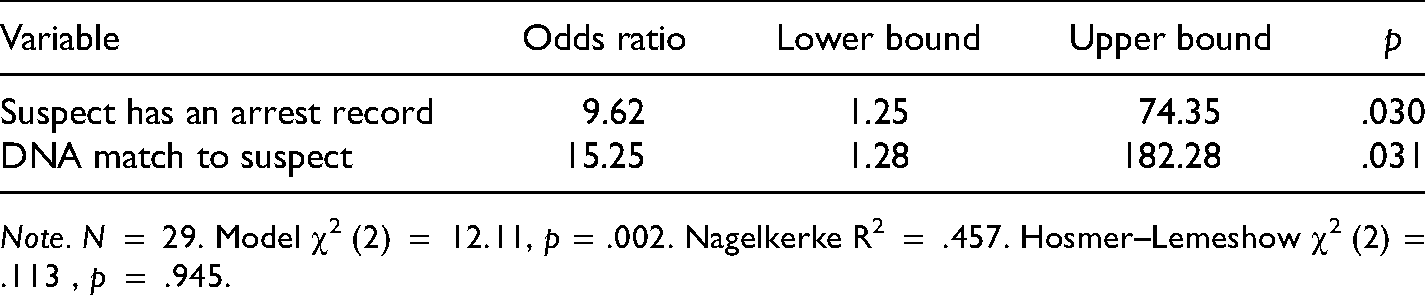
Note. N = 29. Model χ2 (2) = 12.11, p = .002. Nagelkerke R2 = .457. Hosmer–Lemeshow χ2 (2) = .113 , p = .945.
Analysis of cases with both a DNA match and a conviction
The qualitative assessment of the 16 cases with both a DNA match to suspect and a conviction suggested some ways in which the DNA match could have had an effect (see Table 8). The number of other types of evidence the prosecutor used in these cases in addition to biological evidence and victim testimony ranged from 2 to 6 and averaged 4.3 (SD = 1.4), so any decision was influenced by an array of evidence, including but not limited to DNA match to suspect. In six cases, we lack data on the suspect's response to the allegations, but the suspects pleaded guilty or were found guilty at trial; it is plausible that the DNA match was a factor in these decisions, but we have no way of knowing that. In five cases, the defendant's defense was coded as claiming that the assault was fabricated, so it seems likely that the DNA match was used to try to rebut that defense or used as leverage in a plea bargain. Two cases had stranger assailants who were identified solely because of CODIS hits. In another case, a CODIS hit confirmed the identification made through a photo spread or lineup. In two of the 16 cases, data from the prosecutor files suggest that the DNA match was not a factor in the final disposition.
Qualitative Description of Cases with a DNA Match and Conviction (n = 16).

Note. a The Combined DNA Index System national DNA database.
Discussion
The purpose of this study was to examine the relationship between DNA evidence and criminal justice outcomes. Our hypothesis was that DNA match influenced prosecution actions and convictions and was also a result of prosecution action. Cases with a DNA match to suspect were significantly more likely to advance in the criminal justice system and to end in conviction. Almost three-quarters of cases with a DNA match to suspect were carried forward to a guilty plea or trial compared to less than a third of cases without a laboratory report and just 13.6% of cases with a laboratory report but no DNA match to suspect. DNA match to suspect had a dramatic relationship with conviction: over half of the cases with a DNA match to suspect ended in conviction compared to less than one-tenth of cases that were analyzed at the crime laboratory and under one-fifth of cases not analyzed at the crime laboratory. The odds of conviction were much greater when there was a DNA match. The relationship between DNA match to suspect and conviction was unlikely to be a result of third variables because DNA match to suspect was still significantly related to conviction when we controlled for possible confounding variables, with an odds ratio indicating a large effect (see Olivier et al., 2017).
The supplementary analyses suggest that DNA match to suspect both influenced prosecutor actions and was, in part, a result of these actions. (DNA match was a result in the sense that in many cases it would not occur unless prosecutors sought a suspect sample.) The analysis of dates of events supports the inference that obtaining a DNA match was in part a result of deciding to prosecute a case. In a number of cases, crime laboratory results were reported only after criminal charges were filed and/or a grand jury indictment was obtained; presumably, the DNA match would never have been obtained in these cases if prosecutors had not decided to prosecute the case and seek a DNA match.
When we restricted the analysis to those cases in which prosecutors obtained a suspect buccal swab, we found a significant relationship between DNA match to suspect and case progression and conviction. This supported the inference that DNA match influenced prosecution outcomes. Prosecutors presumably sought DNA evidence in all the cases with a suspect buccal swab, so seeking a DNA match because prosecutors decided to move forward with the case did not have an effect on the results for this subsample. The DNA match could have influenced a) the prosecutor's decision to carry the case forward and not dismiss it, b) the suspect's decision to plead guilty versus seek an acquittal at trial, and/or c) the jury's verdict if the case went to trial.
The analysis of the 16 cases in which there was both a DNA match to suspect and a conviction also provides evidence of the influence of DNA match on outcomes in at least some of those cases. In the two cases in which the DNA evidence was the primary means by which the suspect was identified, prosecution may not have been possible without the DNA match, which suggests a clear impact of DNA evidence. In those cases in which the suspect claimed that the sexual assault allegation was fabricated, it seems likely that the DNA evidence was used to counter that assertion and could have had an impact on obtaining a conviction.
The near-ubiquity of DNA evidence in cases that went to trial suggests that DNA evidence may have been a factor in prosecutors deciding to take a case to trial, and that obtaining a DNA match is an important part of trial preparation. In the qualitative component of this study, prosecutors in this jurisdiction reported that it was important to present biological evidence (including DNA evidence) because of a potential CSI effect—juries’ expectation of seeing forensic evidence (Alderden et al., 2021). Prosecutors also felt that DNA evidence was important at trial to establish that suspects had sexual contact with the victim even if, during the investigation, suspects had claimed consensual sexual contact. Suspects at trial could make new claims that the allegation was fabricated, and the DNA evidence helped preempt the possibility of such a claim.
The Impact of DNA Evidence in Sexual Assault Cases
We think these results provide the clearest support to date of the impact of DNA evidence on outcomes of prosecuting sexual assault. Contrary to studies such as Johnson et al. (2012) and Ingemann-Hansen et al. (2008), we found a significant relationship between DNA evidence and conviction. Unlike Briody (2002), we found that DNA evidence was related to conviction overall and not just to juries finding defendants guilty. Like Campbell et al. (2009), we found that DNA evidence was related to case progression, but unlike Campbell we were able, at least to some degree, to distinguish between DNA as an influence on and a result of prosecutor actions.
The Implications of Failing to Obtain a DNA Match
One practical implication of this research is to underline how advisable it is for victims and professionals who want to support prosecution of sexual assault to do what they can to obtain DNA evidence. The study results also raise questions about the prospects for achieving a conviction if a DNA match is unavailable. A variety of circumstances can lead to a failure to obtain a DNA match. In some sexual assaults, actual intercourse or ejaculation does not occur, or the perpetrator uses a condom or takes other steps to avoid leaving evidence. Victims may react to the trauma of the event by washing, showering, or changing clothes quickly. Some victims do not want to have forensic medical examinations, which can be long, uncomfortable, and emotionally difficult. One can understand their reluctance, particularly if biological evidence does not seem to be needed to identify the perpetrator or establish that there was a sexual act. Some victims may only feel emotionally ready to deal with the assault after some time has elapsed, but getting an examination more than a few days after the assault substantially reduces the likelihood of obtaining biological evidence, and some programs do not conduct forensic medical examinations more than 72 hours after the assault (Ledray, 2010). Attrition affects the number of cases with DNA evidence just as attrition affects the prosecution of sexual assault. Even timely examinations do not always yield biological evidence, even when a sexual assault has been committed: not all samples are adequate for DNA testing, a DNA profile is not always obtained from a sample from the victim, and circumstances may hinder obtaining a suspect sample—all situations that are out of the control of the victim.
In this day of widespread awareness of DNA evidence and other forensic results, it may be difficult to proceed in a case without a DNA match. One issue to consider is whether the growth in the use of DNA has the unintended consequence of making it more difficult to move forward with legitimate cases that do not have DNA evidence. The need for DNA evidence may place a burden on victims of sexual assault that victims of other crimes do not have. Professionals who work with victims may need to be prepared for possible limitations in the criminal justice system if DNA evidence is not available. Prosecutors should also reflect on the implications of the current results. To some extent, the results vindicate the use of DNA evidence in sexual assault cases and support investment by district attorneys in providing training on using DNA evidence. On the other hand, prosecutors should consider whether DNA evidence functions as a requirement that becomes an obstacle to achieving justice in certain cases.
Limitations
This study has several limitations that should influence interpretation of the results and spur additional research. The reliability of the number of types of evidence variable is in question. Sample sizes for several key categories of cases were small, limiting statistical power to find effects. Nevertheless, the effect sizes for results were often large enough to be statistically significant despite small sample sizes. The research was conducted in one jurisdiction and the results may not generalize to other jurisdictions. Analysis of case data does not reveal the process by which DNA evidence affects decision-making. We were not able to distinguish fully between DNA as an influence on prosecutor actions versus a result of prosecutor actions.
We could not disentangle the effects of DNA on prosecutors, suspects, and juries. The source of the apparent causal impact of DNA match on conviction is ambiguous because we cannot distinguish how much of this stems from its impact on prosecutors’ decision to carry cases forward, versus suspects’ decision to plead guilty, versus juries’ decision to convict. Importantly, we cannot distinguish between DNA evidence having an impact because of its probative value in determining guilt versus having an impact because prosecutors see it as necessary to move forward with a case. Note that the near-ubiquity of DNA in trials in our sample as well as the small sample size of trials made it impossible to analyze the relationship between DNA match and jury verdicts. Despite these limitations, the study does advance knowledge about the effects of DNA evidence in sexual assault cases.
Future Research
Future studies could focus more on those cases that will be the most informative for testing the effects of DNA evidence. For example, case–control studies could select matched DNA match and non-DNA match cases with comparable biological samples and testing and compare the difference in outcomes between cases with and without DNA evidence. Case–control studies could also examine jury trials in sexual assault cases. One benefit of such studies would be to increase the sample size of cases with DNA evidence. Interrupted times series analysis studies could examine prosecution outcomes in sexual assault cases historically, before and after the introduction of DNA methods.
Future research is needed to distinguish between DNA having an impact because of its probative value versus DNA having an impact because prosecutors see it as necessary for prosecution. Future studies could extend the case study method employed in McEwen's (2011) study of forensic evidence to explore further the effect of DNA evidence on decision-making. A sample of cases with DNA evidence could be selected and prosecutors could be interviewed or surveyed to study the case circumstances that made this evidence more or less probative, the specific methods they used with this evidence, how defense attorneys countered the introduction of this evidence, and how these factors related to outcomes.
Conclusion
The possibility of obtaining DNA evidence is a major reason why thousands of victims of sexual assault undergo forensic medical examinations every year. Their investment makes it even more important to understand the impact of DNA evidence in sexual assault cases. The findings from the present study strengthen the case for providing victims access to quality forensic medical examinations, for investing in crime laboratories’ ability to conduct effective DNA analysis, and for training prosecutors to use DNA results effectively. Yet, communities differ in the availability of SANEs or other trained medical examiners (Frellick, 2018), skilled crime laboratories (National Research Council, 2009), and police and prosecutors knowledgeable about working with DNA evidence (Griswold & Murphy, 2010; Prottas & Noble, 2017). Advocates may want to consider the results of this study in developing their arguments for enhancing systems of response to sexual assault.
The present study suggests that DNA evidence makes a difference, but our research leaves many questions unanswered. We hope the current study is one stepping stone toward more research to develop a thorough understanding of the effects of DNA evidence on the prosecution of sexual assault.
Footnotes
Acknowledgments
The authors are deeply indebted to the staff of the Domestic Violence and Sexual Assault Unit of the prosecutor's office in which we conducted this research for their assistance and support, especially two chiefs of unit and a victim witness advocate, and to the Sexual Assault Unit of the primary police department affiliated with this prosecutor's office. The authors also thank Alex Wagner and Cassia Spohn for their assistance.
Declaration of Conflicting Interests
The authors have no conflicts of interest with respect to the research, authorship, and/or publication of this article: Laura Siller is now the Assistant Director of Research and Evaluation at Project Bread, Boston, MA.
Funding
The author(s) disclosed receipt of the following financial support for the research, authorship, and/or publication of this article: This study was funded through grant 2013-NE-BX-0005 from the National Institute of Justice to the University of Illinois at Urbana-Champaign and is based, in part, on the final summary overview for the grant. There are no conflicts of interest.
